My favourite mash (gluten-free, dairy-free, vegan

First_snowfall_of_2017_in_Perthshire_garden
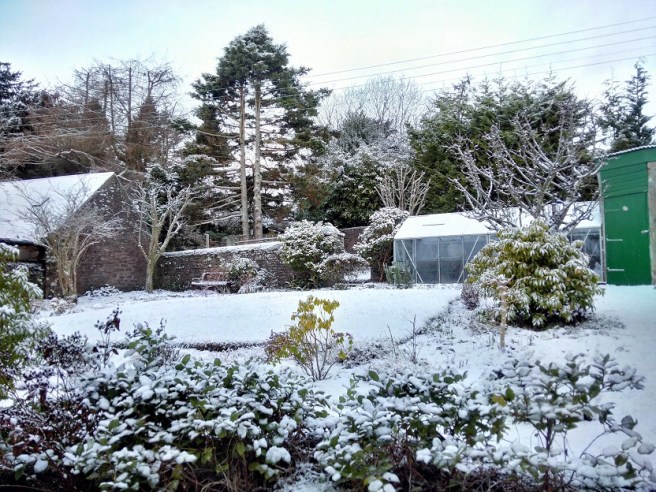
The first snow of 2017. Image: Kathryn Hawkins

It’s been a cold week all over the UK; the first snow of the year settled in the garden a few days ago, transforming it into a “Winter Wonderland” overnight. As soon as a chill sets in, my thoughts immediately turn to comfort food.

I am a huge potato fan and this week seemed like the perfect excuse to make my favourite mash potato recipe. Perfectly cooked potatoes, a generous handful of chopped parley, lashings of good quality olive oil, a good pinch of sea salt and some fresh garlic. It’s a delicious that mash seems to go with everything.
Ingredients_and_essential_equipment_for_making_the_perfect_mashed_potato
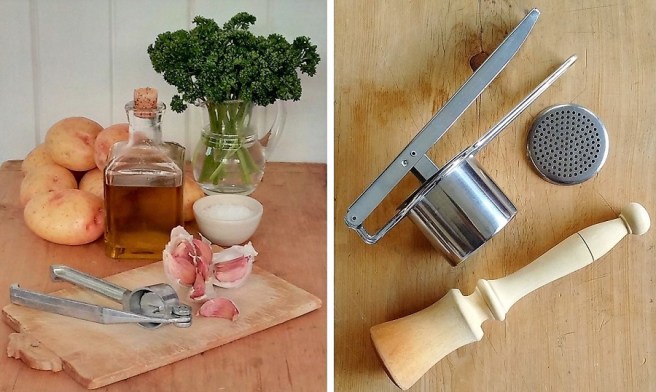
Ingredients and equipment for olive oil and garlic mash. Images: Kathryn Hawkins

For the best result, you need to choose a potato that mashes well. My preference is King Edward, it’s got good flavour and a dry, floury texture when cooked. Cook the prepared potatoes until they are completely tender. Drain well and then give them a good thump with a potato masher. If you don’t mind a few lumps, leave it at that, but if I’ve got the time, I like to press the mash through a ricer for the smoothest, silkiest texture possible. It’s up to you how much garlic, parsley and seasoning you add, but do use a really tasty olive oil. A good quality extra virgin (cold pressed is even better) oil will not only add flavour and colour, but will add to the indulgence of the finished mash. Only warm the oil, never heat it beyond warm, otherwise the health and flavour benefits will be lost.

Mashed_potato_with_parsley_olive_oil_and_garlic
Olive oil, parsley and garlic mash. Image: Kathryn Hawkins

Serves: 4

  • 900g main crop potatoes, such as King Edward or Maris Piper
  • Sea salt
  • 4 plump garlic cloves, peeled and crushed
  • 1 tbsp sunflower oil
  • Large handful of fresh curly parsley, washed, thick stalks removed, and finely chopped (I like to add about 25g chopped parsley to this quantity of potato)
  • 6 tbsp good quality, extra virgin cold pressed olive oil + extra for serving, if liked
  1. Thinly peel the potatoes. Cut into chunky pieces and rinse in cold water. Place in a large saucepan and cover with cold water. Add a pinch of salt, bring to the boil and cook until completely tender (12-15 minutes, depending on how thick you’ve cut them up). Drain well through a strainer, and leave to air dry for 5 minutes.
  2. Meanwhile, heat the sunflower oil in a small saucepan and very gently fry the garlic for 1-2 minutes until tender but not browned. Remove from the heat.
  3. Return the potatoes to the saucepan and mash well. If you’re not using a ricer, stir in the parsley and cover. If you are ricing the mash, press the potato into a warm bowl, stir in the parsley, and cover the whole bowl with foil.
  4. Stir the olive oil into the cooked garlic and place the saucepan over a very low heat for 2-3 minutes to gently warm the oil.
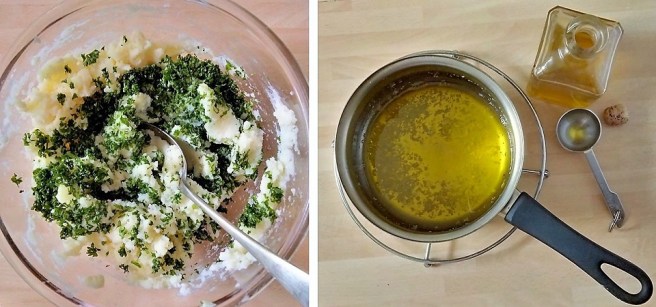
    Chopped_parsley_garlic_and_olive_oil_being_added_to_mashed_potato
    Adding the flavourings to mashed potato. Images: Kathryn Hawkins


  5. Stir the warm oil into the parsley mash. Taste and season. Pile into a warm serving dish. Drizzle with more olive oil if liked, and serve immediately. Mmmm…mmmmm.
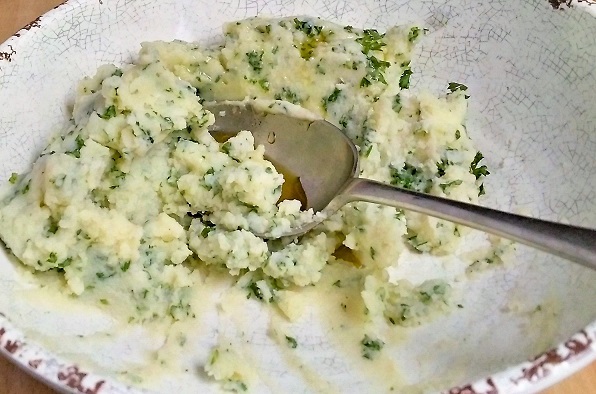
    Single_serving_of_mashed_potato_with_parsley,_olive_oil_and_garlic
    The last spoonful of my favourite mash. Image: Kathryn Hawkins


Moroccan mint tea jellies (gluten-free, dairy-free, vegan)

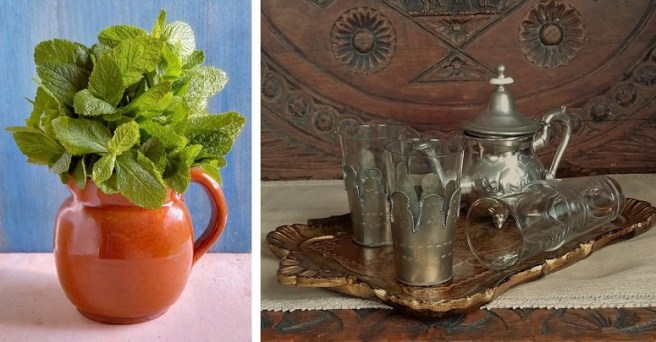
Jug_of_fresh_mint_and_Moroccan_tea-set
Fresh mint and Moroccan tea-set. Images: Kathryn Hawkins

Mint tea is something I enjoy everyday, usually in the afternoon as an uplifting brew and sometimes, after dinner as a “digestif”. The refreshing taste of mint makes it the perfect herbal choice for this time of year, after over-indulging on rich food, and for anyone looking to make healthier choices for the new year.

I’ve been to Morocco a couple of times and loved the experience. I brought back the tea-set above from my first trip almost 30 years ago. The country’s cuisine is one of my favourites. If you have mint tea made by the locals, it is served piping hot and mouth-tinglingly sweet, which seems utterly contradictory when the air temperature is so warm, but it seems to work and, the restorative powers of a glass or two are amazing.

Moroccan mint tea is made with green or Indian tea and loads of fresh mint. I prefer white tea as I find it has softer tannins. If you don’t want the caffeine hit, you can make the jellies using a couple of peppermint infusion sachets or bags, but do add the fresh mint as well for the extra fresh flavour. I have reduced the sugar to keep it healthy, but you don’t have to add it at all. The recipe can be also be made using traditional gelatine if preferred – 4 leaves would be sufficient.

Makes: 4 small glasses

  • 2 white, green or Indian tea bags
  • A good handful or a small bunch of fresh mint, washed and shaken dry
  • 1 sachet Vege-Gel (I use Dr Oetker)
  • 60ml sugar syrup – see below
  1. Put the tea bags in a heatproof jug with all but 4 sprigs of mint. Add freshly boiled water to the 350ml level on the jug and leave to steep for 5 minutes. Strain the tea into another jug without squeezing the tea bags, and leave to one side. Meanwhile, put a mint sprig into each of 4 x 125ml tea glasses or heatproof dishes.

    Making_mint_tea_jellies
    Mint tea jelly preparation. Images: Kathryn Hawkins
  2. Pour 200ml cold water into a bowl and sprinkle over the Vege-Gel. Stir well until dissolved. Transfer to a small saucepan and heat, stirring, until just boiling. Remove from the heat and stir in the mint tea and sugar syrup.
  3. Leave the tea jelly mixture to cool for 20-30 minutes before pouring into the glasses to cover the mint – this will help stop the mint sprigs discoloring. You need to work with the jelly mix whilst it is still warm – it sets quite quickly as it cools. Leave to cool completely, then chill for at least 1 hour before serving. If you are making a real tea-based jelly, it will turn slightly cloudy no matter what setting agent you use. Herbal tea bags will give a clearer set.
Moroccan_mint_tea_jellies_made_in_tea_glasses
Moroccan mint tea jellies. Image: Kathryn Hawkins

To make your own sugar syrup: put 350g granulated sugar in a saucepan and over pour over 600ml water. Heat, stirring, until the sugar dissolves. Increase the heat and bring to the boil, then simmer without stirring for 10 minutes. Leave to cool. This syrup stores well in a cool place – just pour into a bottle and seal. It is a useful base for adding to ice creams, sorbets, fruit salad syrups and of course, cocktails!

New year garden

January_1st_2017_Perthshire_garden
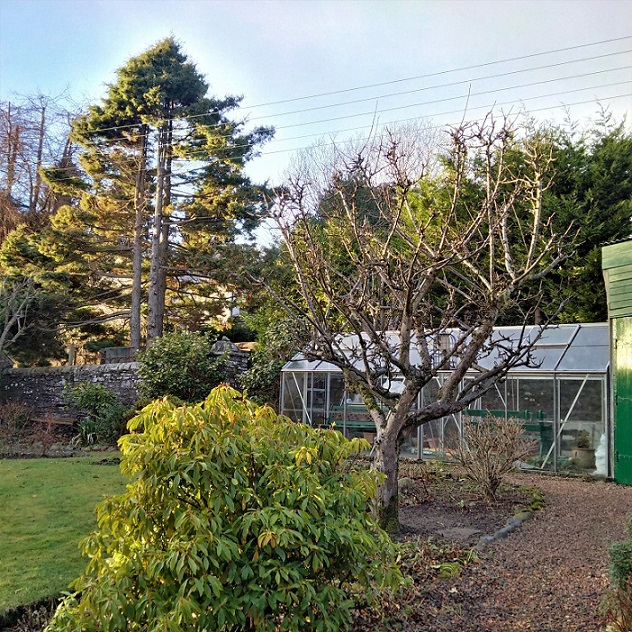
In the garden, New Year’s Day 2017. Image: Kathryn Hawkins

Happy New Year everyone! Hope you’ve all had a good holiday, and are looking forward to the year ahead. Let’s hope it’s a good one for us all. It’s been a sunny, blue-sky start to the year here in central Scotland – a very uplifting day.

I have had a good, relaxing festive break at home. The weather’s been quite kind and I’ve managed to get outside every now and then. We did have a little snow on Boxing Day, but it cleared by the end of the day, and didn’t cause any damage. On the whole, the garden’s looking a wee bit dull at the moment but there are signs of new life about if you look lard enough. Lots of bulbs are pushing their way through the soil, and the rhubarb plants are shooting up. I have put a large pot over the top of one clump, with the hope of getting some fine pink shoots next month.

Rhubarb_shoot
First rhubarb shoot of the new season. Image: Kathryn Hawkins

For me, the late December holiday is a good time to do some cutting back and pruning, and if the weather permits, I undertake my annual attempt at getting the old apple tree back in shape, ready for the year ahead. I had a good crop of fruit last year; I am keeping everything crossed so that the tree does just as well in 2017.

Pruning_an_apple_tree_in_December
Before and after, apple tree pruning. Images: Kathryn Hawkins

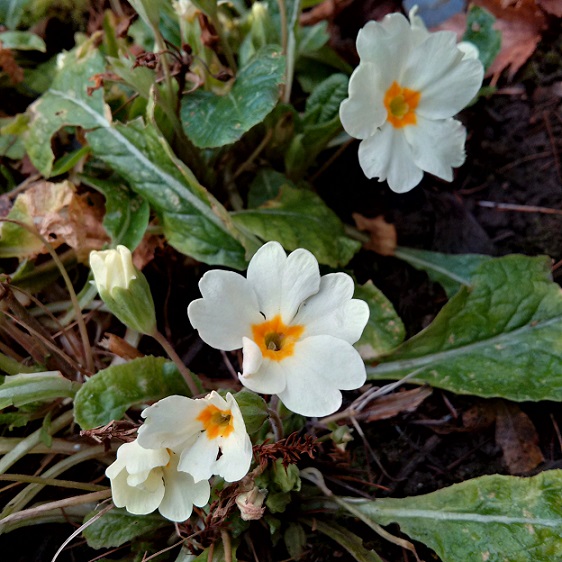
On the floral front, the Winter jasmine is lovely and vibrant and has a delightful sweet smell; there are also a couple of hebes in flower. One much-treasured little gem, is a perennial primrose which is in bloom for most of the year. I didn’t plant it, it appeared a couple of years ago in a shady, damp part of the garden. The delicate blooms and foliage add some welcome colour and interest through all the mulch and undergrowth that surrounds them.

Winter_flowering_yellow_jasmine
Winter flowering jasmine. Images: Kathryn Hawkins
Winter_flowering_hebes
Light pink and purple flowering hebes. Images: Kathryn Hawkins
Perennial_primrose
Perennial primrose. Image: Kathryn Hawkins