Welcome to my blog all about the things I love to grow and cook. You'll find a collection of seasonal gluten-free, dairy-free and vegan-friendly recipe posts, as well as a round up of my gardening throughout the year. I wish you good reading, happy cooking and perfect planting!
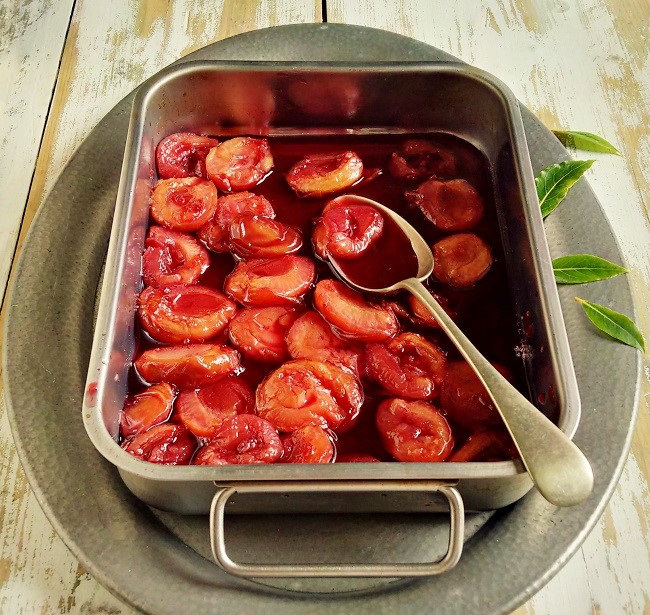
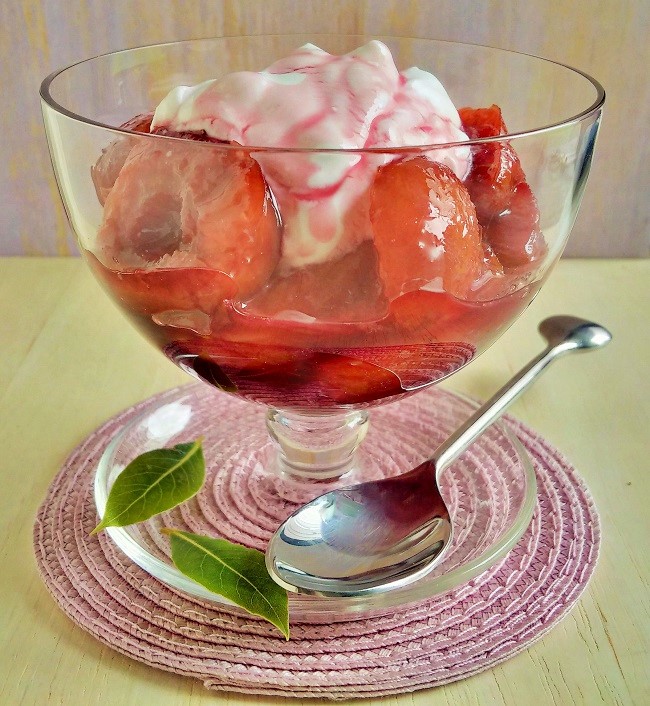
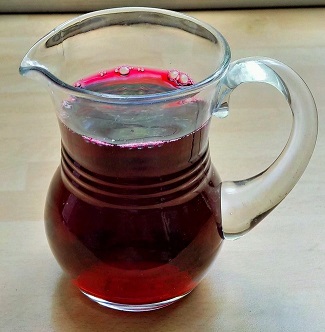
Freshly baked home-grown Victoria plums in red wine, scented with fresh bay. Image: Kathryn Hawkins
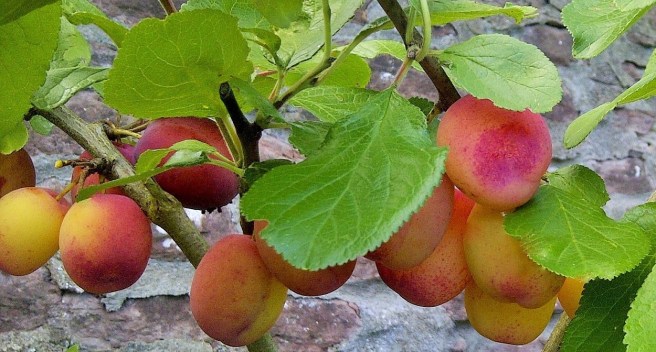
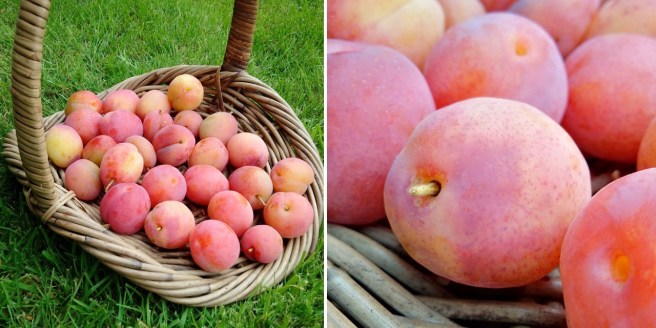
My first harvest of plums in the year marks the end of summer in my mind. There is, of course, something to celebrate in having such lovely fruit to pick, and yet, I feel a bit sad that autumn is approaching. I managed to get a head-start on the wasps this year, picking about 1kg of unblemished fruit. There are plums a plenty yet to ripen, so I need to work on my timing over the next few days and harvest them before the wee sugar-seeking beasties move in.
Ripe and ready to pick, home-grown Victoria plums. Image: Kathryn HawkinsMy first plum harvest of the year. Images: Kathryn Hawkins
My plum cookery isn’t very adventurous or fancy. I usually make jam or a plum sauce. Sometimes I make a compote. Baking them in wine is another very simple way I enjoy the rich, distinctive flavour of this particular fruit. Fresh bay-scented orchard fruit is something I tasted for the first time in Cyprus. The familiar glossy-leaved herb has become a flavour I use a lot in my kitchen, both in sweet and savoury cooking, and now that I have a bay tree in the garden, I use the herb all the more. Fresh bay gives a refreshing, herbal taste to fruit. You can use dry leaves, but as the flavour is much more intense than the fresh, you may want to experiment by reducing the quantity of leaves by at least half. If you don’t have any wine, or prefer not to use it, cranberry juice makes a good alternative in this recipe. If you don’t have plums, the recipe works equally well with apricots, peaches or nectarines. The baked fruit also freezes well too.
Serves: 6
Ingredients
750g fresh Victoria plums
60g Demerara sugar
4 fresh bay leaves
300ml fruity red wine or unsweetened cranberry juice
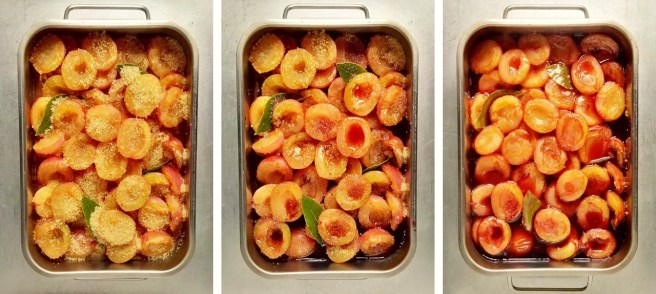
Preheat the oven to 180°C (160°C fan oven, gas 4). Wash and pat dry the plums. Cut in half and remove the stones. Arrange the halves neatly, cut side up, preferably in a single layer, in a baking dish or tin.
Sprinkle with sugar and push in the bay leaves, then pour over the wine or juice. Bake for 30-40 minutes, basting every 10 minutes, until tender.
Baked plums with bay and red wine preparation. Images: Kathryn Hawkins
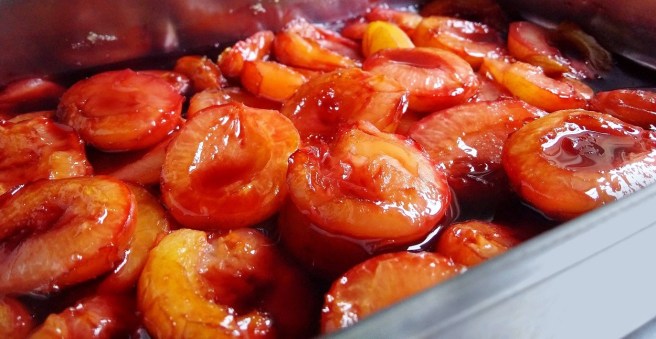
Discard the bay leaves. Carefully strain off the cooking juices into a saucepan . Bring to the boil and boil rapidly for about 5 minutes until reduced and syrupy. Pour over the fruit and leave to cool. Cover and chill for 2 hours before serving. Best served at room temperature for maximum flavour. Delicious accompanied with coconut yogurt or rice pudding.
Glazed plums cooling in the tin. Image: Kathryn Hawkins
Baked plums served with coconut yogurt. Image: Kathryn Hawkins
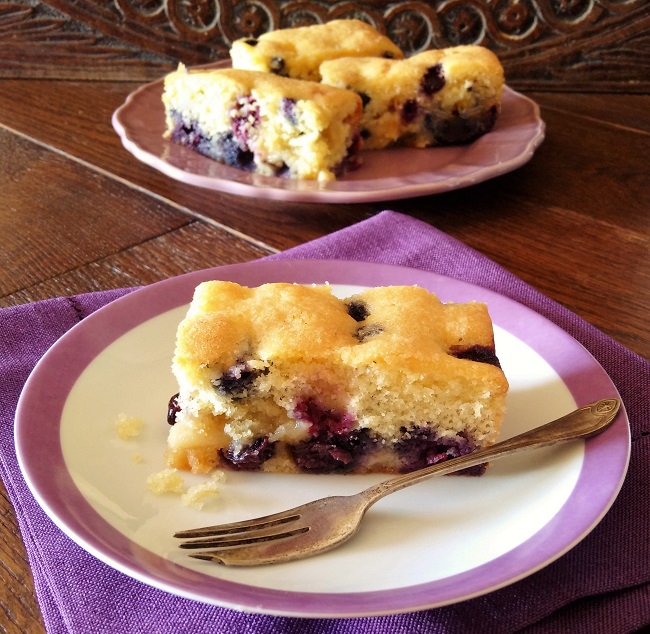
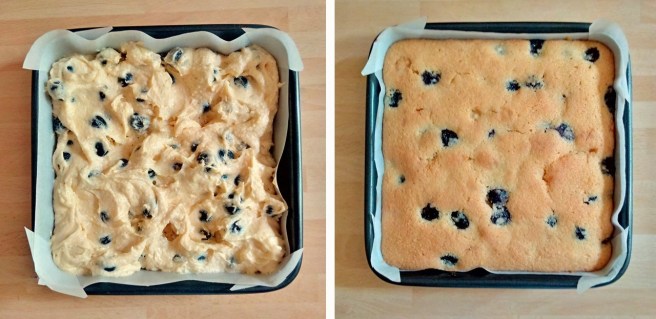
Blueberry and marzipan cake. Image: Kathryn Hawkins
It’s been feeling a wee bit autumnal here in central Scotland for the past couple of weeks. Some of the leafy foliage in the garden is on the turn and the nights are drawing in fast. I also have blueberries ready for picking.
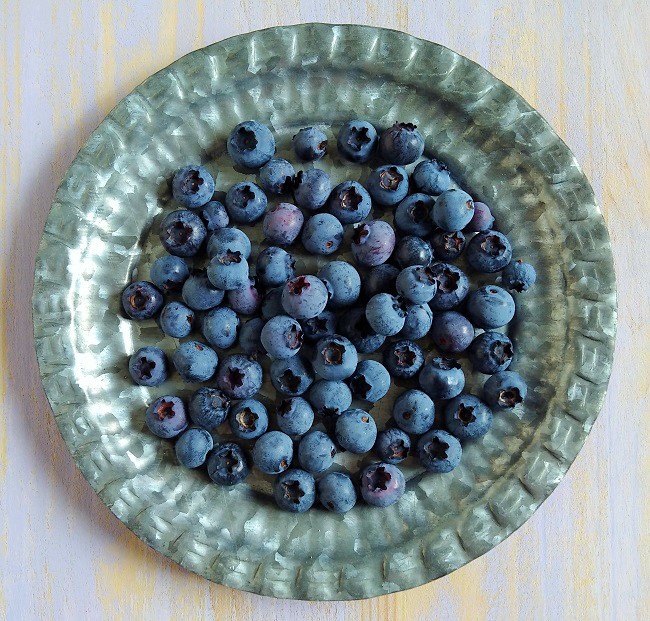
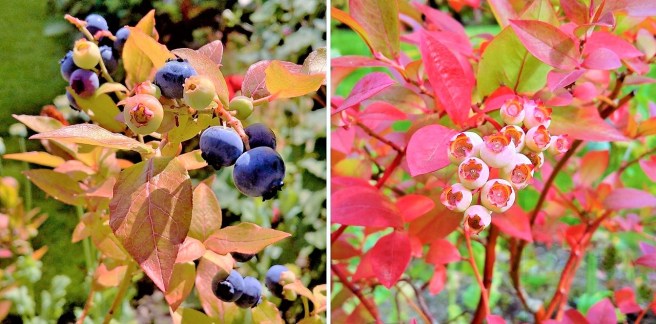
Home-grown blueberries are a delight to behold and eat. The skin is much bluer than any variety I can buy, and the skin has a silvery, almost downy bloom. The fruit is firmer in texture and has a slightly tart, more pronounced flavour. The plants are easy to grow, require little maintenance, and love the acidic Scottish soil. The leaves turn pink as the season progresses, and make a wonderful display in the fruit beds.
Freshly picked, home-grown Scottish blueberries. Image: Kathryn HawkinsMid-season blueberries ripe and ready for picking alongside a later variety. Images: Kathryn Hawkins
I planted 3 blushes about 5 years ago. One fruits end of July/beginning of August, one is in full ripening mode now, and the other has fruit that is just turning pink. It is unusual for me to be able to harvest enough berries to make anything substantially blueberry flavoured in one go. Usually I keep adding to a bag of berries in the freezer until I have enough to make jam – blueberries do freeze very well and make very good jam from frozen fruit. This year has been an exception, and I have harvested sufficient fresh berries for this unbelievably easy blueberry cake.
Slice of homemade blueberry and marzipan cake. Image: Kathryn Hawkins
Serves: 8
Ingredients
115g dairy-free margarine, softened
115g caster sugar
115g gluten-free self raising flour (such as Dove’s Farm)
2 large eggs
50g ground almonds
100g marzipan, cut into small pieces
200g fresh or frozen blueberries
Preheat the oven to 180°C (160°C fan oven, gas 4) Grease and line an 18cm square cake tin. Put the margarine, sugar, flour, eggs and ground almonds in a bowl. Using an electric mixer on a low speed, gently whisk the ingredients together until loosely blended. Increase the mixer speed and continue to whisk for a few seconds longer until creamy and smooth.
Gently stir in the marzipan and blueberries and spoon into the tin. Smooth the top and bake for about 45 minutes until lightly golden and just firm to the touch. Leave to cool in the tin, then slice into 8 portions and serve. If you can leave it alone, the cake tastes even better the next day. It is also delicious served warm as a pudding.
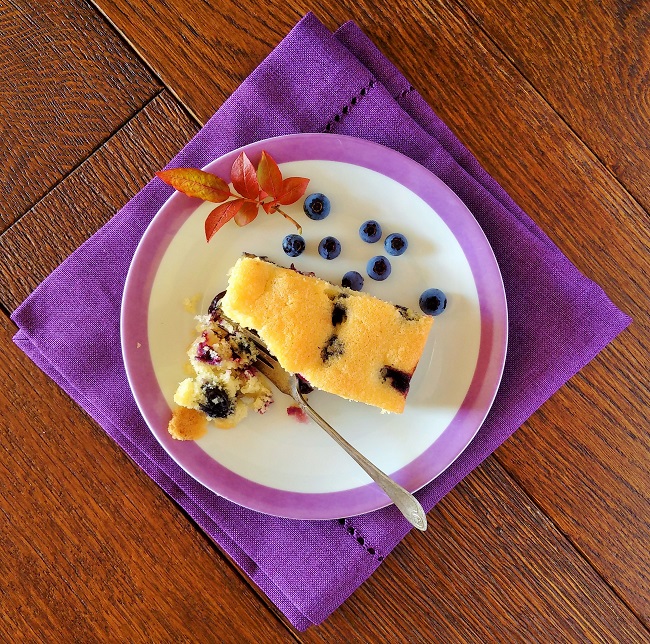
Easy to make, blueberry and marzipan cake. Images: Kathryn Hawkins
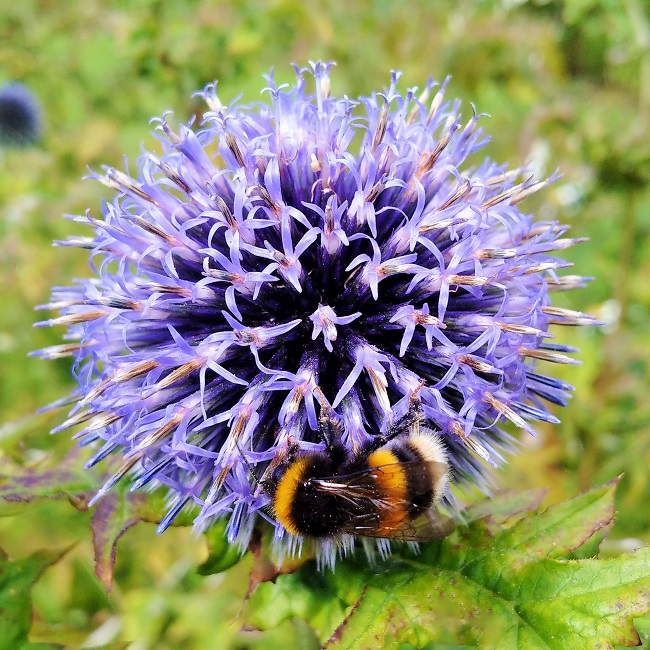
There are other signs of Autumn in the garden. The Autumn Crocus opened out this week, and the globe thistles (Echinops) are in various stages of blooming. I was delighted to see so many bees still hard at work when I was taking these pictures. Until next week, enjoy the late summer/very early autumn sunshine.
New season Autumn Crocus. Image: Kathryn HawkinsShades of silvery-blue, Echinops (globe thistles). Image: Kathryn HawkinsA very busy bee. Image: Kathryn Hawkins
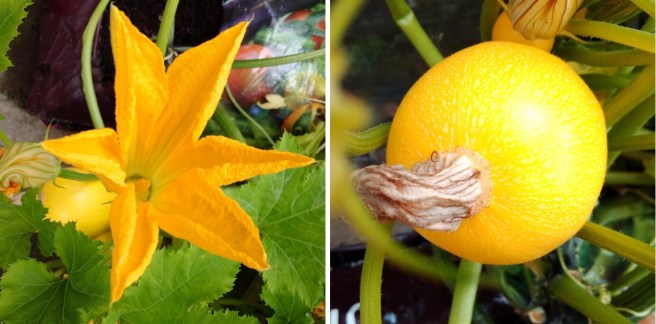
My supply of courgettes is coming to an end now. For several weeks, I’ve had a plentiful supply of produce from the four plants in grow-bags, in my greenhouse. Not only do home-grown courgettes taste delicious, I love the large, bright yellow, star-shaped flowers that the plants produce; they are a very cheery sight even on the dullest of days.
Homegrown courgette flower and yellow, globe-shaped fruit Images: Kathryn Hawkins
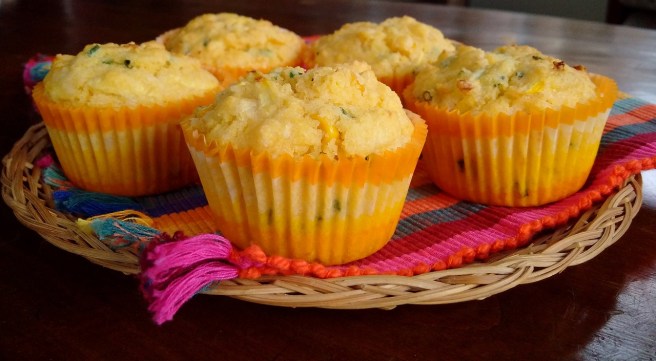
These muffins are full of golden coloured ingredients and are based on a classic American cornbread recipe. Easy to make, delicious served warm, and perfect for freezing – they will only keep fresh for a couple of days, so freezing is the best option for longer storing. The chives add a mild oniony flavour, and you could try adding a pinch of chilli flakes or some hot smoked paprika for a bit of a kick. They make a good accompaniment to a bowl of soup or stew, or just as a tasty snack on their own.
The main ingredients. Image: Kathryn Hawkins
Makes: 10
Ingredients
115g gluten-free plain flour (such as Dove’s Farm)
2 level teasp gluten-free baking powder (such as Dr Oetker)
150g polenta or fine cornmeal
1 medium egg, beaten, or 50g soft tofu, mashed
225ml dairy-free milk (I used soya)
50g butter or vegan margarine, melted
100g cooked sweetcorn kernels
150g grated courgette (yellow or green)
4 tbsp. freshly chopped chives
50g grated Parmesan cheese or vegan alternative, optional
Preheat the oven to 180°C (160°C fan oven, gas 4). Line a 10-cup muffin tin with paper cases. Sieve the flour and baking powder into a bowl and stir in the polenta or cornmeal. Make a well in the centre.
Put the egg or tofu in the centre and pour in the milk and melted butter or margarine. Gradually mix the ingredients together until well blended, then stir in the remaining ingredients.
Divide between the cases, smooth the tops and bake for 25-30 minutes until lightly golden and firm to the touch. Transfer to a wire rack to cool. Best served warm.
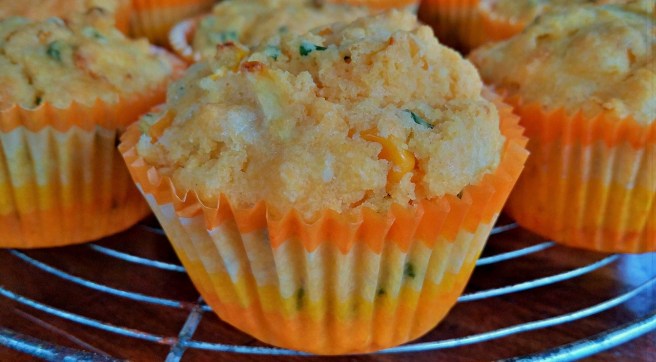
Freshly baked courgette and corn cakes. Image: Kathryn Hawkins
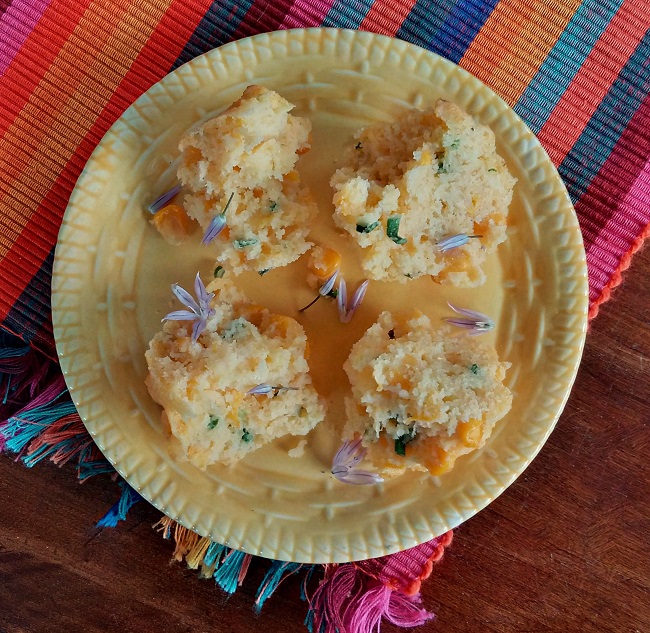
Ready to serve, sprinkled with fresh chive flowers. Image: Kathryn Hawkins
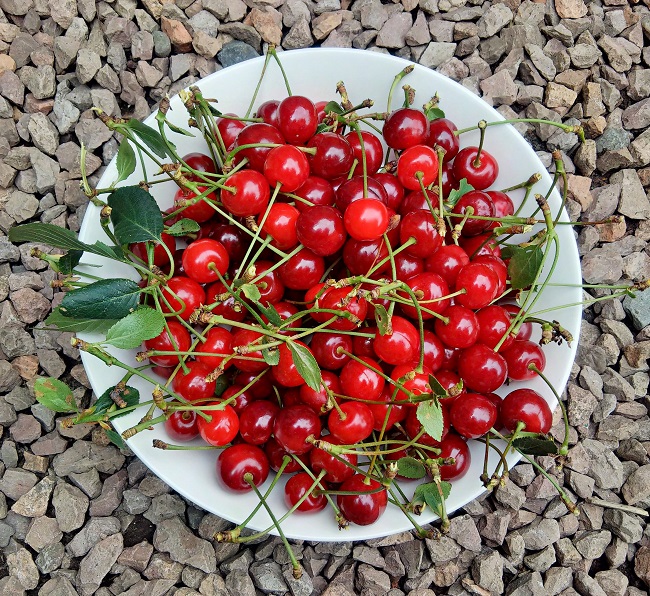
Morello cherries, ripe and ready for picking. Image: Kathryn Hawkins
Picking the cherries from my espalier Morello cherry tree is one of the highlights of my fruit growing calendar. Having had such a mild Scottish spring this year, all the fruit in the garden seems to be ripening a bit earlier than in other years. The cherries are no exception. Usually I pick them in the middle of August, but this week, they were ripe and ready. The harvest was pretty good too: from one small tree, I picked ¾kg.
This year’s Morello cherry harvest. Image: Kathryn Hawkins
I’m not that adventurous when it comes to cooking with cherries. I suppose it’s because I never have that many to play with, therefore, I want to make sure I enjoy what I cook. Morellos are a sour cherry and are too tart to eat as a fresh fruit. This year I made a large pot of jam and, my favourite, a compote flavoured with vanilla and lemon – recipe below.
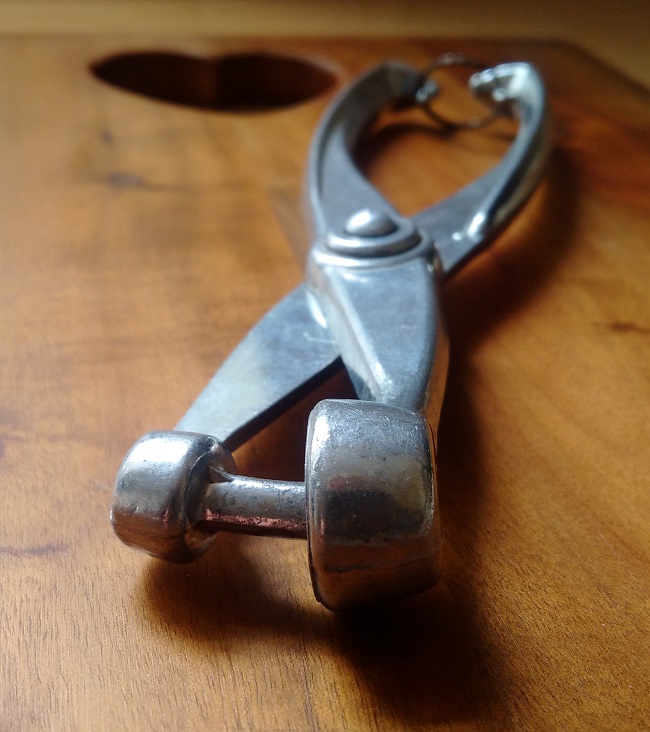
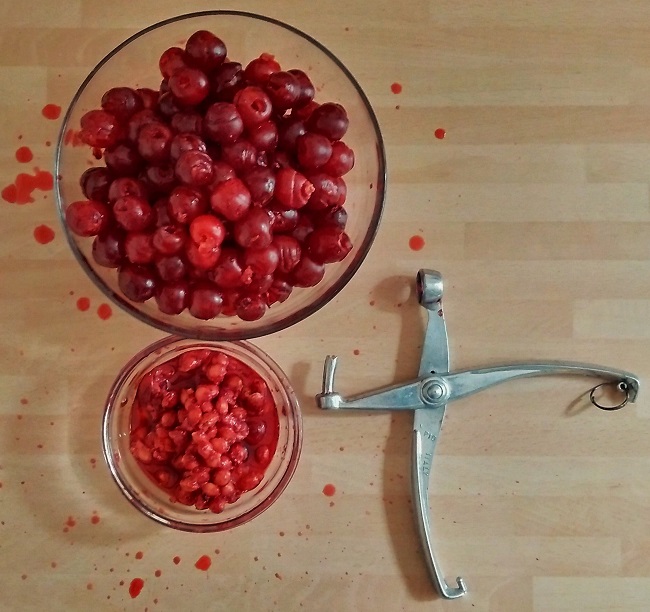
I use a cherry stoner to remove the pits; I’ve had it for years, and it does the job perfectly. This years cherries were so ripe, the pit just plopped out without any effort. Wash the cherries first and then prepare them over a bowl to catch the stones and the juice that falls; you can then easily drain off the stones, keeping the juice. If you don’t have a specialist stoner, a small knife with a pointed blade should enable you to prise out the stones with ease. After preparation, the final weight of the cherries I picked this year, along with the juice from the bowl, was around 650g.
Vital piece of kit: my cherry stoner. Image: Kathryn HawkinsPitting cherries. Image: Kathryn Hawkins
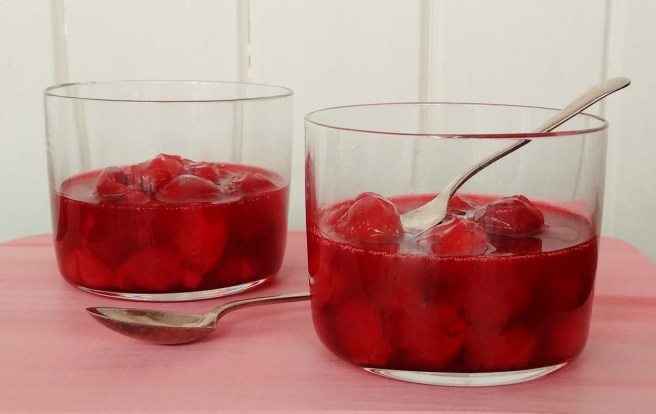
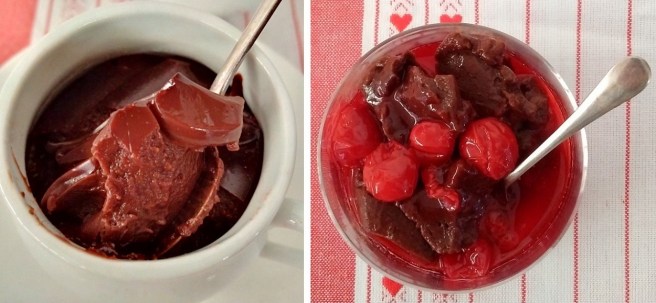
Flavours that go well with cherries are: almond (especially marzipan); citrus fruit; vanilla; cinnamon (just a pinch); coconut, and chocolate. I often make something chocolatey to go along side the compote, and this year, it was a nostalgic chocolate blancmange, deliciously velvety and thick. A perfect combination. So here are my recipes for both compote and blancmange. By the way, if you are using sweet cherries for the compote, you’ll need to reduce the quantity of sugar you add to the compote by at least half.
300g prepared ripe Morello cherries (about 350g with stones)
100g caster sugar
2 level teasp cornflour
½ vanilla pod, split
Juice of ½ small lemon or half a lime
For the blancmange:
50g cornflour
25g cocoa powder
50g vanilla sugar (use plain caster if preferred)
500ml non-dairy milk (I used soya milk)
1. To make the compote, put the cherries in a saucepan and gently mix in the caster sugar and 3 tbsp. water. Heat gently, stirring until the sugar dissolves, then bring to the boil, reduce to a gentle simmer, and cook for about 3 minutes until just tender – take care not to over-cook, ripe cherries need very little cooking.
2. Blend the cornflour with 2 tbsp. water to make a paste, then stir into the cherries. Bring back to the boil, stirring, and cook for a further 1 minute until slightly thickened. Remove from the heat, push in the vanilla pod and leave to cool completely. Remove the pod and stir in the lemon juice. Chill lightly before serving – about 30 minutes.
3. For the blancmange, mix the cornflour, cocoa and sugar in a saucepan, and gradually stir in the milk, making sure it is thoroughly blended – I find a balloon whisk is good for mixing powders into liquids.
4. Keep stirring the mixture over the heat, until it reaches boiling point and becomes very thick. Continue to cook for 1 minute to make sure the cornflour is completely cooked then spoon into small individual heat-proof dishes – there is enough to fill 6 x pot au chocolat dishes (it is quite rich, so these little dishes are the perfect size for me). Leave to cool completely, then chill for an hour until ready to serve.
Chocolate blancmange and Morello cherry compote. Images: Kathryn HawkinsMy espalier Morello cherry tree with spring blossom, and in fruit earlier this week. Images: Kathryn Hawkins
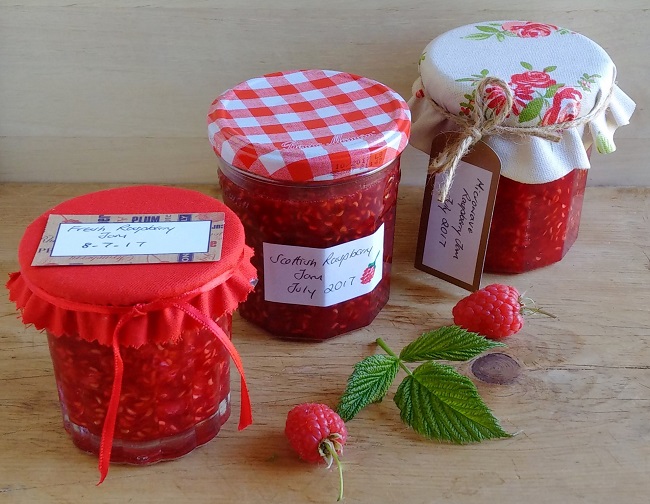
Homemade raspberry jam x 3. Image: Kathryn Hawkins
Raspberries love the Scottish climate (lots of rain!). The plump, juicy berries carry on ripening even on the most dreary of summer days. I have been picking my raspberries since the end of last month. Sadly, it looks like the end is nearly nigh; the supply is dwindling, but there are still enough to bag up for the freezer for later in the year, and then I will leave the rest for the blackbirds!
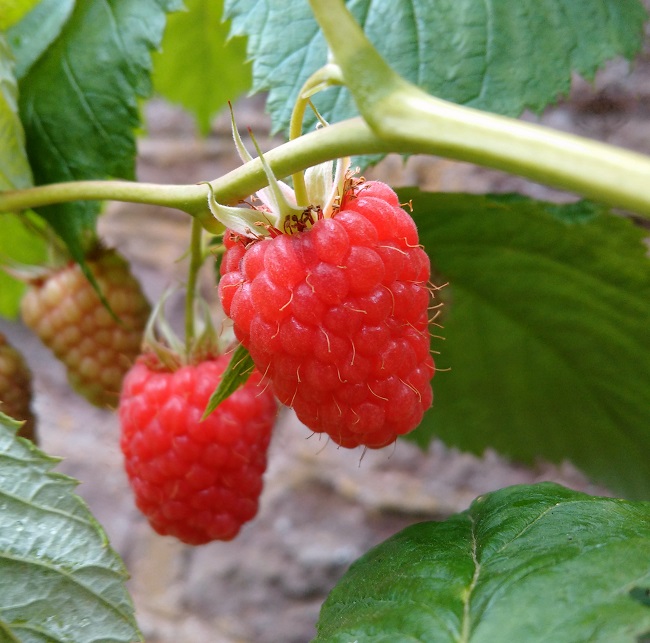
The bushes in the garden are now in their twelfth year, and have given me a good harvest every season. However, I think this autumn, it will be the time to plant some new canes. The variety I chose to grow is Glen Ample; selected for the large-sized fruit, and as the label said at the time, “perfect for cooking and jam-making”. And, they have certainly proven to be.
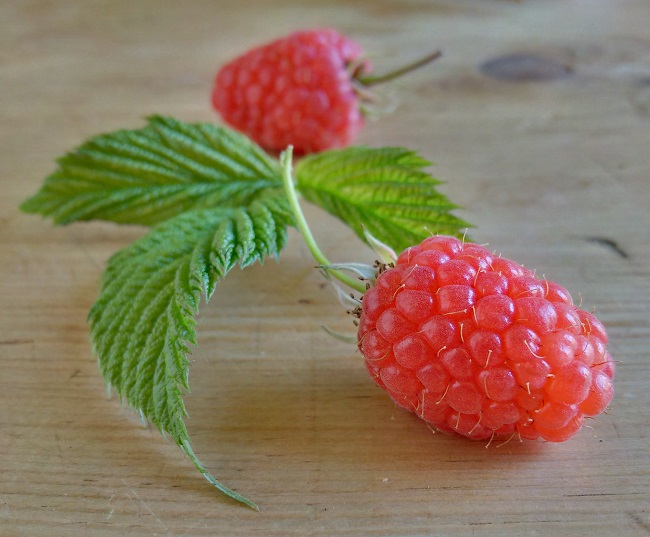
Glen Ample raspberries. Image: Kathryn Hawkins
If you’ve never made jam before, raspberry jam is the easiest to make. It practically sets as soon as the fruit and sugar boils. Frozen raspberries work equally as well for jam-making; whilst other fruit loses pectin (the natural setting agent found in many fruits) after freezing, I have found little difference in setting jam made with the frozen berries.
I have 3 methods for making my raspberry jam, depending on how much fruit I have picked, and how much time is available. The first method, is the traditional saucepan method, great if you have a large amount of fruit and a bit of time. This method works well with frozen berries – just let them thaw out in the saucepan you’re going to use to cook them in so that none of the juices are wasted.
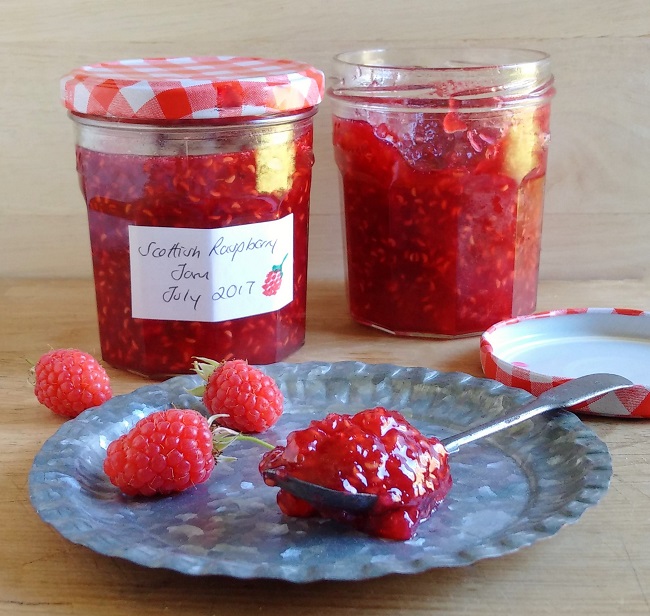
Traditional homemade Scottish raspberry jam. Image: Kathryn Hawkins
Traditional raspberry jam – use equal amounts of prepared fresh (or frozen) raspberries to granulated sugar. The yield is approximately the same as the weight of the 2 ingredients combined, so 500g raspberries and 500g sugar should give you 1kg of jam.
Heat the fruit by itself in a clean, large saucepan, stirring, until it steams and starts to break down. Mash it a little with a wooden spoon, reduce the heat and stir in the sugar. Heat, gently, stirring, until the sugar is completely dissolved, then raise the heat, bring the jam to a rapid boil, and stop stirring. Cook for 2 minutes. Turn off the heat and let the jam settle for about 5 minutes. Stir, and then transfer to clean, sterilised jars whilst still very hot. Seal immediately. Cool and label. In a cool, dark, dry cupboard, this jam will keep unopened for up to 12 months. Store in the fridge once opened, and eat within a month.
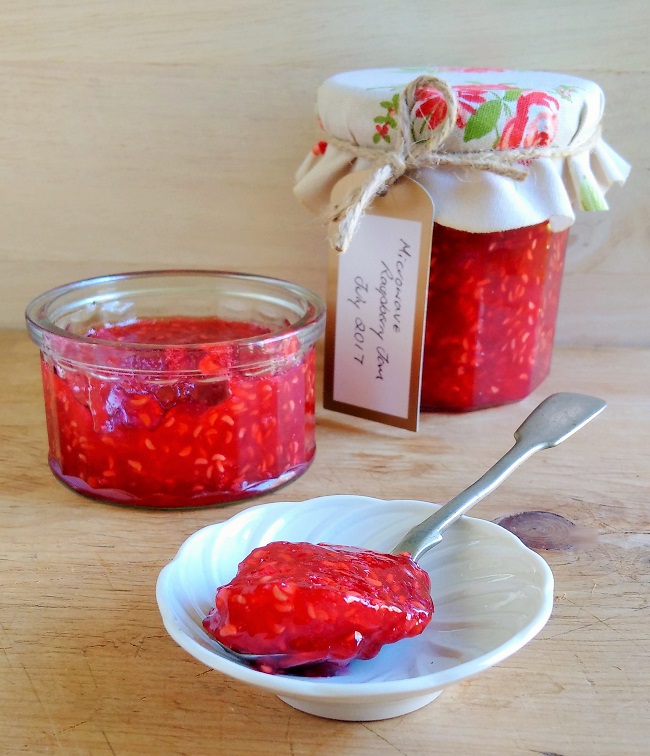
Microwave raspberry jam. Image: Kathryn Hawkins
Microwave raspberry jam – super-speedy; hassle free; the perfect jam method for smaller amounts of fresh berries (I haven’t tried this with frozen berries but I can’t see why it wouldn’t work). Use finer, caster sugar for this jam as it heats and dissolves more quickly. The jam has a good set, and I find the colour is brighter than the traditional method; the flavour is much the same. My microwave is 900W so you may need to adjust timings accordingly.
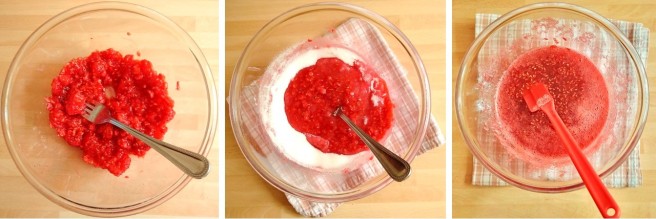
Wash and pat dry 250g prepared fresh raspberries and mash with a fork in a large, perfectly clean microwave-proof bowl ( the mixture needs room to boil in the microwave, so choose a good size to prevent the mixture boiling over).
Put 250g caster sugar in a microwave-proof bowl and cook on Medium for 10 minutes, stirring every 2 minutes. The temperature of the sugar should be around 80°C (I use a food probe to check). Carefully pour the sugar over the mashed raspberries and stir well – the mixture will be very sloppy at this stage.
Put back in the microwave, and cook on High for 3 minutes to reach boiling point, then boil for 2 minutes. The jam is now ready to put in jars and seal as above. The jam has the same keeping qualities as with the traditionally made jam above.
Steps to making microwave raspberry jam. Images: Kathryn Hawkins
My third method for making jam is probably the most delicious and it involves no cooking of the raspberries at all. You do need to select the perfect, unblemished, fresh specimens for best results, and wash the berries well before using. Use caster sugar for speedier heating and dissolving.
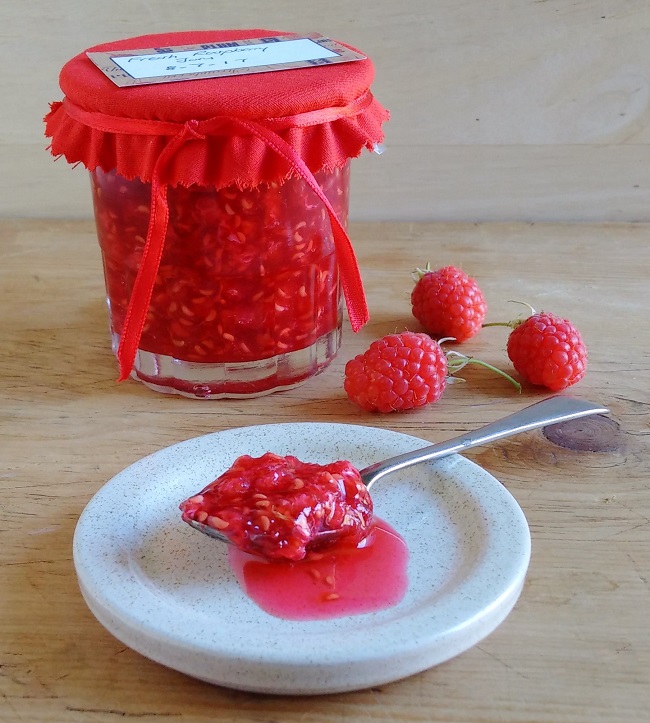
This fresh jam has a much softer texture than the other 2. You need to store it in the fridge – I find it keeps well for 4 to 6 weeks. It also freezes so you can keep it for longer and then take out small portions as and when you fancy. If you haven’t got a microwave, you can heat the sugar in a saucepan – just keep the heat very low and keep stirring the sugar so that it doesn’t melt or burn.
Fresh raspberry jam Image: Kathryn Hawkins
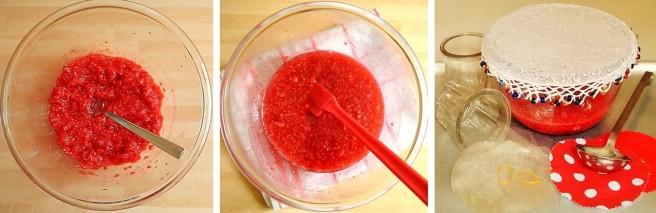
Fresh (uncooked) raspberry jam – wash and pat dry 250g prepared, unblemished, very fresh raspberries and mash with a fork in a large, perfectly clean, heat-proof bowl. Sit the bowl on a clean tea-towel.
Put 250g caster sugar in a microwave-proof bowl and cook on Medium for 15 minutes, stirring every 2 minutes. The temperature of the sugar should be around 120°C (I use a food probe to check). Carefully pour the hot sugar over the mashed raspberries and stir well – it will hiss and steam. Cover loosely and leave to cool completely, then spoon into clean, sterilised jars or containers. Seal and label, and store in the fridge or freezer.
Fresh raspberry jam preparation. Images: Kathryn Hawkins
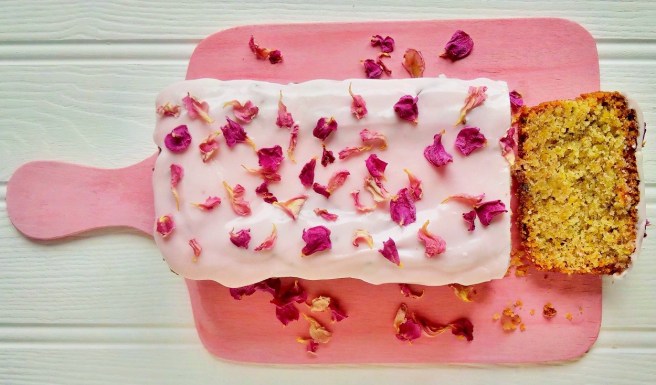
Rose and pistachio loaf cake. Images: Kathryn Hawkins
When I lived in London, a trip to the Edgware Road meant I could get my fix of my favourite Middle Eastern pastries. Full of chopped almonds and pistachios, the crisp, buttery, layers of filo pastry soaked in rose and lemon flavoured syrup were so sweet, my whole mouth “jangled” with the sensation of a sugar-overload.
Those days are long past me now, but this cake combines the flavours and some of the textures I love so much. In my post last week Cooking with rose petals – make your own rosewater, rose petal syrup and dried rose petals (gluten-free, dairy-free, vegan) you’ll find all the rose-scented recipes you need if you want to make this very floral cake from scratch. However, I realise that rose isn’t to everyone’s taste so if you fancy the cake without the floral flavours, it works very well with the grated rind of a lemon added to mixture instead of vanilla, and make the icing made up with freshly squeezed lemon juice instead of rosewater. It is utterly delicious however you flavour it, I guarantee!
Serves: 8-10
Ingredients
150g ground almonds
100g gluten-free plain flour blend (such as Dove’s Farm)
8g arrowroot (optional, but I add it to gluten-free cake mixes to help bind the textures together)
2 level teasp gluten-free baking powder (such as Dr Oetker)
100g finely chopped unsalted pistachio nuts
175g caster sugar
Pinch of salt
175g silken tofu
175ml sunflower oil
2 teasp good quality vanilla extract
3-4 tbsp rose petal syrup (optional)
To decorate:
115g icing sugar
2-3 tbsp homemade rosewater
A few drops natural pink food colouring
Dried rose petals
Preheat the oven to 180°C (160°C fan oven, gas mark 4). Grease and line a 1kg loaf tin. Mix all the dry ingredients together in a large mixing bowl. Make a well in the centre.
Blend the tofu, oil and vanilla extract together in a food processor or blender for a few seconds until smooth. Spoon the mixture into the centre of the dry ingredients and gradually combine all the ingredients together until well blended.
Spoon into the prepared loaf tin, smooth the top and stand the tin on a baking tray. Bake for about 1 hour 10 minutes, or until golden, firm to the touch and a skewer inserted into the centre comes out clean. Cool for 10 minutes, then if using rose petal syrup, skewer the top in several places and spoon over the syrup. Leave to cool completely, then remove from the tin, wrap and store for 24 hours to allow the flavours to develop.
To decorate. sieve the icing sugar into a bowl. Add sufficient rosewater to taste (Note: if you’re using distilled or shop-bought rose water, you will need to add less than homemade) then add a few drops of warm water and pink food colouring to make a smooth, spreadable icing.
Spread the icing on top of the cake and sprinkle with dried rose petals. Leave for a few minutes to allow the icing to set before slicing and serving. Enjoy!
Trug of freshly picked fragrant rose heads. Image: Kathryn Hawkins
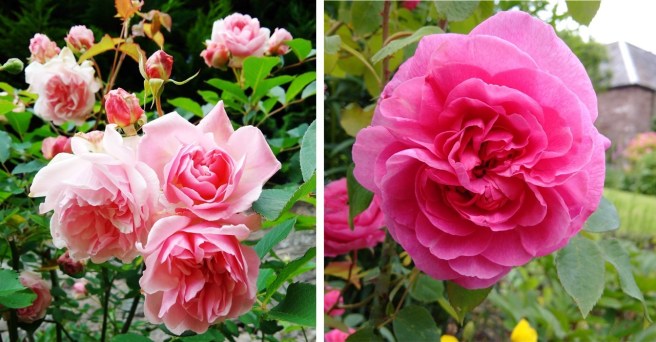
It is pleasantly fragrant in the garden at the moment, thanks mostly to two highly scented rose bushes. One variety is very old, a Felicia rose, with gnarled, stooped stems. However old it is, the foliage is vibrant green and healthy-looking and the bush produces an abundant supply of pale pink, Turkish Delight-scented flowers from late spring through to late summer. The other, a Gertrude Jekyll, I planted last year. The flowers are larger, deeper pink in colour and the fragrance slightly sweeter and more aromatic. Both roses have lots of petals per head, and are perfect for use in the kitchen.
Pale pink, Felicia rose, and the deeper pink, Gertrude Jekyll rose. Images: Kathryn Hawkins
The preparation for any recipe using rose petals is the same. Choose fragrant roses with undamaged petals; they need to be free from pests and chemical sprays. Rose heads are best picked when almost fully open and still fresh. Cut the stems in the morning before the sun becomes too hot – this helps preserve colour and fragrance. Carefully pull the petals from the head, keeping them as whole as possible, weigh them, and then place in a colander or strainer. Fill a bowl with cold water and dip the colander in the water to submerge the petals. Swirl gently the colander and then lift out. Shake gently to drain and shake further to remove the excess water.
The petals are fine to use damp for rosewater, syrup and any recipe where they are cooked in liquid, but if you want to dry them, spread them out carefully on sheets of absorbent kitchen paper or a clean tea towel and pat them dry with more paper or clean cloth. Leave to dry naturally, uncovered, at room temperature for about an hour or until they feel dry to the touch.
Making homemade rosewater. Images: Kathryn Hawkins
Rosewater – makes approx. 250ml
25g fragrant rose petals – approx. 4 full heads of rose petals
250ml boiling water
1 tsp vodka (optional) – this helps preserve the rosewater for slightly longer
Prepare and rinse the rose petals as described above. Place in a sterilised, clean preserving jar or heatproof jug, and pour over the boiling water.
Cover the top with a piece of muslin or kitchen paper and leave to steep until completely cold.
Strain through muslin into a sterilised, clean jug and then squeeze the muslin to obtain as much liquid as possible. Mix in the vodka if using.
Decant into a sterilised, screw-top bottle or jam jar. Seal, label and store in the fridge. Use within 4 to 6 weeks.
Note: homemade rosewater is weaker in dilution that the distilled rosewater you can buy ready-made, so you will probably need to use more in your recipes.
How to make homemade rose petal syrup. Images: Kathryn Hawkins
Rose petal syrup – makes 350ml
85g fragrant rose petals – approx. 9 full heads of rose petals
450ml cold water
265g caster sugar
1 tbsp. fresh lemon juice
Prepare and rinse rose petals as above, then place in a clean, large stainless steel saucepan. Pour over the cold water.
Bring to the boil and simmer very gently for 20 minutes – all the colour will come out of the petals. Strain through muslin into a jug, and then squeeze the muslin to obtain as much liquid as possible.
Return the liquid to the saucepan and add the sugar and lemon juice. Stir well over a low heat to dissolve the sugar – the liquid should now be, magically, very pink.
Bring to the boil and simmer for 10 minutes until lightly syrupy. Pour into sterilised bottles or jars and seal well. Label and cool. The syrup will keep unopened for 6 months, once opened keep in the fridge for up to a month.
Rose petal syrup is perfect for fruit salads; adding to cocktails; diluting with sparkling water for a refreshing summer cooler; for pouring over pancakes or for drizzling over freshly baked cakes.
Drying rose petals. Images: Kathryn Hawkins
Dried rose petals – prepare rose petals as described above and dry thoroughly. Spread out across the layers of a dehydrator, making sure they are well spaced out, keeping them in as much of a single layer as possible. Cover and dry at 40°C for 1 ½ to 2 hours, swapping the trays around every 30 minutes, until the petals are dry and parched. Leave to cool then place in a clear screw-top jar and store in a dark, dry place. Petals will fade after a few months, and are best used within 4 to 6 weeks. Sprinkle over salads, fruit desserts or use as a natural cake decoration.
Homemade rosewater, dried rose petals and rose petal syrup. Image: Kathryn Hawkins
My next post will be very rosy and will use all 3 rose recipes. See you in a few days!
My first vegetable harvest of 2017: home-grown courgettes. Image: Kathryn Hawkins
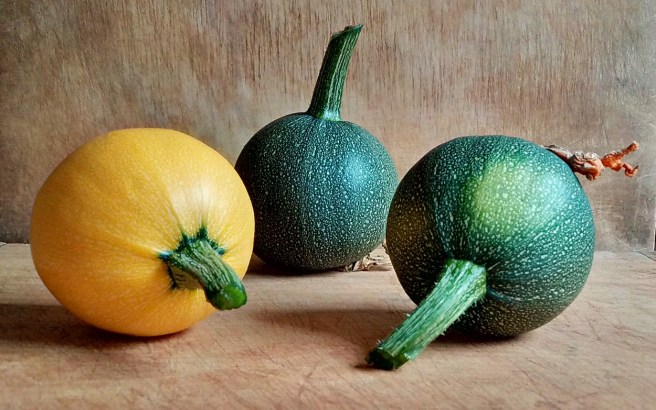
The mild spring weather and fine, early summer days has brought on my greenhouse vegetables a treat this year. It looks like I’m in for another bumper crop of courgettes. I thought I’d try to grow a new variety, and decided on this round, globe courgette called Tricolour. I only raised 4 plants from seed, so it is completely by chance that I’ve ended up with 2 yellow and 2 dark green vegetable plants. The third colour is pale green, and, I guess, is to be saved for next year.
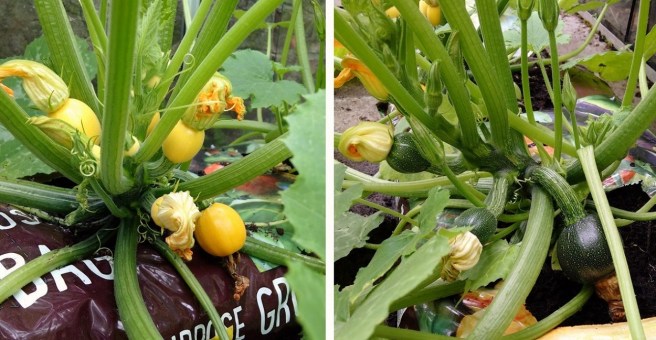
Providing you give them plenty of water, I think growing courgette plants offers little challenge to the gardener, and for a modicum of effort, you are usually rewarded with plenty of produce. I have mine growing in grow-bags; the roots don’t stretch very deep so it is an ideal way to grow them if space is limited.
My grow-bag courgettes. Images: Kathryn Hawkins
Here’s an easy recipe for a courgette starter or vegetable accompaniment. Chives or rosemary work well in the batter instead of thyme, if you prefer. If you’re not dairy-free, add a couple of tablespoons of freshly grated Parmesan cheese to the batter for extra flavour. The batter goes with any vegetable that’s suitable for deep-frying such as rings of onion, baby leeks, spring onions, sliced mushrooms, strips of pepper and carrot, sliced aubergine, etc.
Courgette and thyme fritters – serves: 4
Ingredients
400g courgettes
65g self-raising gluten-free flour blend (such as Dove’s Farm)
40g cornflour
Salt and freshly ground black pepper
1 teasp freshly chopped thyme leaves + extra for serving
90ml soda water
Vegetable oil for deep-frying
Wash and pat dry the courgettes. Trim away the ends and cut into thin slices, approx. ½ cm thick. Arrange in layers in a wide, shallow dish, sprinkling lightly with 25g of the flour as you go. Make sure both sides of each slice have a light coating of flour.
For the batter, mix the rest of the flour with the cornflour in bowl and season. Stir in the chopped thyme leaves. Using a small whisk, gradually blend in the soda water. Heat the oil for deep-frying to 180°C.
Carefully pour the batter over the courgette slices, lifting them up so that the batter seeps right through to the bottom of the dish – the slices don’t have to be completely covered in batter (this is a very light, crispy batter that cooks better when used sparingly) but make sure there is a little on each slice. Tongs are useful for lifting individual slices.
Cook the slices in the hot oil, in 4 batches, for 4-5 minutes, turning occasionally, until crisp and lightly golden. Drain well and keep warm whilst cooking the remaining slices. Serve as soon after cooking as possible, sprinkled with more fresh thyme and some crushed sea salt flakes.
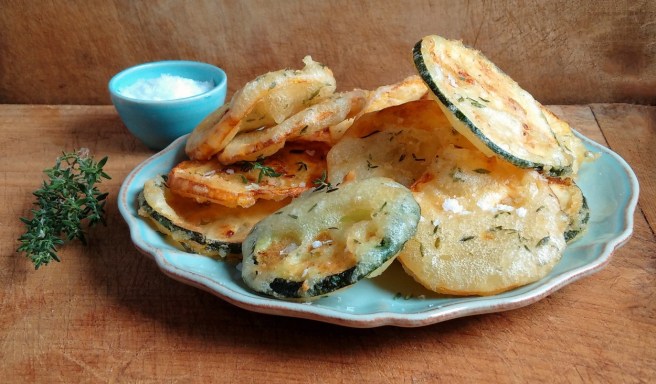
Courgette and thyme fritters. Image: Kathryn Hawkins
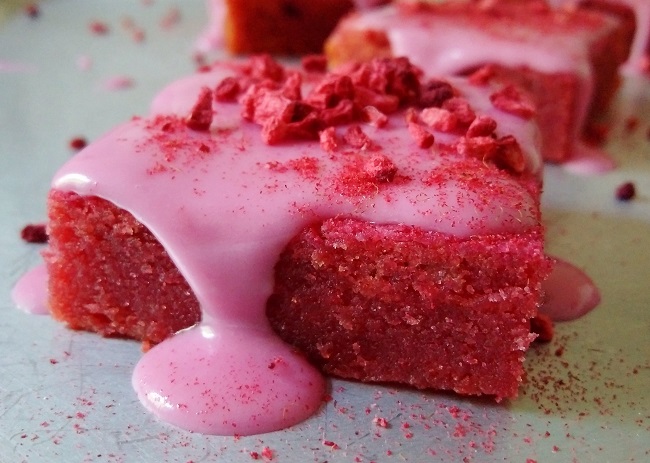
Beetroot and raspberry blondies Image: Kathryn Hawkins
After my post on Fresh globe beetroot a couple of weeks ago, I finally got round to a spot of beetroot-baking with the fine specimens I took pictures of. This is a great tasting recipe which makes the most of how naturally colourful the vegetable is.
You’ll find plenty of recipes for brownies and blondies, so now, here’s one for “pinkies”. For all intents and purposes, it is a blondie recipe with cooked beetroot added to it. I used natural raspberry extract to flavour my recipe but a good quality vanilla extract or freshly grated orange rind would work just as well. As with the more traditional blondie (and brownie) recipes, this one is better the day after baking. By the way, if you cook beetroot from raw, the cooking water turns very pink. I used a little of this to make the icing. The pinkies also freeze well. By the way, the recipe also works with cooked carrot instead of beetroot.
100g white chocolate drops (or dairy-free alternative)
75g butter (or dairy-free alternative)
75g caster sugar
75g silken tofu
115g cooked, peeled beetroot in natural juice
75g gluten-free self raising flour
75g ground almonds
¼- ½ tsp natural raspberry extract
150g icing sugar
2-3 tsp beetroot cooking water or water and natural pink food colouring
Freeze-dried raspberry pieces, to decorate
Preheat the oven to 180°C (160° fan oven, 350° F, gas mark 4). Grease and line an 18cm square cake tin. Put the chocolate chips, butter and sugar in a saucepan and heat gently to melt together. Cool for 10 minutes.
Meanwhile, blend the tofu and beetroot together to make a purée.
Sieve the flour into a bowl. Add the ground almonds, beetroot purée and melted chocolate mixture. Add the extract and mix well to make a smooth batter.
Spoon into the prepared cake tin and bake for about 30 minutes until lightly crusted but slightly soft underneath. Cool for 20 minutes then turn on to a wire rack to cool completely. Wrap in greaseproof paper and foil and store for 24 hours to allow the texture and flavour together.
Preparation of beetroot and raspberry blondies. Images: Kathryn Hawkins
To decorate. remove the wrappings and cut the cake into 9 equal squares. Sift the icing sugar into a bowl. Stir in a little beetroot or tap water to make a smooth, spreadable icing. Add pink colouring if using.
Spoon a dollop of icing of over each piece of cake and spread to cover the tops, allowing it to drip down the sides. Sprinkle with freeze-dried raspberries. Leave to set for about 30 minutes before serving.
Slice of beetroot and raspberry blondie. Image: Kathryn Hawkins
No eggs, no added fat nor added sugar, gluten-free and dairy-free, these loaf cakes will probably sound either a bit boring, or too good to be true, depending on your point of view. Actually, they are extremely tasty and a wee bit too eatable for my liking!
This recipe is a great way to use up all those odds and ends of dried fruit you often have leftover. You can add nuts and seeds to the mix too if you like. Just after Christmas, I made up a bag of dried and candied fruit that was getting towards its use-by date, and put it in a tub the freezer, where it stayed until this week, when a craving for fruit cake came upon me. Combined with a recently opened bag of dried cranberries I had in the fridge, the frozen mix of chopped dried apricots, red and green glacé cherries and golden sultanas made up a colourful addition to my cake mix.
Post-Christmas homemade tutti frutti mix. Image: Kathryn Hawkins
The recipe below will fill 8 mini loaf tins or 1 large (1kg) loaf tin. The cakes taste better if left until the day after baking – the flavour and texture improves on keeping. You will be rewarded if you can leave it alone for a few hours! They also freeze well. I find that the lower content of fat in this recipe means that after 3 or 4 days, the cakes begin to lose their freshness; it is well worth freezing any that you’re not going to eat within a couple of days of baking, in order to enjoy them at their best.
Mini loaf tins. Image: Kathryn Hawkins
Makes: 8 minis or 1 x 1kg loaf
250g stoned dried dates, chopped
2 tsp good quality vanilla extract
150g gluten-free plain flour blend (such as Dove’s Farm)
Preheat the oven to 170°C (150°C fan oven, gas mark 3). Grease 8 x mini loaf tins or 1 x 1kg loaf tin, or line with paper loaf tin liners, if preferred. Put the chopped dates in a saucepan and pour over 350ml water. Bring to the boil, simmer for 2 minutes, then turn off the heat and leave to cool completely. Blitz with a hand blender or in the food processor to make a smooth purée. Stir in the vanilla extract.
Sieve the flour, baking powder, arrowroot and chai masala or spice into a bowl and stir in the ground almonds and dried fruit. Add the date purée and then mix until well blended.
Divide equally between the prepared tins and smooth over the tops. Place on a baking tray and bake for about 35 minutes for the individual cakes or about 1 hour for a larger loaf cake – a skewer inserted into the centre will come out clean when the cake mixture is cooked. Cool for 10 minutes, then turn onto a wire rack to cool completely. For best results, wrap the cakes well or store in an airtight container until the next day before serving.
Tutti frutti cake mix ready for baking. Image: Kathryn HawkinsPacked full of colour and flavour. Image: Kathryn Hawkins