Smoky Tomato Jam (gluten-free, dairy-free, vegan)

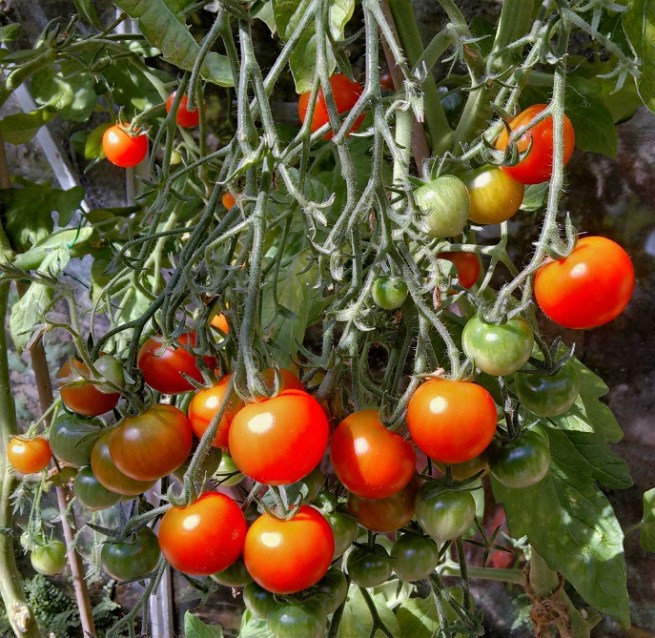
Late_ripening_homegrown_tomatoes
Homegrown early Autumn tomatoes. Image copyright: Kathryn Hawkins

This is the time of year when I often get very busy with my work and have little time to spend in the garden or the kitchen (outside work hours). However, making preserves is something I try to find time for no matter what else needs to be done. There is so much produce around at the moment, practically begging to be put in the pot and made into jam or chutney, I can’t ignore it.

One of my most popular preserves is, thankfully, one of the easiest to make, so this weekend I got the large preserving pan out of the cupboard and set about cooking up this year’s first batch of Smoky Tomato Jam. It’s really a smooth chutney, but the texture lends itself better to being called jam. One of the best thing about this particular preserve is that it’s ready to be eaten immediately, as well as being a good “keeper”.

Fresh_fruit_and_vegetables_for_jam_making
Ingredients for tomato jam making. Image copyright: Kathryn Hawkins

Makes 5 x 325ml jars

  • 700g fresh prepared ripe, but firm, tomatoes, roughly chopped
  • 350g prepared red onion, roughly chopped
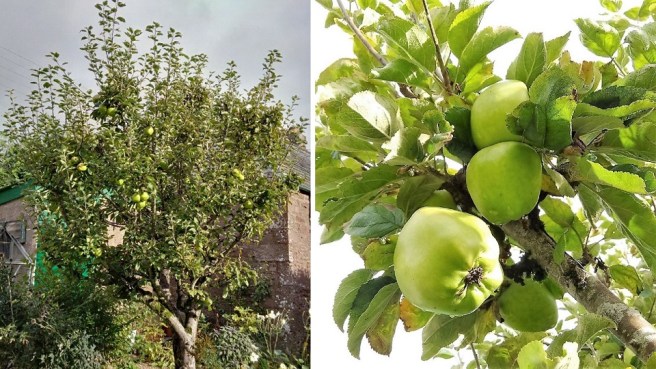
  • 550g prepared cooking apples, roughly chopped
  • 350ml red wine or cider vinegar
  • 2 bay leaves
  • 2 large sprigs rosemary
  • 275g granulated sugar
  • 2 tsp each of salt, ground cumin and smoked paprika
  1. Put the tomatoes and onion in a food processor and blitz for a few seconds until well chopped and pulpy. Transfer to a large saucepan.
  2. Put the apples in the food processor with half the vinegar and blitz for a few seconds until well chopped. Transfer to the saucepan containing the tomato and onion mixture.
  3. Pour over the remaining vinegar and add the bay leaves and rosemary. Bring to the boil, stirring occasionally, and then simmer gently for 10 minutes until softened.
  4. Stir in the sugar over a low heat, until dissolved, then raise the heat and simmer steadily for 15 to 20 minutes, stirring occasionally, until it reaches the consistency of thick jam. Turn off the heat, discard the herbs and stir in the salt and spices.
  5. Ladle into warm, sterilised jars and seal with non-corrosive lids. Allow to cool and store for 6-8 months in a cool, dark cupboard. Once opened, keep in the fridge and use within 2 weeks. Delicious with all cured meats, smoked fish, and cheese dishes.
Homemade_tomato_preserve
Jars of freshly made Smoky Tomato Jam. Image copyright: Kathryn Hawkins

In a bit of a pickle

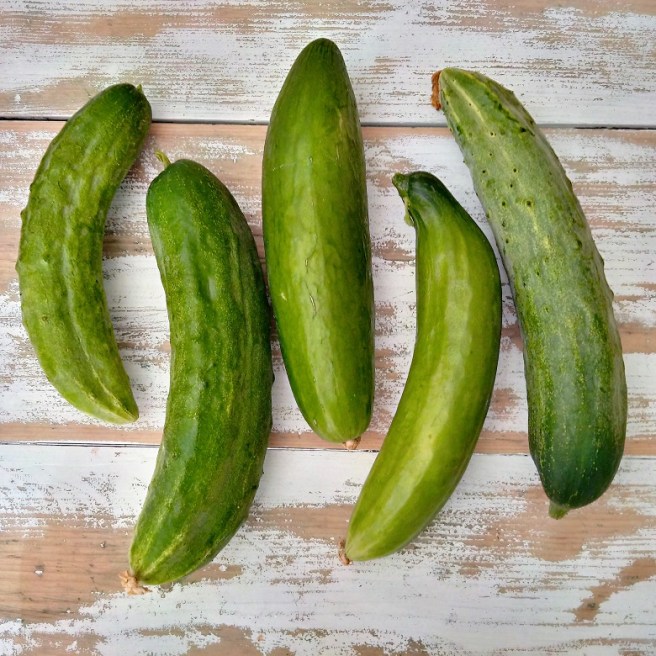
Cucumber_harvest
Homegrown cucumbers. Image copyright: Kathryn Hawkins

For several years now, I have been a successful cucumber grower. So much so, that even though I reduce the amount of plants I raise each year, I always end up with a glut. Whilst I enjoy eating cucumber raw in salads, and they are very good lightly cooked in a stir fry, I have been at a loss as to what else to do with them.

Whilst leafing through an old cookery book for inspiration, I came across an intriguing recipe called Bread and Butter pickle. The name drew me in, and to my delight, it is a real gem. It is one of the best pickles I have ever made, and so easy to make. I hope you like it as much as I do.

Makes 5 x 325ml jars

  • 1kg prepared cucumbers, chopped into 1.5cm pieces
  • 250g prepared red onion, finely chopped
  • 3 tbsp sea salt
  • 550ml white wine vinegar
  • 175g granulated sugar
  • 2 bay leaves
  • Pinch of dried chilli flakes
  • ¼ tsp ground black pepper
  • 1 tsp each of mustard seeds, coriander seeds and cumin seeds, coarsely ground
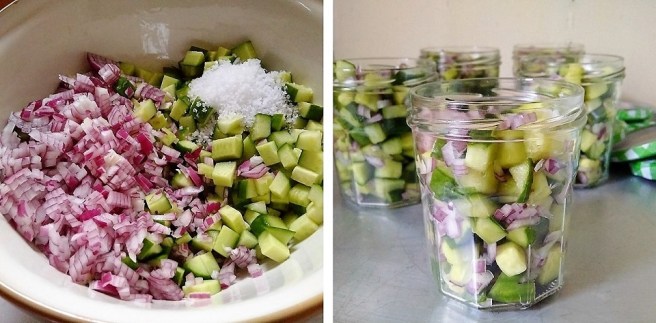
  1. Mix the cucumber, red onion and salt together in a large, clean, china or glass bowl. Leave to stand at room temperature, lightly covered, for 1 hour.
  2. Drain the vegetables in a fine-holed colander or strainer. Rinse very well in cold running water, then dry very well on absorbent kitchen paper. Pack into 5 x 325ml sterilised jam jars.

    Preparation_of _vegetables_for_cucumber_pickle
    Preparation of vegetables for Bread and Butter Pickle. Image copyright: Kathryn Hawkins
  3. Put the vinegar in a saucepan and add the remaining ingredients. Heat gently, stirring, until the sugar dissolves. Raise the heat and boil for 3 minutes. Discard the bay leaves.
  4. Pour the hot vinegar over the vegetables, making sure they are completely covered. Seal tightly with non corrosive, screw-top lids. Leave to cool, then label, and store in a cool, dry place for at least 3 months before opening. Delicious served with smoked fish or cold cuts. I spoon the pickle over chilli beef tacos – delicious!

    Homegrown_cucumber_pickle
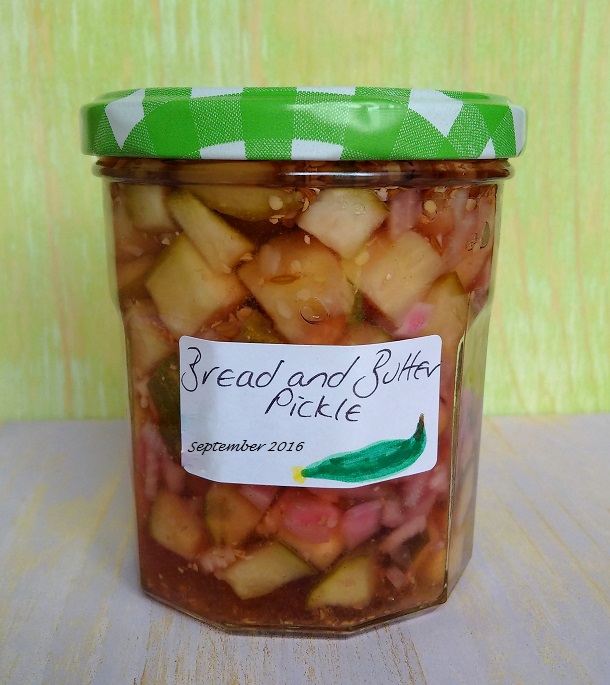
    Homemade cucumber pickle. Image copyright: Kathryn Hawkins

Rhubarb and custard ice lollies (gluten-free)

Homegrown_rhubarb
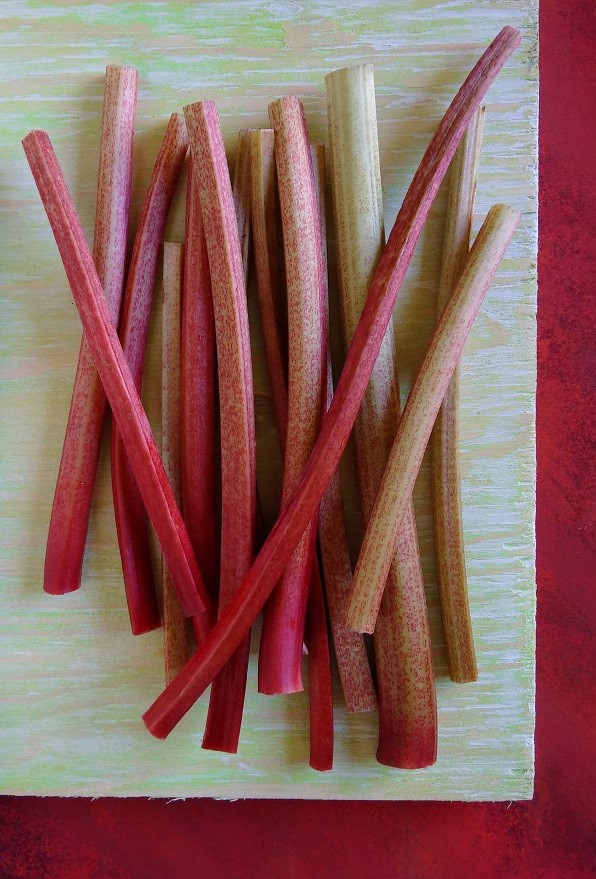
My final rhubarb harvest of the year. Image copyright: Kathryn Hawkins

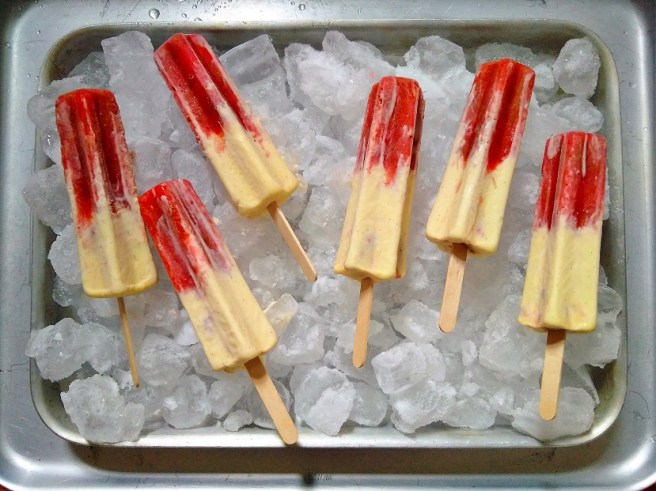
Another sign this weekend that summer is fading fast, I picked my final stems of rhubarb for the year. Rather than freeze it for later use, I decided to cheer myself up and make a batch of delicious rhubarb and custard ice lollies. Here’s the recipe.

Makes: 6 x 100ml lollies

  • 250g prepared rhubarb stems, washed and chopped
  • 75g granulated sugar
  • 6 tbsp water
  • 150ml ready-made (gluten-free) custard – at least double the sweetness of your usual custard (you need the extra sugar to prevent the custard from freezing too solid and icy)
  • 150ml double cream
  • 1 tsp vanilla paste
  1. Put the rhubarb in a shallow pan with the sugar and water. Heat gently, stirring occasionally, until the sugar has dissolved and the rhubarb is beginning to steam.
  2. Cover and simmer gently for 7-8 minutes until soft and collapsed. Remove from the heat and mash with a fork. Leave to cool completely. If preferred, blitz in a blender for a few seconds to make a purée.
  3. Mix the custard with the cream and vanilla paste, and chill until required.
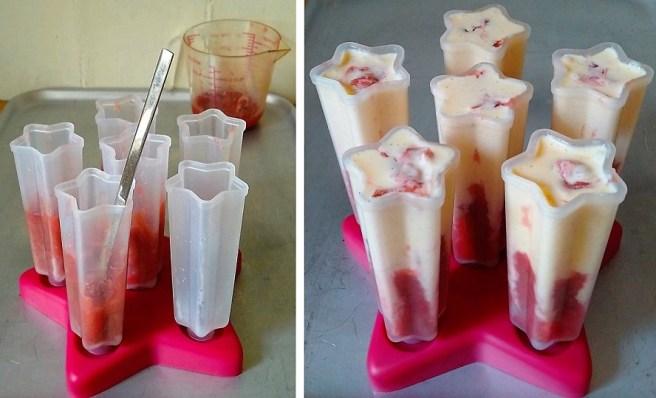
  4. Using a long-handled teaspoon, divide the rhubarb between 6 x 100ml ice lolly moulds. Pour in the custard mix and then marble the 2 layers together a little using the spoon or a skewer.

    Spooning_in_stewed_rhubarb_and_custard_mix
    Assembling rhubarb and custard ice lollies. Image copyright: Kathryn Hawkins
  5. Place the lolly moulds in the freezer for 1 ½ to 2 hours until semi frozen, then push a wooden lolly stick into the centre of each. Put back in the freezer for at least 2 hours until frozen solid.
  6. To unmold, dip the lolly moulds in very hot water for a few seconds, and then pull out by the stick. Serve immediately or pop back in the freezer on a tray lined with baking parchment until ready to serve.

    Frozen_rhubarb_and_custard_ice_lollies
    Rhubarb and custard ice lollies. Image copyright: Kathryn Hawkins


Preserving the Summer (Semi-cuit tomatoes – gluten-free, dairy-free, vegan)

Freshly_picked_homegrown_tomatoes
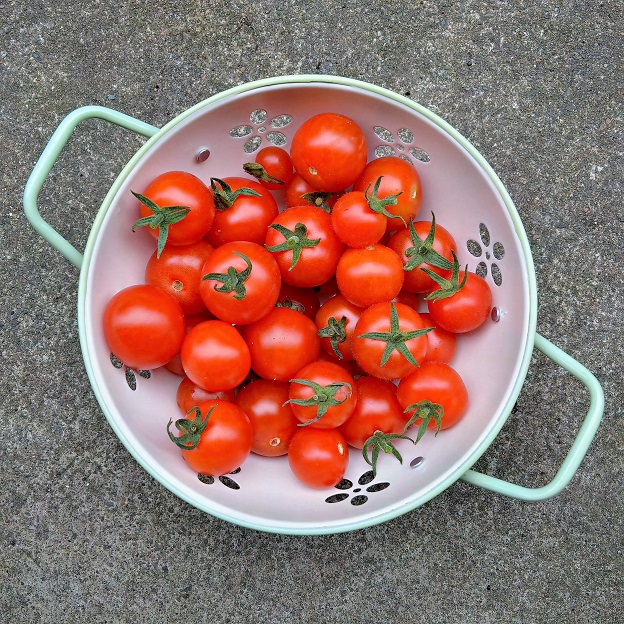
Home-grown tomatoes ready for the dryer. Image copyright: Kathryn Hawkins

I’ve been picking tomatoes from my greenhouse for over a month now, and there are still plenty to ripen. Whilst I am enjoying them fresh, I do like to make preserves, and first up this year is to steep a few tomatoes in olive oil. A couple of years ago I bought myself a dehydrator, and  I have been drying various homegrown produce ever since. Semi-cuit (semi-dry) tomatoes make a sweet, indulgent and delicious out-of-season treat for later in the year, so these wee treasures are heading for the dehydrator right away.

Dehydrating_tomatoes
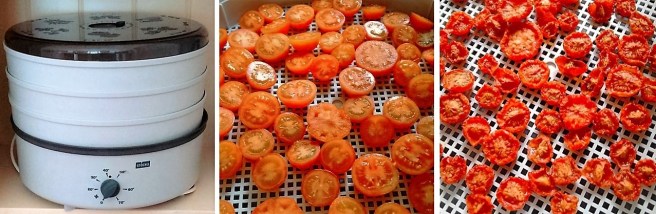
My Stockli dehydrator and prepared tomatoes. Image copyright: Kathryn Hawkins

Dehydrating is a very straightforward process. Wash and pat dry the tomatoes; if they are small to medium size, cut them in half – you may want to slice larger tomatoes or just “cook” them for longer. My dehydrator has 3 shelves; I divide up the tomatoes between the shelves, making sure there is some air space between them, pop the lid on and set the temperature to 70°C (158°F). This batch of 650g will take 6-7 hours to dry down so that they are still a bit fleshy and not too leathery. The final yield will be about 150g.

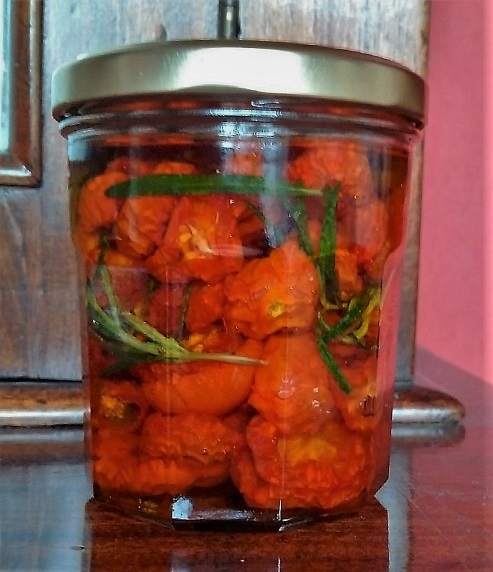
Once the tomatoes have cooled, I will pack them into a sterilised jam jar with a screw top lid, and add a few sprigs of fresh rosemary, bay and thyme from the garden. Pour over good quality extra virgin olive oil to cover the tomatoes completely and screw on the lid tightly. Stored in a cool, dark, dry cupboard, they will keep for about 6 months – so perfect for festive eatings. Once opened, store them in the fridge for up to 6 weeks – the oil will turn cloudy and clumpy when chilled, but becomes liquid again at room temperature. Roll on Christmas!

Semi-cuit_tomatoes_preserved_in_olive_oil_with_herbs
Semi-cuit tomatoes with olive oil and rosemary. Image copyright: Kathryn Hawkins

Rose marshmallow (gluten-free, dairy-free)

Pink_rose_marshmallow
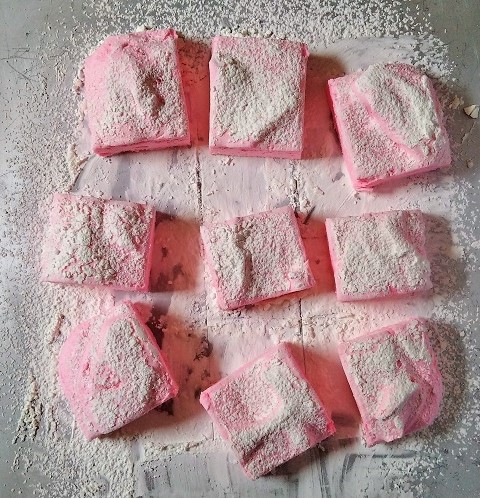
Homemade rose marshmallow. Image copyright: Kathryn Hawkins

One of my favourite flavours married with a much loved sweetie are a match made in heaven in this recipe. Some shop-bought marshmallow can be a bit on the chewy side to my taste, so my version may be a bit different to what you’ve come to expect. This recipe makes a lighter, fluffier marshmallow, but if you want a firmer texture, it is worth experimenting by adding more gelatine.

If you can make meringue, then marshmallow is just one step on. You will need a sugar thermometer to take away the guesswork when making a sugar syrup. Other than that, the most important thing I can say before you get started, is to get yourself organised and have everything lined up and ready to go.

Makes 1 x 18cm square of marshmallow which cuts into 9 chunky pieces

  • 5 leaves good quality gelatine
  • 2 medium egg whites or 2 single egg sachets dried egg white powder
  • 100g granulated sugar
  • 50g liquid glucose
  • Pink food colour gel
  • Good quality rose water (I use Nielsen Massey)
  • 25g cornflour
  • Sugared rose petals to decorate
  1. Line a deepish 18cm  square cake tin with baking parchment. Cut up the gelatine into small pieces and place in a small heatproof bowl. Add 75ml cold water and leave to soak for 5 minutes, then place in the microwave and cook on High for 30-40 seconds until dissolved – microwave in 10 second blasts to avoid overheating, and do not boil. Leave aside.
  2. Meanwhile, whisk the egg whites or powder in a large, grease-free, heatproof bowl until very stiff.
  3. Put the sugar in a small saucepan with the glucose and 50ml cold water. Heat gently, stirring, until melted, then raise the heat and let the mixture bubble until it becomes clear and syrupy and reaches 118ºC on a sugar thermometer.
  4. Remove the syrup from the heat. Start whisking the egg whites again and gently pour over the hot syrup in a slow and steady stream. Keep whisking as you pour in the liquid gelatine.
  5. Continue to whisk to form a thick and glossy meringue-like mixture – this may take up to 5 minutes depending on how much heat I retained.
  6. Working quickly before the mixture begins to set add sufficient food colour gel and rose water to taste.
  7. Scrape the marshmallow into the lined tin and smooth over the top as best you can. Leave to cool, then put in a cool place (not the fridge) for 3-4 hours until completely set and firm to the touch.
  8. To finish, dust a tray with the cornflour and turn the marshmallow on to it. Peel away the parchment. Using a large bladed knife, cut into 9 squares and toss in the cornflour to coat lightly. The marshmallow is ready to eat, or it will store, layered on pieces of baking parchment in an airtight container, in a cool place for up to 2 weeks. Note: homemade marshmallow does not like the fridge and will start to dissolve in damp conditions.

For an extra rose flavour, top each piece with a sugared rose petal – I gave a recipe for these in my July 19th 2016 post.

pink_rose_flavoured_marshmallow
Homemade rose marshmallow. Image copyright: Kathryn Hawkins


Yellow courgette and lemon cake (gluten-free, dairy-free)

Homegrown_yellow_courgettes
Home-grown yellow courgettes. Image copyright: Kathryn Hawkins

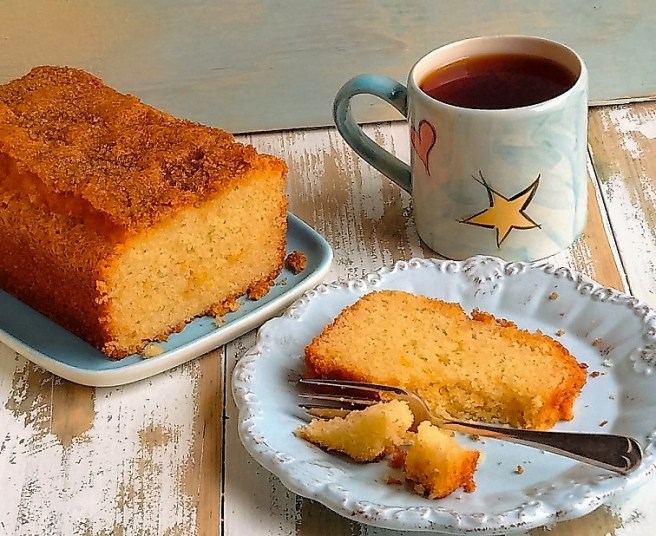
I’ve had a bumper crop of green and yellow courgettes this year, and they are still ripening thick and fast. Apart from enjoying them as a vegetable, they do make a good substitute for grated carrot in a cake. After a successful weekend bake-in, I thought I’d share my recipe for courgette and lemon loaf cake with you. It is moist and tasty, and improves with keeping (if you can leave it alone!). Perfect sliced and eaten on its own with a cup of tea, or served as a dessert with coconut yogurt and blueberry compote. Enjoy!

Serves: 8-10

  • 2 medium eggs
  • 150ml sunflower oil
  • 150g caster sugar
  • Finely grated rind 1 unwaxed lemon
  • 115g yellow courgette, trimmed and grated
  • 50g ground almonds
  • 150g plain gluten-free flour blend (such as Dove’s Farm)
  • 7g gluten-free baking powder (such as Dr Oetker)
  • 3 tbsp Demerara sugar
  1. Preheat the oven to 180°C (160°C fan oven, gas mark 4). Line a 1kg loaf tin with a baking parchment liner and sit the tin on a baking tray.
  2. In a mixing bowl, whisk together the eggs, oil, sugar and lemon rind. Stir in the courgette and ground almonds.
  3. Sift the flour and baking powder on top and carefully mix all the ingredients together. Pour into the tin and sprinkle thickly with Demerara sugar.
  4. Bake for 55 minutes to 1 hour until risen, golden and firm to the touch – insert a skewer into the centre of the cake, it should come out clean if the cake is cooked. Cool for 30 minutes before removing from the tin and transferring to a wire rack to cool completely. Wrap and store for 24 hours before serving to allow the flavour and texture to develop. The cake freezes well, leave to cool then wrap and freeze for up to 6 months. Allow to thaw at room temperature, in the freezer wrappings.

    Gluten-free_courgette_and_lemon_loaf_cake
    Yellow courgette and lemon cake. Image copyright: Kathryn Hawkins


Geranium leaf sugar (gluten-free, dairy-free)

pelargoneum _graveolens
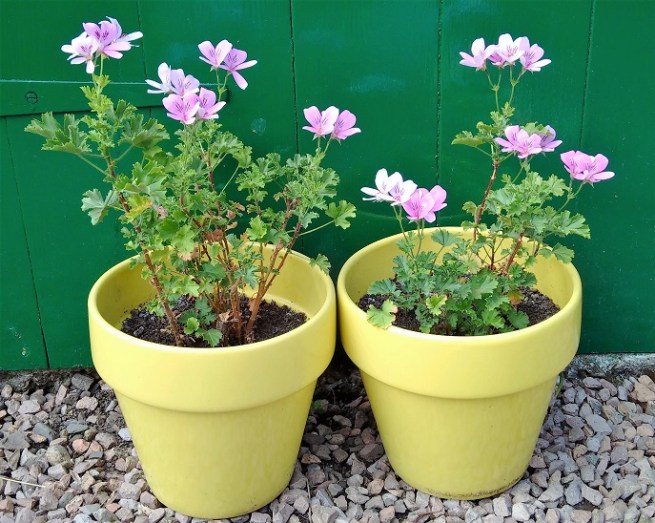
Potted rose geranium (Pelargoneum graveolens). Image copyright: Kathryn Hawkins

I’m not a huge fan of cultivated geraniums growing in pots, but I do like the wild pelargoniums and the fragrant, culinary variety, pictured above. The leaves smell of exotic, spiced rose and the petals are not only very pretty, but make a lovely addition to a summer salad – see my post: Salad herbs and edible flowers on July 16th, 2016. The leaves make a lovely flavouring for syrups and sugars, perfect for livening up a fruit salad.

The plants aren’t hardy enough to survive outside without shelter and consistent good weather, so for convenience, in the summer months, they most often stay in my greenhouse, in pots. I bring them indoors once the temperature drops and the days get shorter in length.

Homemade_rose_geranium_sugar
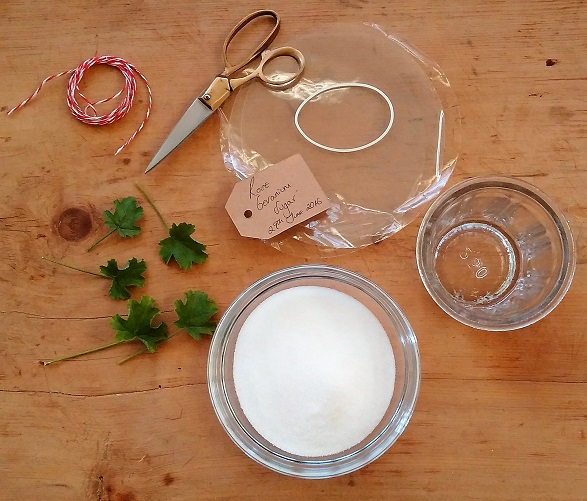
Ingredients for rose geranium sugar. Image copyright: Kathryn Hawkins

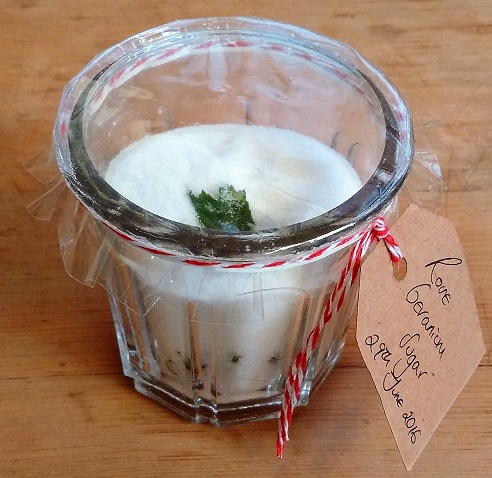
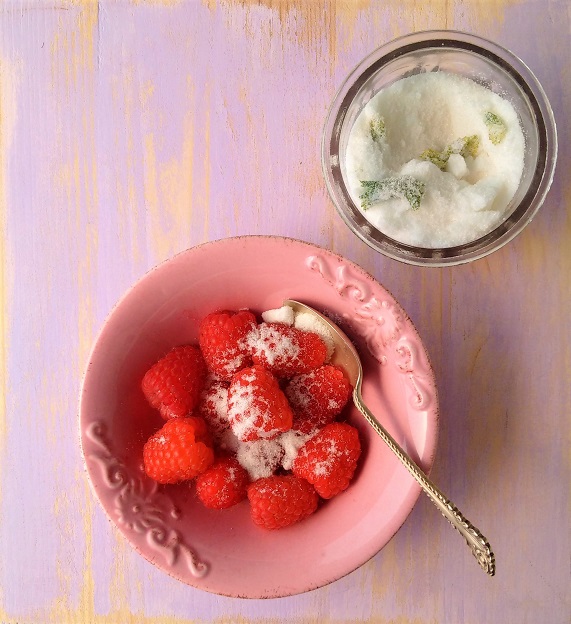
Choose small to medium sized leaves, undamaged, and snip off the stalks. Rinse gently in water, then pat dry with kitchen paper, taking care not to bruise them, and making sure they are completely dry. Put 125g caster sugar into a small bowl and mix in the leaves, then transfer to a small clean, dry, sealable jar. Cover securely and label. Store in a cool, dark cupboard for about a month before using. Discard the leaves before serving. Ideal for sprinkling over berry fruits – especially raspberries and strawberries – pancakes and cakes. The sugar will keep for 3 to 4 months; the sugar will form clumps if condtions are damp.

Rose_geranium_sugar_in_a_jar
Homemade rose geranium sugar. Image copyright: Kathryn Hawkins
Rose_geranium_sugar_sprinkled_over_fresh_raspberries
Fresh raspberries with rose geranium sugar. Image copyright: Kathryn Hawkins

End of July harvest

Homegrown_end_of_July_fruit_and_vegetables
Home-grown rhubarb, tomatoes, runner beans, cucumber, raspberries, Morello cherries, yellow courgettes and red gooseberries, all harvested in the past fortnight.

Time for a recap on what’s been happening in my fruit and veg garden. It’s been a mixed bag of weather this month, although it doesn’t seem to have affected anything I’ve been growing for the kitchen. In fact, even though the sun hasn’t been shining as often as I’d have liked, I have never had tomatoes ripen so early in the year – it’s usually September before I get my first taste!

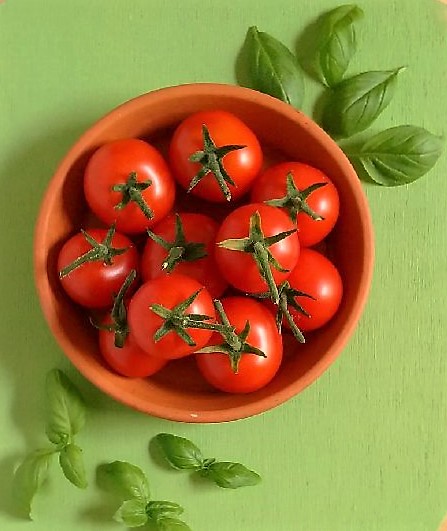
Home-grown tomatoes, above all else, are the best produce to grow for flavour and sweetness, and remain unrivalled by any tomatoes you can buy. I grow them in my unheated greenhouse, planted in grow-bags. I never put the picked fruit in the fridge, I store them in a cool part of the kitchen and eat them as soon as possible after picking. Served simply with some fresh pot basil, a little salt and pepper, and drizzle of balsamic vinegar, this is one of my greatest foodie pleasures.

Homegrown_Gardener's_Delight_tomatoes_and_fresh_basil
My first harvest of Gardener’s Delight tomatoes with fresh pot basil leaves. Image copyright: Kathryn Hawkins

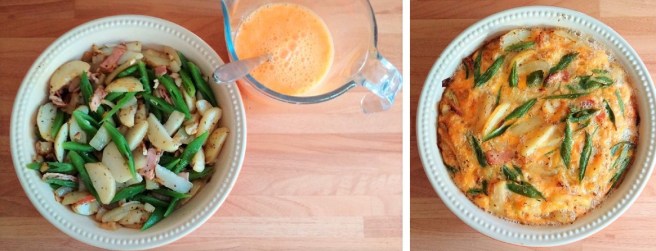
I have been picking runner beans for a couple of weeks now and, with lots of flowers still blooming, I hope to be enjoying them for a few weeks longer. I don’t usually do much with them, other than chop them up, cook them lightly, and enjoy them as a vegetable in their own right. Occasionally, I make a frittata with any leftover cooked veg and combine runner beans with cooked potato, onion – sometimes a little bacon if I have any – some seasoning and chopped fresh thyme. Delicious served warm or cold with salad.

Leftover_cooked_vegetable_frittata
Runner bean and potato frittata (gluten free). Image copyright: Kathryn Hawkins

Most of the fruit I grow gets made into jams and jellies, or I freeze it for cooking later in the year. The cherries were made into a compote – I didn’t have enough for jam this year. Rhubarb is cooked in muffins, stewed as a simple dessert, or cooked as pie filling. I have just made rhubarb and custard ice lollies for the first time, so it will be interesting to see how they turn out.

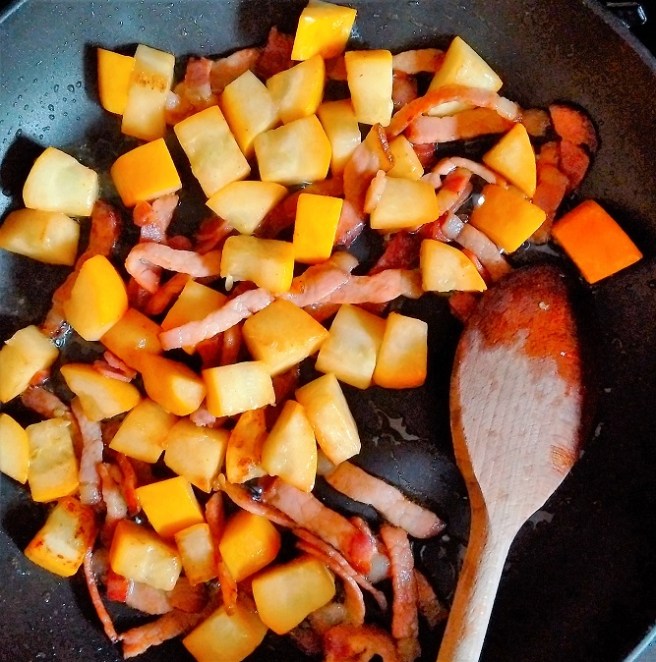
The yellow courgette plants are growing like triffids in the greenhouse. Thank goodness I only planted 2! They are both producing heavily, so it looks like I will have to get creative with my courgette cookery. I prefer the yellow variety as I find the flesh firmer and there is slightly more of an earthy flavour to them. I also love the colour. I have been chopping them and simply frying them in butter with smoked bacon and black pepper, and then stirring in a little bit of maple syrup before serving. Very tasty with just about anything.

Yellow_courgette_with_bacon_and_maple_syrup
Pan-cooked yellow courgette with bacon and maple syrup (gluten and dairy free). Image copyright: Kathryn Hawkins


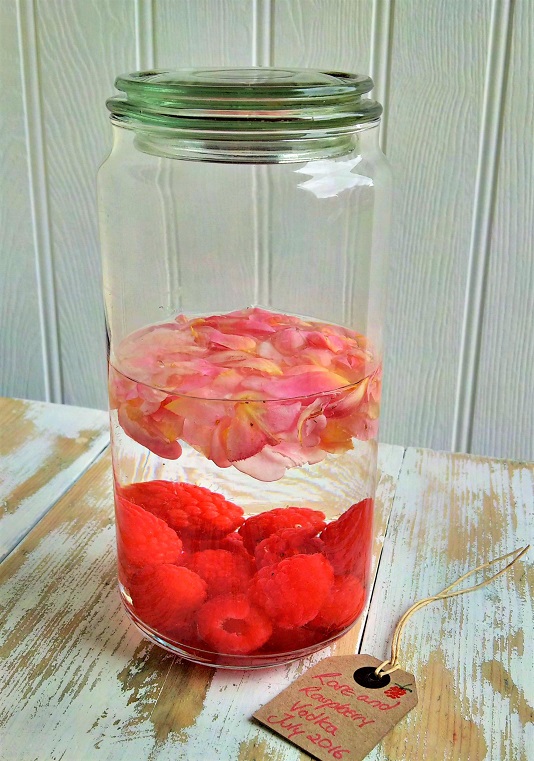
Rose and raspberry vodka (gluten-free, dairy-free)

Glen_Ample_raspberries
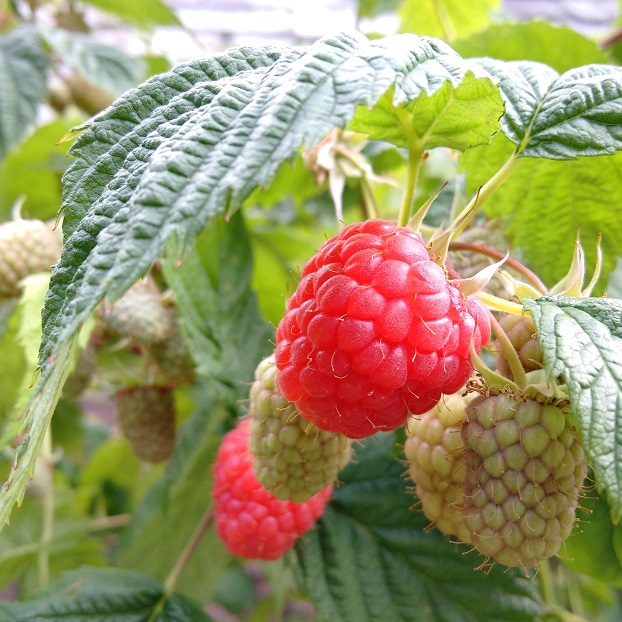
Home-grown Scottish raspberries. Image copyright: Kathryn Hawkins

Raspberries grow very well here in central Scotland. They love all the rain we have! Unlike other species of berries I grow, raspberries seem to ripen without the sunshine, and I am always taken aback to see how quickly they turn from pale pink to rich pinkish red, even during the dullest days of the Summer.

The first plants I bought for the garden when I moved here were 6 raspberry canes. That was Autumn 2004, and here we are some 11 ½ years later, still enjoying their produce. The variety is Glen Ample; I chose this raspberry because the fruits are large and juicy, perfect for jam making. I have been picking the berries for about 3 weeks now, and already, I have packed away over 5kg in the freezer. I rarely have time to make jam in the summer, so I do my preserving from the frozen berries later in the year. Raspberries are one of the most successful frozen fruits for jam making, they lose little of their flavour or setting properties through freezing.

Ingredients_for_making_rose_and_raspberry_vodka
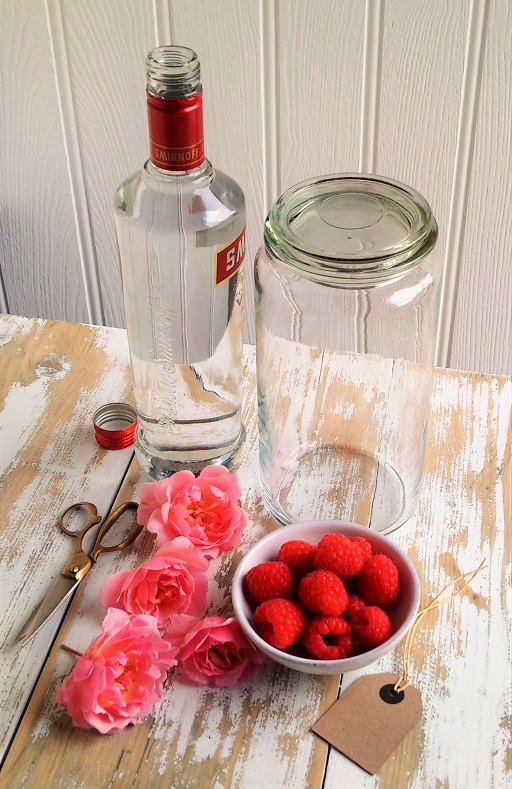
Rose and raspberry vodka ingredients. Image copyright: Kathryn Hawkins

Apart from enjoying the raspberries fresh and in jam, I do like to put some in sweet vinegar for salad dressings, and I also make flavoured tipples for a festive drink. This is one of my favourites.

Makes: 70cl

  • 4 small fragrant rose heads
  • A large handful of fresh raspberries
  • 70cl bottle gluten-free vodka (such as Smirnoff – look for a vodka that is made distilled from corn, potatoes or grapes)
  1. Carefully rinse and pat dry the rose petals and raspberries, taking care not to bruise or crush them.
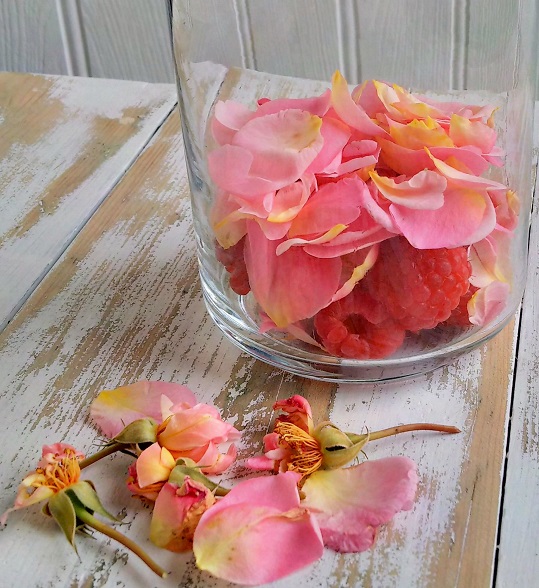
  2. Break up the petals and put them in the bottom of a large sterilised, sealable glass jar along with the raspberries.
  3. Pour over the vodka, seal and label. Gently swirl the contents every day for 2 weeks.
  4. After 3 weeks or so, taste the vodka and see whether it is to your taste. If the vodka is flavoured sufficiently, strain completely and rebottle in a clean, sterilised bottle. For more flavour, strain and add fresh petals and/or raspberries, then continue to store as above. Store in a cool, cupboard to preserve the flavour and colour. You’ll notice that after a few days, the colour quickly fades from the petals and berries and begins to colour and flavour the vodka.
  5. Enjoy the vodka chilled over ice, or use as a base for punches and longer drinks. For a sweeter drink, add 25-50g caster sugar to the mix along with the petals and fruit.
Fragrant_rose_petals_and_fresh_raspberries_to_flavour_vodka
Rose petals and fresh raspberries in preserving jar. Image copyright: Kathryn Hawkins
Rose_and_raspberry_vodka_in_preserving_jar
Rose and raspberry vodka. Image copyright: Kathryn Hawkins


Sugared rose petals (gluten-free, dairy-free)

One of my favourite culinary flavours is rose but it is a flavour that can easily overpower other ingredients, so you do have to use just the right amount in your cooking. One of the best ways to achieve this is to use the petals.

I couldn’t believe my luck when I realised that the  beautiful rose pictured above, Rosa Felicia, well established in the garden when I moved in, was not only abundant with flowers, but the fragrance and flavour is sublime.

Whilst I haven’t managed to make my own rose water with any success, I have put some in white balsamic vinegar to use as a dressing, and I usually steep some in vodka, ready for a festive tipple – post to follow soon. Most often, I use dried and fresh rose petals to decorate cakes and fruit dishes, and I coat some with sugar to keep as an out of season decoration.

To make sugared rose petals, always choose a rose with a scent otherwise there will be no flavour, and  choose smaller, softer petals as these will be nicer to eat. Choose rose heads higher off the ground so there is no danger of animal “spoiling”, and pick the rose once it has just opened – if it is too tightly in bud the petals will be difficult to break open; a rose that is too open will have lost colour and fragrance.

Gently wash the petals – I put them in a sieve or colander and dip them in a bowl of water to remove any dust – then lay them out on kitchen paper to dry. It is better to leave them to air-dry if it is warm, but if time is short, gently pat them dry using kitchen paper, taking care not to bruise them. All you need then is egg white, caster sugar, plus a bit of time and patience.

My preference is to use powdered egg white – a one egg sachet is more than sufficient to cover lots of petals. Alternatively, you can use a small fresh egg white, just beat it until it is fluid and frothy. Put the egg white on to one saucer or small plate, and sprinkle a shallow depth of caster sugar on another.

Using tweezers, dip a petal in egg white and then brush off the excess white using a small paint brush. For best results, brush off all bubbles or pools of egg white to achieve a smooth, thin coating. Gently push the lightly dipped petal into the sugar and sprinkle over a little more to coat the top. Lift out with tweezers, gently shake off the excess sugar and place on a board lined with baking parchment. Continue the process to coat as many petals you need.

Once you have coated a few petals, you will need to remove clumps of sugary egg white from the sugar, and replace it with fresh. Leave the petals to dry at room temperature, covered loosely with another sheet of baking parchment, for 24 to 48 hours until dry and crisp. The sugared petals can be stored in between sheets of parchment in an airtight tin for several weeks. After about 3 months, rather disappointingly, the colour will fade and the flavour will be lost, so make sure you use them up in time – they do make a lovely sugary, floral snack as well!