A taste of Summer: Sweet lavender vinegar (gluten-free, dairy-free)

Lavender_growing_in_a_Scottish_garden
Scottish garden lavender. Image: Kathryn Hawkins

We haven’t had the best of weather so far this month, here in central Scotland. Too much rain to be able to spend quality time outdoors, but it has been warmer, and we have had a few precious sunny hours. The lavender buds are just about to bloom, making them perfect for harvesting.

I have several lavender bushes all round the garden, ranging in colour from pale, pinky-lilac to deep, blueish-purple. Apart from looking delicate and pretty, the soothing scent that lavender brings to the garden is one of the true aromas of Summer.

One of the best ways to continue to enjoy this sensual memory, even when the gloomier months of the year set in, is to pop a few stems in a bottle of vinegar. In a few weeks, you’ll have the sweet smell of lavender and its delicate floral notes, preserved perfectly, in a bottle. It makes a lovely gift too.

How_to_make_lavender_vinegar
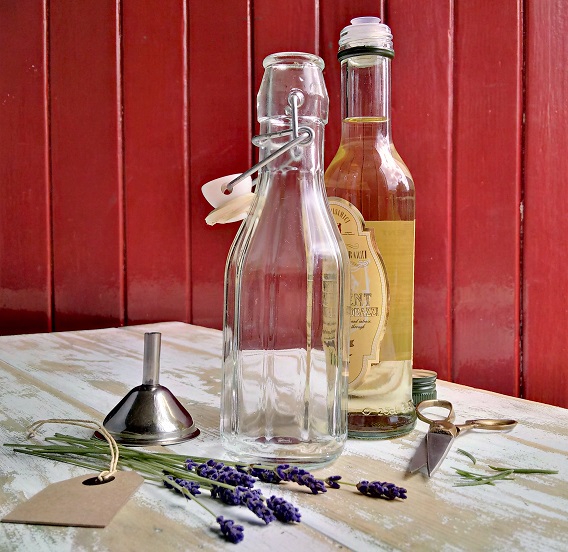
Sweet lavender vinegar ingredients. Image copyright: Kathryn Hawkins

For best results, choose lavender stems with buds that have swollen and are about to break flower. Lavender keeps fresh in water for 3 days after cutting, but keep out of sunlight in order to prevent the buds opening. Change the water and trim the stems a little each day.

To make sweet lavender vinegar:

  • Wash and sterilise a sound, sealable glass bottle large enough to hold 250ml liquid.
  • Trim down 12 stems of lavender to fit neatly inside your bottle and discard any leaves. Gently rinse and pat dry – dip lightly in a bowl of water and dry on absorbent kitchen paper.
  • Gently crush the bud end of each stem between your fingers to release the aroma, and arrange in the bottle, buds downwards.
  • Slightly warm 250ml white balsamic vinegar (agrodolce white condiment) – place on a sunny windowsill, just to take any chill out of the liquid – then pour into the bottle using a small funnel. I use white balsamic vinegar because it is naturally sweet and enhances floral and citrus notes in herbs and flowers. For a more traditional vinegar, choose a good quality white wine or cider vinegar.
  • Seal with a non-corrosive, acid-proof lid or stopper. Label and leave on the kitchen work top for a couple of weeks, gently turning the bottle upside down and back each day.
  • After 2 weeks, taste for flavour and either strain and rebottle ready for long-term storage, or continue to store as it is, allowing the flavour to slowly increase. For an intense flavour, strain the vinegar after 2 weeks, rebottle with more fresh lavender, and store until required. Stored correctly, in a cool, dark cupboard, your vinegar should last for up to 12 months.

You can use the same method with other fresh flowers and herbs. Rose and Calendula petals work well for flowery vinegars, whilst bay, fennel, marjoram, oregano, rosemary, sage, tarragon and thyme are good choices for herbs to flavour vinegar.

For berry vinegars, just add small or alpine (wild) strawberries to vinegar, or small blueberries or blackberries. Gently wash and pat them dry before using.


Caramel “splatter” blondies (gluten-free)

Gluten_free_white_chocolate_and_caramel_blondies
Gluten free caramel “splatter” blondies. Image copyright: Kathryn Hawkins

With the weekend approaching, I thought a baking recipe might go down well today. One of my “turn to” bakes for entertaining is sweet and gooey blondies – a guaranteed winner. Very easy to make, quick to cook, and a bake that improves on keeping (although it doesn’t usually hang around long enough to test this theory to the full!). Here’s the recipe:

Makes 24 pieces

  • 200g good quality white chocolate
  • 115g salted butter
  • 3 medium eggs
  • 115g light soft brown sugar
  • 225g gluten free plain flour blend (such as Dove’s Farm)
  • 1½ tsp gluten free baking powder
  • 1-2 tsp caramel or butterscotch flavour (such as Dr Oetker Caramel Flavour or Beau Concentrated Butterscotch Flavour)
  • 150g white chocolate chunks
  • 300g your favourite caramel sauce or canned caramel
  1. Preheat the oven to 170°C (150°C fan oven, gas mark 3). Grease and line a 20 x 30cm rectangular cake tin. Break up 150g white chocolate into a heatproof bowl and add the butter. Sit the bowl over a saucepan of barely simmering water and leave to melt. Remove from the water and cool for 10 minutes.
  2. Beat the eggs and sugar into the melted chocolate mixture. Stir in the flour and baking powder, and add flavour to taste; then stir in the chocolate chunks.
  3. Transfer to the prepared tin and smooth over the top. Bake in the oven until risen, lightly golden and lightly crusted on top (for about 25 minutes if you want a very dense centre, or for 30 minutes for a more even and spongier texture – this is my preference).
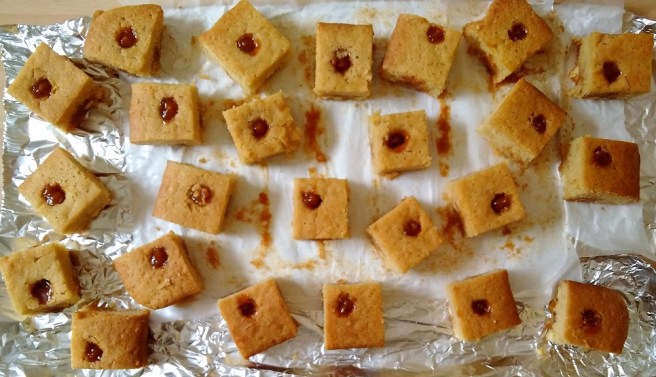
  4. Whilst the cake is warm, score the top with a knife to make 24 equal pieces and then, using a wooden spoon handle, push the end into each portion of cake to make a deep indent – try to avoid pushing the handle right through to the bottom of the tin. Leave to cool completely in the tin.
  5.  Once the cake is cold, remove from the tin and wrap and store for 24 hours to allow the flavour to develop and the texture to moisten.

    caramel_filled_blondie_pieces
    “Just filled” blondie pieces. Image copyright: Kathryn Hawkins
  6. The next day, unwrap the cake and cut through into the 24 pieces. Depending on your caramel sauce preference, either squirt  it straight from the tube; spoon it, or, transfer it to a piping bag and pipe sufficient caramel into each pocket to fill it.
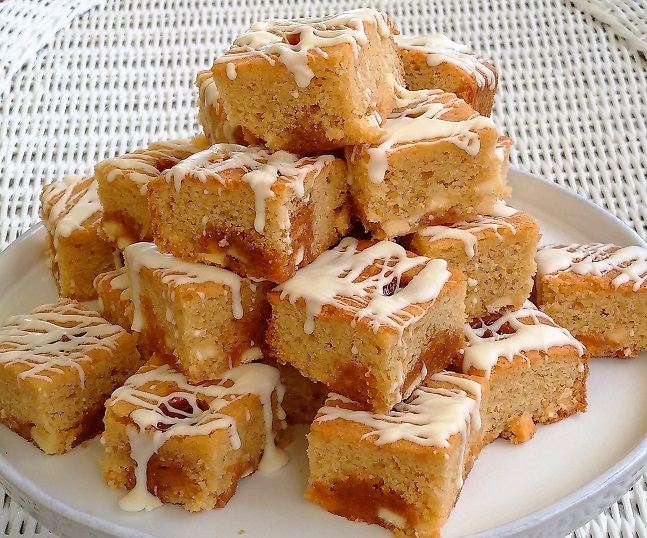
  7. Melt the reserved white chocolate as above and, using a teaspoon, drizzle liberally over the top of each blondie. Leave in a cool plate to set, or until you are ready to indulge. Yummy!
white_chocolate_splattered_caramel_blondies
Caramel “splatter” blondies. Image copyright: Kathryn Hawkins


Home-grown courgettes with chive butter (gluten-free)

homegrown_Tristar_courgette_with_homemade_chive_butter
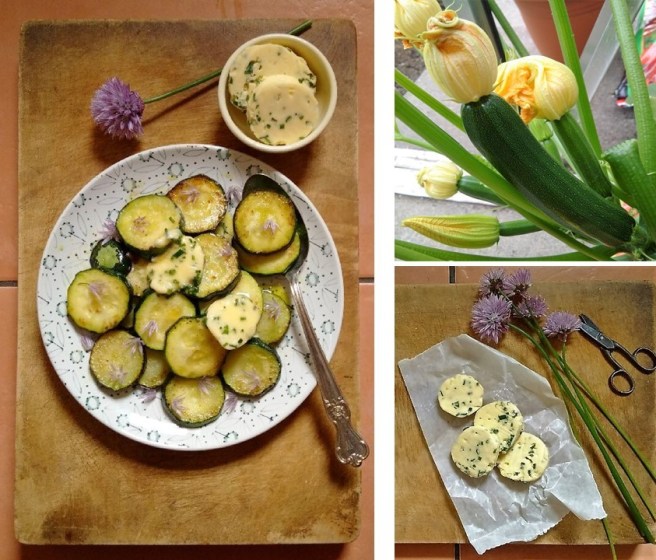
Home-grown courgette with chive butter. Images copyright: Kathryn Hawkins

One of the vegetables I have great success in raising is the courgette. This year I have a couple of varieties on the go: Tristar and Jemmer. My single Tristar plant has produced 6 courgettes already and there’s a few more to come. It is in a grow-bag on the floor of my greenhouse. Jemmer is a yellow variety; the first courgettes are just forming.

To enjoy the delicate, slightly earthy, flavour of my “home-grown” courgettes, I cook them very simply: either sliced and gently fried in sunflower oil, or as bigger chunks, lightly seasoned and roasted in the oven. The slices only take a few minutes on each side, just cooked until lightly golden round the edge.

To liven things up a wee bit, I make a herb or spice butter which I allow to melt over the cooked vegetable just before serving. At the moment, the chive bush in the garden is a combination of soft, juicy stems and pretty flower balls, and is the obvious choice for flavoured butter these past couple of weeks.

I make up a small batch at a time which will keep, well wrapped, in the fridge for 2-3 weeks or can be frozen for up to 6 months. Use half a pack of lightly salted, soft butter with 2-3 tablespoons of freshly chopped chives – snip the stalks into small pieces using kitchen scissors to avoid bruising the stems.

Beat the butter well to start with and then mix in the chives. Pile onto a small square of baking parchment and chill until firm enough to roll.

Pop the parchment square on a small sheet of cling film, and wrap the paper round the butter to make  rough tube. Continue rolling until you have made a cylinder of butter, to the thickness you prefer. Wrap tightly in the cling film and chill until required.

homegrown_chives_in_flower
Fresh chives in flower. Image copyright: Kathryn Hawkins

Chive butter is lovely melted over grilled salmon, pan-fried chicken or tossed into freshly cooked seafood and pasta. Don’t forget the flowers: gently pull the flower heads apart and scatter the delicate lilac star-shaped petals over salads, pasta or your finished dish for a subtle oniony flavour.


Scottish Shortbread (gluten-free; dairy-free; vegan)

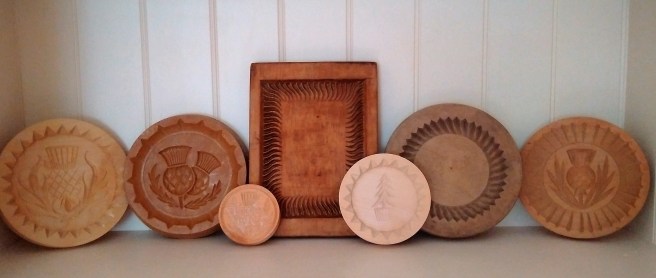
Scottish_shortbread_moulds.jpg

I’m starting my brand new blog with a post about one of my favourite bakes of all time. I learnt how to make shortbread at school and I have been making it ever since. My teacher taught us to remember the quantities of ingredients as “2, 4, 6” back in the day when pounds and ounces were the only unit of choice. Nowadays I do the conversion subconsciously each time I make a batch.

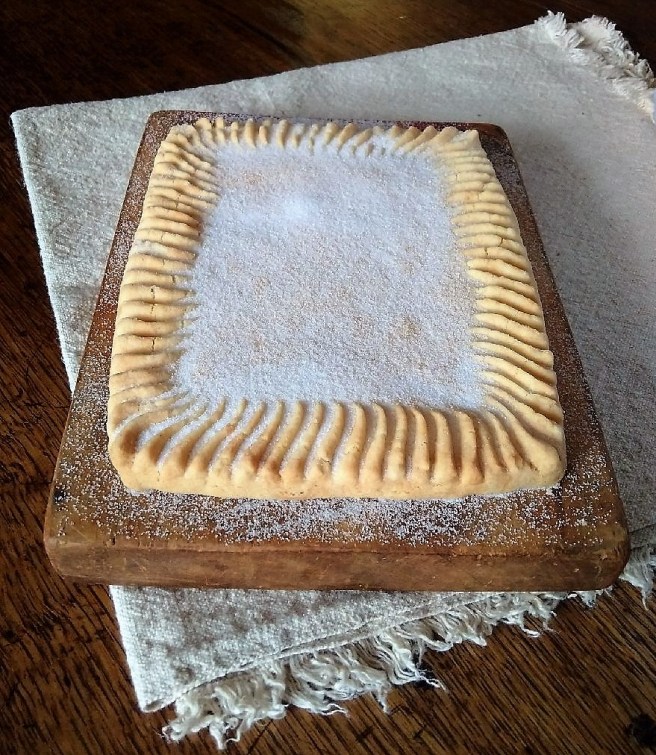
Since moving to Scotland, the motherland of this well known bake, I have acquired a number of traditional shortbread moulds which help transform something that looks a wee bit on the plain side into a real show-stopper. The one in the middle of the picture above was recently given to me by a friend. It’s a real beauty and the mould I used to make the shortbread in the image below.

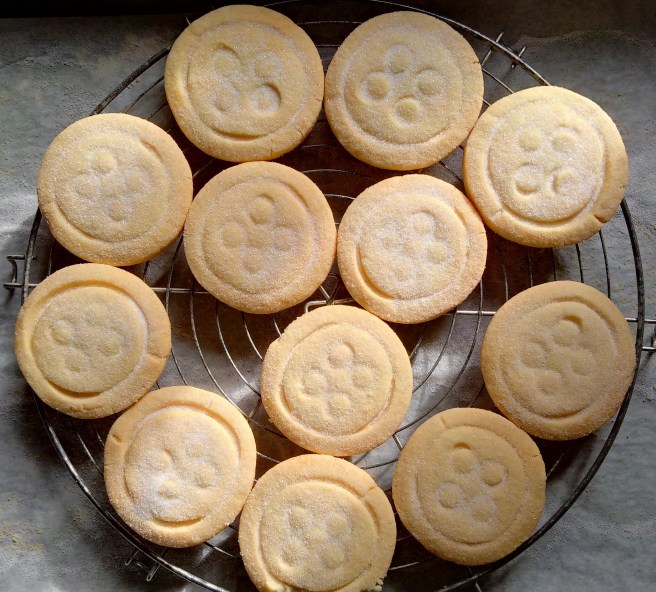
So, to the recipe. If you don’t have a mould, press the dough into an 18cm square tin. You can also roll it out to a thickness of about 1cm and stamp with cookie cutters (picture below) – this quantity of dough will make 12 x 6cm rounds. I’ve also added some steps for making 8cm rounds if you have a smaller shortbread mould. I used this mould to make the shortbread on my 2019 Burns Night post.

Makes: 1 x 15 x 20cm slab; 12 x 6cm rounds or 6 x 8cm rounds

Ingredients

  • 50g caster sugar + a little extra for dusting
  • 60g white vegetable fat or coconut oil, softened
  • 40g dairy-free spread (For non-vegan, replace the quantity of fats above with 100g good quality lightly salted butter, softened, if you eat it, and omit the salt)
  • ¼ tsp salt
  • 175g gluten free plain flour blend (such as Dove’s Farm) + a little extra for dusting (for a non-gluten-free version use white spelt or plain wheat flour)
  1. Put the sugar in a bowl with the fat and spread and mix together until soft and creamy. Add the flour and gradually work the ingredients together until well blended, then bring the mixture together with your hands to form a soft dough.
  2. Lightly dust a 15 x 20cm shortbread mould with extra flour and press the mixture into the mould, making sure it is packed snugly into the corners. I usually start to gently peel the dough back from the mould edges before turning it over onto a lined baking tray and giving it a bit of a thump to remove it from the mould.
  3. Prick the top with a fork and chill for at least 30 minutes. If you don’t have a mould, form into a 15 x 20cm rectangle. Neaten all round, then press the edges and prick the top with a fork. Prick and chill as above.
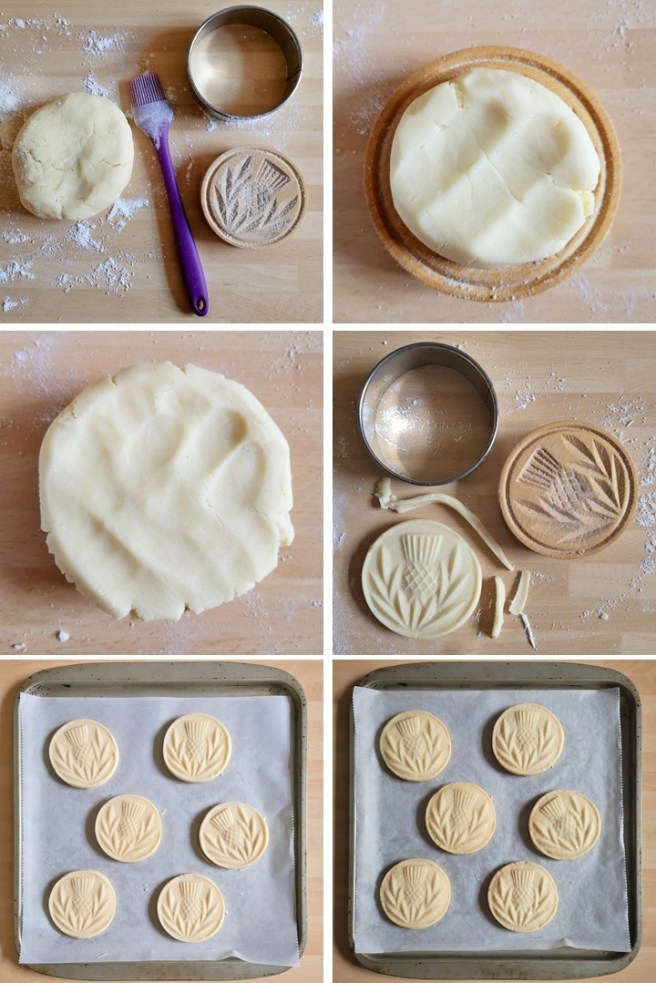
  4. If you have an 8.5cm shortbread mould, divide the dough into 5. Lightly brush the mould with flour and press a piece of dough on top until it reaches just beyond the edge of the mould – the dough should be ¾cm thick when pressed out .
  5. Carefully peel the dough from the mould, and neaten the round using a 8cm plain cutter. Place on a lined tray. Repeat the dusting, pressing and trimming using the other pieces of dough, then gather up all the trimmings to make your 6th round. Chill for 30 minutes.

    Step-by-step_to_using_a_small_shortbread_mould
    Making thistle embossed shortbread rounds. Images: Kathryn Hawkins
  6. Preheat the oven to 180ºC (160ºC fan oven, gas mark 4). Bake the shortbread slab for about 35 minutes until lightly golden all over (smaller cookie shapes like the 6cm shortbread buttons below will take about 20 – 25 minutes, and the 8cm rounds between 25 – 30 minutes). Cool for 10 minutes, then dust lightly with extra sugar and transfer to a wire rack to cool completely. Break the large slab into small (or big) pieces to serve. Shortbread keeps well if you can leave it alone long enough – over a week in an airtight container or tin.
gluten free Scottish shortbread
Traditional Scottish shortbread with a gluten-free and vegan twist. Image copyright: Kathryn Hawkins
gluten free shortbread rounds
6cm shortbread buttons. Image copyright: Kathryn Hawkins