Welcome to my blog all about the things I love to grow and cook. You'll find a collection of seasonal gluten-free, dairy-free and vegan-friendly recipe posts, as well as a round up of my gardening throughout the year. I wish you good reading, happy cooking and perfect planting!
Fiery sunrise over icy hills. Image: Kathryn Hawkins
A very belated happy new year to you. This month has flown by. All the festivities of a few weeks ago seem like a long time away already.
It’s a quiet time out of doors in terms of gardening. The weather has been quite kind so far. Little snow and rain, some stormy winds, and some very cold nights, but nothing extraordinary. The days are slowly drawing out again and there have been some beautiful sunrises.
End of the night, beginning of the day. Image: Kathryn Hawkins
Sun up on a chilly day. Image: Kathryn Hawkins
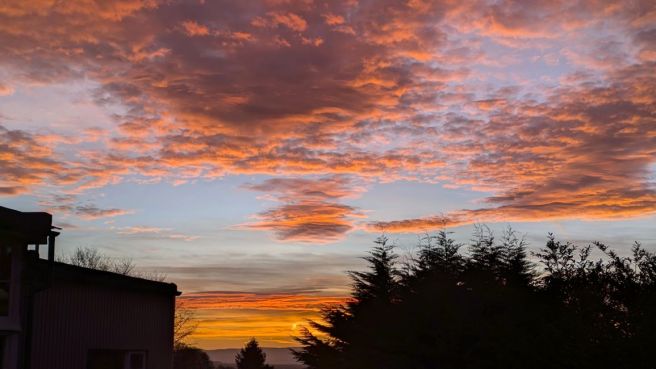
Whilst there have been lots of lovely starts to the day, I haven’t seen much happening in the skies at the other end of the day, apart from this sunset which is punctuated with puffs of white cloud which look like plumes of steam.
Early new year sunset. Image: Kathryn Hawkins
There have been many postings on social media of the Northern Lights here in central Scotland. It usually means getting up in the middle of the night to look, and to be honest, when it’s so cold, I am not motivated enough to do it. However, earlier in the month, there was an alert that the lights were visible at a much more sociable time. So I ventured outside in the back garden on a wonderfully clear, crisp night and saw…….absolutely nothing! However, pointing my camera at various points in the sky, the lens picked up this faint purple glow in the north-east sky. To the eye, the sky was almost black except for the stars.
Purple night sky. Image: Kathryn Hawkins
To finish this short post, there are a few flowery delights in the garden at the moment. I just hope the Periwinkle, Rhododendrons and snowdrop survive any cold weather that’s heading out way in the next few weeks.
Early bloomers. Images: Kathryn Hawkins
Have a good rest of the month and I’ll be back posting some time in February. Thanks for stopping by 🙂
Gateway to the bluebell woods. Image: Kathryn Hawkins
Hello again. I hope you are enjoying some fine weather and the colours of spring. At last, it stopped raining here this week, and the temperature rose by a few degrees. It was the perfect time to get out and about and see what is going on in the local countryside.
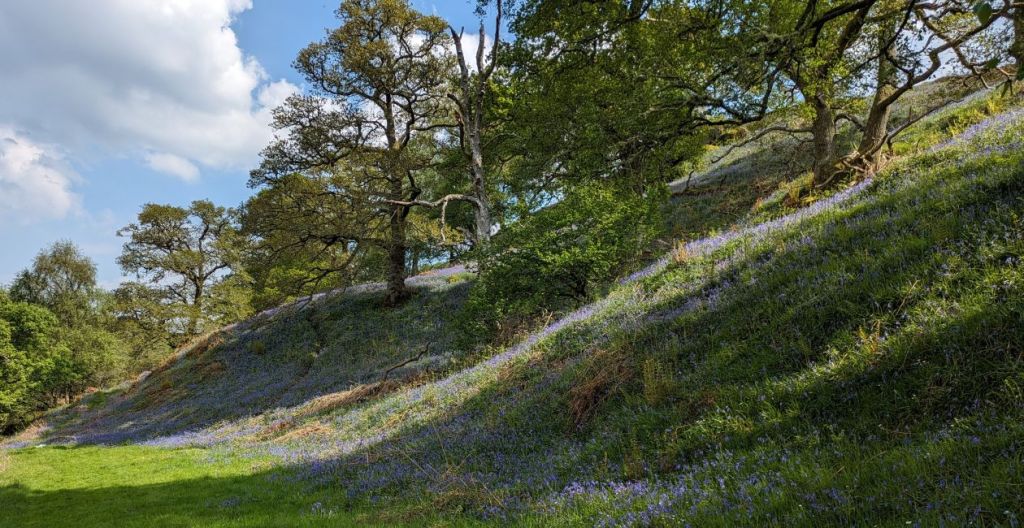
Hillside bluebells under a blue sky. Image: Kathryn Hawkins
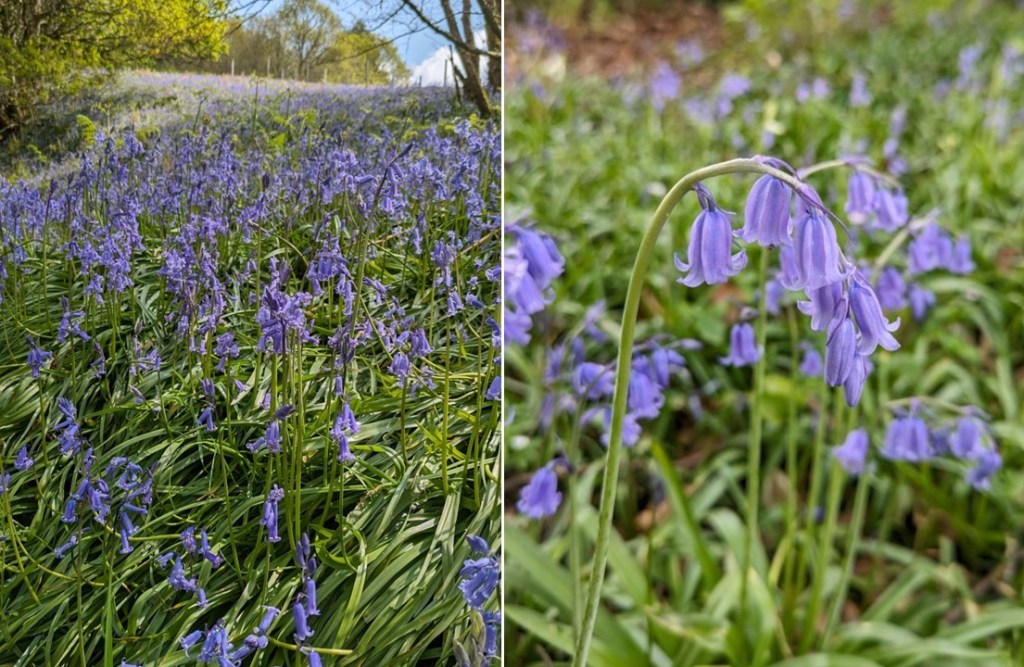
Just a few miles down the road from where I live in central Scotlans, is an area of woodland called Strowan Woods. It is a peaceful place, in fact it is the site of a woodland cemetery. As you follow the path through the cemetery, you come across an area called Bluebell View, and what an amazing sight it was this weekend. So many bluebells growing on the side of the hillside, and in the sunshine the perfume was quite intoxicating.
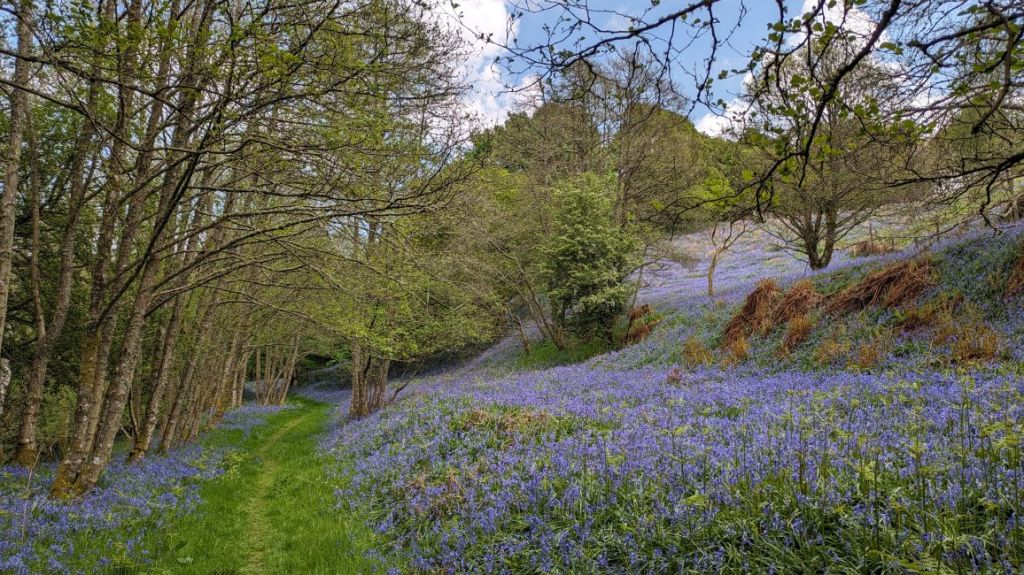
Down the bluebell path. Image: Kathryn Hawkins
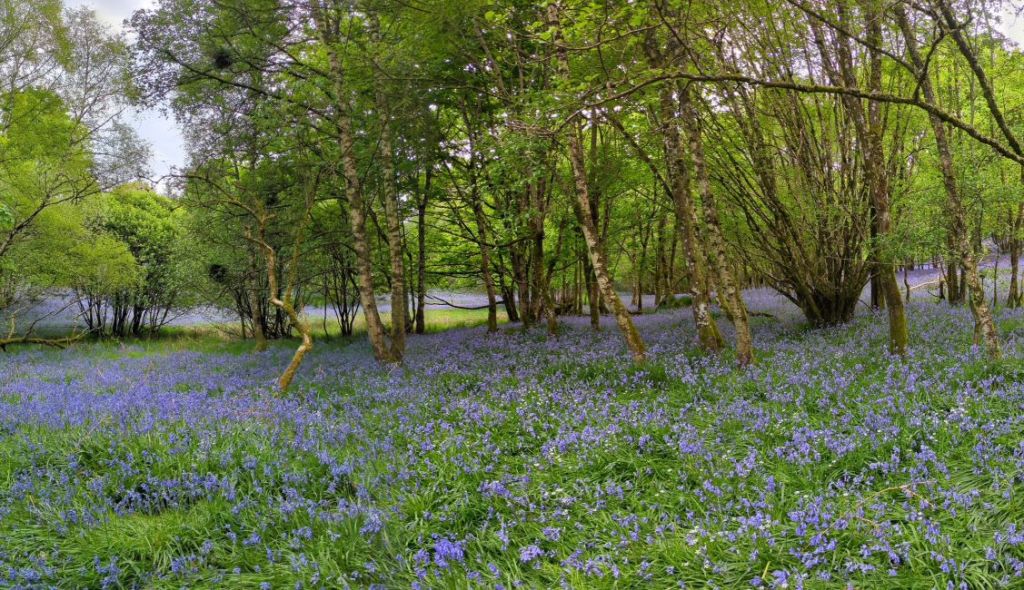
Follow the path into the woods and there are bluebells as far as the eye can see. It was a beautiful sight, and so peaceful and quiet, just the birds singing.
Bluebells as far as the eye can see. Image: Kathryn Hawkins
The path follows the river and you can see the flowers stretching over the other side of the water into the distance.
On the riverbank. Image: Kathryn Hawkins
More bluebells across the river. Image: Kathryn Hawkins
As well as the scent of bluebells, the aroma nearer the river was of wild garlic. Now in bud, a few of the pretty allium flowers had started to blossom.
Wild garlic flower buds. Image: Kathryn Hawkins
Wild garlic flowers. Images: Kathryn Hawkins
In amongst the bluebells and wild garlic, I found a few other species of woodland flowers hidden away in the shelter of the trees. From left to right, top: wild Primroses; buttery yellow Celandines; and the tiny veined petals of Wood Sorrel, and in the row below: white wood Anemones; pink Purslane, and tiny wild violets.
May woodland wild flowers. Images: Kathryn Hawkins
The Yellow Archangel plant, Lamium galeobdolon, was growing quite prolifically in one area. The plant is a member of the mint family, and I know if you have that herb planted in your garden, it runs all over the place. The yellow flower heads of the plant remind me of rather sinister-looking open mouths which doesn’t quite ring true with its altogether more godly name.
Yellow Archangel. Images: Kathryn Hawkins
I’m going to sign off with a couple more images of my woodland walk. I hope you have a good few days ahead, and I look forward to getting back into the kitchen again for my next post at the end of the month. Happy Spring 🙂
Nature’s blue and green woodland carpet. Image: Kathryn Hawkins
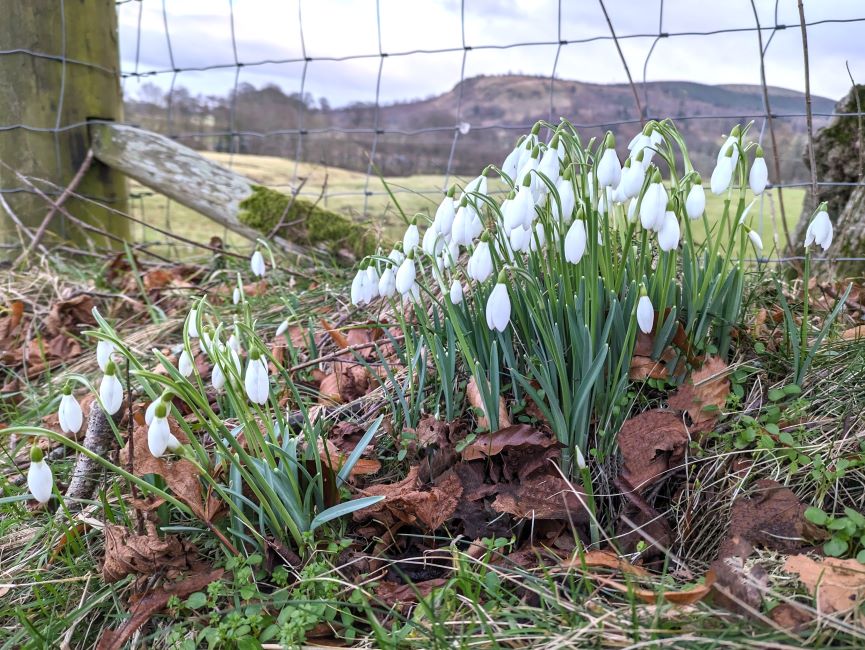
Hello again. It’s good to see that the garden and surrounding countryside are slowly coming to life here in central Scotland after some wild and wintry weather these past few weeks. I took a short trip out to my favourite local spot in search of snowdrops on one of the brighter days this month and am happy to report that there is an abundance of these pretty little white flowers all along the roadside and verges, a little earlier than recent years.
Roadside snowdrops. Image: Kathryn Hawkins
In the garden as well, right on cue, on the first day of the month, the first snowdrops opened up in the weak, wintry sunshine.
The first of this year’s garden snowdrops. Images: Kathryn Hawkins
We’ve had some heavy frosts, a little snow and plenty of wind and rain since then, and subsequently some of the other flowers in the garden have become a bit bedraggled.
Light dust of early February snow. Image: Kathryn Hawkins
Rain-soaked February flowers. Images: Kathryn Hawkins
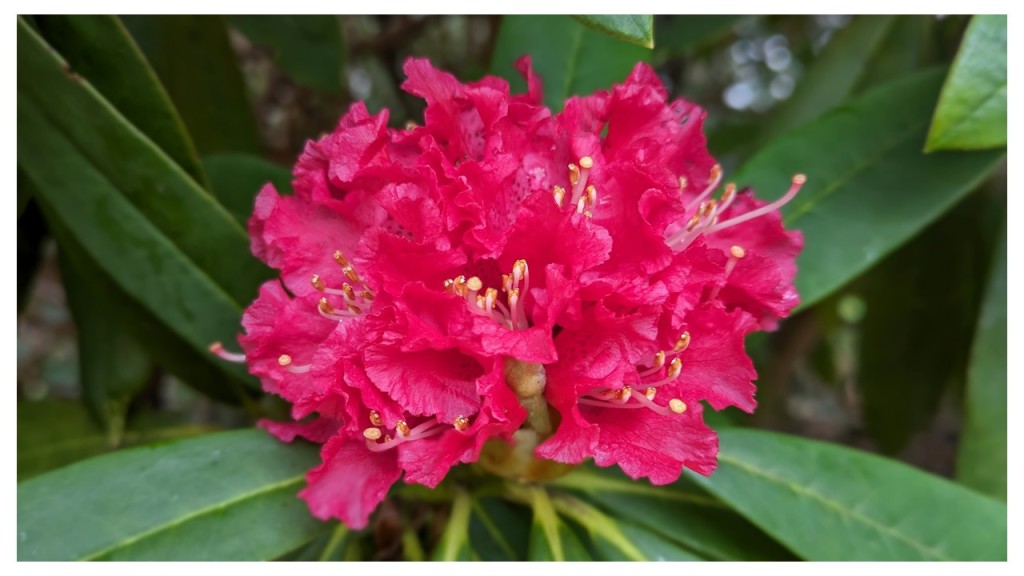
I took this photo of the glorious red Rhododendron in the garden when it first opened at the beginning of the month. Sadly it looks a bit less radiant now it has been rained on and frosted all over.
Red Beauty. Image: Kathryn Hawkins
There have been survivors of all this bad weather I’m pleased to say. The first Hellebore is up and open, and this little Periwinkle was a surprising find last week. The rhubarb is looking healthy as well.
The first flowerings. Images: Kathryn Hawkins
This year’s rhubarb is on its way. Image: Kathryn Hawkins
To brighten up this gloomy month, I recently acquired a new houseplant, a Mimosa, and in the last week it has opened up it’s tiny tight buds into fluffy, bright yellow balls of sunshine. I have everything crossed that it is hardy enough to survive until the temperature and sunshine levels increase later in the year.
Indoor sunshine. Image: Kathryn Hawkins
I’ll see you again at the end of the month when I will be back in the kitchen. Thanks for stopping by 🙂
Hello again. I hope this posts finds you well. The season has definitely shifted here in central Scotland, and Autumn is upon us once again. It’s been a mixed bag of weather with some unseasonal, very hot and humid days back at the beginning of the month, and now wet, windy and stormy ones to bring the month to a close. On the whole, it has been quite mild. Given this mixed bag of growing conditions, it is a wonder that the plants know what season it is, like these foxgloves still producing flowers since June.
September foxgloves. Images: Kathryn Hawkins
A couple of weeks ago, I was able to harvest the plums from the small tree in the garden. Like a lot of fruit trees this year, the harvest was good and there were a fair few plums to pick. All now cooked and made into jam 🙂
This year’s plum harvest. Images: Kathryn Hawkins
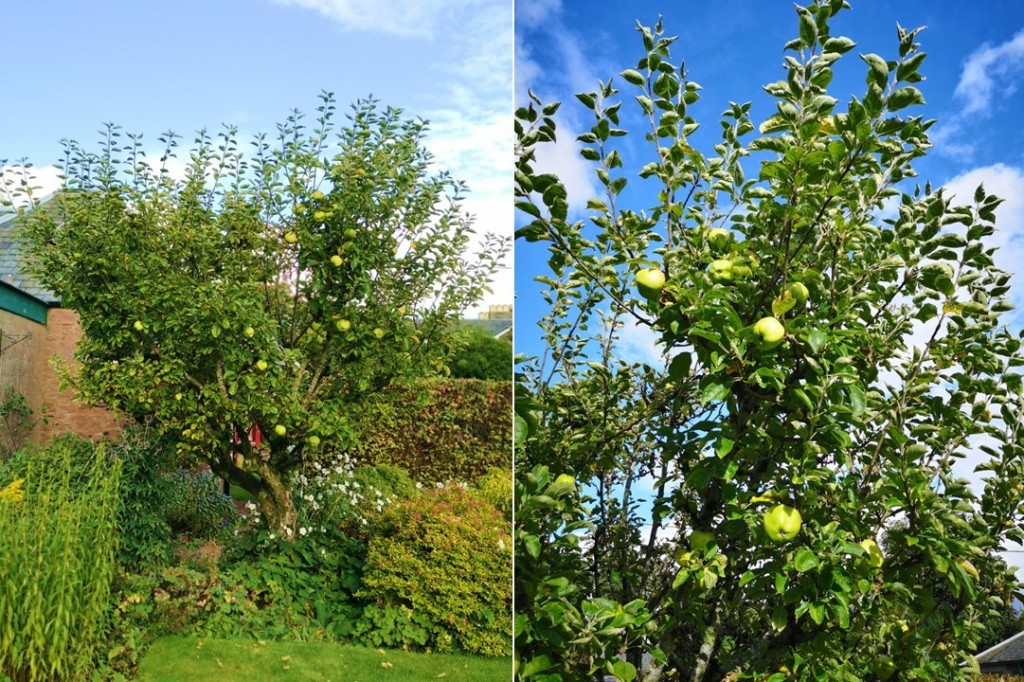
The next garden harvest will be from the apple tree. I think we’re looking at a more modest harvest this year compared to last year’s bumper crop.
The old apple tree, September 2023. Images: Kathryn Hawkins
Hydrangeas do quite well in the garden due to the acidic soil. This one was planted back in late spring, and although the blooms naturally fade at this time of year, it still adds some colour and cheer in the flowerbed.
Fading gracefully, red Hydrangea. Images: Kathryn Hawkins
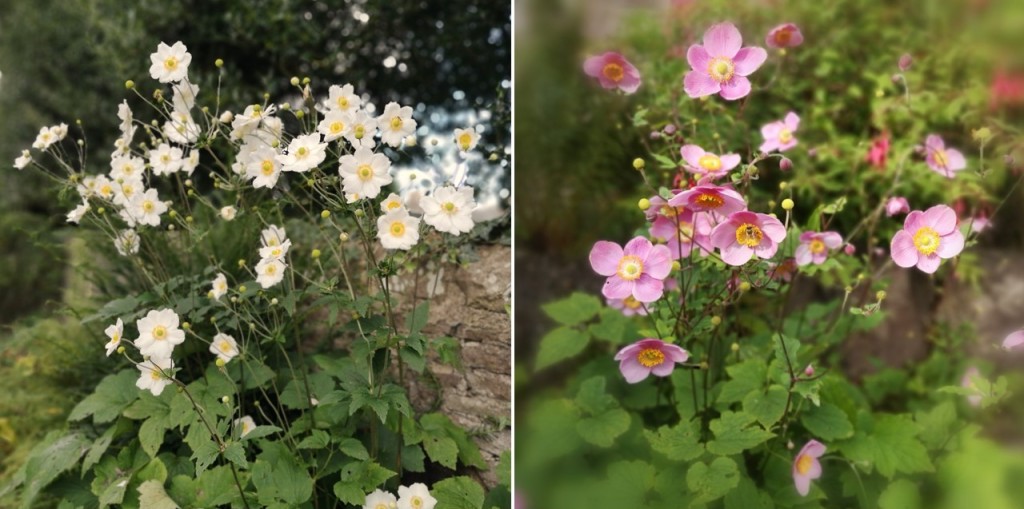
No post from me at this time of year would be complete without a few images of the Japanese anemones. They have done very well this year, surviving the heat and now the wind and rain. As delicate as they look, their hardiness still amazes me.
Autumn favourites. Japanese anemones. Images: Kathryn Hawkins
My favourite rose bush in the garden didn’t do quite so well earlier in the year, so I was very happy to see new buds forming at the end of last month and some healthy foliage forming. In the past couple of weeks, new heavily scented flowers have opened up along with fresh green leaves.
Pink rose, second time around. Images: Kathryn Hawkins
After my hedgerow harvest post at the end of last month, I have been on the look out for more wild berries. Whilst the blackberries and sloes have finished now, there are still plenty of elderberries ripening. On a walk last weekend, I picked this container-full. Once the berries were removed from the stems, I had just under 2lb of fruit which are now stashed in the freezer for later use.
Ripe Scottish elderberries, September 2023. Images: Kathryn Hawkins
That’s me for another week or so. I will be back in the kitchen for my next post. Until then, enjoy the change of season and thanks for stopping by 🙂
Hello again. It’s been a busy couple of weeks since my last post. The season is subtly shifting from late summer to early autumn. There is a bit of a nip in the air first thing in the morning and some of the leaves on the trees are beginning to turn. Out and about, the hedges are full of ripening fruit, and I have been out foraging a couple of times this month. Two weeks ago I went on a recce for brambles (blackberries), and was happily surprised to see that so many were ripe and ready. Thank goodness I went prepared with a large container (just in case), and came home with 2.7kg of the glistening berries which I have now frozen 🙂
Scottish brambles. Images: Kathryn Hawkins
Whilst on my walk, I had noticed that there were also sloes and elderberries, although not quite ripe. I gave it a week and went back. The birds had eaten a few elderberries, and I think another forager had found the sloes, but I still managed a container-full as well as a few more brambles.
Blackberries, dewberries, sloes and elderberries. Images: Kathryn Hawkins
Always wash wild fruit well before using. Brambles and sloes need little preparation, but elderberries can be a little fiddly to remove from their fine stems. I find a fork is quite useful to help prise them away.
Freshly washed and prepared wild fruit. Images: Kathryn Hawkins
All of these hedgerow fruits will freeze fine in case you are unable to use them immediately. Lay them out on lined trays and freeze until solid, then pack them into bags or containers, seal, label and store until ready to cook.
My hedgerow harvest preserve. Image: Kathryn Hawkins
My preserve recipe can be adapted to use any combination and quantity of wild berries you have picked. Sloes have a bitter/sour flavour whilst brambles and elderberries are sweeter and juicier. I ended up with about 700g prepared fruits in total, 200g of which were sloes, and this gave a good balance of sharp and sweet, with a deliciously rich and intense flavour overall.
Packed full of flavour and colour. Image: Kathryn Hawkins
The yield of preserve in this recipe is slightly lower than for other jams because I removed the seeds. Brambles do tend to be very seedy, and sloes are impossible to pit before cooking, so sieving (or straining) seemed like the logical thing to do. Alternatively, you could make a jelly by straining the cooked fruit through muslin. This would result in an equally delicious preserve, but with a much smaller yield. I’ll probably make a jelly with some of my freezer brambles later in the year and mix them with some apples from the tree in the garden. Delish.
Makes: approx. 700g
Ingredients
700g prepared hedgerow berries and fruit, washed
Approx. 400g granulated sugar
2tbsp lemon juice
1. First cook the sloes. Place in a saucepan with 250ml water. Bring to the boil, cover and simmer for 6-7 minutes until softened.
2. Stir in the berries, bring back to the boil, re-cover and cook gently for 10 minutes until everything is very soft and juicy.
Cooking the fruit. Images: Kathryn Hawkins
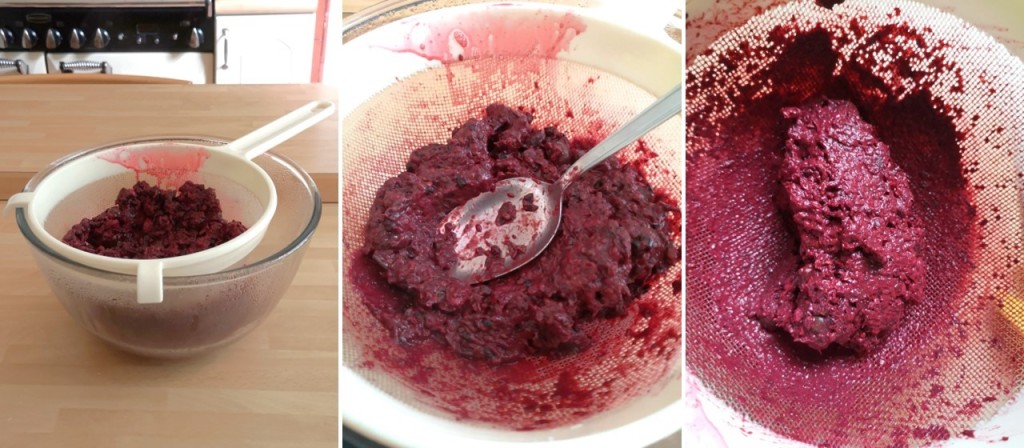
3. Put a large nylon sieve (strainer) over a large bowl or jug and carefully pour in the cooked fruit and juices. Leave to strain for 30 minutes then use the back of a spoon to push and press the pulp against the side of the sieve to squeeze out as much juice as possible. Do this until you end up with a dryish pulpy mass of seeds and fibres in the sieve. Discard.
Getting rid of the seeds. Images: Kathryn Hawkins
4. Measure the juices – I ended up with 500ml. You will need 400g sugar per 500ml juice. Pour into a saucepan and heat gently to warm through, then add the sugar and lemon juice. Stir until dissolved.
Cooking the pulp. Images: Kathryn Hawkins
5. Bring to the boil and cook for several minutes until the correct level of set is achieved – between 104°C and 105.5°C on a sugar thermometer. I cooked my preserve to the higher temperature and ended up with a very firm set – almost like a fruit cheese. For something more spreadable, cook to the lower temperature.
6. Spoon the hot mixture into sterilised jars and seal immediately. Leave until cold then label and store in the usual way.
For the storecupboard. Image: Kathryn Hawkins
Because I achieved such a firm set, I melted the leftover preserve with a little more water and when it cooled, it was much more spreadable. It made a delicious topping for toasted crumpets. This preserve also makes an excellent accompaniment to serve with grilled, roasted and barbecued food.
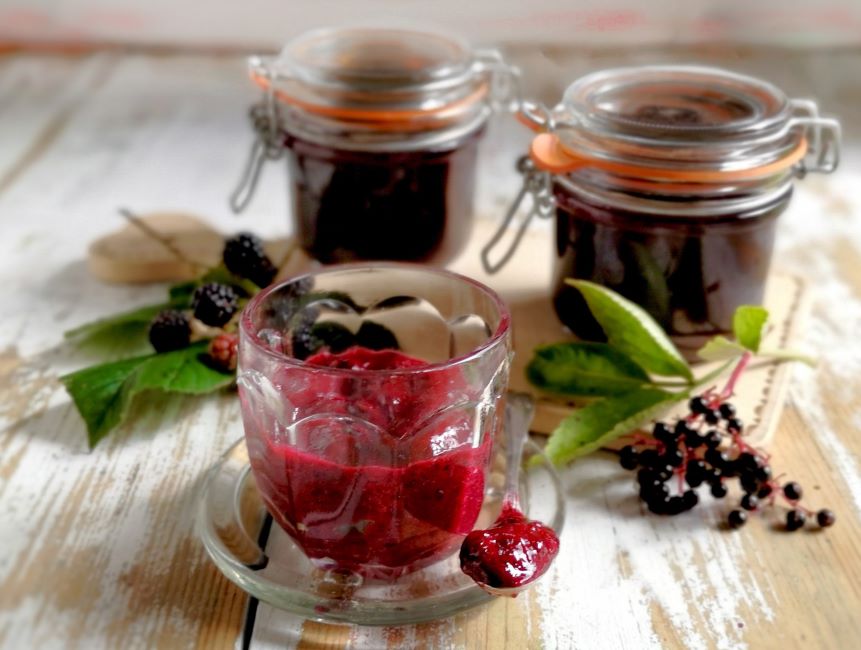
Tangy, tasty and freshly made, hedgerow preserve. Images: Kathryn Hawkins
Until next time, I hope you have a good few days, and I look forward to posting again in a couple of weeks. Thanks for stopping by 🙂
Spring flowers galore, West Dean gardens, West Sussex. Image: Kathryn Hawkins
Hello again. What a lovely time of year it is for flowers and foliage. I thought I would reflect on the month just gone by and post some images of things I have seen when I have been out and about these past few weeks.
Over Easter, I travelled down to England to visit my family in West Sussex. One of our favourite places to visit is West Dean gardens near Chichester. Until this year, I have only visited in mid to late Summer to see the wide variety of fruit and vegetables that are grown there. In early April, the grounds were covered in wild spring flowers and it made for a very pretty scene indeed.
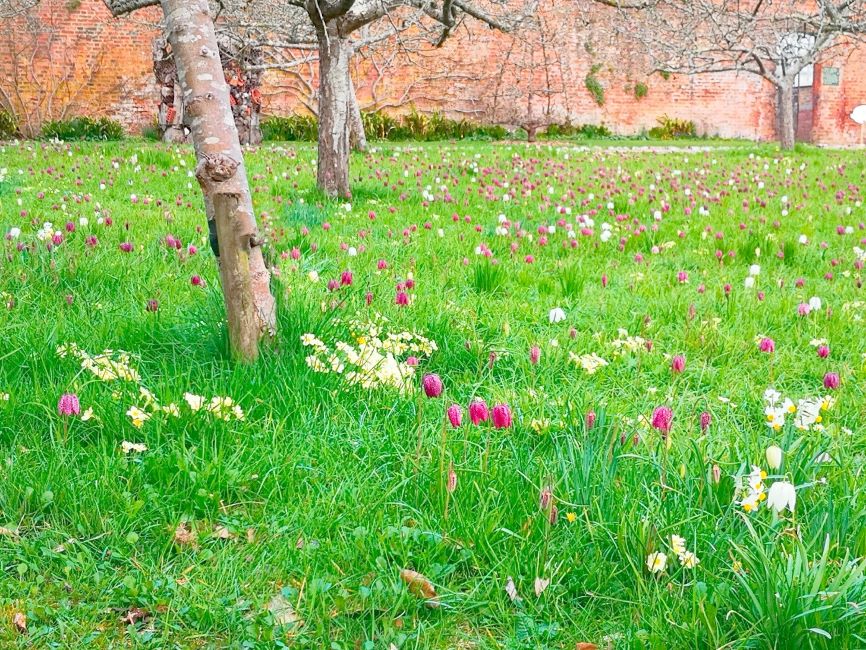
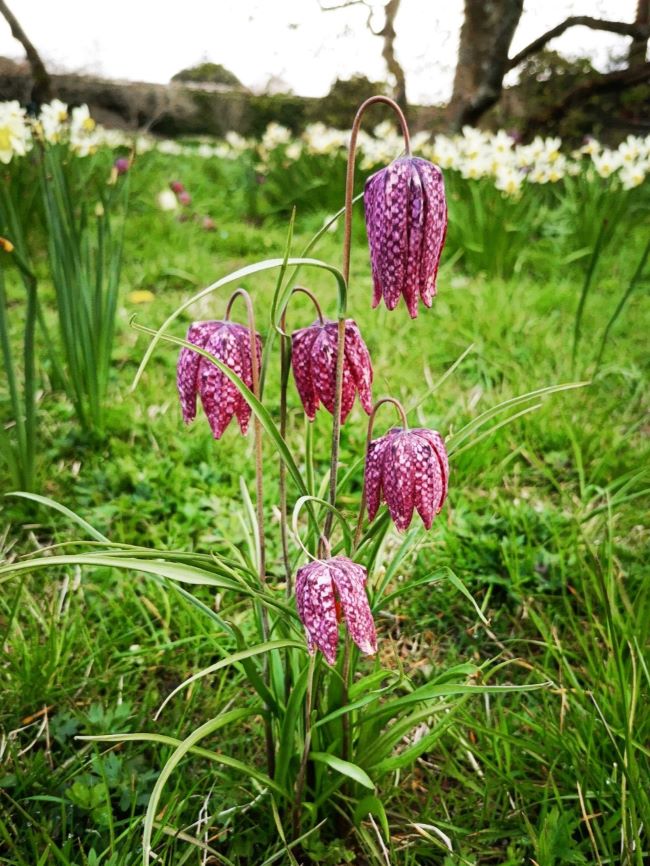
Back in the garden at home, there are primroses galore, and the grass verges and local woodlands are also decorated with these pretty yellow blooms. My favourite spring flowers, Snakeshead Fritillary, are also out in bloom in the garden, along with lots of Muscari and the first of the new season Bluebells.
Out on a walk last weekend, just a few miles from where I live, there were plenty of primroses growing on the grassy banks of the loch. The golden clumps certainly helped liven up a dull-weather afternoon. The trees are just coming to life now, although I’m not sure how much longer some of them will stay upright given the activity of the local beaver population!
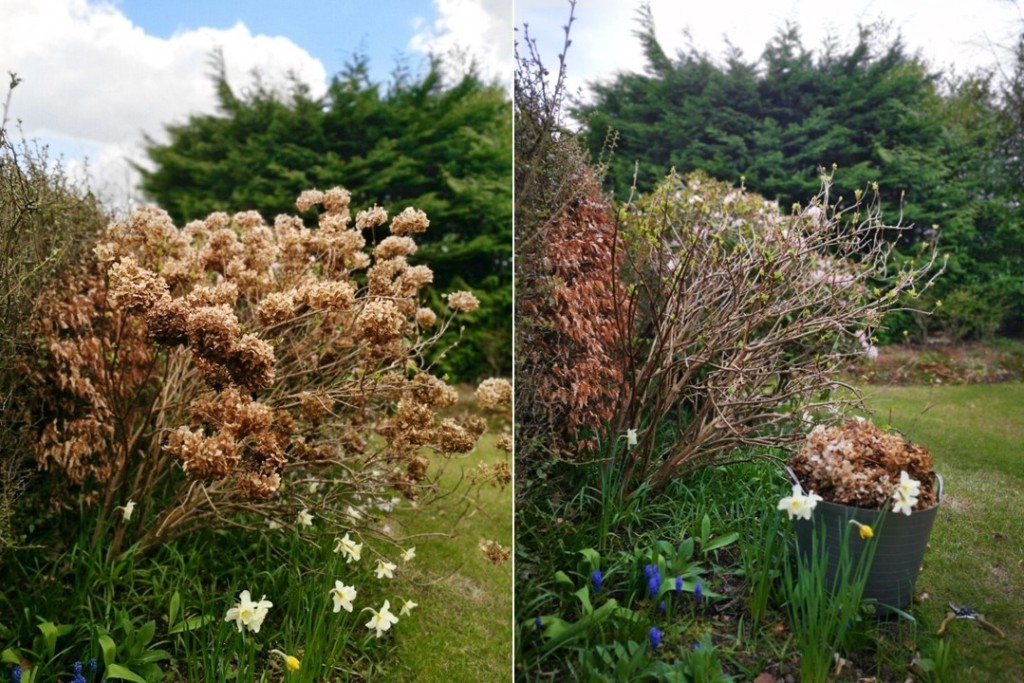
April garden tasks: Hydrangea pruning. Images: Kathryn Hawkins
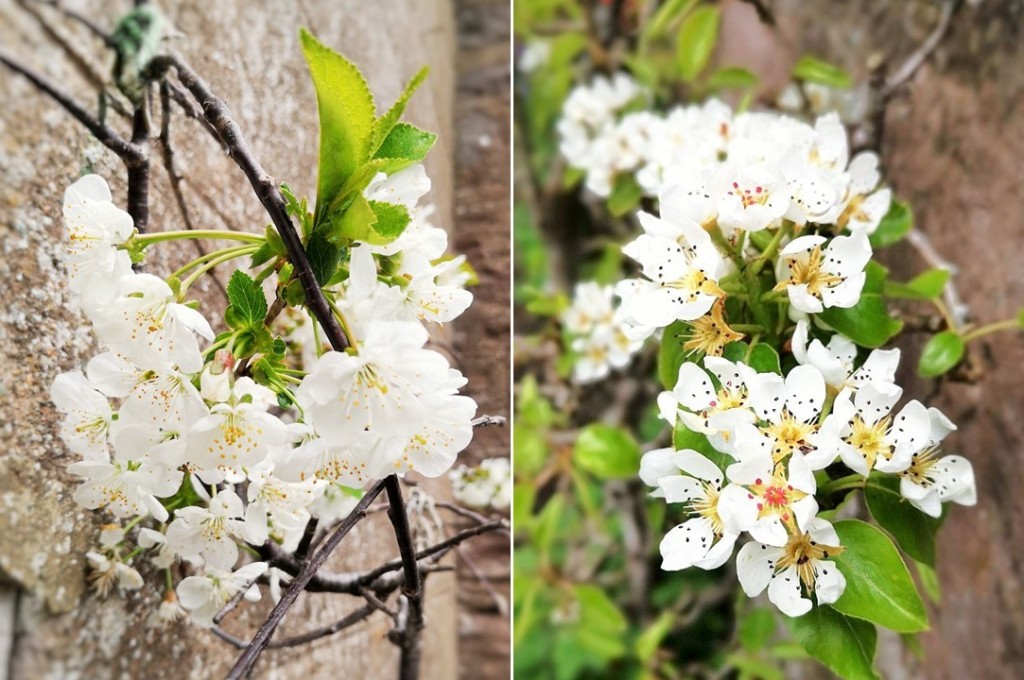
The things-to-do-in-the garden list is beginning to lengthen now that the plants (and weeds!) are growing again. Just as I pruned the old heads off this aged Hydrangea bush there was an overnight frost, but fortunately no damage was done. I managed to cover the fruit trees with fleece before the frost descended. Lots of lovely blossom again this year which I hope means plenty of fruit if the bees and insects get busy.
April morning blue sky. Images: Kathryn Hawkins
Cherry and pear blossom. Images: Kathryn Hawkins
I’ll leave you where I began, with one more image of Fritillaria, captured in West Dean gardens on Easter Saturday. Until next time, thanks for stopping by. See you again soon 🙂
Hello again. Thank you for stopping by. So, here we are at the end of another month. A chance for me to take a look back on what’s been happening out of doors since my last post.
Garden snowdrops, February 2023. Images: Kathryn Hawkins
It’s been a bumper year for snowdrops here in central Scotland. Along the roadside verges, riverbanks and country walkways, the tiny white bulbs are flowering prolifically. And, in my own garden, there are green and white clumps of the delicate little flowers in the beds, borders and paths all over the place.
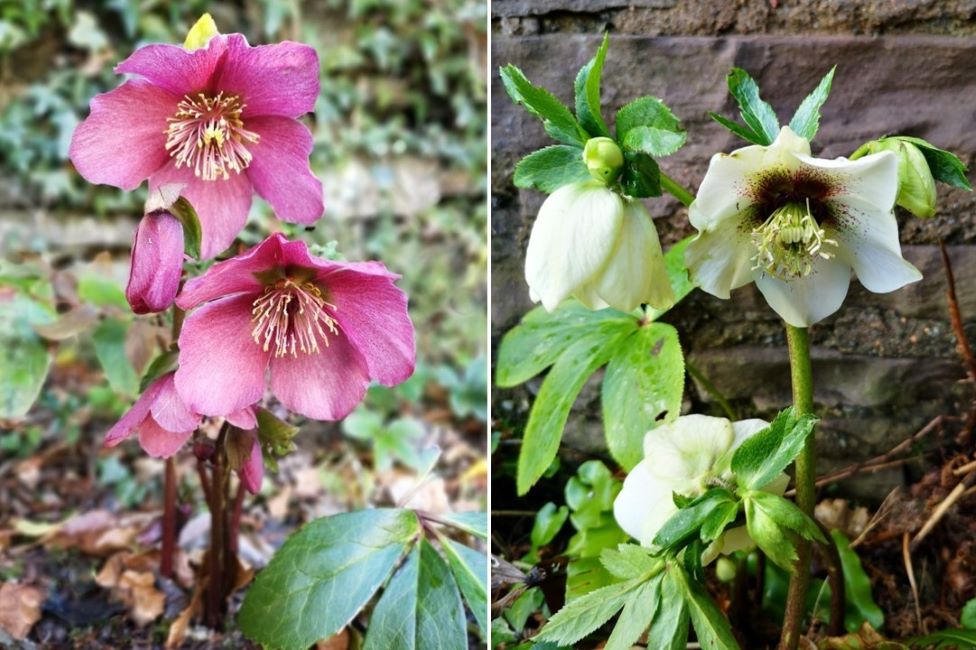
New season Scottish garden Hellebores. Images: Kathryn Hawkins
February crocus and primroses. Images: Kathryn Hawkins
Other spring classics are opening up in the garden as well. In the shady borders, the Hellebores are unfurling, as are the primroses. In the sunshine, the crocus are flowering and giving bold, bright, blasts of colour all over the garden.
Pale pink Rhododendrons, February 2023. Images: Kathryn Hawkins
The delicate pink Rhododendrons are blossoming in the back and front garden. Fingers crossed that the frost keeps at bay.
Early spring heather, February 2023. Images: Kathryn Hawkins
More hardy are the spring heathers. I haven’t seen many bees yet, but there are some tempting blooms out there in wait for our important little pollen collectors.
Garden rhubarb and rabbits. Image: Kathryn Hawkins
Very happy to see the first of the garden produce beginning to grow. Looking forward to my first harvest of fresh pink stems in a few weeks time.
My final image this week is of a glorious winter sunset I captured at the beginning of the month, and it was a real beauty.
Early February sunset. Image: Kathryn Hawkins
That’s me for this month. I will be back with a recipe post very soon. Until then, have a good few days and enjoy the unfurling of spring.
The first ground frost of Autumn 2022. Images: Kathryn Hawkins
As another month draws to a close, it’s been a rather wet and dreary end to the season of Autumn here in central Scotland. Photographically speaking, there have been very few blue-sky days to capture the warm, glowing colours of this time of the year. Nevertheless, I have a few images which I hope convey the natural glory of the month just passing.
Late Autumn, River Earn, Perthshire, Scotland. Images: Kathryn Hawkins
I took these photos a couple of weeks ago whilst out on a walk along the local riverbank. Even though the sky was a dull grey and the waters looked cool and steely, the colours of the leaves still clinging to the trees looked spectacular.
Golden leaf colour. Images: Kathryn Hawkins
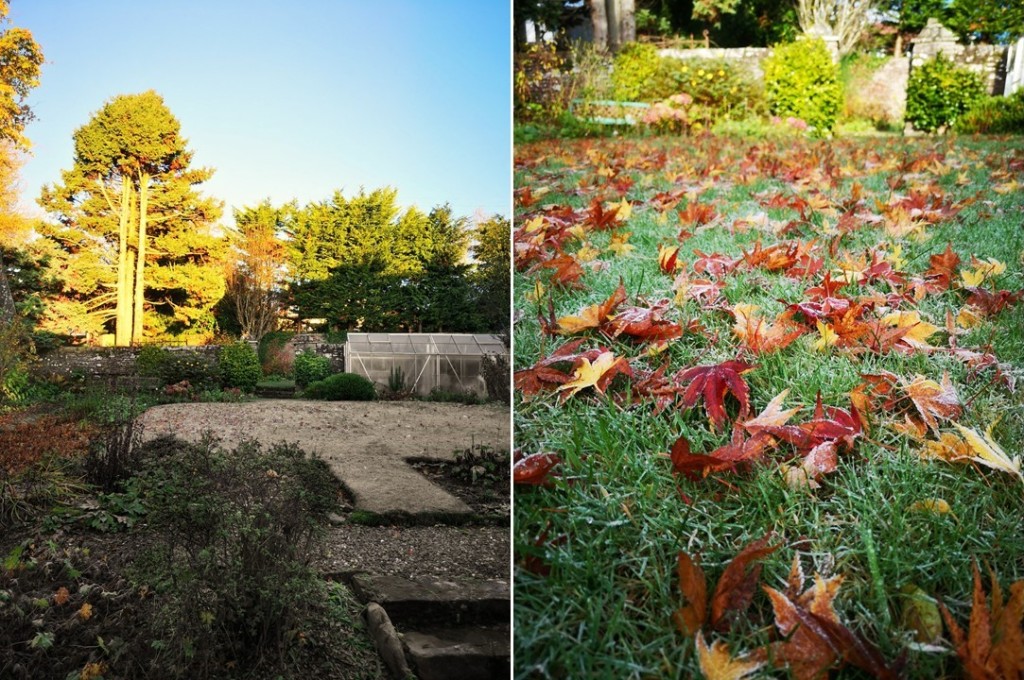
Back home in the garden at the same time, the Japanese Maple (Acer) tree was ablaze with glowing yellow leaves. But following a few heavy downpours and some strong winds, the last of the leaves have fallen.
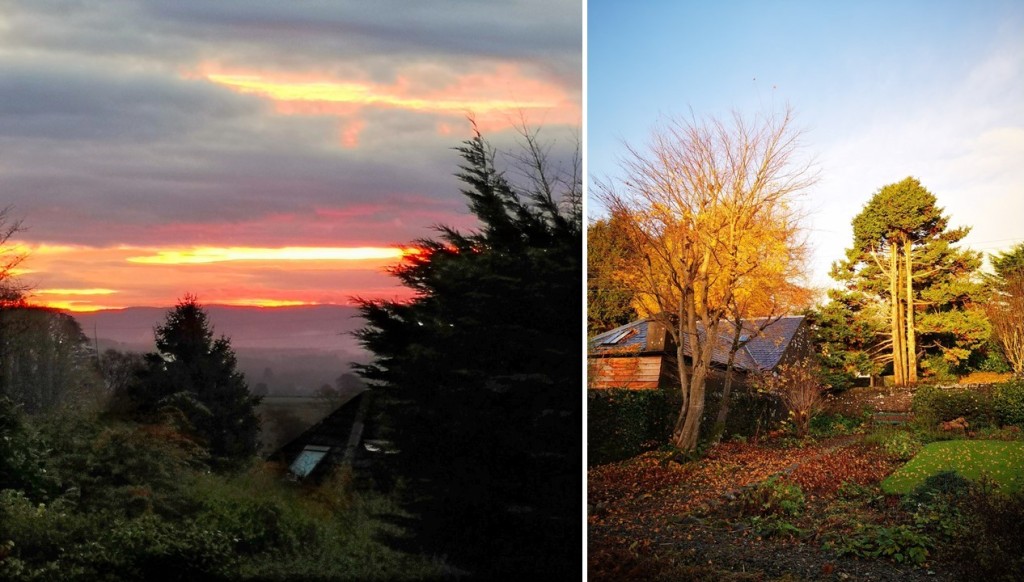
November sun-rise and sun-up. Images: Kathryn Hawkins
Usually, the month of November brings with it glorious sunsets and sunrises, but I have only managed to capture one sunrise, and that was during the last week. You can see the same Maple tree now bereft of leaves in the early morning sunshine.
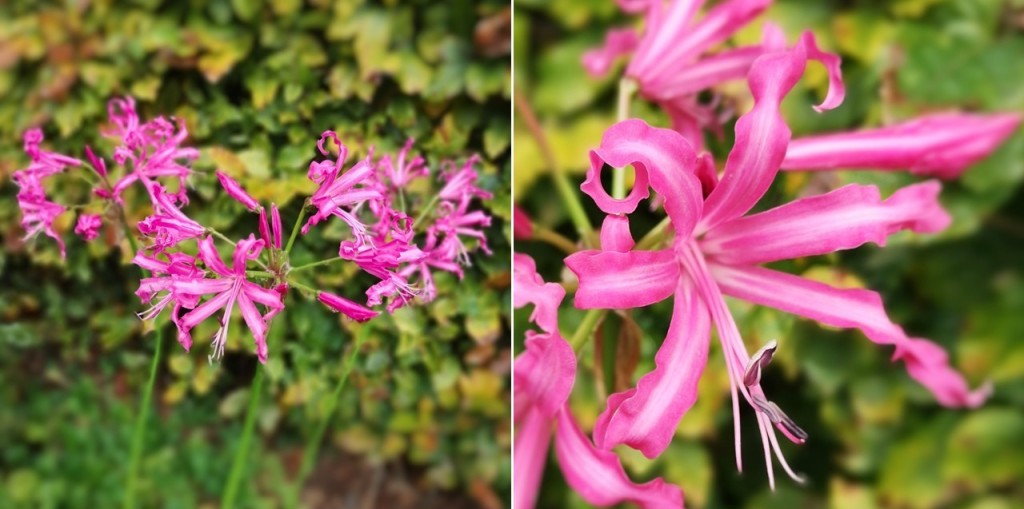
A welcome splash of vibrant pink. Images: Kathryn Hawkins
Throughout the month, these Nerines have been giving a very welcome show of bright pink colour. They look so exotic and fragile but are incredibly hardy. Still going strong is the planter of Bidens and Astors I planted back in June. Such great value. Usually by now the planter is full of bulbs ready for spring but I can’t bring myself to dig these bedding plants up just yet.
Still flowering in the Autumn sunshine. Images: Kathryn Hawkins
And so to a reminder that winter is just around the corner. The holly hedge is abundant with great clusters of berries this year, as is the snowberry bush in the back garden. I hope this isn’t a sign of a particularly cold winter ahead. It’s been a good year for blueberries as well. This late variety is still ripening at a rate of a small handful a week.
Red, white and almost blue, late Autumn berries. Images: Kathryn Hawkins
Thanks for stopping by. Until my next post, take care and keep warm 🙂
Hello there. I hope you are keeping well and managing to stay cool in this very hot summer. The temperatures have been exceptional here in the UK and all over Europe which is great if you’re on holiday but not so good if you’re working. The garden is looking quite different this year due to the heat; many of the flowers are fading much more quickly than in previous years.
Last weekend, in an effort to stay cool and enjoy the outdoors at the same time, I went for a walk in some local woodland. I was looking to see how long it would be before the hedgerow blackberries (brambles) would be ripe enough to pick – I don’t think it’s going to be a good year for brambling sadly. Quite unexpectedly, I came across several wild cherries trees, completely untouched by birds, and laden with fruit as far as the eye could see.
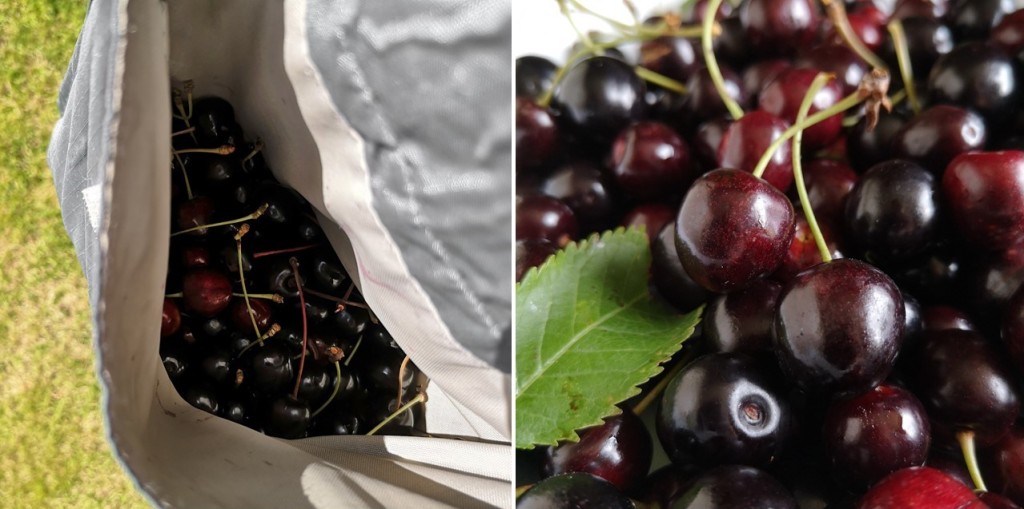
Wild cherry picking. Images: Kathryn Hawkins
I was completely unprepared for foraging. I had no bag other than the small holster bag I was using to carry a water bottle. Cherry trees are enormous in the wild, but there were quite a few fruits on the lowest branches and I was able to fill my bag with just under 1kg of fruit. The cherries were the sweetest, juiciest I have ever tasted. Such an unexpected treat. Apparently, it has been a bumper year for cherries because of the hot weather, but I am still amazed that the birds hadn’t been interested in them. If only I had gone walking with a ladder! 🙂
Pitting ripe cherries. Image: Kathryn Hawkins
Back at home, I pitted the cherries. The firmer ones were easier to pit using my faithful old Italian cherry pitter, but the ripe ones I sliced and pitted using the tip of a sharp knife. Some went in the freezer, others were cooked in a crumble for tea, and the rest went into this week’s recipe.
Easy to make, just a bit of advanced prep – you need to line a cake tin and make up a flax seed egg replacement mixture. Then, you are good to go. The brownies keep well but in this warmth, I kept them in the fridge to stop them going too soft and sticky. They also freeze perfectly. Eat them as a sweet treat but they are also good served with more fresh cherries or compote and ice cream for dessert.
175g dairy-free dark chocolate (I used 54% cocoa – if you use darker chocolate, omit the cocoa powder and add an extra 25g flour)
150g lightly salted plant butter, cut into pieces
25g ground flax seed
200g caster sugar
1 tsp vanilla bean paste
75g gluten-free plain flour
25g cocoa powder
140g pitted cherries, halved (approx. 170g whole)
1. Preheat the oven to 170°C, 150°C fan oven, gas 5. Line an 18cm square cake tin with baking parchment.
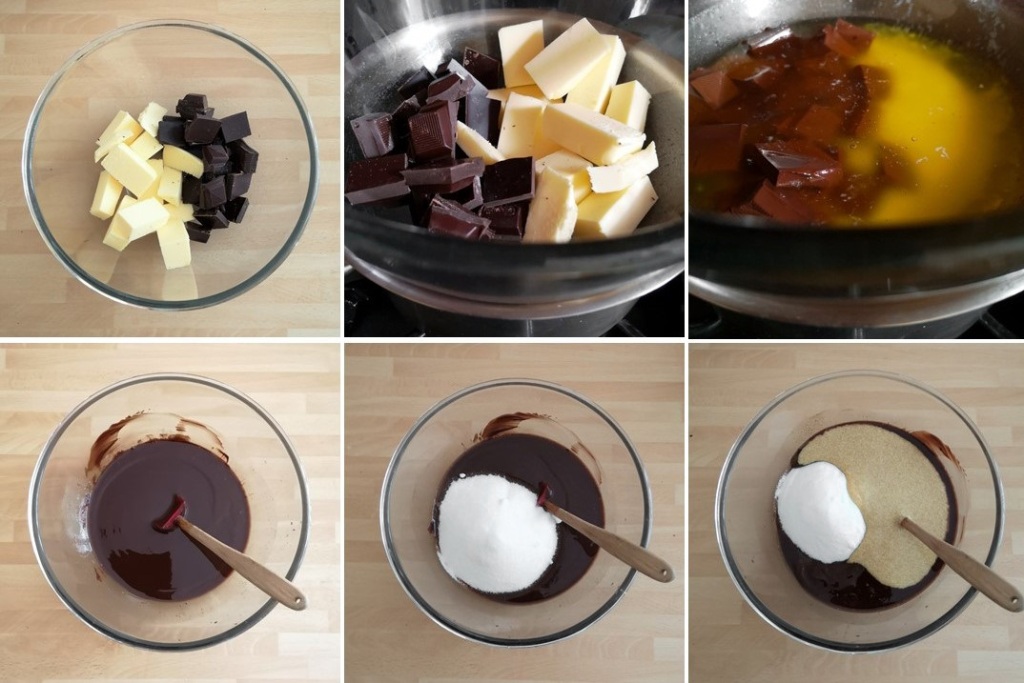
2. Put 150g chocolate in a heatproof bowl with the butter and melt gently over a saucepan of barely simmering water. Remove from the water and cool for 10 minutes.
3. Make up the flax egg by mixing the flax seed with 110ml cold water and leave to stand for 5 minutes until thickened.
4. Mix the sugar and flax egg into the melted chocolate along with the vanilla paste, then add the flour and cocoa powder and stir well until everything is well blended.
5. Pour into the prepared tin and scatter the cherries on top. Bake for about 1 hour until the mixture is set in the middle – initially the mixture rises round the edges leaving the centre molten but after a longer time in the oven, the centre firms up. Leave to cool in the tin.
Baking brownie batter. Images: Kathryn Hawkins
6. Remove from the tin and peel away the lining paper. Cut into 16 squares – you may find it easier to chill the brownie before you cut it as the texture is quite soft at room temperature.
7. Melt the remaining chocolate. Put the brownie squares on a board and drizzle each piece with a little chocolate. Leave to set before serving. Best stored in the fridge.
Adding a chocolate drizzle. Images: Kathryn Hawkins
I’m off to enjoy another slice now. I’ll see you again towards the end of the month. Until then, keep well and stay cool 🙂
Garden snowdrops in the February sunshine. Image: Kathryn Hawkins
It has been a lovely sunny day here today, so different to the weather we experienced in the middle of the week. My post to round off the month is one that I had intended to write last year but never quite got all the images together in time. Now more than ever, it seems very fitting to write about this peaceful-looking, delicate little flower, a symbol of hope for many, and one that brings signs of new life and spring at this time of year.
Snow-fall earlier this week. Image: Kathryn Hawkins
The snowdrop (Galanthus nivalus) is one of the first signs of spring for many of us. Although they look so fragile and vulnerable, they are very hardy, and I can prove it. After several centimetres of snowfall this week, every single one in the garden has bounced back completely unharmed.
The pure white flowers with their bright green flashes can be found all over Europe from the beginning of the year onwards. They are native to southern Europe. In the UK, their history is a bit unclear but they have been noted in garden journals for a few hundred years, escaping to the wild some time later. During the Crimean War of the 1850’s, the hills surrounding the battlefields were reportedly covered in snowdrops. Soldiers returning from this war brought the bulbs back to their wives and sweethearts in the UK, and the Crimean snowdrop (Galanthus plicatus) took up its residence as part of the British landscape. There are over 2000 varieties of snowdrop, and the national collection of 350 varieties are grown on the Cambo Estate in Fife, East Scotland.
Snowdrops in my garden today. Images: Kathryn Hawkins
In February last year, I was taking a walk around some nearby country roads, admiring the scenery and enjoying the peace. Monzie is a small hamlet at the foothills of the Highlands, right behind the town where I live. I had never done the walk at this time of the year so it was a lovely surprise to round the corner in the road and come across so many wild snowdrops growing over the banks, over the old stone bridge and in the grounds of the local church, Monzie Kirk.
When I was taking the photographs today in the garden, I noticed a couple of flower-heads had upturned. This is the first time I have seen the underside of the petals. Very pretty they are too.






































 My Virtually Free-from Kitchen