Cranberries & Cranberry Jam recipe (gluten-free, dairy-free, vegan)

Cranberry_plant_and_berries
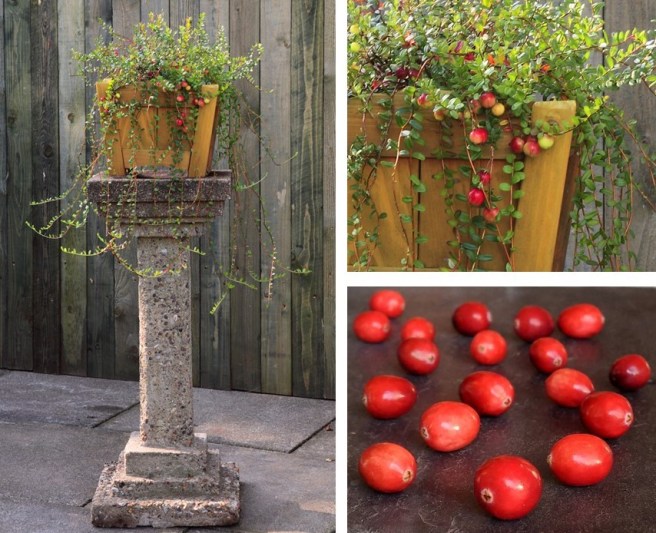
Cranberry plant with fruit. Plant images: Stuart MacGregor. Berry image: Kathryn Hawkins

In my humble opinion, there is no fruit nor vegetable that looks more festive than the cranberry. The fresh berries have just started arriving on the greengrocer’s shelves these past few days. The season for fresh cranberries in the UK is quite short, so I’m stocking up my freezer for a year round supply.

The cranberry plant is low growing and creeping in habit, and likes damp, acidic soil; it is a member of the heather family. A few years ago, I grew my own plant in a deep pot. Once it was established, it made a lovely trailing plant in a hanging basket for a while, until I forgot to water it (!) and sadly, it met a very sorry, shrivelled, end. I hope to try again this spring if I can track down a suitable mature plant.

The waxy-looking, scarlet berries are rich in Vitamin C and a staple of the Thanksgiving and Christmas menu. I’ve just made a batch of jam to serve with the Christmas roast; very easy to make and much nicer than anything you can buy in a jar. Add finely grated orange rind for a zesty flavour, and/or a few spoonfuls of Port at the end of cooking for a richer taste. I put the jam into small jars which then makes it ideal for gifting.

Jars_of_homemade_cranberry_jam
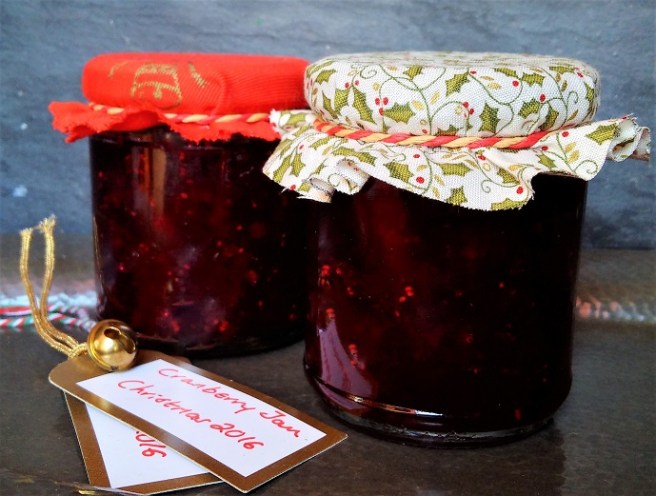
Jars of my freshly made cranberry jam. Image: Kathryn Hawkins

Makes: 5 x 200ml jars

  • 500g fresh cranberries – the recipe will also work fine using frozen berries
  • 175ml water
  • 600g granulated sugar
  1. Put the berries and water into a preserving pan or large saucepan. Put a lid over the pan and begin heating – the berries will start “popping” and may jump a bit as they warm up.
  2. Bring the contents of the saucepan to simmering point and cook gently for about 10 minutes until the berries are soft and pulpy.
  3. Stir in the sugar over a low heat until dissolved, then boil rapidly for 5-8 minutes, stirring occasionally, until thick and the liquid has reduced. Cranberries have lots of pectin so this mixture will set readily without having to test that a setting point has been achieved.
  4. Spoon whilst hot into warm sterilised jars and seal immediately. Once cool, label and cover the jar lids if preferred. Store in a dry, cool, dark cupboard; as with most preserves, cranberry jam will keep for several months.

    Cranberry_sauce_serving_suggestion
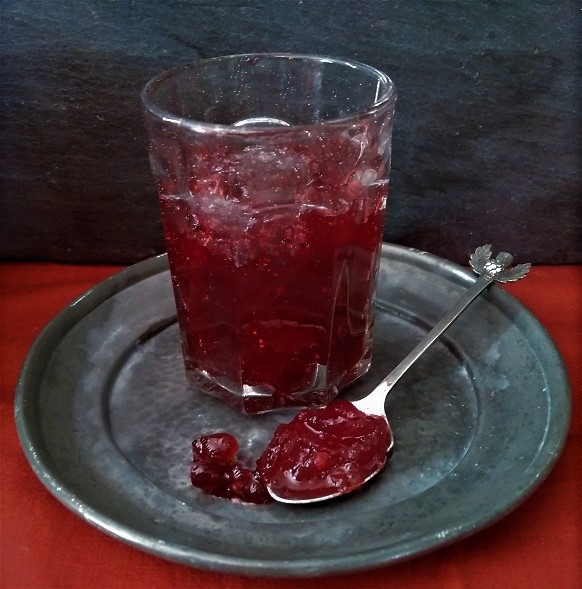
    Homemade cranberry jam. Image: Kathryn Hawkins


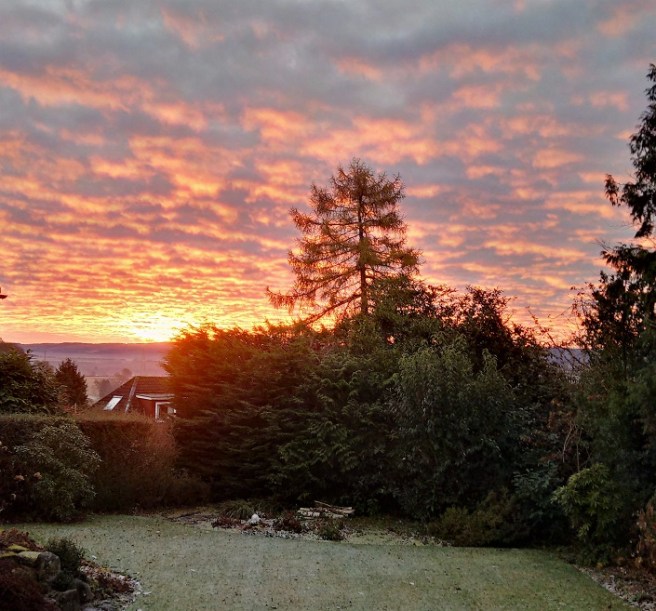
My garden in December

Winter_sunrise_over_a_Scottish_garden
Early Winter sunrise over a Scottish garden. Image: Kathryn Hawkins

It’s been a busy month of work for me. I haven’t been around at home for more than a few days at a time, so subsequently, I haven’t had any gardening opportunities.

We haven’t had any snow yet in this part of Scotland, but there have been a couple of very heavy frosts which put pay to most of the flowering shrubs in the garden – I took this picture a few days ago when the temperature had dropped well below zero overnight, the ice beautiful patterns are on the inside of the window!

Ice_patterns_on_inside_of_window
Icy window. Image: Kathryn Hawkins

Today, I have been able to get outside for a couple of hours – hoorah! There is lot as of clearing up to do after the frosts: plenty of bedraggled shrubs with drooping leaves which make the garden look very sad and now need cutting back. The weather forecasters are saying that we are due some milder weather this coming week, so I should get some out-of-doors tidying up done.

I was happy to see that there is still some colour, here and there, in the more sheltered parts of the garden. A shrub that grows well in several places in the garden is Cotoneaster horizontalis, but usually by now the berries have dropped off or have been eaten by the birds. This one is still covered with fruit and gives a welcome blaze of colour growing up against a small outbuilding wall.

Cotoneaster_horizontalis_red_berries_in_Winter
Cotoneaster horizontalis. Images: Kathryn Hawkins

By next month, the sprawling Winter Jasmine, which grows outside the back door, will be in full bloom. Today there are a few buds breaking open to reveal the cheery yellow blooms I love. It is one of my favourite plants of the season, so delicate and pretty.

Just_in_bloom_Winter_Jasmine
Winter Jasmine flower and bud. Image: Kathryn Hawkins

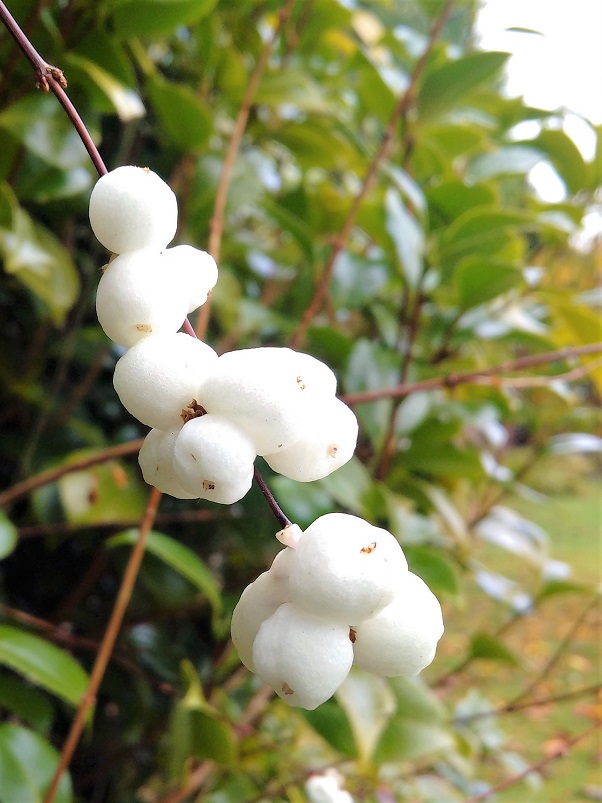
Another favourite is the Snowberry. I see them each Winter growing in other people’s gardens and in the hedgerows, but never get round to planting one for myself. This year, a few straggly branches have appeared growing through an old Camellia bush in the back garden. I will take care now I know it’s there, and see if I can get a better crop next year.

Snowberries
Snowberries. Image by Kathryn Hawkins

I like to end my monthly garden report with something quirky and unseasonal. I found this wee fellow growing at the top of the rockery, under a big conifer tree, in the back garden. Not sure how he’s managed to remain unscathed from the effects of the frosts, but he was looking very healthy and strong, and truly magnificent in bright blue bloom.

Winter_flowering_Periwinkle
Solitary Periwinkle in bloom in early December. Image: Kathryn Hawkins


Autumn shades in a Perthshire garden

Copper_beech,_Japanese_Maple_and conifers_in_Perthahire_garden
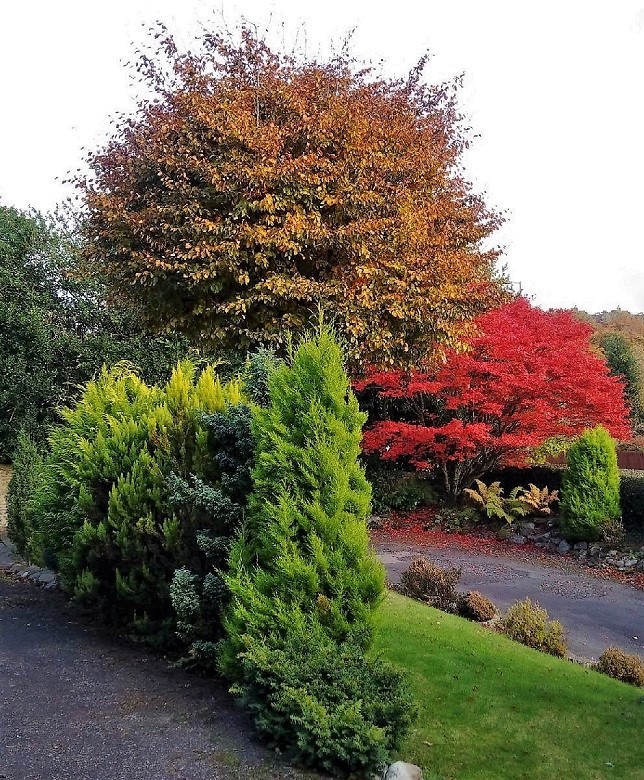
Autumn shades in a Perthshire garden. Image by Kathryn Hawkins

This time last month, I was wondering what I would be sharing with you in November. But having had an unseasonally mild October, with no high winds or frosts, we are being treated to a magnificent Autumn, here in central Scotland. As I type this, I am looking out on to the copper beech in the front garden which is a blazing coppery-orange in the setting sun.

All around this part of the country, trees form the backdrop of the scenery. Autumn is a time for getting out of doors and celebrating the glories of natural colour. I’m fortunate in the fact that I don’t have to travel very far to experience this, my garden is alive with different shades of foliage, and even a few flowers.

Japanese_Maple_in_Autumn_in_a_Perthshire_garden
Japanese Maple. Image by Kathryn Hawkins
Pink,_red_and_copper_tones_of_Japanese_Maple_leaves
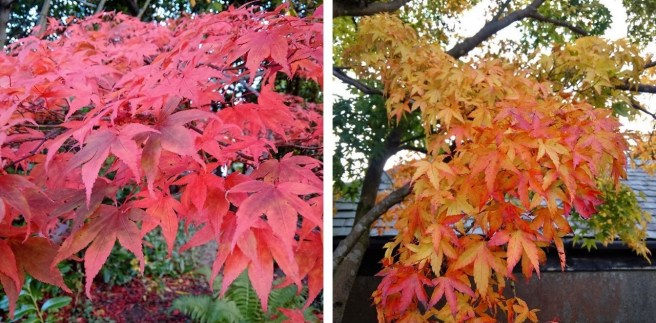
Japanese Maple foliage. Image by Kathryn Hawkins
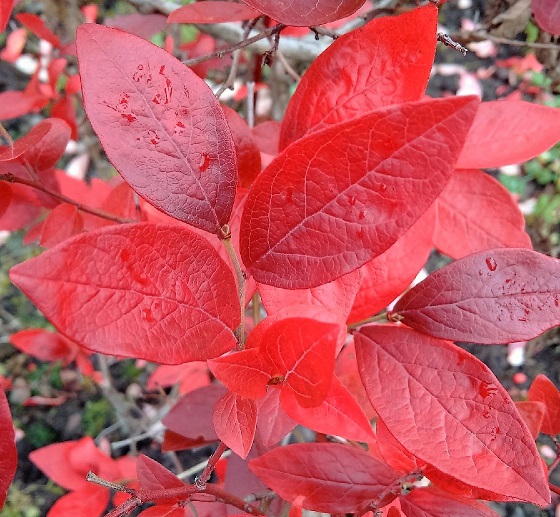
Blueberry_leaves_in_Autumn
Red blueberry bush leaves. Image by Kathryn Hawkins

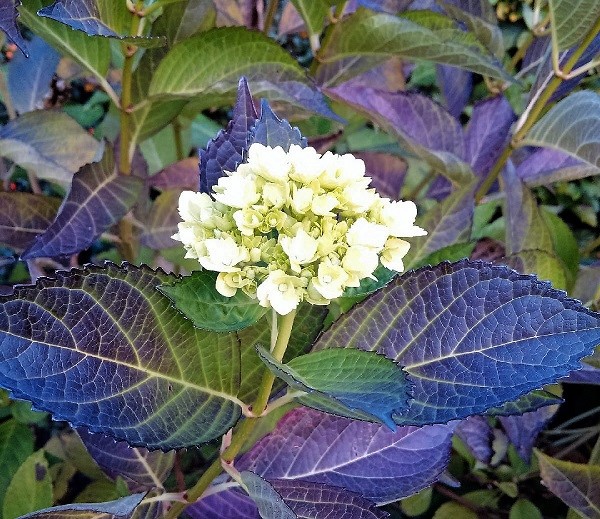
Back in the Summer, I shared my white Hydrangea flowers in a post. The plant is still producing, and now as a bonus, the foliage is starting to turn wonderful shades of blue and purple; I thought it was worth another outing.

White_Hydrangea_in_Autumn
White Hydrangea with peacock-blue leaves. Image by Kathryn Hawkins

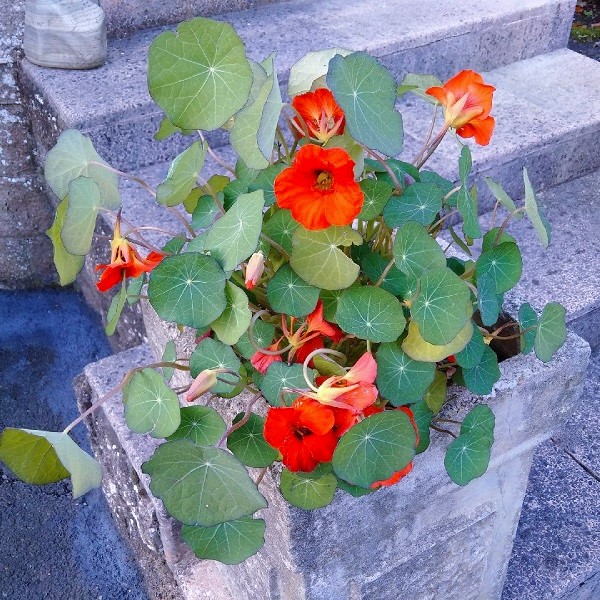
I’ll draw this piece to a close (the light is rapidly fading outside) with a splash of colour from one of my favourite garden plants, the nasturtium. This variety is called Empress of India and the leaves are a blue-green when they first open, and the flowers a deep red. It’s been blossoming for a few weeks now and has gone a bit “blousy”, but still offers an eye-catching display at the front of the house. I wonder what I’ll be posting next month; fingers crossed the garden’s not covered in a pile of the white stuff……

Autumn_display_of_bright_red-orange_nasturtium_flowers
Nasturtium: Empress of India. Image by Kathryn Hawkins

Pear perfection

Freshly_picked_homegrown_pears
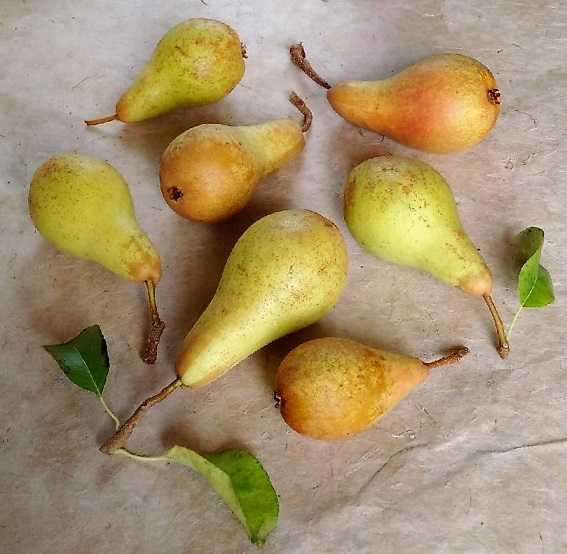
October pear harvest. Image: Kathryn Hawkins

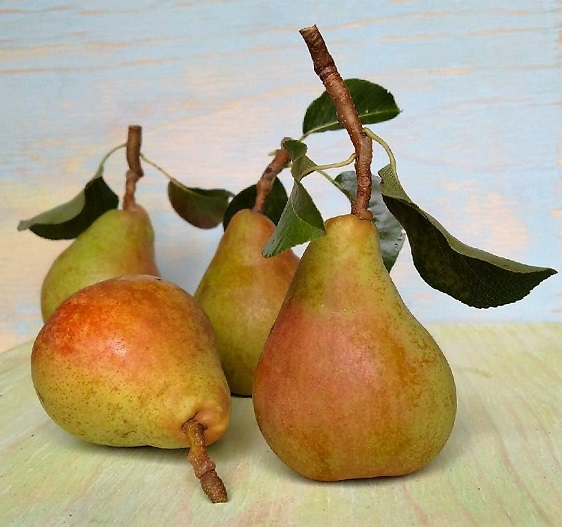
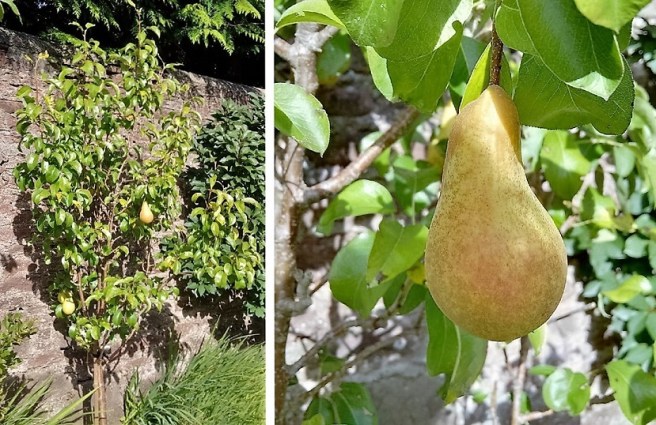
The temperature has been dropping these past few days so I decided it was time to pick the pears before a frost spoils them. It’s been a good year for most of the orchard fruit in my garden, and although I only have 2 small pear trees of differing variety, both produced 7 or 8 fruit each. One tree is a Doyenne de Comice which grows against an old wall, espalier-style, and the other is a Concorde pear, more of an upright tree but still sheltered by a wall.

Most pears ripen off the tree but I find it a challenge knowing exactly when to pick them, some time between the wasps disappearing and the cold weather arriving. If you want to store your harvest, unlike apples, pears don’t require wrapping, just arrange them in a single layer, not touching, on a shelf or tray, in a cool, dry place. You will need to check them frequently, and once the fruit begins to soften at the stalk end, keep them at room temperature for 2 to 3 days to complete ripening.

Espalier_growing_Comice_pear
Comice pear tree growing against a wall. Images: Kathryn Hawkins
Still_life_homegrown_Comice_pears
Pear: Doyenne de Comice. Image: Kathryn Hawkins
Pear_tree_Concorde_variety
Small Concorde pear tree. Images: Kathryn Hawkins
Still_life_Concorde_pears
Pear: Concorde. Image: Kathryn Hawkins

5 recipe ideas for pears:

  • Peel and core firm but ripe pears, sprinkle with butter, cinnamon and brown sugar and bake along side a ham or pork joint for the last 30 minutes of cooking; baste occasionally to prevent them drying out.
  • Mash soft, ripe pear flesh into freshly prepared mashed potato along with salty, sharp blue cheese – delicious served with roast chicken or ham.
  • Blend chopped pear with fresh blueberries, unsweetened apple (or pear) juice and plain soy or coconut yogurt for a creamy smoothie.
  • For a decadent sandwich, toast gluten-free bread and fill with freshly sliced pear, a few marshmallows and chocolate chips. Spread butter or margarine on the outside of the toast and press the sandwich into a preheated hot griddle pan for a couple of minutes on each side – or pop in a sandwich toaster if you have one – to heat through and melt the chocolate.
  • Halve a perfectly ripe pear and scoop out the core. Brush with lemon juice and fill the centre with grated marzipan. Flash under a hot grill for a few seconds to melt the marzipan and serve immediately, scattered with toasted almonds and chocolate sauce – my favourite!

My harvest festival

Homegrown_apples_pears_raspberries
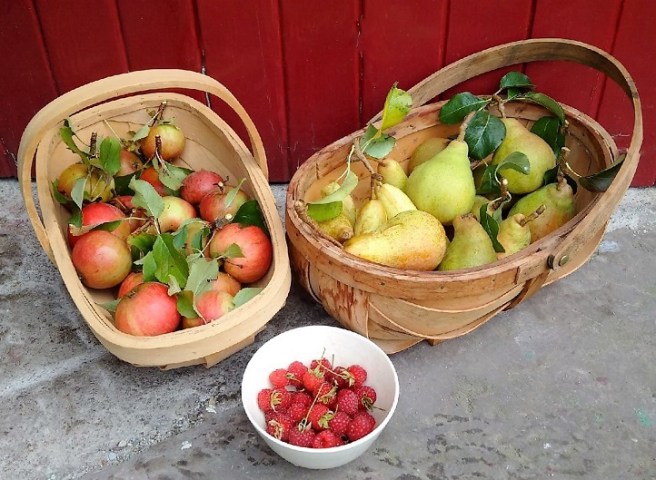
Today’s harvest of homegrown apples, pears and raspberries. Image by Kathryn Hawkins

Today has been my first opportunity to get into the garden for a while. Work has got in the way, and the weather has been pretty grim, so I seized the opportunity this morning and spent a couple of hours getting some fresh air and taking stock.

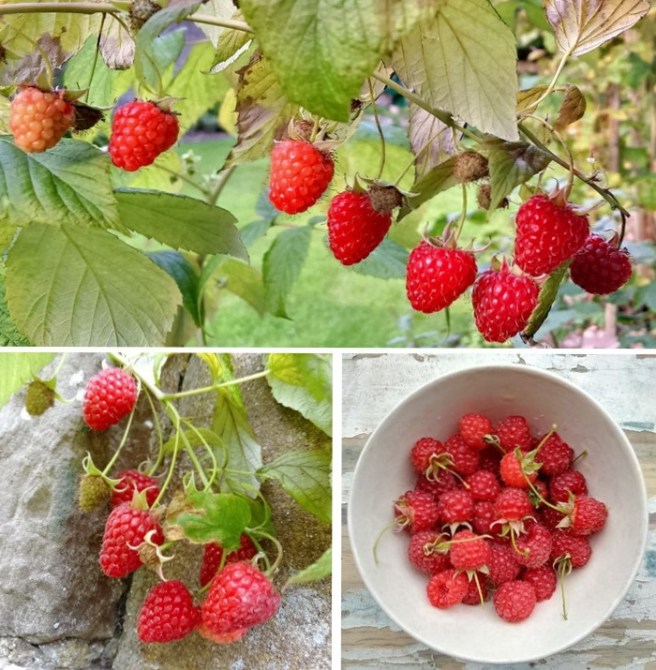
I was delighted to pick a bowl of late ripening raspberries – a delicious breakfast treat for tomorrow morning. I had expected that the birds would have been tucking in during my absence, but they are obviously feeding elsewhere.

Scottish_raspberries
Autumn Bliss – late fruiting raspberries. Image by Kathryn Hawkins

We have had an unusually mild September, and it’s really only been these past couple of weeks that the temperature has gone down a few degrees, but we have yet to have a frost. As a result, my runner beans flowered again, and tonight I will be enjoying freshly picked, homegrown beans with my supper – a first for me at this time of year.

Homegrown_Autumn_runner_beans
Second time around, October runner beans. Image by Kathryn Hawkins

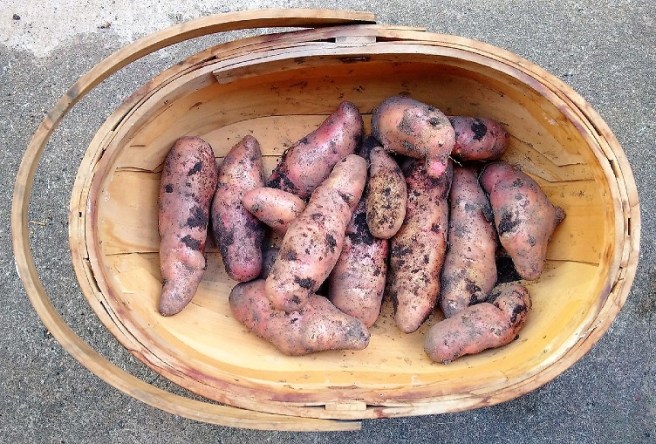
Scotland has an ideal climate for growing potatoes, and the Pink Fir variety I planted this year have done very well. Not usually a high yielding potato, I have been pleasantly surprised by how many potatoes the plants have produced so far, and I have plenty more to dig. Their cream coloured flesh is flaky and dry, and the pink, knobbly skin adds nuttiness to the flavour; they boil and roast well.

Homegrown_Pink_Fir_potatoes
Trug of freshly dug pink fir potatoes. Image by Kathryn Hawkins

Last year, I didn’t get the chance to try any eating apples from the garden. One of my trees produced no fruit at all, and the apples from on other tree were enjoyed by the birds before I got a look in! I have victory over my feathered friends this year, although I did leave a few of the really wee ones on the tree for the colder weather, when the birds do finally get peckish. I am looking forward to trying the apples; they are quite small but look very enticing with their shiny scarlet blush.

Homegrown_red-skinned_eating_apples
Cute little eating apples – variety unknown. Image by Kathryn Hawkins

October flowerings

Flowerbed_with_fruit_bushes_and_flowers
October foliage and flowers. Image: Kathryn Hawkins

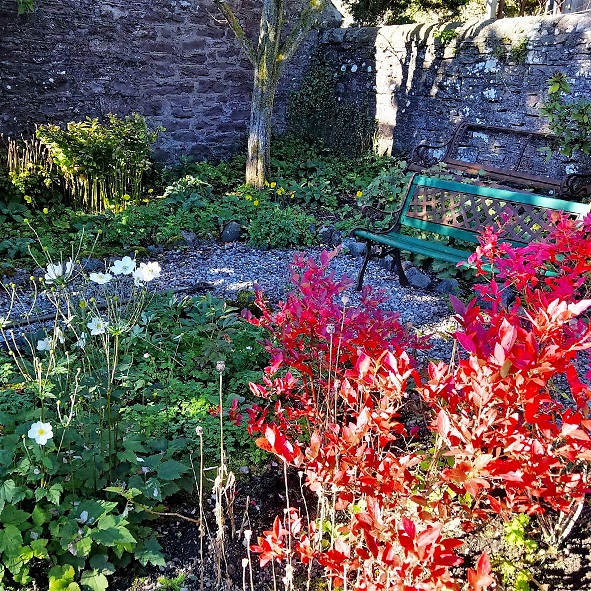
It has been a mild and reasonably bright few weeks since my last garden posting. I am pleasantly surprised that so much is still in bloom in the garden. In fact, there are very few signs of Autumn here at all, and the garden hasn’t changed that dramatically from last month, the colours are just a little faded and more muted. The large trees are barely turning, so I had to look to smaller bushes and shrubs for some typical October colour. The blueberry bushes have finished fruiting now and are the only real hint of the season, having turned from bright green to deep red-orange colour.

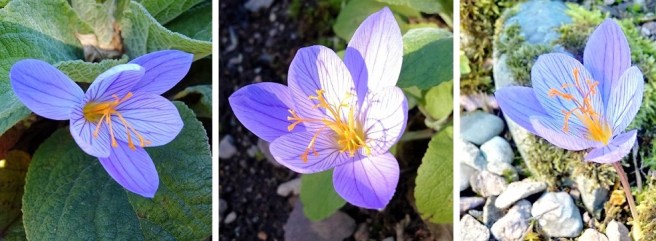
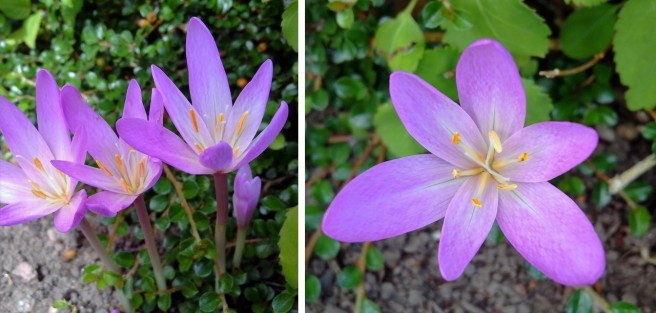
More Autumn crocus have found their way to the surface this week, and make a pretty splash of colour on the increasingly barren soil as the other foliage dies back.

3_Autumn_crocus
Autumn flowering crocus. Images: Kathryn Hawkins

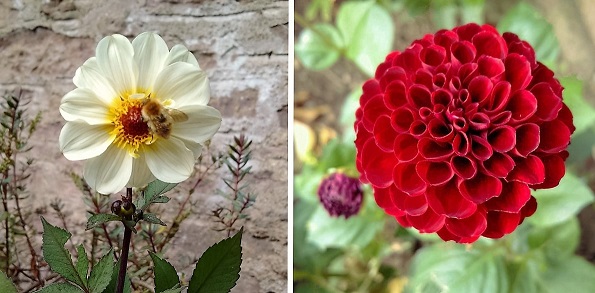
It was also good to see that we still have plenty of bees around the garden. Yesterday, they were buzzing round the Hebe and dahlias as I took my photos, still busy gathering pollen from the flowers and shrubs.

Purple_Hebe_ with honey_bee
Hebe bee-bee. Image: Kathryn Hawkins
2_varieties_dahlia:_white_and_burgundy
White petal dahlia with busy bee, and Burgundy pom-pom dahlia. Images:Kathryn Hawkins

Usually at this time of year, there is only one splash of colour in one a particular flowerbed in the back garden; it prompts me to think every year that I must plant a companion ready for next Autumn (and of course, I never do). Sedum “Autumn Joy” is very reliable, multi-headed with tiny pink flowerets and succulent bright green leaves, I think it must be very happy having its moment of glory every year, when it stands out alone amongst its fading neighbours, so who am I to spoil its fun?

Sedum_variety:_Autumn_Joy
Sedum “Autumn Joy”. Image: Kathryn Hawkins

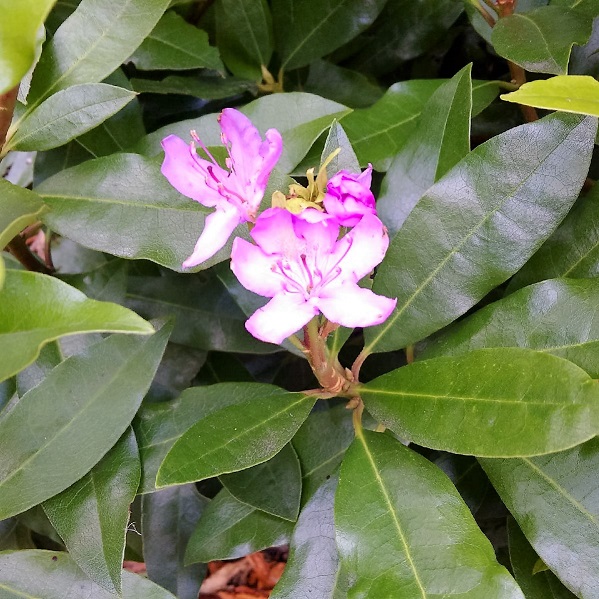
I will finish this post with an image of a flower I spotted in bud a couple of weeks ago. Yesterday, it was in full bloom. It is a well established shrub and should have flowered back in June, when it is normal to do so, but for some reason it has decided to break flower now. Fingers crossed we don’t get any frost………

Lilac_flowered_rhododendron
Rhododendron in bloom in October. Image: Kathryn Hawkins

My garden in September

Globe_thistles_(Echinops)
Globe thistles in early September sunlight. Image copyright: Kathryn Hawkins

So another month has passed, and now we are heading towards a season change. We have had some wild winds and heavy rains, on and off, this last month, but everything is just about standing. The Echinops (Globe thistles) are looking magnificent just now.

Much of my garden is in shades of blue and pink, but the greenery is still lush and the trees are barely turning. One obvious sign of Autumn are the mauve crocus that appear without any leaves (the foliage comes afterwards). They are quite delicate and aren’t in flower for very long. They thrive in shady areas and are quite easy to miss, usually hiding under shrubbery. These, however, are blooming, bold as brass, on the corner of one of the borders.

Autumn_crocus
Autumn crocus (Colchicum autumnale) in full bloom. Image copyright: Kathryn Hawkins

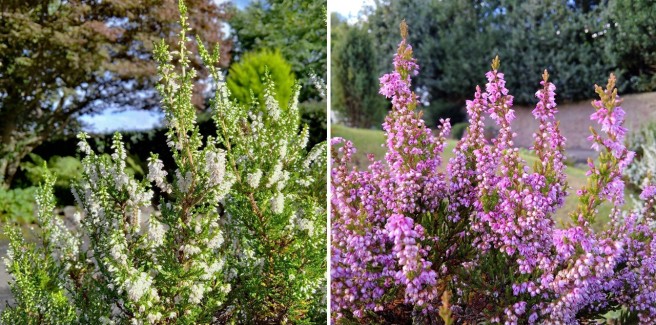
Throughout the year, different heathers come into flower, but from late Summer going into Autumn, I think the heathers are at their finest. I have many varieties growing around the garden, ranging in shade from bright white and the palest pink, to deep pink and red.

Scottish_White_and_pink_heather_plants
Autumn flowering heathers in my Perthshire garden. Image copyright: Kathryn Hawkins

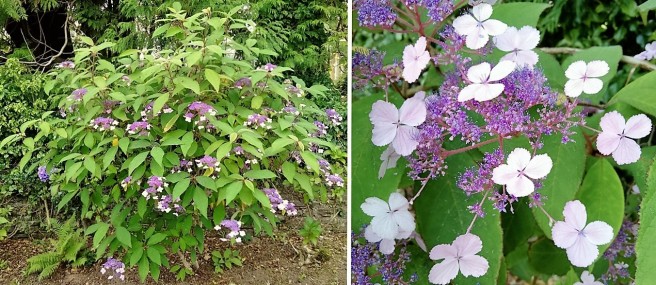
One last plant that I am particularly proud of is my Himalayan Hydrangea. I planted it about 10 years ago and it is now very well established; this year is has flowered particularly well. I love the flowers of this variety (Lacecap); the larger petals look like pink butterflies perching on top of tiny mauve flower heads.

Himalayan_Hydrangea_(hygrangea_macrophylla_lacecap)_with_bloom
Himalayan Hydrangea (Hygrangea macrophylla lacecap). Image copyright: Kathryn Hawkins

August flowerings

Scottish_garden_flower_bed_in_early_August
Scottish garden flower bed in early August. Image copyright: Kathryn Hawkins

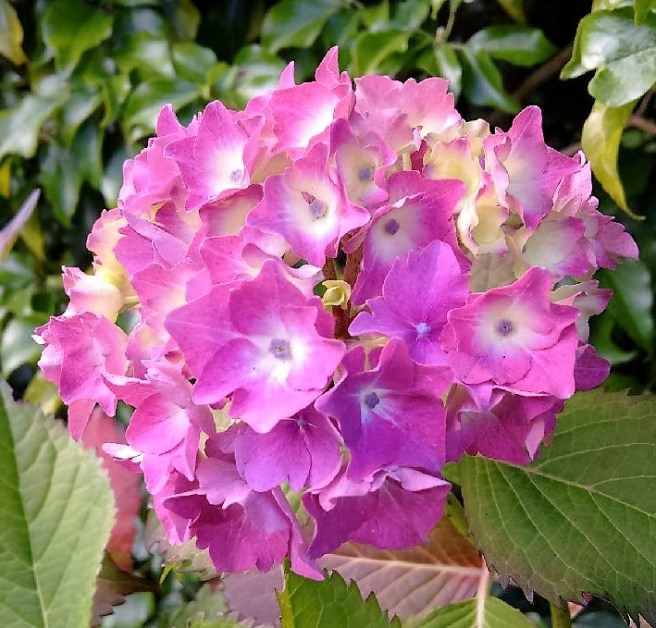
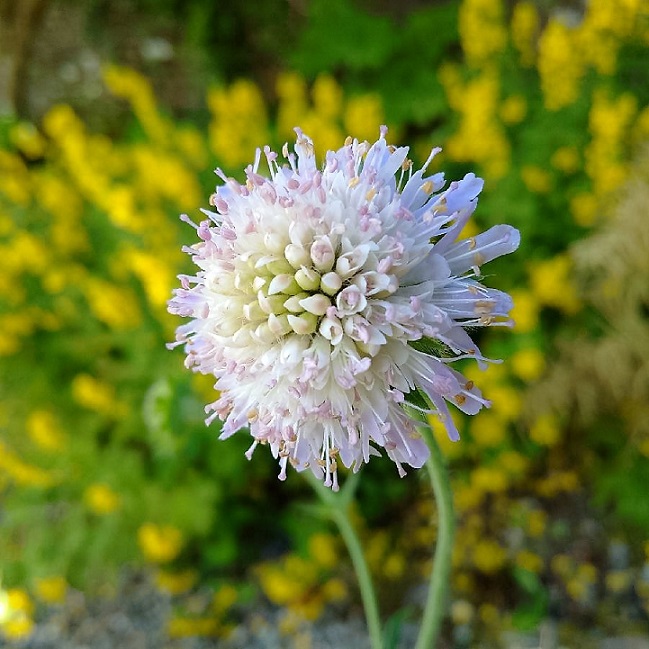
I’d been thinking that this is the month that my garden begins to lose some of its overall colour. But I have been pleasantly surprised when I put this post together. I have chosen a different flower bed to photograph this month – the Ox-eye daisies are in full bloom and you can see the Lysimachia, Hydrangeas and Scabious in the background, which add vibrancy now the pretty shades of late spring have faded.

Pink_Hydrangea
Pink Hydrangea. Image copyright: Kathryn Hawkins
Pink_Scabious_and_Lysimachia
Pink Scabious and Lysimachia. Image copyright: Kathryn Hawkins

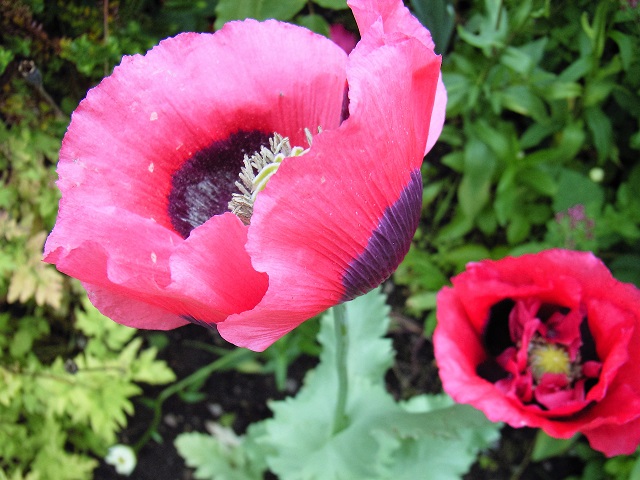
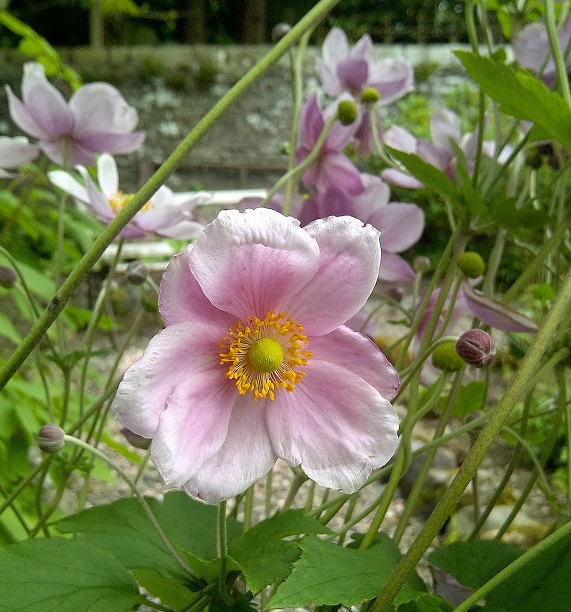
All round the garden, from mid July onwards, I have bold and brash coloured poppies opening out, adding splashes of pinks and reds in the beds. And then, by way of contrast, white and pale pink Japanese Anemones grow in wispy clumps; they look so fragile and delicate and yet they always bounce back after a heavy shower.

Red_and_black_poppies
Large red, black-centred poppies. Image copyright: Kathryn Hawkins
Pale_pink_Japanese_Anemones
Pale pink Japanese Anemones

I have many lavender plants, but sadly most are fading fast now as the season progresses. My favourite is the deepest blue-purple Dutch Lavender which grows next to a rather messy clump of Santolina (or cotton lavender). The contrast between the 2 colours is mesmerising on a sunny day. The lavender is coming to the end of a very long flowering, but it’s still adding a lovely splash of colour in the borders and some late pollen for the bees.

Cotton_lavender_(Santolina)_and_Dutch_lavender
Cotton lavender (Santolina) and Dutch lavender in full bloom. Image copyright: Kathryn Hawkins

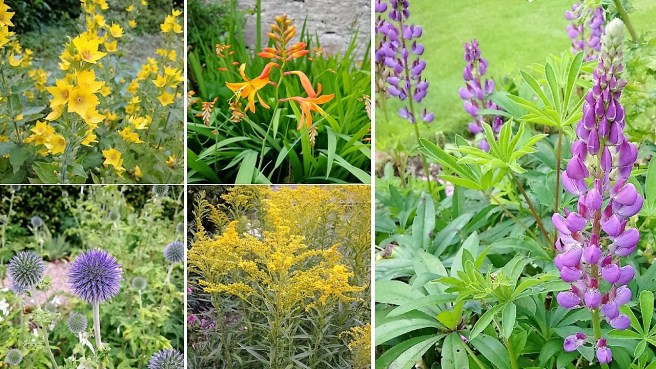
There are now some more obvious signs in the garden that Autumn is not too far away. Apart from the slight nip in the air, there are floral reminders too. The globe thistles (Echinops) are blueing up, and several borders are glowing with the colours of Montbretia and Golden Rod. But I’m still clinging on to a memory of summer with a second blooming of lupins.

Lysimachia_Montbretia_Lupins_Echinops_Golden_Rod
From top left: Lysimachia and Montbretia; From bottom left: Echinops and Golden Rod. Second Lupin blooms. All images: Kathryn Hawkins

I’m going to close this post with an image of my beautiful white Hydrangea which is just opening up. I don’t have many white flowers in the garden, but this is a beauty. When the flower heads are fully open, the tiny centres of each turn pale blue. I have always thought that these flowers would make a stunning bridal bouquet.

Blooming_white_hydrangea_with_petal_detail
White hydrangea and petal. Image copyright: Kathryn Hawkins

Sugared rose petals (gluten-free, dairy-free)

One of my favourite culinary flavours is rose but it is a flavour that can easily overpower other ingredients, so you do have to use just the right amount in your cooking. One of the best ways to achieve this is to use the petals.

I couldn’t believe my luck when I realised that the  beautiful rose pictured above, Rosa Felicia, well established in the garden when I moved in, was not only abundant with flowers, but the fragrance and flavour is sublime.

Whilst I haven’t managed to make my own rose water with any success, I have put some in white balsamic vinegar to use as a dressing, and I usually steep some in vodka, ready for a festive tipple – post to follow soon. Most often, I use dried and fresh rose petals to decorate cakes and fruit dishes, and I coat some with sugar to keep as an out of season decoration.

To make sugared rose petals, always choose a rose with a scent otherwise there will be no flavour, and  choose smaller, softer petals as these will be nicer to eat. Choose rose heads higher off the ground so there is no danger of animal “spoiling”, and pick the rose once it has just opened – if it is too tightly in bud the petals will be difficult to break open; a rose that is too open will have lost colour and fragrance.

Gently wash the petals – I put them in a sieve or colander and dip them in a bowl of water to remove any dust – then lay them out on kitchen paper to dry. It is better to leave them to air-dry if it is warm, but if time is short, gently pat them dry using kitchen paper, taking care not to bruise them. All you need then is egg white, caster sugar, plus a bit of time and patience.
My preference is to use powdered egg white – a one egg sachet is more than sufficient to cover lots of petals. Alternatively, you can use a small fresh egg white, just beat it until it is fluid and frothy. Put the egg white on to one saucer or small plate, and sprinkle a shallow depth of caster sugar on another.

Using tweezers, dip a petal in egg white and then brush off the excess white using a small paint brush. For best results, brush off all bubbles or pools of egg white to achieve a smooth, thin coating. Gently push the lightly dipped petal into the sugar and sprinkle over a little more to coat the top. Lift out with tweezers, gently shake off the excess sugar and place on a board lined with baking parchment. Continue the process to coat as many petals you need.

Once you have coated a few petals, you will need to remove clumps of sugary egg white from the sugar, and replace it with fresh. Leave the petals to dry at room temperature, covered loosely with another sheet of baking parchment, for 24 to 48 hours until dry and crisp. The sugared petals can be stored in between sheets of parchment in an airtight tin for several weeks. After about 3 months, rather disappointingly, the colour will fade and the flavour will be lost, so make sure you use them up in time – they do make a lovely sugary, floral snack as well!


Green fruits and shoots

The last day of the month is the time for me to catch up with how the garden produce is coming along.

The weather, here in Perthshire this month, has been a real mixed bag. A few sunny days along with some pretty miserable and wet ones. We have had several blustery winds and a couple of much cooler nights. All that said, the garden is looking good.

I keep a sowing and planting diary from year to year, and take a few pictures of the garden each month in order to keep a progress record. Compared to previous times, most of my edibles are at about the same stage as usual, but the runner beans and potatoes seem to be a bit more advanced – fingers crossed, I may get an earlier harvest! The fruit trees are bearing much more fruit than ever before as they become more established in the garden – last year was a poor season with no apples on the miniature trees, only a handful of plums and a solitary pear. I have much higher hopes for this year’s harvest.

June's_green_fruits_and_shoots
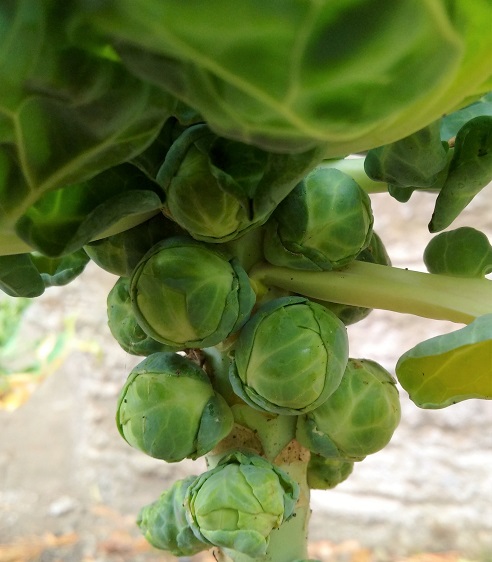
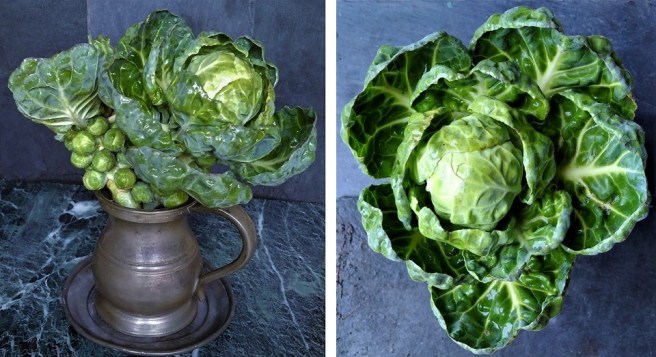
From top left: Concorde pears; miniature “Solo” apple tree; Glen Ample raspberries, Hinnonmaki Red gooseberries. From bottom left: Brodie F1 Brussels sprouts; Scarlet Emperor runner beans; and in the greenhouse: Gardener’s Delight tomatoes, and Beth Alpha cucumber

My favourite flower bed at this time of year is full of colour, fragrance and delicate petals. It is home to a combination of peonies, Welsh poppies, white and blue campanulas and foxgloves. Sadly the flowers often get windblown and damaged by heavy rain, but there has been nothing too destructive so far.

I have managed to capture a little of its beauty in the image below.

campanulas_peonies_Welsh_poppies_foxgloves
My favourite flower bed. Image copyright: Kathryn Hawkins

I adore peonies; their perfume is quite overwhelming – I only wish I could post the aroma via my blog. I inherited 4 varieties in this bed, they were very well established when I got here. I have no idea of their varieties, but these are my favourites. They have bloomed without fail for the 12 years I have had the garden; I hardly ever do anything by way of maintenance, except give them an occasional feed.

Peony perfection. Image copyright: Kathryn Hawkins