May bluebells and blossoms

Bluebells_blossom_and_Welsh_poppies
My Perthshire garden in May. Image: Kathryn Hawkins

It’s May! My favourite month of the year. I’m so excited, I hardly know where to start. The weather has been fine and dry for several days and there is so much going on in the garden, I am utterly spoilt for choice. So here goes….

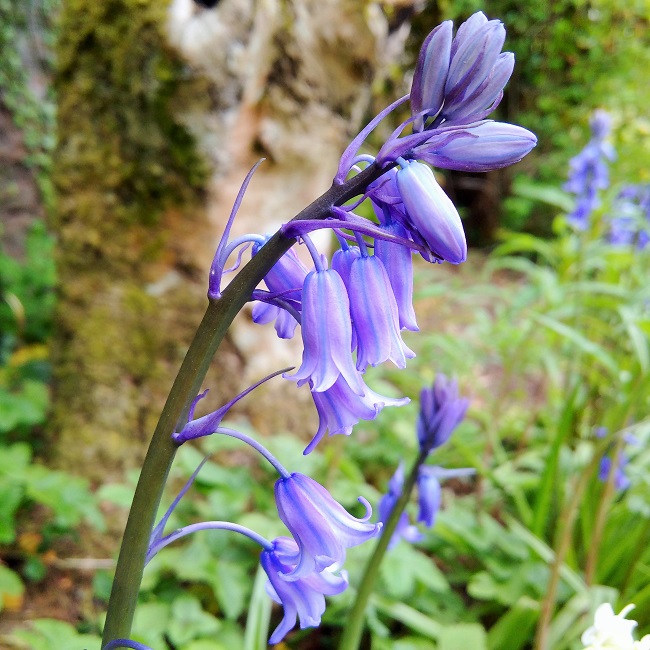
There are bluebells everywhere, ranging in height and depth of colour, and not just blue ones, white and lilac-pink stems as well. When the sun is up, the fragrance is quite intoxicating.

Blubells_and_pink_and_white_varieties
Bluebells, lilac and white varieties. Image: Kathryn Hawkins
Tall_white_bluebells
Tall, white variety of bluebell. Image: Kathryn Hawkins

The golden glow of daffodils has been replaced by the vibrant yellow of Welsh poppies which are blooming all over the garden now and will continue to do so throughout the coming months. The petals are so delicate yet the poppies withstand all sorts of random weather that a Scottish spring and summer has to offer.

Sunny_yellow_Welsh_poppies
Vibrant and bold Welsh poppies. Image: Kathryn Hawkins

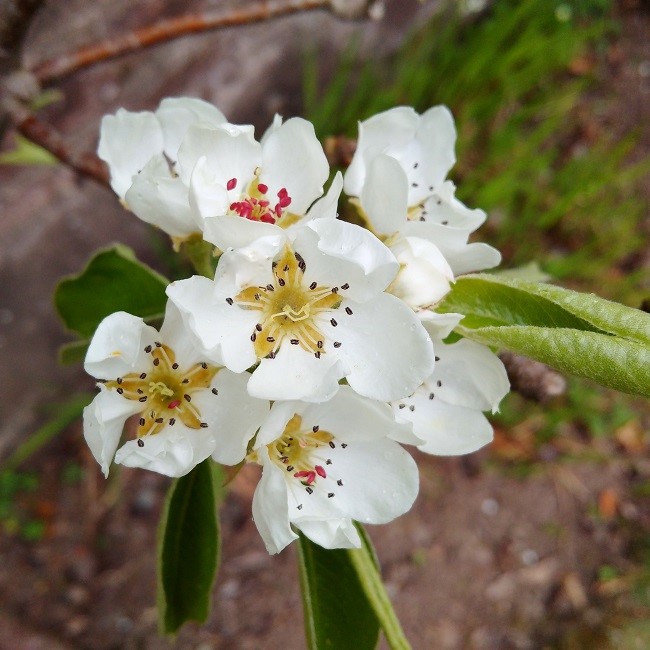
I have high hopes for an abundant fruit crop this year. All the trees, especially the Morello cherry, have been laden with blossom. To me, the prettiest of all fruit blossom is the apple blossom, I love the deep pink buds which burst open into hint-of-pink flower petals. Pear blossom comes a close second with its intricate and prominent stamens.

Morello_cherry_tree_in_blossom
Morello cherry tree in full blossom. Image: Kathryn Hawkins
Pink-white_apple_blossom
Lord Derby apple blossom. Image: Kathryn Hawkins
Pear_tree_blossom
Concorde pear blossom. Image: Kathryn Hawkins

The weather here in Perthshire is set fair for another few days, with no rain in the forecast for the foreseeable future. Whilst I enjoy the sunshine and blue sky, this is one of the worst times of the year for there to be little water for the plants. It looks like I will be busy with the watering can over the next few days. Until next month, I’m heading outside 🙂

Garden_bluebells_in_the_May_sunshine
Bluebells under a May Perthshire blue sky. Image: Kathryn Hawkins
Bluebell_close_up
May bluebell, up close and personal. Image: Kathryn Hawkins

April flowers

White_Pieris
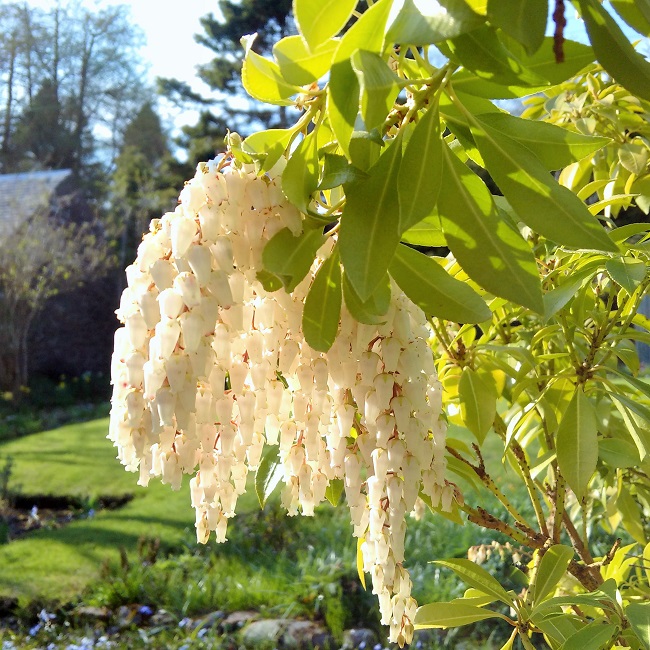
White Pieris in April sunshine. Image: Kathryn Hawkins

There is a multitude of colours in the garden this month. A combination of warmer, sunnier days, a few showers here and there, and cool nights, has brought glorious technicolor to the beds and borders. The Pieris shrubs have been in flower for a couple of weeks already, and are now fully laden with bunches of droplet-like blossoms. Their aroma is spicy and fresh, and the bees are buzzing all over them.

The zesty colours of the Euphorbia are showing now. In my garden, the plant grows most prolifically in the dappled, shadier parts, and has become quite a forest, as the stems self-seed each year.

Fresh_new_growth_on_ Euphorbia
Bright, fresh and green, Euphorbia. Image: Kathryn Hawkins
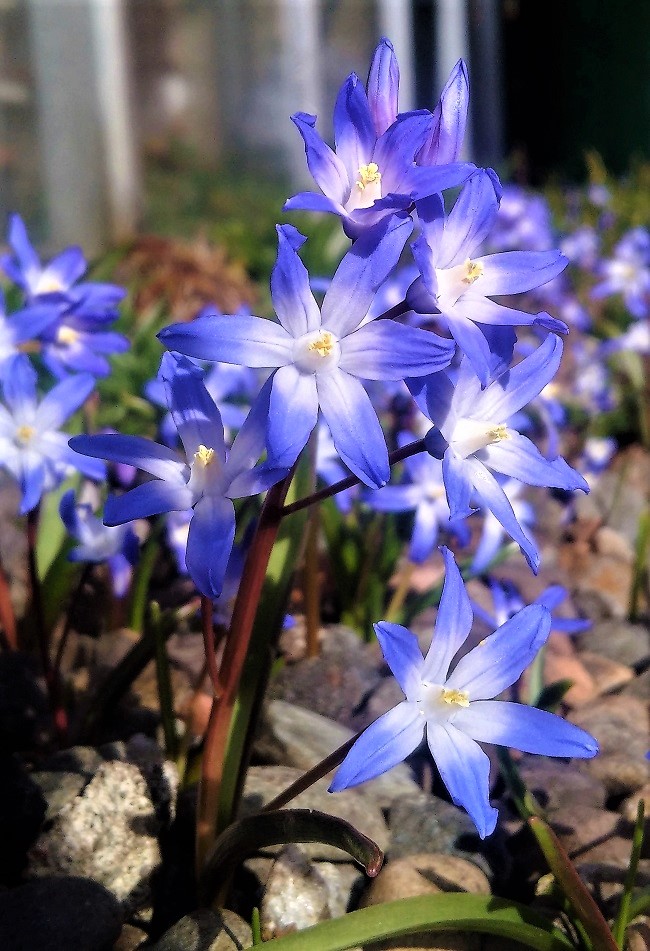
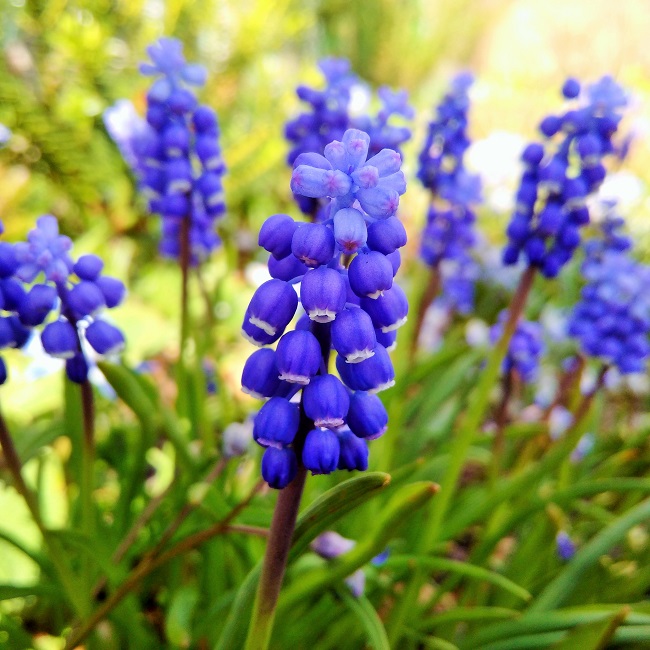
Growing in little groups in the flower-beds and alongside the paths, are the tiny, clustered flowers of the grape hyacinth. Sweet-scented,  dainty in stature, with bold, blue bell-shaped petals, they stand out prominently amidst all the fresh greenery.
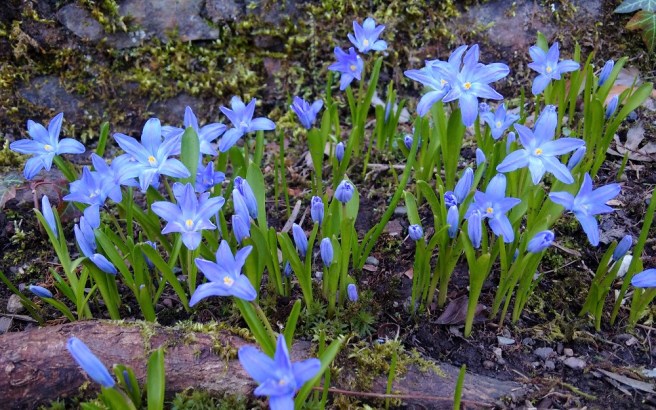
Muscari_or_grape_hyacinth
Muscari (grape hyacinth). Image: Kathryn Hawkins

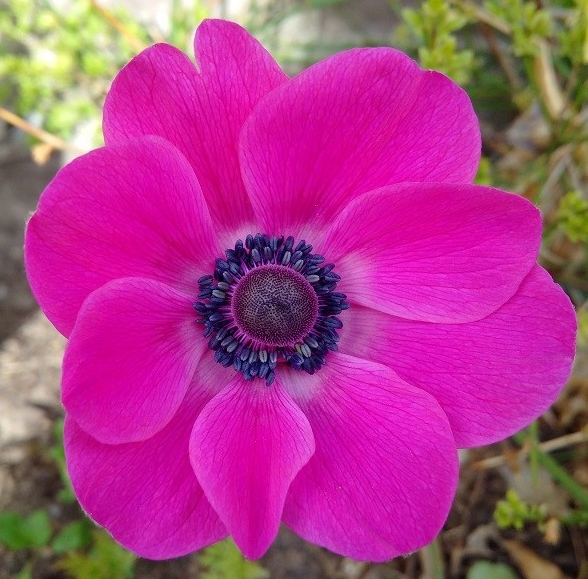
I planted anemones for the first time last autumn, and they seem to be thriving. The colour of the pink and red varieties is particularly dazzling in the sunshine.

Pink_anemone
Fuschia-pink anemone. Image: Kathryn Hawkins
Dazzlingly_bright_red_anemone_flower
Scarlet-coloured anemone. Image: Kathryn Hawkins

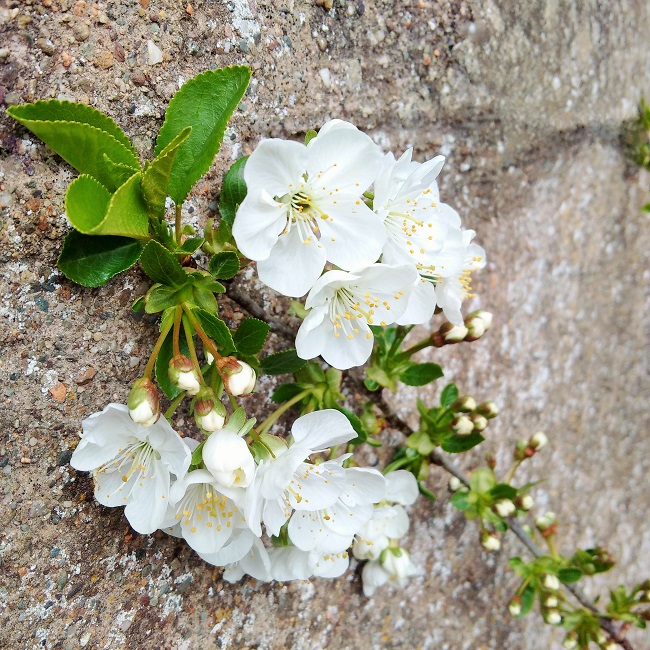
The warmth of the sun has opened up the blossom buds on several of the fruit trees this past week. The Morello cherry is always one of the first to flower. I have high hopes for a bumper crop this year as there are blossoms up and down every stem. The small tree is an espalier and grows against a south-facing wall. It is about 6 years old and for the past couple of years, has produced a fair crop of fruit.

Morello_cherry_blossom
Morello cherry blossom. Image: Kathryn Hawkins

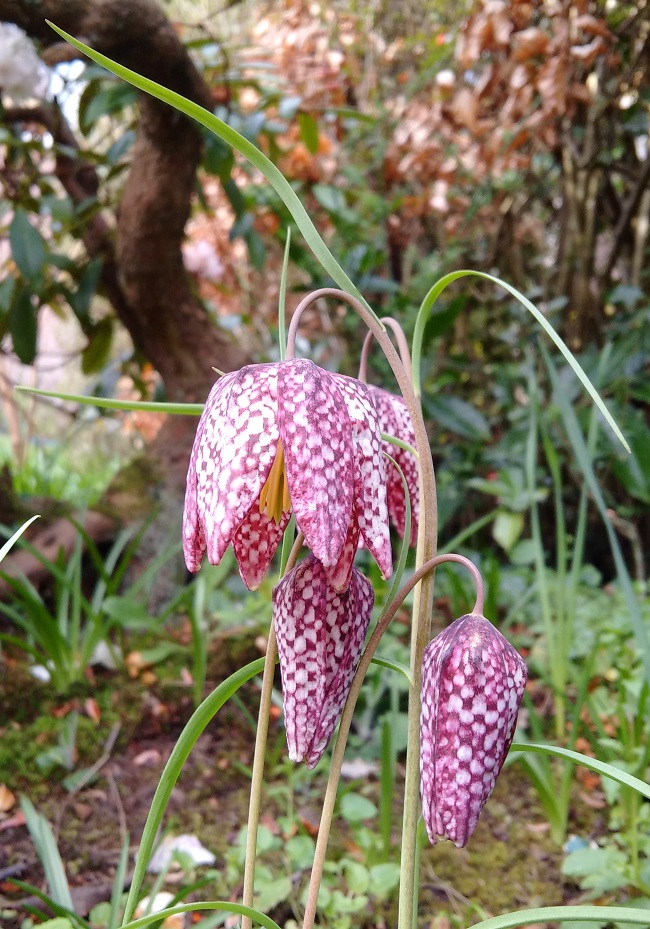
One of the more unusual-looking flowers at this time of year is the Snakeshead Fritillay. Immediately you can see how it gets its name. The striking flower heads grow on tall, spindly stems with grass-like leaves; they are almost camouflaged in amongst the new shoots in the flowerbeds and the back-drop of the beech hedge.

A_few_stems_of_snakeshead_fritillay
Snakeshead fritillary. Image: Kathryn Hawkins

Another flowering plant that is unremarkable from a distance, is this tiny yellow violet. It grows in a single clump in the back garden. The petals are so pale and delicate, the blooms are easily over-looked because it grows so close to the ground. If you can get close enough, the flowers have the faint aroma of vanilla.

Tiny_pale_yellowviolet_with_vanilla_scented_flowers
Tiny pale-yellow violet. Image Kathryn Hawkins

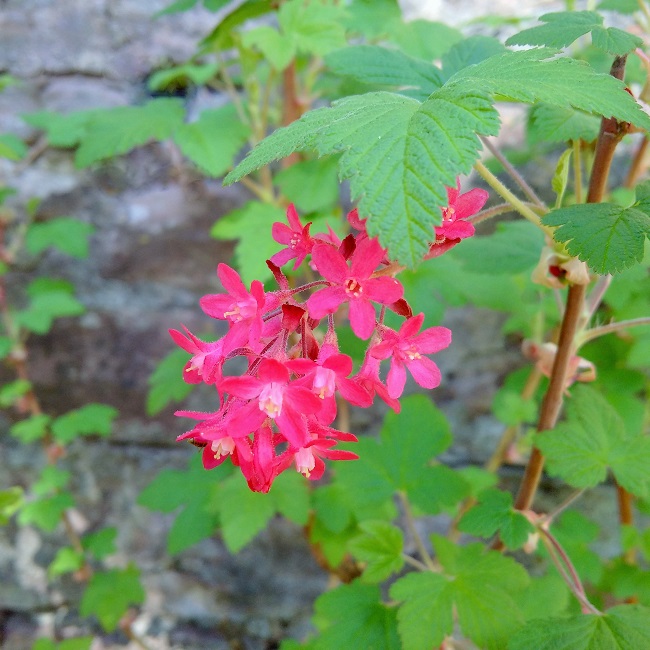
My final plant this month, is another aromatic: Ribes sanguineum. At this time of the year, the flowers and foliage smell of blackcurrants and, to me, its flowering means that spring is well under way with the promise of summer not too far off. Until next month, enjoy the sights and smells of the season.

Blackurrant_scented_leaves_and_flowers_of_theRibes_sanguinum
Ribes sanguineum. Image: Kathryn Hawkins


Garden Sorrel (Rumex acetosa)

New_season_spring_garden_sorrel
New season garden sorrel. Image: Kathryn Hawkins

I have more books on the subject of herbs and spices than on any other. I love growing my own herbs and experimenting with new flavours. It’s lovely to see that my herb garden is coming back to life again, now that the days are getting lighter and the sun is slowly warming up.

One of the best culinary friends from the herb garden is garden sorrel. A hardy perennial – I’ve noticed that even in the depths of a Scottish winter, there are always a few leaves poking their way through the earth – it is easy to grow and is very versatile. Related to spinach and the wild, leafy plant, Dock, garden sorrel is a real favourite with cooks and chefs alike.

A_small_garden_trug_of_fresh_sorrel_leaves
Freshly picked sorrel leaves. Image: Kathryn Hawkins

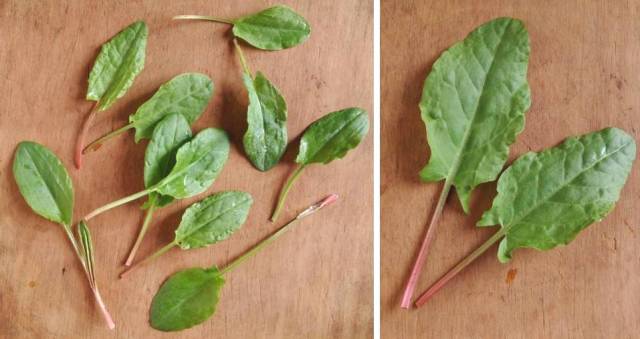
Spring is the time to start picking a few leaves here and there – the more you pick, the more the plant will regenerate, and you’ll have a succession of young leaves right through until autumn. At this time of year, the new leaves are juicy and fresh tasting. Larger leaves have more of the classic, astringent lemony flavour associated with the herb. As the season progresses, tougher, red flowering stems will form with clusters of tiny red flowers at the end, and a few of the leaves will become very large. Whilst the flowering stem should be cut down,  the large leaves, which are too coarse to eat, make perfect wrappings for tenderising meat and flavouring fish during cooking.

Very_young_tender_leaves_ and_more_mature_sorrel_leaves
Baby sorrel and larger sorrel leaves. Image: Kathryn Hawkins

If you fancy growing your own, buy some seed now and get sowing. You may also find potted clumps at the garden centre. Garden sorrel likes rich, moist soil, and the sun or semi-shade. And that’s about it; it will look after itself. If you want a supply for winter, either cover the clump with a cloche, or split the roots in autumn and pot some up – I usually keep a pot in my unheated greenhouse over the winter months to tide me over until the next spring.

Growing_garden_sorrel
New season sorrel in my herb garden. Image: Kathryn Hawkins

Garden sorrel serving suggestions and tips

  • Sorrel is best picked as required. Treat like spinach if you do need to store it: place in a plastic bag and keep in the fridge for a couple of days maximum. It can be frozen successfully, but loses its flavour if dried.
  • Because of the acid content, sorrel is affected by cast iron cookware and will discolour. Use a stainless steel knife blade for cutting, and only shred just before using to avoid discolouration and flavour loss.

    Chopping_fresh_sorrel_with_a_stainless_steel_blade
    Garden sorrel preparation. Image: Kathryn Hawkins
  • Young garden sorrel leaves are delicious mixed with other green salad leaves and soft-leaved herbs; they add a tangy lemony flavour to the plate, and reduce the need for vinegar or lemon juice in a salad dressing.
  • Used by the Greeks and Romans as an aid to digestion, garden sorrel is the perfect accompaniment to rich foods such as soft cheese (especially goat’s and sheep’s cheeses), oily fish, lamb and pork.

    Pork_and_pancetta_patties_flavoured_with_garden_sorrel
    Patties of minced pork and pancetta mixed with salt, pepper, garlic, freshly chopped chives and shredded garden sorrel. Image: Kathryn Hawkins
  • Garden sorrel is commonly used in egg dishes. Try adding to pancake batter, or a quiche filling; stir into scrambled eggs, or add as an ingredient to an omelette fines herbes. Pep up an egg mayonnaise sandwich filling by adding a few fresh leaves – much zingier than mustard and cress!
  • Add some chopped leaves to soft butter or margarine along with some black pepper and a little salt. Melt over hot grilled fish, barbecued chicken or steaks. See my recipe for chive butter if you fancy making some  Homegrown courgettes with chive butter (gluten-free)
  • As well as all the culinary uses, sorrel leaves are rich in potassium and the vitamins A, B1 and C.

    Bright_green_lance_shaped_leaves_of_garden_sorrel
    Broad, arrow-shaped leaf of garden sorrel. Image: Kathryn Hawkins

Spring blues

Chionodoxa_growing_in_gravel_path
Chionodoxa. Image: Kathryn Hawkins

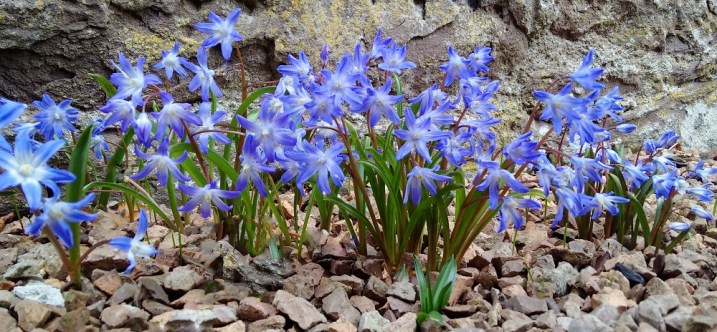
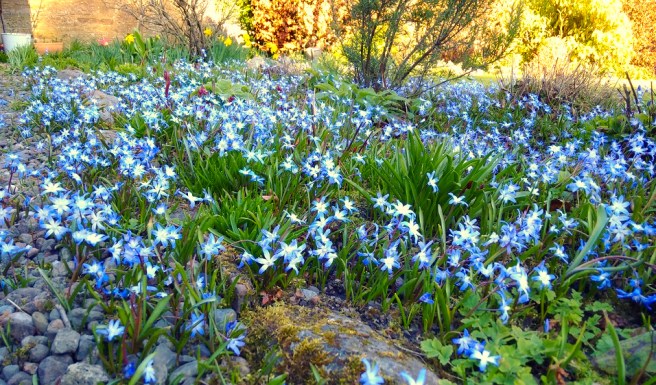
Long before the bluebells flower, my garden is swathed in the electric-blue colour from the blooms of hundreds of Chionodoxa. Every spring these hardy, yet very tiny, bulbs sprout up everywhere: in the flower beds, up through the gravel in the paths, all over the rockery, and in the barren earth where nothing much else is growing yet. They seed themselves and seem to appear in greater numbers each March.

Flowerbed_ and_pathways_covered_in_Chionodoxa
Blue carpet of Chionodoxa. Image: Kathryn Hawkins

This weekend, the sun shone brightly and the Chionodoxa were in full bloom. I expect that by next weekend the blooms will have begun to fade and the bulbs will begin their retreat back into the ground where they will lay dormant until next year.

Chionodoxa_growing_in_gravel_path
Chionodoxa growing up through the gravel paths. Image: Kathryn Hawkins
Chionodoxa_in_a_sunny_spot
Chionodoxa basking in the spring sunshine. Image: Kathryn Hawkins

Whilst Chionodoxa like the open space and bright locations in the garden, Scilla prefer the shady parts which don’t get any direct sunshine. I found this newly opened little group growing amongst the roots of the Japanese Maple tree in the back garden. Scilla flowers lack the dazzling white star shape of the Chionodoxa petals, but they have an almost luminous quality, glowing from the shadows. Up close, you can see the tiny, glowing yellow centres; they were a true delight to discover.

Scilla
Scilla. Image: Kathryn Hawkins
Single_Scilla_flower_in_bloom
Single Scilla flower. Image: Kathryn Hawkins

One more spring flower that was at its peak this week is the Dogtooth Violet (Erythronium Dens Cannis). So pretty and dainty when it first opens with its hanging head of delicate pinky-lilac petals, but after a few days, it raises its head, turns up its petals and transforms into a slightly sinister-looking, upright bloom, revealing just how it gets its name. In my garden, it grows in a cluster on the rockery amidst all the Chionodoxa. These unusual looking “violets” with their strange spotty foliage make a striking contrast in amongst the bright blue and green of the tiny Chionodoxa.

Eythronium_Dens_cannis
Dogtooth violet newly opened and in full bloom. Images: Kathryn Hawkins
A_group_of_dogtooth_violets_growing_on_a_rockery
Striking blooms and foliage of the Dogtooth violet. Image: Kathryn Hawkins

One final image for this post: I saw my favourite insect in the garden today, also enjoying the sunshine. The first one this year, tucking into some aphids on a geranium leaf.

Ladybird_on_geranium_leaf
My first ladybrid of spring. Image: Kathryn Hawkins


My hellebore heaven

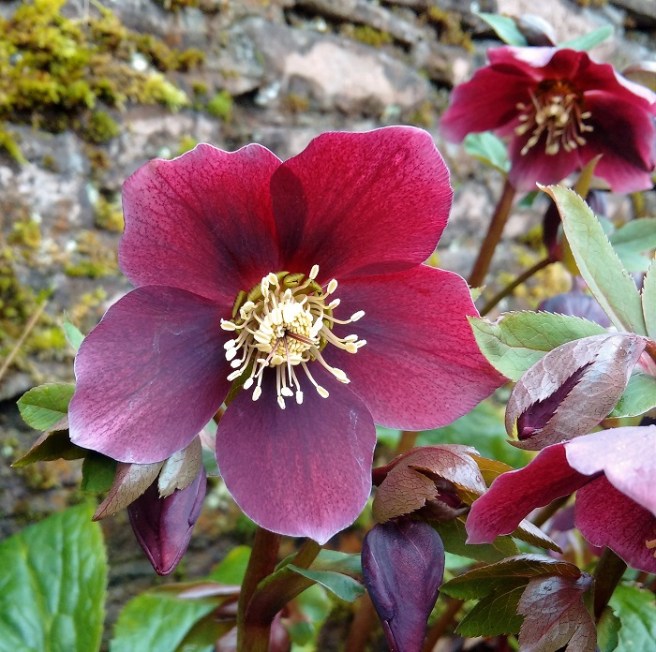
Dark_red_purple_hellebores
Helleborus. Image: Kathryn Hawkins

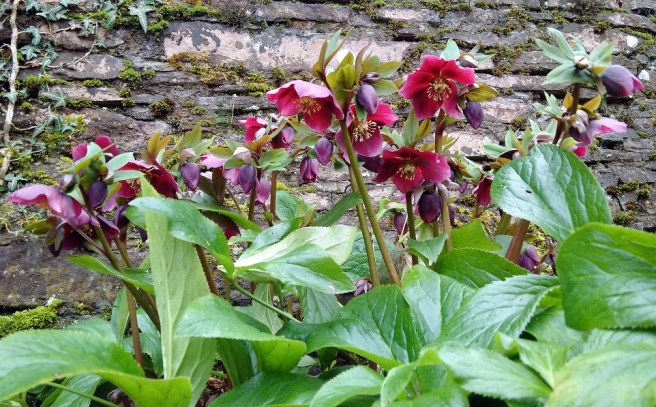
The weather has been kind these past few days and the spring flowers are really coming on. I spent a couple of hours in the garden yesterday afternoon and was delighted to see that all 4 varieties of hellebore are now in full bloom. Hidden away in different parts of the garden, they don’t stand out from a distance, but when you get up close, they are magnificent and unlike anything else in the garden at this time of year.

Single_dark_purple_red_hellebore_bloom
Dark purple-red bloom. Image: Kathryn Hawkins

I don’t know the names of any of the hellebore in the garden, but I do know that the plants are hardy, evergreen and deciduous, and they bring dramatic colour and structure to the borders in early spring, just when I’m wondering whether there will ever be life in the garden again. The large blooms last around 4 to 6 weeks and then they will fade gracefully into the foliage, leaving the glossy, bold leaves behind for another year.

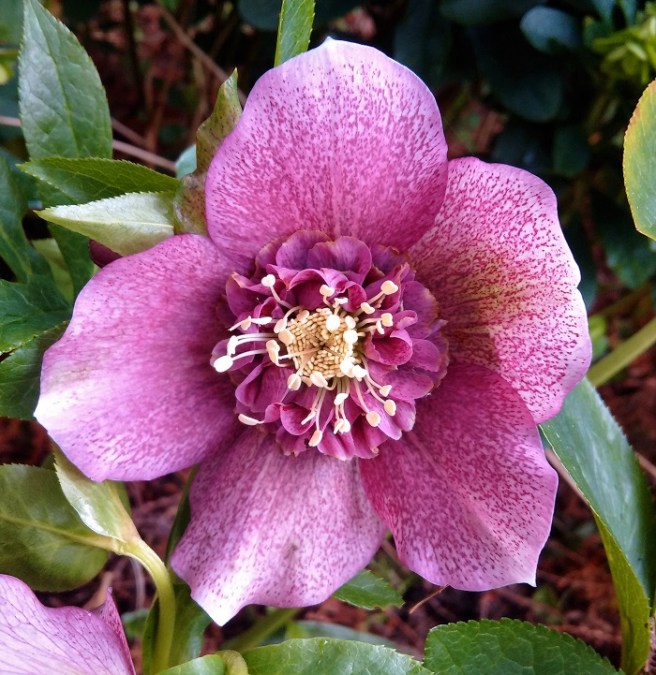
Light_purple_hellebore_bloom
Light purple with a ruffled centre. Image: Kathryn Hawkins

Helleborus grow well in the shade or partial shade, and they like moist soil; they are a perfect plant for the Scottish climate. All mine are growing beside walls or fences. New plants take a couple of years to get established, and once they are embedded, they don’t like being moved, although you can divide clumps in the autumn.

White_hellebore_blooms
A white variety with a hint of green. Image: Kathryn Hawkins

Best of all, Helleborus are a low maintenance plant. Once they have flowered, just remove any fading foliage; give the plants a mulch, and allow them to hunker down for another year.

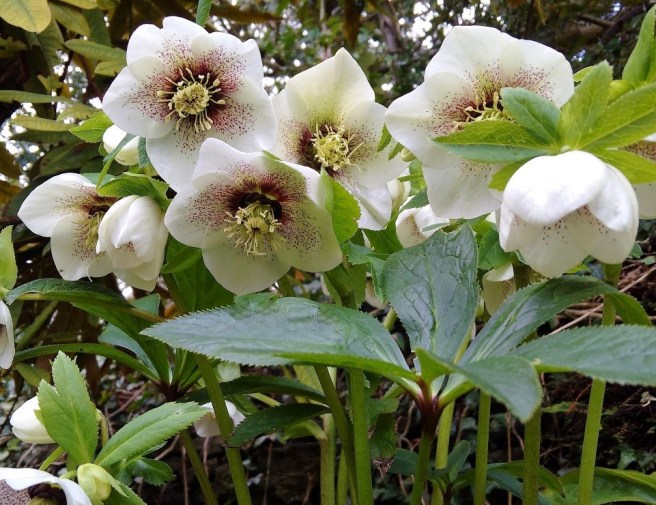
White_and_burgundy_hellebores
A group of white, burgundy-speckled, Helleborus. Image: Kathryn Hawkins

Marvellous March

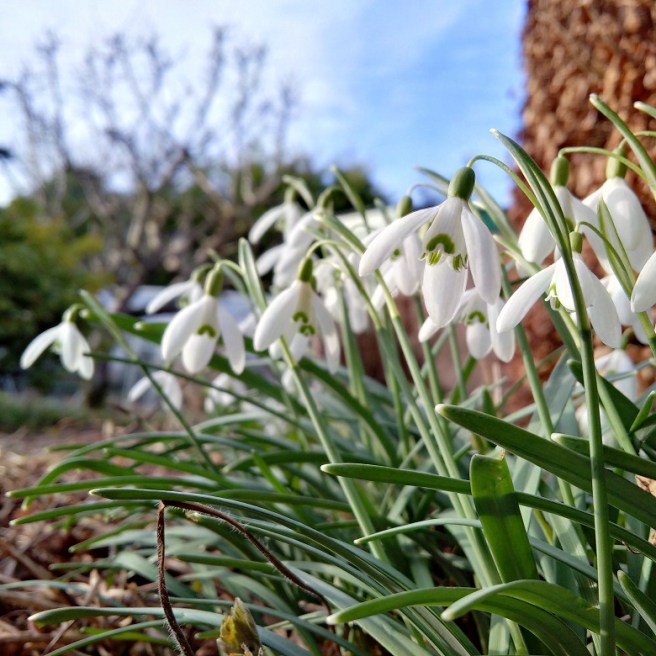
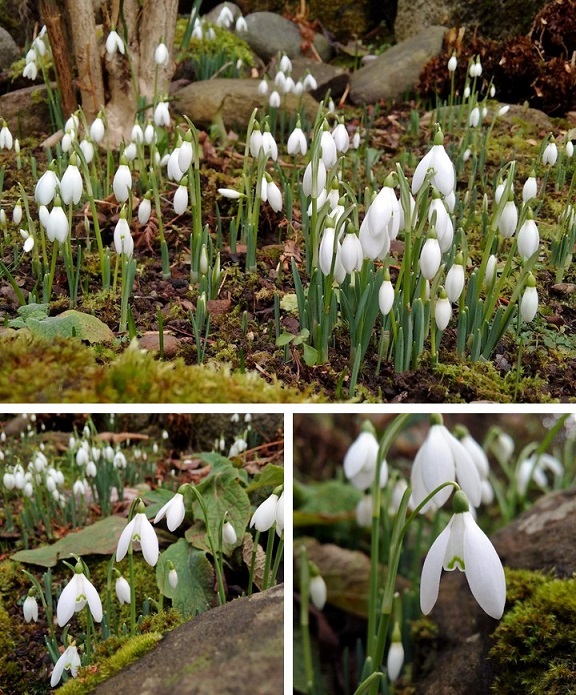
Snowdrops_in_full_bloom
Under a blue sky, snowdrops in full bloom. Image: Kathryn Hawkins

It’s been a wonderfully bright start to the new month. Blue sky, a light breeze, and warm(ish) sunshine. It is chilly in the shade, with frosts overnight, but the spirits are lifting as the flowers are blooming. In the garden, snowdrops are the main stars of the show and small clumps are in flower all over the place.

Clumps_of_snowdrops_under_a_beech_hedge
Snowdrops growing under the beech hedge. Image: Kathryn Hawkins

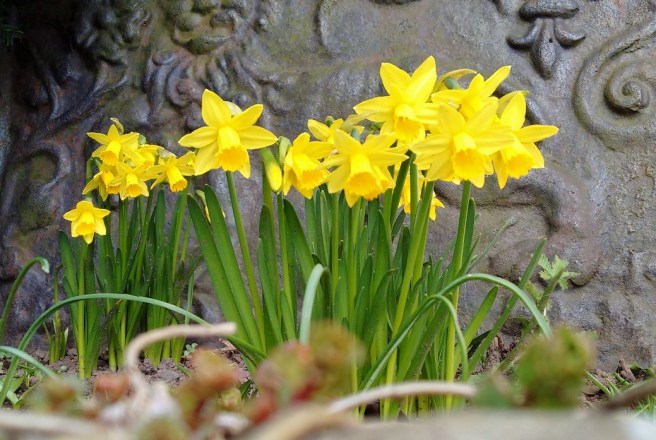
There are also little pockets of sunshine yellow, here and there, as the Tête á Tête Narcissus have burst into flower these past few days. These are a favourite of mine, with their sweet, spicy perfume as well as their bright, almost glowing, petals.

Miniature_narcisisus
Miniature Narcissus. Image: Kathryn Hawkins

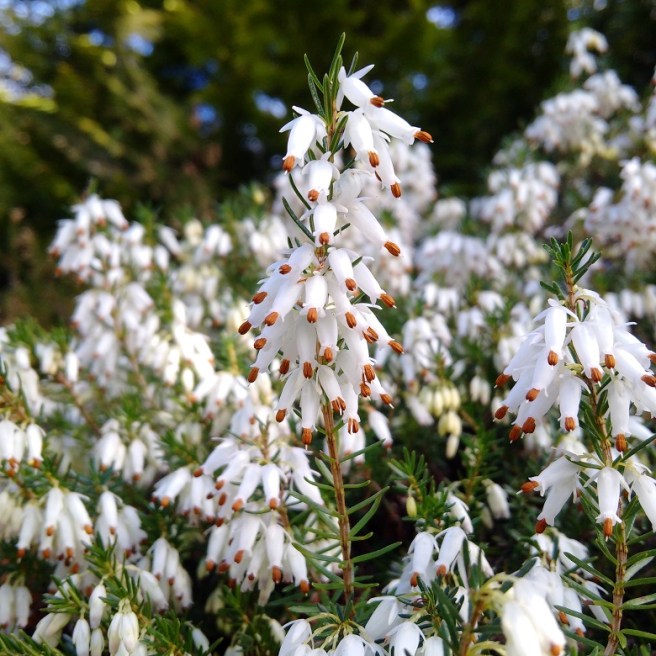
It’s only occurred to me this year, how much of the heather in the garden flowers at this time of the year. In Scotland, heather is something I associate with as a mid to late Summer flowering plant, when it grows over the hills as far as the eye can see. I have planted lots of heather varieties in the garden over the years, and mostly by good fortune, there are plants flowering in all seasons. This pure white one overhangs the driveway.

Scottish_garden_white_heather_flowering_in_March
March flowering white heather. Image: Kathryn Hawkins

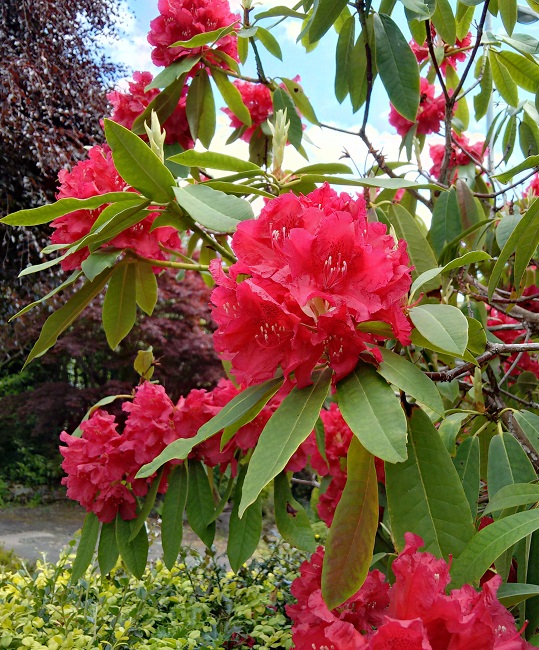
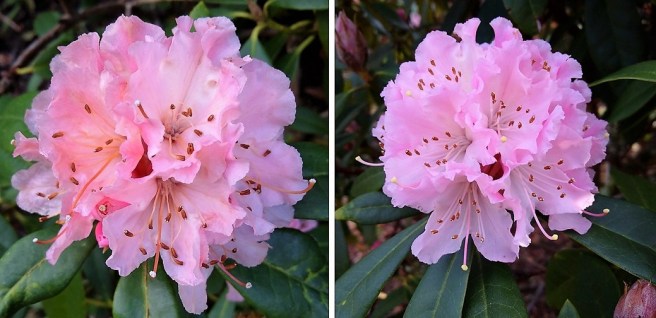
A couple of the early flowering rhododendrons are just about fully in flower. At this time of the year, they are vulnerable to frosts, but, so far (with fingers crossed), they have been unaffected. Both shrubs have been in the garden for many years, and are well established; they pretty much look after themselves.

Two_subtle_pink_flowering_rhododendron_flowers
Early flowering rhododendrons. Images: Kathryn Hawkins

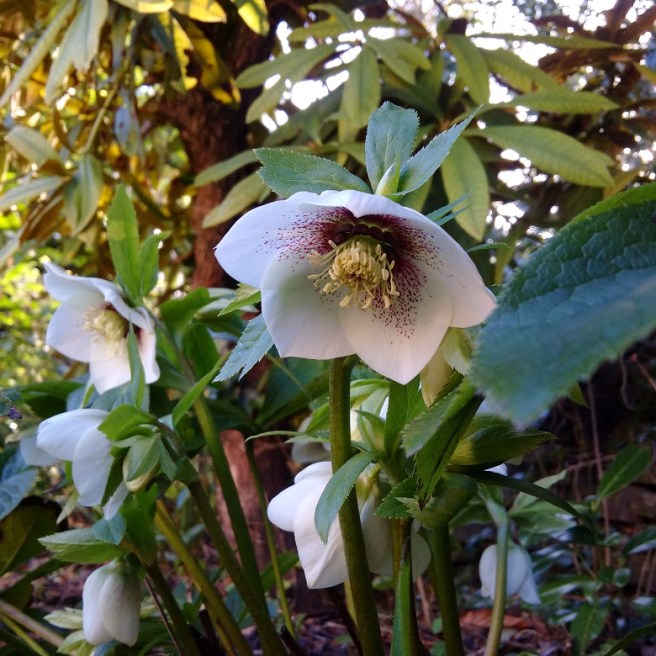
In a few shady spots in the garden, where the sun doesn’t reach, the hellebores are opening out. Probably one of the most challenging flowers to photograph owing to their drooping heads, this white one with dark red spots is one that grows more erect. It is the first one to bloom fully; the darker varieties are not quite open yet, but will feature in next month’s post.

White_hellebore_in_a_Scottish_garden
White Hellebore. Image: Kathryn Hawkins
Centre_of_white_hellebore
Hellebore: close up and personal. Image: Kathryn Hawkins

To close my post this month, the most pleasing sight in the garden yesterday was this little fellow, standing alone, just a few centimetres tall. In a couple of weeks, the bare garden soil and gravel paths will be over-run with Chionodoxa and Scilla; there will be speckles of bright blue everywhere. These tiny, wee plants herald the start of the new season in my garden, and are a delight to behold.

Early_Chionodoxa
The first Chionodoxa. Image: Kathryn Hawkins

February in a Scottish garden

Perthshire_back_garden_covered_in_frost
Frosty mornings. Images: Kathryn Hawkins

Frost and fog have been the order of the day since my last out-of-doors post. Without doubt, February is my worst month of the year. To me, it’s neither one season nor the other, and I am longing for Spring. Many plants that seemed so advanced back in December, have slowed down recently, and my hopes for an early end to Winter have been thwarted.

On a positive note, the afternoons are getting noticeably  lighter as the days begin to draw out, and, the snowdrops are beginning to bloom at last. I hadn’t given much thought to this well-known, delicate little flower until I moved to Scotland. Snowdrops grow every where in the countryside around me: from the sides of the roads to carpets in the forests, and in the most modest of gardens to the landscaped grounds of castles and palaces, they certainly feel at home here. I have small clumps growing in different areas all over the garden; none have been planted, they come back naturally year after year.

Snowdrops_in_Scottish_garden
Early February snowdrops. Images: Kathryn Hawkins

Other bulbs are greening up, and most shrubs are in tight bud; I am hoping they will open up in the next two to three weeks. I have are a few heathers in bloom here and there, adding splashes of pink amongst the green shoots.

The weather has just turned milder these past couple of days, which means (fingers crossed) that the garden will spring into action once more. Until next month………..

Pink_heathers_and_pink_rhododendron_buds
February pink heathers and rhododendron buds. Images: Kathryn Hawkins

My favourite mash (gluten-free, dairy-free, vegan

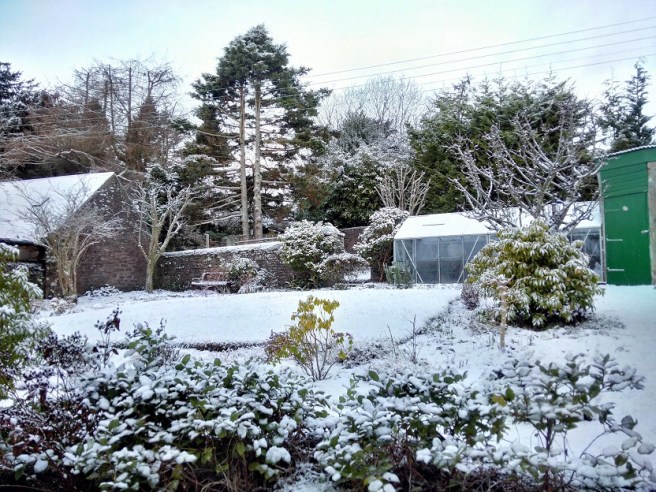
First_snowfall_of_2017_in_Perthshire_garden
The first snow of 2017. Image: Kathryn Hawkins

It’s been a cold week all over the UK; the first snow of the year settled in the garden a few days ago, transforming it into a “Winter Wonderland” overnight. As soon as a chill sets in, my thoughts immediately turn to comfort food.

I am a huge potato fan and this week seemed like the perfect excuse to make my favourite mash potato recipe. Perfectly cooked potatoes, a generous handful of chopped parley, lashings of good quality olive oil, a good pinch of sea salt and some fresh garlic. It’s a delicious that mash seems to go with everything.

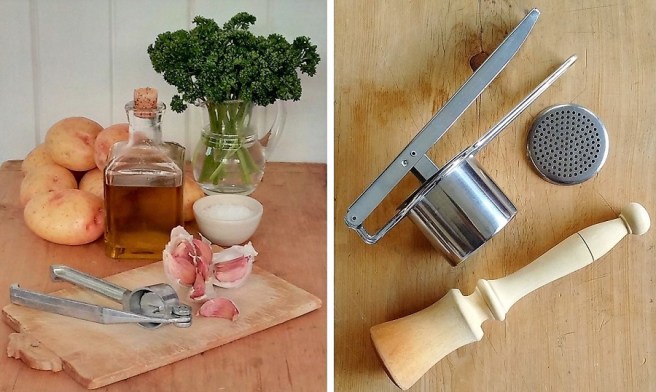
Ingredients_and_essential_equipment_for_making_the_perfect_mashed_potato
Ingredients and equipment for olive oil and garlic mash. Images: Kathryn Hawkins

For the best result, you need to choose a potato that mashes well. My preference is King Edward, it’s got good flavour and a dry, floury texture when cooked. Cook the prepared potatoes until they are completely tender. Drain well and then give them a good thump with a potato masher. If you don’t mind a few lumps, leave it at that, but if I’ve got the time, I like to press the mash through a ricer for the smoothest, silkiest texture possible. It’s up to you how much garlic, parsley and seasoning you add, but do use a really tasty olive oil. A good quality extra virgin (cold pressed is even better) oil will not only add flavour and colour, but will add to the indulgence of the finished mash. Only warm the oil, never heat it beyond warm, otherwise the health and flavour benefits will be lost.

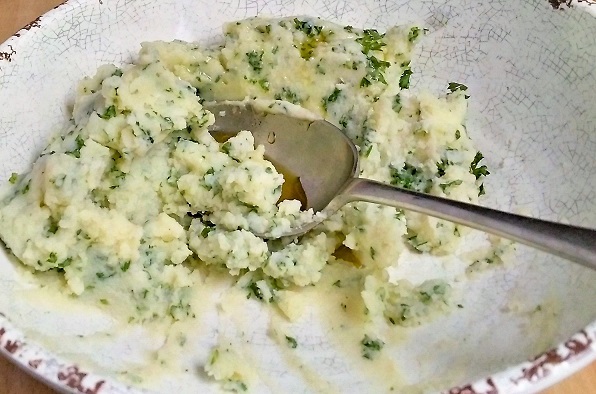
Mashed_potato_with_parsley_olive_oil_and_garlic
Olive oil, parsley and garlic mash. Image: Kathryn Hawkins

Serves: 4

  • 900g main crop potatoes, such as King Edward or Maris Piper
  • Sea salt
  • 4 plump garlic cloves, peeled and crushed
  • 1 tbsp sunflower oil
  • Large handful of fresh curly parsley, washed, thick stalks removed, and finely chopped (I like to add about 25g chopped parsley to this quantity of potato)
  • 6 tbsp good quality, extra virgin cold pressed olive oil + extra for serving, if liked
  1. Thinly peel the potatoes. Cut into chunky pieces and rinse in cold water. Place in a large saucepan and cover with cold water. Add a pinch of salt, bring to the boil and cook until completely tender (12-15 minutes, depending on how thick you’ve cut them up). Drain well through a strainer, and leave to air dry for 5 minutes.
  2. Meanwhile, heat the sunflower oil in a small saucepan and very gently fry the garlic for 1-2 minutes until tender but not browned. Remove from the heat.
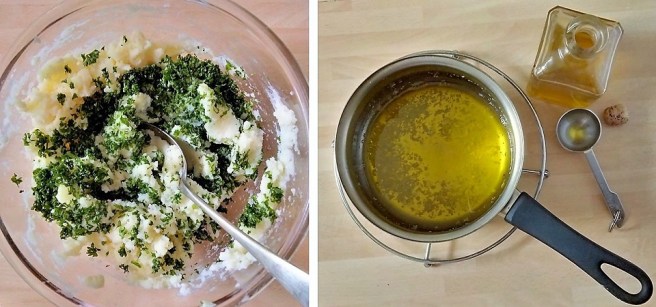
  3. Return the potatoes to the saucepan and mash well. If you’re not using a ricer, stir in the parsley and cover. If you are ricing the mash, press the potato into a warm bowl, stir in the parsley, and cover the whole bowl with foil.
  4. Stir the olive oil into the cooked garlic and place the saucepan over a very low heat for 2-3 minutes to gently warm the oil.
    Chopped_parsley_garlic_and_olive_oil_being_added_to_mashed_potato
    Adding the flavourings to mashed potato. Images: Kathryn Hawkins


  5. Stir the warm oil into the parsley mash. Taste and season. Pile into a warm serving dish. Drizzle with more olive oil if liked, and serve immediately. Mmmm…mmmmm.

    Single_serving_of_mashed_potato_with_parsley,_olive_oil_and_garlic
    The last spoonful of my favourite mash. Image: Kathryn Hawkins


New year garden

January_1st_2017_Perthshire_garden
In the garden, New Year’s Day 2017. Image: Kathryn Hawkins

Happy New Year everyone! Hope you’ve all had a good holiday, and are looking forward to the year ahead. Let’s hope it’s a good one for us all. It’s been a sunny, blue-sky start to the year here in central Scotland – a very uplifting day.

I have had a good, relaxing festive break at home. The weather’s been quite kind and I’ve managed to get outside every now and then. We did have a little snow on Boxing Day, but it cleared by the end of the day, and didn’t cause any damage. On the whole, the garden’s looking a wee bit dull at the moment but there are signs of new life about if you look lard enough. Lots of bulbs are pushing their way through the soil, and the rhubarb plants are shooting up. I have put a large pot over the top of one clump, with the hope of getting some fine pink shoots next month.

Rhubarb_shoot
First rhubarb shoot of the new season. Image: Kathryn Hawkins

For me, the late December holiday is a good time to do some cutting back and pruning, and if the weather permits, I undertake my annual attempt at getting the old apple tree back in shape, ready for the year ahead. I had a good crop of fruit last year; I am keeping everything crossed so that the tree does just as well in 2017.

Pruning_an_apple_tree_in_December
Before and after, apple tree pruning. Images: Kathryn Hawkins

On the floral front, the Winter jasmine is lovely and vibrant and has a delightful sweet smell; there are also a couple of hebes in flower. One much-treasured little gem, is a perennial primrose which is in bloom for most of the year. I didn’t plant it, it appeared a couple of years ago in a shady, damp part of the garden. The delicate blooms and foliage add some welcome colour and interest through all the mulch and undergrowth that surrounds them.

Winter_flowering_yellow_jasmine
Winter flowering jasmine. Images: Kathryn Hawkins
Winter_flowering_hebes
Light pink and purple flowering hebes. Images: Kathryn Hawkins
Perennial_primrose
Perennial primrose. Image: Kathryn Hawkins

Brussels sprouts

Homegrown_Brussels_sprouts_and_sprout_tops
Home-grown Brussels sprouts. Images: Kathryn Hawkins

Love them or loathe them, you can’t get away from Brussels sprouts at this time of year. Believed to be a descendent of the wild cabbage, we have been eating these tasty and nutritious winter greens since the 18th century.

I planted several seedlings (variety Brodie F1) back in early June, but sadly most succumbed to pests and the plants have been dwindling as the months have gone by. However, I managed to keep a few plants unscathed, ready for the Christmas table and a couple more meals on top of that. Some of the stems have lovely tops which have developed into small cabbages with pretty pink veining, so I have them to cook as well.

Brussels_sprouts_on_the_stem
A fine stem of “fairy cabbages”. Image: Kathryn Hawkins

I was told a story a few years ago by a lady who had been struggling to get her little daughter to try a Brussels sprout. There was something about the humble sprout that her daughter wouldn’t entertain even though she would eat every other green vegetable without hesitation. Her mother, in exasperation, said that they were simply tiny cabbages grown by the fairies, and from then on, her daughter ate them with gusto!

Freshly_picked_homegrown_Brussels_sprouts_and_tops
Still life of Brussels sprout stems and tops. Images: Kathryn Hawkins

Pick sprouts when they are small and firm as larger sprouts have less flavour. Smaller sprouts will be crisper in texture and have a sweeter, nuttier taste. Don’t forget the tops – these can be cooked just liked cabbage. Ideally pick sprouts just before cooking, trim away any loose leaves and leave whole if small, or halve if bigger. Rinse in cold water, and then cook in a little lightly salted, boiling, water for a few minutes until just tender – they should have some texture when cooked, and not be slime-green coloured, full of water and soggy like the ones I remember from my school dinners – yuk!

Ready_to_cook_fresh_Brussels_sprouts
Picked sprouts ready for cooking. Image: Kathryn Hawkins

Here are a few of my favourite ways to serve fresh Brussels sprouts:

  • Brussels sprouts go well with blue cheese, goat’s cheese, chopped nuts and seeds, crisp bacon, chorizo, chilli, sage, thyme, garlic, onion, orange, wholegrain mustard, Worcestershire sauce, soy sauce and balsamic vinegar.
  • Serve small cooked sprouts on a bed of crushed, seasoned peas in Yorkshire puddings and flood with gravy or a tasty cheese sauce.
  • Shred or roughly chop sprouts and stir fry with shredded leeks and very finely sliced white cabbage. Finish with a few dashes of Worcestershire sauce and some melted redcurrant jelly.
  • Stir fry chopped sprouts with finely chopped garlic and add sultanas, a pinch of chilli, cinnamon and cumin, and a drizzle of honey or maple syrup.
  • Blanch 300g prepared larger sprouts in boiling water for 1 minute and cool quickly in cold running water. Drain well, cut in half or quarter, and mix with wedges of eating apple, fresh sage leaves and finely chopped onion. Toss in 1 tbsp each of olive oil, balsamic vinegar and honey or maple syrup. Spread across a lined baking tray, season well and cover with foil. Bake at 200°C (180°C fan oven, gas mark 6) for 15 minutes, then remove the foil and cook for a further 10 minutes until tender.

    Tray_of_sprouts_apple_sage_and_onion
    Ready to bake, sprouts with apple, sage and onion. Image: Kathryn Hawkins