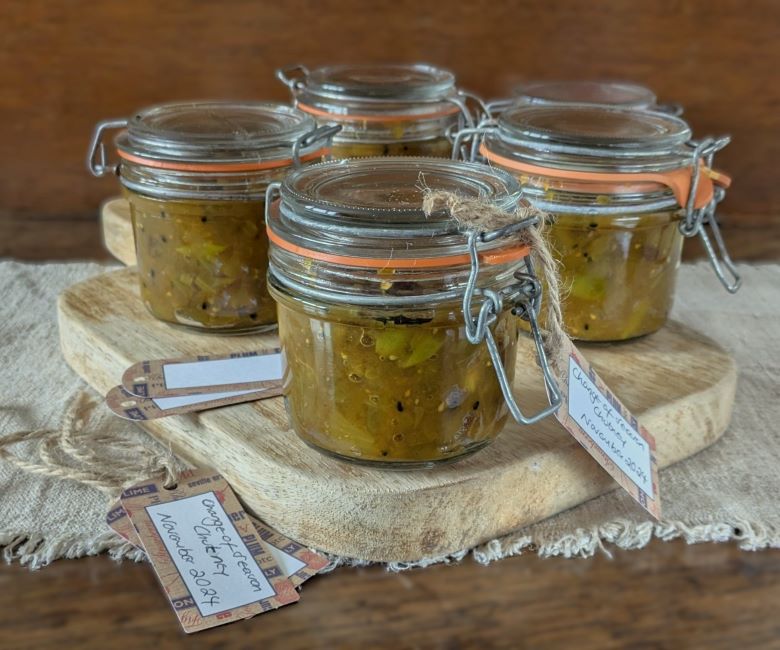
Slow cooker spiced green tomato chutney (naturally gluten-free; dairy-free; vegan)

Jars_of_slow_cooker_spiced_green_tomato_chutney
Last of the Autumn produce preserved. Image: Kathryn Hawkins

Hello there. When I planned to make this chutney a couple of weeks ago, it was very much still Autumn. I picked off the last of the tomatoes and put the greenhouse to bed during a lovely sunny afternoon. I was going to call the chutney “End of Autumn”.
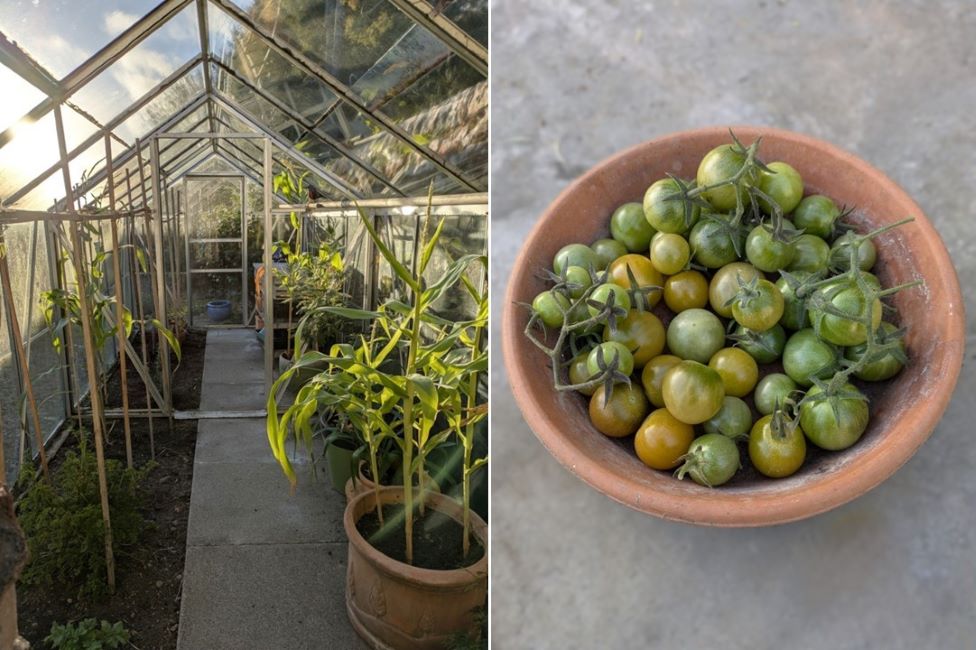
Last_of_the_greenhouse_tomatoes_November_2024
Last of the greenhouse tomatoes, mid-November 2024. Images: Kathryn Hawkins

However, when I came to make the chutney last weekend, snow was falling very heavily and suddenly we were in winter. And so I thought “Change of Season” chutney would be more appropriate 🙂
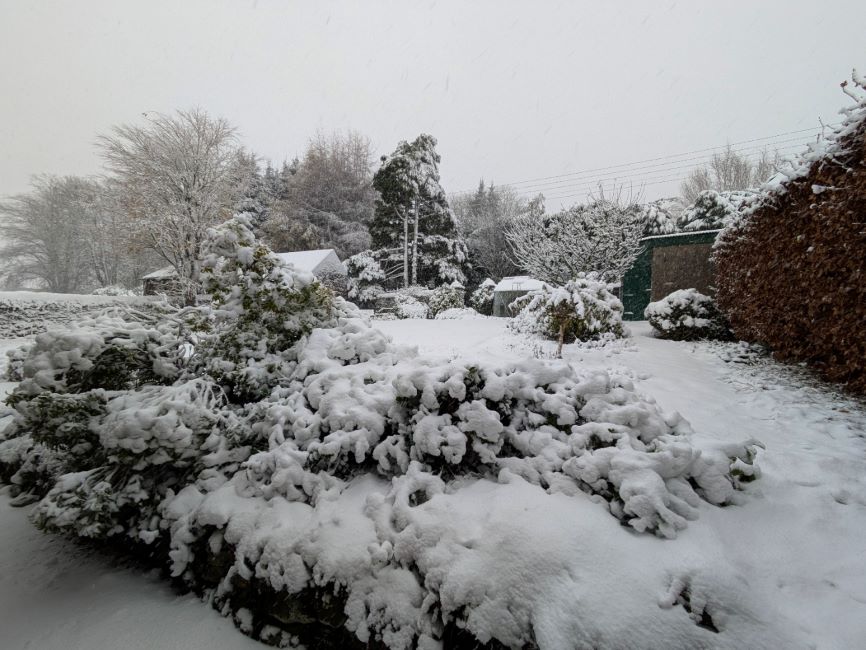
November_2024_Scottish_garden_covered_in_snow
November snowy garden. Image: Kathryn Hawkins

I made the chutney in my slow cooker. It is ready to eat as soon as it cools and tastes delicious. I used up the last of this year’s apple harvest along with some black-skinned tomatoes that I had frozen down a few weeks ago. The spices I used give a mild curry flavour but you can change them if you prefer – cinnamon, cumin and coriander for a more earthy flavour would work well.
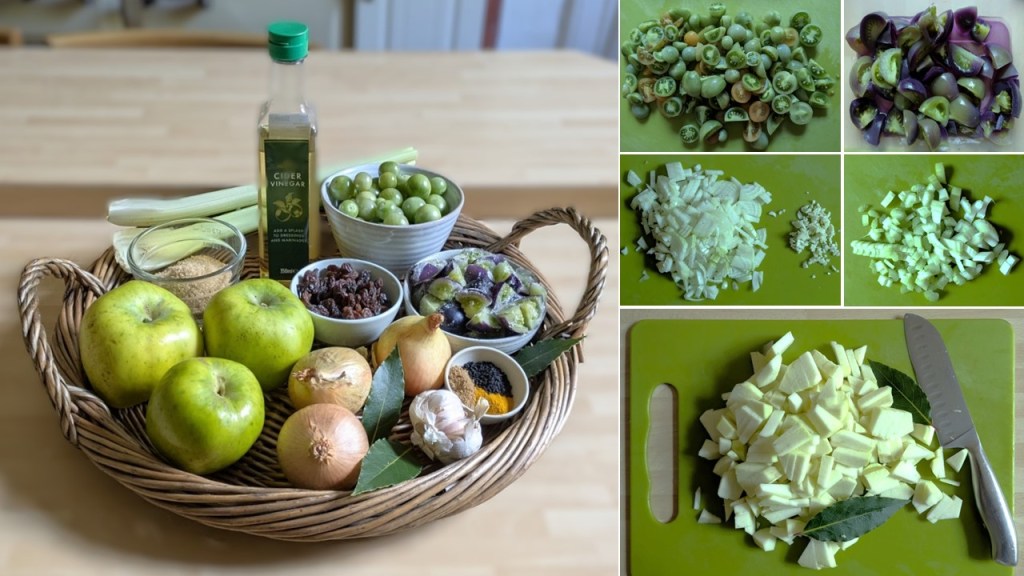
Ingredients_for_spiced_green_tomato_slow_cooker_chutney
Slow cooker chutney ingredients. Images: Kathryn Hawkins

If you haven’t made a preserve in your slow cooker before, the technique is slightly different in that you can’t boil the preserve down like you would in a saucepan on the stove. The chutney is also cooled before putting in jars, and as such needs to be kept in the fridge. It will however keep for a few weeks or can be frozen for longer term storage.

Makes: approx. 1kg

Ingredients

  • 400g green tomatoes, chopped
  • 2 medium onions, peeled and chopped (about 180g prepared weight)
  • 2 garlic cloves, peeled and chopped
  • 2 sticks celery, trimmed and chopped (about 110g prepared weight)
  • 2 large cooking apples, peeled and chopped (about 300g prepared weight)
  • 2 bay leaves
  • 100ml cider vinegar
  • 75g sultanas or chopped dried apricots
  • 2tsp garam masala
  • 1tsp each nigella seeds, turmeric and salt
  • 150g demerara or light brown sugar (or you can use granulated white sugar)

1. Put all the vegetables in the slow cooker with the bay leaves and mix well. Pour over the vinegar, cover with the lid and cook on High for 4 hours.

2. Add the remaining ingredients, mix well, re-cover and cook for 30 minutes to dissolve the sugar.
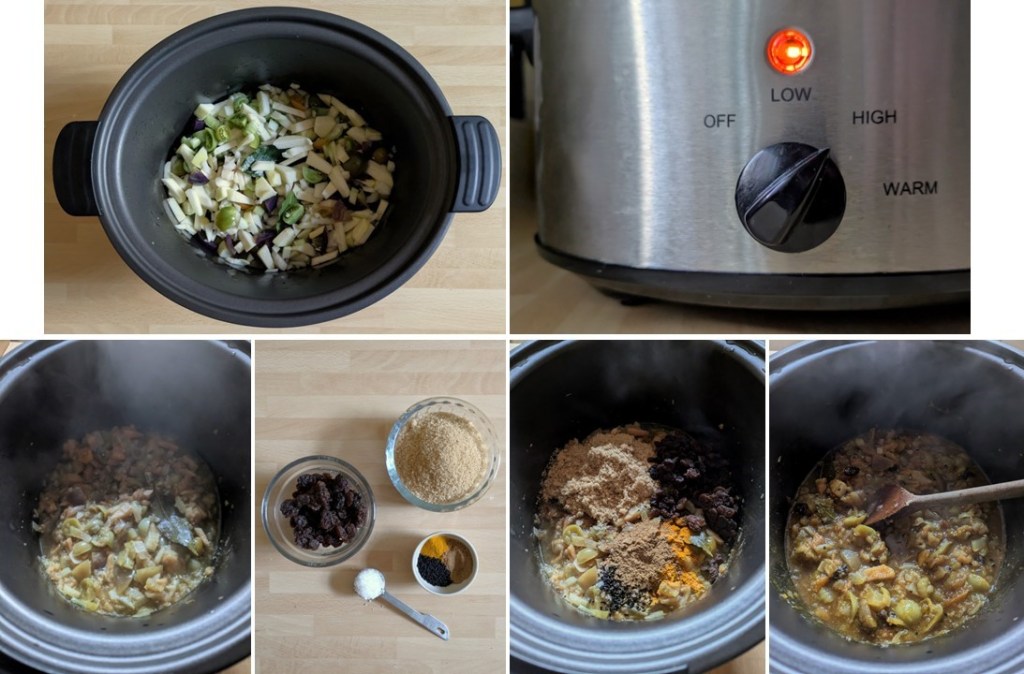
Slow_cooker_chutney_ingredients_being_cooked_and_flavoured
Slow cooking and seasoning chutney. Images: Kathryn Hawkins

3. Remove the lid, stir well and cook uncovered for a further 2 hours, stirring occasionally until reduced down and jam-like.

4. Switch off the cooker and leave the chutney to cool completely. Discard the bay leaves and spoon into clean jars. Seal, label and store in the fridge for up to 3 months. Once opened, use within a month. Alternatively, freeze the chutney in containers and defrost when required.

Final_cooking_and_bottling_of_slow_cooker_chutney
Reducing the chutney down ready for storing. Images: Kathryn Hawkins
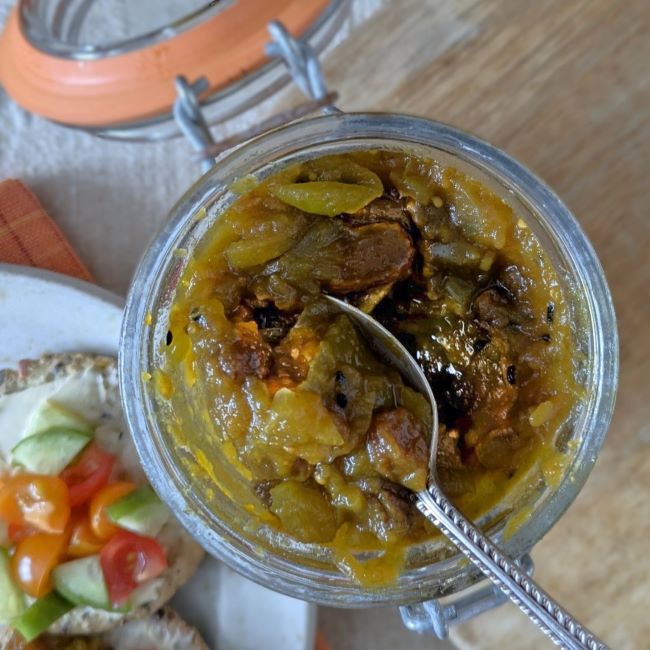
Slow_cooker_curried_green_tomato_chutney
A sweet and spicy spoonful. Image: Kathryn Hawkins

That’s me for another month. I have one more post before Christmas, so until then take care and keep warm 🙂

Gluten-free oaty loaf (dairy-free; vegan)

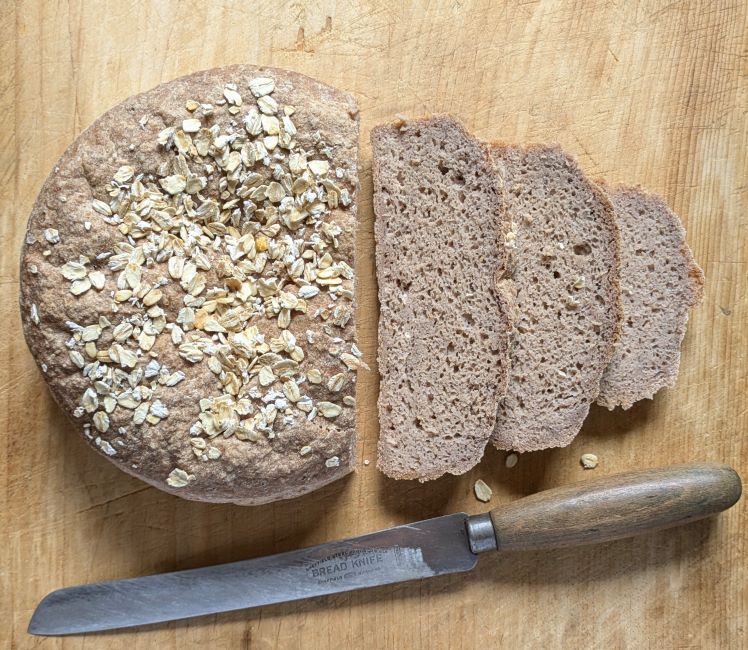
Homemade_vegan_and_gluten-free_oaty_loaf_with_front_slice
Oaty slices. Images: Kathryn Hawkins

Hello again. Following the launch of my book earlier in the month (see my previous post), I am delighted to share with you one of the gluten-free recipes from the book. As with all gluten-free bread making, there is no kneading, just a bit of mixing and then letting the yeast do its work in the dough.

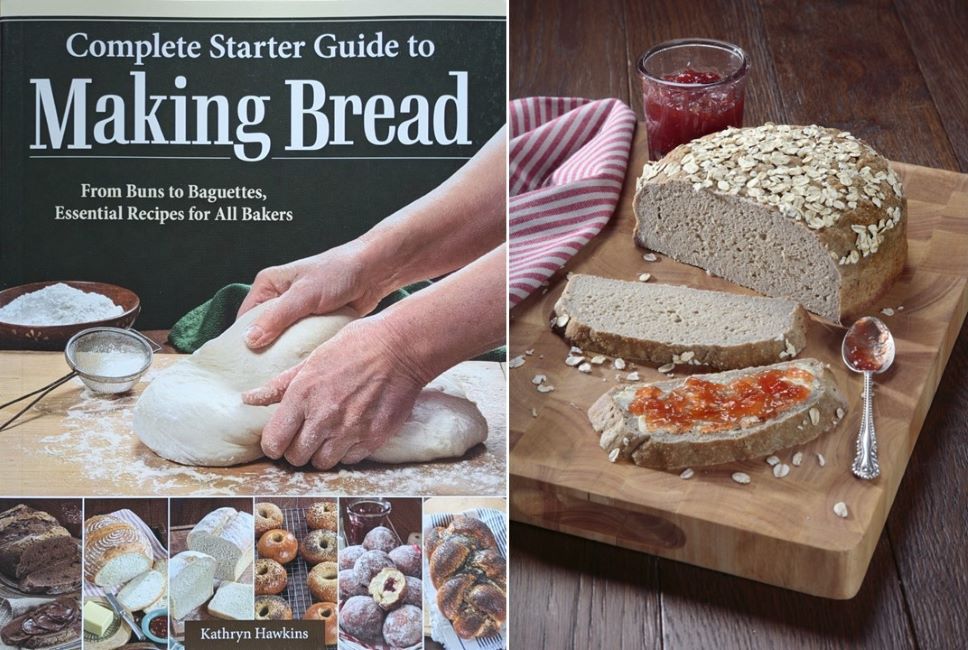
I did all the food styling for my book and was up to my eyes in various mixes for several weeks. Below is how the oaty loaf was photographed for the book. The mixture was made with eggs, but for this post I am using flax egg.

Gluten-free_oaty_loaf_from_Complete_starter_guide_to_making_bread_by_Kathryn_Hawkins
Gluten-free oaty loaf. Photography: Stuart MacGregor©

It’s a very straightforward recipe, using some oat flour and psyllium husk to add a bit more of a chewy texture, and I add xanthan gum to hold the crumb together. I hope you enjoy it 🙂
Makes 1 x approx.850g, 18cm round loaf

Ingredient

  • 2tbsp ground flax seed
  • 200g gluten-free plain flour
  • 200g gluten-free oat flour
  • 2tsp easy blend dried yeast
  • 1½tsp xanthan gum
  • 25g psyllium husk powder
  • 2tsp caster sugar
  • 1tsp salt
  • 425ml lukewarm water
  • 1tbsp gluten-free coarse ground or jumbo oats

1. Grease and line an 18cm diameter, 7.5cm deep, round cake tin. Mix the flax seed with 6tbsp cold water and leave to stand for a few minutes to thicken.

2. Mix the flours in a large mixing bowl and stir in the yeast until well combined. Stir in the xanthan gum, psyllium husk, sugar and salt and make a well in the centre. Add the flax egg and half the water, and mix well with a spatula or wooden spoon until well blended.

Making_flaxseed_egg_and_adding_to_bread_dough
Flax egg and adding it to the dough. Images: Kathryn Hawkins

3. Continue mix in sufficient of the remaining water until the mixture is soft and sticky. Leave to rest for 10 minutes, then mix again. In this time, the mixture will become slightly less sticky as the water is absorbed.

4. Transfer to the prepared tin. Smooth the top, cover with a reusable cover or large bowl and leave to rise at a coolish room temperature, away from drafts, for about 2 hours until risen to the top of the tin.

Making_the_dough_for_vegan_gluten-free_oaty_bread
Making the dough. Images: Kathryn Hawkins

5. Meanwhile, preheat the oven to 200°C, 180°C fan oven, gas 6. Uncover the dough and sprinkle over the oats. Bake in the centre of the oven for about 1 hour 10 minutes. It can be quite challenging to know when the loaf is cooked through, so if in doubt, err on the side of caution and cook for a further 10 minutes. The usual rule is that the loaf will sound hollow when tapped underneath. Turn on to a wire rack to cool.

Vegan_gluten-free_loaf_proving_and_baking_the_loaf
Proving and baking the loaf. Images: Kathryn Hawkins

The loaf is best eaten within 3 days of baking. It freezes well. I usually slice the loaf before freezing so I can defrost exactly what I need.

Overhead_view_of_vegan_gluten_free_oaty_bread_sliced
Sliced and ready for freezing. Image: Kathryn Hawkins

The bread is tasty and delicious just as it comes, and if toasted the texture becomes spongier with a crisp bite, much like a toasted crumpet.

Homemade_vegan_gluten-free_bread_spread_with_Jam
Jammy bread. Images: Kathryn Hawkins

For more bread recipes, my book is available from main online retailers. It is published by IMM Lifestyle Publishers.

I hope you have a good few days until my next post. Thanks for stopping by.

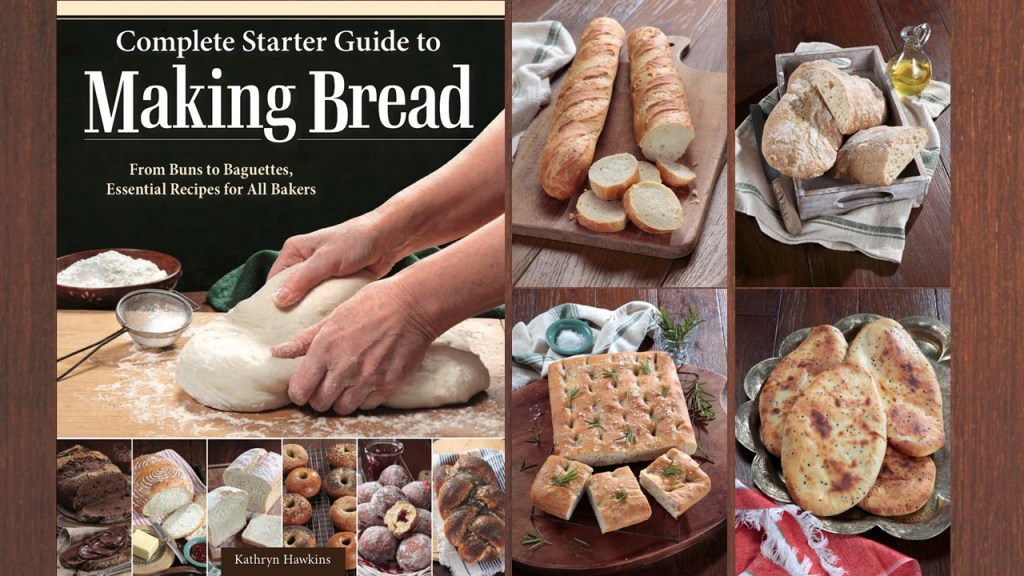
My new book: Complete starter guide to making bread, published by IMM Lifestyle Books 2024

Complete_starter_guide_to_making_bread_by_Kathryn_Hawkins_book_cover
Complete starter guide to making bread by Kathryn Hawkins

Hello there. I hope you are keeping well. I’m delighted to share some news from my work life with you this month. I have a new book just published 🙂
This time last year I was very busy writing and recipe testing recipes for the book and then at the beginning of the year, I made up all the breads for the photographs. It certainly kept me busy for a while, and now it is all published and available to buy. Here’s a little bit about the book, and soon I’ll share one of the gluten-free and vegan recipes with you in my next post.

“Making your own bread is a rewarding experience and is easier than you might think. You can make a loaf with just 3 everyday ingredients and a few basic pieces of kitchen equipment. Once you’ve mastered a few simple techniques, you’ll be well on the way to creating something that is eaten all over the world, every day of the year.

Whether you’re an absolute beginner or an established baker, this book contains everything you need to know to help create a variety of breads, from a simple white loaf to an indulgent buttery brioche. You’ll find recipes for yeasted and non-yeasted breads, sour doughs and breads made with gluten-free ingredients, as well as breads you can cook in the air fryer, slow cooker and steamer. All recipes are vegan or can be adapted to make vegan friendly.

There’s a chapter on the history of bread making; information on all the ingredients you can use to make the perfect loaf; a little bit of science, and lots of tips and techniques for making kneading, proving and shaping the perfect dough, and should something go wrong, there is a useful troubleshooting guide. The book is illustrated with colour photographs throughout to provide extra help and the inspiration you need to start making bread. Happy Baking!”

Complete starter guide to making bread by Kathryn Hawkins, published by IMM Lifestyle Books 2024 is available to buy from major online retailers Food photography by Stuart MacGregor

For more information about my work please visit my website: www.kathrynhawkinsfood.co.uk

See you again soon!

Chocolate brownie candle cake (gluten-free; dairy-free; vegan)

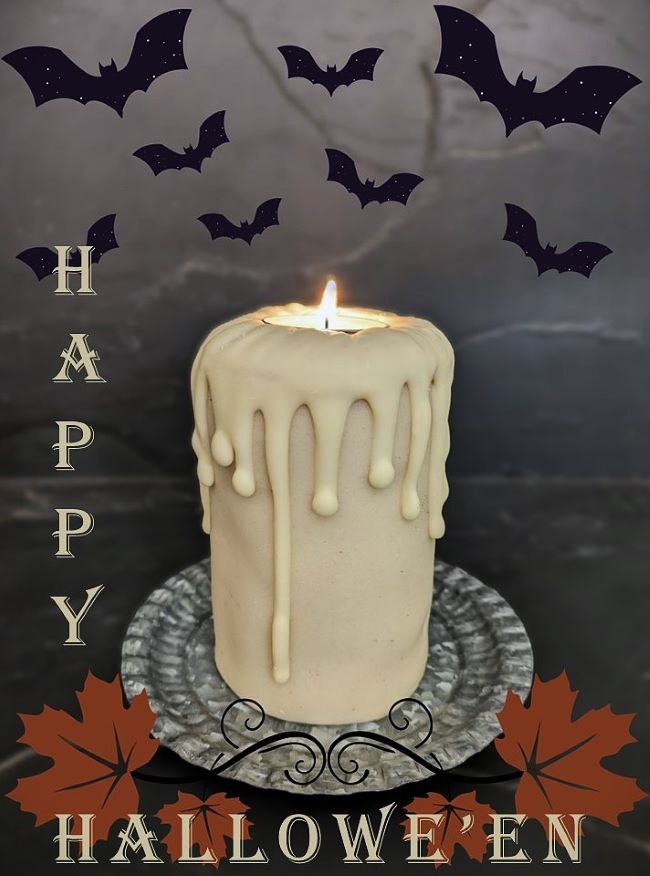
Chocolate_brownie_candle_cake_for_Halloween
Spooktacular cake. Image: Kathryn Hawkins

It’s almost the most spookiest time of the year, and to celebrate, I thought this recipe would make the perfect treat if you’re entertaining on 31st October. Layers of chocolate brownie mixture covered in marzipan, you could also serve it up as part of an edible table decoration for Christmas or New Year.

Gluten-free_dairy-free_vegan_chocolate_brownie_candle_cake_cut_in_half
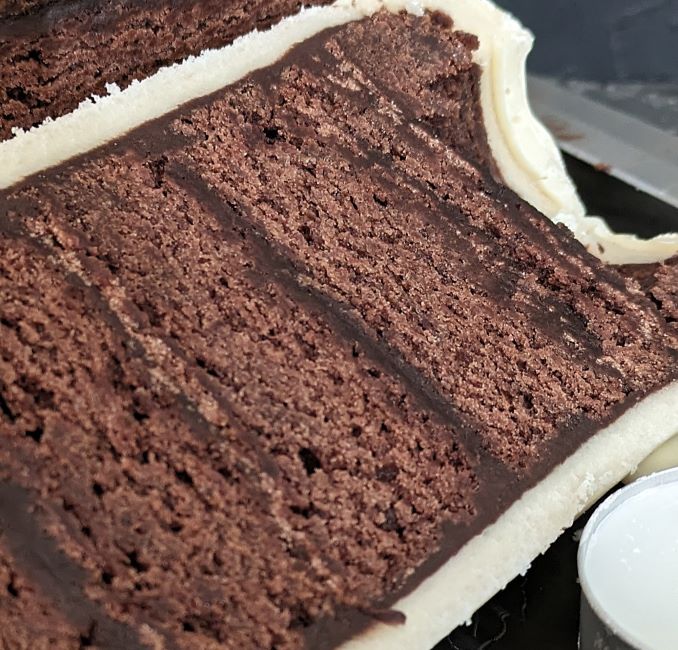
The big chocolaty reveal. Image: Kathryn Hawkins

If you like the idea but time is short, you can use rounds of a readymade chocolate cake or chocolate Swiss roll. The brownie recipe alone is rich and delicious and makes a great bake by itself if you don’t want to make the candle. Time to bring on the cake recipe, I hope you like it 🙂

Serves: 8

Ingredients

  • 100g free-from dark or plain chocolate
  • 100g lightly salted plant butter
  • 7tsp ground flax seed
  • 125g caster sugar
  • 1tsp natural vanilla extract
  • 125g gluten-free plain flour blend
  • ¼tsp xanthan gum
  • 75g free-from chocolate frosting or apricot jam, softened
  • 200g natural marzipan
  • 50g free-from white chocolate
  • 1 x tea-light candle

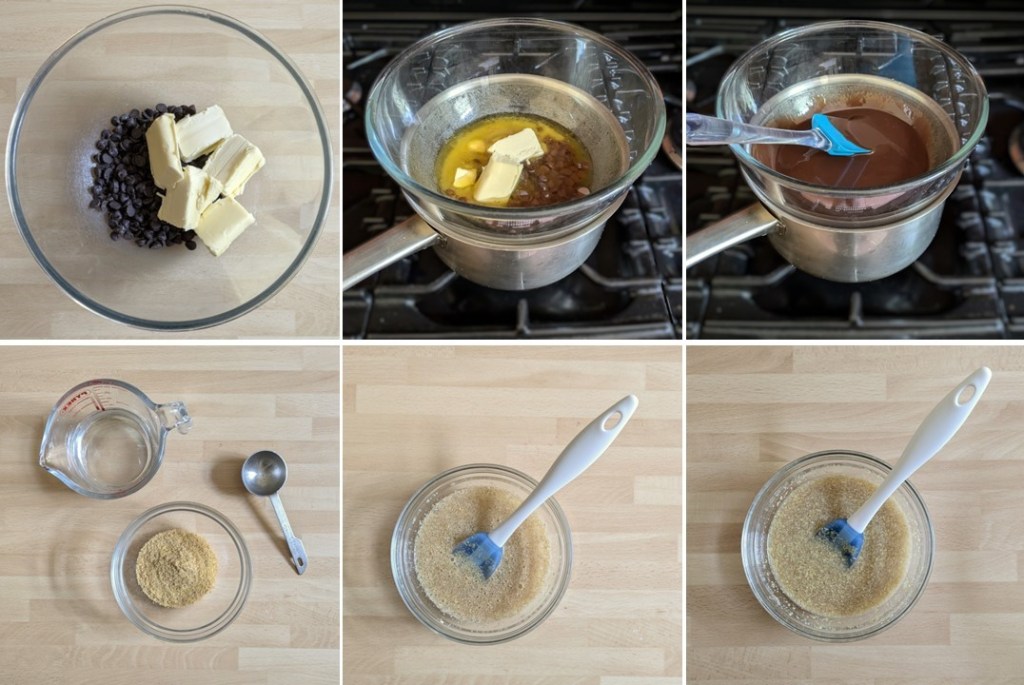
1. Grease and line an 18cm straight sided square cake tin. Melt the plain chocolate and butter together over a saucepan of barely simmering water. Remove from the water and leave to cool for 10 minutes.

2. Meanwhile, mix the ground flax seed with 110ml cold water and leave to stand for a few minutes until thickened. Preheat the oven to 180°C, 160°C fan, gas mark 4.

Melting_chocolate_and_making_flax_egg_for_gluten-free_dairy-free_vegan_chocolate_brownie
Preparing the ingredients for chocolate brownie. Images: Kathryn Hawkins

3. Stir the sugar and vanilla into the warm chocolate mixture, then mix in the flax “egg”. Add the flour and xanthan gum and mix well.

4. Spoon into the prepared tin and bake for about 45 minutes until the top looks papery and shiny and a skewer inserted into the centre comes out clean. Leave to cool in the tin before removing.

Mixing_gluten-free_dairy_free_vegan_chocolate_brownie_batter
Making and baking the brownie mix. Images: Kathryn Hawkins

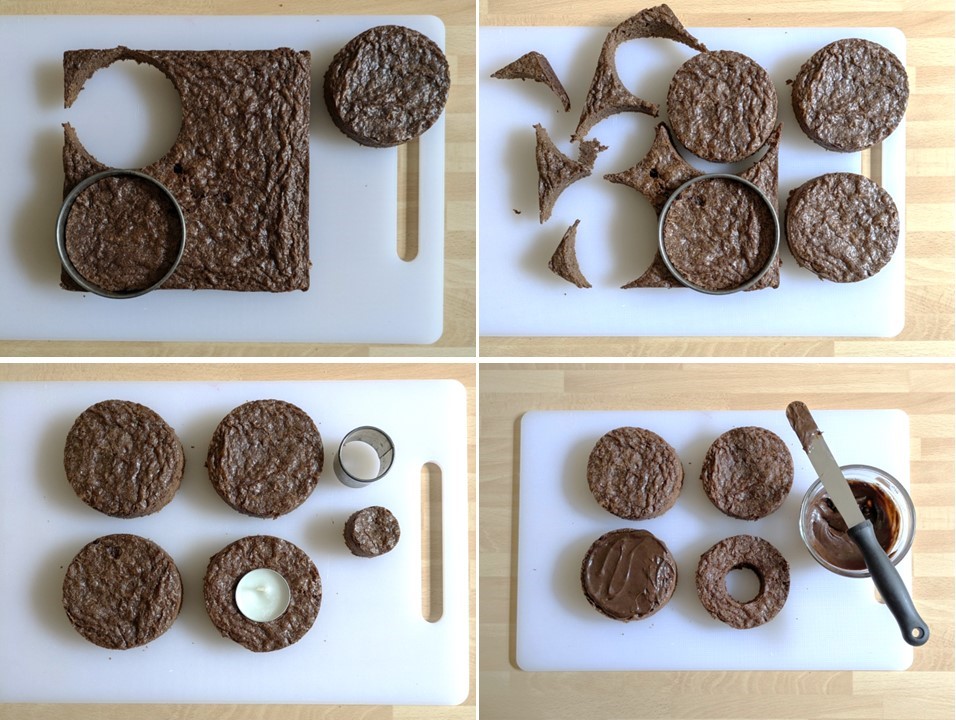
5. Use an 8 to 8.5cm round cookie cutter to cut out 4 neat rounds from the brownie square. Use a small round cutter the same size as the tea-light candle holder (approx.3.5cm) and cut out the centre from one round. Keep the trimmings to make truffles or cake pops.

Cutting_and_shaping_a_freshly_cooked_square_of_gluten-free_dairy-free_vegan_chocolate_brownie
Cutting brownie rounds. Images: Kathryn Hawkins

6. Spread a little frosting or jam on each round and stack them neatly on top of each other, putting the cut out round on top.

Assembling_the_layers_of_chocolate_brownie_to_make_a_candle_shape
Assembling the candle. Images: Kathryn Hawkins

7. Measure the height and circumference of the brownie stack. My cake was 9.5cm tall, and 27cm round the middle.

8. Knead the marzipan to make it more pliable, then roll out to a thickness of about 0.5cm and a little larger than the cake dimensions, then trim to the size of your cake. Gather up the marzipan trimmings, re-roll and cut out a ring of marzipan using the same cutters as before, to fit the top of the cake.

Rolling_marzipan_to_cover_a_stack_of_chocolate_brownie_rounds
Covering brownie with marzipan. Images: Kathryn Hawkins

9. Spread the outside of the cake with a little more frosting or jam, then lay the cake on the marzipan and roll it up so that it is completely covered. Stand the cake upright and smooth the ends together. Spread the top with remaining frosting or jam and place the marzipan ring on top. Pop the candle holder inside. If the marzipan is a bit uneven, gently roll the cake back and forth on the work top to smooth.

Covering_chocolate_brownie_candle_cake_in_marzipan
Covering the brownie. Images: Kathryn Hawkins

10. Melt the white chocolate. Put the candle into the holder and carefully spoon warm chocolate round the top of the cake, letting it drip down the sides to resemble melting wax. Try and keep the edge of the candle holder free from chocolate so that you are able to remove it with ease when you want to slice the cake. Leave the cake in a cool place to set. To serve, put the cake on a heat resistant plate and light the candle.

Spooning_chocolate_wax_on_a_candle_cake
White chocolate candle wax. Images: Kathryn Hawkins
Candle_cake_alight
Cosy candle cake light. Image: Kathryn Hawkins

When you are ready to cut the cake, extinguish the flame and carefully remove the candle holder, remembering that the candle wax will be very hot – I used a pair of tweezers to grip the candle holder for easy removal. Cut the cake in half and then into smaller portions.

Chocolate_brownie_candle_cake_close-up
Brownie candle close-up. Image: Kathryn Hawkins

If you are celebrating this Hallowe’en, I hope you have a great time. I look forward to sharing some exciting news in my next post early in November. Until then, stay safe 😉

Making Victoria plum jam, and a recipe for almondy plum pudding (gluten-free; dairy-free; vegan)

Homemade_Scottish_Victoria_plum_jam_September_2024
Just jammy. Image: Kathryn Hawkins

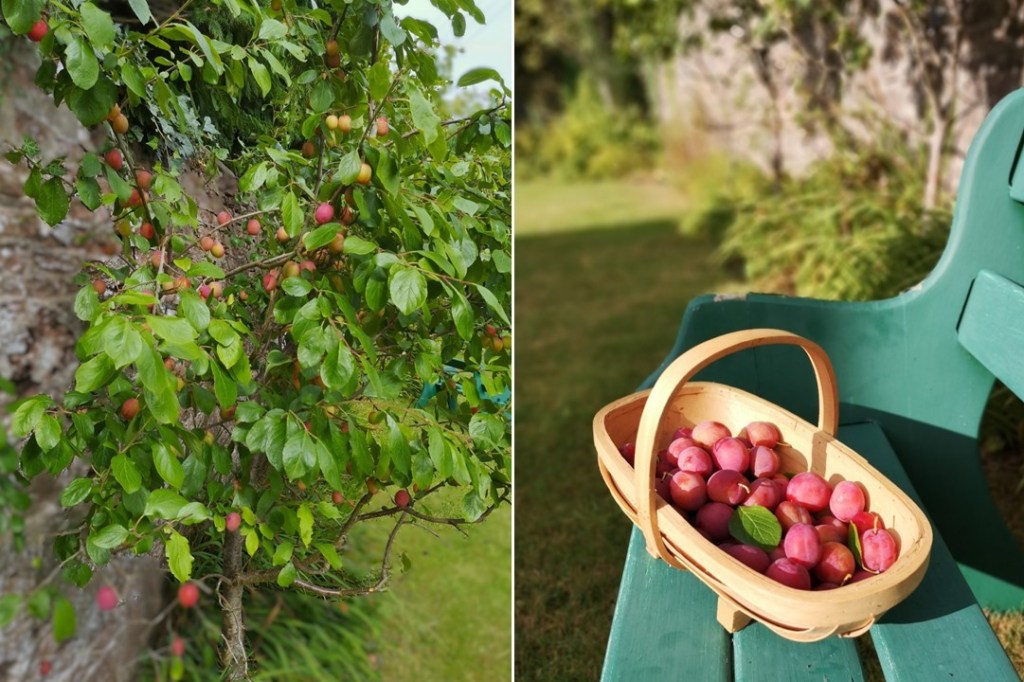
Hello again. The sunshine here in central Scotland last weekend helped ripen off the Victoria plums on the small tree in the garden. And this year, I managed to get them picked before the wasps moved in:)

Scottish_Victoria_plum_harvest_September_2024
This year’s Victoria plum harvest. Images: Kathryn Hawkins

Not a bad haul, and there are still a few left on the tree for later in the month. I’ll admit that plums are not my favourite fruit but they do make a lovely jam, and are also delicious flavoured and baked with almonds. Hence, my two recipes this week.

Homemade_Victoria_plum_jam_in_jar_and_on_spoon
Simply plum jam. Images: Kathryn Hawkins

The jam recipe is very straightforward, just 2 ingredients, fruit and sugar. Victoria plums, if not too ripe, set well without needing to add lemon juice to the mix. If the plums are very ripe, then add 1tbsp juice per 500g fruit.

Makes: approx. 1.5kg

Ingredients

  • 1kg ripe Victoria plums
  • Approx. 850g granulated sugar

1. Wash the plums then cut them in half and prise out the stones. Put the stones to one side, and weigh the prepared fruit and make a note. You should use the same amount of sugar to fruit. If the plums are too firm to cut cleanly in half, you can cook them whole and then remove the stones once the fruit has softened – it is worth counting the whole plums before you cook them so that you know how many stones to fish for!

2. Put the stones on a piece of muslin. Gather up the sides and then bash with a rolling pin to crush the stones. Tie the muslin tightly to secure the crushed stones inside. You don’t have to do this, but I think the jam has better flavour and setting qualities if you add the stones.

3. Put the plums in a large saucepan. If they are ripe, you don’t need to add any water. If they are firm, add about 100ml. Heat until steaming, add the muslin bag, then cover with a lid and cook gently until very soft. If you’ve cooked whole plums, now is the time to do a little stone fishing.

4. Add the quantity of sugar to match the weight of the prepared fruit, and stir until dissolved, then raise the heat and boil rapidly until setting point is reached – around 104 to 105°C on a jam thermometer. Squeeze out the juices from muslin bag and discard, and stir the jam to distribute the fruit pieces before packing into clean jars and sealing whilst hot.

Making_plum_jam_with_Scottish_Victoria_plums_September_2024
Making plum jam. Images: Kathryn Hawkins
Making_jam_pot_covers_from_paper_napkins
Easy peasy jam pot covers. Images: Kathryn Hawkins

For a simple finishing touch, if you are thinking about gifting some of your jam, I often cut out rounds of paper napkin to cover the jar lids. Use a saucer or plate a few centimetres larger than the lid and draw round using a pencil. Secure the covers in place with a small rubber band and then tie with string or ribbon. Don’t forget the label.

Gluten-free_dairy-free_vegan_almond_plum_pudding
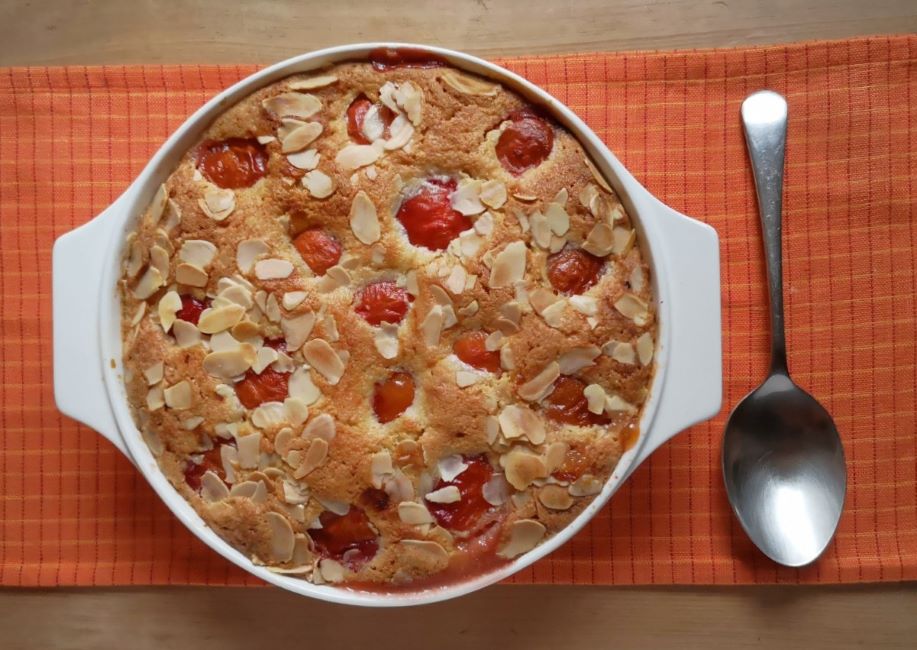
Plum pudding perfection. Image: Kathryn Hawkins

My second plummy recipe is also very easy to make. You’ll need 850g plums and a dish about 1.7l in capacity. The bake will serve about 6 people.

Pitting_Victoria_plums
Victoria plums, ripe and ready for pudding. Images: Kathryn Hawkins
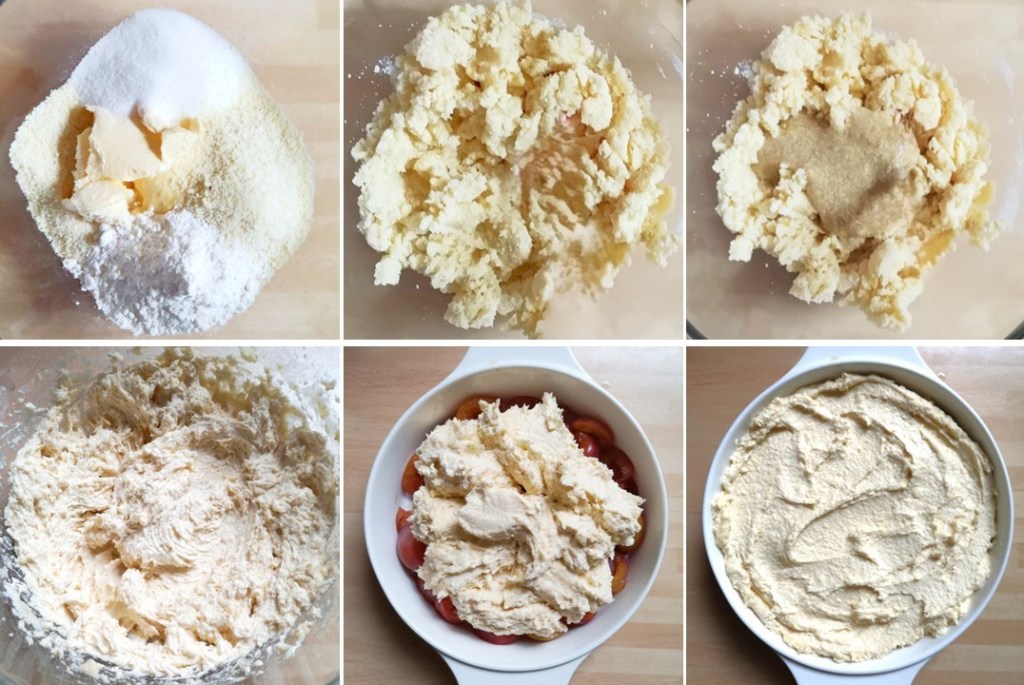
Making_gluten-free_dairy_free_almond_sponge
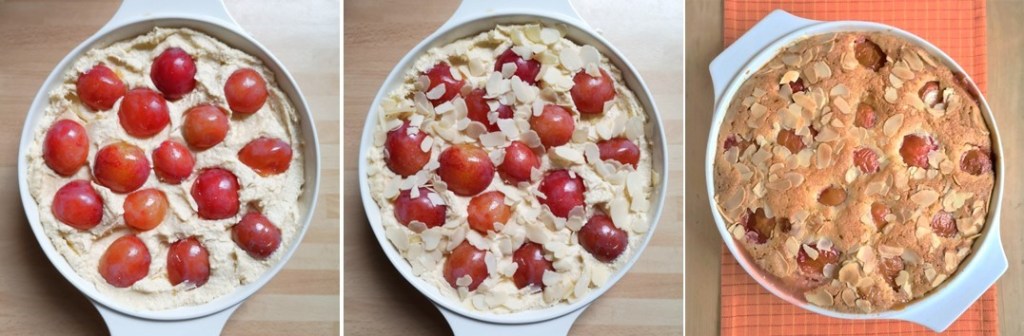
Assembly_and_baking_gluten-free_dairy-free_vegan_almond_plum_pudding
How to make almond plum pudding. Images: Kathryn Hawkins

1. Wash and stone the plums as for jam, but discard the stones this time. Put two thirds of the prepared fruit in the dish and put to one side while you make the topping.

2. Mix 3tbsp ground flax seed with 135ml water and leave for a few minutes until thickened.

3. Whisk together 155g lightly salted, soft plant butter with 155g caster sugar, 155g ground almonds, 30g gluten-free plain flour and 1tsp almond extract until well blended and creamy. Stir in the flax egg and whisk to make a smooth cake batter.

4. Spoon over the plums in the dish and smooth the top. Push the remaining plums into the mixture on top and sprinkle with a few flaked almonds. Pop the dish on a baking tray and bake in a preheated oven at 180°C, 160°C fan, gas 4, for about 1hour 15 minutes until firm to the touch and golden. Best served hot with custard.

Freshly_baked_gluten-free_dairy-free_vegan_almond_plum_pudding
Ready for custard. Images: Kathryn Hawkins

If you have any leftover jam, add a layer in the bottom of the dish for extra sweetness.

Until next time, enjoy the autumn colours and I’ll hope to see you again in a couple of weeks or so.

Lemon crusted berry loaf cake (gluten-free; dairy-free; vegan)

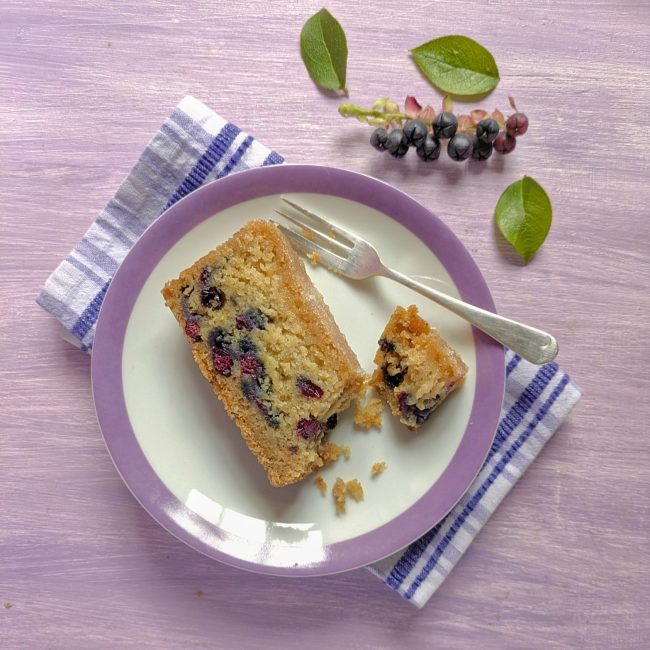
Gluten-free_dairy-free_vegan_lemon_crusted_Salal_berry_loaf_cake
Very lemony berry cake. Image: Kathryn Hawkins

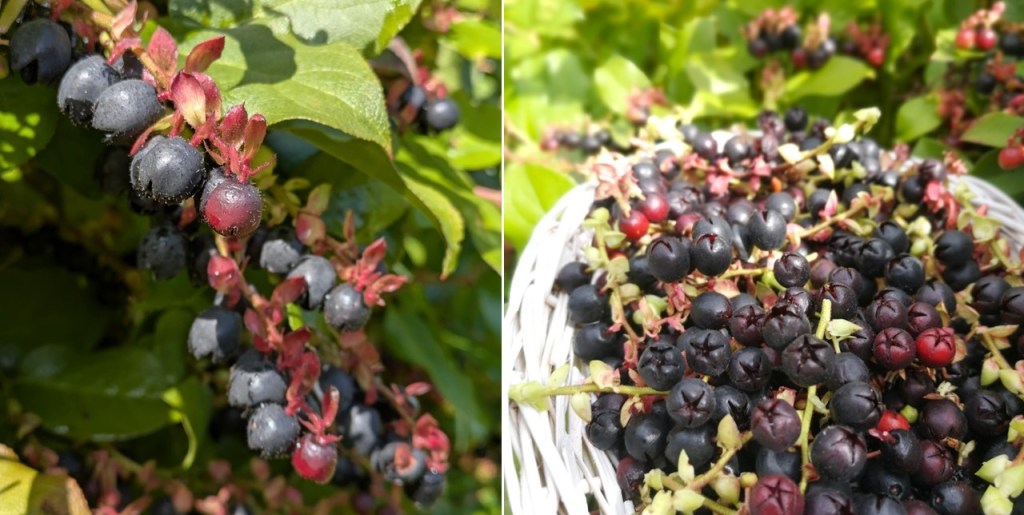
It’s that wonderful time of the year when the garden begins to yield produce thick and fast. My latest pickings are from the many Salal (Gaultheria shallon) bushes around the garden which have provided a very abundant crop of berries this year. Too many for me to deal with, so I’m happy to say that the birds are enjoying a feast as well.

Homegrown_Scottish_Salal_berries_August_2024
This year’s Salal berry harvest. Images: Kathryn Hawkins

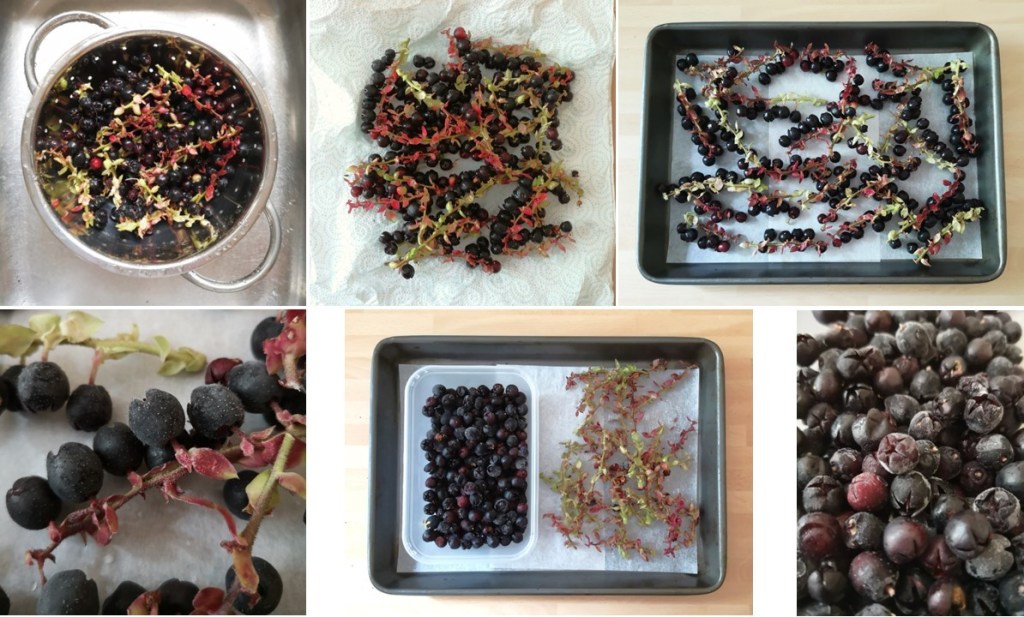
The berries are quite challenging to pick individually as they often go to mush in your fingers when they are very ripe. Last year I found a better way of dealing with the problem. Harvest them on their stalks – they grow in clusters so it is easy to snip off the stems with the berries attached.

How_to_prepare_and_freeze_Salal_berries
Preparing berries for the freezer. Images: Kathryn Hawkins

Wash and dry the berries well, then lay on trays and place in the freezer until you are ready to deal with them. Once frozen solid, they pull away easily from the stems and the berries can then be packed and returned to the freezer for future use.

If you want to use them fresh though, you’ll have to persevere and pull them gently from the stems after washing and drying them.

Close-up_texture_of_a_homemade_lemon_and_berry_loaf_cake
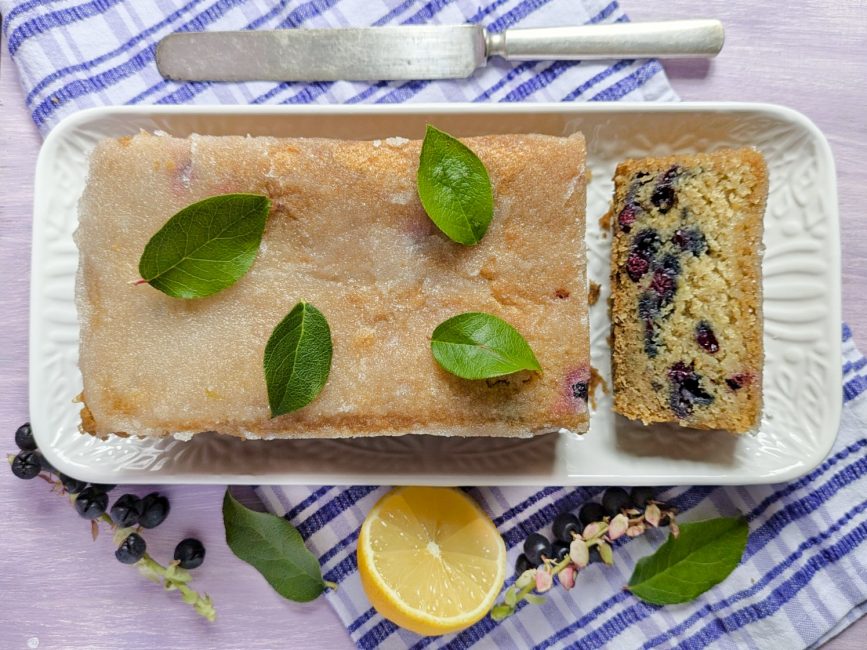
Zesty, fruity loaf cake. Image: Kathryn Hawkins

My recipe this week uses the berries fresh, but you don’t need that many for the mixture. I did try it with frozen and it worked fine, but the texture was a little wet for my taste. Blueberries would make a good substitute if you prefer. This is one of those cakes that gets better the longer you leave it. The flavours become more fruity and the texture is denser and richer. Store in an airtight container for up to a week if you can leave it alone. The initial crunchiness of the lemon sugar top will disappear on storing, but it is replaced by a sticky lemony crust instead. It freezes fine as well 🙂

Homemade_Salal_berry_and_lemon_loaf_cake
A berry nice slice. Image: Kathryn Hawkins

Serves: 8

Ingredients

  • 1tbsp ground linseed
  • Juice and rind 1 unwaxed lemon
  • 185ml plant milk (I use a barista-style oat milk)
  • 115g plant butter, softened
  • 150g caster sugar
  • 175g gluten-free plain flour blend
  • 50g ground almonds
  • ¼tsp xanthan gum (optional, but the cake is very crumbly without it)
  • ¾tsp bicarbonate of soda (baking soda)
  • 80g fresh Salal berries, washed
  • 75g granulated sugar

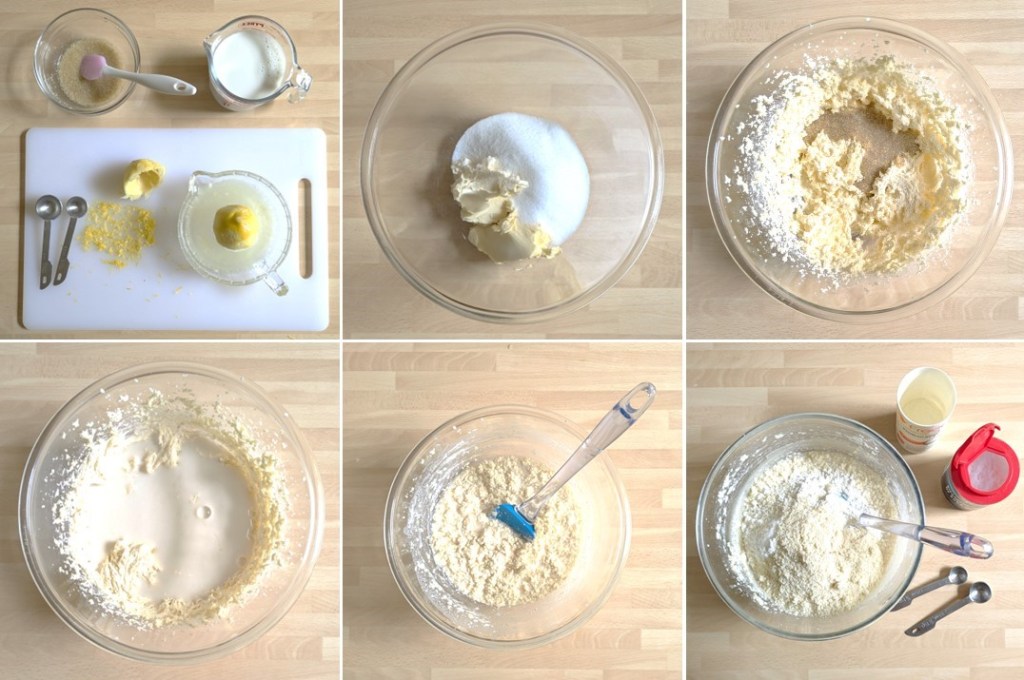
1. Preheat the oven to 180°C, 160°C fan oven, Gas Mark 4. Line a 1kg loaf tin. Mix the linseed with 3tbsp cold water and put to one side to thicken. Mix 2½tsp lemon juice into the milk and leave for a few minutes at room temperature to thicken.

2. Whisk the butter and caster sugar together until creamy and well blended then gently whisk in the linseed and milk mixtures – don’t panic, the batter will look very lumpy!

Making_gluten-free_dairy-free_vegan_lemon_loaf_cake_batter
Making the loaf cake batter. Images: Kathryn Hawkins

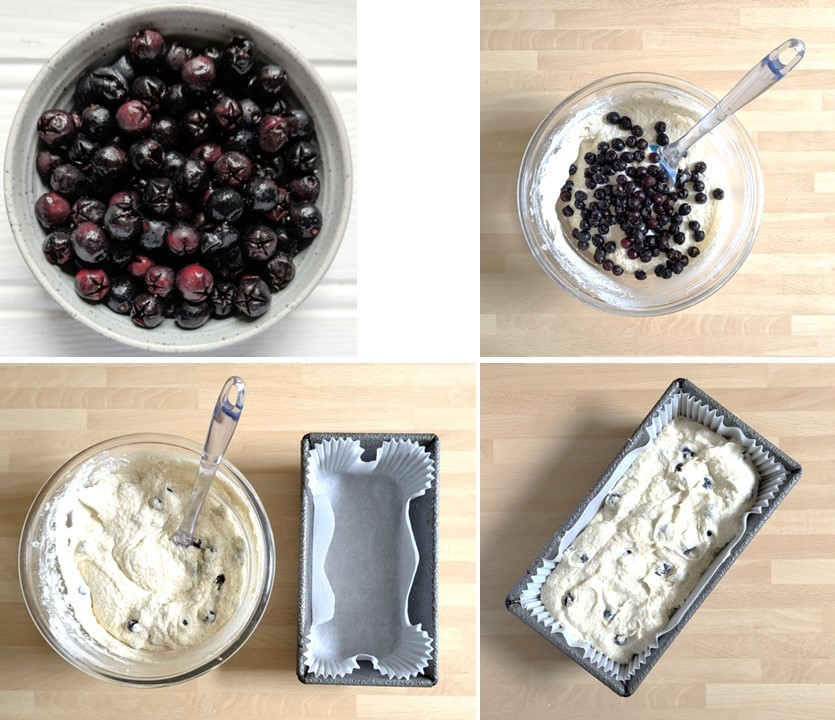
3. Add the lemon zest, flour, almonds, xanthan gum and baking soda, and mix well until the batter is smooth and creamy. Gently stir in the berries.

4. Transfer the mixture to the loaf tin, smooth the top and bake for about 1hr 15 minutes until risen and firm to the touch.

Adding_fresh_homegrown_Salal_berries_to_cake_batter
Adding the berries. Images: Kathryn Hawkins

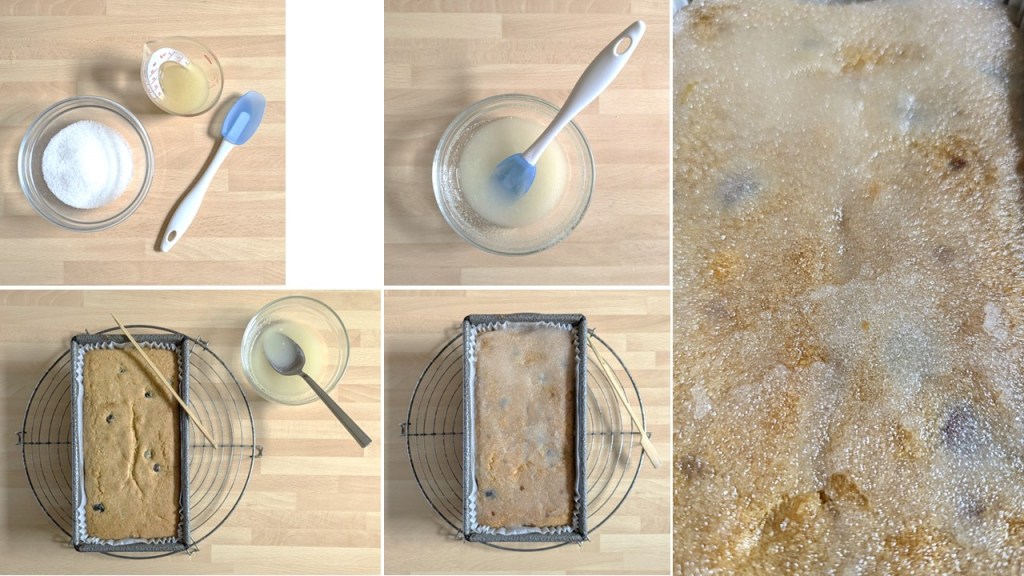
5. While the cake is in the oven, prepare the lemon topping by simply mixing 2tbsp lemon juice with the granulated sugar.

6. When the cake is cooked, place the tin on a wire rack and skewer the cake in a few places. Spoon over the lemon sugar evenly to form a crust and leave the cake to cool in the tin.

Preparing_the_lemon_sugar_crust
Making the lemon sugar crust. Images: Kathryn Hawkins

As the cake cools, the sugar sets in a crusty layer on top whilst the juices soak into the cake. Delish. I served my cake decorated with a few (washed) Salal leaves for a splash of colour – just for show, these are not edible.

Gluten-free_dairy-free_vegan_lemon_crusted_Salal_berry_loaf_cake
Freshly sliced loaf cake. Image: Kathryn Hawkins

Thanks for stopping by. I hope to see you again soon. Best wishes and happy baking 🙂

Just peachy pancakes and jam (gluten-free; dairy-free; vegan)

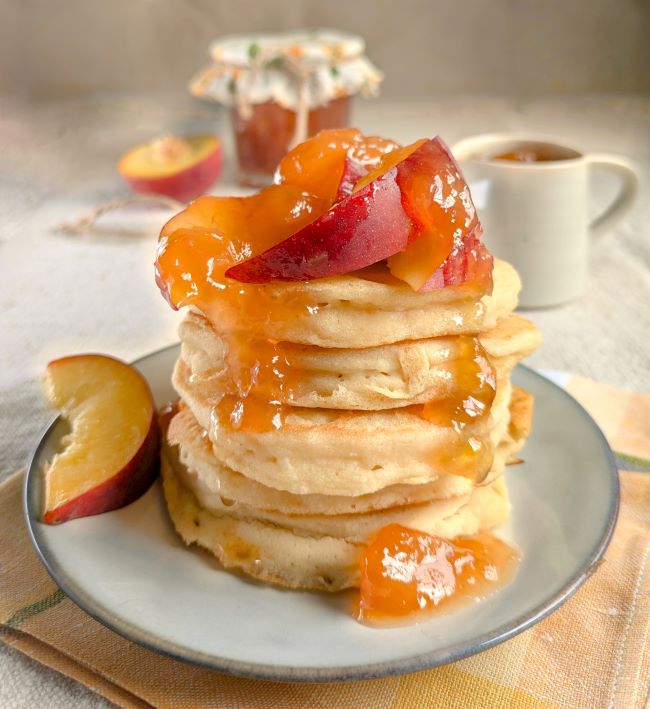
A_stack_of_gluten-free_dairy-free_vegan_pancakes_with_peaches
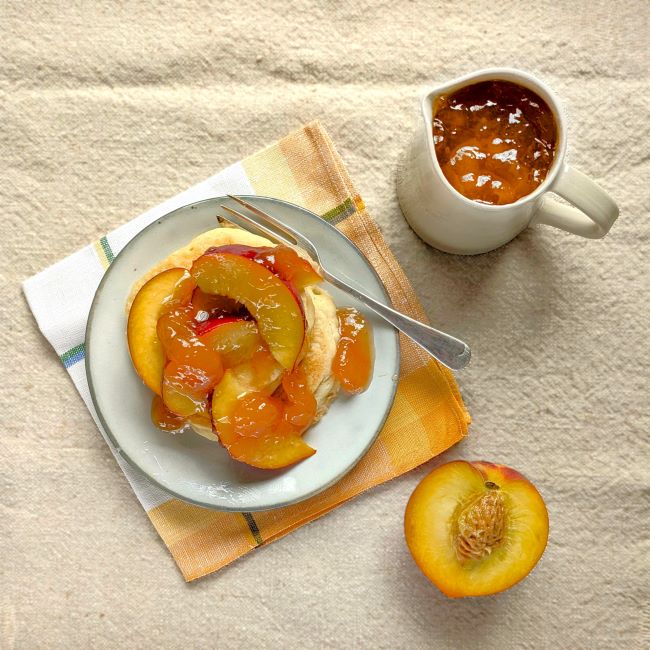
Just peachy pancakes. Image: Kathryn Hawkins

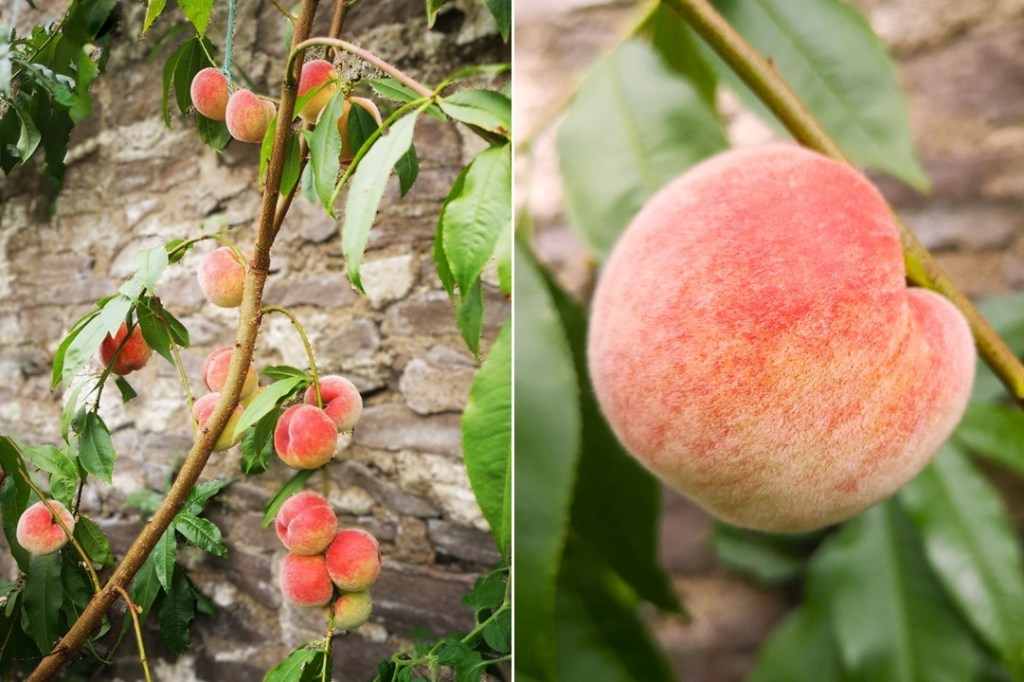
Hello there. I have 2 recipes for you this month: light fluffy pancakes served with a homemade fresh peach jam, inspired by acquiring some homegrown fresh peaches last July. My then neighbour, asked me in to water his burgeoning garden and greenhouse whilst he was away on holiday, and in return I was able to enjoy the pick of the crop. How lucky was I when I discovered the greenhouse peach tree bearing fruit that was ripening so fast the peaches were literally falling from the tree.

Greenhouse_white_peaches_growing_on_a_tree
Greenhouse white peach tree. Images: Kathryn Hawkins

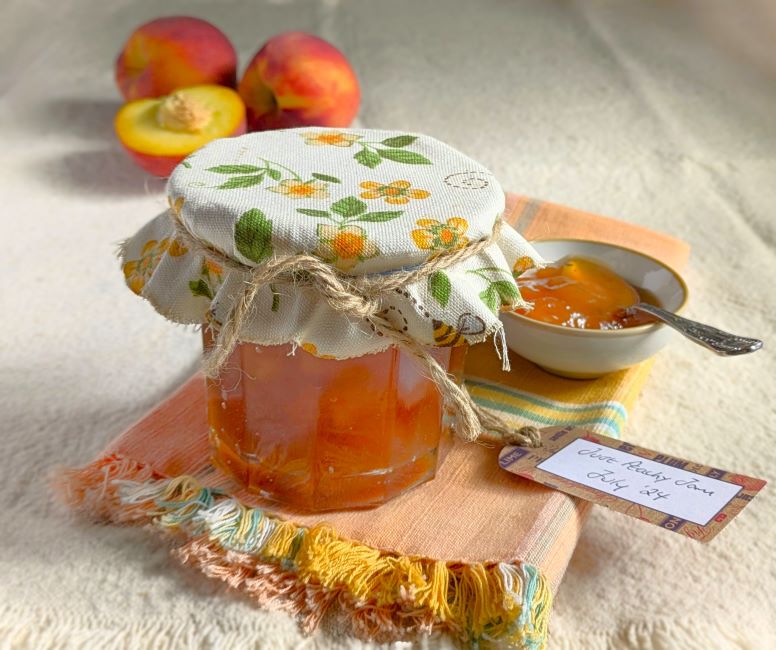
I gathered up the crop and made peach jam for the very first time. Delicious it was too, and, by the way, I did give him a pot when he returned 🙂 The peaches were a very sweet and juicy white variety which peeled very easily without any intervention. I made some this year with firmer, yellow-fleshed peaches and dipped them in boiling water for a few seconds to loosen and then peel away the skins. You can also use a vegetable peeler to do this if preferred. You do need to peel peaches and nectarines for jam making because the skins become very tough when boiled with sugar.

Homemade_peach_jam
Just peachy jam. Image: Kathryn Hawkins

Pancakes make the perfect base to enjoy homemade jam, so I am combining the jam and pancake recipes below in case you want to make either or both.

Makes: approx. 1.125kg jam and 12 pancakes

Ingredients

For the jam:

  • 1kg peaches
  • 6tbsp lemon juice
  • 800g granulated sugar (I used 200g demerara sugar and 600g white sugar)

For the pancakes:

  • 175ml plant-based milk
  • 2½tsp lemon juice
  • 150g gluten-free blended self raising flour
  • 30g cornflour (cornstarch)
  • ½tsp bicarbonate of soda (baking soda)
  • 50g plant-based butter, melted
  • 1tbsp maple syrup
  • A little vegetable oil for frying

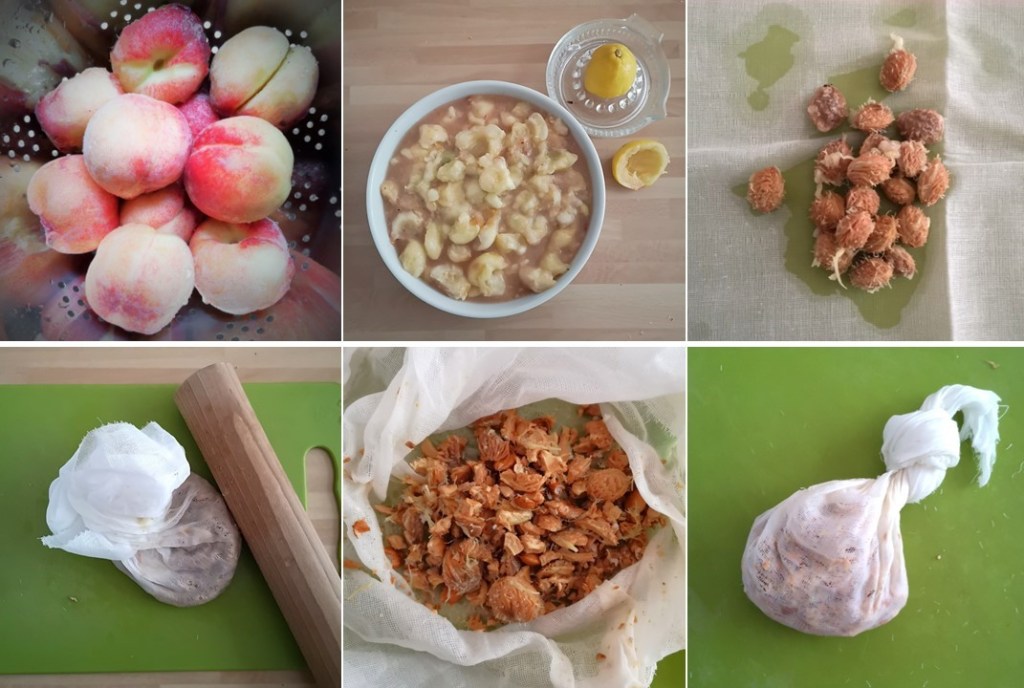
1. For the jam, wash, skin and chop the peaches. If the peaches are very ripe, then will break up easily. If the peaches are firm, cut them into small pieces. Put the stones to one side and place the peach flesh in a bowl. Mix in the lemon juice.

2. Put the stones on a square of muslin, twist the edges together to contain the stones within, and bash hard with a rolling pin to smash them open. Tie the muslin securely.

Preparing_peaches_for_jam-making
Peach and peach stone preparation. Images: Kathryn Hawkins

3. Transfer the peach and lemon mixture to a saucepan, and heat until steaming and hot, then simmer gently to soften the fruit. If the peaches are very ripe and soft, they will require little or no cooking.

3. Add the sugar and stir until dissolved, then raise the heat, add the bag of crushed stones and boil rapidly until setting point is reached – between 104° and 105.5°C.

Making_fresh_peach_jam
Making peach jam. Images: Kathryn Hawkins

4. Discard the stones and leave the jam to stand for a few minutes to thicken slightly, the stir to distribute the fruit pieces and spoon into clean jars and seal straight away. Cool, then label. The jam is ready to eat but will keep for several months if stored correctly.

Spoonful_of_homemade_peach_jam
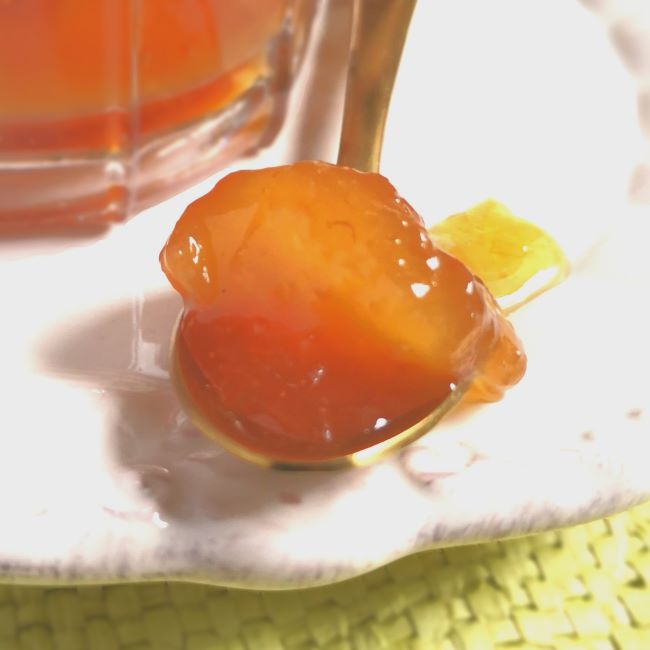
Jammy spoonful. Image: Kathryn Hawkins

To make the pancakes:

1.First make a buttermilk. Mix the milk and lemon juice together and leave to stand for a for a few minutes until it thickens slightly.

2. Sift the flour, cornflour and bicarbonate of soda into a bowl and make a well in the centre. Add the melted butter, maple syrup and buttermilk and gently mix everything together to make a thick batter. Note: as soon as you mix the liquid into the dry ingredients, the raising agents get to work and produce air bubbles. You need to get the batter cooked as quickly as possible in order to make fluffy pancakes.

Gluten-free_vegan_Pancake_ingredients_and_batter-making
Making the pancake batter. Images: Kathryn Hawkins

3. Working quickly, brush a large frying pan or flat griddle pan lightly with oil and heat until hot. Use a tablespoon measure to spoon 2 spoonfuls of batter on to the hot pan to make a thick pool. Add further pools depending on how much space you have in the pan. Cook over a medium heat for about 2 minutes, turn over and cook for a further 1-2 minutes until lightly golden and puffed. Either transfer to a dish, cover and keep warm, or cool on a wire rack, whilst you cook the remaining batter.

Cooking_gluten-free_dairy-free_vegan_pancake_batter
Cooking pancakes. Images: Kathryn Hawkins

Serve warm or cold with your favourite toppings. The pancakes will keep for a few days in a sealed container and can be toasted or quickly pan-fried to heat through. They also freeze well.

Gluten-free_dairy-free_vegan_pancakes_with_jam_and_fresh_peaches
Perfect peachy pancake portion. Image: Kathryn Hawkins

Until next time, happy cooking, and I look forward to sharing another post with you soon 🙂

Summer vegetable chutney (naturally gluten-free; dairy-free; vegan)

Homemade_Summer_vegetable_chutney
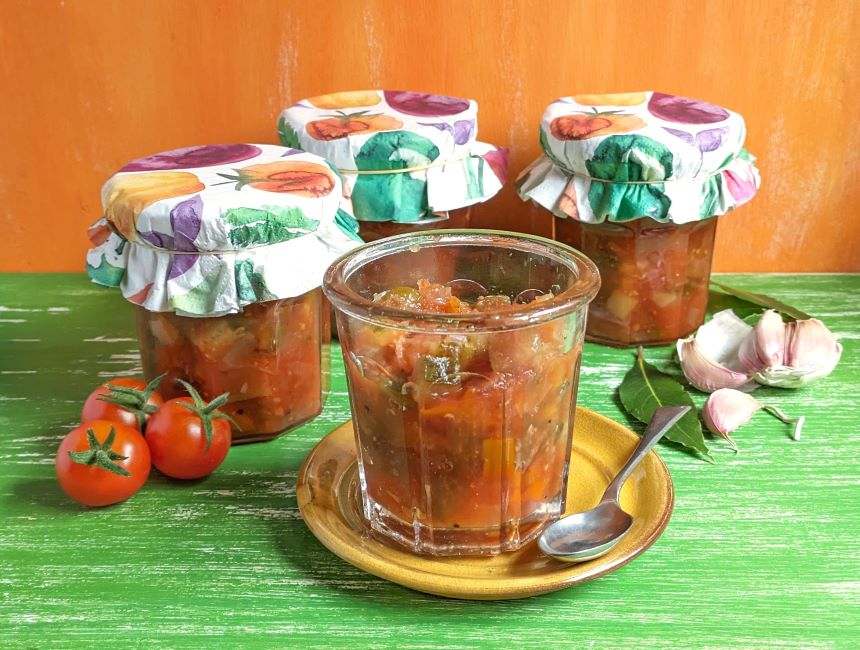
Summer vegetables captured in a jar. Image: Kathryn Hawkins

Hello again. So, we’ve passed the mid point of the year already. Time for a recipe which preserves the time of year perfectly. My recipe this week is an excellent way to use up a selection of the vegetables that are at their best over the next few weeks. If you have homegrown produce, all the better.

Chopped_vegetables_for_homemade_Summer_chutney_making
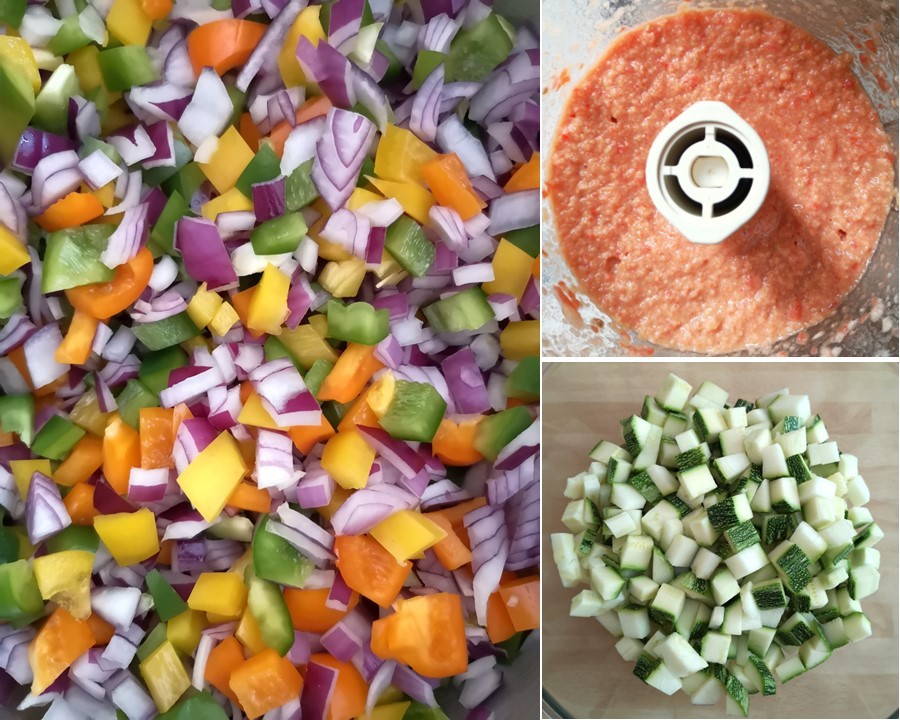
Summer vegetables for chutney making. Images: Kathryn Hawkins

I was inspired by one of my favourite vegetable dishes, Ratatouille, when I put this recipe together. You can mix and match different, similar-textured vegetables in the recipe below, just replace weight for weight, one for another. I used a combination of red onion and mixed peppers, with fresh tomatoes and cooking apples, and some diced courgette (zucchini). The chutney is flavoured with garlic, bay leaves and ground coriander. Aubergine (egg plant) or squash would also be good in this mixture.

Homemade_Summer_vegetable_chutney
A taste of Summer. Images: Kathryn Hawkins

The quantities below make a very generous amount of chutney but you can of course, cut the amount of vegetables you use to make less.

Makes: approx. 3kg

Ingredients

  • 450g prepared mixed bell peppers (approx. 1 each large green, yellow and orange peppers), finely chopped
  • 450g prepared red onions, finely chopped
  • 600ml cider or white wine vinegar
  • 3 bay leaves
  • 4 garlic cloves, peeled
  • 450g fresh tomatoes, roughly chopped
  • 450g prepared cooking apples, roughly chopped
  • 2tbsp tomato purée
  • 1tbsp ground coriander
  • 500g prepared courgette (zucchini), diced
  • 450g granulated sugar
  • 1tbsp salt
  • Freshly ground black pepper

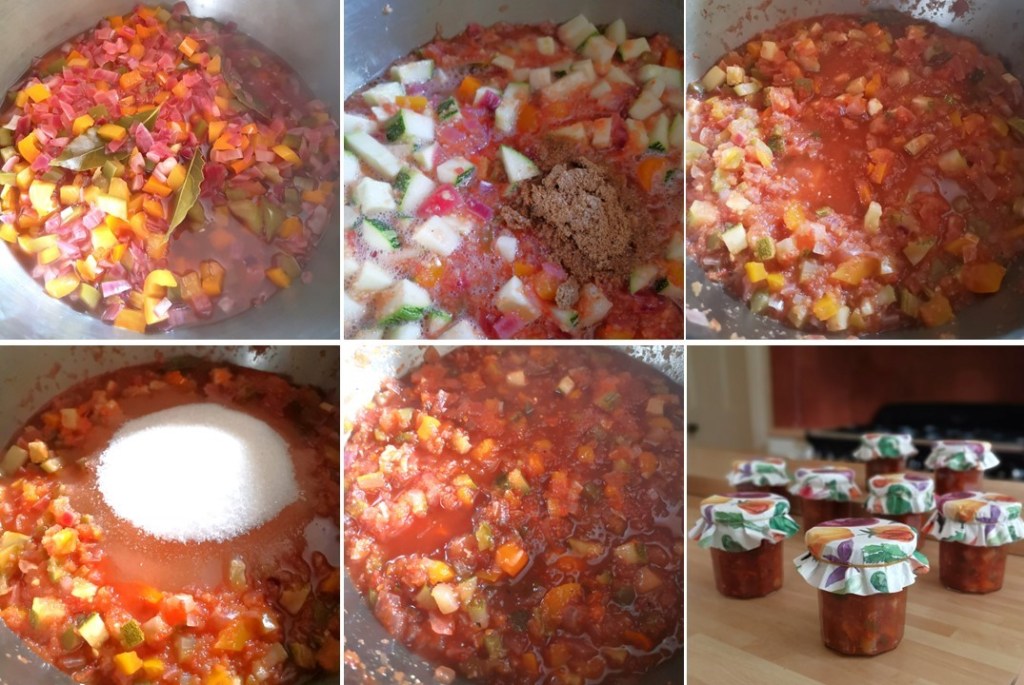
1. Put the peppers and onions in a large saucepan and pour over the vinegar. Add the bay leaves, bring to the boil, cover and simmer for 15 minutes.

2. Meanwhile, put the garlic, tomatoes, apples and tomato purée in a food processer and blitz until smooth.

3. Pour over the peppers and onions and stir in the coriander and courgette (zucchini). Bring to the boil, cover and simmer for 25 minutes until tender and jam-like.

4. Stir in the sugar until dissolved, then mix in the salt and some pepper. Bring to the boil and cook for about 30 minutes until thick and jam-like.

Summer_vegetable_chutney_in_the_making
Cooking up vegetables for chutney. Images: Kathryn Hawkins

5. Turn off the heat, discard the bay leaves and spoon into clean jars. Seal immediately. Leave to cool, then label and store for about 1 month before opening. The chutney should keep in a cool, dark cupboard for several months.

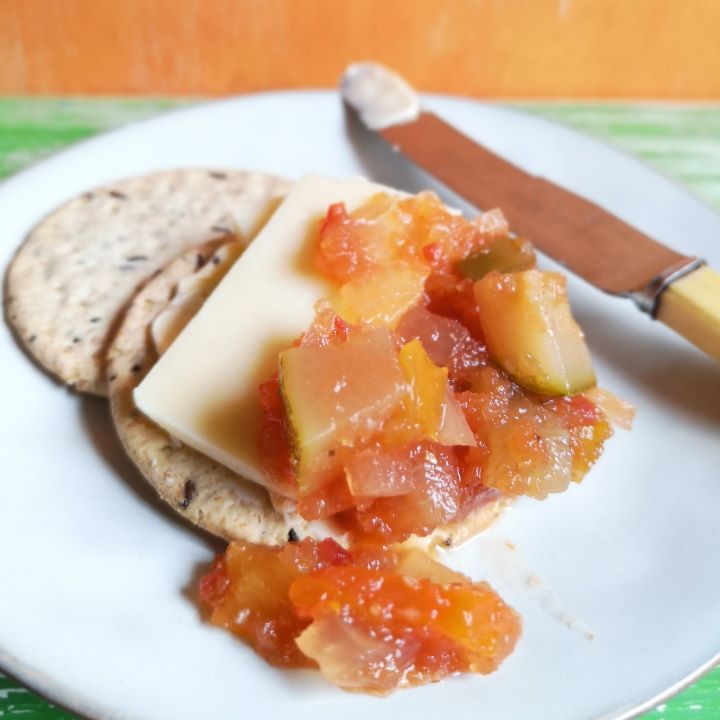
Homemade_chutney_cheese_and_oatcakes
Chutney, cheese and oatcakes. Image: Kathryn Hawkins

I look forward to sharing another recipe with you next month. Until then, enjoy the season and thanks for stopping by 🙂

Homemade tortilla chips (gluten-free; dairy-free; vegan)

Homemade_gluten-free_vegan_corn_chips_and_corn_tortilla_recipe
Homemade corn chips and tortillas.

Hello there. I have a super sunny recipe for you this week which I hope matches the weather where you are (sadly not here today as I type this). I really like tortilla wraps but find the readymade ones a bit on the doughy side. Homemade corn wraps have more texture and flavour, and make a great base for toppings or fillings if you fold them to make taco shells, and are utterly delicious fried as chips.

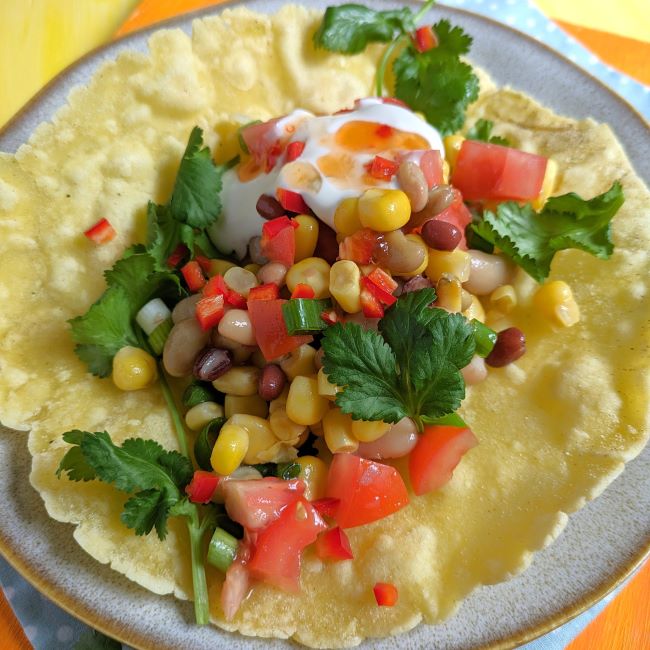
Loaded_gluten-free_vegan_corn_tortilla
Loaded and ready to eat. Image: Kathryn Hawkins

A little bit of patience is required to roll the perfect tortilla – I guess that’s why someone invented the tortilla press – but as with everything, practice makes perfect. You’ll see that mine have a raggedy edge, for a neat round edge you’d need to trim with a sharp knife, but I quite like the more characterful look 🙂

The basic wrap is a very simple recipe which I hope you will enjoy trying. Enjoy them warm – they will become drier and firmer as they cool. You can reheat them by popping in the microwave for a few seconds. If you want to turn them into chips, the recipe is further down, below the basic wraps recipe.

Makes: 6

Ingredients

  • 125g gluten free plain bread flour blend plus extra for dusting (Note: bread flour contains Xanthan gum so if you use a standard plain flour, add a little Xanthan gum to make the dough easier to work with)
  • 125g fine cornmeal (Masa farina)
  • ½tsp salt
  • 2tbsp corn oil

1. Put the flour, cornmeal and salt in a bowl and make a well in the centre. Ad the oil and mix in, then gradually pour and mix in about 115ml water to bring the ingredients together into a soft clump.

2. Lightly flour the work top and gently knead the dough for a short time to make a smoothish ball of dough. Form into a neat round, cover lightly and leave to rest for 15 minutes.

Making_gluten-free_vegan_corn_tortilla_dough
Making gluten-free tortilla dough. Images: Kathryn Hawkins

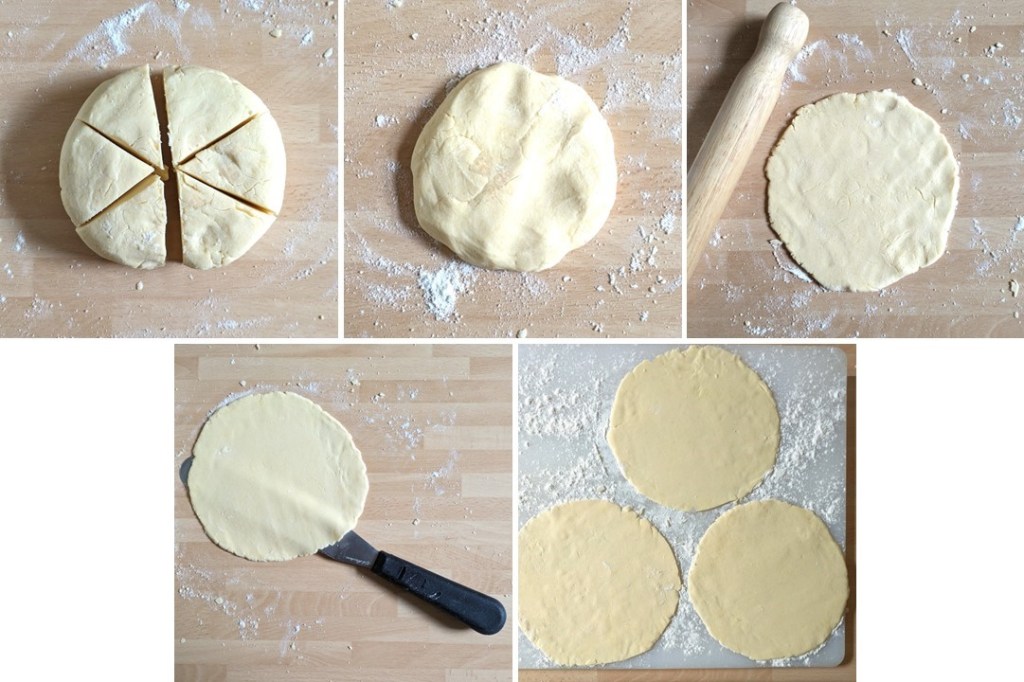
3. Cut into 6 equal wedges. Working on one piece at a time, dust the work top lightly with flour, form a portion into a round and then roll and turn to make an approx. 18cm thin round. You will probably need to slide a palette knife underneath to turn the dough as it gets thinner.

4. Transfer to a lightly floured board and cover whilst you roll out the other 5 pieces in the same way.

Shaping_gluten-free_corn_tortilla_dough
Shaping tortilla dough. Images: Kathryn Hawkins

5. To cook, heat a dry frying pan until hot. Carefully add a tortilla and cook over a medium heat for about 2 minutes until it starts to bubble up. Flip over and cook for a further 1-2 minutes until lightly golden and toasted. Wrap them in a clean tea towel to keep them soft and warm whilst you cook the remaining rounds.

Cooking_gluten-free_corn_tortillas
Cooking the tortillas. Images: Kathryn Hawkins

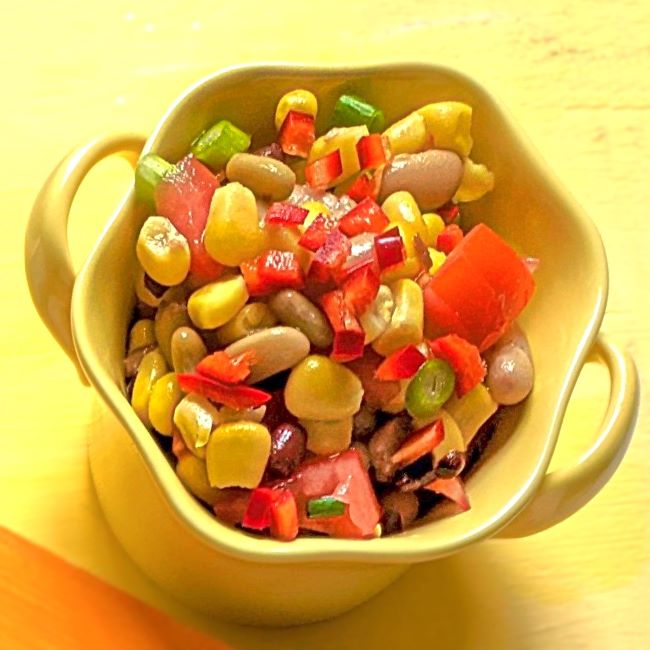
Serve the tortillas warm, topped with your favourite salsa or salads. I made up this very simple combination of chopped tomato mixed with canned beans, cooked sweetcorn and a little spring onion, all mixed together with sweet chilli sauce. Pile on top of a freshly made corn tortilla, sprinkle with fresh red chilli and fresh coriander, and add a dollop of vegan mayo on the side 🙂

Sweetcorn_salsa
Corn and bean salsa. Image: Kathryn Hawkins

To make your own corn chips, cut cold tortillas into 8 neat triangles – I found it easier to use kitchen scissors to do this. Pour corn oil into a deep frying pan or saucepan to a depth of about 5cm and heat to 180ËšC. Fry a few chips at a time for about 2 minutes, turning in the oil, until crisp and lightly golden. Drain well and season whilst still warm – I used onion salt.

Making_homemade_corn_chips
Cutting and cooking corn chips. Images: Kathryn Hawkins
Freshly_fried_homemade_gluten-free_vegan_corn_chips
Freshly fried and seasoned. Image: Kathryn Hawkins

These homemade chips are really the crunchiest chips I’ve ever tasted. They store well for several days in an air tight container (if you can leave them alone!).

Homemade_gluten-free_vegan_corn_chips
Crunchy homemade corn chips. Images: Kathryn Hawkins

Until next month, take care and I hope to see you again in a couple of weeks or so 🙂

Sesame toast with new season asparagus (gluten-free;dairy-free;vegan)

Gluten-free_vegan_sesame_toast_topped_with_pan-fried_British_asparagus
New season asparagus on sesame toast. Image: Kathryn Hawkins

Hello again. It’s that time of year again when I welcome the arrival of the British asparagus season. From around the middle of April to the end of May/beginning of June, I have just a few weeks to feast on my favourite green vegetable.

2024_new_season_British_asparagus
New season British asparagus. Image: Kathryn Hawkins

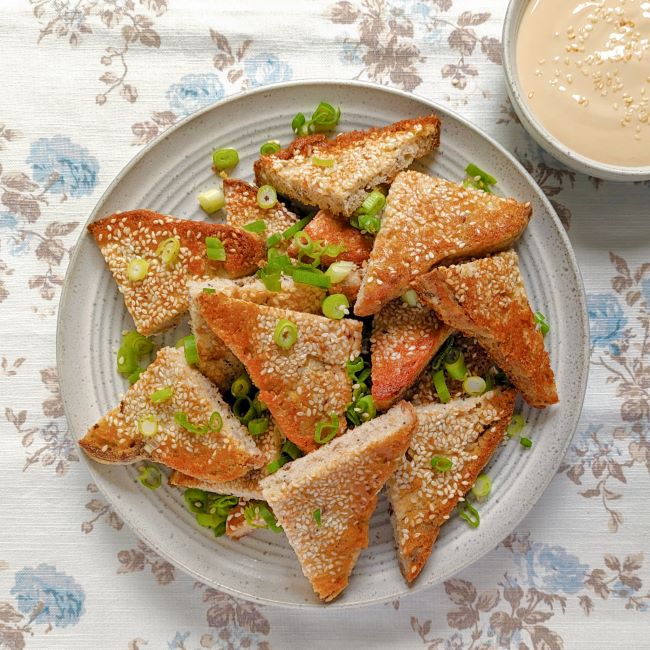
I have suggested a few accompaniments to this delicious vegetable over the years. I like to keep it simple and enjoy the stems for their own unique flavour, and this year’s offering is no exception. Delicious crispy fried toasts dipped in a sesame batter and served with a sesame flavoured mayo dressing.

2024_British_asparagus_tips
Tip top British asparagus. Image: Kathryn Hawkins

When the asparagus season is over, make and cut the toasts into triangles and serve as a crunchy and very moreish snack – they really are very tasty.

Pile_of_gluten-free_vegan_sesame_toasts_and_dip
Crisp and crunchy sesame triangles. Image: Kathryn Hawkins

Makes: 4 servings of asparagus on toast, or 16 sesame triangles

Ingredients

  • 2tbsp chickpea canning water (aquafaba)
  • 20g gram (chickpea) flour
  • 20g ground flaxseeds
  • Pinch of salt
  • 4tbsp plant milk
  • 4 slices free-from bread
  • 40g toasted sesame seeds
  • Vegetable oil for shallow frying
  • 6tbsp vegan mayonnaise
  • 1tbsp Teriyaki marinade
  • 2tsp sesame oil
  • Chopped spring onion to serve
  • 300g new season fine asparagus spears

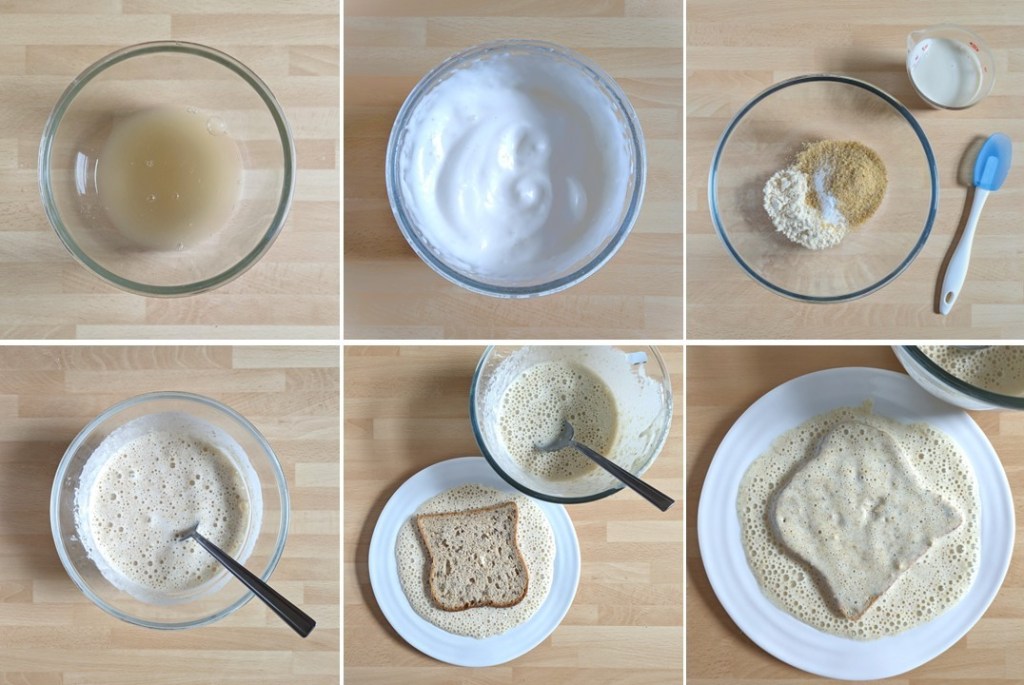
1. Put the chickpea water in a bowl and whisk with an electric mixer until very thick and foamy.

2. Mix the flours and salt in a bowl. Make a well in the centre and add the milk. Gradually mix everything together then fold in the chickpea foam.

3. Put some of the batter on a plate or in a shallow dish. Working on one piece of bread at a time, dip the bread on both sides and sprinkle the top with a few seeds.

Making_the_batter_for_gluten-free_vegan_sesame_toasts
Making the sesame toast batter. Images: Kathryn Hawkins

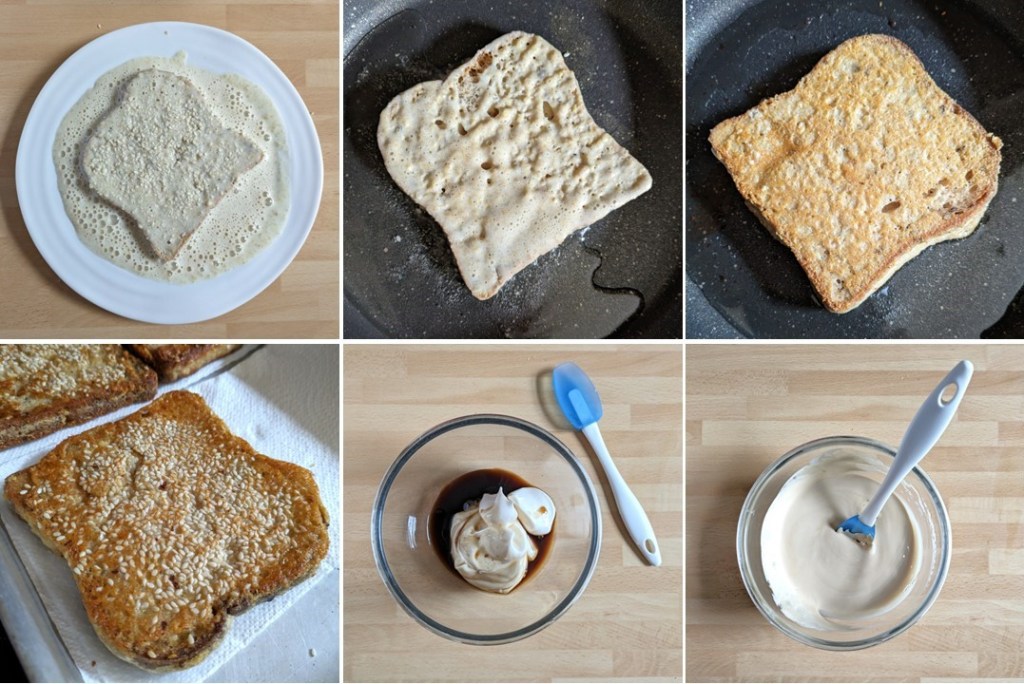
4. Pour sufficient vegetable oil to just cover the base of a large frying pan and heat until hot. Cook the battered bread over a medium to low heat for about 2-3 minutes on each side until crisp and golden. Drain and keep warm whilst coating and cooking the other 3 slices.

Cooking_gluten-free_vegan_sesame_toast
Cooking the toasts and making the dip. Images: Kathryn Hawkins

5. For the dip, mix the mayonnaise with the marinade and 1tsp sesame oil. Cut the toasts into triangles, sprinkle with spring onion and serve warm with the mayo to dip.

Gluten-free_vegan_sesame_toasts
Sesame toasts with freshly chopped spring onion. Image: Kathryn Hawkins

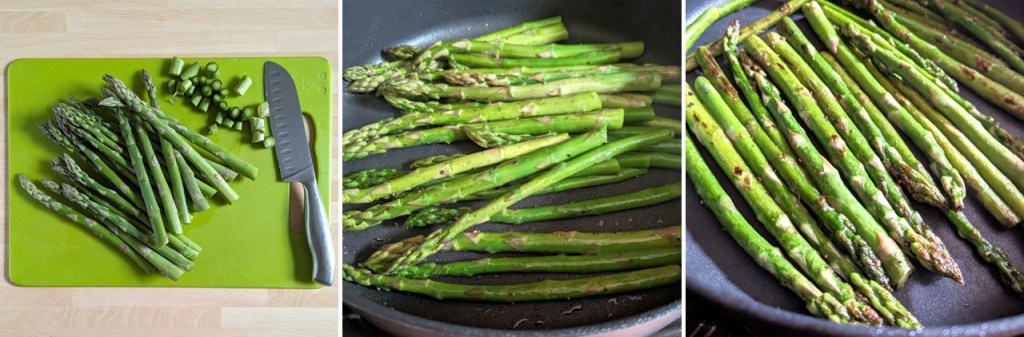
To serve topped with asparagus, trim a little from the ends of the asparagus stems. Heat a little vegetable oil in a large frying pan until hot and stir fry the stems for about 5 minutes until just tender and lightly browned.

Preparing_and_pan-frying_new_season_British_asparagus_2024
Pan-frying new season asparagus. Images: Kathryn Hawkins

Turn off the heat, season with a little salt and drizzle over a little sesame oil. Stand for 5 minutes before serving on sesame toast with a drizzle of the sesame mayo.

Brittish_asparagus_on_top_of_gluten-free_vegan_sesame_toast_with_a_drizzle_of_sesame_mayo_dressing
Dressed and ready for eating. Image: Kathryn Hawkins

Thanks for stopping by. I hope to see you again in a couple of weeks. Until then, take care and enjoy the season 🙂