Welcome to my blog all about the things I love to grow and cook. You'll find a collection of seasonal gluten-free, dairy-free and vegan-friendly recipe posts, as well as a round up of my gardening throughout the year. I wish you good reading, happy cooking and perfect planting!
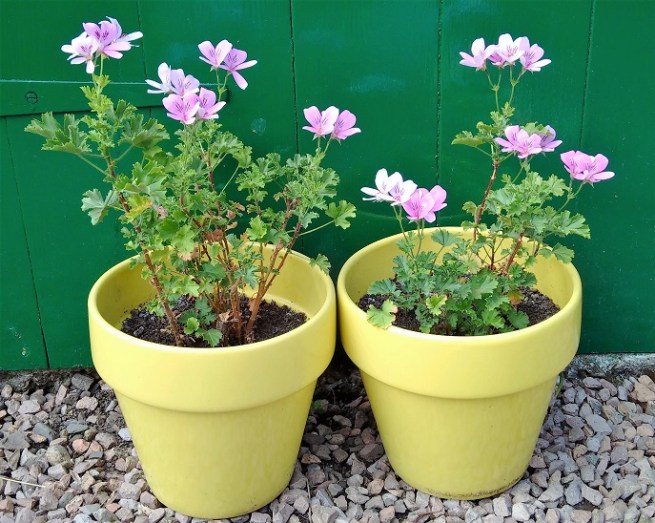
Potted rose geranium (Pelargoneum graveolens). Image copyright: Kathryn Hawkins
I’m not a huge fan of cultivated geraniums growing in pots, but I do like the wild pelargoniums and the fragrant, culinary variety, pictured above. The leaves smell of exotic, spiced rose and the petals are not only very pretty, but make a lovely addition to a summer salad – see my post: Salad herbs and edible flowers on July 16th, 2016. The leaves make a lovely flavouring for syrups and sugars, perfect for livening up a fruit salad.
The plants aren’t hardy enough to survive outside without shelter and consistent good weather, so for convenience, in the summer months, they most often stay in my greenhouse, in pots. I bring them indoors once the temperature drops and the days get shorter in length.
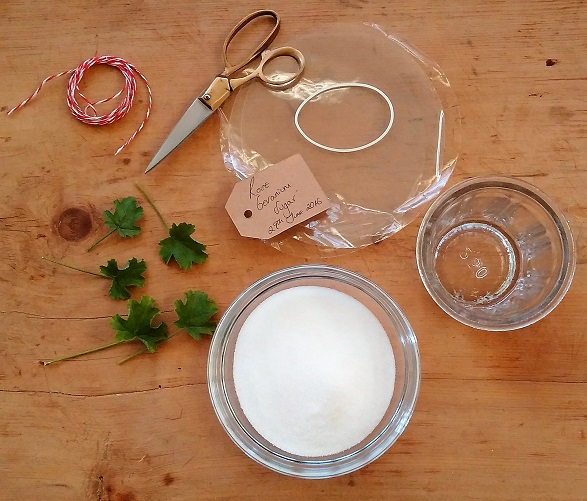
Ingredients for rose geranium sugar. Image copyright: Kathryn Hawkins
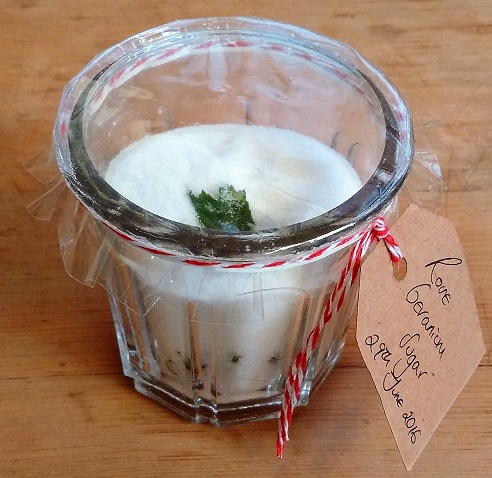
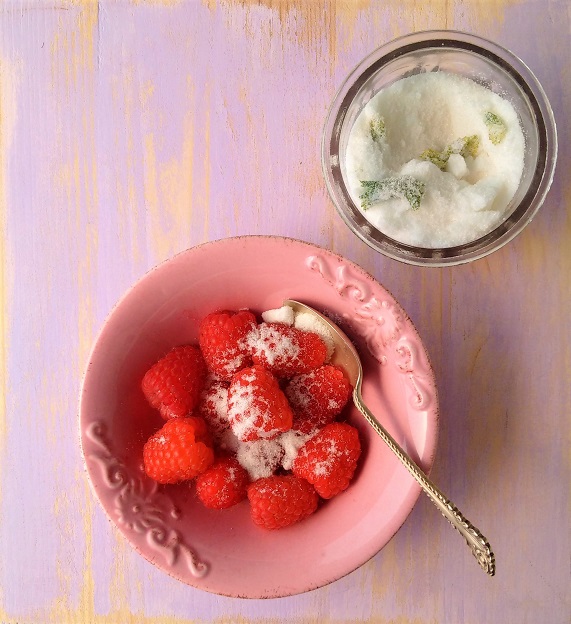
Choose small to medium sized leaves, undamaged, and snip off the stalks. Rinse gently in water, then pat dry with kitchen paper, taking care not to bruise them, and making sure they are completely dry. Put 125g caster sugar into a small bowl and mix in the leaves, then transfer to a small clean, dry, sealable jar. Cover securely and label. Store in a cool, dark cupboard for about a month before using. Discard the leaves before serving. Ideal for sprinkling over berry fruits – especially raspberries and strawberries – pancakes and cakes. The sugar will keep for 3 to 4 months; the sugar will form clumps if condtions are damp.
Homemade rose geranium sugar. Image copyright: Kathryn HawkinsFresh raspberries with rose geranium sugar. Image copyright: Kathryn Hawkins
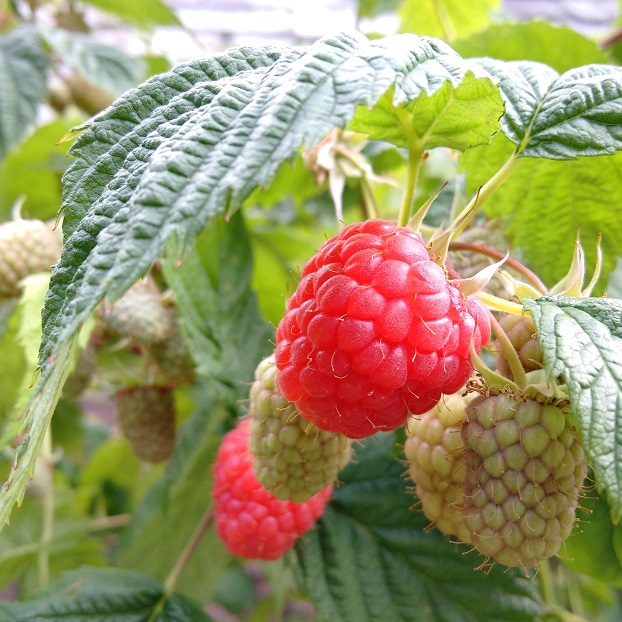
Raspberries grow very well here in central Scotland. They love all the rain we have! Unlike other species of berries I grow, raspberries seem to ripen without the sunshine, and I am always taken aback to see how quickly they turn from pale pink to rich pinkish red, even during the dullest days of the Summer.
The first plants I bought for the garden when I moved here were 6 raspberry canes. That was Autumn 2004, and here we are some 11 ½ years later, still enjoying their produce. The variety is Glen Ample; I chose this raspberry because the fruits are large and juicy, perfect for jam making. I have been picking the berries for about 3 weeks now, and already, I have packed away over 5kg in the freezer. I rarely have time to make jam in the summer, so I do my preserving from the frozen berries later in the year. Raspberries are one of the most successful frozen fruits for jam making, they lose little of their flavour or setting properties through freezing.
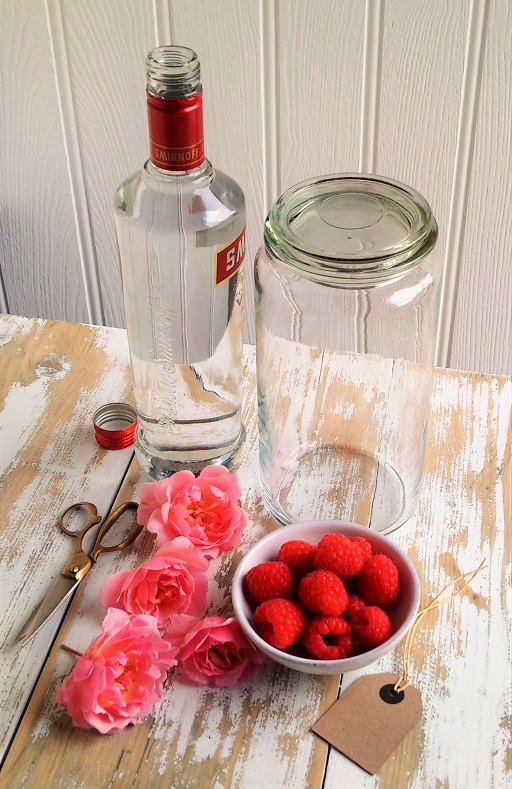
Rose and raspberry vodka ingredients. Image copyright: Kathryn Hawkins
Apart from enjoying the raspberries fresh and in jam, I do like to put some in sweet vinegar for salad dressings, and I also make flavoured tipples for a festive drink. This is one of my favourites.
Makes: 70cl
4 small fragrant rose heads
A large handful of fresh raspberries
70cl bottle gluten-free vodka (such as Smirnoff – look for a vodka that is made distilled from corn, potatoes or grapes)
Carefully rinse and pat dry the rose petals and raspberries, taking care not to bruise or crush them.
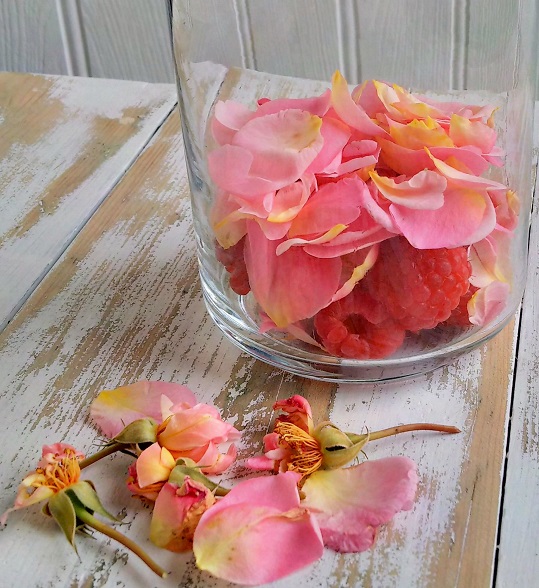
Break up the petals and put them in the bottom of a large sterilised, sealable glass jar along with the raspberries.
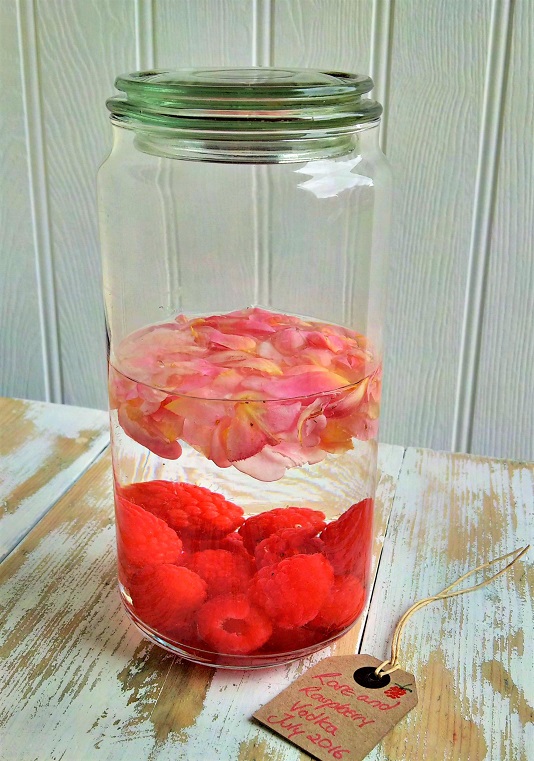
Pour over the vodka, seal and label. Gently swirl the contents every day for 2 weeks.
After 3 weeks or so, taste the vodka and see whether it is to your taste. If the vodka is flavoured sufficiently, strain completely and rebottle in a clean, sterilised bottle. For more flavour, strain and add fresh petals and/or raspberries, then continue to store as above. Store in a cool, cupboard to preserve the flavour and colour. You’ll notice that after a few days, the colour quickly fades from the petals and berries and begins to colour and flavour the vodka.
Enjoy the vodka chilled over ice, or use as a base for punches and longer drinks. For a sweeter drink, add 25-50g caster sugar to the mix along with the petals and fruit.
Rose petals and fresh raspberries in preserving jar. Image copyright: Kathryn HawkinsRose and raspberry vodka. Image copyright: Kathryn Hawkins
We haven’t had the best of weather so far this month, here in central Scotland. Too much rain to be able to spend quality time outdoors, but it has been warmer, and we have had a few precious sunny hours. The lavender buds are just about to bloom, making them perfect for harvesting.
I have several lavender bushes all round the garden, ranging in colour from pale, pinky-lilac to deep, blueish-purple. Apart from looking delicate and pretty, the soothing scent that lavender brings to the garden is one of the true aromas of Summer.
One of the best ways to continue to enjoy this sensual memory, even when the gloomier months of the year set in, is to pop a few stems in a bottle of vinegar. In a few weeks, you’ll have the sweet smell of lavender and its delicate floral notes, preserved perfectly, in a bottle. It makes a lovely gift too.
For best results, choose lavender stems with buds that have swollen and are about to break flower. Lavender keeps fresh in water for 3 days after cutting, but keep out of sunlight in order to prevent the buds opening. Change the water and trim the stems a little each day.
To make sweet lavender vinegar:
Wash and sterilise a sound, sealable glass bottle large enough to hold 250ml liquid.
Trim down 12 stems of lavender to fit neatly inside your bottle and discard any leaves. Gently rinse and pat dry – dip lightly in a bowl of water and dry on absorbent kitchen paper.
Gently crush the bud end of each stem between your fingers to release the aroma, and arrange in the bottle, buds downwards.
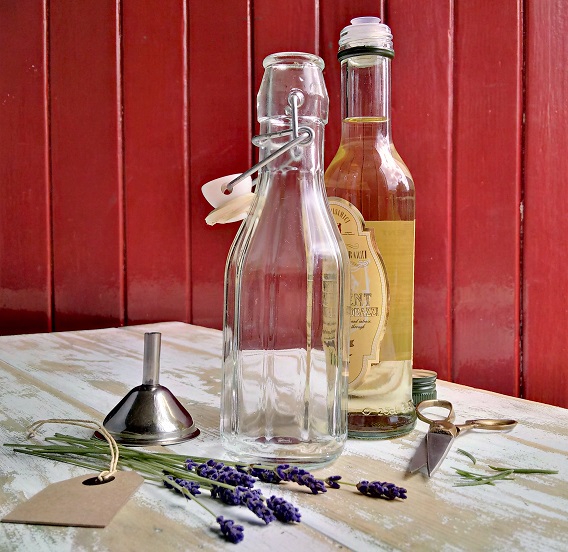
Slightly warm 250ml white balsamic vinegar (agrodolce white condiment) – place on a sunny windowsill, just to take any chill out of the liquid – then pour into the bottle using a small funnel. I use white balsamic vinegar because it is naturally sweet and enhances floral and citrus notes in herbs and flowers. For a more traditional vinegar, choose a good quality white wine or cider vinegar.
Seal with a non-corrosive, acid-proof lid or stopper. Label and leave on the kitchen work top for a couple of weeks, gently turning the bottle upside down and back each day.
After 2 weeks, taste for flavour and either strain and rebottle ready for long-term storage, or continue to store as it is, allowing the flavour to slowly increase. For an intense flavour, strain the vinegar after 2 weeks, rebottle with more fresh lavender, and store until required. Stored correctly, in a cool, dark cupboard, your vinegar should last for up to 12 months.
Freshly bottled lavender vinegar
Lavender bloom
You can use the same method with other fresh flowers and herbs. Rose and Calendula petals work well for flowery vinegars, whilst bay, fennel, marjoram, oregano, rosemary, sage, tarragon and thyme are good choices for herbs to flavour vinegar.
For berry vinegars, just add small or alpine (wild) strawberries to vinegar, or small blueberries or blackberries. Gently wash and pat them dry before using.