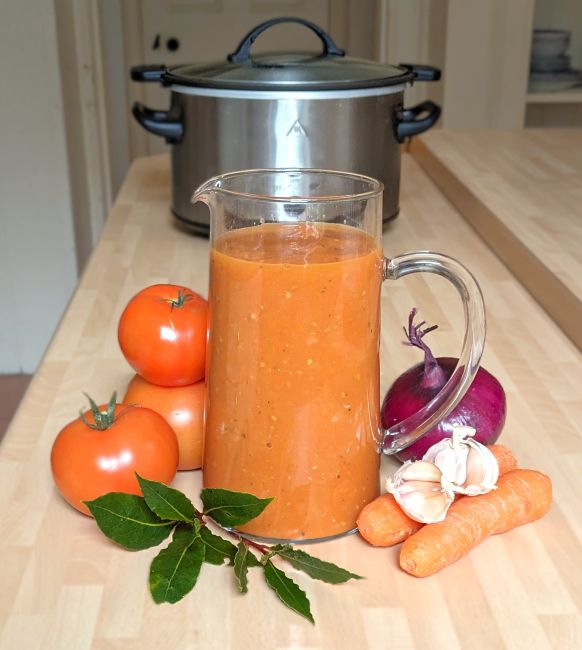
Slow cooker tomato sauce (naturally gluten-free; dairy-free; vegan)

Slow-cooker_tomato_sauce
Easy to make, slow cooker tomato sauce. Image: Kathryn Hawkins

Hello again. It’s that time of year when there is so much produce ready at the same time. My fridge is groaning with vegetables and fruit, and I really need to get down to some serious recipe/meal planning and freezing.

Ripe_Scottsh_homegrown_tomatoes
Tomato glut. Image: Kathryn Hawkins

When life gets in the way and time is tight, I am thankful for the slow cooker. This marvellous gadget gets on with the cooking while I do something else. I used to always make batches of tomato sauce on the stove top – here’s a previous recipe post for this method Home-grown tomatoes – recipe for fresh tomato sauce, a salsa, plus other serving suggestions (gluten-free, dairy-free,Β vegan) but this year I popped everything in the slow cooker and let the pot do the cooking.

Making_slow-cooker_tomato_sauce
4 saucy steps. Images: Kathryn Hawkins

For a simple tomato sauce, put 1.5kg washed and chopped fresh tomatoes in the slow cooker with 2 peeled and sliced medium carrots. Add a peeled and chopped large onion and 4 peeled and halved garlic cloves. I seasoned the mix with 2 teaspoons celery salt, 1/2 teaspoon black pepper and 4 teaspoons caster sugar. Add a couple of bay leaves and drizzle over 3 tablespoons olive oil. Mix well, cover with the lid and switch to the High setting. Leave to cook for 4 to 5 hours, until completely soft.
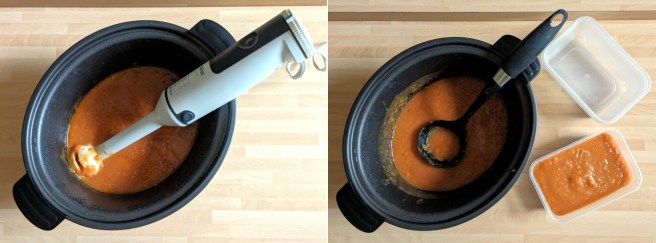
Blitzing_slow-cooker_tomato_sauce
Blitz and freeze. Images: Kathryn Hawkins

Discard the bay leaves and blitz with a hand blender then leave to cool before packing into freezer containers. This quantity will make around 1.75kg sauce. It will keep in the fridge for about 5 days, and in the freezer for 6 months or so.
Reducing_down_homemade_slow-cooker_tomato_sauce
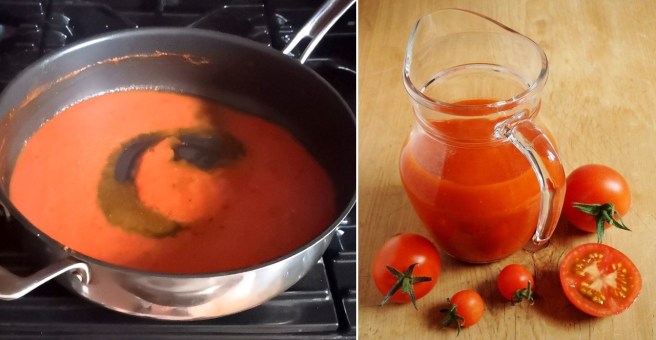
Reduced and thickened slow cooker tomato sauce. Images: Kathryn Hawkins

The sauce is quite thin which is fine for some recipes but if you want it thicker, transfer a few ladles of sauce to a deep frying pan, drizzle with a little olive oil, bring to the boil and simmer for a few minutes, stirring occasionally, until it is thickened to you liking.
Vegan_and_gluten-free_recipes_using_homemade_tomato_sauce
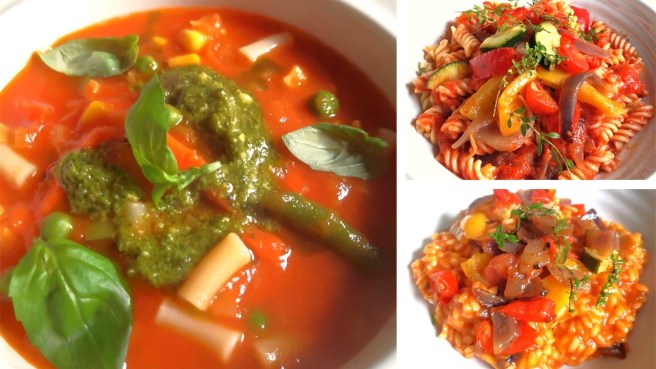
Using homemade tomato sauce. Images: Kathryn Hawkins

Thinner sauce is perfect for soups and risotto stocks, whilst thicker sauce clings better to pasta shapes or can be used as a spread for tarts and pizza bases.

That’s all for this post. I hope you are enjoying some good weather and fine homegrown produce. Until next time, thanks for stopping by πŸ™‚

Calcium-rich pesto bean salad (gluten-free; dairy-free; vegan)

Bean_and_pesto_salad_rich_in_calcium
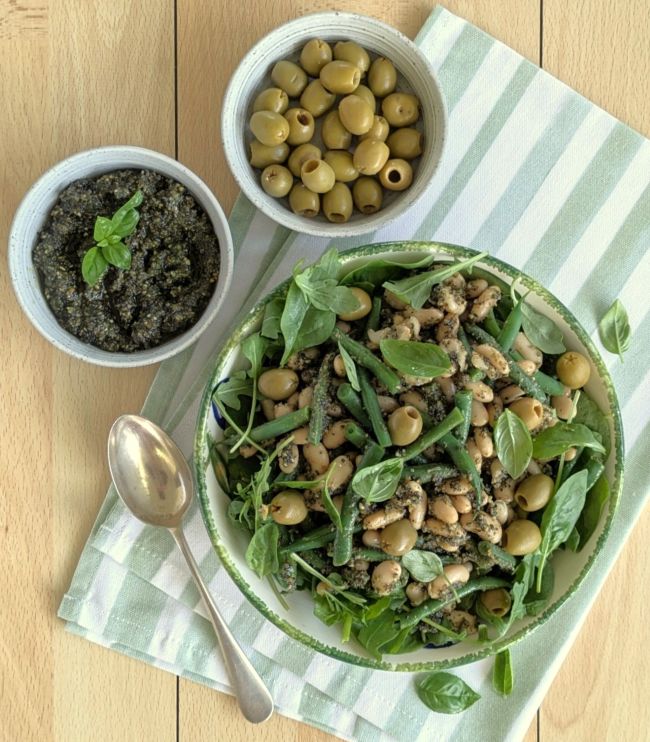
Bean salad flavoured with almond and poppy seed pesto. Image: Kathryn Hawkins

Hello there. I hope you are enjoying some good weather this season. It’s been very hot here in the UK again, and so salads are very much still on my daily menu. To follow on from my post last month which you can read here , I have another recipe which can help towards increasing your calcium levels if you are on a gluten-free, dairy-free and/or vegan diet.

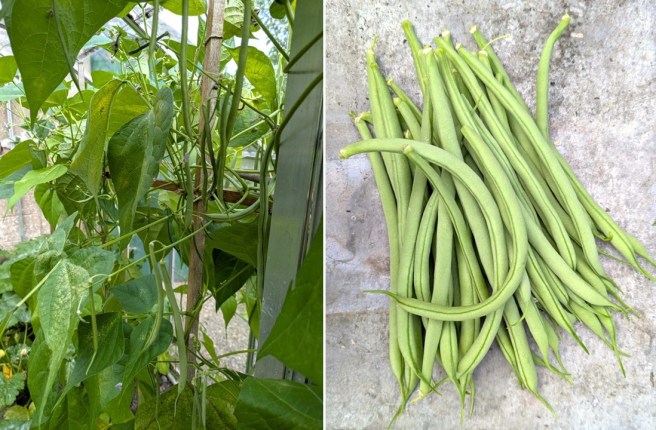
Scottish_greenhouse_green_beans_Cobra_variety
Gorgeous greenhouse green beans. Images: Kathryn Hawkins
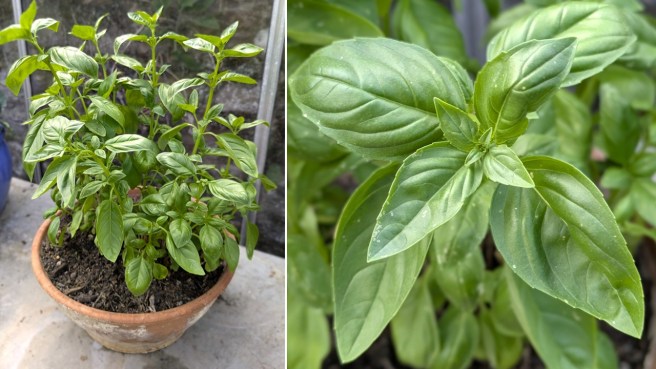
Homegrown_Scottish_greenhouse_basil
Summery greenhouse basil. Images: Kathryn Hawkins

It’s been a bumper season for the green (French) beans (Cobra variety) in my greenhouse. The vines have been producing an abundance of beans for several weeks now, and the basil plant loves all the heat and sunshine as well. To my delight, I discovered that both green beans and basil offer useful amounts of calcium, and that’s how my recipe this month began.

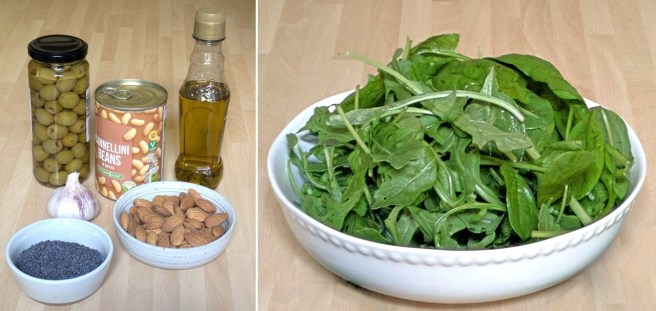
Gluten-free_dairy-free_vegan_calcium-rich_salad_ingredients
Calcium-rich salad ingredients. Images: Kathryn Hawkins

Combined with some other calcium-rich ingredients, this tasty salad is delicious on its own or as a side dish. The table below gives you a breakdown of which ingredients contain the most calcium so that you can make up your own combinations.

Rocket216mg calcium/100g
Baby spinach119mg calcium/100g
Cooked cannellini beans93mg calcium/100g
Cooked green beans61mg calcium/100g
Green olives61mg calcium/100g
Fresh basil250mg calcium/100g
Whole almonds269mg calcium/100g
Poppy seeds1580mg calcium/100g
Garlic19mg calcium/100g

Source: McCance and Widdowson’s The Composition of Foods

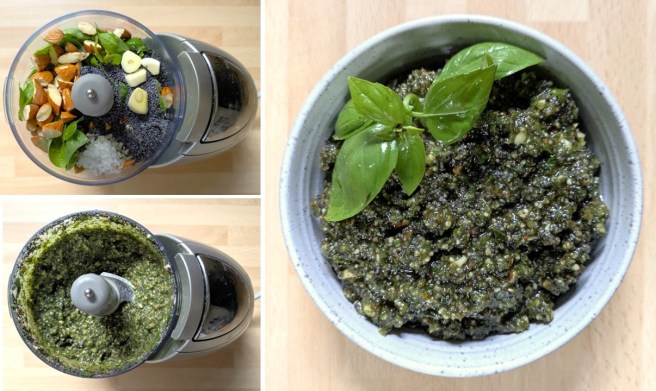
For the pesto, put 20g fresh basil in a food processor with a peeled garlic clove and add 50g roughly chopped whole almonds, 20g poppy seeds and some salt. Pour over 60ml extra virgin olive oil and blitz until smooth.

Vegan_Almond_and_poppy_seed_pesto
Making almond and poppy seed pesto. Images: Kathryn Hawkins

For the salad, I combined 240g canned cannellini beans with 100g chopped cooked green beans and half the pesto sauce above. I lined a salad bowl with 40g wild rocket and 20g baby spinach and piled the bean mixture on top. Serve with 100g pitted green olives and extra basil leaves, with the remaining pesto on the side.

Steps_to_making_calcium-rich_bean_salads_for_gluten-free_dairy-free_vegan_diets
Assembling the salad. Images: Kathryn Hawkins

The salad serves 4, and each portion will provide 238mg calcium and 330 calories.

That’s me for another month. Hope to see you again soon. Thanks for stopping by πŸ™‚

Microwave tomato risotto (gluten-free; dairy-free; vegan)

Serving_bowl_of_gluten-free_dairy-free_vegan_microwave_tomato_risotto
Tomato risotto and roast vegetables. Image: Kathryn Hawkins

Hello again. I hope the sun has been shining on you this month. It’s certainly been a warm, dry and bright month here in central Scotland. Subsequently I haven’t felt much like cooking and when I have, it’s been simple suppers like this no-fuss, no-pfaff risotto recipe.

Gluten-free_dairy-free_vegan_microwave-cooked_tomato_risotto_portion
Risotto topped with roast veg and rosemary. Image: Kathryn Hawkins

I love a good risotto but it’s not something to be hurried so I rarely make one when I’m busy. But now I have discovered this “cheats” version, it’s back on the menu. Once you’ve got the basic rice recipe, you can make whatever variations you like to the flavour or by adding extras. This version uses homemade tomato sauce and a little wine as the liquid but you can use all stock or half and half with wine if you prefer something plainer. A while ago I published a recipe for homemade tomato sauce. If you fancy having a go here’s the link to the post Home-grown tomatoes – recipe for fresh tomato sauce, a salsa, plus other serving suggestions (gluten-free, dairy-free,Β vegan) If you use a readymade sauce, make sure it’s not too concentrated otherwise the rice may taste quite tart rather than creamy.

My microwave oven has an output of 900 watts and has a turntable. You may need to adjust the cooking times if your oven has a different output.

Serves: 2

Ingredients

  • 1tbsp olive oil
  • 2 garlic cloves, peeled and finely chopped
  • 150g arborio rice
  • 100ml dry white wine or vegetable stock
  • Salt and freshly ground black pepper
  • 600ml homemade tomato sauce
  • 1tsp dried rosemary
  • 1tsp caster sugar
  • Roast vegetables and fresh rosemary to serve

1. Put the oil and garlic in a large microwave-proof bowl. Cover and cook for 1 minute on High power.

2. Mix in the rice, wine or stock and seasoning and then stir in the tomato sauce, rosemary and sugar.

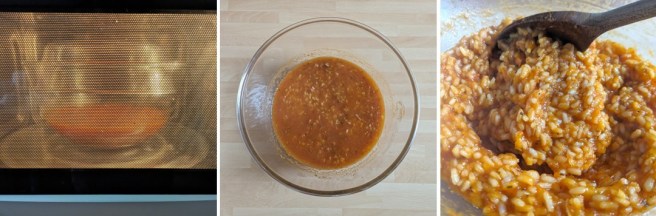
3. Cover and cook on High for 16 minutes. Stir after 6 minutes and then again after 10 minutes of the cooking time. If the rice is still a bit gritty at the end of the cooking time, add a small amount of water and cook for a further minute.

First_6_steps_to_make_microwave_tomato_rissoto
Microwave_tomato_risotto_cooking_steps
9 steps to making microwave tomato risotto. Images: Kathryn Hawkins

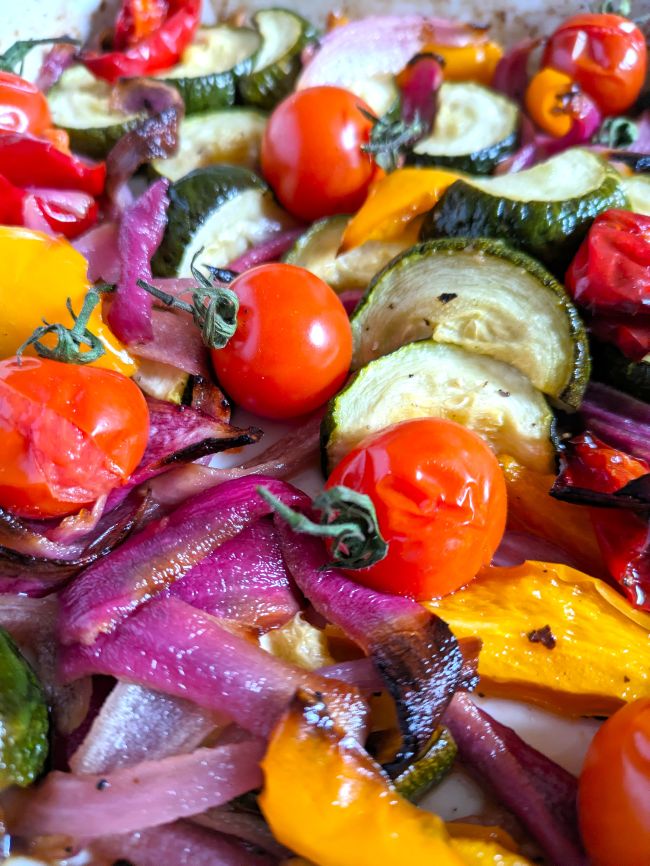
Taste and season before serving. Try topping with fresh rocket for a quick accompaniment or one of my favourite ways to serve this risotto is with a pile of roasted onion, courgette, peppers, tomatoes and fresh rosemary on top.

Roast_Mediterranean-style_vegetables
The rainbow colours of roast veggies. Image: Kathryn Hawkins

Until next time, happy cooking πŸ™‚

Slow cooker spiced green tomato chutney (naturally gluten-free; dairy-free; vegan)

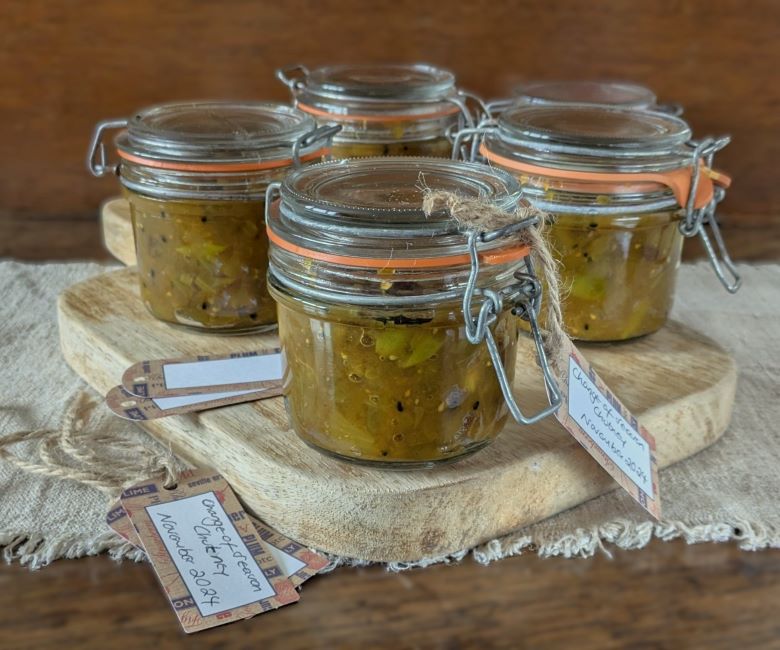
Jars_of_slow_cooker_spiced_green_tomato_chutney
Last of the Autumn produce preserved. Image: Kathryn Hawkins

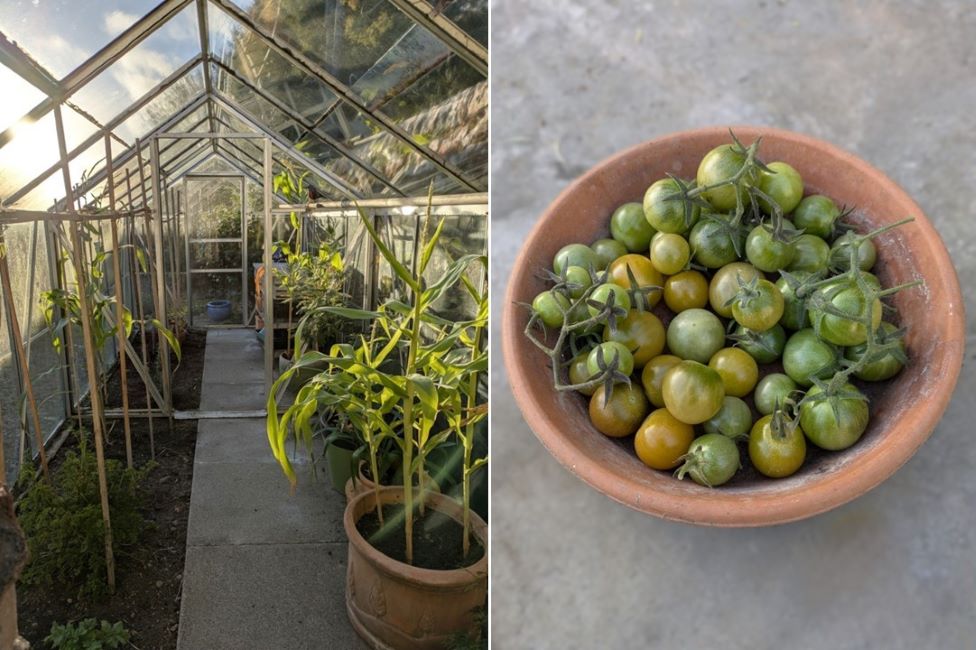
Hello there. When I planned to make this chutney a couple of weeks ago, it was very much still Autumn. I picked off the last of the tomatoes and put the greenhouse to bed during a lovely sunny afternoon. I was going to call the chutney “End of Autumn”.

Last_of_the_greenhouse_tomatoes_November_2024
Last of the greenhouse tomatoes, mid-November 2024. Images: Kathryn Hawkins

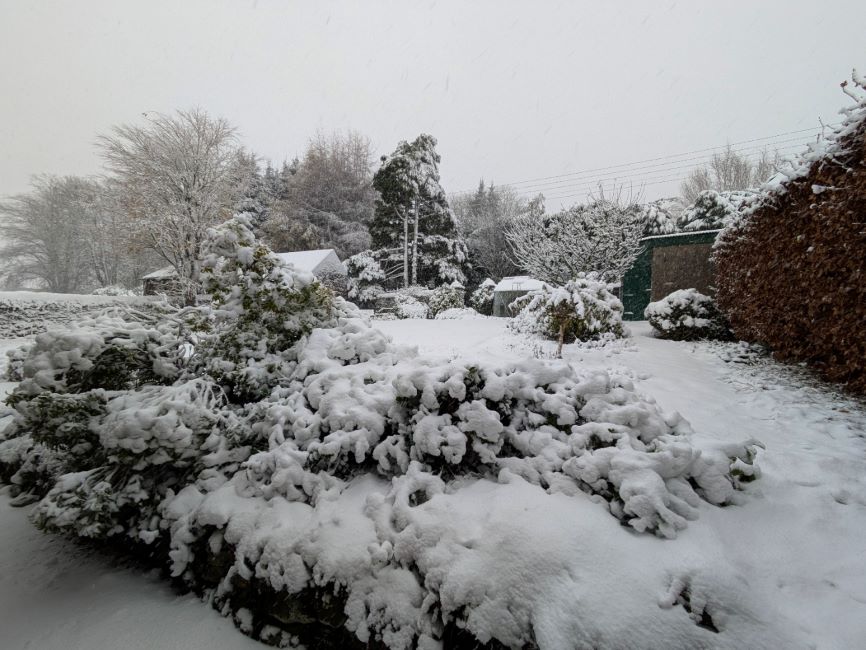
However, when I came to make the chutney last weekend, snow was falling very heavily and suddenly we were in winter. And so I thought “Change of Season” chutney would be more appropriate πŸ™‚

November_2024_Scottish_garden_covered_in_snow
November snowy garden. Image: Kathryn Hawkins

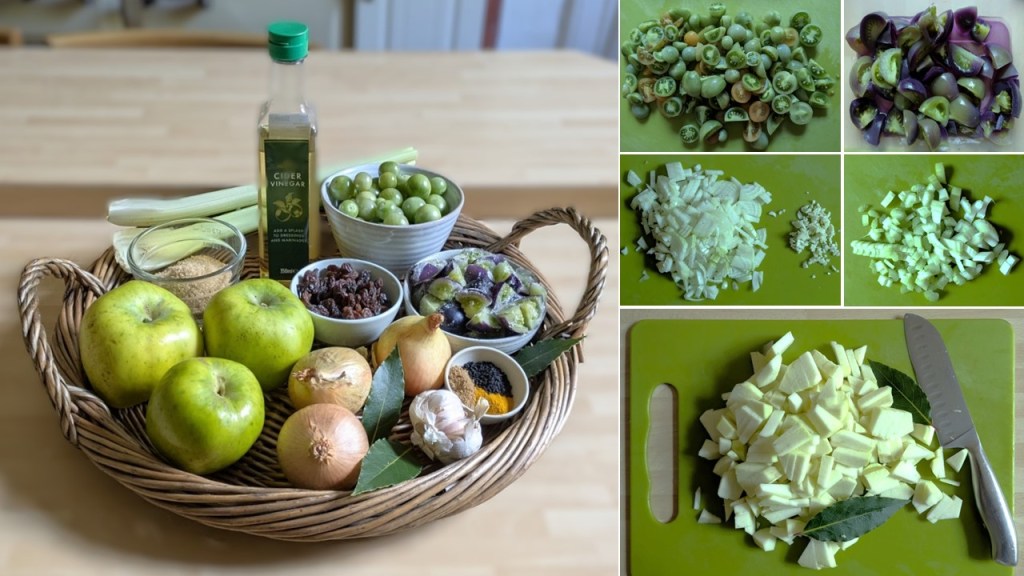
I made the chutney in my slow cooker. It is ready to eat as soon as it cools and tastes delicious. I used up the last of this year’s apple harvest along with some black-skinned tomatoes that I had frozen down a few weeks ago. The spices I used give a mild curry flavour but you can change them if you prefer – cinnamon, cumin and coriander for a more earthy flavour would work well.

Ingredients_for_spiced_green_tomato_slow_cooker_chutney
Slow cooker chutney ingredients. Images: Kathryn Hawkins

If you haven’t made a preserve in your slow cooker before, the technique is slightly different in that you can’t boil the preserve down like you would in a saucepan on the stove. The chutney is also cooled before putting in jars, and as such needs to be kept in the fridge. It will however keep for a few weeks or can be frozen for longer term storage.

Makes: approx. 1kg

Ingredients

  • 400g green tomatoes, chopped
  • 2 medium onions, peeled and chopped (about 180g prepared weight)
  • 2 garlic cloves, peeled and chopped
  • 2 sticks celery, trimmed and chopped (about 110g prepared weight)
  • 2 large cooking apples, peeled and chopped (about 300g prepared weight)
  • 2 bay leaves
  • 100ml cider vinegar
  • 75g sultanas or chopped dried apricots
  • 2tsp garam masala
  • 1tsp each nigella seeds, turmeric and salt
  • 150g demerara or light brown sugar (or you can use granulated white sugar)

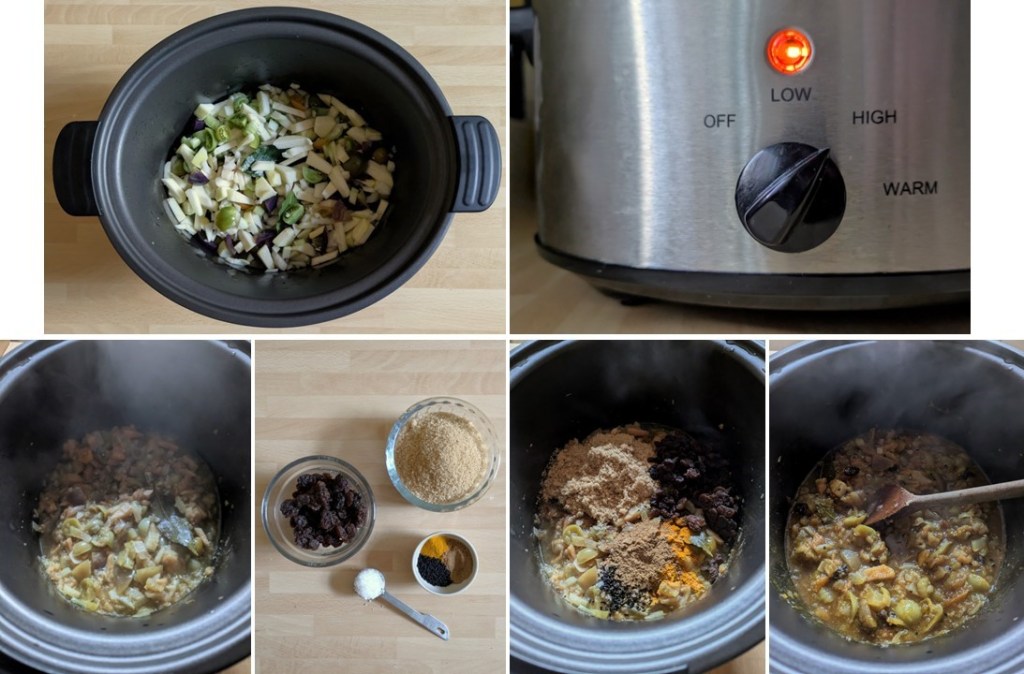
1. Put all the vegetables in the slow cooker with the bay leaves and mix well. Pour over the vinegar, cover with the lid and cook on High for 4 hours.

2. Add the remaining ingredients, mix well, re-cover and cook for 30 minutes to dissolve the sugar.

Slow_cooker_chutney_ingredients_being_cooked_and_flavoured
Slow cooking and seasoning chutney. Images: Kathryn Hawkins

3. Remove the lid, stir well and cook uncovered for a further 2 hours, stirring occasionally until reduced down and jam-like.

4. Switch off the cooker and leave the chutney to cool completely. Discard the bay leaves and spoon into clean jars. Seal, label and store in the fridge for up to 3 months. Once opened, use within a month. Alternatively, freeze the chutney in containers and defrost when required.

Final_cooking_and_bottling_of_slow_cooker_chutney
Reducing the chutney down ready for storing. Images: Kathryn Hawkins
Slow_cooker_curried_green_tomato_chutney
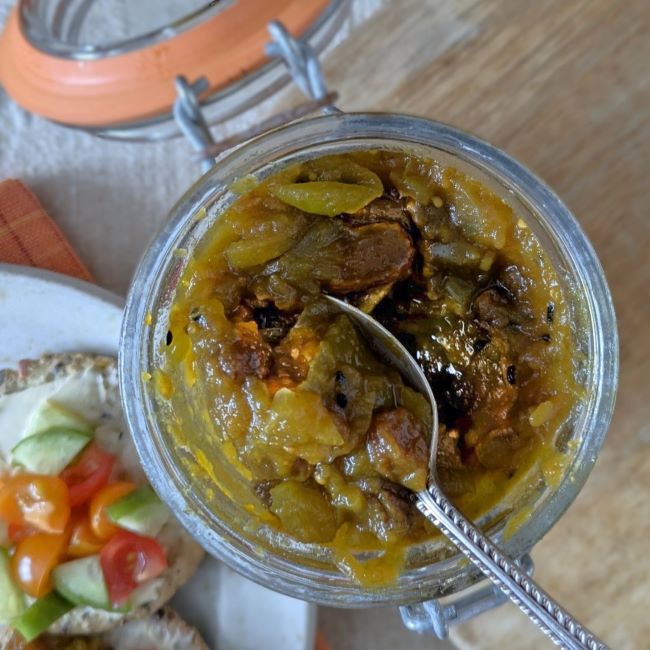
A sweet and spicy spoonful. Image: Kathryn Hawkins

That’s me for another month. I have one more post before Christmas, so until then take care and keep warm πŸ™‚

A September garden tale

Concorde_pear_tree_Scotland_September_2024
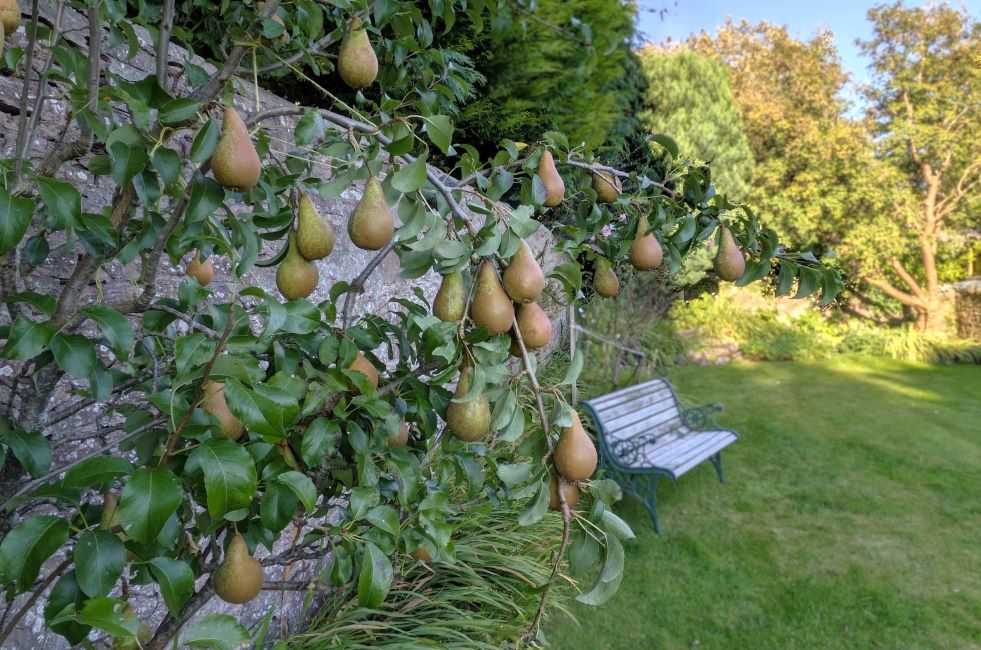
End of September and the pears are almost ready for harvest. Image: Kathryn Hawkins

Hello there. It’s nearly the beginning of a new month, and Autumn will soon be in full swing. September has been a pretty dry month here in central Scotland, unlike other parts of the UK. So dry in fact that the water butt is almost empty which is almost unheard of at this time of year. But no doubt Mother Nature will make up for it next month and you’ll be reading about it in my next garden post!

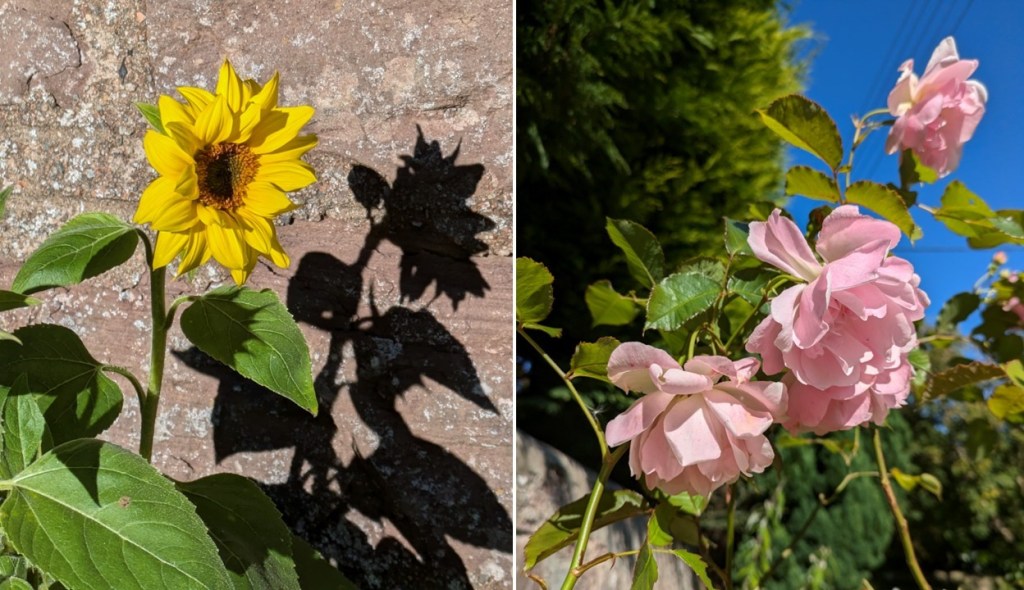
The day and night temperatures have lowered as the month has gone on. A few days ago, it was gloriously sunny and warm, and the sunflowers and rose opened up in response.

Sunflower_and_pink_roses
Sunshiny flowers. Images: Kathryn Hawkins

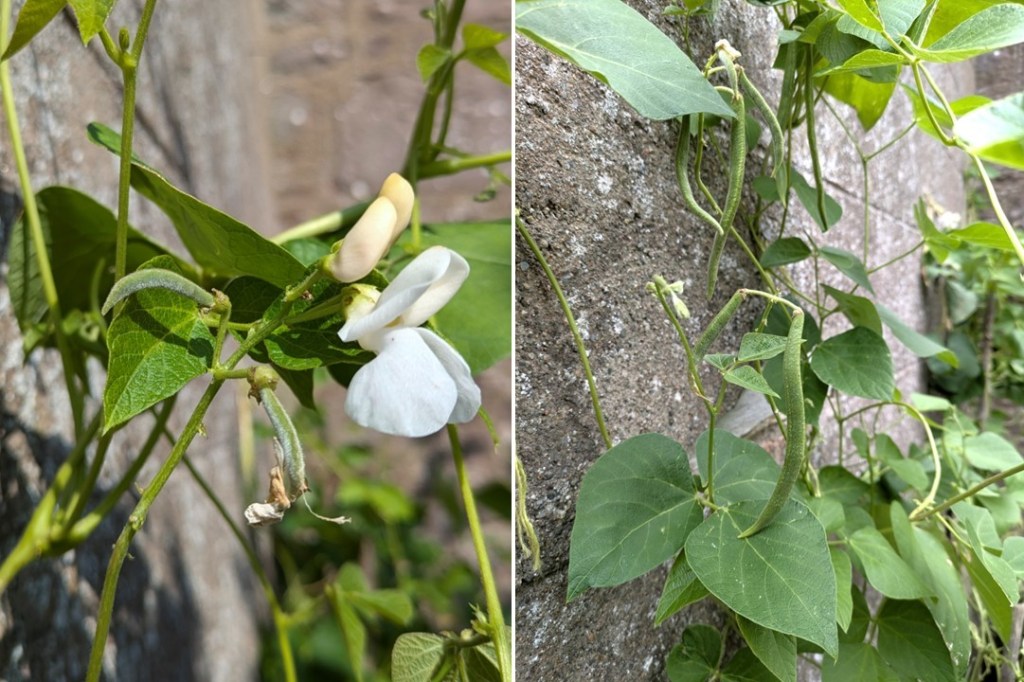
In the greenhouse, the Cobra French beans are still producing flowers and juicy green beans. Such a tasty treat.

Cobra_French_beans_growing_in_late_September
A very beany harvest. Images: Kathryn Hawkins

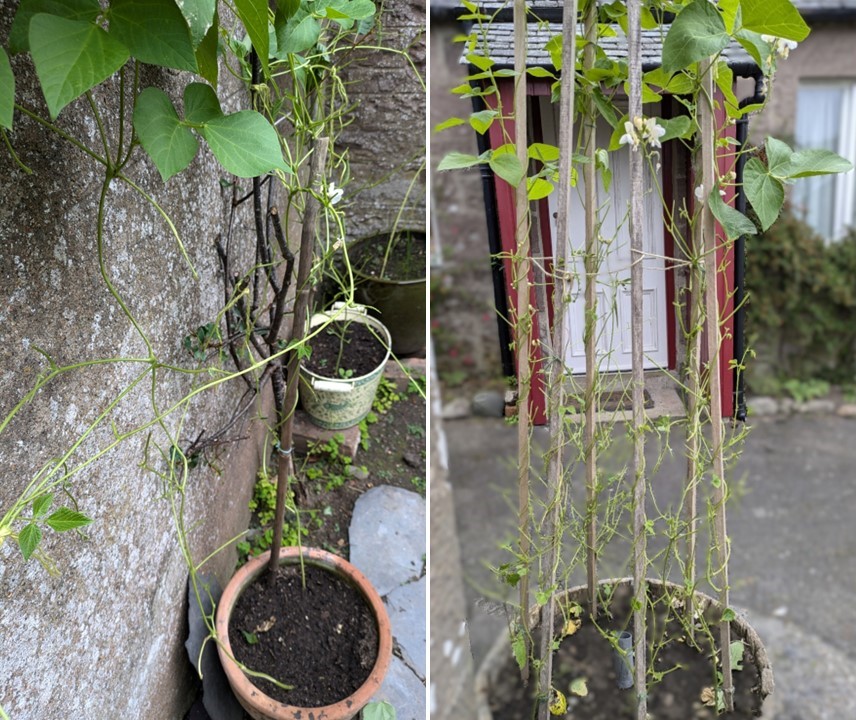
And so to my tale. I was late planting runner beans this year and ended up leaving them in the greenhouse in large pots for quite some time. In mid August, the beans were failing to pollinate behind glass, I carefully moved them outside. After a few days of warm sunshine, regular watering and some feed, the beans started to form and began to develop very quickly. So pleased was I, I had a whole post planned on how to successfully grown runner beans late into the season.

Early and mid-September_runner_beans_developing
Late starting runner beans. Images: Kathryn Hawkins

Then, early one morning in the middle of this month………

Deer_damage_to_homegrown_Scottish_runner_beans
Deer oh deer! Images: Kathryn Hawkins

……this is what I woke up to! And here’s the culprit. Now a frequent visitor, he/she has also taken a liking to Salal berries (amongst many other plants!). I’m not too bothered about the berries as they are very hardy, but, the beans, I could have cried!

Young_deer_in_Scottish_garden
Bean and berry eating Bambi. Images: Kathryn Hawkins
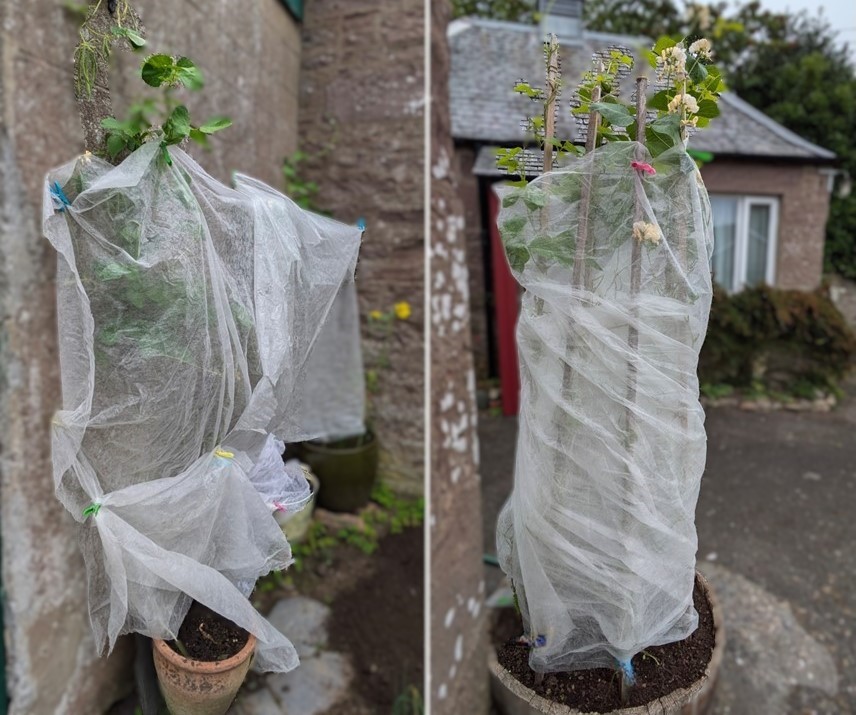
September_runner_beans_fleeced_for_protection
Bambi-proof, fleeced beans. Images: Kathryn Hawkins

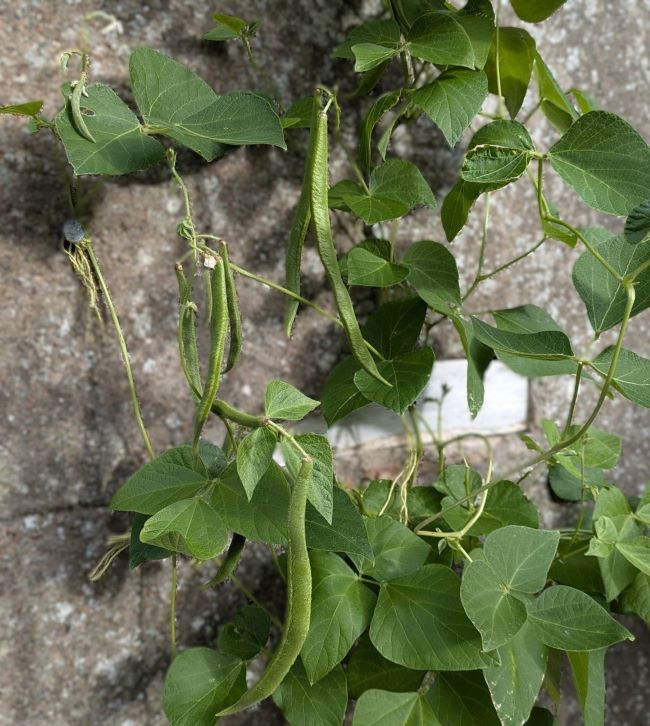
After some hasty fleece wrapping, a few days on, the beans seem to be thriving again. The foliage and beans further up the stems were undamaged, and this is how they look this weekend; I may get to taste homegrown runner beans after all this year πŸ™‚

End of September_Runner_beans
Beans in recovery. Image: Kathryn Hawkins

Another garden visitor who does no damage, is this delightful Robin who has started singing his heart out most days in the holly tree. Not the greatest of photos, but his song is an absolute delight to hear, and it is so loud!

Singing_garden_robin_September_2024
Singing his heart out. Images: Kathryn Hawkins

I’m ending my post this week with an image of a radiant September sunset I captured this week. No sooner had I taken this picture, than the colours faded and it became dark very quickly. It was a glorious sight for a few short minutes at the end of a busy day. Until next month, thanks for reading my post. Best wishes πŸ™‚

End_of_September_sunset_2024
Scottish September sunset. Image: Kathryn Hawkins

Summer vegetable chutney (naturally gluten-free; dairy-free; vegan)

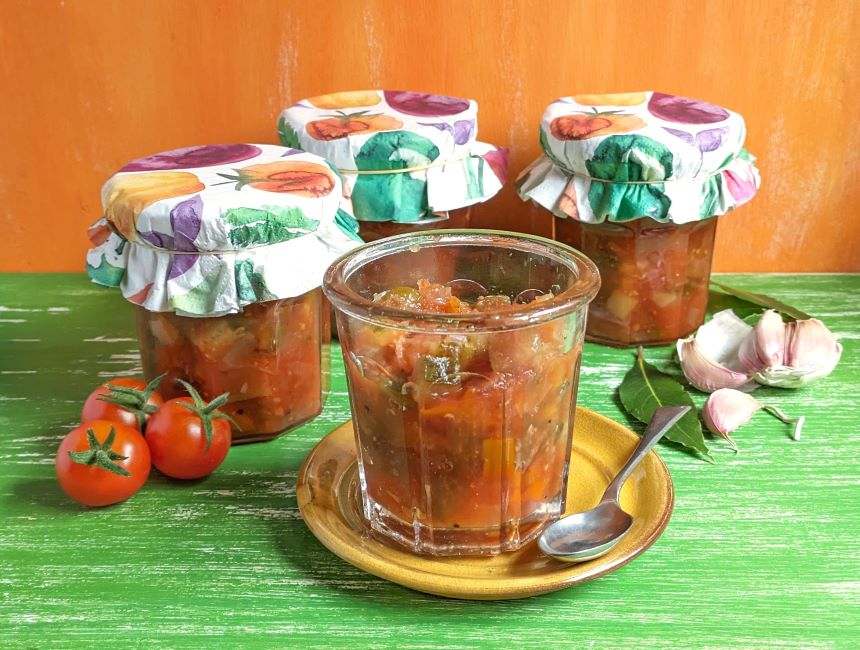
Homemade_Summer_vegetable_chutney
Summer vegetables captured in a jar. Image: Kathryn Hawkins

Hello again. So, we’ve passed the mid point of the year already. Time for a recipe which preserves the time of year perfectly. My recipe this week is an excellent way to use up a selection of the vegetables that are at their best over the next few weeks. If you have homegrown produce, all the better.

Chopped_vegetables_for_homemade_Summer_chutney_making
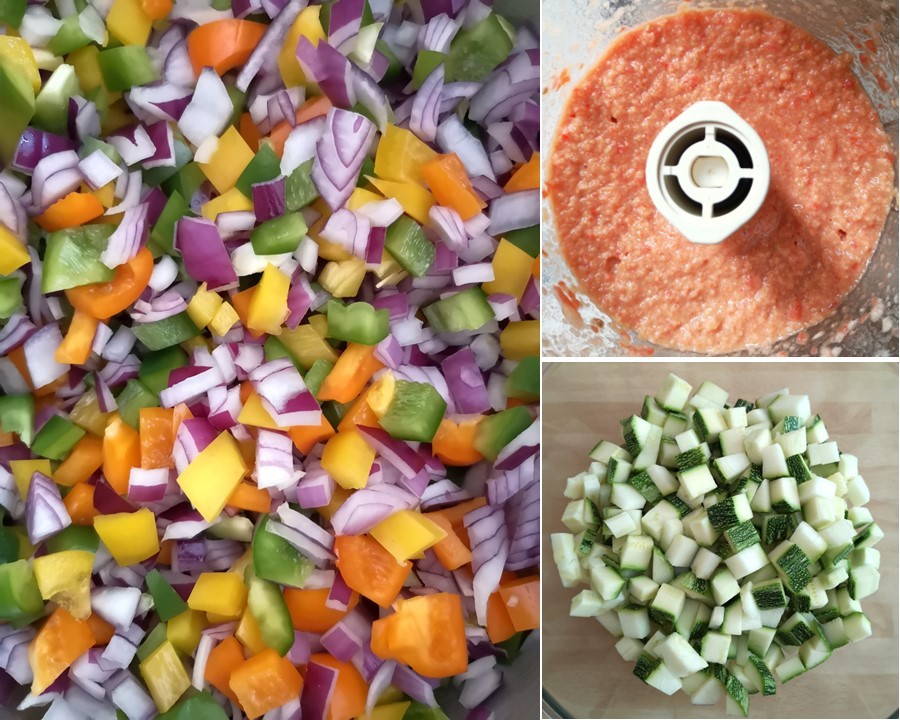
Summer vegetables for chutney making. Images: Kathryn Hawkins

I was inspired by one of my favourite vegetable dishes, Ratatouille, when I put this recipe together. You can mix and match different, similar-textured vegetables in the recipe below, just replace weight for weight, one for another. I used a combination of red onion and mixed peppers, with fresh tomatoes and cooking apples, and some diced courgette (zucchini). The chutney is flavoured with garlic, bay leaves and ground coriander. Aubergine (egg plant) or squash would also be good in this mixture.

Homemade_Summer_vegetable_chutney
A taste of Summer. Images: Kathryn Hawkins

The quantities below make a very generous amount of chutney but you can of course, cut the amount of vegetables you use to make less.

Makes: approx. 3kg

Ingredients

  • 450g prepared mixed bell peppers (approx. 1 each large green, yellow and orange peppers), finely chopped
  • 450g prepared red onions, finely chopped
  • 600ml cider or white wine vinegar
  • 3 bay leaves
  • 4 garlic cloves, peeled
  • 450g fresh tomatoes, roughly chopped
  • 450g prepared cooking apples, roughly chopped
  • 2tbsp tomato purΓ©e
  • 1tbsp ground coriander
  • 500g prepared courgette (zucchini), diced
  • 450g granulated sugar
  • 1tbsp salt
  • Freshly ground black pepper

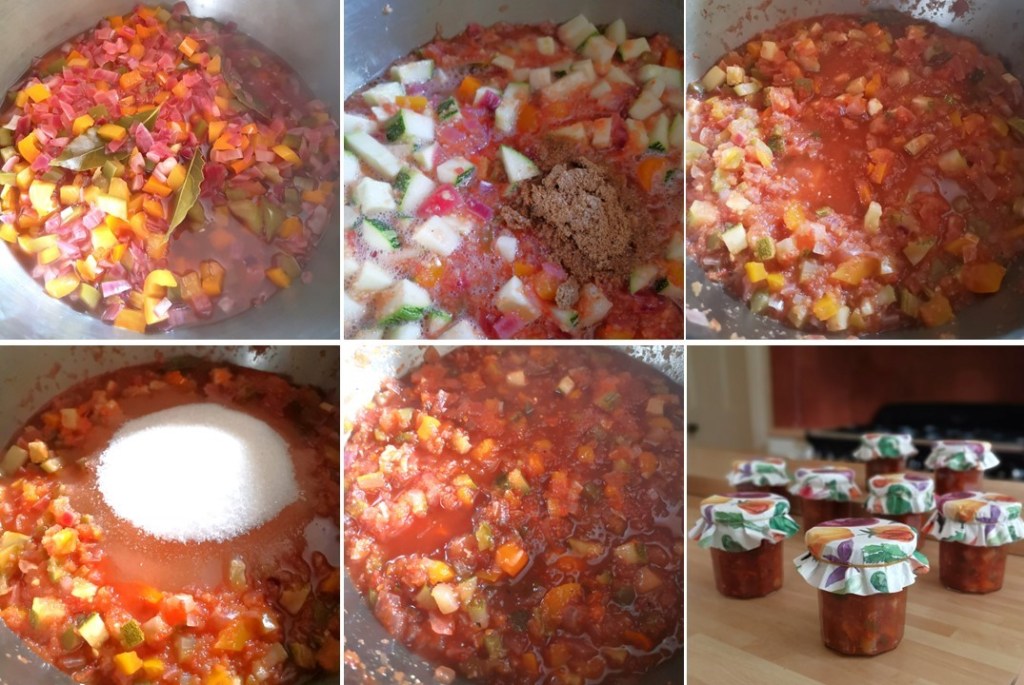
1. Put the peppers and onions in a large saucepan and pour over the vinegar. Add the bay leaves, bring to the boil, cover and simmer for 15 minutes.

2. Meanwhile, put the garlic, tomatoes, apples and tomato purΓ©e in a food processer and blitz until smooth.

3. Pour over the peppers and onions and stir in the coriander and courgette (zucchini). Bring to the boil, cover and simmer for 25 minutes until tender and jam-like.

4. Stir in the sugar until dissolved, then mix in the salt and some pepper. Bring to the boil and cook for about 30 minutes until thick and jam-like.

Summer_vegetable_chutney_in_the_making
Cooking up vegetables for chutney. Images: Kathryn Hawkins

5. Turn off the heat, discard the bay leaves and spoon into clean jars. Seal immediately. Leave to cool, then label and store for about 1 month before opening. The chutney should keep in a cool, dark cupboard for several months.

Homemade_chutney_cheese_and_oatcakes
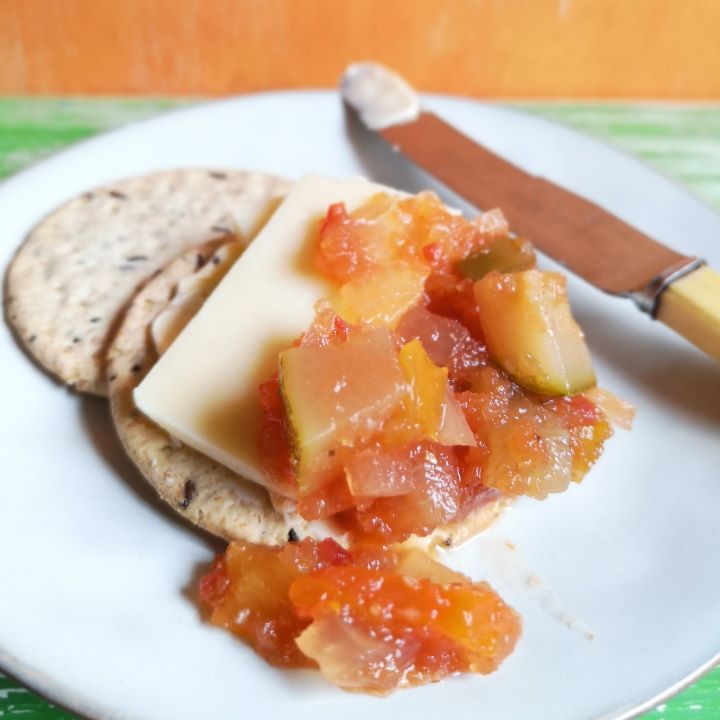
Chutney, cheese and oatcakes. Image: Kathryn Hawkins

I look forward to sharing another recipe with you next month. Until then, enjoy the season and thanks for stopping by πŸ™‚

Sesame toast with new season asparagus (gluten-free;dairy-free;vegan)

Gluten-free_vegan_sesame_toast_topped_with_pan-fried_British_asparagus
New season asparagus on sesame toast. Image: Kathryn Hawkins

Hello again. It’s that time of year again when I welcome the arrival of the British asparagus season. From around the middle of April to the end of May/beginning of June, I have just a few weeks to feast on my favourite green vegetable.

2024_new_season_British_asparagus
New season British asparagus. Image: Kathryn Hawkins

I have suggested a few accompaniments to this delicious vegetable over the years. I like to keep it simple and enjoy the stems for their own unique flavour, and this year’s offering is no exception. Delicious crispy fried toasts dipped in a sesame batter and served with a sesame flavoured mayo dressing.

2024_British_asparagus_tips
Tip top British asparagus. Image: Kathryn Hawkins

When the asparagus season is over, make and cut the toasts into triangles and serve as a crunchy and very moreish snack – they really are very tasty.

Pile_of_gluten-free_vegan_sesame_toasts_and_dip
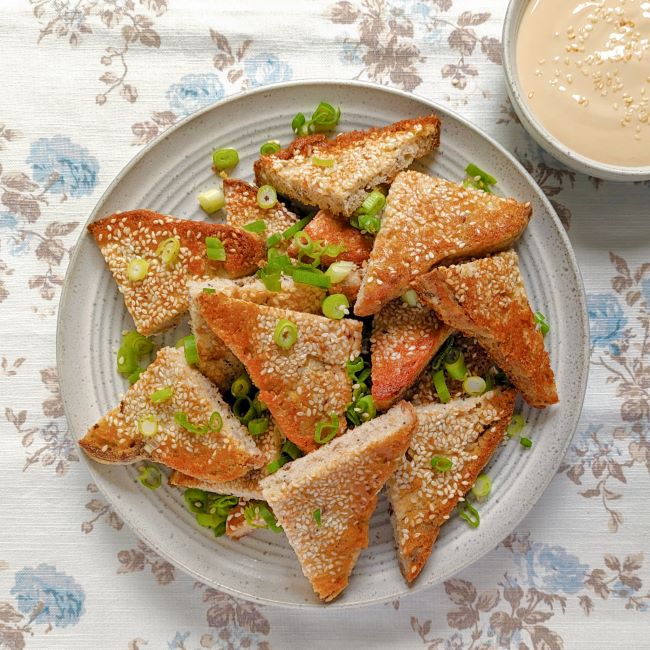
Crisp and crunchy sesame triangles. Image: Kathryn Hawkins

Makes: 4 servings of asparagus on toast, or 16 sesame triangles

Ingredients

  • 2tbsp chickpea canning water (aquafaba)
  • 20g gram (chickpea) flour
  • 20g ground flaxseeds
  • Pinch of salt
  • 4tbsp plant milk
  • 4 slices free-from bread
  • 40g toasted sesame seeds
  • Vegetable oil for shallow frying
  • 6tbsp vegan mayonnaise
  • 1tbsp Teriyaki marinade
  • 2tsp sesame oil
  • Chopped spring onion to serve
  • 300g new season fine asparagus spears

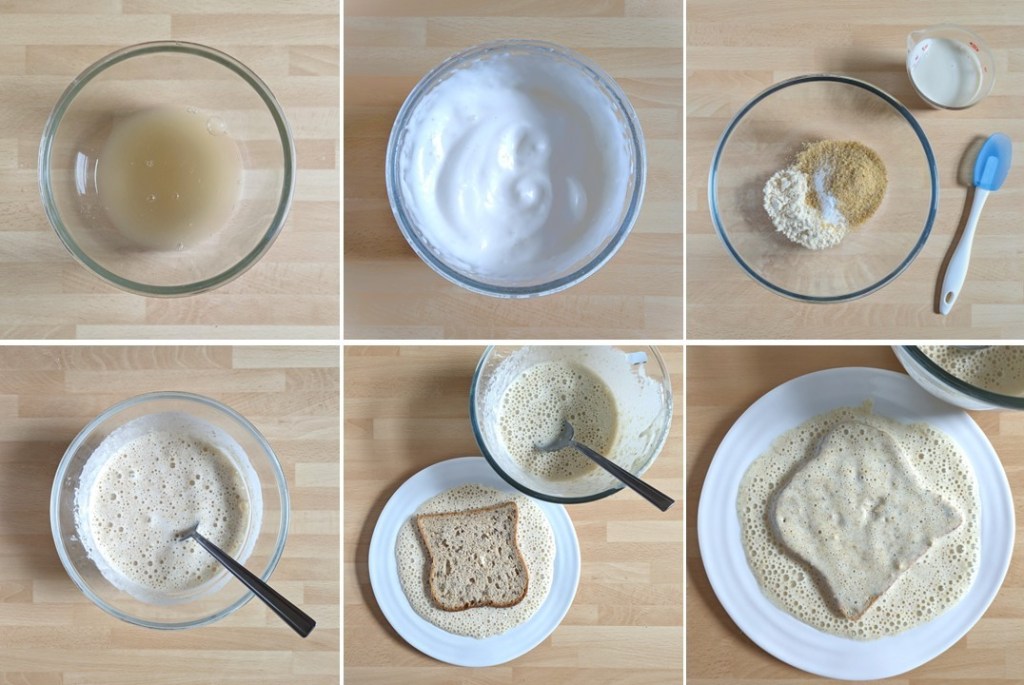
1. Put the chickpea water in a bowl and whisk with an electric mixer until very thick and foamy.

2. Mix the flours and salt in a bowl. Make a well in the centre and add the milk. Gradually mix everything together then fold in the chickpea foam.

3. Put some of the batter on a plate or in a shallow dish. Working on one piece of bread at a time, dip the bread on both sides and sprinkle the top with a few seeds.

Making_the_batter_for_gluten-free_vegan_sesame_toasts
Making the sesame toast batter. Images: Kathryn Hawkins

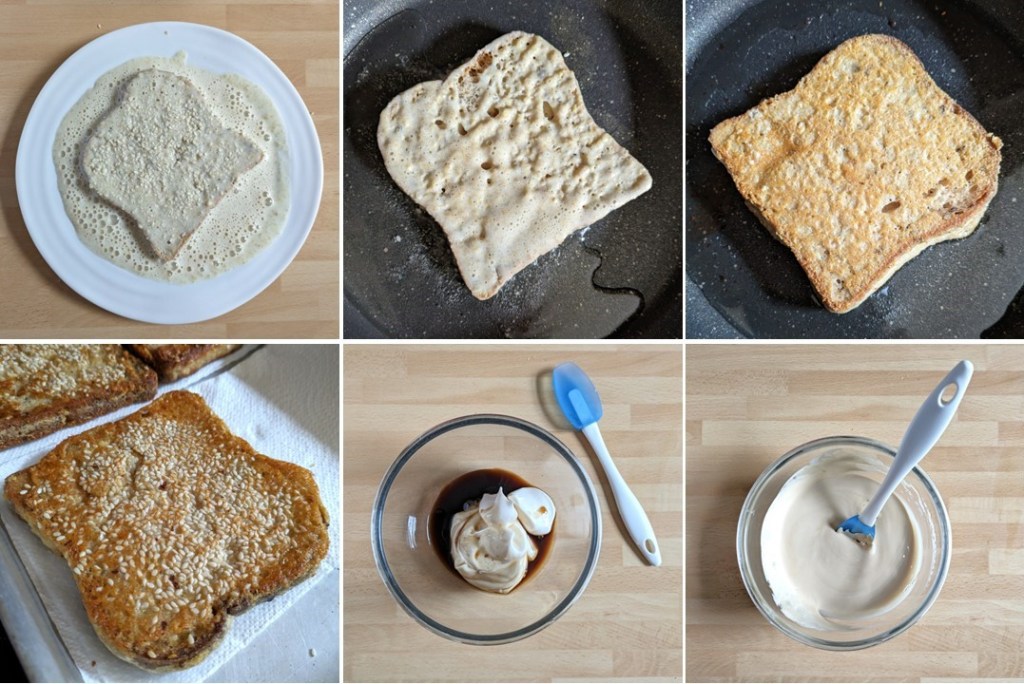
4. Pour sufficient vegetable oil to just cover the base of a large frying pan and heat until hot. Cook the battered bread over a medium to low heat for about 2-3 minutes on each side until crisp and golden. Drain and keep warm whilst coating and cooking the other 3 slices.

Cooking_gluten-free_vegan_sesame_toast
Cooking the toasts and making the dip. Images: Kathryn Hawkins

5. For the dip, mix the mayonnaise with the marinade and 1tsp sesame oil. Cut the toasts into triangles, sprinkle with spring onion and serve warm with the mayo to dip.

Gluten-free_vegan_sesame_toasts
Sesame toasts with freshly chopped spring onion. Image: Kathryn Hawkins

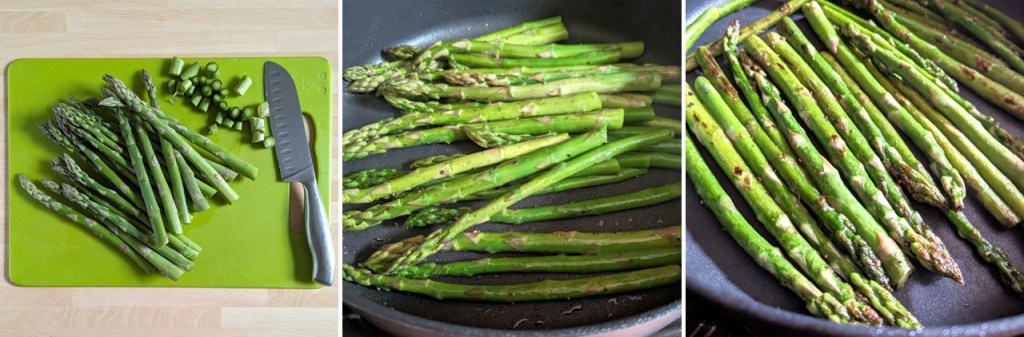
To serve topped with asparagus, trim a little from the ends of the asparagus stems. Heat a little vegetable oil in a large frying pan until hot and stir fry the stems for about 5 minutes until just tender and lightly browned.

Preparing_and_pan-frying_new_season_British_asparagus_2024
Pan-frying new season asparagus. Images: Kathryn Hawkins

Turn off the heat, season with a little salt and drizzle over a little sesame oil. Stand for 5 minutes before serving on sesame toast with a drizzle of the sesame mayo.

Brittish_asparagus_on_top_of_gluten-free_vegan_sesame_toast_with_a_drizzle_of_sesame_mayo_dressing
Dressed and ready for eating. Image: Kathryn Hawkins

Thanks for stopping by. I hope to see you again in a couple of weeks. Until then, take care and enjoy the season πŸ™‚

Baked mushrooms in Gochujang sauce (gluten-free; dairy-free; vegan)

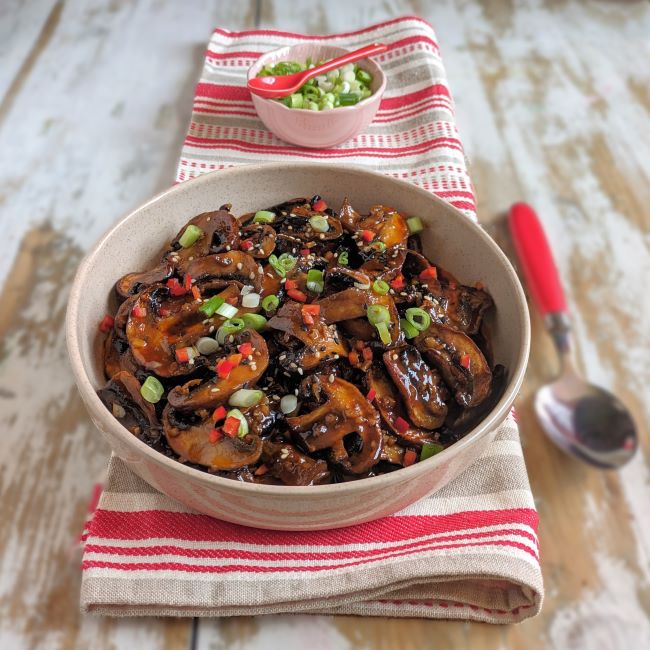
Bowl_of_Gochujang_mushrooms
Gochujang mushrooms. Image: Kathryn Hawkins

Hello there. I’ve been back in the kitchen for my post this month and I have a very tasty recipe to share, perfect for this time of year when it’s still a bit on the chilly side.

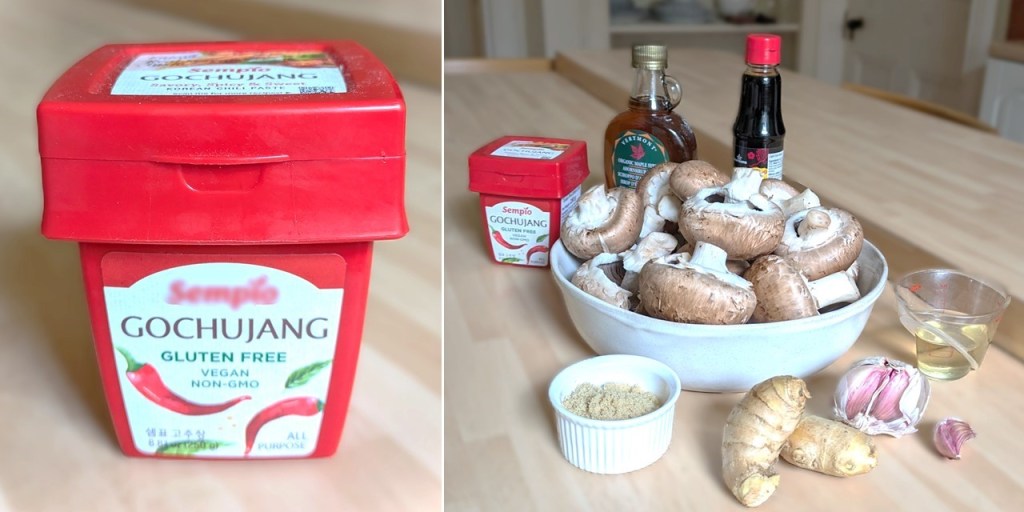
Ingredients_for_Gochujang
Mushroom marinade ingredients. Images: Kathryn Hawkins

If you’re a regular reader of my recipes you’ll know that I’m not a huge fan of fiery food. However, I discovered this Korean paste a while ago and really enjoy it’s rich umami flavour and spicy chilli heat. I’m sure there are brands on the market which are very hot but this blend is just right for me, and it’s gluten-free and vegan as well πŸ™‚

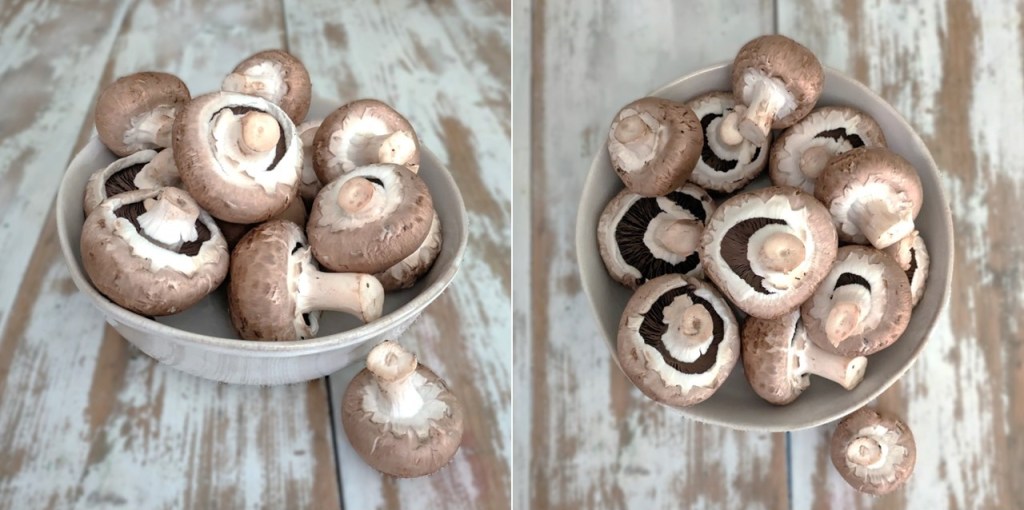
Chestnut_mushrooms
A bowl of chestnut mushrooms. Images: Kathryn Hawkins

I chose chestnut (or brown) mushrooms for this recipe because they have a “meaty” texture but large flat or Portobello mushrooms will work just as well I’m sure. Prepare the ingredients the day before you want to serve the mushrooms. This will allow the marinade time to draw out some of the moisture from the mushrooms. Serve them as a side dish for 4 people or as a main course for 2-3. They also make a delicious filling for steamed sesame buns – see my recipe here Steamed sesame buns (gluten-free; dairy-free;Β vegan)

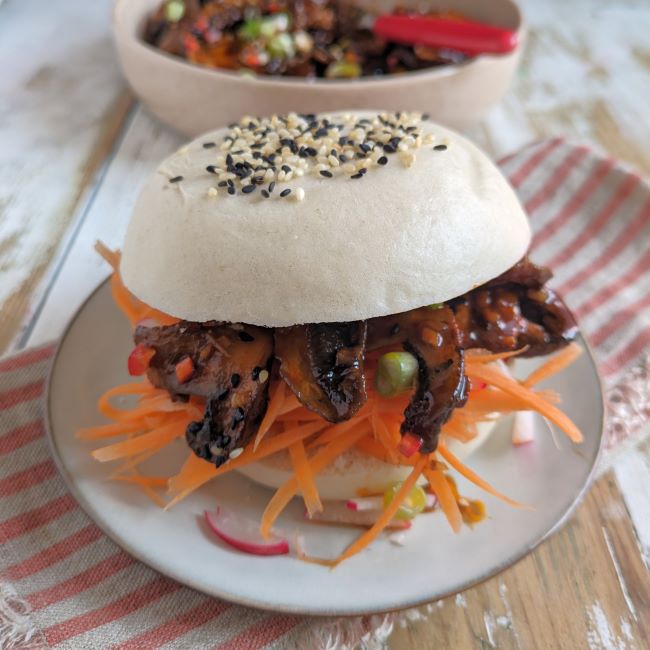
Gluten-free_vegan_steamed_sesame_bun_filled_with_gochujang_mushrooms
Mushroom-filled sesame bun. Image: Kathryn Hawkins

Serves: 2-4

Ingredients

  • 2 fat cloves of garlic
  • 15g root ginger
  • 4 tbsp sunflower oil
  • 2 tbsp gluten-free, vegan Gochujang paste
  • 2 tbsp maple syrup (or other plain plant syrup)
  • 1 tbsp light brown sugar
  • 1 tbsp light gluten-free soy sauce
  • 500g chestnut mushrooms, wiped
  • Sesame seeds, chopped red chilli and spring onion to serv

1.Peel and finely chop the garlic and ginger. Place in a large bowl and mix in all the ingredients except the mushrooms.

2. Slice the mushrooms thickly, and add to the bowl in batches, mixing with the marinade ingredients to make sure all the slices are coated. Cover and chill overnight.

Making_gochujang_marinade_for_mushrooms
Making the marinade. Images: Kathryn Hawkins

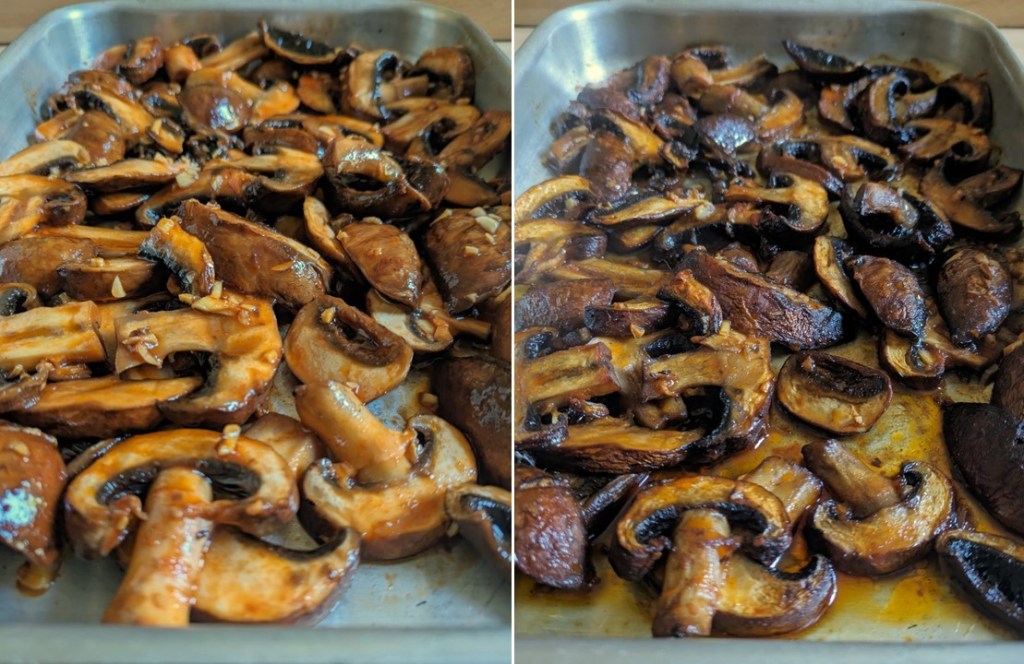
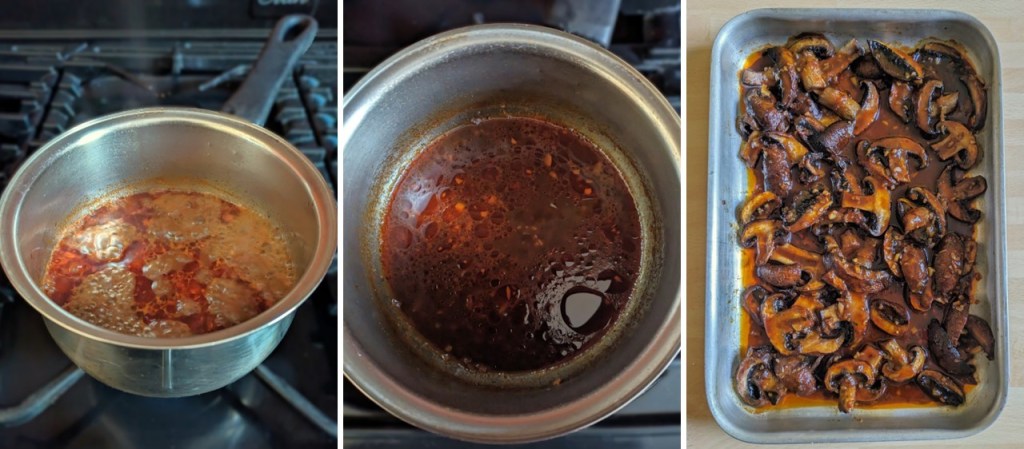
3. The next day, drain the mushrooms, reserving the marinade and pouring into a small saucepan. Put the mushrooms into a shallow roasting tin and place in the oven. I don’t preheat my oven for recipes like this, I just set it to 200Β°C, 180Β°C fan oven, gas 6 and leave the mushrooms for 30 minutes until tender and cooked through.

Chestnut_mushrooms_after_marinating
Ready to roast. Images: Kathryn Hawkins
Chestnut_mushrooms_ before_and_after_roasting
Before and after roasting. Images: Kathryn Hawkins

4. While the mushrooms are cooking, bring the marinade to the boil and simmer for about 10 minutes until reduced by half. When the mushrooms are ready, pour the reduced mixture over them and mix well.

Reducing_gochujang_mushroom_marinade
Reducing the marinating juices. Images: Kathryn Hawkins

5. Serve the mushrooms with sesame seeds, chopped chilli and spring onion. Great spooned over rice, pasta or noodles. I hope you enjoy this recipe as much as I do. I hope to see you again next month and thanks as always for stopping by πŸ™‚

Gluten-free_vegan_Gochujang_mushrooms
Warming, spicy and very, very tasty. Image: Kathryn Hawkins

Veg-rack-raid roasties (naturally vegan, gluten-free and dairy-free)

Diced_root_veg_tray_baked_naturally_vegan_and_gluten-free
Veg-rack-raid roasties. Images: Kathryn Hawkins

Hello again. I don’t know about you, but I’m always looking for ways to cut back on the amount of energy I use especially in the kitchen. I have certainly changed the way I cook my everyday meals and only put the oven on if I can fill it.

One of the things I do every now and then is have a big bake up of all the bits and pieces of vegetable I have in the veg rack or fridge and I have taken a few images over the past few months of the combinations I have cooked depending on what I have to hand.

Root_vegetable_preparation
Veg prep for roasting. Images: Kathryn Hawkins

Most vegetables require only simple prep, just peeling and cutting into uniform pieces so that they all bake evenly. The only vegetable I par-cook is turnip (swede) because it is denser than other vegetables. Just a quick cook of 10 minutes in boiling water, then drain and cool before mixing into the other prepared veg.

For best results, choose vegetables that take roughly the same amount of time to cook, or add quicker-cooking vegetables later on once the other have had a bit of a head start.

Prepared_diced_veg_ready_for_roasting
Seasoned diced roots, ready for roasting. Images: Kathryn Hawkins

Use what ever oil you prefer too cook your vegetables with. Toss a generous amount into the prepared veg, season with plenty of salt and ground black pepper and mix well. Add herbs and spices to taste. Spread out evenly on lined baking trays and put the trays in a cold oven – no need to waste energy on preheating the oven for this type of cooking. Set the dial to 200Β°C, 180Β°C fan oven, Gas 6. After about 25 minutes, turn the vegetables and cook for a further 15-25 minutes depending on how finely you have chopped them, until they are tender.

Cooked_diced_root_veg_ready_for_freezing
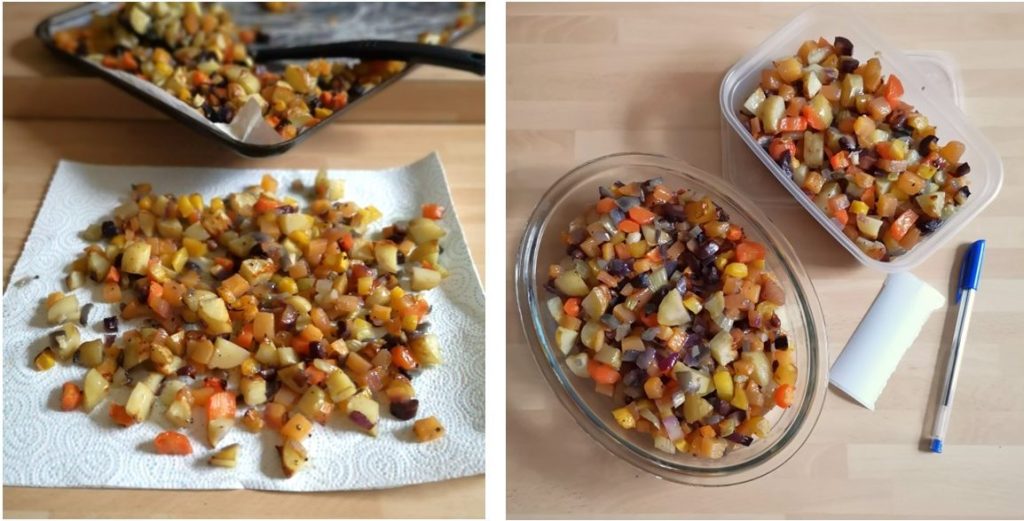
Roasted and ready for freezing. Images: Kathryn Hawkins

When they are cooked, drain off the excess oil, blot with kitchen paper and they are ready to serve straightaway. Alternatively, leave them to cool after draining and pack into containers for later use. In the fridge, the cooked vegetables will keep for 3-4 days, or freeze them for up to 6 months. Most vegetables freeze fine and can be added to soups, sauces and stews at a later date (usually I add them still frozen directly to hot stock or sauce and just heat them through).

Tray_roast_peppers_celery_onion_herbs_and_garlic
Tray-roast peppers, onion, celery, garlic and herbs. Images: Kathryn Hawkins
Tray_roast_carrots_celery_onion_garlic_and_herbs
Tray-roast carrots, onion, celery, garlic and herbs. Images: Kathryn Hawkins
Tray_roasted_potatoes_mushrooms_garlic_and_herbs
Potatoes, mushrooms, garlic and herbs. Images: Kathryn Hawkins

Until next time, have a good rest of the month and I hope that I will see you again in February. Thanks for stopping by πŸ™‚

November new potatoes

November_new_potato_harvest
November new potatoes. Images: Kathryn Hawkins

It has turned much colder here since my last post. Frosty mornings and an increasing number of sub-zero nights. Back in late August, I planted a few Arran Pilot seed potatoes in the green house. With the wintry feel in the air and knowing potatoes are not frost-hardy, I decided it was time to dig them up.

Greenhouse_grown_late_season_potatoes
Late season greenhouse-grown potatoes. Images: Kathryn Hawkins

The foliage had all but withered away over the month, but under ground a few little potatoes had formed. I was a couple of weeks later planting them than usual and subsequently, the plants hadn’t had time to develop properly before the days got shorter and the temperature lower. No matter, there were enough to make one of my favourite potato dishes, and they tasted just as delicious as the potatoes grown earlier in the year.

Smashed November_new_potatoes
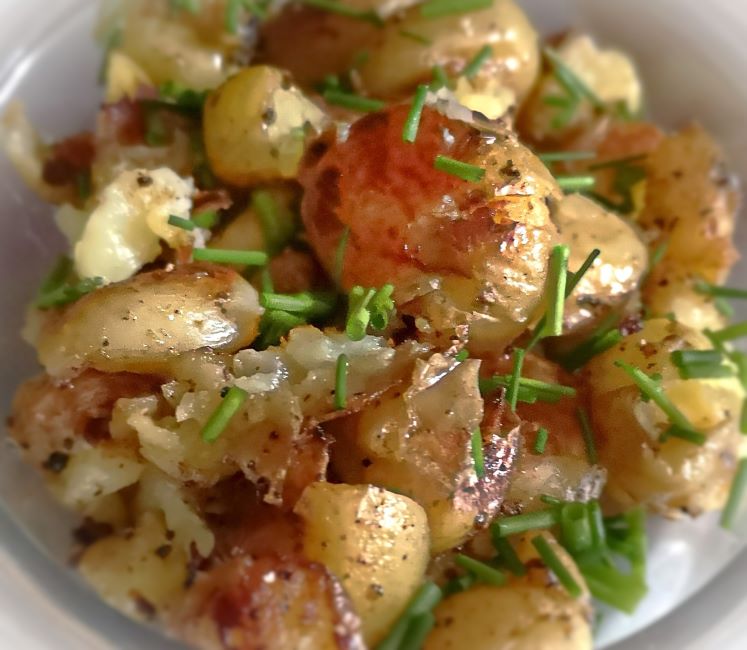
Smashed new potatoes sprinkled with chives. Image: Kathryn Hawkins

I took a few images of the preparation of this potato dish back in the late summer when I had some pink fir potatoes. Choose a waxy or floury textured potato for best results. Scrub the potatoes and boil them in their skins until tender, then drain well and cool for about 10 minutes. Transfer them to a board and squish them with a masher or large fork.

Preparation_of_smashed_pink_fir_potatoes
Smashed pink fir potatoes. Images: Kathryn Hawkins

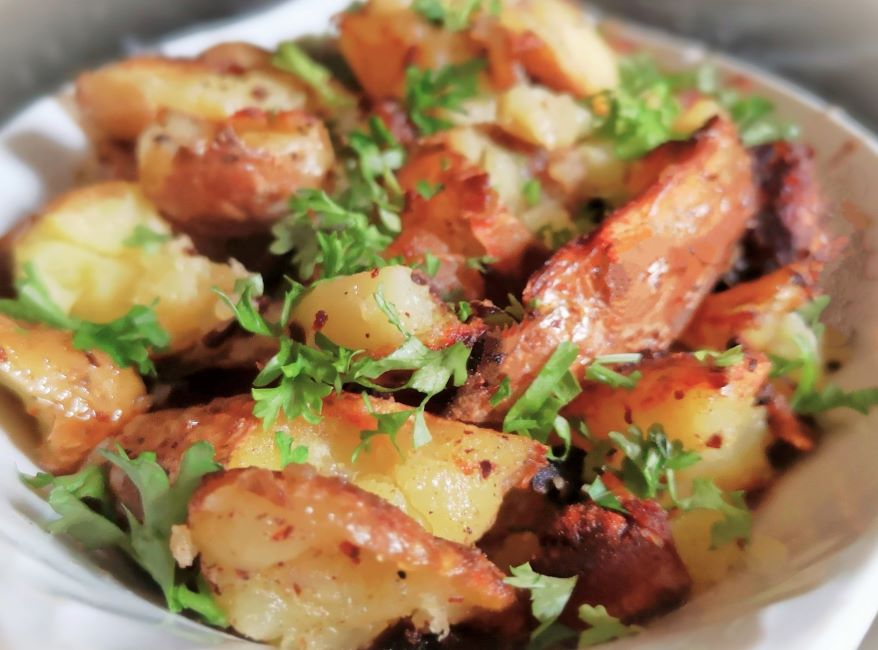
I usually melt butter with some olive oil in a pan and heat until bubbling – either will work on their own, it’s personal taste which you use. Add the potatoes and seasoning and cook over a fairly high heat, turning them until they are crispy. Towards the end of cooking, I add chopped garlic and cook it for a couple of minutes until just cooked through. Serve straight from the pan, sprinkled with chopped parsley or chives.

Garlic_smashed_pink_fir_potatoes
Smashed pink fir potatoes with garlic and parsley. Image: Kathryn Hawkins

Well there’s just one more post before Christmas – I can’t believe it will all be over by this time next month. Until then, take care and thanks for stopping by πŸ™‚