Rhubarb ruminations and recipe ideas

Homegrown_forced_spring_rhubarb
Spring rhubarb. Image: Kathryn Hawkins

At last, my forced rhubarb was ready to pick this week! Now I feel the season of Spring has begun. Long before all other fruits in the garden are even formed,  forced rhubarb gives us a flavour of all the sweet delights yet to come.

To me, rhubarb is associated with fond memories of my childhood. My grandparents used to grow “forests” of the thick, leafy stems in the summer – no summer holiday was complete without one of Grannie’s rhubarb crumbles.

If you fancy having a go at growing your own, now is the best time of year to buy yourself a  rhubarb plant (or “crown”) and get it in the ground ready for next year.

Forced_rhubarb_ready_for_picking
My first rhubarb harvest of 2017. Image: Kathryn Hawkins

Rhubarb grows best in an open site, ideally in the sun, but it will grow anywhere. It likes a good mulching and needs plenty of soil depth as the roots, once established, run deep. Give it a good feed once in a while and it will do well. It is very easy to grow and a single plant will provide a good yield for a small family. Rhubarb is really a vegetable, but most of us regard it as a fruit because we serve it mostly for pudding. Only the stalks are edible – the leaves are high in oxalic acid and are, subsequently, very toxic.

Hold yourself back and avoid picking any stems in the first year of planting a new crown. In the second year, pull a few stems, leaving about half of the plant untouched. Once a plant is established – after 3 years – you can pick as many stems as you want. A rhubarb plant can be “forced” at this age, ready for an early crop in spring. You can buy special rhubarb forcers – very tall, slim, terracotta pots – which go over the crown in late winter. These are very expensive; I use the tallest pot I have and this works fine – as you can see in the image above. Although the pot covering doesn’t produce really long stems, they are good enough for me. I’ve put the pot back over the crown again, ready for the next batch of stems to grow – usually the plant produces four good batches of stems before I leave it to recover and rejuvenate for next year.

I have 3 rhubarb plants in the garden now. Each year, I rotate a plant for forcing, and the other 2 are left for summer eating rhubarb, and for freezing. Here are a few tips and ideas for cooking and serving rhubarb:

  • High in acidity, there are a few flavours that help temper the tartness of rhubarb: ginger, cinnamon, orange rind and juice, coconut, banana, angelica and liquorice.
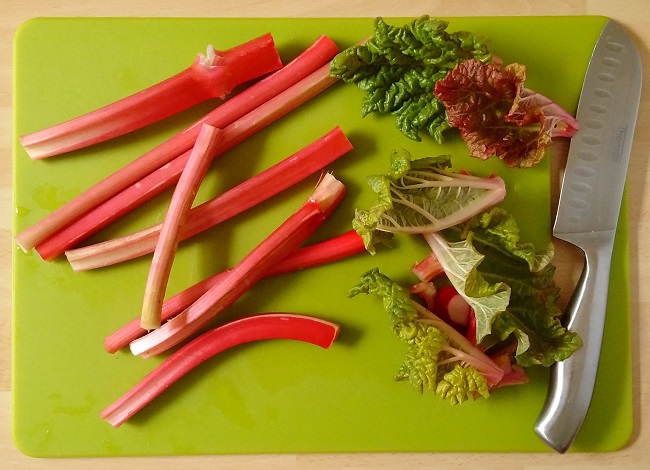
  • Trim the leaves from spring rhubarb and discard, then rinse the stems well and slice off the base. Cut into 3cm pieces for really quick cooking, but leave in longer pieces for gentle poaching and using to top tarts or desserts. Spring rhubarb takes barely 4-5 minutes to cook. I usually place the pieces in a frying pan and sprinkle with sugar and add 1 – 2 tablespoons of water. Once it begins to steam, cover with a lid and cook gently.
    Chopped_fresh_rhubarb
    Preparing spring rhubarb. Image: Kathryn Hawkins
  • For a tangy sweet and sour sauce, cook rhubarb in a little water with sufficient sugar to make it edible, then add a dash of raspberry or balsamic vinegar. Served cold, it goes well with roast duck, smoked mackerel or pan-fried herring.
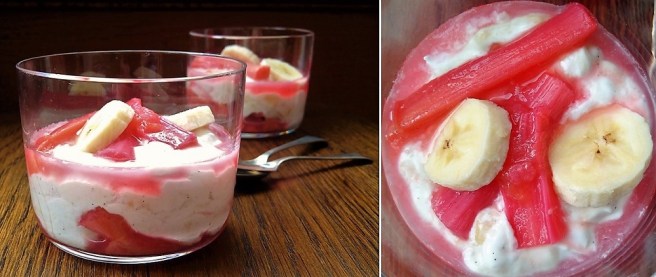
  • A favourite simple dessert of mine is to mix mashed banana, coconut (non-dairy) yogurt and vanilla extract together and layer in glasses with poached, vanilla sugar-sweetened rhubarb. It is absolute deliciousness guaranteed!
    Poached_rhubarb_with_banana_coconut_yogurt_and_vanilla
    Rhubarb, banana and coconut pots. Images: Kathryn Hawkins
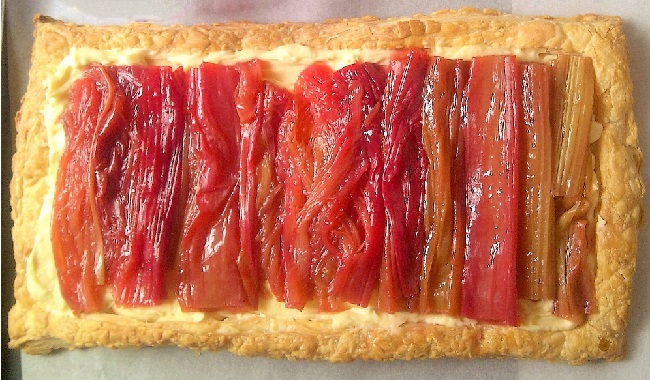
  • For an easy pastry, bake-off a sheet of (gluten-free) puff pastry and allow to cool, then top with thick (dairy-free) custard and lightly poached stems of sweetened rhubarb. Always a winning combination…..rhubarb and custard.
    Rhubarb_and_custard_tart
    Rhubarb and custard tart. Image: Kathryn Hawkins

    I have posted a couple of other rhubarb recipes in my blog over the months, here are the links Rhubarb, raspberry and custard crump (gluten-free, dairy-free, vegan) and Rhubarb and custard ice lollies (gluten-free)

    3_stems_fresh_spring_rhubarb
    Tender pink stems of forced rhubarb. Image: Kathryn Hawkins
My favourite mash (gluten-free, dairy-free, vegan

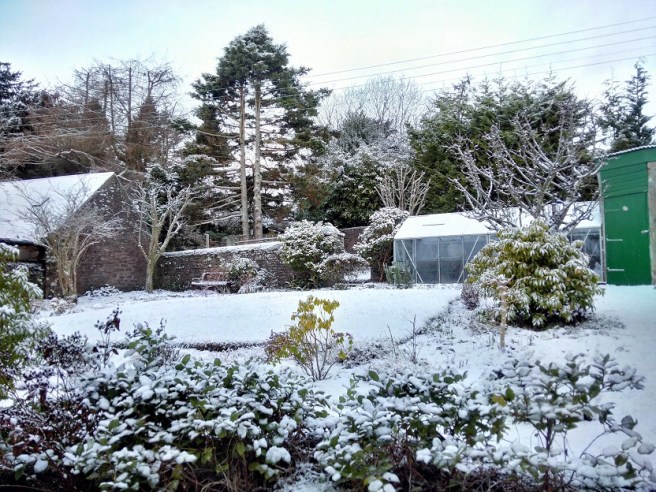
First_snowfall_of_2017_in_Perthshire_garden
The first snow of 2017. Image: Kathryn Hawkins

It’s been a cold week all over the UK; the first snow of the year settled in the garden a few days ago, transforming it into a “Winter Wonderland” overnight. As soon as a chill sets in, my thoughts immediately turn to comfort food.

I am a huge potato fan and this week seemed like the perfect excuse to make my favourite mash potato recipe. Perfectly cooked potatoes, a generous handful of chopped parley, lashings of good quality olive oil, a good pinch of sea salt and some fresh garlic. It’s a delicious that mash seems to go with everything.

Ingredients_and_essential_equipment_for_making_the_perfect_mashed_potato
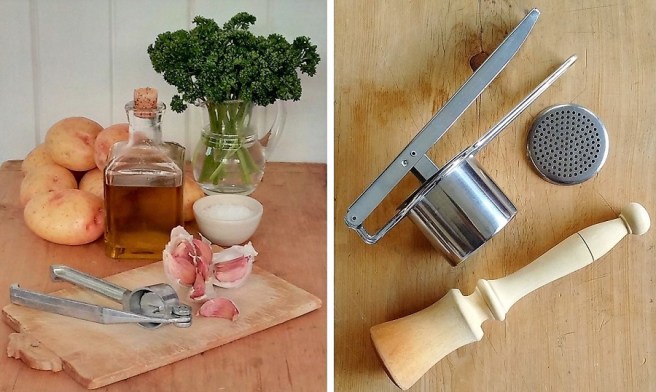
Ingredients and equipment for olive oil and garlic mash. Images: Kathryn Hawkins

For the best result, you need to choose a potato that mashes well. My preference is King Edward, it’s got good flavour and a dry, floury texture when cooked. Cook the prepared potatoes until they are completely tender. Drain well and then give them a good thump with a potato masher. If you don’t mind a few lumps, leave it at that, but if I’ve got the time, I like to press the mash through a ricer for the smoothest, silkiest texture possible. It’s up to you how much garlic, parsley and seasoning you add, but do use a really tasty olive oil. A good quality extra virgin (cold pressed is even better) oil will not only add flavour and colour, but will add to the indulgence of the finished mash. Only warm the oil, never heat it beyond warm, otherwise the health and flavour benefits will be lost.

Mashed_potato_with_parsley_olive_oil_and_garlic
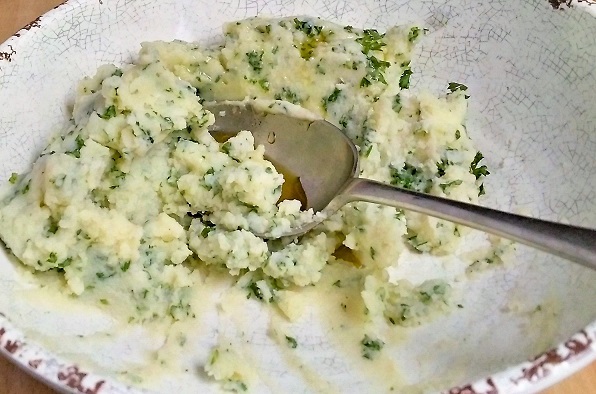
Olive oil, parsley and garlic mash. Image: Kathryn Hawkins
Serves: 4

  • 900g main crop potatoes, such as King Edward or Maris Piper
  • Sea salt
  • 4 plump garlic cloves, peeled and crushed
  • 1 tbsp sunflower oil
  • Large handful of fresh curly parsley, washed, thick stalks removed, and finely chopped (I like to add about 25g chopped parsley to this quantity of potato)
  • 6 tbsp good quality, extra virgin cold pressed olive oil + extra for serving, if liked
  1. Thinly peel the potatoes. Cut into chunky pieces and rinse in cold water. Place in a large saucepan and cover with cold water. Add a pinch of salt, bring to the boil and cook until completely tender (12-15 minutes, depending on how thick you’ve cut them up). Drain well through a strainer, and leave to air dry for 5 minutes.
  2. Meanwhile, heat the sunflower oil in a small saucepan and very gently fry the garlic for 1-2 minutes until tender but not browned. Remove from the heat.
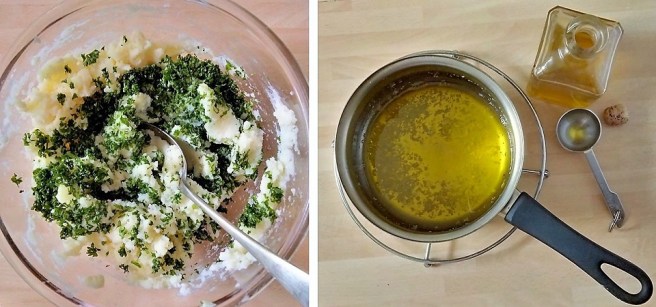
  3. Return the potatoes to the saucepan and mash well. If you’re not using a ricer, stir in the parsley and cover. If you are ricing the mash, press the potato into a warm bowl, stir in the parsley, and cover the whole bowl with foil.
  4. Stir the olive oil into the cooked garlic and place the saucepan over a very low heat for 2-3 minutes to gently warm the oil.
    Chopped_parsley_garlic_and_olive_oil_being_added_to_mashed_potato
    Adding the flavourings to mashed potato. Images: Kathryn Hawkins


  5. Stir the warm oil into the parsley mash. Taste and season. Pile into a warm serving dish. Drizzle with more olive oil if liked, and serve immediately. Mmmm…mmmmm.

    Single_serving_of_mashed_potato_with_parsley,_olive_oil_and_garlic
    The last spoonful of my favourite mash. Image: Kathryn Hawkins


Brussels sprouts

Homegrown_Brussels_sprouts_and_sprout_tops
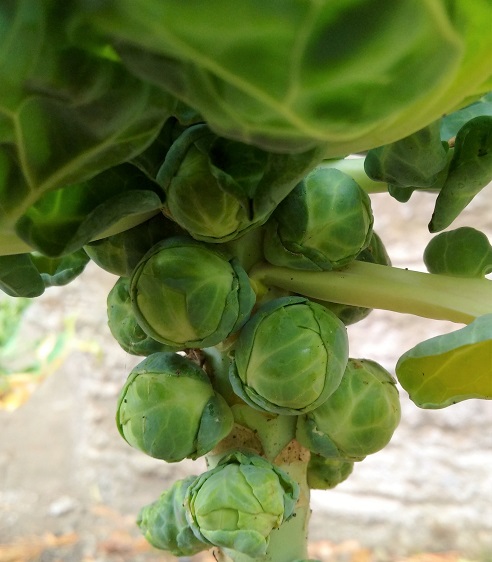
Home-grown Brussels sprouts. Images: Kathryn Hawkins

Love them or loathe them, you can’t get away from Brussels sprouts at this time of year. Believed to be a descendent of the wild cabbage, we have been eating these tasty and nutritious winter greens since the 18th century.

I planted several seedlings (variety Brodie F1) back in early June, but sadly most succumbed to pests and the plants have been dwindling as the months have gone by. However, I managed to keep a few plants unscathed, ready for the Christmas table and a couple more meals on top of that. Some of the stems have lovely tops which have developed into small cabbages with pretty pink veining, so I have them to cook as well.

Brussels_sprouts_on_the_stem
A fine stem of “fairy cabbages”. Image: Kathryn Hawkins

I was told a story a few years ago by a lady who had been struggling to get her little daughter to try a Brussels sprout. There was something about the humble sprout that her daughter wouldn’t entertain even though she would eat every other green vegetable without hesitation. Her mother, in exasperation, said that they were simply tiny cabbages grown by the fairies, and from then on, her daughter ate them with gusto!

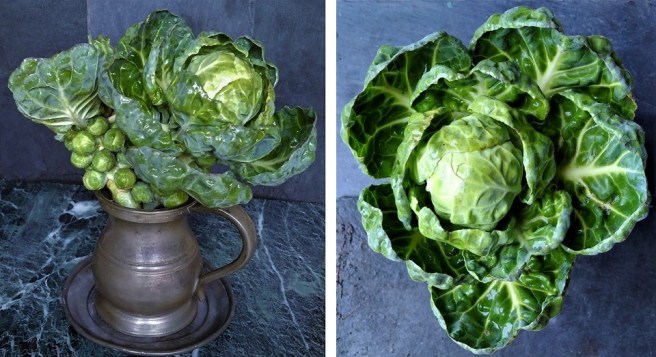
Freshly_picked_homegrown_Brussels_sprouts_and_tops
Still life of Brussels sprout stems and tops. Images: Kathryn Hawkins

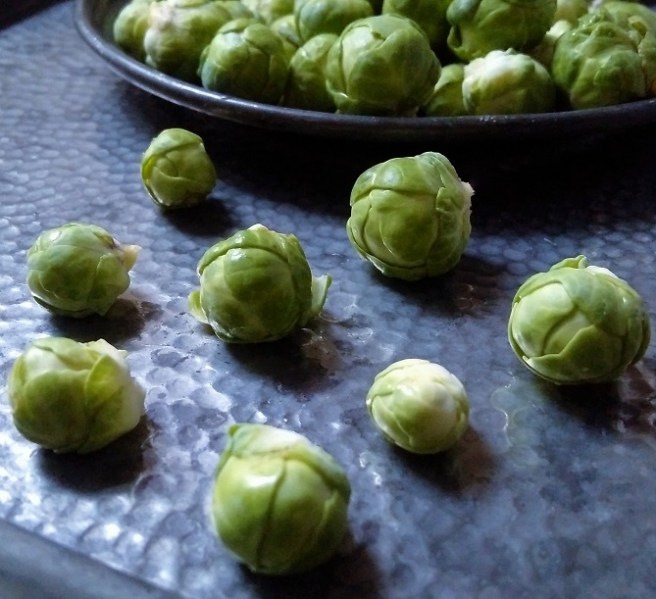
Pick sprouts when they are small and firm as larger sprouts have less flavour. Smaller sprouts will be crisper in texture and have a sweeter, nuttier taste. Don’t forget the tops – these can be cooked just liked cabbage. Ideally pick sprouts just before cooking, trim away any loose leaves and leave whole if small, or halve if bigger. Rinse in cold water, and then cook in a little lightly salted, boiling, water for a few minutes until just tender – they should have some texture when cooked, and not be slime-green coloured, full of water and soggy like the ones I remember from my school dinners – yuk!

Ready_to_cook_fresh_Brussels_sprouts
Picked sprouts ready for cooking. Image: Kathryn Hawkins
Here are a few of my favourite ways to serve fresh Brussels sprouts:

  • Brussels sprouts go well with blue cheese, goat’s cheese, chopped nuts and seeds, crisp bacon, chorizo, chilli, sage, thyme, garlic, onion, orange, wholegrain mustard, Worcestershire sauce, soy sauce and balsamic vinegar.
  • Serve small cooked sprouts on a bed of crushed, seasoned peas in Yorkshire puddings and flood with gravy or a tasty cheese sauce.
  • Shred or roughly chop sprouts and stir fry with shredded leeks and very finely sliced white cabbage. Finish with a few dashes of Worcestershire sauce and some melted redcurrant jelly.
  • Stir fry chopped sprouts with finely chopped garlic and add sultanas, a pinch of chilli, cinnamon and cumin, and a drizzle of honey or maple syrup.
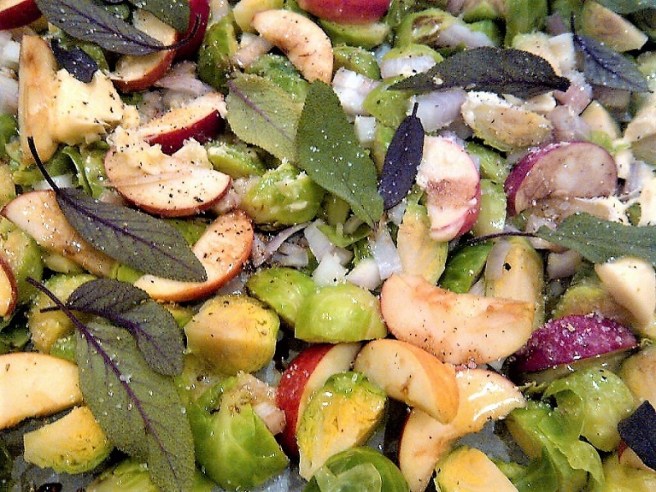
  • Blanch 300g prepared larger sprouts in boiling water for 1 minute and cool quickly in cold running water. Drain well, cut in half or quarter, and mix with wedges of eating apple, fresh sage leaves and finely chopped onion. Toss in 1 tbsp each of olive oil, balsamic vinegar and honey or maple syrup. Spread across a lined baking tray, season well and cover with foil. Bake at 200°C (180°C fan oven, gas mark 6) for 15 minutes, then remove the foil and cook for a further 10 minutes until tender.

    Tray_of_sprouts_apple_sage_and_onion
    Ready to bake, sprouts with apple, sage and onion. Image: Kathryn Hawkins

Pesto pea pastries (gluten-free)

Gluten-free_pesto_pea_pastries
Freshly baked pesto pea pastries. Image: Kathryn Hawkins
Peas are one of my favourite vegetables. When they’re not in season, I always have a bag in the freezer; they are my “go to” emergency vegetable.

The filling for these pastries is very versatile. You can use it as a dip, spread it thickly on warm toasted bread or, it makes a lovely fresh filling for wraps or sandwiches with some crisp green leaves and cooked chicken. Make your own pesto if you have time, it really does make all the difference.

Makes: 9

  • Gluten-free plain flour, for dusting
  • 400g block ready-made gluten-free puff pastry (such as Silly Yak)
  • 225g cooked peas, mashed with a fork or potato masher
  • 50g fresh pesto sauce (recipe below)
  • 1 medium egg
  • 100ml whole milk or soya milk
  • Salt and freshly ground black pepper
  1. Preheat the oven to 200°C (180°C fan oven, gas mark 6). Line a large baking tray with baking parchment.
  2. Lightly dust the work surface with flour and roll out the pastry to make 30cm square. Cut out 9 x 10cm rounds using a pastry cutter.
  3. Mix the peas and pesto sauce together and pile a spoonful in the centre of each round. Pinch the edges of the pastry round the pea filling to make a tartlet shape. Transfer to the baking tray.
  4. Mix the egg and milk together and season well. Carefully pour a little over the top of the pea mixture. Bake in the oven for about 25 minutes until lightly golden. Best served warm.
How_to_make_pesto_pea_pastries
Assembly of pesto pea pastries. Images: Kathryn Hawkins
To make your own pesto sauce: in a blender or food processor, blitz together 125g pine nuts (kernels), 2 peeled garlic cloves, 60g freshly grated Parmesan cheese , 15g fresh basil leaves, pinch of salt and 90ml good quality olive oil. Unused pesto sauce will keep in the fridge, in a sealed container for up to 1 week. Homemade pesto sauce is also suitable for freezing.

Pesto_pea_pastries_serving_suggestion
Gluten-free pesto pea pastries. Image: Kathryn Hawkins
Vegetable confetti (gluten-free, dairy-free, vegan)

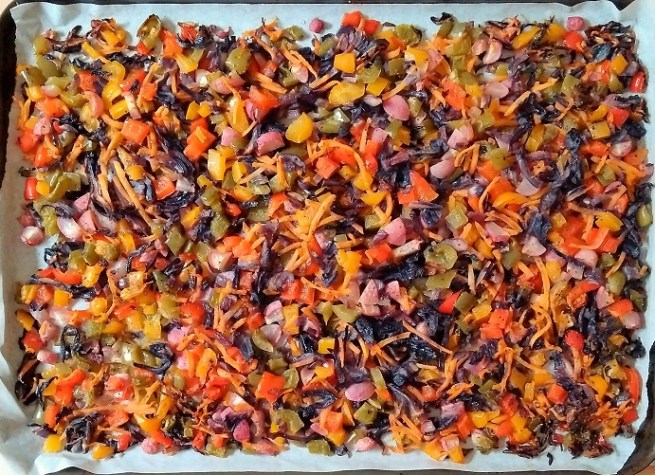
Finely_chopped_roasted_vegetable
Tray of roasted vegetable “confetti”. Image by Kathryn Hawkins
One of the culinary terms that has stuck with me since my cookery classes at school, is the word”confetti”. Whether it is actually a technical term doesn’t really matter; it is one of those quirky, self-explanatory meanings that has lived with me for years. It aptly describes a combination of finely chopped fruit or vegetables, and I think it is very appropriate.

A few weeks ago, I wrote a Summer cookery feature for one of the magazines I freelance for; I included a “confetti” salad of finely chopped vegetables. It looked bright and tasted great; it did take a bit of time chopping everything up small, it looked spectacular.

Salad_of_freshly_chopped_vegetables
Summery salad of “confetti” vegetables. Image by Kathryn Hawkins
I’m less inclined to eat a raw vegetable salad during the colder months of the year, so I have taken the same combination of vegetables and started baking them in the oven. Serve the vegetables as a side dish on their own or mix them into freshly cooked pasta. I like them stirred into freshly cooked basmati rice and served sprinkled with roasted cashew nuts. Here’s the (very easy) recipe:

Makes 8 servings

  • 1 each red, yellow and green (capsicum) peppers
  • 150g radish
  • 225g carrots
  • 150g red cabbage
  • 1 red onion
  • 6 tbsp olive oil
  • 4 garlic cloves, peeled and finely chopped
  • Salt and freshly ground black pepper
  1. Preheat the oven to 180°C (160°C fan oven, gas mark 6). Line a large baking tray with baking parchment. Halve, deseed and finely chop the peppers and put in a large bowl.
  2. Trim and chop the radish. Peel and finely chop the carrots. Shred and chop the cabbage. Mix them all into the peppers.
  3. Peel and finely chop the onion, then toss into the other vegetables along with the olive oil and garlic.
  4. Spread the vegetables evenly over the lined baking tray and season well. Cover with foil and bake for about 45 minutes, turning occasionally, until tender. Drain well and serve.
Rice_with_roast_chopped_vegetables_ and_cashew_nuts
Roast vegetable rice with cashews. Image by Kathryn Hawkins

My harvest festival

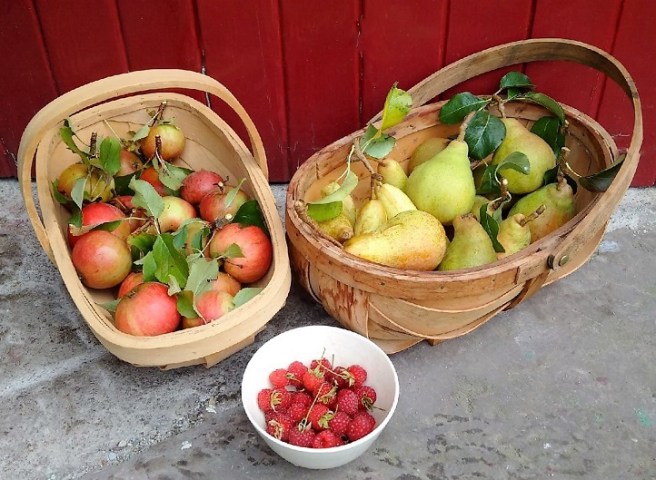
Homegrown_apples_pears_raspberries
Today’s harvest of homegrown apples, pears and raspberries. Image by Kathryn Hawkins

Today has been my first opportunity to get into the garden for a while. Work has got in the way, and the weather has been pretty grim, so I seized the opportunity this morning and spent a couple of hours getting some fresh air and taking stock.

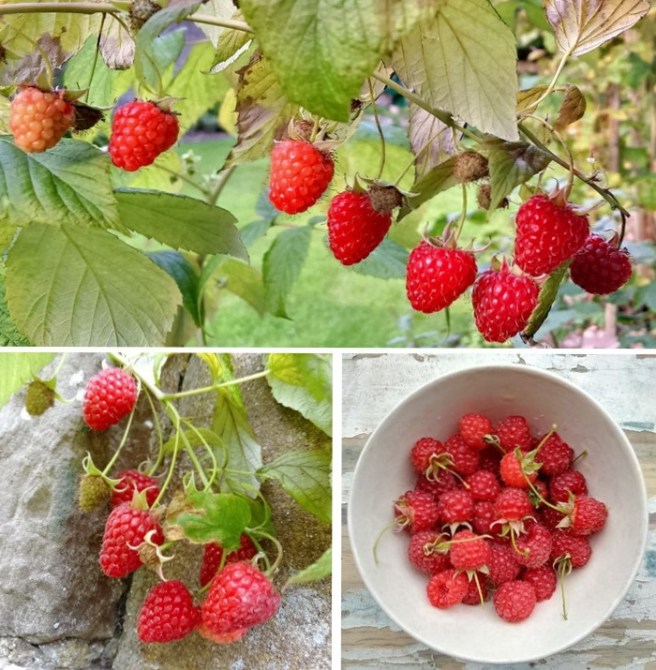
I was delighted to pick a bowl of late ripening raspberries – a delicious breakfast treat for tomorrow morning. I had expected that the birds would have been tucking in during my absence, but they are obviously feeding elsewhere.

Scottish_raspberries
Autumn Bliss – late fruiting raspberries. Image by Kathryn Hawkins
We have had an unusually mild September, and it’s really only been these past couple of weeks that the temperature has gone down a few degrees, but we have yet to have a frost. As a result, my runner beans flowered again, and tonight I will be enjoying freshly picked, homegrown beans with my supper – a first for me at this time of year.

Homegrown_Autumn_runner_beans
Second time around, October runner beans. Image by Kathryn Hawkins
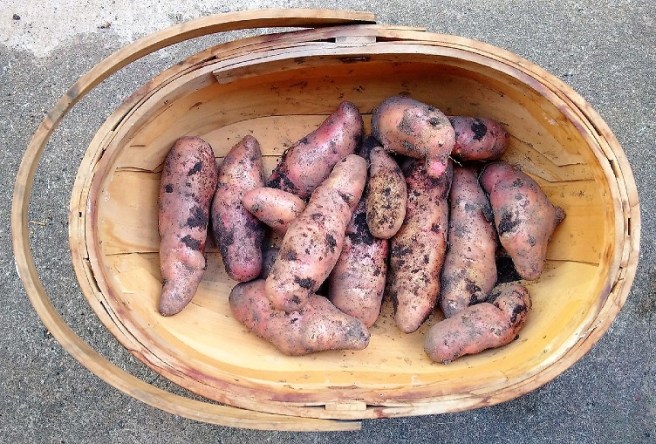
Scotland has an ideal climate for growing potatoes, and the Pink Fir variety I planted this year have done very well. Not usually a high yielding potato, I have been pleasantly surprised by how many potatoes the plants have produced so far, and I have plenty more to dig. Their cream coloured flesh is flaky and dry, and the pink, knobbly skin adds nuttiness to the flavour; they boil and roast well.

Homegrown_Pink_Fir_potatoes
Trug of freshly dug pink fir potatoes. Image by Kathryn Hawkins
Last year, I didn’t get the chance to try any eating apples from the garden. One of my trees produced no fruit at all, and the apples from on other tree were enjoyed by the birds before I got a look in! I have victory over my feathered friends this year, although I did leave a few of the really wee ones on the tree for the colder weather, when the birds do finally get peckish. I am looking forward to trying the apples; they are quite small but look very enticing with their shiny scarlet blush.

Homegrown_red-skinned_eating_apples
Cute little eating apples – variety unknown. Image by Kathryn Hawkins
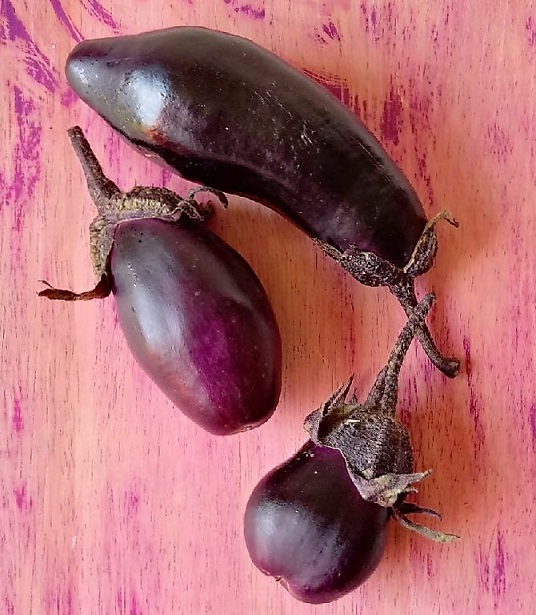
Homegrown aubergine (eggplant)

Fresh_aubergine_(eggplant)_fruit
Freshly picked aubergines (eggplant). Image by Kathryn Hawkins
I have been working away from home for a few days so that means no cooking or enjoying homegrown goodies from the garden. Whilst I was happy not to cook for a while, I did miss my garden. No matter, what a fabulous treat awaited me when I got back: 3 ripe aubergine.

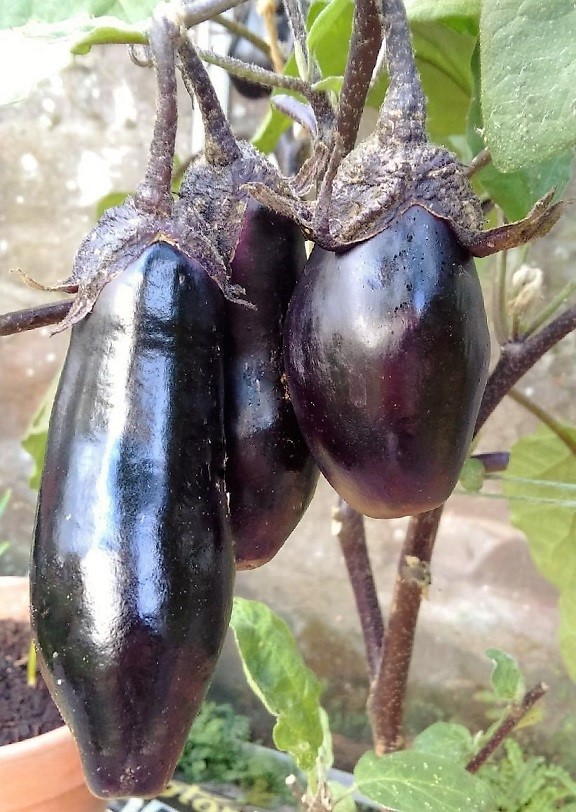
I only planted one wee seedling back in June, so these 3 fruits are a somewhat mammouth production for one plant. And, even better, there are a couple more fruits to come.

Growing aubergine (eggplant) fruit
Homegrown aubergine (eggplant) fruit.

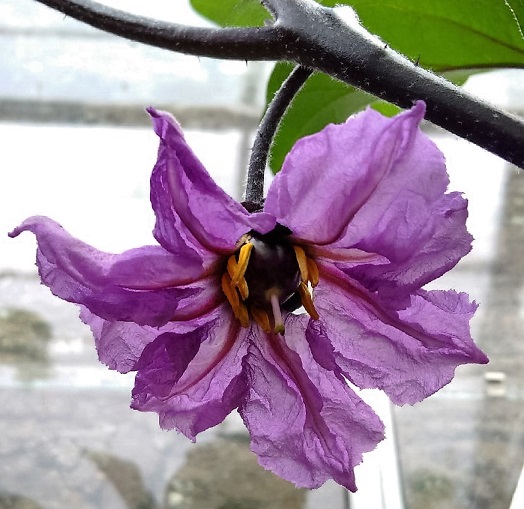
The plant itself is a beauty with glossy black stems and bright green, soft, downy leaves. The delightful purple flowers of “scrunched up tissue paper” petals, appeared back in August, followed by the first tiny, fairy-sized fruit a couple of weeks later. The plant has thrived unprotected in my unheated greenhouse all summer.

Fruit_forming_in_aubergine_(eggplant)_flower
Aubergine (eggplant) flower. Image by Kathryn Hawkins
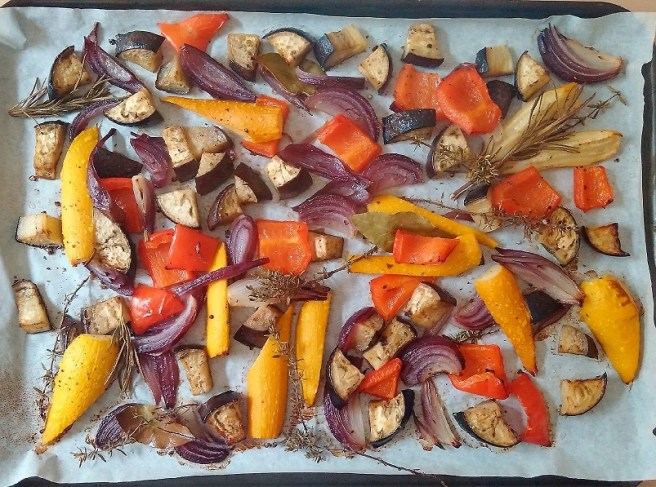
Aubergine is one of my favourite vegetables. I love the melting texture of the flesh once it is cooked, and the mild, nutty flavour. I don’t do anything special, no pre-salting or soaking, just trim, slice and griddle. Most usually I chop them up with onions, peppers and courgettes, scatter them with oil, fresh herbs and salt and pepper, and then roast them to serve hot as an accompaniment to serve with meat or fish, or leave them to cool and serve cold with fresh tomatoes and balsamic vinegar. Mmmm……

Assortment_of_ vegetables_and_herbs_freshly_roasted
Tray baked vegetables. Image by Kathryn Hawkins

Smoky Tomato Jam (gluten-free, dairy-free, vegan)

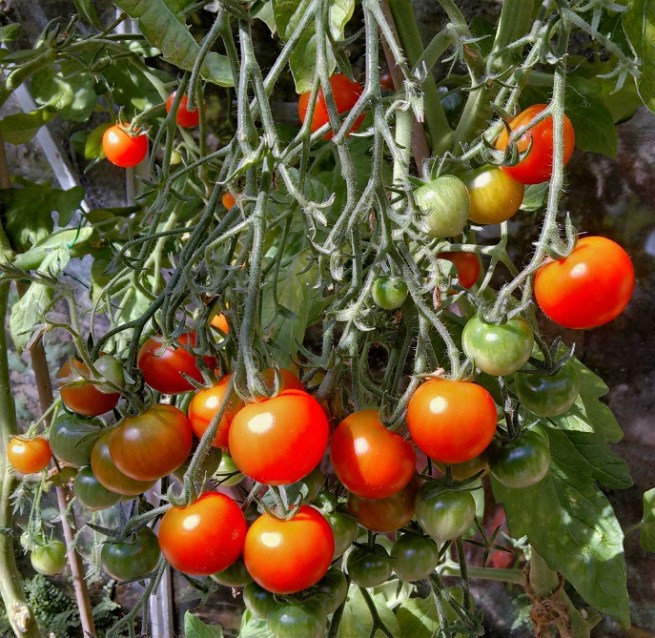
Late_ripening_homegrown_tomatoes
Homegrown early Autumn tomatoes. Image copyright: Kathryn Hawkins

This is the time of year when I often get very busy with my work and have little time to spend in the garden or the kitchen (outside work hours). However, making preserves is something I try to find time for no matter what else needs to be done. There is so much produce around at the moment, practically begging to be put in the pot and made into jam or chutney, I can’t ignore it.

One of my most popular preserves is, thankfully, one of the easiest to make, so this weekend I got the large preserving pan out of the cupboard and set about cooking up this year’s first batch of Smoky Tomato Jam. It’s really a smooth chutney, but the texture lends itself better to being called jam. One of the best thing about this particular preserve is that it’s ready to be eaten immediately, as well as being a good “keeper”.

Fresh_fruit_and_vegetables_for_jam_making
Ingredients for tomato jam making. Image copyright: Kathryn Hawkins

Makes 5 x 325ml jars

  • 700g fresh prepared ripe, but firm, tomatoes, roughly chopped
  • 350g prepared red onion, roughly chopped
  • 550g prepared cooking apples, roughly chopped
  • 350ml red wine or cider vinegar
  • 2 bay leaves
  • 2 large sprigs rosemary
  • 275g granulated sugar
  • 2 tsp each of salt, ground cumin and smoked paprika
  1. Put the tomatoes and onion in a food processor and blitz for a few seconds until well chopped and pulpy. Transfer to a large saucepan.
  2. Put the apples in the food processor with half the vinegar and blitz for a few seconds until well chopped. Transfer to the saucepan containing the tomato and onion mixture.
  3. Pour over the remaining vinegar and add the bay leaves and rosemary. Bring to the boil, stirring occasionally, and then simmer gently for 10 minutes until softened.
  4. Stir in the sugar over a low heat, until dissolved, then raise the heat and simmer steadily for 15 to 20 minutes, stirring occasionally, until it reaches the consistency of thick jam. Turn off the heat, discard the herbs and stir in the salt and spices.
  5. Ladle into warm, sterilised jars and seal with non-corrosive lids. Allow to cool and store for 6-8 months in a cool, dark cupboard. Once opened, keep in the fridge and use within 2 weeks. Delicious with all cured meats, smoked fish, and cheese dishes.
Homemade_tomato_preserve
Jars of freshly made Smoky Tomato Jam. Image copyright: Kathryn Hawkins

In a bit of a pickle

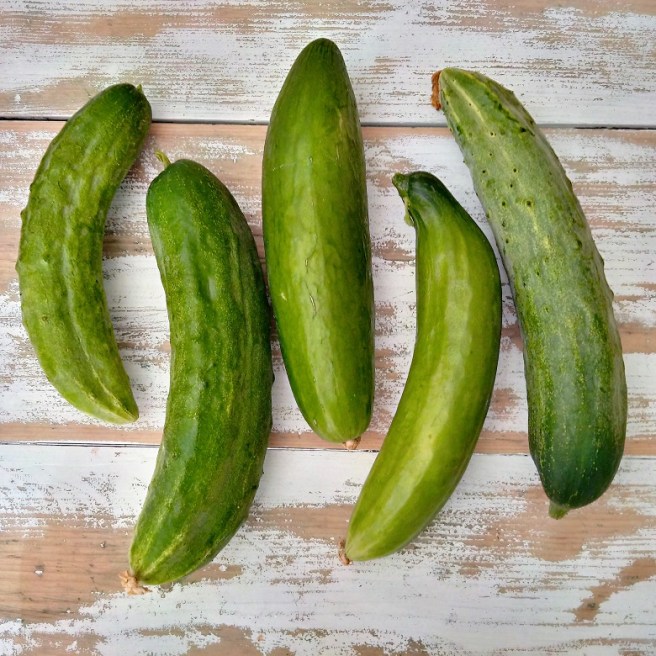
Cucumber_harvest
Homegrown cucumbers. Image copyright: Kathryn Hawkins

For several years now, I have been a successful cucumber grower. So much so, that even though I reduce the amount of plants I raise each year, I always end up with a glut. Whilst I enjoy eating cucumber raw in salads, and they are very good lightly cooked in a stir fry, I have been at a loss as to what else to do with them.

Whilst leafing through an old cookery book for inspiration, I came across an intriguing recipe called Bread and Butter pickle. The name drew me in, and to my delight, it is a real gem. It is one of the best pickles I have ever made, and so easy to make. I hope you like it as much as I do.

Makes 5 x 325ml jars

  • 1kg prepared cucumbers, chopped into 1.5cm pieces
  • 250g prepared red onion, finely chopped
  • 3 tbsp sea salt
  • 550ml white wine vinegar
  • 175g granulated sugar
  • 2 bay leaves
  • Pinch of dried chilli flakes
  • ¼ tsp ground black pepper
  • 1 tsp each of mustard seeds, coriander seeds and cumin seeds, coarsely ground
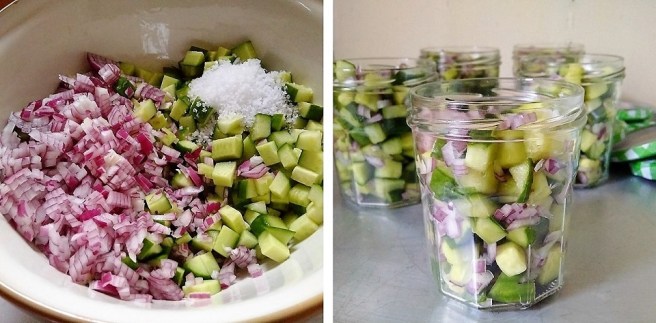
  1. Mix the cucumber, red onion and salt together in a large, clean, china or glass bowl. Leave to stand at room temperature, lightly covered, for 1 hour.
  2. Drain the vegetables in a fine-holed colander or strainer. Rinse very well in cold running water, then dry very well on absorbent kitchen paper. Pack into 5 x 325ml sterilised jam jars.

    Preparation_of _vegetables_for_cucumber_pickle
    Preparation of vegetables for Bread and Butter Pickle. Image copyright: Kathryn Hawkins
  3. Put the vinegar in a saucepan and add the remaining ingredients. Heat gently, stirring, until the sugar dissolves. Raise the heat and boil for 3 minutes. Discard the bay leaves.
  4. Pour the hot vinegar over the vegetables, making sure they are completely covered. Seal tightly with non corrosive, screw-top lids. Leave to cool, then label, and store in a cool, dry place for at least 3 months before opening. Delicious served with smoked fish or cold cuts. I spoon the pickle over chilli beef tacos – delicious!

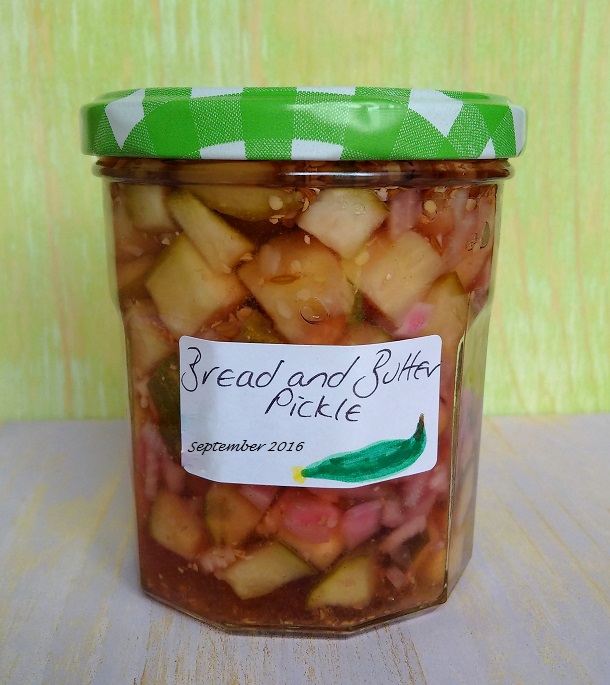
    Homegrown_cucumber_pickle
    Homemade cucumber pickle. Image copyright: Kathryn Hawkins

Preserving the Summer (Semi-cuit tomatoes – gluten-free, dairy-free, vegan)

Freshly_picked_homegrown_tomatoes
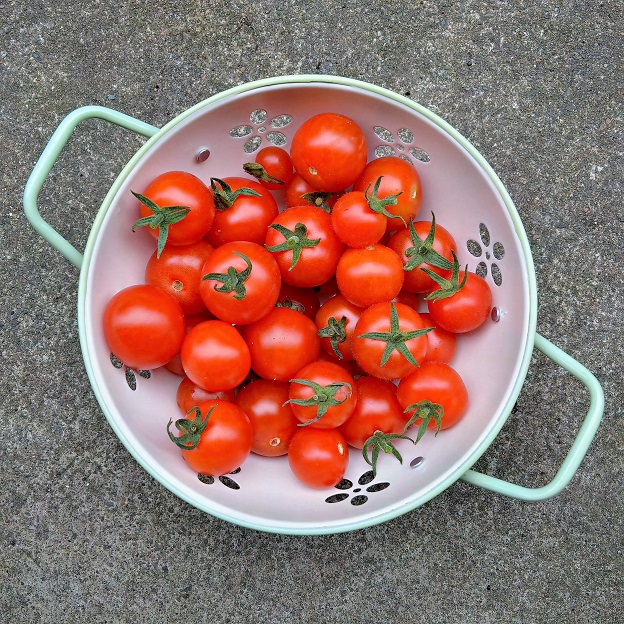
Home-grown tomatoes ready for the dryer. Image copyright: Kathryn Hawkins

I’ve been picking tomatoes from my greenhouse for over a month now, and there are still plenty to ripen. Whilst I am enjoying them fresh, I do like to make preserves, and first up this year is to steep a few tomatoes in olive oil. A couple of years ago I bought myself a dehydrator, and  I have been drying various homegrown produce ever since. Semi-cuit (semi-dry) tomatoes make a sweet, indulgent and delicious out-of-season treat for later in the year, so these wee treasures are heading for the dehydrator right away.

Dehydrating_tomatoes
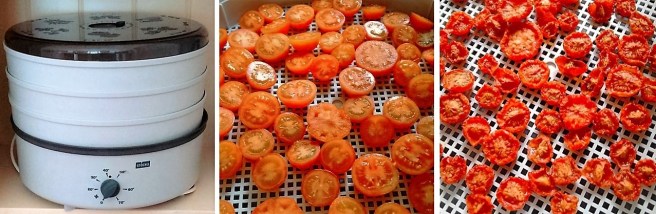
My Stockli dehydrator and prepared tomatoes. Image copyright: Kathryn Hawkins

Dehydrating is a very straightforward process. Wash and pat dry the tomatoes; if they are small to medium size, cut them in half – you may want to slice larger tomatoes or just “cook” them for longer. My dehydrator has 3 shelves; I divide up the tomatoes between the shelves, making sure there is some air space between them, pop the lid on and set the temperature to 70°C (158°F). This batch of 650g will take 6-7 hours to dry down so that they are still a bit fleshy and not too leathery. The final yield will be about 150g.

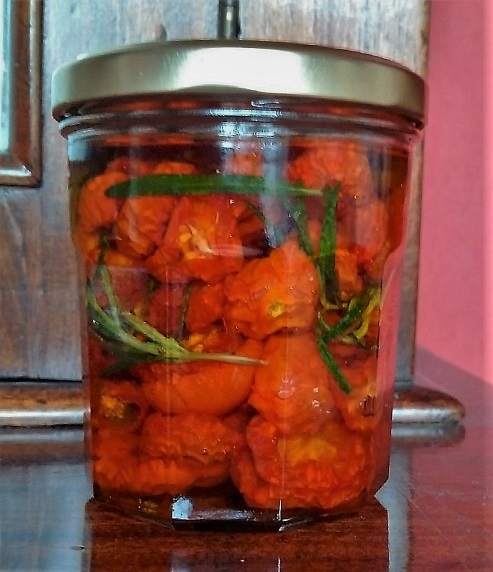
Once the tomatoes have cooled, I will pack them into a sterilised jam jar with a screw top lid, and add a few sprigs of fresh rosemary, bay and thyme from the garden. Pour over good quality extra virgin olive oil to cover the tomatoes completely and screw on the lid tightly. Stored in a cool, dark, dry cupboard, they will keep for about 6 months – so perfect for festive eatings. Once opened, store them in the fridge for up to 6 weeks – the oil will turn cloudy and clumpy when chilled, but becomes liquid again at room temperature. Roll on Christmas!

Semi-cuit_tomatoes_preserved_in_olive_oil_with_herbs
Semi-cuit tomatoes with olive oil and rosemary. Image copyright: Kathryn Hawkins