Yellow courgette and lemon cake (gluten-free, dairy-free)

Homegrown_yellow_courgettes
Home-grown yellow courgettes. Image copyright: Kathryn Hawkins

I’ve had a bumper crop of green and yellow courgettes this year, and they are still ripening thick and fast. Apart from enjoying them as a vegetable, they do make a good substitute for grated carrot in a cake. After a successful weekend bake-in, I thought I’d share my recipe for courgette and lemon loaf cake with you. It is moist and tasty, and improves with keeping (if you can leave it alone!). Perfect sliced and eaten on its own with a cup of tea, or served as a dessert with coconut yogurt and blueberry compote. Enjoy!

Serves: 8-10

  • 2 medium eggs
  • 150ml sunflower oil
  • 150g caster sugar
  • Finely grated rind 1 unwaxed lemon
  • 115g yellow courgette, trimmed and grated
  • 50g ground almonds
  • 150g plain gluten-free flour blend (such as Dove’s Farm)
  • 7g gluten-free baking powder (such as Dr Oetker)
  • 3 tbsp Demerara sugar
  1. Preheat the oven to 180°C (160°C fan oven, gas mark 4). Line a 1kg loaf tin with a baking parchment liner and sit the tin on a baking tray.
  2. In a mixing bowl, whisk together the eggs, oil, sugar and lemon rind. Stir in the courgette and ground almonds.
  3. Sift the flour and baking powder on top and carefully mix all the ingredients together. Pour into the tin and sprinkle thickly with Demerara sugar.
  4. Bake for 55 minutes to 1 hour until risen, golden and firm to the touch – insert a skewer into the centre of the cake, it should come out clean if the cake is cooked. Cool for 30 minutes before removing from the tin and transferring to a wire rack to cool completely. Wrap and store for 24 hours before serving to allow the flavour and texture to develop. The cake freezes well, leave to cool then wrap and freeze for up to 6 months. Allow to thaw at room temperature, in the freezer wrappings.
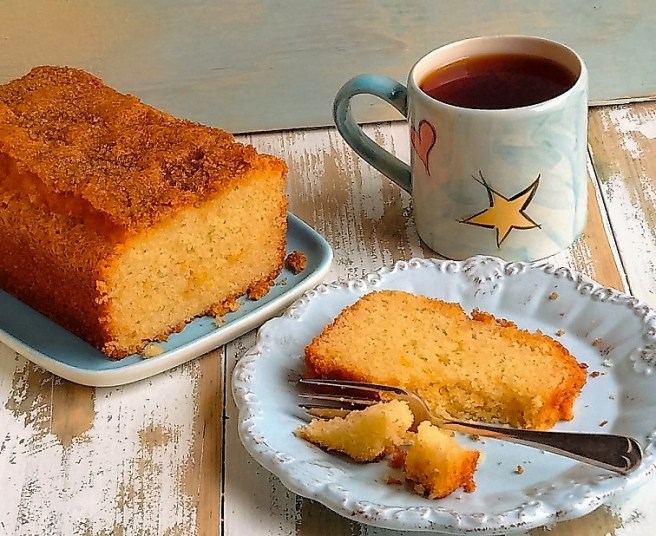
    Gluten-free_courgette_and_lemon_loaf_cake
    Yellow courgette and lemon cake. Image copyright: Kathryn Hawkins


End of July harvest

Homegrown_end_of_July_fruit_and_vegetables
Home-grown rhubarb, tomatoes, runner beans, cucumber, raspberries, Morello cherries, yellow courgettes and red gooseberries, all harvested in the past fortnight.

Time for a recap on what’s been happening in my fruit and veg garden. It’s been a mixed bag of weather this month, although it doesn’t seem to have affected anything I’ve been growing for the kitchen. In fact, even though the sun hasn’t been shining as often as I’d have liked, I have never had tomatoes ripen so early in the year – it’s usually September before I get my first taste!

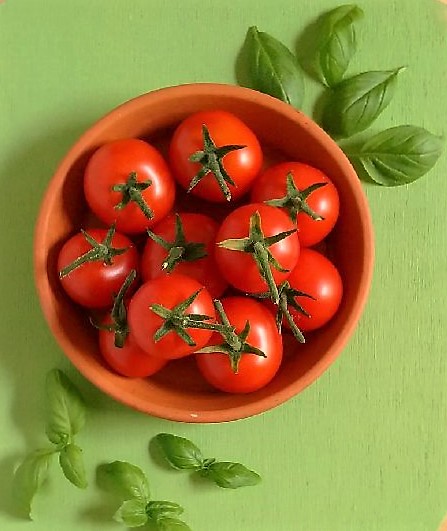
Home-grown tomatoes, above all else, are the best produce to grow for flavour and sweetness, and remain unrivalled by any tomatoes you can buy. I grow them in my unheated greenhouse, planted in grow-bags. I never put the picked fruit in the fridge, I store them in a cool part of the kitchen and eat them as soon as possible after picking. Served simply with some fresh pot basil, a little salt and pepper, and drizzle of balsamic vinegar, this is one of my greatest foodie pleasures.

Homegrown_Gardener's_Delight_tomatoes_and_fresh_basil
My first harvest of Gardener’s Delight tomatoes with fresh pot basil leaves. Image copyright: Kathryn Hawkins

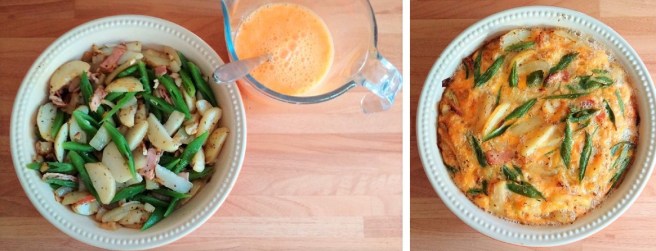
I have been picking runner beans for a couple of weeks now and, with lots of flowers still blooming, I hope to be enjoying them for a few weeks longer. I don’t usually do much with them, other than chop them up, cook them lightly, and enjoy them as a vegetable in their own right. Occasionally, I make a frittata with any leftover cooked veg and combine runner beans with cooked potato, onion – sometimes a little bacon if I have any – some seasoning and chopped fresh thyme. Delicious served warm or cold with salad.

Leftover_cooked_vegetable_frittata
Runner bean and potato frittata (gluten free). Image copyright: Kathryn Hawkins
Most of the fruit I grow gets made into jams and jellies, or I freeze it for cooking later in the year. The cherries were made into a compote – I didn’t have enough for jam this year. Rhubarb is cooked in muffins, stewed as a simple dessert, or cooked as pie filling. I have just made rhubarb and custard ice lollies for the first time, so it will be interesting to see how they turn out.

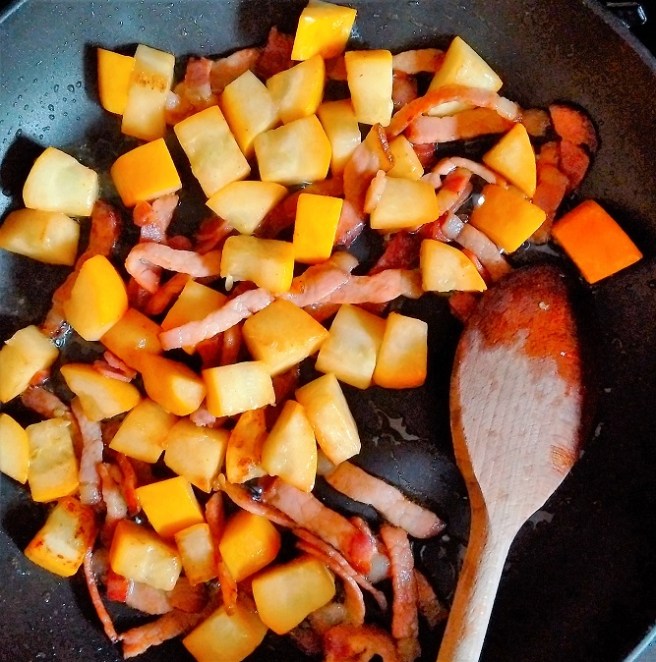
The yellow courgette plants are growing like triffids in the greenhouse. Thank goodness I only planted 2! They are both producing heavily, so it looks like I will have to get creative with my courgette cookery. I prefer the yellow variety as I find the flesh firmer and there is slightly more of an earthy flavour to them. I also love the colour. I have been chopping them and simply frying them in butter with smoked bacon and black pepper, and then stirring in a little bit of maple syrup before serving. Very tasty with just about anything.

Yellow_courgette_with_bacon_and_maple_syrup
Pan-cooked yellow courgette with bacon and maple syrup (gluten and dairy free). Image copyright: Kathryn Hawkins
 

Home-grown courgettes with chive butter (gluten-free)

homegrown_Tristar_courgette_with_homemade_chive_butter
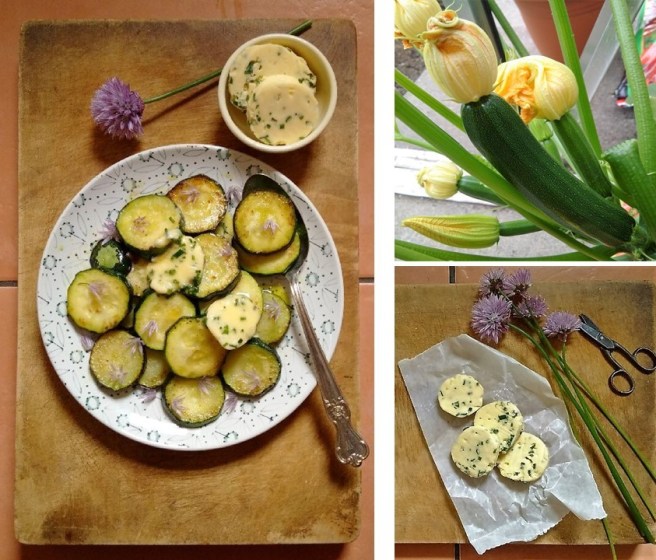
Home-grown courgette with chive butter. Images copyright: Kathryn Hawkins

One of the vegetables I have great success in raising is the courgette. This year I have a couple of varieties on the go: Tristar and Jemmer. My single Tristar plant has produced 6 courgettes already and there’s a few more to come. It is in a grow-bag on the floor of my greenhouse. Jemmer is a yellow variety; the first courgettes are just forming.

To enjoy the delicate, slightly earthy, flavour of my “home-grown” courgettes, I cook them very simply: either sliced and gently fried in sunflower oil, or as bigger chunks, lightly seasoned and roasted in the oven. The slices only take a few minutes on each side, just cooked until lightly golden round the edge.

To liven things up a wee bit, I make a herb or spice butter which I allow to melt over the cooked vegetable just before serving. At the moment, the chive bush in the garden is a combination of soft, juicy stems and pretty flower balls, and is the obvious choice for flavoured butter these past couple of weeks.

I make up a small batch at a time which will keep, well wrapped, in the fridge for 2-3 weeks or can be frozen for up to 6 months. Use half a pack of lightly salted, soft butter with 2-3 tablespoons of freshly chopped chives – snip the stalks into small pieces using kitchen scissors to avoid bruising the stems.

Beat the butter well to start with and then mix in the chives. Pile onto a small square of baking parchment and chill until firm enough to roll.

Pop the parchment square on a small sheet of cling film, and wrap the paper round the butter to make  rough tube. Continue rolling until you have made a cylinder of butter, to the thickness you prefer. Wrap tightly in the cling film and chill until required.

homegrown_chives_in_flower
Fresh chives in flower. Image copyright: Kathryn Hawkins

Chive butter is lovely melted over grilled salmon, pan-fried chicken or tossed into freshly cooked seafood and pasta. Don’t forget the flowers: gently pull the flower heads apart and scatter the delicate lilac star-shaped petals over salads, pasta or your finished dish for a subtle oniony flavour.


Green fruits and shoots

The last day of the month is the time for me to catch up with how the garden produce is coming along.

The weather, here in Perthshire this month, has been a real mixed bag. A few sunny days along with some pretty miserable and wet ones. We have had several blustery winds and a couple of much cooler nights. All that said, the garden is looking good.

I keep a sowing and planting diary from year to year, and take a few pictures of the garden each month in order to keep a progress record. Compared to previous times, most of my edibles are at about the same stage as usual, but the runner beans and potatoes seem to be a bit more advanced – fingers crossed, I may get an earlier harvest! The fruit trees are bearing much more fruit than ever before as they become more established in the garden – last year was a poor season with no apples on the miniature trees, only a handful of plums and a solitary pear. I have much higher hopes for this year’s harvest.

June's_green_fruits_and_shoots
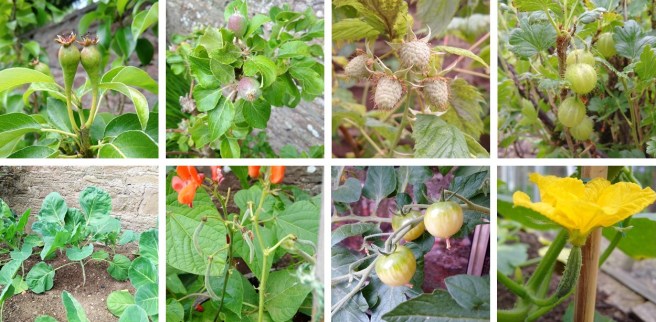
From top left: Concorde pears; miniature “Solo” apple tree; Glen Ample raspberries, Hinnonmaki Red gooseberries. From bottom left: Brodie F1 Brussels sprouts; Scarlet Emperor runner beans; and in the greenhouse: Gardener’s Delight tomatoes, and Beth Alpha cucumber

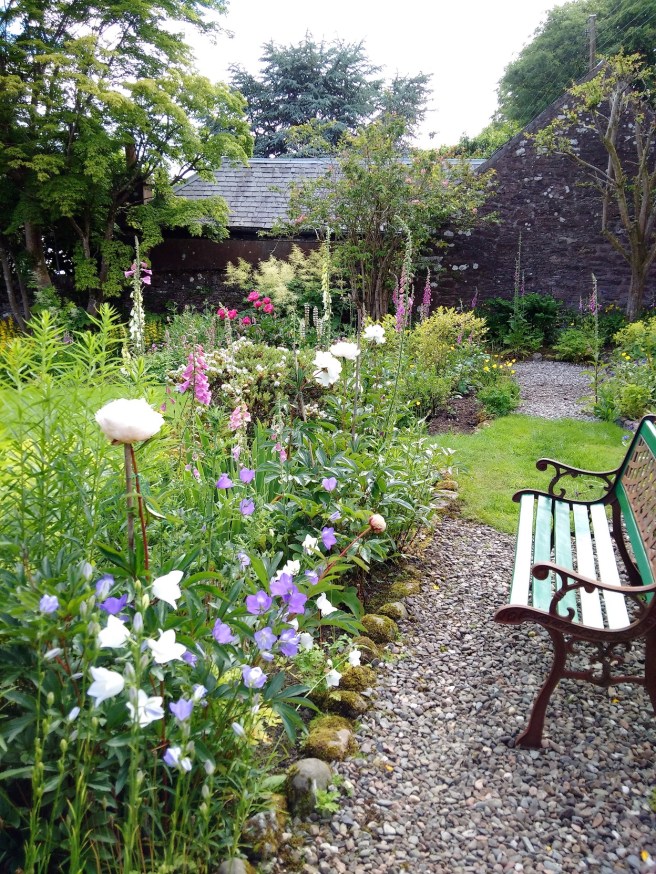
My favourite flower bed at this time of year is full of colour, fragrance and delicate petals. It is home to a combination of peonies, Welsh poppies, white and blue campanulas and foxgloves. Sadly the flowers often get windblown and damaged by heavy rain, but there has been nothing too destructive so far.

I have managed to capture a little of its beauty in the image below.

campanulas_peonies_Welsh_poppies_foxgloves
My favourite flower bed. Image copyright: Kathryn Hawkins

I adore peonies; their perfume is quite overwhelming – I only wish I could post the aroma via my blog. I inherited 4 varieties in this bed, they were very well established when I got here. I have no idea of their varieties, but these are my favourites. They have bloomed without fail for the 12 years I have had the garden; I hardly ever do anything by way of maintenance, except give them an occasional feed.

Peony perfection. Image copyright: Kathryn Hawkins