Marsh samphire

Stems_of_fres_marsh_samphire
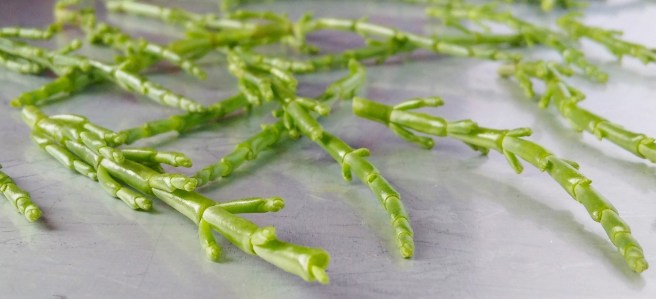
Fresh marsh samphire Image: Kathryn Hawkins

Also known as glasswort, marsh samphire is a vegetable that I associate with this time of year. I’m not entirely sure why, but the texture is succulent and crisp, and goes well with the lighter, brighter dishes I yearn for at this time of year. The vibrant green colour makes it look fresh and very appealing.  Samphire is definitely one of the ingredients and flavours that marries perfectly with this vibrant season.

Samphire_cooked_in_a_griddle_pan
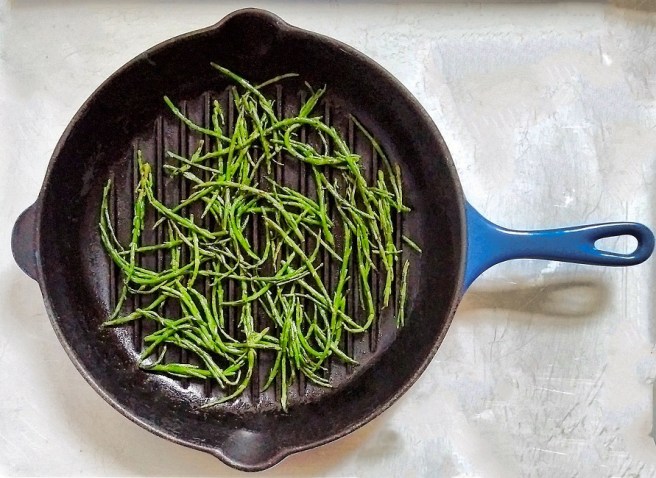
Griddled samphire. Image: Kathryn Hawkins

The thin, green succulent stems of marsh samphire remind me of fine, young asparagus stalks and can be eaten and cooked in the same way. However, the flavour is completely different; you won’t need to turn to the salt-cellar  or any other salted ingredients when you come to cooking and serving samphire, it is naturally salty and is, therefore, best served in small portions. I like to griddle a handful of stems in a very hot pan, brushed with a little oil. They wilt in a couple of minutes and take on a slightly charred flavour. You can also toss stems in oil, spread them out on a baking tray and blast them in a hot oven for a few minutes to get a similar effect.

Two_stems_of_marsh_samphire
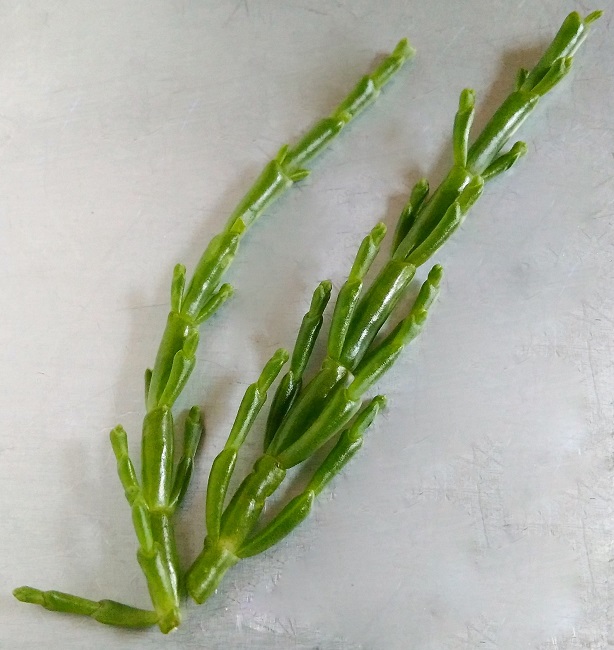
Fine, young samphire stems. Image: Kathryn Hawkins

Young, fine, very fresh stems can be eaten raw. Just give them a thorough rinse in cold running water, chop them into small bits and toss them into your salad greens for a salty crunch. Larger stems are best briefly cooked in boiling water or lightly steamed, and can be a stir-fried.

Salmon_samphire_and_rice_noodles
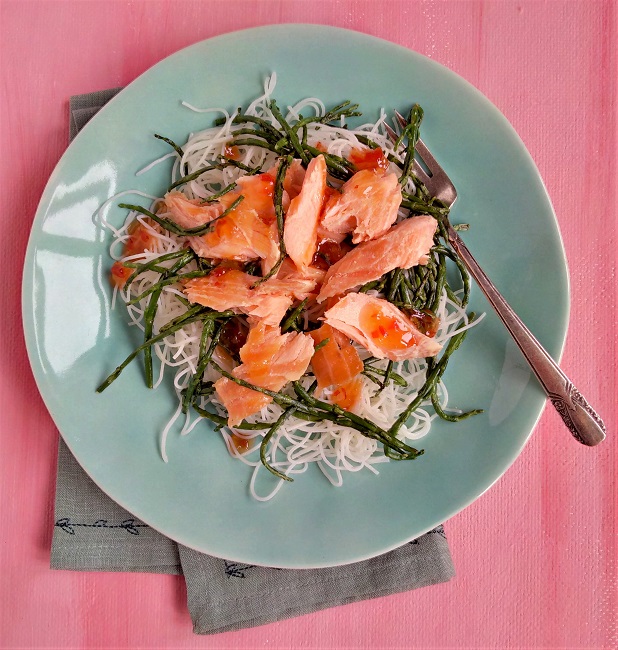
Smoked Salmon and samphire noodles Image: Kathryn Hawkins

Because of the “sea-salt” flavour, samphire is perfect served with fish, but it is also good with roast lamb. I like to add some sweetness in a dressing, or add a splash of vinegar or lemon juice to temper the taste of the salt. Samphire is a vegetable that is traditionally pickled (although I haven’t tried this); I can imagine a sweet, spicy pickling liquid would work well and make a great accompaniment to go with smoked mackerel or ham. My current favourite combination of ingredients with griddled samphire is freshly cooked plain rice noodles, flakes of hot smoked salmon and a dressing of Thai sweet chilli sauce – so simple and yet utterly delicious!

Chai masala biscuits for Easter (gluten-free, dairy-free, vegan)

Chai_masala_spiced_Easter_biscits
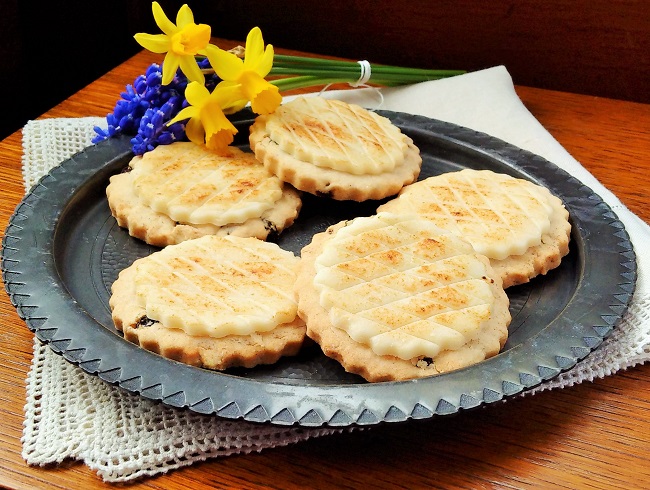
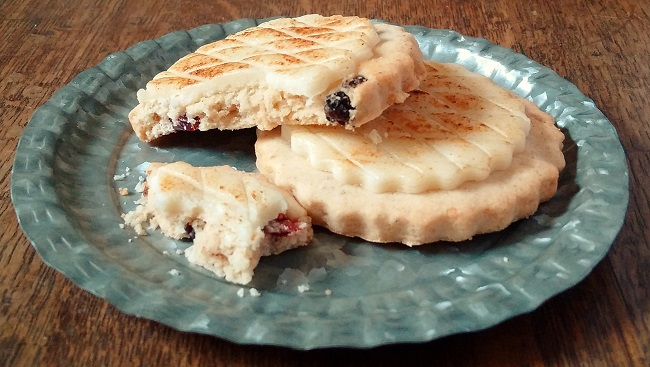
Marzipan-topped chai masala biscuits for Easter. Image: Kathryn Hawkins

Rich, short, lightly fruited biscuits with a hint of spice, this is a spring bake that takes me back to my childhood. Easter just wouldn’t be Easter without them. Traditionally the biscuits are dusted with white sugar before baking to give them a crusty top, but I love marzipan and it makes a delicious topping for these biscuits. Using a chai masala mix instead of the usual ground spice blends adds a delicate citrus note to the flavour. I think this Indian spice mix tastes lighter and more fragrant than the more familiar blends used in baking.

Jar_of_ready_mixed_chai_masala
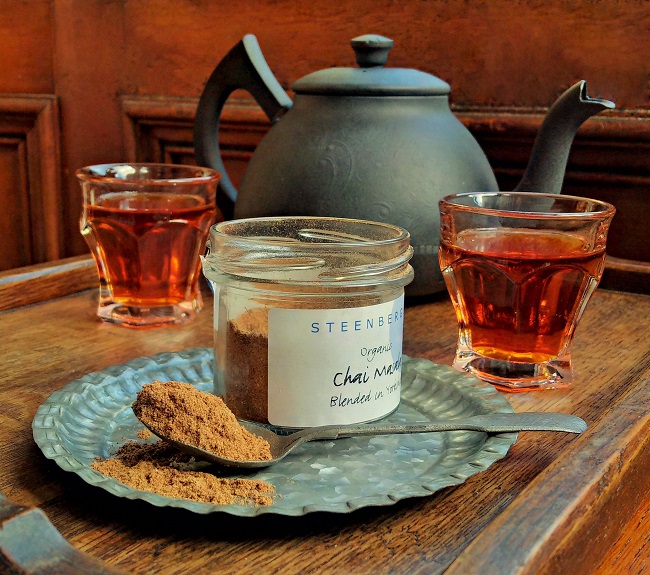
Ready blended chai masala mix. Image: Kathryn Hawkins

You can buy ready mixed chai masala for putting in your bakes (or tea!) (Steenbergs organic chai masala), but if you have selection of traditional spices, it is easy enough to put together your own blend. Making your own means that you can experiment by adding more of your favourite spice to personalise your mix.

Selection_of_whole_spices_that_make_up_a_chai_masala_blend
Whole spices: root ginger, nutmeg, cinnamon, black pepper, cloves and cardamom. Image: Kathryn Hawkins

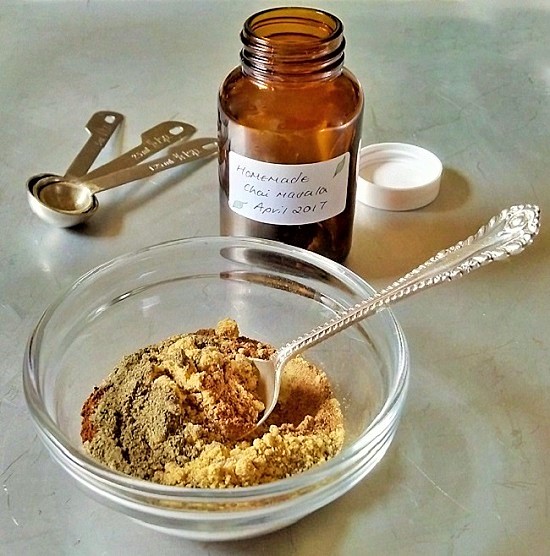
To make your own chai masala, mix together 4 level teaspoons ground cinnamon, 2 level teaspoons ground cardamom, 1 level teaspoon ground ginger and ½ level teaspoon each ground nutmeg, ground cloves and finely ground black pepper. As with all spices, store in a sealed jar out of direct sunlight, in a cool, dry place. I keep small vitamin supplement jars for keeping spice mixes in as the glass is often brown or dark green, and so perfect for keeping out the light. Make up the blend in small batches  to insure fresh flavour every time you use it. Chai masala can be used in any recipe where a ground mixed spice is called for.

Making_homemade_chai_masala_spice_mix
Blending together ground spices for chai masala. Image: Kathryn Hawkins

Here’s the recipe for my Easter biscuits.

Makes: 14

  • 100g vegan margarine, softened (use butter if you prefer)
  • 75g caster sugar
  • 3 tbsp non dairy milk
  • 200g gluten-free plain flour blend + extra for dusting (such as Dove’s Farm)
  • 1 ½ to 2 tsp chai masala
  • 65g mixed currants and chopped cranberries
  1. Line 2 large baking trays with baking parchment. Put the margarine  and sugar in a bowl and whisk together until smooth and creamy. Whisk in the milk.
  2. Sift the flour and spice on top and add the fruit. Mix all the ingredients together until well combined, then bring the mixture together with your hands to make a softish dough.
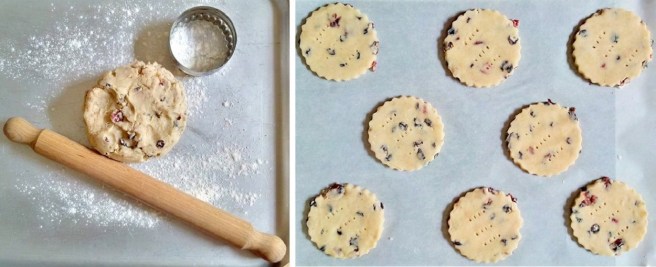
  3. Dust the work surface with flour and knead the dough gently until smooth. Roll out thinly to a thickness of approx. ½ cm. Using a 7cm crinkle-edge round cutter, stamp out 14 rounds, re-rolling the dough as necessary. Arrange the rounds on the baking trays, spaced a little apart. Prick with a fork, and chill for 30 minutes.

    Biscuit_dough_rolling_and_shaping
    Preparation of the biscuit dough. Images: Kathryn Hawkins
  4. Preheat the oven to 200°C (160°C fan oven, gas mark 6). Bake the biscuits for about 15 minutes until lightly golden round the edges. Cool on the trays for 5 minutes, then transfer to a wire rack to cool completely.

    Baked_chai_spiced_Easter_biscuits
    Freshly baked chai spiced Easter biscuits. Image: Kathryn Hawkins
  5. The biscuits are delicious left plain but if you are a marzipan fan, dust the work surface with icing sugar and roll out 200g marzipan thinly. Using a 6cm diameter crinkle-edged cutter, stamp out 14 rounds, re-rolling the marzipan as necessary. Brush each biscuit with a little smooth apricot jam and secure a marzipan disc on top of each. Score the marzipan with a knife and lightly toast the tops with a cook’s blow-torch if liked. Happy Easter eatings!

Chai_masala_spiced_Easter_biscuits_with_marzipan_top
Marzipan-topped Easter biscuits. Image: Kathryn Hawkins


April flowers

White_Pieris
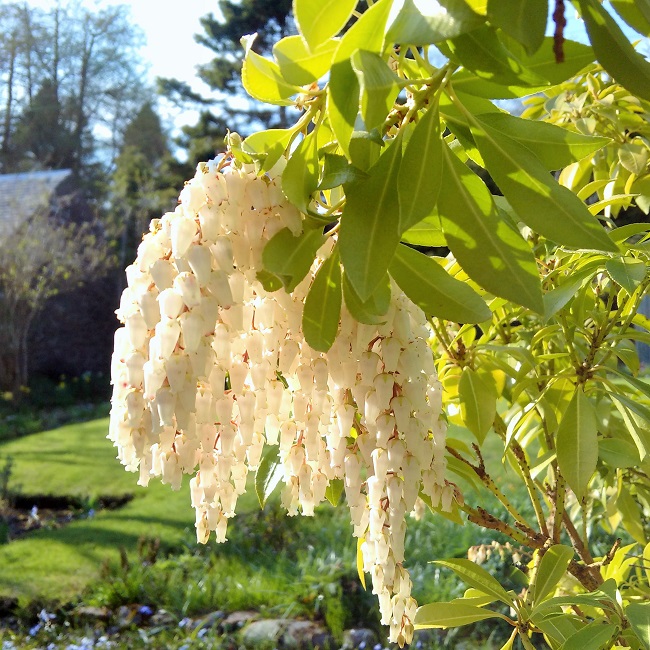
White Pieris in April sunshine. Image: Kathryn Hawkins

There is a multitude of colours in the garden this month. A combination of warmer, sunnier days, a few showers here and there, and cool nights, has brought glorious technicolor to the beds and borders. The Pieris shrubs have been in flower for a couple of weeks already, and are now fully laden with bunches of droplet-like blossoms. Their aroma is spicy and fresh, and the bees are buzzing all over them.

The zesty colours of the Euphorbia are showing now. In my garden, the plant grows most prolifically in the dappled, shadier parts, and has become quite a forest, as the stems self-seed each year.

Fresh_new_growth_on_ Euphorbia
Bright, fresh and green, Euphorbia. Image: Kathryn Hawkins

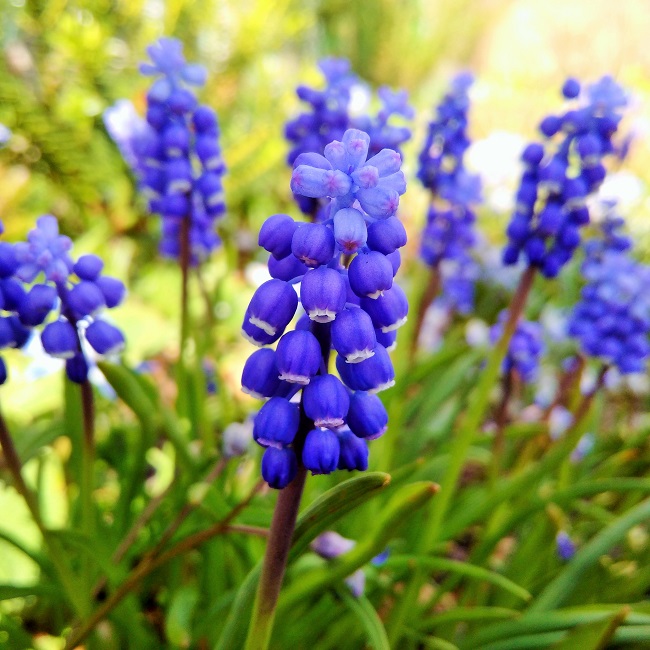
Growing in little groups in the flower-beds and alongside the paths, are the tiny, clustered flowers of the grape hyacinth. Sweet-scented,  dainty in stature, with bold, blue bell-shaped petals, they stand out prominently amidst all the fresh greenery.

Muscari_or_grape_hyacinth
Muscari (grape hyacinth). Image: Kathryn Hawkins

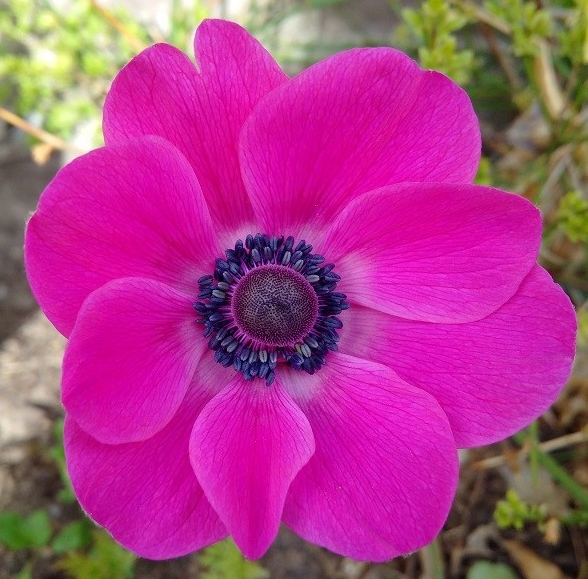
I planted anemones for the first time last autumn, and they seem to be thriving. The colour of the pink and red varieties is particularly dazzling in the sunshine.

Pink_anemone
Fuschia-pink anemone. Image: Kathryn Hawkins
Dazzlingly_bright_red_anemone_flower
Scarlet-coloured anemone. Image: Kathryn Hawkins

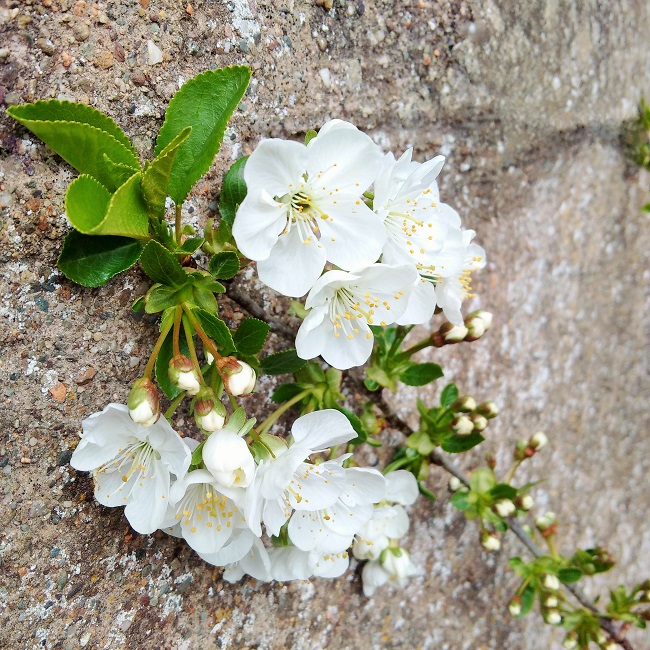
The warmth of the sun has opened up the blossom buds on several of the fruit trees this past week. The Morello cherry is always one of the first to flower. I have high hopes for a bumper crop this year as there are blossoms up and down every stem. The small tree is an espalier and grows against a south-facing wall. It is about 6 years old and for the past couple of years, has produced a fair crop of fruit.

Morello_cherry_blossom
Morello cherry blossom. Image: Kathryn Hawkins

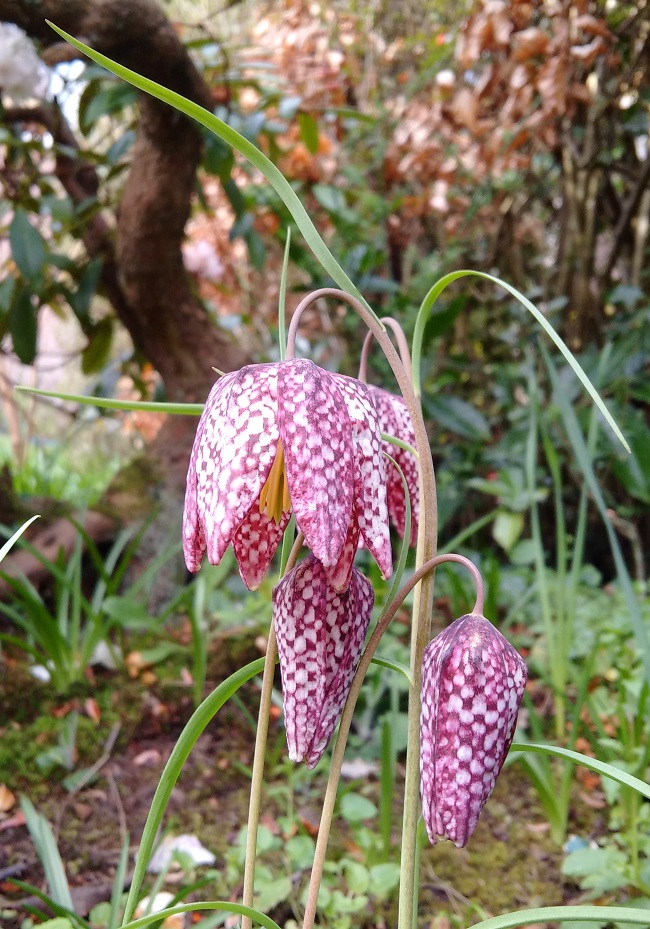
One of the more unusual-looking flowers at this time of year is the Snakeshead Fritillay. Immediately you can see how it gets its name. The striking flower heads grow on tall, spindly stems with grass-like leaves; they are almost camouflaged in amongst the new shoots in the flowerbeds and the back-drop of the beech hedge.

A_few_stems_of_snakeshead_fritillay
Snakeshead fritillary. Image: Kathryn Hawkins

Another flowering plant that is unremarkable from a distance, is this tiny yellow violet. It grows in a single clump in the back garden. The petals are so pale and delicate, the blooms are easily over-looked because it grows so close to the ground. If you can get close enough, the flowers have the faint aroma of vanilla.

Tiny_pale_yellowviolet_with_vanilla_scented_flowers
Tiny pale-yellow violet. Image Kathryn Hawkins

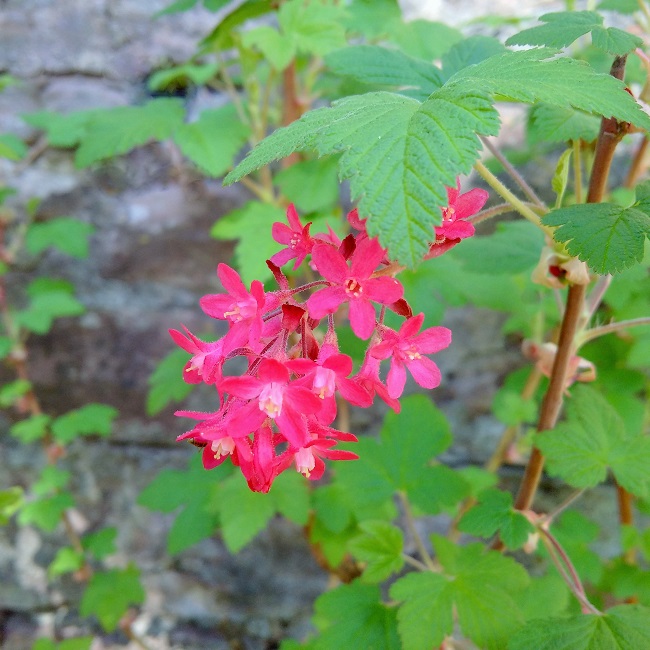
My final plant this month, is another aromatic: Ribes sanguineum. At this time of the year, the flowers and foliage smell of blackcurrants and, to me, its flowering means that spring is well under way with the promise of summer not too far off. Until next month, enjoy the sights and smells of the season.

Blackurrant_scented_leaves_and_flowers_of_theRibes_sanguinum
Ribes sanguineum. Image: Kathryn Hawkins


Garden Sorrel (Rumex acetosa)

New_season_spring_garden_sorrel
New season garden sorrel. Image: Kathryn Hawkins

I have more books on the subject of herbs and spices than on any other. I love growing my own herbs and experimenting with new flavours. It’s lovely to see that my herb garden is coming back to life again, now that the days are getting lighter and the sun is slowly warming up.

One of the best culinary friends from the herb garden is garden sorrel. A hardy perennial – I’ve noticed that even in the depths of a Scottish winter, there are always a few leaves poking their way through the earth – it is easy to grow and is very versatile. Related to spinach and the wild, leafy plant, Dock, garden sorrel is a real favourite with cooks and chefs alike.

A_small_garden_trug_of_fresh_sorrel_leaves
Freshly picked sorrel leaves. Image: Kathryn Hawkins

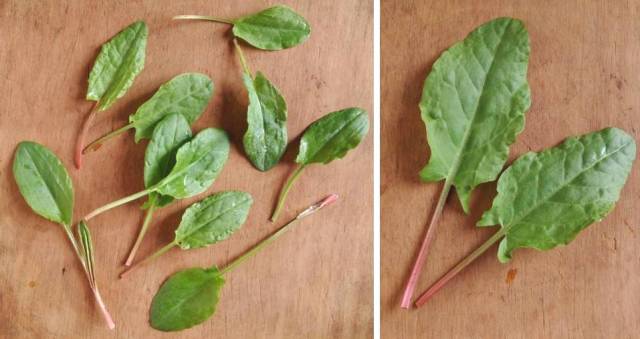
Spring is the time to start picking a few leaves here and there – the more you pick, the more the plant will regenerate, and you’ll have a succession of young leaves right through until autumn. At this time of year, the new leaves are juicy and fresh tasting. Larger leaves have more of the classic, astringent lemony flavour associated with the herb. As the season progresses, tougher, red flowering stems will form with clusters of tiny red flowers at the end, and a few of the leaves will become very large. Whilst the flowering stem should be cut down,  the large leaves, which are too coarse to eat, make perfect wrappings for tenderising meat and flavouring fish during cooking.

Very_young_tender_leaves_ and_more_mature_sorrel_leaves
Baby sorrel and larger sorrel leaves. Image: Kathryn Hawkins

If you fancy growing your own, buy some seed now and get sowing. You may also find potted clumps at the garden centre. Garden sorrel likes rich, moist soil, and the sun or semi-shade. And that’s about it; it will look after itself. If you want a supply for winter, either cover the clump with a cloche, or split the roots in autumn and pot some up – I usually keep a pot in my unheated greenhouse over the winter months to tide me over until the next spring.

Growing_garden_sorrel
New season sorrel in my herb garden. Image: Kathryn Hawkins

Garden sorrel serving suggestions and tips

  • Sorrel is best picked as required. Treat like spinach if you do need to store it: place in a plastic bag and keep in the fridge for a couple of days maximum. It can be frozen successfully, but loses its flavour if dried.
  • Because of the acid content, sorrel is affected by cast iron cookware and will discolour. Use a stainless steel knife blade for cutting, and only shred just before using to avoid discolouration and flavour loss.

    Chopping_fresh_sorrel_with_a_stainless_steel_blade
    Garden sorrel preparation. Image: Kathryn Hawkins
  • Young garden sorrel leaves are delicious mixed with other green salad leaves and soft-leaved herbs; they add a tangy lemony flavour to the plate, and reduce the need for vinegar or lemon juice in a salad dressing.
  • Used by the Greeks and Romans as an aid to digestion, garden sorrel is the perfect accompaniment to rich foods such as soft cheese (especially goat’s and sheep’s cheeses), oily fish, lamb and pork.

    Pork_and_pancetta_patties_flavoured_with_garden_sorrel
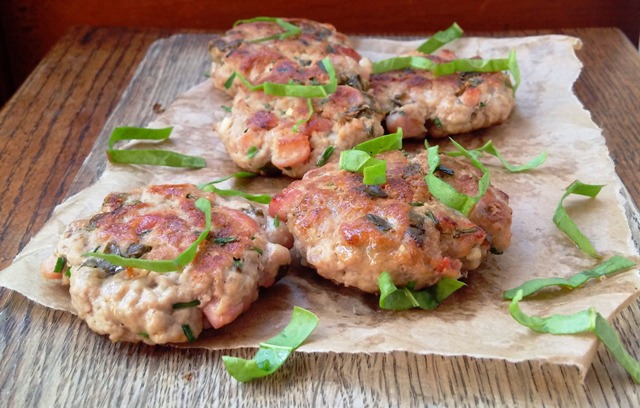
    Patties of minced pork and pancetta mixed with salt, pepper, garlic, freshly chopped chives and shredded garden sorrel. Image: Kathryn Hawkins
  • Garden sorrel is commonly used in egg dishes. Try adding to pancake batter, or a quiche filling; stir into scrambled eggs, or add as an ingredient to an omelette fines herbes. Pep up an egg mayonnaise sandwich filling by adding a few fresh leaves – much zingier than mustard and cress!
  • Add some chopped leaves to soft butter or margarine along with some black pepper and a little salt. Melt over hot grilled fish, barbecued chicken or steaks. See my recipe for chive butter if you fancy making some  Homegrown courgettes with chive butter (gluten-free)
  • As well as all the culinary uses, sorrel leaves are rich in potassium and the vitamins A, B1 and C.

    Bright_green_lance_shaped_leaves_of_garden_sorrel
    Broad, arrow-shaped leaf of garden sorrel. Image: Kathryn Hawkins

Spring blues

Chionodoxa_growing_in_gravel_path
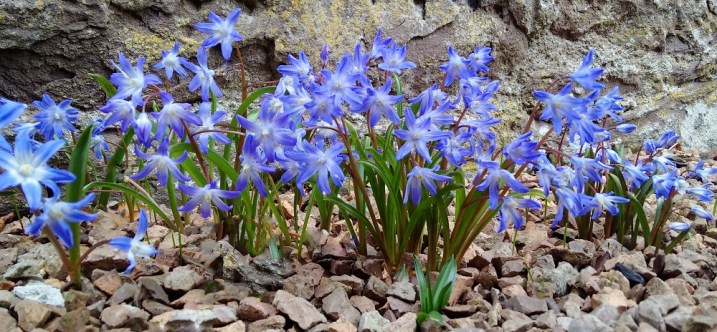
Chionodoxa. Image: Kathryn Hawkins

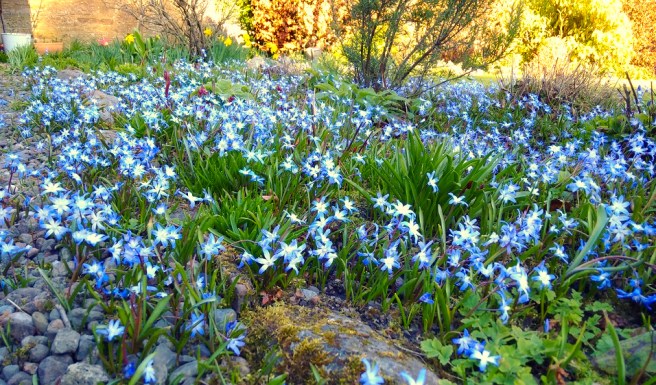
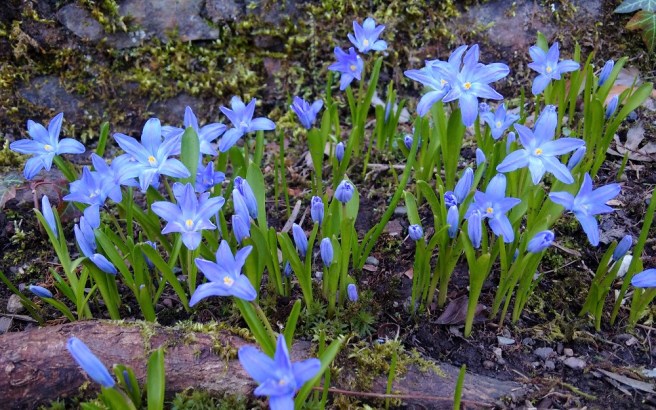
Long before the bluebells flower, my garden is swathed in the electric-blue colour from the blooms of hundreds of Chionodoxa. Every spring these hardy, yet very tiny, bulbs sprout up everywhere: in the flower beds, up through the gravel in the paths, all over the rockery, and in the barren earth where nothing much else is growing yet. They seed themselves and seem to appear in greater numbers each March.

Flowerbed_ and_pathways_covered_in_Chionodoxa
Blue carpet of Chionodoxa. Image: Kathryn Hawkins

This weekend, the sun shone brightly and the Chionodoxa were in full bloom. I expect that by next weekend the blooms will have begun to fade and the bulbs will begin their retreat back into the ground where they will lay dormant until next year.

Chionodoxa_growing_in_gravel_path
Chionodoxa growing up through the gravel paths. Image: Kathryn Hawkins
Chionodoxa_in_a_sunny_spot
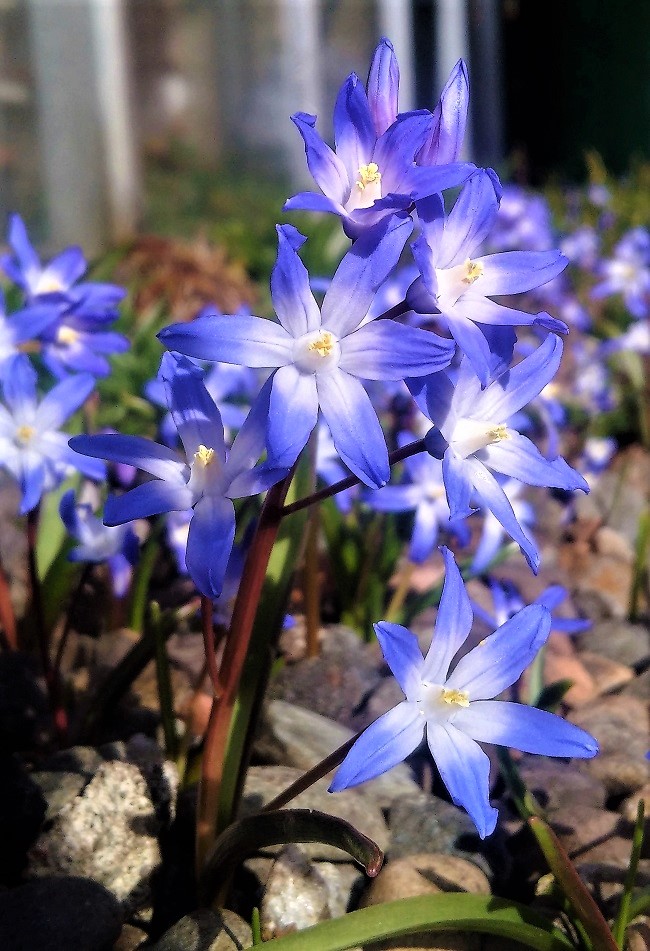
Chionodoxa basking in the spring sunshine. Image: Kathryn Hawkins

Whilst Chionodoxa like the open space and bright locations in the garden, Scilla prefer the shady parts which don’t get any direct sunshine. I found this newly opened little group growing amongst the roots of the Japanese Maple tree in the back garden. Scilla flowers lack the dazzling white star shape of the Chionodoxa petals, but they have an almost luminous quality, glowing from the shadows. Up close, you can see the tiny, glowing yellow centres; they were a true delight to discover.

Scilla
Scilla. Image: Kathryn Hawkins
Single_Scilla_flower_in_bloom
Single Scilla flower. Image: Kathryn Hawkins

One more spring flower that was at its peak this week is the Dogtooth Violet (Erythronium Dens Cannis). So pretty and dainty when it first opens with its hanging head of delicate pinky-lilac petals, but after a few days, it raises its head, turns up its petals and transforms into a slightly sinister-looking, upright bloom, revealing just how it gets its name. In my garden, it grows in a cluster on the rockery amidst all the Chionodoxa. These unusual looking “violets” with their strange spotty foliage make a striking contrast in amongst the bright blue and green of the tiny Chionodoxa.

Eythronium_Dens_cannis
Dogtooth violet newly opened and in full bloom. Images: Kathryn Hawkins
A_group_of_dogtooth_violets_growing_on_a_rockery
Striking blooms and foliage of the Dogtooth violet. Image: Kathryn Hawkins

One final image for this post: I saw my favourite insect in the garden today, also enjoying the sunshine. The first one this year, tucking into some aphids on a geranium leaf.

Ladybird_on_geranium_leaf
My first ladybrid of spring. Image: Kathryn Hawkins


Rhubarb ruminations and recipe ideas

Homegrown_forced_spring_rhubarb
Spring rhubarb. Image: Kathryn Hawkins

At last, my forced rhubarb was ready to pick this week! Now I feel the season of Spring has begun. Long before all other fruits in the garden are even formed,  forced rhubarb gives us a flavour of all the sweet delights yet to come.

To me, rhubarb is associated with fond memories of my childhood. My grandparents used to grow “forests” of the thick, leafy stems in the summer – no summer holiday was complete without one of Grannie’s rhubarb crumbles.

If you fancy having a go at growing your own, now is the best time of year to buy yourself a  rhubarb plant (or “crown”) and get it in the ground ready for next year.

Forced_rhubarb_ready_for_picking
My first rhubarb harvest of 2017. Image: Kathryn Hawkins

Rhubarb grows best in an open site, ideally in the sun, but it will grow anywhere. It likes a good mulching and needs plenty of soil depth as the roots, once established, run deep. Give it a good feed once in a while and it will do well. It is very easy to grow and a single plant will provide a good yield for a small family. Rhubarb is really a vegetable, but most of us regard it as a fruit because we serve it mostly for pudding. Only the stalks are edible – the leaves are high in oxalic acid and are, subsequently, very toxic.

Hold yourself back and avoid picking any stems in the first year of planting a new crown. In the second year, pull a few stems, leaving about half of the plant untouched. Once a plant is established – after 3 years – you can pick as many stems as you want. A rhubarb plant can be “forced” at this age, ready for an early crop in spring. You can buy special rhubarb forcers – very tall, slim, terracotta pots – which go over the crown in late winter. These are very expensive; I use the tallest pot I have and this works fine – as you can see in the image above. Although the pot covering doesn’t produce really long stems, they are good enough for me. I’ve put the pot back over the crown again, ready for the next batch of stems to grow – usually the plant produces four good batches of stems before I leave it to recover and rejuvenate for next year.

I have 3 rhubarb plants in the garden now. Each year, I rotate a plant for forcing, and the other 2 are left for summer eating rhubarb, and for freezing. Here are a few tips and ideas for cooking and serving rhubarb:

  • High in acidity, there are a few flavours that help temper the tartness of rhubarb: ginger, cinnamon, orange rind and juice, coconut, banana, angelica and liquorice.
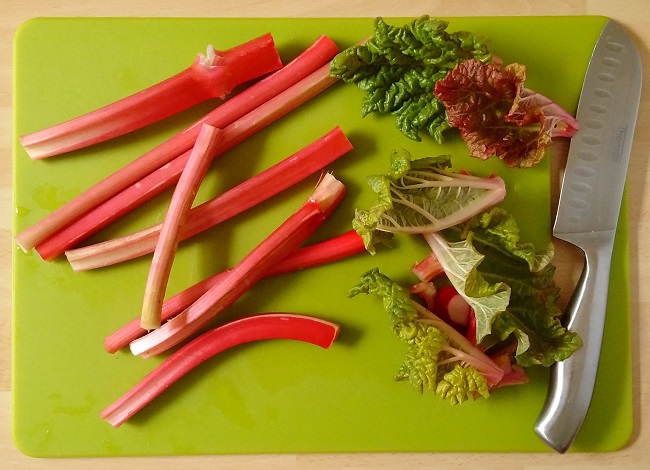
  • Trim the leaves from spring rhubarb and discard, then rinse the stems well and slice off the base. Cut into 3cm pieces for really quick cooking, but leave in longer pieces for gentle poaching and using to top tarts or desserts. Spring rhubarb takes barely 4-5 minutes to cook. I usually place the pieces in a frying pan and sprinkle with sugar and add 1 – 2 tablespoons of water. Once it begins to steam, cover with a lid and cook gently.

    Chopped_fresh_rhubarb
    Preparing spring rhubarb. Image: Kathryn Hawkins
  • For a tangy sweet and sour sauce, cook rhubarb in a little water with sufficient sugar to make it edible, then add a dash of raspberry or balsamic vinegar. Served cold, it goes well with roast duck, smoked mackerel or pan-fried herring.
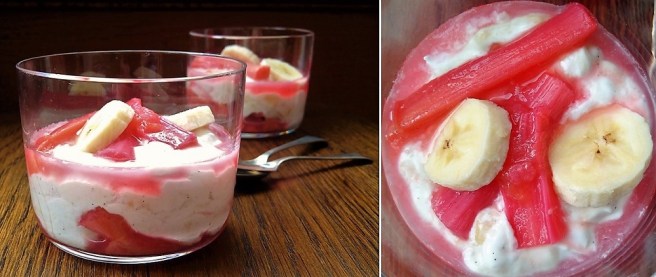
  • A favourite simple dessert of mine is to mix mashed banana, coconut (non-dairy) yogurt and vanilla extract together and layer in glasses with poached, vanilla sugar-sweetened rhubarb. It is absolute deliciousness guaranteed!

    Poached_rhubarb_with_banana_coconut_yogurt_and_vanilla
    Rhubarb, banana and coconut pots. Images: Kathryn Hawkins
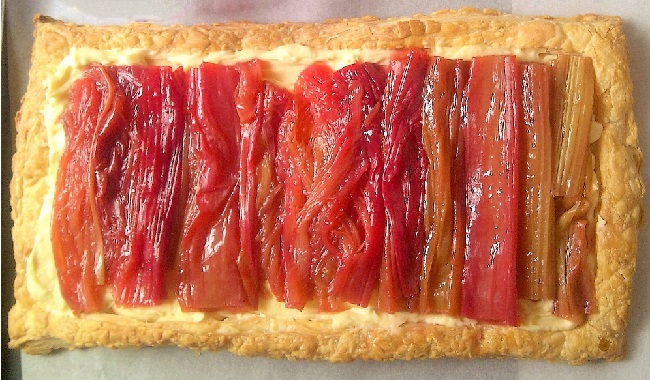
  • For an easy pastry, bake-off a sheet of (gluten-free) puff pastry and allow to cool, then top with thick (dairy-free) custard and lightly poached stems of sweetened rhubarb. Always a winning combination…..rhubarb and custard.
    Rhubarb_and_custard_tart
    Rhubarb and custard tart. Image: Kathryn Hawkins

    I have posted a couple of other rhubarb recipes in my blog over the months, here are the links Rhubarb, raspberry and custard crump (gluten-free, dairy-free, vegan) and Rhubarb and custard ice lollies (gluten-free)

    3_stems_fresh_spring_rhubarb
    Tender pink stems of forced rhubarb. Image: Kathryn Hawkins

My hellebore heaven

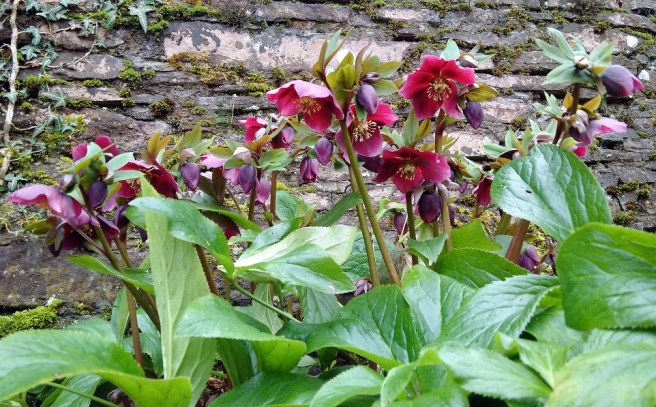
Dark_red_purple_hellebores
Helleborus. Image: Kathryn Hawkins

The weather has been kind these past few days and the spring flowers are really coming on. I spent a couple of hours in the garden yesterday afternoon and was delighted to see that all 4 varieties of hellebore are now in full bloom. Hidden away in different parts of the garden, they don’t stand out from a distance, but when you get up close, they are magnificent and unlike anything else in the garden at this time of year.

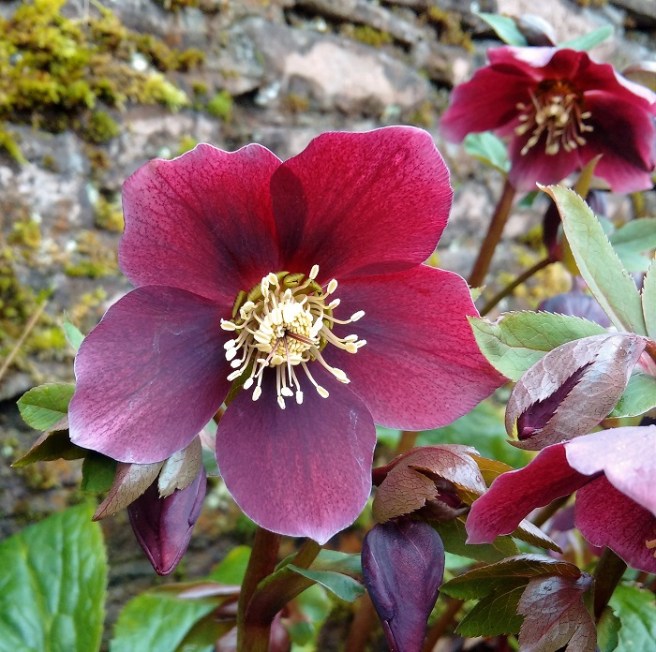
Single_dark_purple_red_hellebore_bloom
Dark purple-red bloom. Image: Kathryn Hawkins

I don’t know the names of any of the hellebore in the garden, but I do know that the plants are hardy, evergreen and deciduous, and they bring dramatic colour and structure to the borders in early spring, just when I’m wondering whether there will ever be life in the garden again. The large blooms last around 4 to 6 weeks and then they will fade gracefully into the foliage, leaving the glossy, bold leaves behind for another year.

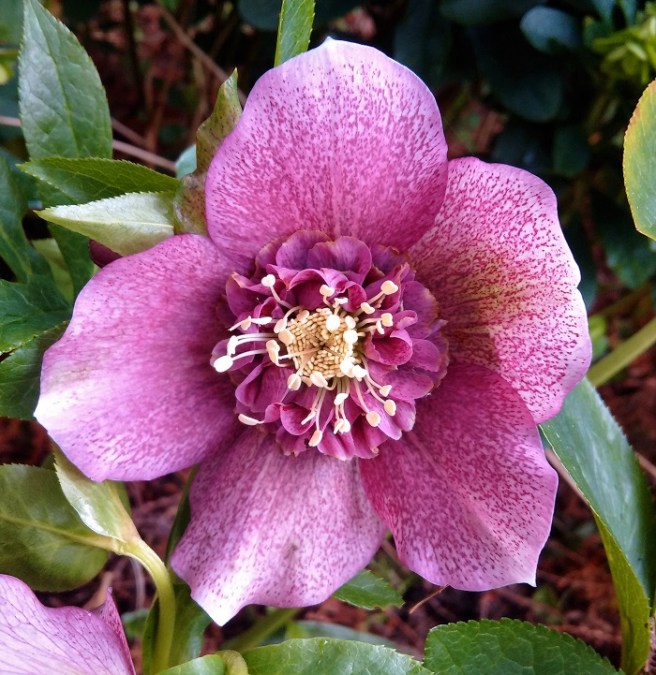
Light_purple_hellebore_bloom
Light purple with a ruffled centre. Image: Kathryn Hawkins

Helleborus grow well in the shade or partial shade, and they like moist soil; they are a perfect plant for the Scottish climate. All mine are growing beside walls or fences. New plants take a couple of years to get established, and once they are embedded, they don’t like being moved, although you can divide clumps in the autumn.

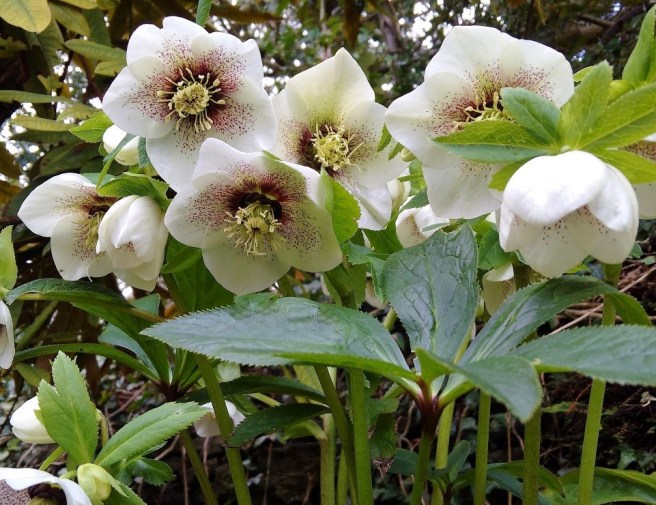
White_hellebore_blooms
A white variety with a hint of green. Image: Kathryn Hawkins

Best of all, Helleborus are a low maintenance plant. Once they have flowered, just remove any fading foliage; give the plants a mulch, and allow them to hunker down for another year.

White_and_burgundy_hellebores
A group of white, burgundy-speckled, Helleborus. Image: Kathryn Hawkins

Savoury oat and seed crunchies (gluten-free, dairy-free, vegan)

Pieces_of_savoury_oat_and_seed_crunchies
Oat and seed crunchies. Image: Kathryn Hawkins

Every now and then I try very hard to cut back on the amount of sugar I eat. I find it challenging to find something to stave off the cravings. and I usually turn to seeds to do the job. This week, I started my latest “health-kick” and I found that I had built up quite a collection of different seed varieties from the last time. Many of the seeds are in half-opened bags stored in the fridge and are now coming up to the “best before” date; it seemed the perfect time for a healthy, and very much savoury, baking session. Bursting with  nutrition and flavour, and with super crunchy textures, seeds are one of the best foods to snack on without feeling too guilty.

Chia_sunflower_pumpkin_sesame_and_flax_seeds
Some of my current seed collection. Image: Kathryn Hawkins

You can use any seeds in this recipe, but a mixture of different sizes works the best. Introduce your own flavourings if you like; I kept mine plain and simple this time, but black pepper, smoked paprika, cumin, chilli, thyme and rosemary are good flavours to try if you like to experiment. I use the thicker milled, porridge  (or Scottish Porage) oats, the finer milled varieties seem to go a bit mushy and give a less crisp texture to the final bake. There is a small amount of gram (chickpea) flour added to the mix to help bind the ingredients together but the recipe works fine with other gluten-free blends if you prefer.

Thick_or_coarse_milled_porridge_oats
Thick milled Scottish porridge oats. Image: Kathryn Hawkins

These crunchies are very easy to make and will keep for a week or so in an airtight container. Enjoy them broken into large shards as a crispbread, or crumble them on to soups or salads for extra nutty flavour. Here’s what to do…….

Makes at least 10 big pieces

  • 90g thick or coarse milled oats
  • 175g assorted seeds – I used chia, sunflower, pumpkin, sesame and flax seeds
  • 25g gram (chickpea) flour
  • ½ tsp salt
  • 2 tsp soft dark brown sugar or maple syrup
  • 1 tbsp sunflower oil
  • Approx. 100ml warm water
  1. Preheat the oven to 190°C (170°C fan oven, gas mark 5) Line a large baking tray with baking parchment. Put the oats and seeds in a large bowl and mix well. Stir in the remaining ingredients until thoroughly combined.
  2. Gradually pour and stir in approx. 100ml warm water to make a clumpy mixture. Leave aside to soak for 15 minutes, then squeeze the ingredients together with your hands to make a ball. Add a little more water if the mixture is still a bit dry.
  3. Put the mix on to the prepared baking tray and flatten with your hands. Place another sheet of parchment on top and roll using a rolling pin to make a rectangle approx. 36 x 25cm minimum. Remove the top layer of parchment.
    Preparation_shots_of_oat_and_seed_crunchies
    Making the oat and seed dough. Images: Kathryn Hawkins

    4. Bake in the oven for about 20 minutes until lightly browned around the edges. Place a sheet of parchment on the surface of the bake, lay another baking tray on top and carefully flip the mixture over. Peel away the top parchment and return to the oven for a further 15-20 minutes until crisp and lightly golden all over. Cool for 10 minutes then slide on to a wire rack to cool completely.

    Baked_oat_and_seed_crunchy_mixture
    A freshly baked slab of oat and seed crunchies. Image: Kathryn Hawkins

    When cold, transfer to a board and either snap into pieces with your fingers, or break into shards using the tip of a knife.

    Ready_to_eat_oat_and_seed_crunchies
    Oat and seed crunchies. Image: Kathryn Hawkins

    As an alternative way to bake, you can divide the dough into 10 or 12 portions, flatten each one separately, and roll into thin rounds. Bake in the same way for about 5 minutes less cooking time. The crunchies are delicious with all kinds of savoury spreads, but I prefer mine with crunchy wholenut peanut butter.

    Serving_suggestions_oat_and_seed_crunchies_with_peanut_butter
    Ready for snacking. Image: Kathryn Hawkins

Marvellous March

Snowdrops_in_full_bloom
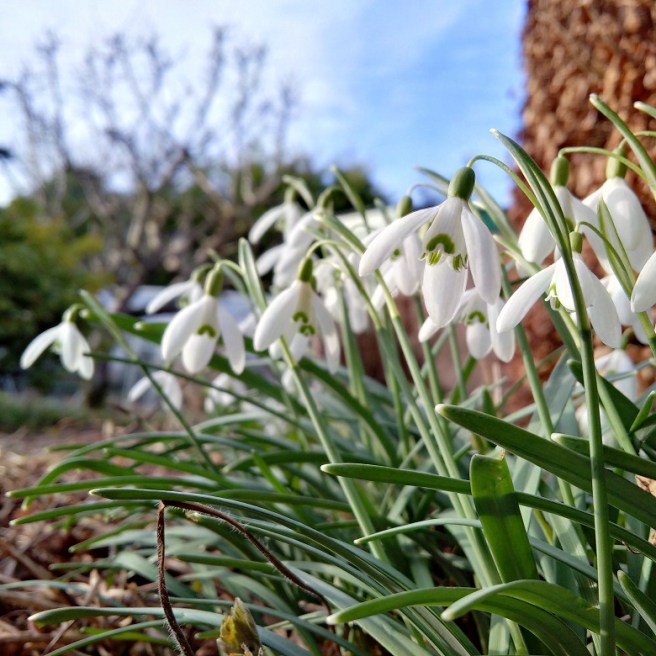
Under a blue sky, snowdrops in full bloom. Image: Kathryn Hawkins

It’s been a wonderfully bright start to the new month. Blue sky, a light breeze, and warm(ish) sunshine. It is chilly in the shade, with frosts overnight, but the spirits are lifting as the flowers are blooming. In the garden, snowdrops are the main stars of the show and small clumps are in flower all over the place.

Clumps_of_snowdrops_under_a_beech_hedge
Snowdrops growing under the beech hedge. Image: Kathryn Hawkins

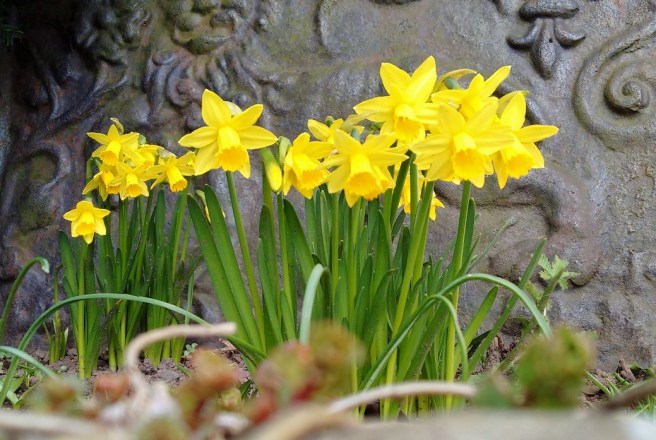
There are also little pockets of sunshine yellow, here and there, as the Tête á Tête Narcissus have burst into flower these past few days. These are a favourite of mine, with their sweet, spicy perfume as well as their bright, almost glowing, petals.

Miniature_narcisisus
Miniature Narcissus. Image: Kathryn Hawkins

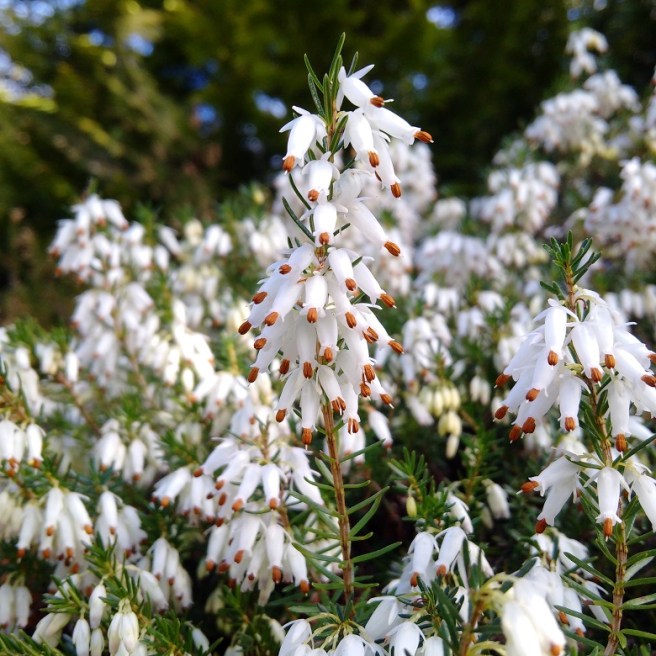
It’s only occurred to me this year, how much of the heather in the garden flowers at this time of the year. In Scotland, heather is something I associate with as a mid to late Summer flowering plant, when it grows over the hills as far as the eye can see. I have planted lots of heather varieties in the garden over the years, and mostly by good fortune, there are plants flowering in all seasons. This pure white one overhangs the driveway.

Scottish_garden_white_heather_flowering_in_March
March flowering white heather. Image: Kathryn Hawkins

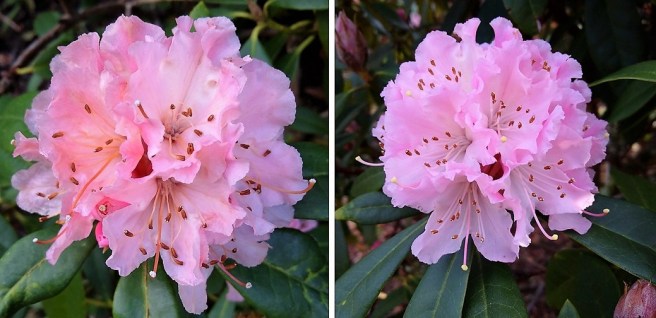
A couple of the early flowering rhododendrons are just about fully in flower. At this time of the year, they are vulnerable to frosts, but, so far (with fingers crossed), they have been unaffected. Both shrubs have been in the garden for many years, and are well established; they pretty much look after themselves.

Two_subtle_pink_flowering_rhododendron_flowers
Early flowering rhododendrons. Images: Kathryn Hawkins

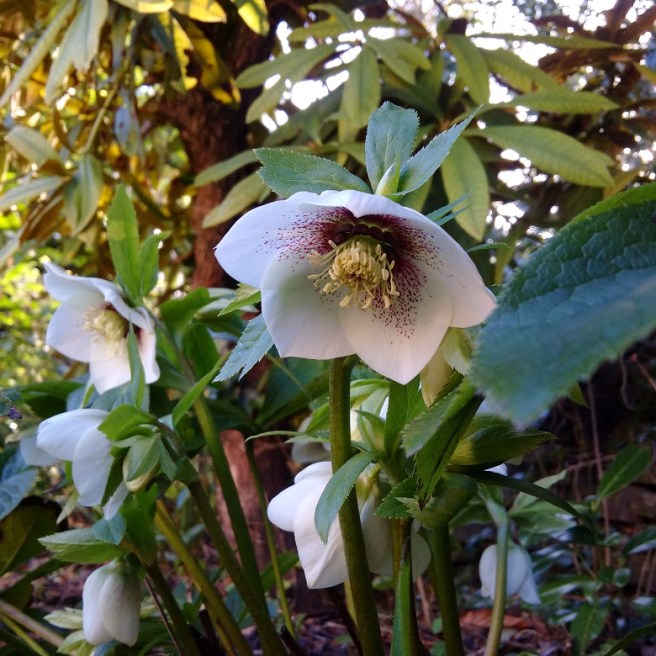
In a few shady spots in the garden, where the sun doesn’t reach, the hellebores are opening out. Probably one of the most challenging flowers to photograph owing to their drooping heads, this white one with dark red spots is one that grows more erect. It is the first one to bloom fully; the darker varieties are not quite open yet, but will feature in next month’s post.

White_hellebore_in_a_Scottish_garden
White Hellebore. Image: Kathryn Hawkins
Centre_of_white_hellebore
Hellebore: close up and personal. Image: Kathryn Hawkins

To close my post this month, the most pleasing sight in the garden yesterday was this little fellow, standing alone, just a few centimetres tall. In a couple of weeks, the bare garden soil and gravel paths will be over-run with Chionodoxa and Scilla; there will be speckles of bright blue everywhere. These tiny, wee plants herald the start of the new season in my garden, and are a delight to behold.

Early_Chionodoxa
The first Chionodoxa. Image: Kathryn Hawkins

Rhubarb, raspberry and custard crump (gluten-free, dairy-free, vegan)

Rhubarb_raspberry_and_custard_crump_pudding
Rhubarb, raspberry and custard crump. Image: Kathryn Hawkins

For me, one of the signs that Spring is on its way is the first harvest of my forced rhubarb. I love the rich colour of the stalks, their tenderness when cooked and the mild astringent, tartness of flavour that really packs a punch on the palate. Sadly, my rhubarb is not ready for picking just yet as you can see below, but I couldn’t resist the fresh stalks I saw in the local farm shop this week.

Homegrown_forced_rhubarb_in_Scotland_in_February
My homegrown forced rhubarb in late February. Image: Kathryn Hawkins
Stalks_fresh_forced_rhubarb
Spring rhubarb. Images: Kathryn Hawkins

One of my favourite pairings with rhubarb is raspberry. Whilst it seems like a long time ago I had raspberries ripening in the garden, I have a few packs in the freezer, and this recipe is the perfect opportunity to delve into my supplies.

I love the name of this dish. I assume it comes from the hybridisation of the pudding called “slump” and the one called “crumble”. The recipe works fine with any cooked fruit baked underneath the glorious, melt-in-the-mouth topping. The custard is a recent addition to my recipe and brings an extra spoonful of comfort at this time of the year.

Homegrown_raspberries_on_the_branch_and_frozen
Last years homegrown raspberries. Images: Kathryn Hawkins

Serves: 6

  • 350g fresh rhubarb, trimmed
  • 50g vanilla sugar (or you can use plain caster if you prefer)
  • 175g frozen raspberries
  • 115g dairy free margarine (or butter if you eat it), very soft
  • 75g caster sugar
  • 175g gluten-free plain flour blend (I use Doves Farm)
  • 5ml good quality vanilla extract
  • 500ml gluten-free, dairy-free custard
  1. Trim the rhubarb and cut into 5cm lengths. If you have thin and wider stalks, cut the stalks down so that they are all roughly the same width – this helps the rhubarb cook more evenly.
  2. Arrange neatly in a large, lidded shallow pan. Spoon over 2 tbsp water and sprinkle with the vanilla sugar. Heat until steaming, then cover with the lid and simmer gently for 5-6 minutes until just tender but still holding shape.
  3. Remove from the heat, sprinkle the frozen raspberries on top and leave to cool completely. Transfer to an ovenproof baking dish, about 1.2l capacity. If the fruit is very juicy, drain off a few spoonfuls and keep as a separate serving syrup.

    Cooked_rhubarb_and_raspberries
    Rhubarb and raspberries, a winning combination. Images: Kathryn Hawkins
  4. For the topping, put the margarine (or butter) in a bowl and beat in the caster sugar until smooth and creamy. Mix in the flour and vanilla to make a lumpy, sticky mixture, resembling a soft cookie dough. Cover and chill for 30 minutes until firm.
  5. Preheat the oven to 200°C (180°C fan oven, gas mark 6). Spoon over about half of the custard in small dollops. Break up the chilled topping into clumps and scatter over the top, covering the fruit and custard as much as possible. Stand the dish on a baking tray and bake for about 35 minutes until lightly golden, bubbling and the topping has merged together. Serve hot or warm with the remaining custard and the fruit syrup.
    Final_steps_of_crump_preparation_and_baked
    With custard; with topping, and the freshly baked crump. Images: Kathryn Hawkins

    Portion_of_freshly_baked_rhubarb_raspberry_and_custard_crump
    A spoonful of comfort: hot crump pudding. Images: Kathryn Hawkins