Welcome to my blog all about the things I love to grow and cook. You'll find a collection of seasonal gluten-free, dairy-free and vegan-friendly recipe posts, as well as a round up of my gardening throughout the year. I wish you good reading, happy cooking and perfect planting!
Hello again. I hope this posts finds you well. The season has definitely shifted here in central Scotland, and Autumn is upon us once again. It’s been a mixed bag of weather with some unseasonal, very hot and humid days back at the beginning of the month, and now wet, windy and stormy ones to bring the month to a close. On the whole, it has been quite mild. Given this mixed bag of growing conditions, it is a wonder that the plants know what season it is, like these foxgloves still producing flowers since June.
September foxgloves. Images: Kathryn Hawkins
A couple of weeks ago, I was able to harvest the plums from the small tree in the garden. Like a lot of fruit trees this year, the harvest was good and there were a fair few plums to pick. All now cooked and made into jam 🙂
This year’s plum harvest. Images: Kathryn Hawkins
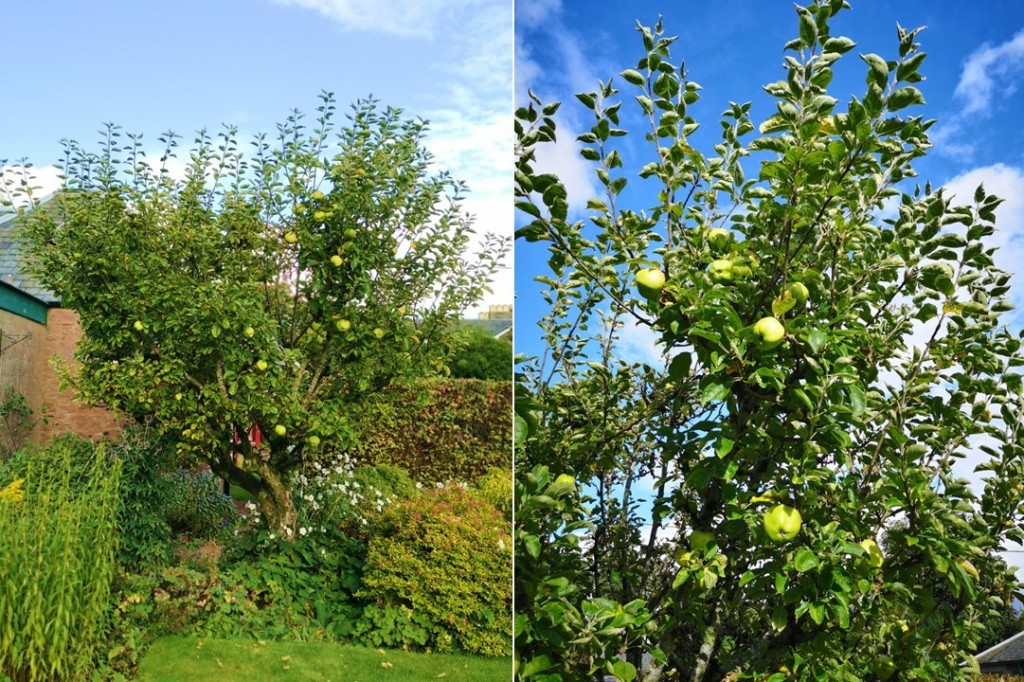
The next garden harvest will be from the apple tree. I think we’re looking at a more modest harvest this year compared to last year’s bumper crop.
The old apple tree, September 2023. Images: Kathryn Hawkins
Hydrangeas do quite well in the garden due to the acidic soil. This one was planted back in late spring, and although the blooms naturally fade at this time of year, it still adds some colour and cheer in the flowerbed.
Fading gracefully, red Hydrangea. Images: Kathryn Hawkins
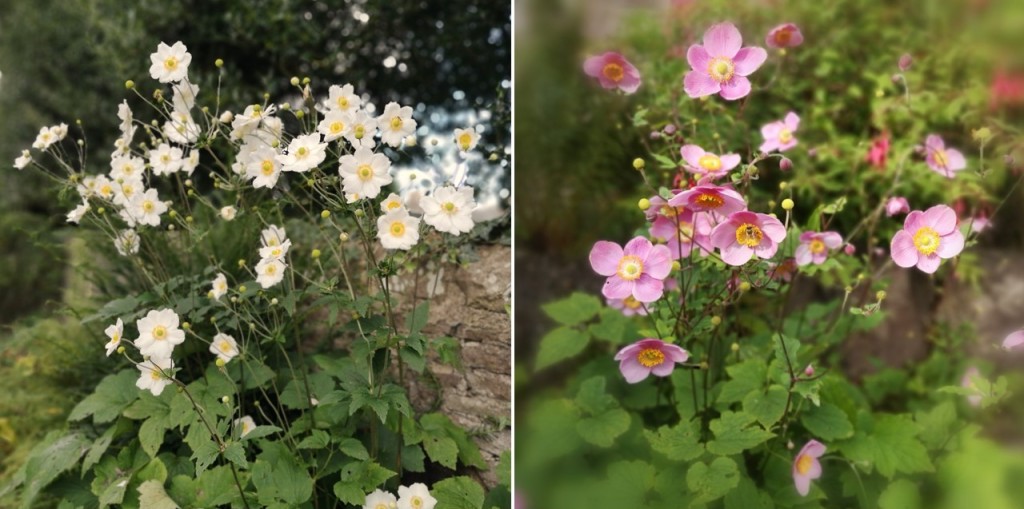
No post from me at this time of year would be complete without a few images of the Japanese anemones. They have done very well this year, surviving the heat and now the wind and rain. As delicate as they look, their hardiness still amazes me.
Autumn favourites. Japanese anemones. Images: Kathryn Hawkins
My favourite rose bush in the garden didn’t do quite so well earlier in the year, so I was very happy to see new buds forming at the end of last month and some healthy foliage forming. In the past couple of weeks, new heavily scented flowers have opened up along with fresh green leaves.
Pink rose, second time around. Images: Kathryn Hawkins
After my hedgerow harvest post at the end of last month, I have been on the look out for more wild berries. Whilst the blackberries and sloes have finished now, there are still plenty of elderberries ripening. On a walk last weekend, I picked this container-full. Once the berries were removed from the stems, I had just under 2lb of fruit which are now stashed in the freezer for later use.
Ripe Scottish elderberries, September 2023. Images: Kathryn Hawkins
That’s me for another week or so. I will be back in the kitchen for my next post. Until then, enjoy the change of season and thanks for stopping by 🙂
Hello again. It’s been a busy couple of weeks since my last post. The season is subtly shifting from late summer to early autumn. There is a bit of a nip in the air first thing in the morning and some of the leaves on the trees are beginning to turn. Out and about, the hedges are full of ripening fruit, and I have been out foraging a couple of times this month. Two weeks ago I went on a recce for brambles (blackberries), and was happily surprised to see that so many were ripe and ready. Thank goodness I went prepared with a large container (just in case), and came home with 2.7kg of the glistening berries which I have now frozen 🙂
Scottish brambles. Images: Kathryn Hawkins
Whilst on my walk, I had noticed that there were also sloes and elderberries, although not quite ripe. I gave it a week and went back. The birds had eaten a few elderberries, and I think another forager had found the sloes, but I still managed a container-full as well as a few more brambles.
Blackberries, dewberries, sloes and elderberries. Images: Kathryn Hawkins
Always wash wild fruit well before using. Brambles and sloes need little preparation, but elderberries can be a little fiddly to remove from their fine stems. I find a fork is quite useful to help prise them away.
Freshly washed and prepared wild fruit. Images: Kathryn Hawkins
All of these hedgerow fruits will freeze fine in case you are unable to use them immediately. Lay them out on lined trays and freeze until solid, then pack them into bags or containers, seal, label and store until ready to cook.
My hedgerow harvest preserve. Image: Kathryn Hawkins
My preserve recipe can be adapted to use any combination and quantity of wild berries you have picked. Sloes have a bitter/sour flavour whilst brambles and elderberries are sweeter and juicier. I ended up with about 700g prepared fruits in total, 200g of which were sloes, and this gave a good balance of sharp and sweet, with a deliciously rich and intense flavour overall.
Packed full of flavour and colour. Image: Kathryn Hawkins
The yield of preserve in this recipe is slightly lower than for other jams because I removed the seeds. Brambles do tend to be very seedy, and sloes are impossible to pit before cooking, so sieving (or straining) seemed like the logical thing to do. Alternatively, you could make a jelly by straining the cooked fruit through muslin. This would result in an equally delicious preserve, but with a much smaller yield. I’ll probably make a jelly with some of my freezer brambles later in the year and mix them with some apples from the tree in the garden. Delish.
Makes: approx. 700g
Ingredients
700g prepared hedgerow berries and fruit, washed
Approx. 400g granulated sugar
2tbsp lemon juice
1. First cook the sloes. Place in a saucepan with 250ml water. Bring to the boil, cover and simmer for 6-7 minutes until softened.
2. Stir in the berries, bring back to the boil, re-cover and cook gently for 10 minutes until everything is very soft and juicy.
Cooking the fruit. Images: Kathryn Hawkins
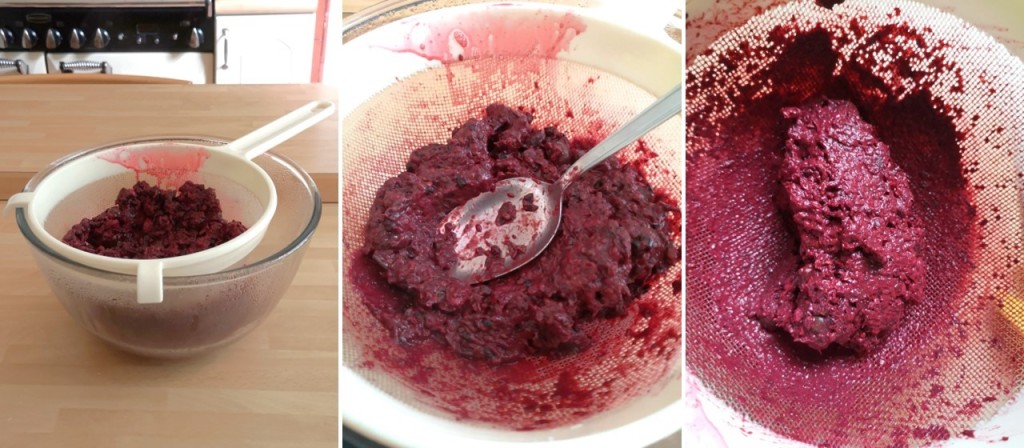
3. Put a large nylon sieve (strainer) over a large bowl or jug and carefully pour in the cooked fruit and juices. Leave to strain for 30 minutes then use the back of a spoon to push and press the pulp against the side of the sieve to squeeze out as much juice as possible. Do this until you end up with a dryish pulpy mass of seeds and fibres in the sieve. Discard.
Getting rid of the seeds. Images: Kathryn Hawkins
4. Measure the juices – I ended up with 500ml. You will need 400g sugar per 500ml juice. Pour into a saucepan and heat gently to warm through, then add the sugar and lemon juice. Stir until dissolved.
Cooking the pulp. Images: Kathryn Hawkins
5. Bring to the boil and cook for several minutes until the correct level of set is achieved – between 104°C and 105.5°C on a sugar thermometer. I cooked my preserve to the higher temperature and ended up with a very firm set – almost like a fruit cheese. For something more spreadable, cook to the lower temperature.
6. Spoon the hot mixture into sterilised jars and seal immediately. Leave until cold then label and store in the usual way.
For the storecupboard. Image: Kathryn Hawkins
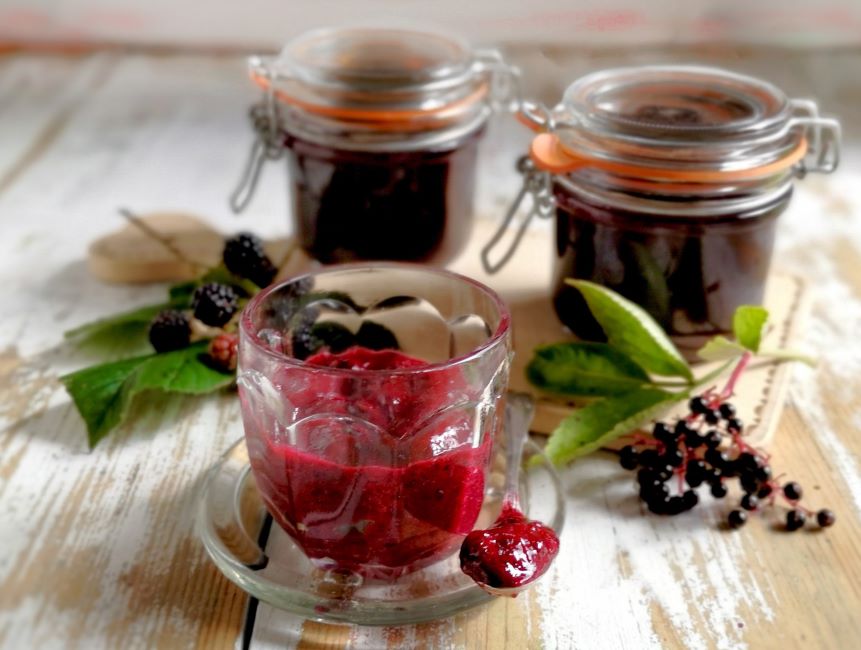
Because I achieved such a firm set, I melted the leftover preserve with a little more water and when it cooled, it was much more spreadable. It made a delicious topping for toasted crumpets. This preserve also makes an excellent accompaniment to serve with grilled, roasted and barbecued food.
Tangy, tasty and freshly made, hedgerow preserve. Images: Kathryn Hawkins
Until next time, I hope you have a good few days, and I look forward to posting again in a couple of weeks. Thanks for stopping by 🙂
The first ground frost of Autumn 2022. Images: Kathryn Hawkins
As another month draws to a close, it’s been a rather wet and dreary end to the season of Autumn here in central Scotland. Photographically speaking, there have been very few blue-sky days to capture the warm, glowing colours of this time of the year. Nevertheless, I have a few images which I hope convey the natural glory of the month just passing.
Late Autumn, River Earn, Perthshire, Scotland. Images: Kathryn Hawkins
I took these photos a couple of weeks ago whilst out on a walk along the local riverbank. Even though the sky was a dull grey and the waters looked cool and steely, the colours of the leaves still clinging to the trees looked spectacular.
Golden leaf colour. Images: Kathryn Hawkins
Back home in the garden at the same time, the Japanese Maple (Acer) tree was ablaze with glowing yellow leaves. But following a few heavy downpours and some strong winds, the last of the leaves have fallen.
November sun-rise and sun-up. Images: Kathryn Hawkins
Usually, the month of November brings with it glorious sunsets and sunrises, but I have only managed to capture one sunrise, and that was during the last week. You can see the same Maple tree now bereft of leaves in the early morning sunshine.
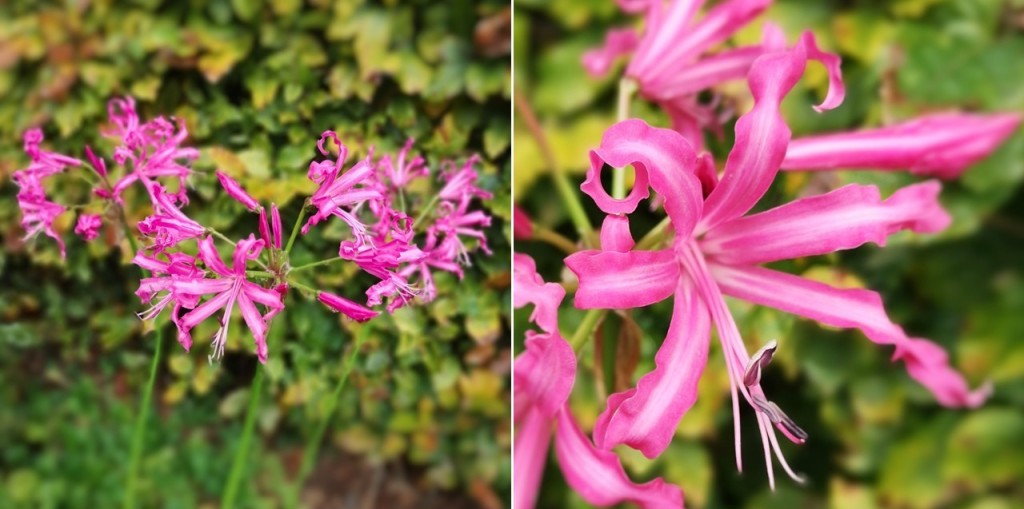
A welcome splash of vibrant pink. Images: Kathryn Hawkins
Throughout the month, these Nerines have been giving a very welcome show of bright pink colour. They look so exotic and fragile but are incredibly hardy. Still going strong is the planter of Bidens and Astors I planted back in June. Such great value. Usually by now the planter is full of bulbs ready for spring but I can’t bring myself to dig these bedding plants up just yet.
Still flowering in the Autumn sunshine. Images: Kathryn Hawkins
And so to a reminder that winter is just around the corner. The holly hedge is abundant with great clusters of berries this year, as is the snowberry bush in the back garden. I hope this isn’t a sign of a particularly cold winter ahead. It’s been a good year for blueberries as well. This late variety is still ripening at a rate of a small handful a week.
Red, white and almost blue, late Autumn berries. Images: Kathryn Hawkins
Thanks for stopping by. Until my next post, take care and keep warm 🙂
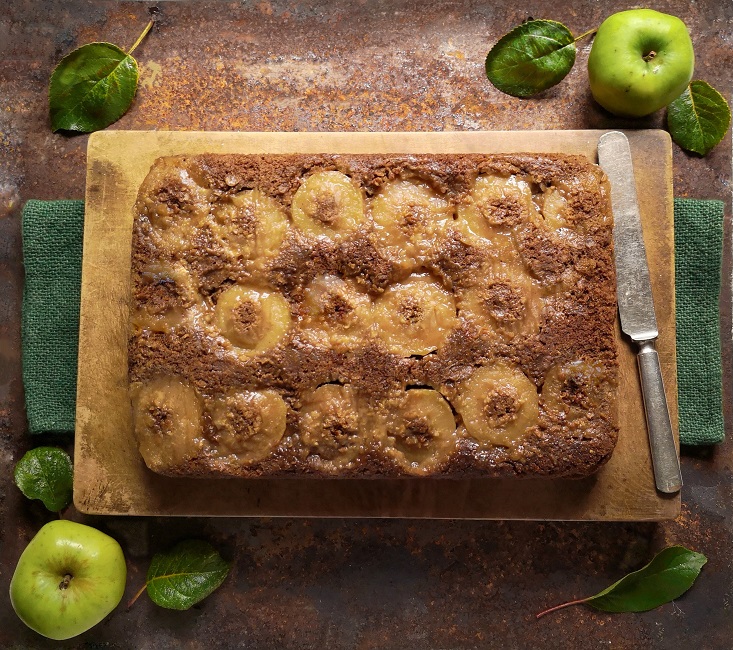
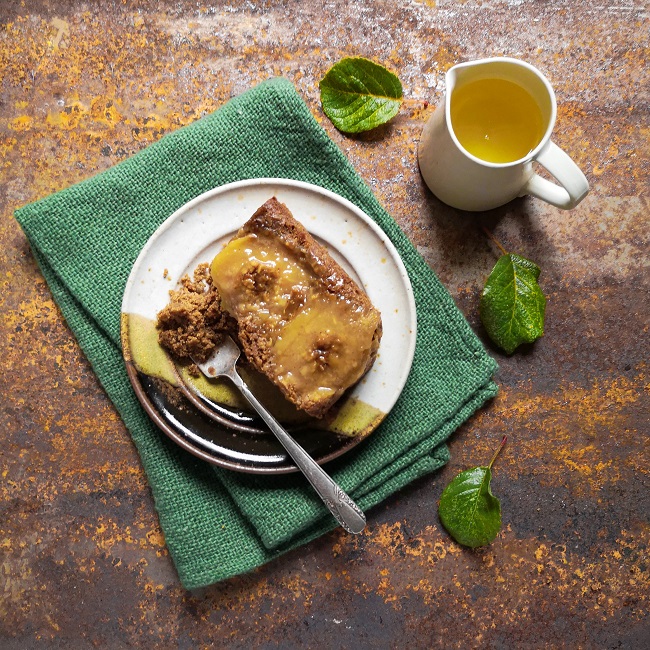
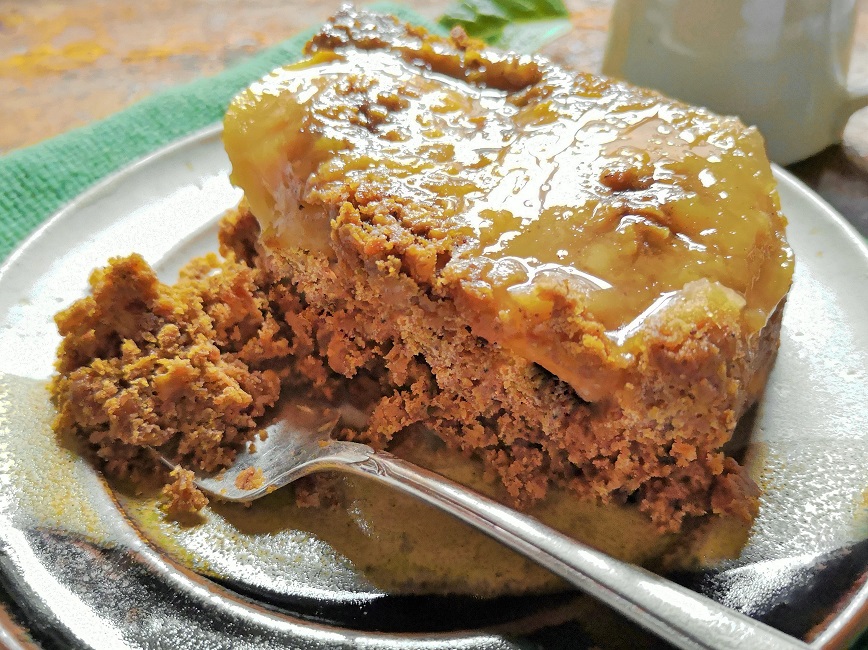
Upside-down ginger apple cake. Image: Kathryn Hawkins
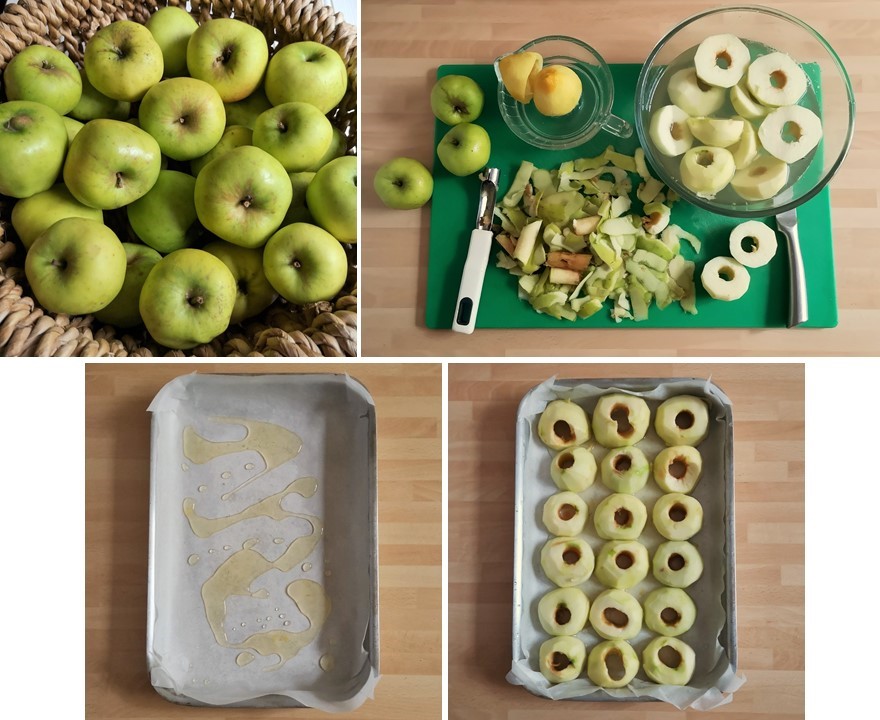
Hello again. We’re well into the season of Autumn now, and it wouldn’t feel complete if I didn’t share an apple recipe with you. It has been a bumper year for apples in the UK. Back at the end of last month, the old apple tree in the garden was groaning with fruit, and on a dry, bright day, it was finally time to relieve the tree of all its fruit.
Lord Derby apple harvest 2022. Images: Kathryn Hawkins
With the very sunny and warm summer we enjoyed here, the apple crop was much sweeter than ever before, so as well as being used in cooking, the apples make good eaters this year. There were far too many for one household to cope with, I am pleased to say that several local families in the town were able to enjoy a bag full this year.
Ginger apple cake with ginger syrup. Images: Kathryn Hawkins
On with the recipe. The main preparation for the recipe is the apples, after that there is only a very simple cake batter to make. I picked out the smaller apples for my tin. If you have larger apples, you may want to slice them into quarters or thick rings rather than simply cutting them in half.
Make the cake the day before you want to serve it because it will benefit from a few hours keeping. The flavour and texture will improve greatly overnight. The recipe makes quite a large cake, but it freezes well so you’ll have plenty for another day. Serve warm as a pudding with custard, or cold as a comforting cake.
Serves: about 10
Ingredients
Finely grated rind and juice 1 lemon
approx. 9 small cooking or eating apples
2tbsp stem ginger syrup (I used the syrup from the jar)
125g plant butter
125g treacle
125g golden or corn syrup
125g light soft brown sugar
250g gluten free plain flour
250g gluten free porridge oats
1tsp bicarbonate of soda
4tsp ground mixed spice
75g chopped stem ginger
175ml oat milk or other plant-based milk
1.Put the lemon rind to one side. Add the juice to a bowl of cold water. Peel and core the apples; cut in half and place in the lemony water to help prevent browning. Leave aside until ready to assemble the cake.
Preparing the apples for cake making. Images: Kathryn Hawkins
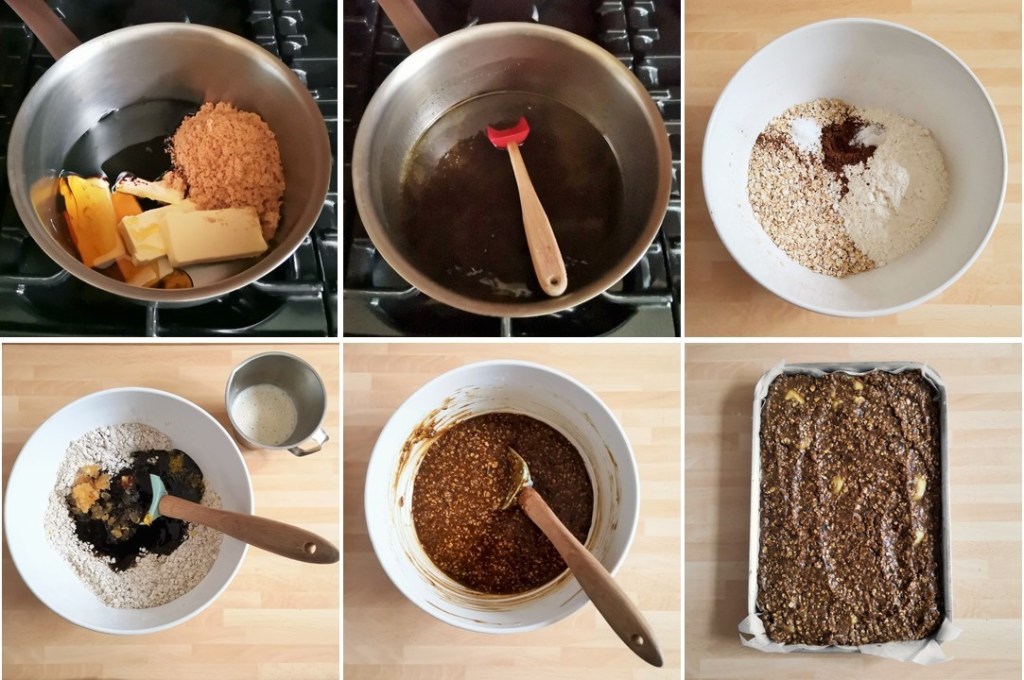
2. Put the butter, treacle, golden syrup and sugar in a saucepan, and heat gently to melt. Mix well then leave to cool for 10 minutes.
3. Preheat the oven to 180°C, 160°C fan oven, gas 4. Line a 20 x 30cm tin with baking parchment and drizzle the base with ginger syrup. Drain the apples, pat dry with kitchen paper and arrange over the bottom of the tin – see above.
4. Put the flour, oats, baking soda and spice in a bowl. Mix together and make a well in the centre.
5. Pour in the melted ingredients and add the reserved lemon rind and chopped ginger. Carefully mix everything together along with the milk, then spoon over the apples making sure they are covered.
Making the ginger cake batter. Images: Kathryn Hawkins
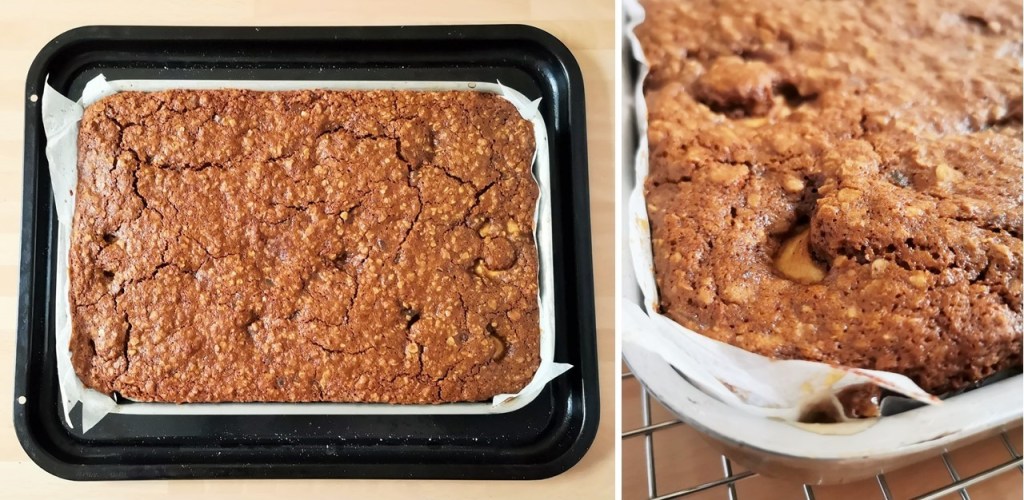
6. Stand the tin on a baking tray and bake for about 50 minutes until firm to the touch. Transfer the tin to a wire rack and leave to cool completely. Turn out on to a large sheet of baking parchment. Wrap carefully and store in an airtight container overnight to allow the flavours to develop.
Just out of the oven. Images: Kathryn Hawkins
I mixed some of the ginger syrup from the jar of stem ginger with plain carob syrup and drizzled it over the cake to serve.
Up close on ginger apple cake. Image: Kathryn Hawkins
That’s me for another week. Until next time, happy baking 🙂
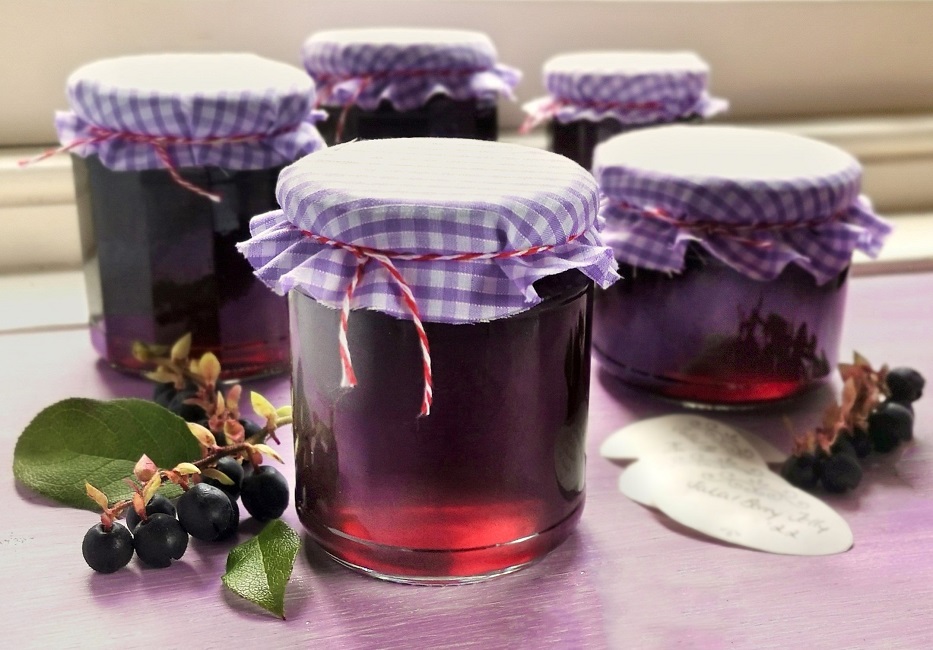
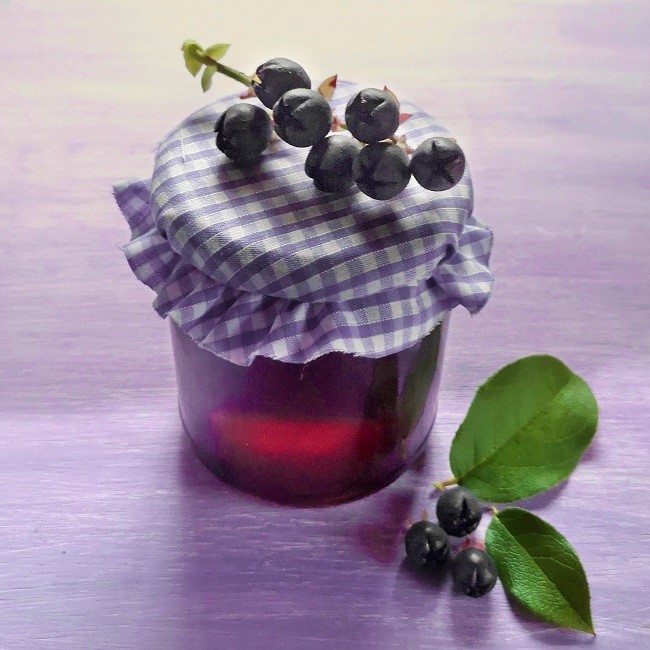
Homemade apple and salal berry jelly. Image: Kathryn Hawkins
Hello there. I hope you are keeping well. It’s that time of year when I get the jam pan out and start making preserves and chutneys for the months ahead.
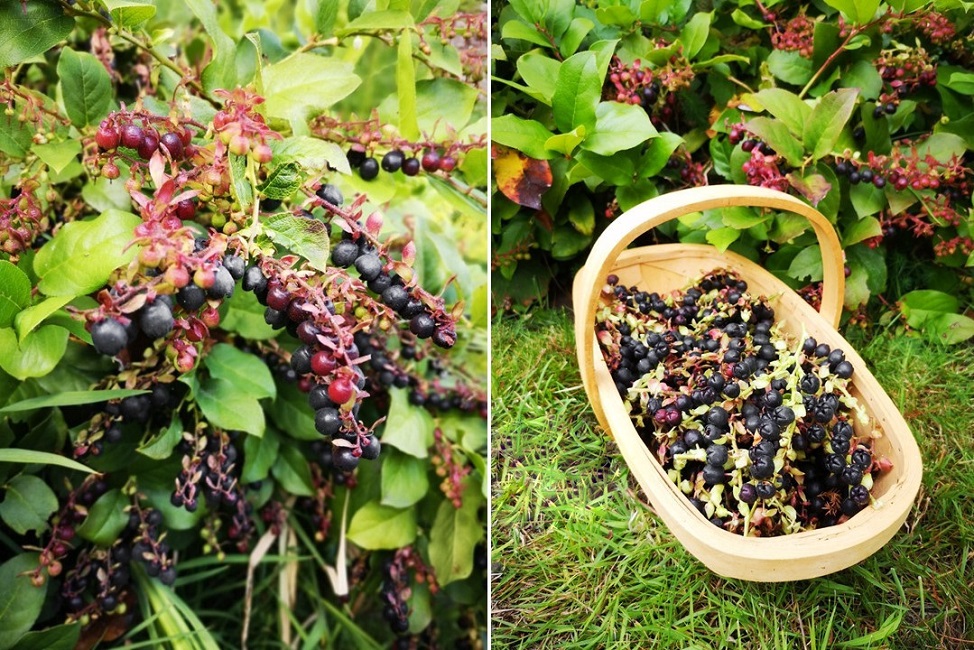
Back in August I harvested a lot of salal berries from the garden. I did compote a few but the rest went in the freezer for making preserves. There are still a few on the bushes now but I am leaving those for the garden birds to enjoy.
August 2022 harvest of Salal berries. Images: Kathryn Hawkins
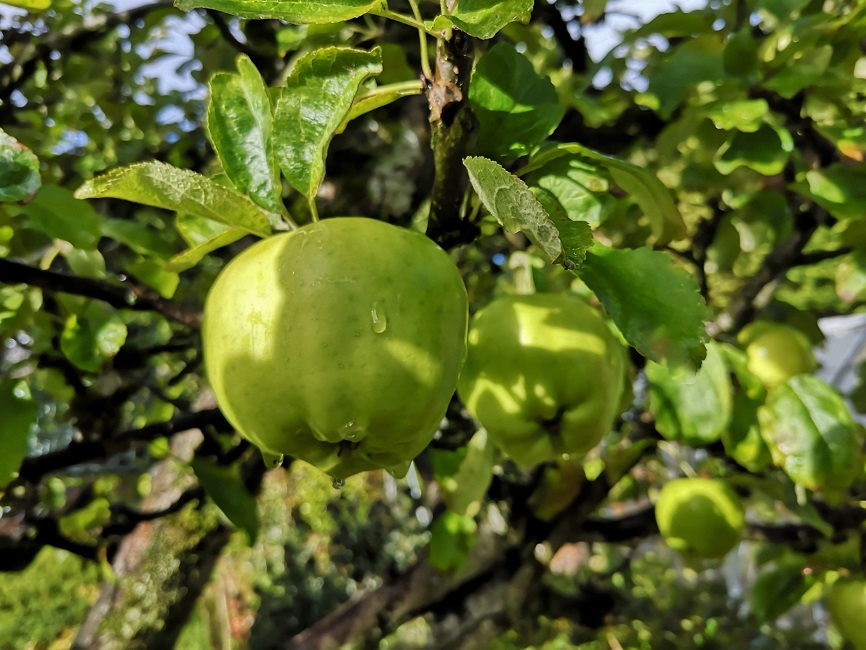
I haven’t picked all the apples yet, but I have been taking one or two as and when I need them for cooking. The old tree in the garden is looking heavy with fruit this year, so I think I will be gathering in the apples very soon.
October 2022, cooking apples ready for picking. Image: Kathryn Hawkins
My recipe is a very simple jelly preserve. If you don’t have salal berries, blueberries or blackberries will work just as well. Salal berries can be quite challenging to pick as they are quite squishy when ripe so I usually pick short branches and then remove the berries when I get back into the kitchen. Have a look at this post from last year for an easy preparation technique Salal berries – jam and muffins (gluten-free; dairy-free; vegan)
Single jar. Image: Kathryn Hawkins
The recipe below makes a small quantity of preserve and as such can be easily doubled or trebled should you have more berries and apples. Making a smaller amount means that you can strain the fruit through a sieve rather than in a jelly bag; it is quicker to strain, and it also cooks down in less time.
Makes: approx. 650g
Ingredients
200g prepared salal berries, washed
400g cooking apples, washed and chopped, but left unpeeled or cored
approx. 450g granulated or preserving sugar
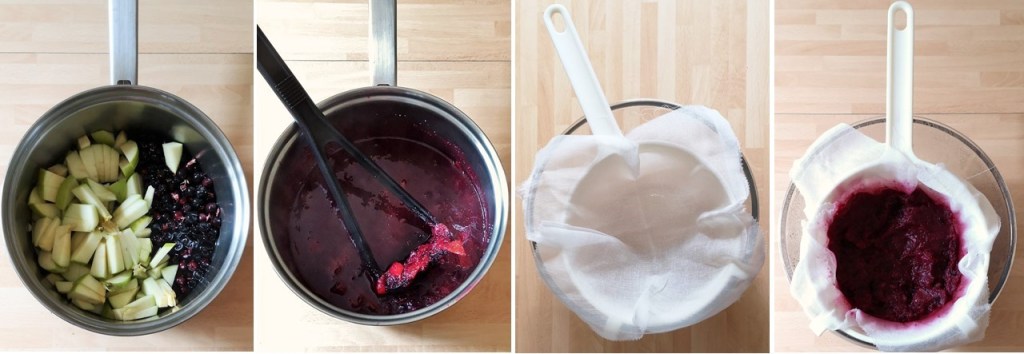
1. Put the fruit in a large saucepan with 350ml water. Bring to the boil, cover and simmer for 10-15 minutes until soft and pulpy. Mash the fruit occasionally to help break it down.
2. Place a large sieve over a jug or bowl and line with clean muslin. Carefully ladle in the pulp and leave to strain for 3-4 hours.
3. Put the pulp back in a saucepan and the harvested juice in the fridge. Re-cook the pulp, this time with 200ml water, for about 5 minutes, and then strain again as above.
Preparing and cooking the fruit for jelly making. Images: Kathryn Hawkins
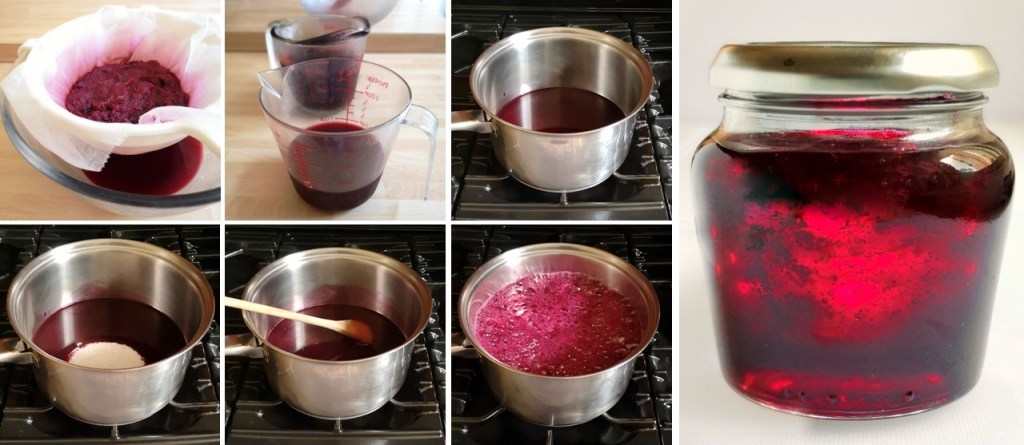
4. Measure the juice and pour into a large clean saucepan. Add sugar to the ratio of 450g per 600ml juice – I had 575ml juice and added 430g sugar.
5. Heat, stirring, until the sugar is dissolved, then raise the heat and bring to the boil. Cook rapidly until the temperature reaches between 104°C and 105°C – this will probably take around 10 minutes.
Making the jelly. Images: Kathryn Hawkins
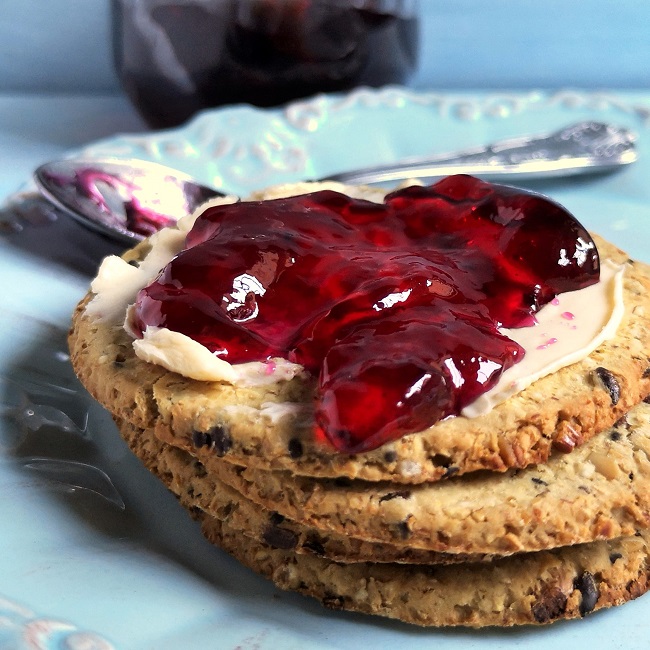
6. Pour into small, clean, sterilised jars and seal immediately. When cold, label and store for 6-12 months, although the jelly is ready to eat immediately. Serve with cold cuts, cheeses or as a sweet spread on toast or crackers.
Apple and salal berry jelly on oatcakes. Image: Kathryn Hawkins
Well that’s the end of my post for this week. I will be back in the kitchen again next time. Until then, I hope you have a good few days ahead 🙂
Blue sky and autumn leaves. Image: Kathryn Hawkins
Hello again. It’s been a lovely weekend so far here in central Scotland. Lots of sunshine and blue sky which really shows off these Japanese maple leaves, slowly on the turn from green to gold, and finally to red before they fall. The temperature has dropped a few degrees, and the forecast is for a much cooler week ahead, so I think the new season has well and truly arrived.
The garden is still looking quite flowery which is good news for the bees. It’s been a great year for all the heathers, with the autumn varieties looking particularly pretty and laden with tiny blooms.
Fading white Hydrangea.. Images: Kathryn Hawkins
The well-established white Hydrangea shrub has been heavy with flowers this year. A victim of its own success, its thin stems and branches have bowed with the weight of all the flower-heads. Whilst most have a pinkish or brown tinge, there are still one or two perfectly white blooms visible with their pin-head-sized tiny blue centres.
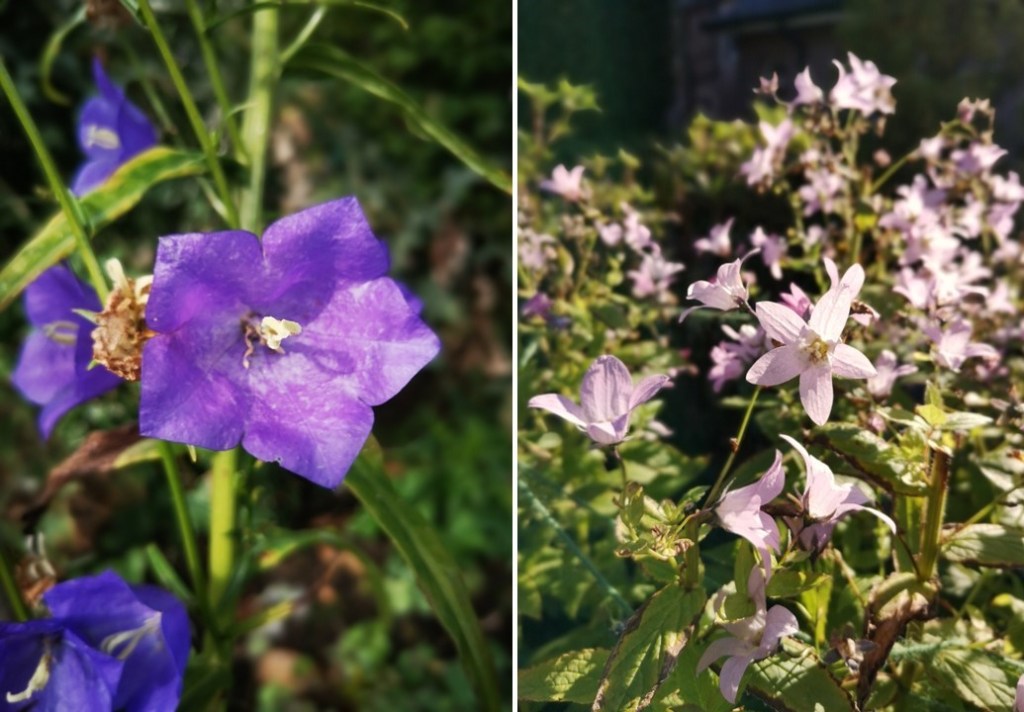
Late flowering Campanulas. Images: Kathryn Hawkins
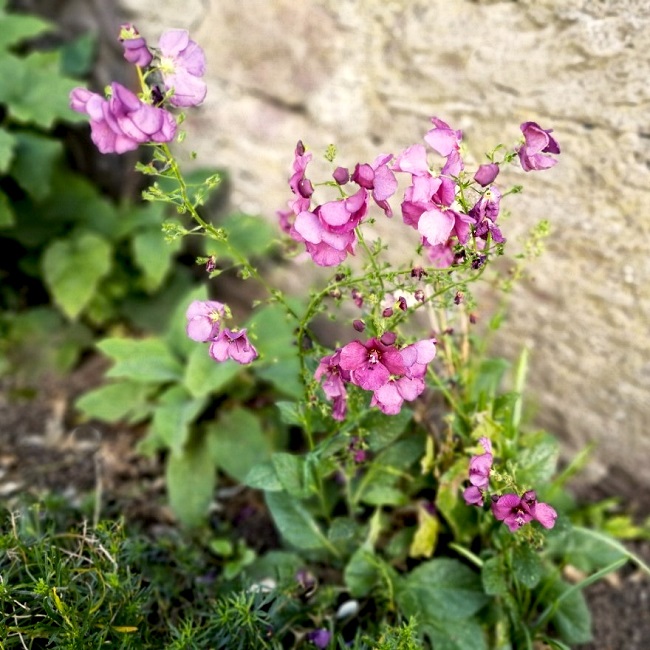
The Campanulas have been out in flower for a while. I keep trimming away the spent flower-heads and new ones have been forming lower down the stems which is why they are still flowering so late in the year. The same goes for the deep-pink Verbascum which is now flowering for the third time this year.
Deep pink Verbascum. Image: Kathryn Hawkins
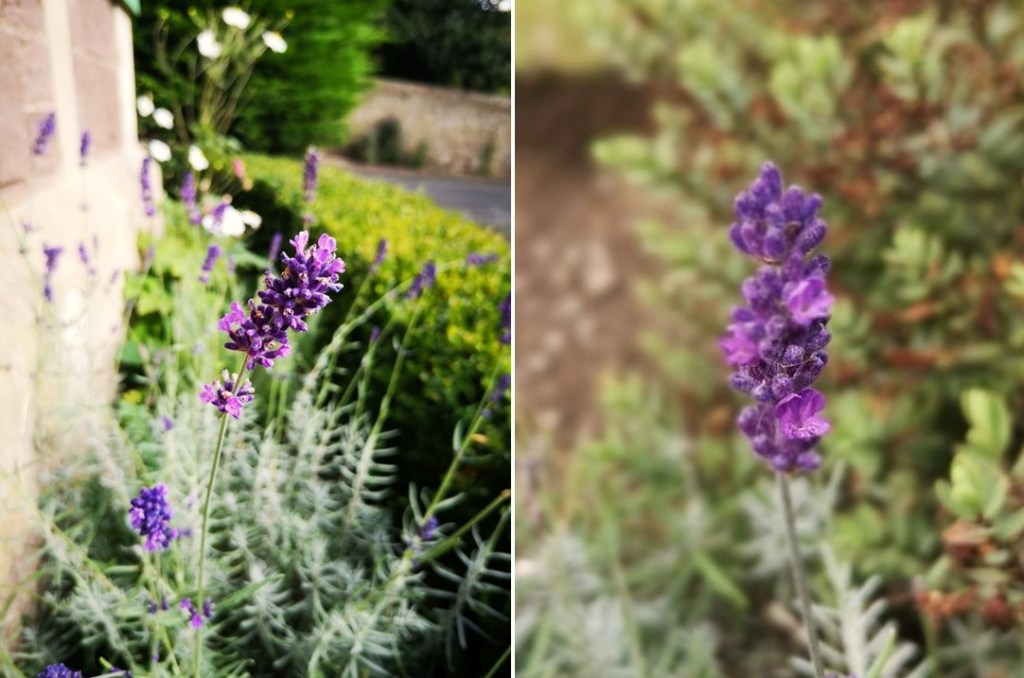
When I was out in the garden today, I was happy to see so many bees and flying insects enjoying the flowers and sunshine as much as I was. All the lavender bushes in the garden have a few late sprigs of flowers which these insects particularly love.
Autumn lavender flowers. Images: Kathryn Hawkins
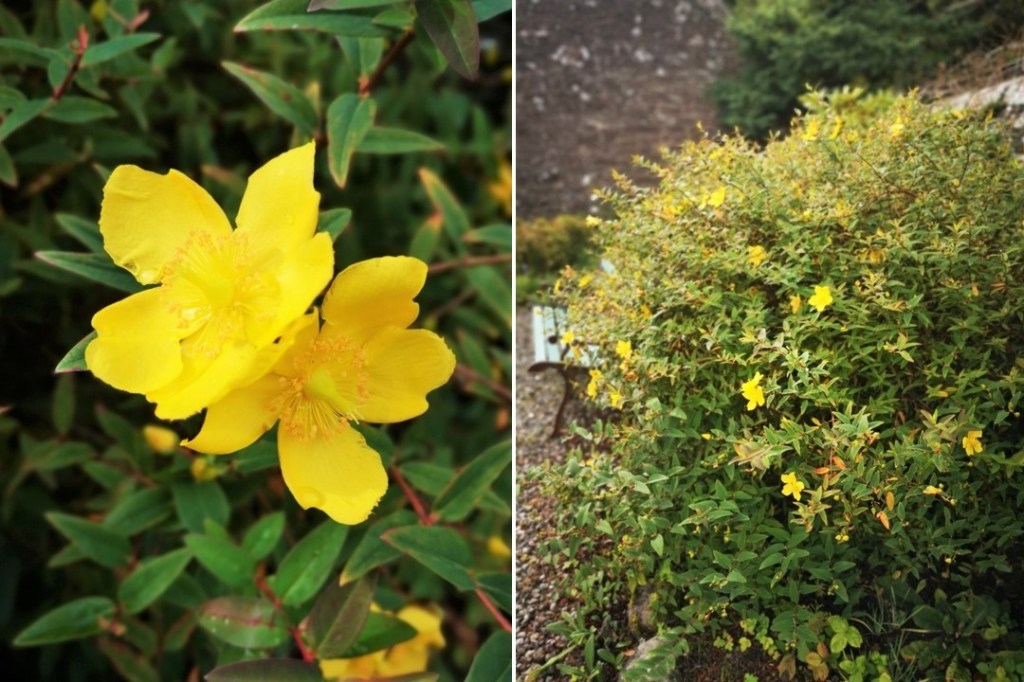
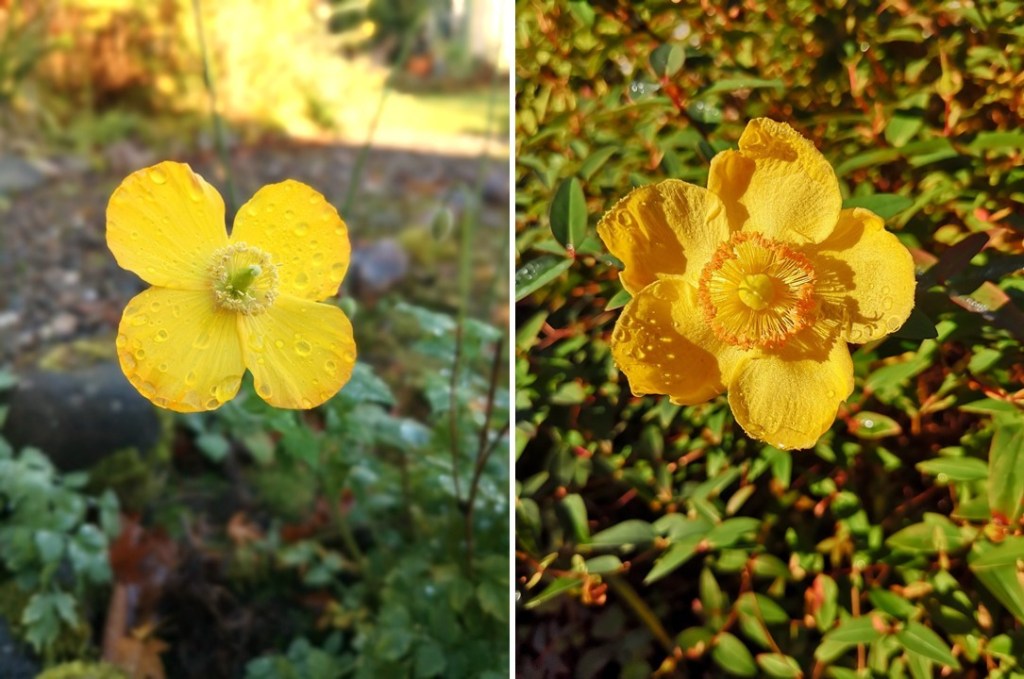
It’s not all blue, purple and pink in the garden, the Rose of Sharon has produced a few more golden yellow flowers which have a waxy-look to the petals in the sunshine.
Second flowers on Rose of Sharon (Hypericum). Images: Kathryn Hawkins
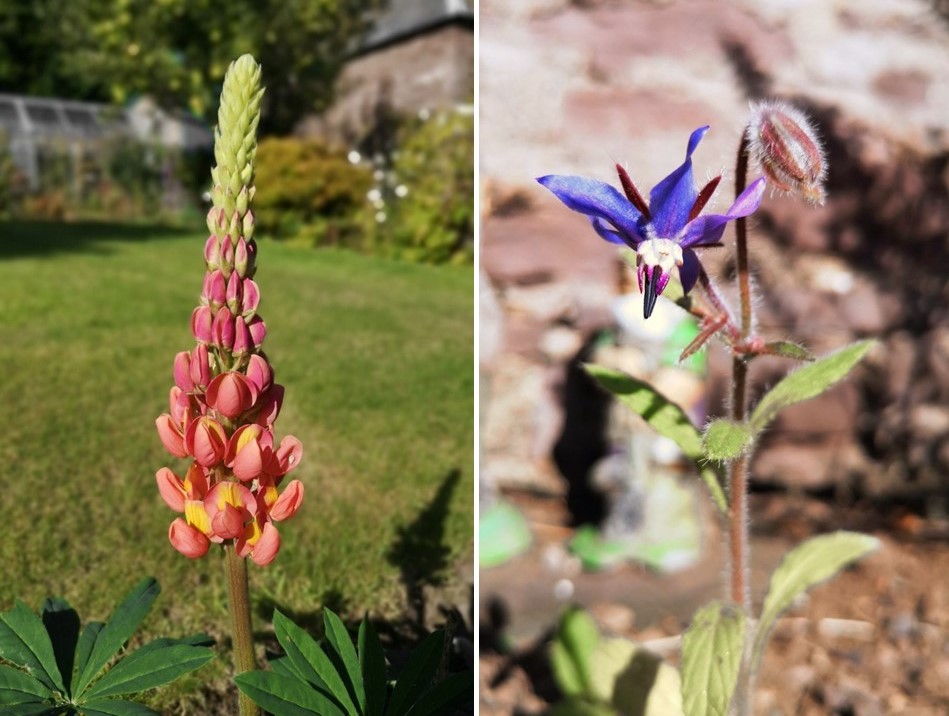
My final image is of my favourite Lupin which has broken my back garden record this year, with its third flowering of the year. It’s not fully open yet but it’s not far off. All the other Lupin bushes have died down completely yet this one has stayed lush and healthy. Alongside is one of my Borage flowers; these have only just decided to put in an appearance this week. Better late than never though 🙂
Third flowering Lupin and the first Borage flowers of the season. Images: Kathryn Hawkins
I hope you have enjoyed my images this week. I will be back in the kitchen for my next post. Until then, take care and thanks, as always, for stopping by.
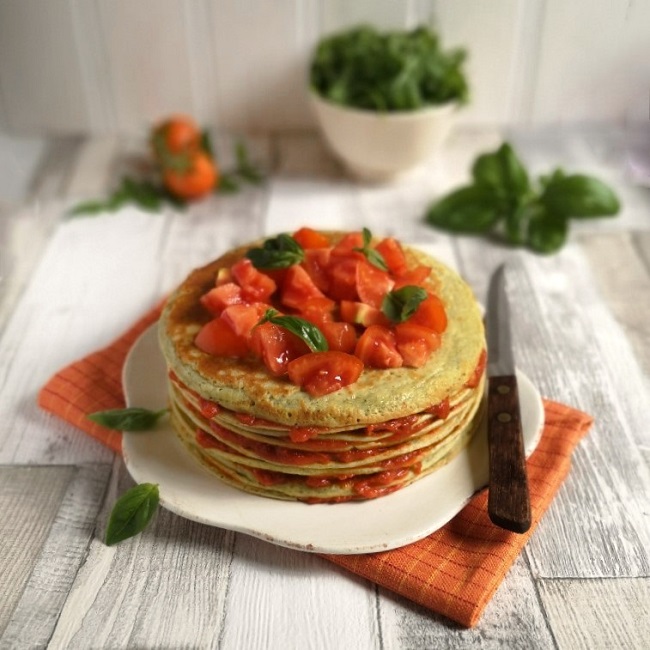
Pesto pancake and tomato layer. Image: Kathryn Hawkins
Hello again. What a mixed bag of weather there has been here since my last post. Plenty of rain to restore the water supplies with thundery downpours and a few sunny days here and there. The garden has bucked up again and the green grass has been restored.
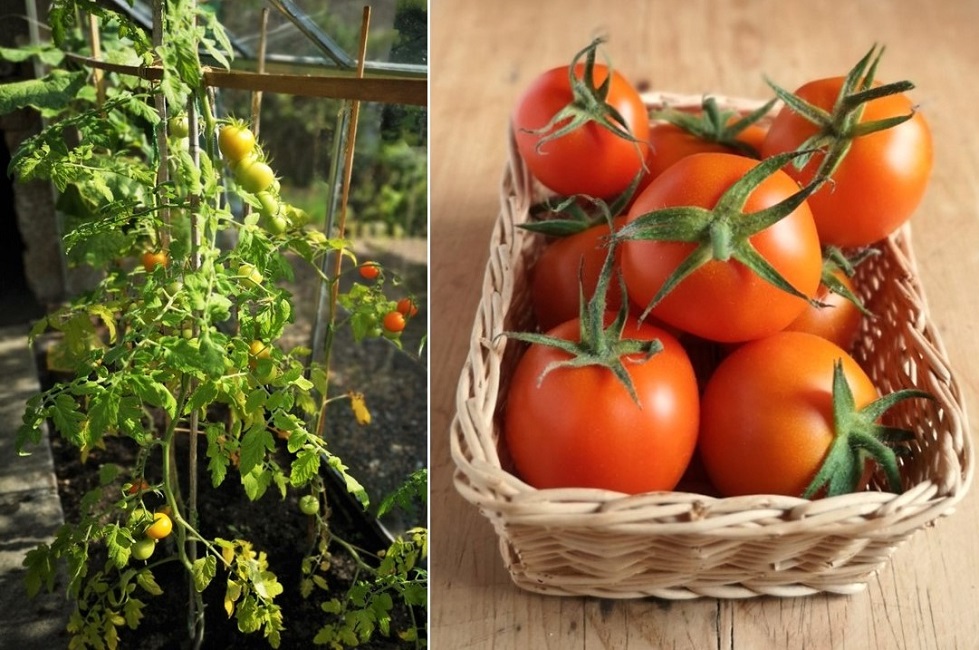
My recipe post this week gives a little nod towards the change of month and season. The greenhouse tomatoes are ripening now. I planted only 3 plants this year, but I am enjoying a steady supply to eat in salads. The variety is called Golden Zlatava, orange on the outside with reddish flesh inside. Whilst I haven’t grown enough for cooking this year, there are plenty of delicious locally grown tomatoes around, like these fantastic small plum tomatoes, which are perfect for sauce-making.
Fresh plum tomatoes. Image: Kathryn Hawkins
The greenhouse basil really enjoyed the hot weather we had last month and has grown very bushy and bold. I love the flowers as well. Plenty of leaves to make one of my most favourite savoury sauces, pesto, which seems to be the best way to preserve the flavour of the herb once it has been frozen.
Greenhouse basil. Images: Kathryn Hawkins
There are 2 main components to the recipe this week: making the pancakes and making a tomato sauce. Both elements freeze well in case you want to make the recipe in stages. I made pesto in a previous post, so if you fancy having a go at that as well, here’s the link to the recipe Runner bean and pesto fritters (gluten-free; dairy-free; vegan)
Serves: 4
Ingredients
Tomato sauce
1kg fresh tomatoes, washed and chopped
6 garlic cloves, peeled
A selection of fresh herbs such as sage, bay, marjoram and oregano
2tbsp olive oil
1tsp caster sugar
100g drained sundried tomatoes in oil, blotted on kitchen paper
Salt to taste
Pesto pancakes
110g tapioca flour
110g gram (chickpea or garbanzo) flour
6g gluten-free baking powder
1tsp salt
65g fresh vegan pesto
250ml plant-based milk (I used oat milk)
160ml chickpea canning liquid (or other aqua fava)
Vegetable oil for brushing
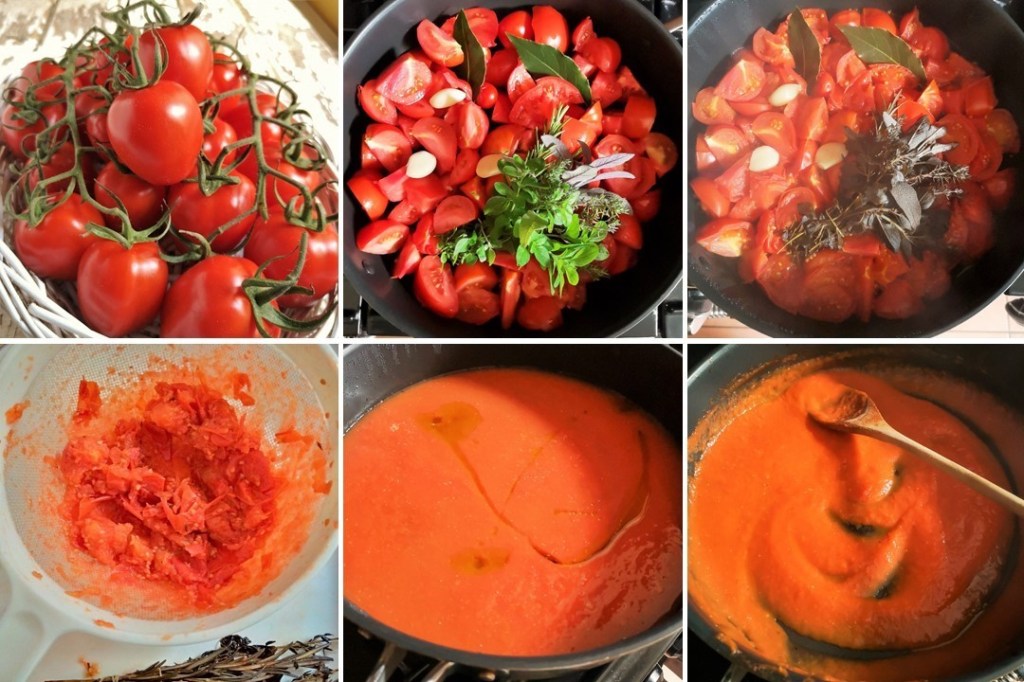
1. First make the sauce. Put the tomatoes in a large pan with a lid and add the garlic and herbs. Heat until steaming, then cover, and simmer gently for about 45 minutes until very tender. Turn off the heat and leave to cool with the lid on.
2. Discard the herbs. Push the tomatoes and garlic through a nylon sieve, in batches, to remove the skins and seeds. Depending on the juiciness of your tomatoes, you should end up with around 700ml pulp.
3. Pour the pulp into a clean pan. Add the oil and sugar, heat gently, stirring, until boiling, then simmer for about 20 minutes until thickened and reduced to about 300ml. Leave to cool.
4. Put the sundried tomatoes in a blender or food processor and blitz until smooth, then stir into the cold tomato sauce. Taste and season. Cover and chill until ready to use.
5. For the pancakes, put the flours, baking powder and salt in a bowl and make a well in the centre. Add the pesto, and gradually blend in the milk to make a smooth batter.
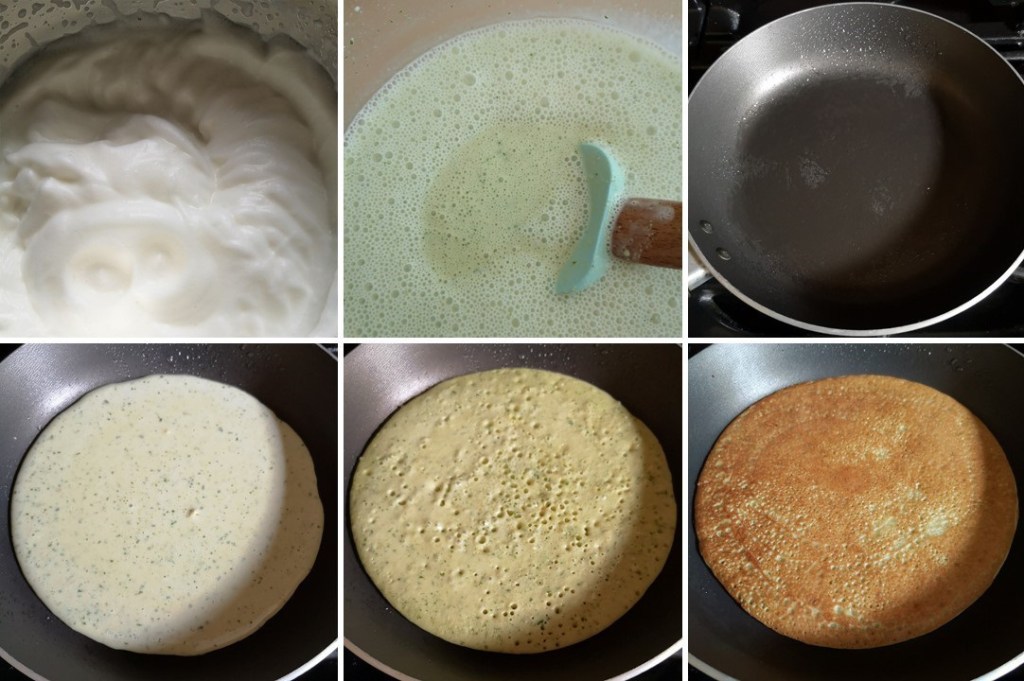
Making the pesto batter. Images: Kathryn Hawkins
6. In another bowl, whisk the chickpea water until very thick and foamy, then gently mix into the batter to make a bubbly mixture.
7. Brush a small frying pan (15-16cm base diameter) lightly with oil and heat until hot. Spoon in 4-5tbsp batter, tilting the pan to cover the base with batter. Cook over a medium/low heat for 2-3 minutes until set and bubbles appear on top. Flip over and cook for a further 2 minutes until cooked through.
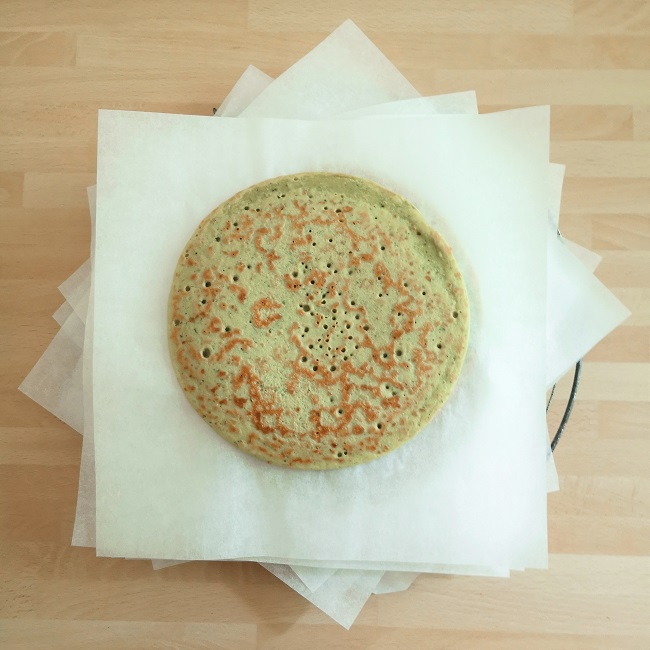
8. Layer the cooked pancake on a sheet of baking parchment on a wire rack, and cover while you make another 7 pancakes. Stack the pancakes on top of each other, between sheets of parchment to help keep them from drying out. If you are making the pancakes in advance, leave them to cool, then wrap them well and keep in the fridge for up to 3 days or freeze for up to 6 months.
Cooking the pancakes. Images: Kathryn Hawkins
Pesto pancake stack. Image: Kathryn Hawkins
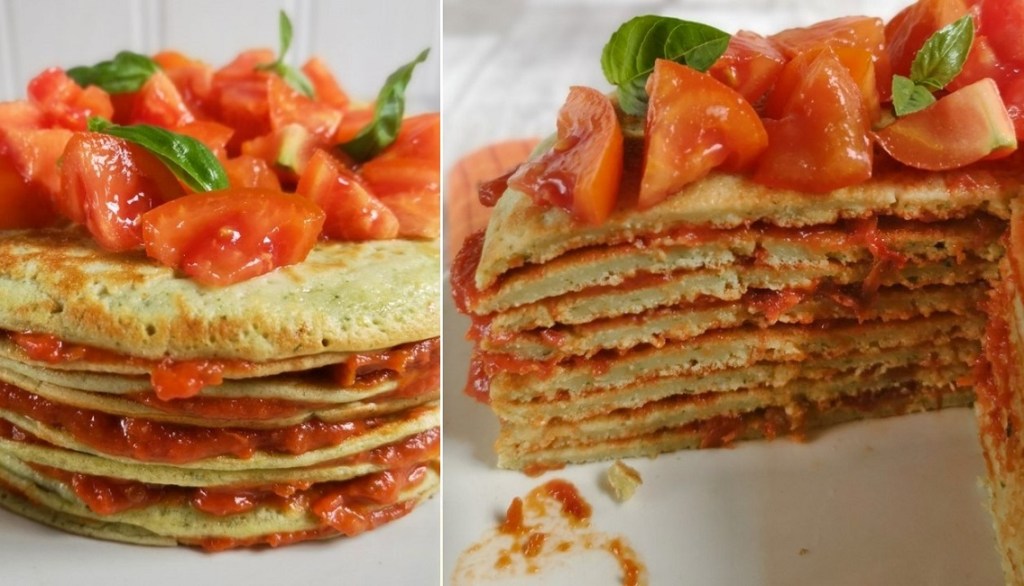
9. To assemble, spread a pancake with cold tomato sauce, almost to the edge of the pancake. Transfer to a lined baking tray and continue the spreading and layering with the remaining sauce and pancakes. If you have leftover sauce, keep it to serve with the pancakes.
Layering before baking. Images: Kathryn Hawkins
10. Cover the pancake stack with foil and place in a preheated oven at 190°C, 170°C fan oven, gas 5. Heat through in the oven for about 45 minutes. Best served warm. Top with fresh chopped tomato and fresh basil to serve and accompany with wild rocket and any leftover tomato sauce.
Japanese maple tree lit up in November sunshine. Image: Kathryn Hawkins
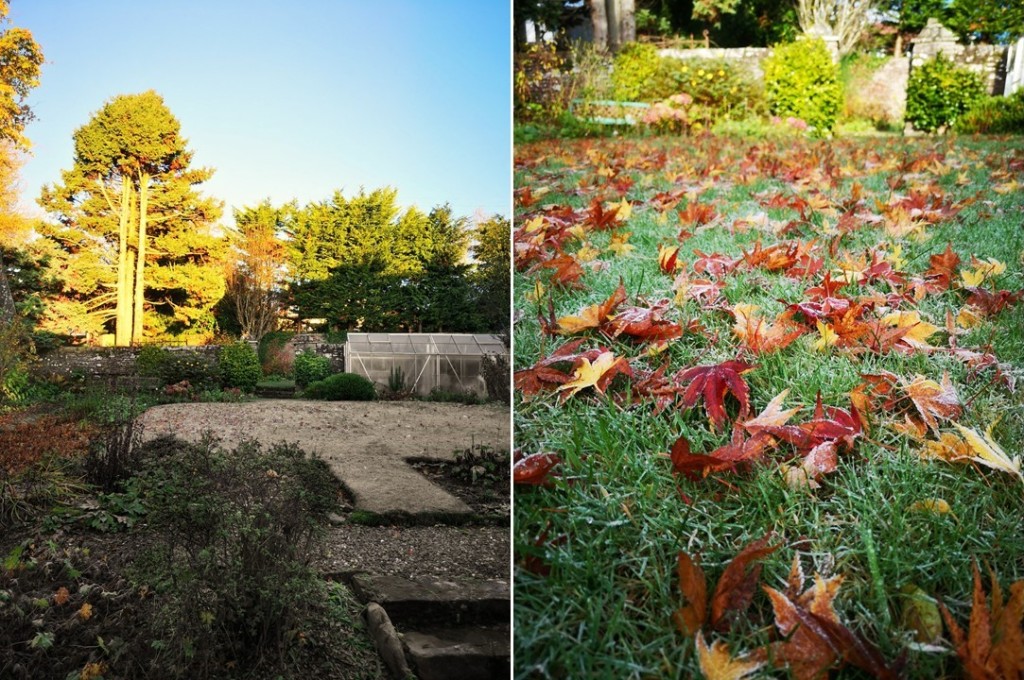
It’s been a late Autumn here in central Scotland. The leaves stayed on the trees longer than I anticipated and the weather has been fine. Most of the month has been mild with glorious blue-sky days which highlighted the golden tones in the garden a few days ago. Fortunately I got to the Japanese Maple tree before the rain fell and captured the rich yellow leaves before they were washed off the branches. The next day, the paths and lawns were covered in a leafy carpet.
Japanese Maple before and after the rain. Images: Kathryn Hawkins
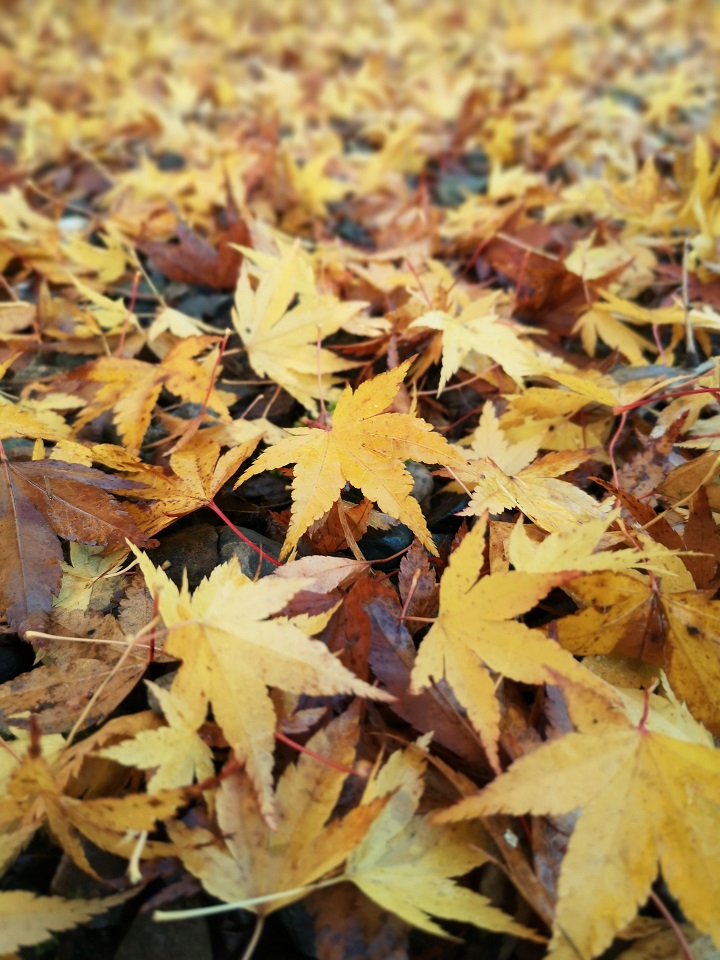
Golden leafy carpet. Image: Kathryn Hawkins
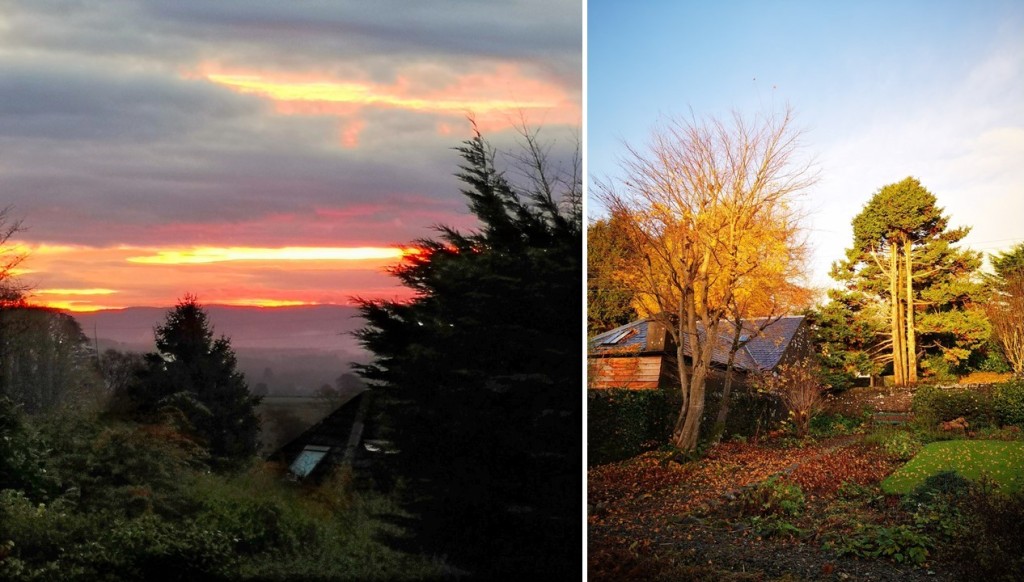
Accompanying the fair-weather days have been glowing sunrises and blazing sunsets. Both come and go with speed but are truly spectacular if you are in the right place at the right time. The front of the house faces the sun rising over the Ochil Hills, then in the back garden, a few hours later, you are able to see the sun setting.
Sun-up in mid November. Images: Kathryn Hawkins
Blazing November sunsets. Images: Kathryn Hawkins
In the garden, here and there, signs of life continue. Some of the plants and shrubs have been confused by the warm weather this month and there are unseasonal second and third flowerings taking place.
A November Welsh poppy and Sharon Rose. Images: Kathryn Hawkins
November lavender, Images: Kathryn Hawkins
I cleared out the greenhouse a couple of weeks ago and picked off the last few tomatoes. They are now ripening indoors. I also harvested my first basket of greens; they haven’t done that well and got badly attacked by caterpillars, but there is enough for a few meals. A few more baby purple carrots as well.
Last of the tomatoes, some baby carrots and the first of the greens. Images: Kathryn Hawkins
It’s been a wonderful autumn for fungus of all kinds. I have seen so many images on social media, I never realised that there were so many different mushrooms and toadstools out there. Each year, to varying degrees, this bracket fungus grows on a old tree stump in the garden. I think this year it has surpassed itself. I love the arch of colours on each piece.
Rainbow bracket fungus. Images: Kathryn Hawkins
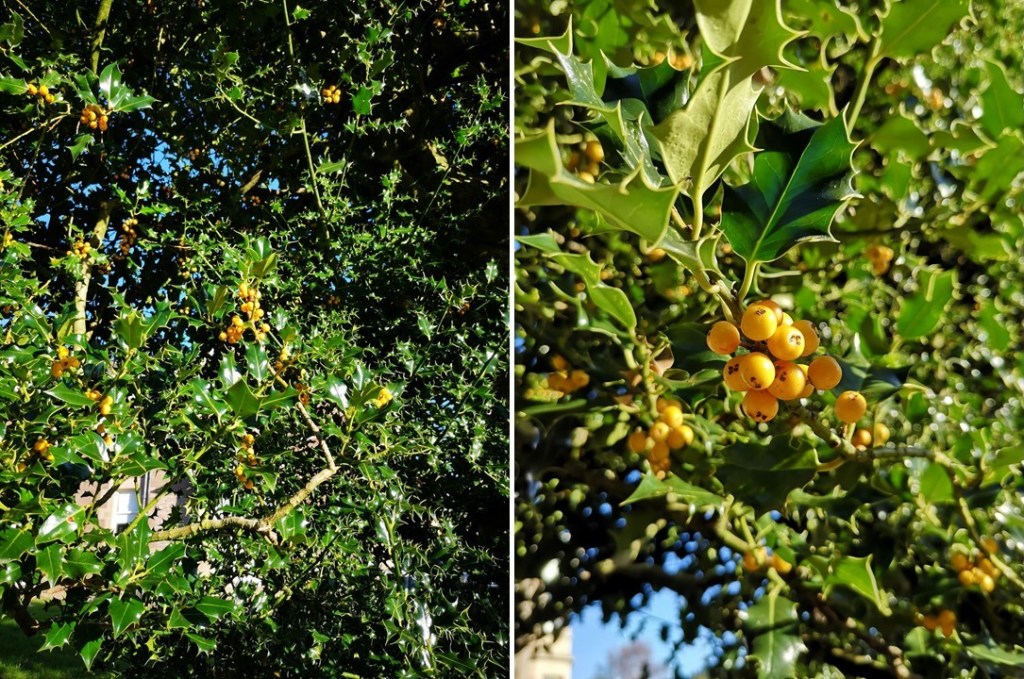
I’m going to finish my post with something a little bit festive. Most of the fruiting trees around and about the garden are covered in berries this year, and the holly is no exception. The red berries seem to get picked off first leaving the yellow variety behind. Perhaps they taste different? No matter, I am happy for them to remain on the tree to give a great splash of colour to the garden and look magnificent against a blue sky. Until next time, take care and keep safe 🙂
Golden yellow holly berries. Images: Kathryn Hawkins
Sweet and sour red cabbage. Image: Kathryn Hawkins
Hello there. I hope you are well and enjoying Autumn. With the days getting shorter and the temperature dropping a few degrees here in the UK, my thoughts have turned to comfort food. There are some deliciously leafy seasonal vegetables around just now which make an ideal accompaniment to an autumnal stew or roast. I have a tasty red cabbage dish to share with you this week which is perfect for batch cooking as it freezes very well.
Fresh red cabbage. Images: Kathryn Hawkins
Most often, I braise red cabbage slowly with fresh apple or pear and some vinegar, sugar and cinnamon, but to ring the changes this time I have used a different combination of sweet and sour flavours.
Sweet and sour flavours: sumac, raspberry vinegar, barberries and plum cheese. Images: Kathryn Hawkins
For the sour flavours, I used sumac powder with its tart astringent flavour, reminiscent of lemon juice; dried barberries, another tartly flavoured ingredient which add a sharp tang to the dish (chopped dried unsweetened cranberries would also work), and homemade raspberry vinegar. For sweetness, I added some of the plum cheese I made about a month ago – Plum, sloe and apple cheese (naturally gluten-free and vegan) or you can use plum jam if you prefer. To add a splash of sparkle, juiciness and texture, I sprinkled over one of my favourite ingredients, fresh pomegranate seeds, to finish. All in all, a delicious flavour combination which tastes as good as it looks. I hope you enjoy the recipe.
Serves: 4
Ingredients
½ red cabbage
1 large red onion
25g plant butter
2tbsp raspberry vinegar (or balsamic if you prefer)
2tbsp plum cheese or jam (or redcurrant jelly works well)
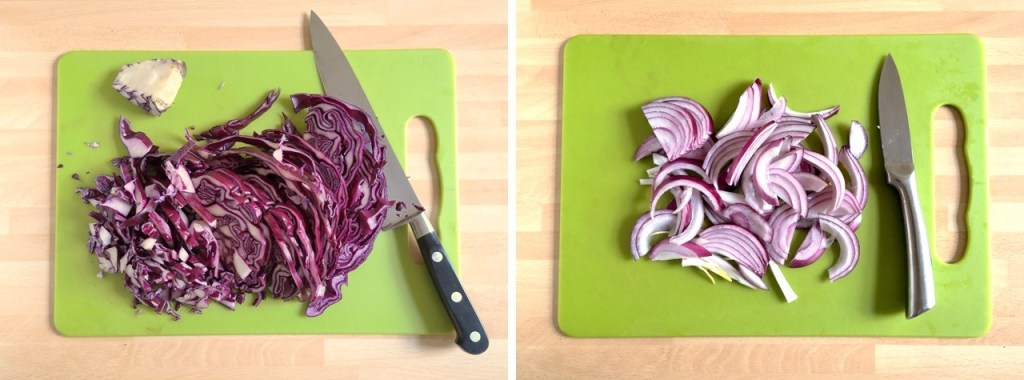
1. Cut out the cabbage stump, then finely shred or slice the remainder of the cabbage. If you slice everything finely, you can use up the tougher stems of the cabbage as well. I ended up with about 400g prepared cabbage. Peel and thinly slice the onion.
Red cabbage and onion preparation. Images: Kathryn Hawkins
2. Melt the plant butter in a large deep frying pan or saucepan and gently fry the cabbage and onion, stirring, for about 5 minutes until well coated in the butter.
3. Add the vinegar, plum cheese or jam and plenty of seasoning. Mix well, lower the heat, then cover and simmer gently for 40-50 minutes, stirring occasionally, until very tender. Stir in the barberries and sumac to taste. Turn off the heat, cover and let stand for 10 minutes.
Cooking sweet and sour red cabbage. Images: Kathryn Hawkins
4. To serve, spoon into a warm serving dish and sprinkle the top with extra sumac and pomegranate seeds if liked.
Red cabbage close-up. Image: Kathryn Hawkins
It’s been a glorious day here in central Scotland today. Perfect weather for enjoying the autumnal colours. I hope you have a good few days until my next post. All the best for now 🙂
Hello there. So here we are at the end of another month. I hope you have had a good couple of weeks since my last post. I had been intending to show you round my garden at this point in time, but to be honest, there is not a lot to see. Most things are looking rather soggy and bedraggled after recent heavy rain . It feels like Autumn has been cut short this year by the rain washing the leaves from the trees.
No matter, I have some cheery images of my apple and pear harvests earlier in the month. I was able to capture the images under mostly blue skies which should make for better viewing. I hope you enjoy them 🙂
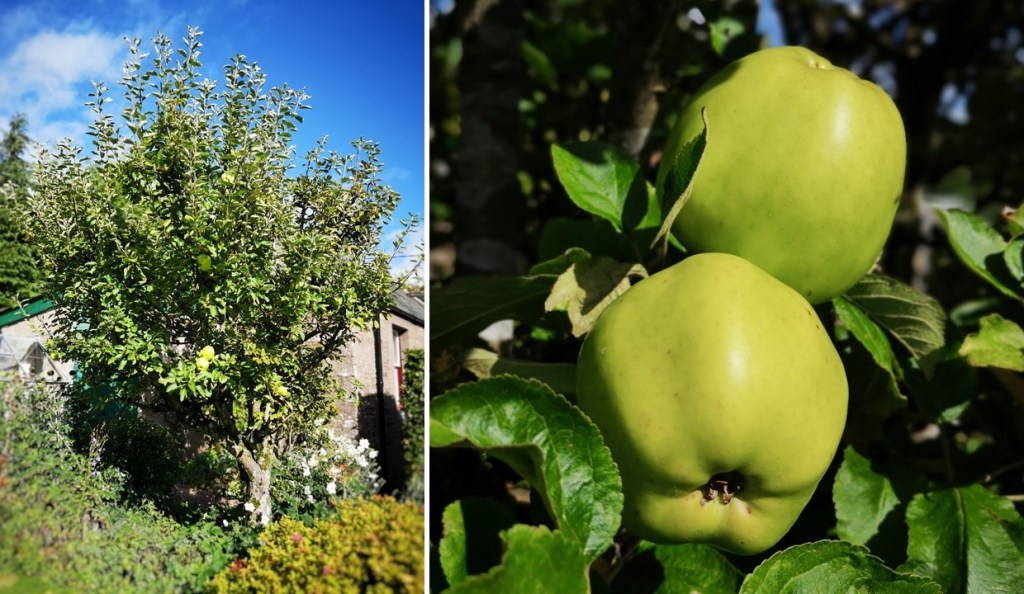
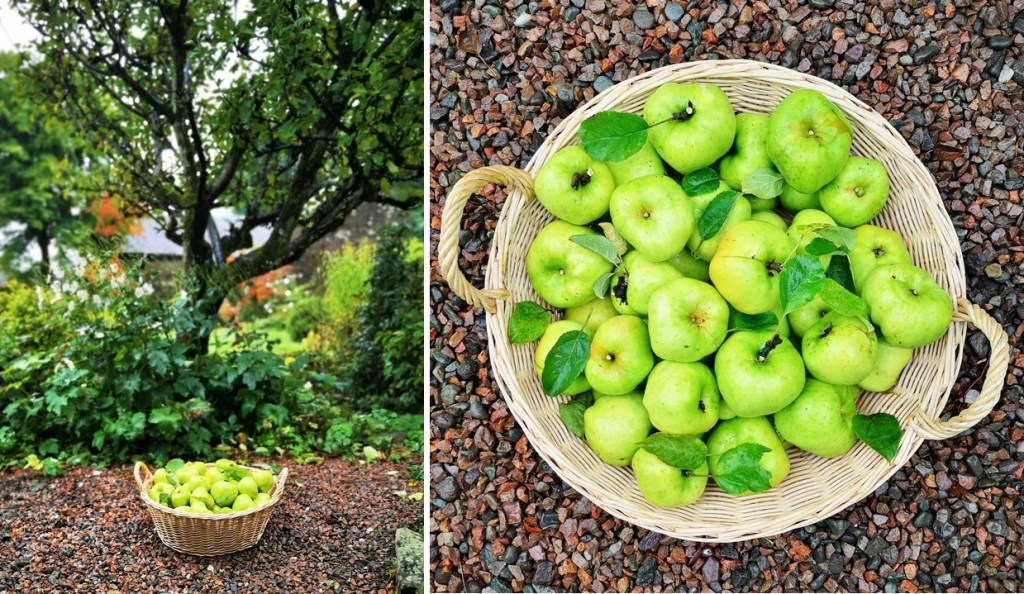
Lord Derby cooking apple harvest 2021. Images: Kathryn Hawkins
The old apple tree in the garden produced a fraction of the apples it provided last year. In 2020, I had at least 4 times the amount. However, I still have a good basketful and have started cooking them down. I think they will last a few weeks yet.
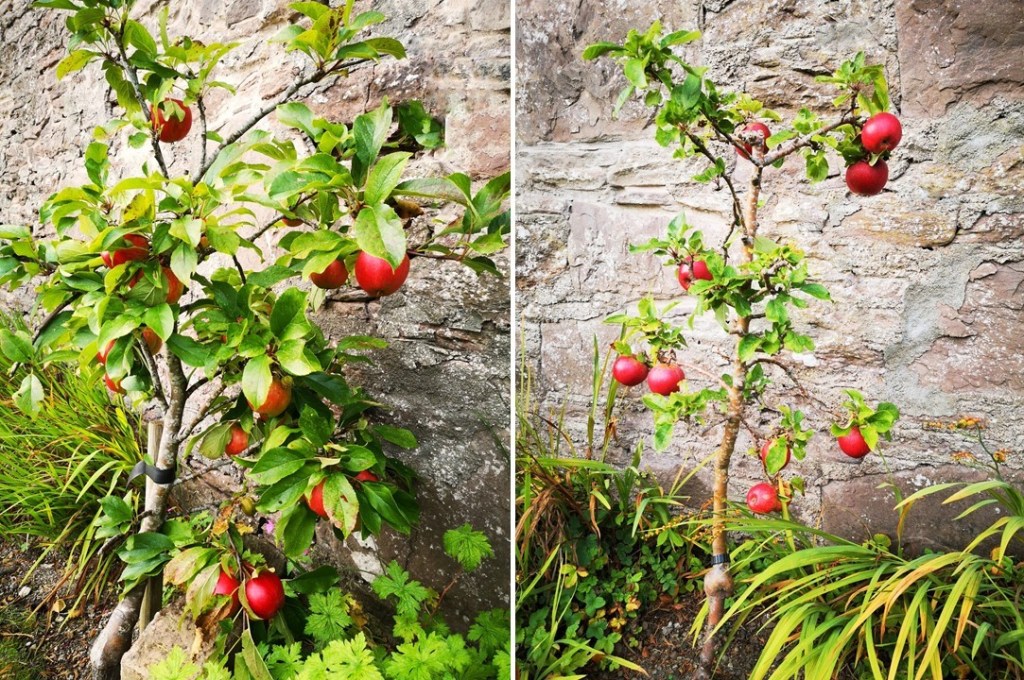
Miniature eating apple trees. Images: Kathryn Hawkins
Harvested eating apples. Images: Kathryn Hawkins
It’s been a bumper year for eating apples. Only a handful from one tree last year and nothing from the other, but this year I have been rewarded with a huge crop by comparison. The very red apples are called Katy but sadly I can’t remember the other variety now, however both varieties are sweet, juicy and very delicious, and they keep well.
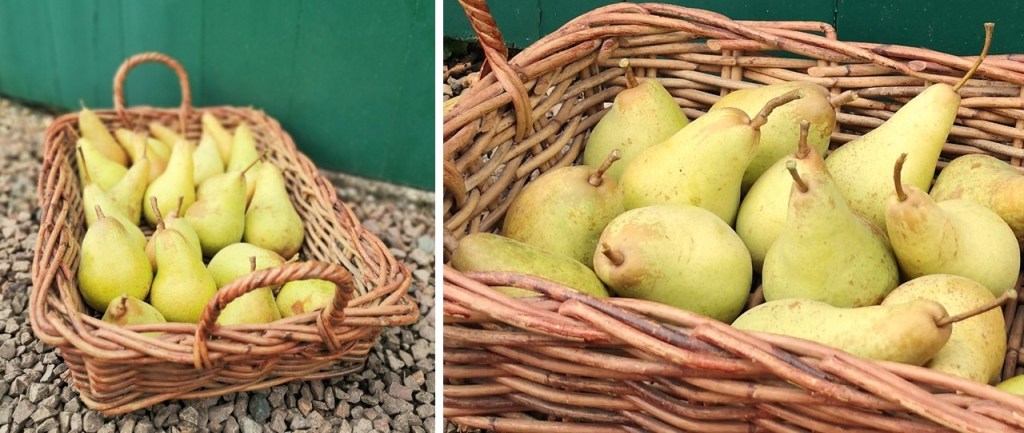
Concorde pear tree and fruit. Images: Kathryn Hawkins
And so to the pears trees. They have also had a good year, providing a generous basketful after a very poor crop last year. Both trees are still small although they have been planted in the garden for about a decade now. The pears store well so there will be fruit to enjoy for a while yet.
Homegrown Concorde and Comice pears. Images: Kathryn Hawkins
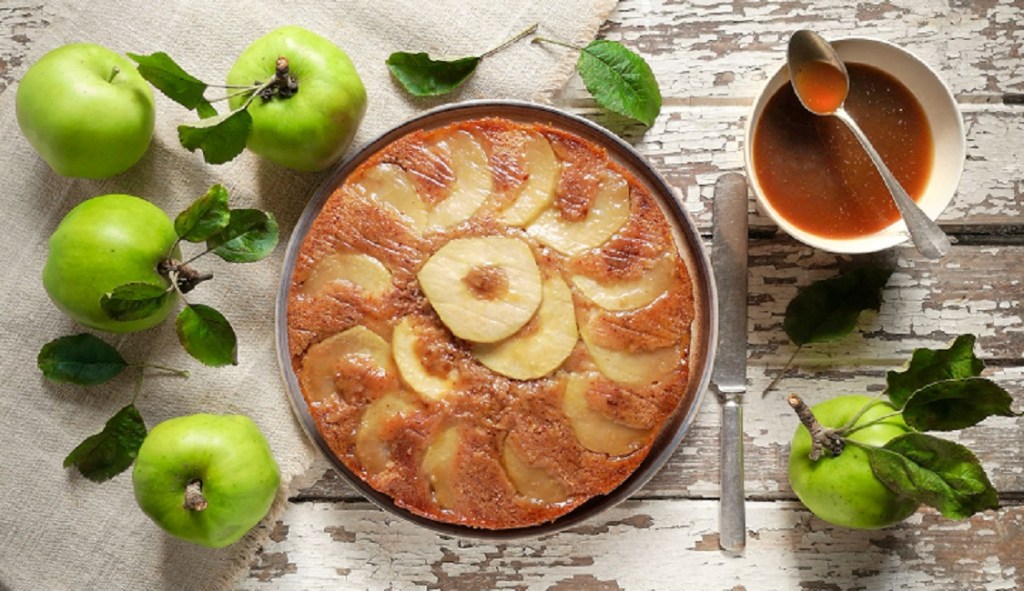
I have posted many apple and pear recipes over the years, but these are my top 3 which you might like to try – just click on the links for the recipes:
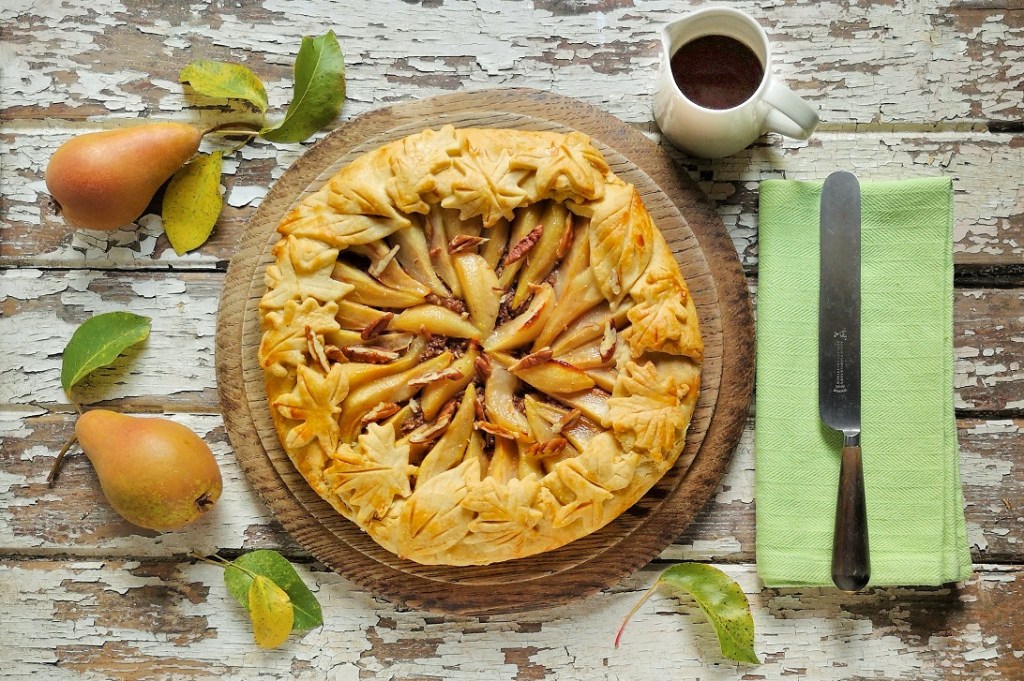
Pear, pecan and maple crostata. Image: Kathryn Hawkins
I hope you are enjoying Autumn/The Fall wherever you are and I look forward to sharing some more recipes and images with you in my next post. My best wishes to you until then.

































 My Virtually Free-from Kitchen