Welcome to my blog all about the things I love to grow and cook. You'll find a collection of seasonal gluten-free, dairy-free and vegan-friendly recipe posts, as well as a round up of my gardening throughout the year. I wish you good reading, happy cooking and perfect planting!
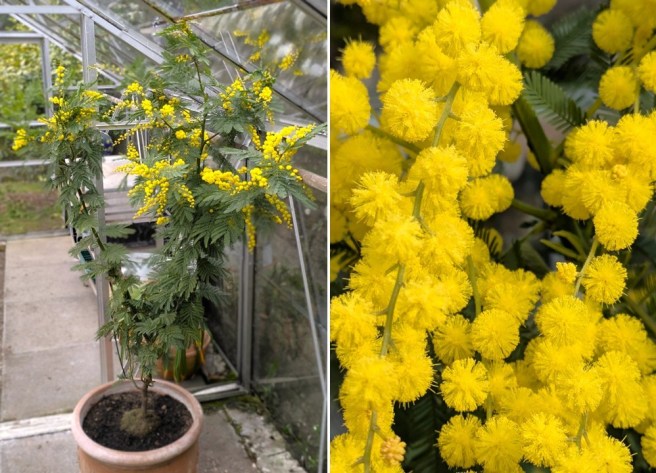
Hello again. It’s been a while since I put a post together. I hope you are enjoying some signs of the new season wherever you are. Here in central Scotland, things are coming to life and the hedgerows and gardens are colouring up with spring flowers at long last. My springtime pride and joy, a Mimosa plant, is in full flower in the greenhouse just now. Such bright little tufty blooms and a subtle sweet scent guaranteed to brighten up the dullest of days.
A few of the flowers in the garden this month. Images: Kathryn Hawkins
Bright and beautiful. Images: Kathryn Hawkins
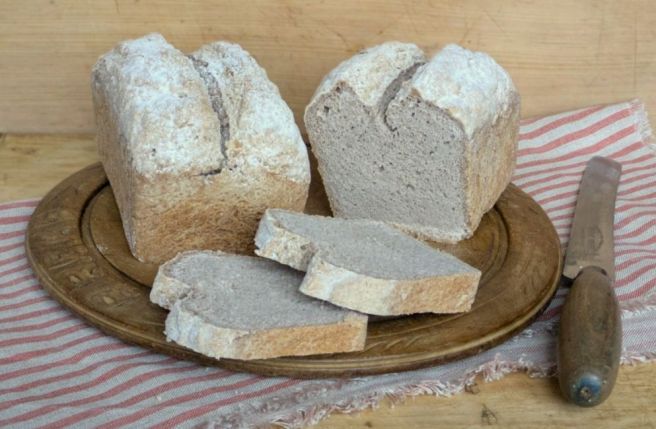
I’ve been doing a bit of baking recently and this month’s post is a result of my efforts. It’s a simple yet tasty bread recipe which makes 2 small loaves. The bread keeps for about 3 days in a bread container but it also freezes well for longer storage. I usually freeze my loaves ready sliced and then I can take out a slice at a time when required.
Makes: 2 x 500g loaves
Ingredients
2tbsp finely ground flaxseed (linseeds)
365g gluten free bread flour
200g buckwheat flour plus extra to dust
1/2tsp xanthan gum
1tbsp caster sugar
25g ground psyillium husk
7g sachet instant dry yeast
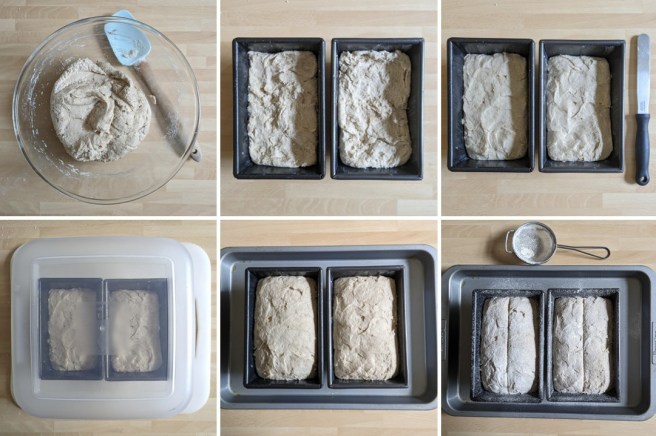
1.Mix the ground flaxseed with 90ml cold water and leave aside to thicken slightly. Grease and flour 2 x 500g loaf tins.
2. Put the flours in a bowl with the remaining ingredients and mix well. Make a well in the centre and add the flax mixture. Gradually mix in about 425ml lukewarm water to make a sticky, soft consistency. Cover and leave to stand for 10 minutes, then mix again.
3. Divide between the tins and smooth the tops. Cover and leave to rise at a coolish room temperature, away from drafts, for about 2 hours until risen to the top of the tins.
4. Meanwhile, preheat the oven to 200°C, 180°C Fan Oven, Gas 6. Put the loaf tins on a baking tray. Using a lame or sharp knife, slash each loaf about 1/2cm deep down the length and dust lightly with a little more buckwheat flour.
Proving the dough. Images: Kathryn Hawkins
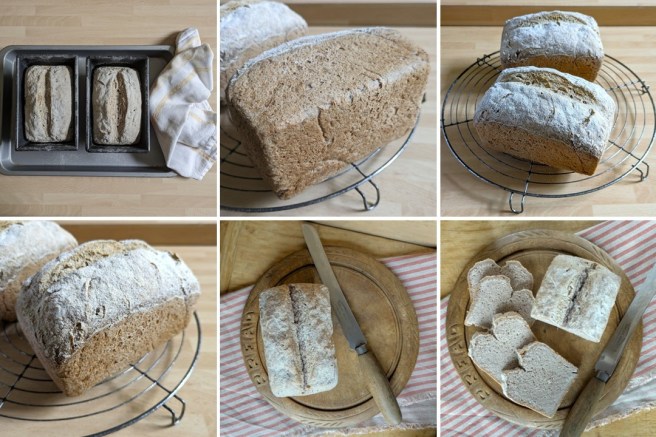
5. Bake the loaves for about 50 minutes until risen, crusty and lightly golden. The loaves should sound hollow when tapped underneath. Turn on to a wire rack to cool completely.
Baking and cooling the loaves. Images: Kathryn Hawkins
Jammed up and ready to eat. Images: Kathryn Hawkins
Until next time, happy baking and thanks for stopping by 🙂
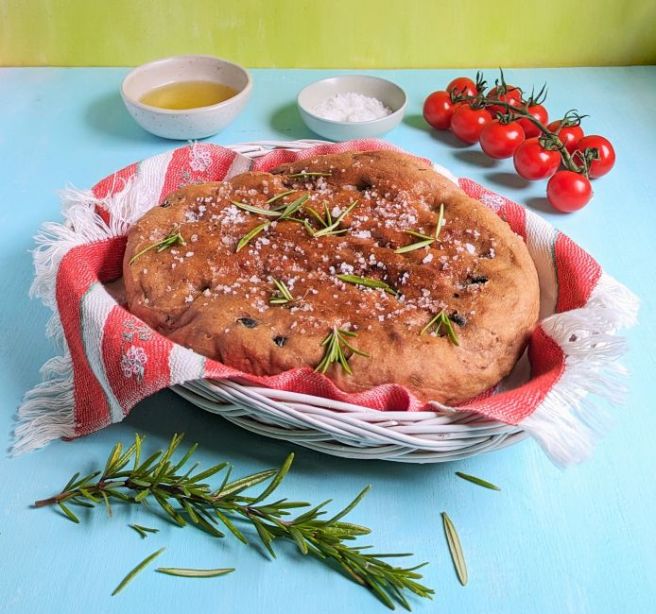
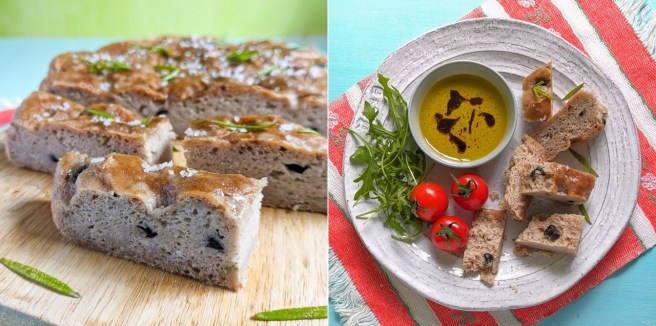
Slow cooker focaccia with olives and rosemary, best served warm. Image: Kathryn Hawkins
Hello there. Welcome to my latest recipe post. So far this month, it’s been the weather for staying indoors here in central Scotland. I’ve been using my slow cooker a lot and eating lots of comforting food in an endeavour to stay warm – well that’s my excuse anyway 🙂
Ripped and ready to eat. Image: Kathryn Hawkins
This week has been Real Bread week here in the UK so I thought I’d join the party and make my latest recipe post a bready one. If you’ve been reading my blog for a few months, you’ll know that I had a book on breadmaking published back in November – here’s the link to the post My new book: Complete starter guide to making bread, published by IMM Lifestyle Books 2024. When researching my recipes, I had been experimenting on cooking bread in the slow cooker and created a simple traditional loaf for inclusion. Sadly, I ran out of pages to feature this gluten-free and vegan slow-cooked loaf, so I’m giving it an airing here instead.
If you’ve never made bread before and are a bit daunted at the prospect, this is a very straightforward loaf to make. As with all gluten-free bread doughs, there is no kneading just a bit of mixing. You can omit the garlic, olives and rosemary to make a plain version if you prefer. I added psyllium husk for some extra texture. This gives the dough a slightly beige tone but adds some chewiness to the crumb. You may want to try making it without for a whiter dough but the texture will be more crumbly.
Rosemary and olive flavoured slow cooker focaccia. Image: Kathryn Hawkins
My slow cooker has a capacity of 5l and the dish is oval shaped – approx. 22 x 18cm. The temperature reached when on the High setting is 120°C. You may need to adapt the quantity of dough to fit your own slow cooker and adjust the cooking time if necessary. Other than that, all the information you need is below. Happy “slow” baking!
Makes: 1 approx. 22 x 18cm oval loaf
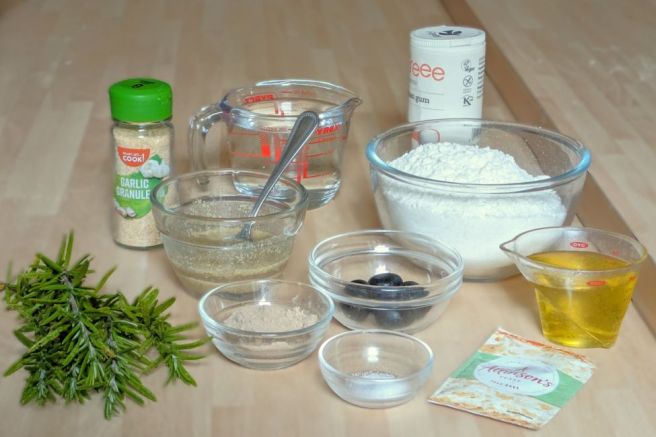
Ingredients
1tbsp ground linseeds
300g gluten free plain flour
7g sachet easy blend dried yeast
2tsp xanthan gum
15g gluten free psyllium husk powder
½tsp salt
2tsp finely chopped rosemary leaves
½tsp garlic granules
25g pitted black olives, chopped
80ml good quality olive oil
Sea salt flakes for sprinkling
1. Mix the linseeds with 3tbsp cold water and leave for a few minutes to thicken and make a vegan egg.
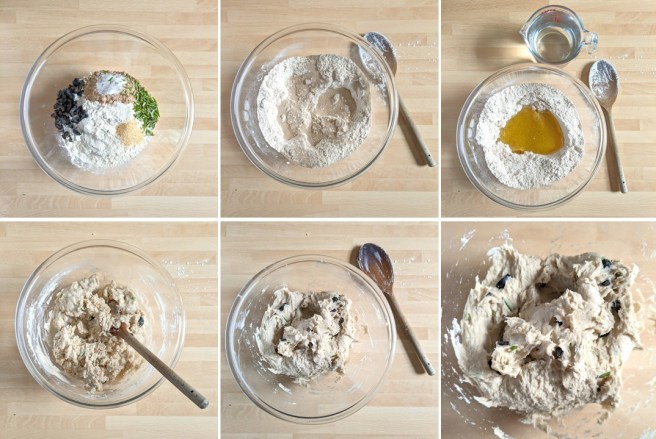
2. Put the flour in a bowl and mix in the yeast thoroughly, then add the xanthan gum, husk powder, salt, rosemary, garlic and olives and mix well.
3. Make a well in the centre and add 60ml olive oil and the vegan egg. Begin mixing and pouring in 300ml warm water. Continue mixing until you have a thick, sticky batter. Cover the bowl and leave to stand for 10 minutes. In this time the batter will become thicker and less sticky. Give it a thorough mix through.
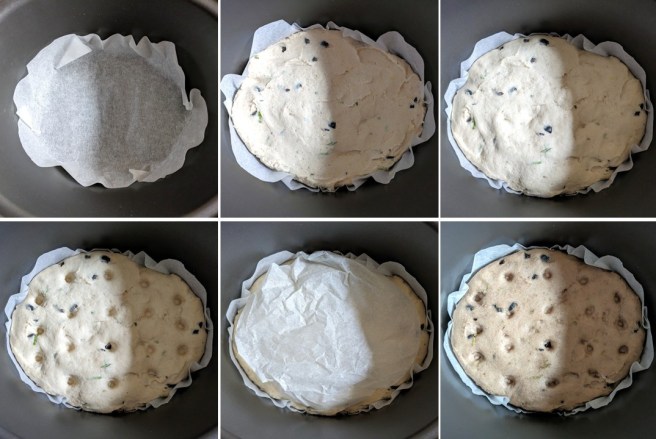
Making focaccia dough. Images: Kathryn Hawkins
4. Line the base of your slow cooker dish so that the parchment paper comes a little way up the sides of the dish.
5.Scoop the dough on top and press and smooth to fit the dish. Cover with the lid and set the cooker to the Warm setting. Leave to prove for 1½hours until puffed up and spongey in texture. If your cooker doesn’t have a Warm setting, simply cover with the lid and place the whole dish in a cool to warm place to rise.
6. Once the dough is risen, push the end of a wooden spoon into the dough all over to give a dimpled effect. Lay a scrunched up piece of baking parchment loosely on top (this helps prevent the dough getting wet from any water droplets that form inside the lid) and set the cooker to High. Leave to cook for 3 hours until firm on top and crusty round the edge. It can be quit challenging to know when the bread is completely cooked so if in doubt err on the side of caution and cook for a bit longer to avoid a dense texture above the bottom crust. As a rule, the base of the loaf should sound hollow when tapped.
7. Transfer the loaf to a wire rack and discard the lining paper. Brush with remaining olive oil and sprinkle with sea salt. Leave to cool for a few minutes then serve warm. If you prefer a browner top, remove the bread from the slow cooker and place on the grill rack. Cook under a preheated medium/hot grill for 1-2 minutes to brown the top then oil, salt and cool as above.
Warm sliced focaccia, ready to serve. Images: Kathryn Hawkins
This bread is best served warm. If you want to freeze the loaf, omit the salt from the top, and wrap well. Once defrosted, simply reheat the loaf in a medium oven for a few minutes, and sprinkle with salt before serving.
Thanks for reading my post. I hope to see you again next month 🙂
Hello again. Following the launch of my book earlier in the month (see my previous post), I am delighted to share with you one of the gluten-free recipes from the book. As with all gluten-free bread making, there is no kneading, just a bit of mixing and then letting the yeast do its work in the dough.
I did all the food styling for my book and was up to my eyes in various mixes for several weeks. Below is how the oaty loaf was photographed for the book. The mixture was made with eggs, but for this post I am using flax egg.
It’s a very straightforward recipe, using some oat flour and psyllium husk to add a bit more of a chewy texture, and I add xanthan gum to hold the crumb together. I hope you enjoy it 🙂
Makes 1 x approx.850g, 18cm round loaf
Ingredient
2tbsp ground flax seed
200g gluten-free plain flour
200g gluten-free oat flour
2tsp easy blend dried yeast
1½tsp xanthan gum
25g psyllium husk powder
2tsp caster sugar
1tsp salt
425ml lukewarm water
1tbsp gluten-free coarse ground or jumbo oats
1. Grease and line an 18cm diameter, 7.5cm deep, round cake tin. Mix the flax seed with 6tbsp cold water and leave to stand for a few minutes to thicken.
2. Mix the flours in a large mixing bowl and stir in the yeast until well combined. Stir in the xanthan gum, psyllium husk, sugar and salt and make a well in the centre. Add the flax egg and half the water, and mix well with a spatula or wooden spoon until well blended.
Flax egg and adding it to the dough. Images: Kathryn Hawkins
3. Continue mix in sufficient of the remaining water until the mixture is soft and sticky. Leave to rest for 10 minutes, then mix again. In this time, the mixture will become slightly less sticky as the water is absorbed.
4. Transfer to the prepared tin. Smooth the top, cover with a reusable cover or large bowl and leave to rise at a coolish room temperature, away from drafts, for about 2 hours until risen to the top of the tin.
Making the dough. Images: Kathryn Hawkins
5. Meanwhile, preheat the oven to 200°C, 180°C fan oven, gas 6. Uncover the dough and sprinkle over the oats. Bake in the centre of the oven for about 1 hour 10 minutes. It can be quite challenging to know when the loaf is cooked through, so if in doubt, err on the side of caution and cook for a further 10 minutes. The usual rule is that the loaf will sound hollow when tapped underneath. Turn on to a wire rack to cool.
Proving and baking the loaf. Images: Kathryn Hawkins
The loaf is best eaten within 3 days of baking. It freezes well. I usually slice the loaf before freezing so I can defrost exactly what I need.
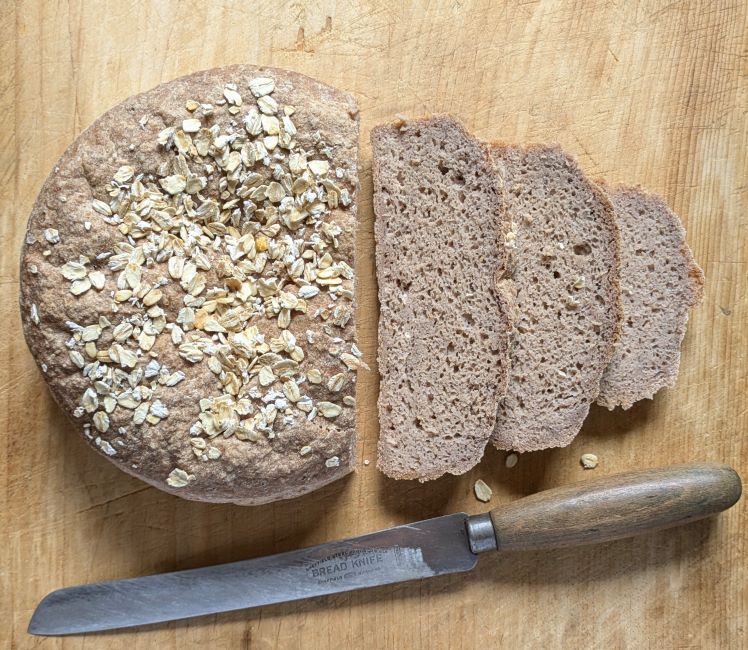
Sliced and ready for freezing. Image: Kathryn Hawkins
The bread is tasty and delicious just as it comes, and if toasted the texture becomes spongier with a crisp bite, much like a toasted crumpet.
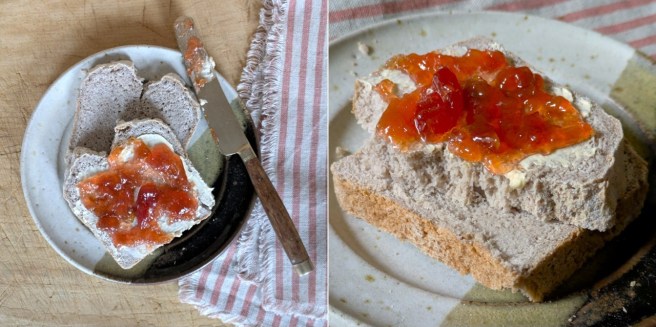
Jammy bread. Images: Kathryn Hawkins
For more bread recipes, my book is available from main online retailers. It is published by IMM Lifestyle Publishers.
I hope you have a good few days until my next post. Thanks for stopping by.
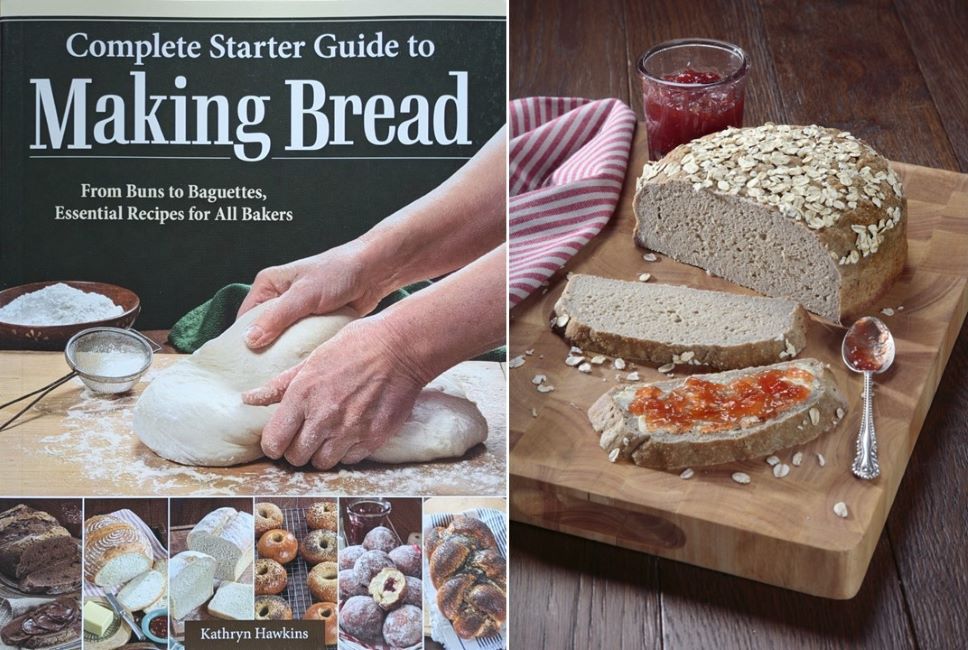
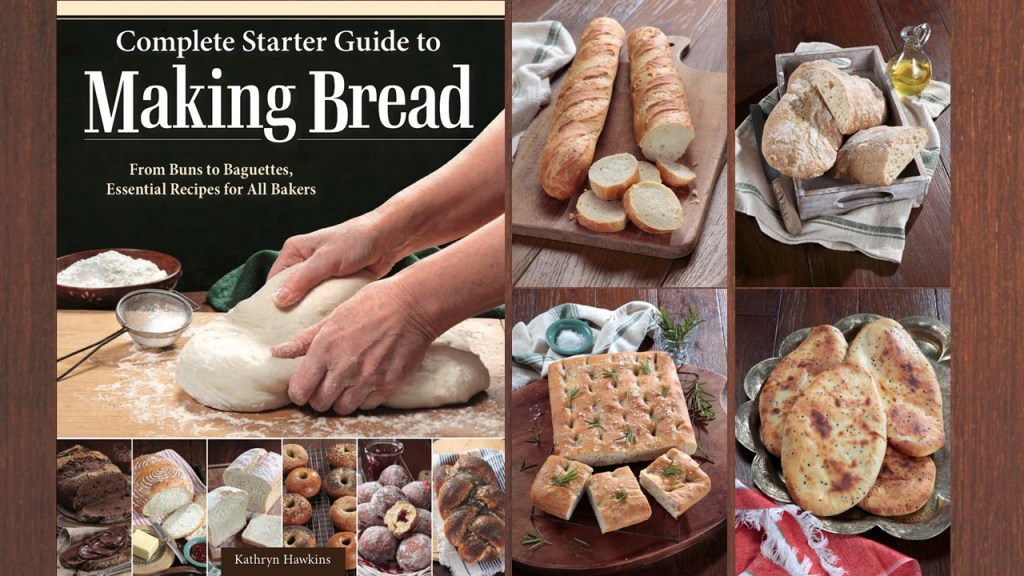
Complete starter guide to making bread by Kathryn Hawkins
Hello there. I hope you are keeping well. I’m delighted to share some news from my work life with you this month. I have a new book just published 🙂
This time last year I was very busy writing and recipe testing recipes for the book and then at the beginning of the year, I made up all the breads for the photographs. It certainly kept me busy for a while, and now it is all published and available to buy. Here’s a little bit about the book, and soon I’ll share one of the gluten-free and vegan recipes with you in my next post.
“Making your own bread is a rewarding experience and is easier than you might think. You can make a loaf with just 3 everyday ingredients and a few basic pieces of kitchen equipment. Once you’ve mastered a few simple techniques, you’ll be well on the way to creating something that is eaten all over the world, every day of the year.
Whether you’re an absolute beginner or an established baker, this book contains everything you need to know to help create a variety of breads, from a simple white loaf to an indulgent buttery brioche. You’ll find recipes for yeasted and non-yeasted breads, sour doughs and breads made with gluten-free ingredients, as well as breads you can cook in the air fryer, slow cooker and steamer. All recipes are vegan or can be adapted to make vegan friendly.
There’s a chapter on the history of bread making; information on all the ingredients you can use to make the perfect loaf; a little bit of science, and lots of tips and techniques for making kneading, proving and shaping the perfect dough, and should something go wrong, there is a useful troubleshooting guide. The book is illustrated with colour photographs throughout to provide extra help and the inspiration you need to start making bread. Happy Baking!”
Complete starter guide to making bread by Kathryn Hawkins, published by IMM Lifestyle Books 2024 is available to buy from major online retailers Food photography by Stuart MacGregor










 My Virtually Free-from Kitchen