Apple crumble cake (gluten-free, dairy-free, vegan)

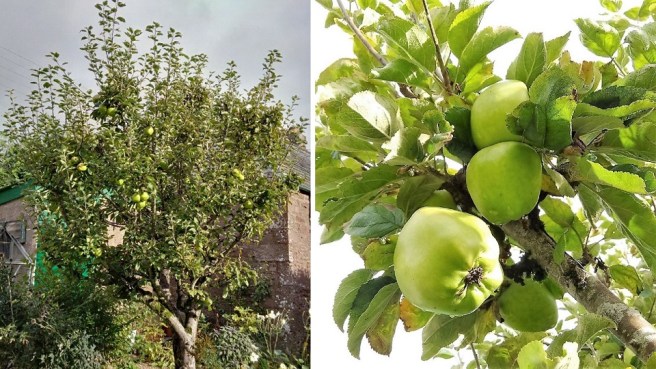
Old_Scottish_apple_tree
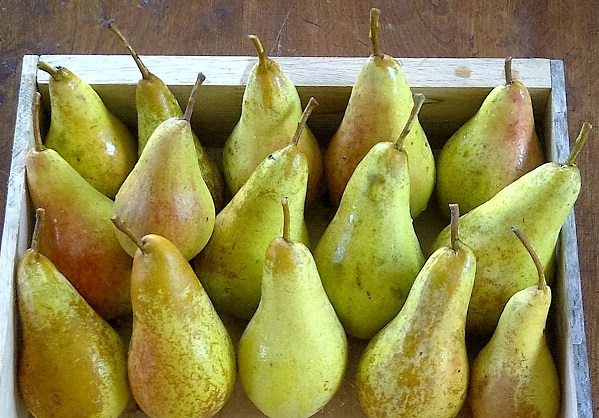
Lord Derby cooking apples. Images by Kathryn Hawkins

A couple of weeks ago, I picked a bumper crop of cooking apples from the old tree in my garden. I have no idea how old the tree is, but it’s gnarly and interesting to look at, and each year produces large, bright green apples with a slightly tart taste. The variety is called Lord Derby. The apples keep their texture when cooked and are perfect for thinly slicing and layering in a deep filled apple pie or peeled and quartered for a tart tatin. Kept in the cool and dark, this variety of apple stores for about 3 months – until about Christmas-time.

This is one of my favourite apple recipes. It keeps well if you can leave it alone, and becomes more cake-like as time goes on. Serve the cake hot or cold, for pudding or with coffee. I guarantee you’ll love it!

Serves: 10-12

  • 225g vegan margarine ( or lightly salted butter if you prefer),  softened
  • 165g + 2 tbsp Demerara sugar
  • 1 tsp natural vanilla extract
  • 350g gluten-free plain flour (such as Dove’s Farm)
  • 10g gluten-free baking powder (such as Dr Oetker)
  • 500g cooking apples
  • Juice 1 small lemon
  • 1 tbsp cornflour
  • 1 tsp ground cinnamon
  • 50g thick milled oats
  • 1 tsp icing sugar
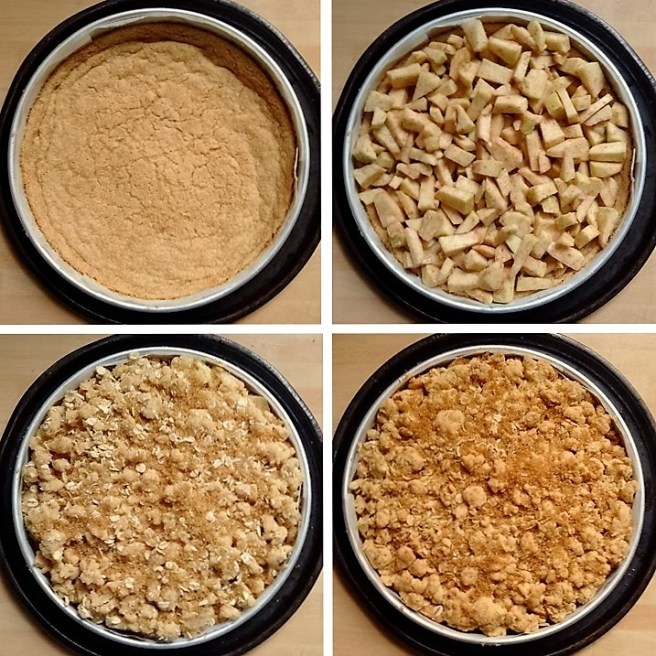
  1. Preheat the oven to 180°C (160°C fan oven, gas mark 4). Grease and line a 5cm deep x 23cm round, cake tin. In a mixing bowl, beat the margarine with 165g sugar and the vanilla, until well blended and creamy.
  2. Sift the flour and baking powder on top and bring together to form a crumbly mixture. Press about two-thirds evenly into the base of the tin to make a smooth, thick base. Prick all over with a fork and bake for 20 minutes until lightly golden and slightly crusty.
  3. Meanwhile, prepare the filling. Put the lemon juice in a bowl. Thinly peel and core the apples, and chop into small pieces. Toss in the lemon juice to help prevent browning. Drain away the excess juice and toss in the cornflour and cinnamon.
  4. Spread the apple evenly over the baked base. Mix the oats into the remaining crumble and spoon on top, making sure all the apple is covered. Sprinkle over the remaining Demerara sugar. Bake in the oven for about 40 minutes until golden brown and firm to the touch.

    Step_by_step_preparation_for_apple_crumble_cake
    Preparation of apple crumble cake. Images: Kathryn Hawkins

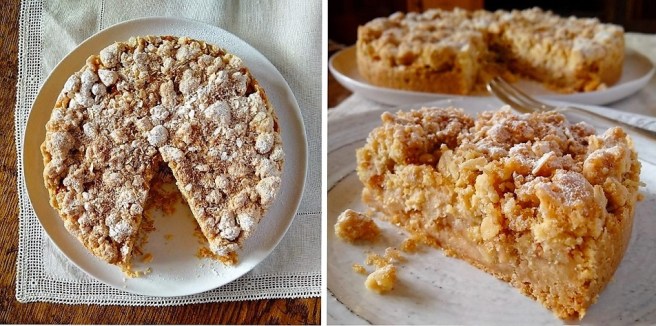
If you want to serve the cake as a pudding, leave it to firm up for 15 minutes before removing from the tin; otherwise leave it to cool completely and enjoy cold. Dust lightly with icing sugar just before serving. Enjoy!

Freshly_baked_gluten_free_apple_crumble_cake
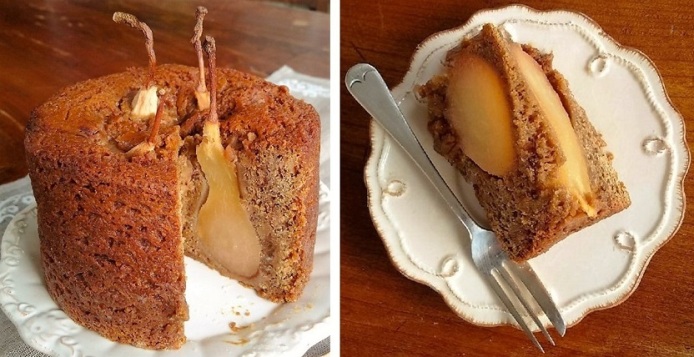
Homemade gluten-free apple crumble cake. Images by Kathryn Hawkins


Yellow courgette and lemon cake (gluten-free, dairy-free)

Homegrown_yellow_courgettes
Home-grown yellow courgettes. Image copyright: Kathryn Hawkins

I’ve had a bumper crop of green and yellow courgettes this year, and they are still ripening thick and fast. Apart from enjoying them as a vegetable, they do make a good substitute for grated carrot in a cake. After a successful weekend bake-in, I thought I’d share my recipe for courgette and lemon loaf cake with you. It is moist and tasty, and improves with keeping (if you can leave it alone!). Perfect sliced and eaten on its own with a cup of tea, or served as a dessert with coconut yogurt and blueberry compote. Enjoy!

Serves: 8-10

  • 2 medium eggs
  • 150ml sunflower oil
  • 150g caster sugar
  • Finely grated rind 1 unwaxed lemon
  • 115g yellow courgette, trimmed and grated
  • 50g ground almonds
  • 150g plain gluten-free flour blend (such as Dove’s Farm)
  • 7g gluten-free baking powder (such as Dr Oetker)
  • 3 tbsp Demerara sugar
  1. Preheat the oven to 180°C (160°C fan oven, gas mark 4). Line a 1kg loaf tin with a baking parchment liner and sit the tin on a baking tray.
  2. In a mixing bowl, whisk together the eggs, oil, sugar and lemon rind. Stir in the courgette and ground almonds.
  3. Sift the flour and baking powder on top and carefully mix all the ingredients together. Pour into the tin and sprinkle thickly with Demerara sugar.
  4. Bake for 55 minutes to 1 hour until risen, golden and firm to the touch – insert a skewer into the centre of the cake, it should come out clean if the cake is cooked. Cool for 30 minutes before removing from the tin and transferring to a wire rack to cool completely. Wrap and store for 24 hours before serving to allow the flavour and texture to develop. The cake freezes well, leave to cool then wrap and freeze for up to 6 months. Allow to thaw at room temperature, in the freezer wrappings.

    Gluten-free_courgette_and_lemon_loaf_cake
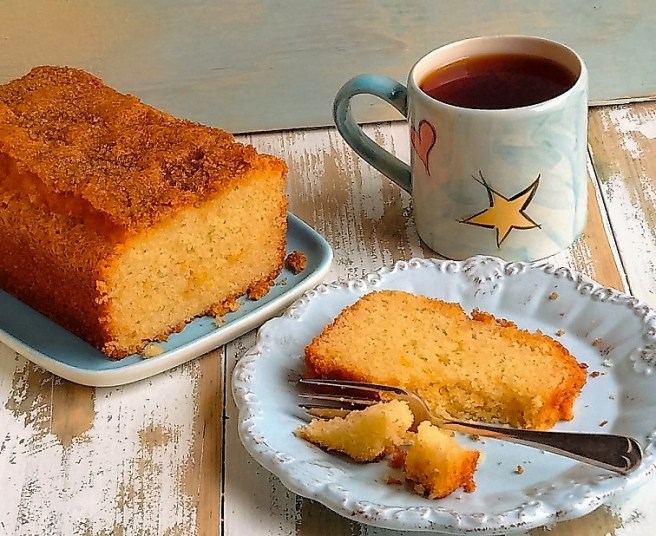
    Yellow courgette and lemon cake. Image copyright: Kathryn Hawkins


Caramel “splatter” blondies (gluten-free)

Gluten_free_white_chocolate_and_caramel_blondies
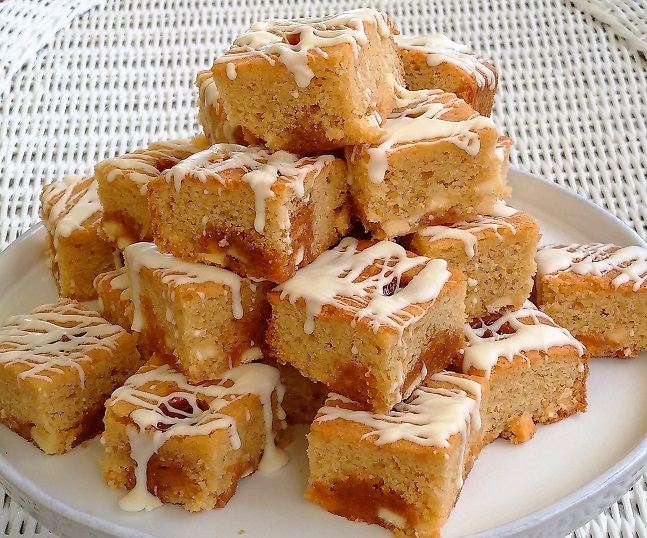
Gluten free caramel “splatter” blondies. Image copyright: Kathryn Hawkins

With the weekend approaching, I thought a baking recipe might go down well today. One of my “turn to” bakes for entertaining is sweet and gooey blondies – a guaranteed winner. Very easy to make, quick to cook, and a bake that improves on keeping (although it doesn’t usually hang around long enough to test this theory to the full!). Here’s the recipe:

Makes 24 pieces

  • 200g good quality white chocolate
  • 115g salted butter
  • 3 medium eggs
  • 115g light soft brown sugar
  • 225g gluten free plain flour blend (such as Dove’s Farm)
  • 1½ tsp gluten free baking powder
  • 1-2 tsp caramel or butterscotch flavour (such as Dr Oetker Caramel Flavour or Beau Concentrated Butterscotch Flavour)
  • 150g white chocolate chunks
  • 300g your favourite caramel sauce or canned caramel
  1. Preheat the oven to 170°C (150°C fan oven, gas mark 3). Grease and line a 20 x 30cm rectangular cake tin. Break up 150g white chocolate into a heatproof bowl and add the butter. Sit the bowl over a saucepan of barely simmering water and leave to melt. Remove from the water and cool for 10 minutes.
  2. Beat the eggs and sugar into the melted chocolate mixture. Stir in the flour and baking powder, and add flavour to taste; then stir in the chocolate chunks.
  3. Transfer to the prepared tin and smooth over the top. Bake in the oven until risen, lightly golden and lightly crusted on top (for about 25 minutes if you want a very dense centre, or for 30 minutes for a more even and spongier texture – this is my preference).
  4. Whilst the cake is warm, score the top with a knife to make 24 equal pieces and then, using a wooden spoon handle, push the end into each portion of cake to make a deep indent – try to avoid pushing the handle right through to the bottom of the tin. Leave to cool completely in the tin.
  5.  Once the cake is cold, remove from the tin and wrap and store for 24 hours to allow the flavour to develop and the texture to moisten.

    caramel_filled_blondie_pieces
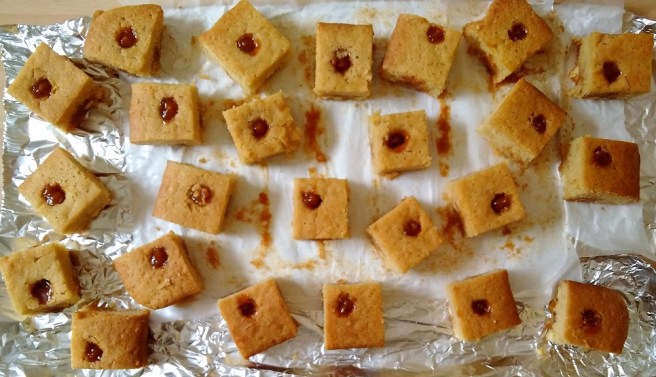
    “Just filled” blondie pieces. Image copyright: Kathryn Hawkins
  6. The next day, unwrap the cake and cut through into the 24 pieces. Depending on your caramel sauce preference, either squirt  it straight from the tube; spoon it, or, transfer it to a piping bag and pipe sufficient caramel into each pocket to fill it.
  7. Melt the reserved white chocolate as above and, using a teaspoon, drizzle liberally over the top of each blondie. Leave in a cool plate to set, or until you are ready to indulge. Yummy!
white_chocolate_splattered_caramel_blondies
Caramel “splatter” blondies. Image copyright: Kathryn Hawkins


Scottish Shortbread (gluten-free; dairy-free; vegan)

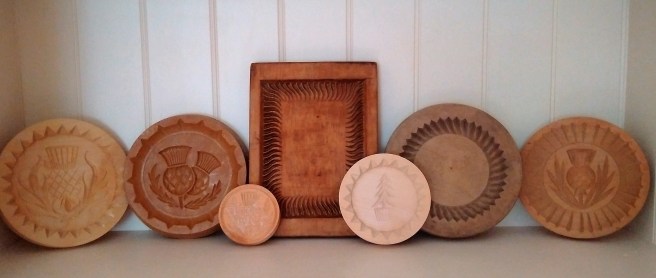
Scottish_shortbread_moulds.jpg

I’m starting my brand new blog with a post about one of my favourite bakes of all time. I learnt how to make shortbread at school and I have been making it ever since. My teacher taught us to remember the quantities of ingredients as “2, 4, 6” back in the day when pounds and ounces were the only unit of choice. Nowadays I do the conversion subconsciously each time I make a batch.

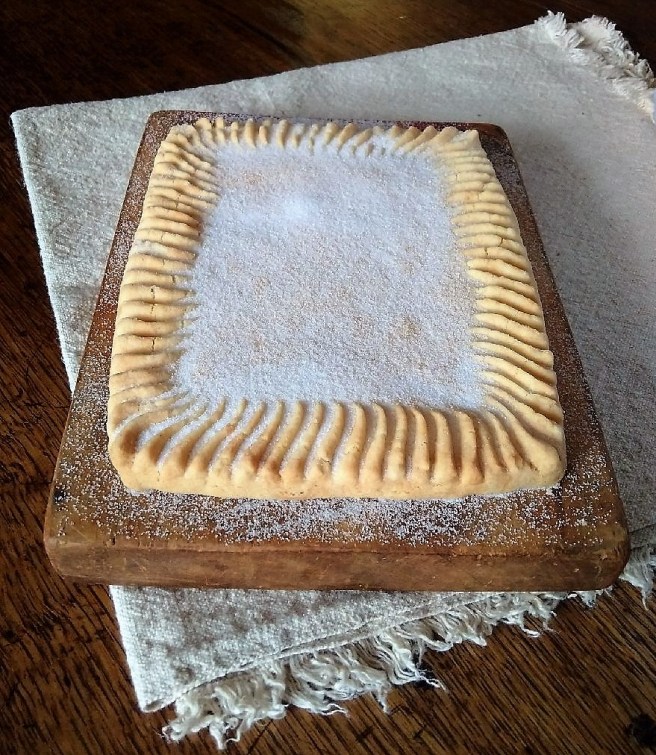
Since moving to Scotland, the motherland of this well known bake, I have acquired a number of traditional shortbread moulds which help transform something that looks a wee bit on the plain side into a real show-stopper. The one in the middle of the picture above was recently given to me by a friend. It’s a real beauty and the mould I used to make the shortbread in the image below.

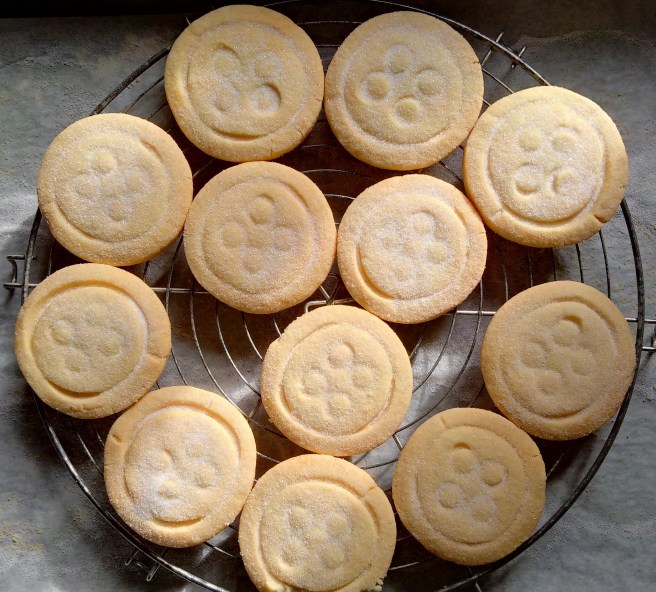
So, to the recipe. If you don’t have a mould, press the dough into an 18cm square tin. You can also roll it out to a thickness of about 1cm and stamp with cookie cutters (picture below) – this quantity of dough will make 12 x 6cm rounds. I’ve also added some steps for making 8cm rounds if you have a smaller shortbread mould. I used this mould to make the shortbread on my 2019 Burns Night post.

Makes: 1 x 15 x 20cm slab; 12 x 6cm rounds or 6 x 8cm rounds

Ingredients

  • 50g caster sugar + a little extra for dusting
  • 60g white vegetable fat or coconut oil, softened
  • 40g dairy-free spread (For non-vegan, replace the quantity of fats above with 100g good quality lightly salted butter, softened, if you eat it, and omit the salt)
  • ¼ tsp salt
  • 175g gluten free plain flour blend (such as Dove’s Farm) + a little extra for dusting (for a non-gluten-free version use white spelt or plain wheat flour)
  1. Put the sugar in a bowl with the fat and spread and mix together until soft and creamy. Add the flour and gradually work the ingredients together until well blended, then bring the mixture together with your hands to form a soft dough.
  2. Lightly dust a 15 x 20cm shortbread mould with extra flour and press the mixture into the mould, making sure it is packed snugly into the corners. I usually start to gently peel the dough back from the mould edges before turning it over onto a lined baking tray and giving it a bit of a thump to remove it from the mould.
  3. Prick the top with a fork and chill for at least 30 minutes. If you don’t have a mould, form into a 15 x 20cm rectangle. Neaten all round, then press the edges and prick the top with a fork. Prick and chill as above.
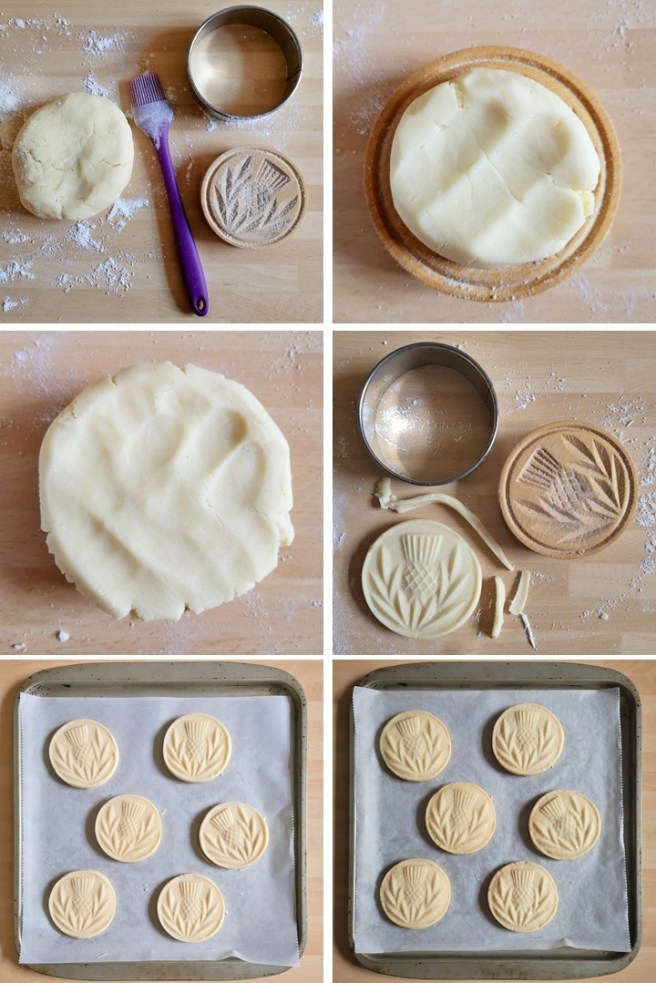
  4. If you have an 8.5cm shortbread mould, divide the dough into 5. Lightly brush the mould with flour and press a piece of dough on top until it reaches just beyond the edge of the mould – the dough should be ¾cm thick when pressed out .
  5. Carefully peel the dough from the mould, and neaten the round using a 8cm plain cutter. Place on a lined tray. Repeat the dusting, pressing and trimming using the other pieces of dough, then gather up all the trimmings to make your 6th round. Chill for 30 minutes.

    Step-by-step_to_using_a_small_shortbread_mould
    Making thistle embossed shortbread rounds. Images: Kathryn Hawkins
  6. Preheat the oven to 180ºC (160ºC fan oven, gas mark 4). Bake the shortbread slab for about 35 minutes until lightly golden all over (smaller cookie shapes like the 6cm shortbread buttons below will take about 20 – 25 minutes, and the 8cm rounds between 25 – 30 minutes). Cool for 10 minutes, then dust lightly with extra sugar and transfer to a wire rack to cool completely. Break the large slab into small (or big) pieces to serve. Shortbread keeps well if you can leave it alone long enough – over a week in an airtight container or tin.
gluten free Scottish shortbread
Traditional Scottish shortbread with a gluten-free and vegan twist. Image copyright: Kathryn Hawkins
gluten free shortbread rounds
6cm shortbread buttons. Image copyright: Kathryn Hawkins