Making Victoria plum jam, and a recipe for almondy plum pudding (gluten-free; dairy-free; vegan)

Homemade_Scottish_Victoria_plum_jam_September_2024
Just jammy. Image: Kathryn Hawkins

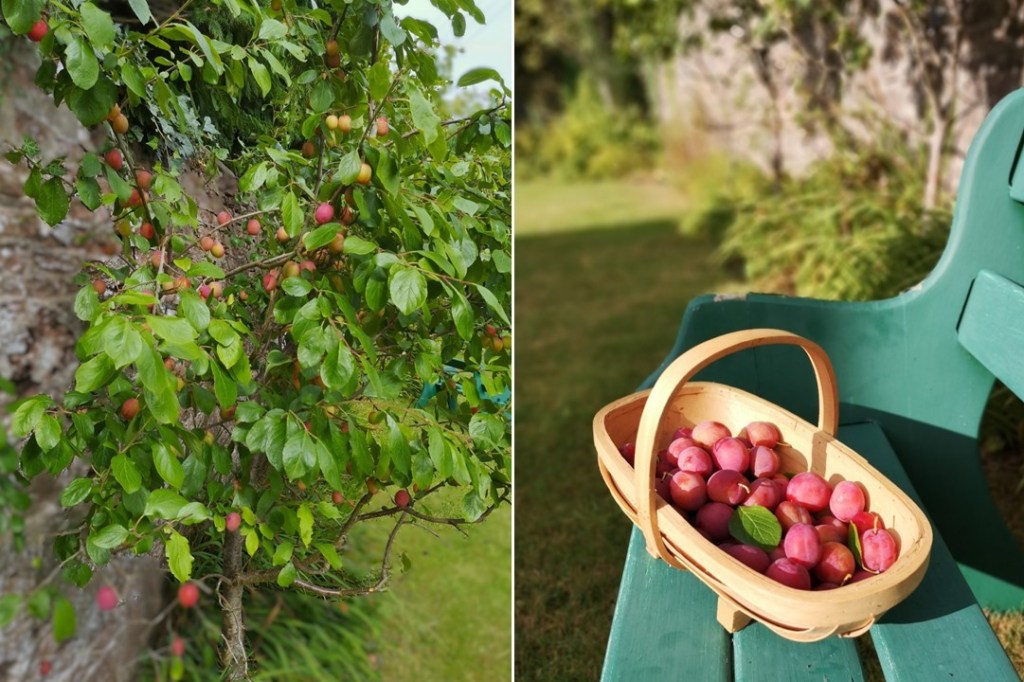
Hello again. The sunshine here in central Scotland last weekend helped ripen off the Victoria plums on the small tree in the garden. And this year, I managed to get them picked before the wasps moved in:)
Scottish_Victoria_plum_harvest_September_2024
This year’s Victoria plum harvest. Images: Kathryn Hawkins

Not a bad haul, and there are still a few left on the tree for later in the month. I’ll admit that plums are not my favourite fruit but they do make a lovely jam, and are also delicious flavoured and baked with almonds. Hence, my two recipes this week.

Homemade_Victoria_plum_jam_in_jar_and_on_spoon
Simply plum jam. Images: Kathryn Hawkins

The jam recipe is very straightforward, just 2 ingredients, fruit and sugar. Victoria plums, if not too ripe, set well without needing to add lemon juice to the mix. If the plums are very ripe, then add 1tbsp juice per 500g fruit.

Makes: approx. 1.5kg

Ingredients

  • 1kg ripe Victoria plums
  • Approx. 850g granulated sugar

1. Wash the plums then cut them in half and prise out the stones. Put the stones to one side, and weigh the prepared fruit and make a note. You should use the same amount of sugar to fruit. If the plums are too firm to cut cleanly in half, you can cook them whole and then remove the stones once the fruit has softened – it is worth counting the whole plums before you cook them so that you know how many stones to fish for!

2. Put the stones on a piece of muslin. Gather up the sides and then bash with a rolling pin to crush the stones. Tie the muslin tightly to secure the crushed stones inside. You don’t have to do this, but I think the jam has better flavour and setting qualities if you add the stones.

3. Put the plums in a large saucepan. If they are ripe, you don’t need to add any water. If they are firm, add about 100ml. Heat until steaming, add the muslin bag, then cover with a lid and cook gently until very soft. If you’ve cooked whole plums, now is the time to do a little stone fishing.

4. Add the quantity of sugar to match the weight of the prepared fruit, and stir until dissolved, then raise the heat and boil rapidly until setting point is reached – around 104 to 105°C on a jam thermometer. Squeeze out the juices from muslin bag and discard, and stir the jam to distribute the fruit pieces before packing into clean jars and sealing whilst hot.

Making_plum_jam_with_Scottish_Victoria_plums_September_2024
Making plum jam. Images: Kathryn Hawkins
Making_jam_pot_covers_from_paper_napkins
Easy peasy jam pot covers. Images: Kathryn Hawkins

For a simple finishing touch, if you are thinking about gifting some of your jam, I often cut out rounds of paper napkin to cover the jar lids. Use a saucer or plate a few centimetres larger than the lid and draw round using a pencil. Secure the covers in place with a small rubber band and then tie with string or ribbon. Don’t forget the label.
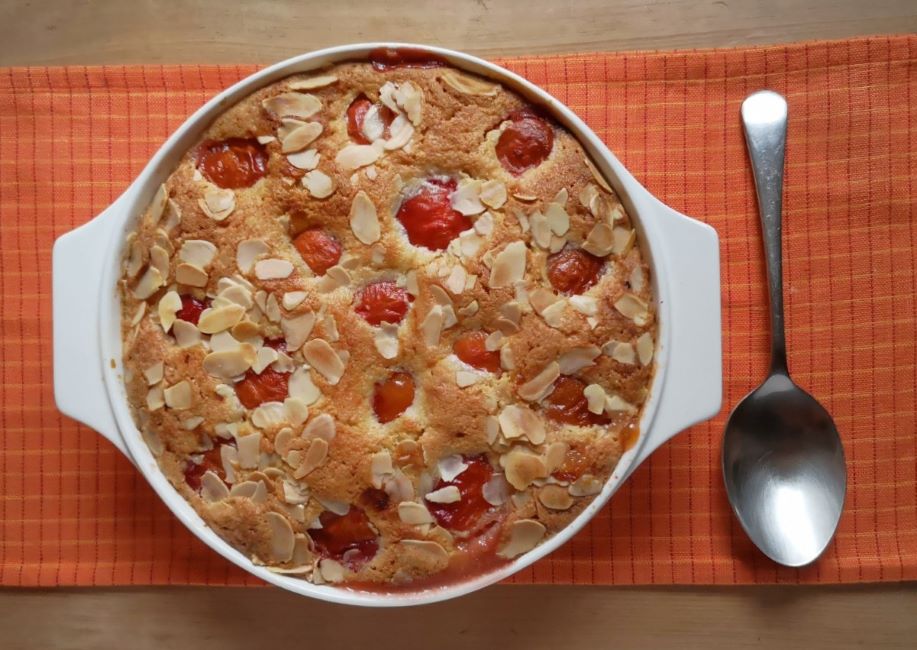
Gluten-free_dairy-free_vegan_almond_plum_pudding
Plum pudding perfection. Image: Kathryn Hawkins

My second plummy recipe is also very easy to make. You’ll need 850g plums and a dish about 1.7l in capacity. The bake will serve about 6 people.

Pitting_Victoria_plums
Victoria plums, ripe and ready for pudding. Images: Kathryn Hawkins
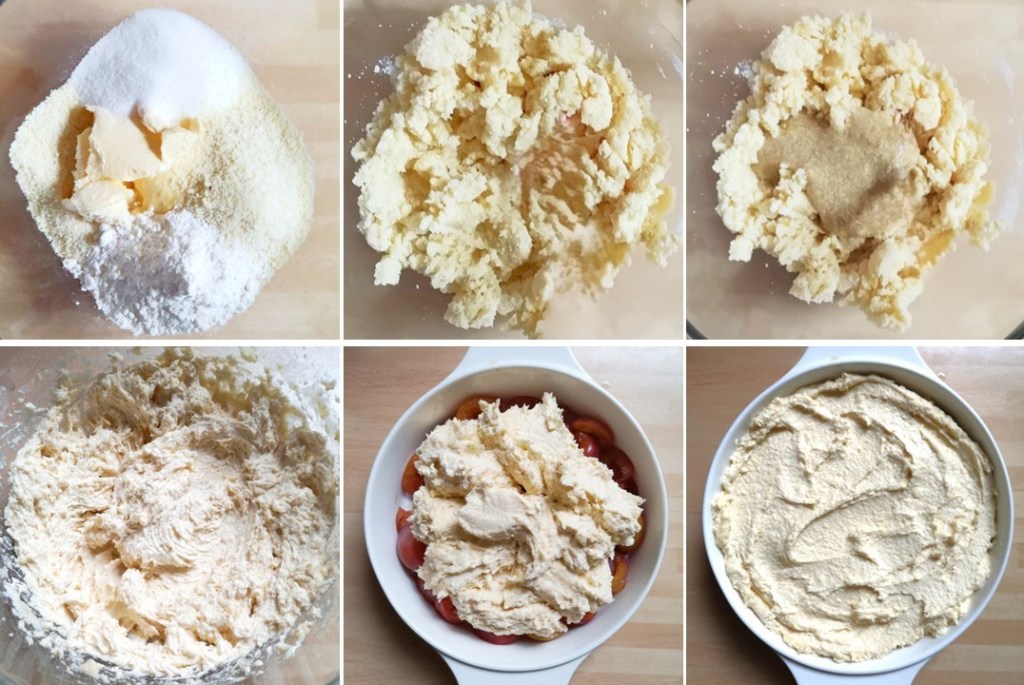
Making_gluten-free_dairy_free_almond_sponge
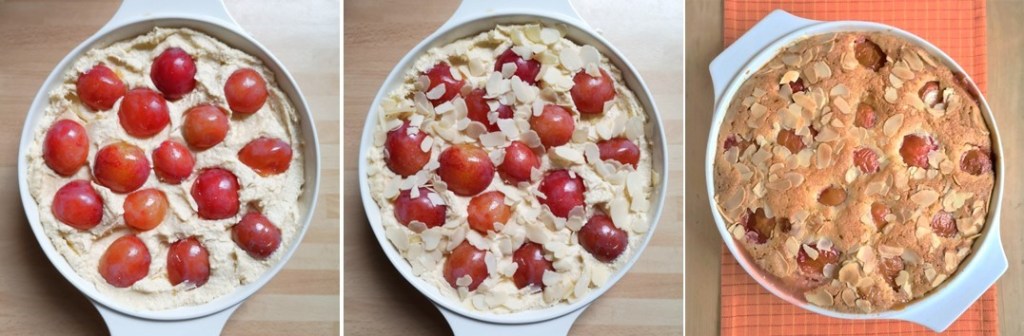
Assembly_and_baking_gluten-free_dairy-free_vegan_almond_plum_pudding
How to make almond plum pudding. Images: Kathryn Hawkins

1. Wash and stone the plums as for jam, but discard the stones this time. Put two thirds of the prepared fruit in the dish and put to one side while you make the topping.

2. Mix 3tbsp ground flax seed with 135ml water and leave for a few minutes until thickened.

3. Whisk together 155g lightly salted, soft plant butter with 155g caster sugar, 155g ground almonds, 30g gluten-free plain flour and 1tsp almond extract until well blended and creamy. Stir in the flax egg and whisk to make a smooth cake batter.

4. Spoon over the plums in the dish and smooth the top. Push the remaining plums into the mixture on top and sprinkle with a few flaked almonds. Pop the dish on a baking tray and bake in a preheated oven at 180°C, 160°C fan, gas 4, for about 1hour 15 minutes until firm to the touch and golden. Best served hot with custard.

Freshly_baked_gluten-free_dairy-free_vegan_almond_plum_pudding
Ready for custard. Images: Kathryn Hawkins

If you have any leftover jam, add a layer in the bottom of the dish for extra sweetness.

Until next time, enjoy the autumn colours and I’ll hope to see you again in a couple of weeks or so.
Just peachy pancakes and jam (gluten-free; dairy-free; vegan)

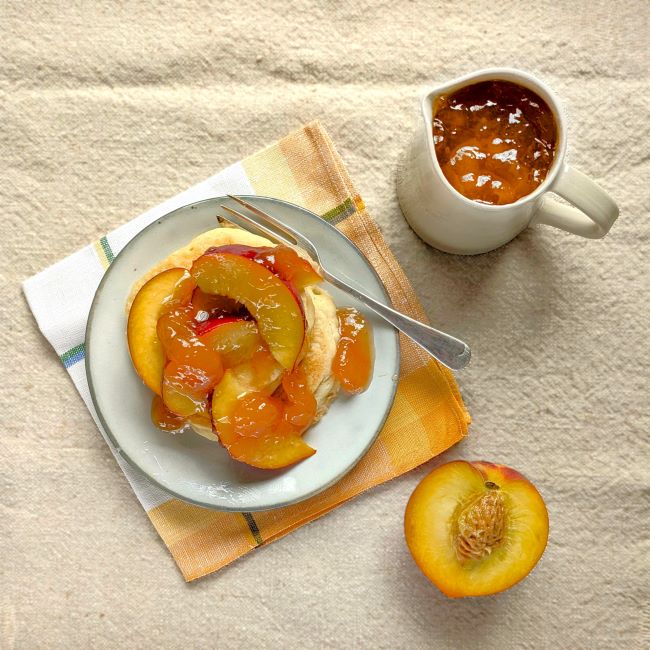
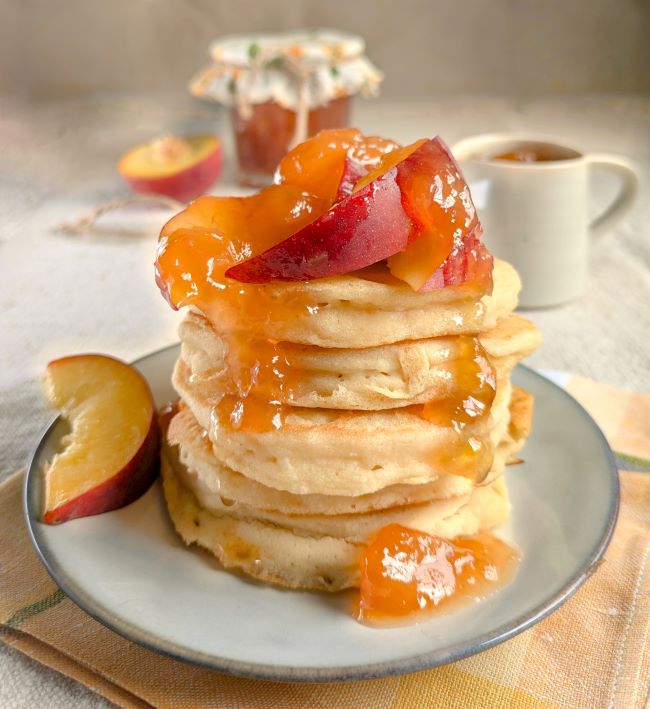
A_stack_of_gluten-free_dairy-free_vegan_pancakes_with_peaches
Just peachy pancakes. Image: Kathryn Hawkins

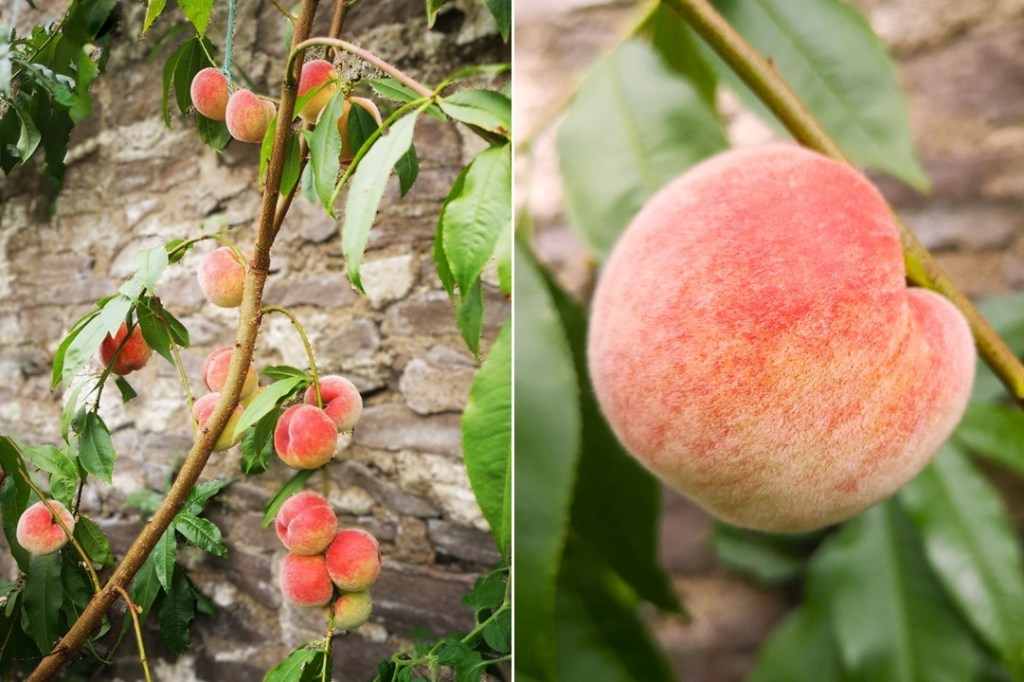
Hello there. I have 2 recipes for you this month: light fluffy pancakes served with a homemade fresh peach jam, inspired by acquiring some homegrown fresh peaches last July. My then neighbour, asked me in to water his burgeoning garden and greenhouse whilst he was away on holiday, and in return I was able to enjoy the pick of the crop. How lucky was I when I discovered the greenhouse peach tree bearing fruit that was ripening so fast the peaches were literally falling from the tree.

Greenhouse_white_peaches_growing_on_a_tree
Greenhouse white peach tree. Images: Kathryn Hawkins

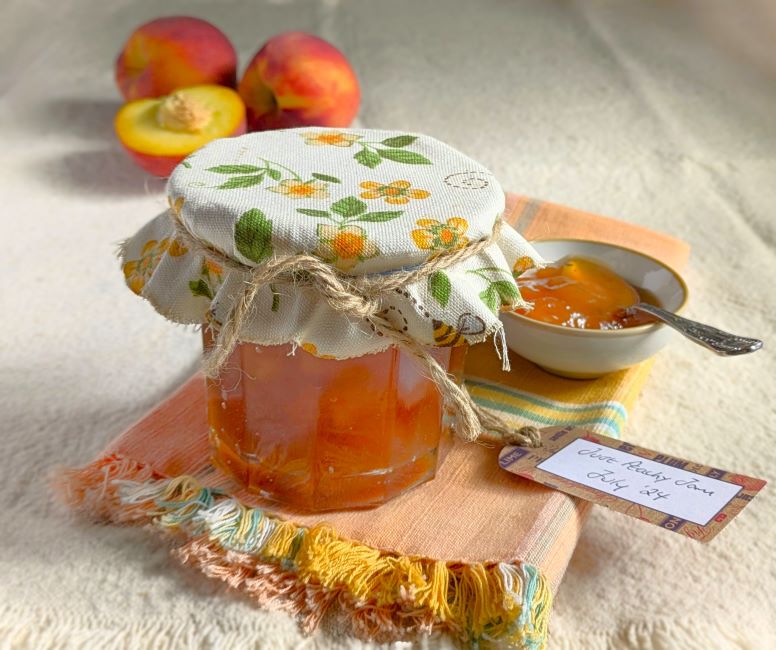
I gathered up the crop and made peach jam for the very first time. Delicious it was too, and, by the way, I did give him a pot when he returned 🙂 The peaches were a very sweet and juicy white variety which peeled very easily without any intervention. I made some this year with firmer, yellow-fleshed peaches and dipped them in boiling water for a few seconds to loosen and then peel away the skins. You can also use a vegetable peeler to do this if preferred. You do need to peel peaches and nectarines for jam making because the skins become very tough when boiled with sugar.

Homemade_peach_jam
Just peachy jam. Image: Kathryn Hawkins

Pancakes make the perfect base to enjoy homemade jam, so I am combining the jam and pancake recipes below in case you want to make either or both.

Makes: approx. 1.125kg jam and 12 pancakes

Ingredients

For the jam:

  • 1kg peaches
  • 6tbsp lemon juice
  • 800g granulated sugar (I used 200g demerara sugar and 600g white sugar)

For the pancakes:

  • 175ml plant-based milk
  • 2½tsp lemon juice
  • 150g gluten-free blended self raising flour
  • 30g cornflour (cornstarch)
  • ½tsp bicarbonate of soda (baking soda)
  • 50g plant-based butter, melted
  • 1tbsp maple syrup
  • A little vegetable oil for frying

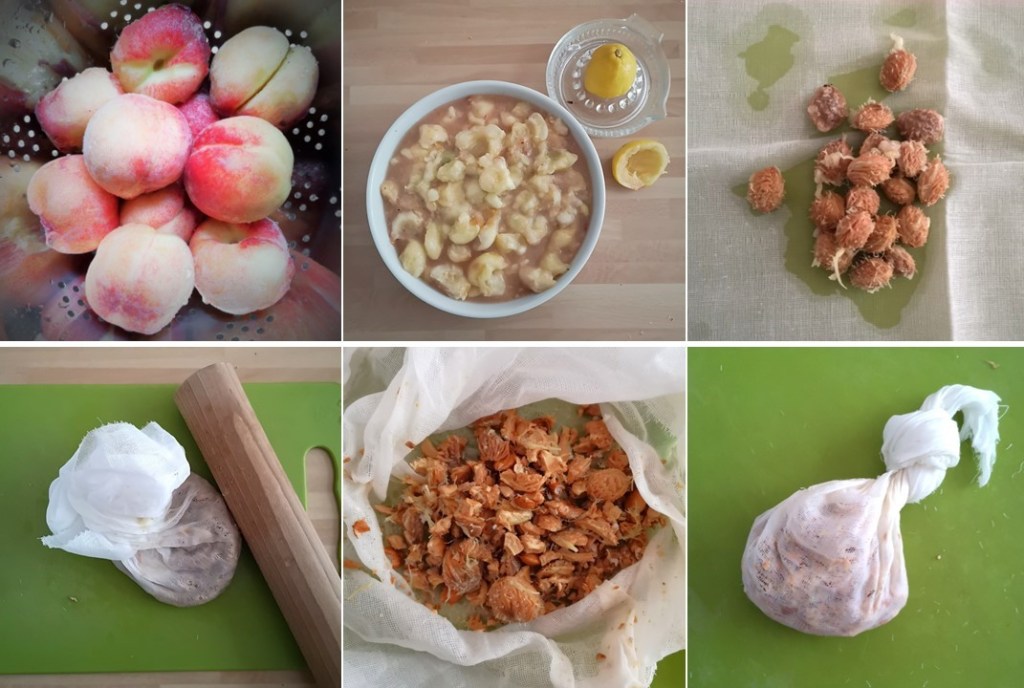
1. For the jam, wash, skin and chop the peaches. If the peaches are very ripe, then will break up easily. If the peaches are firm, cut them into small pieces. Put the stones to one side and place the peach flesh in a bowl. Mix in the lemon juice.

2. Put the stones on a square of muslin, twist the edges together to contain the stones within, and bash hard with a rolling pin to smash them open. Tie the muslin securely.

Preparing_peaches_for_jam-making
Peach and peach stone preparation. Images: Kathryn Hawkins

3. Transfer the peach and lemon mixture to a saucepan, and heat until steaming and hot, then simmer gently to soften the fruit. If the peaches are very ripe and soft, they will require little or no cooking.

3. Add the sugar and stir until dissolved, then raise the heat, add the bag of crushed stones and boil rapidly until setting point is reached – between 104° and 105.5°C.

Making_fresh_peach_jam
Making peach jam. Images: Kathryn Hawkins

4. Discard the stones and leave the jam to stand for a few minutes to thicken slightly, the stir to distribute the fruit pieces and spoon into clean jars and seal straight away. Cool, then label. The jam is ready to eat but will keep for several months if stored correctly.

Spoonful_of_homemade_peach_jam
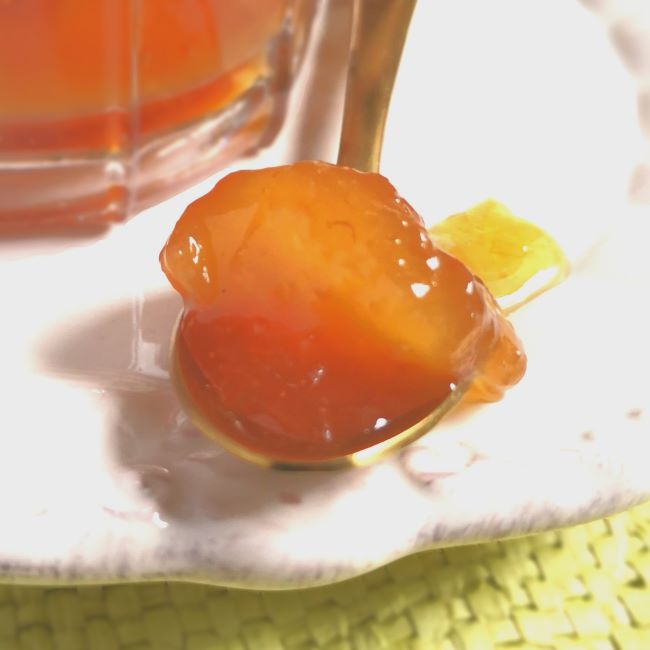
Jammy spoonful. Image: Kathryn Hawkins

To make the pancakes:

1.First make a buttermilk. Mix the milk and lemon juice together and leave to stand for a for a few minutes until it thickens slightly.

2. Sift the flour, cornflour and bicarbonate of soda into a bowl and make a well in the centre. Add the melted butter, maple syrup and buttermilk and gently mix everything together to make a thick batter. Note: as soon as you mix the liquid into the dry ingredients, the raising agents get to work and produce air bubbles. You need to get the batter cooked as quickly as possible in order to make fluffy pancakes.

Gluten-free_vegan_Pancake_ingredients_and_batter-making
Making the pancake batter. Images: Kathryn Hawkins

3. Working quickly, brush a large frying pan or flat griddle pan lightly with oil and heat until hot. Use a tablespoon measure to spoon 2 spoonfuls of batter on to the hot pan to make a thick pool. Add further pools depending on how much space you have in the pan. Cook over a medium heat for about 2 minutes, turn over and cook for a further 1-2 minutes until lightly golden and puffed. Either transfer to a dish, cover and keep warm, or cool on a wire rack, whilst you cook the remaining batter.

Cooking_gluten-free_dairy-free_vegan_pancake_batter
Cooking pancakes. Images: Kathryn Hawkins

Serve warm or cold with your favourite toppings. The pancakes will keep for a few days in a sealed container and can be toasted or quickly pan-fried to heat through. They also freeze well.

Gluten-free_dairy-free_vegan_pancakes_with_jam_and_fresh_peaches
Perfect peachy pancake portion. Image: Kathryn Hawkins

Until next time, happy cooking, and I look forward to sharing another post with you soon 🙂

Aromatic and spiced, slow-cooker quince (naturally gluten-free; dairy-free; vegan)

Gold_serving_bowl_of_freshly_cooked_slow-cooker_spiced_quince
Slow-cooker spiced quince. Image: Kathryn Hawkins

Hello again. It’s officially the time of year when the slow-cooker is permanently on the work top in my kitchen. With daylight hours becoming fewer and the temperature getting lower and lower, in my mind, “comfort food” is an important aid to get me through the next few months.

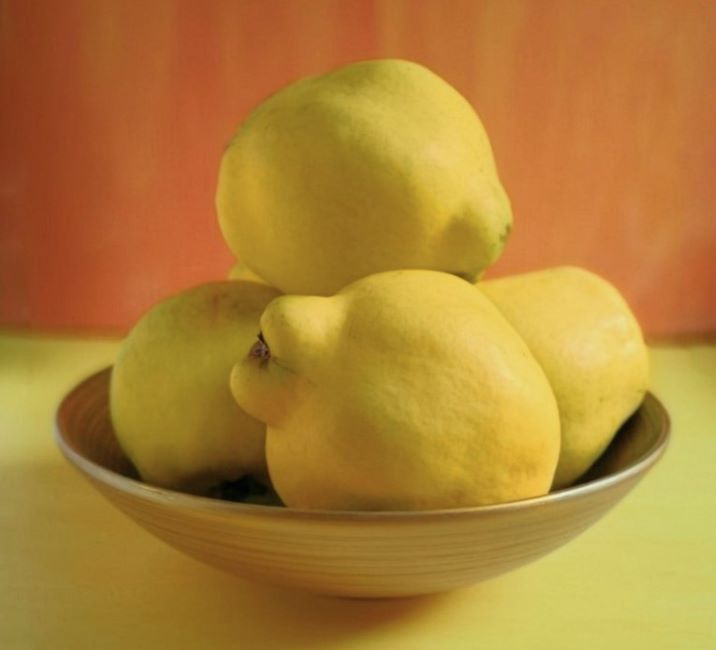
Fresh_quince_in_a_gold_bowl
Golden quince. Image: Kathryn Hawkins

I’ve been saving these beautiful quince for a few weeks, making sure they are perfectly ripe for maximum flavour and aroma before I cook them. I chose a selection of my favourite aromatics to add to a sugar syrup: rose water, lemon, vanilla and cinnamon, all perfect companions for this fabulous autumn fruit.

Fresh_quince_and_flavours_for_cooking
Fresh qunice and flavourings. Images: Kathryn Hawkins

This is a very straightforward recipe for the slow-cooker. Once the quince are prepared it’s just a case of making the syrup to pour over. When the cooking is done, I reduced the cooking juices down to make a more intensely flavoured syrup to pour back over the fruit. If you don’t have quince, try using slightly under-ripe pears instead.

Serves: 4-6

Ingredients

  • 750g ripe quince
  • 1 unwaxed lemon
  • 1 cinnamon stick, split
  • 1 vanilla pod, split
  • 50g caster sugar
  • 2tbsp carob or maple syrup
  • Rosewater to taste
  • Pistachios and pomegranate seeds to sprinkle

1.Using a vegetable peeler, carefully peel away the outer lemon zest without taking too much white pith. Set aside. Cut the lemon in half and extract the juice. Place in a large bowl along with the squeezed out lemon shells. Top up with cold water.

2.Peel the quince thinly. Cut into quarters and slice out the core. As soon as you prepare each quarter, push it down into the lemony water to help prevent discolouration.

3.When all the fruit is prepared, drain well, discard the lemon shells and place the quince in the slow-cooker dish. Add the reserved lemon zest, cinnamon and vanilla.

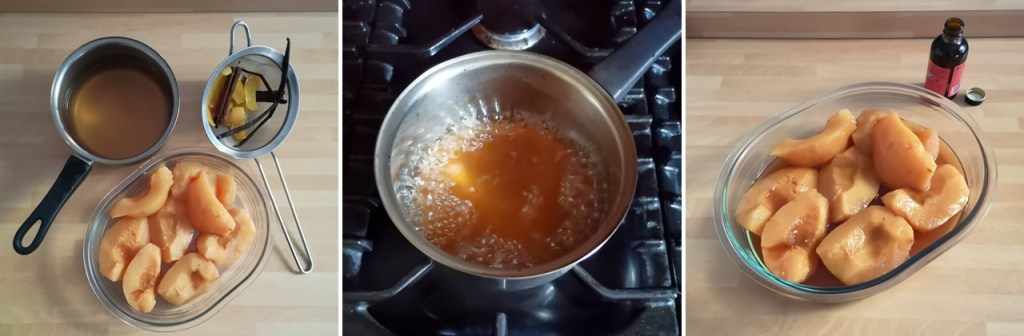
4.Put the sugar in a saucepan with 400ml water. Heat gently to dissolve, then bring to the boil and cook for 5 minutes. Pour over the fruit, place the lid on top and cook on High for 2 hours, turning the fruit halfway through, until tender.

7_steps_to_preparing_quince_for_slow-cooking
Slow-cooker spiced quince preparation. Images: Kathryn Hawkins

5. Turn off the power and leave to cool for 2 hours before draining the fruit and straining the cooking liquid into a saucepan. Put the fruit in a heat proof dish and cover with foil.

6. Add the maple or carob syrup to the cooking juices, bring to the boil and simmer for 7-8 minutes until syrupy. Cool for 10 minutes. Add a few drops of rosewater to taste then pour over the fruit and leave to cool completely.

Making_a_flavoured_syrup_for_slow-cooker_spiced_quince
Making the syrup. Images: Kathryn Hawkins

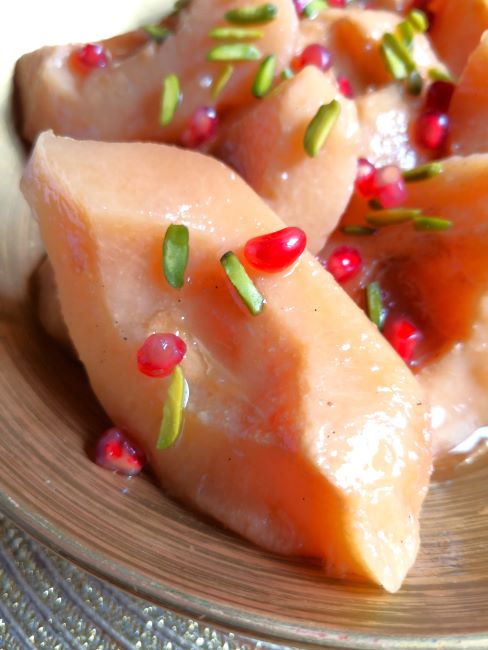
7. Cover and chill until ready to eat. Serve at room temperature for maximum flavour. Sprinkle with pistachios and pomegranate seeds for crunch. The quince freezes well in the syrup for later enjoyment.

Slow-cooker_spiced_quince_close-up
Sweet, spiced deliciousness. Image: Kathryn Hawkins

I hope you enjoy the recipe and I look forward to welcoming you back to my next post in a couple of weeks time. Thanks for stopping by 🙂

Chilled rhubarb and custard risotto (gluten-free; dairy-free;vegan)

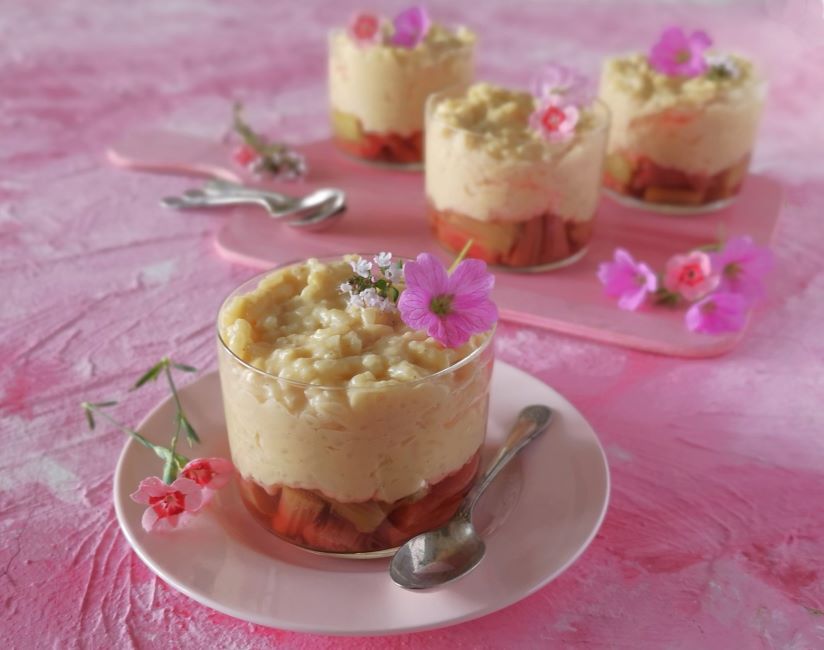
4_serving_glasses_of_gluten-free_dairy_free_vegan_chilled_rhubarb_and_custard_risotto
Chilled rhubarb and rice risotto decorated with edible flowers.
Image: Kathryn Hawkins

Hello again. The garden fruit and veg supply is beginning to mount up. This week I picked some more rhubarb stems and made them into a compote to eat with a creamy rice dessert. At this time of year, I prefer to serve this combo cold, but in Autumn/Winter, the same rice mix makes a comforting winter pudding to serve with any fresh or cooked fruit you like.

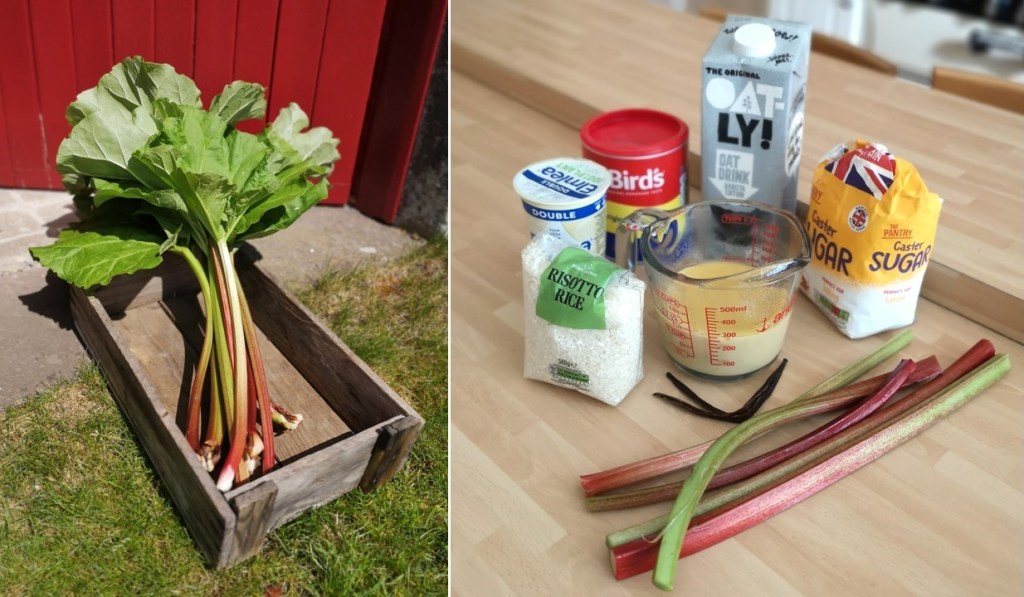
Ingredients_for_making_gluten-free_dairy-free_vegan_rhubarb_and_custard_risotto
Freshly pulled rhubarb and sweet risotto ingredients. Images: Kathryn Hawkins

It’s a simple enough recipe for the rice mixture, but it takes a little bit of time to cook through, so allow plenty of time to make it. It’s well worth the wait 🙂 I flavour my rice with vanilla but cinnamon or ginger would also work. And, of course, if you’re not vegan, the recipe works just as well with dairy products.

A_serving_of_chilled_rhubarb_and_custard_risotto
Creamy, sweet risotto, chilled and ready to serve. Image: Kathryn Hawkins

Serves: 4

Ingredients

  • 275g prepared fresh rhubarb
  • 50g caster sugar
  • 500ml plant-based milk (I use oat milk)
  • 100ml plant-based double cream (for a less rich version, replace the cream with extra milk)
  • 1 vanilla pod, split
  • 15g plant-based butter
  • 150g risotto (arborio) rice
  • 250ml free-from custard

1. Chop the rhubarb into lengths about 4cm long and place in a pan. Add 2tbsp water, sprinkle with 25g sugar and heat until steaming. Cover with a lid and cook gently for 6-8 minutes until tender but still holding shape. Leave to cool.

Cooking_fressh_summer_rhubarb
Cooking the rhubarb. Images: Kathryn Hawkins

2. For the risotto, put the milk and cream in a saucepan with the vanilla pod and heat until very hot. Reduce the heat to low and keep the mixture hot.

3. In another saucepan, melt the butter. Add the rice and mix well until coated in the butter. Add a ladleful of the hot creamy milk and stir until thoroughly absorbed.

4. Keep adding the creamy milk, ladle by ladle, stirring in between, until each batch is absorbed, and the rice is just tender – this may take anywhere between 30 to 50 minutes depending on how quickly the rice absorbs the liquid. Don’t be tempted to raise the heat too much as the liquid may evaporate before being absorbed.

6_steps_to_make_sweet_vanilla_risotto
How to make sweet and creamy vegan risotto. Images: Kathryn Hawkins

5. Once the rice is tender, thick and creamy, transfer to a heatproof bowl and stir in the sugar. Cover with a layer of greaseproof paper to prevent a skin forming and leave to cool completely, then mix in the custard.

6. To assemble, divide the rhubarb between 4 x 225g dessert glasses and spoon the rice mixture on top. Chill until ready to serve.

Finishing_touches_to_rhubarb_and_custard_risotto
Completing the dish. Images: Kathryn Hawkins

Let the desserts stand at room temperature for 20 to 30 minutes before serving to allow the flavours to develop. Decorate with edible flowers if liked.

Overhead_image_chilled_rhubarb_and_custard_risotto_serving
Creamy vanilla rice and fresh rhubarb compote. Image: Kathryn Hawkins

Thanks for stopping by. That’s me for this week. I hope to see you again soon 🙂

Take 3 – fruit ice cream (vegan; dairy-free; gluten-free)

Vegan_dairy-free_gluten-free_3_ingredient_fruit_ice_cream
Super cool and refreshing. Image: Kathryn Hawkins

Hello again. It’s been super-warm here in the UK for several days now, so, it feels the right time to publish an easy ice cream recipe. Of course, this will mean that the weather is guaranteed to break, but hey ho, we do need some rain 🙂

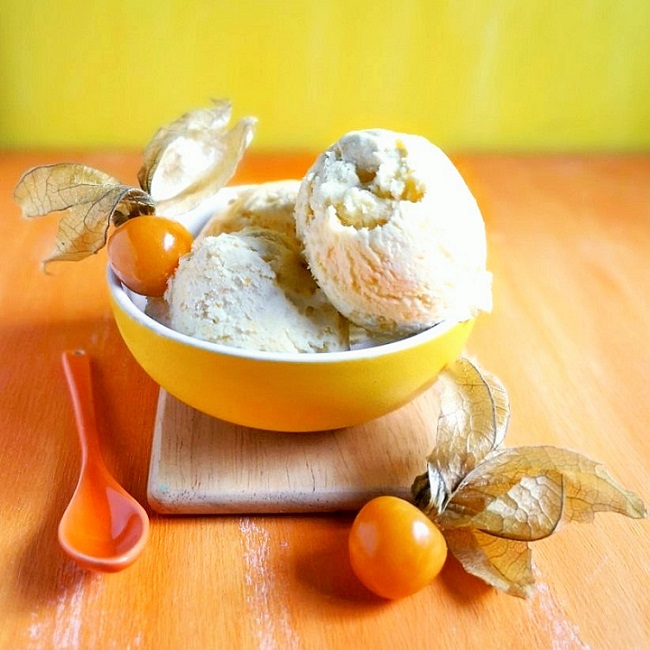
A_scoop_of_3_ingredient_fruit_ice_cream
Fruity scoop. Image: Kathryn Hawkins

This ice cream really is very easy to make. Just 3 ingredients. No ice cream machine required although you can of course use one if you prefer. You will need to use a bit of elbow-grease to beat the mixture twice, but that’s the only effort necessary.

3_ingredients_to_make_fruit_ice_cream
Take 3: fruit, cream and condensed milk. Image: Kathryn Hawkins

You can make the ice cream with any fruit. I happened to have a lot of physalis (Cape gooseberries) when I made up this batch. Fruits like gooseberries, blackberries, cherries, apricots, plums, blackcurrants and other currants will need to be cooked into a pulp for best results, but other softer fruits like raspberries, blueberries, strawberries, peach and mango can just be blitzed in a blender. Whether you sieve to remove seeds is up to you. I prefer the added texture from seeds and skins and use the pulp as it is.

Serves: 4-6

Ingredients

  • 300g ripe fruit for cooking such as physalis, gooseberries, blackberries, black or red currants OR 250ml-275ml unsweetened fresh fruit purée
  • 370g can plant-based condensed milk
  • 400ml plant-based double cream

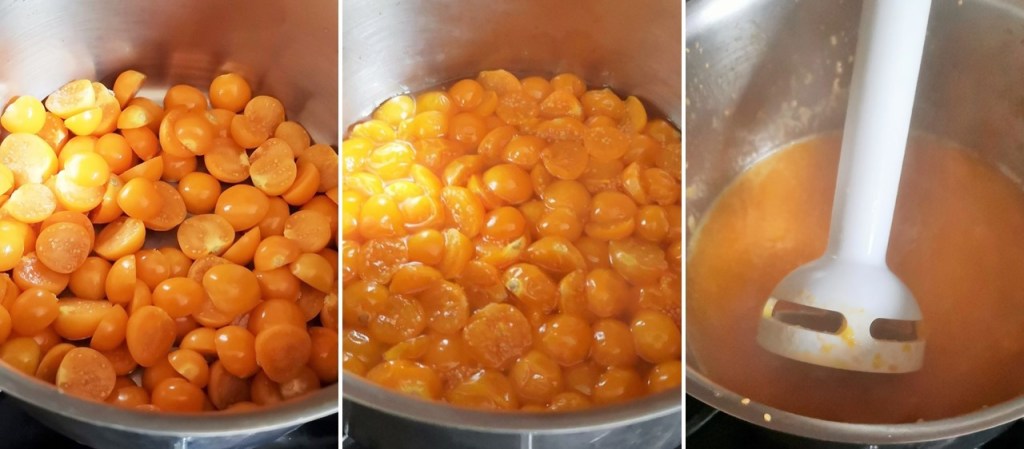
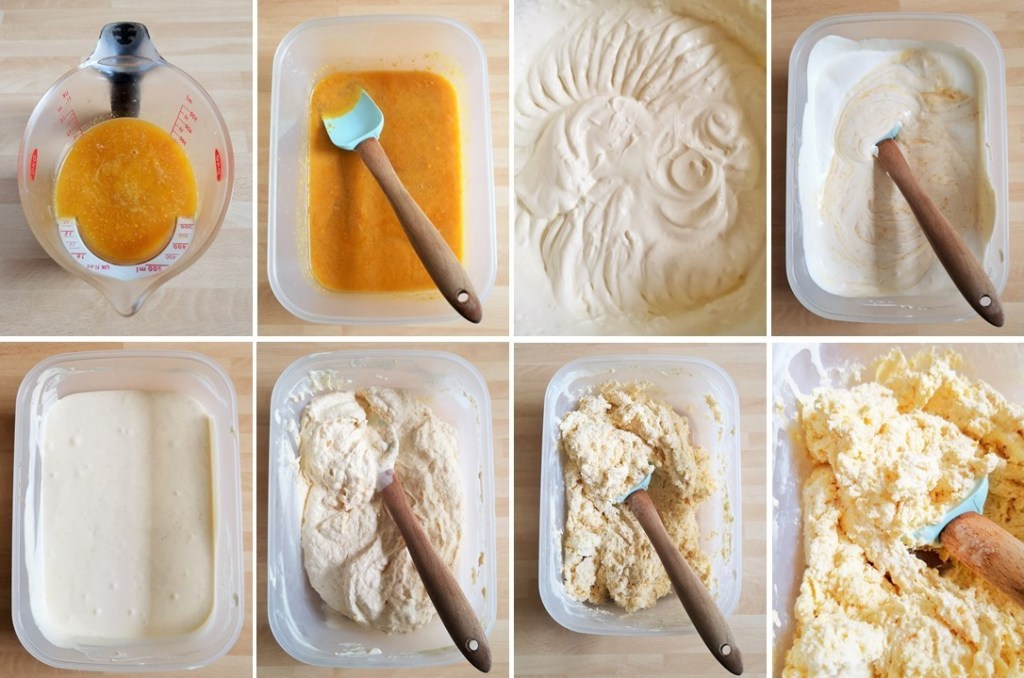
1. To prepare fruit for cooking, place in a saucepan with 2tbsp water, heat until steaming, then cover and simmer for 5-7 minutes until soft. Leave to cool them blitz with a blender until smooth. Sieve if preferred.

Cooking_physalis_fruit
Making cooked fruit purée. Images: Kathryn Hawkins

2. Pour the fruit purée into a freezer-proof container and mix in the condensed milk.

3. Whip the cream until softly peaking then fold into the mixture, stirring well until combined.

4. Freeze for about 2hr until the mixture is soft and slushy. Beat well to break up the mixture and return to the freezer for a further 45-60 minutes until it has firmed up again. Beat once more, then keep in the freezer until ready to serve.

3_ingredient_fruit_ice_cream_step_by_step
Preparing the ice cream. Images: Kathryn Hawkins

And that’s it. If your freezer is particularly cold, you may need to let the ice cream stand at room temperature for a few minutes before scooping. For longer term storing, pop a lid on the container, and keep in the freezer for up to 3 months.

3_ingredient_vegan_dairy-free_gluten-free_ice_cream_overhead
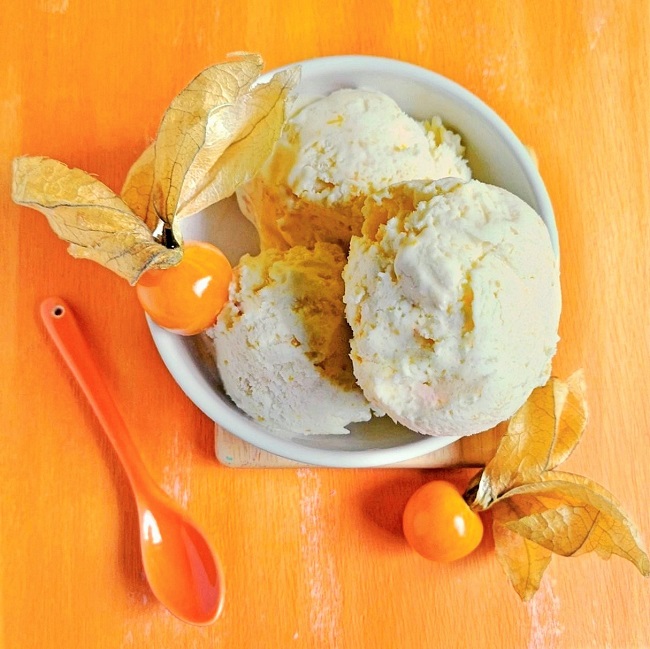
3 ingredient fruit ice cream. Image: Kathryn Hawkins

I’ll be out in the garden again for my next post at the end of the month. See you then and thanks for stopping by 🙂

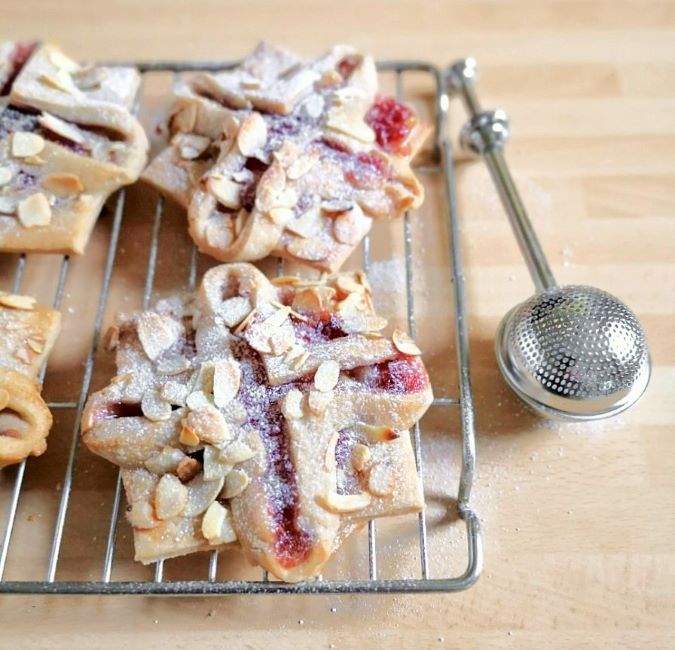
Raspberry and almond pastries (gluten-free; dairy-free; vegan)

Homemade_gluten-free_dairy-free_vegan_rough_puff_pastry_raspbery_and_almond_pastries
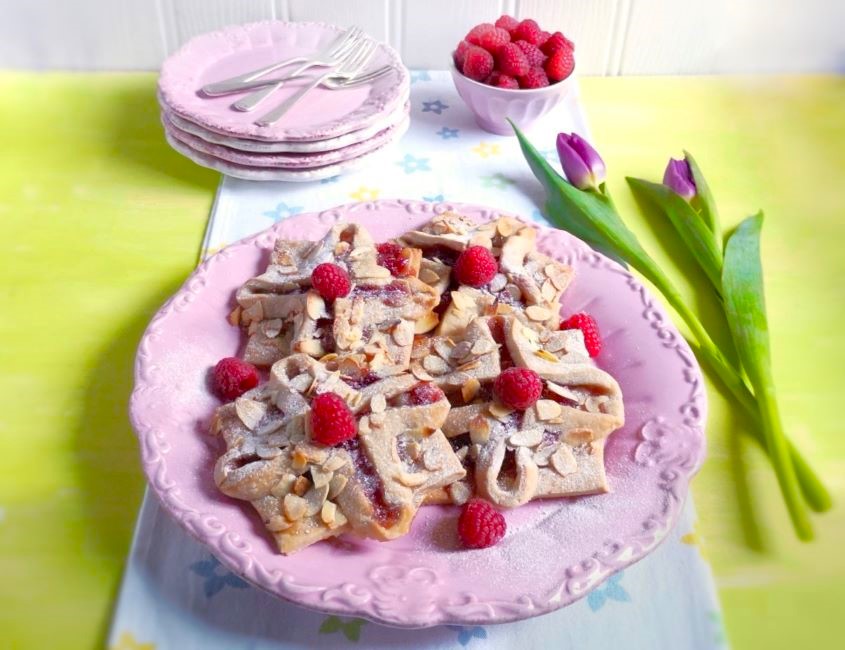
Homemade raspberry and almond pastries. Image: Kathryn Hawkins

Hello again. I hope you have had a good Easter holiday. I had intended to post this recipe before the holidays began, but time ran away with me. I have had a few days away visiting family and friends, and now I’m back home and ready to post again.

Close-up_of_gluten-free_dairy-free_vegan_raspberry_and_almond_pastries
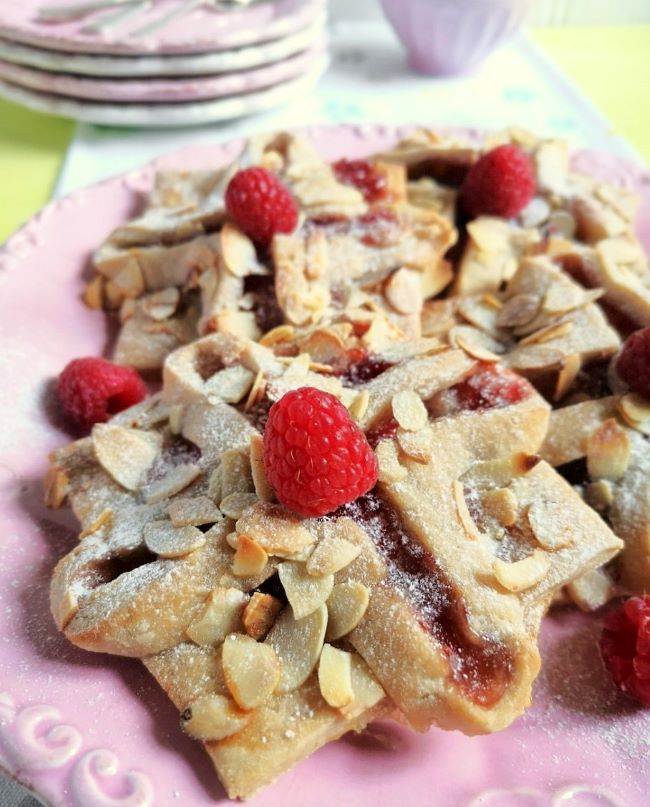
Up close on raspberry and almond pastries. Image: Kathryn Hawkins

One of my first blog posts was a recipe for gluten-free rough puff pastry. It has had many hits but I am always looking for ways to tweak the recipe. Here’s the original if you are a newcomer to my blog: Gluten-free rough puff pastry (with dairy-free & vegan variation) The latest version of the recipe uses my favourite combination of gluten-free flours and also adds psyllium husk to the dough. The latter makes a much more silky dough which is very much easier to roll and shape. If you don’t have the individual flours, just use a ready blended plain flour. I also use all plant butter in this version. However, whilst the dough is quite puffy and light, it has lost some of the flakiness of the original recipe. I guess it’s up to personal taste which version you prefer and for what purpose you want to use it.

Gluten-free_dairy_free_vegan_raspberry_and_almond_pastries_dusted_with_icing_sugar
Pastries with a light dusting of sugar. Image: Kathryn Hawkins

The pastries tasted pretty good though despite the lack of pastry layers. The texture of this latest pastry is crisp and chewy, and I am pleased with the flavour. If you do compare the 2 recipes yourself, let me know what you think, and which you prefer. By the way, the recipe makes twice as much pastry you need for making 4 pastries so you can freeze the other half to make something else at a later date.

Makes: approx. 625g pastry. Use half the pastry quantity to make 4 pastries

Ingredients

For the pastry dough:

  • 70g cornflour (corn starch)
  • 60g tapioca flour
  • 60g white rice flour
  • 60g glutinous rice flour
  • ½tsp salt
  • 2tsp psyllium husk powder
  • 150g plant butter, cut into small pieces

For the pastries:

  • 100g marzipan
  • 60g raspberry jam
  • 1tbsp oatmilk
  • 1tsp carob syrup
  • 20g flaked almonds
  • Icing sugar to dust
  • Fresh raspberries to serve

1.Put all flours in a large mixing bowl with the salt and psyllium husk powder, and mix together until well blended. Stir the butter into the flour to coat each piece in flour.

2. Gradually stir in between 260-275ml cold water until the mixture comes together to make a soft, very lumpy dough. Turn out on to a lightly floured work surface and roll the dough into a flat, roughly rectangular shape approx. 35cm x 12cm.

Gluten-free_flour_mix_and_psyllium_husk_with_plant_butter_pastry_dough
Pastry ingredients and making the dough. Images: Kathryn Hawkins

3. Now the rolling and folding begins. The aim is to consistently roll out the pastry to the same dimensions, and then to fold it, turn it and seal it in the same way each time; this is how the pastry layers form. Fold the top one third of the pastry down and the bottom one third up and over the top pastry; twist the pastry round so that the open edge is facing to the right, and gently press the 3 open edges of the pastry together with the rolling pin.

4. Repeat this rolling, folding, turning and sealing 3 more times and then chill the pastry for 30 minutes. The mixture will be sticky but try to refrain from dusting with too much flour as this will dry the texture of the pastry.

5. After chilling, repeat the rolling, folding, turning and sealing another 3 times, working the pastry each time in the same direction. You should now begin to feel that the fat is more blended into the flour. Chill the pastry for a further 30 minutes.

6. Repeat the process 3 more times and you should see that the fat pieces have practically disappeared. Wrap and chill for at least 1 hour before using. From start to finish, you should aim to roll and fold the pastry 10 times.

7. Cut the pastry in half, and use half to make the pastries – wrap and freeze the other half for later use. Roll out the pastry to make a 24cm square. Trim the edges as necessary.

Rolling_and_folding_gluten-free_vegan_rough_puff_pastry
Rolling and folding rough puff pastry. Images: Kathryn Hawkins

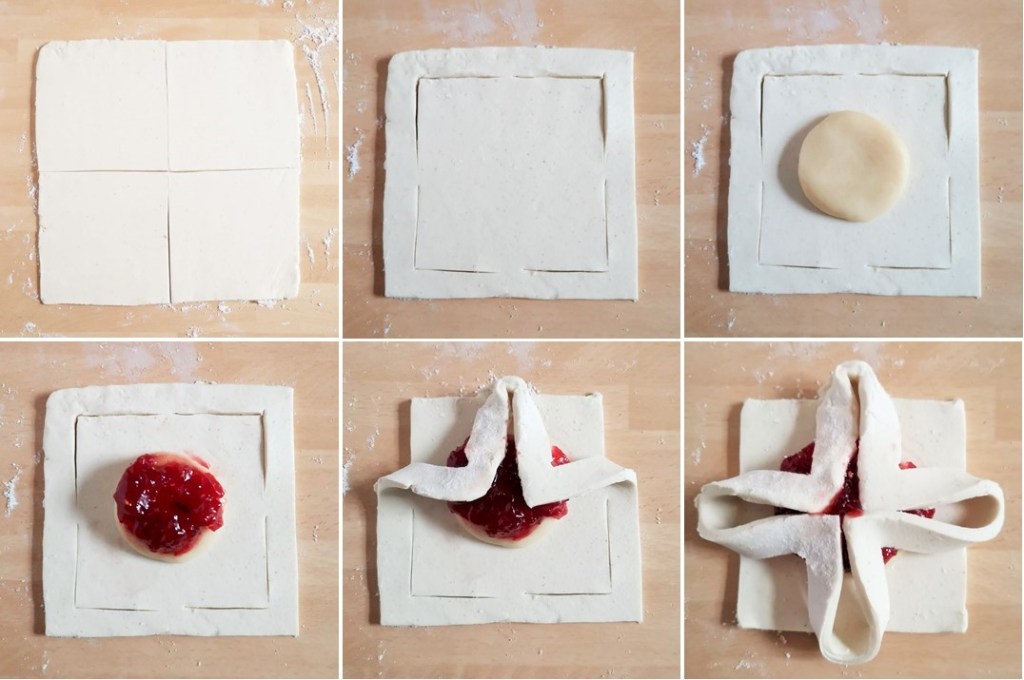
8. Cut the pastry into 4. Working on 1 square at a time, starting cutting 1cm inside the edge of one side as if about to cut out an inner square. Just before you reach the centre point, leave a 1cm space of uncut pastry then continue the cutting down the rest of the side. Repeat this cutting on the other 3 sides, and then cut the other pastry squares in the same way.

9. Knead the marzipan; cut into 4 and shape each piece into a small round to fit in the centre of each square. Top with jam. Bring the corners together in the centre of the pastry.

Gluten-free_dairy-free_vegan_rough_puff_pastry_being_shaped_into_individual_raspbery_and_almond_pastries
Shaping the pastries. Images: Kathryn Hawkins

10. Place on a lined baking tray. Chill for at least 1hr before baking.

11. When ready to cook, preheat the oven to 220°C, 200°C fan oven, gas 7. Mix the milk and syrup together and glaze the pastries. Sprinkle with flaked almonds and bake for about 20 minutes until risen and lightly golden. Dust with icing sugar and serve warm.

Glazing_baking_and)serving_gluten-free_dairy_free_vegan_raspberry_and_almond_pastries
Glazing, sprinkling, baking and dusting. Images: Kathryn Hawkins
Single_serving_of_gluten-free_dairy-free_vegan_raspberry_and_almond_pastries
Single pastry. Images: Kathryn Hawkins

I hope you enjoy the pastries. It is a bit of a long recipe this week, but if you do have the time, the pastries certainly make a lovely treat. As the for pastry update, my jury is out on which version I prefer but I will keep adapting and reposting any progress I make. Until next time, take care and best wishes 🙂

Slow-cooked quince in mulled wine (naturally gluten-free; diary-free and vegan)

Slow-cooked_quince_in_mulled_wine_in_glass_compote_dish
Slow-cooked quince in mulled wine. Image: Kathryn Hawkins

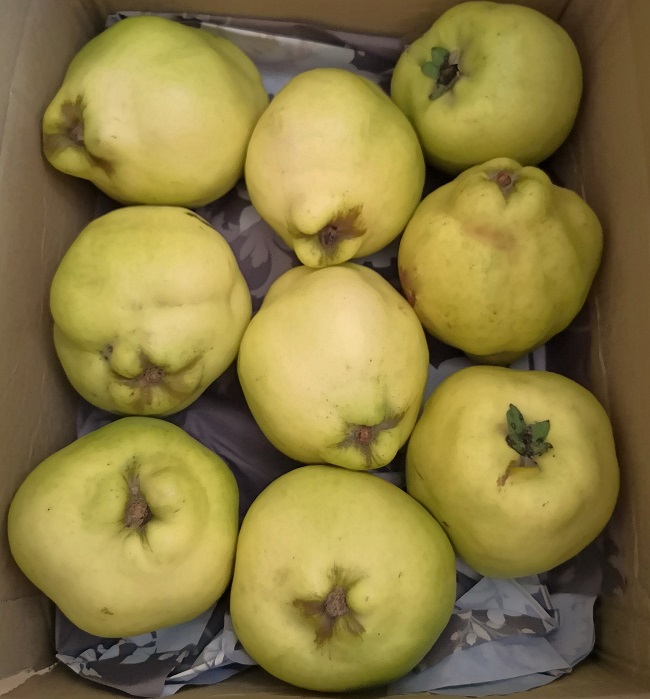
One of the delights of Autumn for me is that it is the season of the quince. In recent years, I haven’t managed to find any but this October I got hold of a box of 9 of the tempting fruit. Like apples and cherries this year, quince trees have also provided a bumper harvest.

Fresh_quince_delivered_in_a_box
Box of quince. Image: Kathryn Hawkins

Back in October the quinces were barely ripe. Very firm, pale yellowy-green in colour with little of their renown aroma. As the weeks passed, the skins turned waxy yellow and the spicy scent increased. Every time I opened the box, I inhaled a waft of their fruity smell. If you haven’t experienced the aroma, it is intensely appley with a hint of sweet aniseed.

Whole_and_halved_ripe_quince
Perfectly ripe quince. Images: Kathryn Hawkins

To be honest, I don’t think the flavour of the fruit is that pronounced, more like pear than apple, but the texture makes it very different to other tree fruits. There is a slightly granular, rich texture to the flesh and a much firmer, almost chewy bite. Quince holds up exceptionally well to prolonged cooking, making them a winner for the slow-cooker.

Slow-cooker_poached_quince_in_mulled_wine
Perfectly cooked quince. Image: Kathryn Hawkins

Raw quince is too hard and dry to enjoy raw; it also discolours very quickly. If you peel and core the fruit and put it in a bowl of lemon juice and water this helps keep the discolouration to a minimum. However, if you want to enjoy the fruit “au natural”, hold back on the lemon and the fruit will take on a rich, rusty red colour as it cooks.

My recipe this week is simple but requires a little bit of preparation to start with. Once it’s all in the slow cooker you can sit back and enjoy the festive fruit and spice smells that are emitted as the quince cooks through. If you can’t get hold of quince, firm pears will work just fine.

Serves: 6

Ingredients

  • 1 unwaxed lemon
  • 1 unwaxed orange
  • 3 large quince (approx. 1.5kg)
  • 500ml fruity red wine
  • 150g caster sugar
  • 1 vanilla pod, split
  • 1 cinnamon stick, broken

1. Use a vegetable peeler to pare the rind from the lemon and orange. Put 3/4 of the rind to one side for flavouring the wine, and cut the remainder into thin strips for decoration – if you don’t want to do this, you can use all the rind in the mulled wine.

2. Extract the lemon juice and pour into a mixing bowl. Add the empty lemon halves. Fill the bowl with water to to 2/3 full and set aside ready for the quince. Extract the juice from the orange and set aside for the wine.

4_steps_to_preparing_fresh_quince_and_flavourings
Preparing quince and flavourings. Images: Kathryn Hawkins

3. Peel the quince thinly. Cut into quarters and slice out the core. As soon as you prepare each quarter, push down into the lemony water to help prevent discolouration.

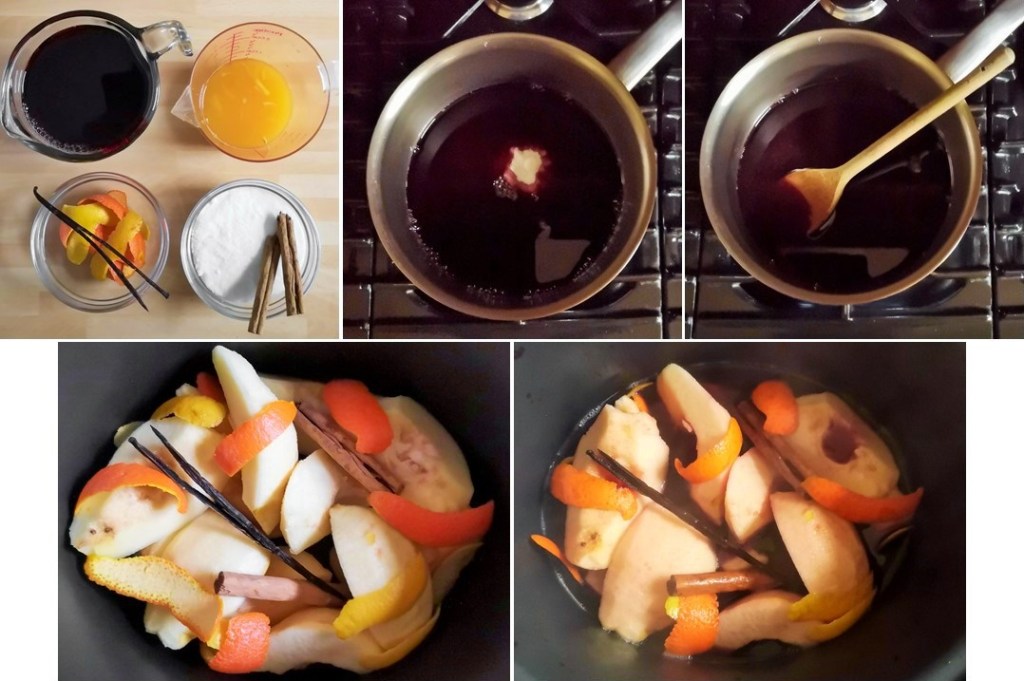
4. Now prepare the mulled wine. Pour the wine and orange juice into a saucepan. Add the sugar and heat gently stirring until the sugar dissolves, then bring to the boil.

Making_mulled_wine_and_cooking_quince_in_the_slow-cooker
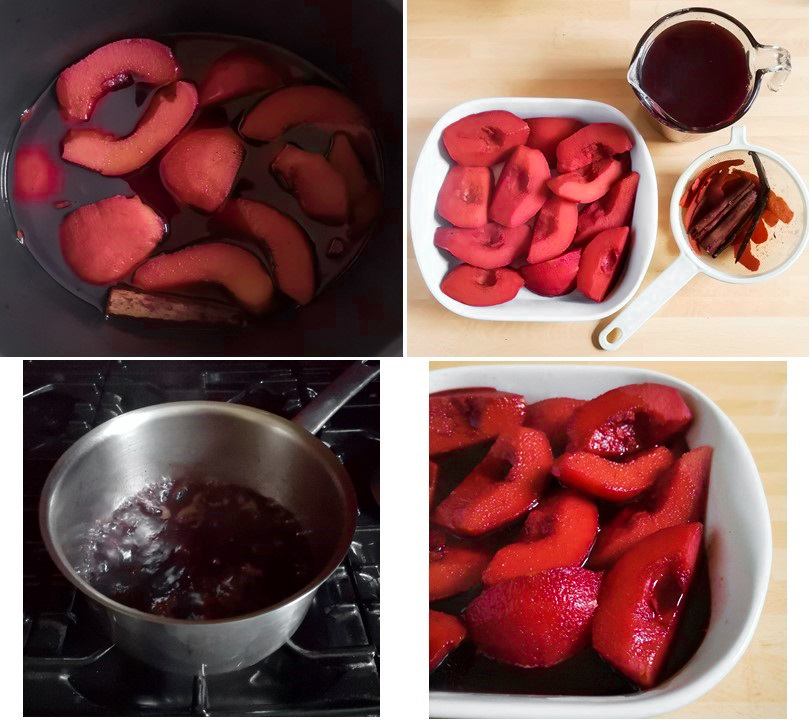
Making mulled wine for the slow-cooker. Images: Kathryn Hawkins

5. Drain the quince very well and place in the slow cooker dish. Add the pared rind, vanilla and cinnamon and pour over the hot mulled wine. Cover with the lid, switch the cooker on to High and cook for 3 hours, turning the fruit every hour to ensure even cooking, until the quince is tender.

6. Use a slotted spoon to transfer the quince to a heatproof dish. Cover loosely with foil. Strain the wine into a saucepan, bring to the boil and simmer for 10-12 minutes until reduced by half and slightly syrupy. Pour over the quince, mix gently, and leave to cool completely, then cover and chill until ready to serve.

4_prep_shots_showing_reducing_mulled_wine_to_syrup
Reducing mulled wine to syrup. Images: Kathryn Hawkins

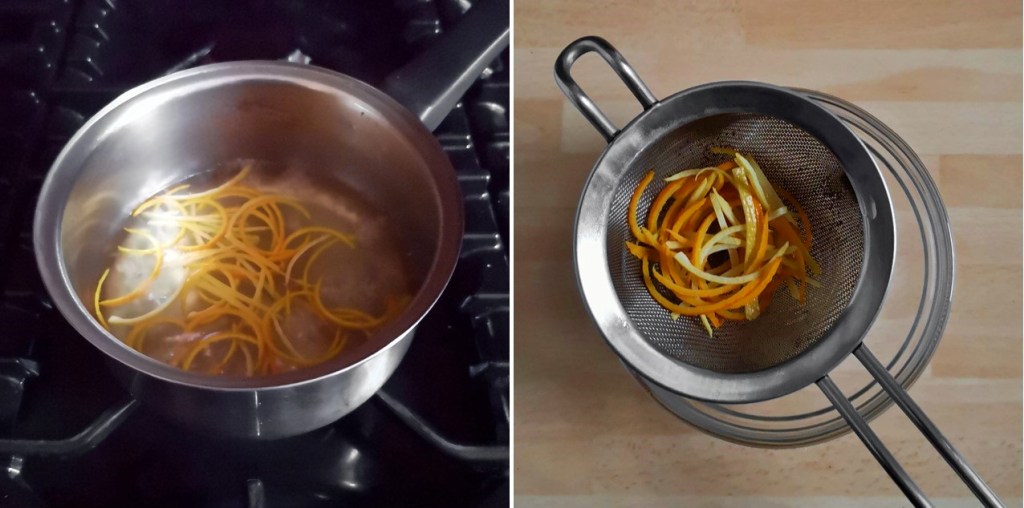
7. While the quince is cooking or cooling, bring a small saucepan of water to the boil and cook the shreds of lemon and orange rind for 2-3 minutes to soften them. Drain well and leave to cool.

Making_shredded_orange_and_lemon_zest_decoration
Orange and lemon zest decoration. Images: Kathryn Hawkins

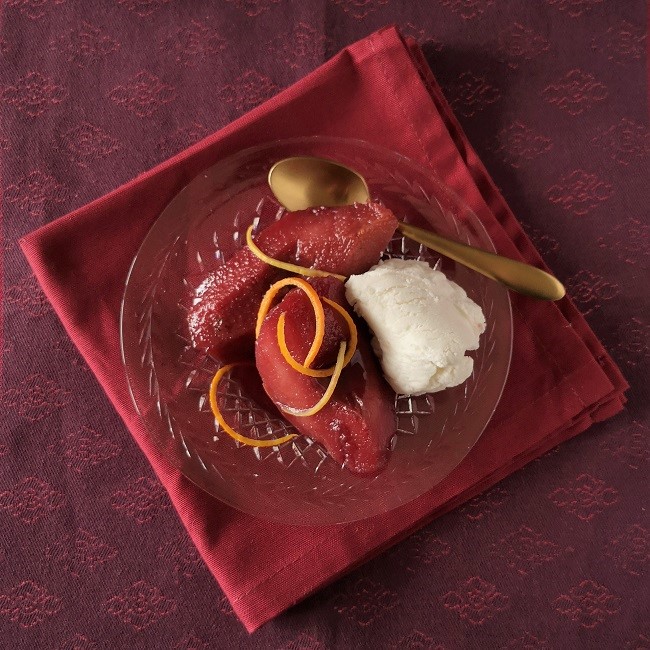
8. To serve, arrange the quince quarters in a serving dish and spoon over a little syrup. Sprinkle with citrus shreds if using and serve the quince with the remaining mulled wine syrup on the side. Delicious accompanied with vegan vanilla ice cream 🙂

Mulled_wine_quince_with_shreds_of_orange_and_lemon_zest
Finishing touch, orange and lemon shreds, Image: Kathryn Hawkins
Serving_of_mulled_wine_poached_quince_with_vegan_vanilla_ice_cream
Quince served with vegan vanilla ice cream. Image: Kathryn Hawkins

I hope you have a very happy Christmas and I look forward to posting again for the new year. Seasonal best wishes to you and thank you for your interest in my blog.

Chocolate cherry fudge brownies (gluten-free; dairy-free; vegan)

Cake_stand_of_chocolate_cherry_brownies
Homemade chocolate cherry fudge brownies. Image: Kathryn Hawkins

Hello there. I hope you are keeping well and managing to stay cool in this very hot summer. The temperatures have been exceptional here in the UK and all over Europe which is great if you’re on holiday but not so good if you’re working. The garden is looking quite different this year due to the heat; many of the flowers are fading much more quickly than in previous years.

Scottish_wild_cherry_trees_laden with_fruit
Scottish wild cherry trees. Images: Kathryn Hawkins

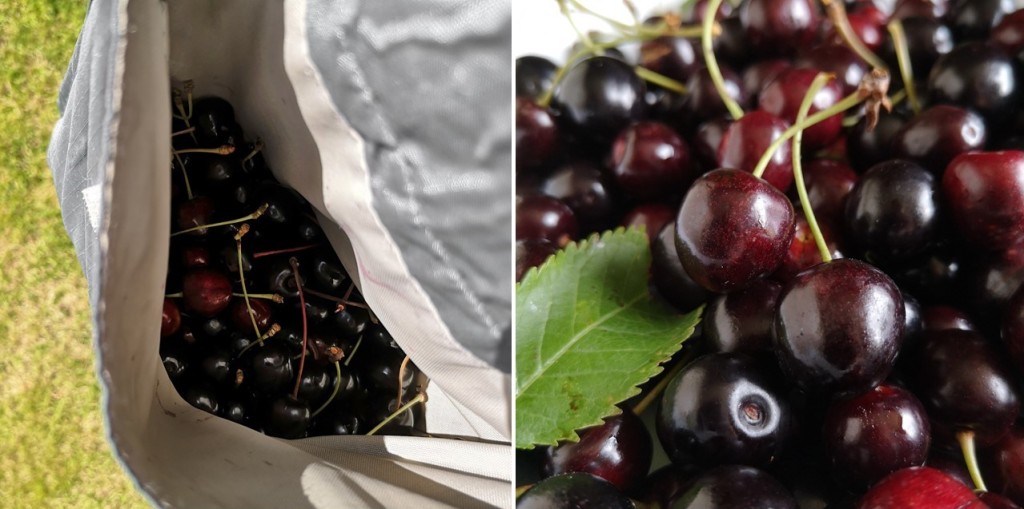
Last weekend, in an effort to stay cool and enjoy the outdoors at the same time, I went for a walk in some local woodland. I was looking to see how long it would be before the hedgerow blackberries (brambles) would be ripe enough to pick – I don’t think it’s going to be a good year for brambling sadly. Quite unexpectedly, I came across several wild cherries trees, completely untouched by birds, and laden with fruit as far as the eye could see.

Wild_cherry_harvest_August_2022
Wild cherry picking. Images: Kathryn Hawkins

I was completely unprepared for foraging. I had no bag other than the small holster bag I was using to carry a water bottle. Cherry trees are enormous in the wild, but there were quite a few fruits on the lowest branches and I was able to fill my bag with just under 1kg of fruit. The cherries were the sweetest, juiciest I have ever tasted. Such an unexpected treat. Apparently, it has been a bumper year for cherries because of the hot weather, but I am still amazed that the birds hadn’t been interested in them. If only I had gone walking with a ladder! 🙂

Ripe_wild_black_cherries_being_pitted
Pitting ripe cherries. Image: Kathryn Hawkins

Back at home, I pitted the cherries. The firmer ones were easier to pit using my faithful old Italian cherry pitter, but the ripe ones I sliced and pitted using the tip of a sharp knife. Some went in the freezer, others were cooked in a crumble for tea, and the rest went into this week’s recipe.

Chocolate_brownies_baked_with_wild_cherries
Wild cherry flavoured fudge brownies. Image: Kathryn Hawkins

Easy to make, just a bit of advanced prep – you need to line a cake tin and make up a flax seed egg replacement mixture. Then, you are good to go. The brownies keep well but in this warmth, I kept them in the fridge to stop them going too soft and sticky. They also freeze perfectly. Eat them as a sweet treat but they are also good served with more fresh cherries or compote and ice cream for dessert.

Portion_of_vegan_chocolate_cherry_brownie
Chocolate cherry brownies, gloriously fudgy. Image: Kathryn Hawkins

Makes: 16

Ingredients

  • 175g dairy-free dark chocolate (I used 54% cocoa – if you use darker chocolate, omit the cocoa powder and add an extra 25g flour)
  • 150g lightly salted plant butter, cut into pieces
  • 25g ground flax seed
  • 200g caster sugar
  • 1 tsp vanilla bean paste
  • 75g gluten-free plain flour
  • 25g cocoa powder
  • 140g pitted cherries, halved (approx. 170g whole)

1. Preheat the oven to 170°C, 150°C fan oven, gas 5. Line an 18cm square cake tin with baking parchment.

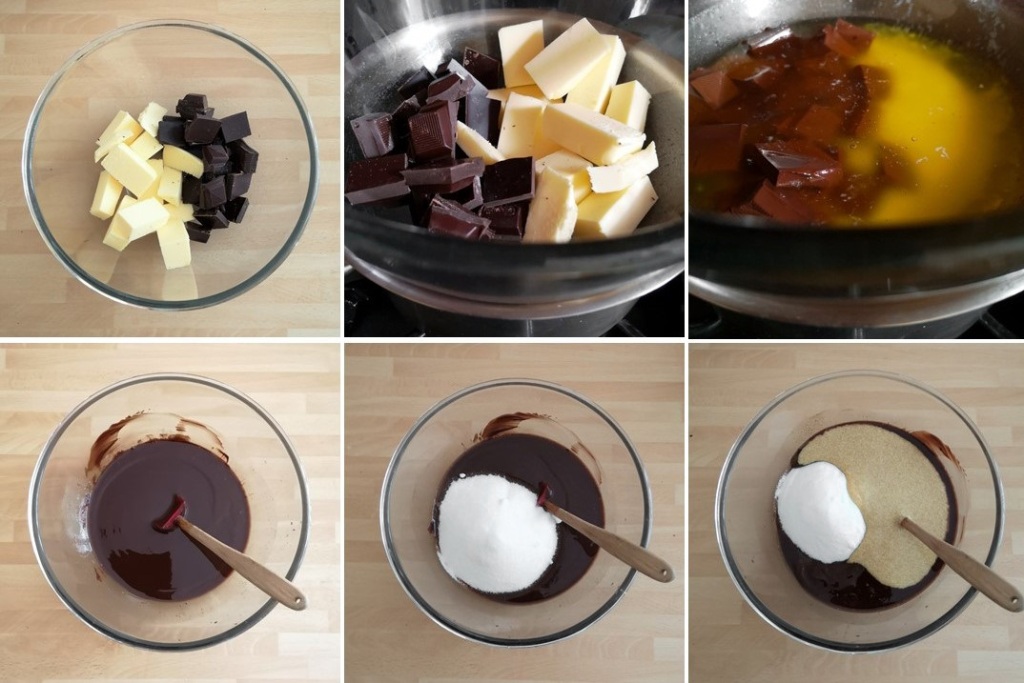
2. Put 150g chocolate in a heatproof bowl with the butter and melt gently over a saucepan of barely simmering water. Remove from the water and cool for 10 minutes.

3. Make up the flax egg by mixing the flax seed with 110ml cold water and leave to stand for 5 minutes until thickened.

Stages_in_making_flax_egg
Flax egg preparation. Images: Kathryn Hawkins
6_steps_to_making_chocolate_brownie_batter
Preparing chocolate brownie mixture. Images: Kathryn Hawkins

4. Mix the sugar and flax egg into the melted chocolate along with the vanilla paste, then add the flour and cocoa powder and stir well until everything is well blended.

5. Pour into the prepared tin and scatter the cherries on top. Bake for about 1 hour until the mixture is set in the middle – initially the mixture rises round the edges leaving the centre molten but after a longer time in the oven, the centre firms up. Leave to cool in the tin.

Baking_brownie_batter_in_6_steps
Baking brownie batter. Images: Kathryn Hawkins

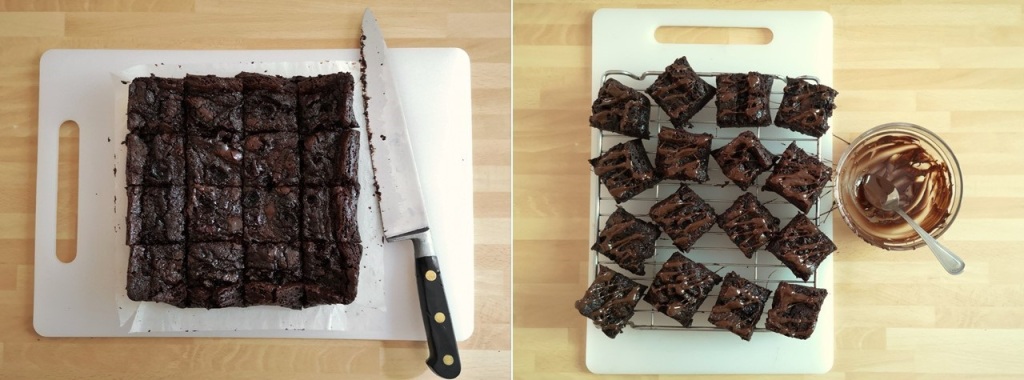
6. Remove from the tin and peel away the lining paper. Cut into 16 squares – you may find it easier to chill the brownie before you cut it as the texture is quite soft at room temperature.

7. Melt the remaining chocolate. Put the brownie squares on a board and drizzle each piece with a little chocolate. Leave to set before serving. Best stored in the fridge.

Drizzling_chocolate_brownies_with_chocolate
Adding a chocolate drizzle. Images: Kathryn Hawkins

I’m off to enjoy another slice now. I’ll see you again towards the end of the month. Until then, keep well and stay cool 🙂

Pink_single_serving_plate_with_chocolate_brownie
Cherry brownies for tea. Image: Kathryn Hawkins

Baked summer fruit (naturally gluten-free; dairy-free; vegan)

Baked_rhubarb_with_strawberries
Baked Summer fruit. Images: Kathryn Hawkins

Hello again. I hope you are keeping well and are having a good summer. Since my last post, the UK, like the rest of Europe, has been subject to some very hot weather. Fortunately here, not for a particularly long spell as the high temperatures were unprecedented for this part of the world. It has cooled down again now and the air feels fresher and the sun less strong.

I was worried that the soft fruit in the garden would suffer in the heat. The rhubarb in particular likes a good soaking as well as the sunshine. I was pleased to see that it bounced back once the temperature dipped and we had some very welcome rain.

Homegrown_Scottish_rhubarb_on_a_wooden_seat
Just picked, homegrown rhubarb. Image: Kathryn Hawkins

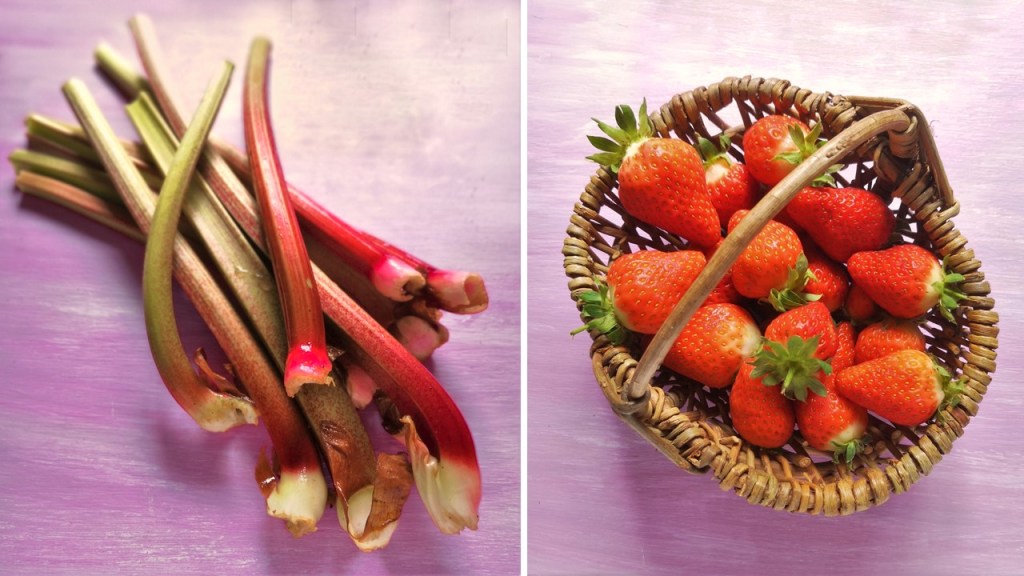
My recipe this week is a very simple one. I try to avoid putting the oven on in the hot weather, but I did make an exception for one of my favourite fruity combinations. Strawberries and rhubarb go together especially well, and when cooked with vanilla, I find the aroma and flavours is irresistible.

Stalks_of_homerown_Scottish_rhubarb_and_a_basket_of_fresh_SCottish_strawberries
Scottish rhubarb and strawberries. Images: Kathryn Hawkins

It has been a good year for Scottish strawberries. They have been juicy and have tasted fragrant and sweet. I didn’t grow these myself, they came from the local farm shop. I chose larger fruit to cook with the rhubarb as they hold their shape better in the oven.

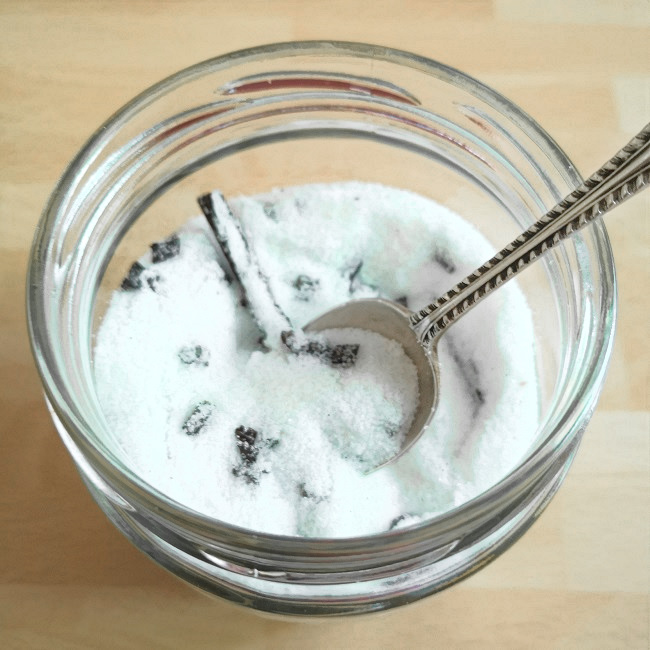
Jar_of_homemade_vanilla_sugar
Homemade vanilla sugar. Image: Kathryn Hawkins

I always have a jar of vanilla sugar in the cupboard. I chop up bits of vanilla pod that is past its prime or dried out too much and add it to caster sugar. I keep it in a glass jar with a screw-top lid. Every now and then I give the jar a shake to distribute the vanilla pieces. Sift the sugar as you use it to remove the pod pieces but keep the bits trapped in the sieve and put them back in the jar along with a top up of sugar ready for next time. You can replenish your supply more or less indefinitely.

On with the recipe. I allow the fruit to cool after baking as I prefer the flavours when they are cold and the fruit is more refreshing, but it’s personal preference. The fruit makes a deliciously light dessert or breakfast compote served with yogurt and toasted cereals.

Serves: 6

Ingredients

  • 450g rhubarb
  • 50g vanilla or plain caster sugar – white sugar helps retain the colour of the fruit, but you may prefer to use brown for a more caramely flavour
  • 300g large fresh strawberries

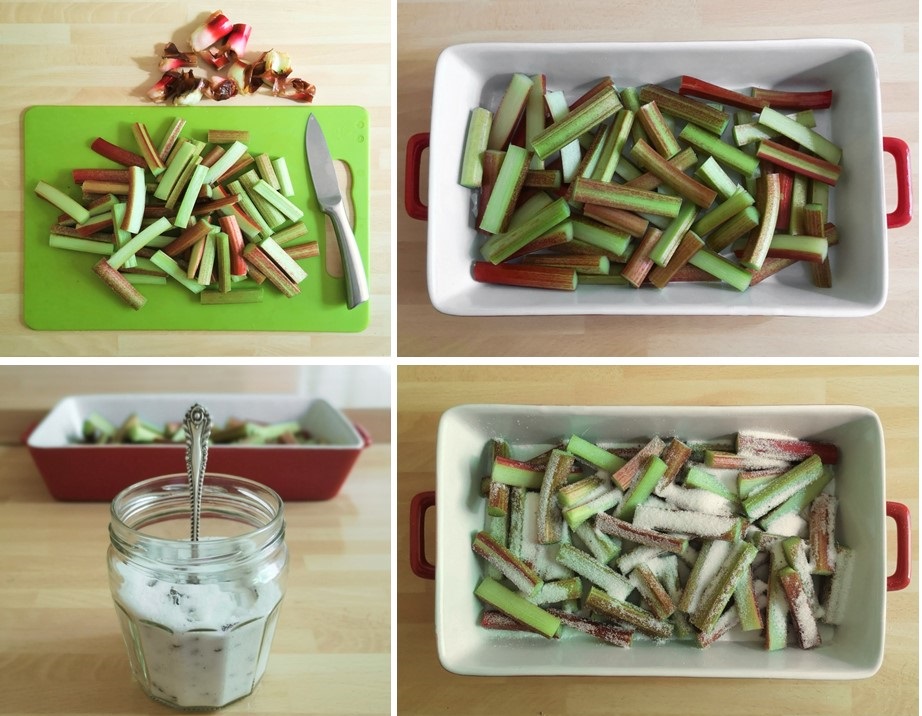
1. Preheat the oven to 190°C, 170°C fan oven, gas 5. Wash and trim the rhubarb. Cut into even-thickness and same-length pieces – this will help with even cooking.

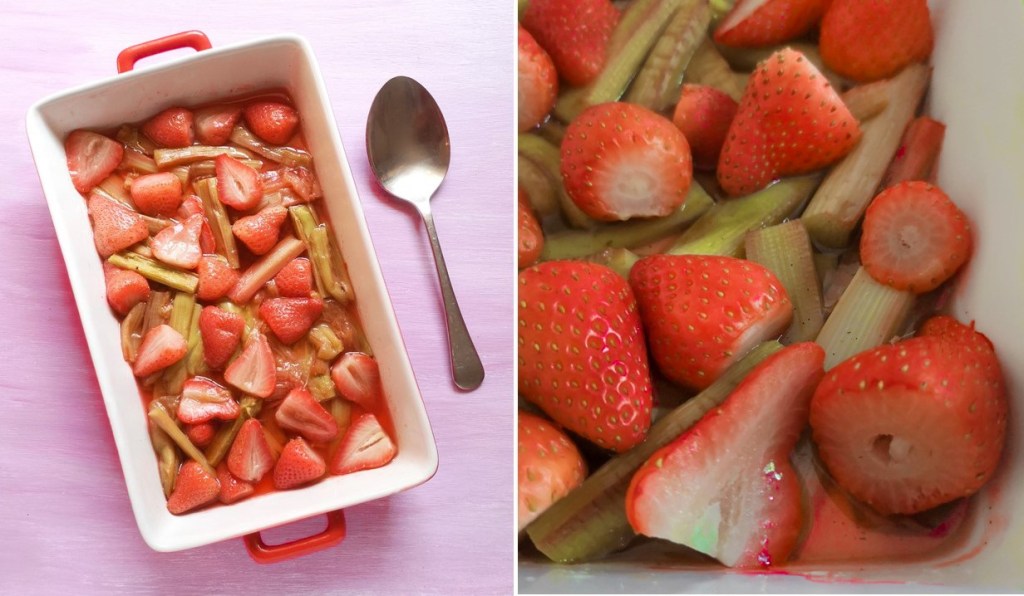
2. Place in an oven-proof dish and sprinkle over the sugar. Cover the top with foil and bake for 40 minutes.

Trimming_and_slicing_homegrown_rhubarb_ready_for_baking
Preparing rhubarb for baking with vanilla sugar. Images: Kathryn Hawkins

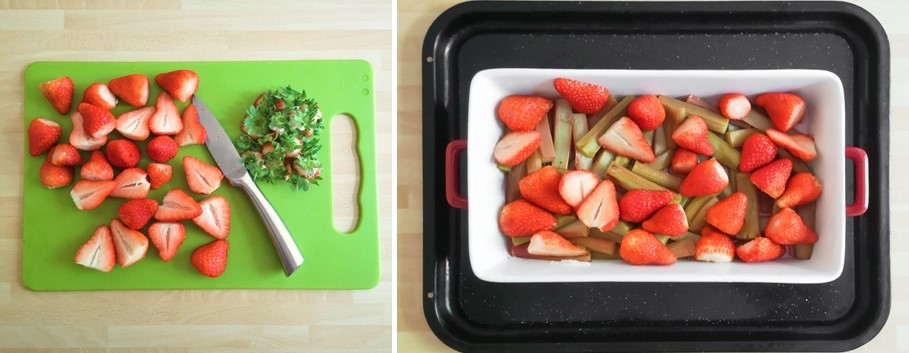
3. Meanwhile, wash and hull the strawberries and cut in half. Uncover the rhubarb and add the strawberries. Bake, uncovered, for a further 10 minutes until the fruit is just tender.

Hulling_strawberries_ready_for_baking
Preparing Strawberries for baking. Images: Kathryn Hawkins

Leave to cool, then chill until ready to serve. Remove from the fridge about 30 minutes before serving to allow the flavours to develop. Delicious served with coconut yogurt.

Single_serving_of_baked_rhubarb_and_strawberries_with_coconut_yogurt
Baked fruit served with coconut yogurt. Image: Kathryn Hawkins

That’s me for another week or so. I can hardly believe we’re just about to enter the month of August. Until next time, take care and my best wishes to you 🙂

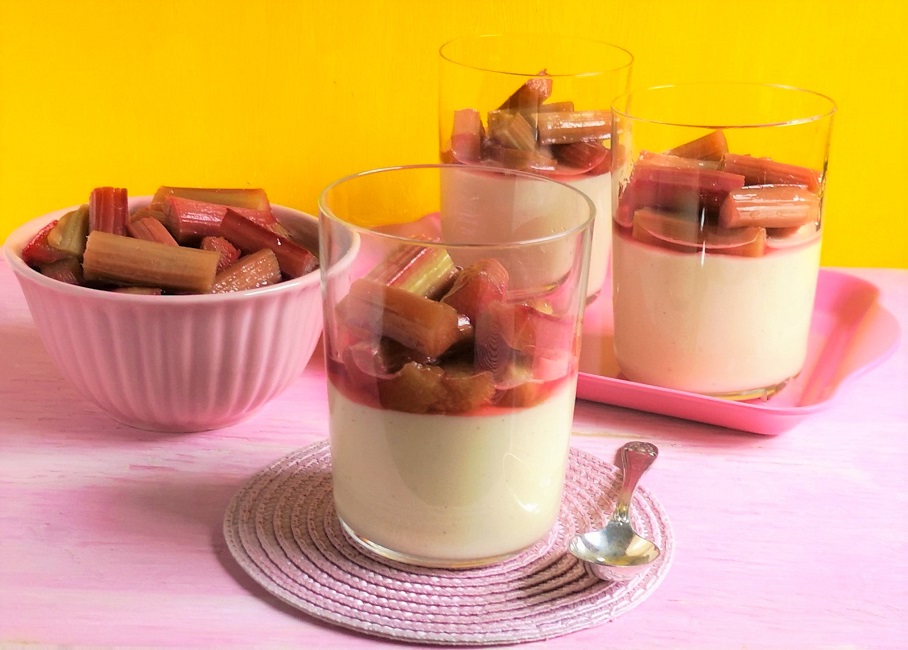
Spring rhubarb with white chocolate and coconut mousse (gluten-free; dairy-free; vegan)

White_chocolate_and_coconut_mousse_topped_with_cooked_spring_rhubarb
Rhubarb topped mousse. Image: Kathryn Hawkins

Hello again. How lovely it is to be well and truly in the season of spring, my favourite time of year. It is a joy to be out of doors and in among all the new growth and activity in the garden.

Homegrown_spring_rhubarb
May 2022, fist rhubarb harvest. Images: Kathryn Hawkins

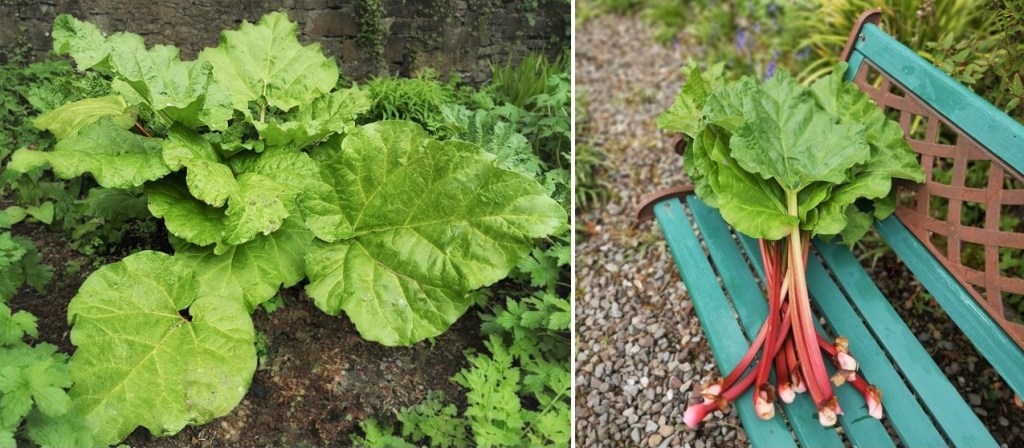
Earlier in the month, I picked my first rhubarb of the season. It was a good harvest of tender, thin, colourful stems with a tangy, fruity flavour. My recipe this week is not so much about the rhubarb but about an indulgently, rich recipe to serve with this tasty seasonal treat.

Vegan_white_chocolate_vegan_cream_block_coconut_aqua_fava_and_vanilla_bean_paste
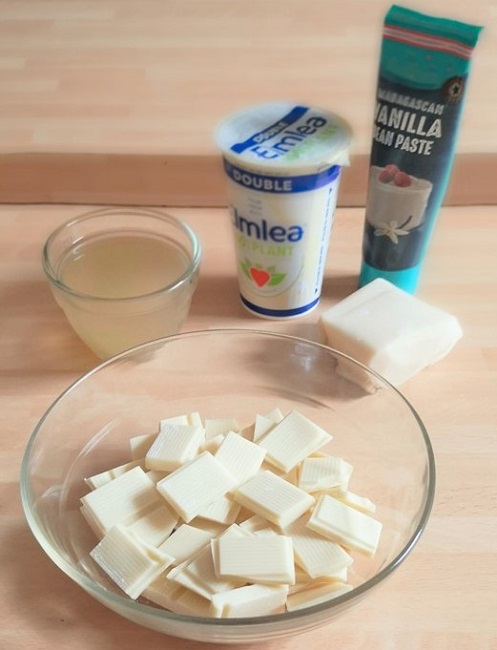
Mousse ingredients. Image: Kathryn Hawkins

My very simple combination of vegan white chocolate, plant-based cream, coconut and vanilla, lightened with aquafaba foam makes a very delicious mousse to serve with any acidic fruit. If you’re not vegan, dairy-based products will work fine. Leave out the foam if you want a denser more custardy texture. If you don’t want to use cream, replace the creamed coconut and plant-based cream with full fat or reduced fat coconut milk.

The mousse is very rich and can easily spread to 6 portions if you use small serving glasses. Here’s the recipe.

Serves: 4-6

Ingredients

  • 350g prepared rhubarb, cut into short lengths
  • 2-3tbsp caster sugar
  • 40g creamed or block coconut
  • approx. 60ml plant-based double cream
  • 1tsp vanilla bean paste
  • 300g free-from white chocolate
  • 100ml aquafaba (I used canned cannellini bean liquid)

1. Put the rhubarb in a shallow pan with 2tbsp sugar and 3tbsp water. Heat until steaming, then cover with a lid and cook gently for 10-15 minutes until tender. Cool slightly, taste and add more sugar if required. Leave to cool completely, then chill until ready to serve.

Cooking_freshly_picked_homegrown_rhubarb
May rhubarb on the hob. Images: Kathryn Hawkins

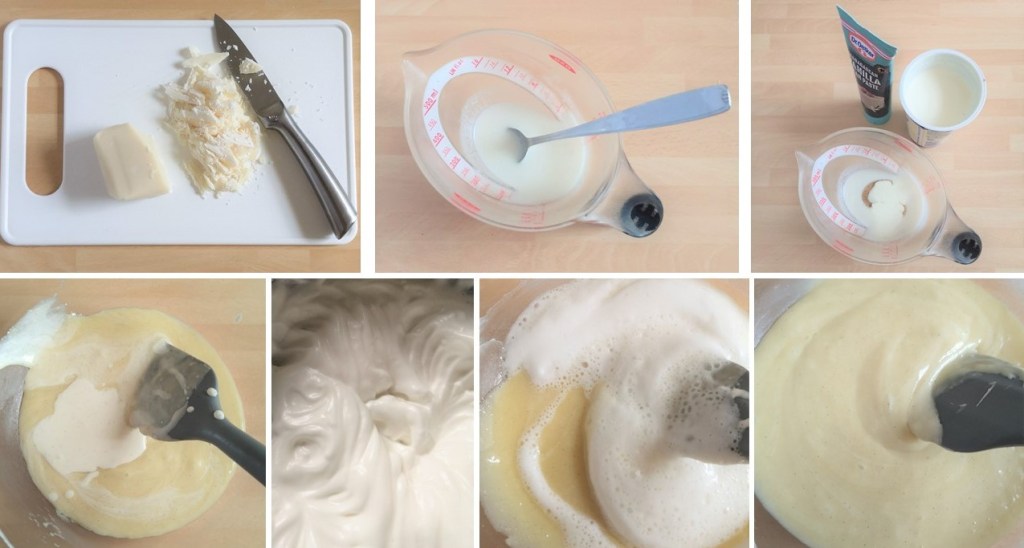
2. Shave the creamed coconut into thin pieces using a small sharp knife or vegetable peeler and put into a measuring jug. Spoon over 3tbsp boiling water and stir until dissolved. Make up to 100ml by adding sufficient plant-based cream. Stir in the vanilla paste.

3. Melt the chocolate in the microwave or in a bowl over barely simmering water. Keep warm.

4. In a clean, grease-free bowl, whisk the aquafaba for 4-5 minutes until thick and foamy – you should be able to leave a trace of the whisk in the foam when it is sufficiently whipped.

5. Mix the coconut cream into the warm melted chocolate until well blended and then gently fold in the whisked foam in several batches. The chocolate mixture will begin to thicken quite quickly once it starts to cool.

Making_vegan_white_chocolate_and_coconut_mousse
White chocolate and coconut mousse prep. Images: Kathryn Hawkins

6. Divide the mousse between 4 or 6 serving glasses and leave to cool completely before chilling until ready to serve.

White_chocolate_and_coconut_mousse_ready_to_set
Ready to set. Image: Kathryn Hawkins

Spoon cooked rhubarb on top of each mousse just before serving. Delicious 🙂

Close-up_of_single_dessert_glass_of_rhubarb_topped_white_chocolate_and_coconut_mousse
Fruity and creamy. Image: Kathryn Hawkins

That’s me for another week. I will be posting again at the end of the month. Until then, enjoy marvellous May!