Welcome to my blog all about the things I love to grow and cook. You'll find a collection of seasonal gluten-free, dairy-free and vegan-friendly recipe posts, as well as a round up of my gardening throughout the year. I wish you good reading, happy cooking and perfect planting!
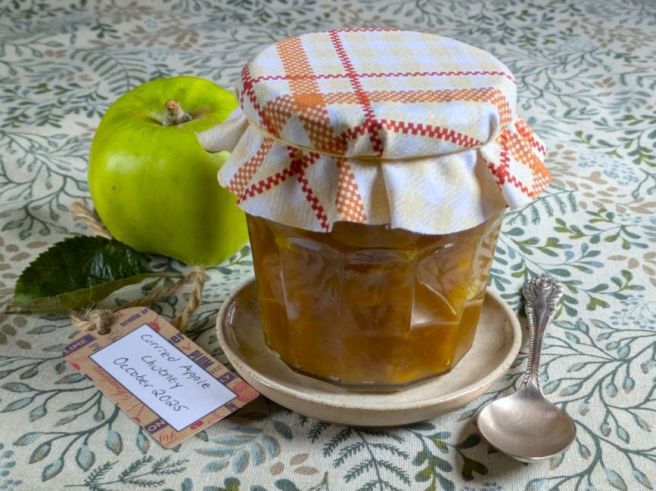
Sweet and spicy homemade chutney. Image: Kathryn Hawkins
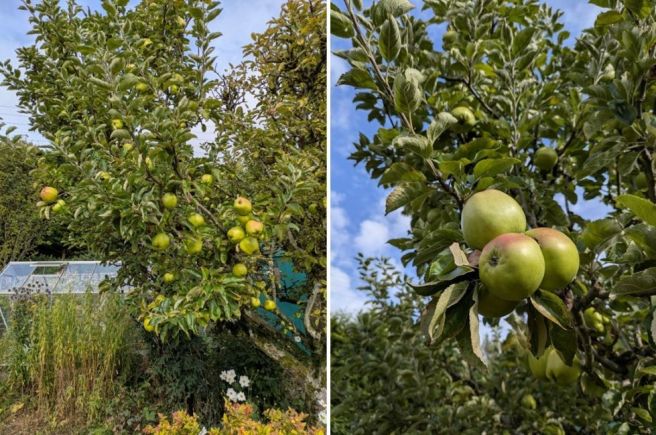
Hello again. I hope you are keeping well and enjoying the colours of Autumn. It’s remained quite dry here in central Scotland and the trees are looking very colourful around and about. Everywhere I look, it really has been a bumper year fruit especially plums and apples in my garden. The old apple tree produced yet another bountiful crop of some 70kg! Now that the harvest is in, it’s enjoying a well earned rest I’m sure.
A tree full of apples. Images: Kathryn Hawkins
Harvest gathered, this year’s bumper crop of cooking apples. Images: Kathryn Hawkins
We did a lot of the apples away this year as there were far too many to cook up or freeze down. But I still have a box full to work through and one of the first things to make was some apple chutney. I made this batch in the slow cooker. It’s very easy to make and tastes delicious. One slight difference to this slow cooker recipe is that it uses less vinegar and sugar than traditional recipe so the chutney does need to be stored in the fridge.
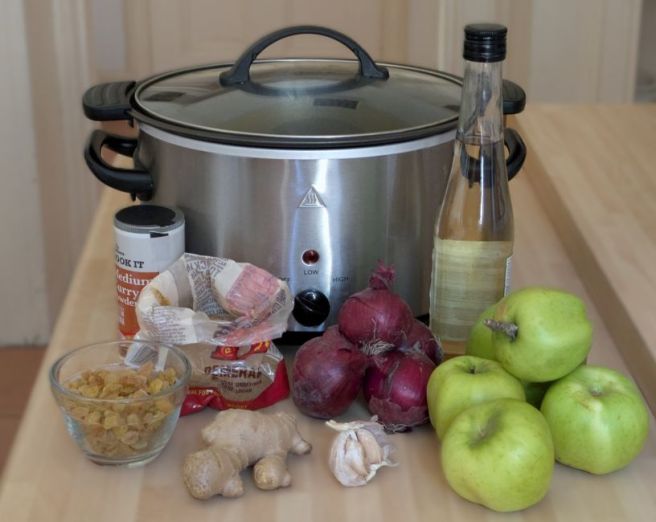
Curried apple chutney ingredients. Image: Kathryn Hawkins
Makes: approx. 1.2kg
Ingredients
300g prepared red or white onions, chopped
15g peeled root ginger, grated
10g peeled garlic, grated
750g prepared cooking apples, chopped
125ml cider or white wine vinegar
1tbsp medium curry powder
100g sultanas
200g Demerara sugar
1 1/2 tsp salt
1. Put the onion, ginger, garlic and apples in the slow cooker. Pour over the vinegar, mix well, cover with the lid and cook on High for 4 hours.
Apple chutney preparation. Images: Kathryn Hawkins
2. Stir in the remaining ingredients, cover and cook for 30 minutes longer to dissolve the sugar. After this time, remove the lid and if the mixture looks watery, leave the chutney to cook without the lid on for up to 2 hours, stirring occasionally, until thick and jam-like.
The 4 stages of slow cooker chutney. Images: Kathryn Hawkins
3. Leave to cool completely then pack into clean jars, seal tightly and store in the fridge for up to 3 months. It’s ready to eat immediately and doesn’t need to mature. Great news for the impatient preserve-makers amongst us 🙂
A spoonful of homemade chutney. Images: Kathryn Hawkins
This chutney makes a great alternative to mango chutney with and Indian meal as well as a delicious finishing touch to a sandwich.
That’s me for another month. Enjoy the rest of the season and I’ll see you again next month when winter will be upon us. Until then, take care and thanks for stopping by.
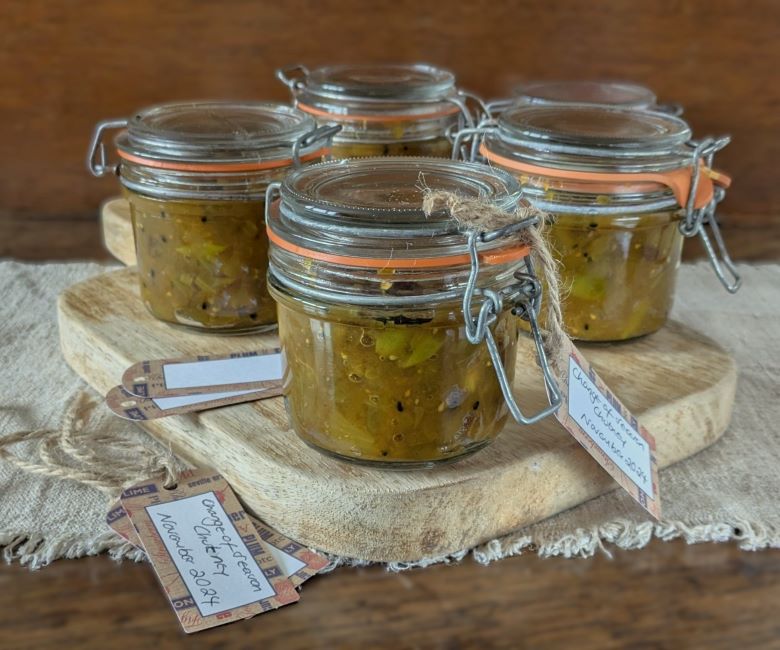
Last of the Autumn produce preserved. Image: Kathryn Hawkins
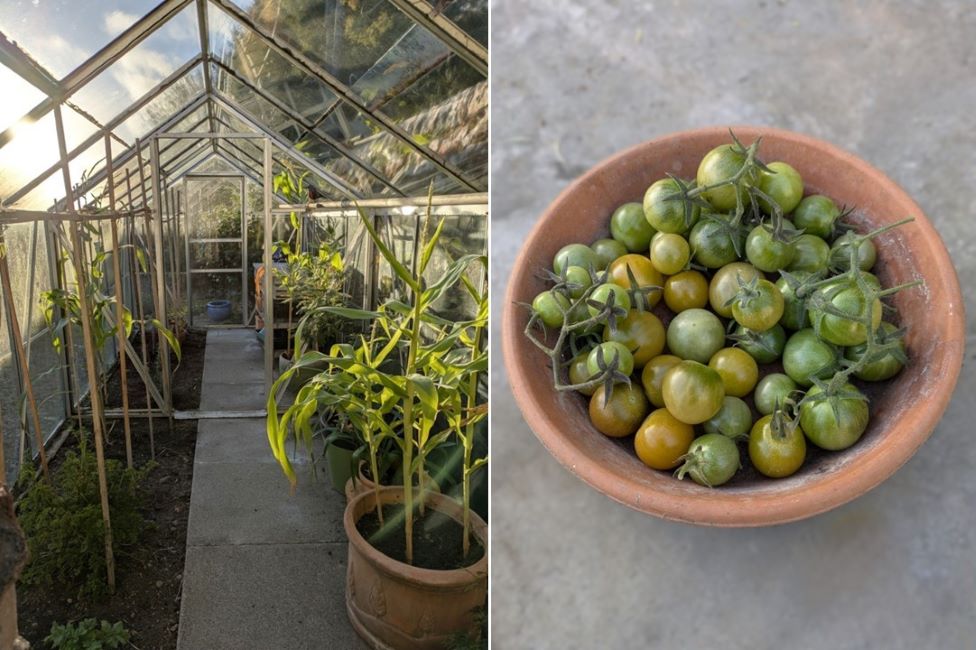
Hello there. When I planned to make this chutney a couple of weeks ago, it was very much still Autumn. I picked off the last of the tomatoes and put the greenhouse to bed during a lovely sunny afternoon. I was going to call the chutney “End of Autumn”.
Last of the greenhouse tomatoes, mid-November 2024. Images: Kathryn Hawkins
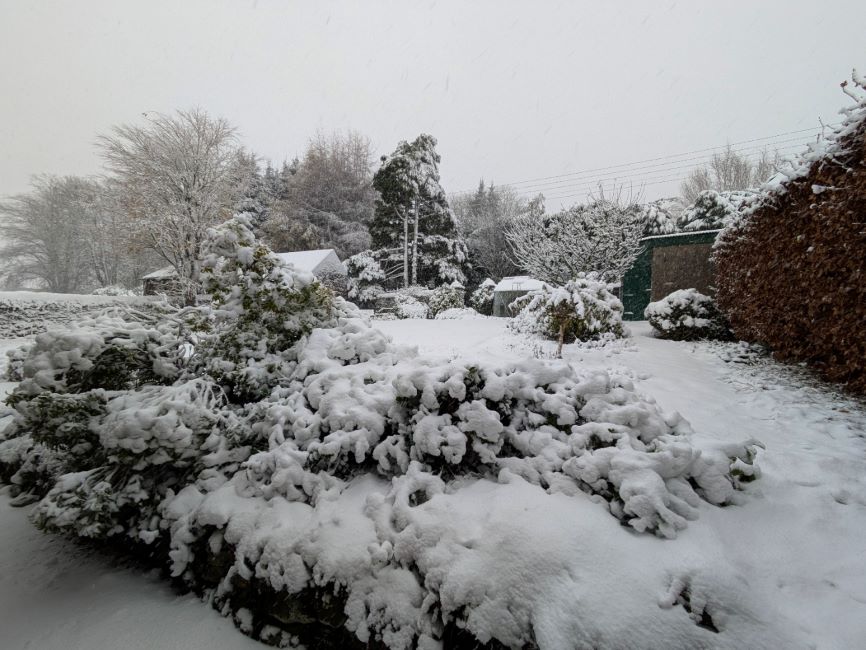
However, when I came to make the chutney last weekend, snow was falling very heavily and suddenly we were in winter. And so I thought “Change of Season” chutney would be more appropriate 🙂
November snowy garden. Image: Kathryn Hawkins
I made the chutney in my slow cooker. It is ready to eat as soon as it cools and tastes delicious. I used up the last of this year’s apple harvest along with some black-skinned tomatoes that I had frozen down a few weeks ago. The spices I used give a mild curry flavour but you can change them if you prefer – cinnamon, cumin and coriander for a more earthy flavour would work well.
If you haven’t made a preserve in your slow cooker before, the technique is slightly different in that you can’t boil the preserve down like you would in a saucepan on the stove. The chutney is also cooled before putting in jars, and as such needs to be kept in the fridge. It will however keep for a few weeks or can be frozen for longer term storage.
Makes: approx. 1kg
Ingredients
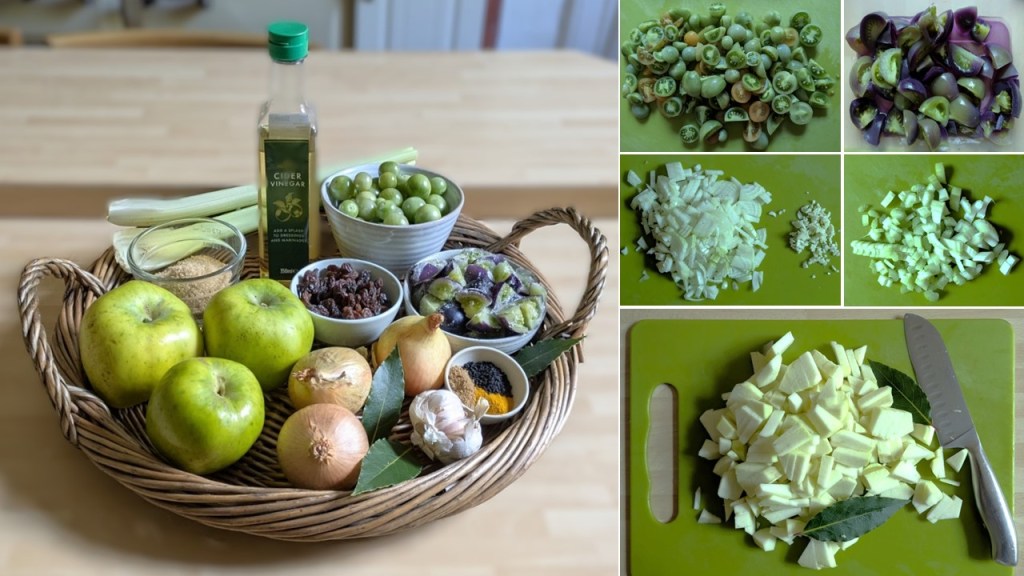
400g green tomatoes, chopped
2 medium onions, peeled and chopped (about 180g prepared weight)
2 garlic cloves, peeled and chopped
2 sticks celery, trimmed and chopped (about 110g prepared weight)
2 large cooking apples, peeled and chopped (about 300g prepared weight)
2 bay leaves
100ml cider vinegar
75g sultanas or chopped dried apricots
2tsp garam masala
1tsp each nigella seeds, turmeric and salt
150g demerara or light brown sugar (or you can use granulated white sugar)
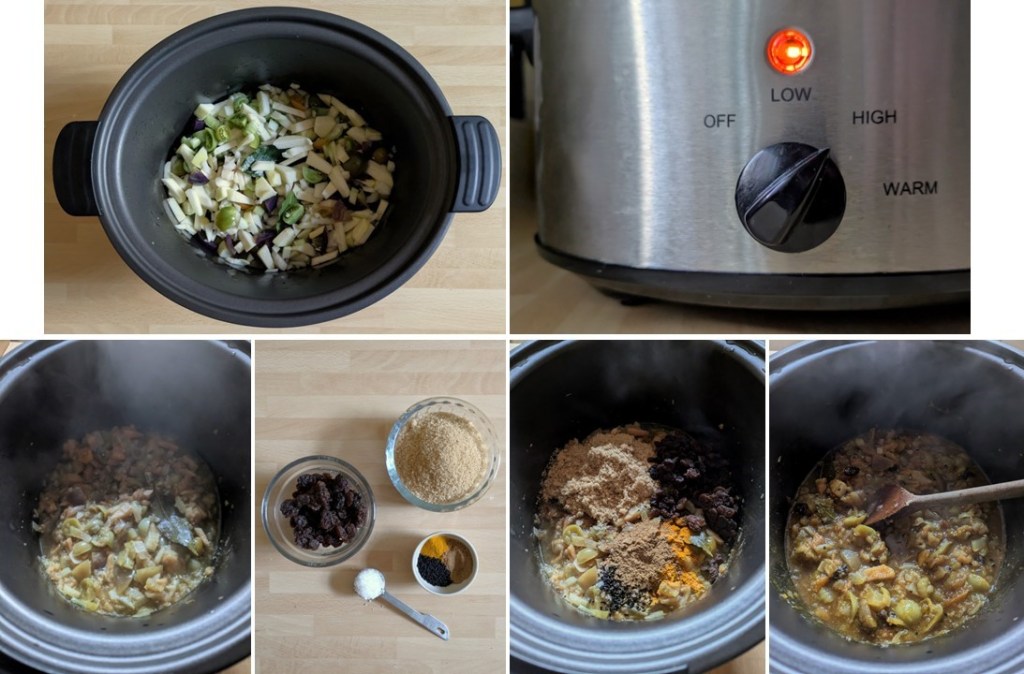
1. Put all the vegetables in the slow cooker with the bay leaves and mix well. Pour over the vinegar, cover with the lid and cook on High for 4 hours.
2. Add the remaining ingredients, mix well, re-cover and cook for 30 minutes to dissolve the sugar.
Slow cooking and seasoning chutney. Images: Kathryn Hawkins
3. Remove the lid, stir well and cook uncovered for a further 2 hours, stirring occasionally until reduced down and jam-like.
4. Switch off the cooker and leave the chutney to cool completely. Discard the bay leaves and spoon into clean jars. Seal, label and store in the fridge for up to 3 months. Once opened, use within a month. Alternatively, freeze the chutney in containers and defrost when required.
Reducing the chutney down ready for storing. Images: Kathryn Hawkins
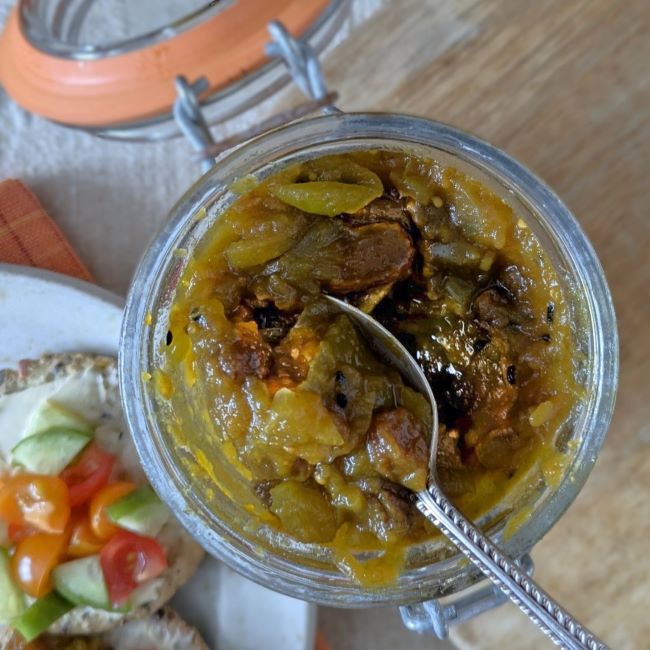
A sweet and spicy spoonful. Image: Kathryn Hawkins
That’s me for another month. I have one more post before Christmas, so until then take care and keep warm 🙂
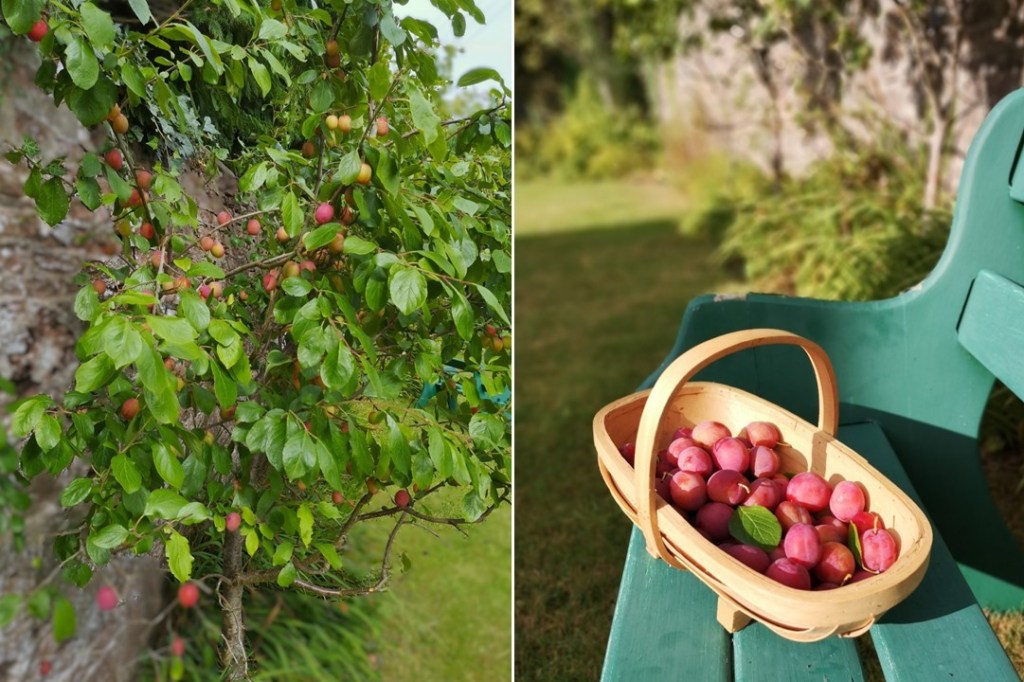
Hello again. The sunshine here in central Scotland last weekend helped ripen off the Victoria plums on the small tree in the garden. And this year, I managed to get them picked before the wasps moved in:)
This year’s Victoria plum harvest. Images: Kathryn Hawkins
Not a bad haul, and there are still a few left on the tree for later in the month. I’ll admit that plums are not my favourite fruit but they do make a lovely jam, and are also delicious flavoured and baked with almonds. Hence, my two recipes this week.
Simply plum jam. Images: Kathryn Hawkins
The jam recipe is very straightforward, just 2 ingredients, fruit and sugar. Victoria plums, if not too ripe, set well without needing to add lemon juice to the mix. If the plums are very ripe, then add 1tbsp juice per 500g fruit.
Makes: approx. 1.5kg
Ingredients
1kg ripe Victoria plums
Approx. 850g granulated sugar
1. Wash the plums then cut them in half and prise out the stones. Put the stones to one side, and weigh the prepared fruit and make a note. You should use the same amount of sugar to fruit. If the plums are too firm to cut cleanly in half, you can cook them whole and then remove the stones once the fruit has softened – it is worth counting the whole plums before you cook them so that you know how many stones to fish for!
2. Put the stones on a piece of muslin. Gather up the sides and then bash with a rolling pin to crush the stones. Tie the muslin tightly to secure the crushed stones inside. You don’t have to do this, but I think the jam has better flavour and setting qualities if you add the stones.
3. Put the plums in a large saucepan. If they are ripe, you don’t need to add any water. If they are firm, add about 100ml. Heat until steaming, add the muslin bag, then cover with a lid and cook gently until very soft. If you’ve cooked whole plums, now is the time to do a little stone fishing.
4. Add the quantity of sugar to match the weight of the prepared fruit, and stir until dissolved, then raise the heat and boil rapidly until setting point is reached – around 104 to 105°C on a jam thermometer. Squeeze out the juices from muslin bag and discard, and stir the jam to distribute the fruit pieces before packing into clean jars and sealing whilst hot.
Making plum jam. Images: Kathryn Hawkins
Easy peasy jam pot covers. Images: Kathryn Hawkins
For a simple finishing touch, if you are thinking about gifting some of your jam, I often cut out rounds of paper napkin to cover the jar lids. Use a saucer or plate a few centimetres larger than the lid and draw round using a pencil. Secure the covers in place with a small rubber band and then tie with string or ribbon. Don’t forget the label.
Plum pudding perfection. Image: Kathryn Hawkins
My second plummy recipe is also very easy to make. You’ll need 850g plums and a dish about 1.7l in capacity. The bake will serve about 6 people.
Victoria plums, ripe and ready for pudding. Images: Kathryn Hawkins
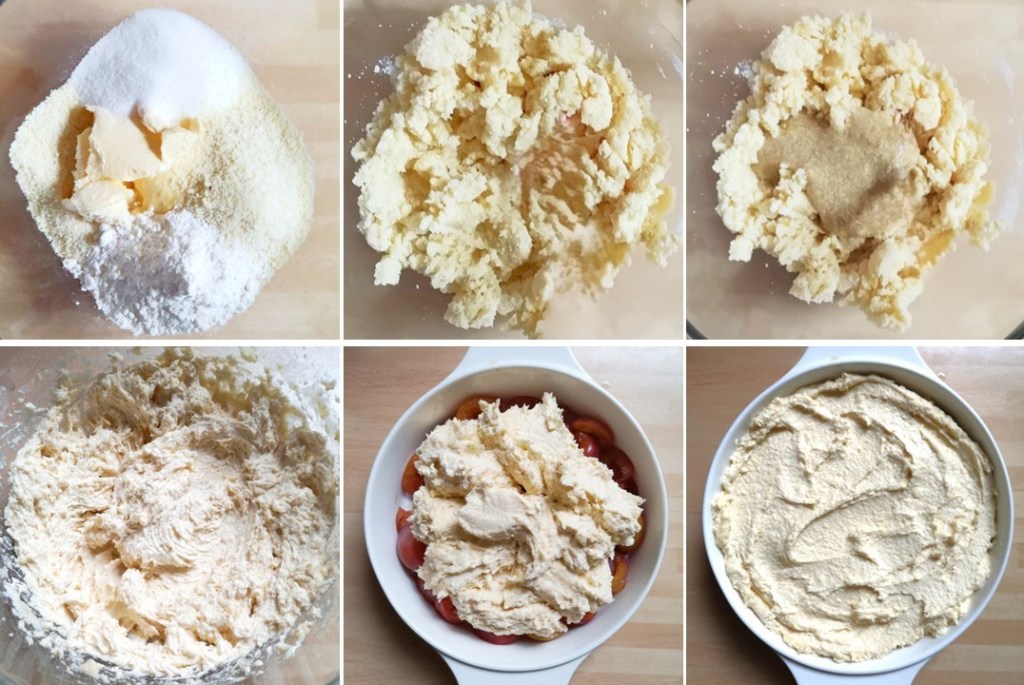
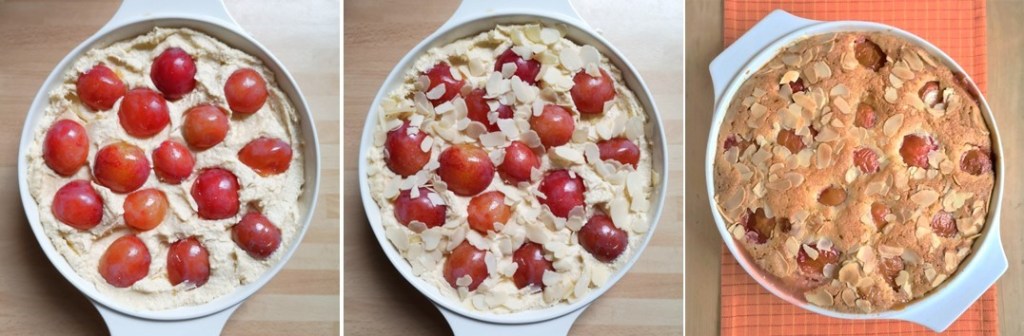
How to make almond plum pudding. Images: Kathryn Hawkins
1. Wash and stone the plums as for jam, but discard the stones this time. Put two thirds of the prepared fruit in the dish and put to one side while you make the topping.
2. Mix 3tbsp ground flax seed with 135ml water and leave for a few minutes until thickened.
3. Whisk together 155g lightly salted, soft plant butter with 155g caster sugar, 155g ground almonds, 30g gluten-free plain flour and 1tsp almond extract until well blended and creamy. Stir in the flax egg and whisk to make a smooth cake batter.
4. Spoon over the plums in the dish and smooth the top. Push the remaining plums into the mixture on top and sprinkle with a few flaked almonds. Pop the dish on a baking tray and bake in a preheated oven at 180°C, 160°C fan, gas 4, for about 1hour 15 minutes until firm to the touch and golden. Best served hot with custard.
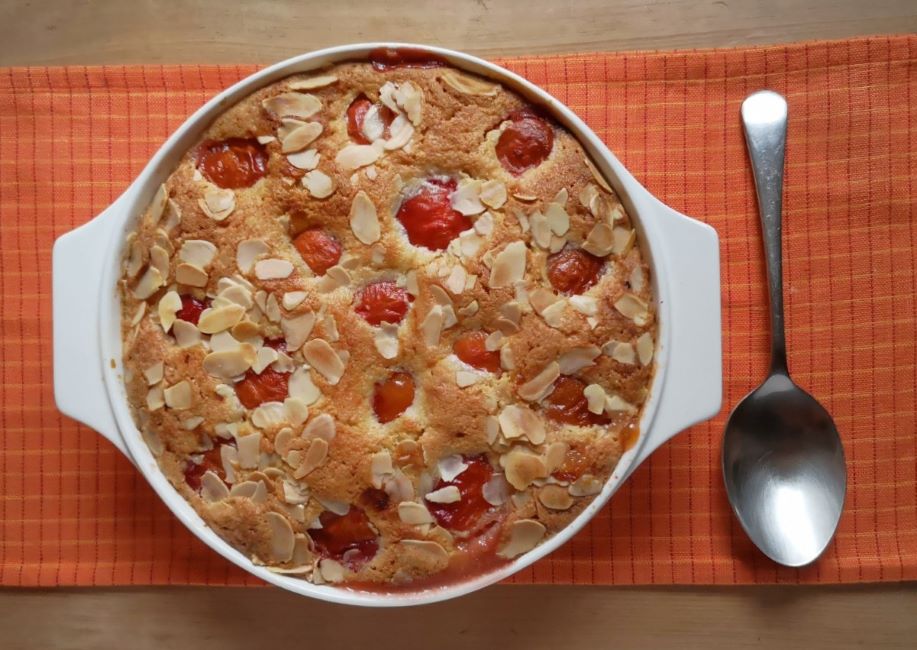
Ready for custard. Images: Kathryn Hawkins
If you have any leftover jam, add a layer in the bottom of the dish for extra sweetness.
Until next time, enjoy the autumn colours and I’ll hope to see you again in a couple of weeks or so.
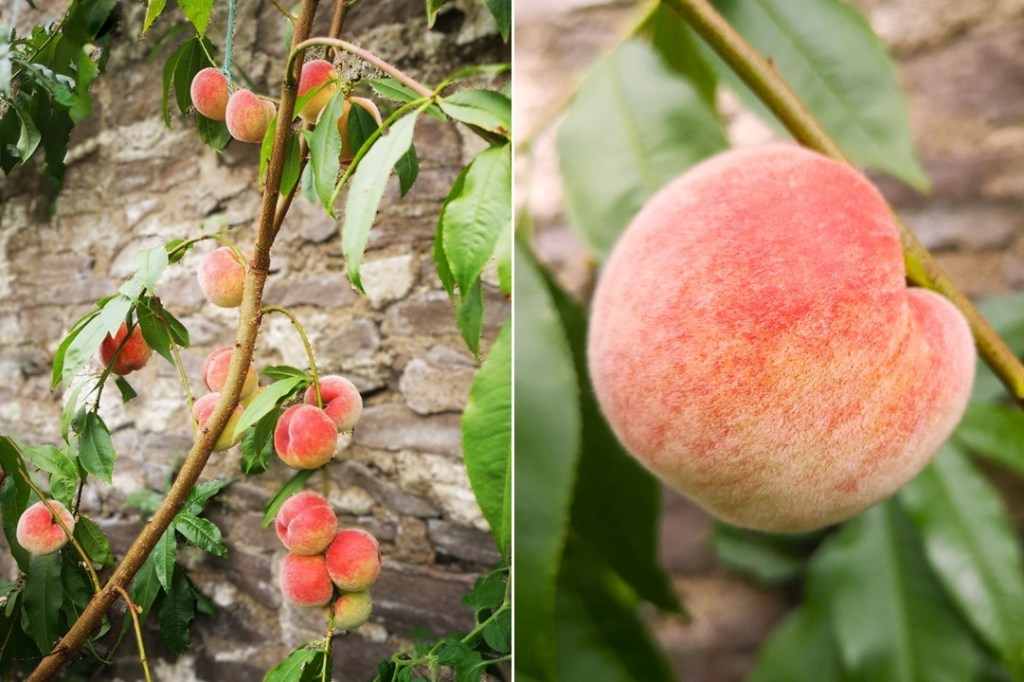
Hello there. I have 2 recipes for you this month: light fluffy pancakes served with a homemade fresh peach jam, inspired by acquiring some homegrown fresh peaches last July. My then neighbour, asked me in to water his burgeoning garden and greenhouse whilst he was away on holiday, and in return I was able to enjoy the pick of the crop. How lucky was I when I discovered the greenhouse peach tree bearing fruit that was ripening so fast the peaches were literally falling from the tree.
Greenhouse white peach tree. Images: Kathryn Hawkins
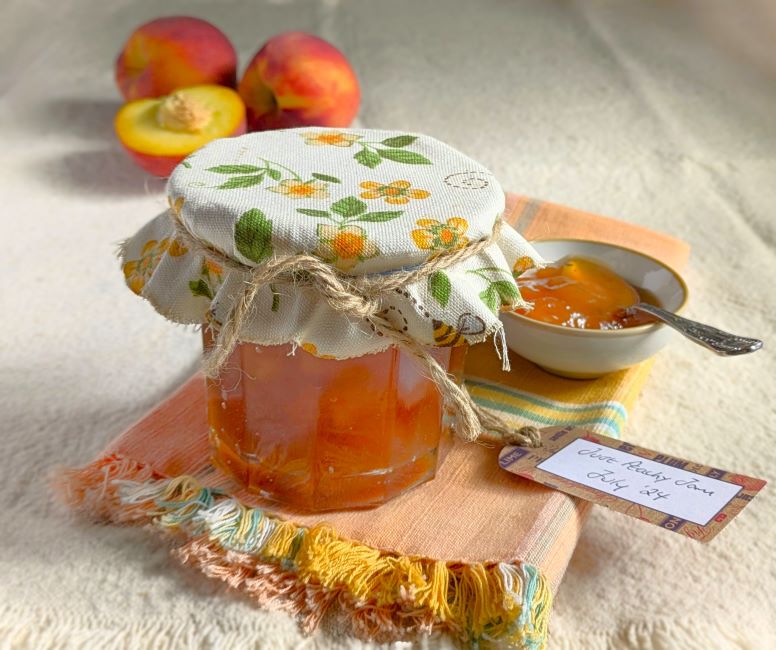
I gathered up the crop and made peach jam for the very first time. Delicious it was too, and, by the way, I did give him a pot when he returned 🙂 The peaches were a very sweet and juicy white variety which peeled very easily without any intervention. I made some this year with firmer, yellow-fleshed peaches and dipped them in boiling water for a few seconds to loosen and then peel away the skins. You can also use a vegetable peeler to do this if preferred. You do need to peel peaches and nectarines for jam making because the skins become very tough when boiled with sugar.
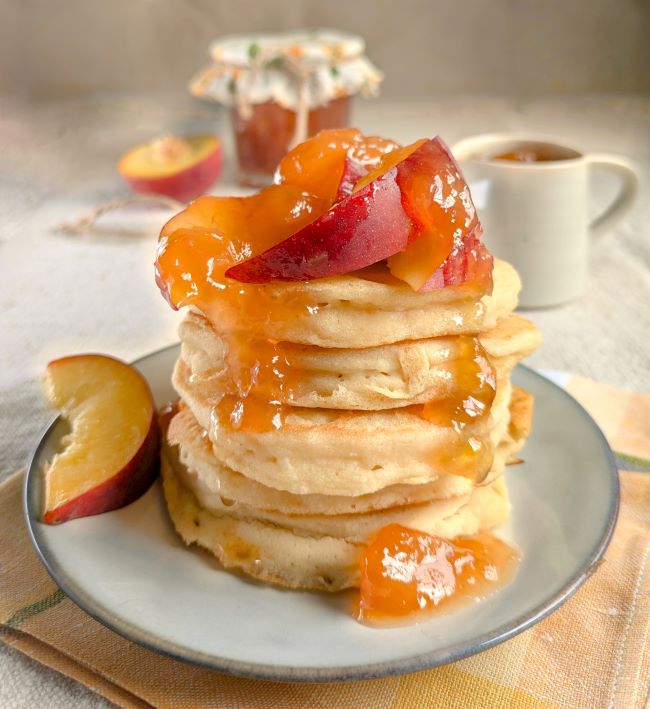
Just peachy jam. Image: Kathryn Hawkins
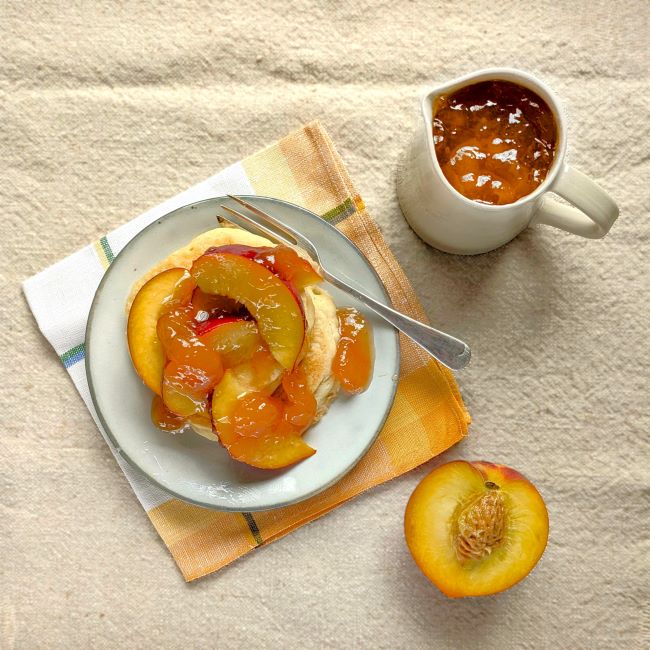
Pancakes make the perfect base to enjoy homemade jam, so I am combining the jam and pancake recipes below in case you want to make either or both.
Makes: approx. 1.125kg jam and 12 pancakes
Ingredients
For the jam:
1kg peaches
6tbsp lemon juice
800g granulated sugar (I used 200g demerara sugar and 600g white sugar)
For the pancakes:
175ml plant-based milk
2½tsp lemon juice
150g gluten-free blended self raising flour
30g cornflour (cornstarch)
½tsp bicarbonate of soda (baking soda)
50g plant-based butter, melted
1tbsp maple syrup
A little vegetable oil for frying
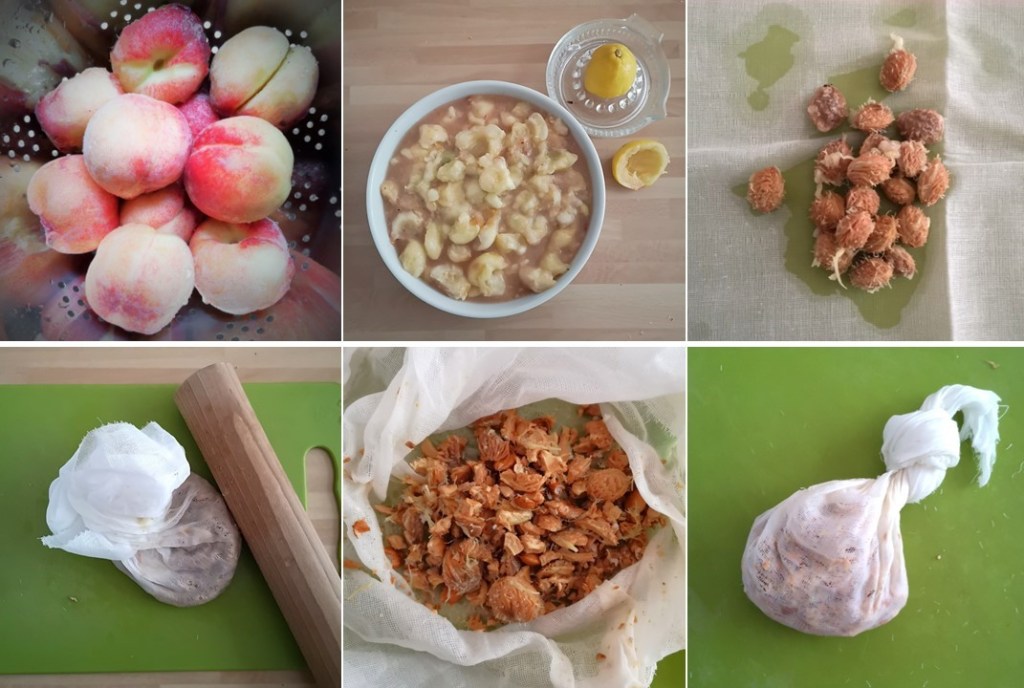
1. For the jam, wash, skin and chop the peaches. If the peaches are very ripe, then will break up easily. If the peaches are firm, cut them into small pieces. Put the stones to one side and place the peach flesh in a bowl. Mix in the lemon juice.
2. Put the stones on a square of muslin, twist the edges together to contain the stones within, and bash hard with a rolling pin to smash them open. Tie the muslin securely.
Peach and peach stone preparation. Images: Kathryn Hawkins
3. Transfer the peach and lemon mixture to a saucepan, and heat until steaming and hot, then simmer gently to soften the fruit. If the peaches are very ripe and soft, they will require little or no cooking.
3. Add the sugar and stir until dissolved, then raise the heat, add the bag of crushed stones and boil rapidly until setting point is reached – between 104° and 105.5°C.
Making peach jam. Images: Kathryn Hawkins
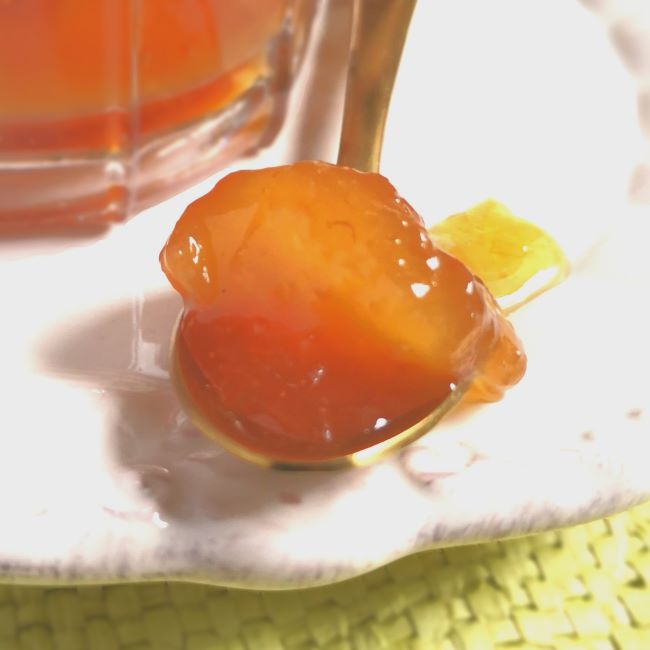
4. Discard the stones and leave the jam to stand for a few minutes to thicken slightly, the stir to distribute the fruit pieces and spoon into clean jars and seal straight away. Cool, then label. The jam is ready to eat but will keep for several months if stored correctly.
Jammy spoonful. Image: Kathryn Hawkins
To make the pancakes:
1.First make a buttermilk. Mix the milk and lemon juice together and leave to stand for a for a few minutes until it thickens slightly.
2. Sift the flour, cornflour and bicarbonate of soda into a bowl and make a well in the centre. Add the melted butter, maple syrup and buttermilk and gently mix everything together to make a thick batter. Note: as soon as you mix the liquid into the dry ingredients, the raising agents get to work and produce air bubbles. You need to get the batter cooked as quickly as possible in order to make fluffy pancakes.
Making the pancake batter. Images: Kathryn Hawkins
3. Working quickly, brush a large frying pan or flat griddle pan lightly with oil and heat until hot. Use a tablespoon measure to spoon 2 spoonfuls of batter on to the hot pan to make a thick pool. Add further pools depending on how much space you have in the pan. Cook over a medium heat for about 2 minutes, turn over and cook for a further 1-2 minutes until lightly golden and puffed. Either transfer to a dish, cover and keep warm, or cool on a wire rack, whilst you cook the remaining batter.
Cooking pancakes. Images: Kathryn Hawkins
Serve warm or cold with your favourite toppings. The pancakes will keep for a few days in a sealed container and can be toasted or quickly pan-fried to heat through. They also freeze well.
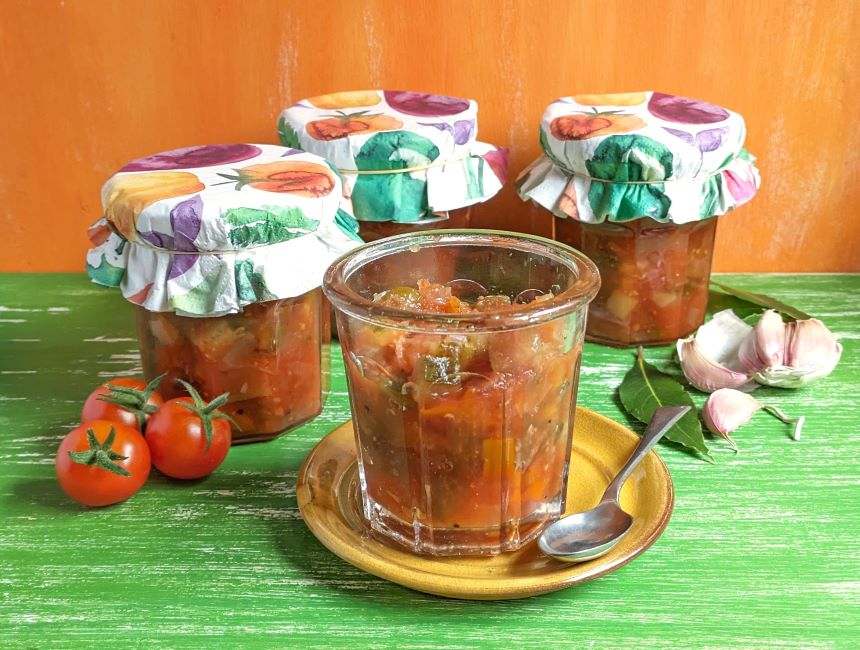
Summer vegetables captured in a jar. Image: Kathryn Hawkins
Hello again. So, we’ve passed the mid point of the year already. Time for a recipe which preserves the time of year perfectly. My recipe this week is an excellent way to use up a selection of the vegetables that are at their best over the next few weeks. If you have homegrown produce, all the better.
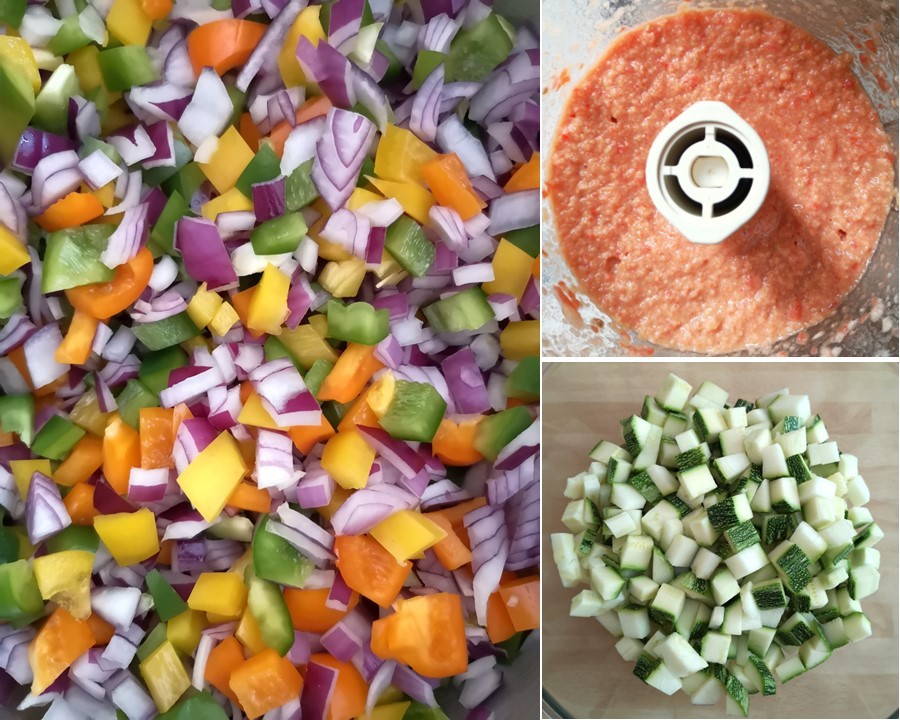
Summer vegetables for chutney making. Images: Kathryn Hawkins
I was inspired by one of my favourite vegetable dishes, Ratatouille, when I put this recipe together. You can mix and match different, similar-textured vegetables in the recipe below, just replace weight for weight, one for another. I used a combination of red onion and mixed peppers, with fresh tomatoes and cooking apples, and some diced courgette (zucchini). The chutney is flavoured with garlic, bay leaves and ground coriander. Aubergine (egg plant) or squash would also be good in this mixture.
A taste of Summer. Images: Kathryn Hawkins
The quantities below make a very generous amount of chutney but you can of course, cut the amount of vegetables you use to make less.
Makes: approx. 3kg
Ingredients
450g prepared mixed bell peppers (approx. 1 each large green, yellow and orange peppers), finely chopped
450g prepared red onions, finely chopped
600ml cider or white wine vinegar
3 bay leaves
4 garlic cloves, peeled
450g fresh tomatoes, roughly chopped
450g prepared cooking apples, roughly chopped
2tbsp tomato purée
1tbsp ground coriander
500g prepared courgette (zucchini), diced
450g granulated sugar
1tbsp salt
Freshly ground black pepper
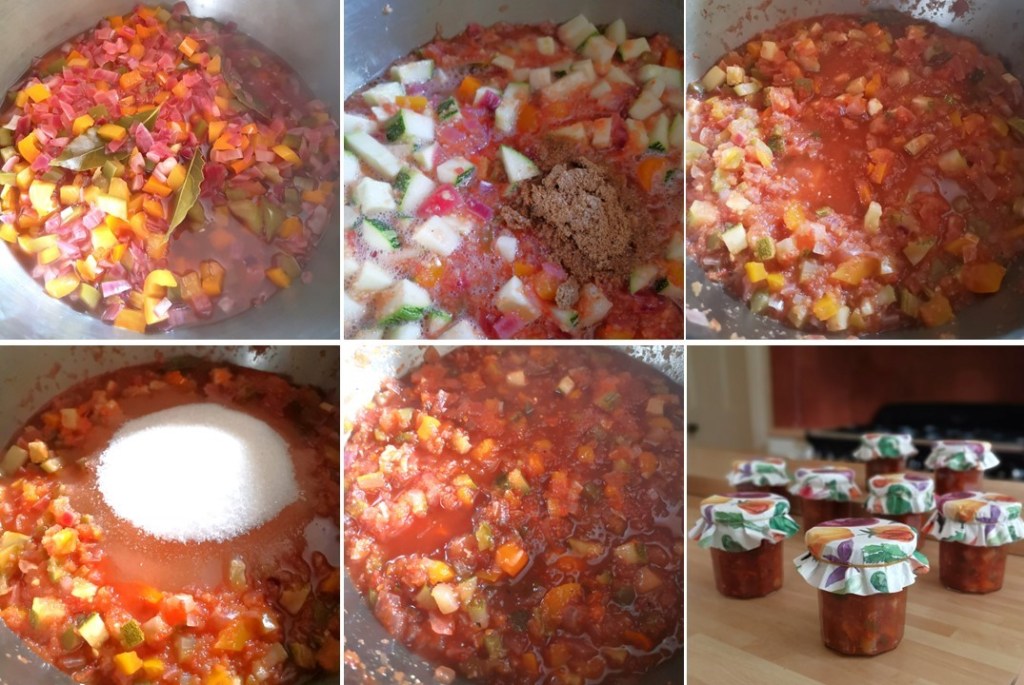
1. Put the peppers and onions in a large saucepan and pour over the vinegar. Add the bay leaves, bring to the boil, cover and simmer for 15 minutes.
2. Meanwhile, put the garlic, tomatoes, apples and tomato purée in a food processer and blitz until smooth.
3. Pour over the peppers and onions and stir in the coriander and courgette (zucchini). Bring to the boil, cover and simmer for 25 minutes until tender and jam-like.
4. Stir in the sugar until dissolved, then mix in the salt and some pepper. Bring to the boil and cook for about 30 minutes until thick and jam-like.
Cooking up vegetables for chutney. Images: Kathryn Hawkins
5. Turn off the heat, discard the bay leaves and spoon into clean jars. Seal immediately. Leave to cool, then label and store for about 1 month before opening. The chutney should keep in a cool, dark cupboard for several months.
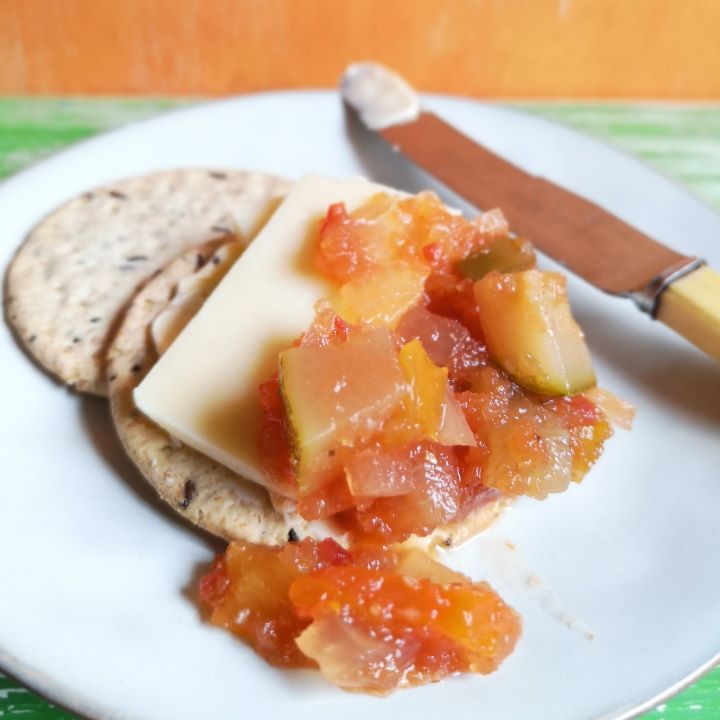
Chutney, cheese and oatcakes. Image: Kathryn Hawkins
I look forward to sharing another recipe with you next month. Until then, enjoy the season and thanks for stopping by 🙂
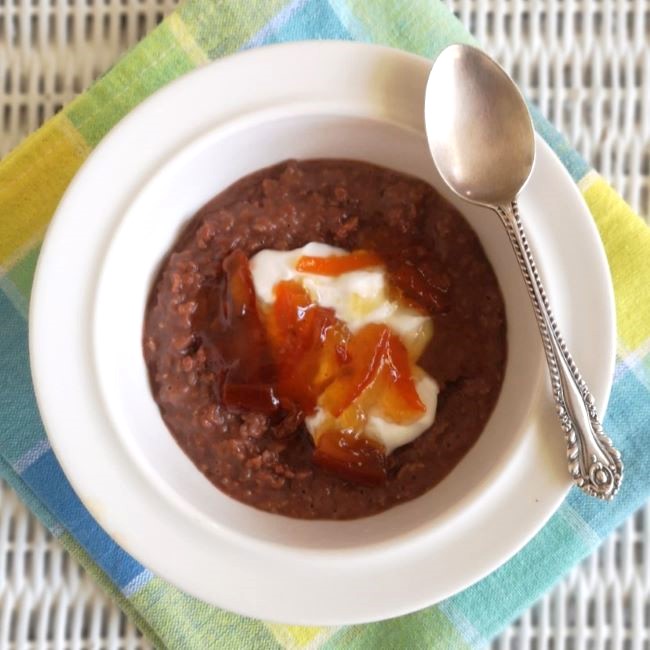
Chocolate and marmalade porridge. Image: Kathryn Hawkins
Happy new year to you! 2024 has begun with chilly, frosty weather here in central Scotland and elsewhere in the UK. But it’s that time of year when the Seville oranges are in the shops, marmalade-making is underway and the sweet smell of citrus wafting round the kitchen makes me think of sunnier climes and warmer days.
Even with the best planning, I always have leftover preserve once I have filled the jam jars I have cleaned and got ready. However, it does mean that I get to taste what I’ve made straight away without feeling guilty about opening a jar of freshly made preserve too soon. I call the surplus “The Cook’s Privilege”, after all the effort, you deserve the first pickings 🙂
Marmalade leftovers for the cook. Images: Kathryn Hawkins
My recipe this week is a simple way to enjoy such spoils for your breakfast the day after your toils. The ingredients below make enough for one portion. I cook my porridge in the microwave, but you can just as easily pop everything in a saucepan and cook it on the stove top.
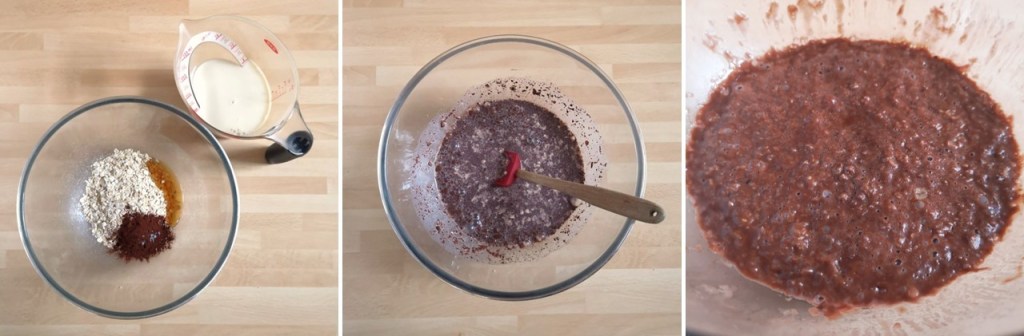
Chocolate porridge: put 40g gluten-free porridge oats in a large microwave-proof bowl. Sift 1½ teaspoons of cocoa on top and stir in 2 teaspoons maple syrup and a pinch of salt. Mix in 200ml plant-based milk. Cover and microwave on High for 2½ minutes (my microwave is 900W so adjust the cooking time accordingly if necessary). Stir well then cook for a further 1 minute on High. To serve, stir in extra plant milk (or plant cream for extra indulgence) if you prefer a thinner consistency and top with plant-based yogurt and a generous dollop of your leftover marmalade. Delish 🙂
Hello again. It’s been a busy couple of weeks since my last post. The season is subtly shifting from late summer to early autumn. There is a bit of a nip in the air first thing in the morning and some of the leaves on the trees are beginning to turn. Out and about, the hedges are full of ripening fruit, and I have been out foraging a couple of times this month. Two weeks ago I went on a recce for brambles (blackberries), and was happily surprised to see that so many were ripe and ready. Thank goodness I went prepared with a large container (just in case), and came home with 2.7kg of the glistening berries which I have now frozen 🙂
Scottish brambles. Images: Kathryn Hawkins
Whilst on my walk, I had noticed that there were also sloes and elderberries, although not quite ripe. I gave it a week and went back. The birds had eaten a few elderberries, and I think another forager had found the sloes, but I still managed a container-full as well as a few more brambles.
Blackberries, dewberries, sloes and elderberries. Images: Kathryn Hawkins
Always wash wild fruit well before using. Brambles and sloes need little preparation, but elderberries can be a little fiddly to remove from their fine stems. I find a fork is quite useful to help prise them away.
Freshly washed and prepared wild fruit. Images: Kathryn Hawkins
All of these hedgerow fruits will freeze fine in case you are unable to use them immediately. Lay them out on lined trays and freeze until solid, then pack them into bags or containers, seal, label and store until ready to cook.
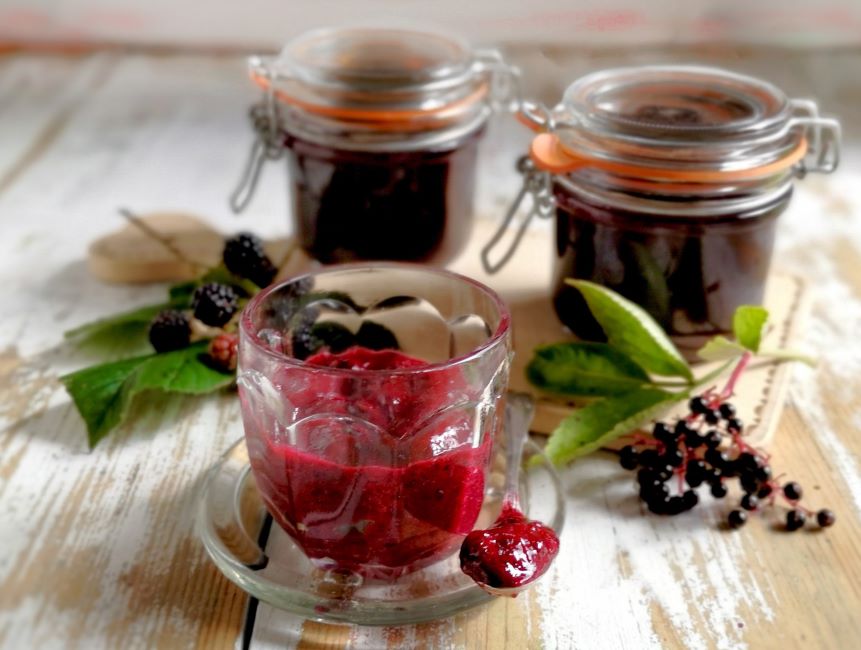
My hedgerow harvest preserve. Image: Kathryn Hawkins
My preserve recipe can be adapted to use any combination and quantity of wild berries you have picked. Sloes have a bitter/sour flavour whilst brambles and elderberries are sweeter and juicier. I ended up with about 700g prepared fruits in total, 200g of which were sloes, and this gave a good balance of sharp and sweet, with a deliciously rich and intense flavour overall.
Packed full of flavour and colour. Image: Kathryn Hawkins
The yield of preserve in this recipe is slightly lower than for other jams because I removed the seeds. Brambles do tend to be very seedy, and sloes are impossible to pit before cooking, so sieving (or straining) seemed like the logical thing to do. Alternatively, you could make a jelly by straining the cooked fruit through muslin. This would result in an equally delicious preserve, but with a much smaller yield. I’ll probably make a jelly with some of my freezer brambles later in the year and mix them with some apples from the tree in the garden. Delish.
Makes: approx. 700g
Ingredients
700g prepared hedgerow berries and fruit, washed
Approx. 400g granulated sugar
2tbsp lemon juice
1. First cook the sloes. Place in a saucepan with 250ml water. Bring to the boil, cover and simmer for 6-7 minutes until softened.
2. Stir in the berries, bring back to the boil, re-cover and cook gently for 10 minutes until everything is very soft and juicy.
Cooking the fruit. Images: Kathryn Hawkins
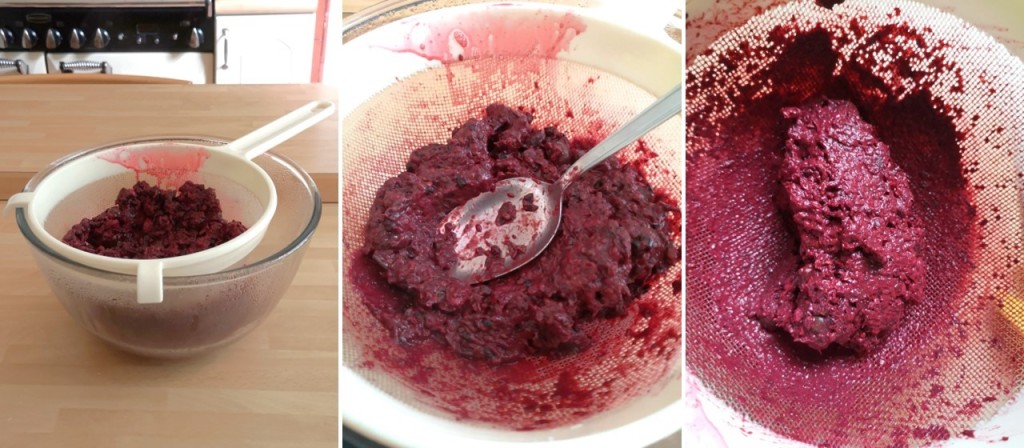
3. Put a large nylon sieve (strainer) over a large bowl or jug and carefully pour in the cooked fruit and juices. Leave to strain for 30 minutes then use the back of a spoon to push and press the pulp against the side of the sieve to squeeze out as much juice as possible. Do this until you end up with a dryish pulpy mass of seeds and fibres in the sieve. Discard.
Getting rid of the seeds. Images: Kathryn Hawkins
4. Measure the juices – I ended up with 500ml. You will need 400g sugar per 500ml juice. Pour into a saucepan and heat gently to warm through, then add the sugar and lemon juice. Stir until dissolved.
Cooking the pulp. Images: Kathryn Hawkins
5. Bring to the boil and cook for several minutes until the correct level of set is achieved – between 104°C and 105.5°C on a sugar thermometer. I cooked my preserve to the higher temperature and ended up with a very firm set – almost like a fruit cheese. For something more spreadable, cook to the lower temperature.
6. Spoon the hot mixture into sterilised jars and seal immediately. Leave until cold then label and store in the usual way.
For the storecupboard. Image: Kathryn Hawkins
Because I achieved such a firm set, I melted the leftover preserve with a little more water and when it cooled, it was much more spreadable. It made a delicious topping for toasted crumpets. This preserve also makes an excellent accompaniment to serve with grilled, roasted and barbecued food.
Tangy, tasty and freshly made, hedgerow preserve. Images: Kathryn Hawkins
Until next time, I hope you have a good few days, and I look forward to posting again in a couple of weeks. Thanks for stopping by 🙂
February 2023, marmalade making. Image: Kathryn Hawkins
Something bright and cheery to start the new month. It’s that time of year when the air is full of the scents of aromatic citrus and the sweet smell of sugar. Seville oranges are in season and marmalade-making is in full swing.
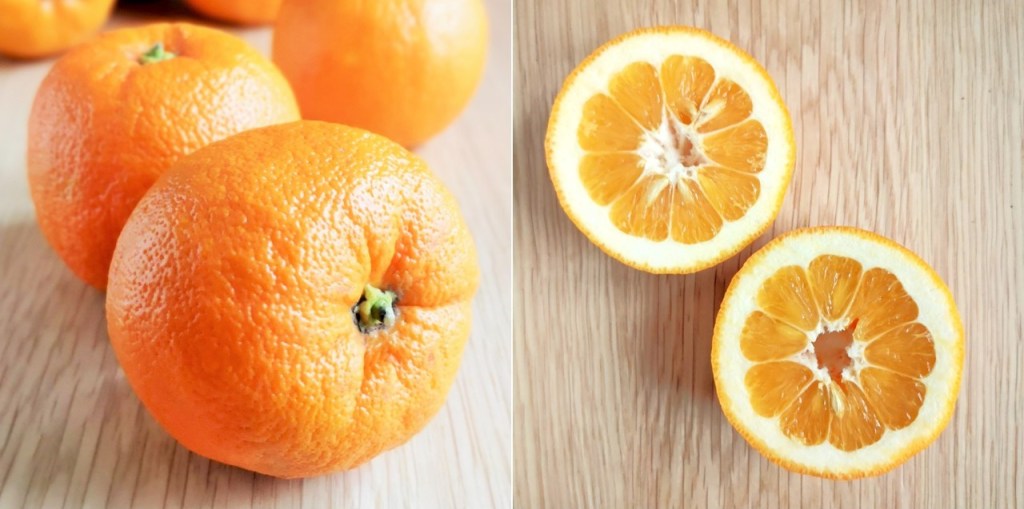
New season Seville oranges. Images: Kathryn Hawkins
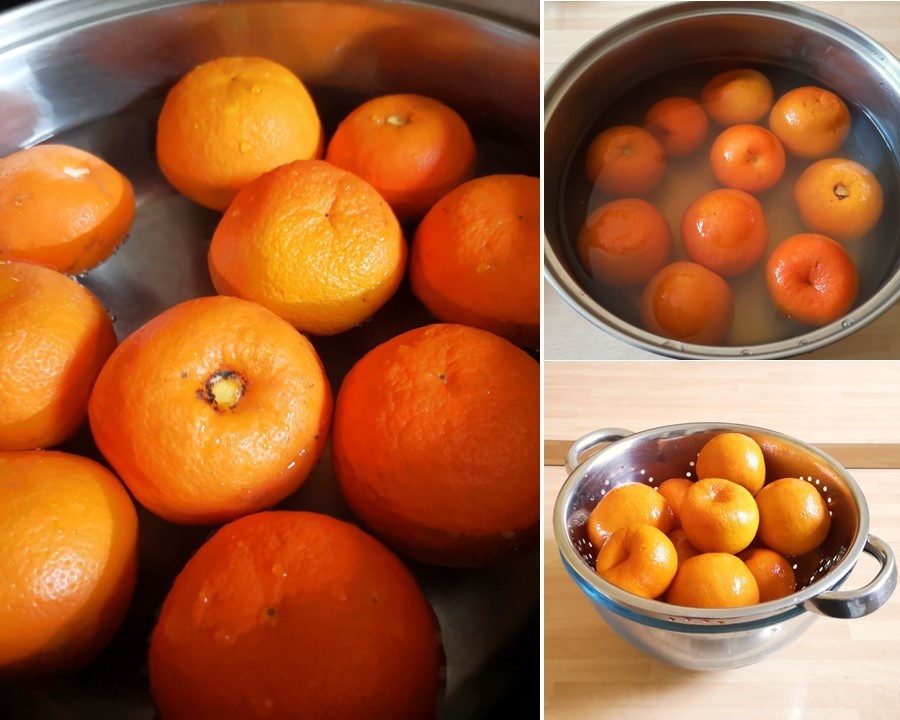
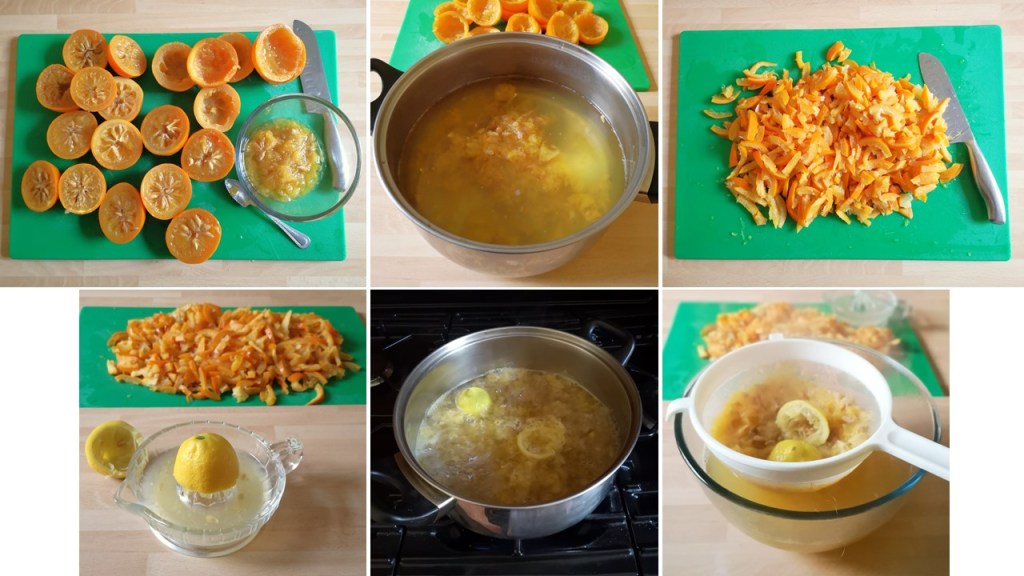
I do enjoy making preserves, but I find the peel-cutting for marmalade a bit of a chore. This time I made marmalade, I cooked the oranges whole, then once the oranges were cooked, I extracted the fruit pulp from the skin and was left with softer peel to slice. I found the cooked orange skin much easier to slice, and the resulting preserve tastes and looks pretty much the same, so I think this recipe will be my go-to marmalade recipe for the future.
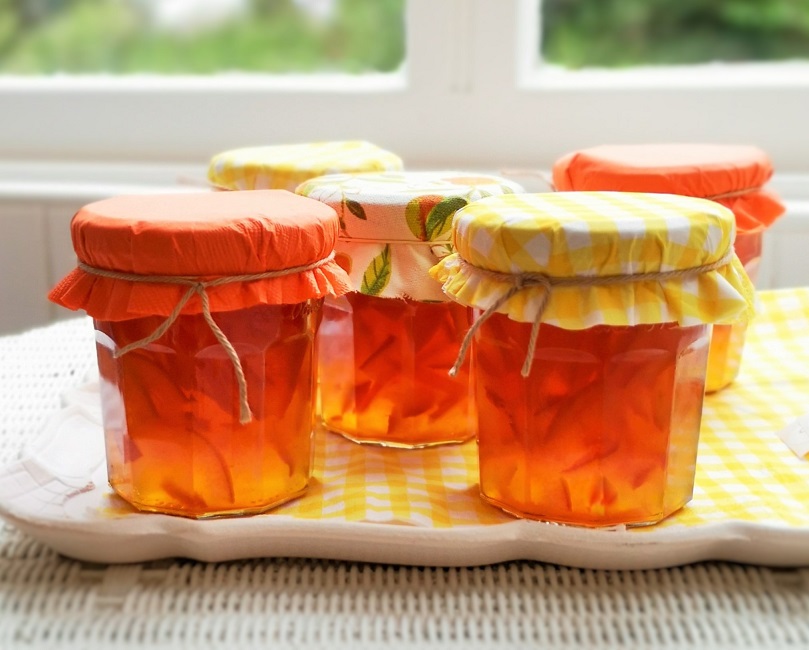
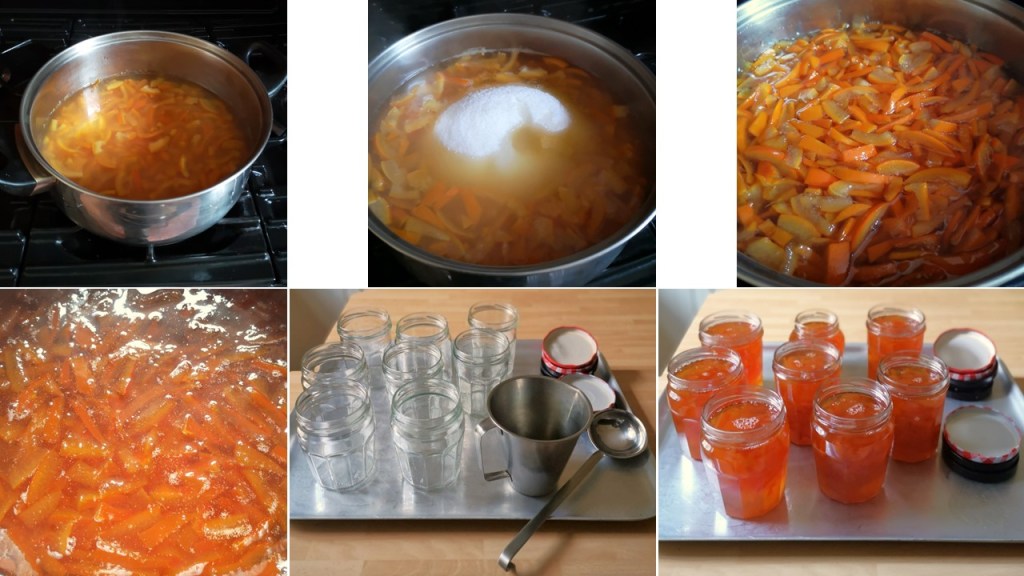
New season marmalade ready to label. Images: Kathryn Hawkins
You may want to cut the quantities down to make a smaller amount – I had a fair few oranges to use up!
Makes: approx. 3kg
Ingredients
1kg Seville oranges, washed and left whole
2.4l water
1 unwaxed lemon + 60ml freshly squeezed lemon juice (the extra juice is optional but I find it helps with the set especially if the oranges have been stored for a while)
1.8kg granulated sugar
1. Put the whole fruit in a large saucepan with the water. Bring to the boil, then simmer gently for about 1½ hours until a skewer can be inserted into the fruit with ease. Drain the fruit using a draining spoon and leave aside until it is cool enough to handle. Keep the cooking water.
2. Cut the fruit in half, then scoop the seeds and pulp into the saucepan with the cooking liquid. Halve the lemon, extract the juice and add to the saucepan along with any seeds and the lemon shells. Bring to the boil and boil steadily for 10 minutes. Strain the liquid, discard the pulp, and return the liquid to the saucepan.
3. Meanwhile, cut up the orange shells into the size of shreds you prefer and put to one side. I kept the sliced peel quite chunky, hence my name for the marmalade.
4. Stir the shredded peel into the cooking liquid. Add the sugar and extra lemon juice if using. Stir over a low heat until the sugar is dissolved. Raise the heat and boil for about 25 minutes until setting point is reached – 105.5°C . Allow to cool a little in the saucepan until the mixture begins to firm slightly, then stir the marmalade to distribute the peel before spooning into clean jars and sealing whilst still hot.
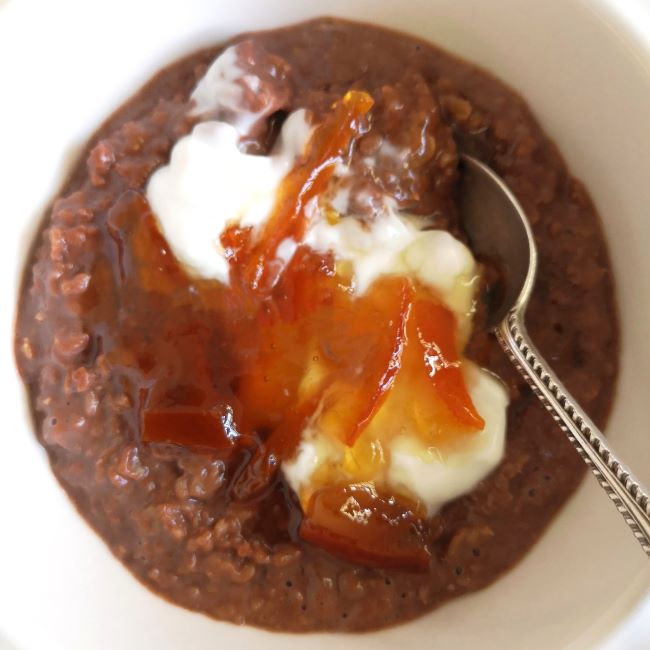
I had a few spoonfuls of marmalade leftover once I had put the rest in jars; the “cook’s privilege” I call it. It made the perfect topping for a very indulgent bowl of porridge the next morning 🙂
Until next time, have a good few days and I look forward to posting again soon.
Chocolate porridge with homemade marmalade. Image: Kathryn Hawkins
Happy New Year! I hope you have had a good holiday. We find ourselves at the beginning of a brand new year, wondering what 2023 has instore for us all. Let’s hope it’s a good one.
It’s been a chilly, frosty and snowy end of year here in central Scotland. I didn’t venture very far. I have been in the kitchen keeping cosy and have been trying new ways of using up what remains of the stored fruit from last Autumn. This week’s post is the result of one of my experiments, slow-cooked fruit butter. It keeps for about a week in the fridge but can be frozen for use later in the year.
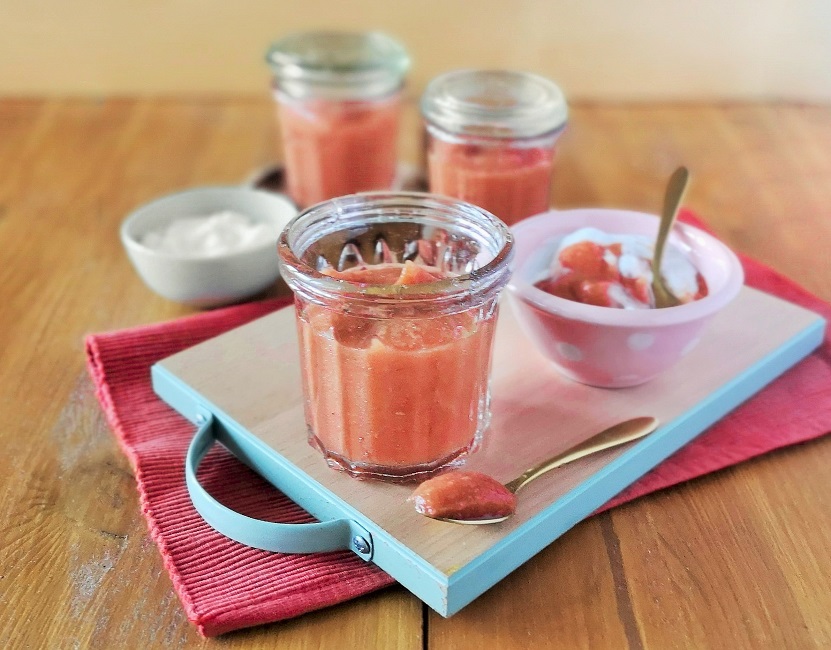
In the jar. Images: Kathryn Hawkins
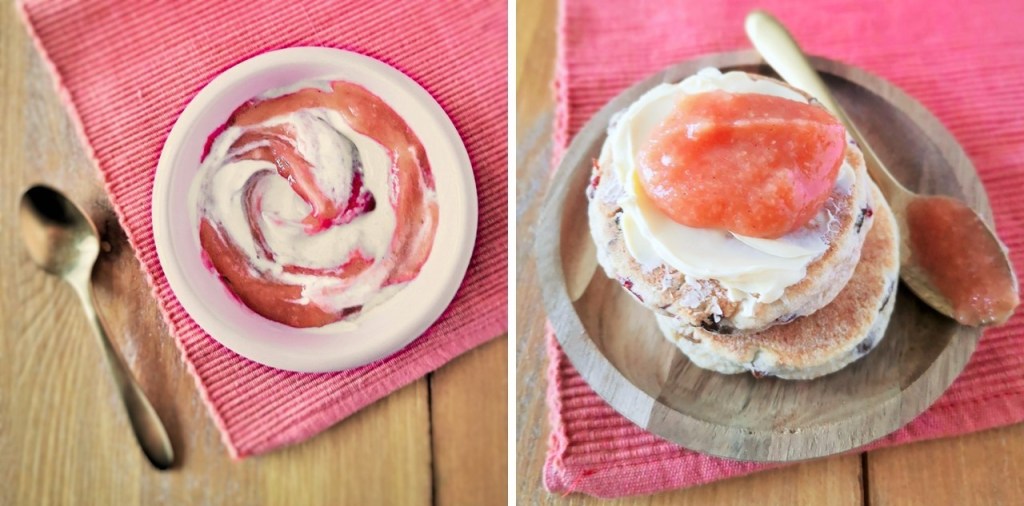
Fruit butter has nothing to do with dairy butter. In fact, it is completely fat free. I guess it gets its name from the fact that it is silky smooth in texture. It tastes delicious and is very easy (and moreish!) to eat. You can use it like jam, spread on toast, or as a filling for pancakes, pastry cases and sponge cakes, or as a dessert with yogurt. It is delicious served with rice pudding, granola, porridge or as a topping for a cheesecake.
Fruit butter with coconut yogurt and on griddle scones. Images: Kathryn Hawkins
The sugar content is much lower than jam so you do need to keep it in the fridge. It freezes very well with no alteration in texture, colour or flavour. If you portion the butter up in small containers, it will defrost quickly and can be used up in a few days.
Ripe fruit and flavourings. Images: Kathryn Hawkins
I used a combination of quince, cooking pears and small cooking apples, but you can use the same method for a single fruit butter, although you may need to adjust the sugar content. And when it comes to flavouring, you can use whatever you fancy. For speed, ground spices are the easiest option because it saves time at the end of cooking. You can simply blitz the fruit and store. I prefer whole spices along with lemon rind, and as long as you know how many pieces you have added, then you know how many bits you need to fish out before your start blending. Cinnamon, allspice, cloves, ginger and orange would all work very nicely, it’s just personal preference.
On with the recipe. All the work is in the preparation of the fruit, then it’s a case of letting the slow-cooker do the rest of the work.
Makes:approx. 1.6kg
Ingredients
1 unwaxed lemon
2kg quince, cooking or firm pears, and cooking apples (dessert apples will also work, just adjust the sugar quantity accordingly)
125g caster sugar
1 vanilla pod, split
6 to 8 cadamom pods, split
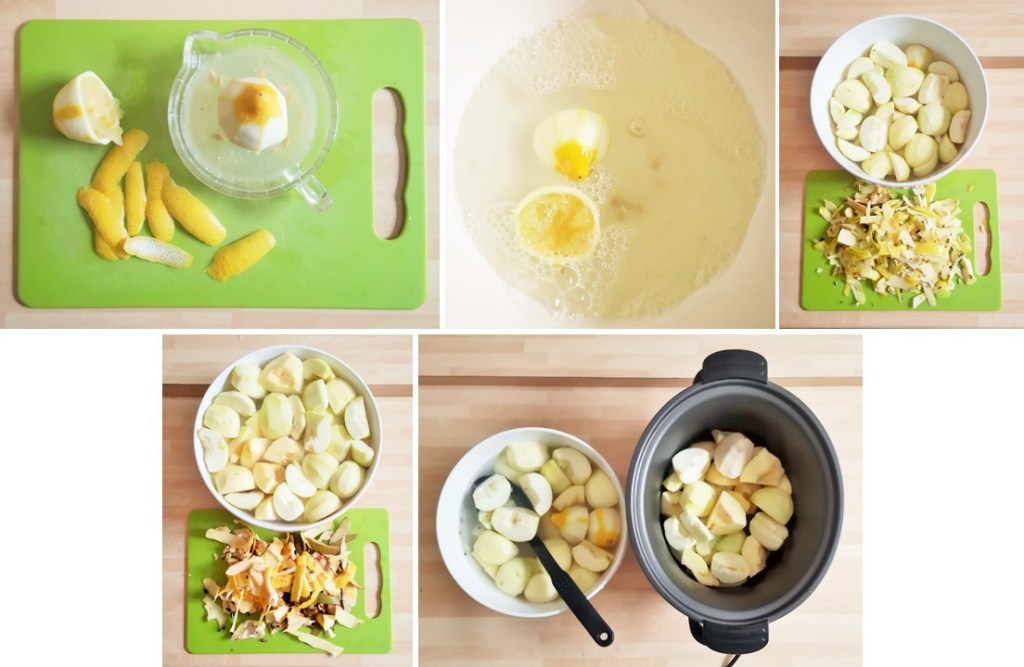
1. Pare the lemon rind in thick strips using a vegetable peeler, and extract the juice. Put the spent lemon shells in a large bowl, pour over the juice and top up with cold water to half fill the bowl. Keep the pared rind for the slow cooker.
2. Peel and core all the fruit, and cut into pieces – apple and pear will cook more quickly than quince if you are using a combination. Simply cut the quince (or any firmer pieces of fruit) into small pieces for even cooking. As you prepare the fruit, put it in the lemony water to reduce the deterioration of colour.
3. When you have prepared all the fruit, use a draining spoon to ladle it into your slow cooker. There is no need to drain the fruit too much as a little of the lemony water will help create steam as the fruit cooks. Discard the lemon shells.
Preparing fruit for slow cooking. Images: Kathryn Hawkins
4. Add the sugar, pared lemon rind and your other chosen flavourings and mix everything together, then cover with the lid and set the cooker to High for 5 to 6 hours, or Low for 10-12 hours. The exact cooking time will depend on how ripe the fruit is. After a couple of hours, give the fruit a stir then re-cover, and stir again after a further 2 hours. Continue cooking until the fruit is very soft.
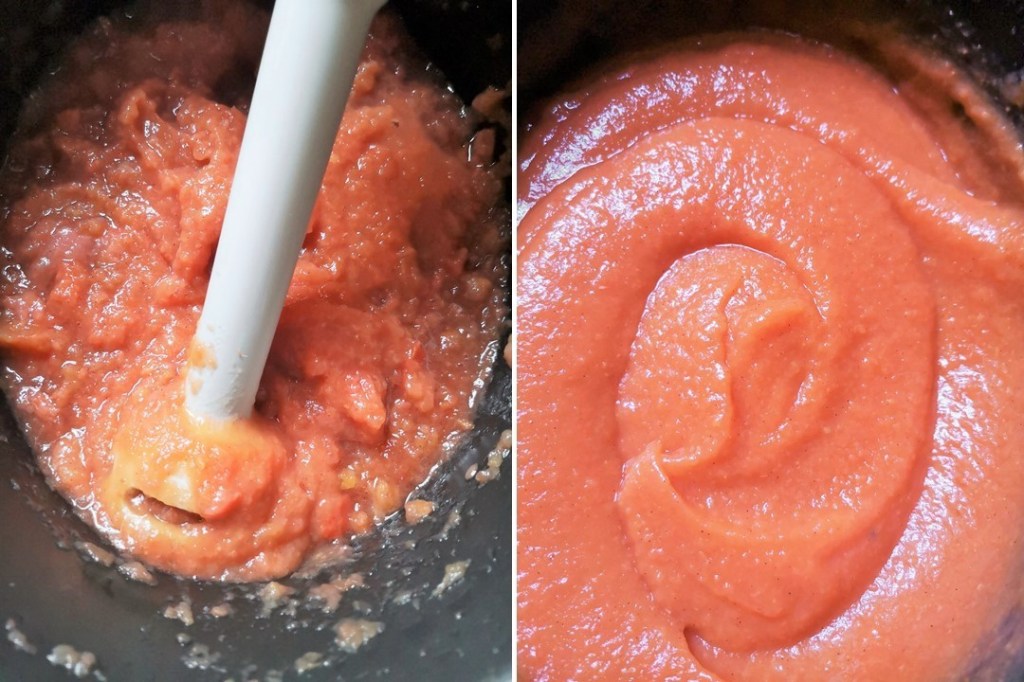
Before and after cooking. Images: Kathryn Hawkins
5. Switch off the cooker and leave the fruit, covered with the lid, to go cold. Remove the rind and whole spices if using and either use a stick blender to blitz the fruit or transfer to a standing blender. The fruit butter should be thick and beautifully smooth.
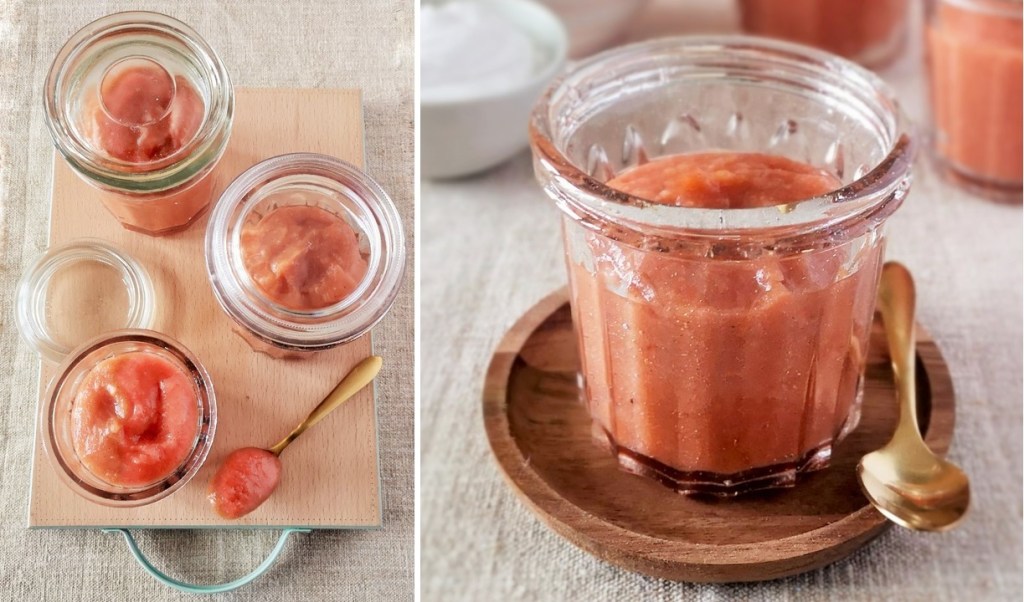
The final step to perfect fruit butter. Images: Kathryn Hawkins
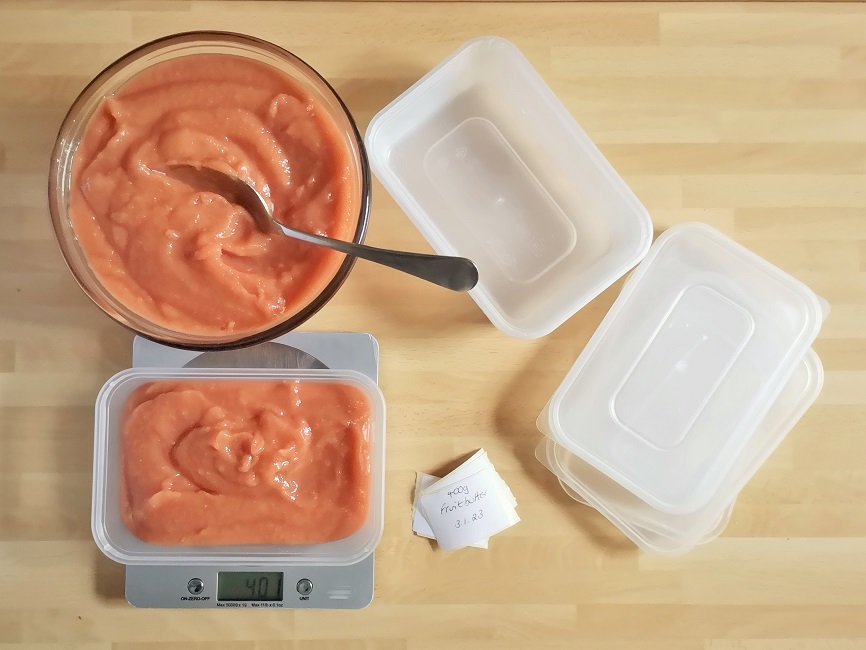
6. Once you have your butter, either spoon it into clean, sealable jars or containers for keeping in the fridge, or pack it into cartons for freezing.
Ready for freezing. Image: Kathryn Hawkins
I hope you have enjoyed my post this week. I will be back with another recipe in a couple of weeks. Until then, take care and keep well. I will see you again soon 🙂
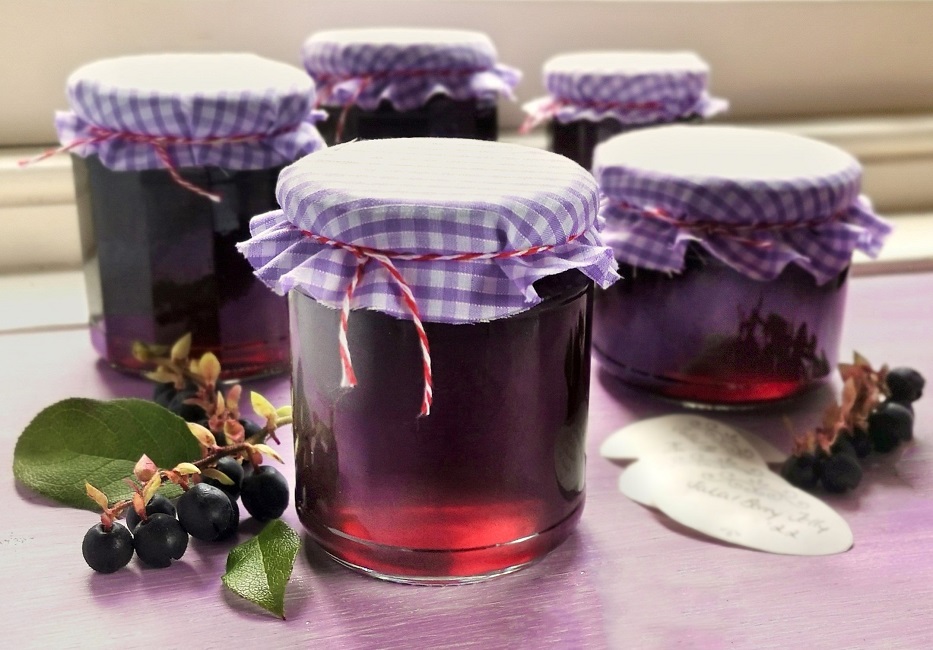
Homemade apple and salal berry jelly. Image: Kathryn Hawkins
Hello there. I hope you are keeping well. It’s that time of year when I get the jam pan out and start making preserves and chutneys for the months ahead.
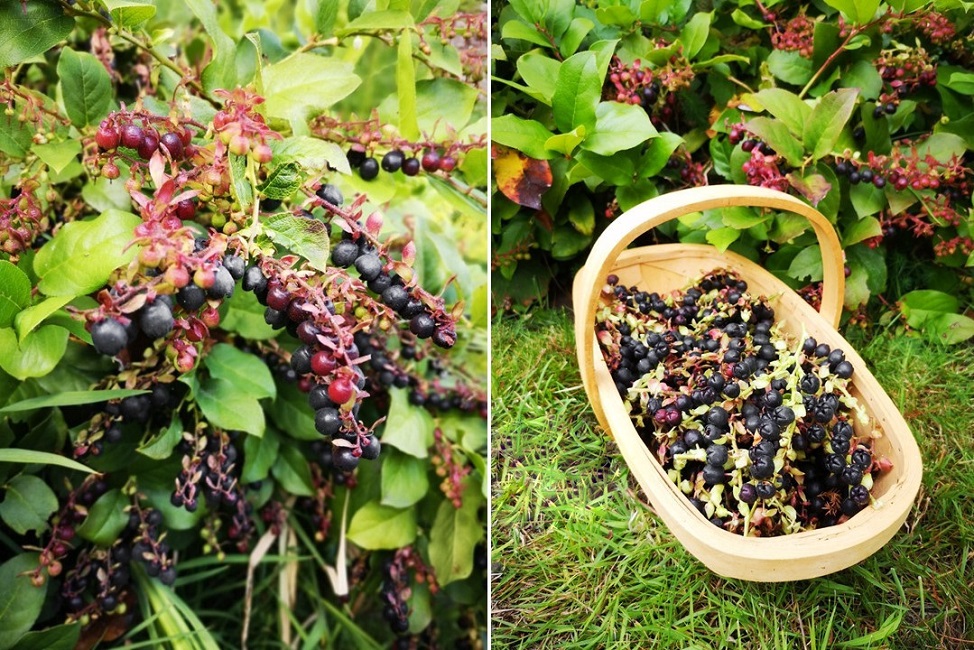
Back in August I harvested a lot of salal berries from the garden. I did compote a few but the rest went in the freezer for making preserves. There are still a few on the bushes now but I am leaving those for the garden birds to enjoy.
August 2022 harvest of Salal berries. Images: Kathryn Hawkins
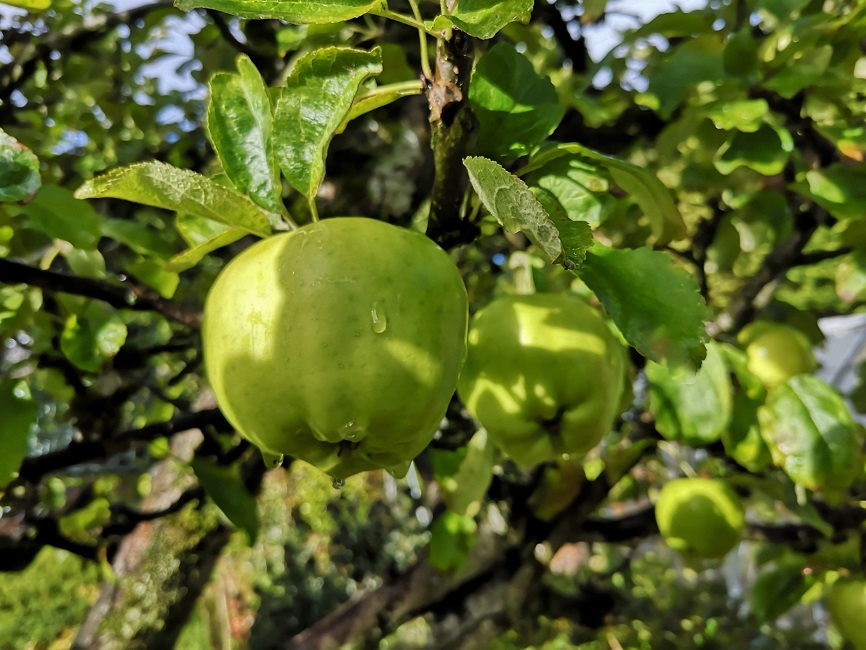
I haven’t picked all the apples yet, but I have been taking one or two as and when I need them for cooking. The old tree in the garden is looking heavy with fruit this year, so I think I will be gathering in the apples very soon.
October 2022, cooking apples ready for picking. Image: Kathryn Hawkins
My recipe is a very simple jelly preserve. If you don’t have salal berries, blueberries or blackberries will work just as well. Salal berries can be quite challenging to pick as they are quite squishy when ripe so I usually pick short branches and then remove the berries when I get back into the kitchen. Have a look at this post from last year for an easy preparation technique Salal berries – jam and muffins (gluten-free; dairy-free; vegan)
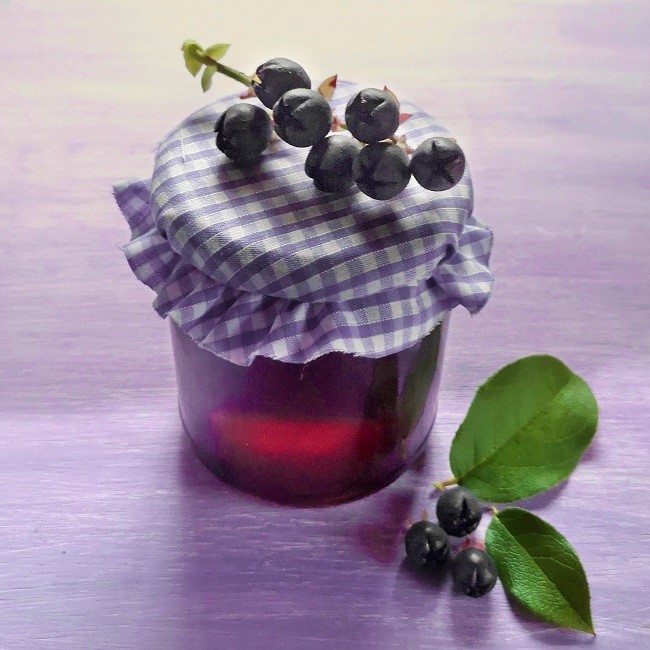
Single jar. Image: Kathryn Hawkins
The recipe below makes a small quantity of preserve and as such can be easily doubled or trebled should you have more berries and apples. Making a smaller amount means that you can strain the fruit through a sieve rather than in a jelly bag; it is quicker to strain, and it also cooks down in less time.
Makes: approx. 650g
Ingredients
200g prepared salal berries, washed
400g cooking apples, washed and chopped, but left unpeeled or cored
approx. 450g granulated or preserving sugar
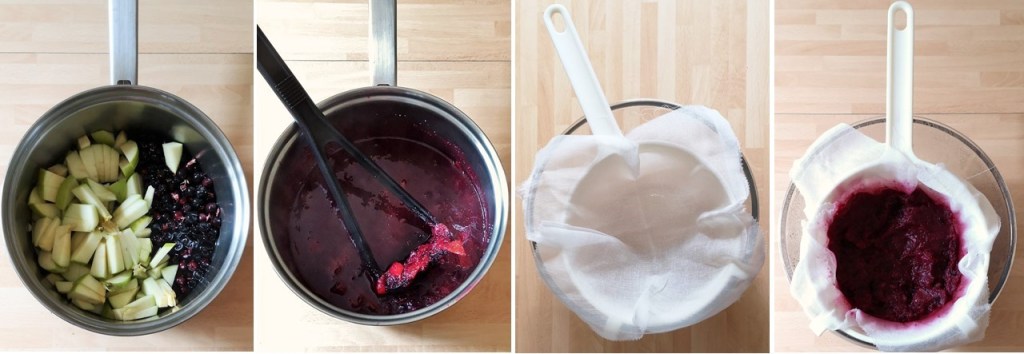
1. Put the fruit in a large saucepan with 350ml water. Bring to the boil, cover and simmer for 10-15 minutes until soft and pulpy. Mash the fruit occasionally to help break it down.
2. Place a large sieve over a jug or bowl and line with clean muslin. Carefully ladle in the pulp and leave to strain for 3-4 hours.
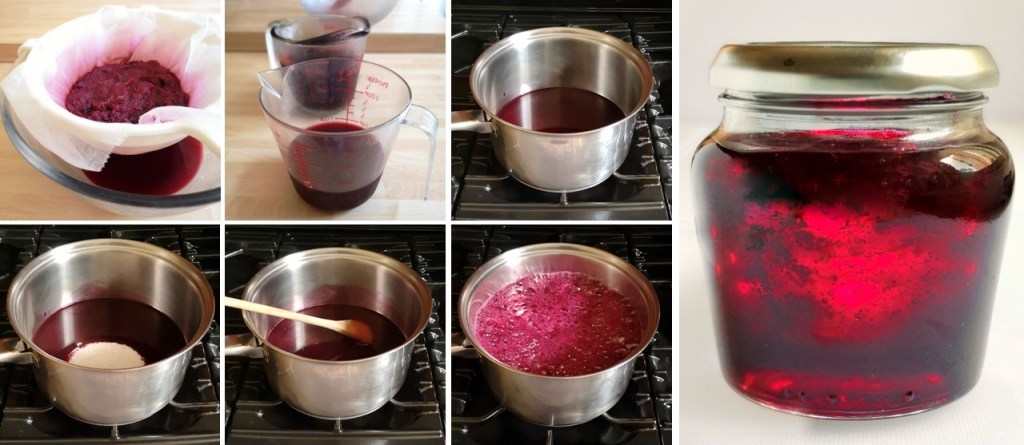
3. Put the pulp back in a saucepan and the harvested juice in the fridge. Re-cook the pulp, this time with 200ml water, for about 5 minutes, and then strain again as above.
Preparing and cooking the fruit for jelly making. Images: Kathryn Hawkins
4. Measure the juice and pour into a large clean saucepan. Add sugar to the ratio of 450g per 600ml juice – I had 575ml juice and added 430g sugar.
5. Heat, stirring, until the sugar is dissolved, then raise the heat and bring to the boil. Cook rapidly until the temperature reaches between 104°C and 105°C – this will probably take around 10 minutes.
Making the jelly. Images: Kathryn Hawkins
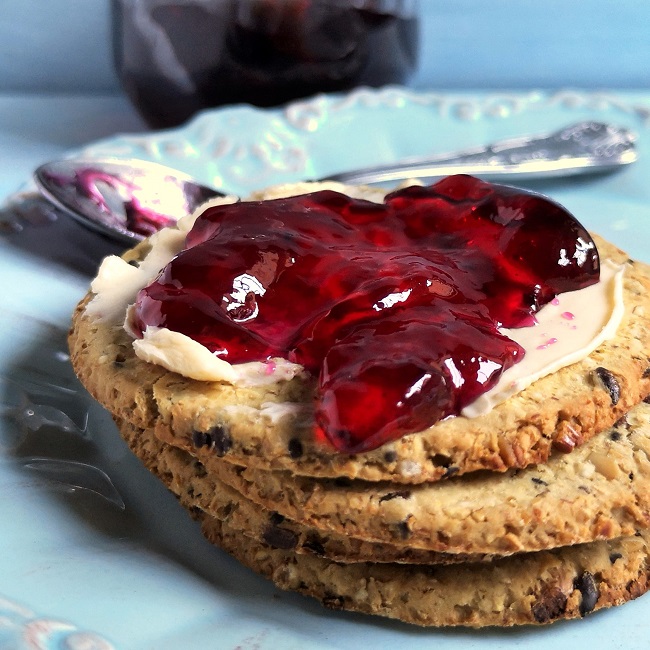
6. Pour into small, clean, sterilised jars and seal immediately. When cold, label and store for 6-12 months, although the jelly is ready to eat immediately. Serve with cold cuts, cheeses or as a sweet spread on toast or crackers.
Apple and salal berry jelly on oatcakes. Image: Kathryn Hawkins
Well that’s the end of my post for this week. I will be back in the kitchen again next time. Until then, I hope you have a good few days ahead 🙂



























 My Virtually Free-from Kitchen