Welcome to my blog all about the things I love to grow and cook. You'll find a collection of seasonal gluten-free, dairy-free and vegan-friendly recipe posts, as well as a round up of my gardening throughout the year. I wish you good reading, happy cooking and perfect planting!
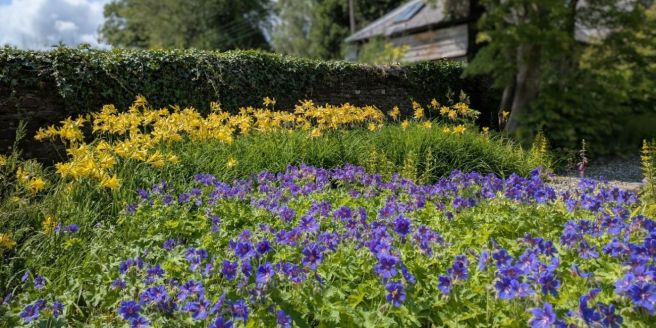
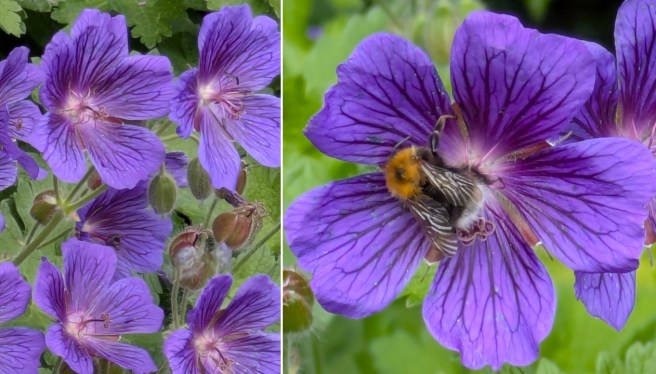
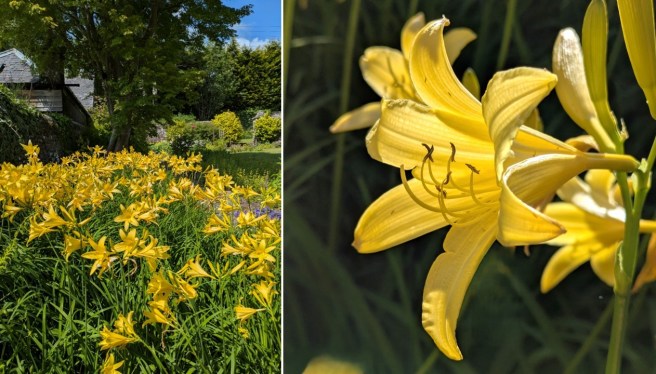
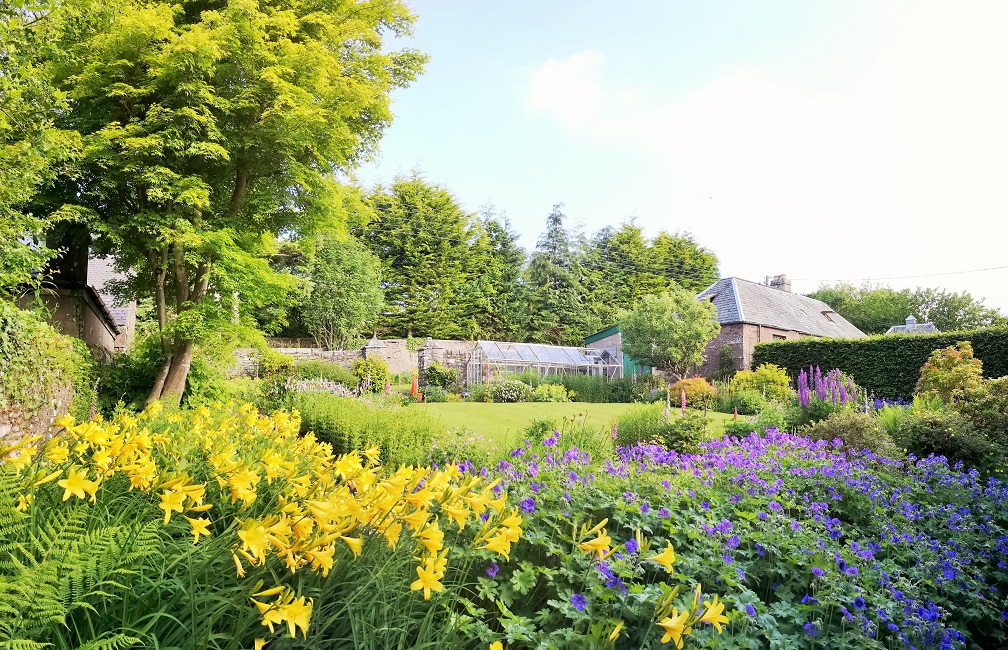
Hello there. What a glorious month to be outside in the garden. All the fine weather we had back in the spring has produced some fine garden blooms this year. Fortunately we have had some rain to revive everything and currently Mother Nature is providing us with a good balance of sunshine and showers which is helping keep everything fresh. The bank of blue geraniums and yellow day lilies is one of my favourite floral combinations at this time of year.
The bees love them too. Images: Kathryn Hawkins
Golden lilies. Image: Kathryn Hawkins
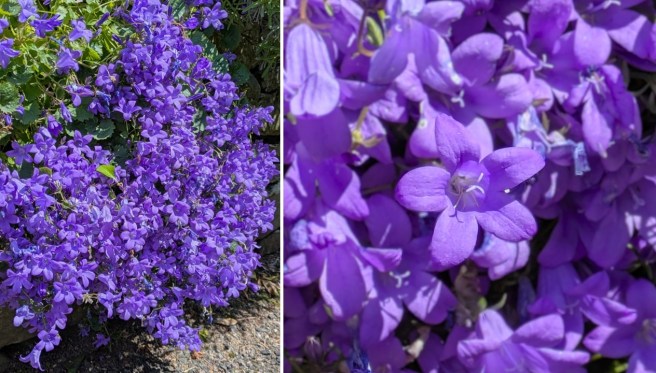
It’s been a great year for Campanulas. The wall variety is crammed with flowerheads and the taller varieties are popping up all over the garden.
Scottish blue Campanulas. Images: Kathryn Hawkins.
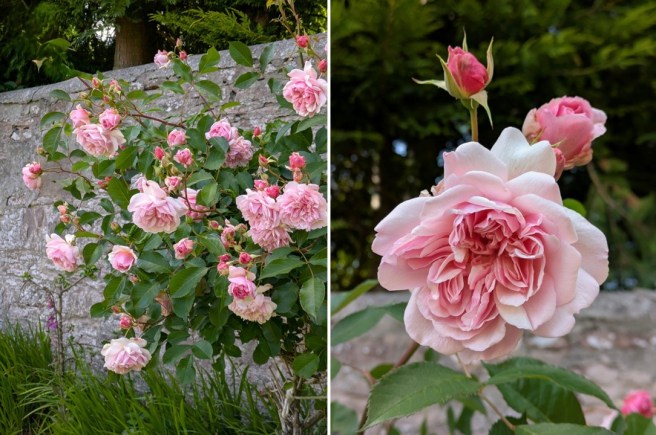
The old rambling rose in the back garden has been a victim of its own success this year. It has grown so tall and produced so many flower heads it is too heavy on top for its stems underneath and has to be tied back. The scent is as wonderful as ever.
Rambling rose bush. Images: Kathryn Hawkins
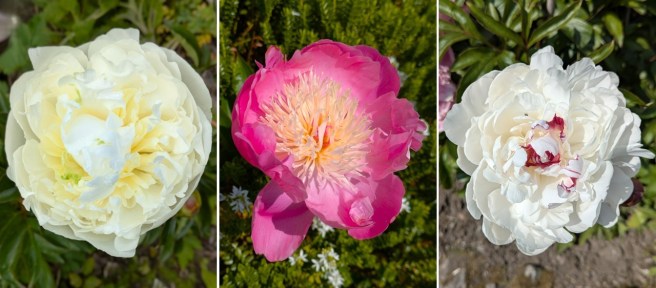
More delicious scents in another part of the garden, from the peonies, also popular with our little winged friends.
Perfect, petaly and perfumed. Images: Kathryn Hawkins
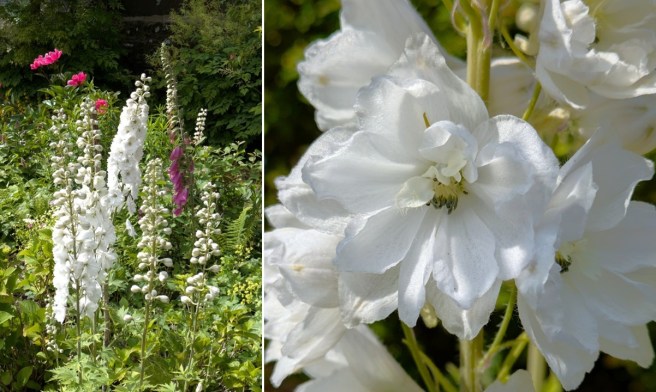
Amidst all the rainbow colours in the garden, these bright white Delphiniums are putting on a lovely show this year.
Ice white Delphiniums. Images: Kathryn Hawkins
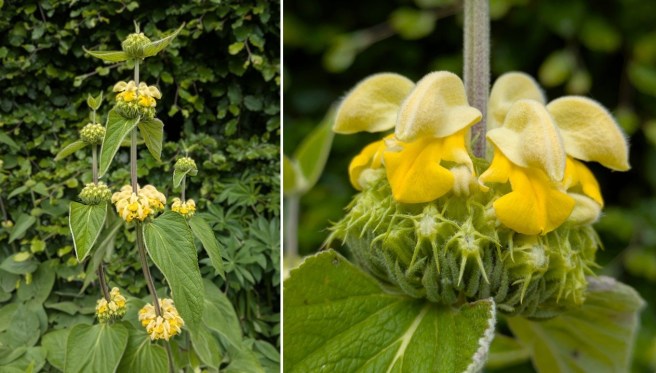
One of the more unusual plants in flower at the moment is the Phlomis with it’s tufty flower heads that remind me of tiny pineapples.
Fabulous Phlomis. Images: Kathryn Hawkins
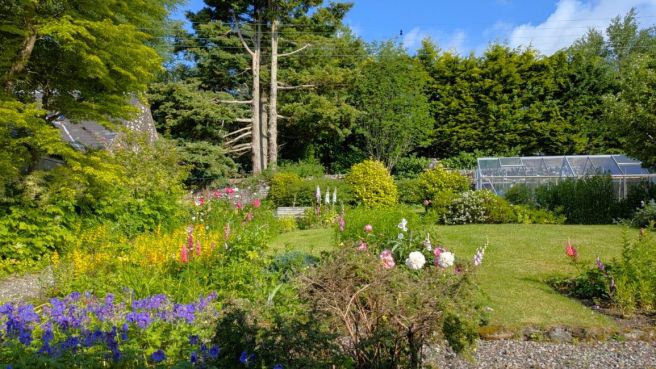
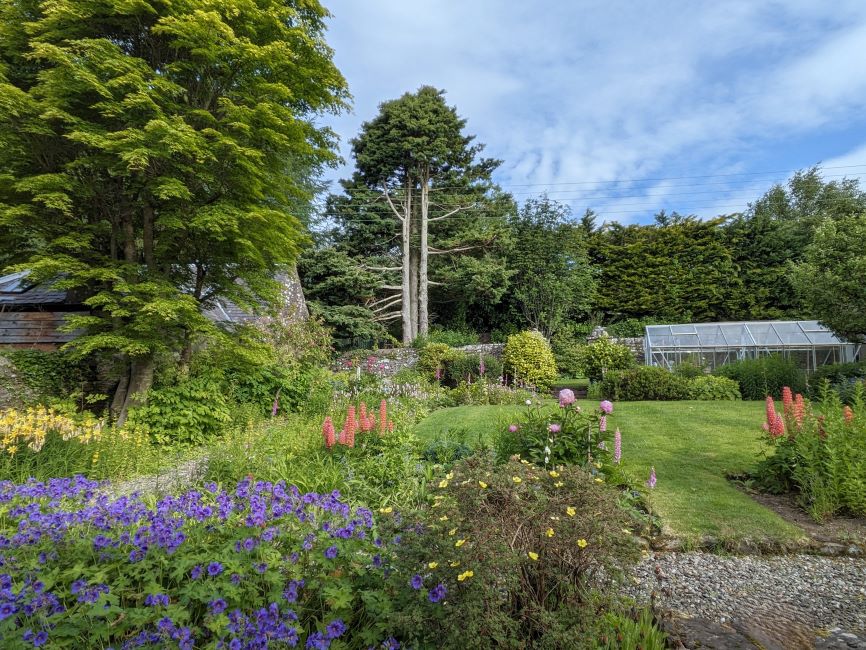
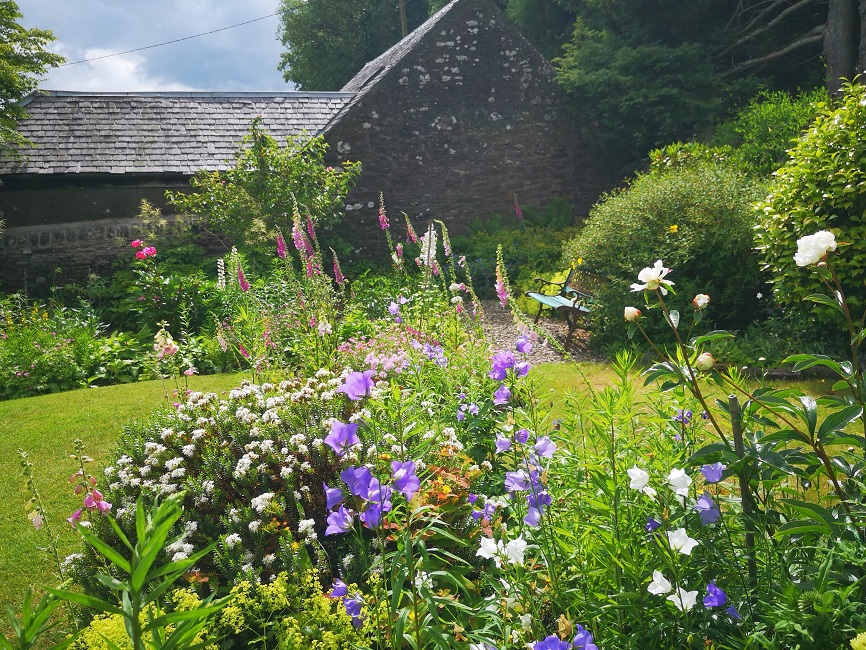
My sunny Sunday garden. Image: Kathryn Hawkins
That’s all from me for now. I hope you have a great few days and are able to get out and about in the sunshine. Until next time, thanks as ever for stopping by 🙂
Scottish garden Lupins on a sunny day in early June. Image: Kathryn Hawkins
Hello again. I hope you are well and enjoying better weather than we are at the moment. Fortunately I took my photos of the garden earlier in the week before the weather turned unseasonably chilly and wet. Aside for the glorious colours outside right now, it has been hard to believe that it is actually June!
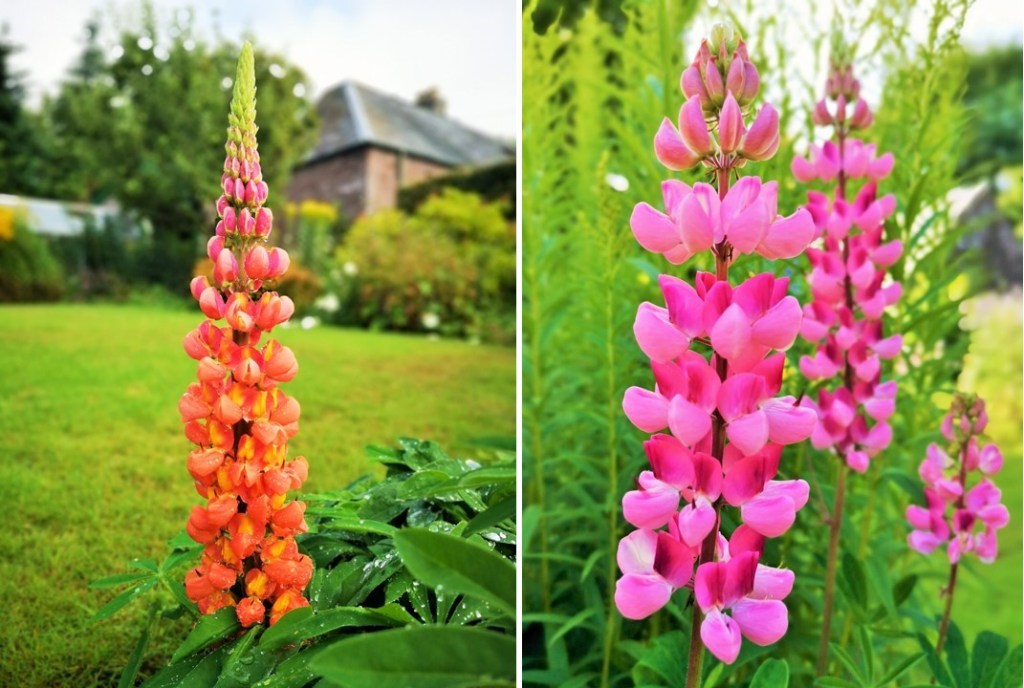
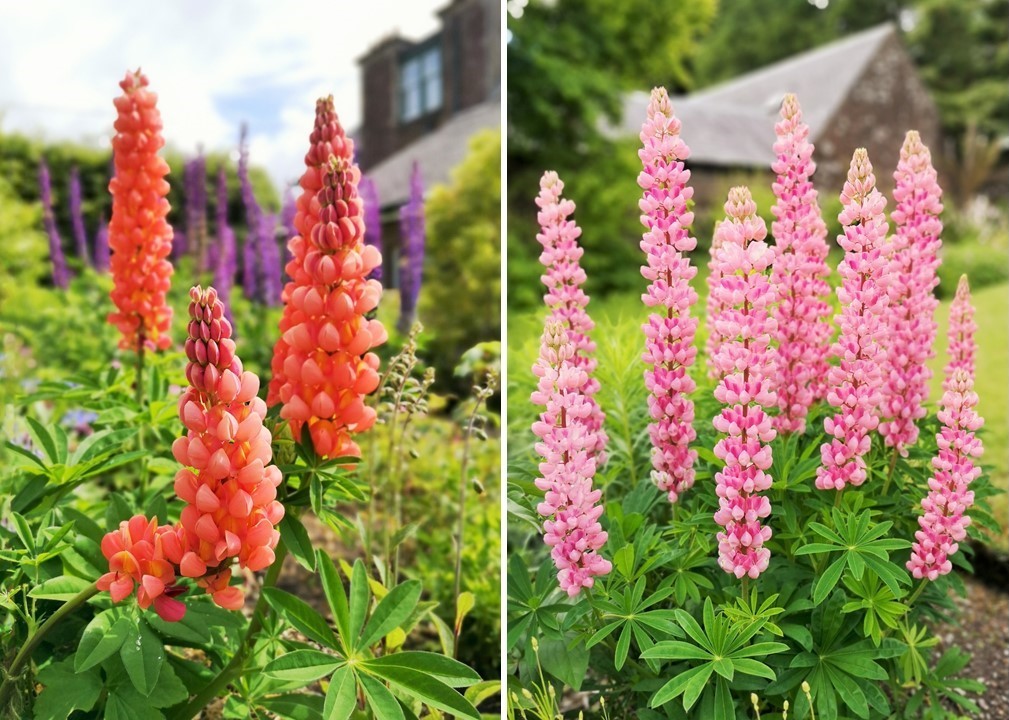
Peachy-orange Lupin. Images: Kathryn Hawkins
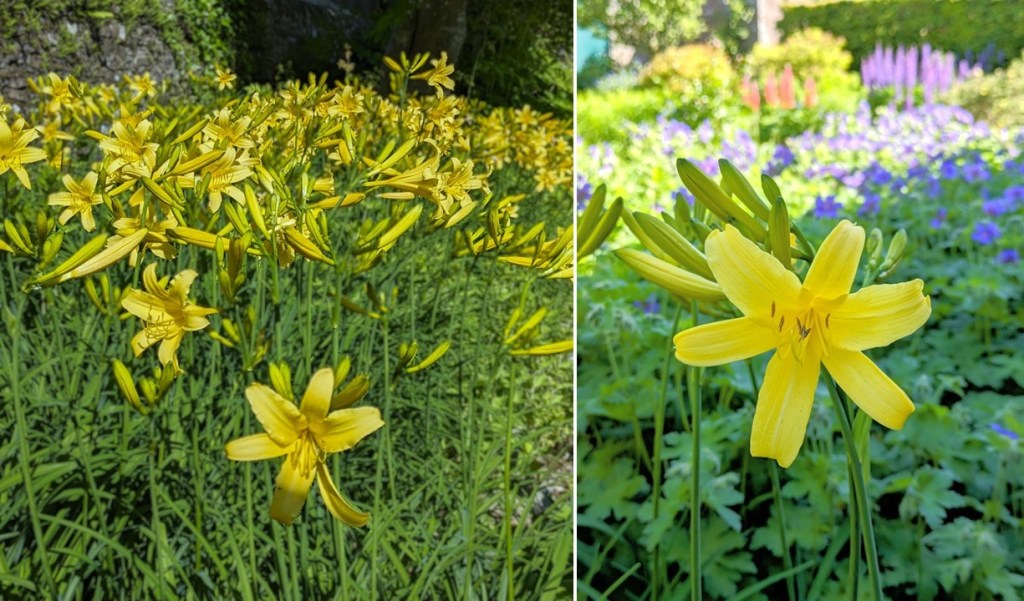
The Lupins started flowering earlier this year and subsequently many of the flowers are now going over, especially after getting a pounding by the heavy showers. Behind the Lupins, the yellow daylilies grow. For the short time they are in flower, the contrast with the blues of the lupins and geraniums is glorious, and their scent is very perfumed.
Bold and bright, yellow daylilies. Images: Kathryn Hawkins
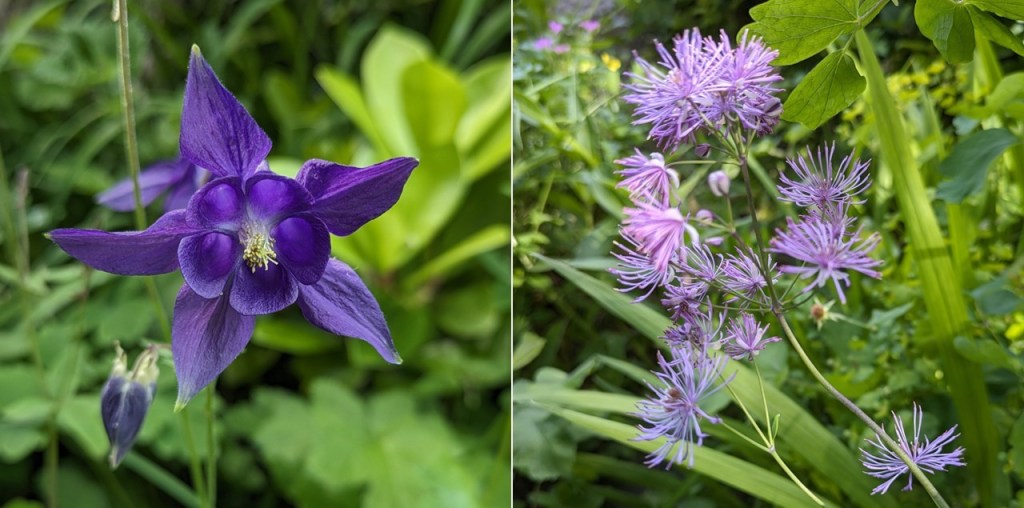
The garden was full of Aquilegia in May this year which is unusual, 2-3 weeks before they usually flower. Most were over quite quickly, but these ones are lingering on in a shadier part of the garden. The one growing on top of the wall is very hardy and seems to enjoy being “king of the castle”. I have tried to sow the seeds elsewhere but it never seems to take anywhere else.
Violet Aquilegia growing on the top of an old wall; a deep blue Aquilegia and delicate lilac-coloured Meadow Rue. Images: Kathryn Hawkins
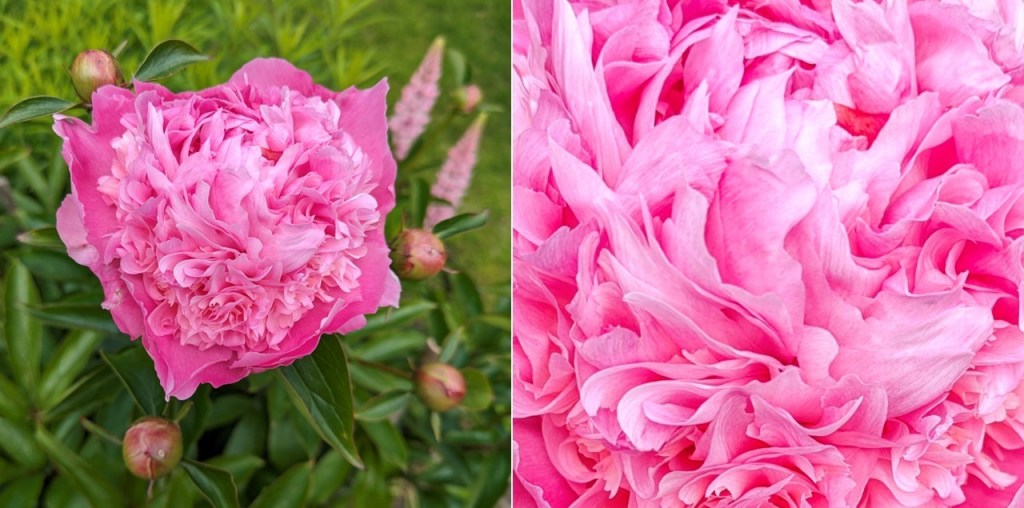
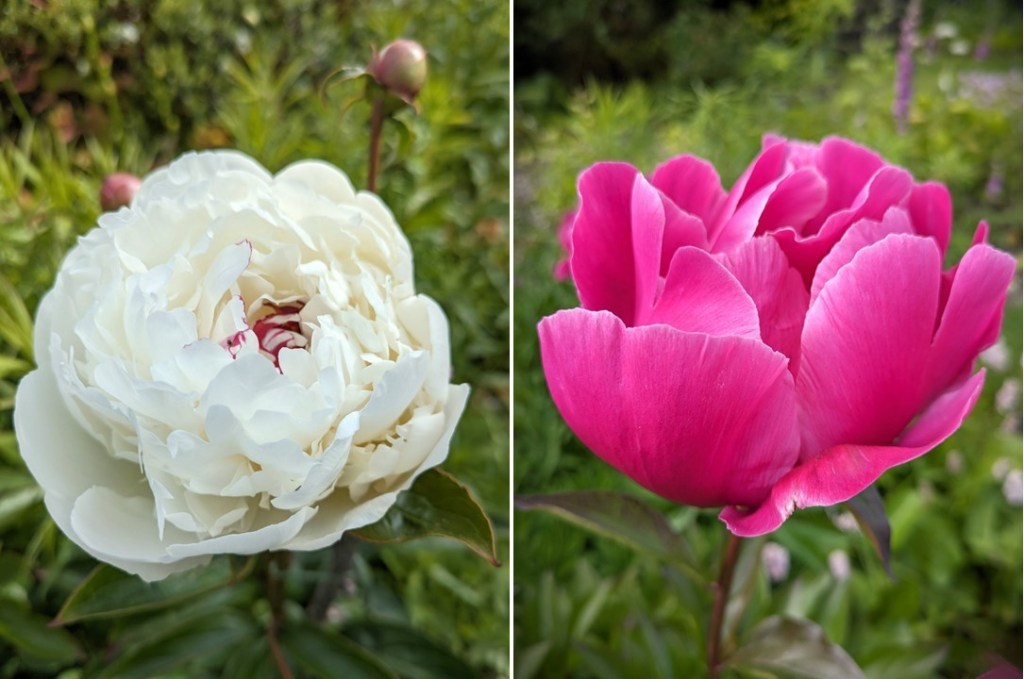
At last the peonies are coming out. Just a few single blooms at the moment with their delicious sweet and perfumed scent wafting around the flowerbeds.
Fragrant June Peonies. Images: Kathryn Hawkins
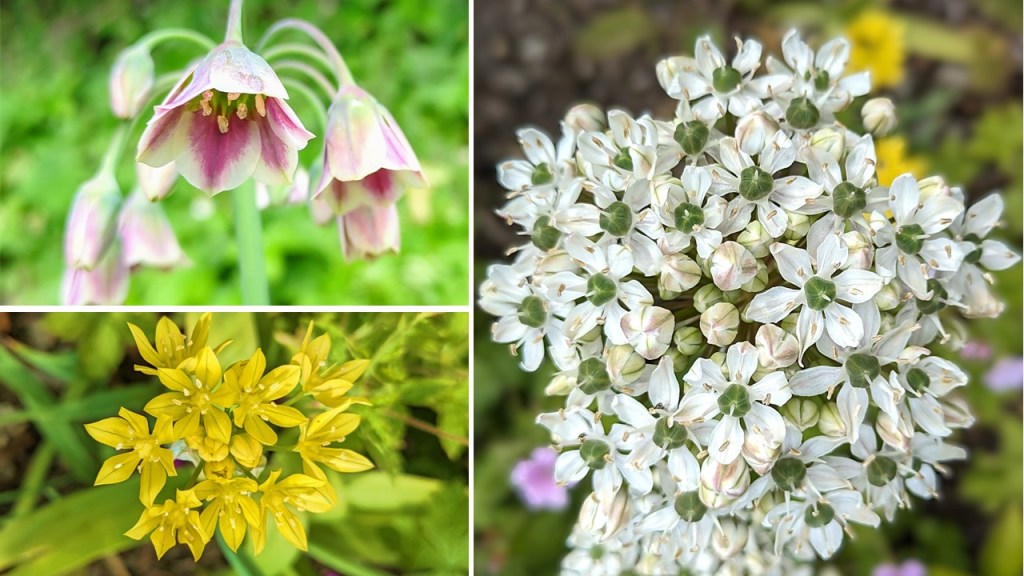
I lost quite a few of the lilac globe Alliums this year. Only a couple came up and they got blown over quite quickly. These 3 varieties seem to be a bit more hardy and are coping well with the elements.
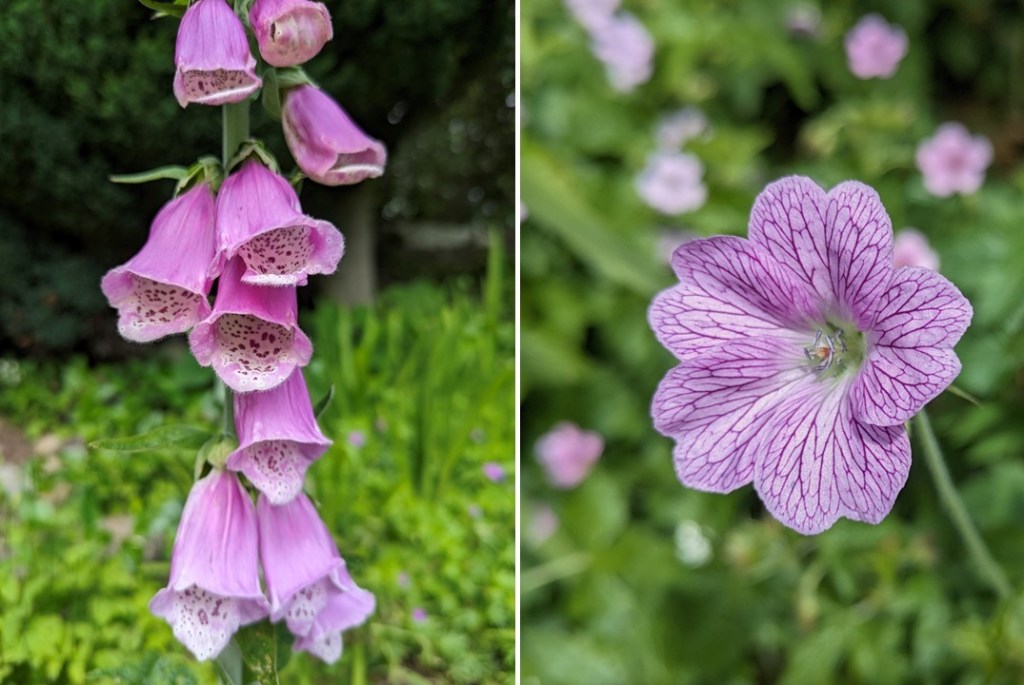
This pale pink Lupin was one of the first to flower this year, brought on by the sunshine of last month and better weather at the beginning of the month, it is a little bit more sheltered than the others. The pink Bistorta grows very well in the garden and the bees love it. The foxgloves and pink cranesbill geraniums are also favourites of our little flying friends.
All the pinks. Top: Pink Lupins and Bistorta. Bottom: close-up on pink foxglove and cranesbill geranium. Images: Kathryn Hawkins
That’s my garden round up for this month. I’m back in the kitchen for my next post. I hope to see you in a couple of weeks when hopefully the summer will have returned 🙂
The most colourful time of the year. Image: Kathryn Hawkins
Everything in the garden is blooming. Image: Kathryn Hawkins
Hello again. It’s been a very different June this year here in central Scotland. Having had a very warm May with little significant rain, the first 3 weeks of June followed along the same lines. Subsequently, many of the flowers that are usually around for at least a couple of weeks have bloomed early and only lasted a few days in the heat and drought. The weather has broken now, but it has left me wondering what the garden will look like in July and August with so many favourites having bloomed early.
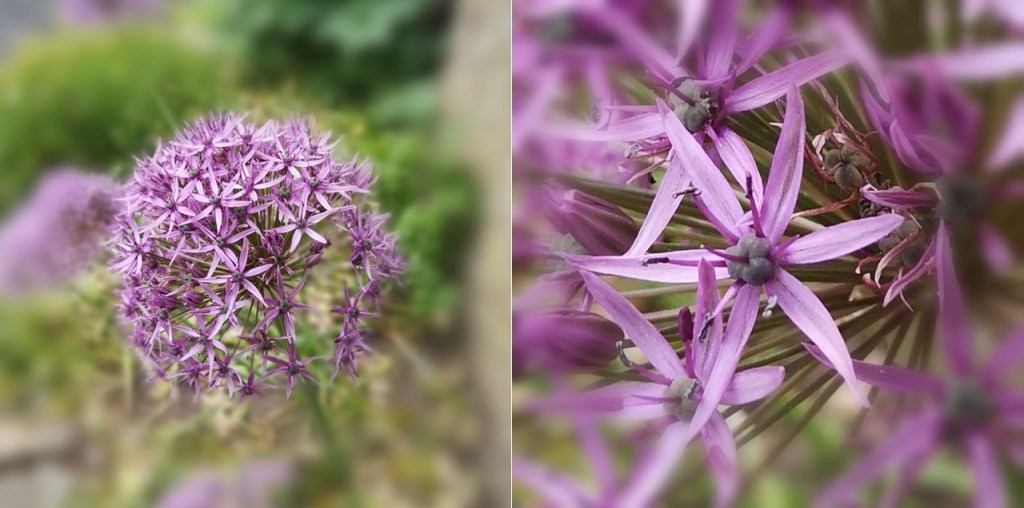
Early June Allium. Images: Kathryn Hawkins
Back at the beginning of the month, the Alliums were blooming proudly and looked striking with their tall long stems and intricate star-shaped flower heads. Usually, June is all about Lupins and foxgloves. This year they began flowering in May, and sadly by the middle of the month, they had faded and dried, and the few second flowers also came and went. The foxgloves still have a few flowers at the top of their very long stems, and the bees are still managing to collect pollen from the bell-shaped blooms that remain.
Purple, orange, pink and white lupins earlier in the month. Images: Kathryn Hawkins
Flowers and bees in early June. Images: Kathryn Hawkins
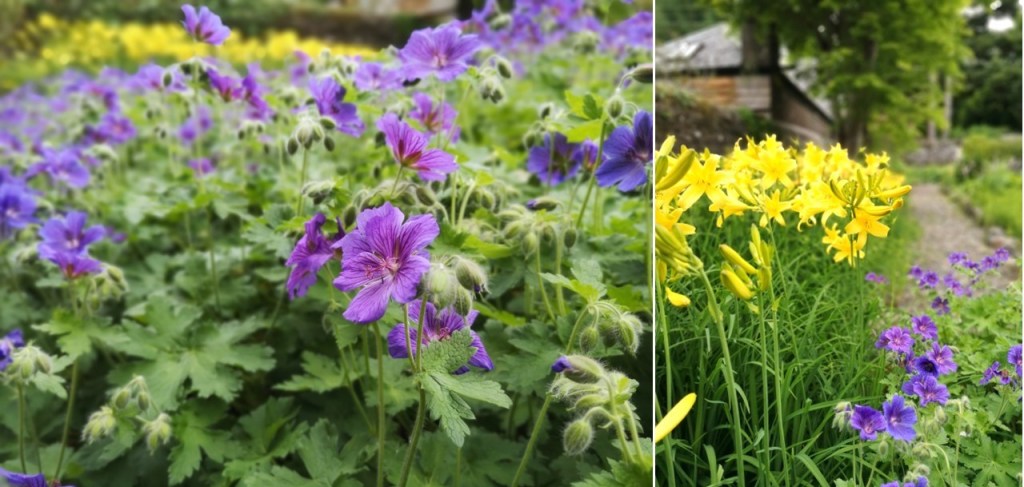
I think the biggest mark of difference in the garden this summer, are the geraniums and day lilies. Both usually provide colour into July, but all the geranium petals have fallen, and only a very few day lilies are left to flower.
Midsummer blue and gold. Images: Kathryn Hawkins
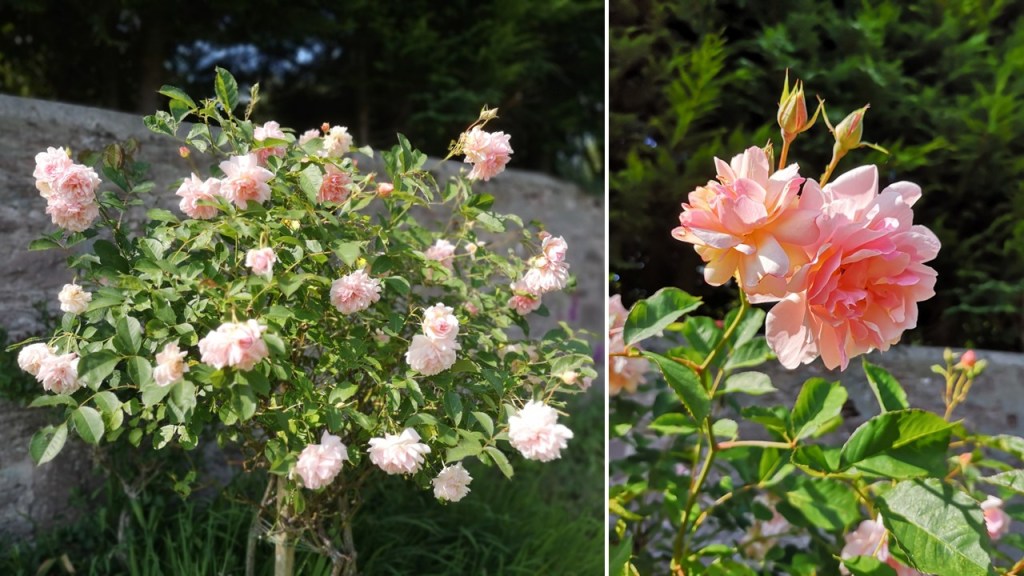
So here we are at the end of the month. There are still a few peonies in bloom providing rich colour and delicious fragrance, and the old rose bush (which hasn’t failed yet) is looking and smelling wonderful at the moment.
Mid June Peonies. Images: Kathryn Hawkins
Bloomin’ marvellous. Images: Kathryn Hawkins
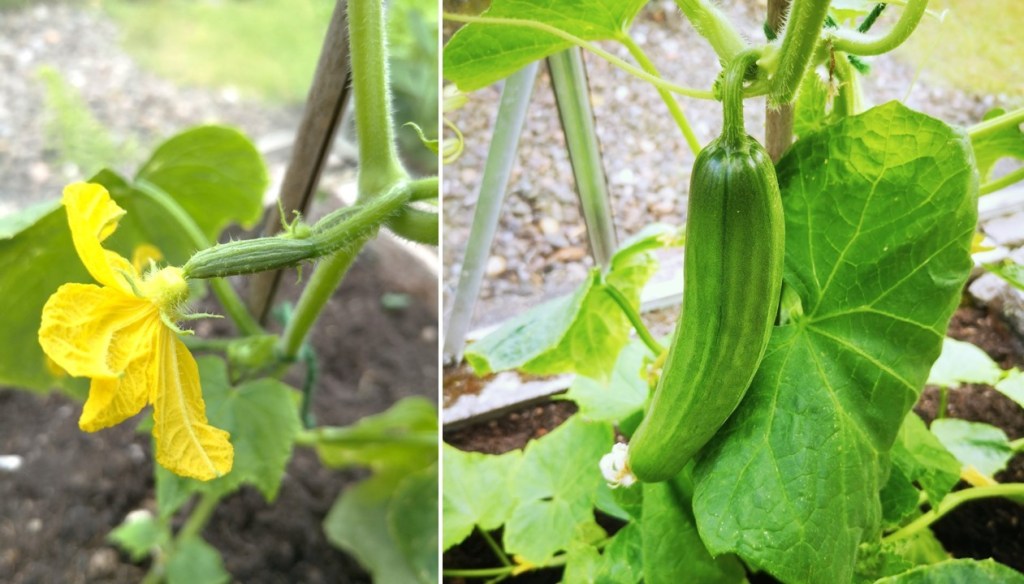
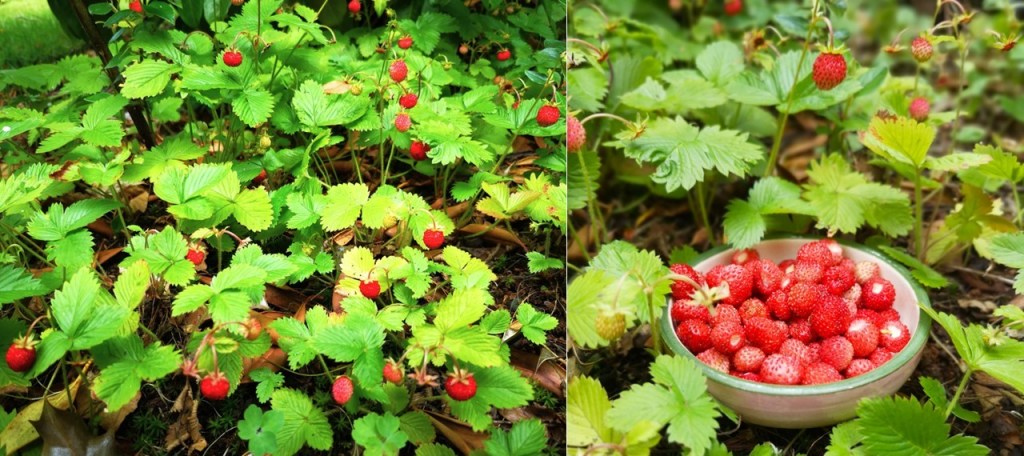
I’ve started harvesting produce from the greenhouse. The baby cucumbers I’m growing were about 3cm long at the beginning of June, and this week, I picked the first couple of fully formed fruit. In the shady parts of the garden, the wild strawberries have done well again this year.
First pickings. Images: Kathryn Hawkins
June 2023 wild strawberry harvest. Image: Kathryn Hawkins
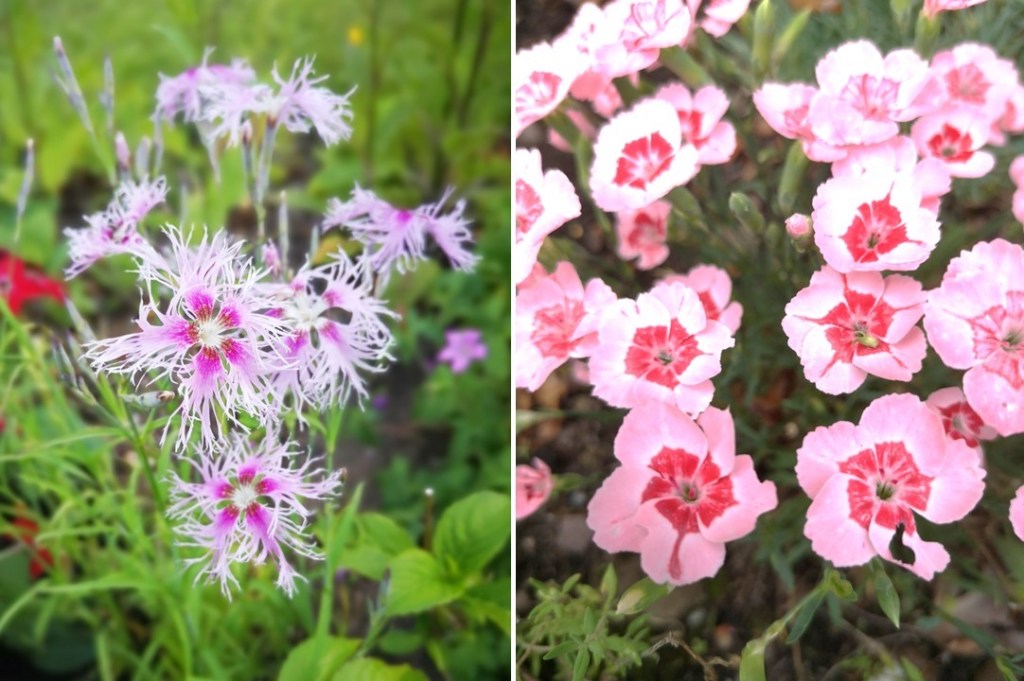
At ground level, these two Dianthus varieties are my favourite plants in the garden at the moment. If I keep removing the spent heads, I am hoping that new buds will keep forming and that there will be flowers for a couple more weeks yet.
Lilac and pink Dianthus. Images: Kathryn Hawkins
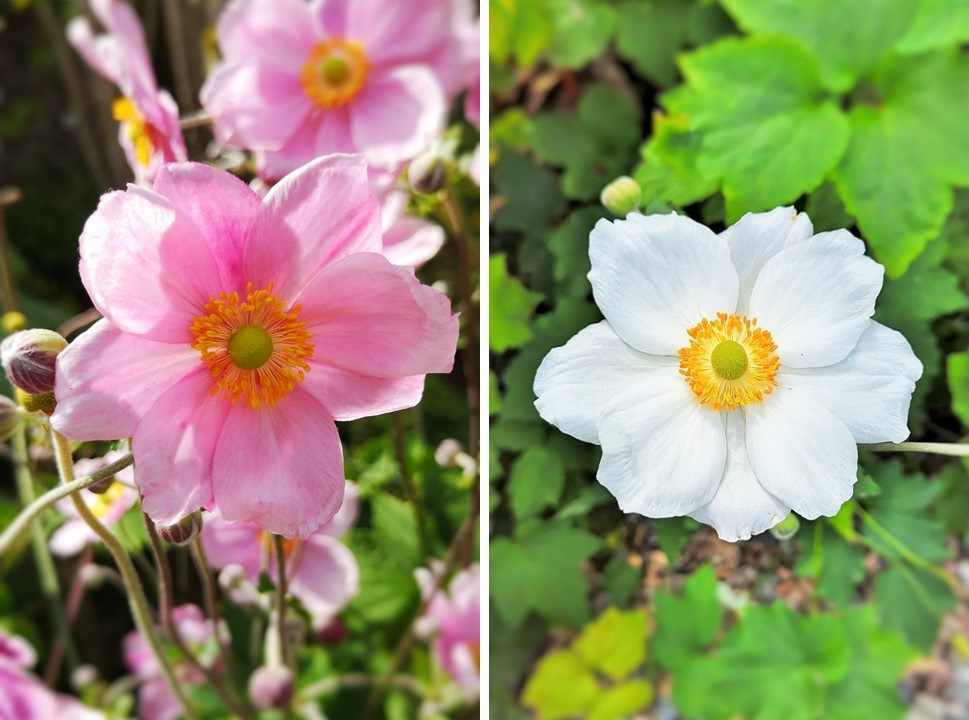
I’m closing my post with a flower that’s just opened up this week. The first of many (I hope) Japanese Anemones in the garden. This one’s about 2 weeks ahead of schedule. And that’s me, until next time, have a great few days and thanks for stopping by 🙂
Early white Japanese Anemone. Image: Kathryn Hawkins
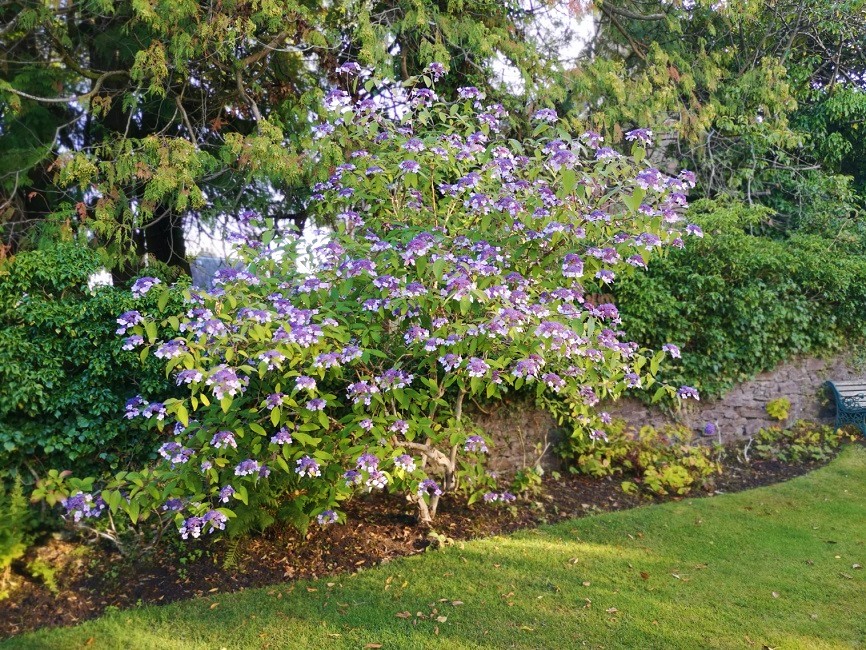
The full splendour of Crepe Myrtle. Image: Kathryn Hawkins
Hello again. How can we be at the end of another month already? When I wrote my last post, we had been having some very hot weather and a distinct lack of rain. Since then, the rain has started falling, the air has cleared and it has been feeling a lot cooler, with some mornings feeling positively chilly.
Crepe Myrtle flowers. Images: Kathryn Hawkins
The garden is far more advanced this year with quite a few favourites finishing their display much earlier than before. The Himilayan Hydrangea is looking quite spectacular at the moment. Recently, I discovered that it is also known as Crepe Myrtle which is a charming name. The other Hydrangeas in the garden have started to fade from bright blue petals to mauve and pink.
Blue Hydrangeas fading gracefully. Image: Kathryn Hawkins
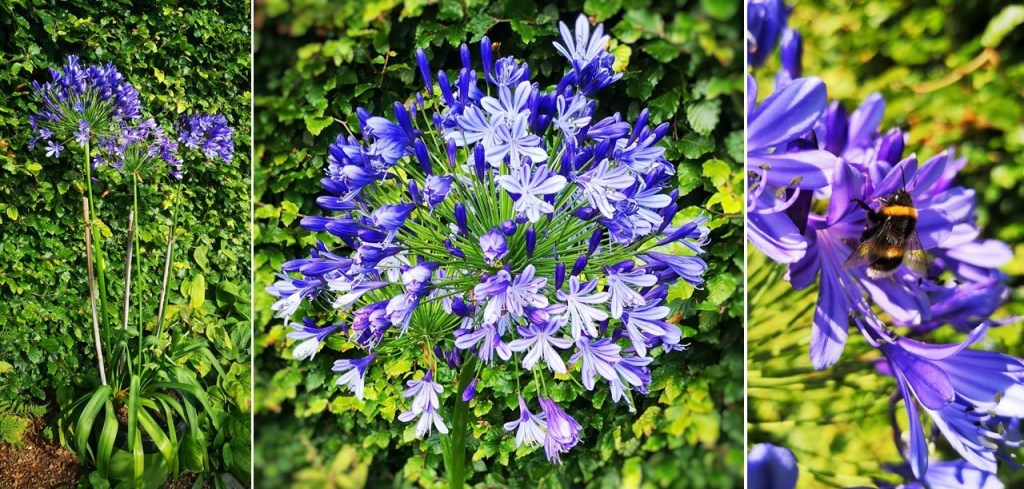
Another blue flower I captured at its peak about a week ago, is my potted Agapanthus, Regal Beauty. Last year it had 3 flowering stems, but this year, after splitting the plant in Autumn, I had a single, very large flower stem. it is such an eye-catching shade of bright blue.
Agapanthus Regal Beauty, August 2022. Image: Kathryn Hawkins
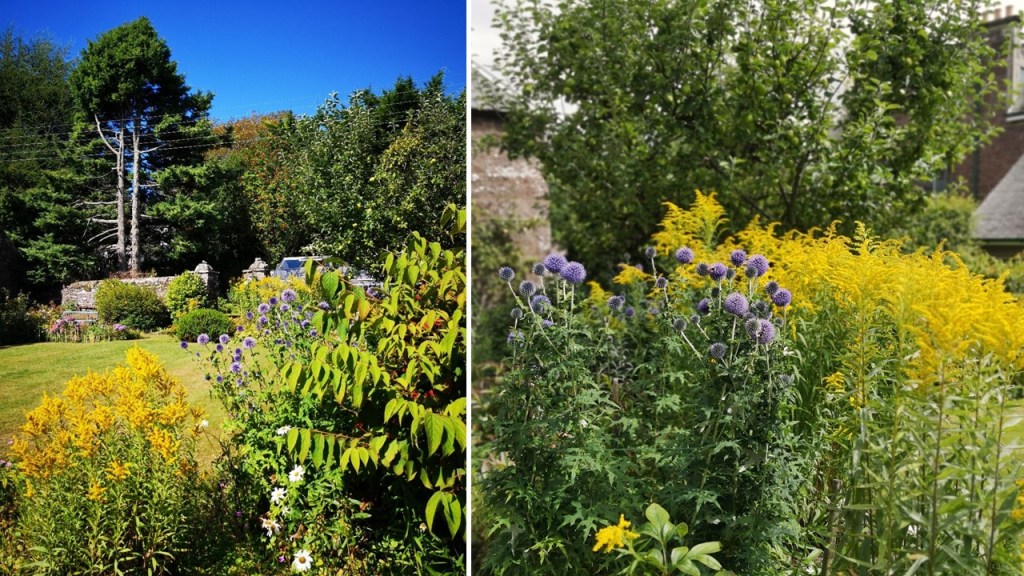
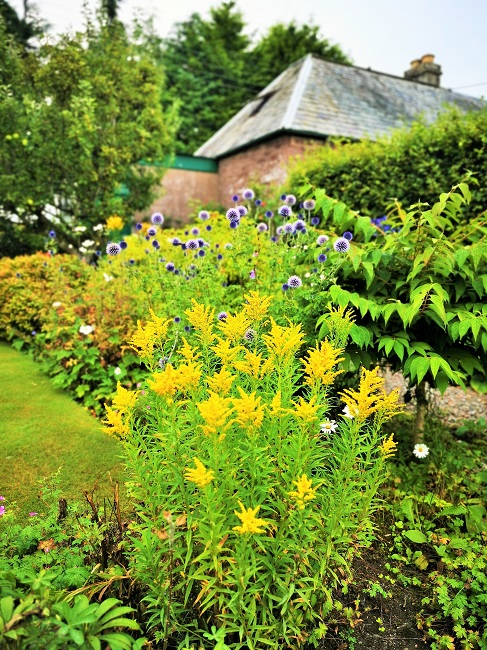
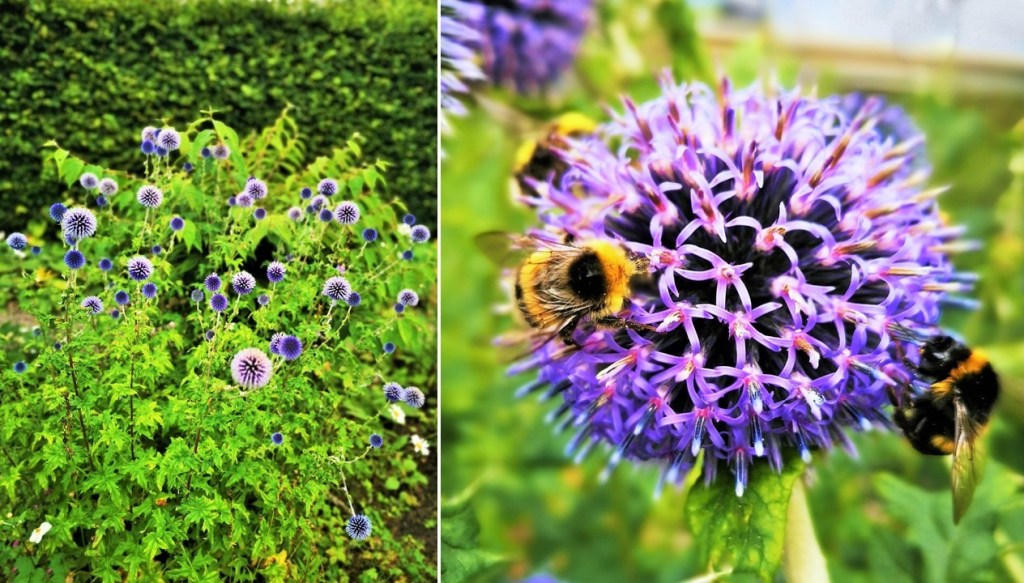
More blue from the Globe thistles (Echinops) which grow alongside the bright yellow Golden Rod stems. Such a great contrast on a sunny day, and both are very popular with the bees and other flying insects.
The blue and yellow of Globe Thistles and Golden Rod. Images: Kathryn Hawkins
It’s not all blue in the garden. For a few weeks now, the Japanese Anemones have been in flower. They seems to survive all weather conditions and haven’t been affected by the extreme heat or lack of rain earlier in the month.
Autumn favourites: Japanese Anemones
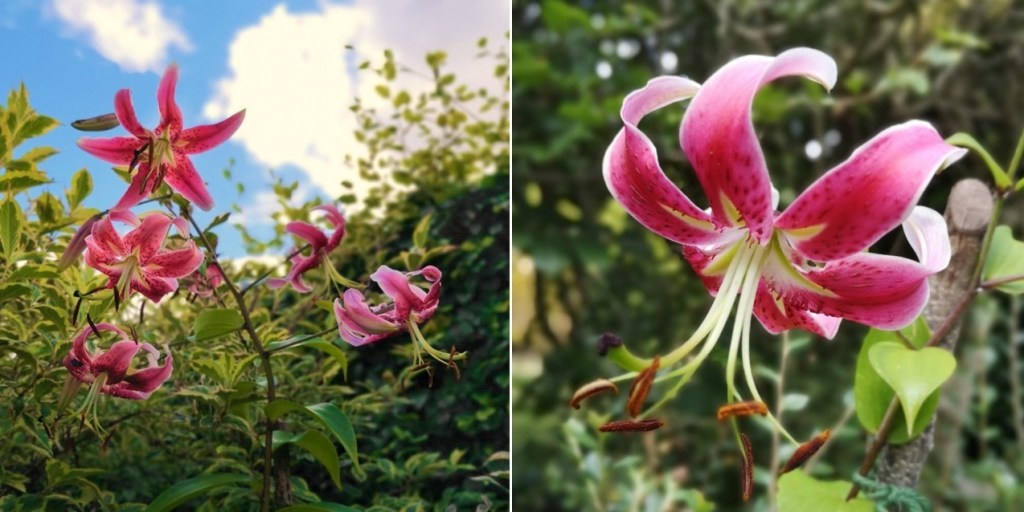
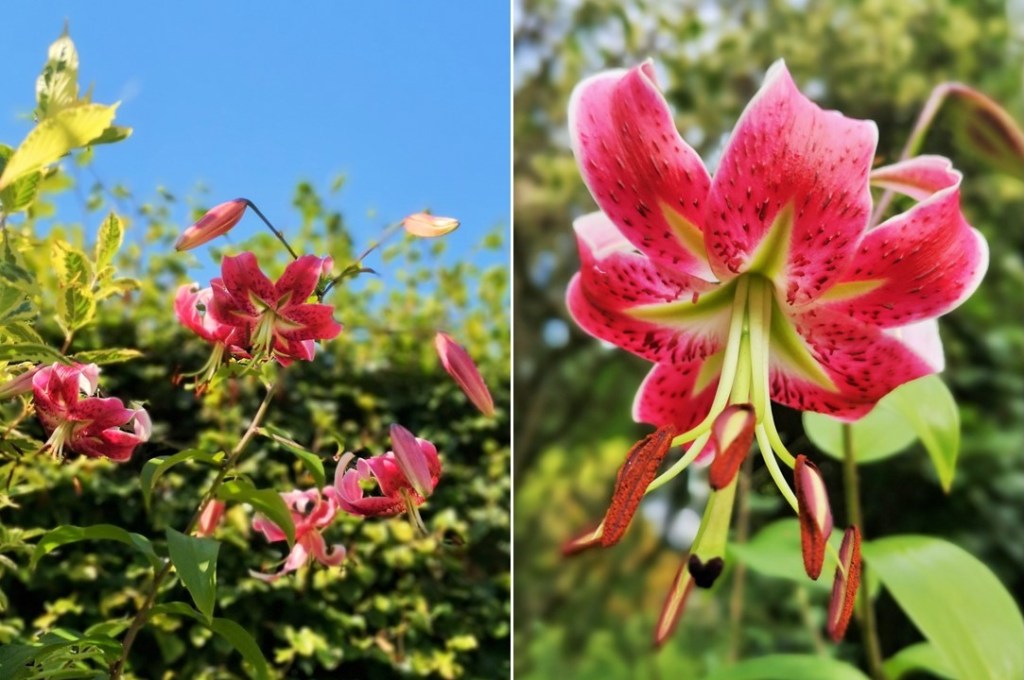
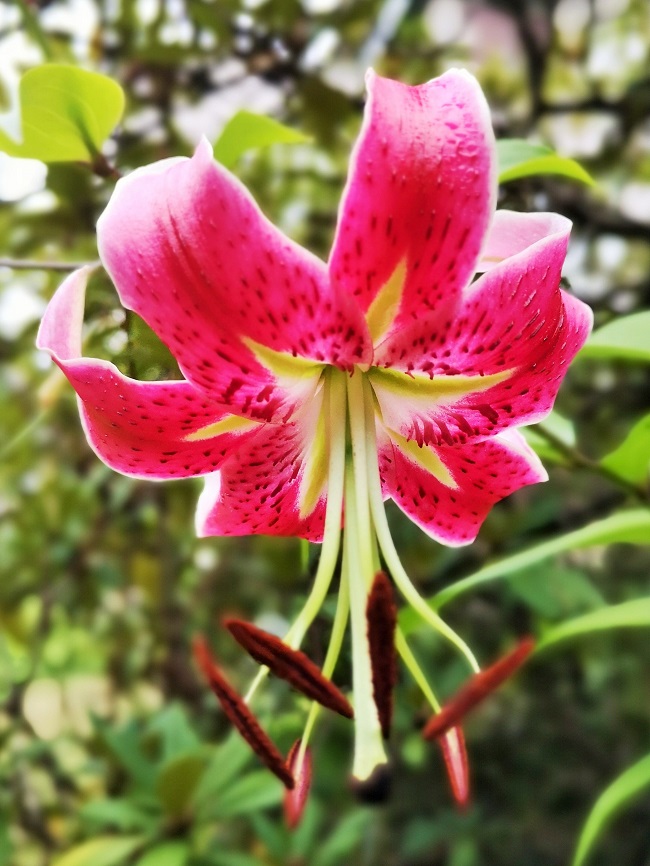
At their best this week, the Star-gazer lilies which grow in 2 separate places in the garden, both nestling beside high shrubs which offer support for their very long stems.
Blue sky Star-gazer lilies. Images: Kathryn Hawkins
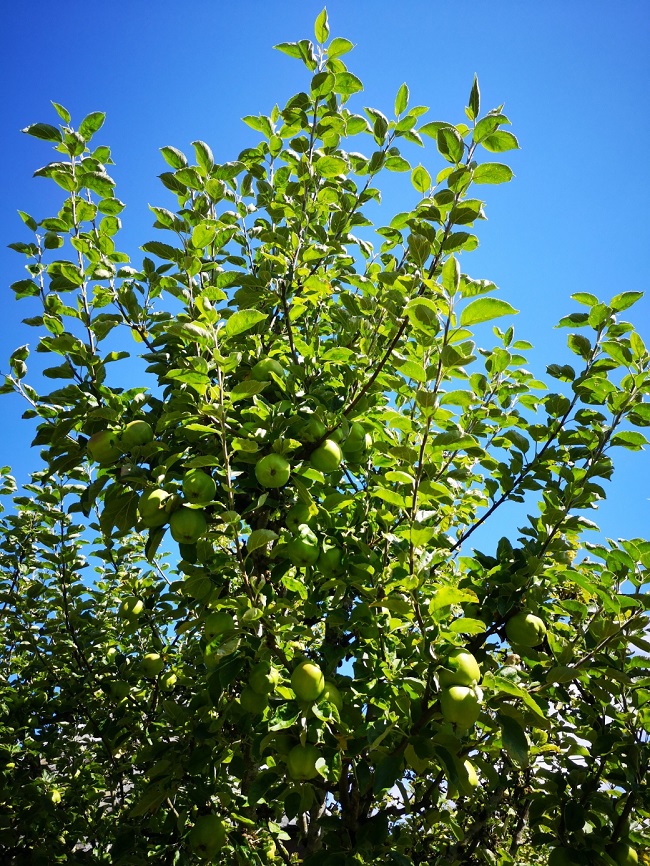
It looks like I will have a good crop of apples this year, and the birds will be pleased that I managed to dry the head of the greenhouse sunflower successfully; they will have plenty of seeds to pick at very soon.
Ripening apples on a blue sky day. Image: Kathryn Hawkins
Dried and ready for the birds. Image: Kathryn Hawkins
Apart from the birds and bees, the occasional frog, squirrel and the neighbours’ cats, the garden is quite quiet. Once every couple of years, a young deer, completely disorientated, has ended up in the garden. I am always unclear as to how they get in and get out again. This one visited one evening and took quite a liking to the flowers of several Japanese Anemones. Quite exotic taste-buds don’t you think?
Unexpected garden visitor. Image: Kathryn Hawkins
Until next time, thanks for stopping by and I will see you again soon 🙂
The gold and blue of late summer, Golden Rod (Solidago) and Echinops. Image: Kathryn Hawkins
Hello everyone. I hope you are well. I have been enjoying some lovely weather in the garden this week, and both myself and the bees (and other flying insects) have been making the most of the later flowering plants and shrubs that have opened up in the past couple of weeks or so. This post is a collection of my current favourites in the garden right now. I hope you enjoy the colours as much as I do 🙂
The bees favourite, Echinops. Images: Kathryn Hawkins
I was fortunate to be given this wonderful Agapanthus (Lily of the Nile) at the end of last summer. It travelled back with me from a visit to see my mother in Sussex, to its new home here in central Scotland. After over-wintering in a large pot in my unheated greenhouse, I put it outside in early July and it has flourished. It stands an impressive 1.25m from base of stem to the top of the flower ball. The colour is such a vibrant blue, it looks stunning up against the fresh bright green leaves of the beech hedge. The bees love it as well.
Agapanthus Regal Beauty. Images: Kathryn Hawkins
It’s not all blue in the garden, plenty of pink and orange splashes here and there. The stunning Star-gazer lilies are growing in 2 places in the garden, in both locations partly shielded by shrubs, and both growing very tall this year. At the front of house, the heathers thrive, and there are also a few foxgloves producing second flowers. The Crocosmia Mombretia is one of the signs to me that the year is moving on but I do love their vibrancy, and after a rocky start, the pink Lavatera has rallied and has a fine crops of pink petals.
Bold and bright, Star-gazer lilies. Images: Kathryn Hawkins
Pink foxglove and Autumn heathers. Images: Kathryn Hawkins
Late summer oranges and pinks. Images: Kathryn Hawkins
It wouldn’t be a proper late summer post from me without a mention or a show of Japanese anemones. There are more than ever this year, mostly white, but I am trying to get more of the pink variety settled in the garden. Apparently they don’t like having their roots disturbed so it is quite a challenge to get them to take off, but slowly, slowly they are settling in.
Late summer white and pink anemones. Images: Kathryn Hawkins
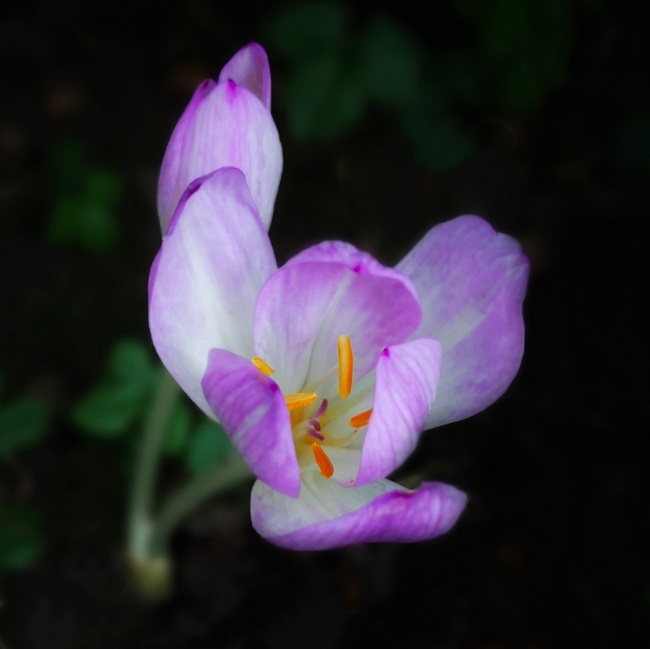
To end my post this week, one of the definite signs that a different season approaches. In the gloom and shade of a large shrub I spied the first of the Autumn crocus appearing out of the darkness. They are lovely to look at, but at the same time, I am always a little disappointed to see them.
A floral sign of Autumn. Image: Kathryn Hawkins
I hope you are able to enjoy what is left of the summer in the next few weeks, and I look forward to posting again, from my kitchen, in a couple of weeks or so. Until then, my very best wishes to you.
Hello everyone. I hope you well and that the sun has been shining wherever you are. It’s been a mixed bag here. Some sunshine, some rain, but warmer temperatures on the whole.
I have a very simple post this week. Several plants in the garden are about 2 weeks behind this year, and this has enabled me to put together a post I have wanted to do for a while but have not, until now, had the selection of colours to make it work.
Below is a compilation of flowering plants from my garden photographed this week from Midsummer’s Day on Monday through to this morning. All the colours of the rainbow plus a couple more. I hope you enjoy them.
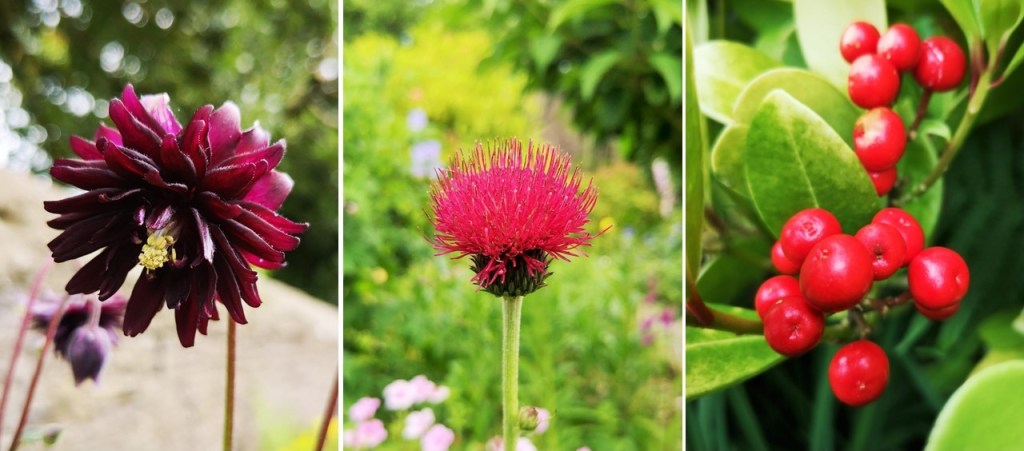
The reds: Aquilegia; Plume thistle, and Skimmia Japonica berries. Images: Kathryn Hawkins
The oranges: Azalea, Lupin and Pilosella (fox and cubs). Images: Kathryn Hawkins
The yellows: Sedum, Lysimachia and Day Lilies. Images: Kathryn Hawkins
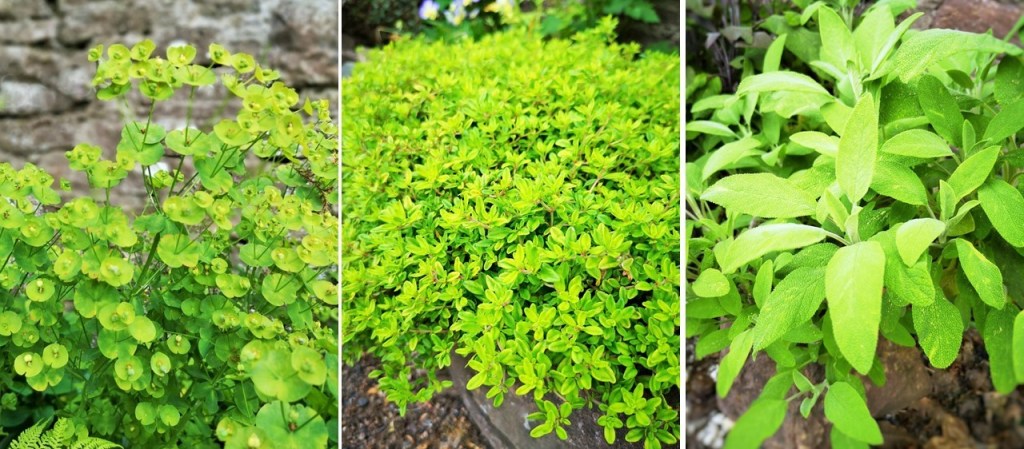
The greens: Euphorbia, lemon Thyme, and sage. Images: Kathryn Hawkins
The blues: Geranium Magnificum, Campanula and Centaurea Montana. Images: Kathryn Hawkins
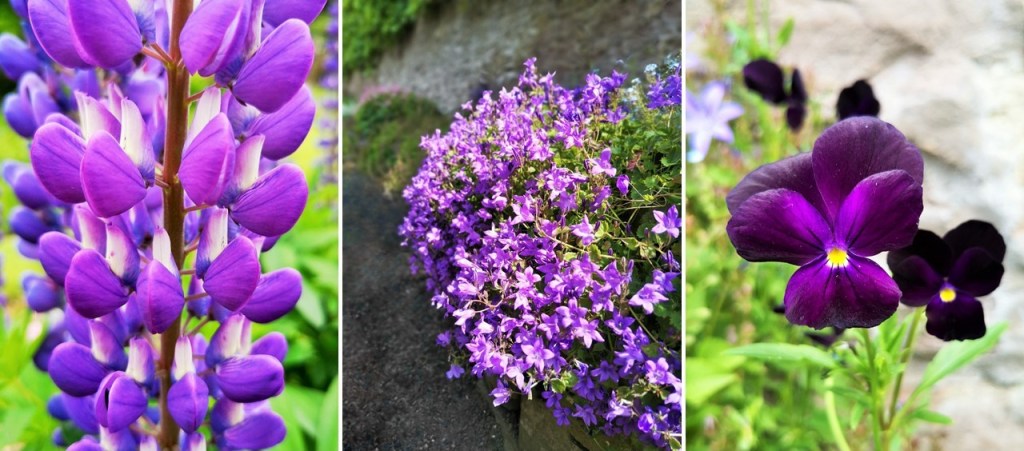
The violets: Lupin, trailing Campanula and Violas. Images: Kathryn Hawkins
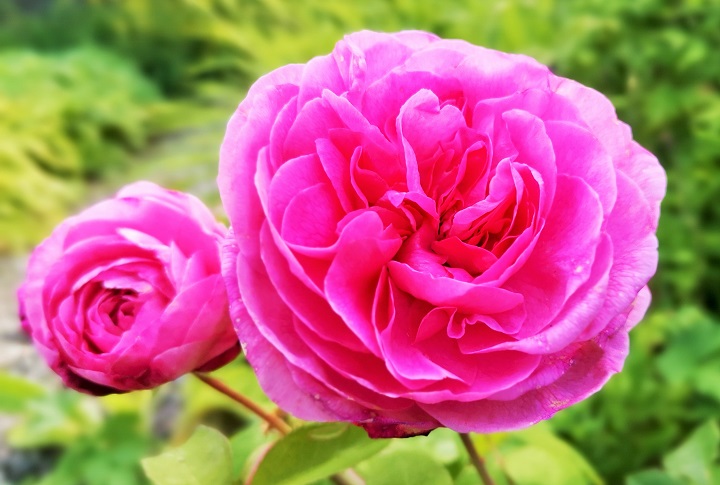
The pinks: Gertrude Jekyll rose, Foxglove and Lupin. Images: Kathryn Hawkins
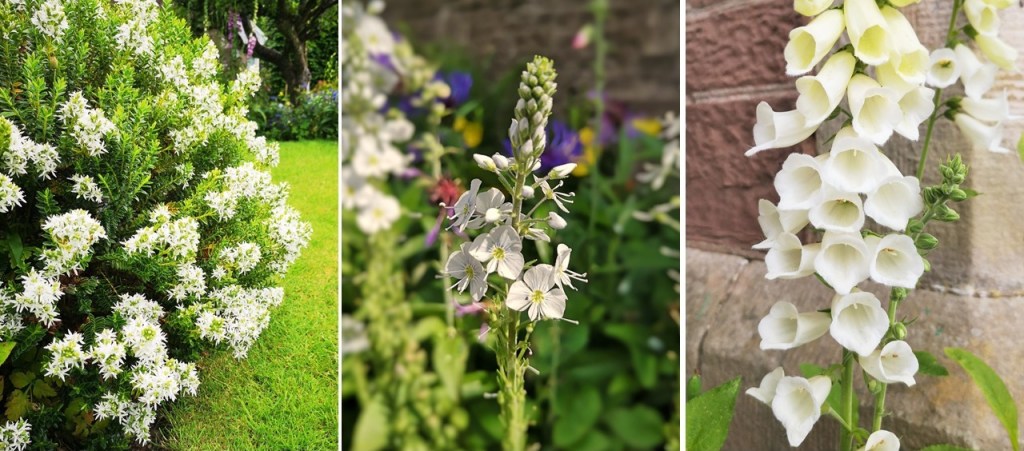
The whites: Hebe, Veronica and Foxglove. Images: Kathryn Hawkins
I’m heading back to the kitchen for my next post. I will see again in a few days. Until then, take care and keep safe 🙂
Crocosmia with flowering runner beans. Images: Kathryn Hawkins
Hello again. I hope you have had a good few days. As I sat down to sort out my images this week’s post, it was rather gloomy outside. The weather this month really hasn’t been very summery at all, and to be honest, it is beginning to feel autumnal with the evenings drawing in more rapidly that I care to think about. However, there are some pockets of vibrant colour in the garden at the moment to help brighten the days.
2020 Japanese Anemones. Images: Kathryn Hawkins
The delicate-looking Japanese anemones are beginning to flower all over the garden at the moment. I know that they will last well into next month, probably longer, and will stand up to whatever weather comes their way. They are so much hardier than they look.
Second time around Lupins. Images: Kathryn Hawkins
The lupins have all flowered for a second time this year and with much bigger blooms than usual. Often the second flowers are half the size of the original June flower-heads at best, but this year they have put in a magnificent effort just 2 months later.
Golden Rod (Solidago) and Echinops, August 2020. Images: Kathryn Hawkins
There are still plenty of bees and flying insects being busy around the garden, and in particular the 2 plants above are favourites with them all.
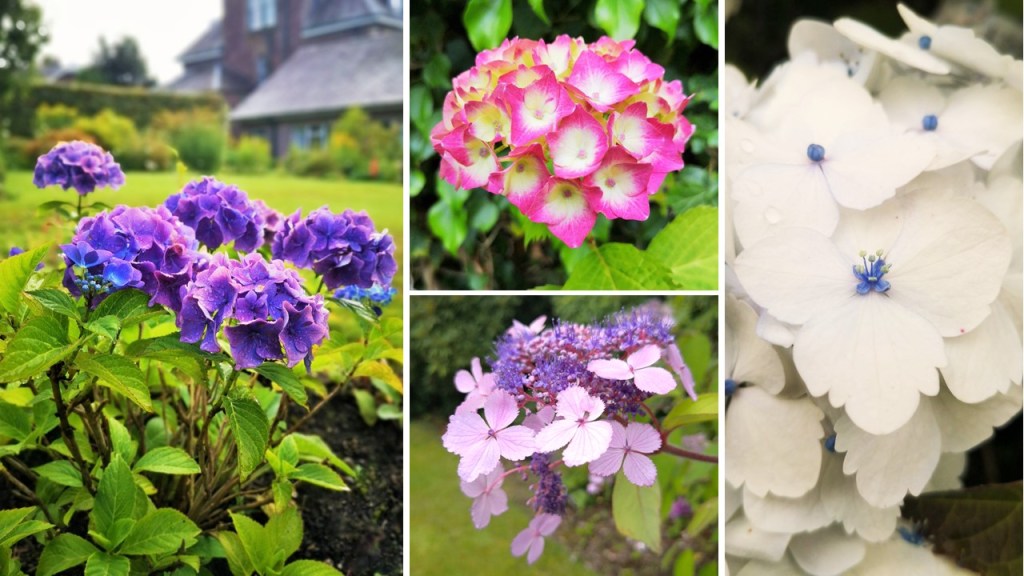
Blue, pink, mauve and white Hydrangeas. Images: Kathryn Hawkins
I have been living here in central Scotland for over 15 years now, and I am still surprised by the plants that grow around me. This year, for the first time, I noticed that the tiny blue ball-like centres of the aged white Hydrangea open out to form their own blue 4-petaled flowers with stamens.
Tiger lily. Image: Kathryn Hawkins
This beauty hides behind the aforementioned white Hydrangea in the front garden. Far too flamboyant to be in the shadows, but that’s where it thrives, so I’ll not interfere.
Until next time, I’ll leave you with another plant in second flower, my Gertrude Jekyll rose. Heavenly scented as well as sheer perfection to look at. I hope you have a good few days. I will be back in the kitchen again for my next post.
Gertrude Jekyll in second flower. Image: Kathryn Hawkins
Hello again. I hope you have had a good few days. It has been lovely weather here. Plenty of blue sky days, and also, I’m pleased to say, some rain at long last. The water butt is full up again and the garden refreshed. We’re still under lockdown here in Scotland although restrictions have been lifted a little. There is plenty to keep me occupied outside.
A June favourite. lovely Lupins. Images: Kathryn Hawkins
No June garden round-up of mine would be complete without Lupin pictures. They have been open for a couple of weeks now. The heat and strong sunshine has forced the purple ones over already, but the orange and pinks one are holding up well.
A trio of Iris. Images: Kathryn Hawkins
I have been trying to resurrect Iris corms for a couple of years unsuccessfully, but this year I have achieved 3 out of 6. The blue ones are both Iris Pallida – one for some reason has grown much paler than the other – they smell sweet and sugary, like bubblegum. The pink one is called Wine and Roses and is slightly spicier in aroma. I will be lifting and dividing them all with care in the Autumn and hoping that I might have at last found the the right locations for them in the garden.
Alliums and Armeria. Images: Kathryn Hawkins
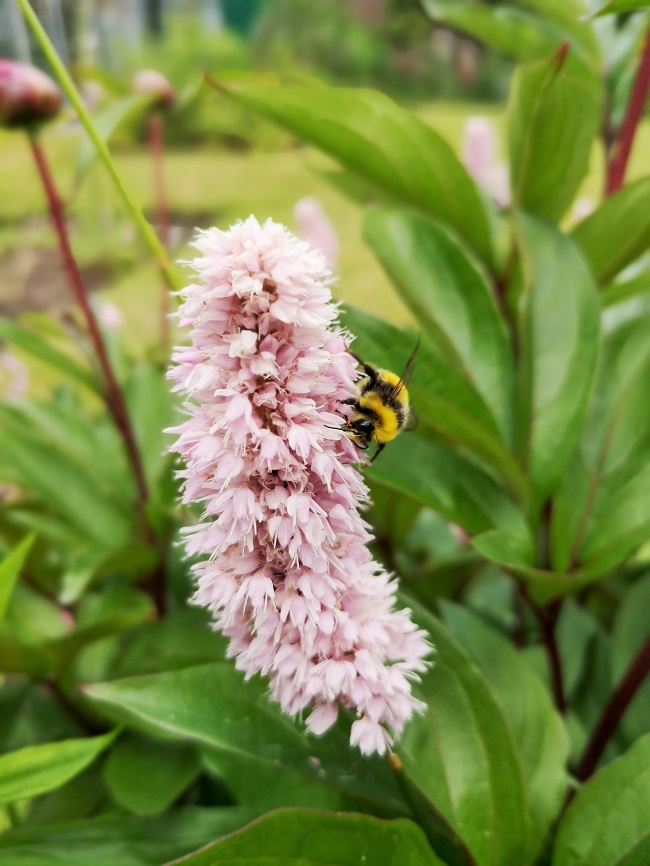
It’s a good year for the Alliums too. The few bulbs I planted about 3 years ago have steadily multiplied and are now growing in small groups. To be honest, how these 6 managed to grow side by side to the exact same height I will never know; if I had tried to achieve this formation myself, I’m pretty sure it would never have happened like this! The Armeria (Thrift) is looking very healthy too. The bees love it; it is a very cheery sight in a narrow flower border beside a path. Talking of bees, here’s another favourite flower of our little winged friends……
Persicaria and bee. Image: Kathryn Hawkins
There are lots of scents in the garden at the moment. The Day Lilies have just come out and make weeding a real pleasure when you happen to be working in a spot near to where they grow. The Gorse bush at the top of the garden is also very fragrant (spicy vanilla) but more inaccessible to work near so I leave this one for the insects.
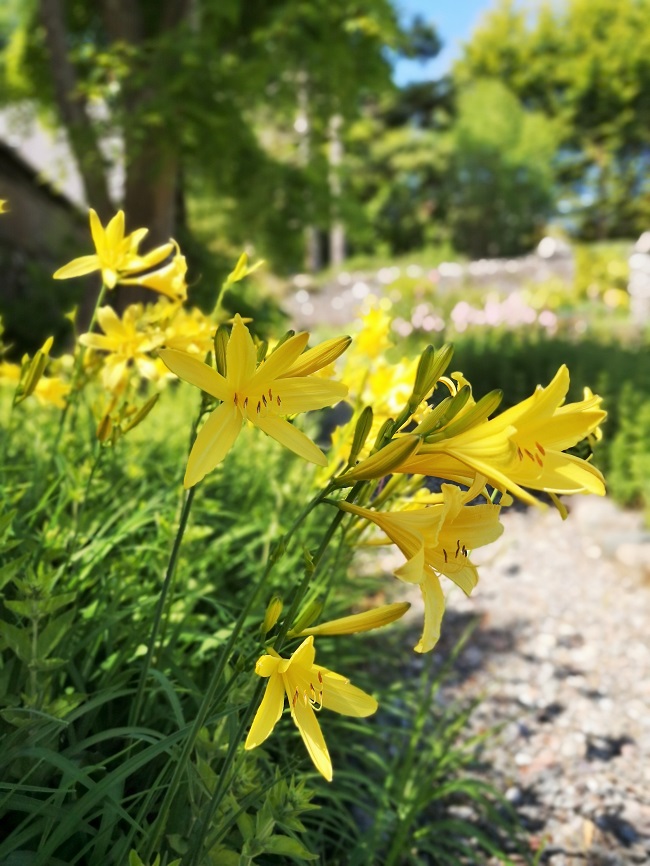
Day Lilies. Image: Kathryn Hawkins
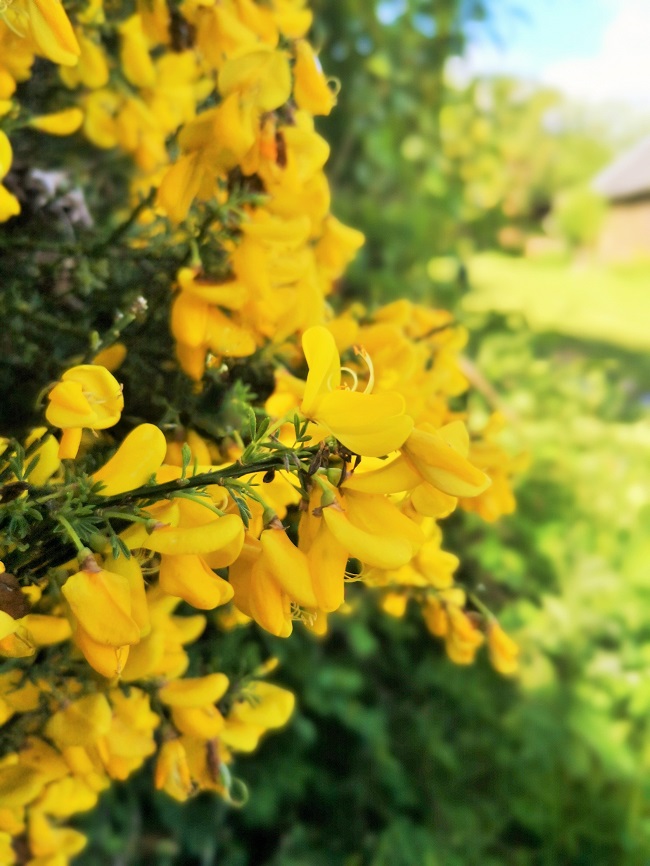
Vanilla-scented Gorse. Image: Kathryn Hawkins
Along side the Gorse bush, in a shady corner, dark blue and bright blue Aquilegia (Columbine) grow. There are lots of pink and white varieties growing all over the place but the blue ones like to stay in this part of the garden for some reason. They do make a lovely contrast to the bright yellow Gorse flowers.
Blue Aquilegia. Images: Kathryn Hawkins
That’s me for another week or so. I was hoping to have included Peony images this time but they are still in quite tight bud. I’m sure a few more days of sunshine and they will be blooming by the end of the week. Until next time, take care and enjoy the sunshine 🙂
The more traditional Scottish summer weather has returned this past week. It is much cooler now; there have been a few more rain showers, and the garden has rehydrated and is greening up again. Earlier today, I was having a look back at my garden post of this time last year; several of the flowers I featured then are well and truly over by now due to the heat and dry of the past few weeks.
Goldenrod (Solidago) and globe thistle (Echinops). Images: Kathryn Hawkins
There seem to be plenty of bees (and butterflies) in the garden this year which is very good news. The Goldenrod and globe thistles were alive with sound of buzzing while I was capturing these images. I don’t think I’ve ever noticed quite so many different kinds of bees and flying insects as I waited to capture the pollen collecting action.
Vibrant-coloured poppies. Images: Kathryn Hawkins
The poppies add a brief splash of colour when they bloom. The fragile petals are like tissue-paper. Once in full bloom, each flower head looks radiant for about 24 hours before the petals are shed, on by one.
Japanese anemones. Images: Kathryn Hawkins
Just as fragile looking are the Japanese anemones, but although they look so delicate and pretty, the flowers last for many days, if not weeks, and seem to be able to tolerate any wind, rain, heat and chill that a Scottish summer has to offer.
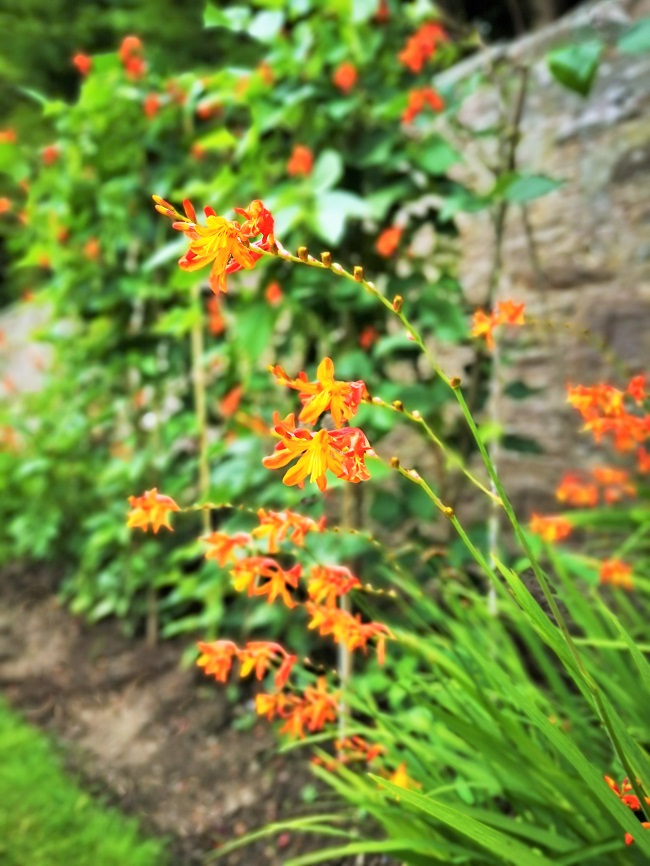
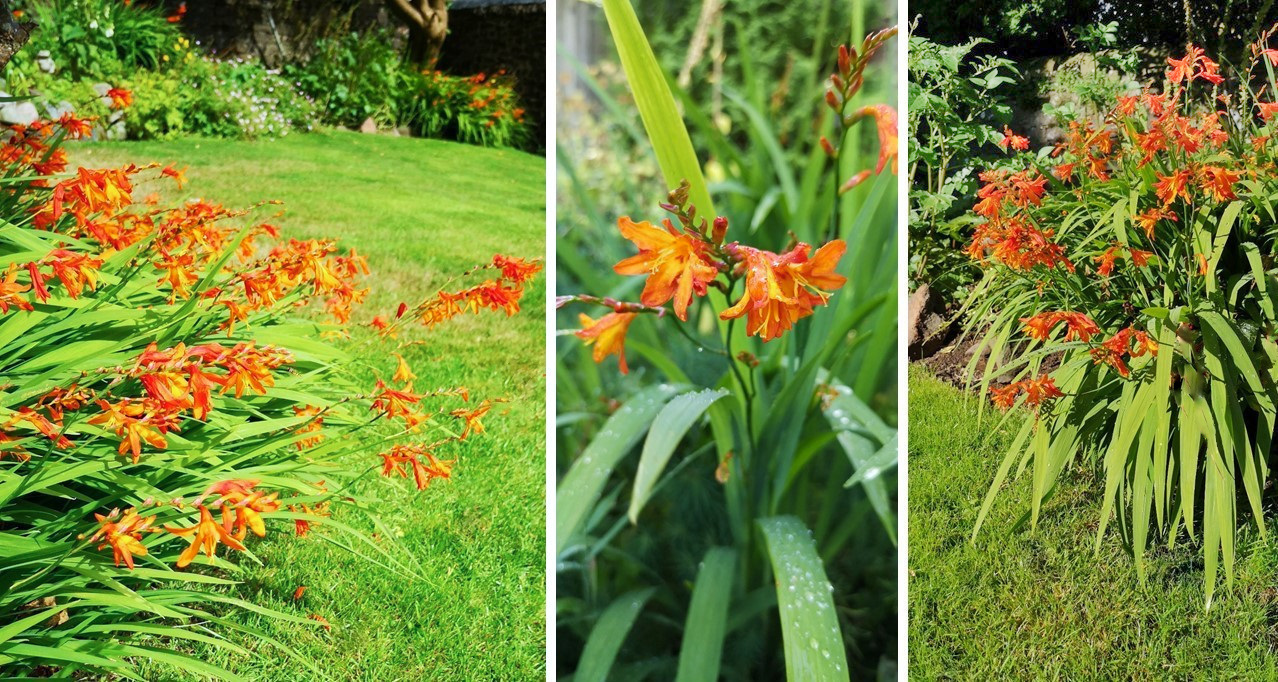
Crocosmia (Montbretia). Image: Kathryn Hawkins
Year after year, the back garden flowerbeds become packed out with the long stems and leaves of Crocosmia. The weight of several flower heads per stem means that they do appear to grow horizontally, particularly in the sunshine; in the shadier parts of the garden, the stems hold their heads higher as they reach for the light. For me, it is the bright orange flowers and lush green foliage of this plant that represents the peak of summer like no other.
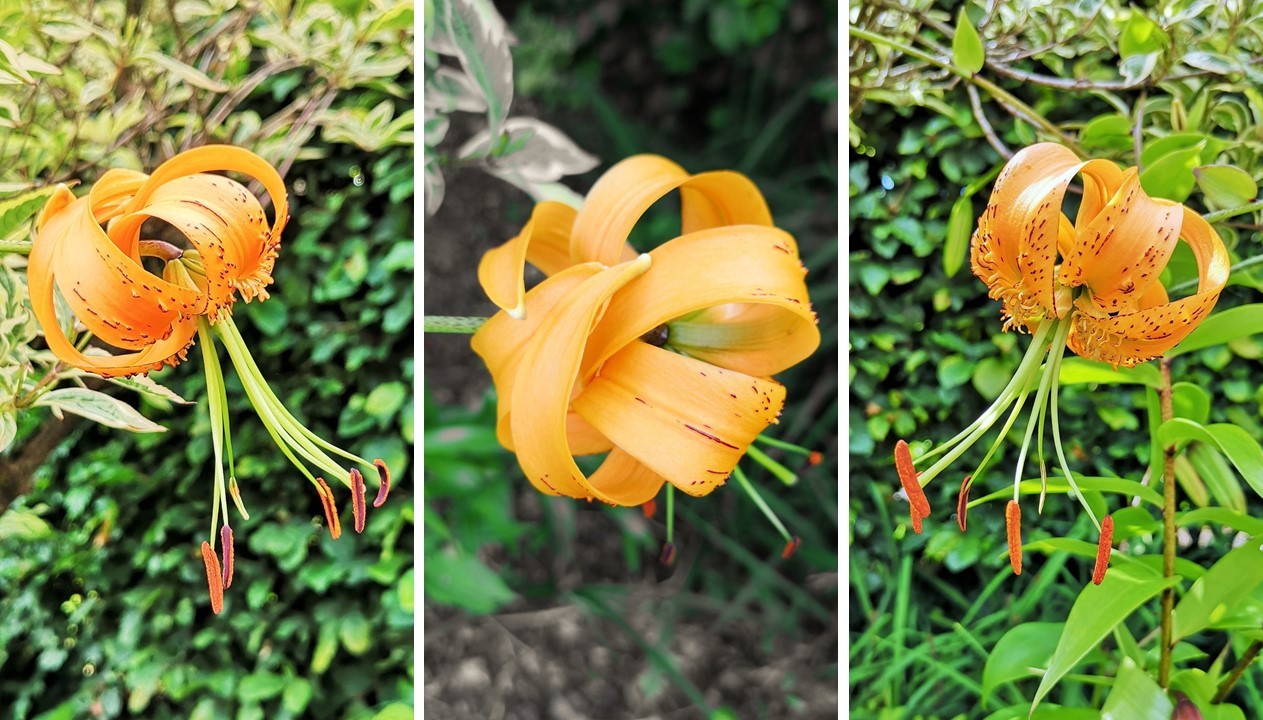
My final images are of another orange flower in the garden: very tall and elegant tiger lilies. I love the way the petals fold back so neatly at the back of the bloom, just like a beautifully tied ribbon. Until next week, my best wishes to you 🙂
Half way through the year already. I can hardly believe it. It’s also just over a year since I published my first post on this blog. What a year it’s been. So many flowers, plants and recipes. So much colour and flavour.
The last week of June has been a turbulent one here in central Scotland. After several days of warm sunshine, suddenly the winds got up and the rain came down. The flowers and shrubs certainly received a bit of a battering, but most have recovered. I have two Kalmia bushes in the garden. When in bud, the bright pink tightly closed flowers remind me of pink icing piped through a star-shaped nozzle (you can see a few in the picture above). As the buds open out, the unusual pink flowers turn into little lanterns or fairy-sized lamp shades. As the petals begin to fade and fall, it looks like someone has scattered pink confetti over the lawn.
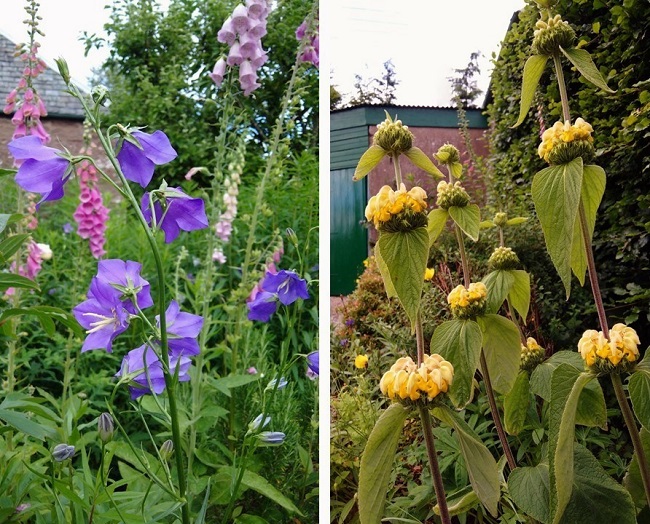
Blue Campanula and pink foxgloves; golden Phlomis. Images: Kathryn Hawkins
Mid-June to early July is probably the best time of the year for colour variation in the garden. There are a lot dainty blue and white Campanula all over the borders as well as different shades of foxgloves – these both seed themselves year after year. I have two clumps of yellow Phlomis, with small crowns of flowers that remind me of little pineapples. The velvety, sage-green foliage comes up in mid spring and lasts long after the flowers have bloomed.
Lilium martagon (Turk’s Head Lily). Image by Kathryn Hawkins
I discovered this small lily underneath a rhododendron in the front garden a few weeks ago. One by one the individual blooms have opened, and finally yesterday, I managed to capture them all open at the same time. It is like a small tiger-lily, so pretty and dainty. I can’t remember planting it, or even having seen it ever before!
Iris Foedissima. Image: Kathryn Hawkins
This fine fellow was new in the garden last year. Actually, it had probably been in the garden for a while, but it was hidden away in an old compost heap. When the compost was distributed, it sprouted up. Given a more prominent position in the garden, it started flowering last summer. This iris is one of only two native varieties in the UK; it is not the most colourful, but certainly interesting, and it has a rather unfortunate and unflattering common name: “stinking iris” – but this one doesn’t seem to smell at all!
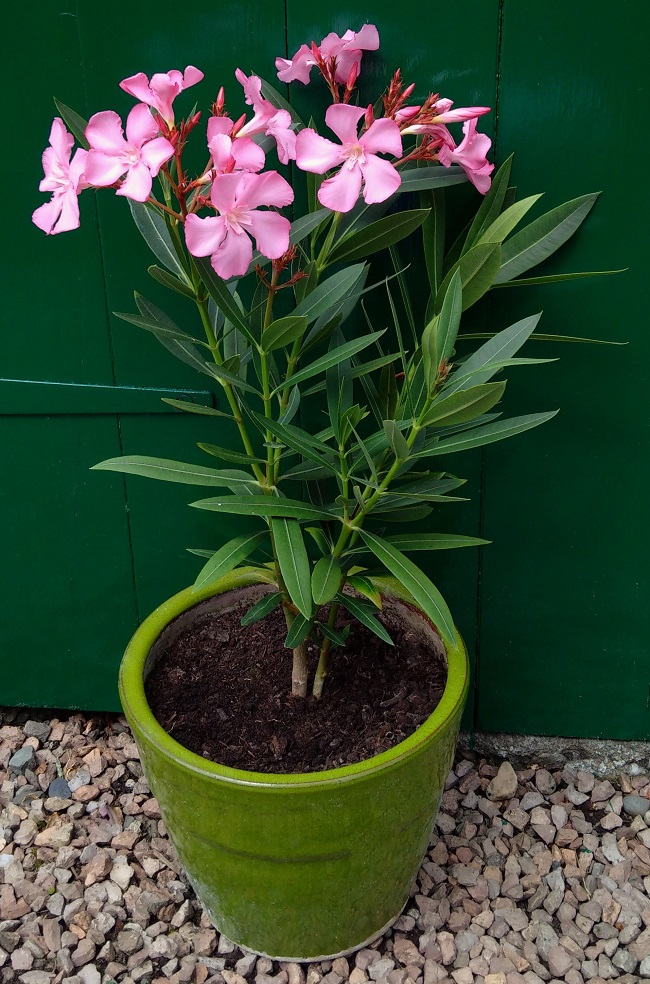
My last image to share this month, is a plant not strictly in my garden, but something I am proud to have raised given the climate here. It is a small Oleander bush. I have kept it through the winter months, swaddled in fleece, in my unheated greenhouse, and this spring the flower buds started appearing. On warm days, it does stand outside for a few hours, and brings a hint of the Mediterranean to the more traditional flora and fauna.

































 My Virtually Free-from Kitchen