Making Victoria plum jam, and a recipe for almondy plum pudding (gluten-free; dairy-free; vegan)

Homemade_Scottish_Victoria_plum_jam_September_2024
Just jammy. Image: Kathryn Hawkins

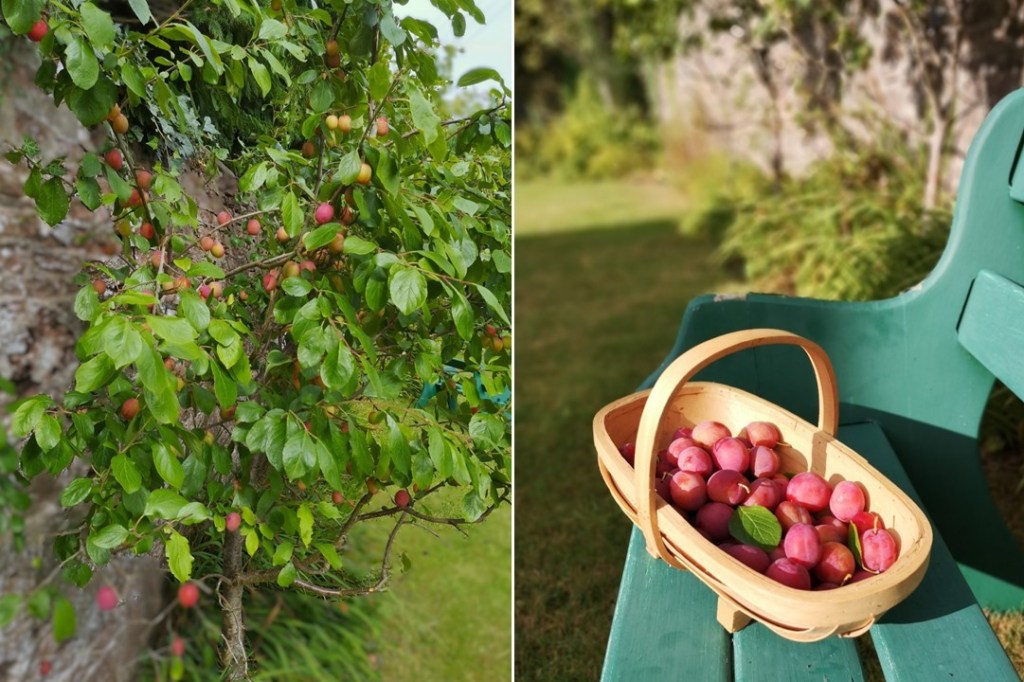
Hello again. The sunshine here in central Scotland last weekend helped ripen off the Victoria plums on the small tree in the garden. And this year, I managed to get them picked before the wasps moved in:)
Scottish_Victoria_plum_harvest_September_2024
This year’s Victoria plum harvest. Images: Kathryn Hawkins

Not a bad haul, and there are still a few left on the tree for later in the month. I’ll admit that plums are not my favourite fruit but they do make a lovely jam, and are also delicious flavoured and baked with almonds. Hence, my two recipes this week.

Homemade_Victoria_plum_jam_in_jar_and_on_spoon
Simply plum jam. Images: Kathryn Hawkins

The jam recipe is very straightforward, just 2 ingredients, fruit and sugar. Victoria plums, if not too ripe, set well without needing to add lemon juice to the mix. If the plums are very ripe, then add 1tbsp juice per 500g fruit.

Makes: approx. 1.5kg

Ingredients

  • 1kg ripe Victoria plums
  • Approx. 850g granulated sugar

1. Wash the plums then cut them in half and prise out the stones. Put the stones to one side, and weigh the prepared fruit and make a note. You should use the same amount of sugar to fruit. If the plums are too firm to cut cleanly in half, you can cook them whole and then remove the stones once the fruit has softened – it is worth counting the whole plums before you cook them so that you know how many stones to fish for!

2. Put the stones on a piece of muslin. Gather up the sides and then bash with a rolling pin to crush the stones. Tie the muslin tightly to secure the crushed stones inside. You don’t have to do this, but I think the jam has better flavour and setting qualities if you add the stones.

3. Put the plums in a large saucepan. If they are ripe, you don’t need to add any water. If they are firm, add about 100ml. Heat until steaming, add the muslin bag, then cover with a lid and cook gently until very soft. If you’ve cooked whole plums, now is the time to do a little stone fishing.

4. Add the quantity of sugar to match the weight of the prepared fruit, and stir until dissolved, then raise the heat and boil rapidly until setting point is reached – around 104 to 105°C on a jam thermometer. Squeeze out the juices from muslin bag and discard, and stir the jam to distribute the fruit pieces before packing into clean jars and sealing whilst hot.

Making_plum_jam_with_Scottish_Victoria_plums_September_2024
Making plum jam. Images: Kathryn Hawkins
Making_jam_pot_covers_from_paper_napkins
Easy peasy jam pot covers. Images: Kathryn Hawkins

For a simple finishing touch, if you are thinking about gifting some of your jam, I often cut out rounds of paper napkin to cover the jar lids. Use a saucer or plate a few centimetres larger than the lid and draw round using a pencil. Secure the covers in place with a small rubber band and then tie with string or ribbon. Don’t forget the label.
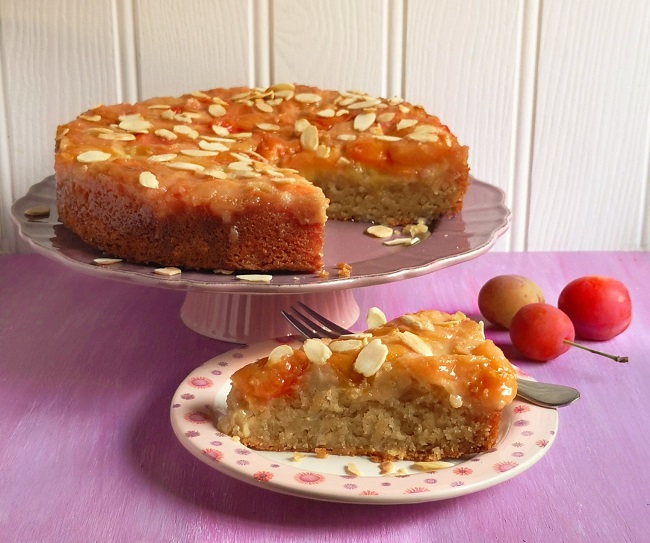
Gluten-free_dairy-free_vegan_almond_plum_pudding
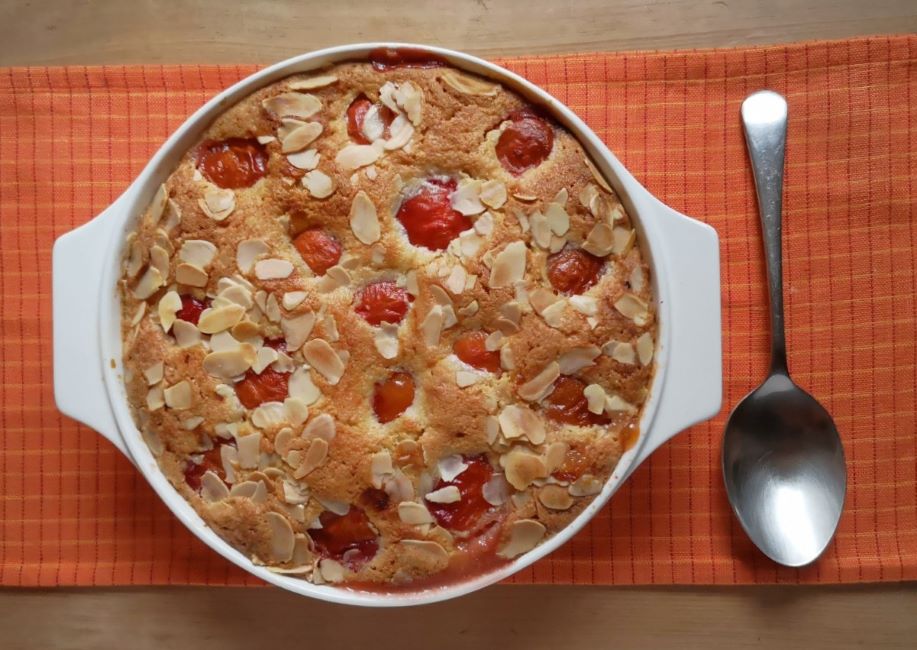
Plum pudding perfection. Image: Kathryn Hawkins

My second plummy recipe is also very easy to make. You’ll need 850g plums and a dish about 1.7l in capacity. The bake will serve about 6 people.

Pitting_Victoria_plums
Victoria plums, ripe and ready for pudding. Images: Kathryn Hawkins
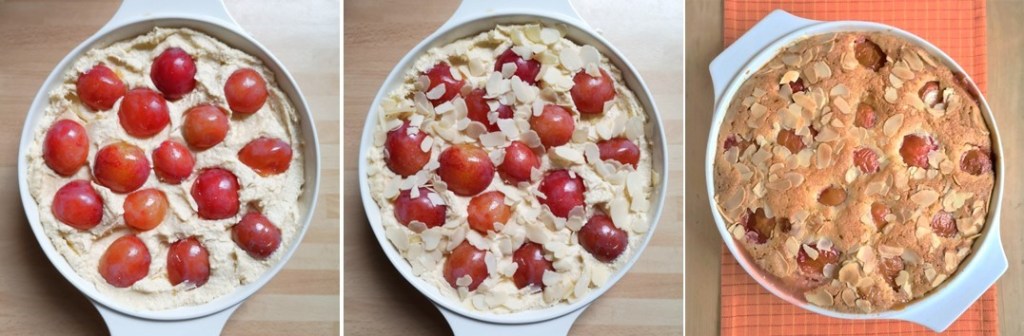
Making_gluten-free_dairy_free_almond_sponge
Assembly_and_baking_gluten-free_dairy-free_vegan_almond_plum_pudding
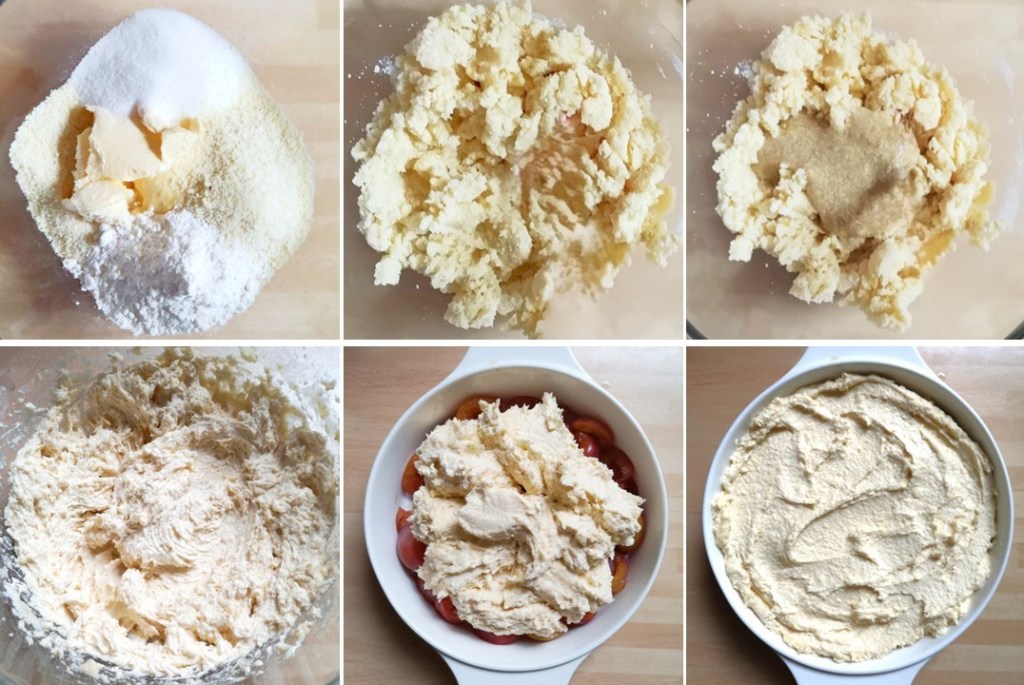
How to make almond plum pudding. Images: Kathryn Hawkins

1. Wash and stone the plums as for jam, but discard the stones this time. Put two thirds of the prepared fruit in the dish and put to one side while you make the topping.

2. Mix 3tbsp ground flax seed with 135ml water and leave for a few minutes until thickened.

3. Whisk together 155g lightly salted, soft plant butter with 155g caster sugar, 155g ground almonds, 30g gluten-free plain flour and 1tsp almond extract until well blended and creamy. Stir in the flax egg and whisk to make a smooth cake batter.

4. Spoon over the plums in the dish and smooth the top. Push the remaining plums into the mixture on top and sprinkle with a few flaked almonds. Pop the dish on a baking tray and bake in a preheated oven at 180°C, 160°C fan, gas 4, for about 1hour 15 minutes until firm to the touch and golden. Best served hot with custard.

Freshly_baked_gluten-free_dairy-free_vegan_almond_plum_pudding
Ready for custard. Images: Kathryn Hawkins

If you have any leftover jam, add a layer in the bottom of the dish for extra sweetness.

Until next time, enjoy the autumn colours and I’ll hope to see you again in a couple of weeks or so.

It’s beginning to feel a bit like Autumn….

Scottish_garden_plum_and_pear_trees_ August_2024
A promising harvest awaits. Image: Kathryn Hawkins

Hello again. It certainly feels like the season is beginning to change here in central Scotland. The daylight hours are shortening and there is a distinct nip in the early morning and late evening air.

Ripening_pears_plums_and_apples_late_August_2024
Ripening orchard fruit. Images: Kathryn Hawkins

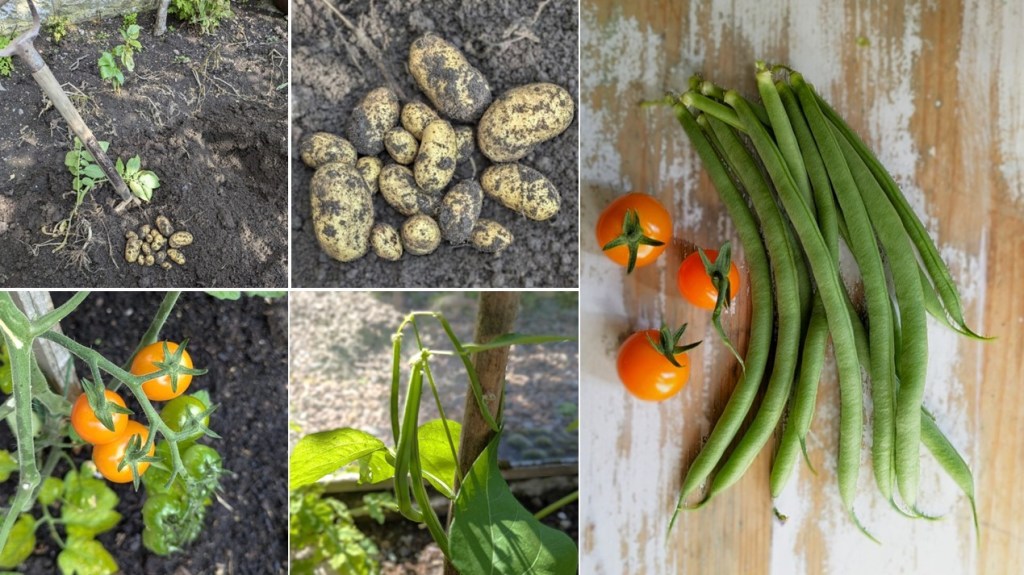
Really happy to see so much fruit on the pear, apple and plum trees this year. It must have been all the rain we have had. Not long to wait until the picking starts 🙂 I have already harvested a few potatoes, and a few greenhouse tomatoes and French beans. Such a treat, and there is plenty more to come.

Late_Summer_garden_produce
Garden and greenhouse treasures. Images: Kathryn Hawkins

Around the garden, there are still some signs of Summer like the orange lupin flowering for the third time, and such a large bloom. Usually the second and third flowers are small, but this one is a real beauty.

Late_Summer_orange_garden_flowers
Late Summer flowering Crocosmia and a late blooming Lupin. Images: Kathryn Hawkins
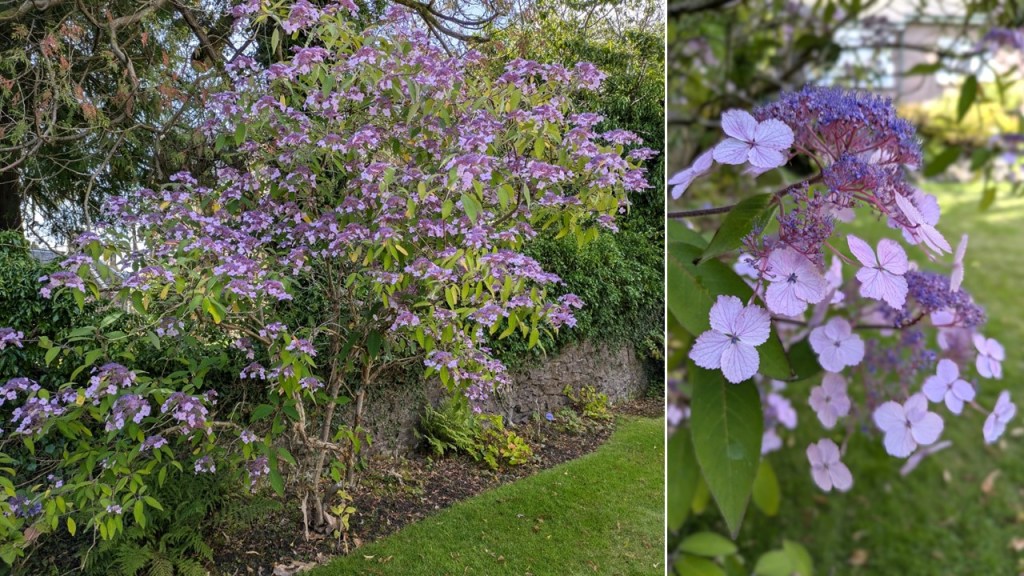
Scottish_garden_Lacecap_Hydrangea
Lovely Lacecap Hydrangea. Images: Kathryn Hawkins

And the bees are still very busy, especially around the Echinops and Golden Rod.

Scottish_garden_bees_in_the_sunshine
Busy bees in the sunshine. Images: Kathryn Hawkins

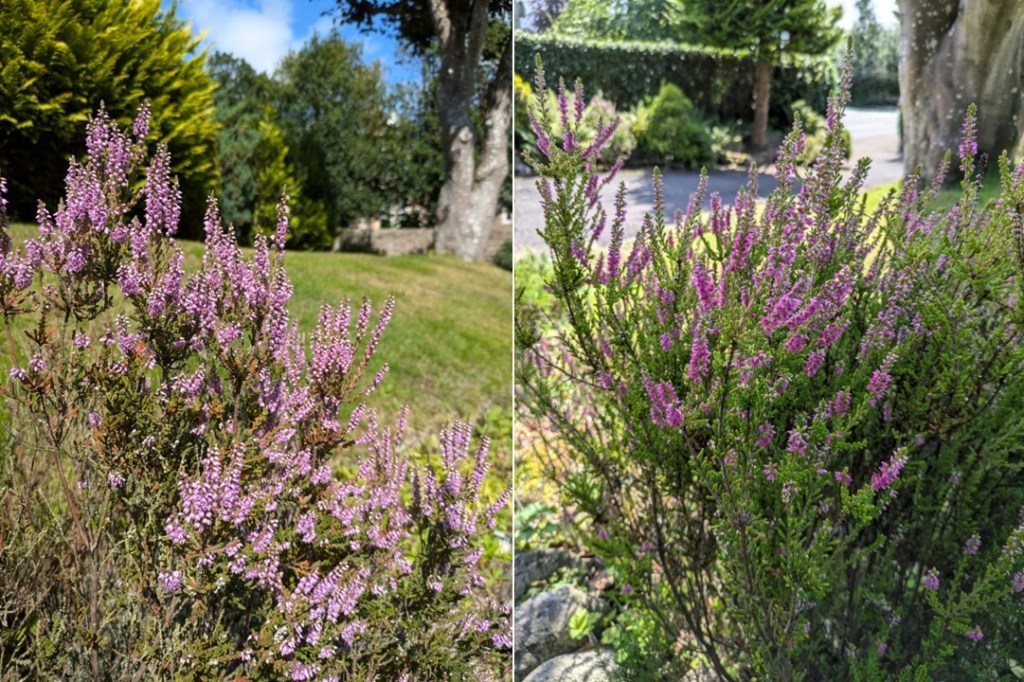
But you know the season is changing when the first Autumn crocus emerges in a darker corner of the garden, and the late flowering heathers are in full flower.

Late_August_2024_Autumn_crocus
Delicate lilac crocus blooms. Images: Kathryn Hawkins
Scottish_Autumn_heather_August_2024
Scottish Autumn heathers. Images: Kathryn Hawkins

A few nights ago, as the daylight was fading, a new visitor came up the driveway and started tucking into the fallen sunflower seeds from the bird feeder. He/she stood on their hindlegs to reach a few seeds caught on the stone wall. You’ll see it is quite a chunky fellow, and is obviously finding enough food to keep its strength up:) The other image is of a magnificent Peacock butterfly absorbing the warmth from the sandstone wall outside my office the other day. What a beauty.

Garden_hedgehog_and_sunbathing_Red_Admiral_butterfly
Night and day time visitors. Images: Kathryn Hawkins

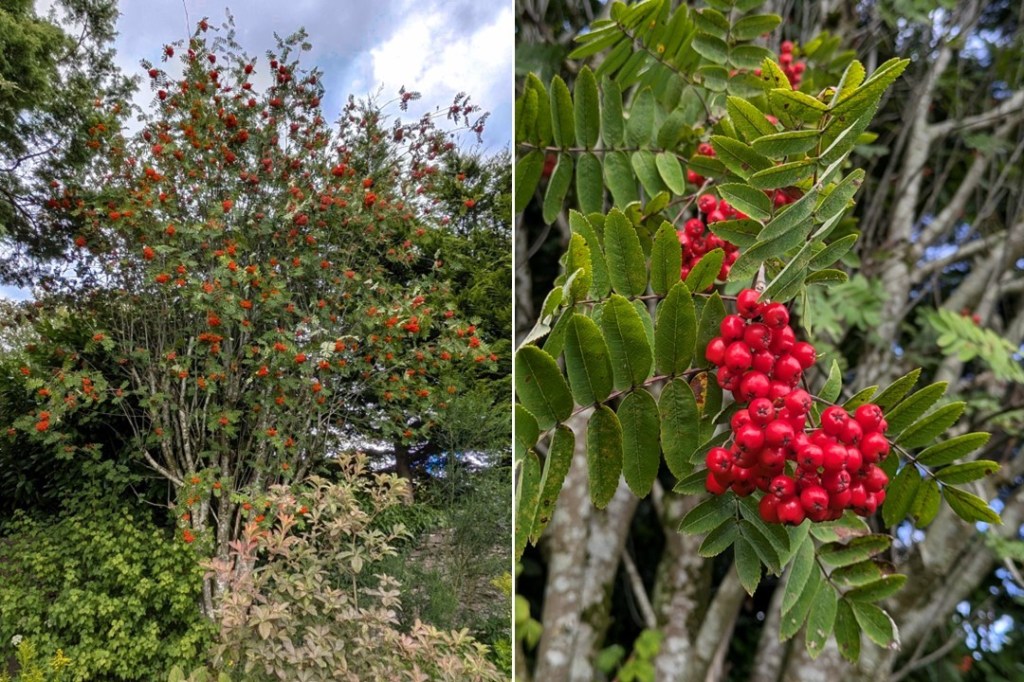
My final images this month are of the Rowan tree in the back garden which has been quite bereft of berries for several years. This year it is laden, and so much so that they are beginning to fall to the ground before the birds have started to eat them!

Scottish_garden_Rowan_tree_Laden_with_berries
Ripe Rowan berries. Images: Kathryn Hawkins

That’s me for another month. See you in September! Thanks and best wishes until then.

September retrospective

Scottish_Pink_heather_and_autumn_leaves
Early Autumn vibes. Image: Kathryn Hawkins

Hello again. I hope this posts finds you well. The season has definitely shifted here in central Scotland, and Autumn is upon us once again. It’s been a mixed bag of weather with some unseasonal, very hot and humid days back at the beginning of the month, and now wet, windy and stormy ones to bring the month to a close. On the whole, it has been quite mild. Given this mixed bag of growing conditions, it is a wonder that the plants know what season it is, like these foxgloves still producing flowers since June.

Late_Scottish_pink_foxgloves_September_2023
September foxgloves. Images: Kathryn Hawkins

A couple of weeks ago, I was able to harvest the plums from the small tree in the garden. Like a lot of fruit trees this year, the harvest was good and there were a fair few plums to pick. All now cooked and made into jam 🙂

September_2023_Scottish_garden_Victoria_plum_harvest
This year’s plum harvest. Images: Kathryn Hawkins

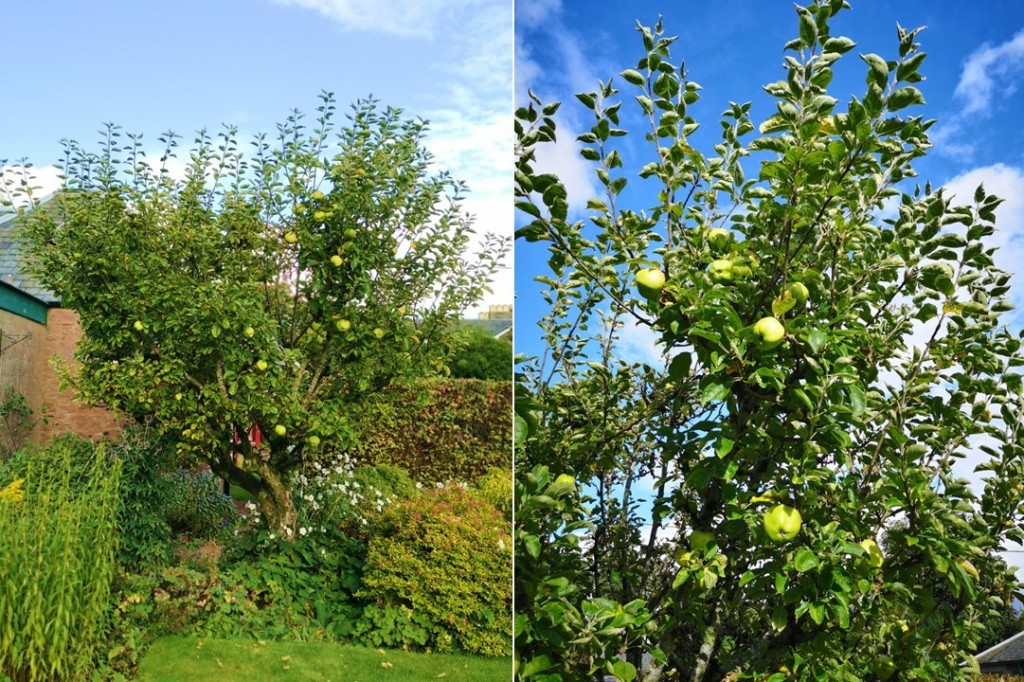
The next garden harvest will be from the apple tree. I think we’re looking at a more modest harvest this year compared to last year’s bumper crop.

Apple_tree_in_fruit_September_2023
The old apple tree, September 2023. Images: Kathryn Hawkins

Hydrangeas do quite well in the garden due to the acidic soil. This one was planted back in late spring, and although the blooms naturally fade at this time of year, it still adds some colour and cheer in the flowerbed.

Red_Hydrangea_bush
Fading gracefully, red Hydrangea. Images: Kathryn Hawkins

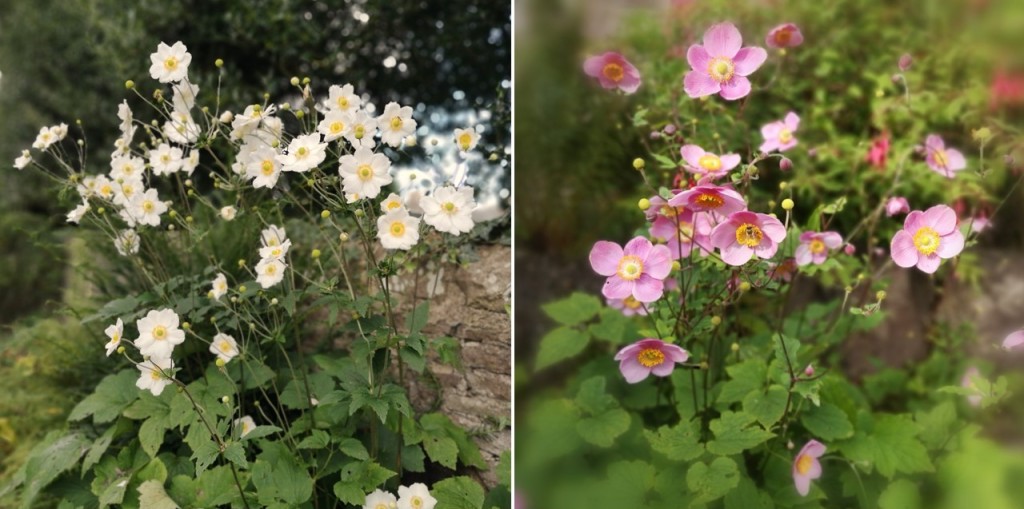
No post from me at this time of year would be complete without a few images of the Japanese anemones. They have done very well this year, surviving the heat and now the wind and rain. As delicate as they look, their hardiness still amazes me.

Scottish_garden_Japanese_anemones_September_2023
Close-up_on_two_pink_Japanese_anemones
Autumn favourites. Japanese anemones. Images: Kathryn Hawkins

My favourite rose bush in the garden didn’t do quite so well earlier in the year, so I was very happy to see new buds forming at the end of last month and some healthy foliage forming. In the past couple of weeks, new heavily scented flowers have opened up along with fresh green leaves.

Old_Scottish_pink_rose_second_flowering_September_2023
Pink rose, second time around. Images: Kathryn Hawkins

After my hedgerow harvest post at the end of last month, I have been on the look out for more wild berries. Whilst the blackberries and sloes have finished now, there are still plenty of elderberries ripening. On a walk last weekend, I picked this container-full. Once the berries were removed from the stems, I had just under 2lb of fruit which are now stashed in the freezer for later use.

Scottish_elderberries_in_the_wild_September_2023
Ripe Scottish elderberries, September 2023. Images: Kathryn Hawkins

That’s me for another week or so. I will be back in the kitchen for my next post. Until then, enjoy the change of season and thanks for stopping by 🙂
Plum, sloe and apple cheese (naturally gluten-free and vegan)

Homemade_plum_sloe_and_apple_cheeses_arranged_on_a_pink_board_with_sugar
Homemade plum, sloe and apple cheese. Image: Kathryn Hawkins

Hello again. I have a very seasonal recipe to share with you this week. I have been out and about enjoying the autumnal colours. On one of my walks, I was fortunate enough to find some sloe berries still in situ on a wild blackthorn hedge. They were growing so thickly that they looked like bunches of grapes. I had a small bag with me and was able to fill it with a precious harvest of these dark blue-skinned fruits with their fine silvery bloom.

Sloe_berries_ripe_and_ready
Scottish sloe foraging. Images: Kathryn Hawkins

Finding the sloes coincided with the last few Victoria plums ripening in the garden, and the beginning of the apple season. What better way to use them all than to combine them in a delicious thick and fruity preserve, the perfect colour to match the season.

Early_autumn_Victoria_plums_and_Lord_Derby_cooking_apples
End of the season Victoria plums and new season Lord Derby cooking apples. Images: Kathryn Hawkins

I have posted a similar recipe to this one, before using only plums. You can find the recipe here: Plum and bay membrillo (naturally gluten-free and vegan) This year’s version is very fruity and makes a delicious sweet treat on its own or with cream or yogurt. Serve it as an accompaniment to roasted, grilled or barbecued food, and if you eat cheese, it’s good served with just about any variety.

Sprinkling_plum_sloe_and_apple_cheeses_with_white_sugar
Sugar-coating fruit cheeses. Image: Kathryn Hawkins

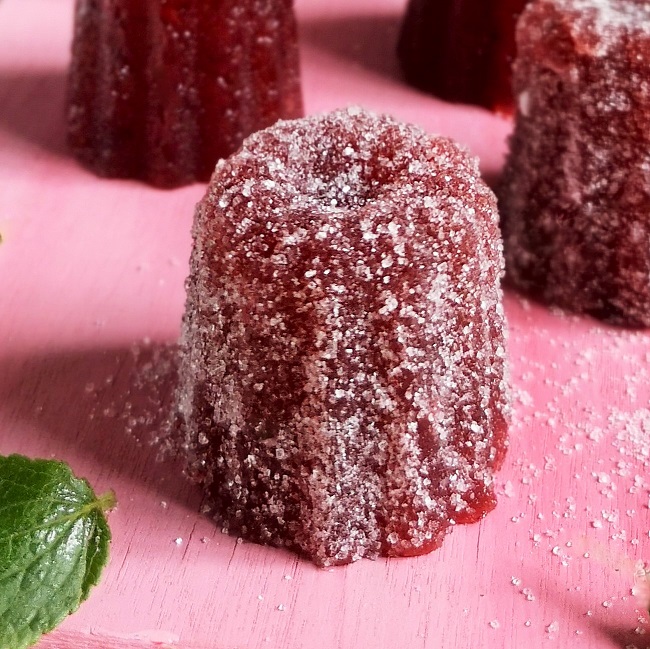
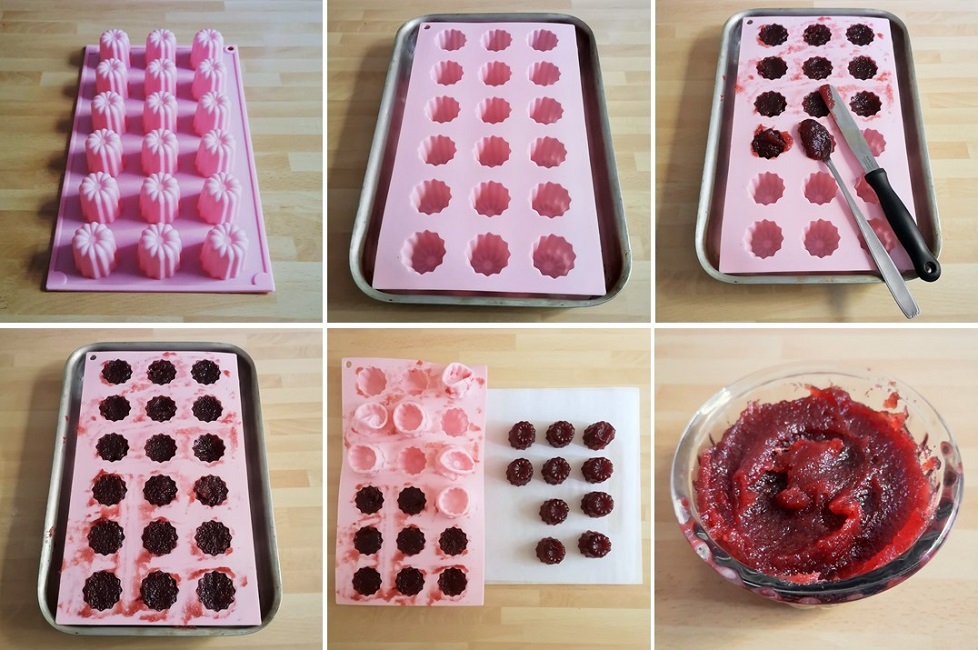
I set the fruit cheese in individual silicone moulds and dusted them with more sugar; the remaining cheese went into a ramekin dish. Choose anything heatproof like a tin or ovenproof dish; line the container and then once it is cold you can slice it or turn it out. Keep the cheese wrapped up in the fridge for up to a month or it can be frozen. Set in a pretty little dish, I think it would make a lovely edible gift – if you can bring yourself to hand it over to anyone else!

Close-up_on_an_individual_plum_sloe_and_apple_cheese_coated_in_sugar
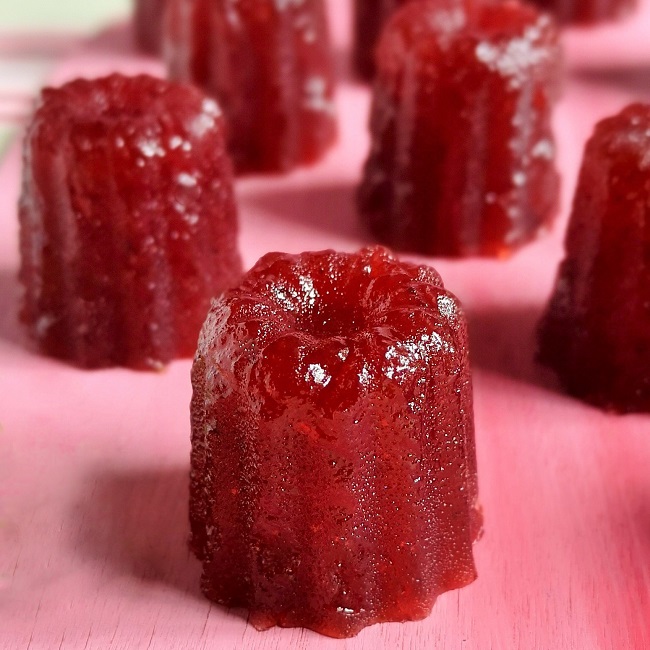
Sugar-coated fruit cheese. Image: Kathryn Hawkins

Makes: approx. 750g

Ingredients

  • 275g plums, stones removed, chopped
  • 275g sloes, washed
  • 500g cooking apples, cored and chopped
  • approx. 550g granulated white sugar + extra for dusting (optional)

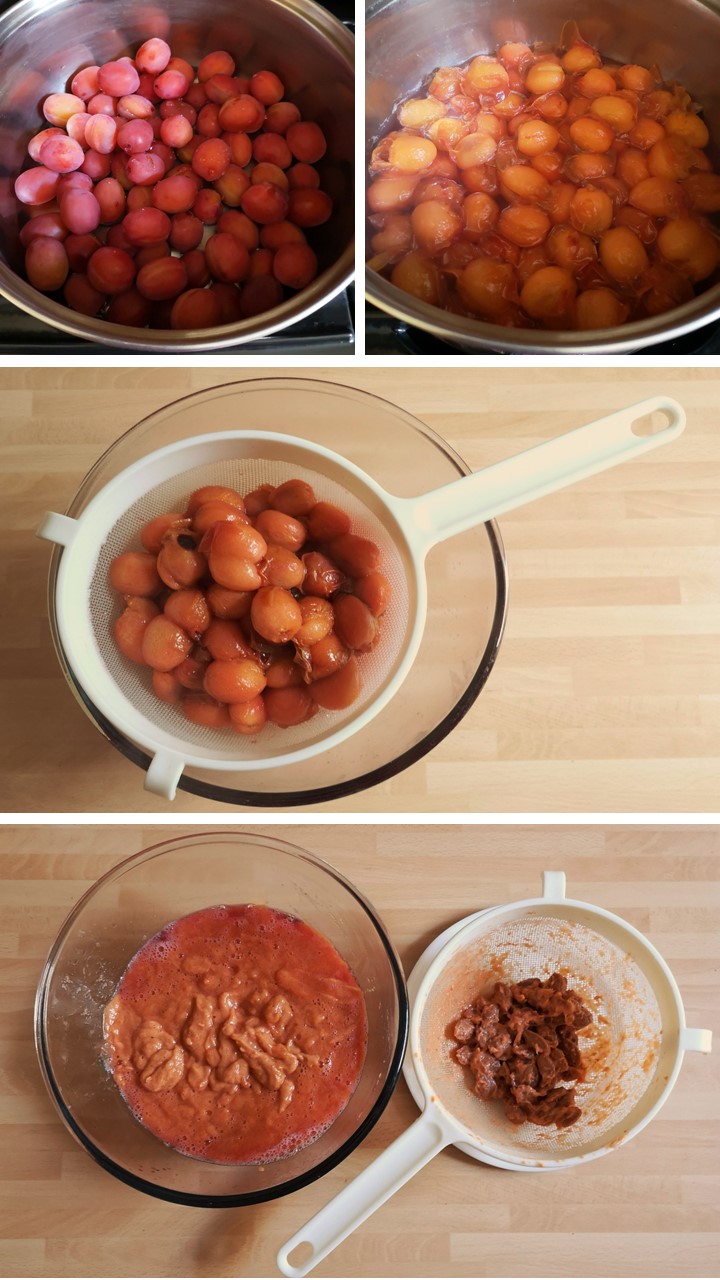
1. Put all the fruit in a large saucepan and pour over 200ml water. Bring to the boil, cover and then simmer for 15-20 minutes until very soft.

2. Mash the fruit and push through a nylon sieve positioned over a large bowl until you have only dry matter left in the sieve. Weigh the purée. My yield was around 850g of fruit purée.

Steps_1_to_6_cooking_the_fruit_to_make_cheese
Cooking the fruit for cheese. Images: Kathryn Hawkins

3. Clean the saucepan and put the purée back inside. Bring to the boil and cook, stirring occasionally, for about 20 minutes to reduce the pulp by about one third – it should be thick enough to hold a “slice” in the bottom of the sauce.

4. To make the preserve, you need to stir in the same quantity of white sugar to the amount of thickened purée – I had 550g purée so I added 550g white sugar.

5. Stir the mixture until the sugar dissolves and then bring back to the boil and continue cooking for a further 20 minutes, stirring frequently to prevent the mix sticking on the bottom of the pan, until very thick. If you have a jam thermometer, cook the mixture to 105°C. I use a spatula for the stirring because it gets right into the edges of the pan which helps to prevent the mixture sticking and burning.

Reducing_down_fruit_purée_to_make_cheese
Cooking the fruit purée. Images: Kathryn Hawkins

6. Working quickly, spoon the mixture into whatever you have chosen to set the cheese. As the mixture cools, it becomes thicker and more solidified making it more challenging to shape. However, you can reheat the mixture gently to soften it if you need to.

7. Allow the cheese to cool and set completely before attempting to turn it out or to slice it. I would suggest chilling it for an hour after cooling if you want to turn it out cleanly.

Preparation_steps_for_setting_and_turning_out_fruit_cheese
Moulding and unmoulding the fruit cheese. Images: Kathryn Hawkins

If you are making individual cheeses, you will find that a sugar coating sticks easily to the surface. Simple sprinkle over or gently roll the cheeses in a pile of sugar. The sugar coating does make smaller pieces easier to wrap in waxed paper and helps prevent the cheese sticking to the wrapping.

Plum_sloe_and_apple_cheese_set_in_small_moulds
Fruit cheeses up close. Image: Kathryn Hawkins

I hope you have a good few days ahead and that you are able to get out and about to enjoy the beautiful shades of the season. Until next time, my best wishes to you 🙂

Plum and bay membrillo (naturally gluten-free and vegan)

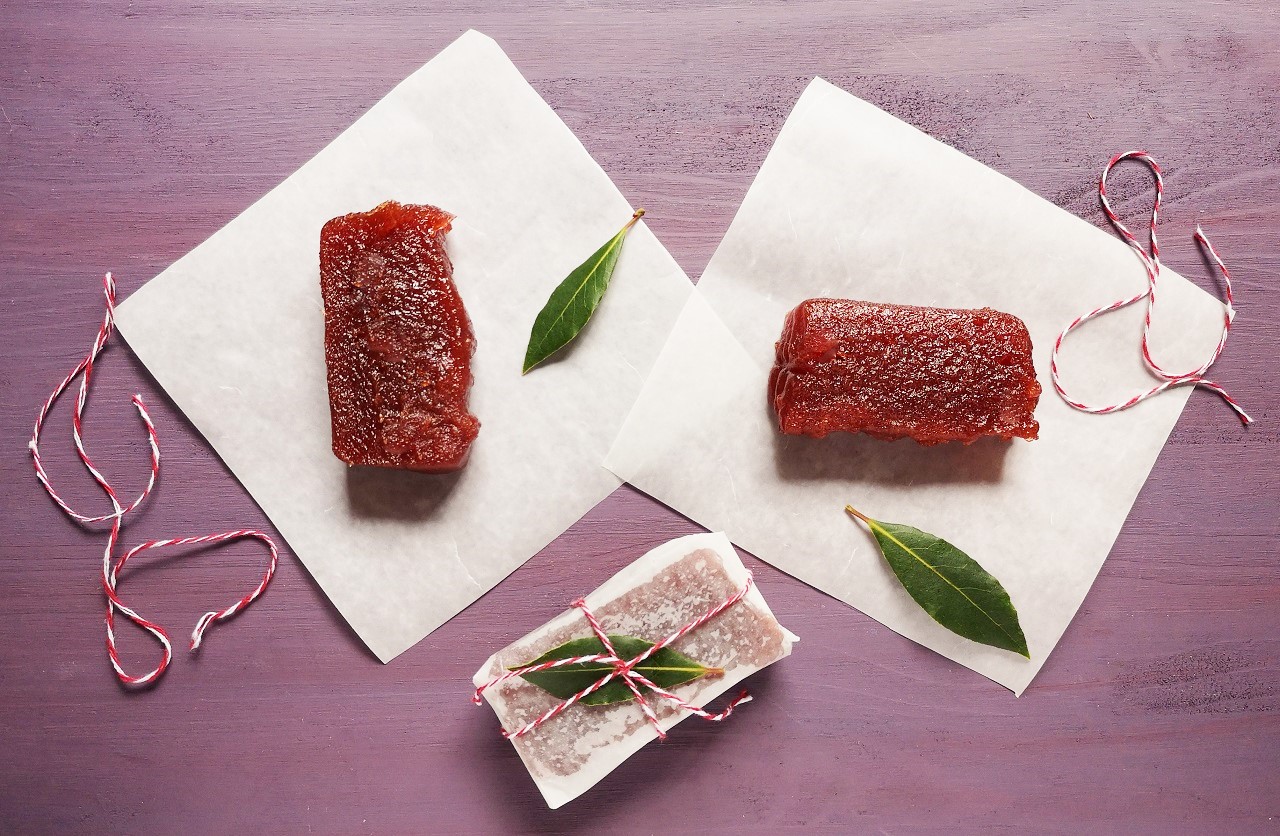
Victoria_plums_and_bay_leaves_with_plum_membrillo
Plum and bay membrillo. Images: Kathryn Hawkins

I hadn’t intended to write another post about plums this week, but after making several pots of jam with the largest, juiciest plums, I was down to my last kilo of the smallest fruit. Flicking through an old book on preserves, I happened upon a recipe for making damson “cheese”, and I decided to have a go. It turned out to be very similar to Spanish quince paste, so I’m calling it membrillo. And very delicious it is too 🙂

Plum_membrillo_garnished_with_fresh_bay_leaves_being_sliced
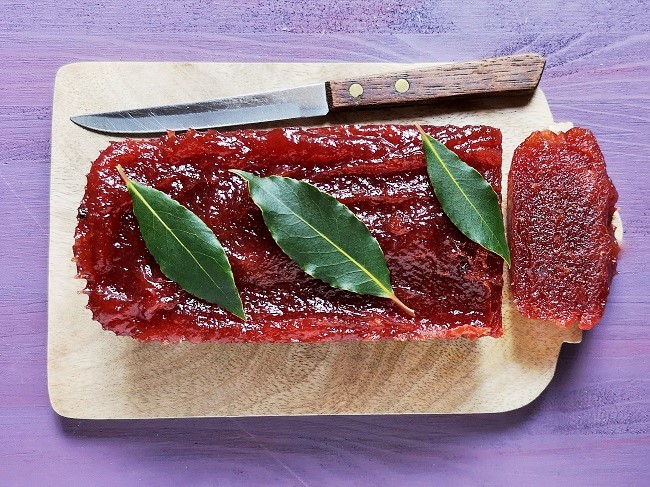
Sliced and ready for tasting. Image: Kathryn Hawkins

It takes a bit of time to make plum membrillo because you need to keep stirring the fruit mixture to stop it catching on the bottom of the pan, and it can’t be rushed otherwise you will end up burning the mixture. Other than this, there are just 3 ingredients and a little water. I like the herbal aroma of bay with stoned fruit, but cinnamon would work well, or you could omit the extra flavour altogether for maximum fruitiness.

The flavour is intense and fruity. It is very rich so serve in slices as a sweet treat or as an accompaniment to cheese and cold meats as you would quince paste. It needs to be stored in the fridge, but will keep for a month in a sealed container, or it can be sliced, wrapped and frozen. It would make a nice gift for a foodie friend – wrap in waxed paper for keeping at it’s best.

Slices_of_plum_membrillo_being_wrapped_in_waxed_paper
Wrapping membrillo in waxed paper. Image: Kathryn Hawkins

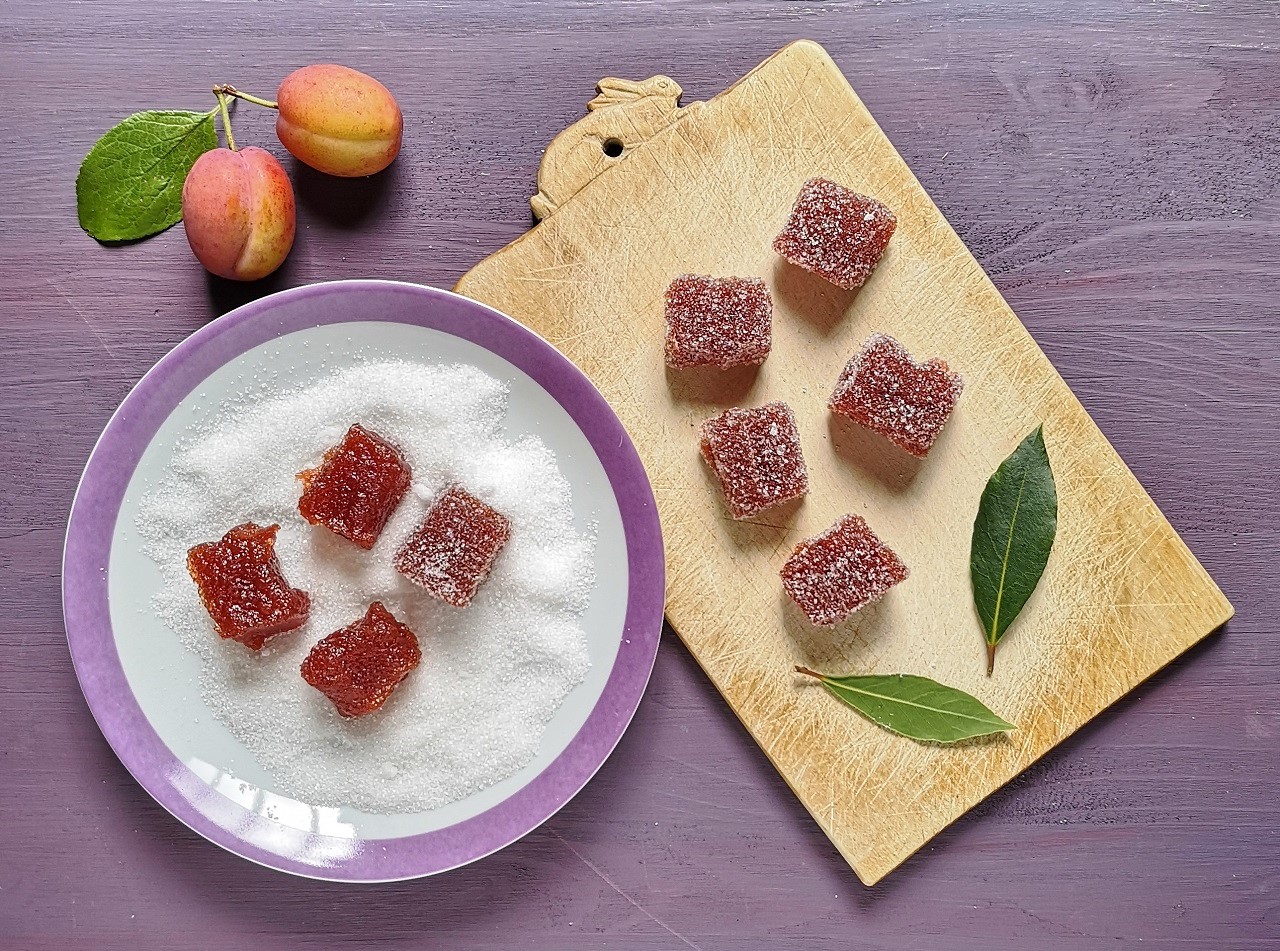
I also cut a couple of slices into small cubes and rolled in granulated sugar to make melt-in-the-mouth home-made fruit pastilles.

Making_plum_home-made_fruit_pastilles
Home-made plum fruit pastilles. Image: Kathryn Hawkins

Makes: 8 slices

Ingredients

  • 1kg small plums (damsons or apricots would also work)
  • 4 fresh bay leaves or 2 dried
  • Approx. 500g granulated sugar
  1. Line a 500g loaf tin with baking parchment. Wash the plums and place in a large saucepan (there is no need to stone them). Pour over 200ml water, bring to the boil, cover and simmer gently for about 20 minutes until very soft. Cool for 10 minutes, then rub though a nylon sieve to extract as much pulp as possible – I ended up with about 1l of pulp.

    Cooking_and_sieving_plums_to_make_membrillo
    Cooking plums for membrillo. Images: Kathryn Hawkins
  2. Pour the pulp back into the saucepan, add the bay leaves, and bring to the boil. Simmer gently, stirring to prevent sticking, for about 15 minutes, until reduced by half. I find a spatula is good for stirring preserves because it enables you to scrape the pan more thoroughly. Cool for 10 minutes, then discard the bay leaves.
  3. Measure the pulp and pour back into saucepan. Add the equivalent amount of pulp in sugar – I had 500ml reduced pulp and added 500g sugar. Heat gently, stirring, until the sugar has dissolved completely.
  4. Turn up the heat and cook the mixture until it becomes very thick – about 30 minutes – until the spatula leaves a clear line across the bottom of the pan. If you prefer, it needs to reach 105°C on a sugar thermometer. You need to keep stirring the mixture which will be very hot, so do take care. I find it easier to wear a long rubber glove when stirring, because the mixture can spit.

    Measuring_plum_pulp_and_cooking_with_sugar_to_make_membrillo
    Cooking the sugary plum pulp for making membrillo. Images: Kathryn Hawkins
  5. Scrape the thick, pulpy mixture into the prepared tin, smooth the top and leave too cool completely. It will set firm as it cools. Chill until required.
  6. When ready to serve, remove the lining parchment, and slice the membrillo with a sharp knife – a warmed blade should make for easier slicing. Wrap and store in the fridge for up to a month, or freeze for later use.

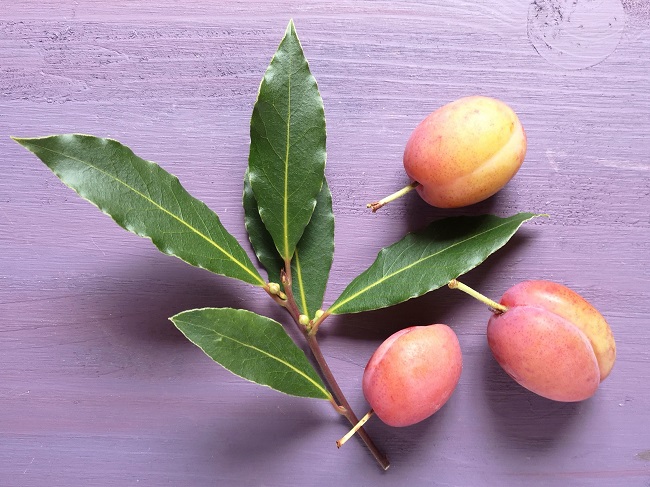
Sprig_of_fresh_bay_leaves_with_3_Victoria_plums
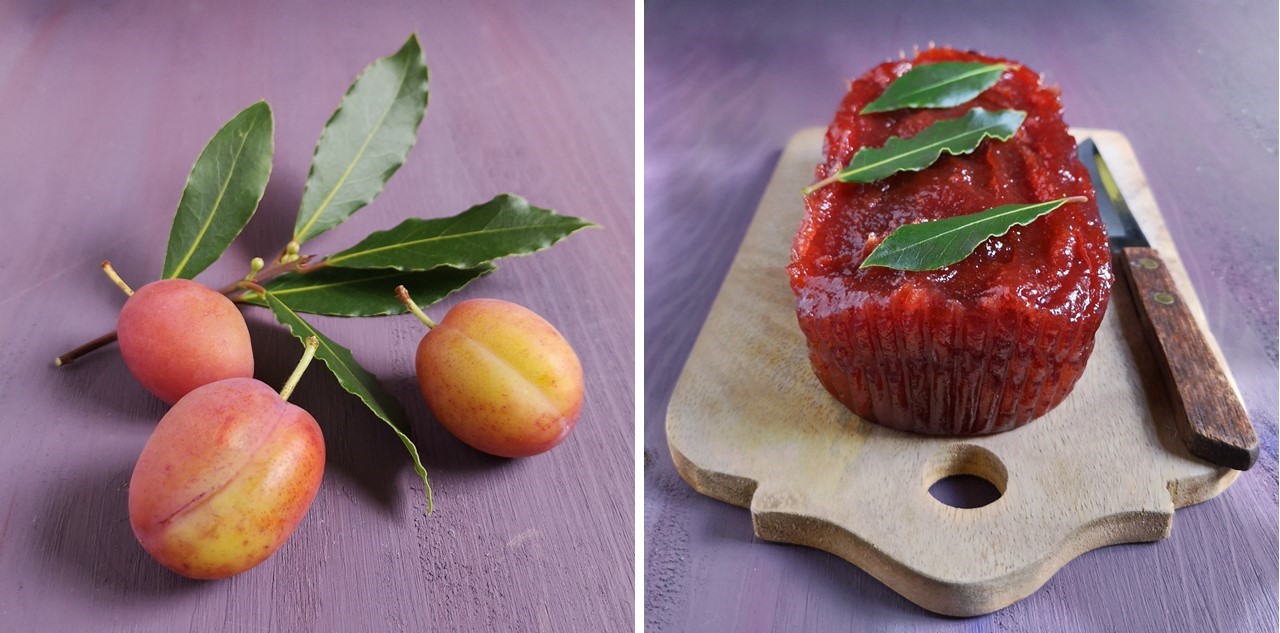
Fresh bay leaves with Victoria plums. Images: Kathryn Hawkins

Upside-down plum and marzipan cake (dairy-free; vegan, with gluten-free variation)

Vegan_upside-down_plum_and_marzipan_cake
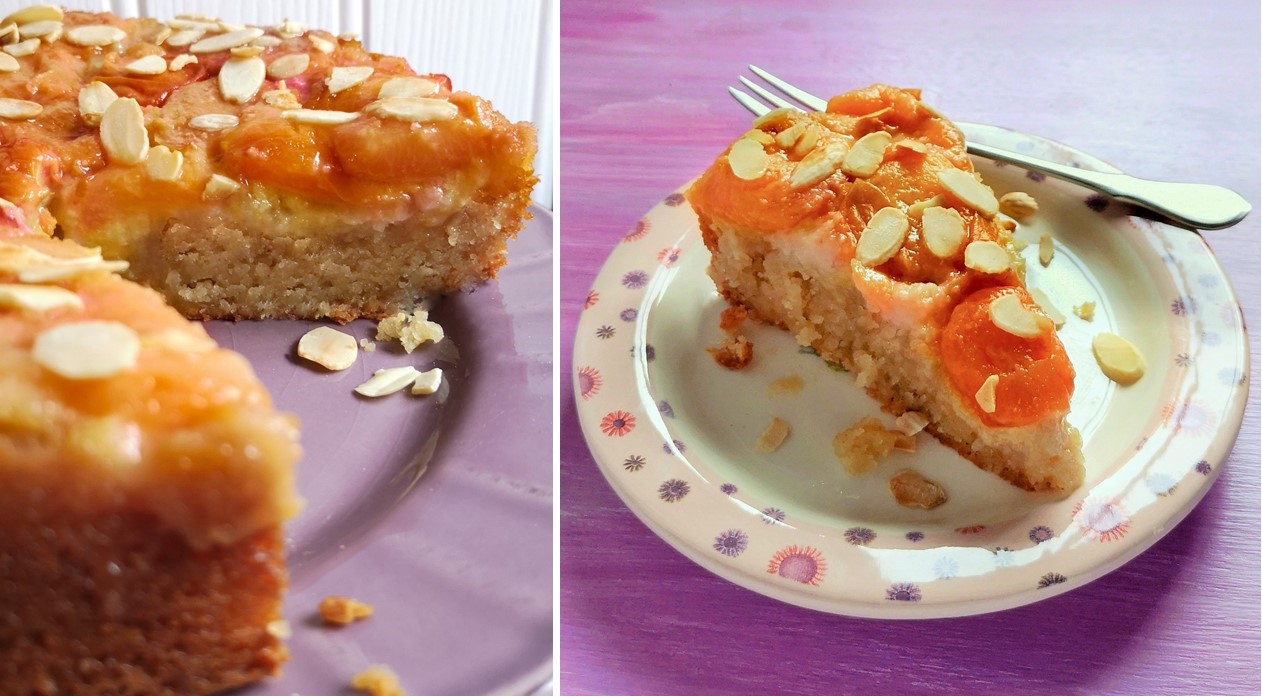
Upside-down plum and marzipan cake. Image: Kathryn Hawkins

The garden’s taken a bit of a battering this week. It’s been very windy since the weekend and yesterday the remnants of the recent US Hurricane blew through. Fortunately, there doesn’t seem to have been too much damage, but any plums that I left on the tree are no longer.

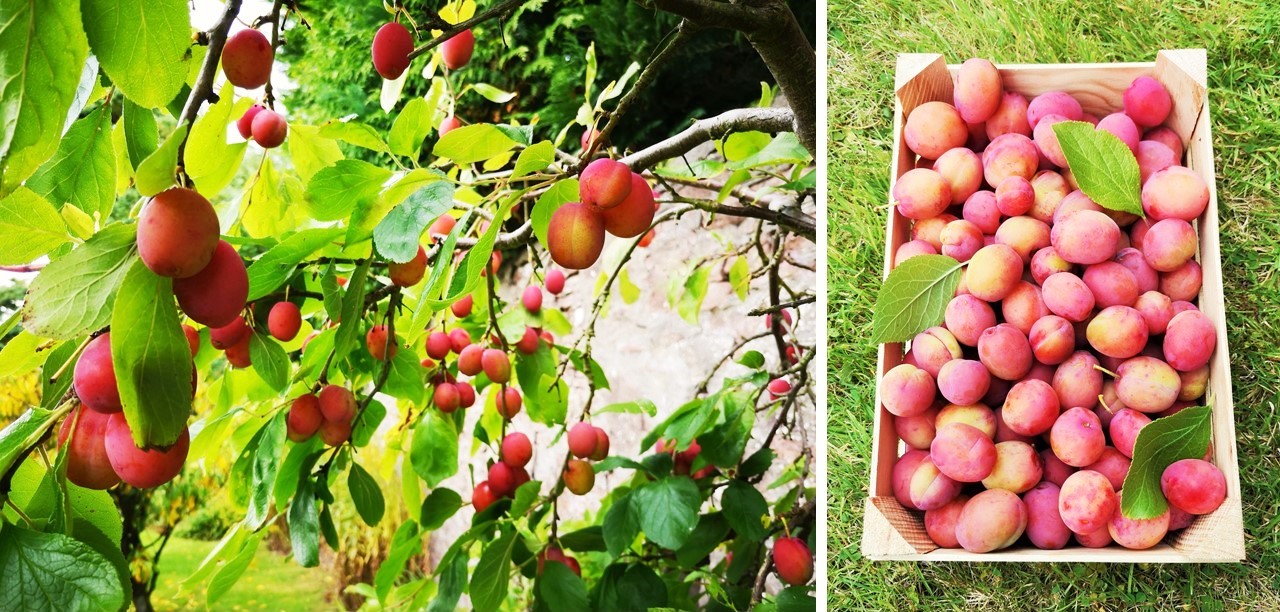
Victoria_plum_tree_and_a_wooden_crate_of_picked_plums
This year’s Victoria plum harvest. Images: Kathryn Hawkins

I had been picking the Victoria plums  since the beginning of last week, and thankfully harvested the majority of what was left at the weekend. I’ve been busy making jam, and freezing a few in bags for later use. The tree is only small, but it has done very well this year in spite of the dry summer, although some of the plums are smaller than usual.

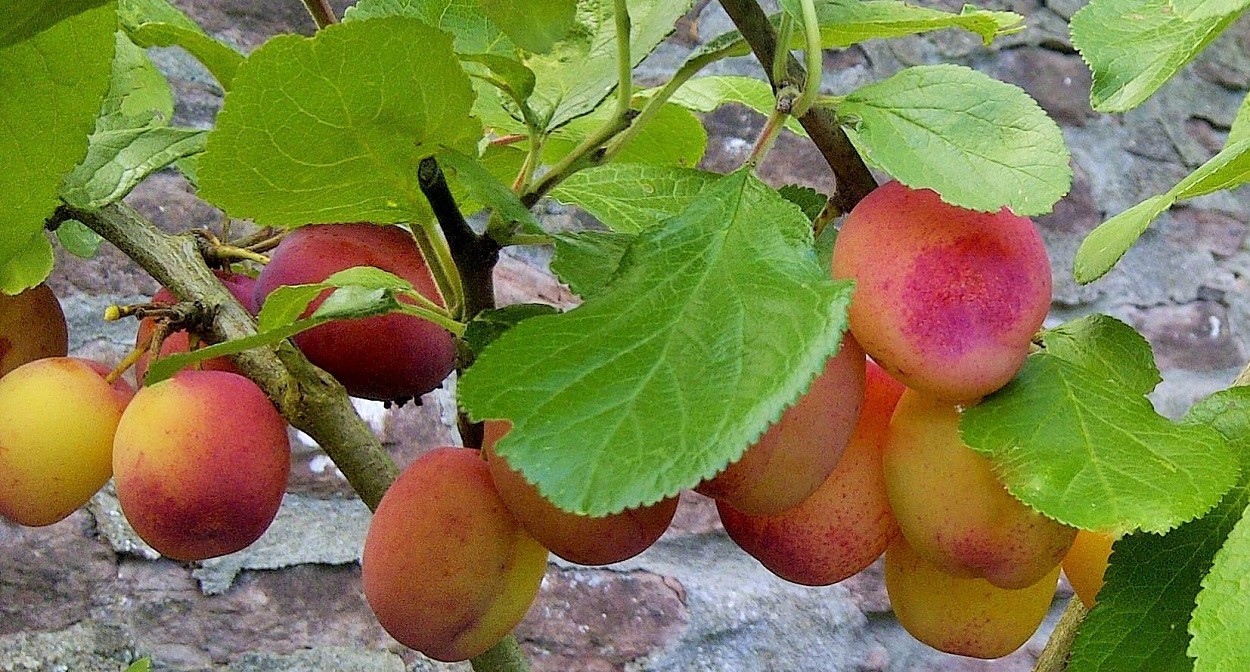
Close-up_of_fresh_Victoria_plums
Freshly picked ripe Victoria plums. Image: Kathryn Hawkins

Stoned fruit like plums, apricots and peaches go very well with the flavour of almond. If you crack the stones open, the inner part of the kernel has a strong almond aroma – I always add the kernels, in a muslin bag, to jam as it cooks, to give it more flavour. I realise marzipan isn’t to everyone’s taste, but is one of my favourite ingredients and in my mind, is perfect for eating with plums. This week’s recipe will work fine without it, the cake will be lighter in texture and will cook slightly quicker.

Overhead_image_of upside-down_plum_and_marzipan_cake
Perfect flavour paring of plums and almonds. Image: Kathryn Hawkins

You can make this cake with most fruit, just be aware that if a fruit is very juicy, the bottom of the cake will be quite sticky and may not completely cook through. The cake also makes a great pudding served warm with custard. I use spelt flour, the white variety, for this cake, but use gluten-free plain if you’re intolerant to wheat, and ordinary plain white flour if you don’t have spelt.

Serves: 10

Ingredients

  • 300g golden caster sugar
  • 550g plums
  • 175g dairy-free margarine
  • 175g non-dairy yogurt (coconut or soya work well)
  • 175ml unsweetened non-dairy milk (I used soya)
  • 190g white spelt flour (or gluten-free plain flour)
  • 12g gluten-free baking powder
  • 175g ground almonds
  • 175g marzipan, cut into small pieces
  • 20g flaked almonds, toasted
  1. Preheat the oven to 180°C, 160°C fan oven, gas 4. Grease and line a deep, 23cm round cake tin. Sprinkle the base of the tin with 2 tbsp. sugar and put to one side.
  2. Halve the plums and remove the stones, then arrange in the bottom of the tin to cover it completely. If you have any plums left over, chop them and sprinkle them over the layer of plums.
  3. Put the margarine in a bowl with the remaining sugar and whisk together for 3-4 minutes until creamy and light in texture and colour. Gently whisk in the yogurt and dairy-free milk with half the flour until well blended. Sieve the remaining flour and baking powder on top; add the ground almonds and marzipan, and mix everything together until thoroughly blended.

    Step_by_step_images_for_making_upside_down_cake
    Preparing upside-down cake. Images: Kathryn Hawkins
  4. Spoon the cake mixture on top of the plums and smooth over the top. Put the tin on a baking tray and bake for about 1 ½ hours until richly golden and firm to the touch. Leave to cool for at least 30 minutes in the tin before serving warm, or leave to cool completely in the tin if serving as a cake.
  5. To serve, turn the cake out on to a serving plate and sprinkle with flaked almonds to serve.

    Upside_down_plum_and_marzipan_cake_sliced
    Sliced and ready to serve, plum and marzipan cake. Images: Kathryn Hawkins


Victoria plums, baked with fresh bay and red wine (gluten-free, dairy-free, vegan)

Baked_plums_in_red_wine_flavoured_with_bay_leaves
Freshly baked home-grown Victoria plums in red wine, scented with fresh bay.               Image: Kathryn Hawkins

My first harvest of plums in the year marks the end of summer in my mind. There is, of course, something to celebrate in having such lovely fruit to pick, and yet, I feel a bit sad that autumn is approaching. I managed to get a head-start on the wasps this year, picking about 1kg of unblemished fruit. There are plums a plenty yet to ripen,  so I need to work on my timing over the next few days and harvest them before the wee sugar-seeking beasties move in.

On_the_bough_homegrown_Victoria_plums
Ripe and ready to pick, home-grown Victoria plums. Image: Kathryn Hawkins

Freshly_picked_basket_of_Victoria_plums
My first plum harvest of the year. Images: Kathryn Hawkins

My plum cookery isn’t very adventurous or fancy. I usually make jam or a plum sauce. Sometimes I make a compote. Baking them in wine is another very simple way I enjoy the rich, distinctive flavour of this particular fruit. Fresh bay-scented orchard fruit is something I tasted for the first time in Cyprus. The familiar glossy-leaved herb has become a flavour I use a lot in my kitchen, both in sweet and savoury cooking, and now that I have a bay tree in the garden, I use the herb all the more. Fresh bay gives a refreshing, herbal taste to fruit. You can use dry leaves, but as the flavour is much more intense than the fresh, you may want to experiment by reducing the quantity of leaves by at least half. If you don’t have any wine, or prefer not to use it, cranberry juice makes a good alternative in this recipe. If you don’t have plums, the recipe works equally well with apricots, peaches or nectarines. The baked fruit also freezes well too.

Serves: 6

Ingredients

  • 750g fresh Victoria plums
  • 60g Demerara sugar
  • 4 fresh bay leaves
  • 300ml fruity red wine or unsweetened cranberry juice
  1. Preheat the oven to 180°C (160°C fan oven, gas 4). Wash and pat dry the plums. Cut in half and remove the stones. Arrange the halves neatly, cut side up, preferably in a single layer, in a baking dish or tin.
  2. Sprinkle with sugar and push in the bay leaves, then pour over the wine or juice. Bake for 30-40 minutes, basting every 10 minutes, until tender.

    Baked_plum_preparation
    Baked plums with bay and red wine preparation. Images: Kathryn Hawkins
  3. Discard the bay leaves. Carefully strain off the cooking juices into a saucepan . Bring to the boil and boil rapidly for about 5 minutes until reduced and syrupy. Pour over the fruit and leave to cool. Cover and chill for 2 hours before serving. Best served at room temperature for maximum flavour. Delicious accompanied with coconut yogurt or rice pudding.

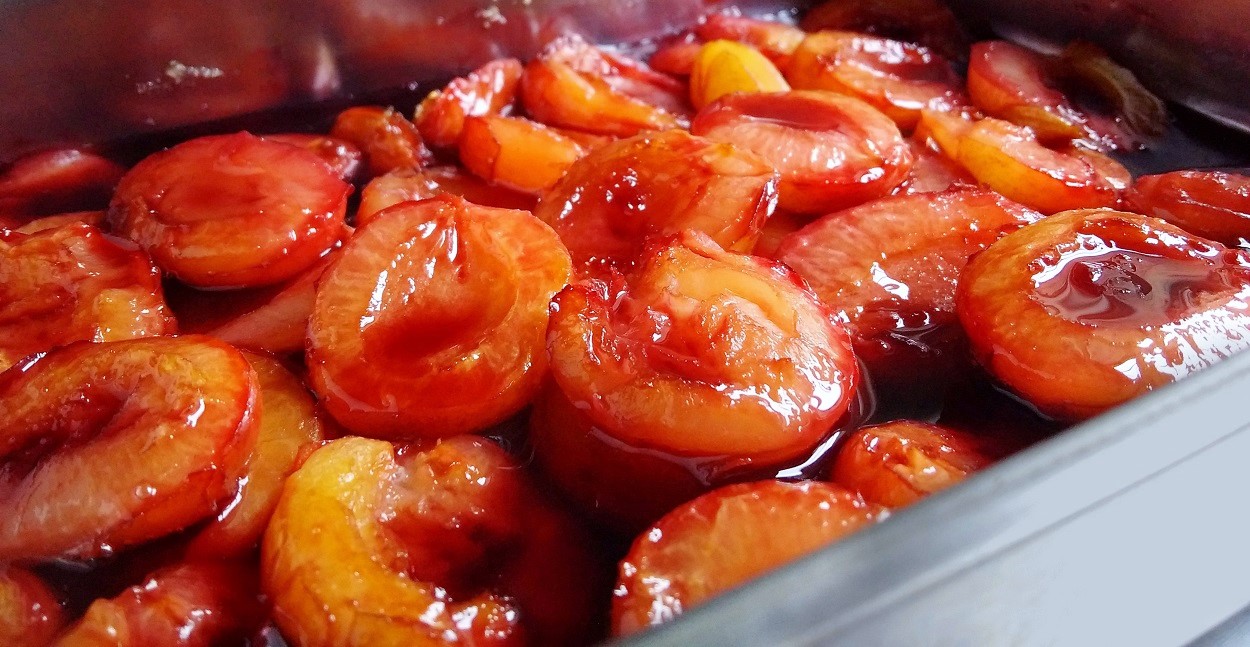
    Baked_plums_glazed_with_bay_and_red_wine_syrup
    Glazed plums cooling in the tin. Image: Kathryn Hawkins

    Serving_of_bay_scented_plums_with_coconut_yogurt
    Baked plums served with coconut yogurt. Image: Kathryn Hawkins