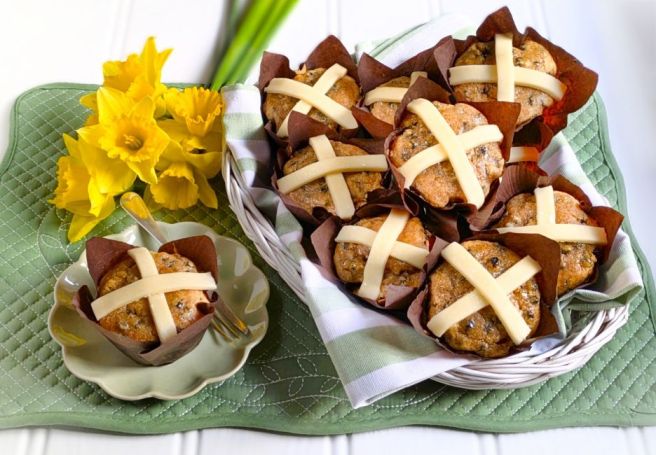
Easter baking: hot cross muffins (gluten-free; dairy-free; vegan)

Gluten-free_dairy-free_vegan_Easter_hot_cross_muffins
Happy Easter 2025! Image: Kathryn Hawkins

Hello again. Easter is finally upon us. It feels like it’s been a long wait this year. We have had a long spell of warm, dry and sunny weather here in the UK which has brought with it a glorious Spring, full of flowers and blossoms. The daffodils are going over now but they have put on a great show this year, but it is the primroses that have really stolen the show. The dry weather has meant that there have been fewer beasties around to dine out on their delicious petals.


Scottish_garden_daffodils_April_2025
Scottish_garden_Daffodils_April_2025
Potted_garden_Daffodils_April_2025
Daffodil assortment. Image: Kathryn Hawkins
Scottish_garden_primroses_April_2025
April primroses. Image: Kathryn Hawkins

To celebrate the season, I have been baking. A twist on the yeasted fruit and spice buns which are traditional at this time of year, these muffins are easy to make and delicious served warm or cold. They freeze fine as well. I use a gluten-free bread flour which has xanthan gum added to it. Use a plain version if you prefer for a softer and more crumbly muffin.

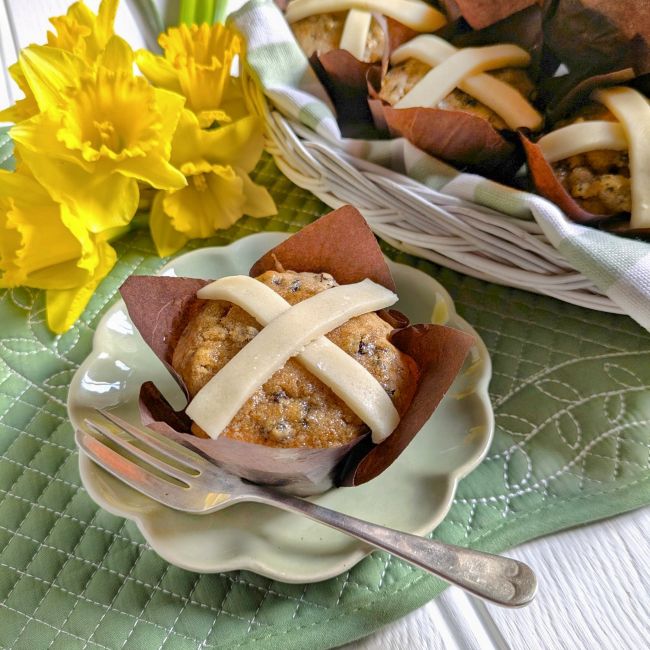
Basket_of_gluten-free_vegan_Easter_muffins
Freshly baked and ready to serve. Image: Kathryn Hawkins
Single_gluten-free_vegan_Easter_muffin
Easter on a plate. Image: Kathryn Hawkins

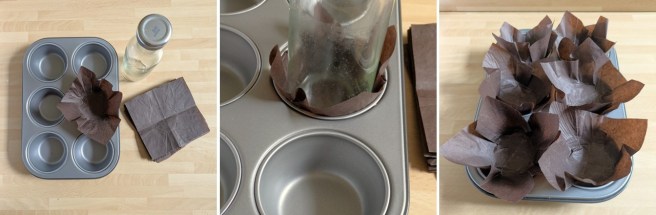
I made my own cases. If you fancy having a go yourself, you will need 10 x 12-13cm squares baking paper and a bottle or jar that fits snuggly into a muffin tin. Line up the paper square over the muffin tin and push it in place using the end of the bottle. You may have to pleat and model the paper a little to make it fit the tin more neatly, but the weight of the cake mixture will hold it in place.
Making_muffin_cases
Homemade muffin cases. Images: Kathryn Hawkins

Makes 10:

Ingredients

  • 1tbsp ground linseeds (flaxseeds)
  • 225g gluten free bread flour
  • 2tsp gluten free baking powder
  • 1tso ground mixed spice
  • 115g light soft brown sugar
  • 175g currants or other chopped dried fruit
  • 50g plant-based butter, melted
  • 175ml plant-based milk (I used oat milk)
  • 2tbsp carob or maple syrup
  • 100g natural marzipan

1. Preheat the oven to 190°C, 170°C fan oven, Gas 5. Line 10 muffin tins with paper cases. Mix the linseeds with 3tbsp cold water and leave for 5 minutes to thicken slightly.

2. Sift the flour, baking powder and spice into a bowl and stir in the brown sugar and currants. Make a well in the centre.

3. Pour in the melted butter, milk and linseed mixture, then mix everything together to make a thick batter.

4. Divide between the cases, smooth the tops and bake for 30-35 minutes until risen and lightly golden. Transfer to a cooling rack and brush the tops with the syrup. Leave to cool for 15 minutes.

6_steps_showing_how_to_make_gluten-free_vegan_Easter_muffins
Easter muffin making. Images: Kathryn Hawkins

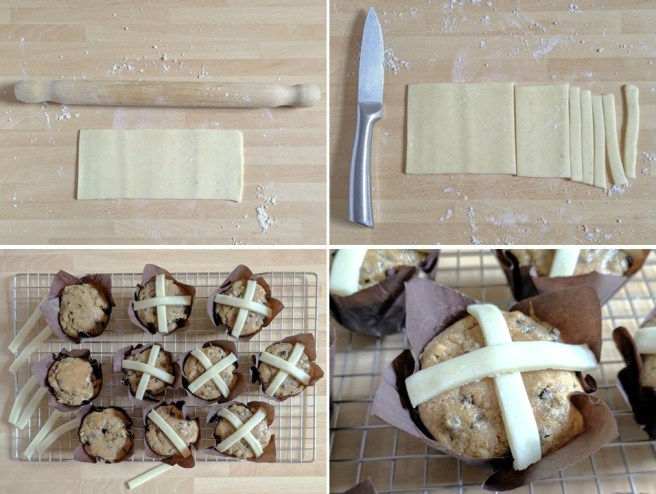
5. Meanwhile, lightly dust the work top with icing sugar and roll out the marzipan to a rectangle approx. 7 x 20xm. Cut into 20 thin strips.

6. Arrange the strips on top of each warm bun to form crosses. Serve the buns warm or leave to cool completely if preferred. Best eaten within 2 days of baking. Store in an airtight container or freeze when cold.
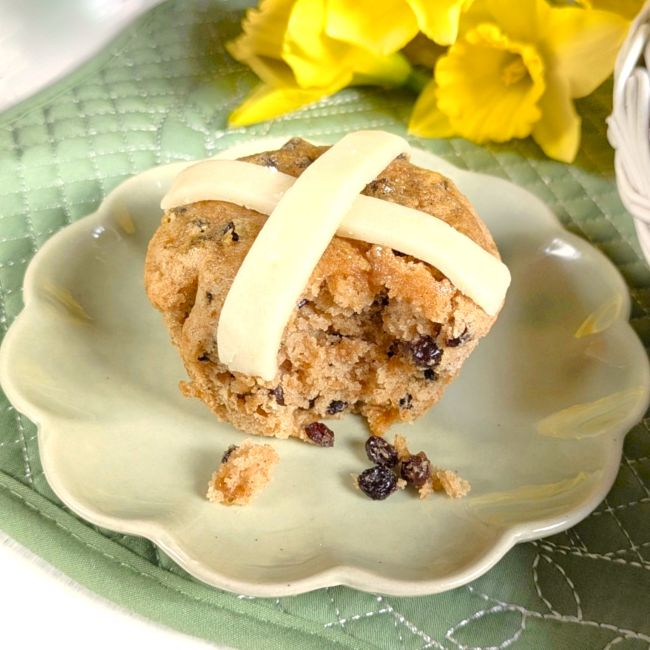
Making_marzipan_crosses_for_gluten-free_vegan_hot_cross_muffins
Marzipan crosses. Images: Kathryn Hawkins
Easter_2025_gluten-free_vegan_spiced_and_fruited_muffin
Too good to resist. Image: Kathryn Hawkins

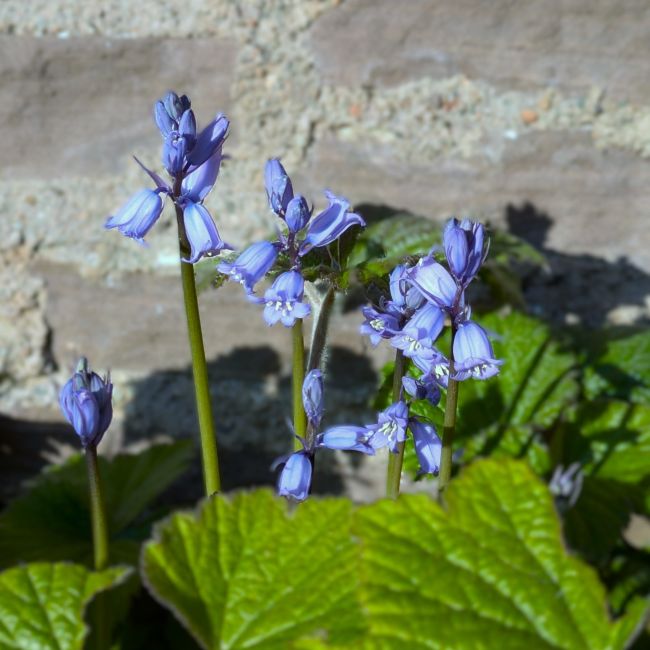
Whatever you are doing this coming Easter weekend, I hope you have a lovely time. Until next month, I’ll leave you with this image of the first bluebells to open up in the garden. The sunshine has encouraged them to flower a few days earlier than usual. Happy Easter everyone 🙂
Scottish_garden_bluebells_April_2025
Bluebells for Easter. Image: Kathryn Hawkins

Slow cooker spiced green tomato chutney (naturally gluten-free; dairy-free; vegan)

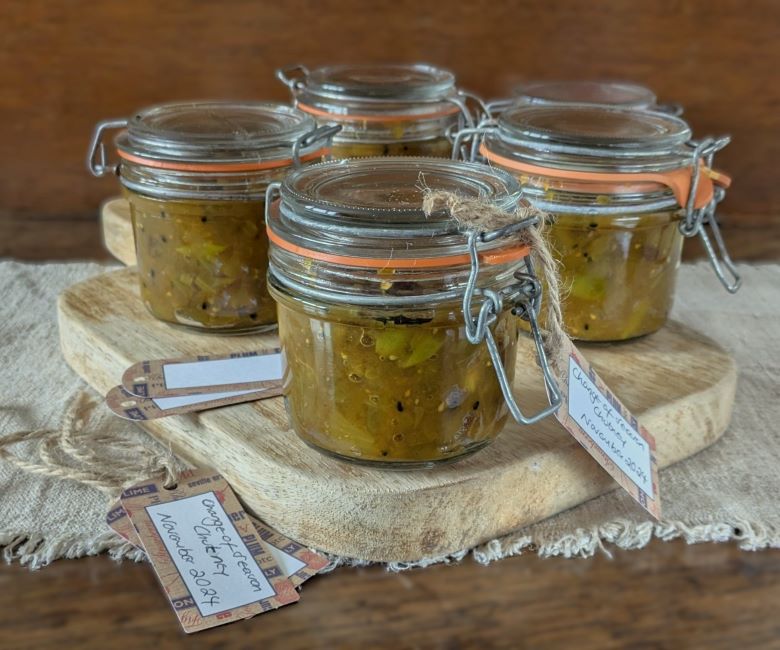
Jars_of_slow_cooker_spiced_green_tomato_chutney
Last of the Autumn produce preserved. Image: Kathryn Hawkins

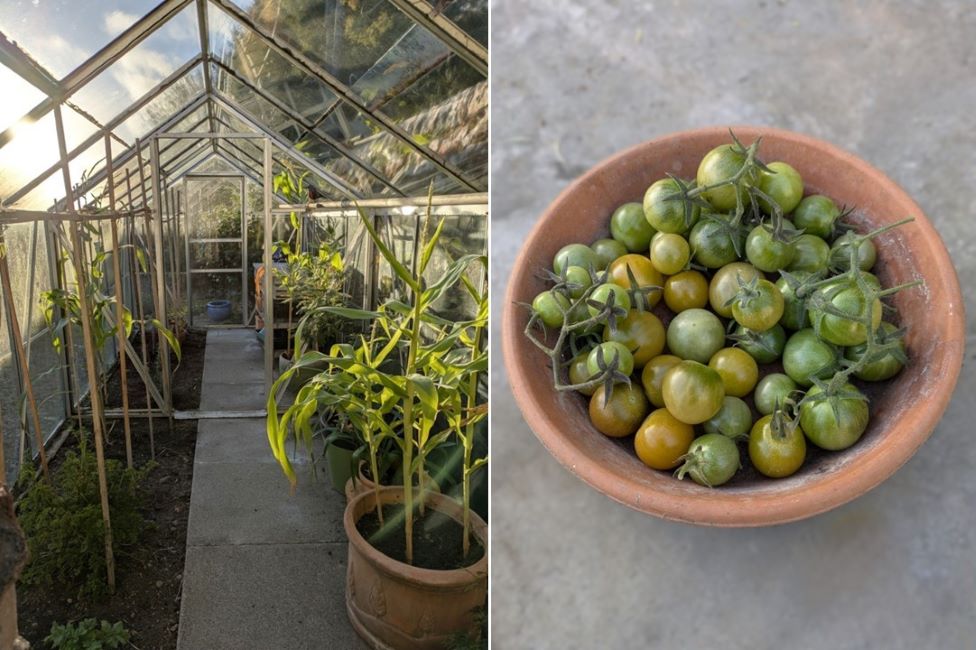
Hello there. When I planned to make this chutney a couple of weeks ago, it was very much still Autumn. I picked off the last of the tomatoes and put the greenhouse to bed during a lovely sunny afternoon. I was going to call the chutney “End of Autumn”.

Last_of_the_greenhouse_tomatoes_November_2024
Last of the greenhouse tomatoes, mid-November 2024. Images: Kathryn Hawkins

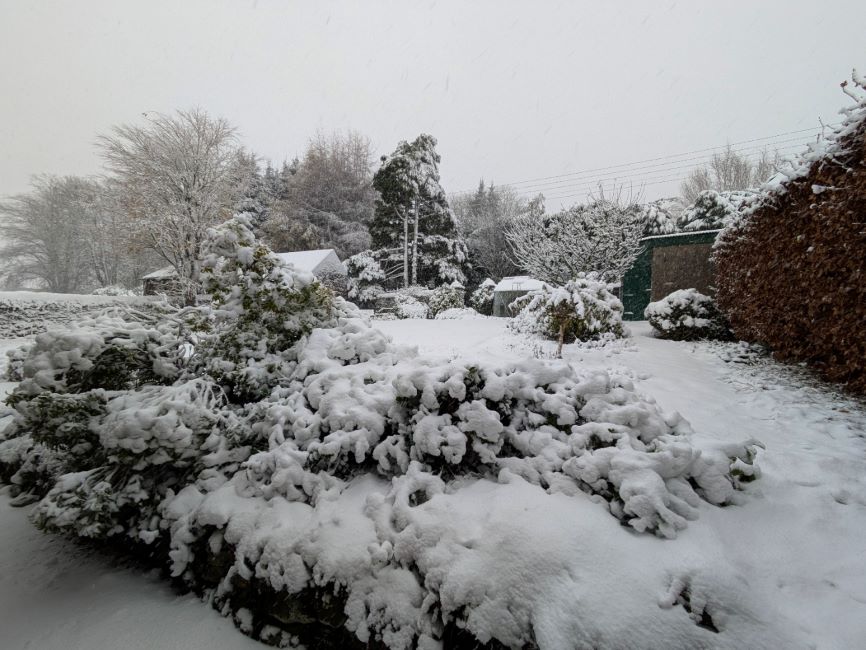
However, when I came to make the chutney last weekend, snow was falling very heavily and suddenly we were in winter. And so I thought “Change of Season” chutney would be more appropriate 🙂
November_2024_Scottish_garden_covered_in_snow
November snowy garden. Image: Kathryn Hawkins

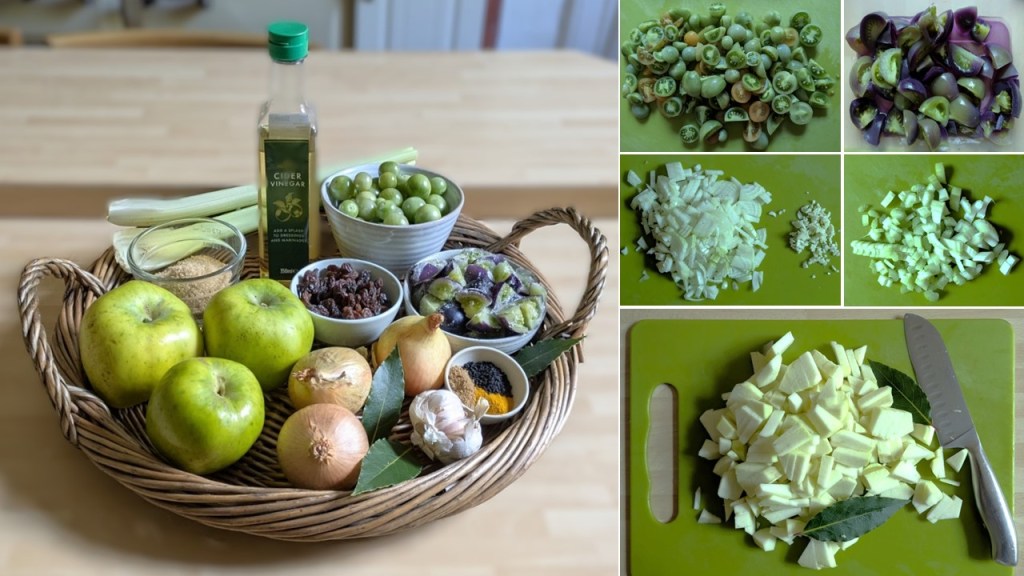
I made the chutney in my slow cooker. It is ready to eat as soon as it cools and tastes delicious. I used up the last of this year’s apple harvest along with some black-skinned tomatoes that I had frozen down a few weeks ago. The spices I used give a mild curry flavour but you can change them if you prefer – cinnamon, cumin and coriander for a more earthy flavour would work well.

Ingredients_for_spiced_green_tomato_slow_cooker_chutney
Slow cooker chutney ingredients. Images: Kathryn Hawkins

If you haven’t made a preserve in your slow cooker before, the technique is slightly different in that you can’t boil the preserve down like you would in a saucepan on the stove. The chutney is also cooled before putting in jars, and as such needs to be kept in the fridge. It will however keep for a few weeks or can be frozen for longer term storage.

Makes: approx. 1kg

Ingredients

  • 400g green tomatoes, chopped
  • 2 medium onions, peeled and chopped (about 180g prepared weight)
  • 2 garlic cloves, peeled and chopped
  • 2 sticks celery, trimmed and chopped (about 110g prepared weight)
  • 2 large cooking apples, peeled and chopped (about 300g prepared weight)
  • 2 bay leaves
  • 100ml cider vinegar
  • 75g sultanas or chopped dried apricots
  • 2tsp garam masala
  • 1tsp each nigella seeds, turmeric and salt
  • 150g demerara or light brown sugar (or you can use granulated white sugar)

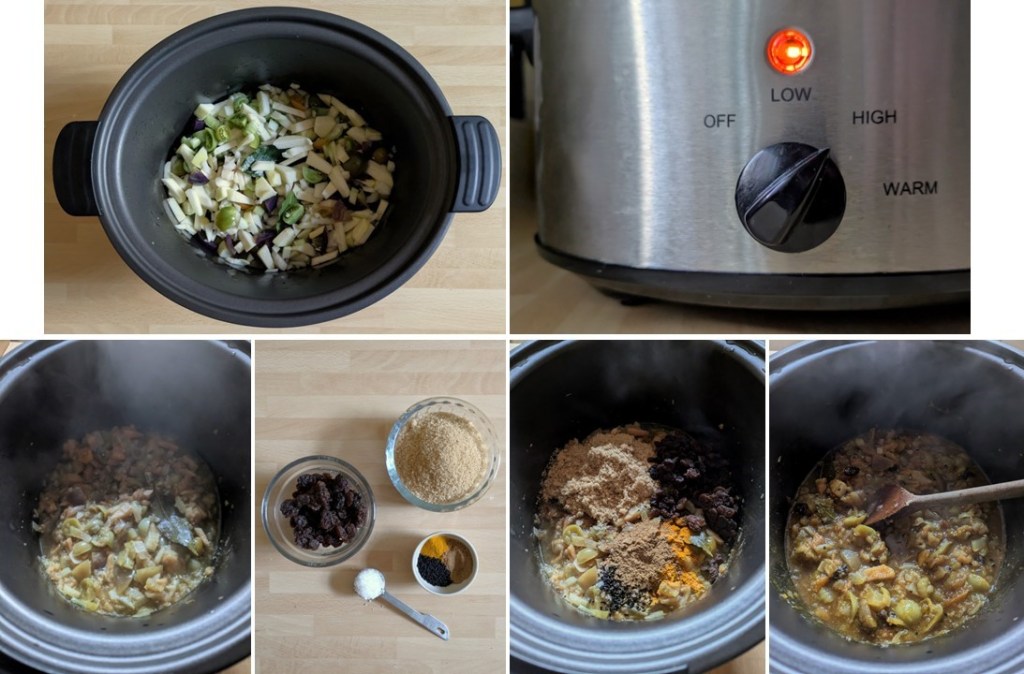
1. Put all the vegetables in the slow cooker with the bay leaves and mix well. Pour over the vinegar, cover with the lid and cook on High for 4 hours.

2. Add the remaining ingredients, mix well, re-cover and cook for 30 minutes to dissolve the sugar.

Slow_cooker_chutney_ingredients_being_cooked_and_flavoured
Slow cooking and seasoning chutney. Images: Kathryn Hawkins

3. Remove the lid, stir well and cook uncovered for a further 2 hours, stirring occasionally until reduced down and jam-like.

4. Switch off the cooker and leave the chutney to cool completely. Discard the bay leaves and spoon into clean jars. Seal, label and store in the fridge for up to 3 months. Once opened, use within a month. Alternatively, freeze the chutney in containers and defrost when required.

Final_cooking_and_bottling_of_slow_cooker_chutney
Reducing the chutney down ready for storing. Images: Kathryn Hawkins
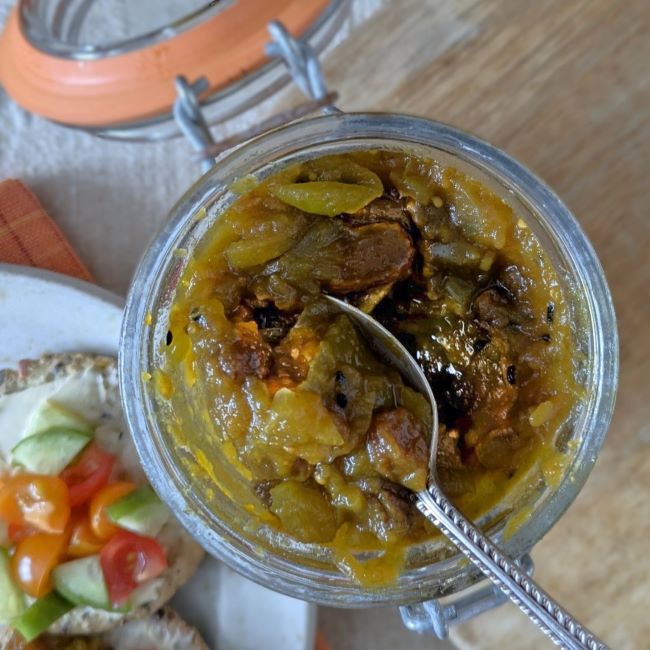
Slow_cooker_curried_green_tomato_chutney
A sweet and spicy spoonful. Image: Kathryn Hawkins

That’s me for another month. I have one more post before Christmas, so until then take care and keep warm 🙂

Simnel loaf cake (gluten-free; dairy-free; vegan)

Gluten-free_dairy-free_vegan_Simnel_loaf_cake
Simnel loaf cake. Image: Kathryn Hawkins

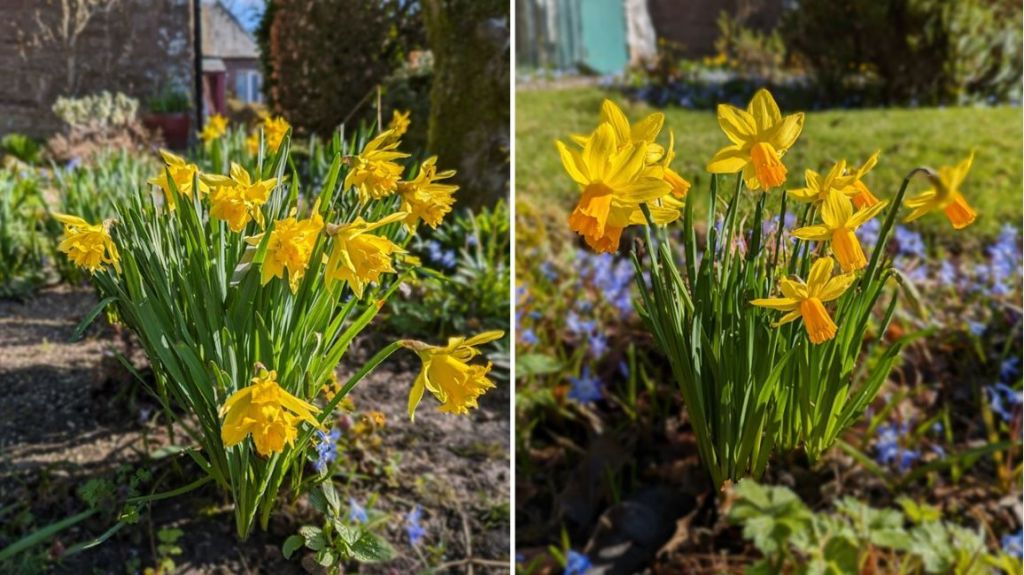
Hello again. It’s nearly Easter which is one of my favourite times of the year. Lots of wonderful spring flowers everywhere with longer days and (usually) warmer temperatures. The garden is full of spring bulbs at the moment, and on a rare sunny day last week, I managed to capture some of them in all their bright and bold glory.

Scottish_garden_March_Daffodils_in_the_sunshine
Golden glow. Images: Kathryn Hawkins

My recipe this month is a bake, inspired by Easter and the season, it’s a no-fuss cake mix baked in a loaf tin, flavoured with Chai Masala mix and marzipan. You can use any regular spice mix but if you fancy the Chai blend, here’s a link to making your own from a previous Easter post of mine Chai masala biscuits for Easter (gluten-free, dairy-free, vegan)

Key_ingredients_for_Simnel_loaf_cake
Key ingredients and flavours. Images: Kathryn Hawkins

I used a white gluten-free bread flour for this recipe but you can use a standard blend and either add your own Xanthan gum or leave it out altogether. The raising agent is baking soda and the liquid is buttermilk which is quick and easy to make at the beginning of the recipe along with a flax egg.

Close-up_of_marzipan_layer_in_a_Simnel_loaf_cake
Marzipan centre. Image: Kathryn Hawkins

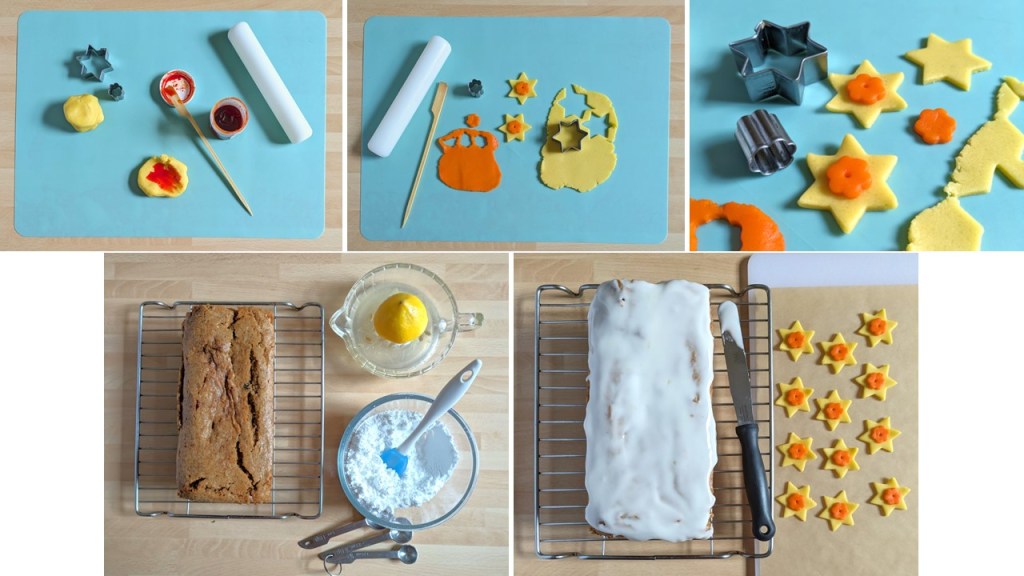
I have put a layer of grated golden marzipan running through the cake which you can leave out or replace with extra dried fruit pieces if you prefer. The flowers on top are also made from marzipan, but use coloured ready to roll icing if you prefer.

Slice_of_Easter_Simnel_loaf_cake
Easter baking in one slice. Image: Kathryn Hawkins

Serves: 8

Ingredients

  • 5tsp fresh lemon juice
  • 185ml plant milk (I used oat milk)
  • 1tbsp ground flax seed (linseed)
  • 200g golden marzipan
  • 115g lightly salted plant butter, softened
  • 150g light soft brown sugar
  • 250g gluten-free white bread flour
  • ¾tsp bicarbonate of soda
  • 1½tsp Chai Masala or other ground spice mix
  • 75g sultanas
  • Orange food colour gel
  • 75g icing sugar

1. For the buttermilk, mix 2½tsp lemon juice into the plant milk and leave to stand for 15 minutes until thickened slightly. For the flax egg, mix the ground flax seed with 3tbsp water and leave for a few minutes to thicken.

2. Grate half the marzipan and set aside. Grease and line a 1kg loaf tin. Preheat the oven to 180°C, 160°C fan oven, gas 4.

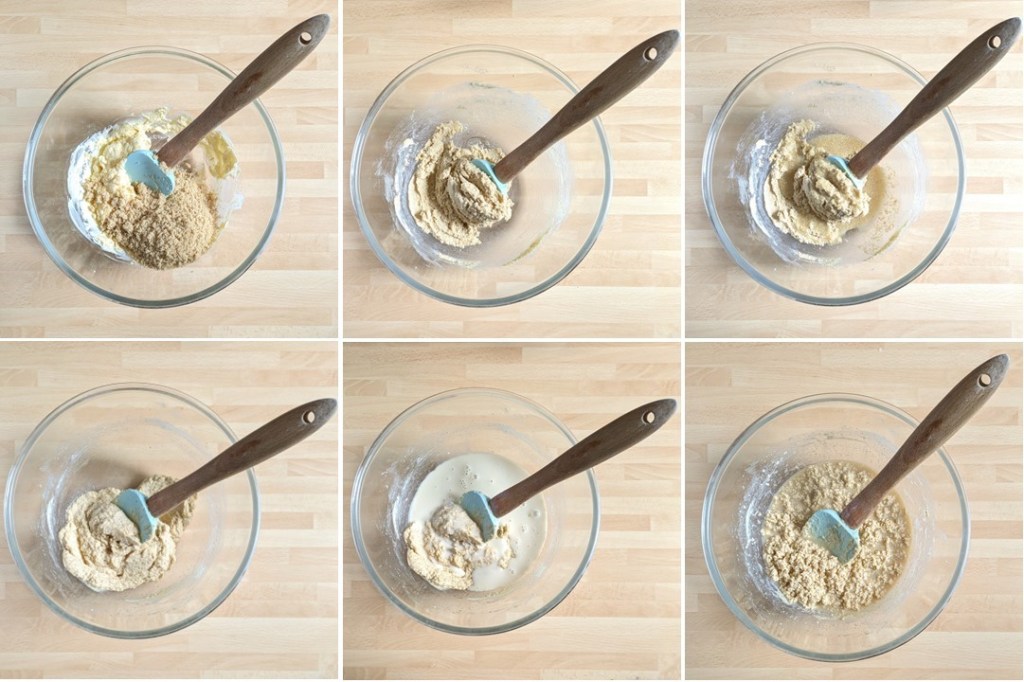
3. Put the butter and sugar in a bowl and mix together until thick and creamy. Stir in the flax egg and then mix in the buttermilk – it will look a bit lumpy and separated at this stage.

Making_gluten-free_dairy-free_vegan_cake_batter
Making the batter. Images: Kathryn Hawkins

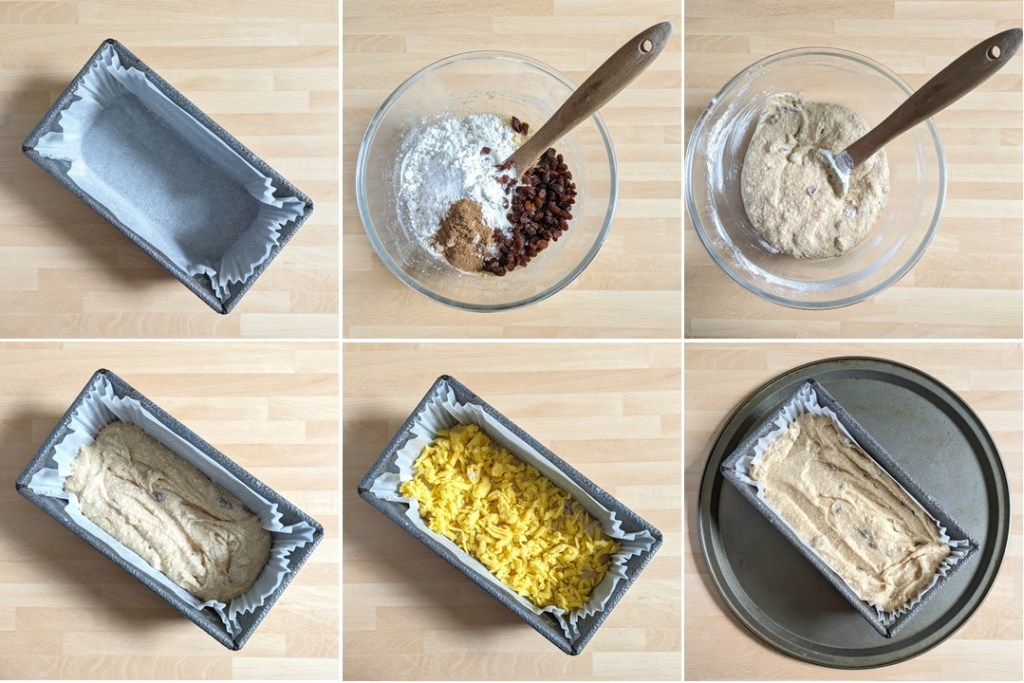
4. Stir in the flour, bicarbonate of soda, spice and sultanas and mix until everything is well blended and smooth.

5. Spoon half of the cake batter into the tin and smooth the surface. Sprinkle over the grated marzipan and spread the rest of the batter on top. Stand the tin on a baking tray and bake for about 1 hour 15 minutes until risen and firm to the touch – test the centre with a skewer to make sure it completely cooked. Cool in the tin for 30 minutes before removing and placing on a wire rack to cool completely.

Assembling_and_baking_Simnel_loaf_cake
Easter loaf ready for baking. Images: Kathryn Hawkins

5. While the loaf is cooling, make the decorations. Break off a small piece of the remaining marzipan and blend in a little orange food colour gel. I used a 4cm star cutter to make the outer yellow petals of the Daffodils, and a 1½cm flower shaped cutter to make the central orange petals.

6. Roll out the marzipan thinly and cut out stars and flower shapes. You should be able to make 12 of each. Transfer to a lined board until ready to decorate the cake.

Making_marzipan_Daffodils
Marzipan Daffodil decorations. Images: Kathryn Hawkins

7. For the icing, sift the icing sugar into a bowl. Add 2-2½tsp of the remaining lemon juice to make a spreadable consistency, then spread over the top of the cake, allowing it to drip down the sides. Arrange the marzipan flowers on top.

Uncut_Easter_Simnel_loaf_cake
Ready for slicing. Image: Kathryn Hawkins

The cake keeps well, and improves in flavour and texture if you make it at least 24 hours before decorating and serving. Store in an airtight container once decorated.

I hope you have a good Easter weekend and enjoy some spring sunshine whatever you are doing. Until next time, thanks for stopping by 🙂
Baked mushrooms in Gochujang sauce (gluten-free; dairy-free; vegan)

Bowl_of_Gochujang_mushrooms
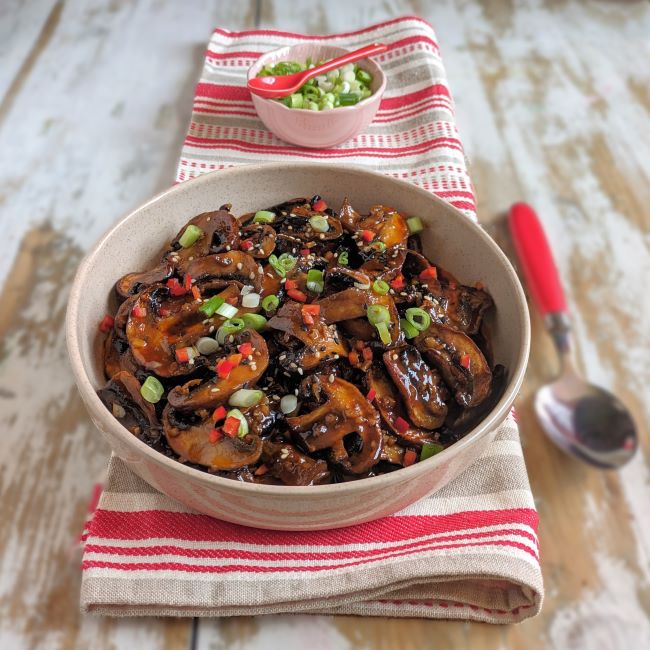
Gochujang mushrooms. Image: Kathryn Hawkins

Hello there. I’ve been back in the kitchen for my post this month and I have a very tasty recipe to share, perfect for this time of year when it’s still a bit on the chilly side.

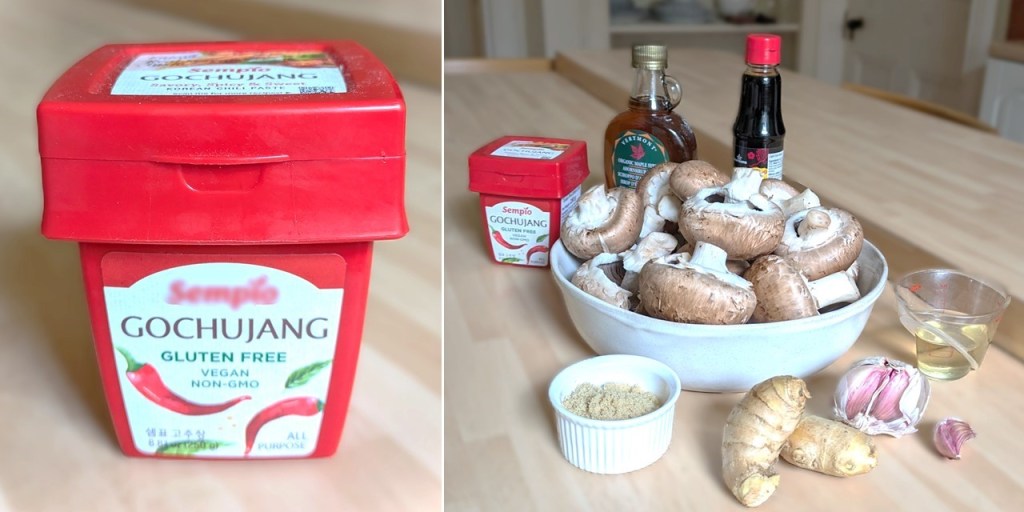
Ingredients_for_Gochujang
Mushroom marinade ingredients. Images: Kathryn Hawkins

If you’re a regular reader of my recipes you’ll know that I’m not a huge fan of fiery food. However, I discovered this Korean paste a while ago and really enjoy it’s rich umami flavour and spicy chilli heat. I’m sure there are brands on the market which are very hot but this blend is just right for me, and it’s gluten-free and vegan as well 🙂

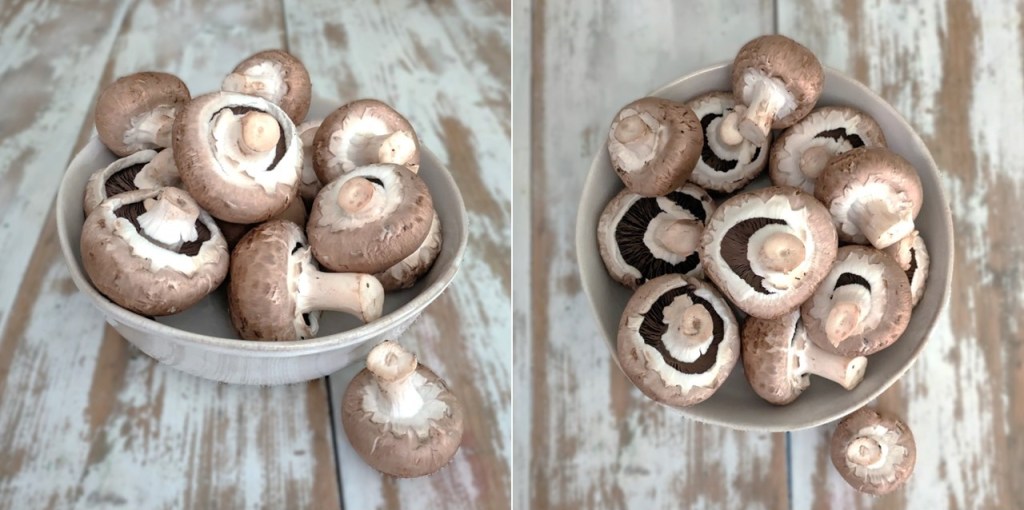
Chestnut_mushrooms
A bowl of chestnut mushrooms. Images: Kathryn Hawkins

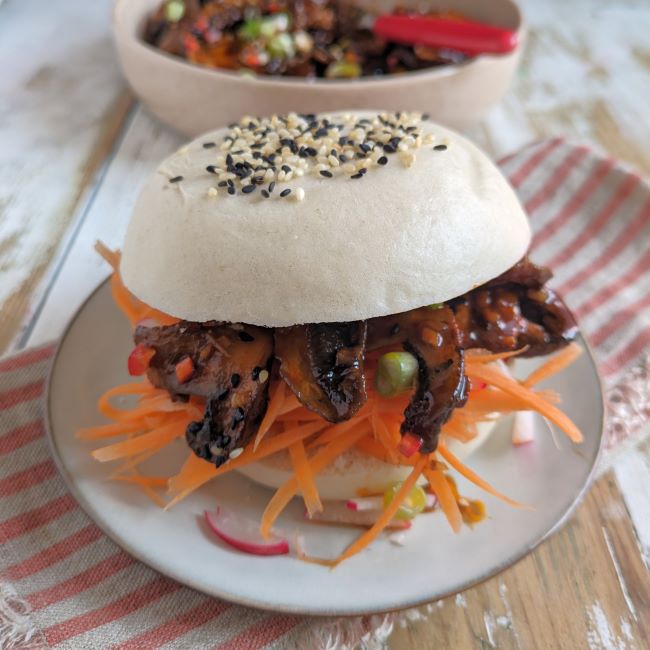
I chose chestnut (or brown) mushrooms for this recipe because they have a “meaty” texture but large flat or Portobello mushrooms will work just as well I’m sure. Prepare the ingredients the day before you want to serve the mushrooms. This will allow the marinade time to draw out some of the moisture from the mushrooms. Serve them as a side dish for 4 people or as a main course for 2-3. They also make a delicious filling for steamed sesame buns – see my recipe here Steamed sesame buns (gluten-free; dairy-free; vegan)

Gluten-free_vegan_steamed_sesame_bun_filled_with_gochujang_mushrooms
Mushroom-filled sesame bun. Image: Kathryn Hawkins

Serves: 2-4

Ingredients

  • 2 fat cloves of garlic
  • 15g root ginger
  • 4 tbsp sunflower oil
  • 2 tbsp gluten-free, vegan Gochujang paste
  • 2 tbsp maple syrup (or other plain plant syrup)
  • 1 tbsp light brown sugar
  • 1 tbsp light gluten-free soy sauce
  • 500g chestnut mushrooms, wiped
  • Sesame seeds, chopped red chilli and spring onion to serv

1.Peel and finely chop the garlic and ginger. Place in a large bowl and mix in all the ingredients except the mushrooms.

2. Slice the mushrooms thickly, and add to the bowl in batches, mixing with the marinade ingredients to make sure all the slices are coated. Cover and chill overnight.

Making_gochujang_marinade_for_mushrooms
Making the marinade. Images: Kathryn Hawkins

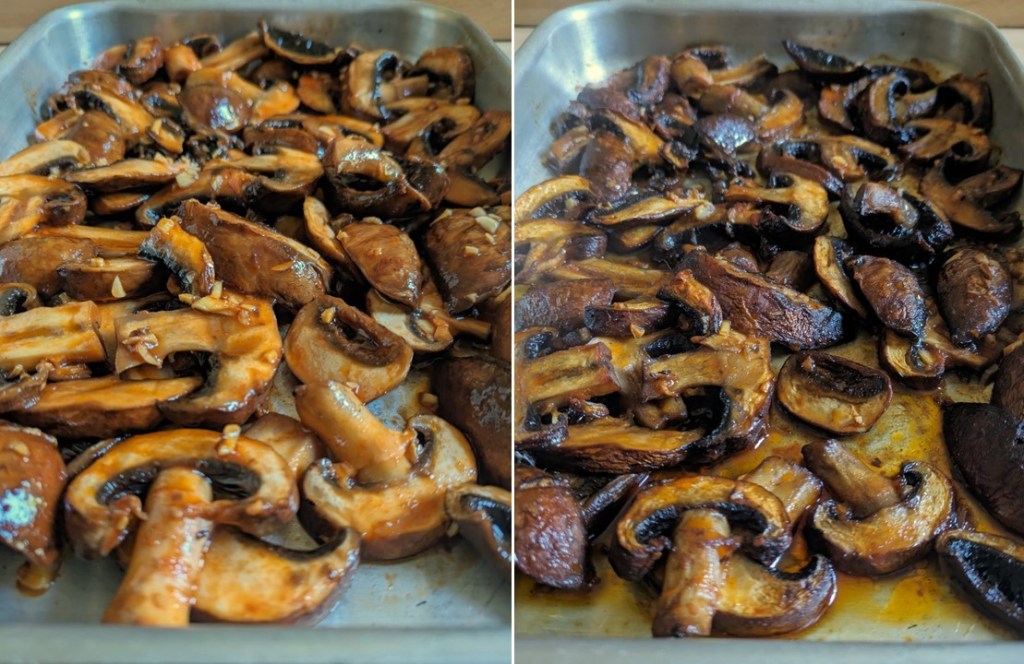
3. The next day, drain the mushrooms, reserving the marinade and pouring into a small saucepan. Put the mushrooms into a shallow roasting tin and place in the oven. I don’t preheat my oven for recipes like this, I just set it to 200°C, 180°C fan oven, gas 6 and leave the mushrooms for 30 minutes until tender and cooked through.

Chestnut_mushrooms_after_marinating
Ready to roast. Images: Kathryn Hawkins
Chestnut_mushrooms_ before_and_after_roasting
Before and after roasting. Images: Kathryn Hawkins

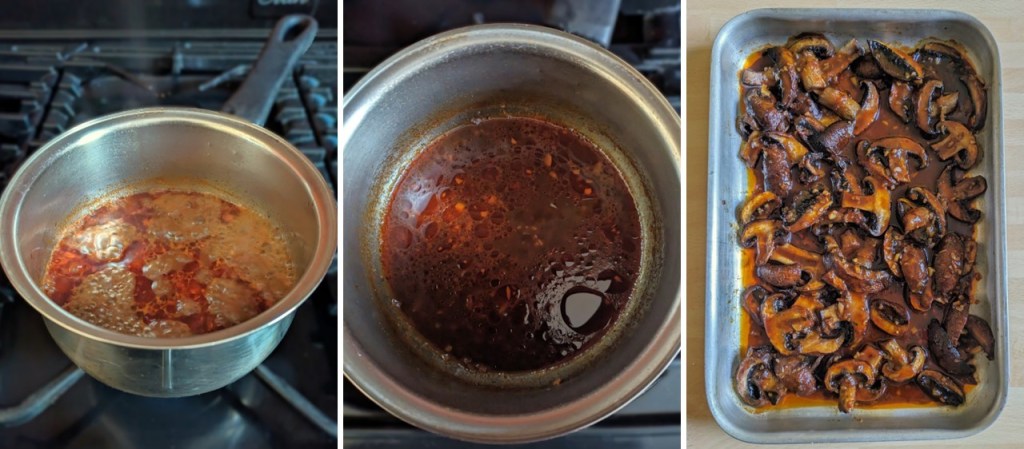
4. While the mushrooms are cooking, bring the marinade to the boil and simmer for about 10 minutes until reduced by half. When the mushrooms are ready, pour the reduced mixture over them and mix well.

Reducing_gochujang_mushroom_marinade
Reducing the marinating juices. Images: Kathryn Hawkins

5. Serve the mushrooms with sesame seeds, chopped chilli and spring onion. Great spooned over rice, pasta or noodles. I hope you enjoy this recipe as much as I do. I hope to see you again next month and thanks as always for stopping by 🙂

Gluten-free_vegan_Gochujang_mushrooms
Warming, spicy and very, very tasty. Image: Kathryn Hawkins

Aromatic and spiced, slow-cooker quince (naturally gluten-free; dairy-free; vegan)

Gold_serving_bowl_of_freshly_cooked_slow-cooker_spiced_quince
Slow-cooker spiced quince. Image: Kathryn Hawkins

Hello again. It’s officially the time of year when the slow-cooker is permanently on the work top in my kitchen. With daylight hours becoming fewer and the temperature getting lower and lower, in my mind, “comfort food” is an important aid to get me through the next few months.

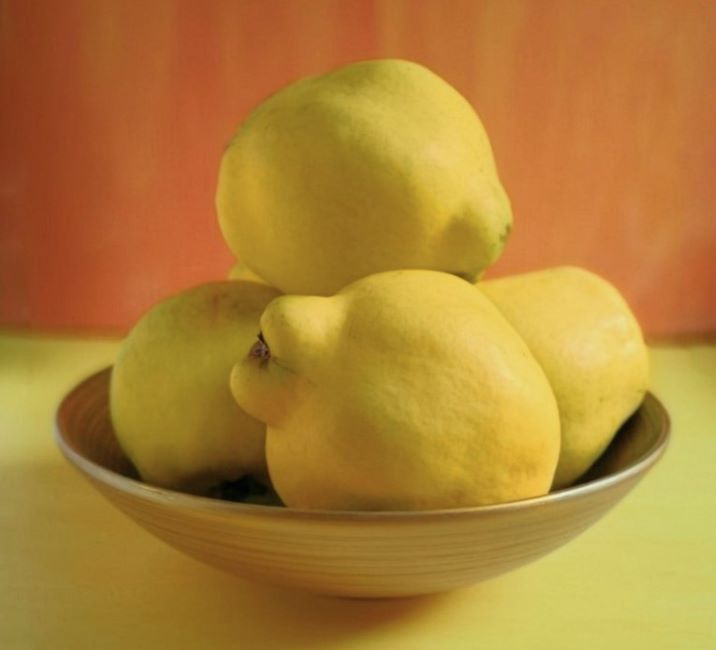
Fresh_quince_in_a_gold_bowl
Golden quince. Image: Kathryn Hawkins

I’ve been saving these beautiful quince for a few weeks, making sure they are perfectly ripe for maximum flavour and aroma before I cook them. I chose a selection of my favourite aromatics to add to a sugar syrup: rose water, lemon, vanilla and cinnamon, all perfect companions for this fabulous autumn fruit.

Fresh_quince_and_flavours_for_cooking
Fresh qunice and flavourings. Images: Kathryn Hawkins

This is a very straightforward recipe for the slow-cooker. Once the quince are prepared it’s just a case of making the syrup to pour over. When the cooking is done, I reduced the cooking juices down to make a more intensely flavoured syrup to pour back over the fruit. If you don’t have quince, try using slightly under-ripe pears instead.

Serves: 4-6

Ingredients

  • 750g ripe quince
  • 1 unwaxed lemon
  • 1 cinnamon stick, split
  • 1 vanilla pod, split
  • 50g caster sugar
  • 2tbsp carob or maple syrup
  • Rosewater to taste
  • Pistachios and pomegranate seeds to sprinkle

1.Using a vegetable peeler, carefully peel away the outer lemon zest without taking too much white pith. Set aside. Cut the lemon in half and extract the juice. Place in a large bowl along with the squeezed out lemon shells. Top up with cold water.

2.Peel the quince thinly. Cut into quarters and slice out the core. As soon as you prepare each quarter, push it down into the lemony water to help prevent discolouration.

3.When all the fruit is prepared, drain well, discard the lemon shells and place the quince in the slow-cooker dish. Add the reserved lemon zest, cinnamon and vanilla.

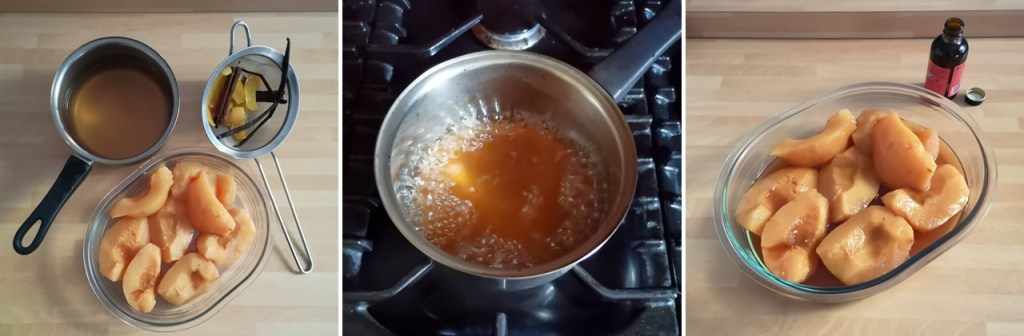
4.Put the sugar in a saucepan with 400ml water. Heat gently to dissolve, then bring to the boil and cook for 5 minutes. Pour over the fruit, place the lid on top and cook on High for 2 hours, turning the fruit halfway through, until tender.

7_steps_to_preparing_quince_for_slow-cooking
Slow-cooker spiced quince preparation. Images: Kathryn Hawkins

5. Turn off the power and leave to cool for 2 hours before draining the fruit and straining the cooking liquid into a saucepan. Put the fruit in a heat proof dish and cover with foil.

6. Add the maple or carob syrup to the cooking juices, bring to the boil and simmer for 7-8 minutes until syrupy. Cool for 10 minutes. Add a few drops of rosewater to taste then pour over the fruit and leave to cool completely.

Making_a_flavoured_syrup_for_slow-cooker_spiced_quince
Making the syrup. Images: Kathryn Hawkins

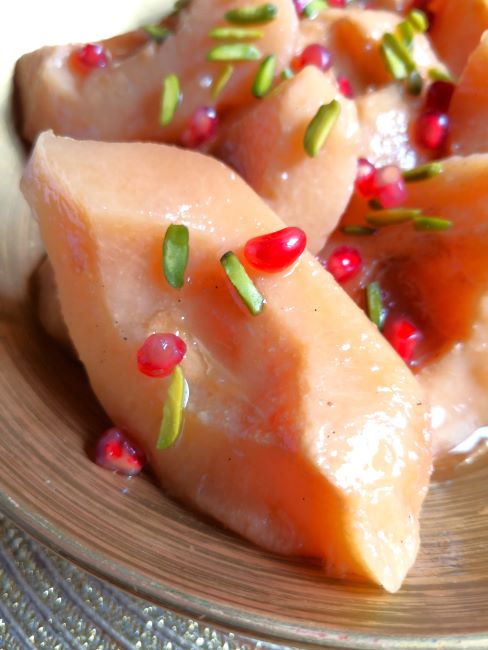
7. Cover and chill until ready to eat. Serve at room temperature for maximum flavour. Sprinkle with pistachios and pomegranate seeds for crunch. The quince freezes well in the syrup for later enjoyment.

Slow-cooker_spiced_quince_close-up
Sweet, spiced deliciousness. Image: Kathryn Hawkins

I hope you enjoy the recipe and I look forward to welcoming you back to my next post in a couple of weeks time. Thanks for stopping by 🙂

Fruit butter (naturally gluten-free; dairy-free, and vegan)

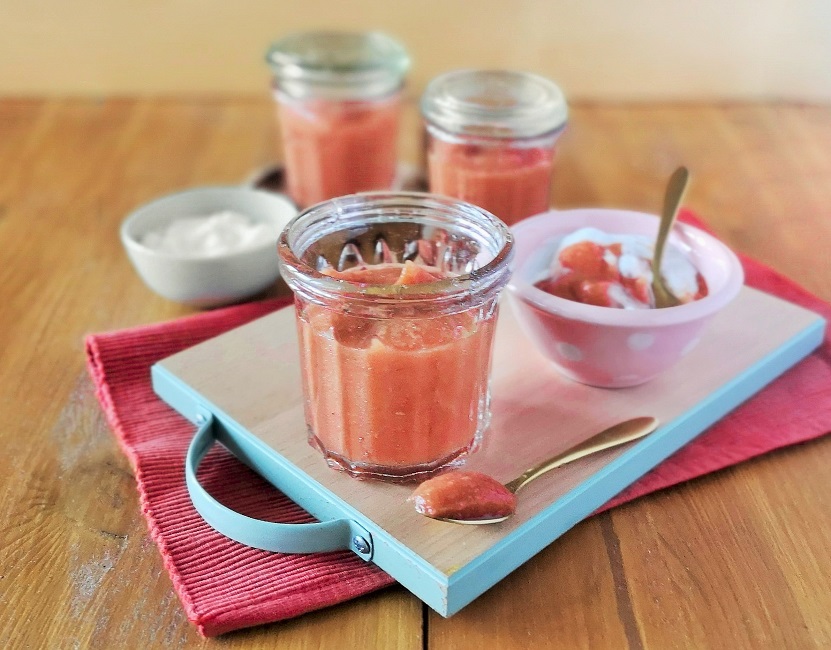
Homemade_fruit_butter_in_glass_jars_and_served_with_coconut_yogurt
Homemade fruit butter. Image: Kathryn Hawkins

Happy New Year! I hope you have had a good holiday. We find ourselves at the beginning of a brand new year, wondering what 2023 has instore for us all. Let’s hope it’s a good one.

It’s been a chilly, frosty and snowy end of year here in central Scotland. I didn’t venture very far. I have been in the kitchen keeping cosy and have been trying new ways of using up what remains of the stored fruit from last Autumn. This week’s post is the result of one of my experiments, slow-cooked fruit butter. It keeps for about a week in the fridge but can be frozen for use later in the year.

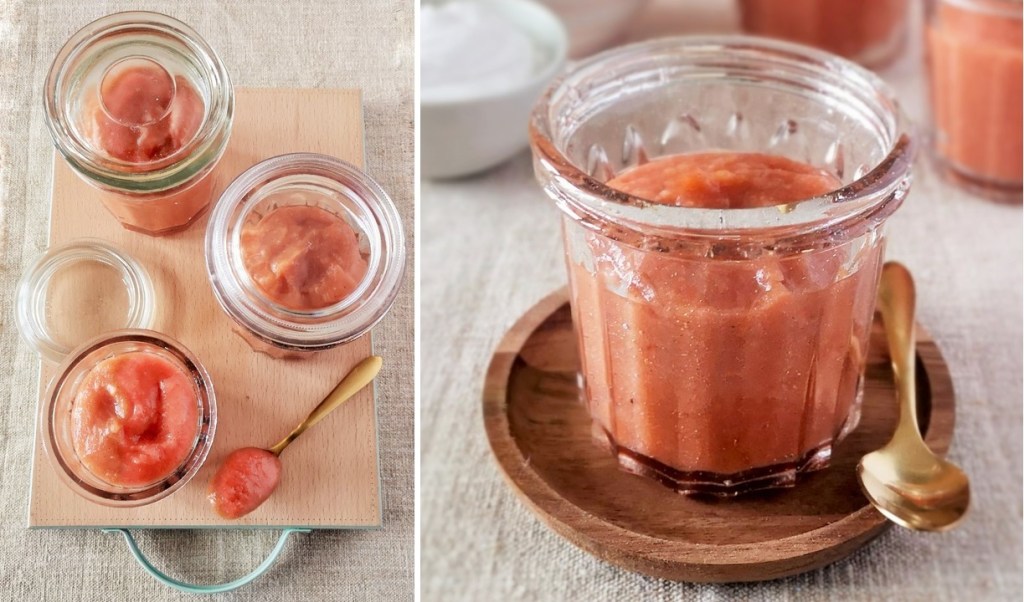
Homemade_fruit_butter_in_glass_jars
In the jar. Images: Kathryn Hawkins

Fruit butter has nothing to do with dairy butter. In fact, it is completely fat free. I guess it gets its name from the fact that it is silky smooth in texture. It tastes delicious and is very easy (and moreish!) to eat. You can use it like jam, spread on toast, or as a filling for pancakes, pastry cases and sponge cakes, or as a dessert with yogurt. It is delicious served with rice pudding, granola, porridge or as a topping for a cheesecake.

Homemade_fruit_butter_serving_suggestions
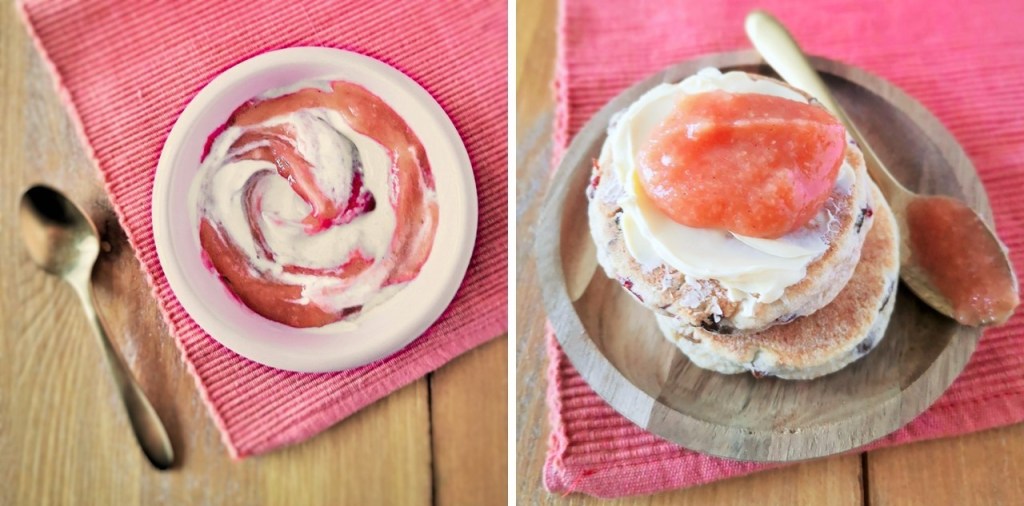
Fruit butter with coconut yogurt and on griddle scones. Images: Kathryn Hawkins

The sugar content is much lower than jam so you do need to keep it in the fridge. It freezes very well with no alteration in texture, colour or flavour. If you portion the butter up in small containers, it will defrost quickly and can be used up in a few days.

Wooden_bowl_of_ripe_quince_pears_and_apples
Ripe fruit and flavourings. Images: Kathryn Hawkins

I used a combination of quince, cooking pears and small cooking apples, but you can use the same method for a single fruit butter, although you may need to adjust the sugar content. And when it comes to flavouring, you can use whatever you fancy. For speed, ground spices are the easiest option because it saves time at the end of cooking. You can simply blitz the fruit and store. I prefer whole spices along with lemon rind, and as long as you know how many pieces you have added, then you know how many bits you need to fish out before your start blending. Cinnamon, allspice, cloves, ginger and orange would all work very nicely, it’s just personal preference.

On with the recipe. All the work is in the preparation of the fruit, then it’s a case of letting the slow-cooker do the rest of the work.

Makes: approx. 1.6kg

Ingredients

  • 1 unwaxed lemon
  • 2kg quince, cooking or firm pears, and cooking apples (dessert apples will also work, just adjust the sugar quantity accordingly)
  • 125g caster sugar
  • 1 vanilla pod, split
  • 6 to 8 cadamom pods, split

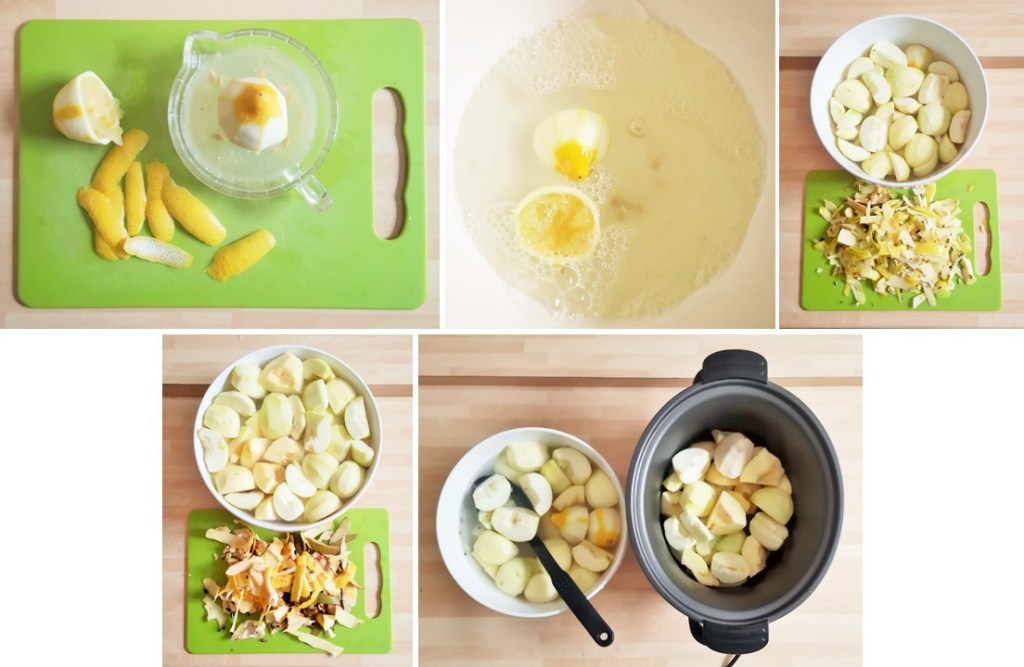
1. Pare the lemon rind in thick strips using a vegetable peeler, and extract the juice. Put the spent lemon shells in a large bowl, pour over the juice and top up with cold water to half fill the bowl. Keep the pared rind for the slow cooker.

2. Peel and core all the fruit, and cut into pieces – apple and pear will cook more quickly than quince if you are using a combination. Simply cut the quince (or any firmer pieces of fruit) into small pieces for even cooking. As you prepare the fruit, put it in the lemony water to reduce the deterioration of colour.

3. When you have prepared all the fruit, use a draining spoon to ladle it into your slow cooker. There is no need to drain the fruit too much as a little of the lemony water will help create steam as the fruit cooks. Discard the lemon shells.

5_images_showing_the_steps_of_fruit_preparation_prior_to_slow_cooking
Preparing fruit for slow cooking. Images: Kathryn Hawkins

4. Add the sugar, pared lemon rind and your other chosen flavourings and mix everything together, then cover with the lid and set the cooker to High for 5 to 6 hours, or Low for 10-12 hours. The exact cooking time will depend on how ripe the fruit is. After a couple of hours, give the fruit a stir then re-cover, and stir again after a further 2 hours. Continue cooking until the fruit is very soft.

Prepared_apple_pear_and_quince_in_slow_cooker_before and_after_cooking
Before and after cooking. Images: Kathryn Hawkins

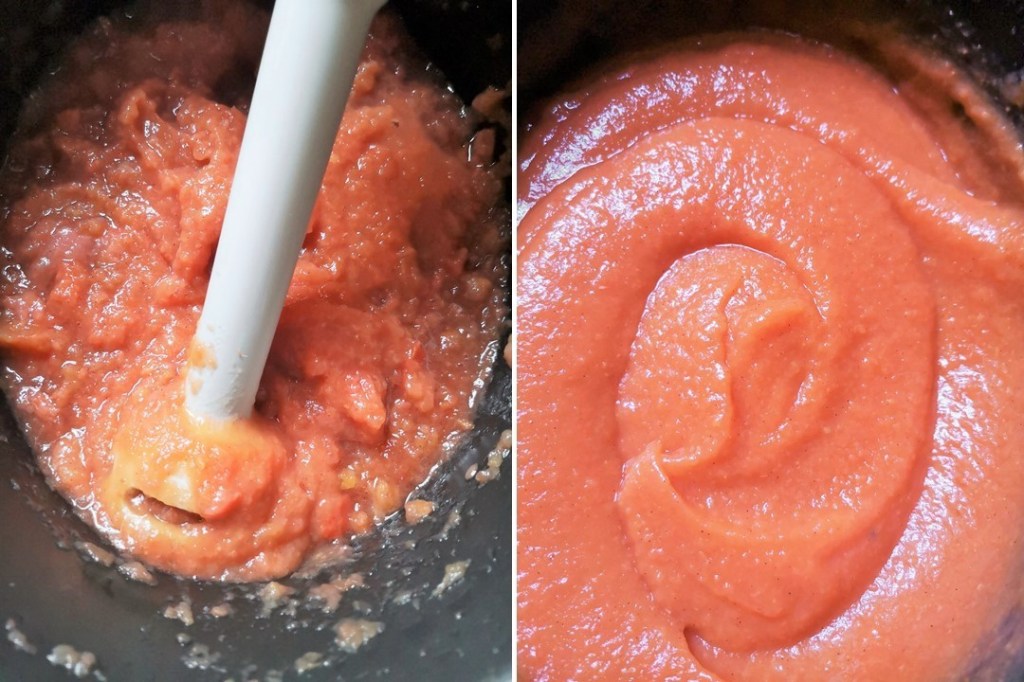
5. Switch off the cooker and leave the fruit, covered with the lid, to go cold. Remove the rind and whole spices if using and either use a stick blender to blitz the fruit or transfer to a standing blender. The fruit butter should be thick and beautifully smooth.

Blending_slow_cooked_fruit_to_make_fruit_butter
The final step to perfect fruit butter. Images: Kathryn Hawkins

6. Once you have your butter, either spoon it into clean, sealable jars or containers for keeping in the fridge, or pack it into cartons for freezing.

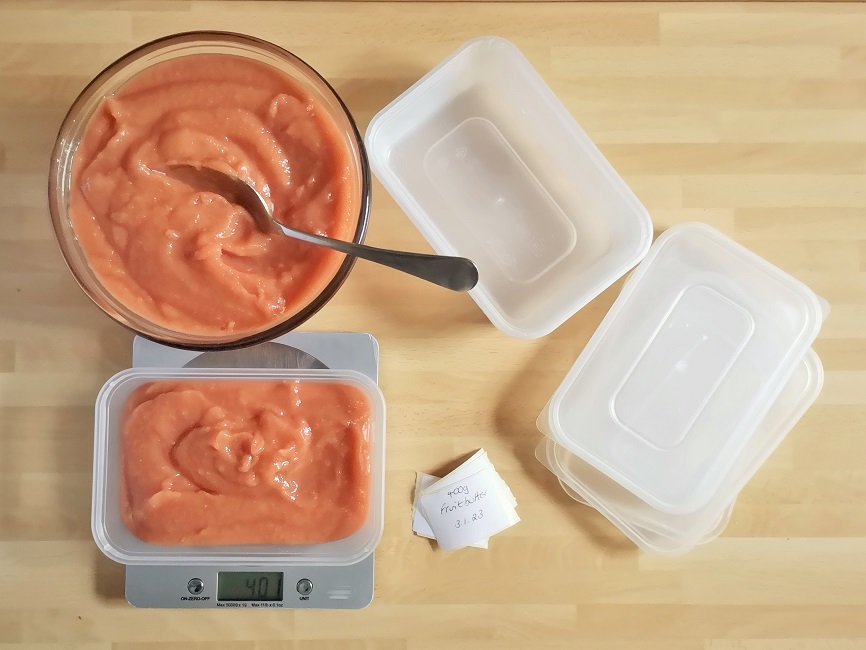
Freezing_homemade_fruit_butter
Ready for freezing. Image: Kathryn Hawkins

I hope you have enjoyed my post this week. I will be back with another recipe in a couple of weeks. Until then, take care and keep well. I will see you again soon 🙂

Slow-cooked quince in mulled wine (naturally gluten-free; diary-free and vegan)

Slow-cooked_quince_in_mulled_wine_in_glass_compote_dish
Slow-cooked quince in mulled wine. Image: Kathryn Hawkins

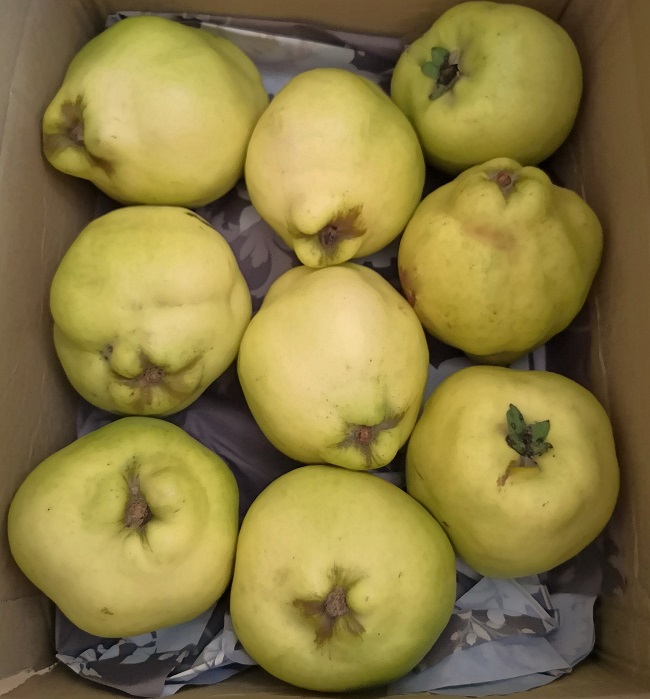
One of the delights of Autumn for me is that it is the season of the quince. In recent years, I haven’t managed to find any but this October I got hold of a box of 9 of the tempting fruit. Like apples and cherries this year, quince trees have also provided a bumper harvest.

Fresh_quince_delivered_in_a_box
Box of quince. Image: Kathryn Hawkins

Back in October the quinces were barely ripe. Very firm, pale yellowy-green in colour with little of their renown aroma. As the weeks passed, the skins turned waxy yellow and the spicy scent increased. Every time I opened the box, I inhaled a waft of their fruity smell. If you haven’t experienced the aroma, it is intensely appley with a hint of sweet aniseed.

Whole_and_halved_ripe_quince
Perfectly ripe quince. Images: Kathryn Hawkins

To be honest, I don’t think the flavour of the fruit is that pronounced, more like pear than apple, but the texture makes it very different to other tree fruits. There is a slightly granular, rich texture to the flesh and a much firmer, almost chewy bite. Quince holds up exceptionally well to prolonged cooking, making them a winner for the slow-cooker.

Slow-cooker_poached_quince_in_mulled_wine
Perfectly cooked quince. Image: Kathryn Hawkins

Raw quince is too hard and dry to enjoy raw; it also discolours very quickly. If you peel and core the fruit and put it in a bowl of lemon juice and water this helps keep the discolouration to a minimum. However, if you want to enjoy the fruit “au natural”, hold back on the lemon and the fruit will take on a rich, rusty red colour as it cooks.

My recipe this week is simple but requires a little bit of preparation to start with. Once it’s all in the slow cooker you can sit back and enjoy the festive fruit and spice smells that are emitted as the quince cooks through. If you can’t get hold of quince, firm pears will work just fine.

Serves: 6

Ingredients

  • 1 unwaxed lemon
  • 1 unwaxed orange
  • 3 large quince (approx. 1.5kg)
  • 500ml fruity red wine
  • 150g caster sugar
  • 1 vanilla pod, split
  • 1 cinnamon stick, broken

1. Use a vegetable peeler to pare the rind from the lemon and orange. Put 3/4 of the rind to one side for flavouring the wine, and cut the remainder into thin strips for decoration – if you don’t want to do this, you can use all the rind in the mulled wine.

2. Extract the lemon juice and pour into a mixing bowl. Add the empty lemon halves. Fill the bowl with water to to 2/3 full and set aside ready for the quince. Extract the juice from the orange and set aside for the wine.

4_steps_to_preparing_fresh_quince_and_flavourings
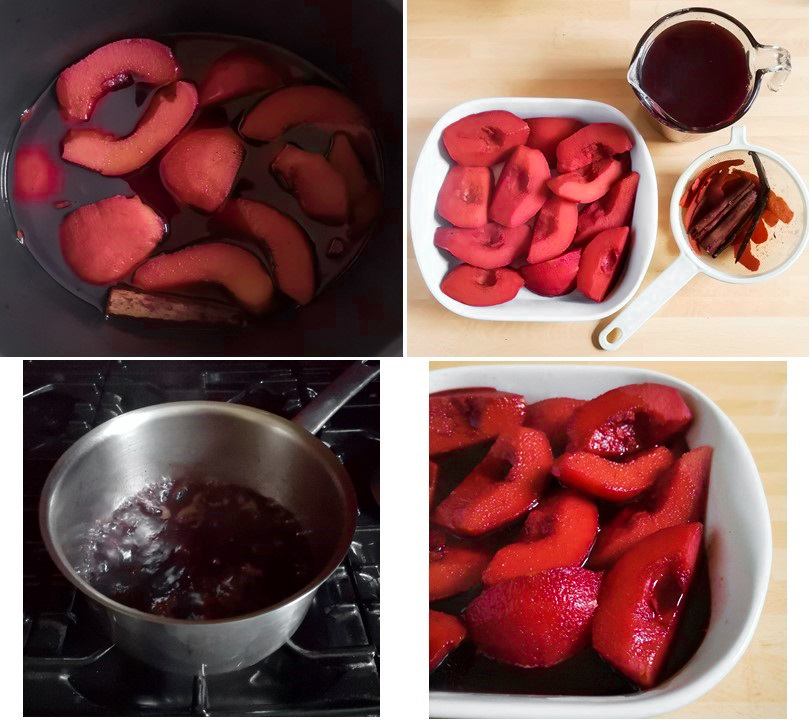
Preparing quince and flavourings. Images: Kathryn Hawkins

3. Peel the quince thinly. Cut into quarters and slice out the core. As soon as you prepare each quarter, push down into the lemony water to help prevent discolouration.

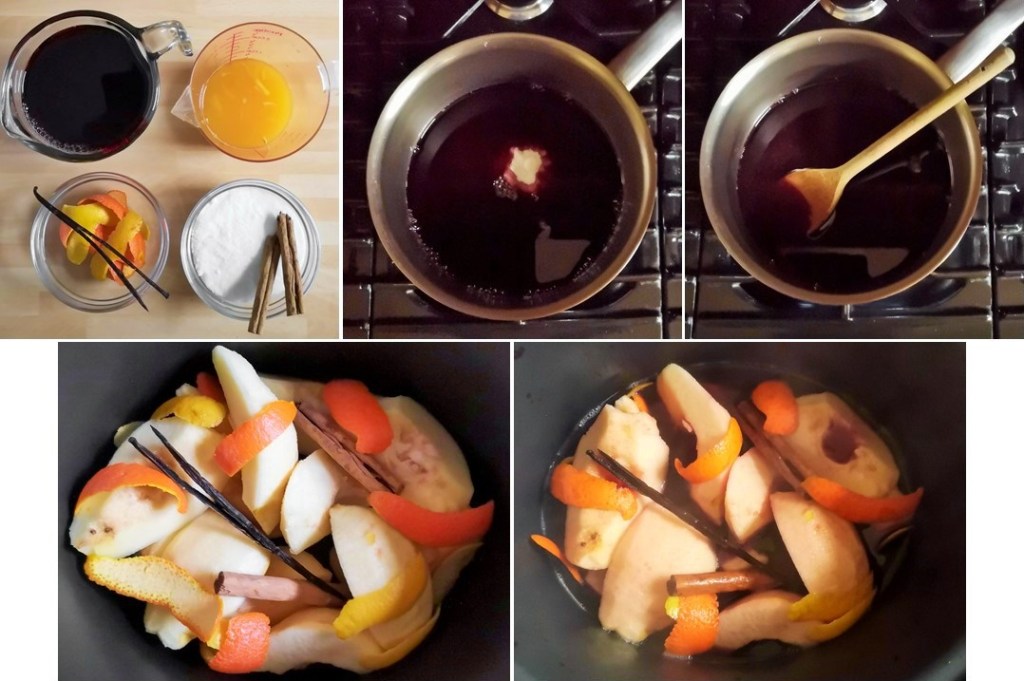
4. Now prepare the mulled wine. Pour the wine and orange juice into a saucepan. Add the sugar and heat gently stirring until the sugar dissolves, then bring to the boil.

Making_mulled_wine_and_cooking_quince_in_the_slow-cooker
Making mulled wine for the slow-cooker. Images: Kathryn Hawkins

5. Drain the quince very well and place in the slow cooker dish. Add the pared rind, vanilla and cinnamon and pour over the hot mulled wine. Cover with the lid, switch the cooker on to High and cook for 3 hours, turning the fruit every hour to ensure even cooking, until the quince is tender.

6. Use a slotted spoon to transfer the quince to a heatproof dish. Cover loosely with foil. Strain the wine into a saucepan, bring to the boil and simmer for 10-12 minutes until reduced by half and slightly syrupy. Pour over the quince, mix gently, and leave to cool completely, then cover and chill until ready to serve.

4_prep_shots_showing_reducing_mulled_wine_to_syrup
Reducing mulled wine to syrup. Images: Kathryn Hawkins

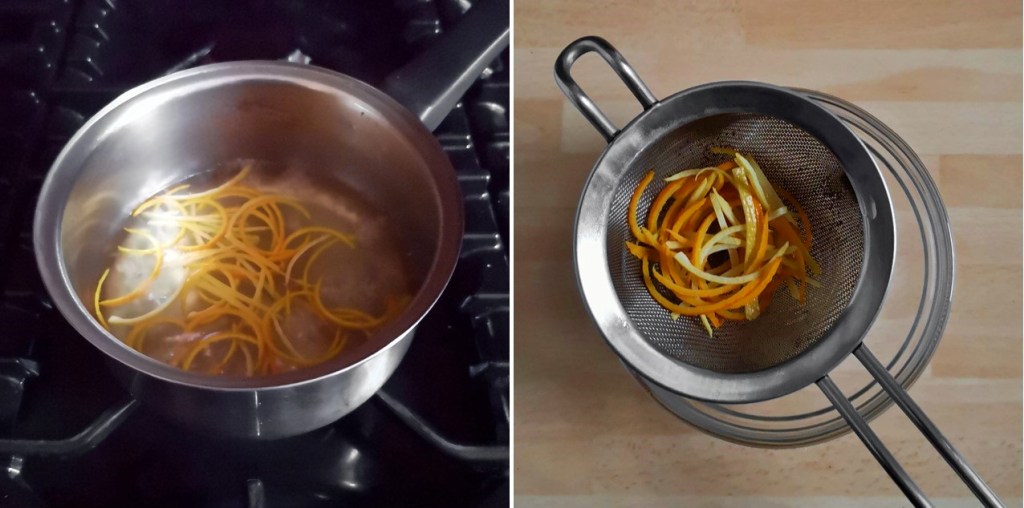
7. While the quince is cooking or cooling, bring a small saucepan of water to the boil and cook the shreds of lemon and orange rind for 2-3 minutes to soften them. Drain well and leave to cool.

Making_shredded_orange_and_lemon_zest_decoration
Orange and lemon zest decoration. Images: Kathryn Hawkins

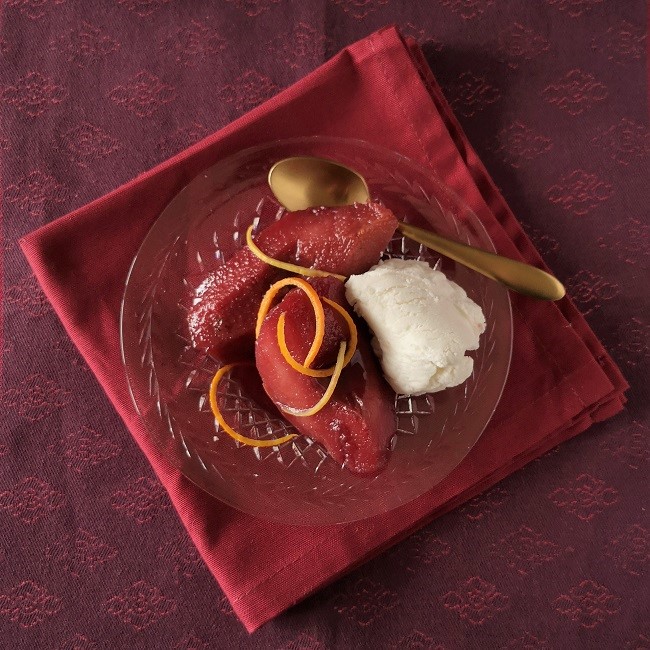
8. To serve, arrange the quince quarters in a serving dish and spoon over a little syrup. Sprinkle with citrus shreds if using and serve the quince with the remaining mulled wine syrup on the side. Delicious accompanied with vegan vanilla ice cream 🙂

Mulled_wine_quince_with_shreds_of_orange_and_lemon_zest
Finishing touch, orange and lemon shreds, Image: Kathryn Hawkins
Serving_of_mulled_wine_poached_quince_with_vegan_vanilla_ice_cream
Quince served with vegan vanilla ice cream. Image: Kathryn Hawkins

I hope you have a very happy Christmas and I look forward to posting again for the new year. Seasonal best wishes to you and thank you for your interest in my blog.

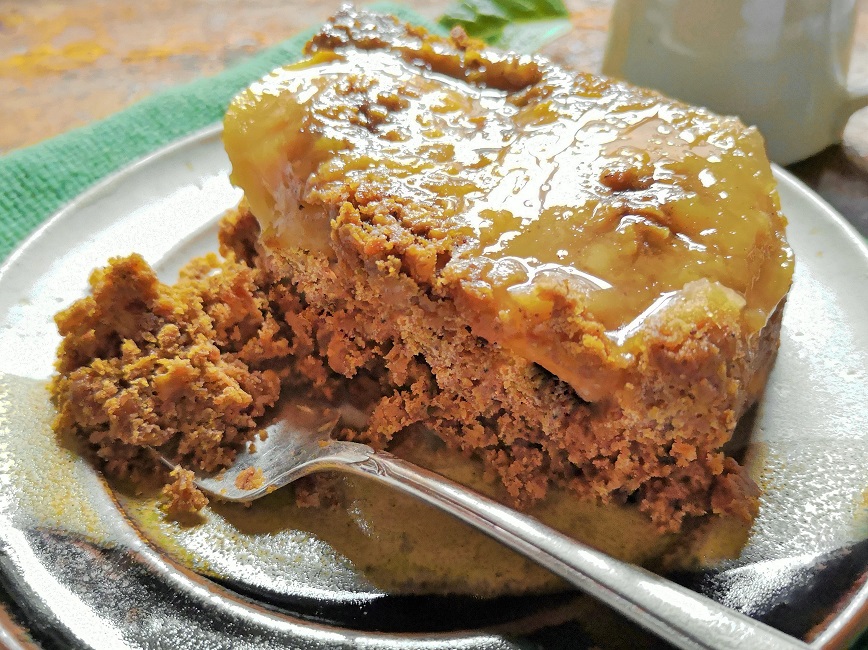
Upside-down ginger apple cake (gluten-free; dairy-free; vegan)

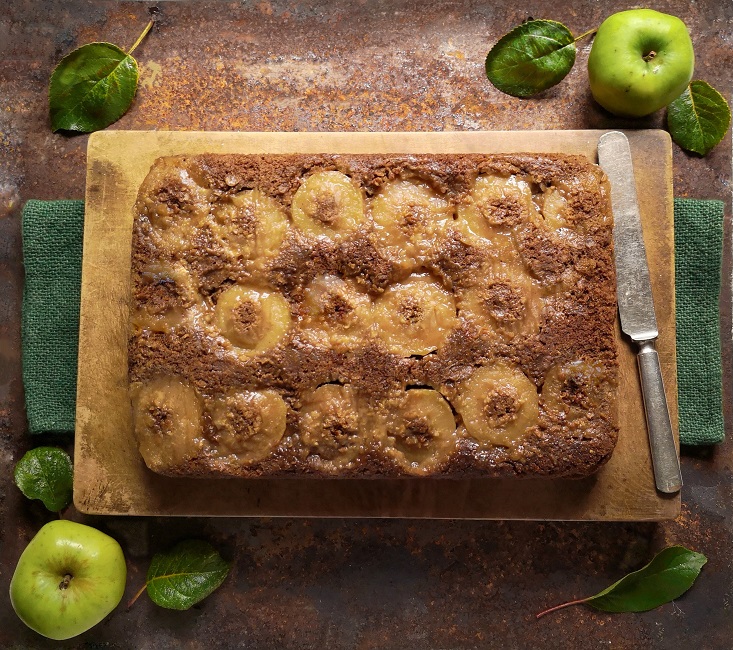
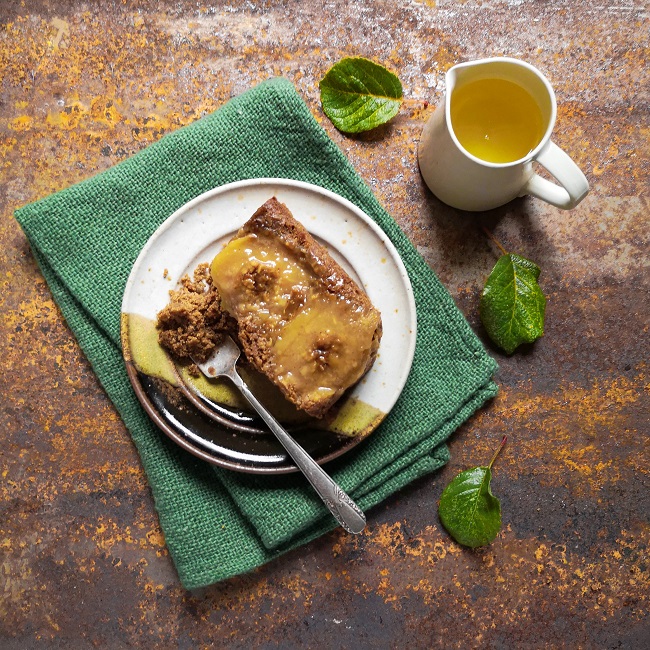
Ready_to_slice_upside-down_ginger_apple_cake
Upside-down ginger apple cake. Image: Kathryn Hawkins

Hello again. We’re well into the season of Autumn now, and it wouldn’t feel complete if I didn’t share an apple recipe with you. It has been a bumper year for apples in the UK. Back at the end of last month, the old apple tree in the garden was groaning with fruit, and on a dry, bright day, it was finally time to relieve the tree of all its fruit.

Homegrown_Scottish_Lord_Derby_apple_harvest_2022
Lord Derby apple harvest 2022. Images: Kathryn Hawkins

With the very sunny and warm summer we enjoyed here, the apple crop was much sweeter than ever before, so as well as being used in cooking, the apples make good eaters this year. There were far too many for one household to cope with, I am pleased to say that several local families in the town were able to enjoy a bag full this year.

Serving_of_ginger_apple_cake_with_ginger_syrup
Ginger apple cake with ginger syrup. Images: Kathryn Hawkins

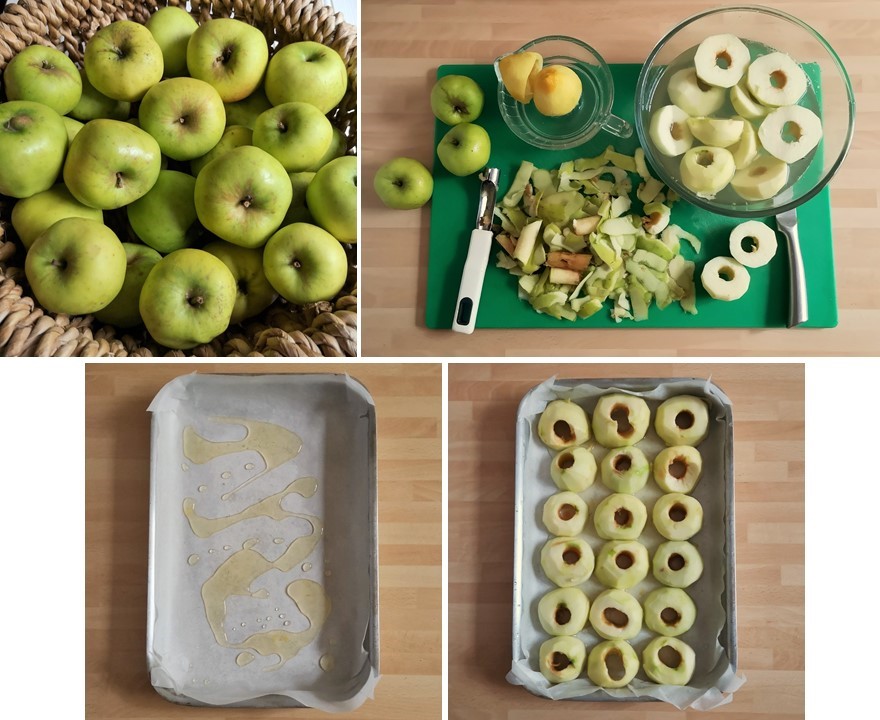
On with the recipe. The main preparation for the recipe is the apples, after that there is only a very simple cake batter to make. I picked out the smaller apples for my tin. If you have larger apples, you may want to slice them into quarters or thick rings rather than simply cutting them in half.

Make the cake the day before you want to serve it because it will benefit from a few hours keeping. The flavour and texture will improve greatly overnight. The recipe makes quite a large cake, but it freezes well so you’ll have plenty for another day. Serve warm as a pudding with custard, or cold as a comforting cake.

Serves: about 10

Ingredients

  • Finely grated rind and juice 1 lemon
  • approx. 9 small cooking or eating apples
  • 2tbsp stem ginger syrup (I used the syrup from the jar)
  • 125g plant butter
  • 125g treacle
  • 125g golden or corn syrup
  • 125g light soft brown sugar
  • 250g gluten free plain flour
  • 250g gluten free porridge oats
  • 1tsp bicarbonate of soda
  • 4tsp ground mixed spice
  • 75g chopped stem ginger
  • 175ml oat milk or other plant-based milk

1.Put the lemon rind to one side. Add the juice to a bowl of cold water. Peel and core the apples; cut in half and place in the lemony water to help prevent browning. Leave aside until ready to assemble the cake.

Steps_to_show_how_to_prepare_apples_for_cake_making
Preparing the apples for cake making. Images: Kathryn Hawkins

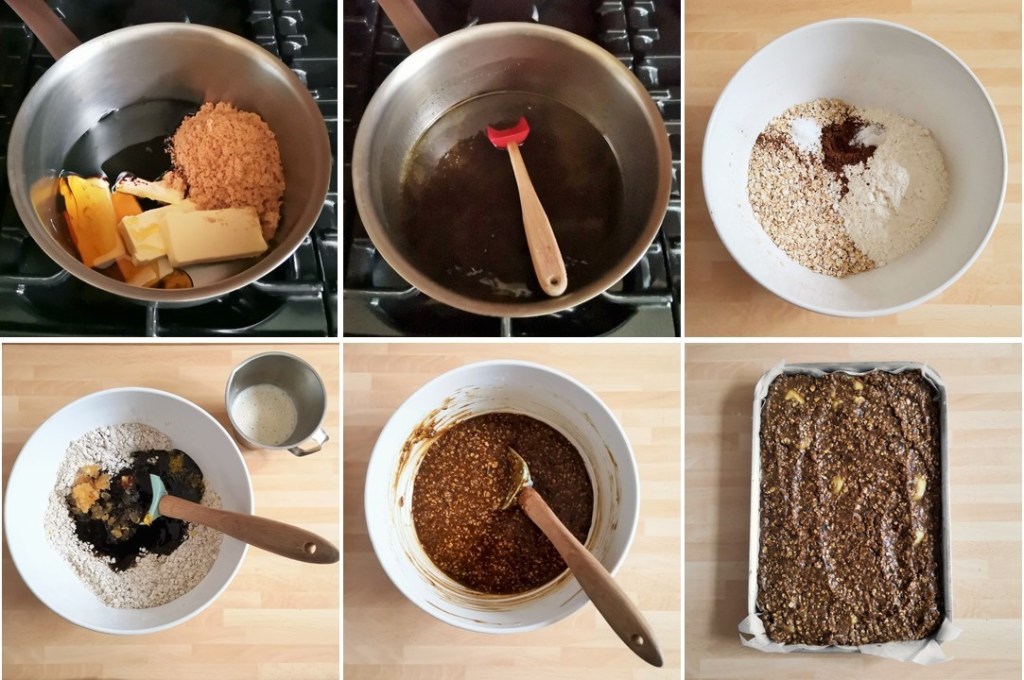
2. Put the butter, treacle, golden syrup and sugar in a saucepan, and heat gently to melt. Mix well then leave to cool for 10 minutes.

3. Preheat the oven to 180°C, 160°C fan oven, gas 4. Line a 20 x 30cm tin with baking parchment and drizzle the base with ginger syrup. Drain the apples, pat dry with kitchen paper and arrange over the bottom of the tin – see above.

4. Put the flour, oats, baking soda and spice in a bowl. Mix together and make a well in the centre.

5. Pour in the melted ingredients and add the reserved lemon rind and chopped ginger. Carefully mix everything together along with the milk, then spoon over the apples making sure they are covered.

6_steps_to_making_gluten-free_vegan_ginger_cake_batter
Making the ginger cake batter. Images: Kathryn Hawkins

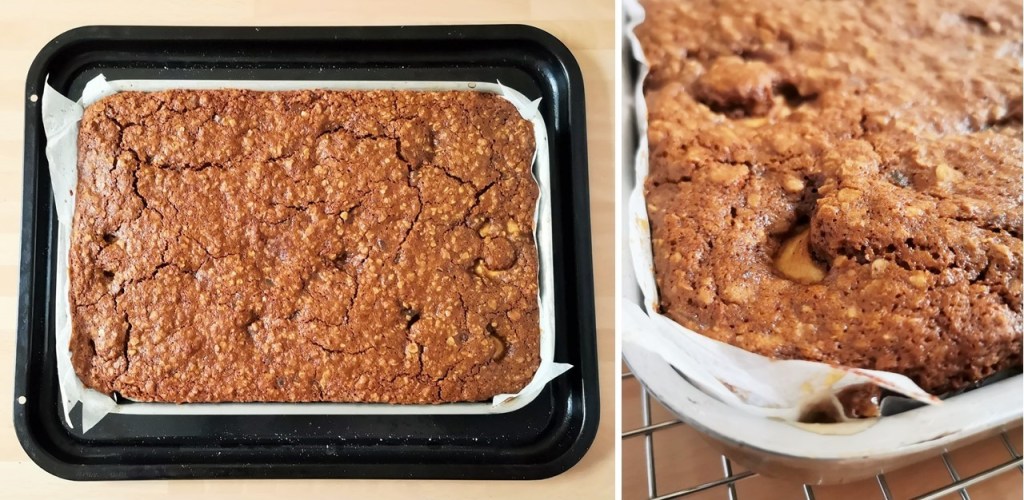
6. Stand the tin on a baking tray and bake for about 50 minutes until firm to the touch. Transfer the tin to a wire rack and leave to cool completely. Turn out on to a large sheet of baking parchment. Wrap carefully and store in an airtight container overnight to allow the flavours to develop.

Freshly_baked_upside-down_ginger_apple_cake
Just out of the oven. Images: Kathryn Hawkins

I mixed some of the ginger syrup from the jar of stem ginger with plain carob syrup and drizzled it over the cake to serve.

Close-up_of_homemade_ginger_apple_cake
Up close on ginger apple cake. Image: Kathryn Hawkins

That’s me for another week. Until next time, happy baking 🙂

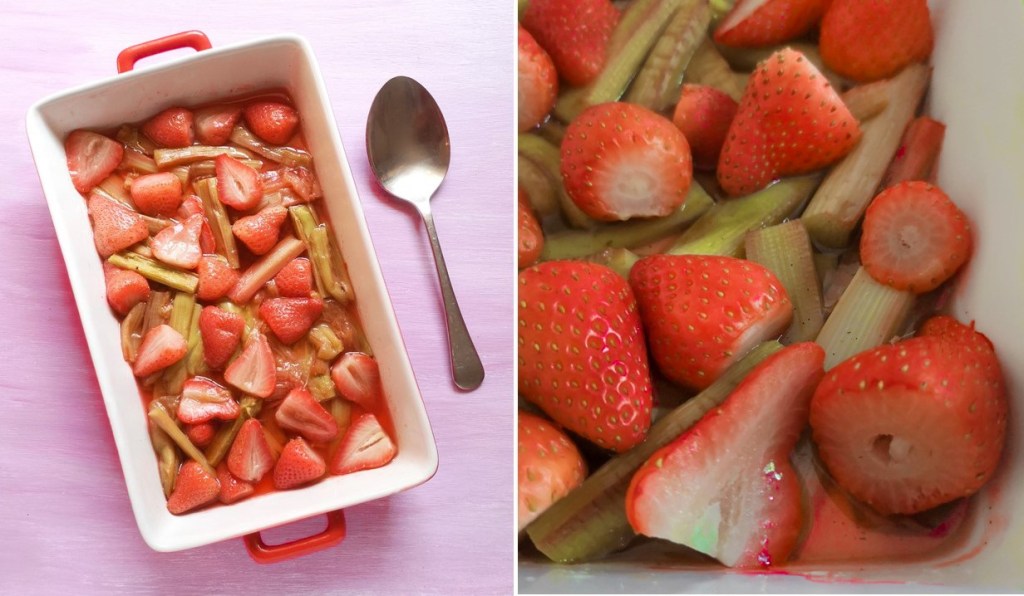
Baked summer fruit (naturally gluten-free; dairy-free; vegan)

Baked_rhubarb_with_strawberries
Baked Summer fruit. Images: Kathryn Hawkins

Hello again. I hope you are keeping well and are having a good summer. Since my last post, the UK, like the rest of Europe, has been subject to some very hot weather. Fortunately here, not for a particularly long spell as the high temperatures were unprecedented for this part of the world. It has cooled down again now and the air feels fresher and the sun less strong.

I was worried that the soft fruit in the garden would suffer in the heat. The rhubarb in particular likes a good soaking as well as the sunshine. I was pleased to see that it bounced back once the temperature dipped and we had some very welcome rain.

Homegrown_Scottish_rhubarb_on_a_wooden_seat
Just picked, homegrown rhubarb. Image: Kathryn Hawkins

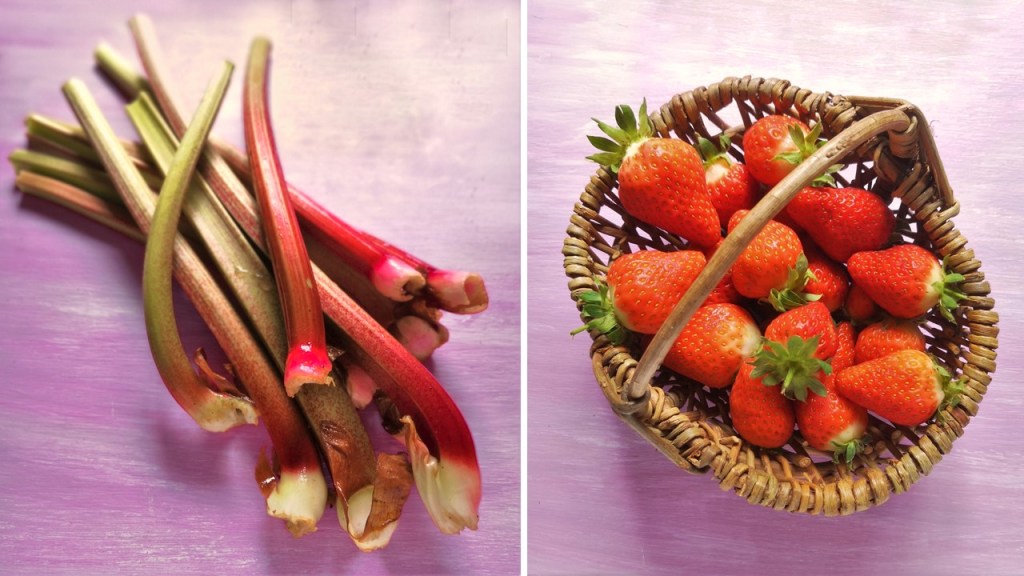
My recipe this week is a very simple one. I try to avoid putting the oven on in the hot weather, but I did make an exception for one of my favourite fruity combinations. Strawberries and rhubarb go together especially well, and when cooked with vanilla, I find the aroma and flavours is irresistible.

Stalks_of_homerown_Scottish_rhubarb_and_a_basket_of_fresh_SCottish_strawberries
Scottish rhubarb and strawberries. Images: Kathryn Hawkins

It has been a good year for Scottish strawberries. They have been juicy and have tasted fragrant and sweet. I didn’t grow these myself, they came from the local farm shop. I chose larger fruit to cook with the rhubarb as they hold their shape better in the oven.

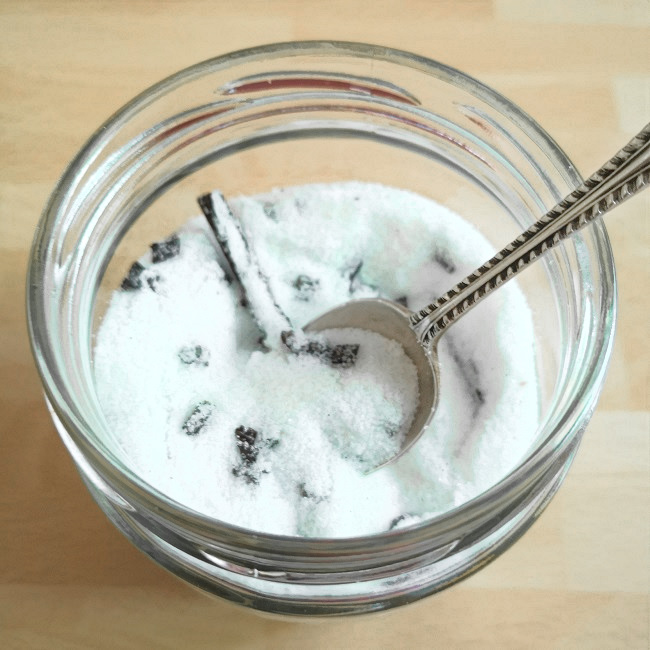
Jar_of_homemade_vanilla_sugar
Homemade vanilla sugar. Image: Kathryn Hawkins

I always have a jar of vanilla sugar in the cupboard. I chop up bits of vanilla pod that is past its prime or dried out too much and add it to caster sugar. I keep it in a glass jar with a screw-top lid. Every now and then I give the jar a shake to distribute the vanilla pieces. Sift the sugar as you use it to remove the pod pieces but keep the bits trapped in the sieve and put them back in the jar along with a top up of sugar ready for next time. You can replenish your supply more or less indefinitely.

On with the recipe. I allow the fruit to cool after baking as I prefer the flavours when they are cold and the fruit is more refreshing, but it’s personal preference. The fruit makes a deliciously light dessert or breakfast compote served with yogurt and toasted cereals.

Serves: 6

Ingredients

  • 450g rhubarb
  • 50g vanilla or plain caster sugar – white sugar helps retain the colour of the fruit, but you may prefer to use brown for a more caramely flavour
  • 300g large fresh strawberries

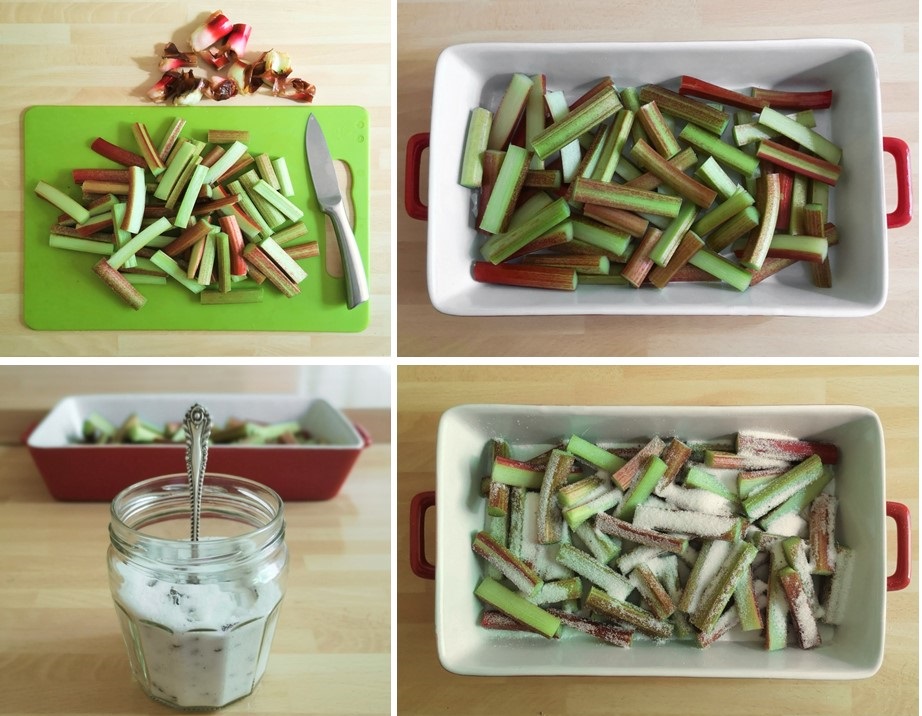
1. Preheat the oven to 190°C, 170°C fan oven, gas 5. Wash and trim the rhubarb. Cut into even-thickness and same-length pieces – this will help with even cooking.

2. Place in an oven-proof dish and sprinkle over the sugar. Cover the top with foil and bake for 40 minutes.

Trimming_and_slicing_homegrown_rhubarb_ready_for_baking
Preparing rhubarb for baking with vanilla sugar. Images: Kathryn Hawkins

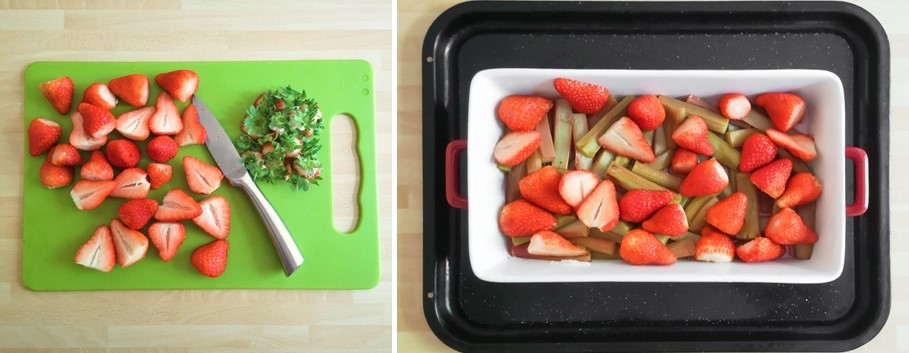
3. Meanwhile, wash and hull the strawberries and cut in half. Uncover the rhubarb and add the strawberries. Bake, uncovered, for a further 10 minutes until the fruit is just tender.

Hulling_strawberries_ready_for_baking
Preparing Strawberries for baking. Images: Kathryn Hawkins

Leave to cool, then chill until ready to serve. Remove from the fridge about 30 minutes before serving to allow the flavours to develop. Delicious served with coconut yogurt.

Single_serving_of_baked_rhubarb_and_strawberries_with_coconut_yogurt
Baked fruit served with coconut yogurt. Image: Kathryn Hawkins

That’s me for another week or so. I can hardly believe we’re just about to enter the month of August. Until next time, take care and my best wishes to you 🙂

Gin and tonic shortbread (gluten-free; diary-free; vegan)

Iced_shortbread_bunting
Shortbread bunting. Image: Kathryn Hawkins

It is with a happy heart that I publish my post this week. Here in the UK and other Commonwealth countries, we are celebrating the 70 year reign of our Queen Elizabeth II this weekend. For my part, I have been inspired to give one of my favourite bakes a bit of a Platinum Jubilee twist 🙂

Slice_of_homemade_shortbread_bunting
Patriotic shortbread. Image: Kathryn Hawkins

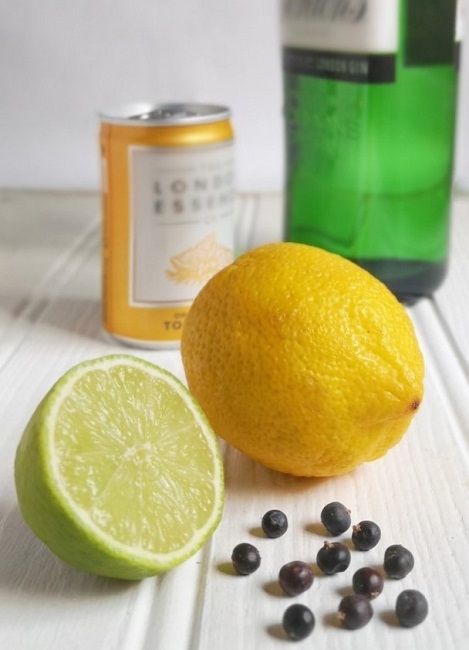
This bake has a great combination of flavours for the time of year: lemon, lime and juniper as well as gin and tonic water in the icing. Leave out the gin and tonic if you prefer, and replace them fresh lemon or lime juice instead. If you are Coeliac, make sure the gin you use is gluten-free.

Fresh_lemon_lime_juniper_gin_and_tonic_water_flavours_for_Platinum_Jubilee_shortbread
Shortbread flavourings fit for a queen. Image: Kathryn Hawkins

I baked the shortbread in a tin in order to achieve a good shape, but if you don’t have the right size tin, you can simply bake the shortbread round on a baking tray as it is. If it isn’t a jubilee occasion, I would usually decorate the shortbread with a few cake sprinkles or some fresh lemon and lime rind. I have captured a few images of how I made up the Union Jack flag design in case you ever want to make your own version for another occasion.

Makes: 8 pieces

Ingredients

  • 100g lightly salted plant (or dairy) butter, softened
  • 50g caster sugar
  • Pinch of salt
  • 1tsp each finely grated lemon and lime rind
  • 8-10 juniper berries, finely crushed
  • 175g gluten-free plain flour blend

Icing

  • 175g icing sugar
  • 25ml gin and/or tonic water, or fresh lemon or lime juice

1. Beat the butter and sugar together until well blended and creamy. Mix in the salt, citrus rinds and juniper.

2. Add the flour and gradually work into the creamy mixture, then bring together with your hands to make a firm dough.

6_steps_to_making_gin_and_tonic_shortbread_dough
Making the shortbread dough. Images: Kathryn Hawkins

3. Lightly flour the work surface and knead the dough gently until smooth. Form into a thick round piece and roll into an approx. 20cm round. If you are not using a tin, roll the mixture to form a 23cm round and neaten the edges.

4. For the tin version, base line a shallow 23cm cake tin and transfer the shortbread round to the tin, then press the dough right to the edge. Prick all over with a fork and chill for 30 minutes. Without a tin, transfer the shortbread round to a baking tray, prick with a fork and chill.

5. Preheat the oven to 180°C, 160°C fan oven, gas 4. Score the top of the chilled shortbread (about 1/3 the way through the dough) into 8 equal segments and bake for about 30 minutes until lightly golden. Cool for 5 minutes then carefully cut the segments all the way through and leave to cool in the tin or on the tray. Transfer to a wire rack.

6_steps_to_making_a_shortbread_round
Shaping a shortbread round. Images: Kathryn Hawkins

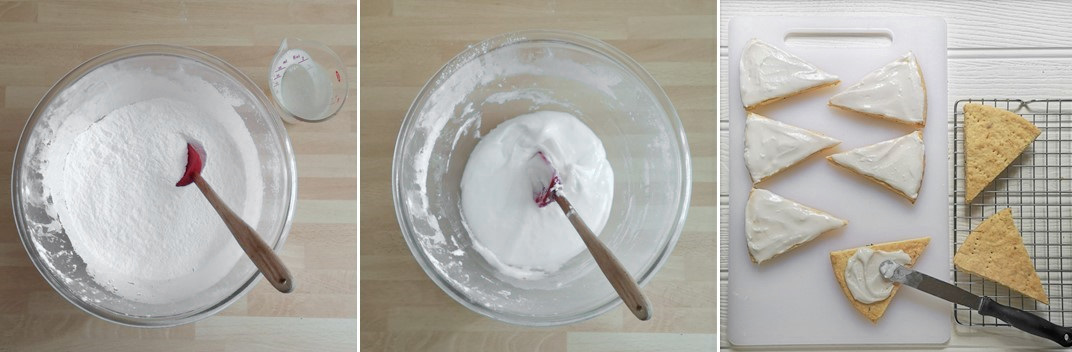
6. For the icing, sift the icing sugar into a bowl and gradually stir in sufficient gin and tonic or lemon juice to form a smooth, thick, spreading icing.

7. Carefully spread the icing all over the top of each shortbread segment to cover and place on a board. If you prefer a smoother finish, add a little more G&T or juice to the icing so that you can spoon it over and let it drip down the sides of each piece – keep the shortbread on the wire rack for best results.

Spreading_shortbread_with_gin_and_tonic_icing
Gin and tonic icing. Images: Kathryn Hawkins

8. If you are decorating with sprinkles or citrus zest, add the decoration before the icing sets. If you are using ready-to-roll icing to decorate the tops, let the icing set before decorating. Below are a few images of how I created the flag effect on top of the shortbread.

6_steps_to_making_an_icing_Union_Jack
Making an icing Union Jack. Images: Kathryn Hawkins

Whether you are celebrating or not this weekend, I hope you have a good time. Thanks for stopping by and I will hope to see you with my next post later on in the month.

Single_serving_of_crumbly_gina_and_tonic_shortbread
Melt in the mouth homemade iced shortbread. Image: Kathryn Hawkins