Welcome to my blog all about the things I love to grow and cook. You'll find a collection of seasonal gluten-free, dairy-free and vegan-friendly recipe posts, as well as a round up of my gardening throughout the year. I wish you good reading, happy cooking and perfect planting!
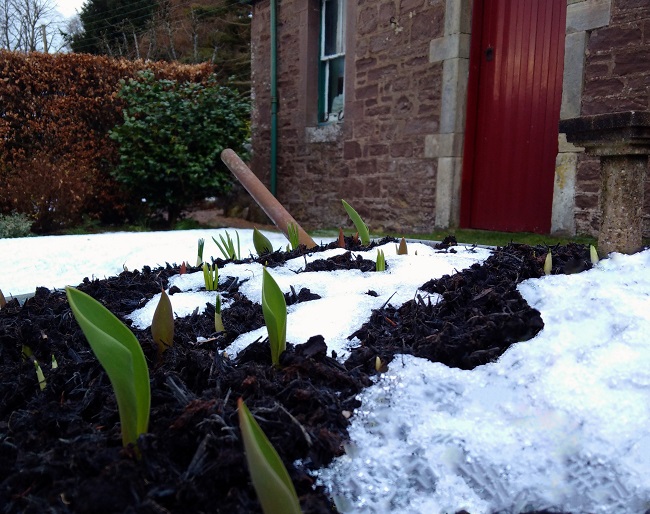
It’s been a lovely start to the new month today. Very clear and crisp. After taking the image above this morning, after a full day of sunshine, by the time I got round to typing up my post, most of the snow had melted away.
There has been quite a lot of snow fall in January, and it’s been quite cold too. No sooner had the temperature risen again and things were beginning to feel a bit more spring-like, then down came another pouring of the white stuff yesterday.
Last day of January snowfall. Image: Kathryn Hawkins
The new season’s growth seems a little slower in showing this year. Most of the bulbs I have planted around the garden are only just beginning to poke through the soil, but the ones below, in an old wheelbarrow, are much more advanced. When I’m gardening I often accidentally dig up bulbs. I usually put them back in the same place, but last year I cleared an area which had become too densely populated, and ended up with loads to replant. The wheelbarrow and an old barrel seemed like suitable new homes. Hopefully I will end up with a colourful display from both in a few weeks time.
My barrow of bulbs. Image: Kathryn Hawkins
Looking back at my garden in February last year, I had a few snowdrops out in full bloom by this time. At the moment, the petals are firmly closed, but with a couple more days of sunshine, they should open up. In other more sheltered spots around the garden, the snowdrops still have quite a way to go before they flower.
First of February snowdrops. Image: Kathryn Hawkins
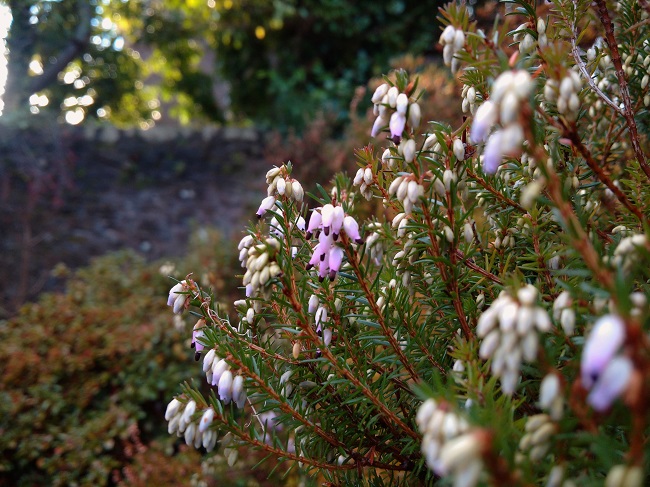
Another precious flower in the garden at this time of year is the winter-blooming white heather. It certainly looks very healthy. Believed to bring good luck, white heather brings the feeling of life and vibrancy to the garden long before the other colours of spring appear.
Lucky white winter heather. Image: Kathryn Hawkins
Another plant that is also looking very floral just now is a new Helleborus Orientalis I planted last year. It’s very pink and very pretty. The more established Hellebores in the garden are only in leaf with no sign of flower stems, so I guess that this one must be an early variety. It does look a wee bit lonely in the border, with just the one flower open, but there are lots of buds, so they may well be flowering when the others decide to make a show. See you next time 🙂
A short post this week, but I wanted to publish a recipe to celebrate Scotland’s national poet, Robert Burns, whose anniversary falls on January 25th each year. These cute, haggis-shaped sweet treats are a version of my Chocolate Haggis for a Burns Night supper (gluten-free, dairy-free, vegan) recipe from last year. You can mix and match ingredients according to the bits and pieces you have to hand. If you don’t like marzipan, use ivory or cream coloured fondant icing instead.
Makes: 16
Ingredients
50g unsalted butter or coconut oil
50g heather honey or golden syrup
75g free-from dark chocolate, broken into pieces
75g free-from oatcakes, finely crushed
40g toasted fine oatmeal
50g currants
50g toasted flaked almonds, crushed
Icing sugar to dust
400g natural marzipan
Put the butter (coconut oil) and honey (golden syrup) in a saucepan with the chocolate, and heat very gently, stirring, until melted.
Remove from the heat and stir in the crushed oatcakes, oatmeal, currants and almonds. Mix well until thoroughly combined. Leave to cool, then chill for about 30 minutes until firm enough to form into portions.
Divide the mixture into 16 and form each into an oval-shaped sausage. Chill for 30 minutes until firm.
Divide the marzipan into 16 and flatten each into a round – use a little icing sugar if the marzipan is sticky. Wrap a disc of marzipan around each chocolate oat cluster; press the edges to seal and then twist the ends to make a haggis shape.
Mini chocolate haggis preparation. Image: Kathryn Hawkins
Store the mini haggis at a cool room temperature until ready to eat. The marzipan will become sticky if refrigerated. Best enjoyed with coffee and a wee dram. Until next week, I raise a glass to you all and say “Slàinte!” – to your good health 🙂
Mini haggis and a wee dram. Image: Kathryn Hawkins
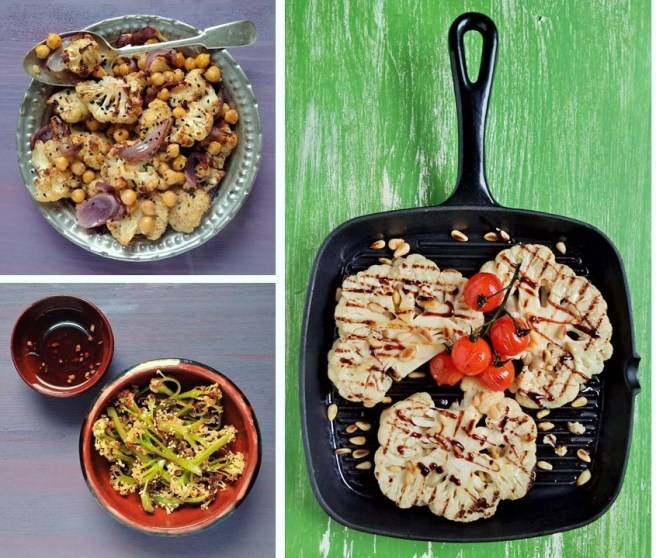
Cauliflower roasted, stir fried, and steaks. Image: Kathryn Hawkins
When it comes to the winter months of the year, trying to buy only home-grown, British vegetables (as is my want) can be quite challenging especially if you desire something other than starchy root crops. In my opinion, the humble cauliflower reigns supreme at this time of year as it is a welcome diversion in flavour, taste and texture.
However, my thoughts haven’t always been so positive towards the cauliflower. At school, cauliflower was boiled beyond all recognition and served as a watery, soft mush – enough to put anyone off the vegetable for life. Yet, today, it is one of the “on trend” vegetables. If you cook it correctly, cauliflower has a meaty texture, sweet flavour, and best of all, it can be cooked in many ways. It’s full of vitamin C and K, as well as B vitamins and dietary fibre. Easy to prepare, you can eat just about all of it from the inner the cream-coloured curds to the outer wrapping of juicy leaves.
Preparing cauliflower. Images: Kathryn Hawkins
The leaves help protect the curds, so try to buy the vegetable with as much greenery as possible. If you want to store cauliflower for a few days, keep the leaves intact and place the stalk-end in a shallow depth of water in a bowl, in the fridge, and the cauliflower should keep fresh for up to a week.
To prepare, discard any damaged outer leaves, but keep the inner, more tender leaves – these can be cooked like cabbage. Once the curds are free from leaves, slice or break the head into florets. Prepared cauliflower florets dehydrate quickly so are best cooked soon after preparation.
I rarely cook cauliflower in water, but if I do, it is for a very short time only – the curds can get very spongy very quickly when cooked in water, and the flavour will be lost.
Following are my current 3 favourite ways of cooking cauliflower for maximum taste and texture: roasting, griddled steaks and stir-fried sprouting stems.
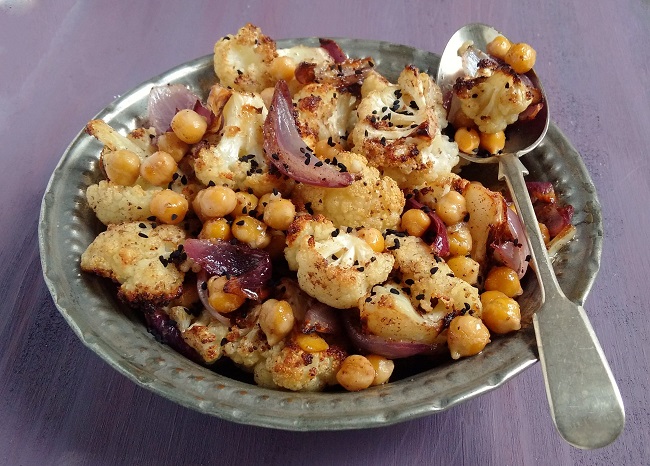
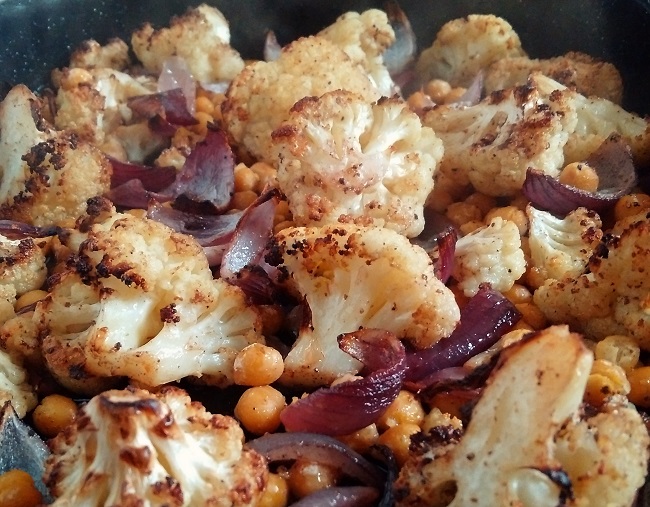
Roast cauliflower with Indian spices. Image: Kathryn Hawkins
Toss chunky florets of cauliflower and thickly sliced red onion in sunflower oil. Season with garam masala to taste. Spread out on a baking tray, season with salt and pepper and roast at 200°C (180°C fan oven, gas 6) for about 30 minutes, turning occasionally. Mix in cooked chick peas and return to the oven for a further 10 minutes until everything is lightly browned. Drain well, then serve sprinkled with black onion seeds. For a main meal, mix into freshly cooked Basmati rice and sprinkle with fresh coriander and roasted cashew nuts.
Probably the most popular way to serve cauliflower at the moment is as a steak. I usually cut the prepared curds into 2cm thick slices and poach them in simmering water for a couple of minutes before frying or placing on a griddle or barbecue – a large frying pan is good for poaching as it enables you to lift out the steaks more easily. Use tongs to make sure you drain the steaks well, and dry them on kitchen paper so that excess cooking water is removed before cooking in oil.
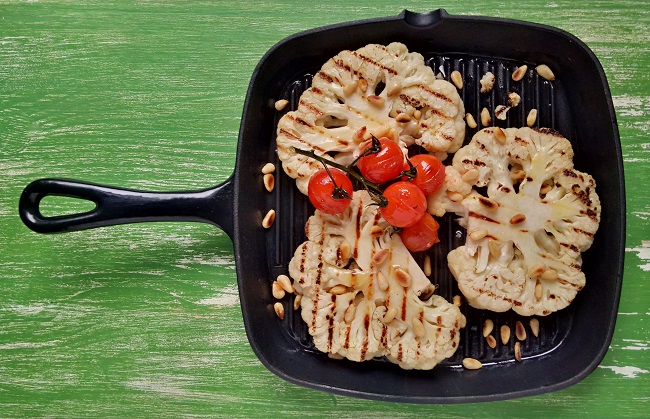
Pre-cooking cauliflower steaks. Image: Kathryn HawkinsCauliflower steaks with Italian flavours. Image: Kathryn Hawkins

Brush the prepared cauliflower steaks lightly with vegetable oil on one side. Heat a griddle pan or frying pan until very hot, then add the streaks, oiled-side down. Press into the pan, reduce the heat to medium, and cook for 2-3 minutes until golden or lightly charred. Brush the top with more oil, and turn the steaks over. Cook for a further 2-3 minutes or until cooked to you liking. Serve straight from the pan drizzled with extra virgin olive oil, balsamic glaze or reduction, and toasted pine nuts. Top with griddled cherry vine tomatoes and fresh basil.
One of the new kids on the block in the cauliflower world, is a variety with fine green stems and small, flowery curds. I was a bit sceptical when I first saw it (mainly because of the price), but I have since been converted. The stems are best cooked for a minimum time, just as you would for asparagus – steamed, griddled or stir fried – in order to retain the crisp texture. Unusually, the stems become even brighter green when cooked. The flavour is mild and sweet. To make sure the stems cook evenly, break or cut the stems up so that you have same-size thickness pieces.
You can keep these stems in a jug of water in the fridge for a couple of days to keep them fresh, as they do lose texture quickly. These sweet stems are a perfect choice for a single serving or to add to a combination of other vegetables.
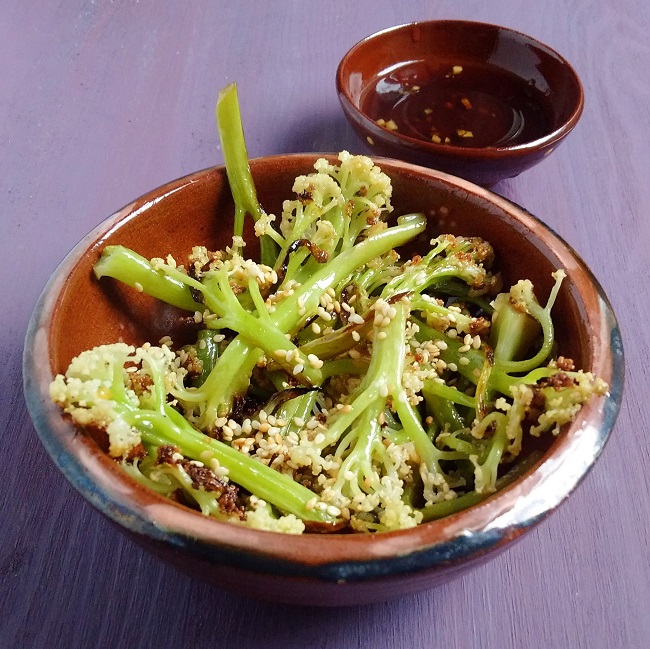
Heat a tablespoon of vegetable oil in a deep-frying pan or wok until hot. Add prepared raw stems and stir fry in the hot oil for 3 minutes. Cover with a lid, reduce the heat, and cook for a further 1 minute. Turn off the heat, add finely chopped garlic to taste and drizzle with a little honey or agave syrup and gluten-free teriyaki marinade. Put the lid back on and leave to stand in the residual steam for a further minute. Drain the stems, reserving the juices, and pile into a warm serving bowl. Sprinkle with toasted sesame seeds. Mix a little sesame oil into the pan juices and serve alongside the stems as a dressing or dip. Utterly delicious 🙂
Teriyaki and sesame dressed cauliflower stems. Image: Kathryn Hawkins

Coffee and pecan loaf cake. Image: Kathryn Hawkins
I had planned that my first recipe post of the year would be a recipe bursting with nutrition and vitality – new year, fresh start, etc. However, it’s been so cold these past few days, when it came to it, I simply couldn’t face anything too healthy. Instead, I’ve been in the kitchen keeping warm by baking, and thus, my first recipe of 2018 is one of my favourite cakes.
Sun-up on a frosty January morning. Image: Kathryn Hawkins
I took this shot of the garden from an open window about 9am yesterday morning, just as the sun was rising. The image below is the window adjacent to the one I opened – the beautiful ice pattern is on the inside!
Window pane iced-up on the inside. Image: Kathryn Hawkins
So, in my books, cold weather is enough justification for cake, and I start my new year blog posts with one of my “desert island” cakes: a coffee one.
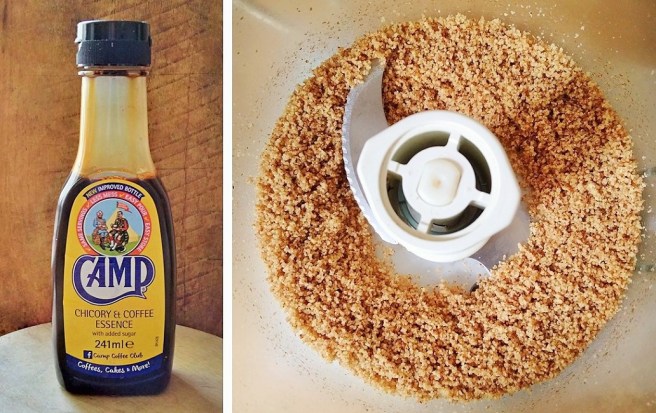
I’ve been using a heritage brand of coffee and chicory essence as a coffee flavouring in baking for as long as I can remember. It was our “turn to” flavouring long before decent barista-style instant coffee and espresso shots came to British shores. Sadly, the glass bottle packaging of old has been replaced by a plastic version (making it look less authentic), but the old-fashioned label is practically unchanged in design and the product within tastes just as good as always. I haven’t found anything that comes close to the concentrated flavour it offers in baking. In summer, I use it to make a base for a deliciously smooth and well-rounded iced coffee, ice-creams and chilled custards.
My favourite coffee flavouring, and finely ground pecan nuts. Images: Kathryn Hawkins
The sweet, nutty flavour of pecans goes particularly well with coffee. You can use walnuts if you prefer, but I find them a bit overpowering if you really want the taste of coffee to dominate your bake. For this recipe, grind up some of the pecans very finely to make a “flour” for a better formed cake crumb, and then add the remainder as finely chopped pieces for extra nutty texture. I add a little arrowroot to help bind the mixture but you can leave it out if you prefer. I hope you enjoy the flavours as much as I do 🙂
Serves: 10
Ingredients
225g pecan halves
125g gluten-free plain flour (such as Dove’s Farm)
8g arrowroot
2 level teaspoons gluten-free baking powder (such as Dr Oetker)
175g light brown soft sugar
3 large eggs (or, for a vegan cake, use 180g silken tofu)
175ml sunflower oil
4 tsp Camp coffee essence or similar
50g Demerara sugar
Preheat the oven to 180°C (160°C fan oven, gas 4). Grease and line a 1kg loaf tin. Put 125g pecans in a blender or food processor and blitz until very finely ground. Chop the remaining pecan nuts finely.
Sift the flour and arrowroot into a bowl and stir in both lots of pecans along with the sugar. Beat the eggs (or tofu) with the oil until well blended, and then thoroughly mix into the dry ingredients.
Transfer to the prepared tin. Smooth the top and put the tin on a baking tray. Scatter the top of the cake with the Demerara sugar. Bake for about 1 hour 10 minutes until risen, lightly cracked, and firm to the touch. A skewer inserted into the centre will come out clean when the cake is cooked. Leave to cool in the tin for 30 minutes, then turn on to a wire rack to cool completely. Wrap and store for 24 hours for better flavour and texture.
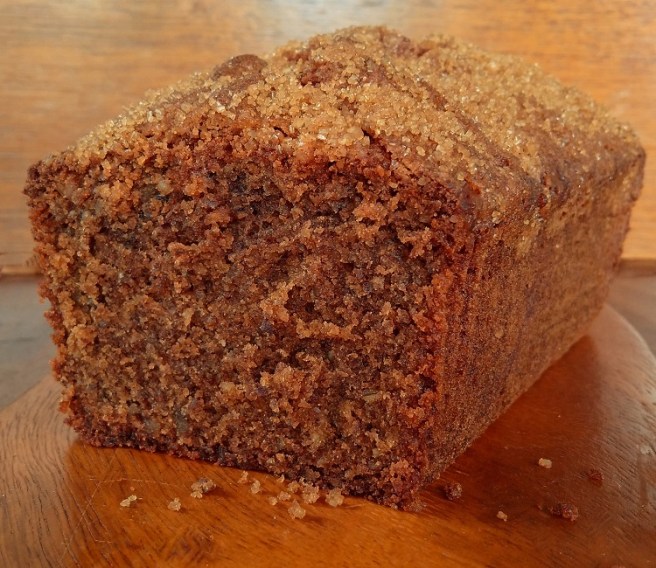
Dense, moist textured coffee and pecan loaf cake. Image: Kathryn HawkinsCoffee and pecan loaf cake, ready to serve. Image: Kathryn Hawkins

Happy new year to you all. My very best wishes to my blogging friends for a happy, healthy and peaceful year ahead.
It’s been a quiet start to the year. After a milder, rain-soaked, grey morning, the afternoon brought with it much calmer and brighter weather, with a glorious blue sky, sunshine, and crisp, fresh air.
The glow of fading sunshine on the first day of the year. Image: Kathryn Hawkins
Enjoy the rest of the holiday. I look forward to starting my regular posts again soon 🙂
Just a few days to go before the festive feasts begin, and what could be more appropriate for my last post before Christmas, than a delicious alternative Christmas pudding. I do enjoy a traditional, steamed fruit pudding, but this year I fancied a change, and have developed an alternative recipe. This pudding is fruity, but a little wee bit lighter in texture, and with the emphasis on toffee flavour rather than spice; I guarantee, it is utterly divine 🙂
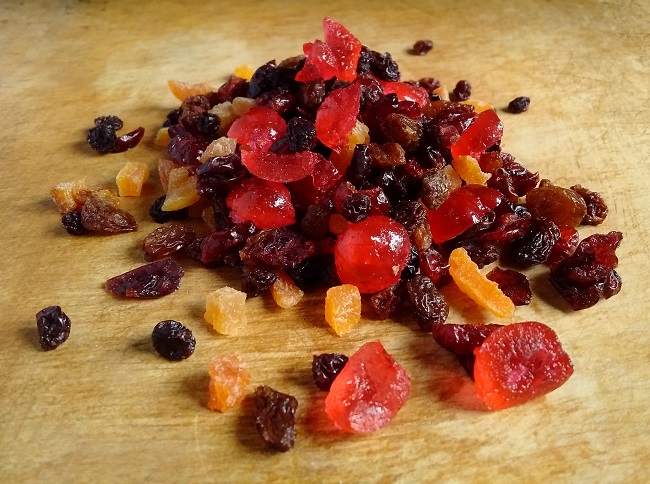
Cherries, apricots, sultanas and currants. Image: Kathryn Hawkins
The recipe makes 2 x 250ml puddings, which I think serve between 2 and 4 people, depending on how large an appetite you have. If you prefer, put the mixture in a 500ml basin and cook it for about an hour longer. I usually steam puddings in a slow cooker, this way I can forget about them and don’t end up with a steamy kitchen. If you prefer, put the puddings on a trivet, in a saucepan or in a steamer compartment, cover tightly with a lid, and then cook in the steam for about 1 1/2 to 2 hours. You can use any combination of fruit (or nuts) you have to make up the weight in the ingredients list, it’s a great pudding to use up any odds and ends you have.
Makes 2 x 250ml puddings
Ingredients
75g dried dates
50g dairy-free margarine
50g light Muscovado sugar
50g silken tofu
65g self-raising gluten-free flour
½ teasp bicarbonate of soda
125g mixed dried fruit
For the sauce:
85g light Muscovado sugar
30g dairy-free margarine
110ml canned coconut milk
½ teasp good quality vanilla extract
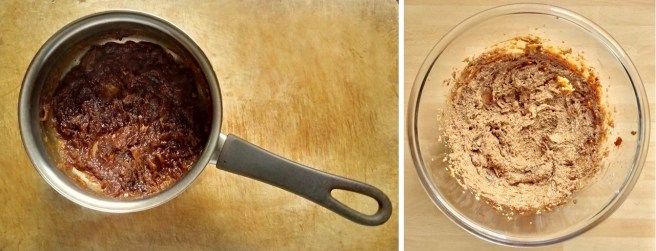
Grease and flour 2 x 250ml pudding basins. Put the dates in a small saucepan with 75ml water. Bring to the boil, cover and simmer gently for 5 minutes until very soft. Beat well with a wooden spoon until smooth, then leave to cool completely.
When you are ready to mix up the puddings, put the slow cooker on High and leave to preheat for 20 minutes. Meanwhile, put the margarine, sugar and tofu in a bowl. Add the cold date mixture and whisk everything together until smooth and creamy.
Preparing the date mixture and blending the ingredients. Images: Kathryn Hawkins
Sieve the flour and bicarbonate of soda on top. Add the fruit and gently mix all the ingredients together. Divide between the 2 basins and smooth the tops.
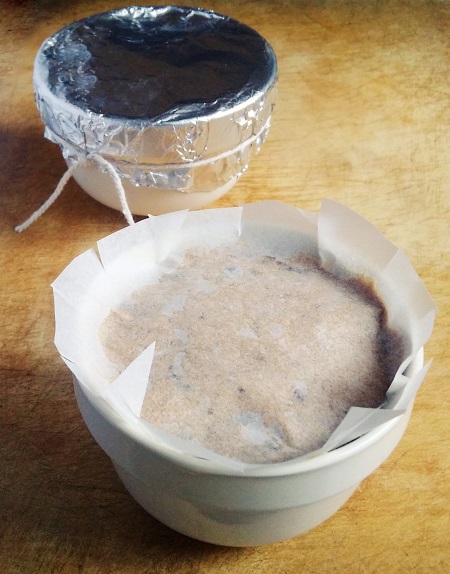
Preparing the puddings for steaming. Image: Kathryn Hawkins
Cover the puddings with a layer of baking parchment, and then foil, and tie securely with string. Put the basins in the slow cooker, side by side, pour in sufficient hot water to come halfway up the sides of the basins, cover and leave to cook for 2 hours. A skewer inserted into the centre of each pudding will come out clean when the puddings are ready.
For the sauce, put the sugar, margarine and half the coconut milk in a small saucepan. Heat gently, stirring, until melted together, then raise the heat and simmer for about 5 minutes until richly golden and caramelised. Remove from the heat and stir in the remaining coconut milk and vanilla extract.
Making the toffee sauce. Images: Kathryn Hawkins
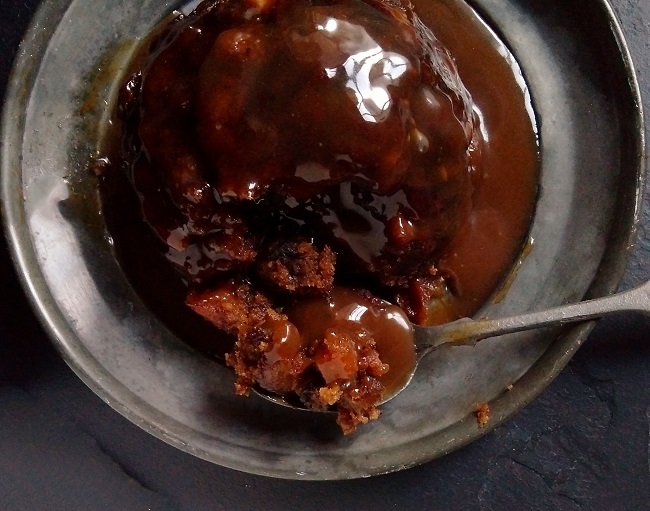
When the puddings are ready, remove them from the slow cooker and leave them to stand for 5 minutes. Remove the wrappings and turn out on to warm serving plates. Pour over sauce and serve immediately.
Ready to eat, sticky toffee Christmas pudding. Image: Kathryn Hawkins
That just leaves me to pass on my very best wishes to you for a happy, healthy and enjoyable Christmas holiday. Happy festive feasting!
Great name for a recipe eh? What’s more, I haven’t made it up. This is a Scottish classic, and I’ve chosen to post it now for 2 reasons. It’s been very cold here this week and this is fabulous comfort food, and also with the festive season nearly upon us, it is an excellent recipe for using up leftovers. It uses 2 of my favourite vegetables, potatoes and kale (or cabbage).
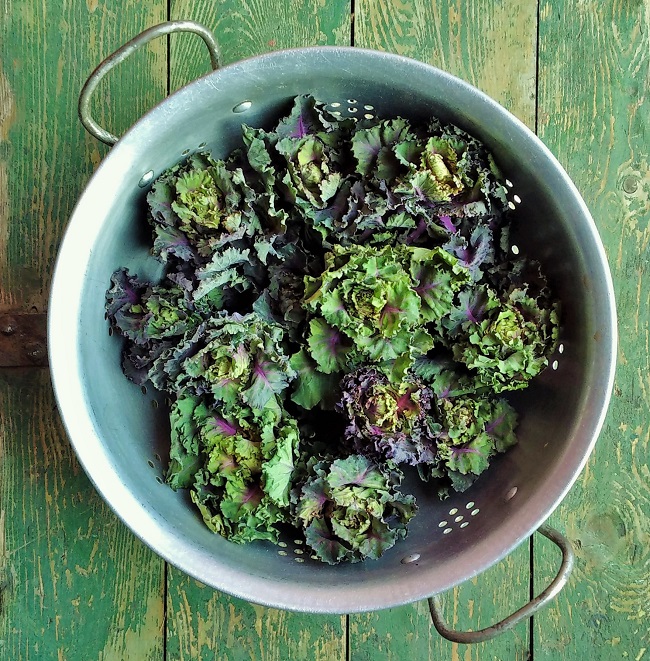
I love kale. So much flavour and texture, I think it out-strips cabbage and other greens in every way. Up until a couple of years ago, Cavelo Nero, Italian black kale, was my favourite variety, but then along came mini kale and my mind was changed. Very quick to cook, simple to prepare, with a milder, slightly sweet and nutty flavour, it looks very pretty too. The small leaves are also excellent raw in winter salads.
Mini kale. Image: Kathryn HawkinsHeads of mini kale, up close. Image: Kathryn Hawkins
So on with the recipe. Traditionally, this is a very simple combination of leftover cooked potatoes and cabbage fried with onion and then grilled with cheese on top. What’s not to like? The name, by the way, is believed to come from the combination of the “thumping” sound associated with mashing potato and the mixing together of the ingredients (a “rumble”). Here’s my version.
Serves: 3 to 4 as a side dish
Ingredients
150g mini kale, kale, cabbage or other greens (if you have leftovers, you’re halfway there with the recipe already)
500g cooked potatoes (I had some boiled small potatoes with skins on to use up)
25g butter or dairy-free margarine
1 tbsp. vegetable oil
1 leek, trimmed and shredded (or use thinly sliced onion if you prefer)
Salt and freshly ground black pepper
50g grated Scottish Cheddar or dairy-free/vegan grated cheese
If you are starting from scratch, prepare the greens and cook them in lightly salted water for 3-5 minutes until just tender. Drain well.
Put the potatoes in a bowl and mash them to crush slightly.
In a large frying pan, melt the butter with the oil and gently fry the leek for 3-4 minutes until softened (if you’re using onion, cook it gently for longer, until tender).
Stir in the potatoes and greens, and stir fry the vegetables gently together for 5-6 minutes until thoroughly heated. Season well and transfer to a heatproof dish.
Basic preparation of Rumbledethumps. Image: Kathryn Hawkins
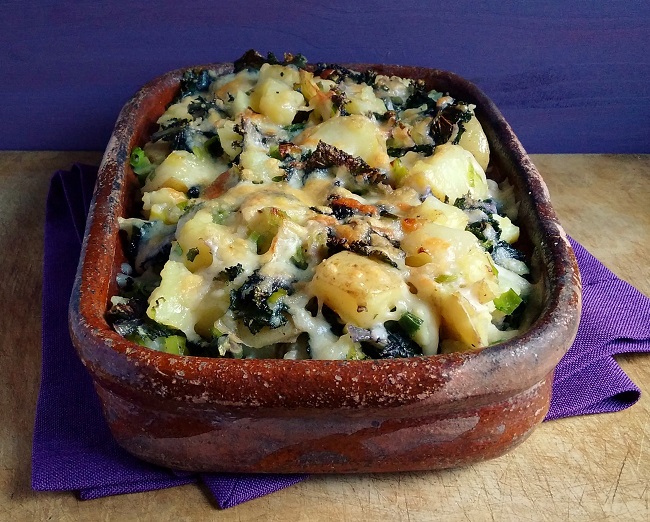
Preheat the grill to medium/hot. Sprinkle the vegetables with grated cheese and grill for about 5 minutes until golden and bubbling. Serve immediately.
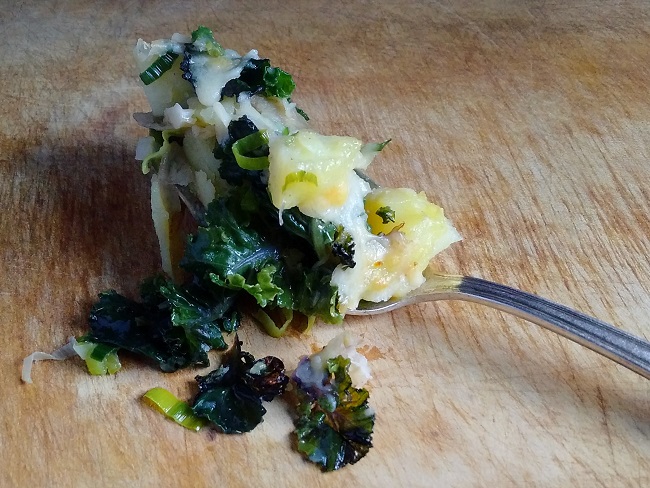
Comfort with every spoonful. Image: Kathryn Hawkins
As I sat down to write this post last night, we were awaiting the arrival of the first major storm of the season. Nothing has materialised overnight, but it is suddenly feeling much colder. There is a thick frost this morning, and it is bright and clear again, the wind has dropped, and all is calm.
On the whole, the first few days of the month have been quite kind to the gardeners amongst us here in central Scotland. Whilst the east coast did have more seasonal weather, we were blessed with several blue sky days, milder temperatures, and some glorious sun rises.
To be honest, I haven’t been outside much recently – work has kept me inside. The garden is looking a bit tired now, and ready for a rest. I cleared a lot of the autumn debris a couple of weeks ago and it’s beginning to look a bit bare in places. However, the evergreens provide shape and colour and look very vibrant on a fine day, and the Cotoneaster hedge is laden with berries, as it is every year.
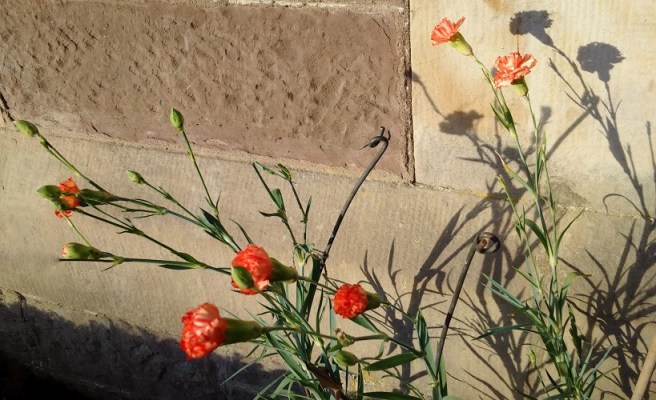
The best value plants in the garden this year have been the carnations I planted last year – taken as cuttings from a birthday bouquet. They began flowering in August, and are still producing blooms at the moment. I’m sure the winter weather will get to them eventually, but the south-facing wall seems to be providing them with sufficient shelter to have kept them going this far into the year.
Carnations enjoying the winter sunshine. Image: Kathryn Hawkins
Elsewhere in the garden, the colours have faded. The Hydrangeas have taken on a beautiful “vintage” look, and the blooms of Echinops and white Japanese Anemones have left behind interesting seed-heads which are slowly weathering away.
Faded beauty: Blue Hydrangea. Image: Kathryn HawkinsGlobe thistle and Japanese Anemone seed heads. Images: Kathryn Hawkins
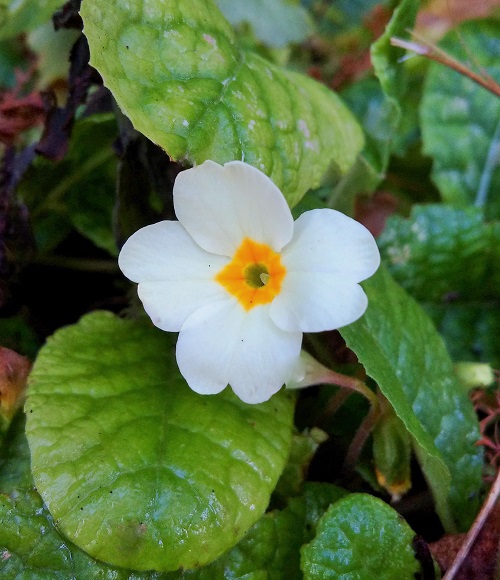
The last of my garden features this month is this wee fellow, a perennial primrose. Just one solitary bloom at the moment, hidden away in a sheltered, damp part of the garden. A small flash of pale yellow which acts to remind me that spring will be here again in just a few weeks. Have a good week 🙂
I’ve had a busy few days with my work, and subsequently only had time for one quick baking session this week. I turned to an old favourite of mine, shortbread. Easy to make and lovely to eat, and open to so many variations. This time, I had a break with tradition and made a super rich seeded version and replaced some of the fat with tahini.
I often replace a portion of the flour in cakes and bakes with ground almonds, and, if I don’t have enough ready-ground, I blitz up my own in a coffee grinder. If you use the non-blanched almonds, you’ll find the ground meal gives a more earthy to your bakes.
Sesame seed paste and home-made ground almonds. Images: Kathryn Hawkins
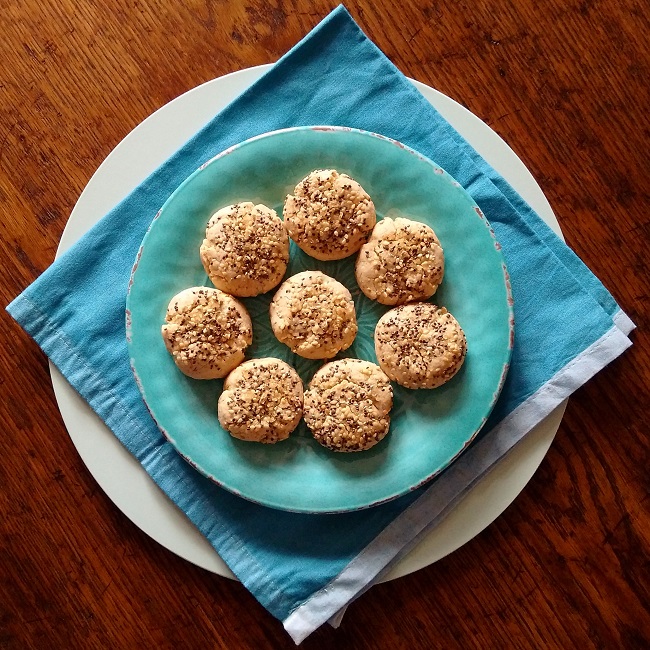
These tasty shortbreads have a soft, crumbly texture, and a rich, nutty flavour; they are delicious with a cup of coffee and keep well for a few days in an airtight tin. I find them impossible to resist. I’m away to eat the last one after I finish typing this!
Makes: 18
Ingredients
150g gluten-free plain flour (such as Dove’s Farm)
65g icing sugar
75g ground almonds
25g toasted sesame seeds
85g tahini (sesame seed paste)
50g very soft dairy-free margarine (or butter if you eat it)
1 tbsp. each of chia seeds, toasted sesame seeds and Demerara sugar, mixed, for the topping
Sieve the flour and icing sugar into a bowl and stir in the ground almonds and toasted sesame seeds.
Mix the tahini and margarine together until well blended, then stir into the dry ingredients until well mixed.
Bring the ingredients together using your hands, then turn out on to a lightly floured work surface and knead gently to form a smooth dough. Divide into 18 portions and form each into a ball.
Arrange on the baking tray, press down lightly to make chunky rounds and sprinkle lightly with the sugary seed mix. Chill for 30 minutes.
Preheat the oven to 180°C (160°C fan oven), gas 4. Line a large baking tray with baking parchment. Bake the shortbreads for about 25 minutes until lightly brown and crisp. Leave to cool on the tray.
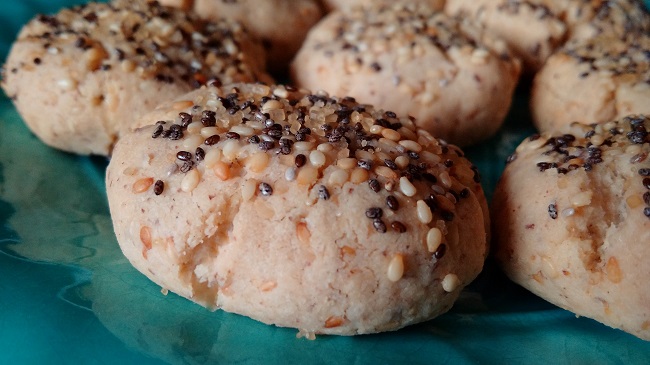
Ready for eating, sesame shortbreads. Image: Kathryn Hawkins
Vanilla sugar-dredged mini sco-nuts. Image: Kathryn Hawkins
The weather has turned colder this past week, and my thoughts have turned to comfort food. In my opinion, food doesn’t come much more comforting than a light, fluffy doughnut with a crunchy, sugary coating. Sadly, not usually a choice for anyone on a gluten-diet, but I think these little treats are a good alternative, and best of all, they can be made in a fraction of the time that it takes to make the real thing.
Mini sco-nut, fresh out of the pan. Image: Kathryn Hawkins
As the name suggests, the recipe derives from a scone mix that is cut and fried like a doughnut. I coated mine in home-made vanilla sugar but plain sugar is just as good. Leave them plain and dip them in a little of your favourite jam or sweet dipping sauce. Sometimes, I drizzle them with a little vanilla or cocoa flavoured glacé icing and decorate with a few sprinkles.
Drizzled and decorated, mini sco-nuts. Image: Kathryn HawkinsHome-made vanilla sugar. Image: Kathryn Hawkins
I always have a pot of vanilla sugar in the cupboard. I chop up bits of vanilla pod that is past its prime, or any part of the pod that has dried out, and just keep topping up the pot with caster sugar. Every now and then I give the pot a shake to distribute the vanilla pieces, and I keep the pot well sealed. You do need to sieve it when you use it, but keep the bits of pod trapped in the sieve and put them back in the pot along with a top up of sugar, and you can replenish your supply more or less indefinitely. Here’s the recipe.
Makes: 14 mini sco-nuts
Ingredients
150g gluten-free self-raising flour (such as Dove’s Farm)
5g gluten-free baking powder (such as Dr Oetker)
2g xanthum gum, optional – I have started adding this to my scone mixture as it really does improve the crumb texture
25g caster sugar
2 tbsp sunflower oil + extra oil for deep-frying
1 teasp good quality vanilla extract
Approx. 6 tbsp. soya or other non-dairy milk
Vanilla sugar or caster sugar to dredge
Sieve the flour, baking powder and xanthum gum into a bowl and stir in the caster sugar. Make a well in the centre, and spoon in the oil and vanilla, then bind together with sufficient milk to form a softish scone dough.
Pour the oil for deep-frying into a saucepan or wok and begin heating – the oil temperature needs to be around 180°C to fry the sco-nuts properly. While the oil is heating, turn the dough out on to a lightly floured surface and knead gently to bring the mixture together and make smooth, then roll or press to a thickness of 1cm.
Cut out rounds using a plain 5cm cookie cutter, and press out the middles using a 2cm round cutter. Re-roll the trimmings nd middles to make 14 mini rings in total.
Fry the sco-nuts in 2 batches, turning them gently in the oil, for 2-3 minutes, until golden and crisp all over. Drain well on kitchen paper and keep warm while cooking the second batch.
Preparing and cooking mini sco-nuts. Images: Kathryn Hawkins
Dredge in sugar if liked, or drizzle with icing. Best served while still warm. Sco-nuts do freeze well if you have any leftover; just bag them up, seal and freeze. You can reheat them gently in a moderate oven for about 5 minutes if you want to eat them warm.
Extra indulgence, dipping mini sco-nuts in vanilla sugar. Image: Kathryn Hawkins