Welcome to my blog all about the things I love to grow and cook. You'll find a collection of seasonal gluten-free, dairy-free and vegan-friendly recipe posts, as well as a round up of my gardening throughout the year. I wish you good reading, happy cooking and perfect planting!
Hello again. It’s been a while since I put a post together. I hope you are enjoying some signs of the new season wherever you are. Here in central Scotland, things are coming to life and the hedgerows and gardens are colouring up with spring flowers at long last. My springtime pride and joy, a Mimosa plant, is in full flower in the greenhouse just now. Such bright little tufty blooms and a subtle sweet scent guaranteed to brighten up the dullest of days.
A few of the flowers in the garden this month. Images: Kathryn Hawkins
Bright and beautiful. Images: Kathryn Hawkins
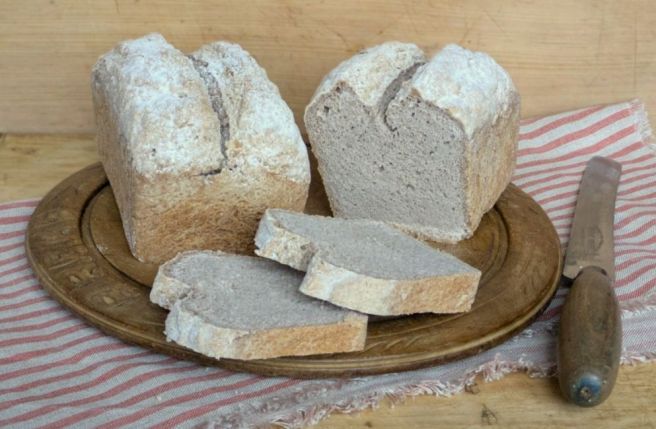
I’ve been doing a bit of baking recently and this month’s post is a result of my efforts. It’s a simple yet tasty bread recipe which makes 2 small loaves. The bread keeps for about 3 days in a bread container but it also freezes well for longer storage. I usually freeze my loaves ready sliced and then I can take out a slice at a time when required.
Makes: 2 x 500g loaves
Ingredients
2tbsp finely ground flaxseed (linseeds)
365g gluten free bread flour
200g buckwheat flour plus extra to dust
1/2tsp xanthan gum
1tbsp caster sugar
25g ground psyillium husk
7g sachet instant dry yeast
1.Mix the ground flaxseed with 90ml cold water and leave aside to thicken slightly. Grease and flour 2 x 500g loaf tins.
2. Put the flours in a bowl with the remaining ingredients and mix well. Make a well in the centre and add the flax mixture. Gradually mix in about 425ml lukewarm water to make a sticky, soft consistency. Cover and leave to stand for 10 minutes, then mix again.
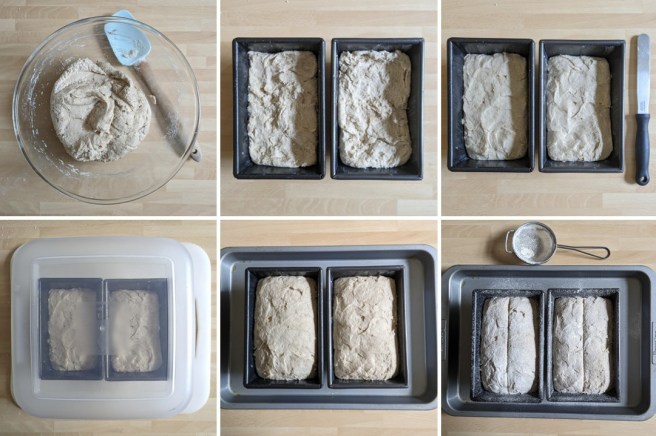
3. Divide between the tins and smooth the tops. Cover and leave to rise at a coolish room temperature, away from drafts, for about 2 hours until risen to the top of the tins.
4. Meanwhile, preheat the oven to 200°C, 180°C Fan Oven, Gas 6. Put the loaf tins on a baking tray. Using a lame or sharp knife, slash each loaf about 1/2cm deep down the length and dust lightly with a little more buckwheat flour.
Proving the dough. Images: Kathryn Hawkins
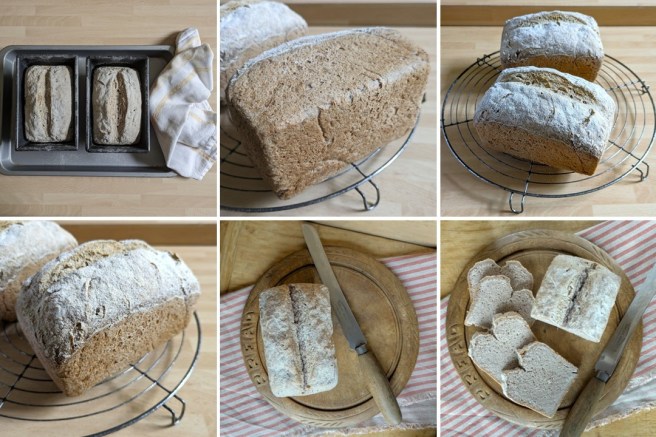
5. Bake the loaves for about 50 minutes until risen, crusty and lightly golden. The loaves should sound hollow when tapped underneath. Turn on to a wire rack to cool completely.
Baking and cooling the loaves. Images: Kathryn Hawkins
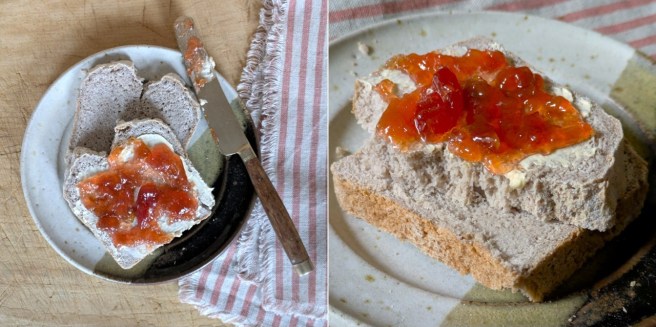
Jammed up and ready to eat. Images: Kathryn Hawkins
Until next time, happy baking and thanks for stopping by 🙂
Hello there. I hope you are feeling festive and looking forward to Christmas. It’s such a busy time of the year, tying up lots of loose ends before the year is out as well as making all the preparations for the days ahead.
I have a simple, fun and very festive recipe for you this month, based around one of my favourite and most successful gluten-free and vegan bakes, shortbread.
If you’ve been following my blog for a while, you’ll have already seen a few variations on my shortbread recipe over the months. This recipe uses a plain mix to which you can add your own flavours if you wish. The snow folk figures are easy to make and assemble, and I’ll leave it up to you as to how creative you want to be when it comes to decorating them. The quantities below will be enough to make 2 basic figures.
Ingredients
50g plant-based butter, softened
30g caster sugar
100g gluten-free plain flour plus extra for dusting
1tsp vanilla extract or other flavouring of your choice
150g white ready-to-roll icing
25g icing sugar
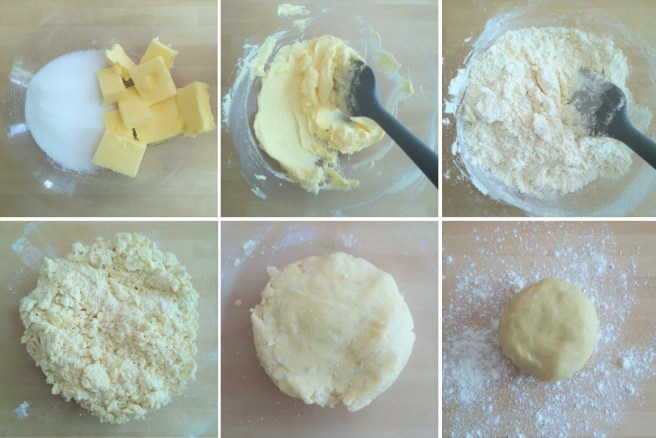
1. Beat the butter and caster sugar together until creamy and well blended. Mix in the flour and vanilla until the ingredients start to come together, then bring the mix together with your hands to make a ball of dough.
Mixing the shortbread base. Images: Kathryn Hawkins
2. Lightly dust the work top with a little more flour and gently knead the dough until smooth.
Making and baking. Images: Kathryn Hawkins
3. Roll out the dough to a thickness of 0.5cm and cut out 4 x 6.5cm, 4 x 5cm and 4 x 3.5cm rounds, re-rolling the dough as necessary. Arrange on a baking tray, prick with a fork and chill for 30 minutes.
4. Preheat the oven to 180°C, 160°C fan oven, gas 4, bake the shortbread rounds for about 15 minutes until lightly golden. Leave to cool on the baking tray.
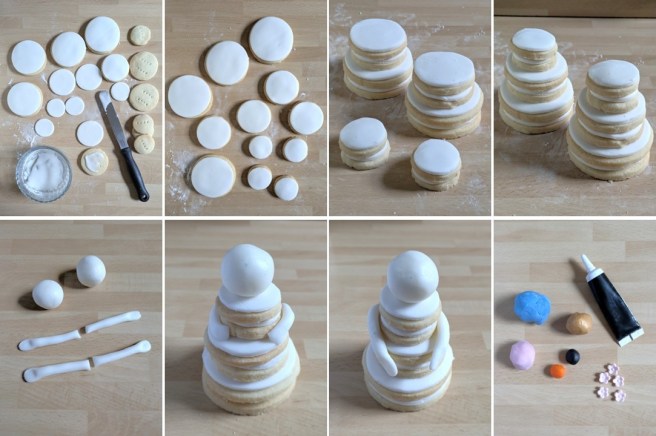
5. When you are ready to decorate, roll out the white ready-to-roll icing thinly and use the same cutters to cut out 12 assorted rounds. Keep the trimmings for decorating. Mix the icing sugar with a little water to make a smooth, sticky paste.
6. Spread a little icing paste on each biscuit and stick a same size round on top. Smooth the icing round with your fingers to flatten and neaten, then stack the rounds on top of each other starting with the largest rounds at the bottom. To make them more stable, spread a little icing paste in between if liked.
Icing and decorating. Images: Kathryn Hawkins
7. Use the trimmings to make arms and heads and stick in place with a little of the icing paste. Transfer to a serving plate or board.
For the finishing touches, use small amount of different coloured ready-to-roll icing to make scalves, hats, noses and buttons. A black piping icing tube is an easy way to pipe on the facial features, and I used tiny sugar flowers to make the buttons on one of the figures. Stick all the extras in place using a little of the icing paste.
Decorated and ready to serve.
Sprinkle the serving plate with shredded coconut to resemble snow. Note: the shortbread will lose it’s crispness once iced but it tastes just as good 🙂
See you next year! Image: Kathryn Hawkins
That’s me for another year. I hope you have a happy Christmas. With best wishes for the new year, thanks for stopping by.
Zesty and crunchy, microwave flapjacks. Image: Kathryn Hawkins
Hello again. I hope you are keeping well. Winter is upon us here in central Scotland with a sharp decline in the temperature and a light dusting of snow on the hills. This gives me the perfect excuse to do some comfort baking:)
Just 5 basic ingredients. Image: Kathryn Hawkins
I’ve been using my microwave oven a lot more this year in an effort to reduce energy consumption and have been experimenting with some of my traditional baking recipes which I would usually cook in the big electric oven.
Whilst you won’t get the same caramelisation and rich golden colour by cooking flapjacks in a microwave, the texture is chewy and the flavour is pretty much the same. You only need 5 ingredients to make this recipe, plus some icing sugar if you want to add more lemony flavour with a drizzle icing. The timings are for a 900w microwave oven so you may need to adjust them if your machine has a different output. Here’s what to do……
Makes: 12 portions
Ingredients
115g plant based butter
115g golden syrup
175g gluten-free oats (I used “jumbo” oats but porridge oats will work fine)
30-40g poppyseeds
Finely grated rind and juice 1 lemon
45g icing sugar
Yellow cake sprinkles if liked
1. Line a 20cm square (internal measurement) microwave-proof dish with baking parchment. Put the butter and syrup in a microwave-proof bowl, cover and cook on High for about 2 minutes, stirring occasionally, until melted.
2. Stir in the oats, poppyseeds to taste and lemon rind along with all but 1½ teaspoons lemon juice and mix well.
Making flapjacks in the microwave. Images: Kathryn Hawkins
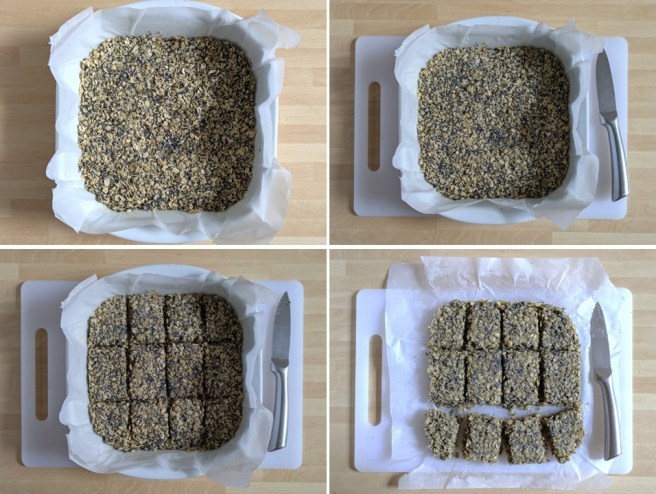
3. Press into the prepared dish and flatten the surface with the back of a spoon. Cook in the microwave on Medium for 7 minutes. Mark into 12 pieces and leave to cool in the dish.
4. When completely cold, transfer the flapjack to a board and cut the pieces all the way through.
Cooking, cooling and slicing flapjacks. Images: Kathryn Hawkins
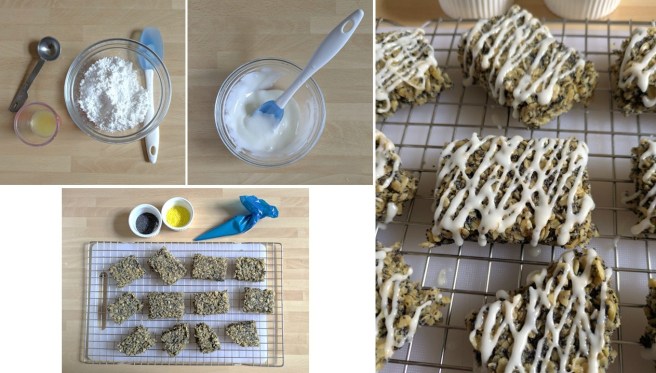
5. Mix the icing sugar and reserved lemon juice together and drizzle over each piece. Scatter with sprinkles if liked.
Finishing the flapjacks with lemon icing. Images: Kathryn Hawkins
Lemon and poppyseed flapjack up close. Image: Kathryn Hawkins
Store in an air tight container or freeze – for best results store or freeze uniced.
I hope to have something festive for you next month. In the meantime, enjoy the run up to Christmas. Take care and thanks for stopping by:)
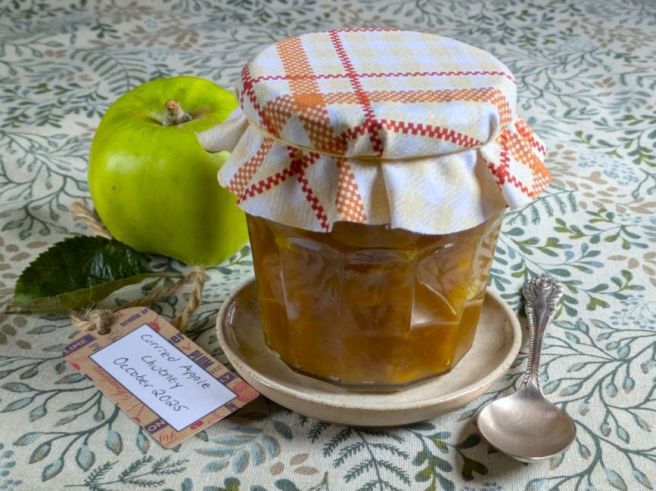
Sweet and spicy homemade chutney. Image: Kathryn Hawkins
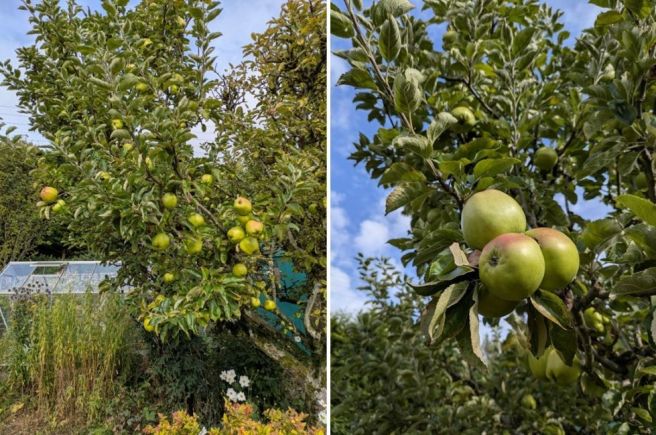
Hello again. I hope you are keeping well and enjoying the colours of Autumn. It’s remained quite dry here in central Scotland and the trees are looking very colourful around and about. Everywhere I look, it really has been a bumper year fruit especially plums and apples in my garden. The old apple tree produced yet another bountiful crop of some 70kg! Now that the harvest is in, it’s enjoying a well earned rest I’m sure.
A tree full of apples. Images: Kathryn Hawkins
Harvest gathered, this year’s bumper crop of cooking apples. Images: Kathryn Hawkins
We did a lot of the apples away this year as there were far too many to cook up or freeze down. But I still have a box full to work through and one of the first things to make was some apple chutney. I made this batch in the slow cooker. It’s very easy to make and tastes delicious. One slight difference to this slow cooker recipe is that it uses less vinegar and sugar than traditional recipe so the chutney does need to be stored in the fridge.
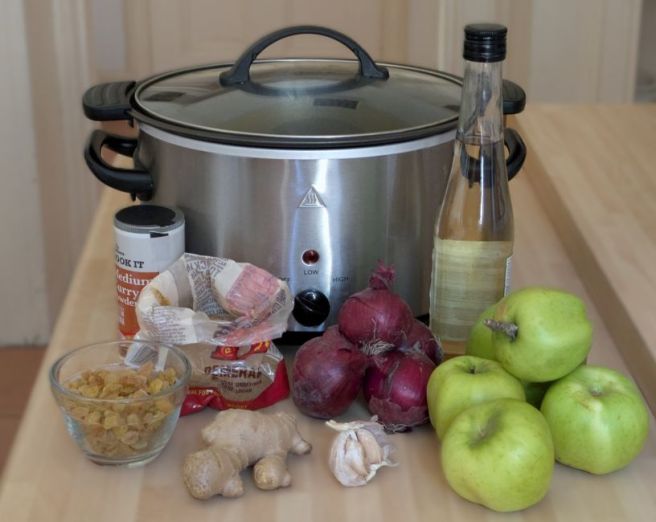
Curried apple chutney ingredients. Image: Kathryn Hawkins
Makes: approx. 1.2kg
Ingredients
300g prepared red or white onions, chopped
15g peeled root ginger, grated
10g peeled garlic, grated
750g prepared cooking apples, chopped
125ml cider or white wine vinegar
1tbsp medium curry powder
100g sultanas
200g Demerara sugar
1 1/2 tsp salt
1. Put the onion, ginger, garlic and apples in the slow cooker. Pour over the vinegar, mix well, cover with the lid and cook on High for 4 hours.
Apple chutney preparation. Images: Kathryn Hawkins
2. Stir in the remaining ingredients, cover and cook for 30 minutes longer to dissolve the sugar. After this time, remove the lid and if the mixture looks watery, leave the chutney to cook without the lid on for up to 2 hours, stirring occasionally, until thick and jam-like.
The 4 stages of slow cooker chutney. Images: Kathryn Hawkins
3. Leave to cool completely then pack into clean jars, seal tightly and store in the fridge for up to 3 months. It’s ready to eat immediately and doesn’t need to mature. Great news for the impatient preserve-makers amongst us 🙂
A spoonful of homemade chutney. Images: Kathryn Hawkins
This chutney makes a great alternative to mango chutney with and Indian meal as well as a delicious finishing touch to a sandwich.
That’s me for another month. Enjoy the rest of the season and I’ll see you again next month when winter will be upon us. Until then, take care and thanks for stopping by.
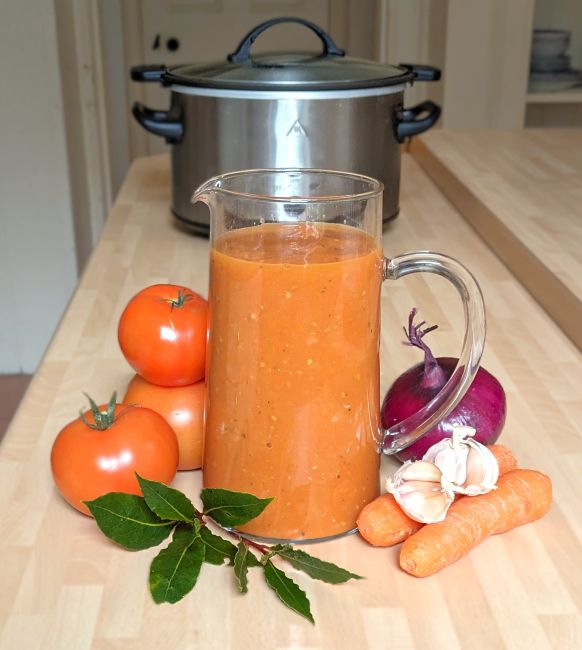
Easy to make, slow cooker tomato sauce. Image: Kathryn Hawkins
Hello again. It’s that time of year when there is so much produce ready at the same time. My fridge is groaning with vegetables and fruit, and I really need to get down to some serious recipe/meal planning and freezing.
For a simple tomato sauce, put 1.5kg washed and chopped fresh tomatoes in the slow cooker with 2 peeled and sliced medium carrots. Add a peeled and chopped large onion and 4 peeled and halved garlic cloves. I seasoned the mix with 2 teaspoons celery salt, 1/2 teaspoon black pepper and 4 teaspoons caster sugar. Add a couple of bay leaves and drizzle over 3 tablespoons olive oil. Mix well, cover with the lid and switch to the High setting. Leave to cook for 4 to 5 hours, until completely soft.
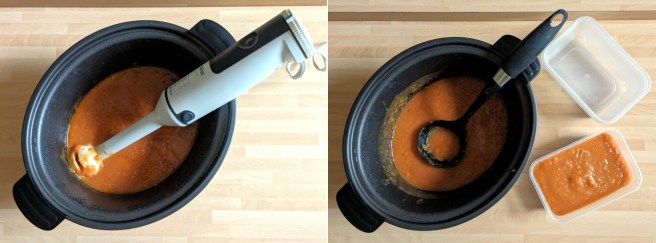
Blitz and freeze. Images: Kathryn Hawkins
Discard the bay leaves and blitz with a hand blender then leave to cool before packing into freezer containers. This quantity will make around 1.75kg sauce. It will keep in the fridge for about 5 days, and in the freezer for 6 months or so.
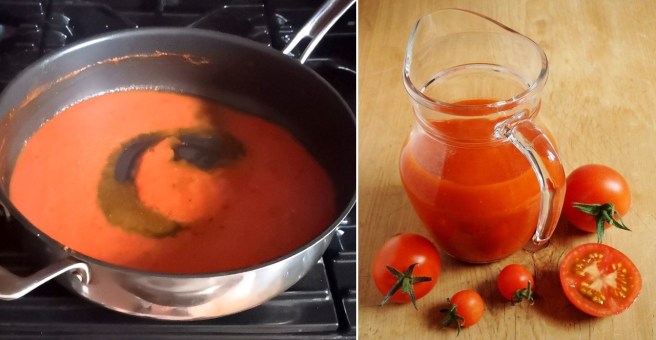
Reduced and thickened slow cooker tomato sauce. Images: Kathryn Hawkins
The sauce is quite thin which is fine for some recipes but if you want it thicker, transfer a few ladles of sauce to a deep frying pan, drizzle with a little olive oil, bring to the boil and simmer for a few minutes, stirring occasionally, until it is thickened to you liking.
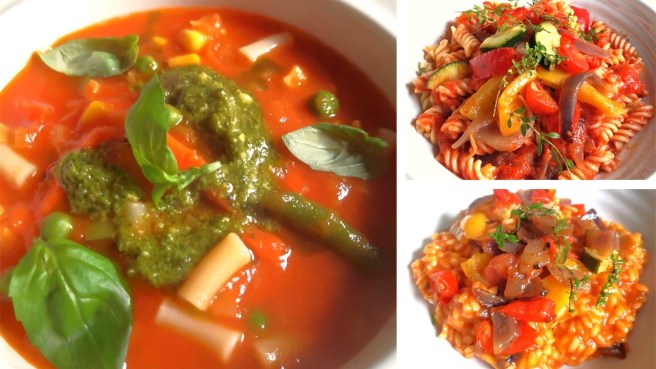
Using homemade tomato sauce. Images: Kathryn Hawkins
Thinner sauce is perfect for soups and risotto stocks, whilst thicker sauce clings better to pasta shapes or can be used as a spread for tarts and pizza bases.
That’s all for this post. I hope you are enjoying some good weather and fine homegrown produce. Until next time, thanks for stopping by 🙂
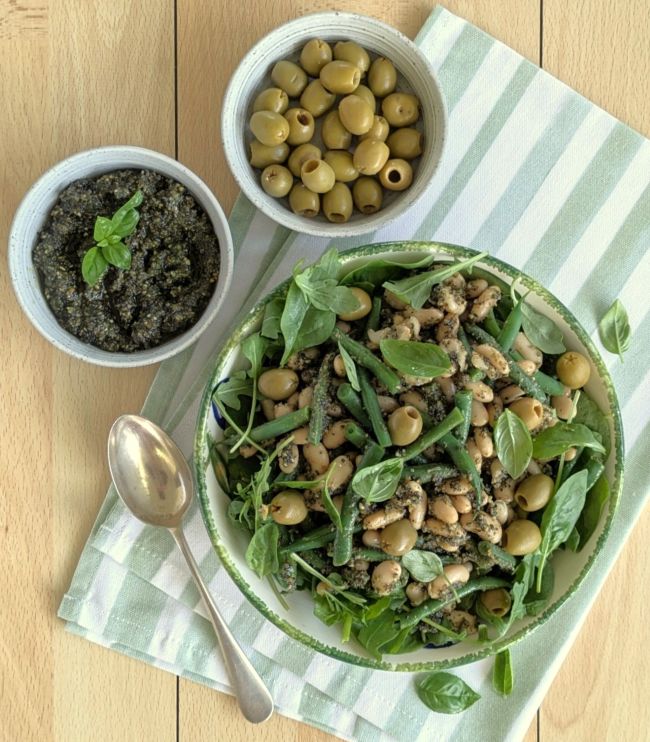
Bean salad flavoured with almond and poppy seed pesto. Image: Kathryn Hawkins
Hello there. I hope you are enjoying some good weather this season. It’s been very hot here in the UK again, and so salads are very much still on my daily menu. To follow on from my post last month which you can read here , I have another recipe which can help towards increasing your calcium levels if you are on a gluten-free, dairy-free and/or vegan diet.
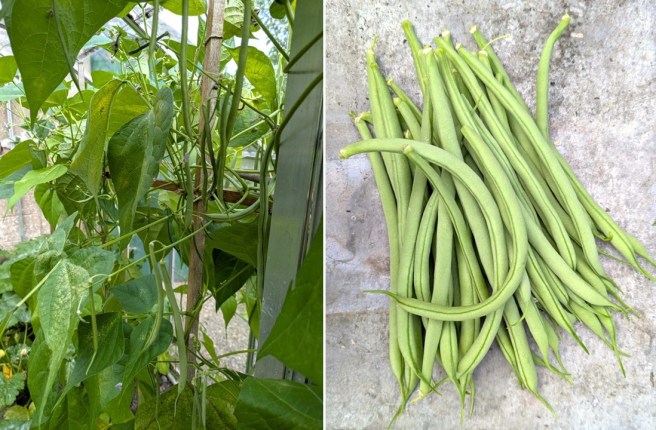
Gorgeous greenhouse green beans. Images: Kathryn Hawkins
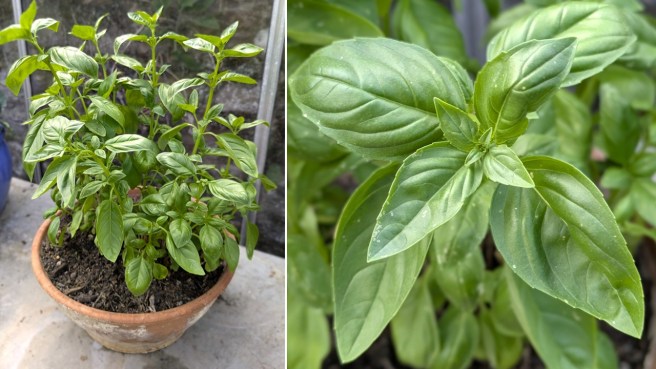
Summery greenhouse basil. Images: Kathryn Hawkins
It’s been a bumper season for the green (French) beans (Cobra variety) in my greenhouse. The vines have been producing an abundance of beans for several weeks now, and the basil plant loves all the heat and sunshine as well. To my delight, I discovered that both green beans and basil offer useful amounts of calcium, and that’s how my recipe this month began.
Combined with some other calcium-rich ingredients, this tasty salad is delicious on its own or as a side dish. The table below gives you a breakdown of which ingredients contain the most calcium so that you can make up your own combinations.
Rocket
216mg calcium/100g
Baby spinach
119mg calcium/100g
Cooked cannellini beans
93mg calcium/100g
Cooked green beans
61mg calcium/100g
Green olives
61mg calcium/100g
Fresh basil
250mg calcium/100g
Whole almonds
269mg calcium/100g
Poppy seeds
1580mg calcium/100g
Garlic
19mg calcium/100g
Source: McCance and Widdowson’s The Composition of Foods
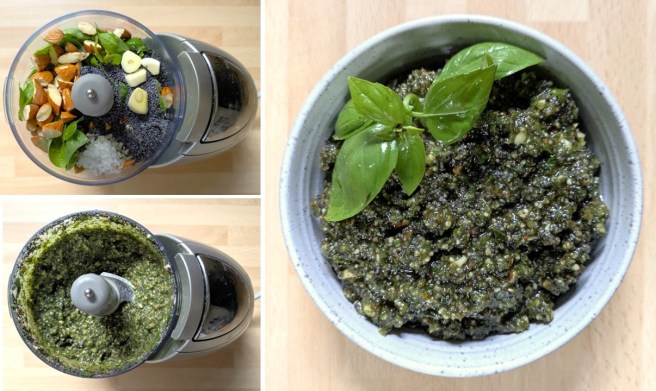
For the pesto, put 20g fresh basil in a food processor with a peeled garlic clove and add 50g roughly chopped whole almonds, 20g poppy seeds and some salt. Pour over 60ml extra virgin olive oil and blitz until smooth.
Making almond and poppy seed pesto. Images: Kathryn Hawkins
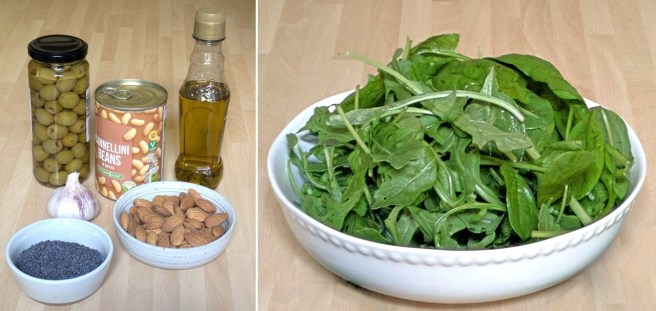
For the salad, I combined 240g canned cannellini beans with 100g chopped cooked green beans and half the pesto sauce above. I lined a salad bowl with 40g wild rocket and 20g baby spinach and piled the bean mixture on top. Serve with 100g pitted green olives and extra basil leaves, with the remaining pesto on the side.
Assembling the salad. Images: Kathryn Hawkins
The salad serves 4, and each portion will provide 238mg calcium and 330 calories.
That’s me for another month. Hope to see you again soon. Thanks for stopping by 🙂
My top 4 natural calcium boosters. Images: Kathryn Hawkins
Hello again. I hope you are keeping well and enjoying the Summer season. My post is a little different this month but hopefully helpful to anyone whose diet contains no gluten, dairy or animal products.
I had a bit of a dietary come-uppance a few weeks ago. Having a background in food and nutrition, I know what I should be eating to keep me fit and healthy. It happened when I switched from my regular plant-milk to an organic version. After a few days I Happened to notice that the organic milk was not fortified. This raised my concern as fortified plant milk was one of the main sources of calcium in my diet. Once I had reviewed the other foods I regularly consume, I realised that my daily intake of this vital mineral was coming up short.
As part of my work as a recipe writer, I am used to working out the calories and other nutritional content of my recipes, and I have some comprehensive nutritional books and tables to help me do this. I studied the calcium content for lots of foods and worked out some useful dietary calcium boosters which are easy to include in my meals on a daily basis.
Poppy seeds
1580mg calcium/100g
Sesame seeds
670mg calcium/100g
Chia seeds
631mg calcium/100g
Flax seeds
255mg calcium/100g
Whole almonds
269mg calcium/100g
Brazil nuts
170mg calcium/100g
Source: McCance and Widdowson’s: The Composition of Foods
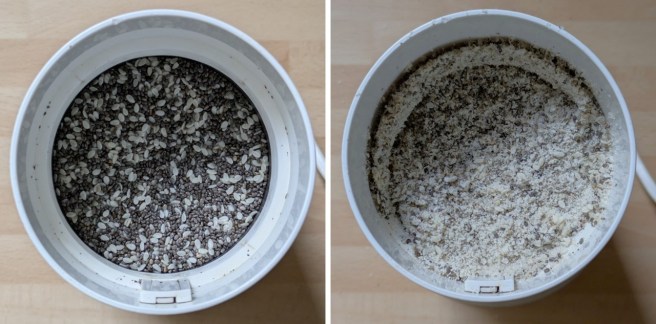
As you can see from the chart above, poppy seeds are by far the super-hero of the calcium world but like other small seeds, not necessarily the easiest of foods to eat, so I ground them up in my coffee grinder to make a fine “flour”.
Grinding poppy seeds. Images: Kathryn Hawkins
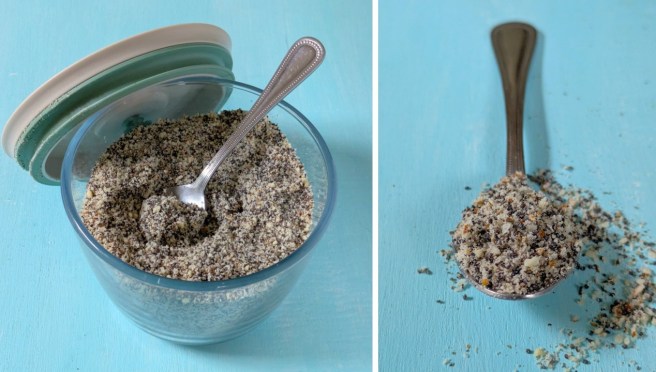
Combined with ground sesame seeds, chia seeds and unblanched almonds the resulting “flour” makes a perfect sprinkle over breakfast cereals and salads and as a nutrient-rich addition to smoothies and baking mixes.
A perfect calcium-rich sprinkle. Images: Kathryn Hawkins
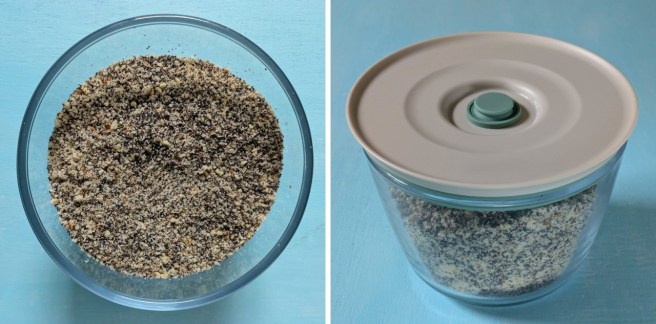
The blend is made up with 50g poppy seeds, 25g each sesame and chia seeds plus 75g unblanched almonds to make 11-12 servings. One heaped tablespoon or 15g of this mix will give you a very useful 115mg calcium (81 calories). Don’t be tempted to make up too much in one go, it is better to consume the mix as fresh as possible; keep it in an airtight container, in the fridge for maximum freshness.
Store in an airtight container, in the fridge. Images: Kathryn Hawkins
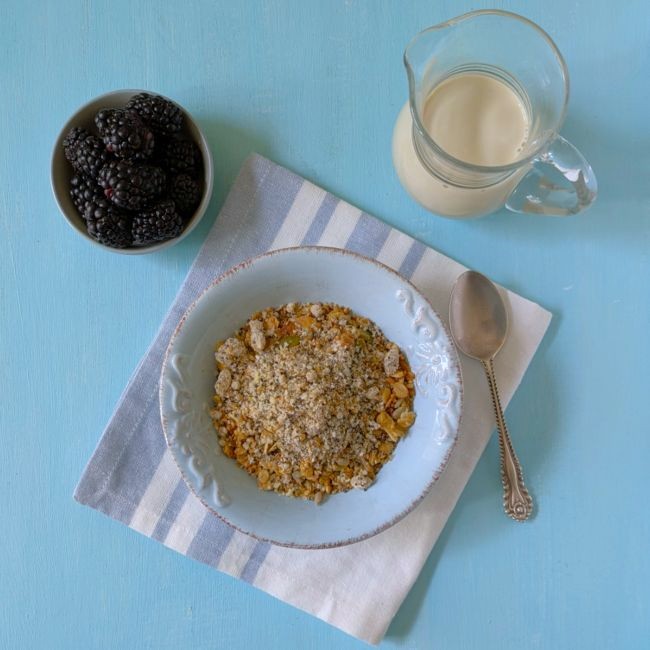
I have gone back to fortified plant milk (around 120mg calcium/100ml) for the time being, so with the smaller amounts of calcium in my breakfast cereal and some fresh berries (blackberries contain a useful 33mg calcium/100g) my breakfast now gives me over one third of my daily recommended intake (700mg) 🙂
Calcium-rich breakfast. Image: Kathryn Hawkins
I’ll be making up some more calcium-boosting recipes in the future so watch this space if your interested. Thanks for stopping by and see you again next time.
Tomato risotto and roast vegetables. Image: Kathryn Hawkins
Hello again. I hope the sun has been shining on you this month. It’s certainly been a warm, dry and bright month here in central Scotland. Subsequently I haven’t felt much like cooking and when I have, it’s been simple suppers like this no-fuss, no-pfaff risotto recipe.
Risotto topped with roast veg and rosemary. Image: Kathryn Hawkins
I love a good risotto but it’s not something to be hurried so I rarely make one when I’m busy. But now I have discovered this “cheats” version, it’s back on the menu. Once you’ve got the basic rice recipe, you can make whatever variations you like to the flavour or by adding extras. This version uses homemade tomato sauce and a little wine as the liquid but you can use all stock or half and half with wine if you prefer something plainer. A while ago I published a recipe for homemade tomato sauce. If you fancy having a go here’s the link to the post Home-grown tomatoes – recipe for fresh tomato sauce, a salsa, plus other serving suggestions (gluten-free, dairy-free, vegan) If you use a readymade sauce, make sure it’s not too concentrated otherwise the rice may taste quite tart rather than creamy.
My microwave oven has an output of 900 watts and has a turntable. You may need to adjust the cooking times if your oven has a different output.
Serves: 2
Ingredients
1tbsp olive oil
2 garlic cloves, peeled and finely chopped
150g arborio rice
100ml dry white wine or vegetable stock
Salt and freshly ground black pepper
600ml homemade tomato sauce
1tsp dried rosemary
1tsp caster sugar
Roast vegetables and fresh rosemary to serve
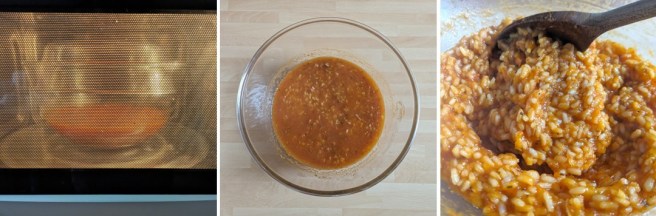
1. Put the oil and garlic in a large microwave-proof bowl. Cover and cook for 1 minute on High power.
2. Mix in the rice, wine or stock and seasoning and then stir in the tomato sauce, rosemary and sugar.
3. Cover and cook on High for 16 minutes. Stir after 6 minutes and then again after 10 minutes of the cooking time. If the rice is still a bit gritty at the end of the cooking time, add a small amount of water and cook for a further minute.
9 steps to making microwave tomato risotto. Images: Kathryn Hawkins
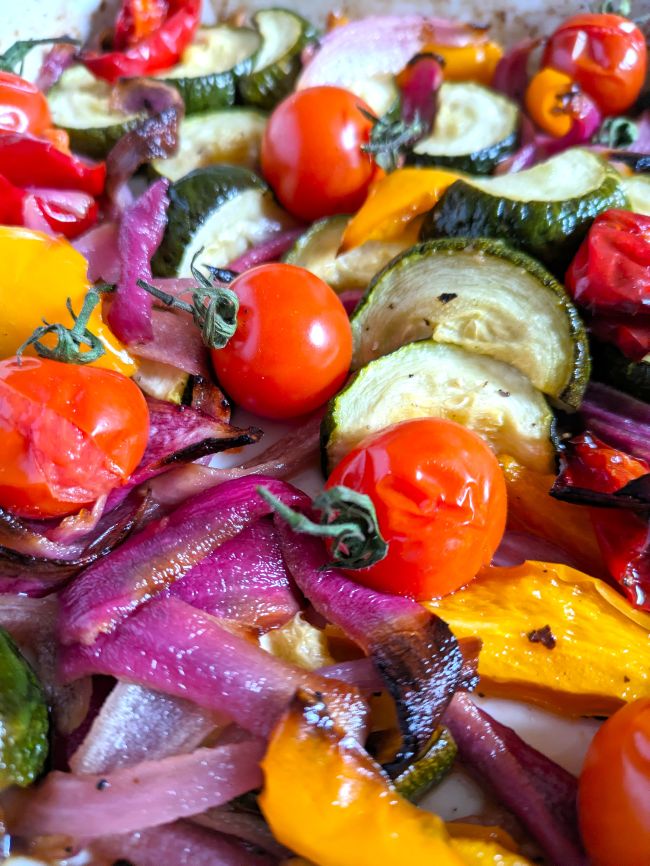
Taste and season before serving. Try topping with fresh rocket for a quick accompaniment or one of my favourite ways to serve this risotto is with a pile of roasted onion, courgette, peppers, tomatoes and fresh rosemary on top.
The rainbow colours of roast veggies. Image: Kathryn Hawkins
Hello again. Easter is finally upon us. It feels like it’s been a long wait this year. We have had a long spell of warm, dry and sunny weather here in the UK which has brought with it a glorious Spring, full of flowers and blossoms. The daffodils are going over now but they have put on a great show this year, but it is the primroses that have really stolen the show. The dry weather has meant that there have been fewer beasties around to dine out on their delicious petals.
Daffodil assortment. Image: Kathryn Hawkins
April primroses. Image: Kathryn Hawkins
To celebrate the season, I have been baking. A twist on the yeasted fruit and spice buns which are traditional at this time of year, these muffins are easy to make and delicious served warm or cold. They freeze fine as well. I use a gluten-free bread flour which has xanthan gum added to it. Use a plain version if you prefer for a softer and more crumbly muffin.
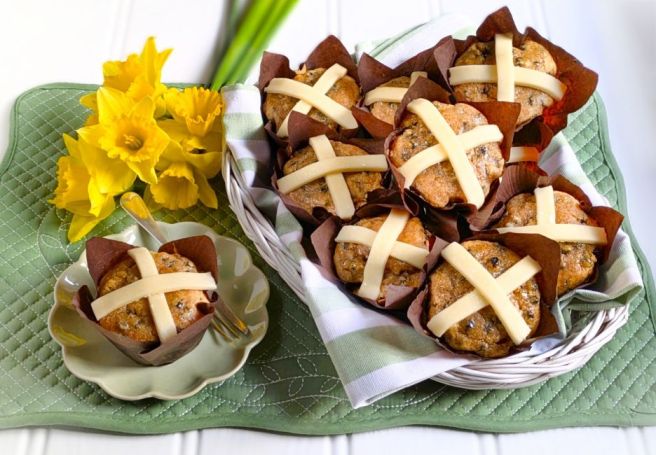
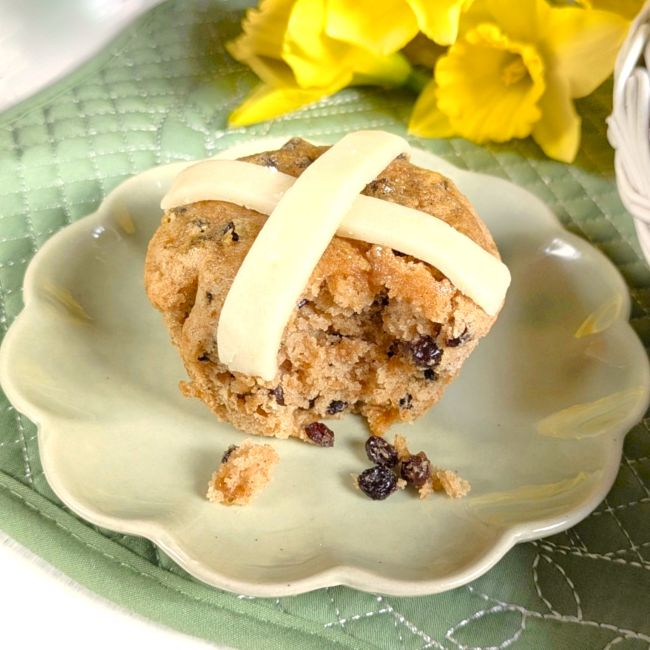
Freshly baked and ready to serve. Image: Kathryn Hawkins
Easter on a plate. Image: Kathryn Hawkins
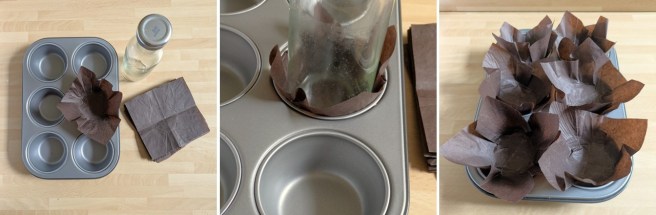
I made my own cases. If you fancy having a go yourself, you will need 10 x 12-13cm squares baking paper and a bottle or jar that fits snuggly into a muffin tin. Line up the paper square over the muffin tin and push it in place using the end of the bottle. You may have to pleat and model the paper a little to make it fit the tin more neatly, but the weight of the cake mixture will hold it in place.
Homemade muffin cases. Images: Kathryn Hawkins
Makes 10:
Ingredients
1tbsp ground linseeds (flaxseeds)
225g gluten free bread flour
2tsp gluten free baking powder
1tso ground mixed spice
115g light soft brown sugar
175g currants or other chopped dried fruit
50g plant-based butter, melted
175ml plant-based milk (I used oat milk)
2tbsp carob or maple syrup
100g natural marzipan
1. Preheat the oven to 190°C, 170°C fan oven, Gas 5. Line 10 muffin tins with paper cases. Mix the linseeds with 3tbsp cold water and leave for 5 minutes to thicken slightly.
2. Sift the flour, baking powder and spice into a bowl and stir in the brown sugar and currants. Make a well in the centre.
3. Pour in the melted butter, milk and linseed mixture, then mix everything together to make a thick batter.
4. Divide between the cases, smooth the tops and bake for 30-35 minutes until risen and lightly golden. Transfer to a cooling rack and brush the tops with the syrup. Leave to cool for 15 minutes.
Easter muffin making. Images: Kathryn Hawkins
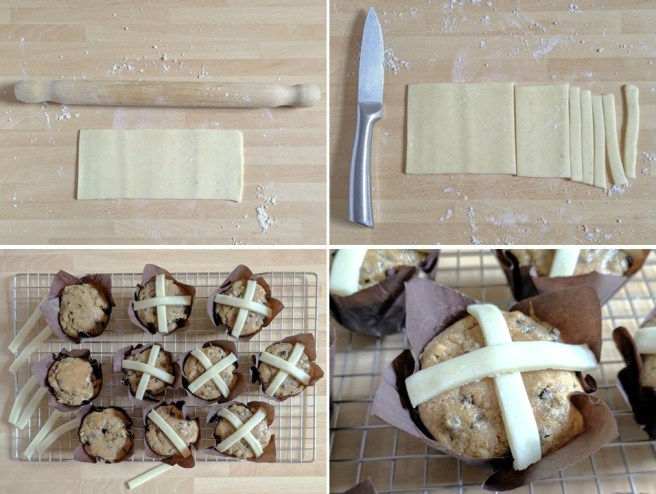
5. Meanwhile, lightly dust the work top with icing sugar and roll out the marzipan to a rectangle approx. 7 x 20xm. Cut into 20 thin strips.
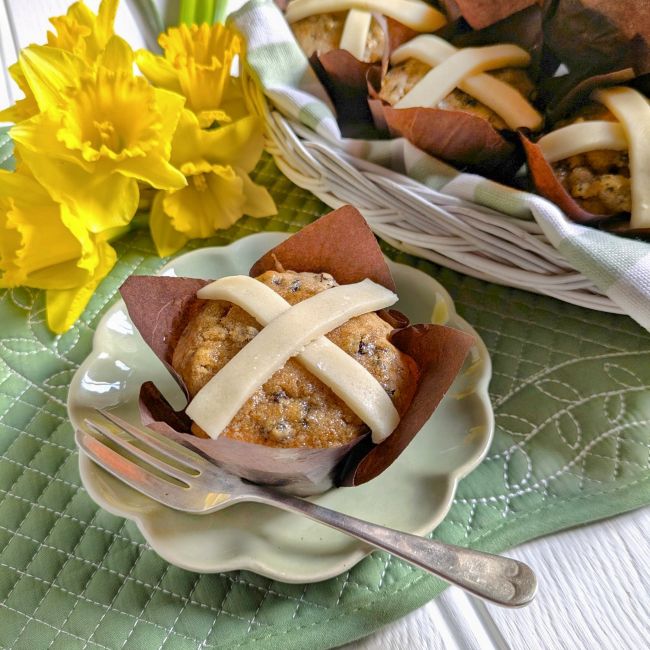
6. Arrange the strips on top of each warm bun to form crosses. Serve the buns warm or leave to cool completely if preferred. Best eaten within 2 days of baking. Store in an airtight container or freeze when cold.
Marzipan crosses. Images: Kathryn Hawkins
Too good to resist. Image: Kathryn Hawkins
Whatever you are doing this coming Easter weekend, I hope you have a lovely time. Until next month, I’ll leave you with this image of the first bluebells to open up in the garden. The sunshine has encouraged them to flower a few days earlier than usual. Happy Easter everyone 🙂
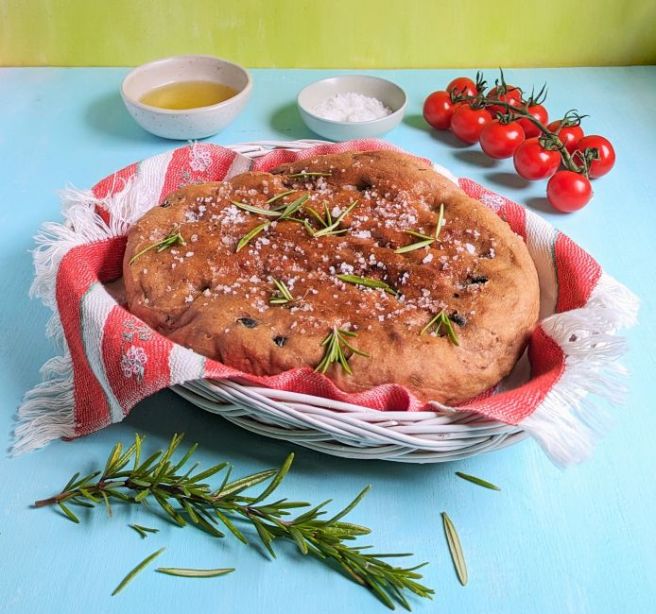
Slow cooker focaccia with olives and rosemary, best served warm. Image: Kathryn Hawkins
Hello there. Welcome to my latest recipe post. So far this month, it’s been the weather for staying indoors here in central Scotland. I’ve been using my slow cooker a lot and eating lots of comforting food in an endeavour to stay warm – well that’s my excuse anyway 🙂
Ripped and ready to eat. Image: Kathryn Hawkins
This week has been Real Bread week here in the UK so I thought I’d join the party and make my latest recipe post a bready one. If you’ve been reading my blog for a few months, you’ll know that I had a book on breadmaking published back in November – here’s the link to the post My new book: Complete starter guide to making bread, published by IMM Lifestyle Books 2024. When researching my recipes, I had been experimenting on cooking bread in the slow cooker and created a simple traditional loaf for inclusion. Sadly, I ran out of pages to feature this gluten-free and vegan slow-cooked loaf, so I’m giving it an airing here instead.
If you’ve never made bread before and are a bit daunted at the prospect, this is a very straightforward loaf to make. As with all gluten-free bread doughs, there is no kneading just a bit of mixing. You can omit the garlic, olives and rosemary to make a plain version if you prefer. I added psyllium husk for some extra texture. This gives the dough a slightly beige tone but adds some chewiness to the crumb. You may want to try making it without for a whiter dough but the texture will be more crumbly.
Rosemary and olive flavoured slow cooker focaccia. Image: Kathryn Hawkins
My slow cooker has a capacity of 5l and the dish is oval shaped – approx. 22 x 18cm. The temperature reached when on the High setting is 120°C. You may need to adapt the quantity of dough to fit your own slow cooker and adjust the cooking time if necessary. Other than that, all the information you need is below. Happy “slow” baking!
Makes: 1 approx. 22 x 18cm oval loaf
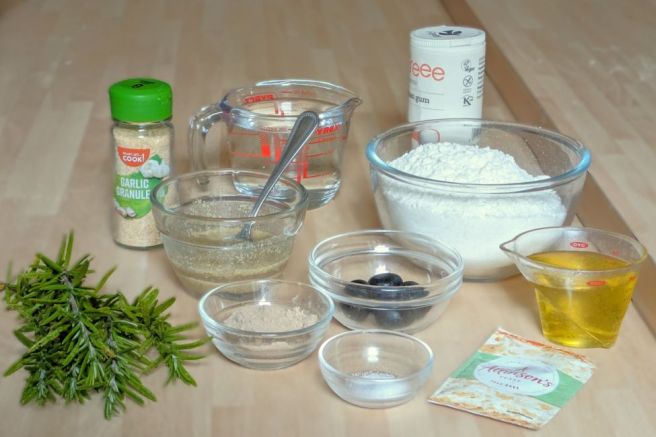
Ingredients
1tbsp ground linseeds
300g gluten free plain flour
7g sachet easy blend dried yeast
2tsp xanthan gum
15g gluten free psyllium husk powder
½tsp salt
2tsp finely chopped rosemary leaves
½tsp garlic granules
25g pitted black olives, chopped
80ml good quality olive oil
Sea salt flakes for sprinkling
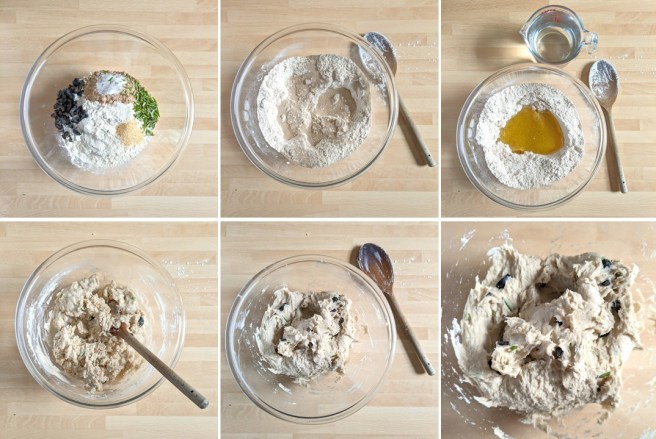
1. Mix the linseeds with 3tbsp cold water and leave for a few minutes to thicken and make a vegan egg.
2. Put the flour in a bowl and mix in the yeast thoroughly, then add the xanthan gum, husk powder, salt, rosemary, garlic and olives and mix well.
3. Make a well in the centre and add 60ml olive oil and the vegan egg. Begin mixing and pouring in 300ml warm water. Continue mixing until you have a thick, sticky batter. Cover the bowl and leave to stand for 10 minutes. In this time the batter will become thicker and less sticky. Give it a thorough mix through.
Making focaccia dough. Images: Kathryn Hawkins
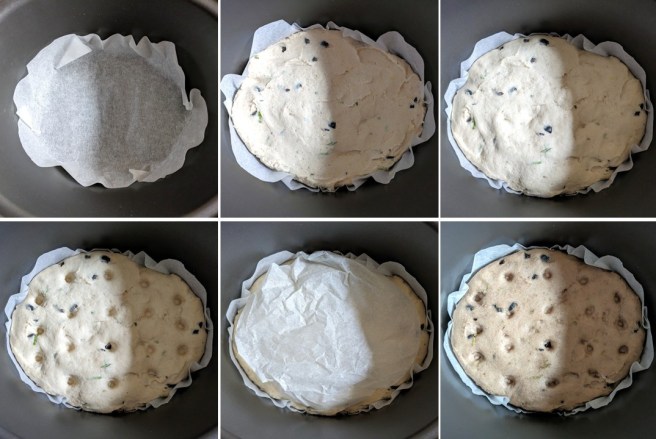
4. Line the base of your slow cooker dish so that the parchment paper comes a little way up the sides of the dish.
5.Scoop the dough on top and press and smooth to fit the dish. Cover with the lid and set the cooker to the Warm setting. Leave to prove for 1½hours until puffed up and spongey in texture. If your cooker doesn’t have a Warm setting, simply cover with the lid and place the whole dish in a cool to warm place to rise.
6. Once the dough is risen, push the end of a wooden spoon into the dough all over to give a dimpled effect. Lay a scrunched up piece of baking parchment loosely on top (this helps prevent the dough getting wet from any water droplets that form inside the lid) and set the cooker to High. Leave to cook for 3 hours until firm on top and crusty round the edge. It can be quit challenging to know when the bread is completely cooked so if in doubt err on the side of caution and cook for a bit longer to avoid a dense texture above the bottom crust. As a rule, the base of the loaf should sound hollow when tapped.
7. Transfer the loaf to a wire rack and discard the lining paper. Brush with remaining olive oil and sprinkle with sea salt. Leave to cool for a few minutes then serve warm. If you prefer a browner top, remove the bread from the slow cooker and place on the grill rack. Cook under a preheated medium/hot grill for 1-2 minutes to brown the top then oil, salt and cool as above.
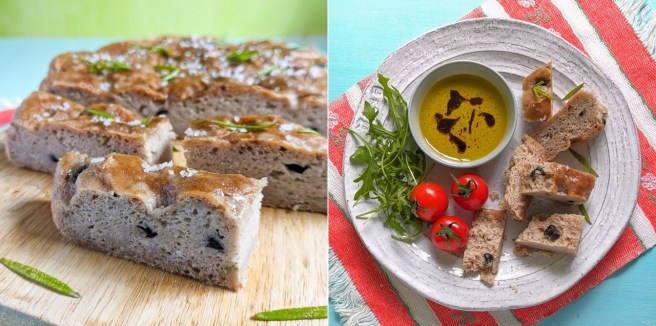
Warm sliced focaccia, ready to serve. Images: Kathryn Hawkins
This bread is best served warm. If you want to freeze the loaf, omit the salt from the top, and wrap well. Once defrosted, simply reheat the loaf in a medium oven for a few minutes, and sprinkle with salt before serving.
Thanks for reading my post. I hope to see you again next month 🙂
































 My Virtually Free-from Kitchen