Welcome to my blog all about the things I love to grow and cook. You'll find a collection of seasonal gluten-free, dairy-free and vegan-friendly recipe posts, as well as a round up of my gardening throughout the year. I wish you good reading, happy cooking and perfect planting!
Hello again. I have something tasty and sweet for you this week. With the weather cooling down here, I have felt more like being in a cosy kitchen rather than the great outdoors. These cookies are an absolute winner if you like a crunchy textured bake. If you can leave them alone long enough, they retain their crispness perfectly when stored in an air-tight container.
Too tempting to ignore, crunchy homemade cookies. Image: Kathryn Hawkins
I made up the dough using my own blend of gluten-free favourite flours but a readymade combination will work just as well. Whether you add fruit or not is up to you – I have just made a batch without fruit, and added some caramel flavouring instead; there aren’t that many left is all I’ll say! Use small pieces of fruit for best results, like currants or dried berries. If you only have larger dried fruit, like apricots or raisins, chop into small pieces before using. This is a really easy recipe so I hope you might give it a go.
Crunchelicious cookies. Image: Kathryn Hawkins
Makes: 12
Ingredients
105g plain gluten-free flour blend (I used a combination of white rice flour, tapioca flour and cornflour (cornstarch))
90g gluten-free porridge oats
40g desiccated coconut
¾teasp bicarbonate of soda
115g soft light brown sugar
90g plant butter, softened and cut into small pieces
50-75g small dried fruit (depending on how fruity you want them to be)
25g golden syrup (corn syrup)
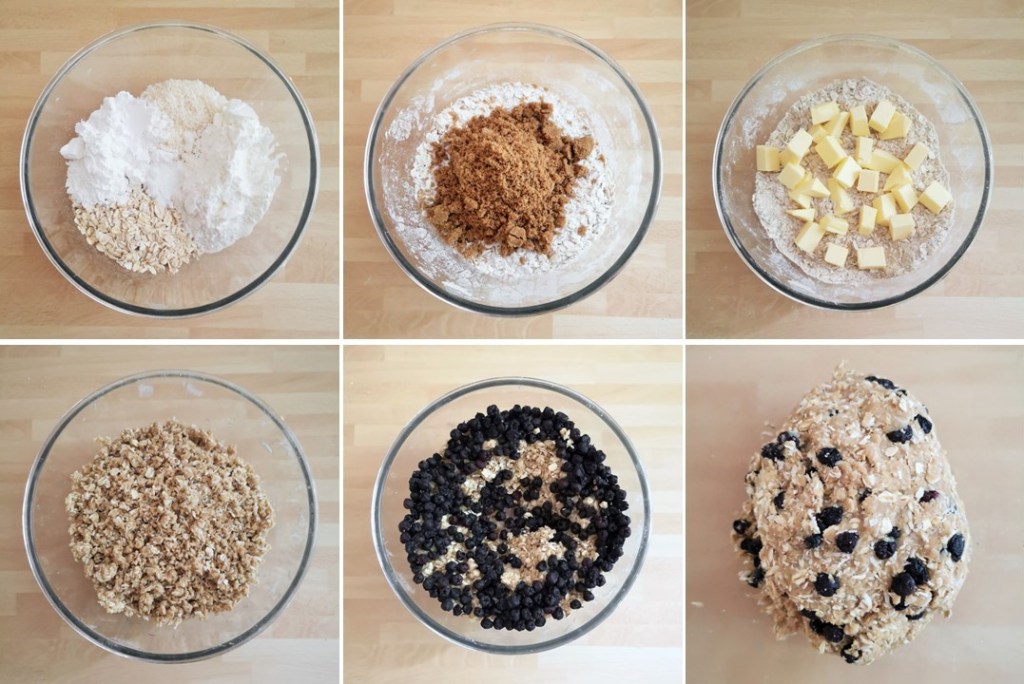
1.Preheat the oven to 190°C, 170°C fan oven, gas 5. Line 2 large baking tray with baking parchment. Put the flour in a bowl and mix in the oats, coconut and bicarbonate of soda. Stir in the sugar.
2. Add the butter and work into the dry ingredients until well blended, the stir in the fruit and bind together with the syrup, bringing the mixture together with your hands to make a firm dough.
Making cookie dough. Images: Kathryn Hawkins
3. Divide the dough into 12 pieces. Form each into a ball and place on the trays spaced well apart – the mixture does spread during baking.
4. Press each piece of dough gently to make a 6cm round, then bake for about 20 minutes until golden. Leave to cool on the tray for 10 minutes before transferring to a wire rack to cool completely.
Freshly made tomato confit. Image: Kathryn Hawkins
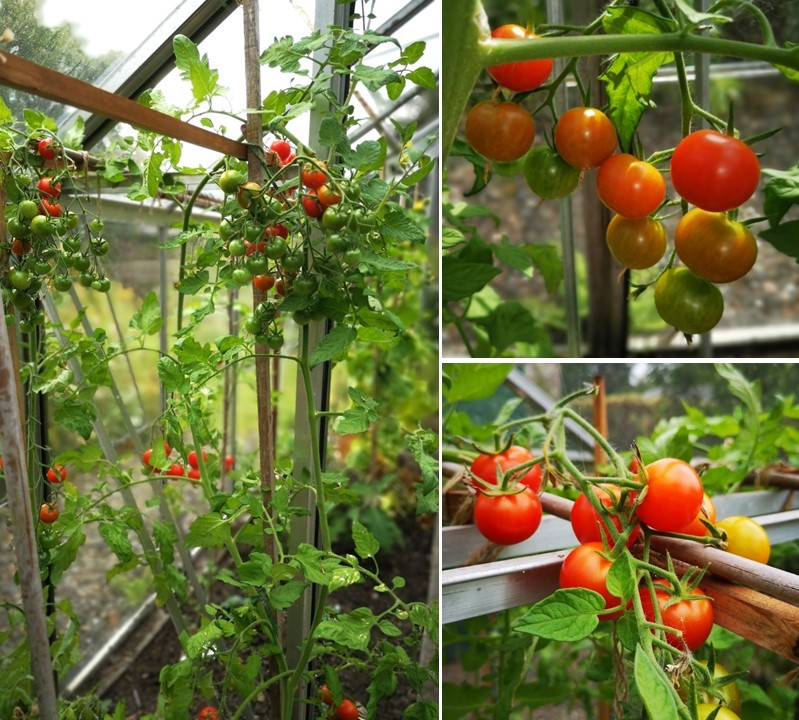
Hello again. I hope you have had a good few days since my last post. After lousy weather here in the UK in August, September started with a mini heatwave. The high temperatures have come to an end now but the extra heat and sunshine certainly helped ripen off the fruit and vegetables. It’s been a bumper year for tomatoes, and I’ve been exploring new ways to serve and preserve them.
My recipe this week is a very simple one. It’s an easy and energy-efficient way to cook small tomatoes. All you need is a slow-cooker and an amount of small tomatoes to fit neatly in a single layer over the base of the cooking dish. You can adapt the quantities you cook to fit the size of your cooker.
Confit ingredients. Images: Kathryn Hawkins
I have kept the flavours simple, using fresh herbs from the garden, some garlic and a few coriander seeds. Add chilli for some heat, or experiment with your favourite spices. The confit can be served on its own as a sauce for pasta or blitzed and used as a base sauce for other dishes. If you want to keep it for a few days, place in a sealed container, covering the tomatoes with extra oil as necessary, and store it in the fridge. For longer storage, it freezes fine.
Tomato confit, fresh basil and black pepper. Images: Kathryn Hawkins
This really is a great way to enjoy the flavour of freshly picked sweet baby tomatoes with the minimum of effort. I hope you enjoy the recipe 🙂
Serves: 4-6
Ingredients
650g whole, same size, small or cherry tomatoes – or a weight that fits neatly in a single layer inside the base of your slow-cooker dish
A few sprigs of fresh thyme and oregano
1 bay leaf
1tsp coriander seeds, crushed
3 garlic cloves, peeled
1tsp sea salt
Freshly ground black pepper
2tsp caster sugar (optional)
100ml good quality olive oil + extra for storing
1. Remove the stalks from the tomatoes and wash well. Pat dry using kitchen paper and place in a single layer in the slow-cooker dish.
2. Add the remaining ingredients, cover with the lid and set the cooker to Low. Cook for 4hrs or until the tomatoes are soft but still holding shape. Leave to cool completely.
Preparing the confit. Images: Kathryn Hawkins
3. For storing, discard the herbs and ladle into a clean, sealable storage container – I used a 750ml Kilner jar. Add more oil as necessary to cover the tomatoes, then seal and store for up to 10 days in the fridge. Alternatively, portion into containers and freeze. The oil can be drained off before serving and re-used to cook with or flavour salad dressings.
Filling a storage jar with tomato confit. Images: Kathryn Hawkins
That’s me for another week. I have just picked another haul of tomatoes after coming back home after a few days away. I’ll have to get creating again. Until next time, thanks for stopping by 🙂
My back-from-holiday tomato haul. Image: Kathryn Hawkins
Hello again. It’s been a busy couple of weeks since my last post. The season is subtly shifting from late summer to early autumn. There is a bit of a nip in the air first thing in the morning and some of the leaves on the trees are beginning to turn. Out and about, the hedges are full of ripening fruit, and I have been out foraging a couple of times this month. Two weeks ago I went on a recce for brambles (blackberries), and was happily surprised to see that so many were ripe and ready. Thank goodness I went prepared with a large container (just in case), and came home with 2.7kg of the glistening berries which I have now frozen 🙂
Scottish brambles. Images: Kathryn Hawkins
Whilst on my walk, I had noticed that there were also sloes and elderberries, although not quite ripe. I gave it a week and went back. The birds had eaten a few elderberries, and I think another forager had found the sloes, but I still managed a container-full as well as a few more brambles.
Blackberries, dewberries, sloes and elderberries. Images: Kathryn Hawkins
Always wash wild fruit well before using. Brambles and sloes need little preparation, but elderberries can be a little fiddly to remove from their fine stems. I find a fork is quite useful to help prise them away.
Freshly washed and prepared wild fruit. Images: Kathryn Hawkins
All of these hedgerow fruits will freeze fine in case you are unable to use them immediately. Lay them out on lined trays and freeze until solid, then pack them into bags or containers, seal, label and store until ready to cook.
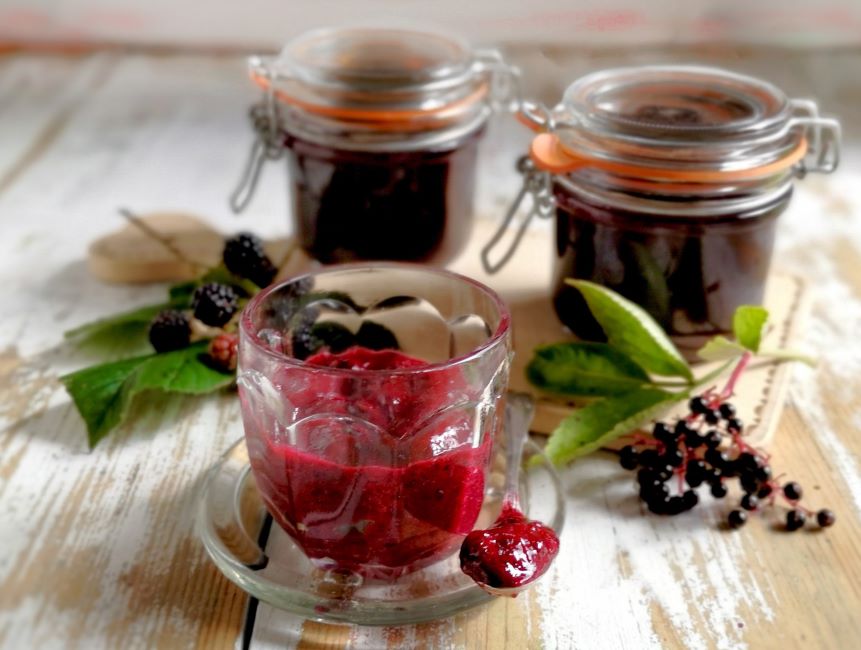
My hedgerow harvest preserve. Image: Kathryn Hawkins
My preserve recipe can be adapted to use any combination and quantity of wild berries you have picked. Sloes have a bitter/sour flavour whilst brambles and elderberries are sweeter and juicier. I ended up with about 700g prepared fruits in total, 200g of which were sloes, and this gave a good balance of sharp and sweet, with a deliciously rich and intense flavour overall.
Packed full of flavour and colour. Image: Kathryn Hawkins
The yield of preserve in this recipe is slightly lower than for other jams because I removed the seeds. Brambles do tend to be very seedy, and sloes are impossible to pit before cooking, so sieving (or straining) seemed like the logical thing to do. Alternatively, you could make a jelly by straining the cooked fruit through muslin. This would result in an equally delicious preserve, but with a much smaller yield. I’ll probably make a jelly with some of my freezer brambles later in the year and mix them with some apples from the tree in the garden. Delish.
Makes: approx. 700g
Ingredients
700g prepared hedgerow berries and fruit, washed
Approx. 400g granulated sugar
2tbsp lemon juice
1. First cook the sloes. Place in a saucepan with 250ml water. Bring to the boil, cover and simmer for 6-7 minutes until softened.
2. Stir in the berries, bring back to the boil, re-cover and cook gently for 10 minutes until everything is very soft and juicy.
Cooking the fruit. Images: Kathryn Hawkins
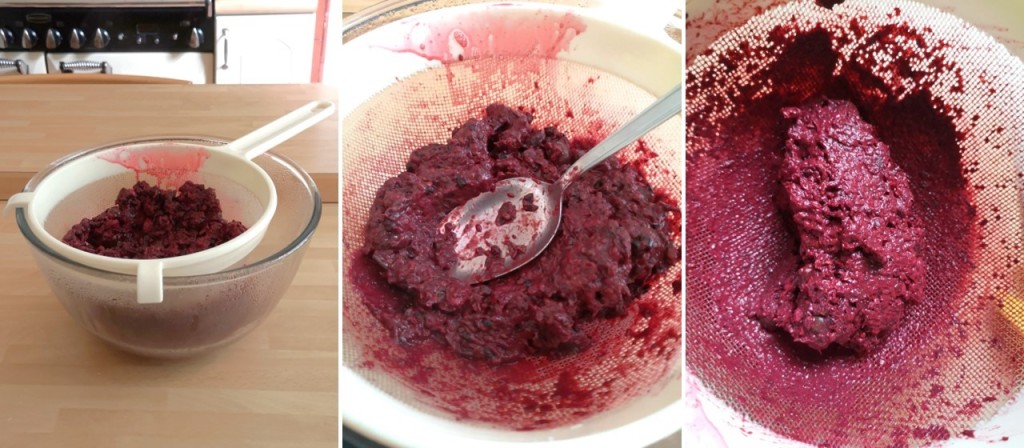
3. Put a large nylon sieve (strainer) over a large bowl or jug and carefully pour in the cooked fruit and juices. Leave to strain for 30 minutes then use the back of a spoon to push and press the pulp against the side of the sieve to squeeze out as much juice as possible. Do this until you end up with a dryish pulpy mass of seeds and fibres in the sieve. Discard.
Getting rid of the seeds. Images: Kathryn Hawkins
4. Measure the juices – I ended up with 500ml. You will need 400g sugar per 500ml juice. Pour into a saucepan and heat gently to warm through, then add the sugar and lemon juice. Stir until dissolved.
Cooking the pulp. Images: Kathryn Hawkins
5. Bring to the boil and cook for several minutes until the correct level of set is achieved – between 104°C and 105.5°C on a sugar thermometer. I cooked my preserve to the higher temperature and ended up with a very firm set – almost like a fruit cheese. For something more spreadable, cook to the lower temperature.
6. Spoon the hot mixture into sterilised jars and seal immediately. Leave until cold then label and store in the usual way.
For the storecupboard. Image: Kathryn Hawkins
Because I achieved such a firm set, I melted the leftover preserve with a little more water and when it cooled, it was much more spreadable. It made a delicious topping for toasted crumpets. This preserve also makes an excellent accompaniment to serve with grilled, roasted and barbecued food.
Tangy, tasty and freshly made, hedgerow preserve. Images: Kathryn Hawkins
Until next time, I hope you have a good few days, and I look forward to posting again in a couple of weeks. Thanks for stopping by 🙂
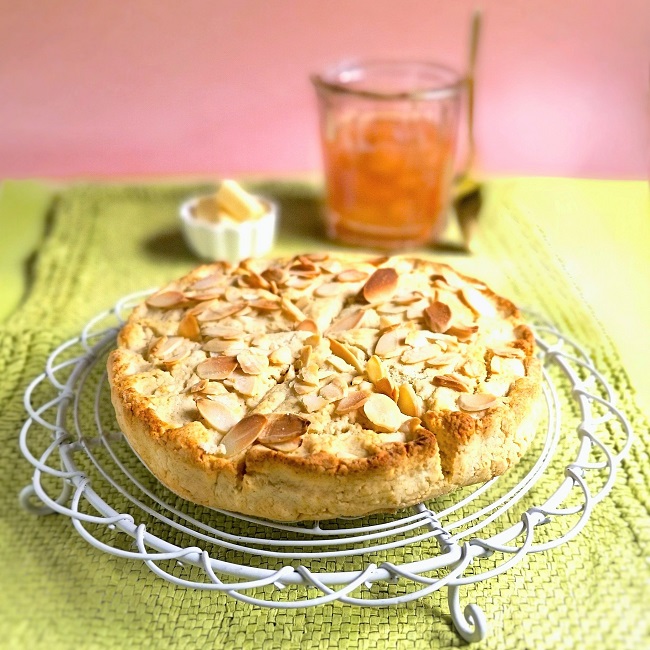
Freshly baked scone round ready to serve. Image: Kathryn Hawkins
Hello there. I hope the month of August is going well for you. I have a simple recipe for you this week, although it is one that has been challenging me for a while. I do like a nice scone but my attempts to make a gluten-free version of this very familiar and much-loved favourite have been disappointing up until now.
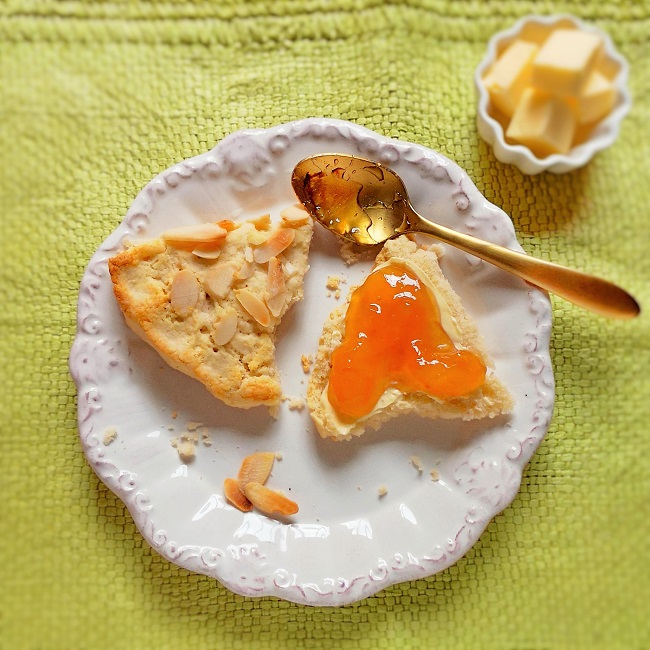
A simple pleasure: scone, butter and jam. Image: Kathryn Hawkins
The recipe below is my best attempt yet and worth a share I think. Adding ground almonds to the mixture helps make the texture more moist, and adding a pinch of xanthan gum helps bind the crumb together. I think I have added too much XG in the past which has made the scones quite hard and dry. I’m not a huge fan of adding XG to my bakes but without it, the mixture falls apart completely. Here’s the recipe and I hope you enjoy them.
Makes 1 round; serves: 6
Ingredients
150g gluten-free self raising flour
50g ground almonds
¾tsp gluten-free baking powder
⅛tsp or a large pinch xanthan gum
50g salted plant-based butter
1tbsp caster sugar
A few drops natural almond extract (optional)
Approx.75ml plant-based milk
15g flaked almonds
1. Preheat the oven to 220°C, 200°C fan oven, gas 7. Sift the flour into a bowl. Add the ground almonds, baking powder and xanthan gum. Mix well.
2. Rub in the butter until well blended and stir in the sugar. Add a few drops of almond extract, if liked, and gradually mix in between 50 and 60ml milk to make a softish dough.
3. Turn on to a lightly floured work surface and knead lightly until smooth. Roll or press into a 15cm round, neaten the edge and score into 6 equal portions.
Making and shaping scone dough. Images: Kathryn Hawkins
4. Transfer to a non-stick baking tray and brush the top lightly with the remaining milk. Scatter with the almonds and bake for 15-20 minutes until risen and lightly golden.
5. Stand for 10 minutes then re-cut the indents and transfer to a wire rack. Cool for about an hour before pulling apart to serve. Best served slightly warm.
Glazing and baking. Images: Kathryn Hawkins
Delicious spread with soft butter and topped with homemade jam. Best eaten on the day of baking but scones freeze well for enjoying later on.
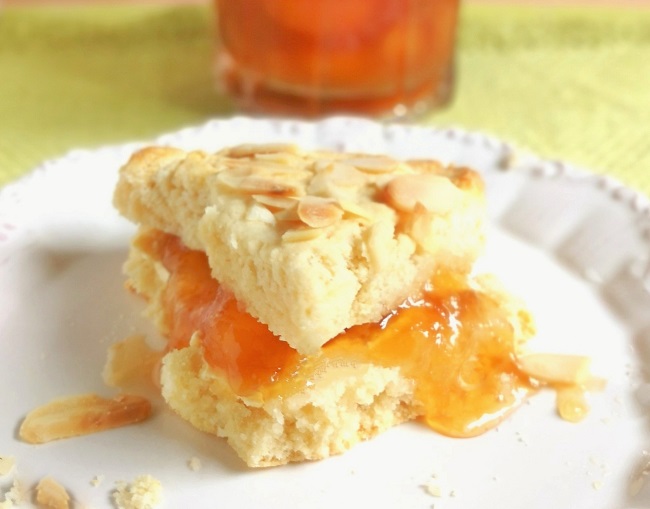
Jammy scone. Image: Kathryn Hawkins
Thanks for stopping by and I hope to see you again soon. All the best for now 🙂
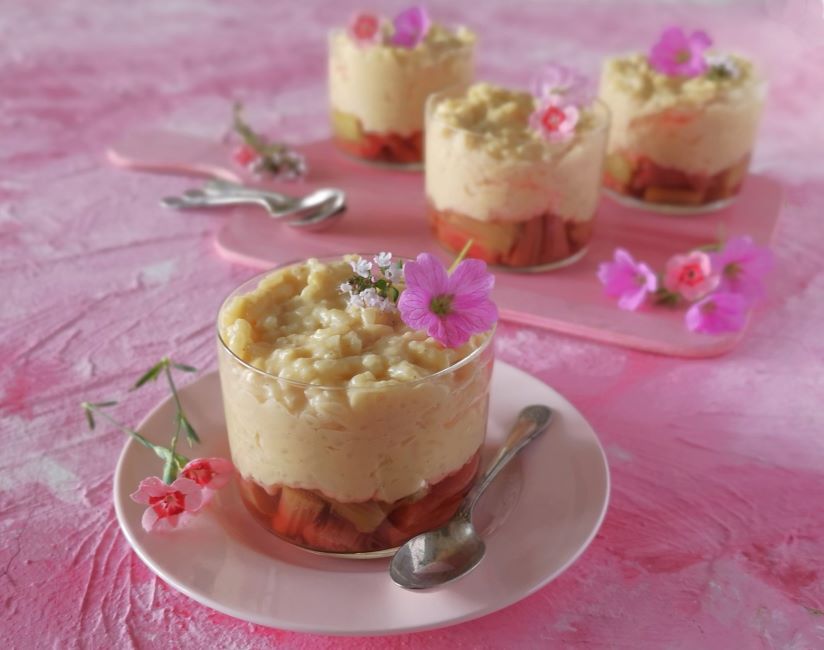
Chilled rhubarb and rice risotto decorated with edible flowers. Image: Kathryn Hawkins
Hello again. The garden fruit and veg supply is beginning to mount up. This week I picked some more rhubarb stems and made them into a compote to eat with a creamy rice dessert. At this time of year, I prefer to serve this combo cold, but in Autumn/Winter, the same rice mix makes a comforting winter pudding to serve with any fresh or cooked fruit you like.
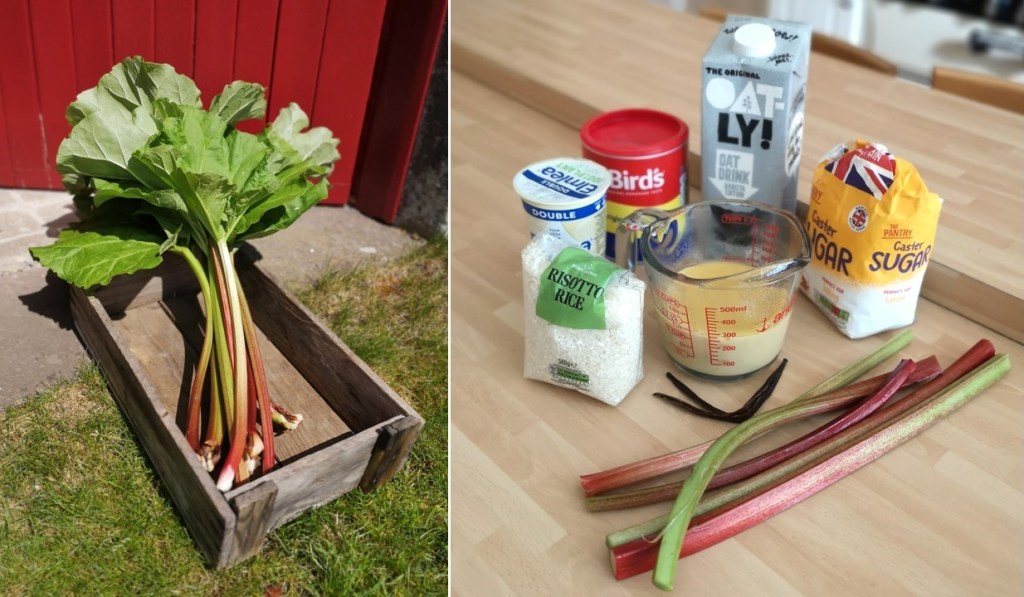
Freshly pulled rhubarb and sweet risotto ingredients. Images: Kathryn Hawkins
It’s a simple enough recipe for the rice mixture, but it takes a little bit of time to cook through, so allow plenty of time to make it. It’s well worth the wait 🙂 I flavour my rice with vanilla but cinnamon or ginger would also work. And, of course, if you’re not vegan, the recipe works just as well with dairy products.
Creamy, sweet risotto, chilled and ready to serve. Image: Kathryn Hawkins
Serves: 4
Ingredients
275g prepared fresh rhubarb
50g caster sugar
500ml plant-based milk (I use oat milk)
100ml plant-based double cream (for a less rich version, replace the cream with extra milk)
1 vanilla pod, split
15g plant-based butter
150g risotto (arborio) rice
250ml free-from custard
1. Chop the rhubarb into lengths about 4cm long and place in a pan. Add 2tbsp water, sprinkle with 25g sugar and heat until steaming. Cover with a lid and cook gently for 6-8 minutes until tender but still holding shape. Leave to cool.
Cooking the rhubarb. Images: Kathryn Hawkins
2. For the risotto, put the milk and cream in a saucepan with the vanilla pod and heat until very hot. Reduce the heat to low and keep the mixture hot.
3. In another saucepan, melt the butter. Add the rice and mix well until coated in the butter. Add a ladleful of the hot creamy milk and stir until thoroughly absorbed.
4. Keep adding the creamy milk, ladle by ladle, stirring in between, until each batch is absorbed, and the rice is just tender – this may take anywhere between 30 to 50 minutes depending on how quickly the rice absorbs the liquid. Don’t be tempted to raise the heat too much as the liquid may evaporate before being absorbed.
How to make sweet and creamy vegan risotto. Images: Kathryn Hawkins
5. Once the rice is tender, thick and creamy, transfer to a heatproof bowl and stir in the sugar. Cover with a layer of greaseproof paper to prevent a skin forming and leave to cool completely, then mix in the custard.
6. To assemble, divide the rhubarb between 4 x 225g dessert glasses and spoon the rice mixture on top. Chill until ready to serve.
Completing the dish. Images: Kathryn Hawkins
Let the desserts stand at room temperature for 20 to 30 minutes before serving to allow the flavours to develop. Decorate with edible flowers if liked.
Creamy vanilla rice and fresh rhubarb compote. Image: Kathryn Hawkins
Thanks for stopping by. That’s me for this week. I hope to see you again soon 🙂
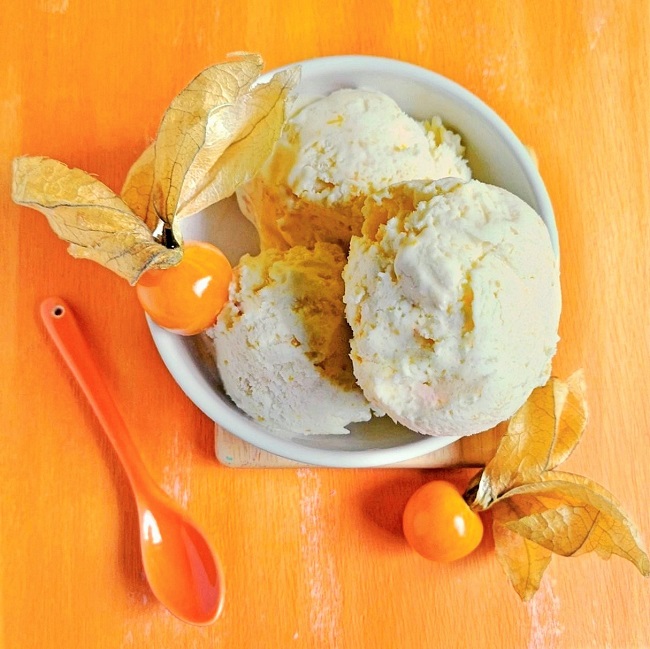
Hello again. It’s been super-warm here in the UK for several days now, so, it feels the right time to publish an easy ice cream recipe. Of course, this will mean that the weather is guaranteed to break, but hey ho, we do need some rain 🙂
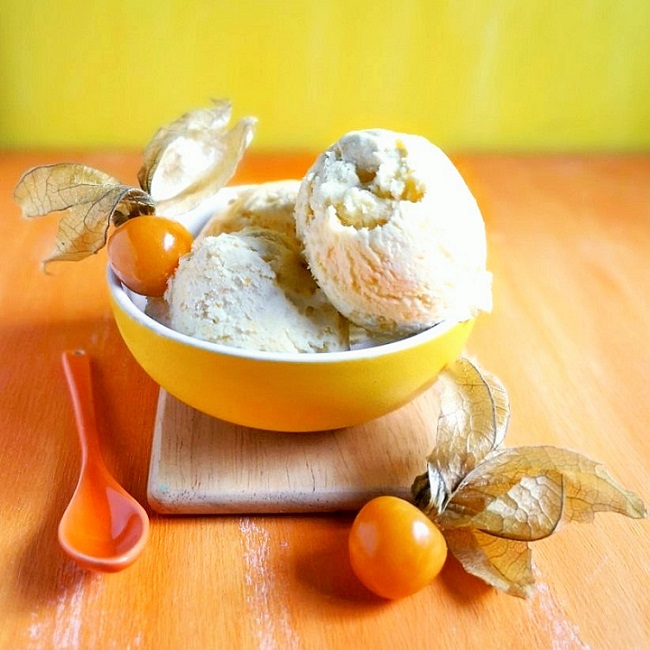
Fruity scoop. Image: Kathryn Hawkins
This ice cream really is very easy to make. Just 3 ingredients. No ice cream machine required although you can of course use one if you prefer. You will need to use a bit of elbow-grease to beat the mixture twice, but that’s the only effort necessary.
Take 3: fruit, cream and condensed milk. Image: Kathryn Hawkins
You can make the ice cream with any fruit. I happened to have a lot of physalis (Cape gooseberries) when I made up this batch. Fruits like gooseberries, blackberries, cherries, apricots, plums, blackcurrants and other currants will need to be cooked into a pulp for best results, but other softer fruits like raspberries, blueberries, strawberries, peach and mango can just be blitzed in a blender. Whether you sieve to remove seeds is up to you. I prefer the added texture from seeds and skins and use the pulp as it is.
Serves: 4-6
Ingredients
300g ripe fruit for cooking such as physalis, gooseberries, blackberries, black or red currants OR 250ml-275ml unsweetened fresh fruit purée
370g can plant-based condensed milk
400ml plant-based double cream
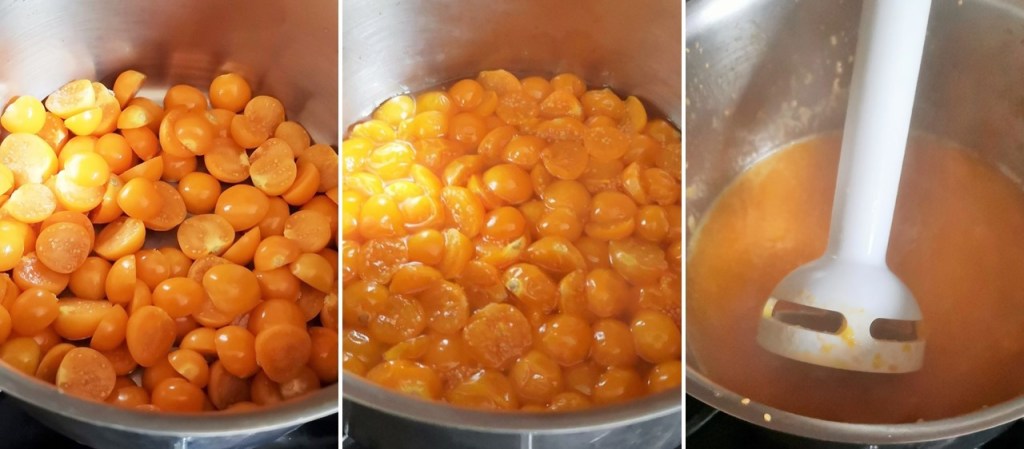
1. To prepare fruit for cooking, place in a saucepan with 2tbsp water, heat until steaming, then cover and simmer for 5-7 minutes until soft. Leave to cool them blitz with a blender until smooth. Sieve if preferred.
Making cooked fruit purée. Images: Kathryn Hawkins
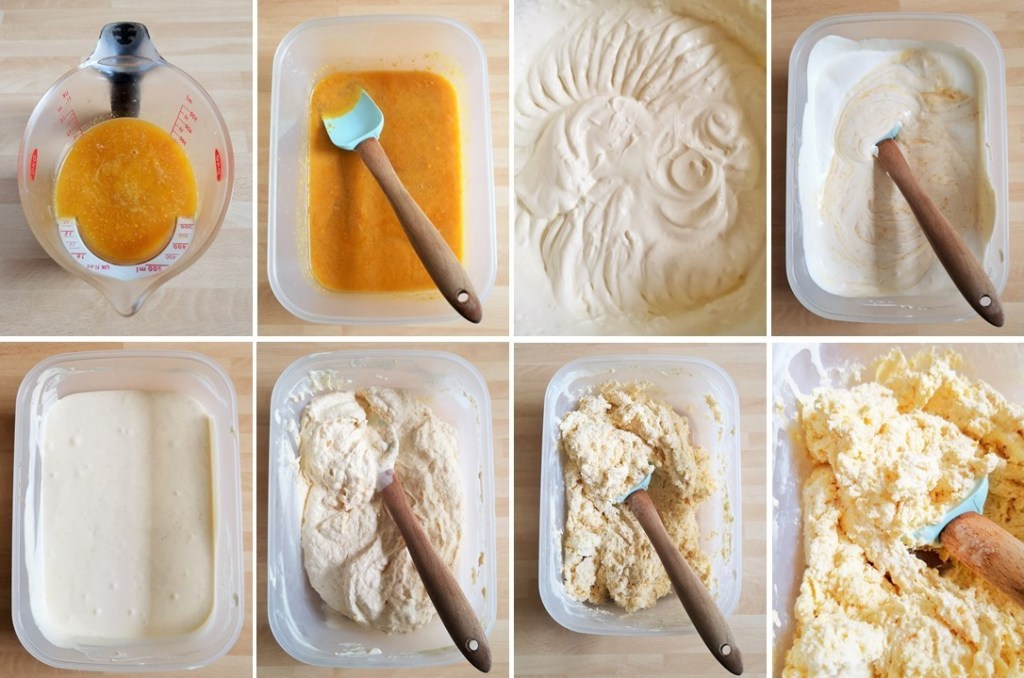
2. Pour the fruit purée into a freezer-proof container and mix in the condensed milk.
3. Whip the cream until softly peaking then fold into the mixture, stirring well until combined.
4. Freeze for about 2hr until the mixture is soft and slushy. Beat well to break up the mixture and return to the freezer for a further 45-60 minutes until it has firmed up again. Beat once more, then keep in the freezer until ready to serve.
Preparing the ice cream. Images: Kathryn Hawkins
And that’s it. If your freezer is particularly cold, you may need to let the ice cream stand at room temperature for a few minutes before scooping. For longer term storing, pop a lid on the container, and keep in the freezer for up to 3 months.
3 ingredient fruit ice cream. Image: Kathryn Hawkins
I’ll be out in the garden again for my next post at the end of the month. See you then and thanks for stopping by 🙂
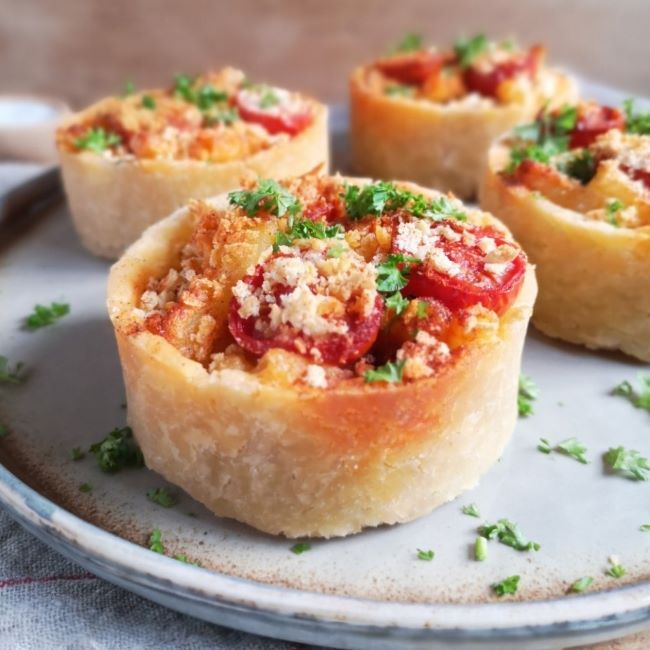
Hello again. Before I moved to Scotland, I had never heard of a macaroni pie before. I soon learnt that, along with a whole range of other flavours, macaroni pies are familiar fayre in the hot cabinet of most Scottish baker’s shops as a popular takeaway treat. If you prefer to eat your pies at home, head for the chiller cabinet at the supermarket and you will find a wide selection of pastry pies to choose from. Traditionally made with a hot water crust pastry shell and filled with a thick, creamy macaroni and cheese sauce filling, the macaroni pie certainly makes a substantial and very tasty snack.
Macaroni pie up close. Image: Kathryn Hawkins
A few years ago, I wrote a pie book called Comfort Pie I made my own version of the macaroni pie as part of a collection of recipes influenced by pastry dishes from all over the world. Several years later, I thought it was about time I give my recipe a bit of an upgrade and I have developed a gluten-free and vegan version which I have to say is pretty tasty.
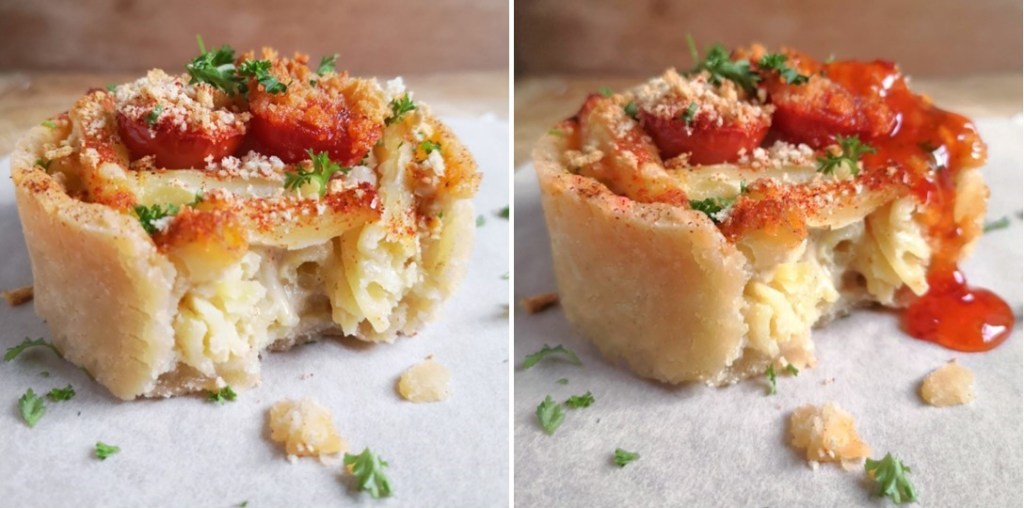
How do you like yours? With or without sauce? Images: Kathryn Hawkins
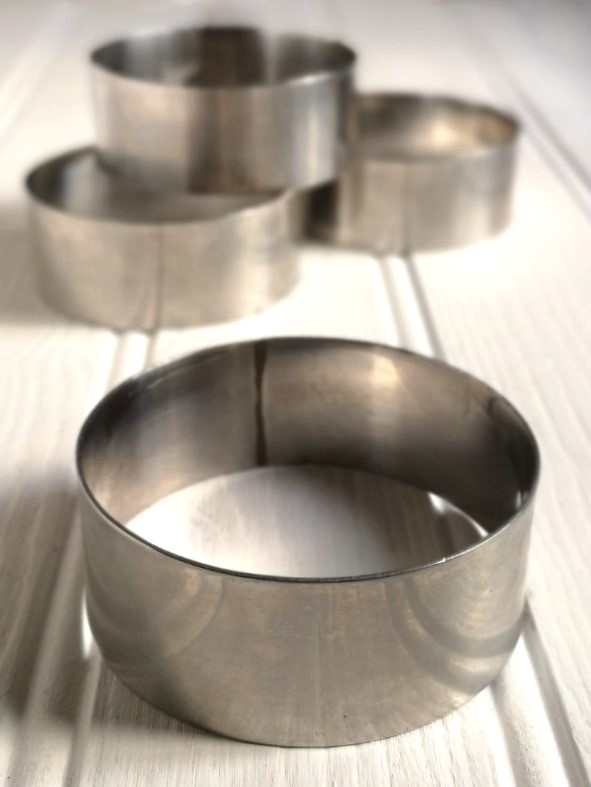
There are a few steps to the recipe, but it can be made in stages if you don’t have the time to get the pies made and baked on the same day. The pies are made in steel rings which I appreciate aren’t an everyday piece of kit but a great investment if you do like pie making. If you don’t have the rings, you could adapt the recipe to make smaller pies in muffin tins.
Steel baking rings. Image: Kathryn Hawkins
The recipe is broken into 3 different parts, and I have included a lot of pictures to help explain the different sections. I do hope you might give the recipe a try and, if you do, I hope enjoy them.
Makes: 4
Ingredients
115g free-from macaroni
For the sauce:
15g plant-based butter
15g gluten-free plain flour
200ml plant-based milk (I use oat milk)
4tsp yeast flakes
½ teasp onion salt
For the pastry:
25g plant-based butter
25g white vegetable fat (such as Trex)
215g gluten-free plain flour (I used Doves Farm Freee flour)
For the topping:
6 cherry tomatoes, halved
2tbsp free-from dry white breadcrumbs
½ teasp onion salt
½ smoked paprika
20g plant-based butter
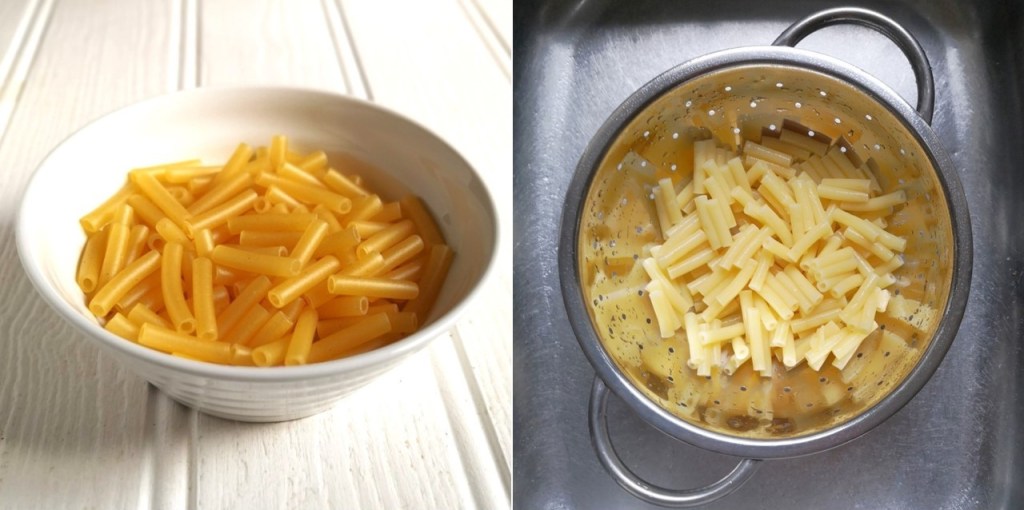
1.Bring a saucepan of water to the boil and cook the macaroni for 9-10 minutes – slightly under-cook the pasta so that it doesn’t go too mushy during baking later on. Drain well; leave aside.
Raw and cooked macaroni. Images: Kathryn Hawkins
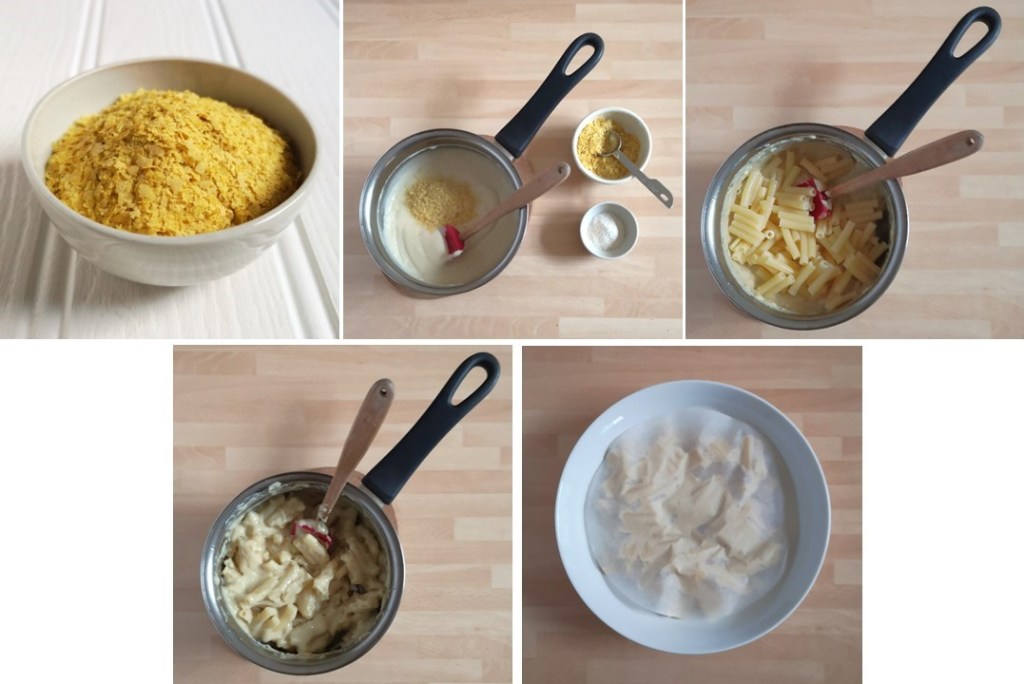
2. Next make the sauce. Melt the plant butter in a saucepan and stir in the flour. Remove from the heat and blend in the plant milk. Return to the heat, and cook, stirring, until the mixture boils and thickens. Simmer for 1 minute, then turn off the heat and stir in the yeast flakes and onion salt.
3. Stir the cooked macaroni into the sauce. Transfer to a bowl and cover the surface with a layer of baking parchment – this helps prevent a skin forming. Leave to cool, then chill until required.
Macaroni pie filling. Images: Kathryn Hawkins
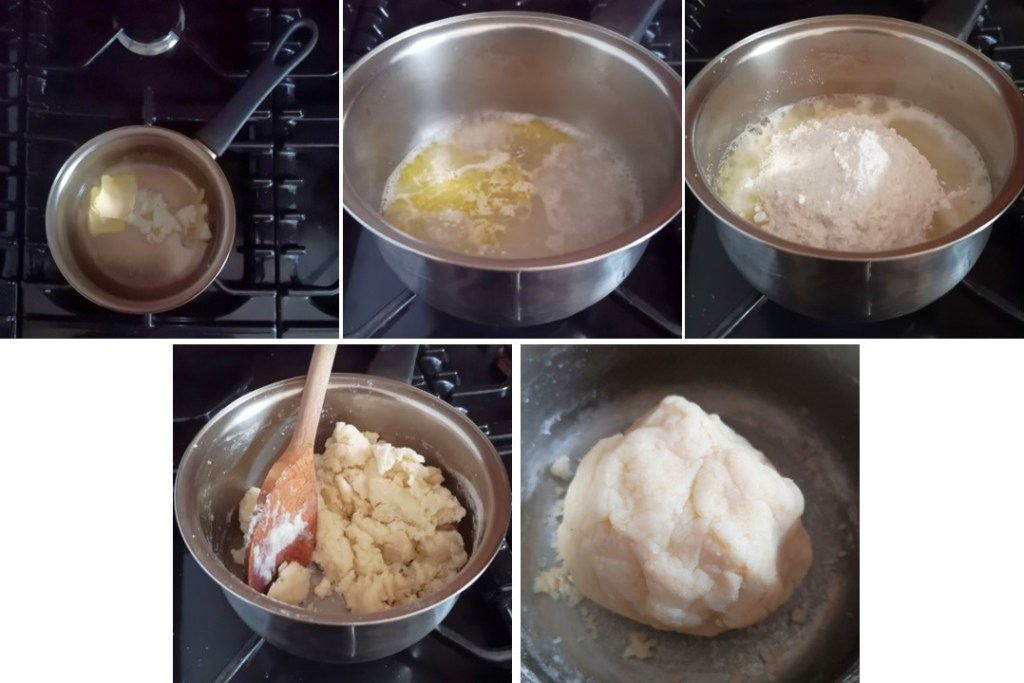
4. For the pastry, put the plant butter and vegetable fat in a saucepan and pour over 125ml water. Heat gently until melted, then bring to the boil and add the flour all in once go. Beat the mixture quickly, turn off the heat and continue to mix vigourously until a dough ball forms in the saucepan. You may find it easier to let the mixture cool slightly, then bring the pastry together with your hands.
Making hot water crust (pie) pastry. Images: Kathryn Hawkins
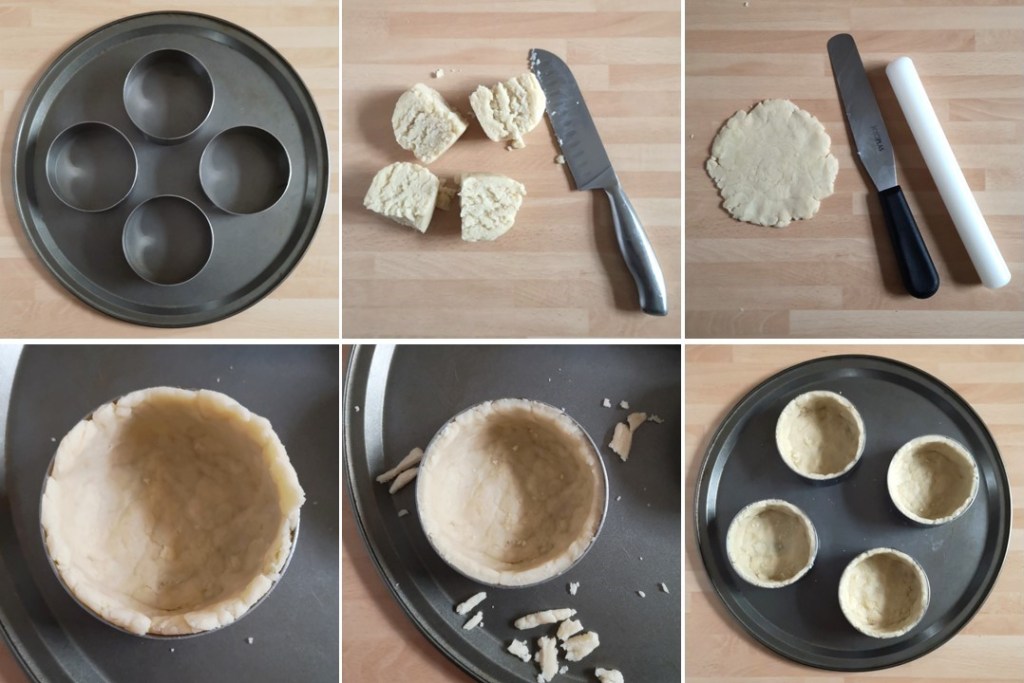
5. Arrange 4 x 9cm diameter, 4cm deep steel pastry rings on a baking tray. Divide the pastry into 4 equal pieces. Work on one piece at a time, keep the other portions covered in foil. Roll out a piece of pastry to an approx. 16cm round and carefully transfer to a pastry ring.
6. Mould the pastry to fit inside the ring, then trim away any excess to neaten the top edge. Continue to make 3 more pastry cases in the same way. Leave to cool before filling. You can chill the pastry at this stage, ready to cook at a later time. Use this pastry when it is warm. As it cools it becomes dry and brittle and will be impossible to mould. You can warm the pastry carefully, by heating for a very few seconds in the microwave to make it more pliable.
Making the pie cases. Images: Kathryn Hawkins
7. When you are ready to cook the pies, preheat the oven to 200°C, 180°C fan oven, gas 6. Spoon macaroni filling into each pastry case to fill them to the top.
8. Arrange cherry tomato halves on on top of each. Mix the crumbs, paprika and onion salt together and sprinkle a little over each. Dot the tops with a little plant butter. Bake for 35 minutes until thoroughly hot, crispy and golden.
9. Stand for 10 minutes before removing from the pastry rings. Serve the pies hot or warm, sprinkled with chopped parsley. Accompany with sweet chilli sauce or tomato ketchup. Alternatively, leave the pies to cool completely on a wire rack, then chill until you are ready to reheat them the next day. They will also freeze very well.
Filling and baking the pies. Images: Kathryn Hawkins
Pies on a cooling rack. Image: Kathryn Hawkins
I’m feeling rather peckish after writing up this week’s post. I do love a good pie, and I think this hot water crust pastry is one of the most successful gluten-free pastries. Until next time, I hope you have a good few days until my next post. Thanks and best wishes 🙂
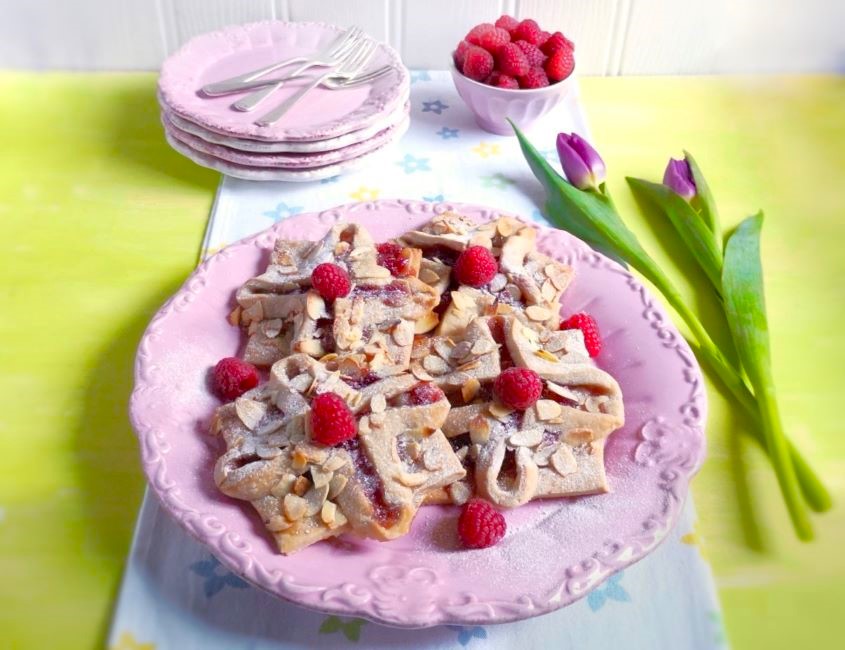
Homemade raspberry and almond pastries. Image: Kathryn Hawkins
Hello again. I hope you have had a good Easter holiday. I had intended to post this recipe before the holidays began, but time ran away with me. I have had a few days away visiting family and friends, and now I’m back home and ready to post again.
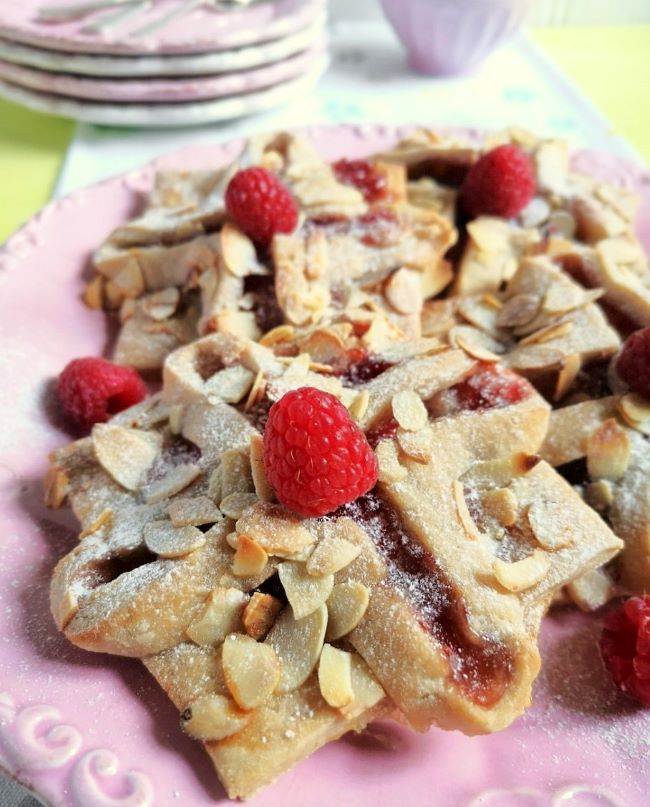
Up close on raspberry and almond pastries. Image: Kathryn Hawkins
One of my first blog posts was a recipe for gluten-free rough puff pastry. It has had many hits but I am always looking for ways to tweak the recipe. Here’s the original if you are a newcomer to my blog: Gluten-free rough puff pastry (with dairy-free & vegan variation) The latest version of the recipe uses my favourite combination of gluten-free flours and also adds psyllium husk to the dough. The latter makes a much more silky dough which is very much easier to roll and shape. If you don’t have the individual flours, just use a ready blended plain flour. I also use all plant butter in this version. However, whilst the dough is quite puffy and light, it has lost some of the flakiness of the original recipe. I guess it’s up to personal taste which version you prefer and for what purpose you want to use it.
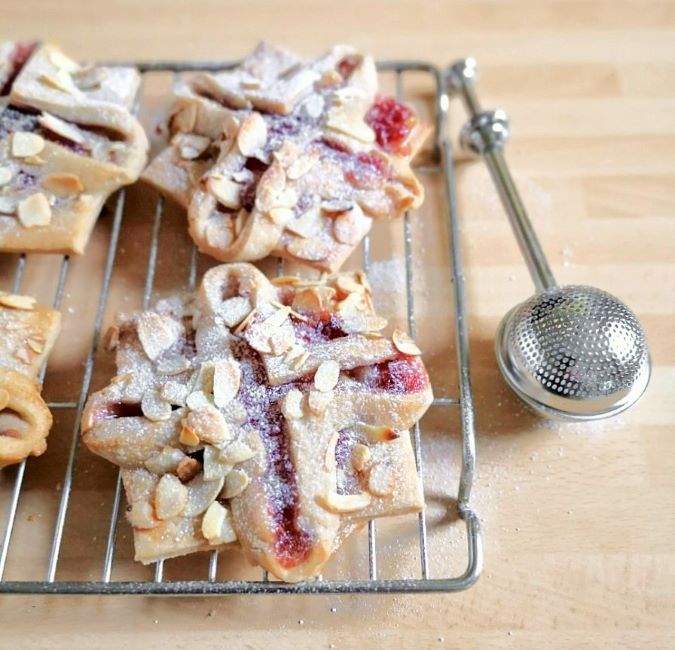
Pastries with a light dusting of sugar. Image: Kathryn Hawkins
The pastries tasted pretty good though despite the lack of pastry layers. The texture of this latest pastry is crisp and chewy, and I am pleased with the flavour. If you do compare the 2 recipes yourself, let me know what you think, and which you prefer. By the way, the recipe makes twice as much pastry you need for making 4 pastries so you can freeze the other half to make something else at a later date.
Makes: approx. 625g pastry. Use half the pastry quantity to make 4 pastries
Ingredients
For the pastry dough:
70g cornflour (corn starch)
60g tapioca flour
60g white rice flour
60g glutinous rice flour
½tsp salt
2tsp psyllium husk powder
150g plant butter, cut into small pieces
For the pastries:
100g marzipan
60g raspberry jam
1tbsp oatmilk
1tsp carob syrup
20g flaked almonds
Icing sugar to dust
Fresh raspberries to serve
1.Put all flours in a large mixing bowl with the salt and psyllium husk powder, and mix together until well blended. Stir the butter into the flour to coat each piece in flour.
2. Gradually stir in between 260-275ml cold water until the mixture comes together to make a soft, very lumpy dough. Turn out on to a lightly floured work surface and roll the dough into a flat, roughly rectangular shape approx. 35cm x 12cm.
Pastry ingredients and making the dough. Images: Kathryn Hawkins
3. Now the rolling and folding begins. The aim is to consistently roll out the pastry to the same dimensions, and then to fold it, turn it and seal it in the same way each time; this is how the pastry layers form. Fold the top one third of the pastry down and the bottom one third up and over the top pastry; twist the pastry round so that the open edge is facing to the right, and gently press the 3 open edges of the pastry together with the rolling pin.
4. Repeat this rolling, folding, turning and sealing 3 more times and then chill the pastry for 30 minutes. The mixture will be sticky but try to refrain from dusting with too much flour as this will dry the texture of the pastry.
5. After chilling, repeat the rolling, folding, turning and sealing another 3 times, working the pastry each time in the same direction. You should now begin to feel that the fat is more blended into the flour. Chill the pastry for a further 30 minutes.
6. Repeat the process 3 more times and you should see that the fat pieces have practically disappeared. Wrap and chill for at least 1 hour before using. From start to finish, you should aim to roll and fold the pastry 10 times.
7. Cut the pastry in half, and use half to make the pastries – wrap and freeze the other half for later use. Roll out the pastry to make a 24cm square. Trim the edges as necessary.
Rolling and folding rough puff pastry. Images: Kathryn Hawkins
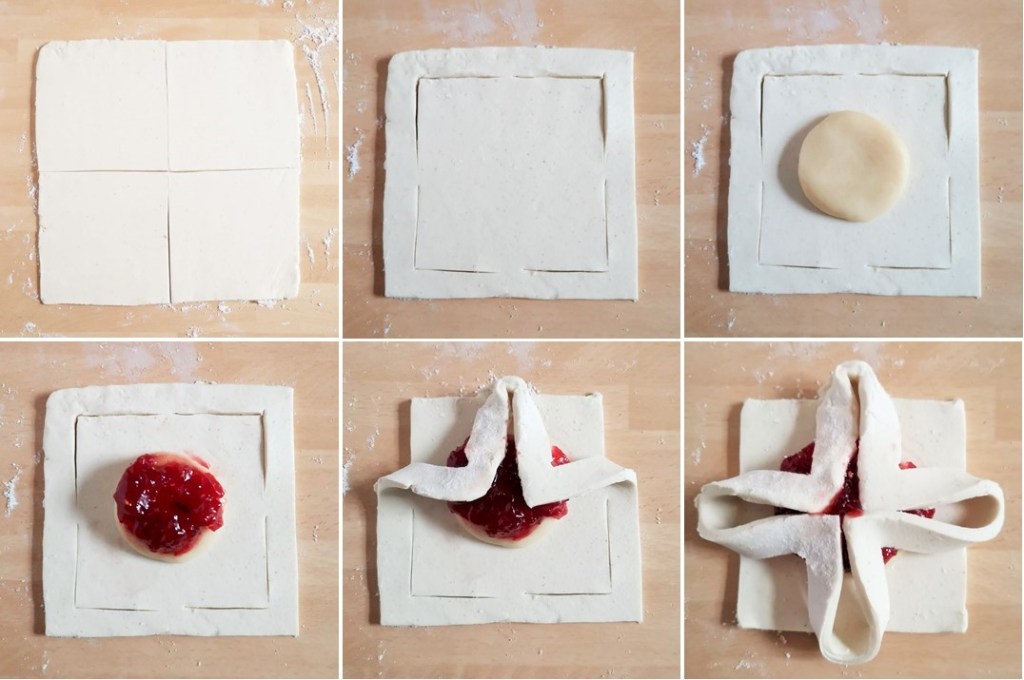
8. Cut the pastry into 4. Working on 1 square at a time, starting cutting 1cm inside the edge of one side as if about to cut out an inner square. Just before you reach the centre point, leave a 1cm space of uncut pastry then continue the cutting down the rest of the side. Repeat this cutting on the other 3 sides, and then cut the other pastry squares in the same way.
9. Knead the marzipan; cut into 4 and shape each piece into a small round to fit in the centre of each square. Top with jam. Bring the corners together in the centre of the pastry.
Shaping the pastries. Images: Kathryn Hawkins
10. Place on a lined baking tray. Chill for at least 1hr before baking.
11. When ready to cook, preheat the oven to 220°C, 200°C fan oven, gas 7. Mix the milk and syrup together and glaze the pastries. Sprinkle with flaked almonds and bake for about 20 minutes until risen and lightly golden. Dust with icing sugar and serve warm.
Glazing, sprinkling, baking and dusting. Images: Kathryn Hawkins
Single pastry. Images: Kathryn Hawkins
I hope you enjoy the pastries. It is a bit of a long recipe this week, but if you do have the time, the pastries certainly make a lovely treat. As the for pastry update, my jury is out on which version I prefer but I will keep adapting and reposting any progress I make. Until next time, take care and best wishes 🙂
Hello again. I was intending to post a frozen dessert recipe this week, so confident was I that spring had sprung and that the warmer days were here. However, these past few days have seen a return to winter. Much of the UK has been under a blanket of snow this week. So far, none of the white stuff here (fingers crossed), it has been dry, bright and clear, but it is far too chilly to be thinking about or eating cold food. Instead, I have been back in the kitchen cooking comforting recipes instead.
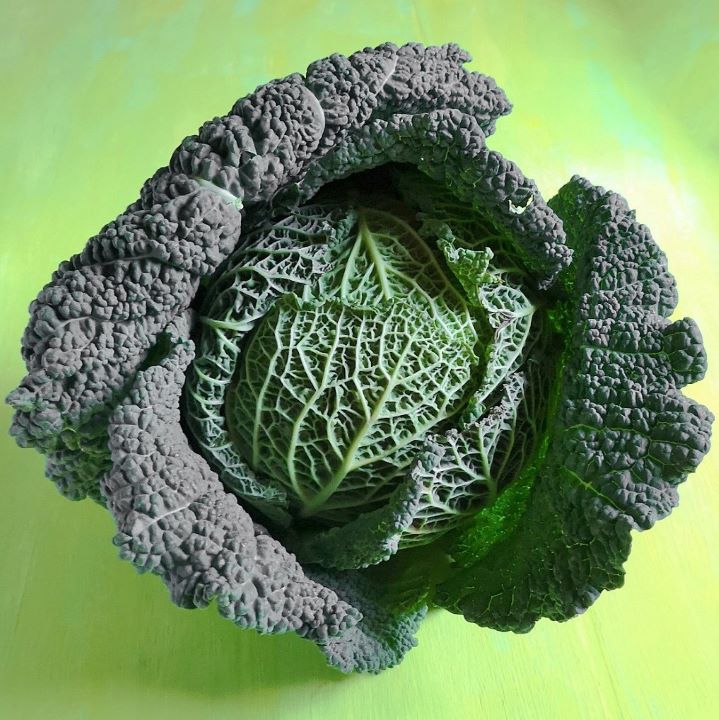
Magnificent Savoy cabbage. Image: Kathryn Hawkins
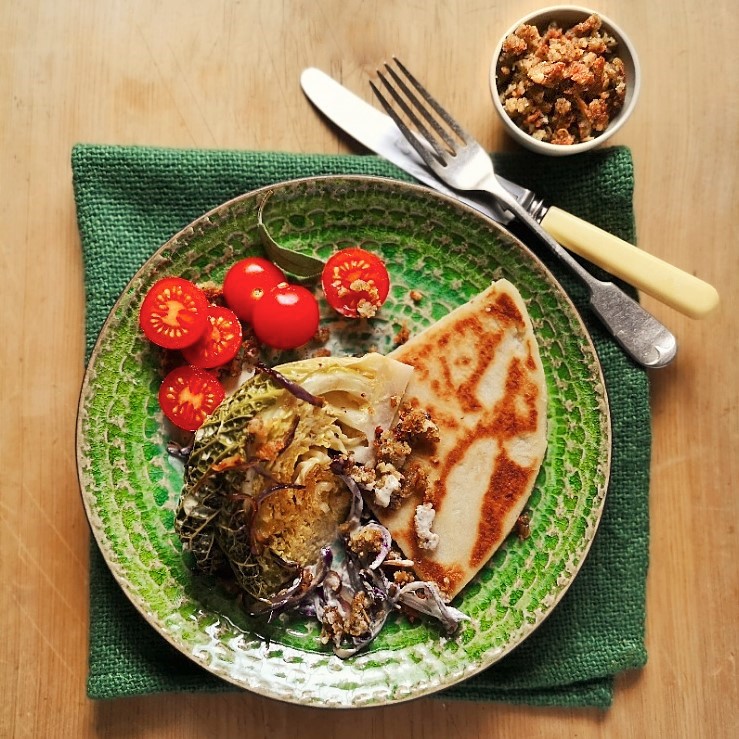
I am a huge fan of green veg, and this handsome specimen is one of my favourites. My recipe this week is a simple gratin of baked Savoy cabbage wedges with onion, a plant-based cream sauce and crispy crumbs of sage and onion to finish. Very hearty as a meal on its own, the gratin is also a great accompaniment to a stew or roast. I enjoyed mine with a pan-fried tattie scone (or two) – if you fancy making your own, here’s a link to my very easy recipe: Tattie scones (gluten-free; dairy-free; vegan)
Baked cabbage served with tattie scone. Image: Kathryn Hawkins
Serves: 4
Ingredients
1 whole Savoy cabbage
2tbsp vegetable oil + extra for greasing
1 large red onion
2 cloves garlic
50g plant butter
Salt and freshly ground black pepper
A few fresh sage leaves
350ml plant-based double cream
50g gluten-free sage and onion stuffing mix
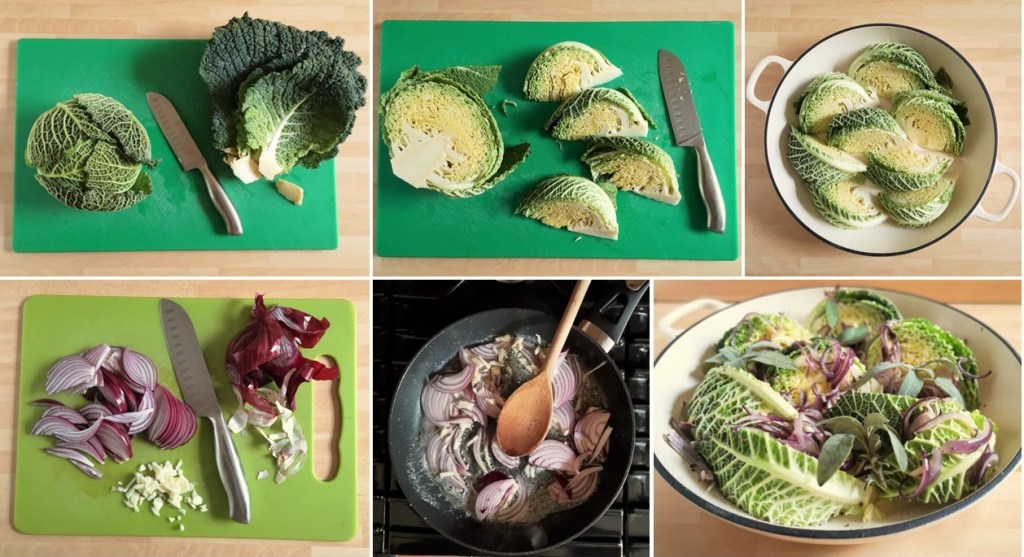
1. Trim the cabbage and remove the outer leaves, then cut into 8 wedges. Lightly oil a baking dish and arrange the cabbage in the dish in a single layer. Check out my other cabbage recipes for ways to use up the outer cabbage leaves here: One Savoy cabbage, three recipes (gluten-free; dairy-free; vegan)
2. Peel and slice the onion, and peel and finely chop the garlic. Melt half the butter with the oil and gently fry the onion and garlic for about 5 minutes to soften but not brown. Spoon over the cabbage and season well. Sprinkle with sage leaves.
Cabbage preparation. Images: Kathryn Hawkins
3. There is no need to preheat the oven for this recipe, just place the dish in the oven and set the temperature to 180°C, 160°C fan oven, gas 4. Bake for 30 minutes.
4. Pour over the plant cream and cover with a lid or foil and bake for a further 30 minutes until tender.
5. While the cabbage is cooking, soak the stuffing mix in 100ml boiling water until reconstituted. Melt the remaining butter and heat until bubbling, then break up the stuffing and add to the pan. Keep stirring and breaking up the stuffing until it forms clumps and starts to brown and crisp up; this takes about 6-7 minutes. Drain on kitchen paper and keep warm.
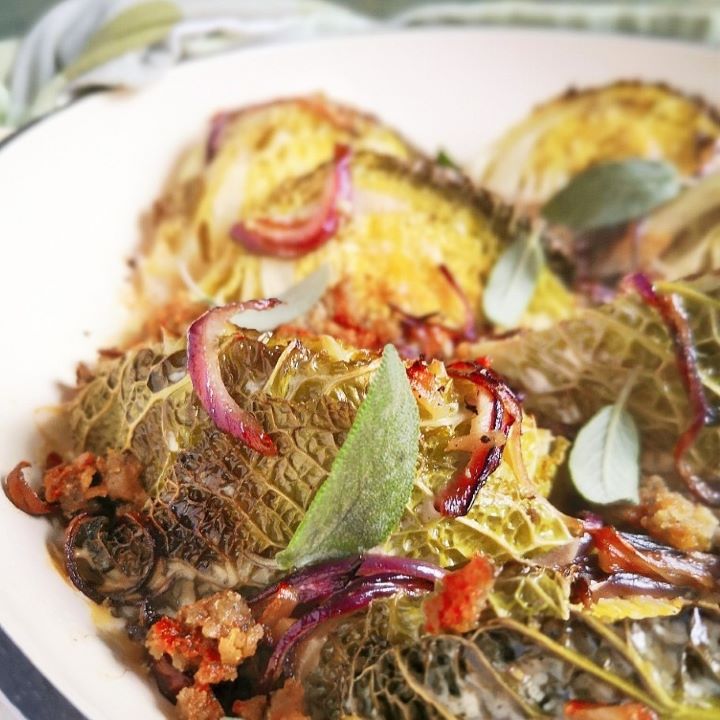
6. To serve, discard the sage leaves and sprinkle over the crispy crumbs. Garnish with fresh sage if liked.
Finishing the gratin. Images: Kathryn Hawkins
Baked cabbage with sage and crispy crumbs. Image: Kathryn Hawkins
Perhaps by the time I write my next post, spring will have returned and it will be more fitting to publish a recipe for warmer days. Until then, wrap up warm if you need to and enjoy the sights and sounds of the new season. Thanks for stopping by 🙂
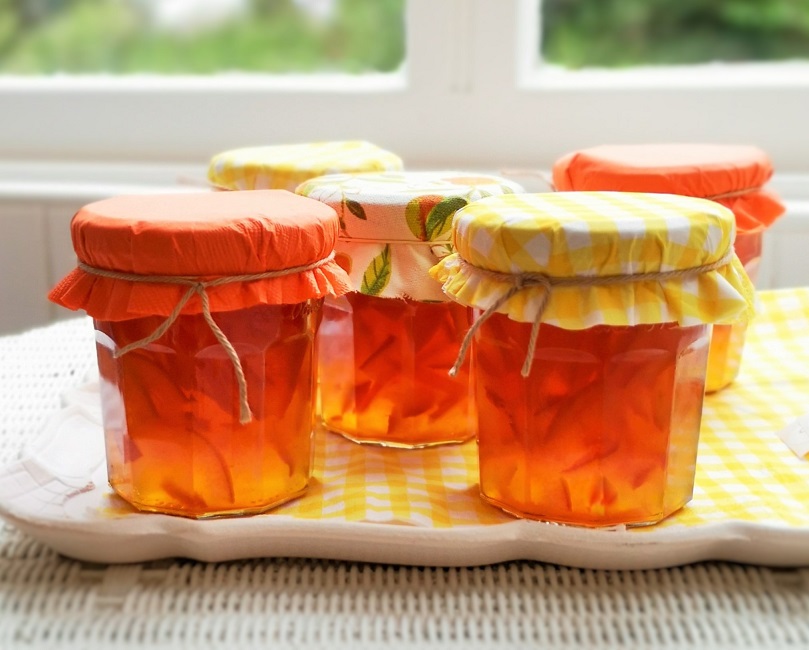
February 2023, marmalade making. Image: Kathryn Hawkins
Something bright and cheery to start the new month. It’s that time of year when the air is full of the scents of aromatic citrus and the sweet smell of sugar. Seville oranges are in season and marmalade-making is in full swing.
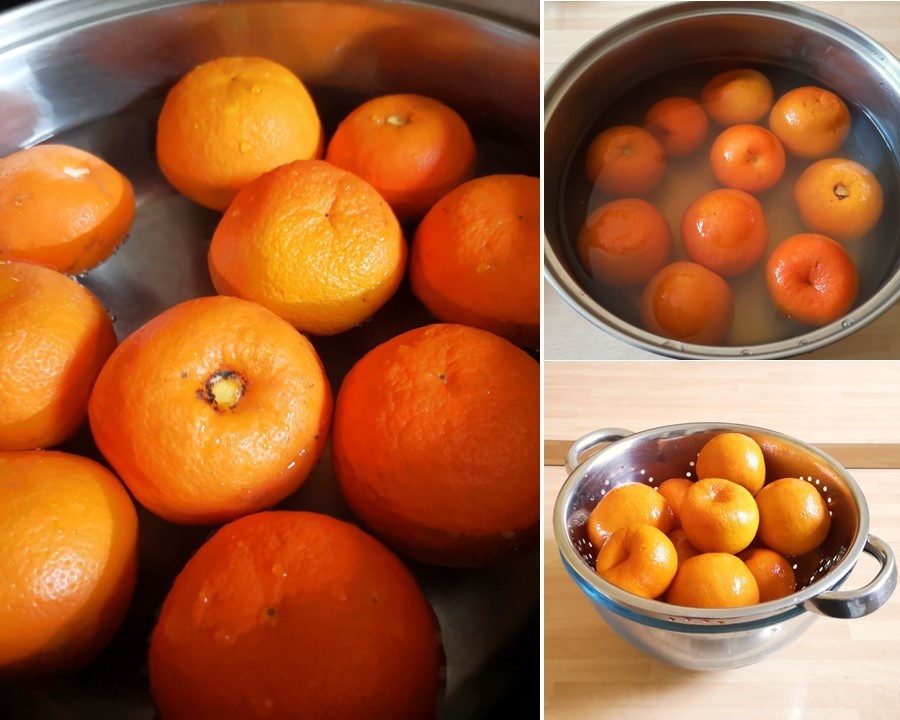
New season Seville oranges. Images: Kathryn Hawkins
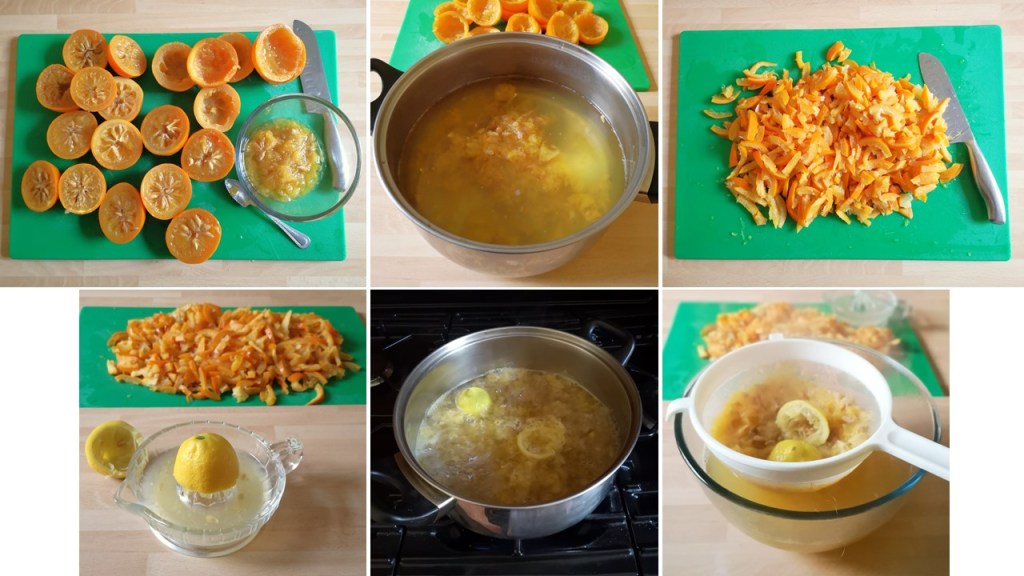
I do enjoy making preserves, but I find the peel-cutting for marmalade a bit of a chore. This time I made marmalade, I cooked the oranges whole, then once the oranges were cooked, I extracted the fruit pulp from the skin and was left with softer peel to slice. I found the cooked orange skin much easier to slice, and the resulting preserve tastes and looks pretty much the same, so I think this recipe will be my go-to marmalade recipe for the future.
New season marmalade ready to label. Images: Kathryn Hawkins
You may want to cut the quantities down to make a smaller amount – I had a fair few oranges to use up!
Makes: approx. 3kg
Ingredients
1kg Seville oranges, washed and left whole
2.4l water
1 unwaxed lemon + 60ml freshly squeezed lemon juice (the extra juice is optional but I find it helps with the set especially if the oranges have been stored for a while)
1.8kg granulated sugar
1. Put the whole fruit in a large saucepan with the water. Bring to the boil, then simmer gently for about 1½ hours until a skewer can be inserted into the fruit with ease. Drain the fruit using a draining spoon and leave aside until it is cool enough to handle. Keep the cooking water.
2. Cut the fruit in half, then scoop the seeds and pulp into the saucepan with the cooking liquid. Halve the lemon, extract the juice and add to the saucepan along with any seeds and the lemon shells. Bring to the boil and boil steadily for 10 minutes. Strain the liquid, discard the pulp, and return the liquid to the saucepan.
3. Meanwhile, cut up the orange shells into the size of shreds you prefer and put to one side. I kept the sliced peel quite chunky, hence my name for the marmalade.
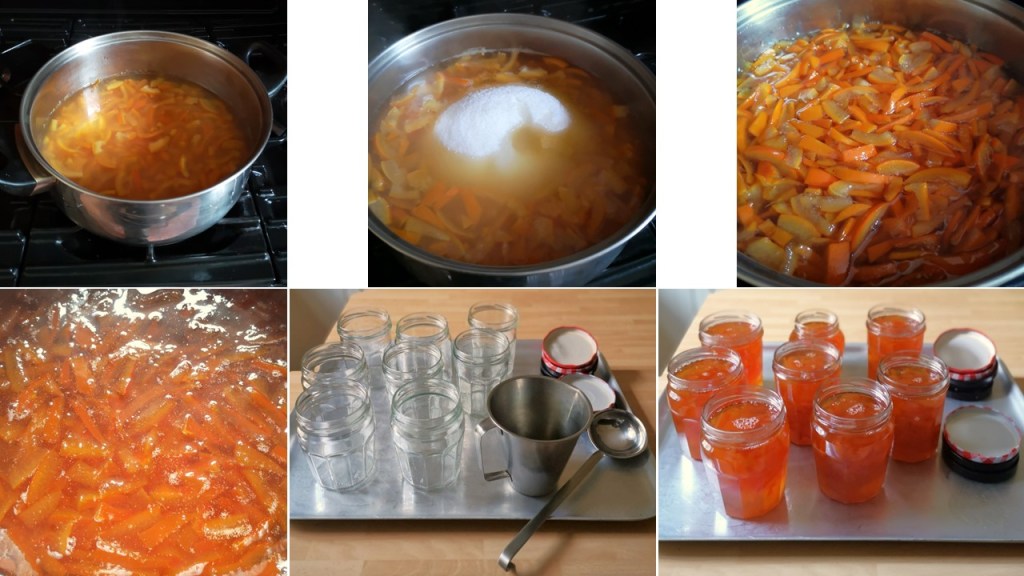
4. Stir the shredded peel into the cooking liquid. Add the sugar and extra lemon juice if using. Stir over a low heat until the sugar is dissolved. Raise the heat and boil for about 25 minutes until setting point is reached – 105.5°C . Allow to cool a little in the saucepan until the mixture begins to firm slightly, then stir the marmalade to distribute the peel before spooning into clean jars and sealing whilst still hot.
I had a few spoonfuls of marmalade leftover once I had put the rest in jars; the “cook’s privilege” I call it. It made the perfect topping for a very indulgent bowl of porridge the next morning 🙂
Until next time, have a good few days and I look forward to posting again soon.
Chocolate porridge with homemade marmalade. Image: Kathryn Hawkins