Welcome to my blog all about the things I love to grow and cook. You'll find a collection of seasonal gluten-free, dairy-free and vegan-friendly recipe posts, as well as a round up of my gardening throughout the year. I wish you good reading, happy cooking and perfect planting!
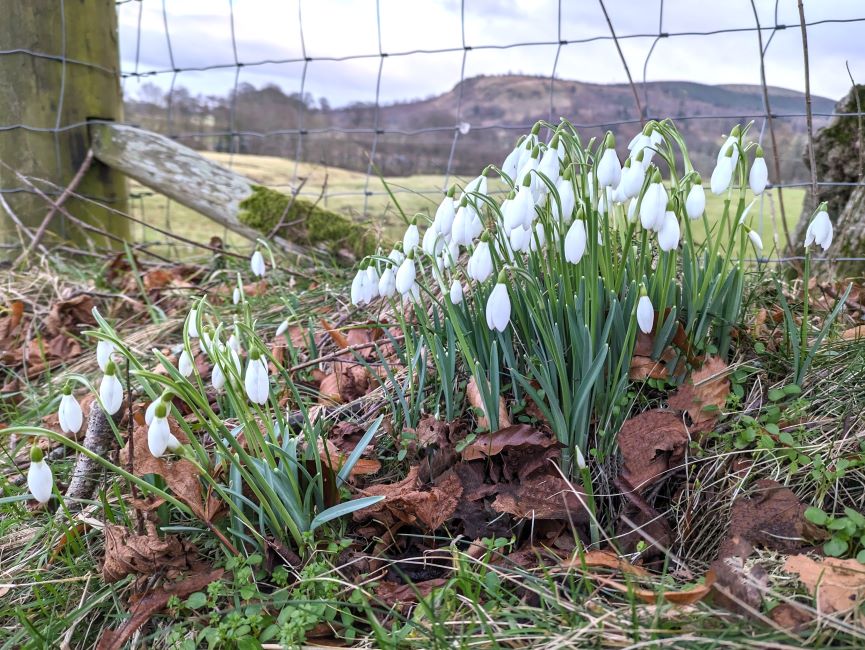
Hello again. It’s good to see that the garden and surrounding countryside are slowly coming to life here in central Scotland after some wild and wintry weather these past few weeks. I took a short trip out to my favourite local spot in search of snowdrops on one of the brighter days this month and am happy to report that there is an abundance of these pretty little white flowers all along the roadside and verges, a little earlier than recent years.
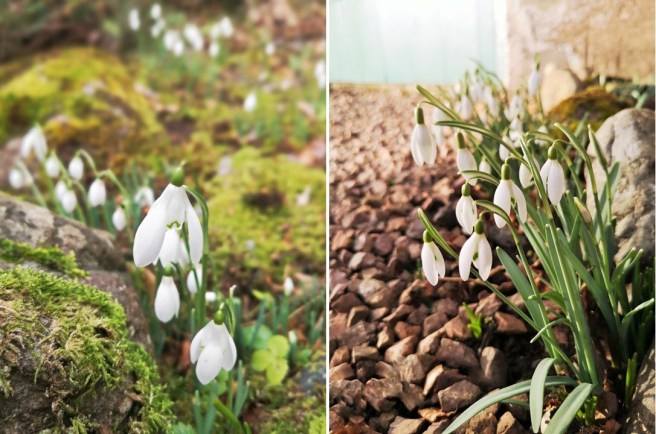
Roadside snowdrops. Image: Kathryn Hawkins
In the garden as well, right on cue, on the first day of the month, the first snowdrops opened up in the weak, wintry sunshine.
The first of this year’s garden snowdrops. Images: Kathryn Hawkins
We’ve had some heavy frosts, a little snow and plenty of wind and rain since then, and subsequently some of the other flowers in the garden have become a bit bedraggled.
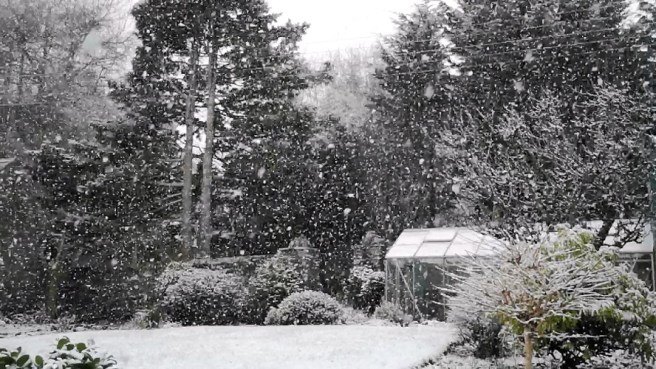
Light dust of early February snow. Image: Kathryn Hawkins
Rain-soaked February flowers. Images: Kathryn Hawkins
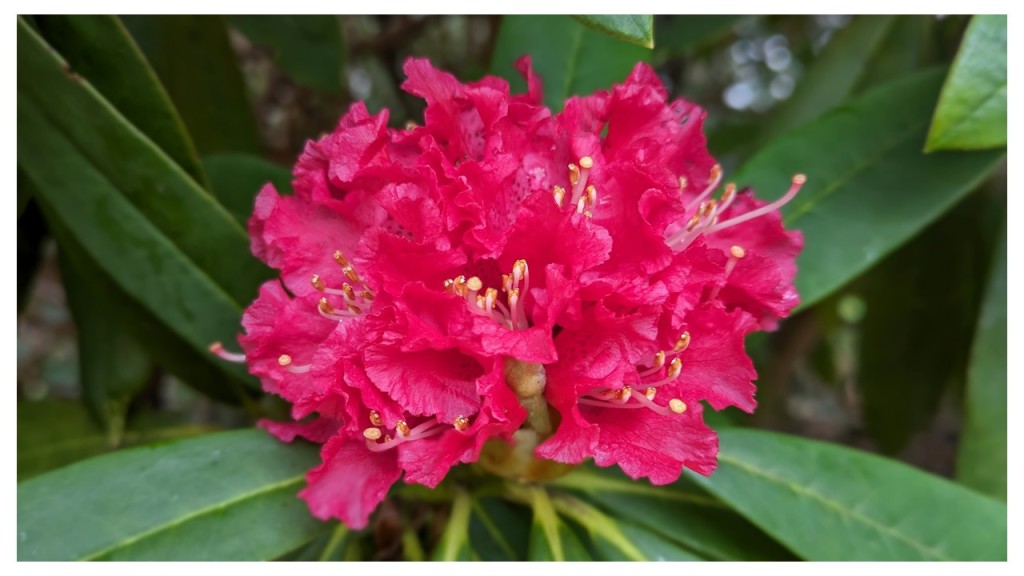
I took this photo of the glorious red Rhododendron in the garden when it first opened at the beginning of the month. Sadly it looks a bit less radiant now it has been rained on and frosted all over.
Red Beauty. Image: Kathryn Hawkins
There have been survivors of all this bad weather I’m pleased to say. The first Hellebore is up and open, and this little Periwinkle was a surprising find last week. The rhubarb is looking healthy as well.
The first flowerings. Images: Kathryn Hawkins
This year’s rhubarb is on its way. Image: Kathryn Hawkins
To brighten up this gloomy month, I recently acquired a new houseplant, a Mimosa, and in the last week it has opened up it’s tiny tight buds into fluffy, bright yellow balls of sunshine. I have everything crossed that it is hardy enough to survive until the temperature and sunshine levels increase later in the year.
Indoor sunshine. Image: Kathryn Hawkins
I’ll see you again at the end of the month when I will be back in the kitchen. Thanks for stopping by 🙂
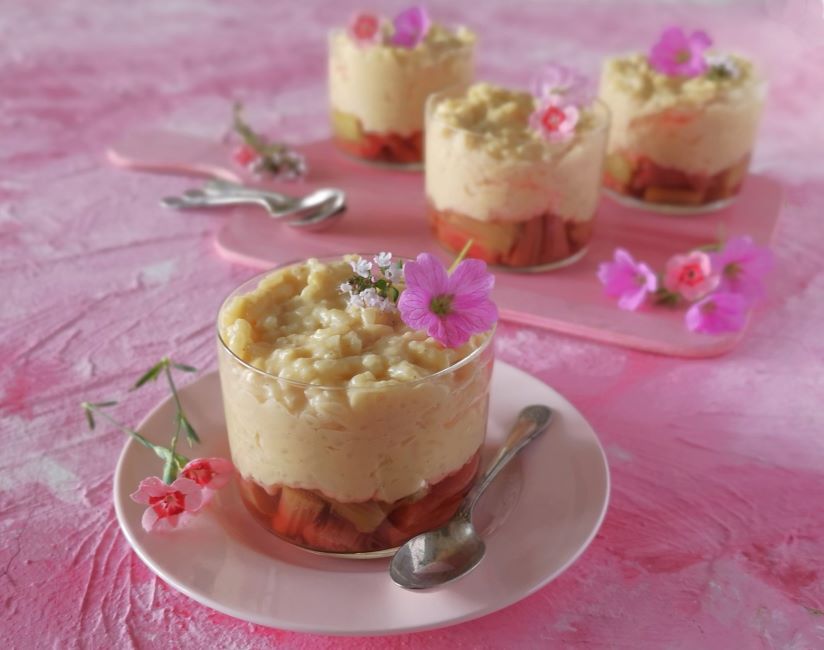
Chilled rhubarb and rice risotto decorated with edible flowers. Image: Kathryn Hawkins
Hello again. The garden fruit and veg supply is beginning to mount up. This week I picked some more rhubarb stems and made them into a compote to eat with a creamy rice dessert. At this time of year, I prefer to serve this combo cold, but in Autumn/Winter, the same rice mix makes a comforting winter pudding to serve with any fresh or cooked fruit you like.
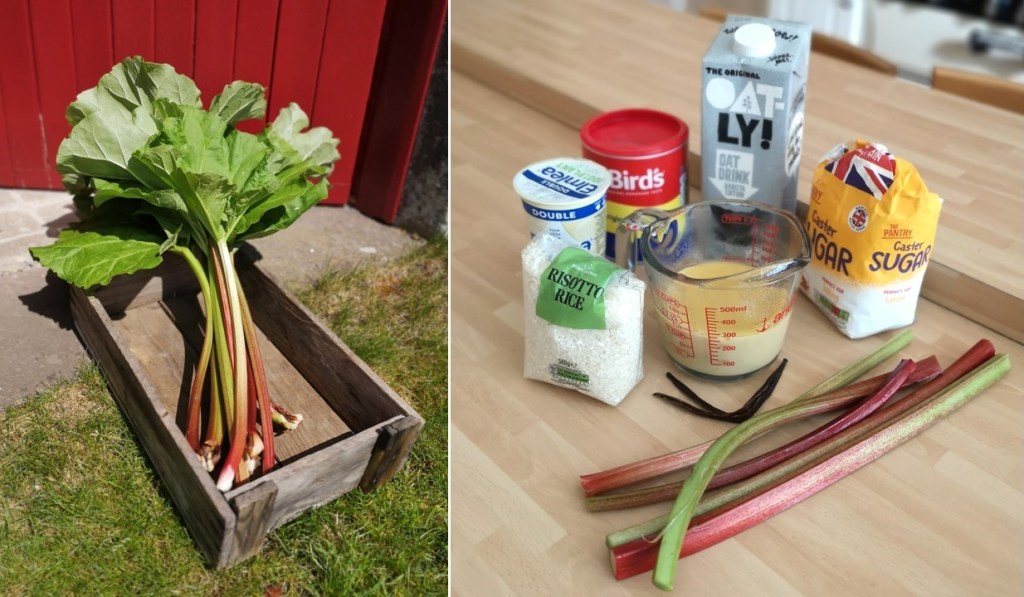
Freshly pulled rhubarb and sweet risotto ingredients. Images: Kathryn Hawkins
It’s a simple enough recipe for the rice mixture, but it takes a little bit of time to cook through, so allow plenty of time to make it. It’s well worth the wait 🙂 I flavour my rice with vanilla but cinnamon or ginger would also work. And, of course, if you’re not vegan, the recipe works just as well with dairy products.
Creamy, sweet risotto, chilled and ready to serve. Image: Kathryn Hawkins
Serves: 4
Ingredients
275g prepared fresh rhubarb
50g caster sugar
500ml plant-based milk (I use oat milk)
100ml plant-based double cream (for a less rich version, replace the cream with extra milk)
1 vanilla pod, split
15g plant-based butter
150g risotto (arborio) rice
250ml free-from custard
1. Chop the rhubarb into lengths about 4cm long and place in a pan. Add 2tbsp water, sprinkle with 25g sugar and heat until steaming. Cover with a lid and cook gently for 6-8 minutes until tender but still holding shape. Leave to cool.
Cooking the rhubarb. Images: Kathryn Hawkins
2. For the risotto, put the milk and cream in a saucepan with the vanilla pod and heat until very hot. Reduce the heat to low and keep the mixture hot.
3. In another saucepan, melt the butter. Add the rice and mix well until coated in the butter. Add a ladleful of the hot creamy milk and stir until thoroughly absorbed.
4. Keep adding the creamy milk, ladle by ladle, stirring in between, until each batch is absorbed, and the rice is just tender – this may take anywhere between 30 to 50 minutes depending on how quickly the rice absorbs the liquid. Don’t be tempted to raise the heat too much as the liquid may evaporate before being absorbed.
How to make sweet and creamy vegan risotto. Images: Kathryn Hawkins
5. Once the rice is tender, thick and creamy, transfer to a heatproof bowl and stir in the sugar. Cover with a layer of greaseproof paper to prevent a skin forming and leave to cool completely, then mix in the custard.
6. To assemble, divide the rhubarb between 4 x 225g dessert glasses and spoon the rice mixture on top. Chill until ready to serve.
Completing the dish. Images: Kathryn Hawkins
Let the desserts stand at room temperature for 20 to 30 minutes before serving to allow the flavours to develop. Decorate with edible flowers if liked.
Creamy vanilla rice and fresh rhubarb compote. Image: Kathryn Hawkins
Thanks for stopping by. That’s me for this week. I hope to see you again soon 🙂
Hello again. Today is the first day of British Summer Time here in the UK. The clocks went forward an hour last night, so we will be enjoying longer days from now on until the Autumn.
It hasn’t really felt very summery today though. We have had a mixture of sunshine and light hail storms, and tonight the temperature is due to drop below zero here in central Scotland. No matter, the garden is colouring up nicely so I thought I would share some of the sights and scenes from my garden today.
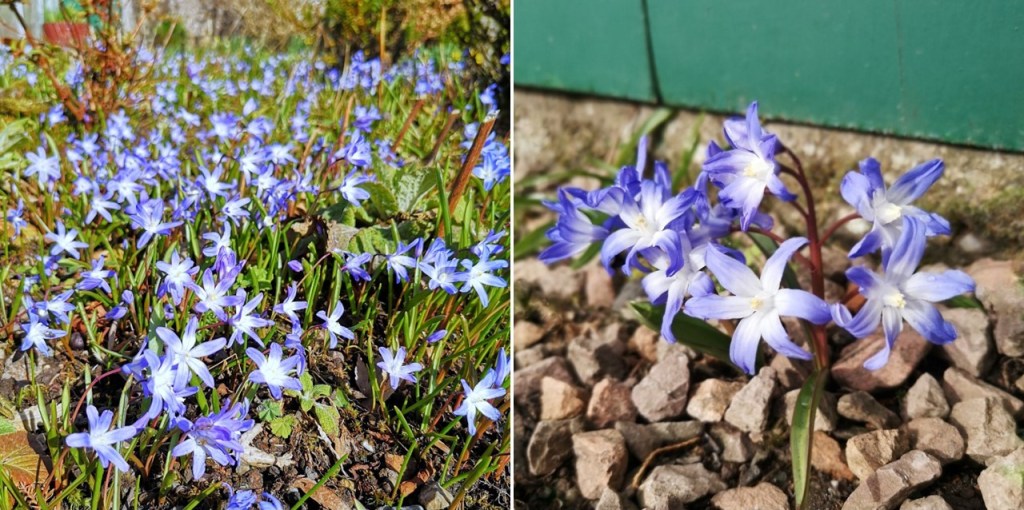
Spring blue carpet of Chionodoxa. Images: Kathryn Hawkins
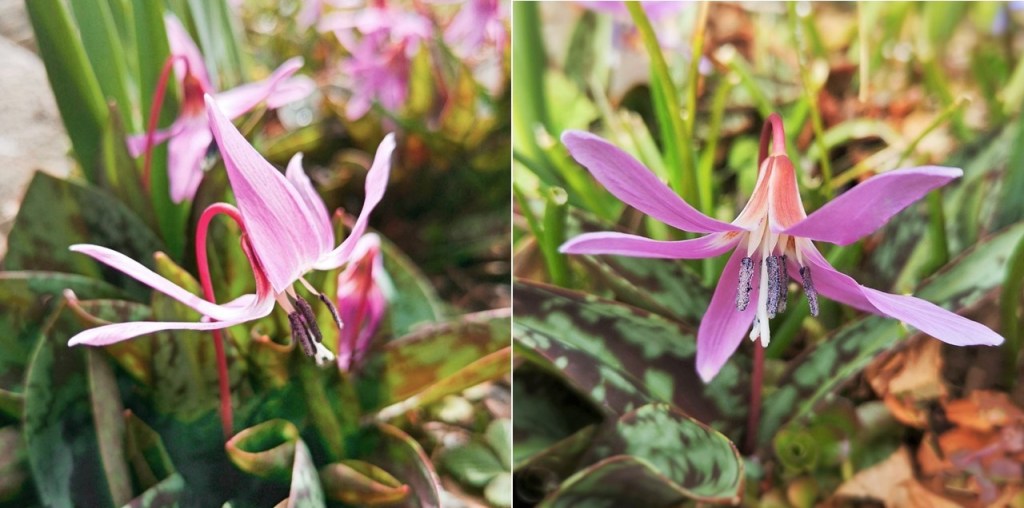
Dogtooth violets growing in the rockery. Images: Kathryn Hawkins
Lone pink Hyacinth and the first Muscari in bloom. Images: Kathryn Hawkins
As ever, at this time of year, the paths and borders are covered with the tiny, blue Chionodoxa flowers. The bees were all over them earlier in the week when it was milder. The Dogtooth violets are coming towards an end now, but this one looked so exotic today, I couldn’t resist taking another photo. The pink Hyacinth above has been flowering every year for over 10 years. It was a potted house plant that I popped in the ground and it has been here every spring since.
Tête a Tête. Images: Kathryn Hawkins
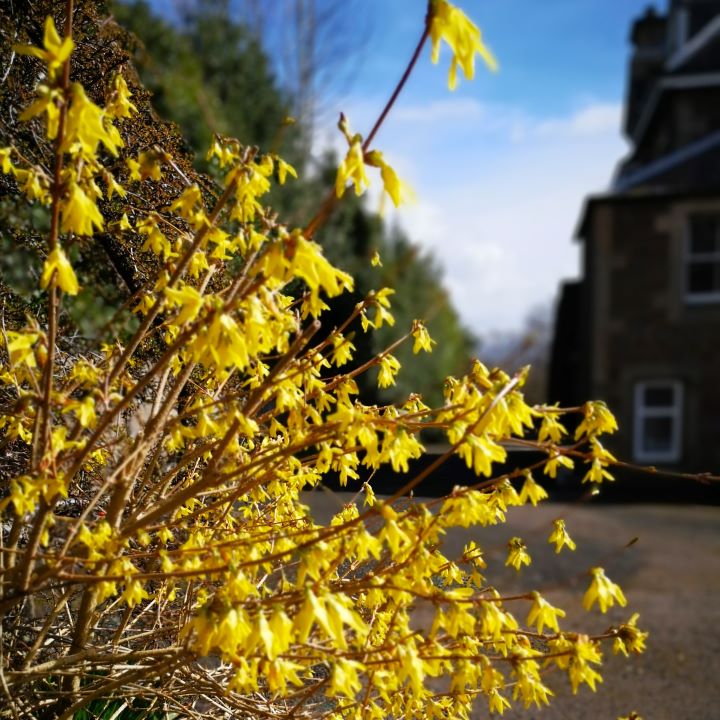
Golden Forsythia in full bloom in the sunshine. Image: Kathryn Hawkins
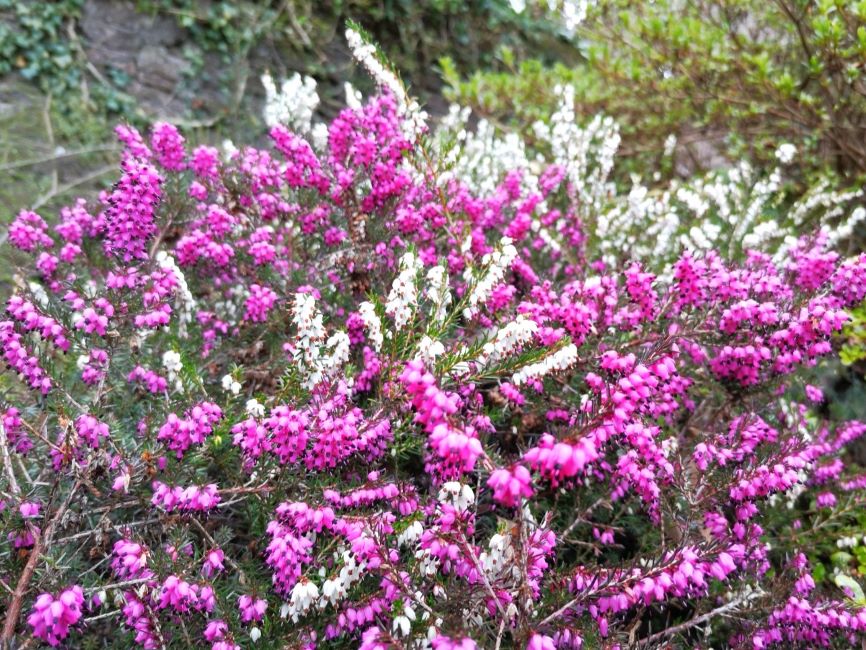
A tumble of pink and white spring heather. Image: Kathryn Hawkins
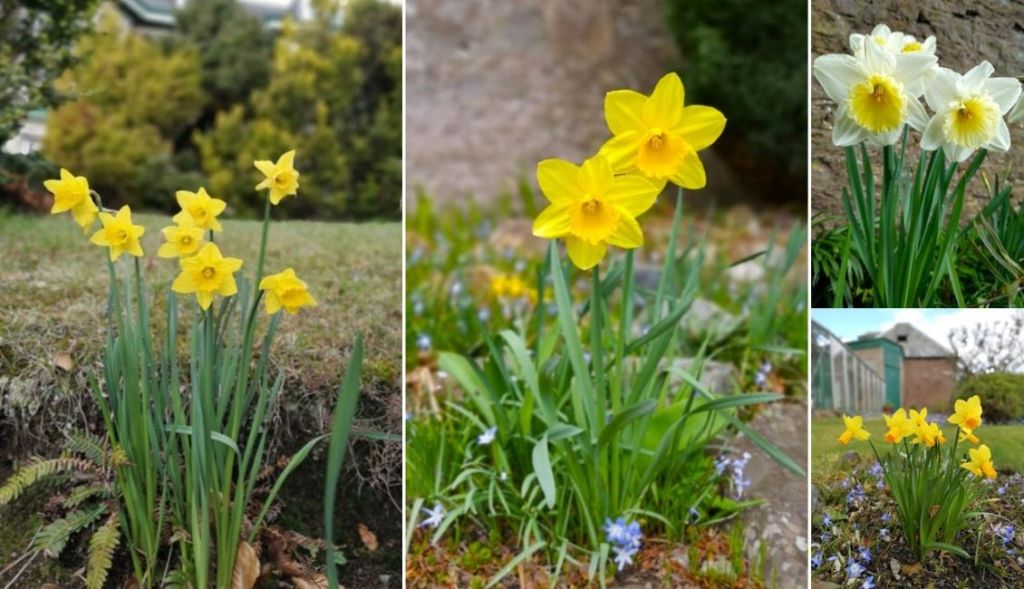
Like the Daffodils at the top of my post, there are clumps of Tête a Tête everywhere. I love their sweet fragrance. The old Forsythia gets cut back every Autumn because it becomes much too big for the area it is growing in. It is very old and too established to move, but it seems to cope with the pruning and this year it is very colourful indeed.
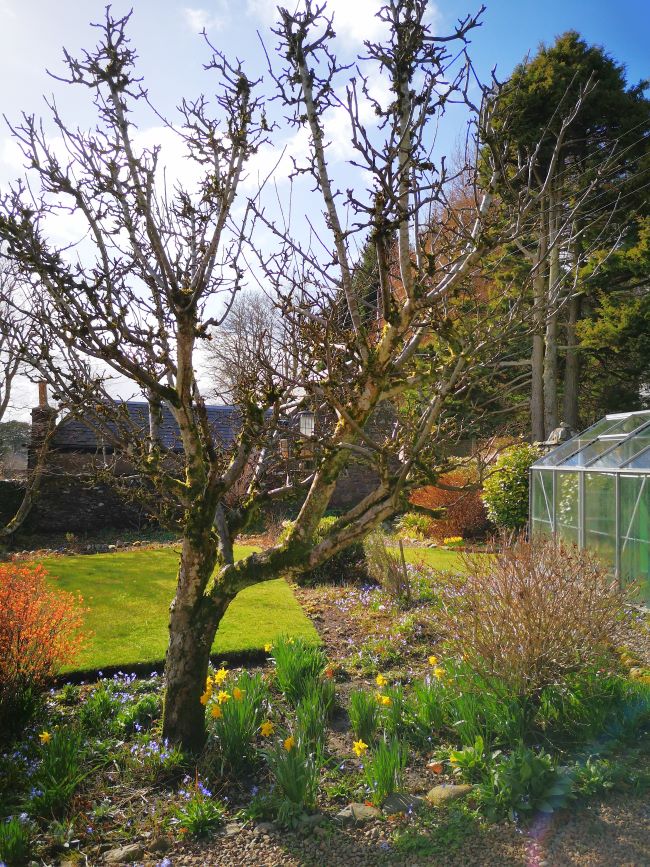
Spring sunshine on the old apple tree. Image: Kathryn Hawkins
The old apple tree is still looking a bit sad, but I can see buds forming now, and in a few short weeks, hopefully the tree will be covered in blossom again.
The rhubarb is coming along now. The fine red stems look very tempting, but I will save them until they grown a bit longer. As well as the spring flowers, the garden is busy with feathered friends. One in particular sings most of the day and often into the night. I can rely on the robin for some company whenever I’m in the garden, and today was no exception 🙂
New stems of spring rhubarb and my garden friend. Images: Kathryn Hawkins
I hope you have enjoyed my images this week. I will be back in the kitchen next time, so I hope to see you again then.
Hello again. Thank you for stopping by. So, here we are at the end of another month. A chance for me to take a look back on what’s been happening out of doors since my last post.
Garden snowdrops, February 2023. Images: Kathryn Hawkins
It’s been a bumper year for snowdrops here in central Scotland. Along the roadside verges, riverbanks and country walkways, the tiny white bulbs are flowering prolifically. And, in my own garden, there are green and white clumps of the delicate little flowers in the beds, borders and paths all over the place.
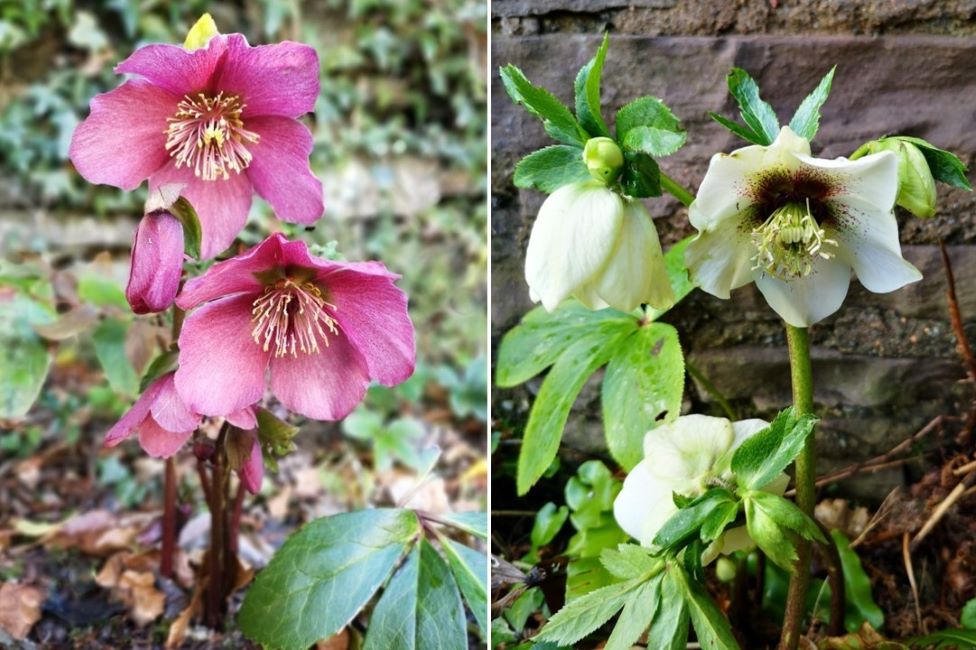
New season Scottish garden Hellebores. Images: Kathryn Hawkins
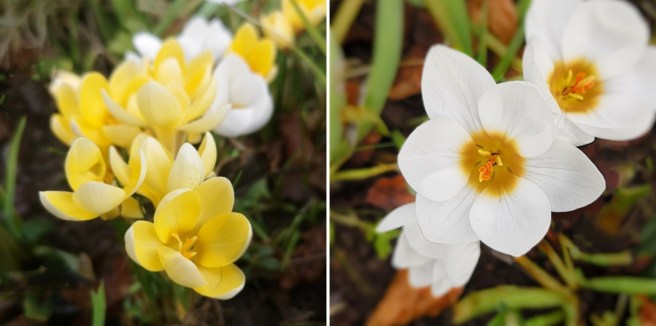
February crocus and primroses. Images: Kathryn Hawkins
Other spring classics are opening up in the garden as well. In the shady borders, the Hellebores are unfurling, as are the primroses. In the sunshine, the crocus are flowering and giving bold, bright, blasts of colour all over the garden.
Pale pink Rhododendrons, February 2023. Images: Kathryn Hawkins
The delicate pink Rhododendrons are blossoming in the back and front garden. Fingers crossed that the frost keeps at bay.
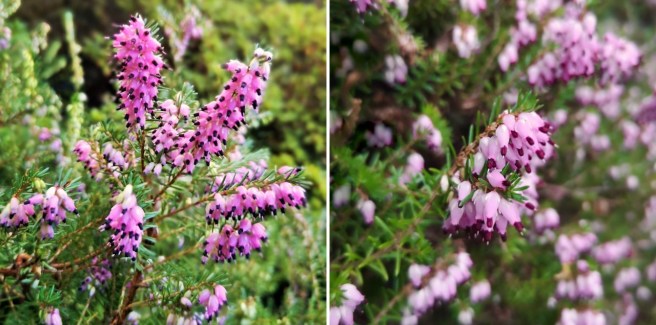
Early spring heather, February 2023. Images: Kathryn Hawkins
More hardy are the spring heathers. I haven’t seen many bees yet, but there are some tempting blooms out there in wait for our important little pollen collectors.
Garden rhubarb and rabbits. Image: Kathryn Hawkins
Very happy to see the first of the garden produce beginning to grow. Looking forward to my first harvest of fresh pink stems in a few weeks time.
My final image this week is of a glorious winter sunset I captured at the beginning of the month, and it was a real beauty.
Early February sunset. Image: Kathryn Hawkins
That’s me for this month. I will be back with a recipe post very soon. Until then, have a good few days and enjoy the unfurling of spring.
Hello again. I hope you are keeping well and are having a good summer. Since my last post, the UK, like the rest of Europe, has been subject to some very hot weather. Fortunately here, not for a particularly long spell as the high temperatures were unprecedented for this part of the world. It has cooled down again now and the air feels fresher and the sun less strong.
I was worried that the soft fruit in the garden would suffer in the heat. The rhubarb in particular likes a good soaking as well as the sunshine. I was pleased to see that it bounced back once the temperature dipped and we had some very welcome rain.
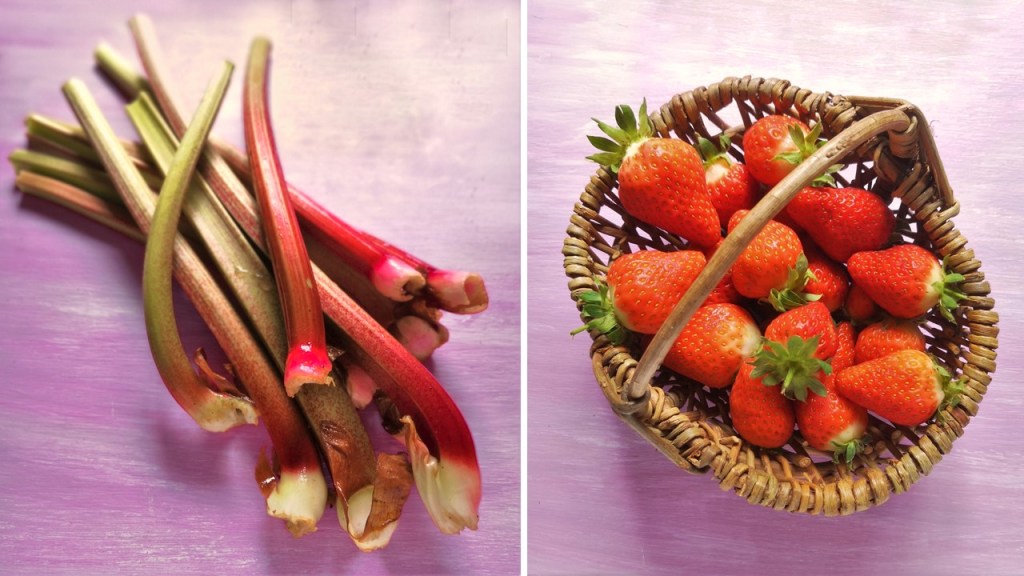
Just picked, homegrown rhubarb. Image: Kathryn Hawkins
My recipe this week is a very simple one. I try to avoid putting the oven on in the hot weather, but I did make an exception for one of my favourite fruity combinations. Strawberries and rhubarb go together especially well, and when cooked with vanilla, I find the aroma and flavours is irresistible.
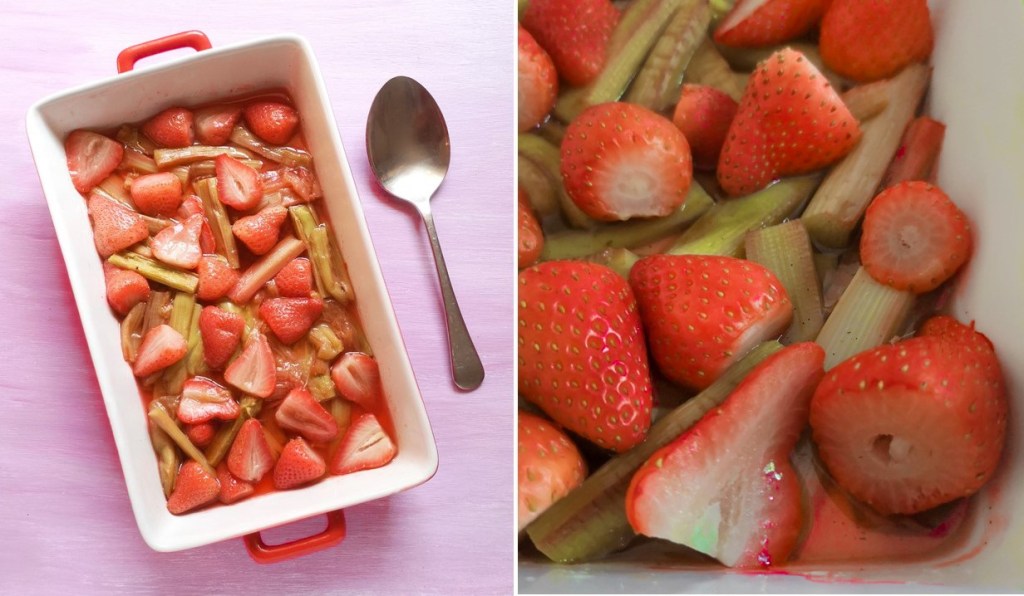
Scottish rhubarb and strawberries. Images: Kathryn Hawkins
It has been a good year for Scottish strawberries. They have been juicy and have tasted fragrant and sweet. I didn’t grow these myself, they came from the local farm shop. I chose larger fruit to cook with the rhubarb as they hold their shape better in the oven.
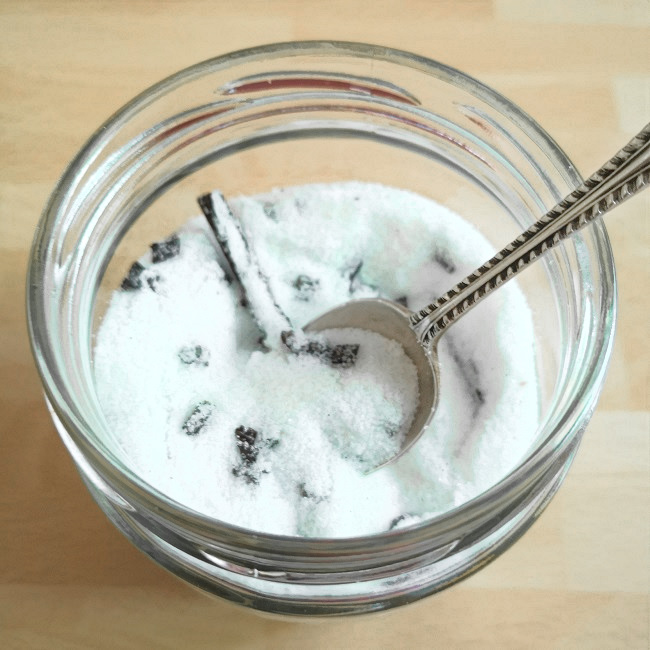
Homemade vanilla sugar. Image: Kathryn Hawkins
I always have a jar of vanilla sugar in the cupboard. I chop up bits of vanilla pod that is past its prime or dried out too much and add it to caster sugar. I keep it in a glass jar with a screw-top lid. Every now and then I give the jar a shake to distribute the vanilla pieces. Sift the sugar as you use it to remove the pod pieces but keep the bits trapped in the sieve and put them back in the jar along with a top up of sugar ready for next time. You can replenish your supply more or less indefinitely.
On with the recipe. I allow the fruit to cool after baking as I prefer the flavours when they are cold and the fruit is more refreshing, but it’s personal preference. The fruit makes a deliciously light dessert or breakfast compote served with yogurt and toasted cereals.
Serves: 6
Ingredients
450g rhubarb
50g vanilla or plain caster sugar – white sugar helps retain the colour of the fruit, but you may prefer to use brown for a more caramely flavour
300g large fresh strawberries
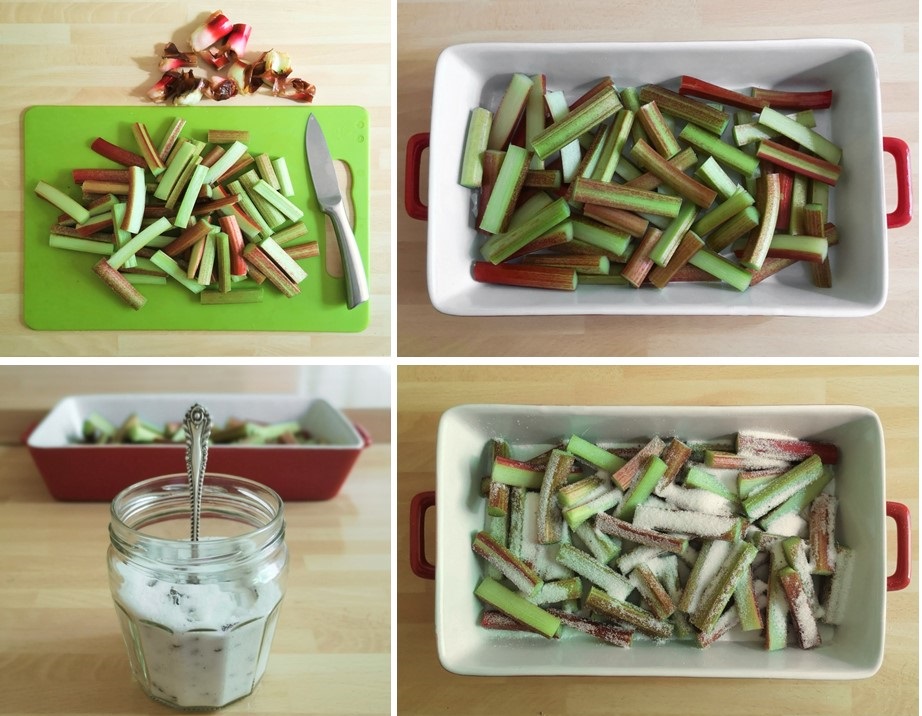
1. Preheat the oven to 190°C, 170°C fan oven, gas 5. Wash and trim the rhubarb. Cut into even-thickness and same-length pieces – this will help with even cooking.
2. Place in an oven-proof dish and sprinkle over the sugar. Cover the top with foil and bake for 40 minutes.
Preparing rhubarb for baking with vanilla sugar. Images: Kathryn Hawkins
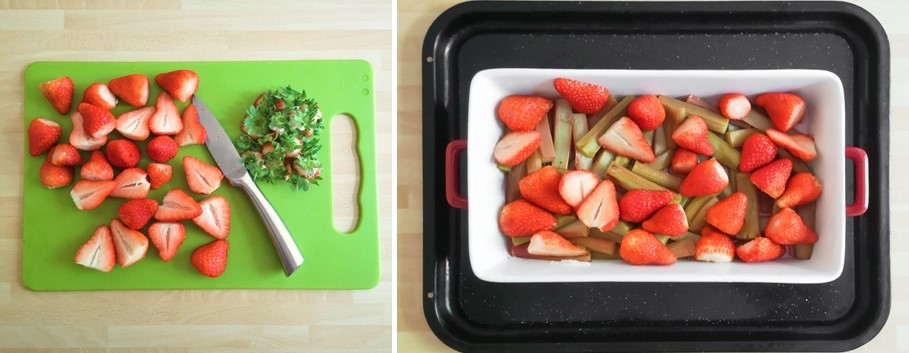
3. Meanwhile, wash and hull the strawberries and cut in half. Uncover the rhubarb and add the strawberries. Bake, uncovered, for a further 10 minutes until the fruit is just tender.
Preparing Strawberries for baking. Images: Kathryn Hawkins
Leave to cool, then chill until ready to serve. Remove from the fridge about 30 minutes before serving to allow the flavours to develop. Delicious served with coconut yogurt.
Baked fruit served with coconut yogurt. Image: Kathryn Hawkins
That’s me for another week or so. I can hardly believe we’re just about to enter the month of August. Until next time, take care and my best wishes to you 🙂
Hello again. How lovely it is to be well and truly in the season of spring, my favourite time of year. It is a joy to be out of doors and in among all the new growth and activity in the garden.
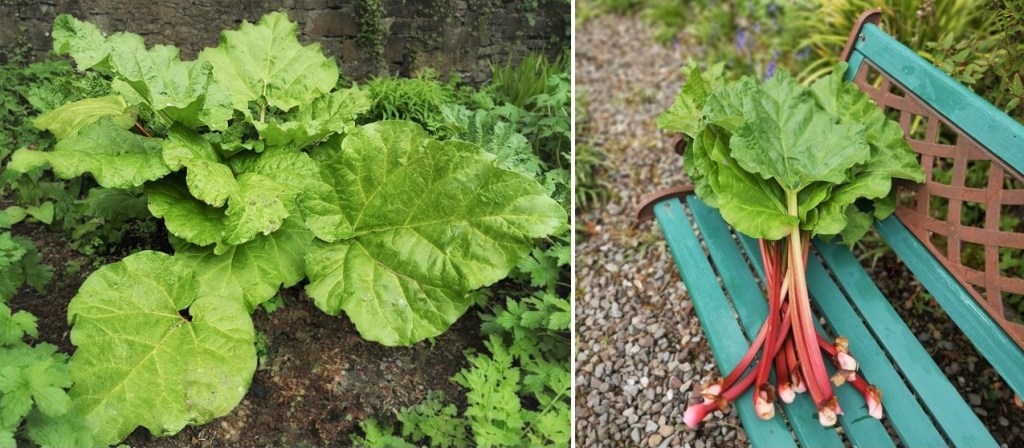
May 2022, fist rhubarb harvest. Images: Kathryn Hawkins
Earlier in the month, I picked my first rhubarb of the season. It was a good harvest of tender, thin, colourful stems with a tangy, fruity flavour. My recipe this week is not so much about the rhubarb but about an indulgently, rich recipe to serve with this tasty seasonal treat.
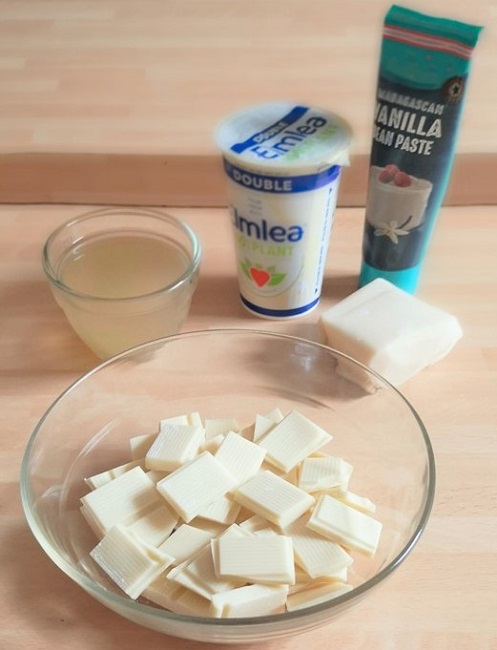
Mousse ingredients. Image: Kathryn Hawkins
My very simple combination of vegan white chocolate, plant-based cream, coconut and vanilla, lightened with aquafaba foam makes a very delicious mousse to serve with any acidic fruit. If you’re not vegan, dairy-based products will work fine. Leave out the foam if you want a denser more custardy texture. If you don’t want to use cream, replace the creamed coconut and plant-based cream with full fat or reduced fat coconut milk.
The mousse is very rich and can easily spread to 6 portions if you use small serving glasses. Here’s the recipe.
Serves: 4-6
Ingredients
350g prepared rhubarb, cut into short lengths
2-3tbsp caster sugar
40g creamed or block coconut
approx. 60ml plant-based double cream
1tsp vanilla bean paste
300g free-from white chocolate
100ml aquafaba (I used canned cannellini bean liquid)
1. Put the rhubarb in a shallow pan with 2tbsp sugar and 3tbsp water. Heat until steaming, then cover with a lid and cook gently for 10-15 minutes until tender. Cool slightly, taste and add more sugar if required. Leave to cool completely, then chill until ready to serve.
May rhubarb on the hob. Images: Kathryn Hawkins
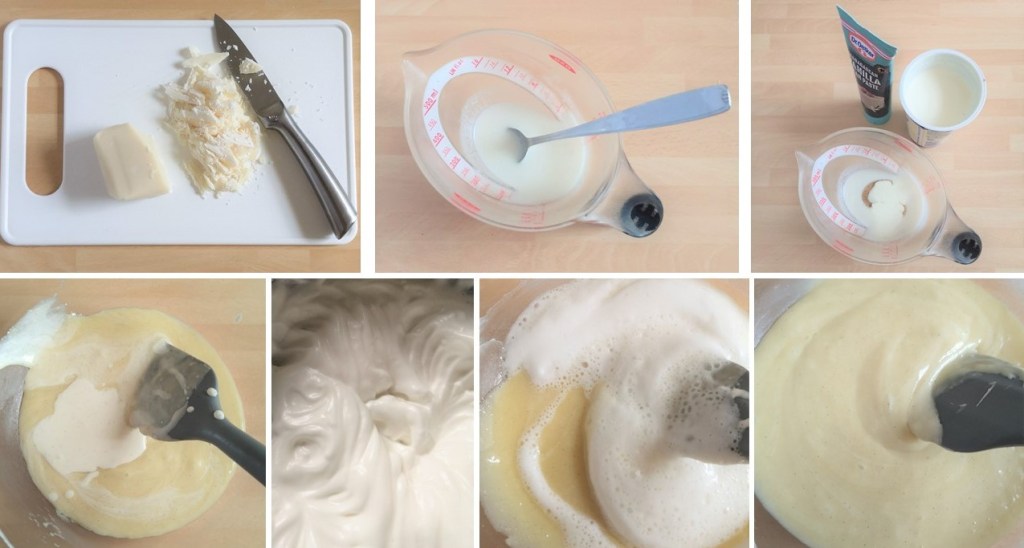
2. Shave the creamed coconut into thin pieces using a small sharp knife or vegetable peeler and put into a measuring jug. Spoon over 3tbsp boiling water and stir until dissolved. Make up to 100ml by adding sufficient plant-based cream. Stir in the vanilla paste.
3. Melt the chocolate in the microwave or in a bowl over barely simmering water. Keep warm.
4. In a clean, grease-free bowl, whisk the aquafaba for 4-5 minutes until thick and foamy – you should be able to leave a trace of the whisk in the foam when it is sufficiently whipped.
5. Mix the coconut cream into the warm melted chocolate until well blended and then gently fold in the whisked foam in several batches. The chocolate mixture will begin to thicken quite quickly once it starts to cool.
White chocolate and coconut mousse prep. Images: Kathryn Hawkins
6. Divide the mousse between 4 or 6 serving glasses and leave to cool completely before chilling until ready to serve.
Ready to set. Image: Kathryn Hawkins
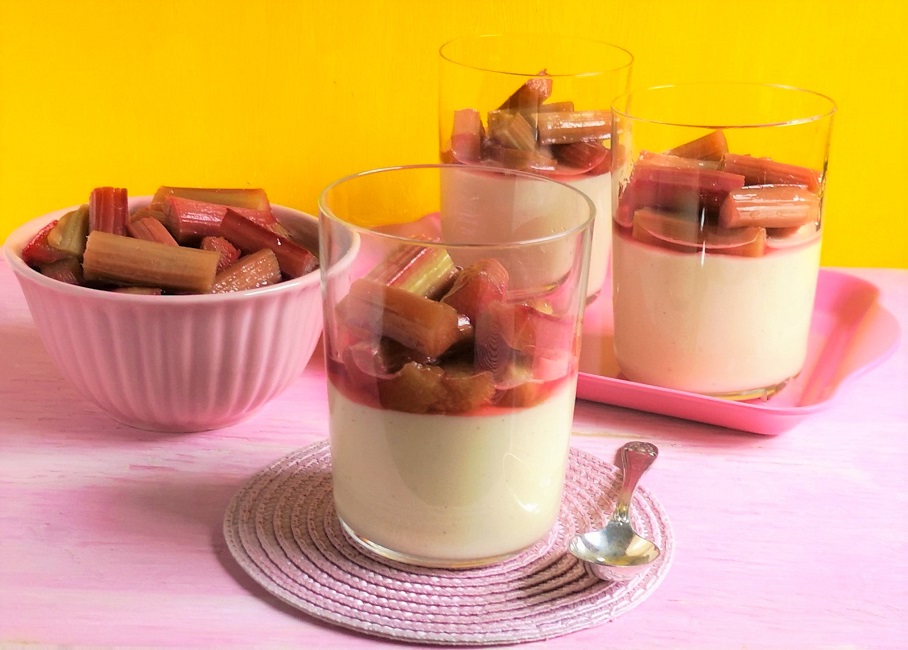
Spoon cooked rhubarb on top of each mousse just before serving. Delicious 🙂
Fruity and creamy. Image: Kathryn Hawkins
That’s me for another week. I will be posting again at the end of the month. Until then, enjoy marvellous May!
We’ve certainly had a lot of weather here in central Scotland since my last post. Sunshine, strong winds, heavy rain, snow and frosts. Yet I am happy to report that the garden is slowly coming to life; the birds are feeding constantly and singing ever louder, and at times it does feel that spring is on its way.
February sunshine, snow and frost. Images: Kathryn Hawkins
This is the month when the first proper spring flowers appear in the garden, the snowdrops. There are a few clumps here and there already, but towards the end of the month is when they will really takeover. At the moment, many are still in bud, with just one or two opened up to see the tiny green markings on the inside petals. So pretty and delicate, yet strong enough to stand up to all sorts of weather.
Snowdrops in the shade and in the sun. Images: Kathryn Hawkins
Another sign of spring for me is when the crocus appear. I just managed to capture these beauties before they got crushed by a heavy downpour of rain. I hope they bounce back again.
The first crocus of 2022. Images: Kathryn Hawkins
The winter heathers started flowering at the very end of last year and are now looking very healthy, adding splashes of pink and white to the flower beds.
Pink and white winter heathers. Images: Kathryn Hawkins
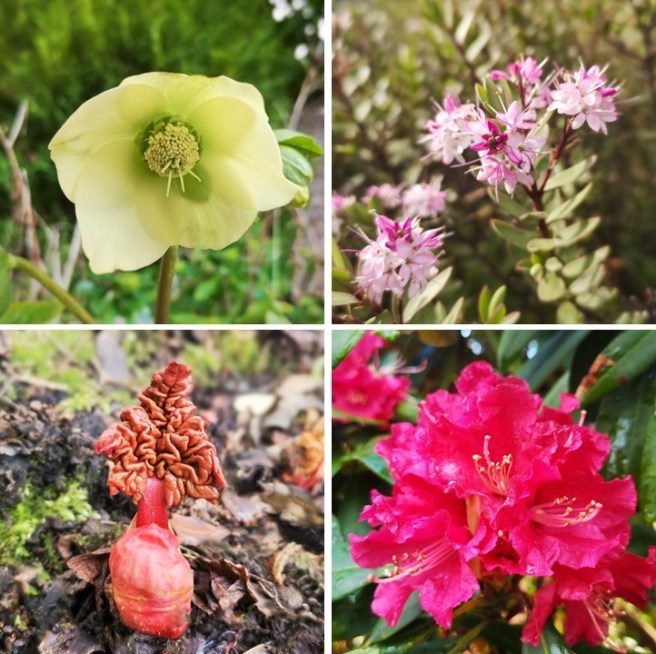
The first Hellebore is fully open now with others not far behind. The Hebe that started flowering in December is still producing blooms. I am delighted to see the first bright red shoots of rhubarb up and coming, promising delicious rewards later in the year, and the deep pink Rhododendron is slowly opening up – a bit later than in other years.
Blooms and shoots: Hellebore, Hebe, Rhubarb and Rhododendron. Images: Kathryn Hawkins
There are more storms and wintry weather on the horizon for the UK in the week ahead so perhaps it is just as well that the garden isn’t too far advanced at the moment. Until next time, thanks for stopping by and my best wishes to you.
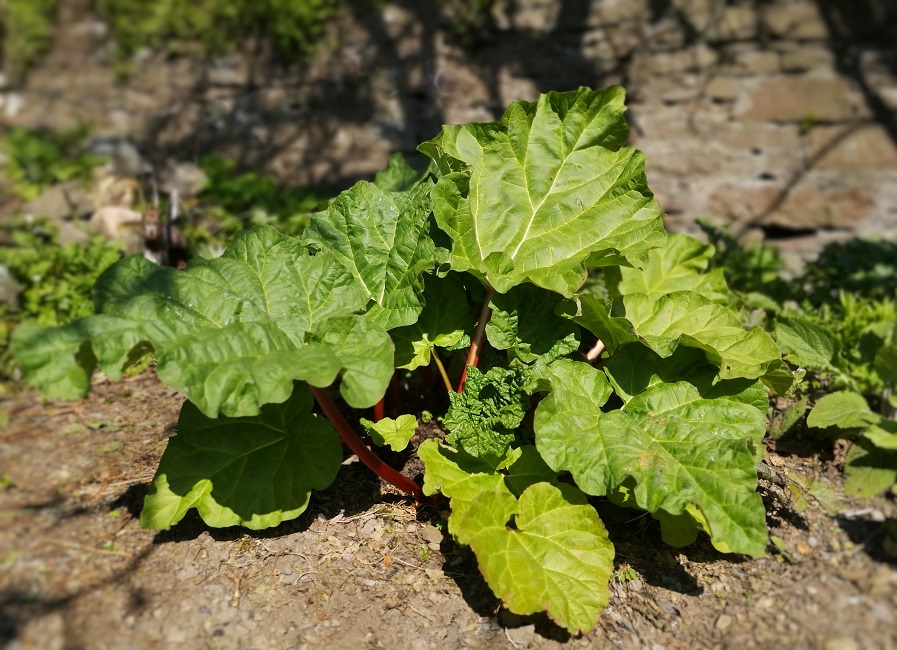
Spring rhubarb ready for harvest. Image: Kathryn Hawkins
Hello again. I hope you have been enjoying some good weather these past few days. At last we are enjoying frost-free nights and blue-sky days. Long may it last!
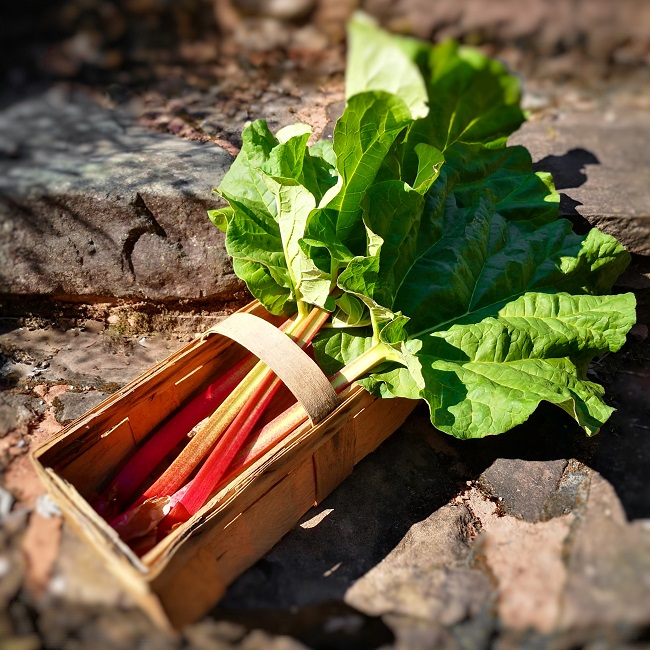
My first rhubarb pickings, April 2021. Image: Kathryn Hawkins
I have been able to pick my first few stalks of rhubarb. I didn’t force any plants this year, so I was delighted to find 5 stems ready for picking so early on in the season.
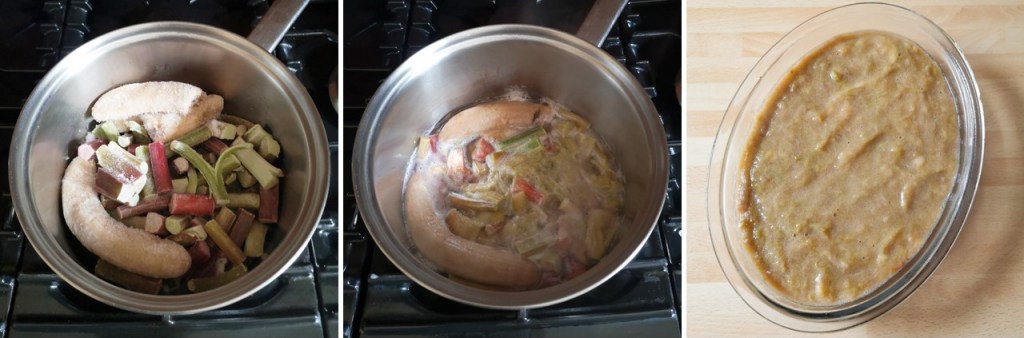
The week before this rhubarb was ready, I used up my last bag of frozen rhubarb from last summer. I combined it with some frozen ripe bananas I keep in the freezer for making loaf cakes and made a compote. It’s not the best-looking mixture you’ll come across but it tasted great. The sweetness of the banana helped to reduce the sugar content.
Preparing frozen rhubarb and banana compote. Images: Kathryn Hawkins
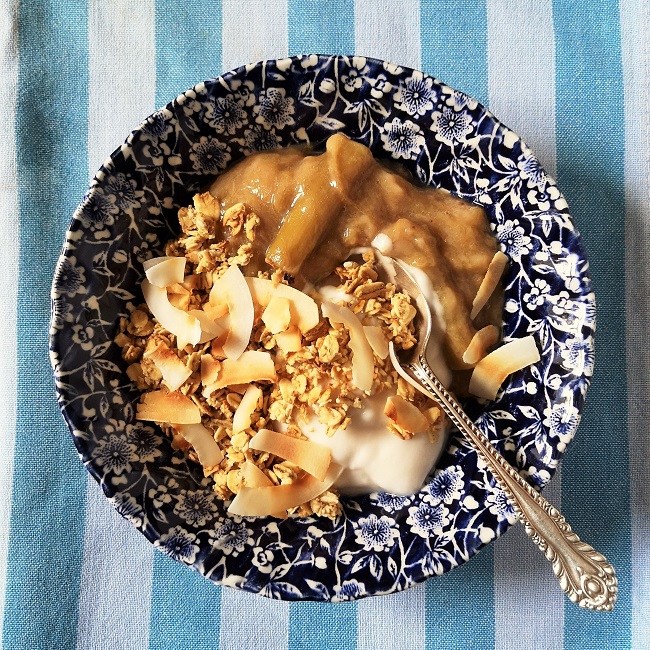
I put 450g frozen rhubarb in a saucepan with 230g frozen very ripe banana and cooked them over a low heat with the lid on for about 30 minutes until they had thawed and become very soft. Mix together until well combined. I added 4 tbsp white sugar gradually. Taste and sweeten in small amounts to keep sugar content to a minimum. Best eaten cold for maximum flavour – it makes a lovely breakfast bowl with homemade coconut granola and coconut yogurt. You could make this with fresh rhubarb and ripe bananas, and simply reduce the cooking time.
Rhubarb and banana compote breakfast bowl. Image: Kathryn Hawkins
My second recipe is something I cooked up using the new season’s rhubarb. It is made from a very simple combination of ingredients I had in the fridge and freezer, and is something I was able to put together quickly.
April rhubarb stems. Images: Kathryn Hawkins
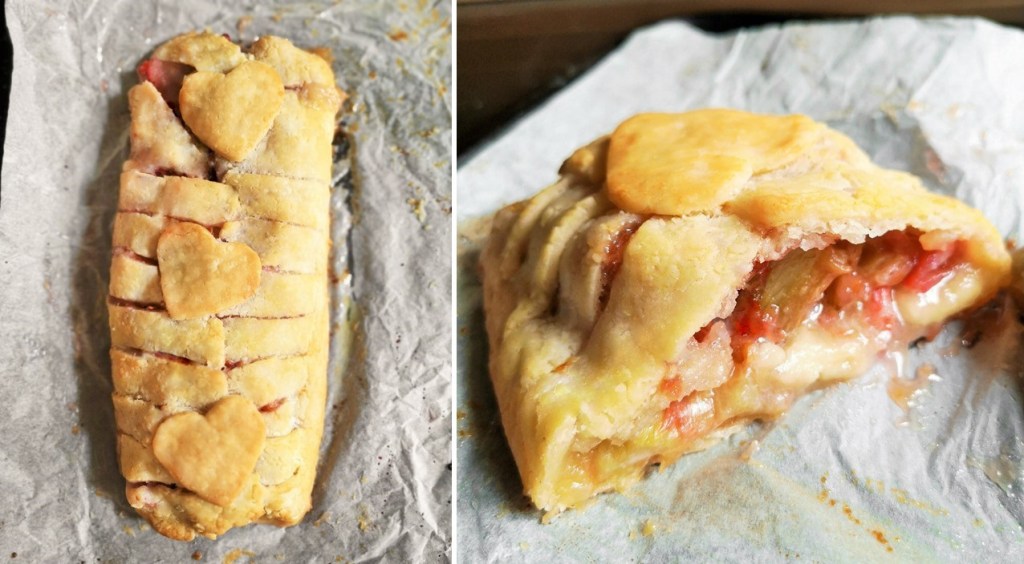
Roll out 300g gluten-free rough puff or puff pastry (or you can use shortcrust if you prefer) to an approximate 25cm square. Trim to neaten the edges, and then keep the trimmings for decoration. Knead and roll 150g natural marzipan to an oblong about 8cm wide and place down the middle of the pastry. Top with 200g chopped fresh rhubarb (cut into 3cm long pieces) and spoon over 100g raspberry jam.
Cut about 10 strips either side of the rhubarb, brush with a little dairy-free milk and fold over the top of the fruit, pressing together gently to seal together. Press the pastry at both ends together in order to seal the marzipan and fruit within.
Transfer to a lined baking tray, brush all over with 1 tbsp dairy-free milk mixed with 1 tbsp maple syrup. Decorate with any trimmings and brush these before baking in a preheated oven at 200°C, 180°C fan oven, gas 6 for about 40 minutes until lightly golden and crisp. Best served warm. Serves: 6
Rhubarb and marzipan plait. Images: Kathryn Hawkins
That’s me for another week. I have a busy few days ahead of me now so it will next month before I get to post again. Until then, take care, keep safe, and enjoy the spring sunshine 🙂
Hello everyone. I hope you are well and have enjoyed whatever the festive season brought your way. Like so many, I had a quiet one at home, unable to travel to see my family. Hogmanay and New Year celebrations are also cancelled. There has been plenty of time to reflect on what has happened this year, and also to think about new projects for the year ahead.
Three glorious morning views. Images: Kathryn Hawkins
We have been treated to some bright, crisp days here in central Scotland this year end, with some spectacular sunrises, and the first snow of the winter falling a couple of days after Christmas.
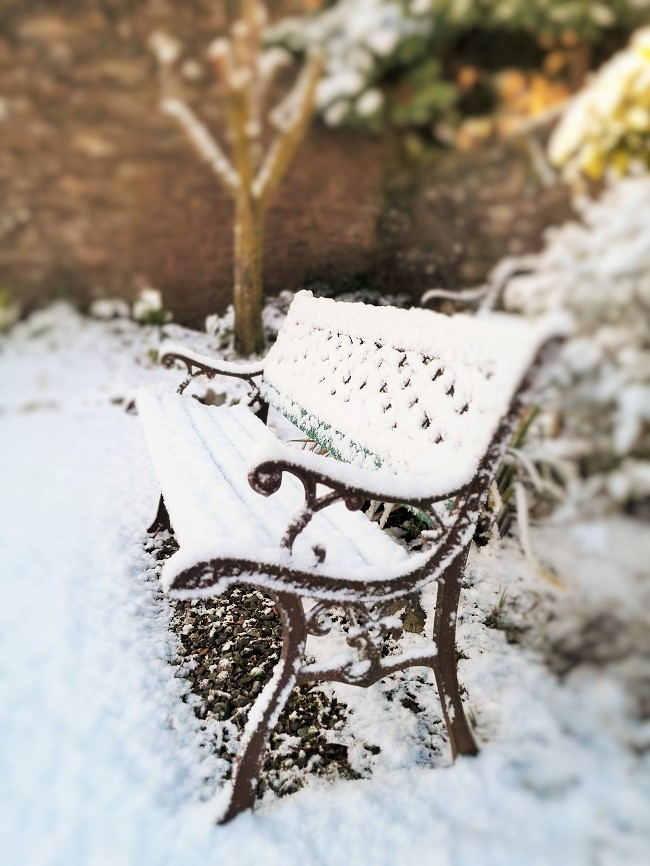
Snow-covered seat. Image: Kathryn Hawkins
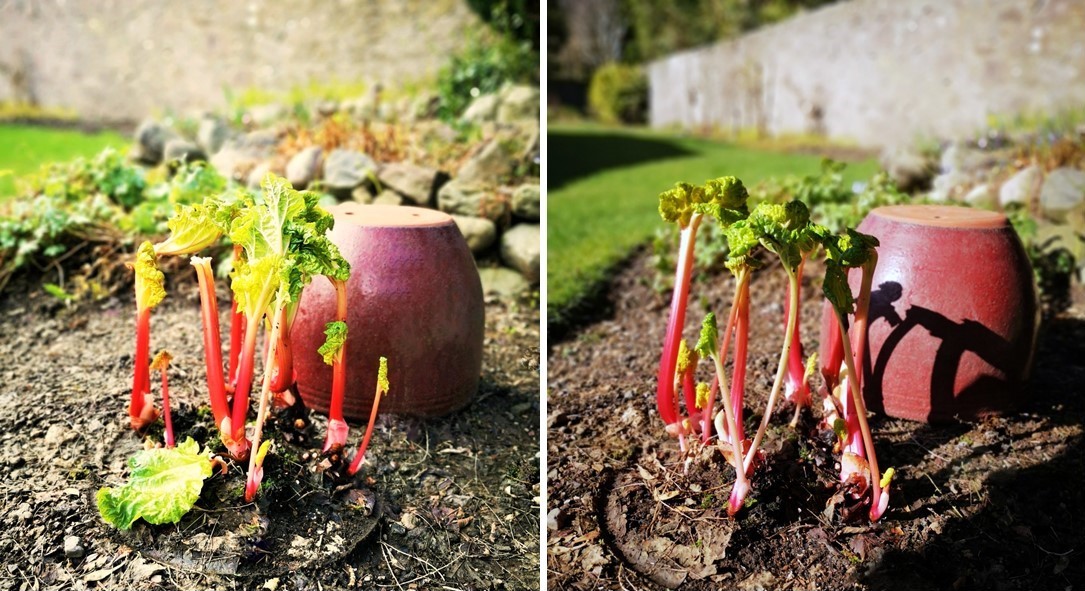
It seems like a long time ago since I was able to take a rest on my favourite seat and enjoy the peace, quiet and colours of a spring and summer garden, but even now there are some signs of new growth to gladden the soul. I took these images on Boxing Day of a primrose and one of my rhubarb plants. The poor things must have had a bit of a shock waking up the next day to a covering of snow.
New shoots. Images: Kathryn Hawkins
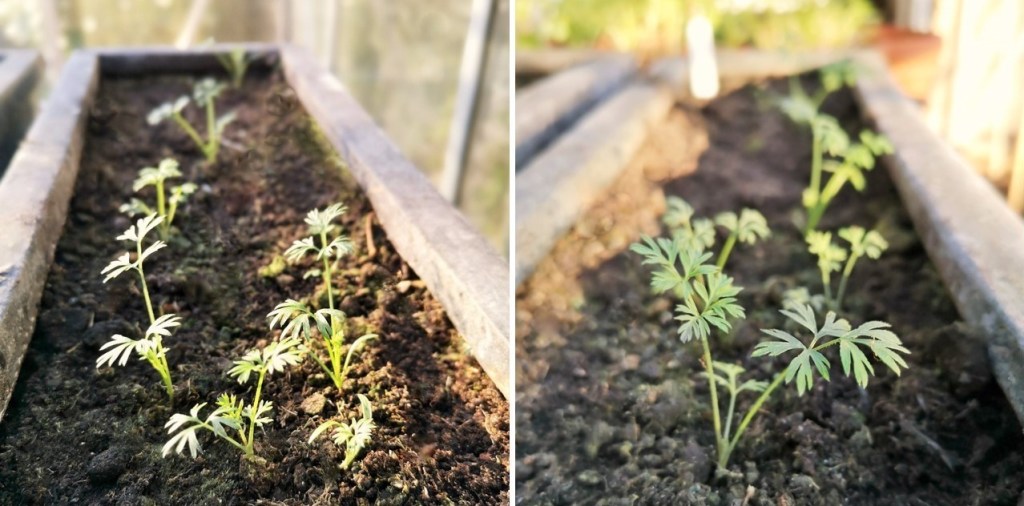
Back in September, once the cucumbers had ceased fruiting, I cleared some space in one of the greenhouse beds and planted 6 seed potatoes. It was an experiment to see if I could harvest fresh new potatoes for Christmas. I’m delighted with the results. All 6 plants produced, and I was able to enjoy freshly dug Maris Peer potatoes over Christmas, with a second harvest for the new year. At the same time, I sowed some carrot seeds, but these are much slower to grow, and I am beginning to doubt that they will ever root properly, but you never know. I will report back if they do develop to an edible size.
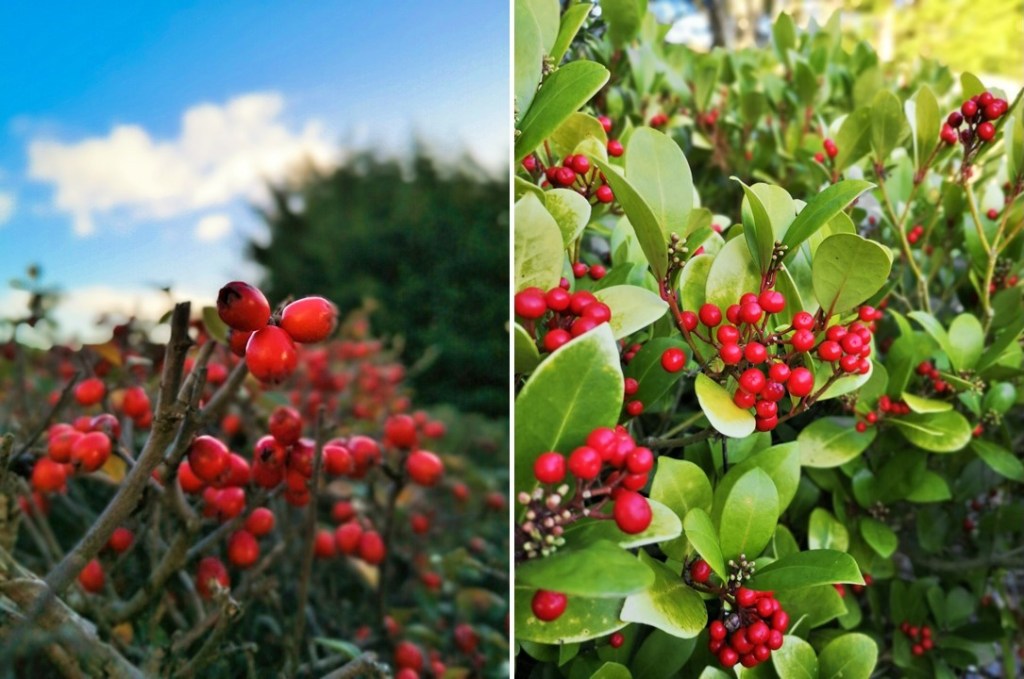
There were lots of berries in the garden over Autumn and early Winter this year, but by now, most of them have been eaten by the birds. However, our feathered friends never seems to dine out on Cotoneaster or Skimmia berries, so I am grateful to be left with these festive colours to admire.
Festive berries. Images: Kathryn Hawkins
Like so many, I am looking forward to a fresh start in a brand new year. I am ever hopeful that we will be able to return to some semblance of normality in the not too distant future. Until then, thank you for following my blog for another year, and I send you my very best wishes for the year ahead. Stay safe and healthy, and a Happy New Year to you all 🙂
Early flowering Rhododendron. Image: Kathryn Hawkins
This year’s first and second stems of spring rhubarb. Images: Kathryn Hawkins
Hello everyone. I hope you are all keeping safe and well. Over the past couple of weeks, with the growing limitations on social interaction and movement, I have felt more grateful than ever before to have my own outside space. Not only are there cheery spring flowers everywhere and the joyful sounds of birds singing, I have been able to pick the first of this year’s home-grown produce.
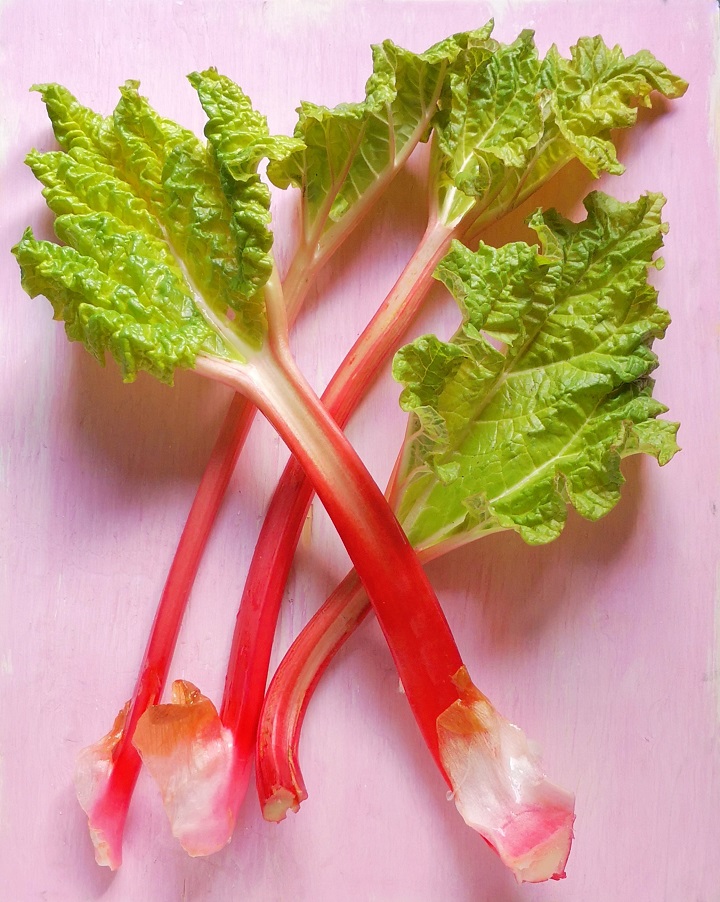
At the beginning of the month, I had my first taste of this year’s bright pinkish-red, tender stems of forced rhubarb which I covered in early February. The stems weren’t very long because the pot I used wasn’t that tall and it made the stems grow a bit wonky and squat. However, the colour was intensely vibrant and the flavour was fruity and tangy.
My home-grown forced rhubarb. Image: Kathryn Hawkins
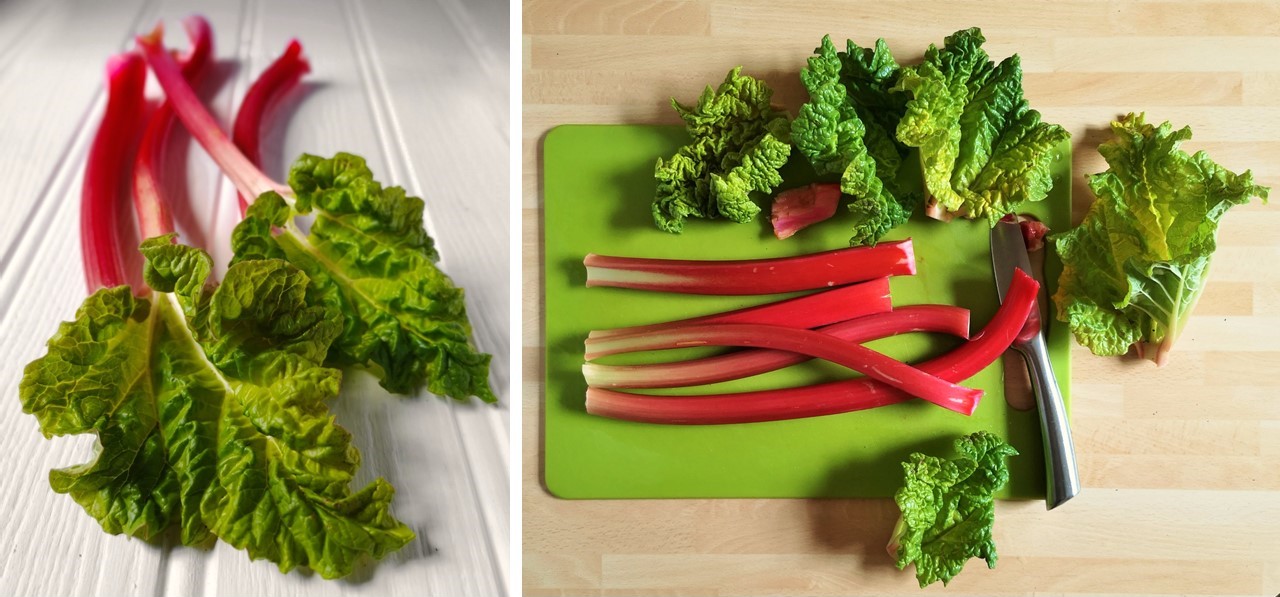
With more undeveloped stems peaking through, I re-covered the clump and was able to pick a second harvest a fortnight later. I have left the remaining stems to grow naturally. I have covered up another clump which will (hopefully) yield a few more stems ready for another harvest next month.
Freshly picked and prepared, forced rhubarb. Images: Kathryn Hawkins
I didn’t do anything fancy with the rhubarb this year. I roasted the first batch with vanilla (recipe below), and the second harvest of stems got poached in the juice of my last blood orange of the season (sob) and some of last summer’s frozen raspberries (recipe below). Both very simple serving suggestions, but utterly delicious.
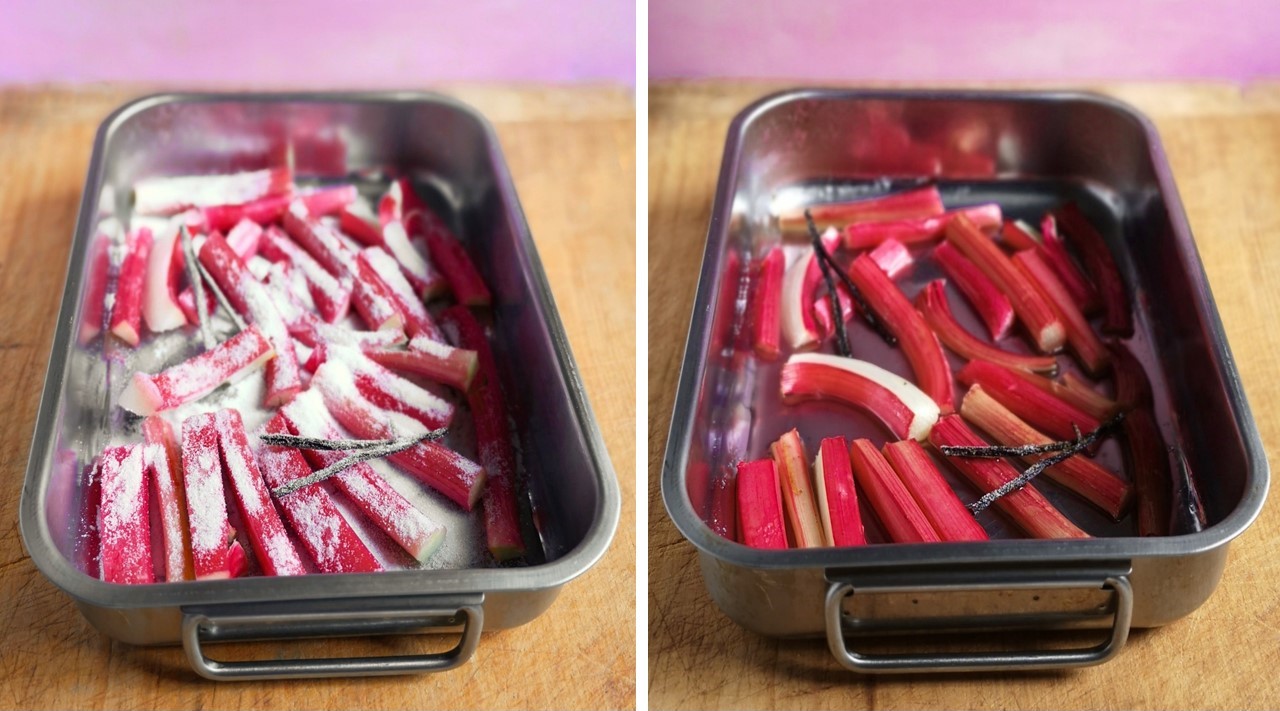
Roast rhubarb with vanilla. Images: Kathryn Hawkins
Roast vanilla rhubarb – I used 200g prepared spring rhubarb stems cut into even thickness pieces, about 8cm long. Put the rhubarb in a small roasting tin and sprinkle with 2 tbsp vanilla sugar and 3 tbsp water. Add a split vanilla pod and bake at 200°C, 180°C fan oven, gas 6 for 15-20 minutes until just tender. Serve warm or cold.
Spring rhubarb with orange and raspberries. Images: Kathryn Hawkins
Rhubarb with raspberries and orange: I used 250g prepared rhubarb stems, cut into 5cm lengths. Put the rhubarb in a frying pan with 300g frozen raspberries and the juice and rind of 1 orange. Sprinkle over 5 tbsp granulated sugar. Heat gently until steaming, then put the lid on the pan and simmer for about 15 minutes until just tender and cooked through. Stand for 10 minutes before serving hot, or allow to cool completely. Discard the orange peel before serving.
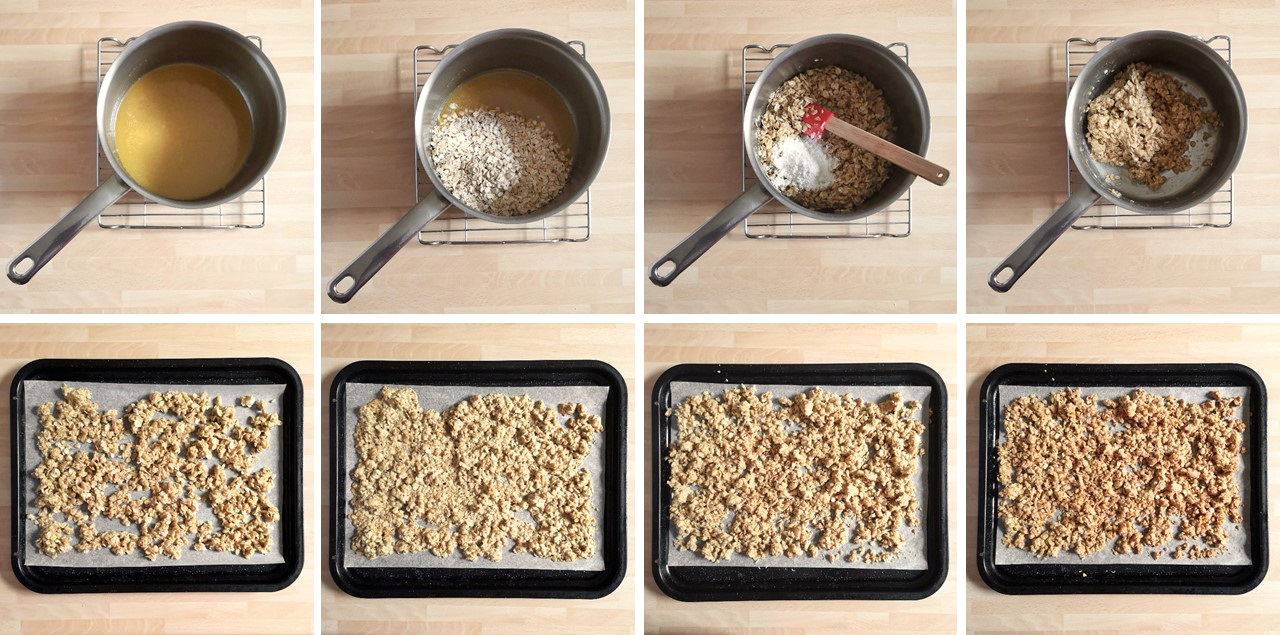
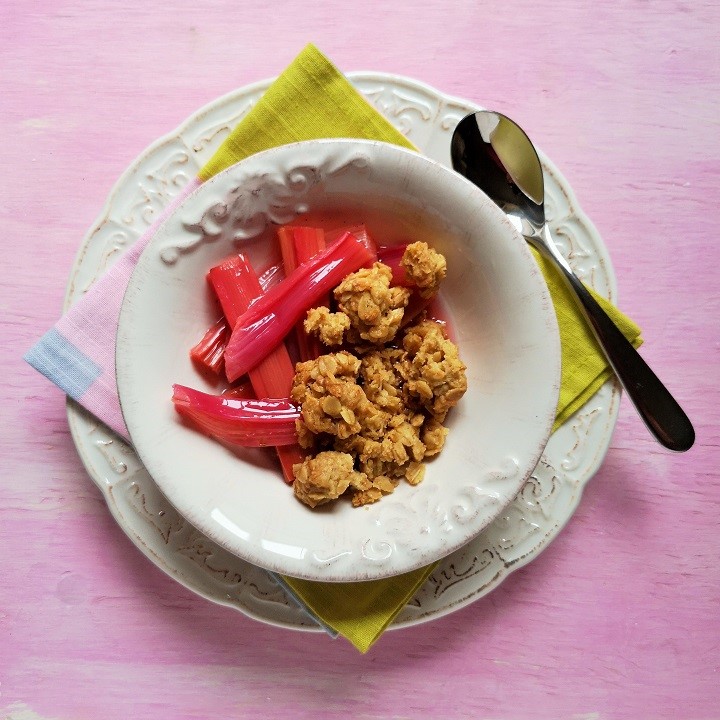
I do enjoy eating rhubarb with a crumble topping but I find that spring rhubarb overcooks under a a crust of any kind. I came up with an idea which means you can cook a crumble topping separately and sprinkle it over fruit just before serving.
Oaty crumble topping (serves 4): in a saucepan, melt 110g dairy-free margarine with 25g golden syrup and 25g Demerara sugar. Remove from the heat and stir in 150g gluten-free jumbo oats and 50g gluten-free plain flour blend. Spread out thinly over a lined baking tray and bake at 190°C, 170°C fan oven, gas 5 for about 15 minutes until merged together. Break up the mixture into clusters and return to the oven to bake for a further 7-8 minutes until golden and crisp. Serve hot or cold. Once cold, the mixture will keep in an air-tight container for several days, and it freezes well too.
Roast rhubarb with oaty crumble. Image: Kathryn Hawkins
That’s me for this month. I look forward to posting in April. Until then, keep well and stay safe 🙂





























 My Virtually Free-from Kitchen