Welcome to my blog all about the things I love to grow and cook. You'll find a collection of seasonal gluten-free, dairy-free and vegan-friendly recipe posts, as well as a round up of my gardening throughout the year. I wish you good reading, happy cooking and perfect planting!
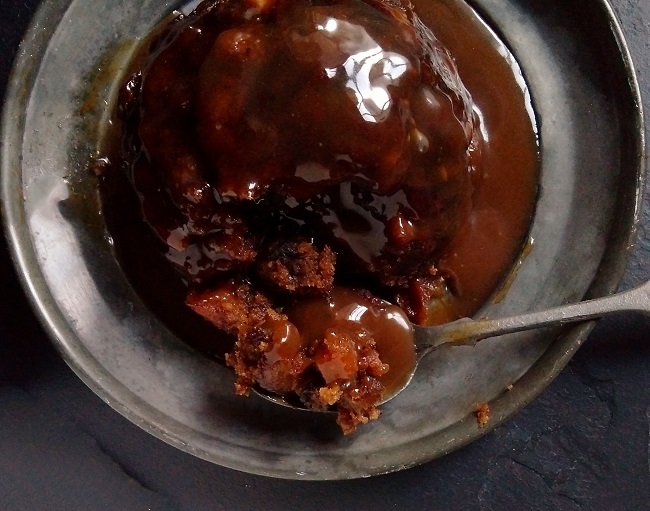
Just a few days to go before the festive feasts begin, and what could be more appropriate for my last post before Christmas, than a delicious alternative Christmas pudding. I do enjoy a traditional, steamed fruit pudding, but this year I fancied a change, and have developed an alternative recipe. This pudding is fruity, but a little wee bit lighter in texture, and with the emphasis on toffee flavour rather than spice; I guarantee, it is utterly divine 🙂
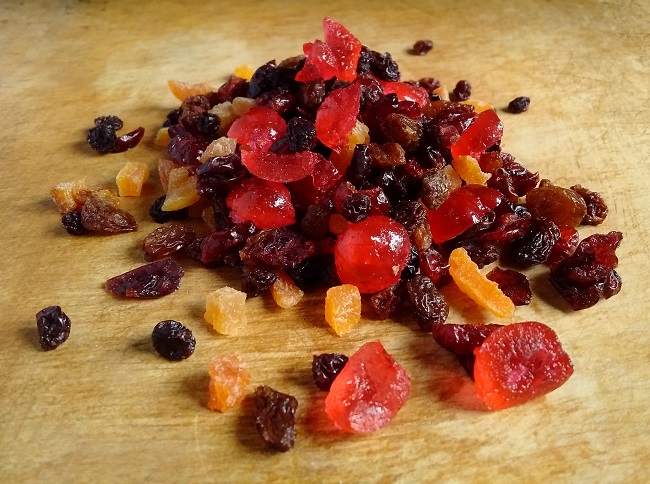
Cherries, apricots, sultanas and currants. Image: Kathryn Hawkins
The recipe makes 2 x 250ml puddings, which I think serve between 2 and 4 people, depending on how large an appetite you have. If you prefer, put the mixture in a 500ml basin and cook it for about an hour longer. I usually steam puddings in a slow cooker, this way I can forget about them and don’t end up with a steamy kitchen. If you prefer, put the puddings on a trivet, in a saucepan or in a steamer compartment, cover tightly with a lid, and then cook in the steam for about 1 1/2 to 2 hours. You can use any combination of fruit (or nuts) you have to make up the weight in the ingredients list, it’s a great pudding to use up any odds and ends you have.
Makes 2 x 250ml puddings
Ingredients
75g dried dates
50g dairy-free margarine
50g light Muscovado sugar
50g silken tofu
65g self-raising gluten-free flour
½ teasp bicarbonate of soda
125g mixed dried fruit
For the sauce:
85g light Muscovado sugar
30g dairy-free margarine
110ml canned coconut milk
½ teasp good quality vanilla extract
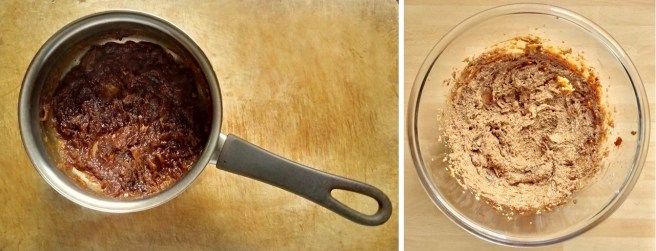
Grease and flour 2 x 250ml pudding basins. Put the dates in a small saucepan with 75ml water. Bring to the boil, cover and simmer gently for 5 minutes until very soft. Beat well with a wooden spoon until smooth, then leave to cool completely.
When you are ready to mix up the puddings, put the slow cooker on High and leave to preheat for 20 minutes. Meanwhile, put the margarine, sugar and tofu in a bowl. Add the cold date mixture and whisk everything together until smooth and creamy.
Preparing the date mixture and blending the ingredients. Images: Kathryn Hawkins
Sieve the flour and bicarbonate of soda on top. Add the fruit and gently mix all the ingredients together. Divide between the 2 basins and smooth the tops.
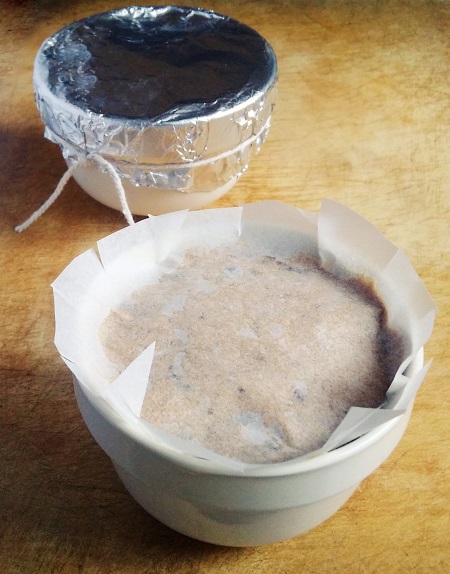
Preparing the puddings for steaming. Image: Kathryn Hawkins
Cover the puddings with a layer of baking parchment, and then foil, and tie securely with string. Put the basins in the slow cooker, side by side, pour in sufficient hot water to come halfway up the sides of the basins, cover and leave to cook for 2 hours. A skewer inserted into the centre of each pudding will come out clean when the puddings are ready.
For the sauce, put the sugar, margarine and half the coconut milk in a small saucepan. Heat gently, stirring, until melted together, then raise the heat and simmer for about 5 minutes until richly golden and caramelised. Remove from the heat and stir in the remaining coconut milk and vanilla extract.
Making the toffee sauce. Images: Kathryn Hawkins
When the puddings are ready, remove them from the slow cooker and leave them to stand for 5 minutes. Remove the wrappings and turn out on to warm serving plates. Pour over sauce and serve immediately.
Ready to eat, sticky toffee Christmas pudding. Image: Kathryn Hawkins
That just leaves me to pass on my very best wishes to you for a happy, healthy and enjoyable Christmas holiday. Happy festive feasting!
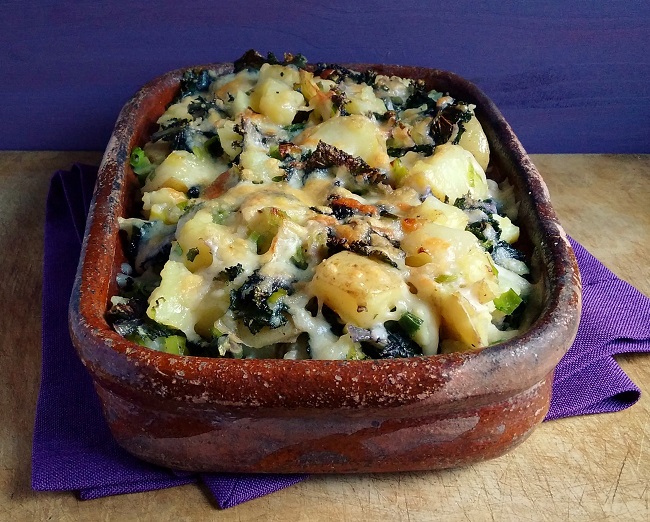
Great name for a recipe eh? What’s more, I haven’t made it up. This is a Scottish classic, and I’ve chosen to post it now for 2 reasons. It’s been very cold here this week and this is fabulous comfort food, and also with the festive season nearly upon us, it is an excellent recipe for using up leftovers. It uses 2 of my favourite vegetables, potatoes and kale (or cabbage).
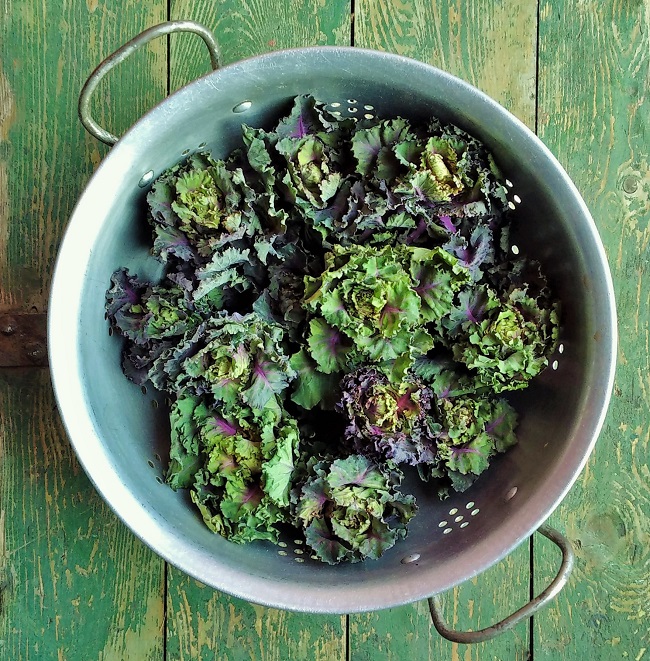
I love kale. So much flavour and texture, I think it out-strips cabbage and other greens in every way. Up until a couple of years ago, Cavelo Nero, Italian black kale, was my favourite variety, but then along came mini kale and my mind was changed. Very quick to cook, simple to prepare, with a milder, slightly sweet and nutty flavour, it looks very pretty too. The small leaves are also excellent raw in winter salads.
Mini kale. Image: Kathryn HawkinsHeads of mini kale, up close. Image: Kathryn Hawkins
So on with the recipe. Traditionally, this is a very simple combination of leftover cooked potatoes and cabbage fried with onion and then grilled with cheese on top. What’s not to like? The name, by the way, is believed to come from the combination of the “thumping” sound associated with mashing potato and the mixing together of the ingredients (a “rumble”). Here’s my version.
Serves: 3 to 4 as a side dish
Ingredients
150g mini kale, kale, cabbage or other greens (if you have leftovers, you’re halfway there with the recipe already)
500g cooked potatoes (I had some boiled small potatoes with skins on to use up)
25g butter or dairy-free margarine
1 tbsp. vegetable oil
1 leek, trimmed and shredded (or use thinly sliced onion if you prefer)
Salt and freshly ground black pepper
50g grated Scottish Cheddar or dairy-free/vegan grated cheese
If you are starting from scratch, prepare the greens and cook them in lightly salted water for 3-5 minutes until just tender. Drain well.
Put the potatoes in a bowl and mash them to crush slightly.
In a large frying pan, melt the butter with the oil and gently fry the leek for 3-4 minutes until softened (if you’re using onion, cook it gently for longer, until tender).
Stir in the potatoes and greens, and stir fry the vegetables gently together for 5-6 minutes until thoroughly heated. Season well and transfer to a heatproof dish.
Basic preparation of Rumbledethumps. Image: Kathryn Hawkins
Preheat the grill to medium/hot. Sprinkle the vegetables with grated cheese and grill for about 5 minutes until golden and bubbling. Serve immediately.
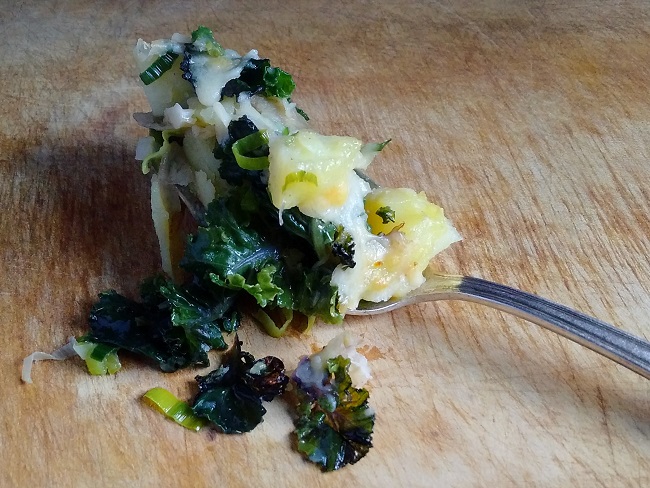
Comfort with every spoonful. Image: Kathryn Hawkins
As I sat down to write this post last night, we were awaiting the arrival of the first major storm of the season. Nothing has materialised overnight, but it is suddenly feeling much colder. There is a thick frost this morning, and it is bright and clear again, the wind has dropped, and all is calm.
On the whole, the first few days of the month have been quite kind to the gardeners amongst us here in central Scotland. Whilst the east coast did have more seasonal weather, we were blessed with several blue sky days, milder temperatures, and some glorious sun rises.
To be honest, I haven’t been outside much recently – work has kept me inside. The garden is looking a bit tired now, and ready for a rest. I cleared a lot of the autumn debris a couple of weeks ago and it’s beginning to look a bit bare in places. However, the evergreens provide shape and colour and look very vibrant on a fine day, and the Cotoneaster hedge is laden with berries, as it is every year.
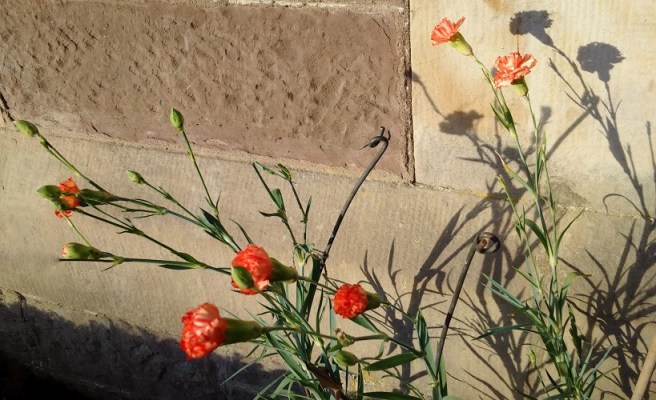
The best value plants in the garden this year have been the carnations I planted last year – taken as cuttings from a birthday bouquet. They began flowering in August, and are still producing blooms at the moment. I’m sure the winter weather will get to them eventually, but the south-facing wall seems to be providing them with sufficient shelter to have kept them going this far into the year.
Carnations enjoying the winter sunshine. Image: Kathryn Hawkins
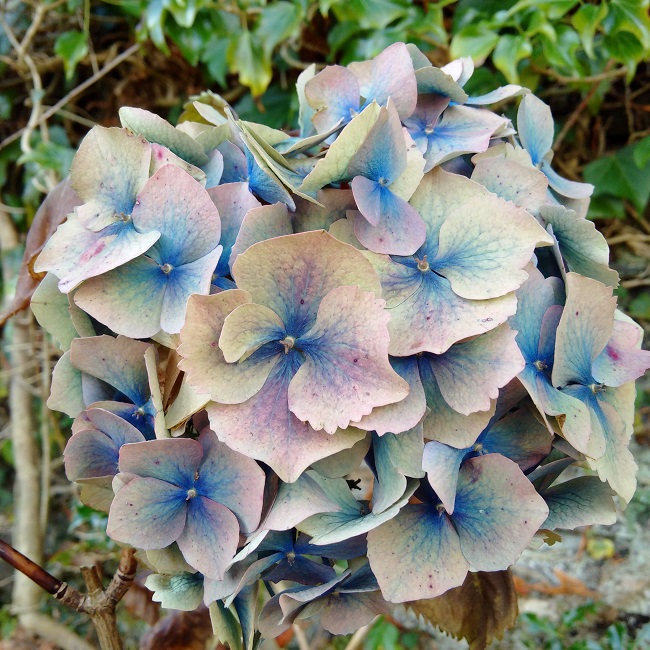
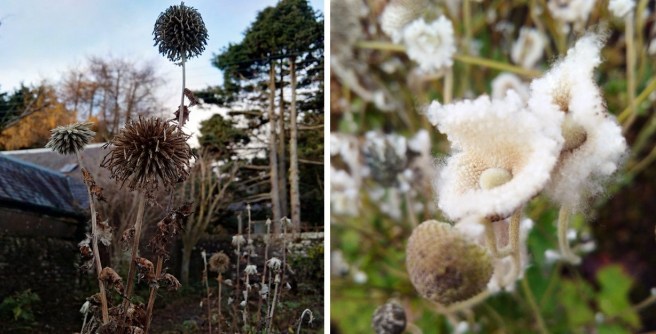
Elsewhere in the garden, the colours have faded. The Hydrangeas have taken on a beautiful “vintage” look, and the blooms of Echinops and white Japanese Anemones have left behind interesting seed-heads which are slowly weathering away.
Faded beauty: Blue Hydrangea. Image: Kathryn HawkinsGlobe thistle and Japanese Anemone seed heads. Images: Kathryn Hawkins
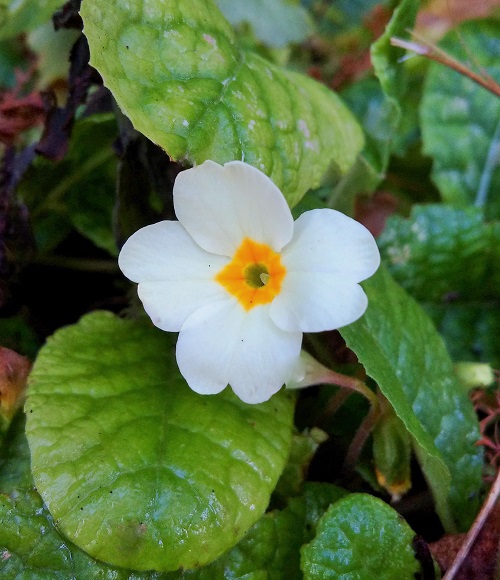
The last of my garden features this month is this wee fellow, a perennial primrose. Just one solitary bloom at the moment, hidden away in a sheltered, damp part of the garden. A small flash of pale yellow which acts to remind me that spring will be here again in just a few weeks. Have a good week 🙂
I’ve had a busy few days with my work, and subsequently only had time for one quick baking session this week. I turned to an old favourite of mine, shortbread. Easy to make and lovely to eat, and open to so many variations. This time, I had a break with tradition and made a super rich seeded version and replaced some of the fat with tahini.
I often replace a portion of the flour in cakes and bakes with ground almonds, and, if I don’t have enough ready-ground, I blitz up my own in a coffee grinder. If you use the non-blanched almonds, you’ll find the ground meal gives a more earthy to your bakes.
Sesame seed paste and home-made ground almonds. Images: Kathryn Hawkins
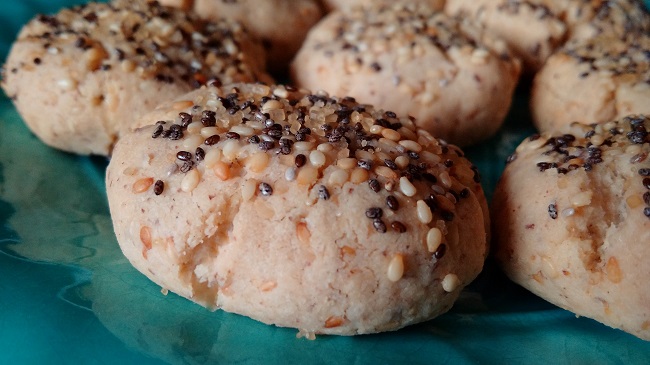
These tasty shortbreads have a soft, crumbly texture, and a rich, nutty flavour; they are delicious with a cup of coffee and keep well for a few days in an airtight tin. I find them impossible to resist. I’m away to eat the last one after I finish typing this!
Makes: 18
Ingredients
150g gluten-free plain flour (such as Dove’s Farm)
65g icing sugar
75g ground almonds
25g toasted sesame seeds
85g tahini (sesame seed paste)
50g very soft dairy-free margarine (or butter if you eat it)
1 tbsp. each of chia seeds, toasted sesame seeds and Demerara sugar, mixed, for the topping
Sieve the flour and icing sugar into a bowl and stir in the ground almonds and toasted sesame seeds.
Mix the tahini and margarine together until well blended, then stir into the dry ingredients until well mixed.
Bring the ingredients together using your hands, then turn out on to a lightly floured work surface and knead gently to form a smooth dough. Divide into 18 portions and form each into a ball.
Arrange on the baking tray, press down lightly to make chunky rounds and sprinkle lightly with the sugary seed mix. Chill for 30 minutes.
Preheat the oven to 180°C (160°C fan oven), gas 4. Line a large baking tray with baking parchment. Bake the shortbreads for about 25 minutes until lightly brown and crisp. Leave to cool on the tray.
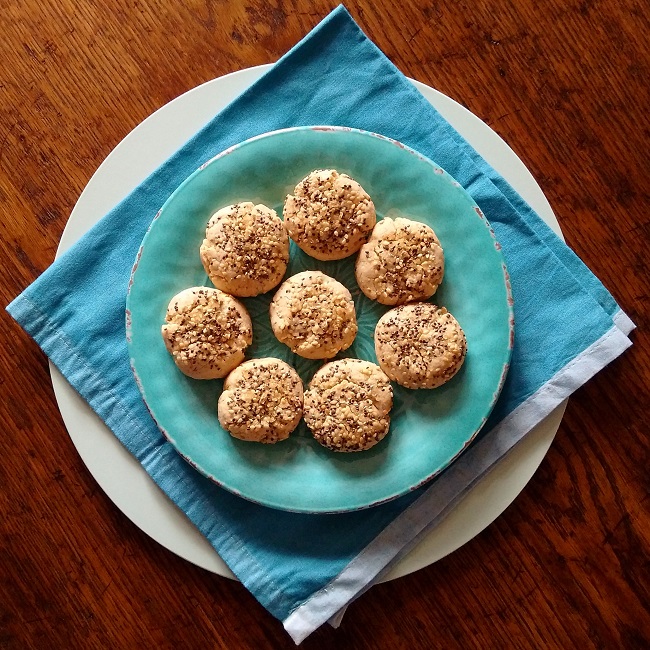
Ready for eating, sesame shortbreads. Image: Kathryn Hawkins
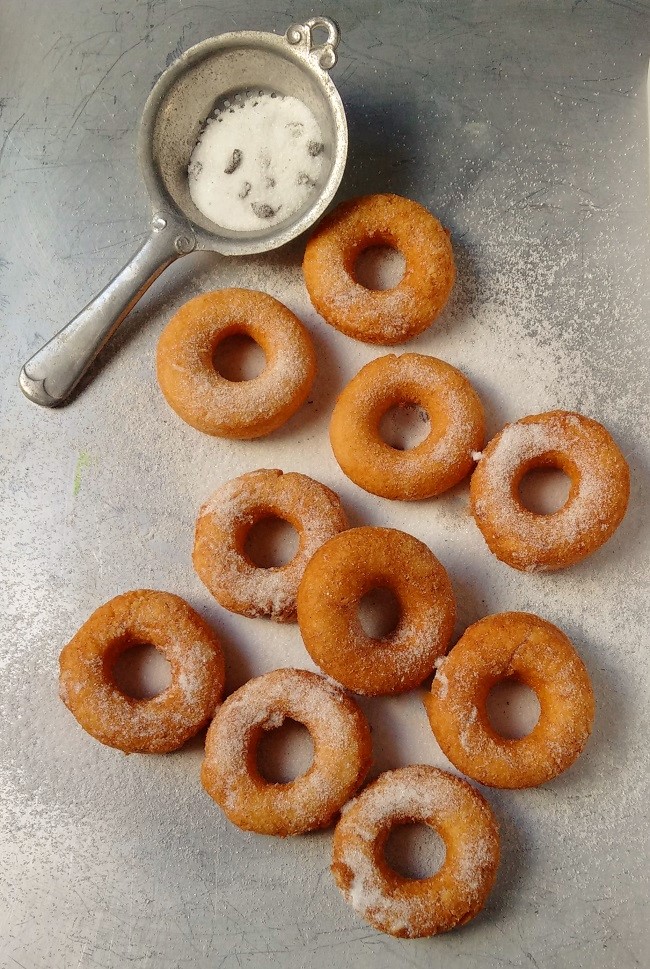
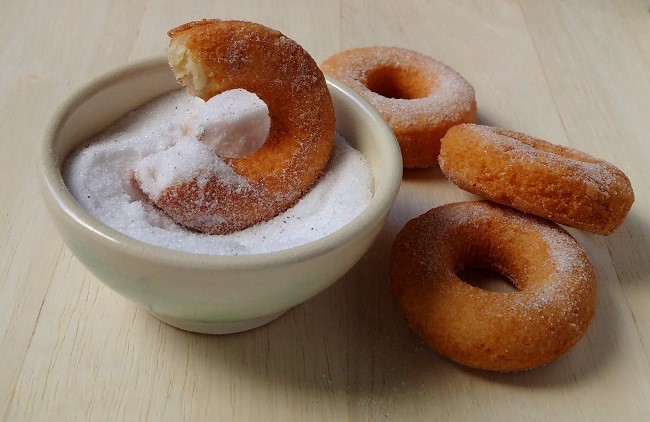
Vanilla sugar-dredged mini sco-nuts. Image: Kathryn Hawkins
The weather has turned colder this past week, and my thoughts have turned to comfort food. In my opinion, food doesn’t come much more comforting than a light, fluffy doughnut with a crunchy, sugary coating. Sadly, not usually a choice for anyone on a gluten-diet, but I think these little treats are a good alternative, and best of all, they can be made in a fraction of the time that it takes to make the real thing.
Mini sco-nut, fresh out of the pan. Image: Kathryn Hawkins
As the name suggests, the recipe derives from a scone mix that is cut and fried like a doughnut. I coated mine in home-made vanilla sugar but plain sugar is just as good. Leave them plain and dip them in a little of your favourite jam or sweet dipping sauce. Sometimes, I drizzle them with a little vanilla or cocoa flavoured glacé icing and decorate with a few sprinkles.
Drizzled and decorated, mini sco-nuts. Image: Kathryn HawkinsHome-made vanilla sugar. Image: Kathryn Hawkins
I always have a pot of vanilla sugar in the cupboard. I chop up bits of vanilla pod that is past its prime, or any part of the pod that has dried out, and just keep topping up the pot with caster sugar. Every now and then I give the pot a shake to distribute the vanilla pieces, and I keep the pot well sealed. You do need to sieve it when you use it, but keep the bits of pod trapped in the sieve and put them back in the pot along with a top up of sugar, and you can replenish your supply more or less indefinitely. Here’s the recipe.
Makes: 14 mini sco-nuts
Ingredients
150g gluten-free self-raising flour (such as Dove’s Farm)
5g gluten-free baking powder (such as Dr Oetker)
2g xanthum gum, optional – I have started adding this to my scone mixture as it really does improve the crumb texture
25g caster sugar
2 tbsp sunflower oil + extra oil for deep-frying
1 teasp good quality vanilla extract
Approx. 6 tbsp. soya or other non-dairy milk
Vanilla sugar or caster sugar to dredge
Sieve the flour, baking powder and xanthum gum into a bowl and stir in the caster sugar. Make a well in the centre, and spoon in the oil and vanilla, then bind together with sufficient milk to form a softish scone dough.
Pour the oil for deep-frying into a saucepan or wok and begin heating – the oil temperature needs to be around 180°C to fry the sco-nuts properly. While the oil is heating, turn the dough out on to a lightly floured surface and knead gently to bring the mixture together and make smooth, then roll or press to a thickness of 1cm.
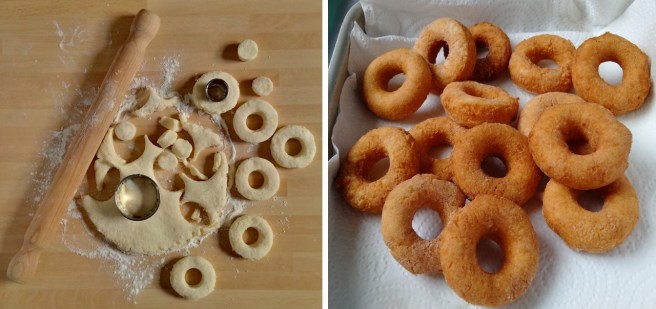
Cut out rounds using a plain 5cm cookie cutter, and press out the middles using a 2cm round cutter. Re-roll the trimmings nd middles to make 14 mini rings in total.
Fry the sco-nuts in 2 batches, turning them gently in the oil, for 2-3 minutes, until golden and crisp all over. Drain well on kitchen paper and keep warm while cooking the second batch.
Preparing and cooking mini sco-nuts. Images: Kathryn Hawkins
Dredge in sugar if liked, or drizzle with icing. Best served while still warm. Sco-nuts do freeze well if you have any leftover; just bag them up, seal and freeze. You can reheat them gently in a moderate oven for about 5 minutes if you want to eat them warm.
Extra indulgence, dipping mini sco-nuts in vanilla sugar. Image: Kathryn Hawkins
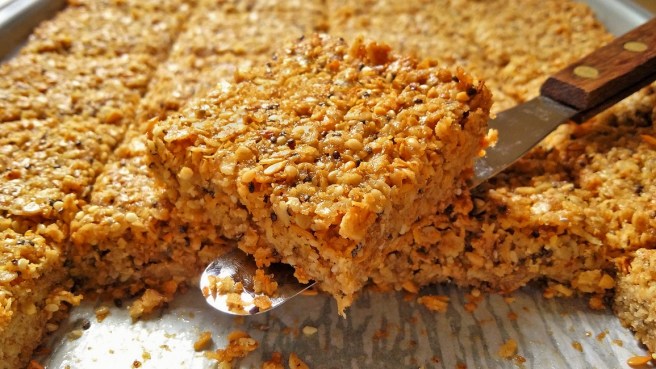
Straight out of the tray, super-seed flapjack. Image: Kathryn Hawkins
Over the past year or so, I have been trying to include as many different seeds in my diet as I am able. Seeds are crammed full of protein, minerals and fibre, and unusually for such a worthy food, I find them utterly delicious and a pleasure to eat.
I have been making flapjack since my school days; it’s a real family favourite. Over the years I’ve adapted the recipe to include flavours and ingredients that take my fancy, and for the last few weeks, I’ve been packing this much-loved bake with tiny seeds.
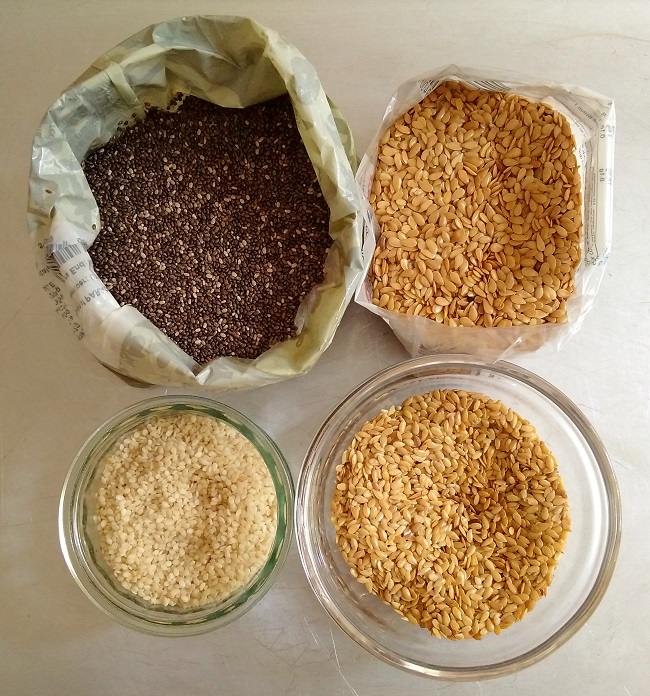
A delicious foursome: chia seeds, flax seeds, linseed and sesame seeds. Image: Kathryn Hawkins
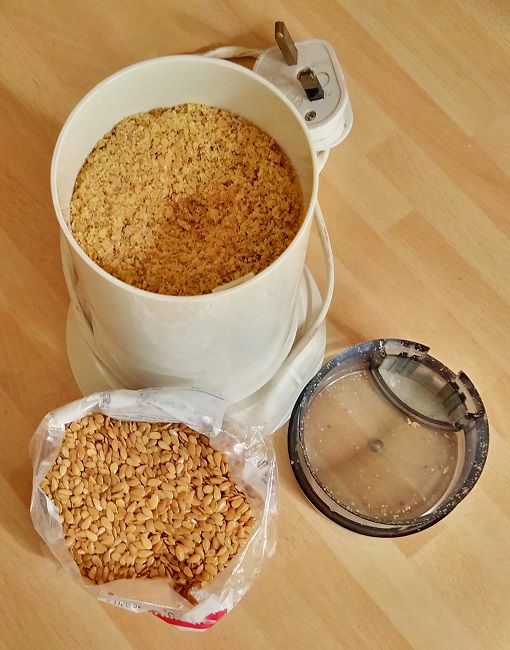
In order to benefit from as many of the nutrients in seeds as possible, it is important to make sure you chew them thoroughly. A bake like flapjack is a perfect recipe to make this happen naturally because the oats help increase the chewy texture. If you pre-grind seeds that have a more slippery texture in the mouth, like linseed and flax, you’ll help yourself to more nutrition with ease. I pop a handful in an electric coffee grinder and blitz them for a short while before I put them in the mix.
Grinding linseeds. Image: Kathryn Hawkins
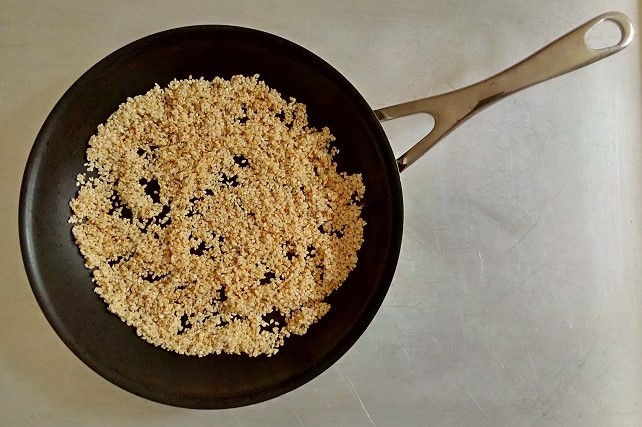
Sesame seeds are a real gold mine of nutrients and a valuable source of calcium for anyone on a dairy-free diet. I love their intense nutty flavour which I enhance by toasting them lightly in a dry, hot frying pan before adding them to a recipe. Keep an eye on them and keep them moving around the pan, as they brown very quickly once they reach a certain temperature.
Toasting sesame seeds. Image: Kathryn Hawkins
My flapjack recipe makes a large quantity, perfect for batch baking, but you can easily educe the quantity by half and press into an 18cm square tin instead.
175g mixed small seeds such as chia seeds, linseeds, flax seeds and toasted sesame seeds
Preheat the oven to 180°C (160°C fan oven, gas 4). Grease and line a 20 x 30cm oblong cake tin. Put the margarine, sugar, syrup and nut butter in a large saucepan and heat gently, stirring, until melted.
Remove from the heat and stir in the oats and seeds until well mixed. Press evenly into the prepared tin and bake for about 25 minutes until lightly golden all over.
Whilst the bake is hot, gently score the top into 24 squares and then leave to cool in the tin. Once cold, cut through the squares completely and remove from the tin. Store in a air-tight container for up to a week. Flapjack freezes well too!
A stack of freshly baked super-seed flapjack. Image: Kathryn Hawkins
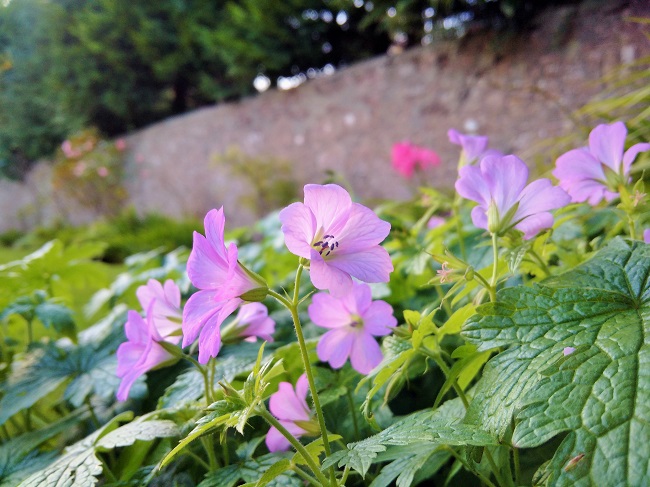
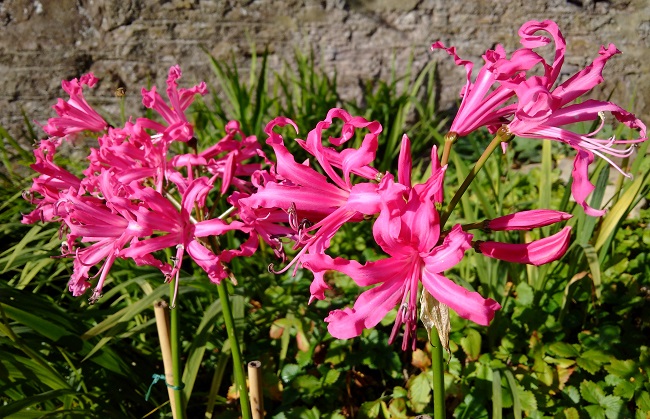
Last weekend in the garden, at times, it was a little hard to believe that it was actually the beginning of November. There was a biting wind to remind me, but the sun was out, the sky was blue and in just about every corner of the garden, there were flowers in bloom. The dainty, pale-pink cranesbill above with the rose-bush in the background, are plants on their second flowering of the year. The darker pink flowers are Nerines, a glamorous, lily-like autumn flowering bulb, which I planted in late spring and have been flowering since the end of September.
Second flowering of Rosa Felicia. Image: Kathryn HawkinsAutumn flowering Nerines. Image: Kathryn Hawkins
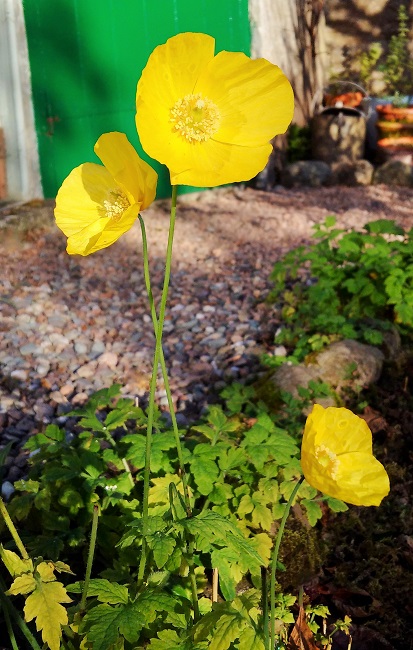
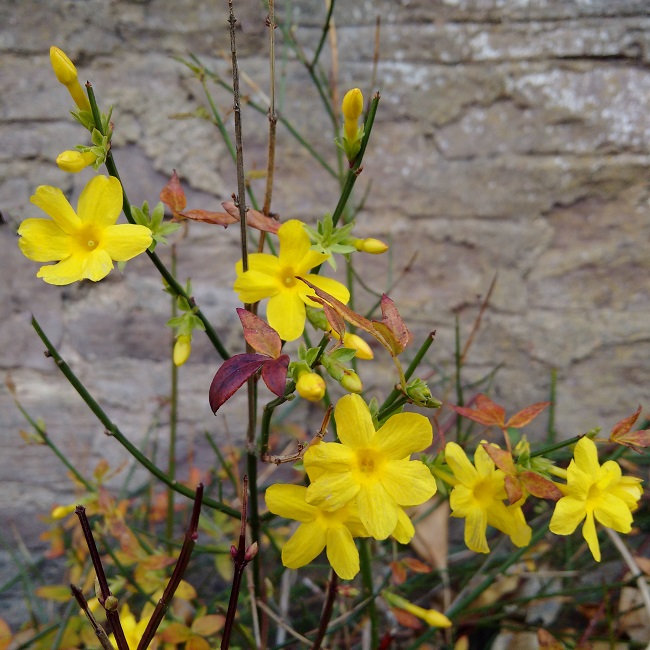
It’s not only pink flowers. There are bright yellow Welsh poppies here and there, and a seasonal reality check: the first flowers of Winter Jasmine are just opening out.
November blooming Welsh poppies. Image: Kathryn HawkinsFirst blooms of Winter Jasmine. Image: Kathryn Hawkins
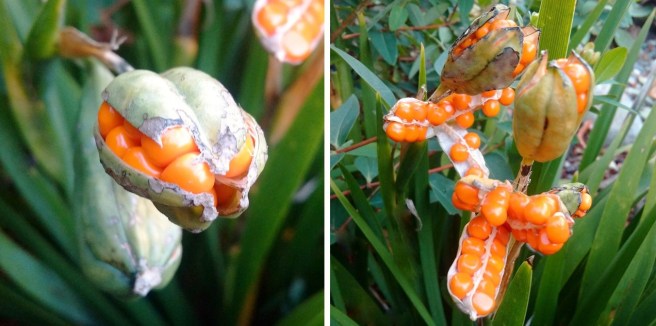
Flowers aside, there are also various berries adding splashes of colour. The holly trees are stacked out with berries this year – both red and yellow berried varieties – and the native iris, Foedissima, which flowered so prolifically a few months ago has now become laden down with bright orange berries. It looks very curious indeed, the berries are bursting out of pods which open out to match the exact formation of the iris petals earlier in the year. With all the berries around, there is clearly going to be plenty of food for the birds this winter.
Yellow and red holly berries. Images: Kathryn HawkinsBright orange iris foedissima berries. Images: Kathryn Hawkins
And finally, one more berry to report: it looks like I may have another crop of strawberries this year. I’m not getting my hopes up on the jam-making front, but I am curious to see if they do actually ripen.
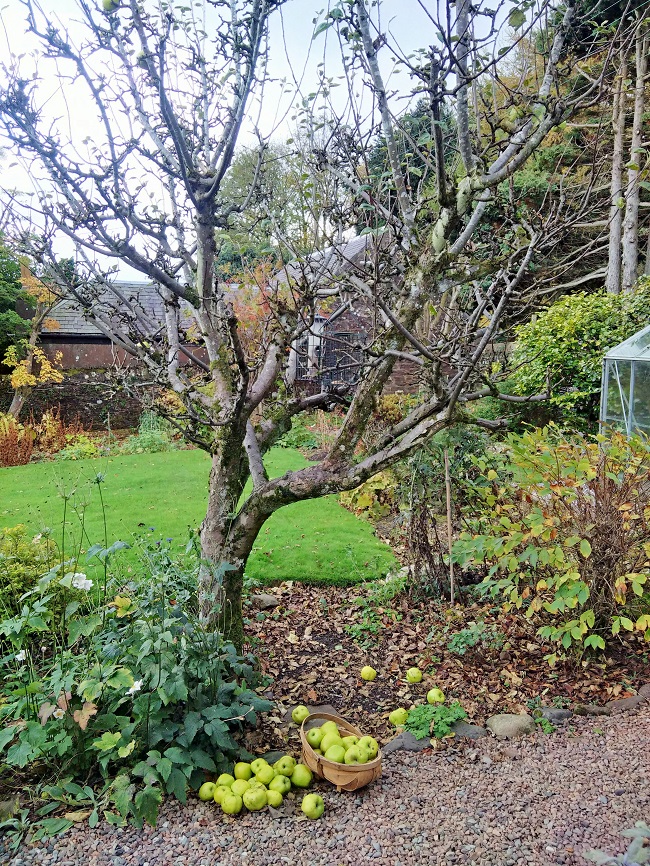
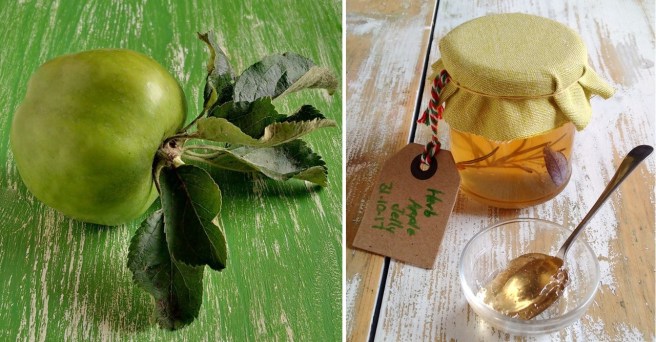
Last weekend, I finally got round to gathering the last of the windfall apples from underneath and around the old apple tree in the garden. There were quite a few; some badly bruised, others almost entirely unscathed. I had picked a good harvest from the tree a couple of weeks previously and have these apples safely stored away in an old fridge for later use. In my kitchen, windfalls are destined for the cooking pot and for making preserves.
Lord Derby apples, just before picking earlier in October. Image: Kathryn Hawkins
I find it very satisfying making chutneys, jams and jellies, although jelly making does take a bit of planning and time, and can not be rushed. However, the finished result is very rewarding and worth the wait. This apple variety (Lord Derby) isn’t particularly flavoursome (it is reminiscent of a very large Granny Smith apple), but it is a great cooking apple as it holds its shape and some texture when baked or stewed. It’s not the juiciest for jam making, but as I had so many to use up this year, I decided to get all the jelly making stuff out of the cupboard and get preserving.
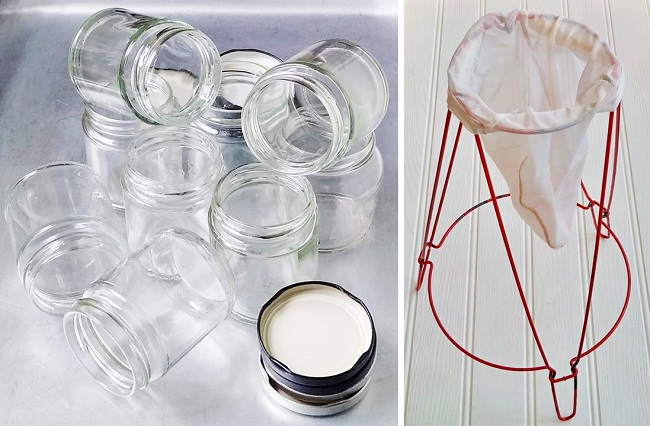
Jelly making kit. Images: Kathryn Hawkins
I always keep a good supply of glass jars on stand-by throughout the year, ready for filling as different fruit and veg comes into season. I give them a good rinse with hot soapy water and then sterilise them along with the lids – I gave up boiling jars to sterilise them, I now use a sterilizing fluid followed by a thorough rinse. I haven’t had any problems with any preserves spoiling since I switched to this less time-consuming method.
The jelly strainer is a piece of kit I’ve had for a few years. The whole contraption stands over a bowl or jug to catch the juice. If you don’t have a purpose-made jelly bag, line a large nylon sieve or strainer with some muslin and suspend over a deep bowl. Make sure you thoroughly clean all the equipment that comes into contact with the fruit or vegetable juice to maximise the keeping qualities for your preserves.
Homemade herb apple jelly. Images: Kathryn Hawkins
I’ve written a couple of savoury variations on a basic apple jelly recipe I made with my windfalls during the week. Both jellies are delicious with cheeses, barbecue food or roast meats and cold cuts. If you want a plain, sweet apple jelly (the best choice if you have a really tasty apple variety), just follow the recipe for the herb jelly below, and leave out the herbs.
Herb apple jelly
Makes: 1kg
Ingredients
1.5kg prepared cooking apples, roughly chopped – this is the overall weight once they have been thoroughly washed and all the bad bits taken out
Approx. 825g granulated sugar
A few sprigs of fresh rosemary and sage
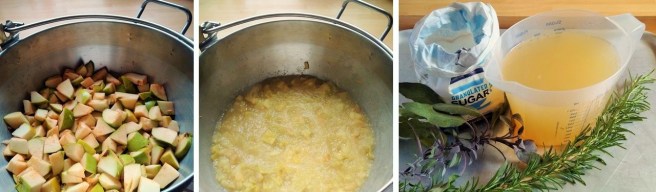
Put the chopped apples (unpeeled, pips and stalks attached!) in a large saucepan. Pour over 1l cold water, bring to the boil, cover and simmer for about 10 minutes, mashing occasionally, until tender.
Carefully ladle into a suspended jelly bag and leave to drip into a clean bowl or jug, in a cool place, lightly covered, overnight. Don’t be tempted to squeeze the bag, just let it drip through naturally. Jelly making is an excellent test of the patience!
The next day, remove the juice bowl, and cover and chill it. Scoop the pulp back into a large saucepan and add a further 500ml water. Bring to the boil, then strain again as above, for a few hours – there won’t be so much juice the second time around, so 5-6 hours should be long enough.
Measure both juice yield together and calculate the amount of sugar required as 450g per 600ml juice. My yield was 1.1l which needs 825g sugar, but if you have a juicy apple variety you will capture more juice.
Herb apple jelly preparation in pictures. Images: Kathryn Hawkins
Rinse and pat dry a large sprig of rosemary and sage. Pour the juice into a preserving pan or large saucepan, add the herbs, and heat until steaming. Stir in the sugar until it is dissolved, then raise the heat and boil rapidly until the temperature reaches 105°C on a sugar thermometer – this will take several minutes.
Meanwhile, prepare the jars by adding a small sprig of washed rosemary and a sage leaf in each. Remove the jelly from the heat and let the bubbles subside. Skim away any surface residue from the top and discard the cooked herbs. This jelly begins to set quite quickly so ladle it into the jars and seal them while the jelly is piping hot. Leave to cool, then label and store in a cool, dark place for up to 12 months. The jelly is ready for eating right away if you can’t wait! Once opened, store in the fridge for up to a month.
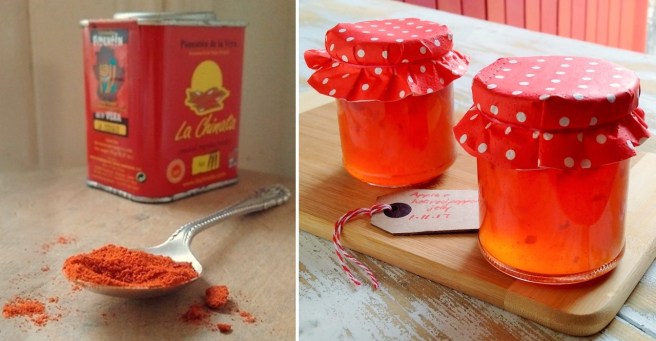
Apple and hot red pepper jelly flavoured with hot smoked paprika. Images: Kathryn Hawkins
Apple and hot red pepper jelly
Makes: 900g
Ingredients
1.25g prepared, chopped cooking apples (see above)
500g prepared weight chopped red peppers (capsicum) (approx. 4 medium peppers), seeds and stalks removed
6 garlic cloves, peeled and roughly chopped
60ml cider or white wine vinegar
Approx. 675g granulated sugar
2 bay leaves
1 tsp salt
1 tsp hot smoked paprika
Put the chopped apples, peppers and garlic in a large saucepan and pour over 1l cold water. Bring to the boil, cover and simmer for about 20 minutes, mashing occasionally, until tender.
Carefully ladle into a suspended jelly bag and let the mixture drip into a bowl or jug underneath. Leave in a cool place, covered lightly, overnight.
The next day, put the pulp to on side and measure the collected juice. You will need 450g sugar per 600ml juice. Pour the juice into a preserving pan or large saucepan and add the vinegar and bay leaves. Heat until steaming hot and then stir in the sugar until dissolved.
Making apple and hot red pepper jelly. Images: Kathryn Hawkins
Bring the juice to the boil and boil rapidly until the temperature reaches 105°C on a sugar thermometer. While the juice is boiling, pick out 50g of the cooked pepper and garlic, rinse, pat dry and chop finely – discard the rest of the pulp. Divide the chopped vegetables between your prepared jam jars.
Once the jelly has reached the correct temperature, turn off the heat, discard the bay leaves and stir in the salt and smoked paprika. Divide between the jars – for even distribution of the vegetable pieces, wait for about 10 minutes before sealing the jars, then give them a quick stir with a teaspoon to suspend the vegetable pieces throughout the jelly before putting the lids on tightly. Cool, label and store as above. Best left for a month to mature before eating.
I’m a bit of a wimp when it comes to spicy heat in my food, so, although I call this “hot”, it’s pretty mild. However, if you can stand the heat, this is a good recipe to add as much chopped red chilli to suit your taste. Just cook the prepared chilli with the apples and peppers at the beginning of the recipe – leave the chilli seeds in as well if you like!
I’ve had a very “light” pear harvest this year. In fact, just 4 fruit developed on one tree and the other had no fruit at all. Not sure why, the spring was fine, there was so much blossom and plenty of bees around to pollinate it. Perhaps the pear trees decided to have a bit of a holiday this year.
Just before harvest. Image: Kathryn Hawkins
So with such a precious harvest, what to cook? I picked the pears a couple of weeks ago, and they have been ripening gently and slowly in a cool spot in the kitchen. They remained quite firm, so I decided I would cook them.
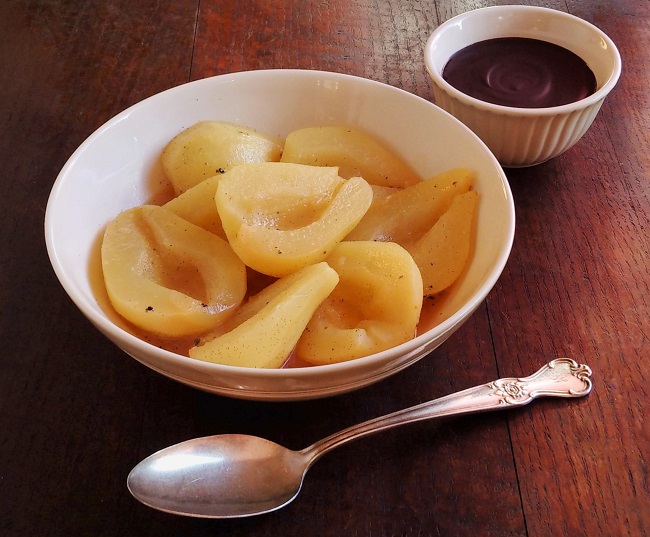
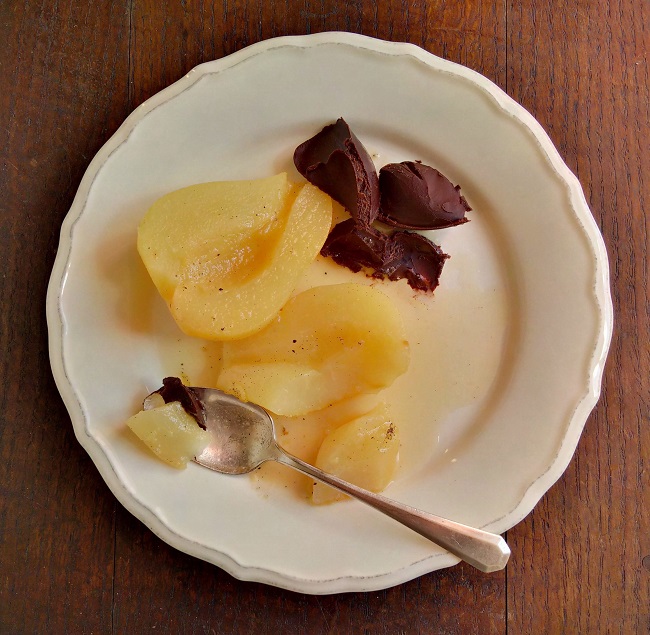
Vanilla baked pears with chocolate “butter”. Image: Kathryn Hawkins
Vanilla is one of my favourite spices, and it is a particularly delicious flavouring for pears. This is a very simple recipe, but it tastes a little bit more special because the pears are cooked in Moscatel de Valencia – the floral notes of this sweet Spanish wine are a perfect match for both pears and vanilla.
Chocolate is another “must have” with pears as far as I’m concerned, and this easy “butter” makes an interesting alternative to the usual chocolate sauce. Moscatel is one of the few wines I think goes well with chocolate, so this is a “win win” recipe for me. Serve the pears very slightly warm or at room temperature so that the cooking juices don’t begin to set, and avoid chilling the chocolate accompaniment (unless the room temperature is very warm) as it will become very hard to spoon.
Serves: 4
Ingredients
4 firm pears
Juice of ½ a lemon
1 vanilla pod
300ml Moscatel de Valencia wine (or white grape juice if preferred)
1 tbsp. agave syrup (or clear honey if you eat it)
40g dairy-free margarine (or unsalted butter)
100g dairy-free 85% cocoa chocolate
50g golden syrup
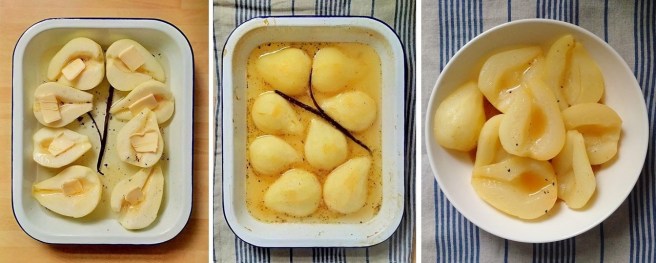
Preheat the oven to 180°C (160°C fan oven, gas 4). Peel and core the pears, and cut in half. Brush lightly with lemon juice and place cut-side up in a shallow baking dish.
Split the vanilla pod and scoop out some of the seeds using the tip of a sharp knife. Push the rest of the pod into the dish of pears, mix the scooped-out seeds with the wine and pour over the pears.
Dot the pears with 15g of the margarine and drizzle with agave syrup. Cover with foil and bake for 30 minutes. Remove the foil, turn the pears over, baste with the cooking juices, and return to the oven to bake, uncovered, for a further 20 minutes or until the pears are tender.
Cool for 30 minutes in the cooking juices, discard the vanilla pod, then lift out the pears using a slotted spoon and place in a heatproof dish. Pour the cooking juices into a small saucepan.
Bring the cooking juices to the boil and simmer for about 5 minutes until reduced by half. Pour over the pears and leave to cool.
Preparing baked pears with vanilla. Images: Kathryn Hawkins
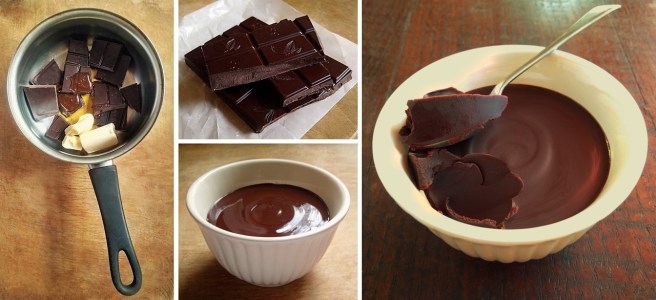
For the chocolate “butter”, break the chocolate into pieces and put in a saucepan with the remaining margarine and the golden syrup. Heat very gently, stirring, until melted. Remove from the heat, mix well and pour into a small, heatproof dish. Leave to cool – the “butter” will solidify when it becomes cold.
Making chocolate “butter”. Images: Kathryn Hawkins
Serve the pears at room temperature accompanied with the chocolate “butter”. If you prefer, leave the chocolate mixture to cool for about 30 minutes and serve warm as a thick, glossy chocolate sauce.
Vanilla baked pears with chocolate “butter”. Image: Kathryn Hawkins
The best things in life are often the simplest. These wise words certainly apply to my recipe this week. There aren’t many dishes more straightforward than a tattie scone. Just 3 ingredients, plus some oil to cook them in, and that’s it.
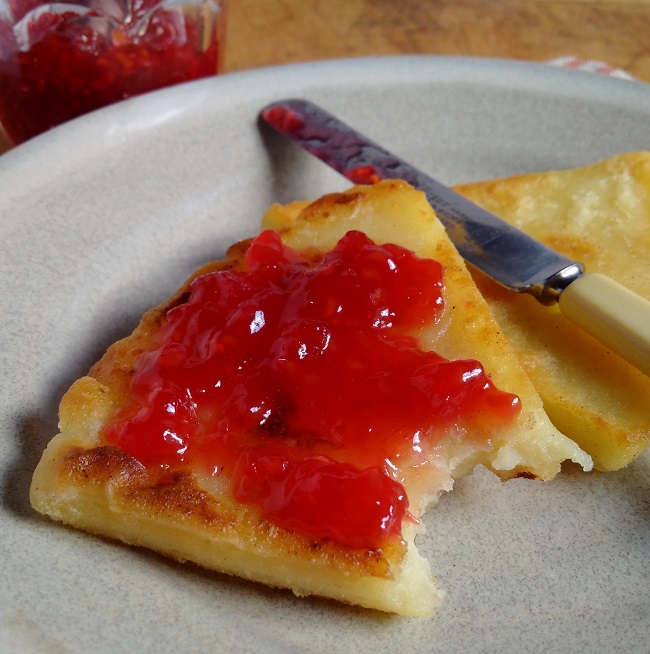
The tattie (potato) scone is synonymous with Scotland. Just about every self-respecting baker makes his or her own, and no supermarket bakery aisle is complete without them. The scones are a good way of using up leftover boiled potato which is mashed and bound with wheat flour, but gluten-free works fine. Tattie scones are usually quite thin, but I make mine a bit thicker (about 1cm) as I find the mixture easier to work with. Eat them warm as part of a savoury meal (often served as part of a hearty breakfast) or as a snack spread with butter and jam. The scones make a great alternative to bread as an accompaniment to a soup or stew as they are perfect for mopping up gravy or a sauce.
A tea-time favourite: tattie scones and jam. Image: Kathryn Hawkins
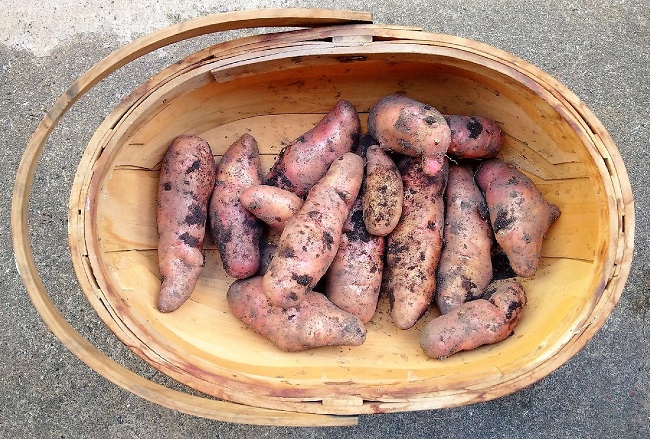
I dug up the last of my home-grown potatoes this week, and decided that there was no better way to enjoy them, than by making up a batch of my own scones. I’ve been growing the same main crop variety (Pink Fir Apple) for a few years now, and haven’t found any other to rival it in texture or flavour. The potatoes are pink-skinned and can be very knobbly indeed. The flesh is creamy-yellow in colour, sometimes flecked or ringed with pink, and when cooked, it becomes dry and floury in texture. The flavour is slightly sweet and earthy. Pink Fir Apples potatoes are perfect for crushed or mashed potato. and also roast well. They can be cooked and eaten peeled or unpeeled.
My last harvest of Pink Fir Apple potatoes. Image: Kathryn Hawkins
Here’s my recipe.
Makes: 6
Ingredients
400g main crop potatoes
1 tsp salt
40g gluten-free self-raising flour blend (such as Dove’s Farm)
Vegetable oil for frying
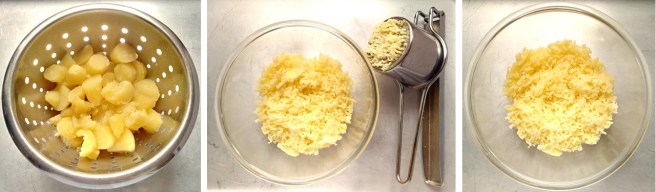
Peel the potatoes thinly, cut into small pieces, and place in a saucepan. Cover with water and add half the salt. Bring to the boil and cook for 8-10 minutes or until completely tender. Drain well through a colander or strainer, and leave to air-dry for 10 minutes.
Return the potatoes to the saucepan and mash finely with a potato masher. If you have a ricer, use this to achieve a super-smooth texture.
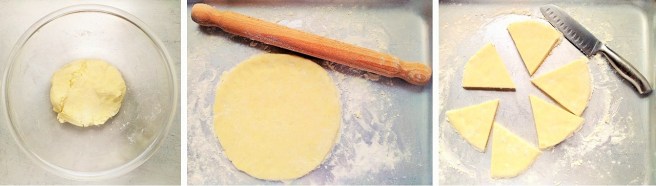
While the mash is still fairly hot, add the remaining salt and sift the flour on top. Gently work the ingredients together to make a pliable dough.
Ricing the potatoes. Images: Kathryn Hawkins
Making and rolling the potato dough. Images: Kathryn Hawkins
Turn the dough on to a lightly floured work surface and roll to form a round about 18cm diameter – roll to 20cm for slightly thinner scones. Cut into 6 triangular wedges.
Brush a large frying pan or flat griddle pan generously with oil and heat until hot. Cook the scones for 2-3 minutes on each side until lightly golden. Drain and serve warm. You can reheat the scones successfully, by either popping them in the frying pan again or under the grill to lightly toast them.
Straight out of the pan and spread with my favourite topping: homemade raspberry jam. Image: Kathryn Hawkins




















 My Virtually Free-from Kitchen