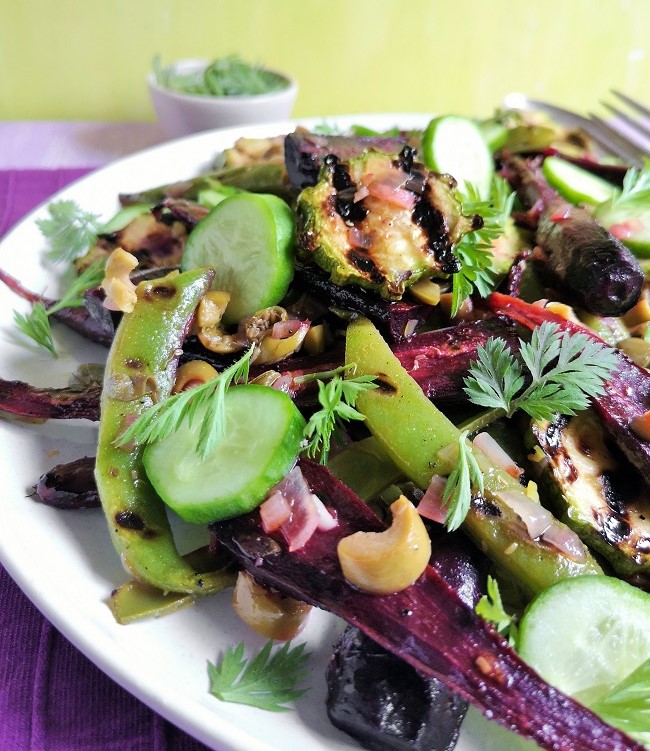
Cauliflower greens with creamy wild garlic sauce (Gluten-free; dairy-free; vegan)

Cauliflower_greens_cooked_in_cream_with_wild_garlic
Cauliflower greens with creamy, wild garlic sauce. Image: Kathryn Hawkins

It really does feel like spring has sprung. This week, I have been out picking my first wild garlic of the season from the banks of the River Earn here in Perthshire. And what better way to use this wonderful natural freebie, than a thrifty recipe idea which helps you reduce food waste as well. If you are out picking wild garlic over the next few weeks, only pick 1 or 2 leaves from well established plants, and only in an area where there are plenty of plants growing.
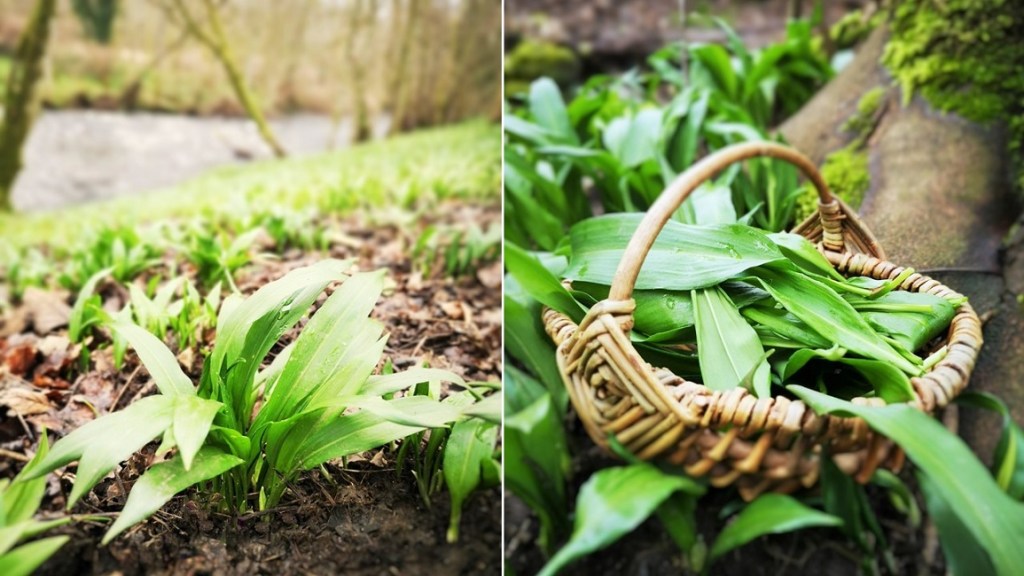
Picking_wild_garlic_beside_the_river_Earn_in_Perthshire
New season Scottish wild garlic. Images: Kathryn Hawkins

Since I realised how delicious cauliflower greens are, I have been choosing the vegetable untrimmed and with as much foliage as possible. The leaves often look a bit wilted and sad, but after popping them in a bowl of cold water, they plump up again in no time. Rinse and drain, and then they are ready to use just like spring greens or cabbage.

Reviving_cauliflower_leaves_in_cold_water
Reviving cauliflower leaves. Images: Kathryn Hawkins

My recipe this week is based around the greenery and stalks of the cauliflower, so you can use the creamy curds for something else. If you want some inspiration, here are some links to other cauliflower recipe posts on my blog: Soy-braised cauliflower (gluten-free; dairy-free; vegan) and Cauliflower – the king of winter vegetables – 3 recipe ideas (gluten-free; dairy-free; vegan)

Cauliflower_leaves_and_stalks_being_prepared
Preparing cauliflower stalks and leaves. Images: Kathryn Hawkins

Once you have revived the cauliflower greens, slice or rip the leafy part from the stalks. Trim the stalks and get rid of any damaged bits, then chop finely. Shred up the leaves and set aside. I ended up with 270g leaves and stalks from one smallish cauliflower.
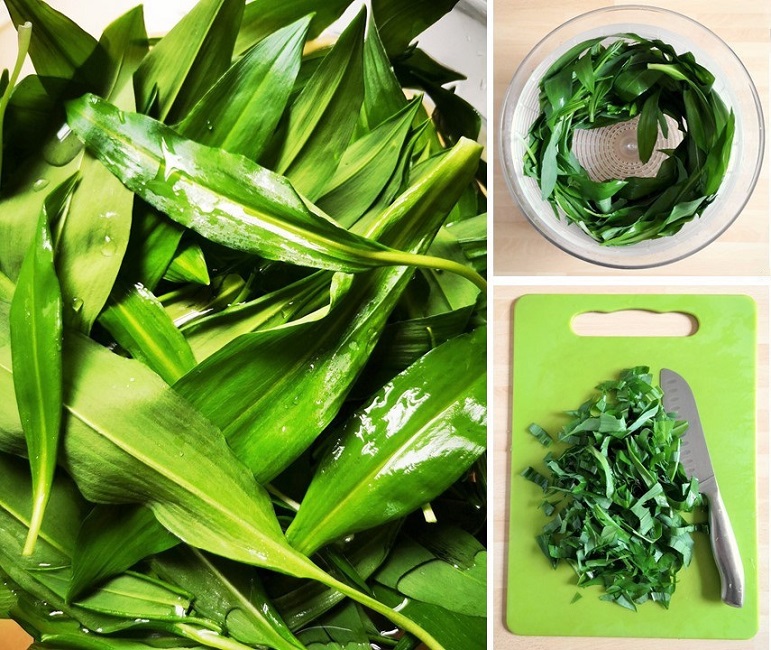
Washing_drying_and_chopping_wild_garlic_leaves
Washing and prepping wild garlic leaves. Images: Kathryn Hawkins

Always wash wild garlic very well in plenty of cold water. Drain and shake dry – I find my salad spinner useful for this. Trim and shred the leaves for immediate use, or put whole washed leaves in a food bag or sealable container in the fridge for up to 4-5 days.
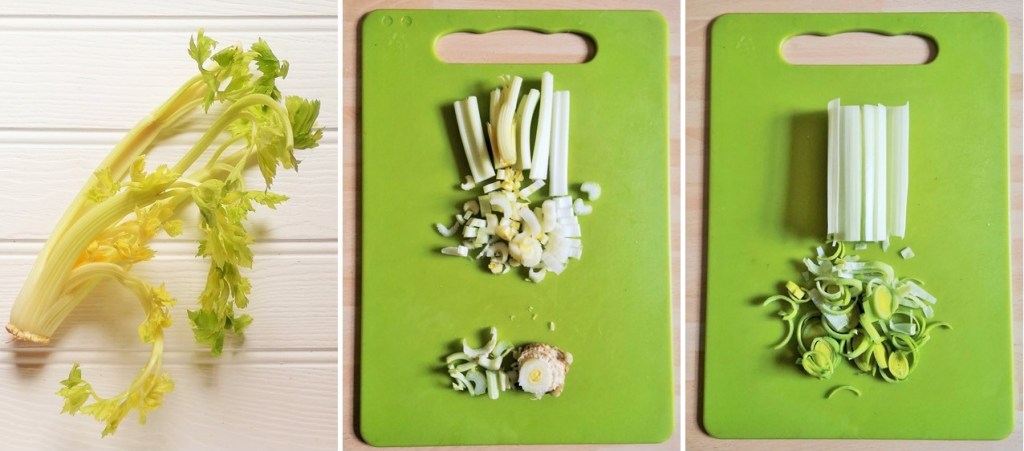
Chopped_celery_and_leek_for_sauce_base
Celery and leek for extra flavour. Images: Kathryn Hawkins

The other ingredients for the base of the sauce are some chopped celery stalks – you can see that this one had been in the bottom of my fridge for a while ! (By the way, I ate the celery leaves in a salad) Once trimmed and chopped, I had about 90g celery stalks. I also sliced up a large leek.

Here’s the very simple recipe method to make enough sauce for 3-4 portions:

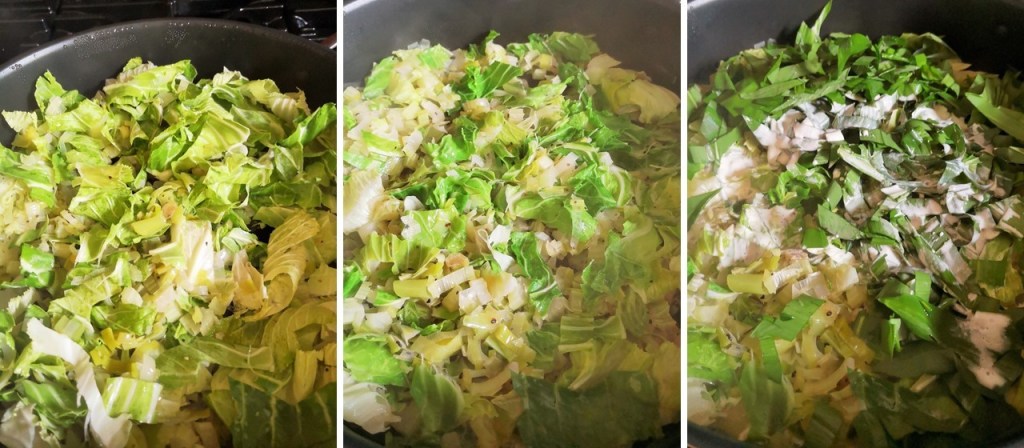
  1. Melt 25g plant butter with 1tbsp olive oil or other vegetable oil until bubbling, then add the chopped cauliflower stems, celery and leek; season with salt and ground black pepper and stir for 1 minute until well mixed. Turn the heat down to low, cover and cook gently for 10 minutes to soften
  2. Mix in the cauliflower leaves, re-cover and cook gently for 5 more minutes.
  3. Finally, add about 40g chopped wild garlic leaves and 150ml plant-based double cream – add more if you want a looser consistency. Stir over a low heat for 3-4 minutes until wilted down, then cover, turn off the heat and let stand for 10 minutes before serving.
Preparing_the_caulifower_sauce_base
Adding_cauliflower_leaves_and_wild_garlic_to_sauce_base
This 6 stages of sauce. Images: Kathryn Hawkins
Freshly_cooked_creamy_garlic_greens
Creamy greens ready to serve. Image: Kathryn Hawkins

And that’s it. A delicious green sauce for serving over pasta or rice, or as an accompaniment to griddled cauliflower steaks or roast cauliflower florets. If you don’t have access to wild garlic, add a couple of crushed garlic cloves to the sauce base at the beginning.

Until next time, enjoy Spring, happy foraging, and take care 🙂
Freezer berry jam (naturally gluten-free; dairy-free; vegan)

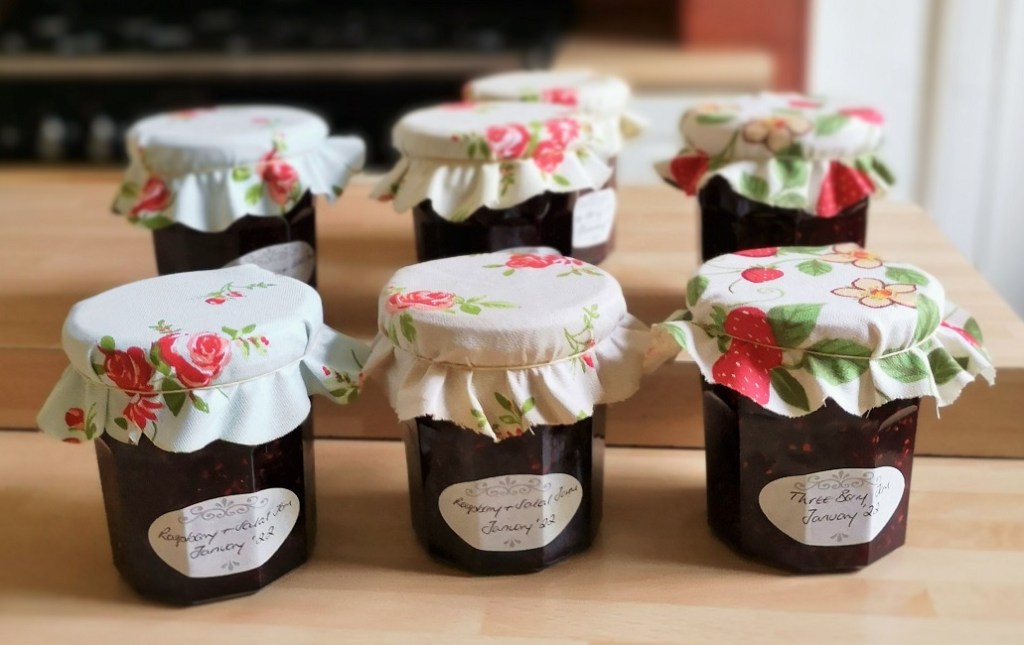
7_jars_homemade_berry_jam_made_from_frozen_fruit
Freezer berry jam. Image: Kathryn Hawkins

Hello again. It’s the time of year for me when I try and use up as much from the freezer as I can, both for reasons of economy and also to make sure there is room for any new season produce that comes along. In the past few days, the freezer fruit drawer has attracted my attention; the jam pan came out of the cupboard and another cooking session began.

Frozen_berries_ready_for_jam_making
Frozen Summer berries from 2021. Images: Kathryn Hawkins

I wasn’t that sure how the jam would taste if I put all the berries I had in one pot. I always have lots of raspberries from the garden but last year also produced some great hedgerow blackberries as well as homegrown salal berries and a few strawberries I decided to freeze down. I settled on 2 combinations: raspberry, strawberry and blackberry, and raspberry with salal berries. I made 2 separate batches of the recipe below.

Freshly_squeezed_lemon_juice
The vital ingredient. Image: Kathryn Hawkins

When raspberries are fresh they have a lot of the setting agent pectin present, and any jam made with the fresh berries sets very quickly. However, freezing fruit destroys some of the pectin, so it is important to add freshly squeezed, pectin-rich lemon juice to any frozen fruit mix to compensate for the loss – redcurrant juice will also work. Otherwise, jam-making with frozen fruit is exactly the same as with fresh.

Clean_jam_jars_ready_for_jam
Jars ready for jam. Image: Kathryn Hawkins

Make sure your jars and lids are sound – no signs of corrosion on the lids if you are recycling – and thoroughly clean them in hot soapy water. This should mean that your jams, jellies and other preserves will store in perfect condition for many months ahead.

I have reduced the sugar content slightly in the recipe. Usually berry-based jam recipes suggest equal sugar to fruit, but I have found you can reduce the quantity slightly and still maintain a good set and a lengthy period of storage time.

Makes: approx. 1.2-1.4kg

Ingredients

  • 900g frozen berries – I used 300g each frozen raspberries, blackberries and strawberries, and then for the second batch, 450g each of raspberries and salal berries
  • 750g granulated white sugar
  • 2tbsp freshly squeezed lemon juice
  1. Put the berries in a large saucepan or preserving pan and allow them to semi-defrost so that the juices begin to run. When slushy, heat the fruit gently until steaming, cover with a lid and simmer for about 10 minutes or until very soft and pulpy.

2. Add the sugar and lemon juice, and stir over a low heat until the sugar dissolves.

Cooking_frozen_berries_for_jam_making
Cooking the fruit. Images: Kathryn Hawkins

3. Raise the heat, bring to the boil and cook the fruit uncovered until the temperature reaches 104 – 105°C on a sugar thermometer. If you don’t have a thermometer, check the jam after about 5 minutes of rapid boiling by spooning a small amount on to a cold plate. If you can push the jam with your finger and see wrinkles on the surface, the jam has reached setting point.

4. Turn off the heat and let the jam settle for 5 minutes. Stir and skim away any scum from the surface of the jam. Spoon into clean jars and seal with the lids while the jam is still very hot.

Berry_jam_being_tested_for_setting_point
Testing for setting point and spooning into jars. Images: Kathryn Hawkins

Homemade jam sealed properly and stored in a cool, dry cupboard should keep for many months. If you have insufficient jam to fill a jar completely, let the jam cool before putting the lid on and then keep in the fridge for up to 6 weeks. I had some jam leftover from both batches which meant I could taste the fruits of my jam-making labours instantly 🙂

Homemade_three_berry_jam_made_from_frozen_berries
Ready to enjoy, three berry jam. Images: Kathryn Hawkins
A_spoonful_of_freshly_made_freezer_berry_jam
Homemade raspberry and salal berry jam. Images: Kathryn Hawkins

Great set, lovely rich colours, and above all else, delicious homegrown berry flavours in the depth of winter.

It looks like a wintry week ahead for this part of Scotland so I may just have to tuck into another jar to remind me of the summer just gone. All the best for now. Until next time, take care.

Aubergine (egg plant) in spicy tomato sauce (gluten-free; dairy-free; vegan)

Serving_dish_of_freshly_cooked_aubergines_in_spiced_tomato_sauce
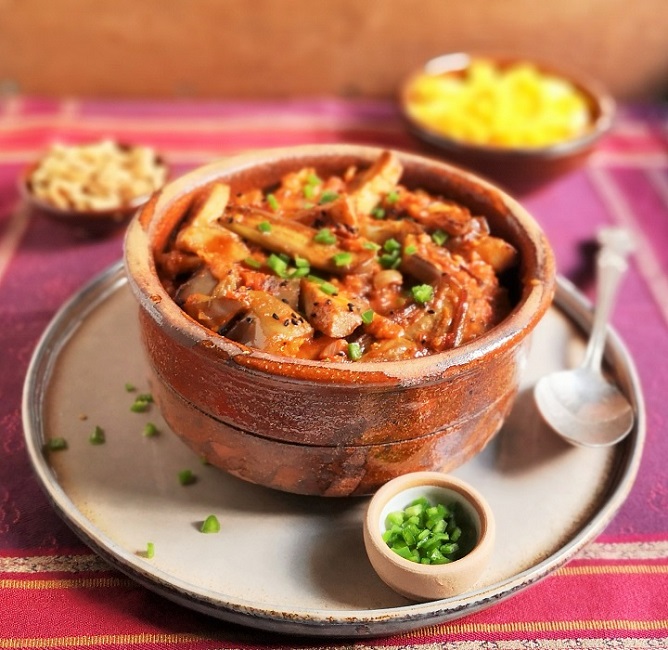
Aubergine in spicy tomato sauce with green chilli sprinkle. Image: Kathryn Hawkins

With a nod to the widely adopted new name for the first month of the year, Veganuary, I have for you this week a tasty, warming and comforting dish which fits the season very well. Aubergine (egg plant) is one of my favourite vegetables and I especially like eating it in a garlicky tomato or curried sauce. In this recipe, I combine these two flavours in one sauce to make a dish that can be served as a main meal or as a side to go with other spicy foods. It’s tasty cold as a salad as well.

Close-up_on_aubergines_in_spiced_tomato_sauce
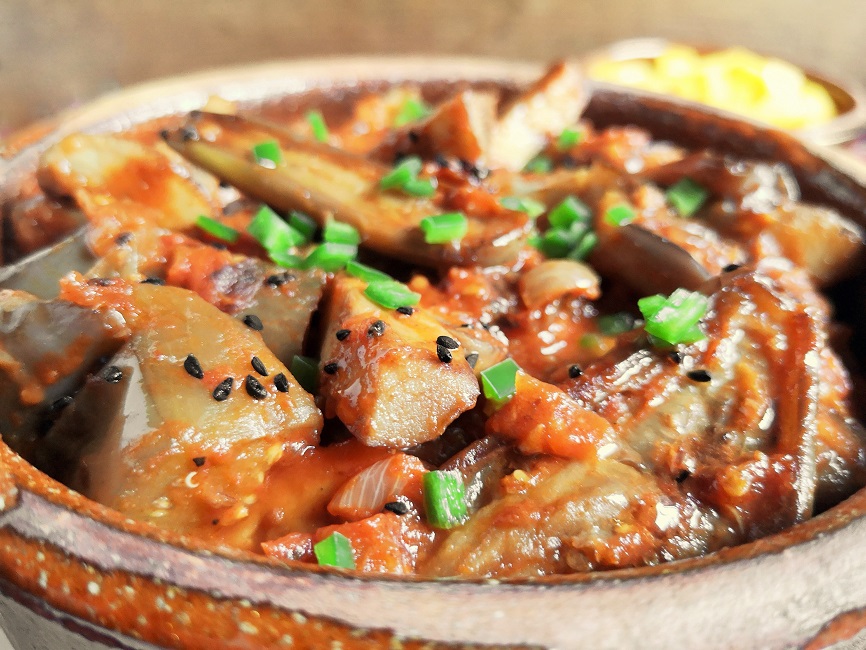
Up close on spiced aubergine (egg plant). Image: Kathryn Hawkins

November seems like a long time ago now, but that is when I harvested my homegrown aubergines (egg plants). I grew the variety Slim Jim in my greenhouse; just a couple of plants as a trial. They got off to a slow start but by the autumn both plants were doing well, and produced several small and neat, very pretty, lilac-coloured fruits.

November_harvest_of_Slim_Jim_aubergines_(egg plant)
Home-grown Slim Jim aubergines (egg plant). Images: Kathryn Hawkins

You can use any variety of aubergine for this recipe. I always salt before cooking, regardless of variety. I find that drawing out some of the water before cooking helps to soften it so that it cooks to a melting tenderness. By the way, replace the mushrooms with more aubergine if you prefer. I hope you enjoy the recipe.

Serves: 2 as a main meal or 4 as a side dish

Ingredients

  • 1tsp each of cumin and coriander seeds
  • ½tsp ground fenugreek
  • ¼tsp ground black pepper
  • 5tbsp vegetable oil
  • 1 onion, peeled and chopped
  • 2 cloves garlic, peeled and finely chopped
  • 1tsp freshly grated root ginger
  • 1 bay leaf
  • 400g tomatoes, canned or fresh, chopped
  • 2tbsp tomato purée
  • Salt
  • 250g aubergines (egg plant), chopped or sliced
  • 200g brown (chestnut) mushrooms, wiped and quartered
  • 1tsp black onion seeds
  • Chopped green chilli and fresh mango to serve

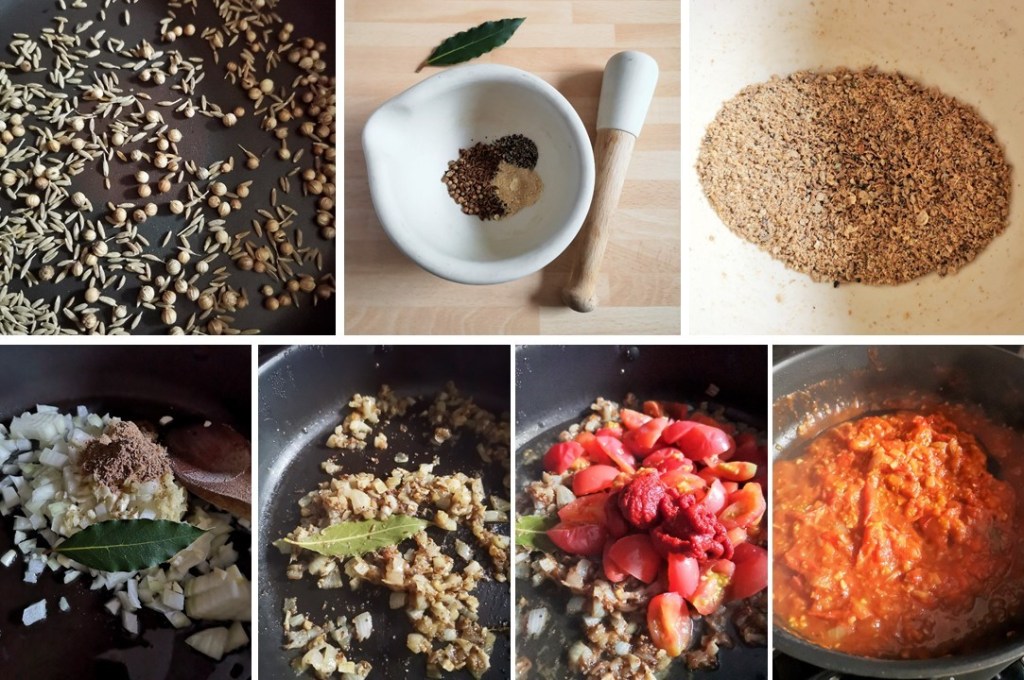
1. Toast the spice seeds lightly in a small hot, dry frying pan for 2-3 minutes until lightly golden. Cool, then grind finely with the fenugreek and black pepper.

2. Heat 2tbsp oil in a frying pan and stir fry the onion, garlic, ginger and spices with the bay leaf for 1-2 minutes, then cover with a lid and cook gently for 20 minutes until soft.

3. Add the tomatoes, purée and a pinch of salt, bring to the boil, cover and simmer gently for about 15 minutes until soft. Leave aside.

Making_spiced_tomato_sauce
Preparing spiced tomato sauce. Images: Kathryn Hawkins

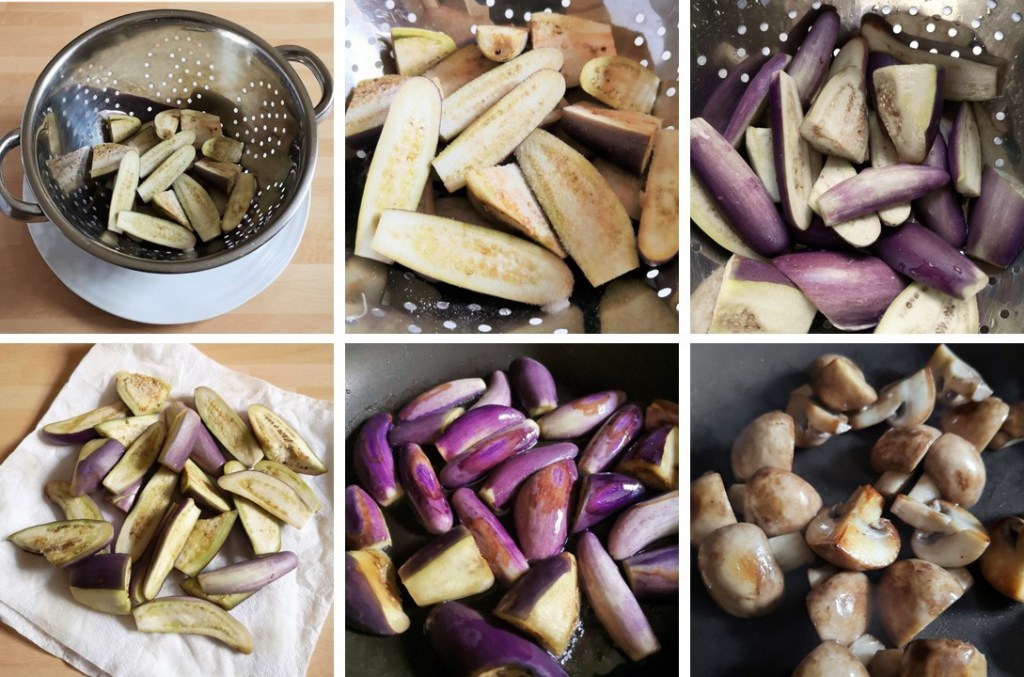
4. Meanwhile, stand a colander or strainer on a plate or over a bowl. Layer the aubergine, sprinkling generously with salt as you go, and leave to stand for 30 minutes. Drain and rinse very well, then pat dry with kitchen paper.

5. Heat 2tbsp oil in a frying pan until hot and stir fry the aubergine pieces for 2-3 minutes until lightly browned. Drain on kitchen paper. Heat the remaining oil and cook the mushrooms in the same way. Drain.

Salting_aubergine_(egg_plant)_before_cooking
Preparing aubergine (egg plant). Images: Kathryn Hawkins

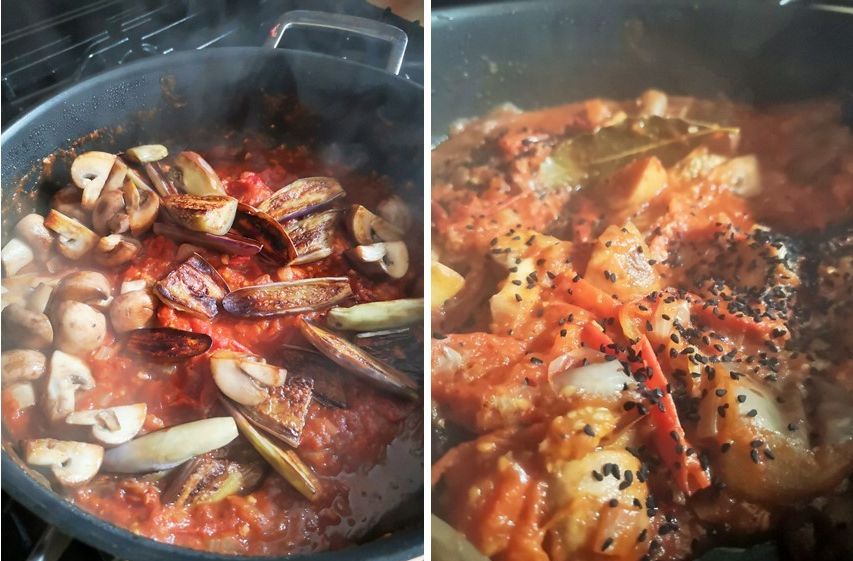
6. Add the vegetables to the spiced tomato sauce, mix well and bring to the boil. Cover and simmer gently for 20-30 minutes until tender and cooked through. Turn off the heat, sprinkle with black onion seeds then cover and stand for 10 minutes. Discard the bay leaf.

Cooked_mushrooms_and_aubergine_in_spiced_tomato_sauce
Cooking the vegetables in the sauce. Images: Kathryn Hawkins

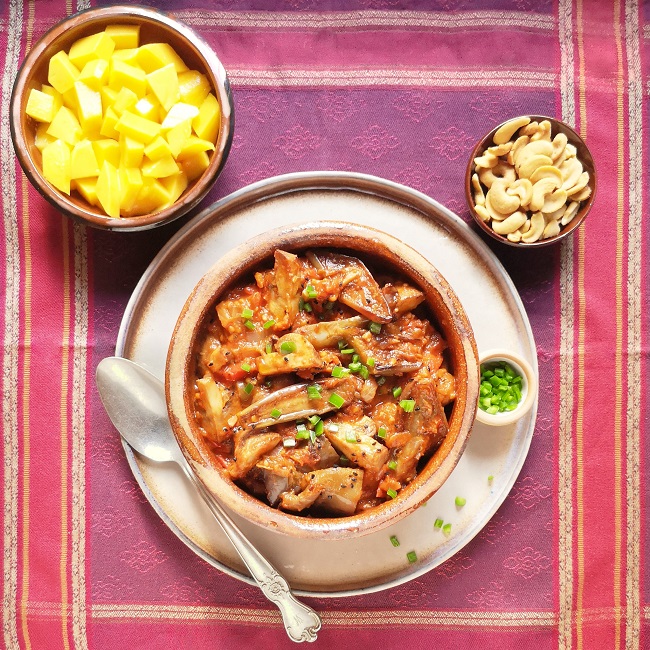
Serve sprinkled with freshly chopped green chilli and accompanied with fresh mango. Delicious over rice or with naan breads with a sprinkling of roasted cashew nuts for crunch.

Overhead_image_of_aubergine_and_mushrooms_in_spiced_tomato_sauce
A spicy feast. Image: Kathryn Hawkins

That’s all from me this week. I’ll be back towards the end of the month with something suitably Scottish to celebrate Burns Night. Until then, best wishes and keep safe.

Snowflake pies (gluten-free; dairy-free; vegan)

Very Christmassy, snowflake pies. Image: Kathryn Hawkins

Hello again. With the Christmas break just a few days away, my post this week is a very simple and very seasonal dessert recipe which is easy to make and pretty to look at. With little snow in the forecast for the UK this year so far, this sweet treat is probably the closest I will come to experiencing a White Christmas.

Close-up_on_snowflake_pie
Light and fluffy, snowflake pie. Image: Kathryn Hawkins

Assembled in paper cupcake cases, the pies have a biscuit crumb base, and a topping simply made from vegan marshmallows and plant-based double cream. All very straightforward. I flavoured the topping with vanilla extract but you could add some citrus zest or Christmas spice. As you can image, the pies are quite sweet, but I found they paired perfectly with cooked cranberries. I think orange, rhubarb or raspberries would also work very well – something with a bit of acidity is ideal. OK, on with the recipe…..

Makes: 8

Ingredients

  • 115g free-from Digestive biscuits
  • 65g plant-based butter
  • 175g white vegan marshmallows
  • 400ml plant-based double cream, at room temperature
  • 1tsp good quality vanilla extract
  • Icing snowflakes and edible silver glitter to decorate

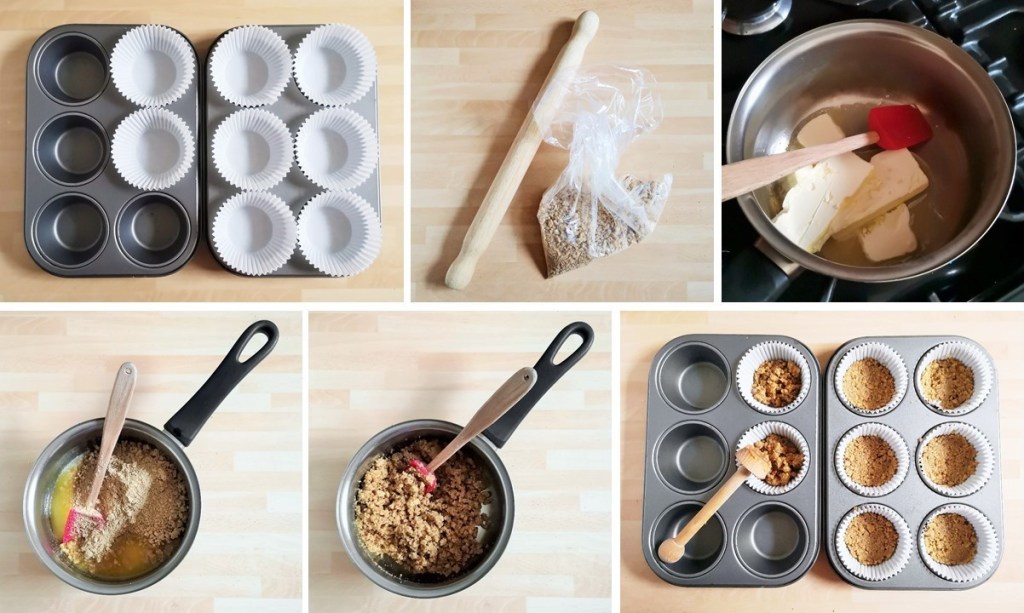
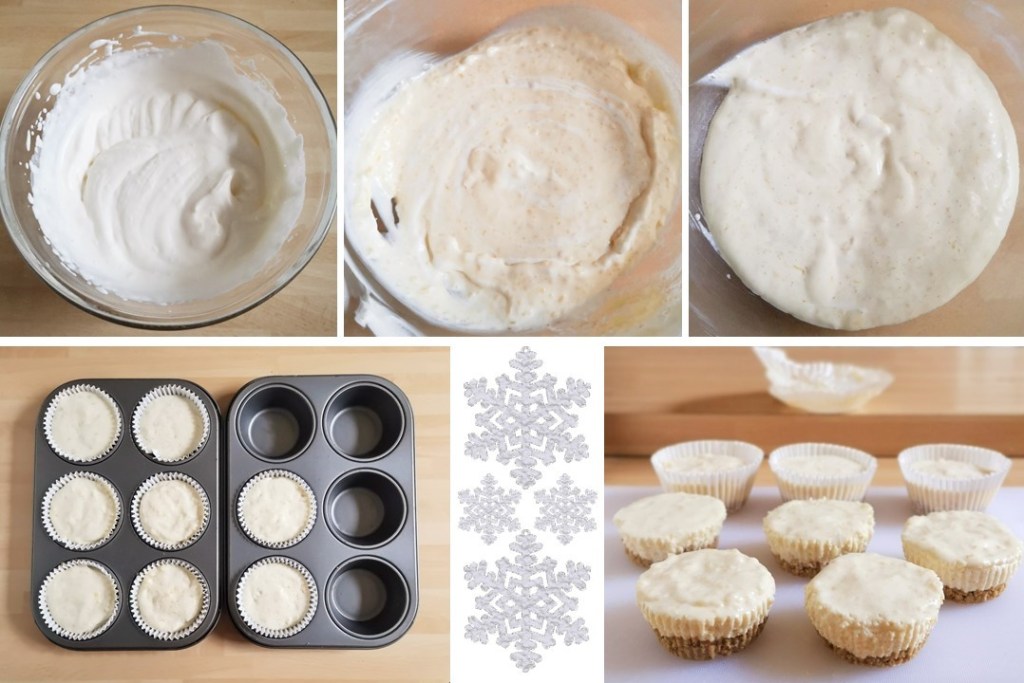
1. Line 8 muffin tins with plain cupcake paper cases – you don’t need to use anything fancy; the cases are being used as tin liners to help you turn the pies out more easily. Put the biscuits in a clean bag and crush finely with a rolling pin.

2. Melt the butter, remove from the heat and stir in the crumbs until evenly coated. Divide the mixture between the cases; press down well and chill until required.

How_to_make_snowflake_pie_bases
Making the bases. Images: Kathryn Hawkins

3. For easier melting, cut the marshmallows into small pieces – kitchen scissors are good for this. Place in a saucepan and pour over 100ml of the cream and add the vanilla.

4. Heat very gently, stirring occasionally, until the marshmallows melt into the cream. This will take about 5-8 minutes. Keep the heat as low as possible to avoid boiling. Then whisk until smooth.

Melting_vegan_marshmallows_with_plant-based_cream_to_make_snowflake_pies_filling
Making the filling. Images: Kathryn Hawkins

5. While the marshmallows are melting, whip a further 225ml cream until just peaking.

6. Working quickly, scrape the molten marshmallows mixture on top of the cream and gently mix the 2 together to make a fluffy, light mixture. The marshmallows will start to set again as soon as they meet the cream, so make sure the cream isn’t too cold.

7. Divide between the cases and chill for about 2hr until completely set, then remove from the tins and peel away the paper cases.

5_steps_showing_the_assembly_of_snowflake_pies
Assembling the pies. Images: Kathryn Hawkins.

8. To serve, whip the remaining cream and spoon a little on top of each pie. Decorate with snowflakes and glitter. Delicious accompanied with a cranberry, or other fruit, compote.

Single_serving_snowflake_pie_with_cranberry_compote
Cranberry compote. Image: Kathryn Hawkins

This is my last recipe post of the year. Thank you for your continued interest in my blog. I hope you have a very happy and healthy Christmas and I look forward to returning to my blog in the new year.

Sweet chilli jelly (naturally gluten-free; dairy-free; vegan)

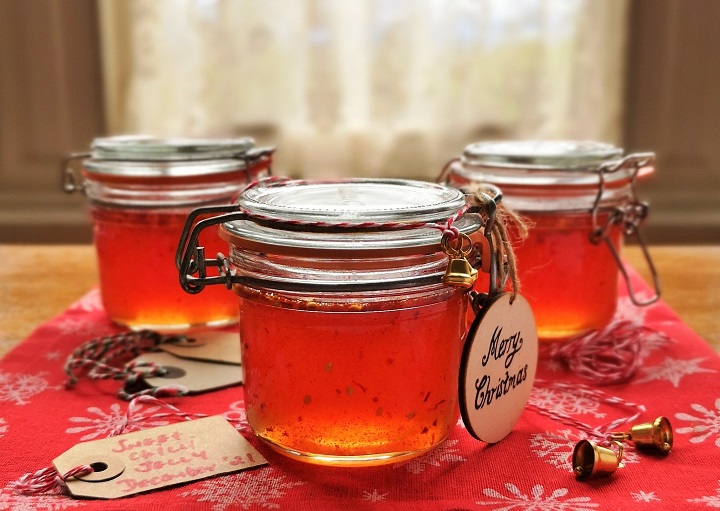
Homemade_sweet_chilli_jelly_for_Christmas
Sweet chilli jelly. Image: Kathryn Hawkins

Hello again. I hope you are keeping well. Are you beginning to feel Christmassy yet? We’ve had some snowfall here, not very much but it certainly feels like winter is upon us.

I haven’t had much time for making preserves this year and most of my harvested garden produce is still buried deep in the freezer waiting for me to get cooking. However, I did find some time a few days ago to make one of my favourites. I love the combination of sweet and smoke with a hint of chilli spice in this savoury jelly. It’s one of those preserves that goes with lots of things and makes a great gift for a food lover. It’s also ready to eat immediately or will store for up to a year.

You might want to scale back the recipe to make a smaller quantity but I wanted a few jars for myself as well as a couple to give away. Add more chillies for a spicy-hot jelly or use hot smoked paprika instead.

Makes: approx. 1.4kg

Ingredients

  • Approx. 1.5kg cooking apples, washed and left whole
  • Approx. 750g red (bell) peppers or capsicum, washed and stalks removed
  • 50-100g red chillies, washed and stalks removed
  • 6-8 garlic cloves, peeled
  • 2 large sprigs of fresh sage
  • 5 bay leaves
  • approx. 1.1kg granulated white sugar
  • 175ml cider vinegar
  • 2tsp smoked paprika
  • 1½tsp salt
  • 1-2tsp dried chilli flakes

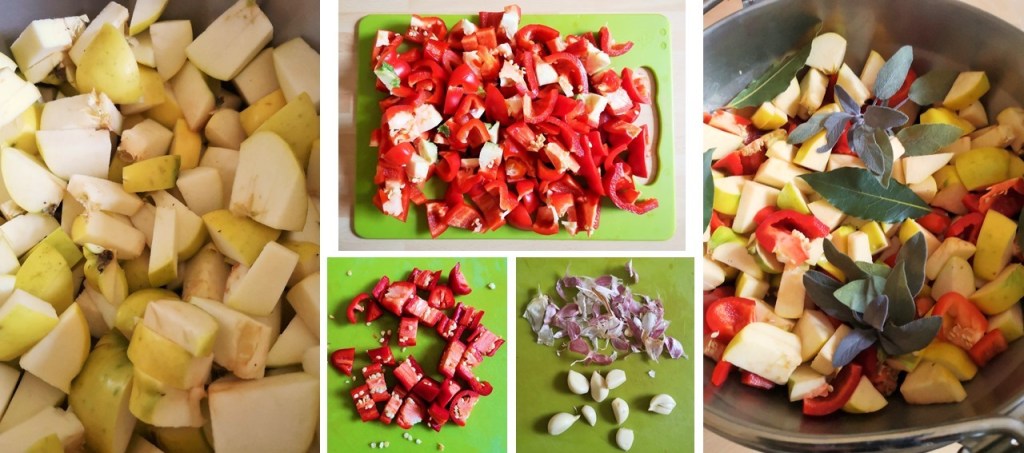
1. Chop the apples and place in a large preserving pan – seeds, core, skin, everything. Do the same with the peppers and chillies, then add to the pan along with the garlic, sage and bay leaves.

Prepared_fruit_and_veg_for_smoky_apple_jelly
Main ingredients: apples, peppers, chillies and garlic. Images: Kathryn Hawkins

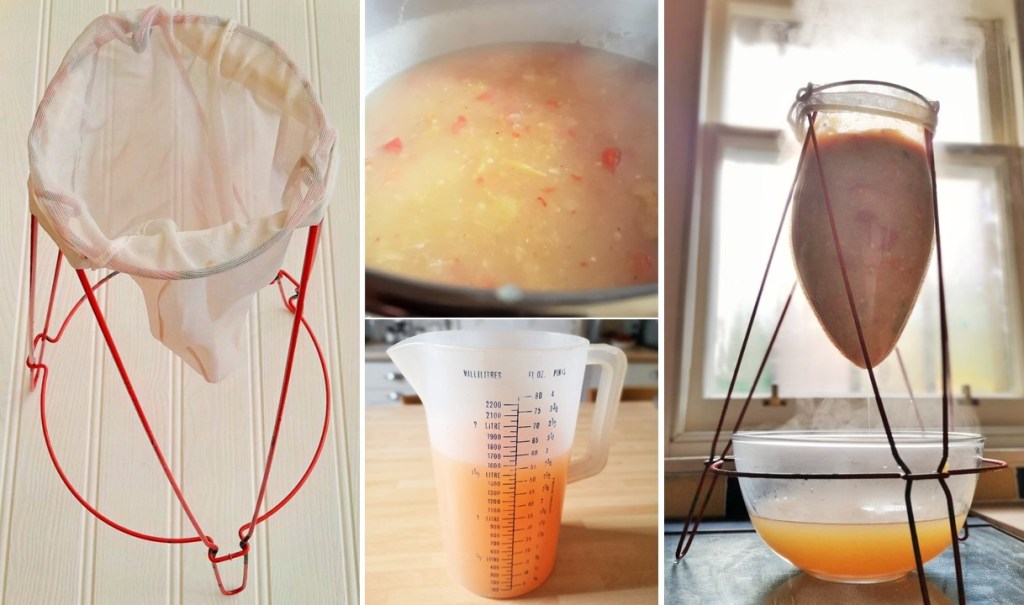
2. Pour over 1.7l water, bring to the boil, cover and simmer for about 40 minutes, mashing with a spoon occasionally, until everything is soft and pulpy. Leave to cool for 30 minutes.

3. Carefully ladle the pulp into a jelly bag suspended over a bowl and leave in a cool place to drip over night. Discard the pulp and measure the juice.

Jelly_bag_showing_straining_collected_juice_from_cooking_apples_and_vegetables
Making and straining the cooked fruit and veg. Images: Kathryn Hawkins

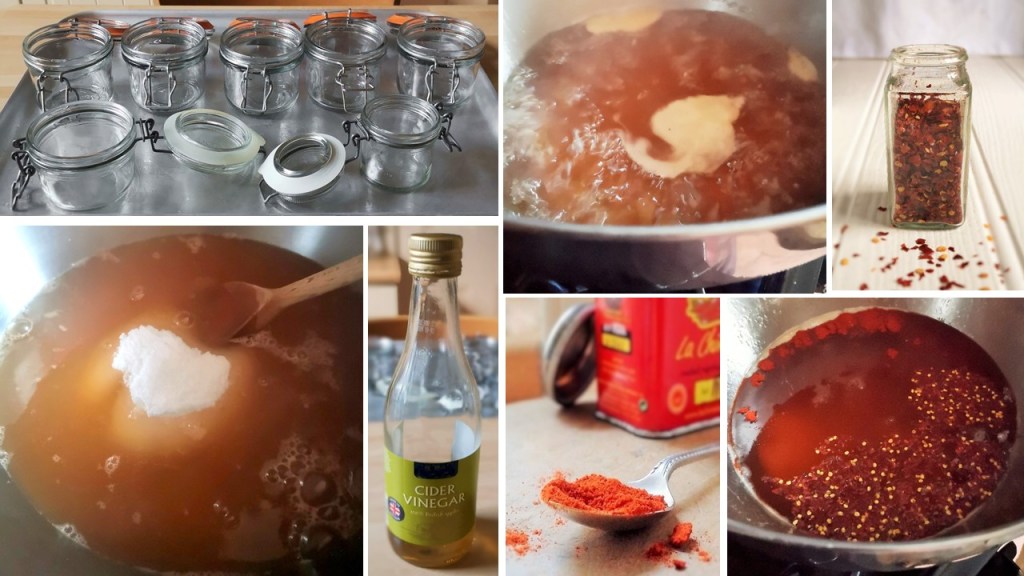
4. Pour the juice into a clean preserving pan and heat until hot. Add 450g sugar for every 650ml juice collected – I had 1.6l juice and added 1.1kg sugar. Pour in the vinegar and stir until the sugar dissolves, then raise the heat and boil rapidly until setting point is reached – 105°C on a sugar thermometer. Turn off the heat and stir in the salt, paprika and chillies. Leave to stand for 10 minutes.

Cooking_smoky_apple_jelly_and_flavouring_with_vinegar_smoked_paprika_and_chillies
Cooking and flavouring the jelly. Images: Kathryn Hawkins

4. Stir the jelly mixture and ladle into sterilized jam jars. Seal tightly while hot, then leave to cool before labelling. Store in a cool, dry, dark cupboard for up to 1 year.

Small_kilner_jars_of_homemade_sweet_chilli_jelly
Freshly cooked sweet chilli jelly in the jar and on the spoon. Images: Kathryn Hawkins

That’s me for another week. One more recipe post before the holidays. I’ll see you again in a few days. All the best until then 🙂

Sweet and sour red cabbage (naturally gluten-free and vegan)

China_serving_dish_with_sweet_and_sour_red_cabbage
Sweet and sour red cabbage. Image: Kathryn Hawkins

Hello there. I hope you are well and enjoying Autumn. With the days getting shorter and the temperature dropping a few degrees here in the UK, my thoughts have turned to comfort food. There are some deliciously leafy seasonal vegetables around just now which make an ideal accompaniment to an autumnal stew or roast. I have a tasty red cabbage dish to share with you this week which is perfect for batch cooking as it freezes very well.

Whole_and_halved_fresh_red_cabbage_
Fresh red cabbage. Images: Kathryn Hawkins

Most often, I braise red cabbage slowly with fresh apple or pear and some vinegar, sugar and cinnamon, but to ring the changes this time I have used a different combination of sweet and sour flavours.

Sumac_raspberry_vinegar_barberries_and_plum_cheese
Sweet and sour flavours: sumac, raspberry vinegar, barberries and plum cheese. Images: Kathryn Hawkins

For the sour flavours, I used sumac powder with its tart astringent flavour, reminiscent of lemon juice; dried barberries, another tartly flavoured ingredient which add a sharp tang to the dish (chopped dried unsweetened cranberries would also work), and homemade raspberry vinegar. For sweetness, I added some of the plum cheese I made about a month ago – Plum, sloe and apple cheese (naturally gluten-free and vegan) or you can use plum jam if you prefer. To add a splash of sparkle, juiciness and texture, I sprinkled over one of my favourite ingredients, fresh pomegranate seeds, to finish. All in all, a delicious flavour combination which tastes as good as it looks. I hope you enjoy the recipe.

Serves: 4

Ingredients

  • ½ red cabbage
  • 1 large red onion
  • 25g plant butter
  • 2tbsp raspberry vinegar (or balsamic if you prefer)
  • 2tbsp plum cheese or jam (or redcurrant jelly works well)
  • Salt and freshly ground black pepper
  • 1tbsp dried barberries (or finely chopped unsweetened cranberries
  • Sumac to taste
  • Pomegranate seeds to sprinkle

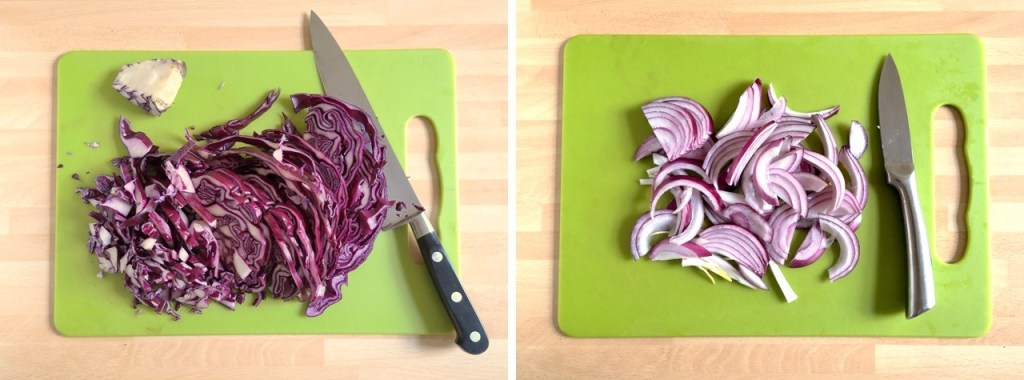
1. Cut out the cabbage stump, then finely shred or slice the remainder of the cabbage. If you slice everything finely, you can use up the tougher stems of the cabbage as well. I ended up with about 400g prepared cabbage. Peel and thinly slice the onion.

Preparing_red_cabbage_and_red_onion
Red cabbage and onion preparation. Images: Kathryn Hawkins

2. Melt the plant butter in a large deep frying pan or saucepan and gently fry the cabbage and onion, stirring, for about 5 minutes until well coated in the butter.

3. Add the vinegar, plum cheese or jam and plenty of seasoning. Mix well, lower the heat, then cover and simmer gently for 40-50 minutes, stirring occasionally, until very tender. Stir in the barberries and sumac to taste. Turn off the heat, cover and let stand for 10 minutes.

3_stages_to_cooking_sweet_and_sour_red_cabbage
Cooking sweet and sour red cabbage. Images: Kathryn Hawkins

4. To serve, spoon into a warm serving dish and sprinkle the top with extra sumac and pomegranate seeds if liked.

Close-up_on_freshly cooked_red_cabbage_with_pomegranate_seeds
Red cabbage close-up. Image: Kathryn Hawkins

It’s been a glorious day here in central Scotland today. Perfect weather for enjoying the autumnal colours. I hope you have a good few days until my next post. All the best for now 🙂

Plum, sloe and apple cheese (naturally gluten-free and vegan)

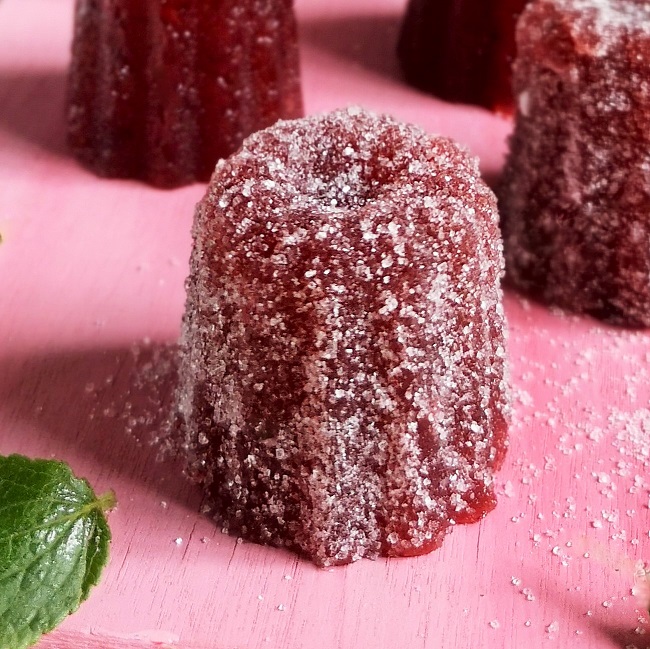
Homemade_plum_sloe_and_apple_cheeses_arranged_on_a_pink_board_with_sugar
Homemade plum, sloe and apple cheese. Image: Kathryn Hawkins

Hello again. I have a very seasonal recipe to share with you this week. I have been out and about enjoying the autumnal colours. On one of my walks, I was fortunate enough to find some sloe berries still in situ on a wild blackthorn hedge. They were growing so thickly that they looked like bunches of grapes. I had a small bag with me and was able to fill it with a precious harvest of these dark blue-skinned fruits with their fine silvery bloom.

Sloe_berries_ripe_and_ready
Scottish sloe foraging. Images: Kathryn Hawkins

Finding the sloes coincided with the last few Victoria plums ripening in the garden, and the beginning of the apple season. What better way to use them all than to combine them in a delicious thick and fruity preserve, the perfect colour to match the season.

Early_autumn_Victoria_plums_and_Lord_Derby_cooking_apples
End of the season Victoria plums and new season Lord Derby cooking apples. Images: Kathryn Hawkins

I have posted a similar recipe to this one, before using only plums. You can find the recipe here: Plum and bay membrillo (naturally gluten-free and vegan) This year’s version is very fruity and makes a delicious sweet treat on its own or with cream or yogurt. Serve it as an accompaniment to roasted, grilled or barbecued food, and if you eat cheese, it’s good served with just about any variety.

Sprinkling_plum_sloe_and_apple_cheeses_with_white_sugar
Sugar-coating fruit cheeses. Image: Kathryn Hawkins

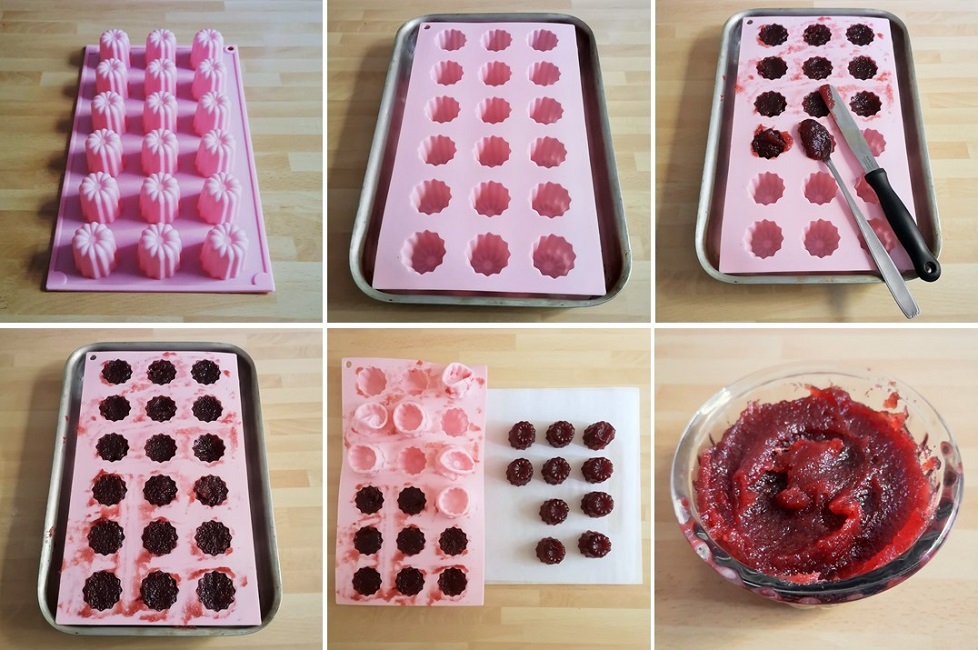
I set the fruit cheese in individual silicone moulds and dusted them with more sugar; the remaining cheese went into a ramekin dish. Choose anything heatproof like a tin or ovenproof dish; line the container and then once it is cold you can slice it or turn it out. Keep the cheese wrapped up in the fridge for up to a month or it can be frozen. Set in a pretty little dish, I think it would make a lovely edible gift – if you can bring yourself to hand it over to anyone else!

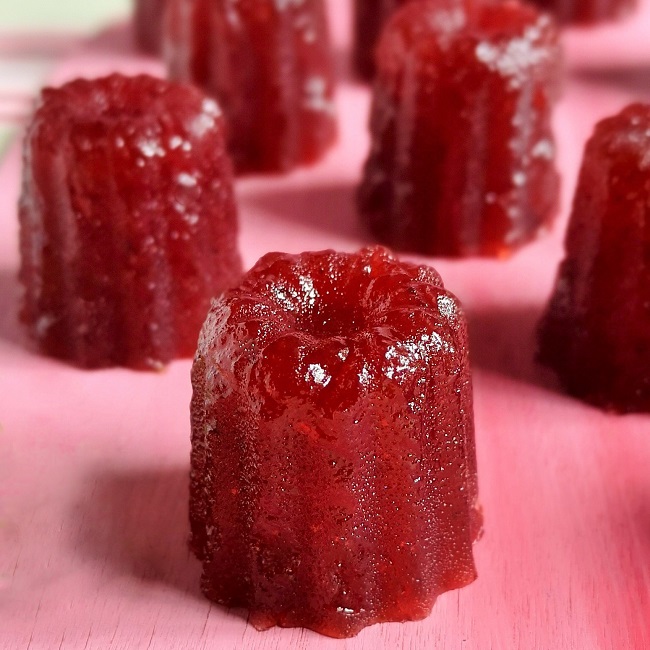
Close-up_on_an_individual_plum_sloe_and_apple_cheese_coated_in_sugar
Sugar-coated fruit cheese. Image: Kathryn Hawkins

Makes: approx. 750g

Ingredients

  • 275g plums, stones removed, chopped
  • 275g sloes, washed
  • 500g cooking apples, cored and chopped
  • approx. 550g granulated white sugar + extra for dusting (optional)

1. Put all the fruit in a large saucepan and pour over 200ml water. Bring to the boil, cover and then simmer for 15-20 minutes until very soft.

2. Mash the fruit and push through a nylon sieve positioned over a large bowl until you have only dry matter left in the sieve. Weigh the purée. My yield was around 850g of fruit purée.

Steps_1_to_6_cooking_the_fruit_to_make_cheese
Cooking the fruit for cheese. Images: Kathryn Hawkins

3. Clean the saucepan and put the purée back inside. Bring to the boil and cook, stirring occasionally, for about 20 minutes to reduce the pulp by about one third – it should be thick enough to hold a “slice” in the bottom of the sauce.

4. To make the preserve, you need to stir in the same quantity of white sugar to the amount of thickened purée – I had 550g purée so I added 550g white sugar.

5. Stir the mixture until the sugar dissolves and then bring back to the boil and continue cooking for a further 20 minutes, stirring frequently to prevent the mix sticking on the bottom of the pan, until very thick. If you have a jam thermometer, cook the mixture to 105°C. I use a spatula for the stirring because it gets right into the edges of the pan which helps to prevent the mixture sticking and burning.

Reducing_down_fruit_purée_to_make_cheese
Cooking the fruit purée. Images: Kathryn Hawkins

6. Working quickly, spoon the mixture into whatever you have chosen to set the cheese. As the mixture cools, it becomes thicker and more solidified making it more challenging to shape. However, you can reheat the mixture gently to soften it if you need to.

7. Allow the cheese to cool and set completely before attempting to turn it out or to slice it. I would suggest chilling it for an hour after cooling if you want to turn it out cleanly.

Preparation_steps_for_setting_and_turning_out_fruit_cheese
Moulding and unmoulding the fruit cheese. Images: Kathryn Hawkins

If you are making individual cheeses, you will find that a sugar coating sticks easily to the surface. Simple sprinkle over or gently roll the cheeses in a pile of sugar. The sugar coating does make smaller pieces easier to wrap in waxed paper and helps prevent the cheese sticking to the wrapping.

Plum_sloe_and_apple_cheese_set_in_small_moulds
Fruit cheeses up close. Image: Kathryn Hawkins

I hope you have a good few days ahead and that you are able to get out and about to enjoy the beautiful shades of the season. Until next time, my best wishes to you 🙂

Just peachy: Peach and almond bake (gluten-free; dairy-free, vegan)

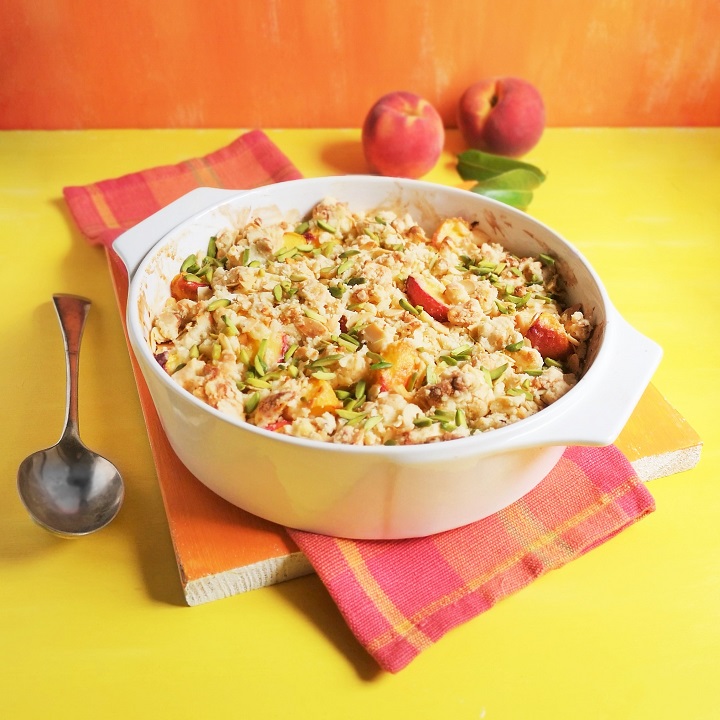
Peach_and_almond_bake_freshly_cooked
Fresh out of the oven. Image: Kathryn Hawkins

Hello everyone. I hope life is treating you well. Time for a foodie post this week, and something to celebrate the fabulous fruit around at the moment. I picked Victoria plums from the garden last weekend and have been busy making compote and jam, and it won’t be long now until the apples and pears are ripe and ready. One of the most delicious fruits I have eaten recently have been fresh peaches (sadly not homegrown). As well as enjoying them just as they are in all their juicy-sweet deliciousness, I made this bake which I thought to share with you.

Fresh_peach_still-life
Just peaches. Image: Kathryn Hawkins

The bake will work with other seasonal fruits like plums and greengages – you’ll just need to adjust the sweetness accordingly. As well as adding flaked almonds to the topping, I have added my beloved marzipan but this can be left out and sweeten the topping with sugar instead. If you’re not an almond fan, try pecans or toasted hazelnuts and maple syrup, and add finely grated orange rind or vanilla extract for extra flavour.

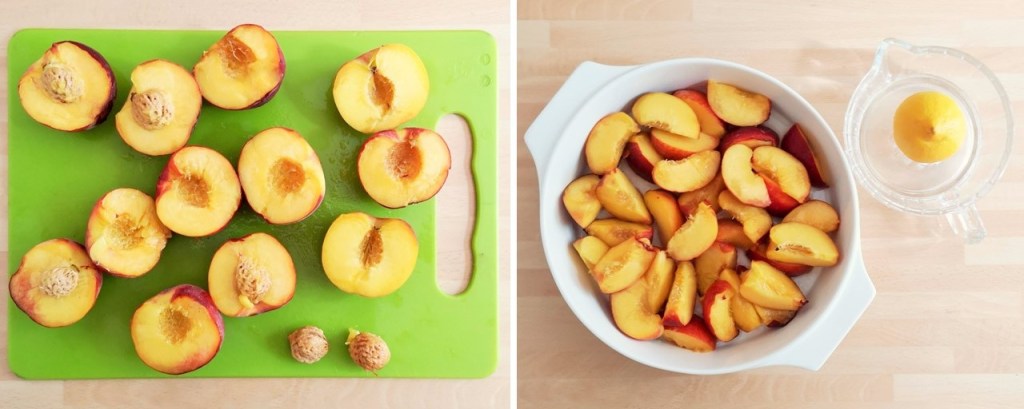
Fresh_peach_halves_and_slices_with_lemon_juice
Preparing fresh peaches. Images: Kathryn Hawkins

I did struggle a bit to remove the stones from the fruit as they were a little bit soft, so slightly less ripe work better for neat slices. I add lemon juice to the slices before sweetening as I find that peaches often discolour when cooked.

Overhead_and_scooped_out_peach_and_almond_bake
Looking peachy. Image: Kathryn Hawkins

Serves: 6

Ingredients

  • 6 firm to ripe peaches
  • Juice of 1 lemon
  • 2 tbsp caster sugar
  • 1 tbsp cornflour (cornstarch)

For the topping:

  • 150g gluten-free plain flour blend
  • 75g dairy-free block margarine (or butter), cut into pieces
  • A pinch of salt
  • 75g marzipan, grated
  • 50g toasted flaked almonds
  • 15g chopped pistachios

1. Preheat the oven to 200°C, 180°C fan oven, gas 6. Wash and pat dry the peaches, then cut in half and remove the stones. Cut into thick slices and place in a baking dish. Toss in the lemon juice to help prevent browning. Set aside.

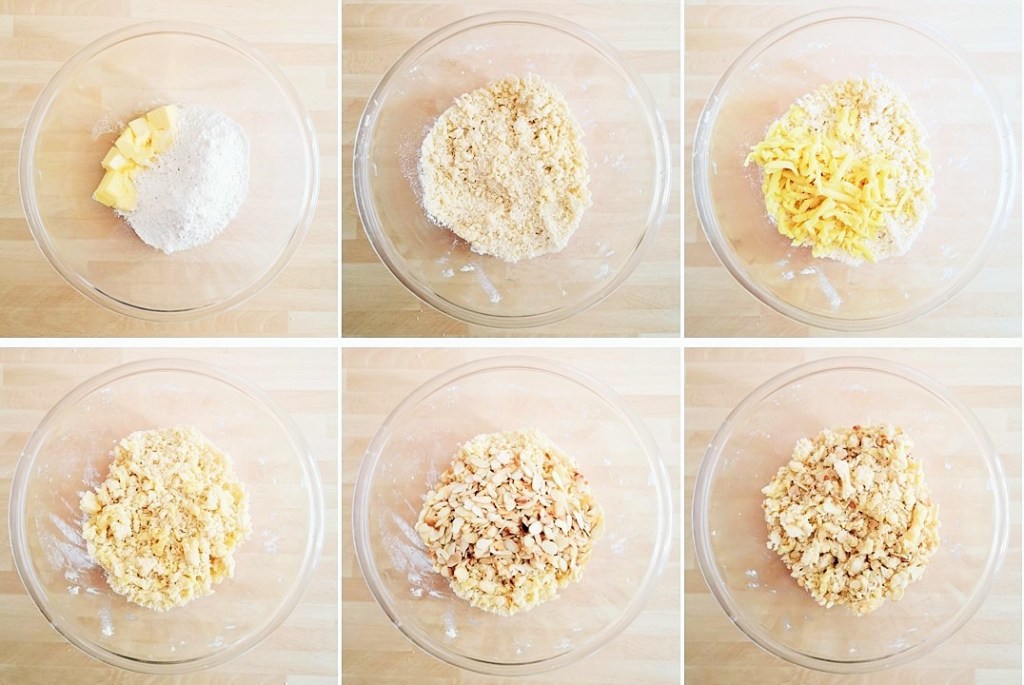
2. For the topping, put the flour in a bowl and add the margarine and salt. Rub the margarine into the flour until well blended. Stir in the marzipan making sure it is well distributed and then stir in the flaked almonds.

6_steps_to_making_the_almond_topping_for_peach_and_almond_bake
Almond topping preparation. Images: Kathryn Hawkins

3. Mix the sugar and cornflour (cornstarch) into the peaches and sprinkle the topping over the fruit. Put the dish on a baking tray and bake for 30-35 minutes until lightly golden. Best served warm, sprinkled with pistachios.

Prepared_peaches_and_peaches_with_almond_topping
Peaches and almond topping. Images: Kathryn Hawkins
Serving_of_peach_and_almond_bake
Inside peach and almond bake. Images: Kathryn Hawkins

That’s all for another week. I hope enjoy the recipe and I look forward to posting again in a few days time. Until then, take care and stay safe 🙂
Salal berries – jam and muffins (gluten-free; dairy-free; vegan)

Large_flat_basket_of_freshly_picked_Scottish_Salal_berries
Freshly picked Scottish Salal berries. Image: Kathryn Hawkins

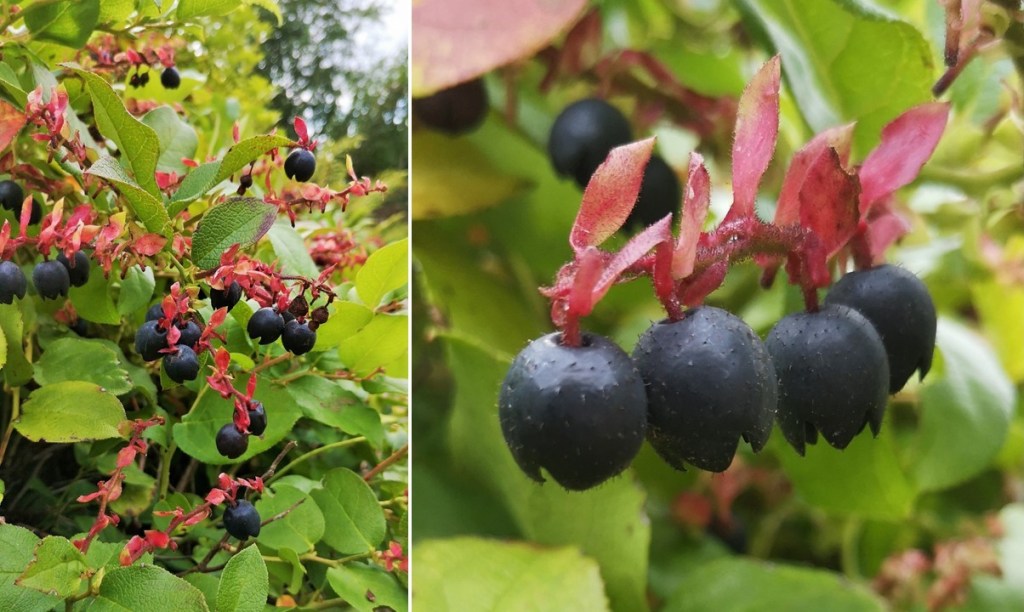
Hello again. I hope you are keeping well and enjoying the summer. I have made an interesting discovery since my last post. The berries I thought I had growing in my garden (and have been cooking for a few years each Summer) are not Aronia berries after all, they are in fact Salal or Shallon berries. Fortunately for me, they are edible – thank goodness! The shrub, like the blueberry, is part of the heather (Ericaceae) family and is called Gaultheria; it hails from north-west America, and seems very much at home here in central Scotland.

Gaultheria_Shallon_growing_in_a_Scottish_garden
Gaultheria Shallon. Image: Kathryn Hawkins
Star-shaped_pattern_on_underside_of_Salal_berries
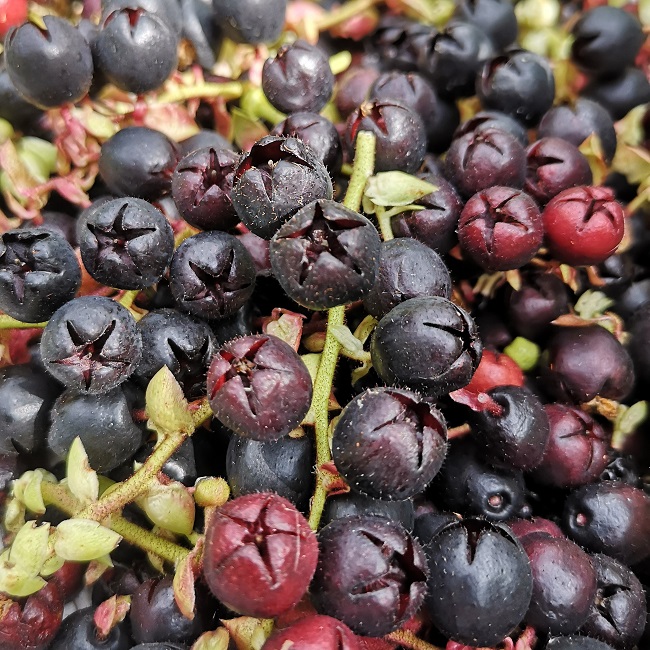
Starry Salal berries. Image: Kathryn Hawkins

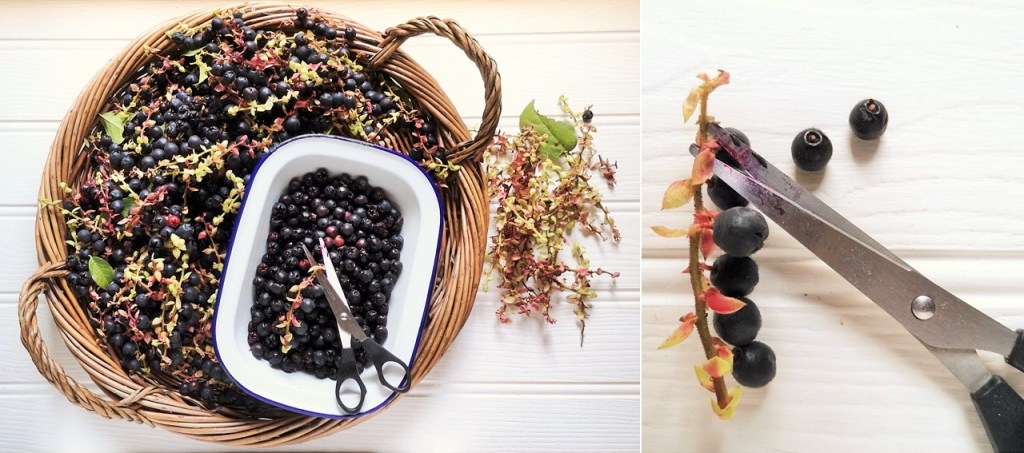
Gaultheria Shallon is evergreen and likes acidic soil. It is pretty invasive and has a tendency to spread all over the place. It throws up suckers which can be quite challenging to restrain. This August the shrubs in my garden have produced a bumper crop of berries which I (and the blackbirds) have been able to enjoy safe in the knowledge that I actually know what I’m cooking this year (!). The berries are deep purple and fleshy when ripe and have a soft bristly skin. They are quite difficult to pick individually so I pick small bundles and then strip the berries off the stalks later on.

Using_scissors_to_remove_Salal_berries_from_their_stalks
Stripping the berries from the stalks. Images: Kathryn Hawkins

When ripe, Salal berries are very soft and squishy. They are attached to the main stalk by tiny woody ends. I have found that using scissors to pull the berries from the stalks is quite successful. If you don’t mind blue-stained fingers, then you can also gently pinch them off. To eat, the skin is very tender and the centre of the berry is very pulpy and full of tiny seeds. The flavour is much like a watery blueberry but without the slight acidity/tannins in the skin. Salal berries have a high Vitamin C content and the leaves have anti-inflammatory properties, although I have yet to try this out.

How_to_wash_Salal_berries
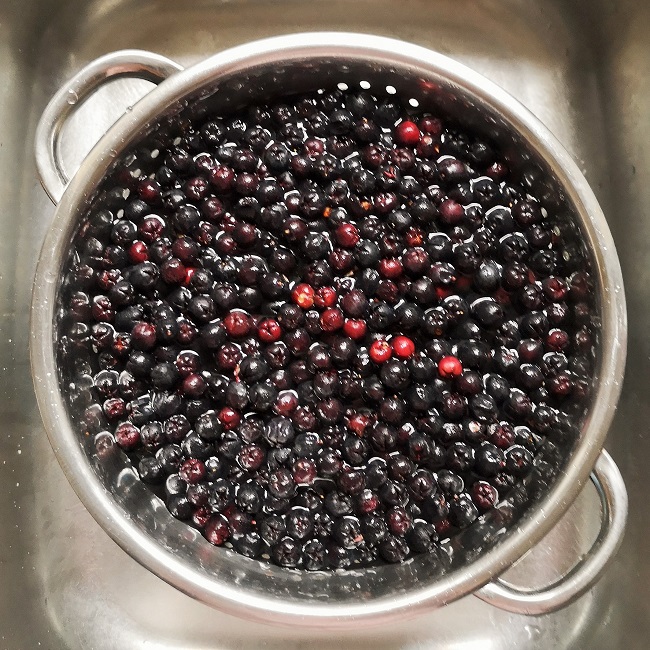
Washing Salal berries. Image: Kathryn Hawkins

After stripping the berries from the stalks, I put them in a large colander (strainer) and dunk them a few times in a large bowl of cold water. This gets rid of dust and the little bits of leaf and stem which get through your fingers. To cook with them, I treat them as I would blueberries but they do benefit from adding a little acidity such as lemon juice, which gives them a little extra tanginess.

If you are able to find some Salal berries or if you have them growing in your garden and didn’t realise what they were, I have a couple of basic recipes to share with you. The first is a very basic jam recipe (naturally gluten-free and vegan), and the second a gluten-free and vegan sweet muffin recipe; both recipes have been adapted from blueberry versions.

3_jars_Salal_berry_jam_with_berries_and_leaves
Homemade Salal berry jam. Image: Kathryn Hawkins

Makes about 650g jam

Ingredients

  • 500g washed and prepared ripe Salal berries
  • 450g granulated sugar
  • Juice of 1 lemon

1. Put the berries in a large saucepan, heat gently until steam rises then cover with a lid and cook for about 10-15 minutes to soften.

2. Add the sugar and lemon juice, and cook gently, stirring, until the sugar dissolves, then raise the heat and boil rapidly for 8-10 minutes until setting point is reached – between 104°C and 105°C.

3. Ladle into clean, hot jam jars and seal well. Cool and label.

6_steps_to_making_salal_berry_jam
Making Salal berry jam. Images: Kathryn Hawkins
Single_jar_and_spoonful_of_homemade_salal_berry_jam
Fresh out of the pot, Salal berry jam. Images: Kathryn Hawkins
7_Salal_berry_muffins_in_purple_cases
Salal berry muffins. Image: Kathryn Hawkins

Makes: 12

Ingredients

  • 175g gluten-free plain flour blend
  • 12g gluten-free baking powder
  • 100g ground almonds
  • 100g soft light brown sugar
  • 60g plain plant-based yogurt
  • 115g dairy-free margarine, melted
  • 150ml plant-based milk
  • 2 tsp vanilla extract
  • 165g washed and prepared Salal berries

1. Preheat the oven to 200°C, 180°C fan oven, gas 6. Line 12 muffin tins with paper cases.

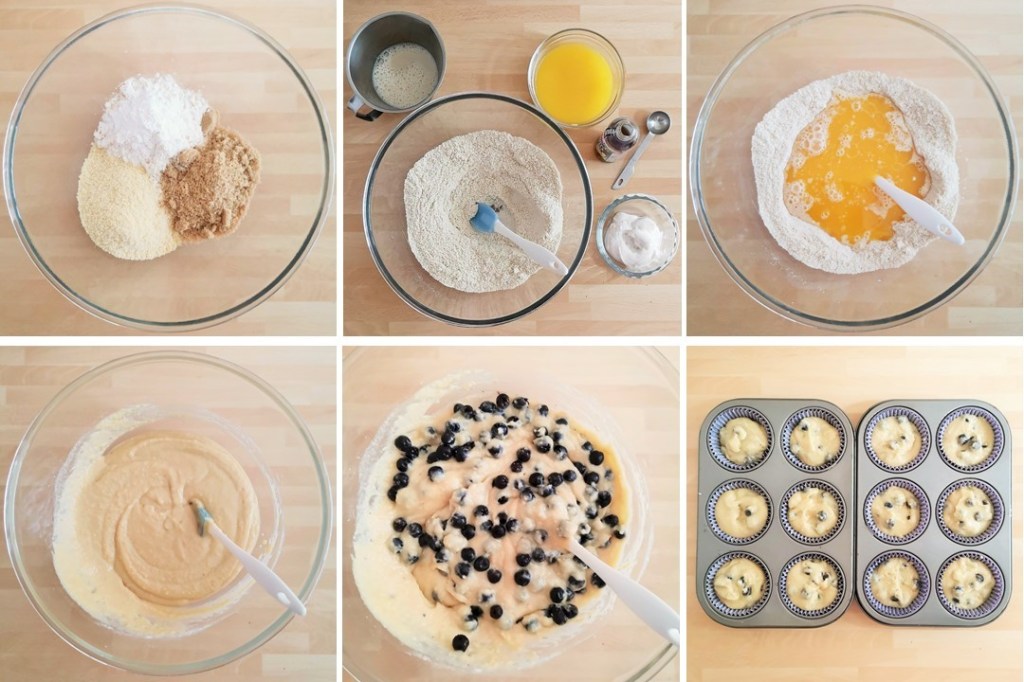
2. Put all the dry ingredients in a bowl and mix well, pressing out any lumps in the flour and sugar. Make a well in the centre.

3. Add the yogurt, melted margarine, milk and vanilla and mix into the dry ingredients to make a thick smooth batter. Gently fold in the berries.

4. Divide between the muffin cases and bake for about 25 minutes until risen and lightly golden. Cool on a wire rack and store in an airtight container. They should keep for 3-4 days, and will freeze well.

How_to_make_Salal_berry_muffins
Making Salal berry muffins. Images: Kathryn Hawkins
Fresh_out_of_the_oven_Salal_berry_muffins_cooling_on_a_wire_rack
Muffins cooling. Image: Kathryn Hawkins
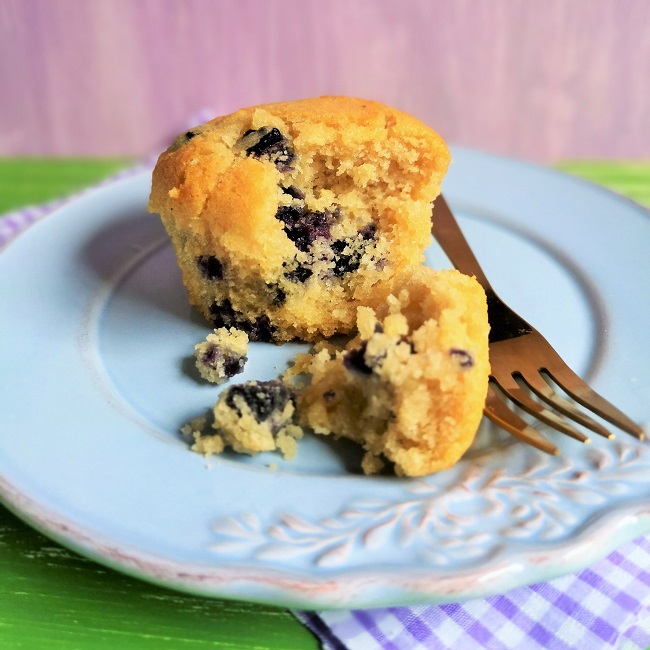
Homemade_salal_berry_muffin_broken_into
Light, crumbly and very fruity. Image: Kathryn Hawkins

I hope you have a good few days ahead. I look forward to posting again soon. Until then, take care and stay well.

Seasonal vegetable salad (gluten-free; dairy-free; vegan)

Endy_of_July_homegrown_vegetables_served_in_a_salad
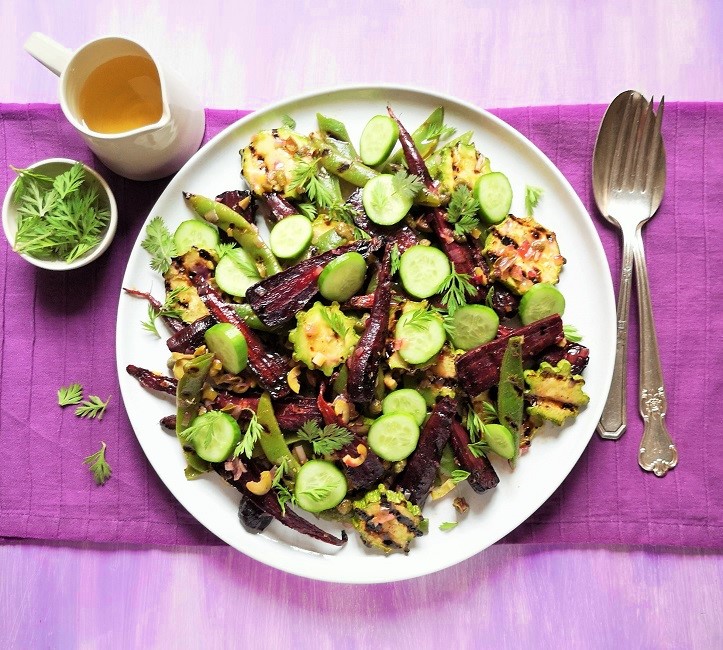
My homegrown seasonal vegetable salad. Image: Kathryn Hawkins

Hello again everyone. I hope you are keeping well and enjoying the summer. I’ve had a busy few days at work and in the garden. Everything is growing fast after several days of fine weather. The garden and greenhouse have reached “peak vegetable” with runner beans, courgettes, cucumbers and carrots all ready at the same time. It seemed a fitting choice for my post this week to make up a recipe using this selection of delicious homegrown vegetables.

Seasonal_vegetable_salad_served_with_chopped_carrot_tops_and_white_balsamic_dressing
Full of fresh flavours, warm vegetable salad. Image: Kathryn Hawkins

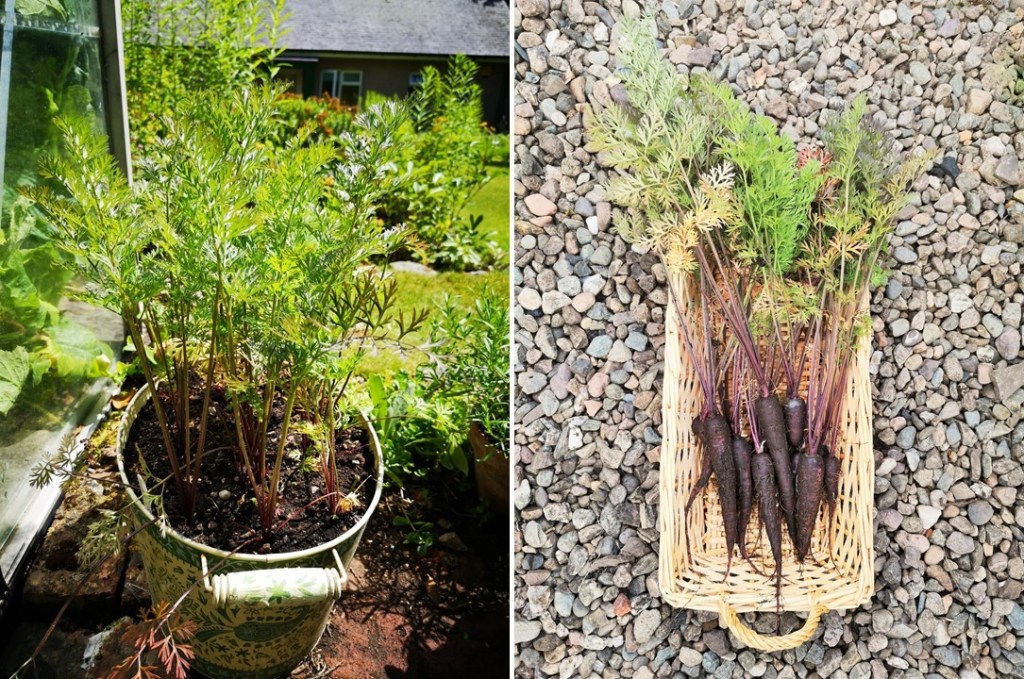
This year, I have runner beans growing in 3 large pots this year in the garden; courgettes in the greenhouse along with a couple of mini cucumber plants, and deep containers of carrots which I’m pleased to say are thriving.

Homegrown_Scarloet_Emperor_runner_beans_on_the_vine_and_picked
Barrel-grown Scarlet Emperor runner beans. Images: Kathryn Hawkins
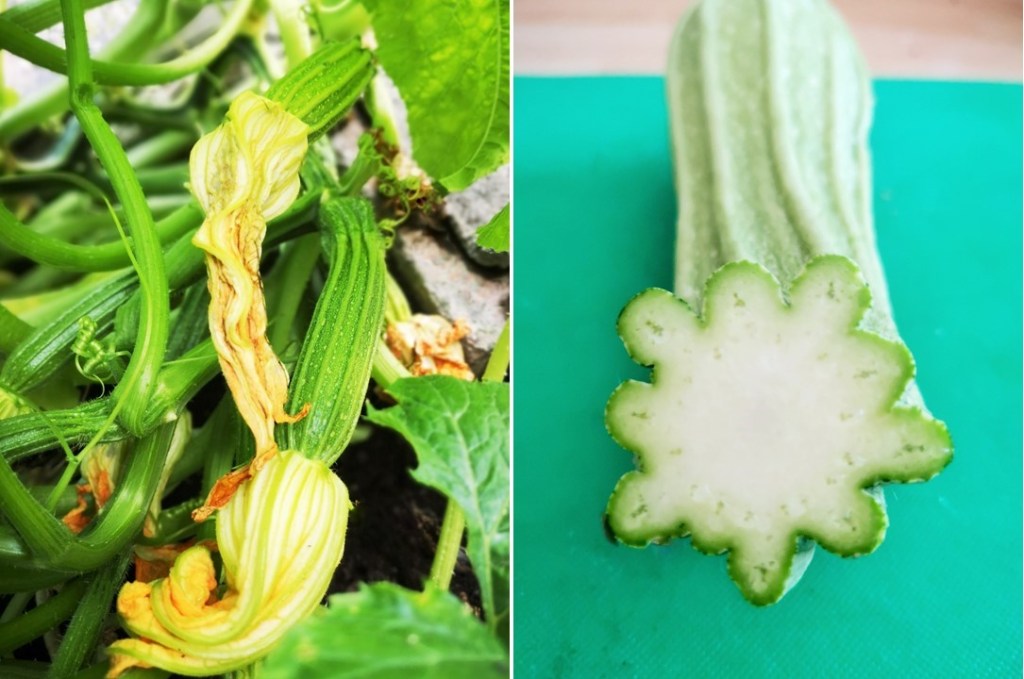
Homegrown_ridged_courgettes_in_greenhouse_and_sliced_to_show_scalloped_edge
Ridged courgettes. Images: Kathryn Hawkins
Greenhouse-grown_Mini_Munch_cucumbers
Mini Munch cucumbers, July 2021. Images: Kathryn Hawkins
Purple_Sun_carrots_growing_in_a_deep_container
Container-grown Purple Sun carrots. Image: Kathryn Hawkins

My salad this week is very simple. A selection of griddled vegetables mixed in a piquant caper and olive dressing served with fresh cucumber and a sprinkle of chopped carrot tops. Serve it warm or allow it to go cold. Enjoy it as a light meal with crusty bread or serve it as a main dish with freshly cooked grains. Sprinkle with toasted seeds or chopped roasted nuts for extra crunch. Lovely fresh flavours and a real taste of summer. Here’s the recipe.

Serves: 4

Ingredients

  • 225g runner beans
  • 325g small to medium-sized carrots
  • Salt
  • 1 large courgette
  • Vegetable oil for brushing griddle pan
  • 1 mini cucumber, sliced
  • 1 or 2 fresh carrot tops, washed and chopped (or use chopped parsley or coriander)

For the dressing:

  • 2 tbsp vegetable oil (I used cold pressed rapeseed oil)
  • 1 banana shallot, peeled and finely chopped
  • 1 garlic clove, peeled and crushed
  • 2 tbsp white balsamic vinegar plus extra to serve
  • 2 tsp maple syrup
  • 2 tbsp capers in brine, drained and chopped
  • Handful of pitted green olives, chopped

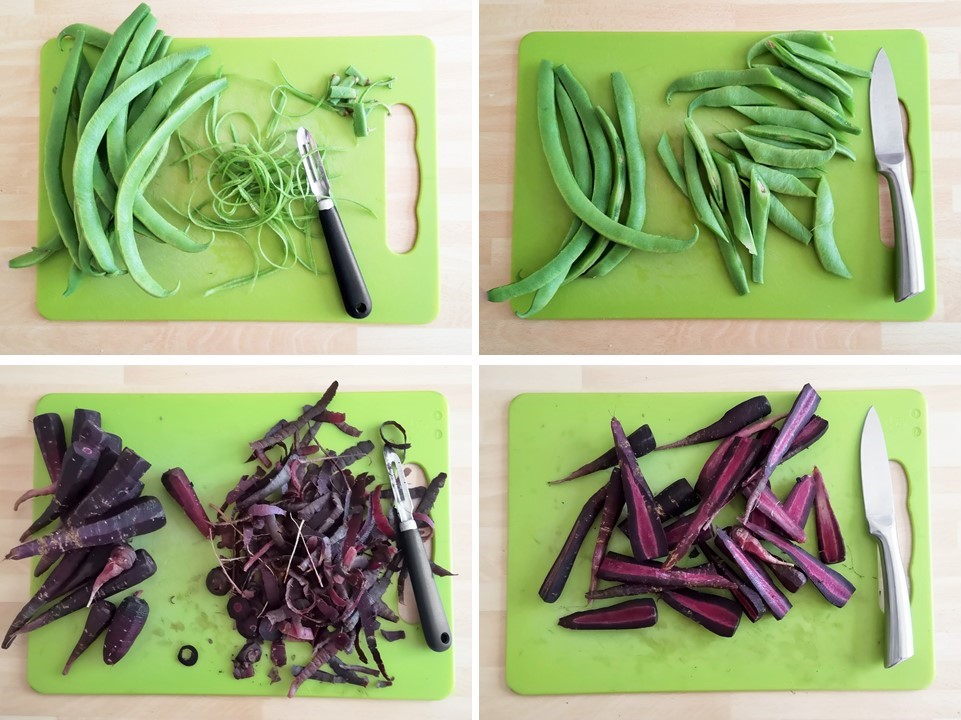
1. Peel the sides of the runner beans to remove any strings, and remove the stalk end. Cut into lengths about 6cm long. Peel and trim the carrots, cut in half or in pieces, making sure all the slices are about the same thickness.

Preparing_homegrown_runner_beans_and_small_purple_carrots
Runner bean and purple carrot preparations. Images: Kathryn Hawkins

2. Cook the beans in lightly salted boiling water for barely 2 minutes, to soften slightly, then drain, cool and pat dry. Cook the carrots the same way for 3-5 minutes depending on thickness. Drain, cool and pat dry. Slice the courgette into even thickness pieces.

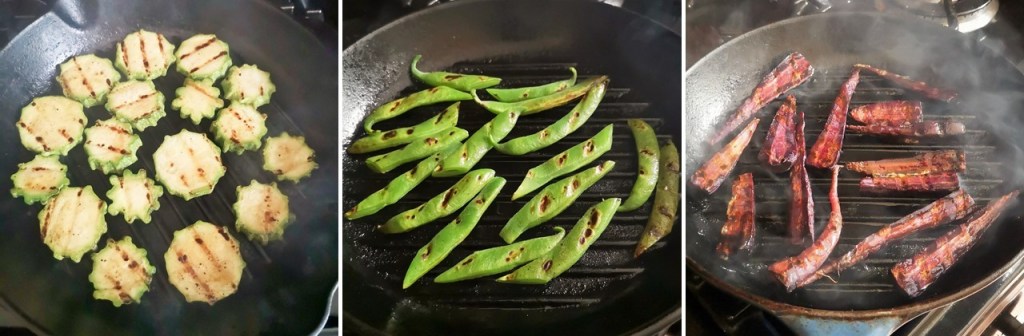
3. Brush a griddle pan with a little oil and heat until very hot then arrange the vegetables in batches in a single layer on top. I use a potato masher to press the vegetables on to the griddle in order to achieve a good colour. Turn the vegetables over using tongs. The beans will take 1-2 minutes on each side, the carrots and courgettes 2-3 minutes. Brush the griddle with more oil as necessary. Arrange the cooked vegetables in a heatproof dish, cover and keep warm while you make the dressing.

On_the_griddle_courgette_runner_beans_and_carrots
Griddling veg. Images: Kathryn Hawkins

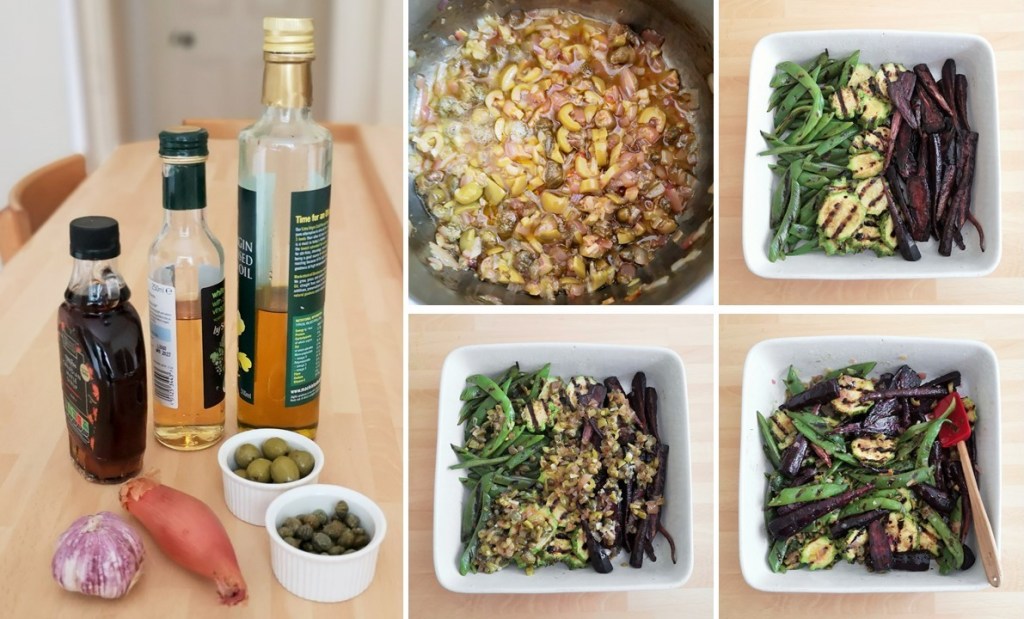
4. Heat the oil in a small saucepan and stir fry the shallot and garlic for 2-3 minutes, then cover with the lid and cook gently for 5 minutes to soften. Turn off the heat and stir in the remaining ingredients. Pour the warm dressing over the vegetables and mix well. Leave to stand for 10 minutes if serving warm or leave to cool completely.

Dressing_ingredients_cooking_the_dressing_and_adding_to_the_cooked_vegetables
Dressing the griddled vegetables. Images: Kathryn Hawkins

5. Pile the vegetables on to a serving platter and scatter with cucumber and carrot tops. Serve warm or cold with extra white balsamic vinegar.

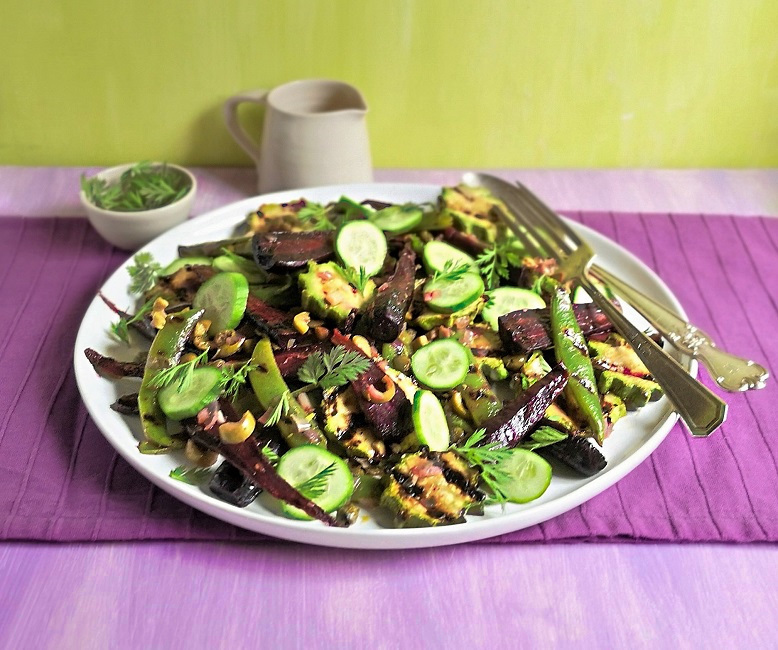
Seasonal_homegrown_vegetable_salad_close-up
Seasonal salad close-up. Image: Kathryn Hawkins

Until my next post, I wish you fine weather and good health. I hope to see you again in a couple of weeks.